
6,269 Photos and videos



Pinned Tweet

Apr 1
How’d I do?
What a cool experience!
Just the start for us here at @AvoryCo
2
1
17
3,747
Team at $XYZ is 🧑🍳

3
2
22
4,550
Sean D. Emory retweeted
Jun 12
EPISODE 85: Narratives, AI, and Durable Investment Bets
youtu.be/uKrleelJPFQ?is=N6V1…
1
1
2
979
Jun 12
10 Charts: AI is killing software? Really?
I don't see it. I see this.
investingwithdata.substack.c…
$IGV $XYZ
3
542
Jun 12
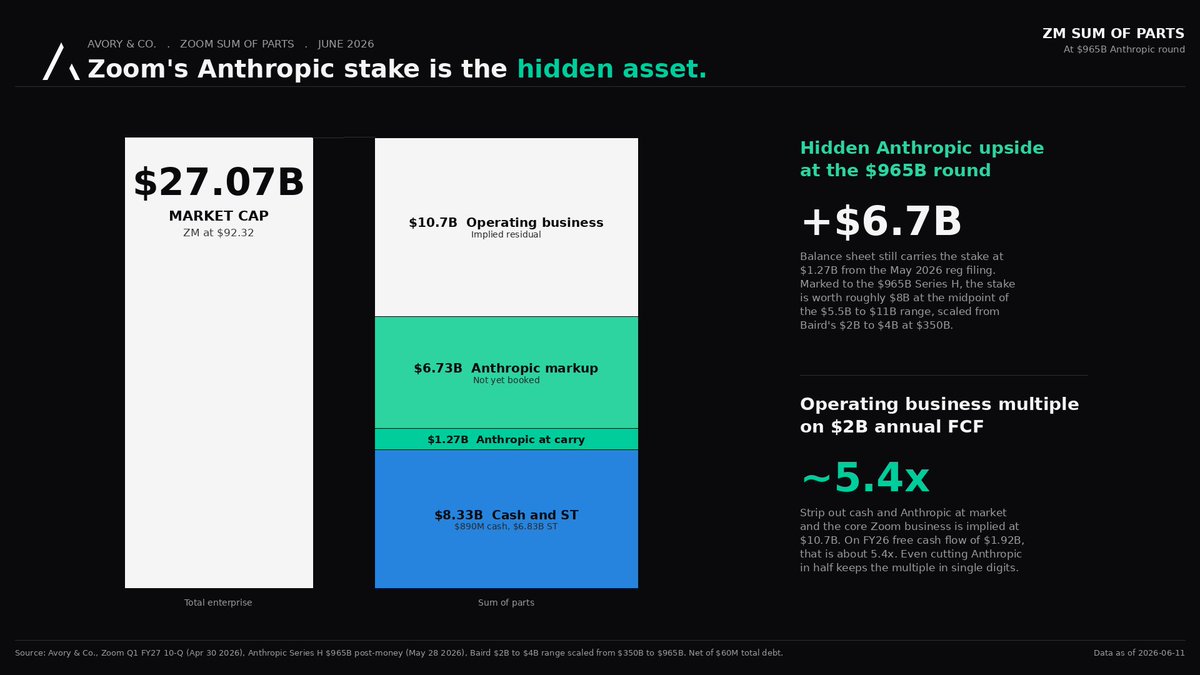
$ZM at $92 looks boring on the surface. The sum of the parts says otherwise.
Market cap is $27.07B. Net out $8.33B in cash and short term investments and you're paying $18.7B for the operating business plus the Anthropic stake.
The stake on Zoom's balance sheet is marked to Anthropic's Series G round at $380B (Feb 2026). Carry: $1.27B. Since that round, Anthropic has roughly 2.5x'd to a $965B Series H.
If we assume Anthropic IPOs over the next quarter or two at a premium to Series H, scale Zoom's stake into that math and you get a range of about $5.5B at the low end up to $11B at the high end.
Strip the cash, the carry, and the implied mark-up out of the market cap and the operating business is being valued at roughly $10.7B, or about 5.4x FY26 free cash flow on $2B FCF.
The multiple matters more when the business is re-accelerating. Q1 FY27 came in at 5.5% YoY revenue growth (enterprise 7.2%), FY26 grew 4.4% which was 130 bps faster than FY25, and AI Companion paid users grew 184% YoY. This isn't 5x'ing a decelerator. It's 5x'ing a business going the other way.
This is not a recommendation to purchase or sell a security.
ALT Zoom sum of the parts: market cap $27.07B, cash $8.33B, Anthropic stake carry $1.27B with hidden mark-up, implied operating business $10.7B at 5.4x FCF.
2
7
663
Jun 11
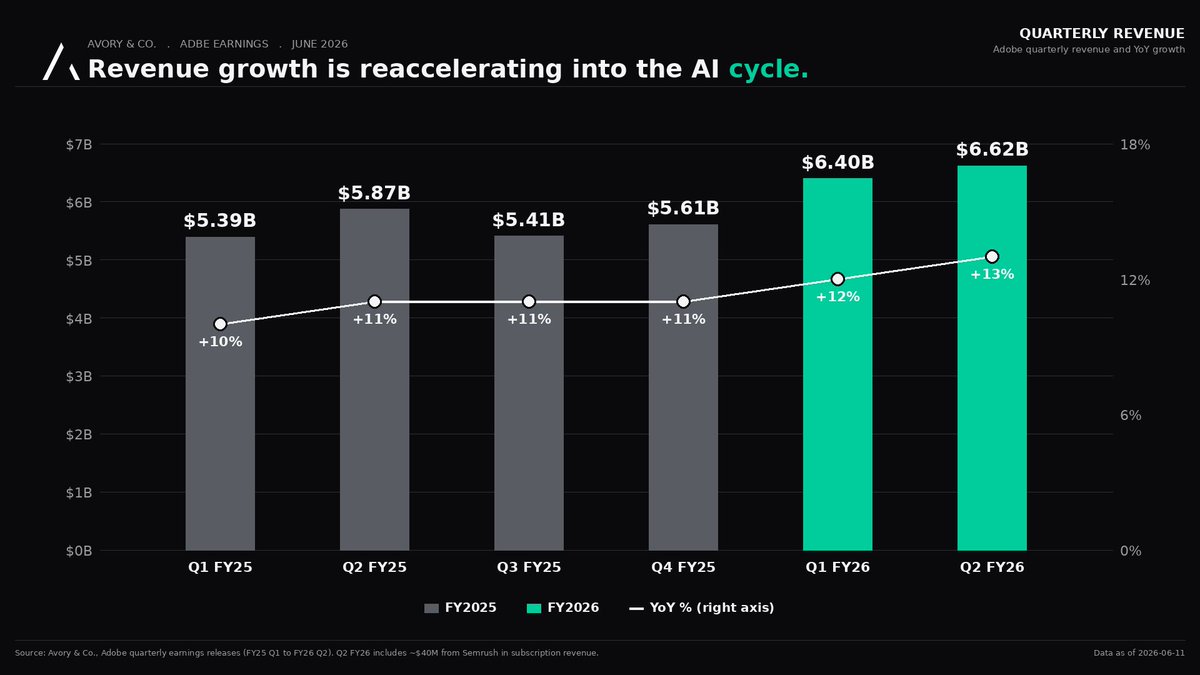
Imagine thinking AI is hitting Adobe in a terminal way.
ChatGPT was launched in 2022. The models have become brilliant but growth remains double digits.
$ADBE
1
4
766
Jun 11
Whoa. $XYZ

Meet Cash App Mobile*: unlimited 5G on AT&T's network for $40 a month, taxes and fees included.
No contracts, no credit checks, and no store visits. Manage your phone plan right next to the rest of your money. Rolling out now 💚
cash.app/download

12
3,437
Jun 10
This seems fair.
Jun 10

‘AI-pilled’ firms spend $7,500 per employee each month on AI techcrunch.com/2026/06/10/ai…
1,350
Jun 10
If you don’t have true innovators at the top of your org, you will be smushed.
Companies like $XYZ $ZM $Z $ABNB $YOU $OKTA
Yes speaking my book, but it’s part of thesis around AI.

$XYZ
I think @jack saw this in 2023 and pushed hard toward open-source model adoption.
Square had already lived through this once. In its early days, it was fully dependent on Visa. Major decisions required Visa’s permission, and Visa had the power to end Square with the stroke of a pen.
It gives me confidence that Block and Jack will not casually accept Anthropic/OpenAI as a concentrated token-supplier risk. Some dependence will exist, ofc. But resilience is built-in from the beginning.
4
1,391
Jun 10
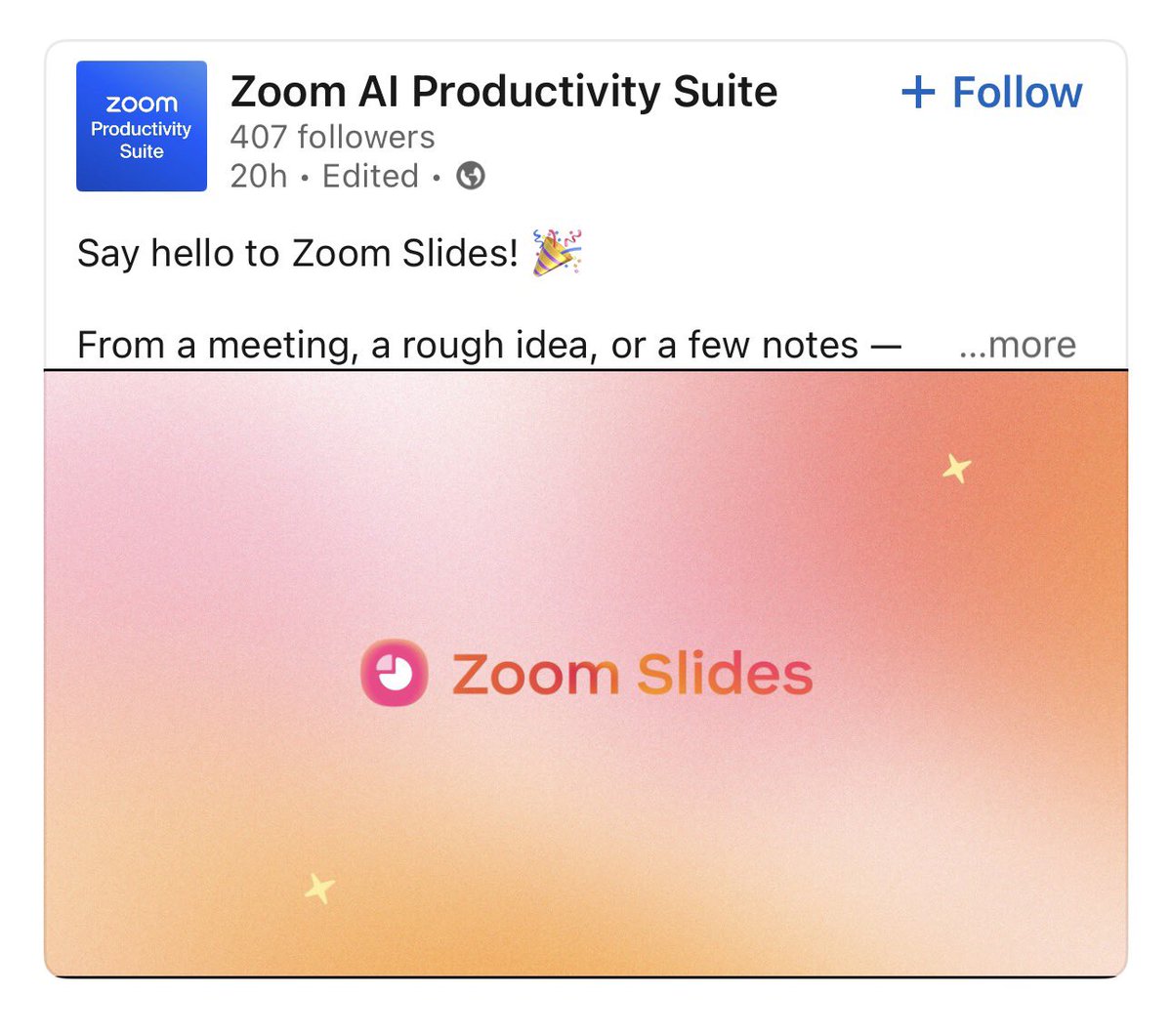
This is what I mean when I say companies can now expand into areas they never would have considered before.
Zoom started as a meetings product.
Today, Zoom is executing across meetings, phone systems, customer support, contact centers, AI agents, and workflow automation.
Why is that important?
Because meetings, phone calls, and customer support interactions all generate context.
And context is the fuel for AI.
Just as the internet became the training data that powered large language models, enterprise conversations are becoming the proprietary data layer that powers action.
Every meeting transcript, customer interaction, support ticket, voicemail, and conversation summary creates a deeper understanding of what is happening inside an organization.
That allows Zoom to move beyond communication and into execution.
The opportunity is not simply summarizing conversations. The opportunity is directing workflows, automating follow-ups, routing tasks, answering questions, coordinating teams, and ultimately taking action based on what was discussed.
What’s interesting is that very few companies have access to this breadth of contextual data across an organization.
Zoom sits at the center of meetings, voice, and customer interactions. That creates a unique data advantage.
The more surfaces Zoom touches, the more context it accumulates.
The more context it accumulates, the better its AI becomes.
And the better its AI becomes, the more valuable Zoom evolves from a communications tool into a platform for action.
$ZM
1
5
522
Jun 10
Why do you think the consumer is still spending?
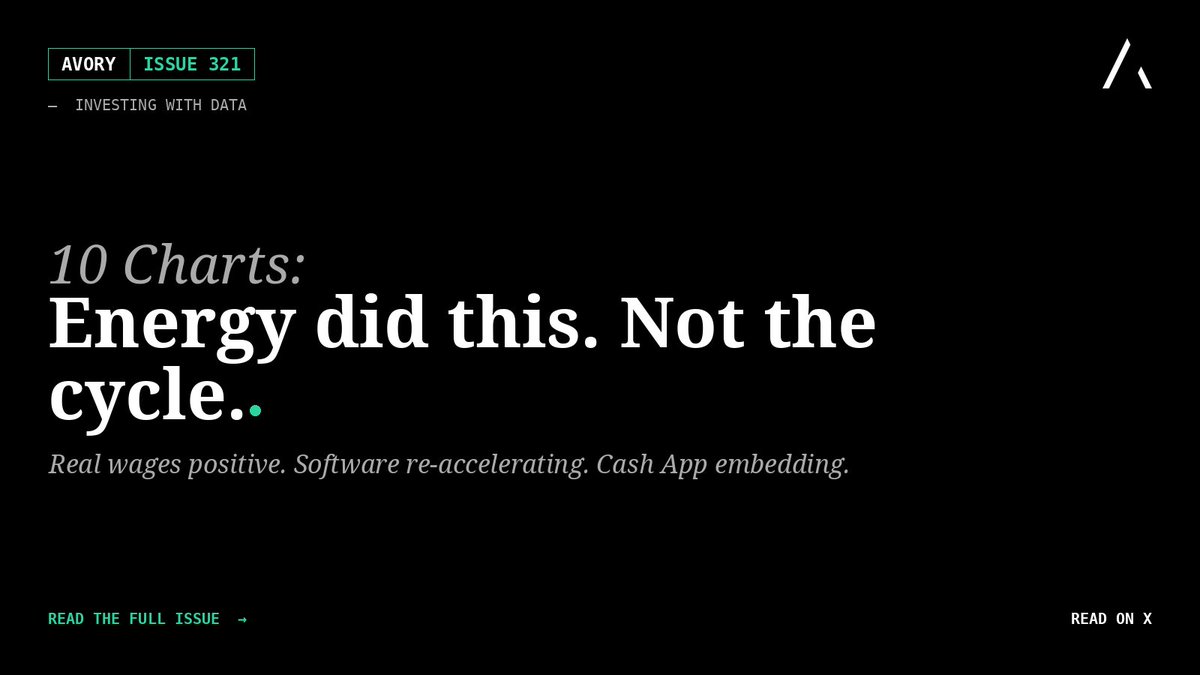
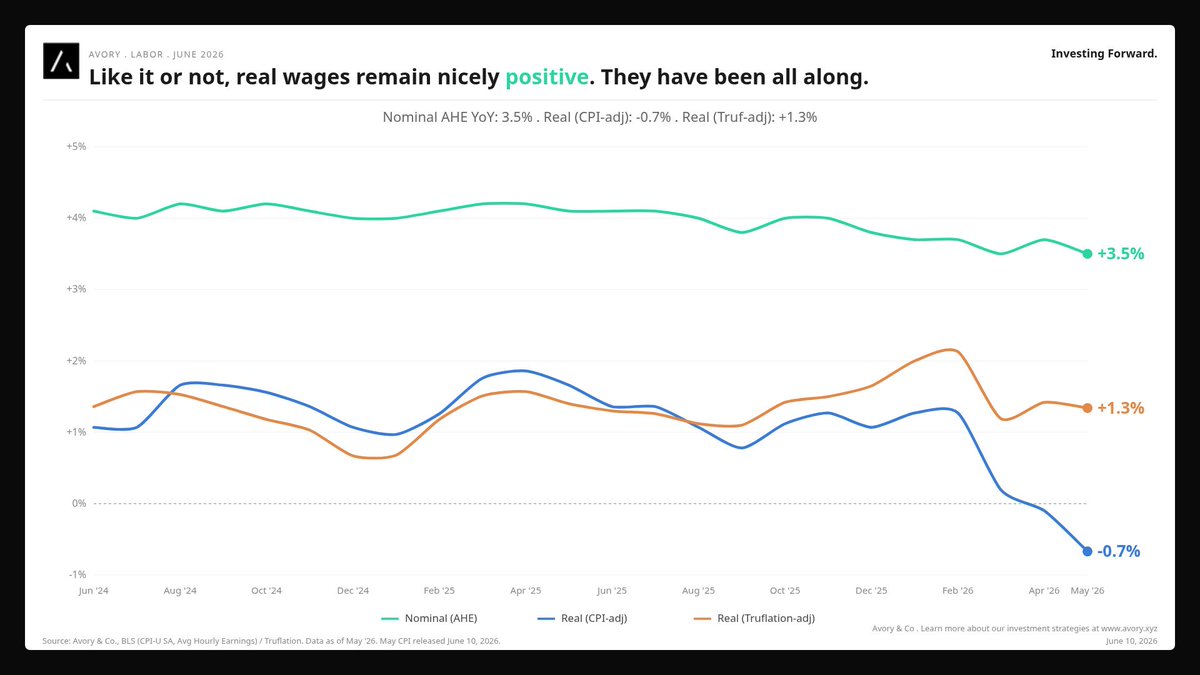
Like it or not, real wages remain nicely positive. They have been all along.
Truflation has the US running at 1.83% today. BLS just printed 4.2% on CPI. Energy did most of the work, gasoline 40% YoY.
When you strip the energy whip, the cost-of-living signal looks closer to 2%. That's the number actual companies are seeing in their cost stacks too.
Nominal wages: 3.5%
Real wages (CPI-adj): -0.7%
Real wages (Truflation-adj): 1.3%
Pick your inflation series and you get a different story about the consumer. By Truflation, the worker has been winning for two straight years.
ALT Real wages by Truflation 1.3% vs CPI -0.7% chart, June 2026
1
388
Jun 10
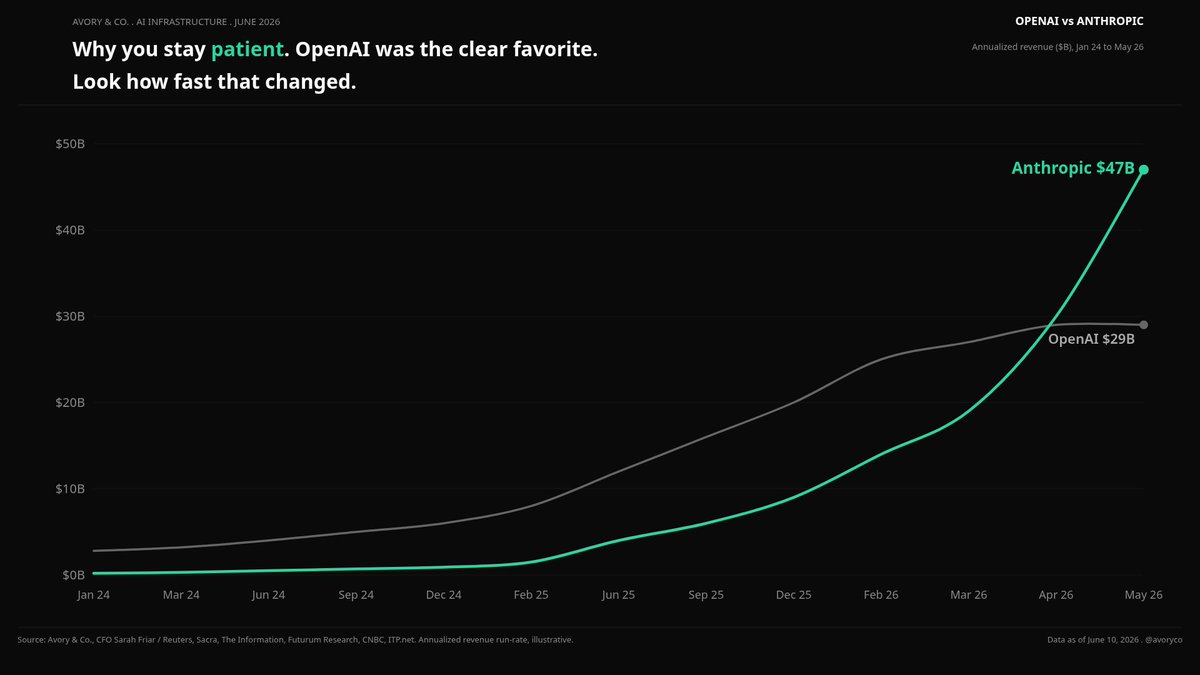
Anthropic well above OpenAI on run-rate. For now.
How fast things can change when API calls are the product.
Everyone is talking about model routing, and that's another way of saying no moat.
The orchestrator is where the moat ends up. The models underneath are interchangeable.
ALT Anthropic annualized revenue run-rate crosses OpenAI in late April 2026, reaching $47B vs $29B by May 2026
1
2
463
Jun 8
Right on time.
The insurance industry should be very nervous just like we pointed out in our article.
This is already happening fast and expected to accelerate
x.com/_seandavid/status/2046…
Jun 8

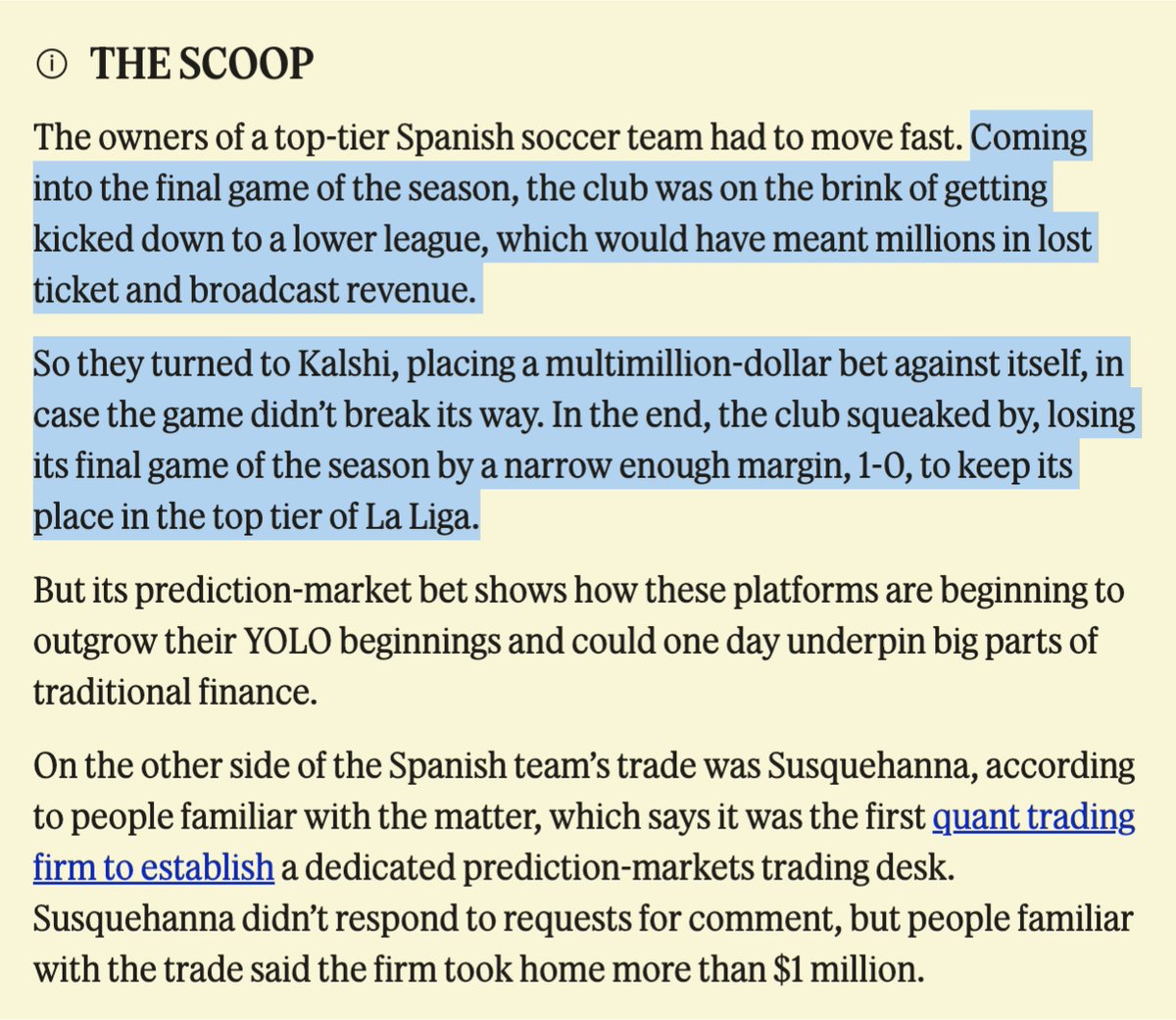
A Spanish La Liga club (likely Osasuna) facing potential relegation placed a bet against itself on Kalshi, hedging the financial hit of dropping down a tier.
They survived on the final day. Susquehanna was on the other side of that bet and pocketed over $1M.
929
Jun 8
My quick take on Apple’s announcement:
There is a clear issue developing here for $AAPL
FIRST  they are late, and their product for Siri is pretty uninspiring.
Second…
The challenge is that much of the value appears tied to Apple’s ecosystem and cross-device integration. If I have an iPhone but don’t use a Mac, which many don’t , the incremental benefit feels pretty limited.
For anything that drives meaningful productivity in my business or personal life, I’m still more likely to rely on dedicated AI tools and device-agnostic platforms that work across my entire workflow.
That feels like a notable gap for Apple right now.
The question isn’t whether Siri gets better. It’s whether it becomes valuable enough to replace the tools people are already using every day.
2
714
Jun 8
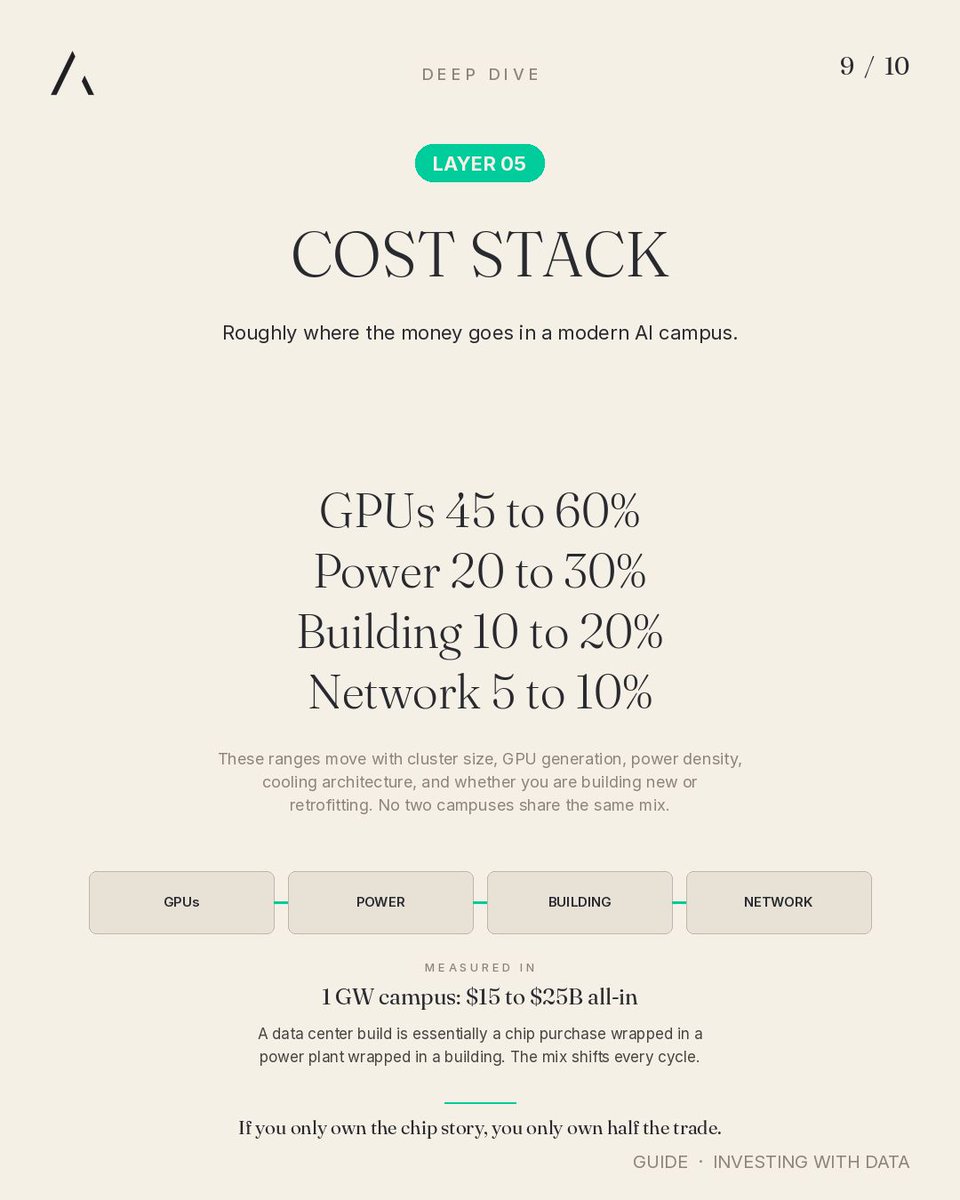
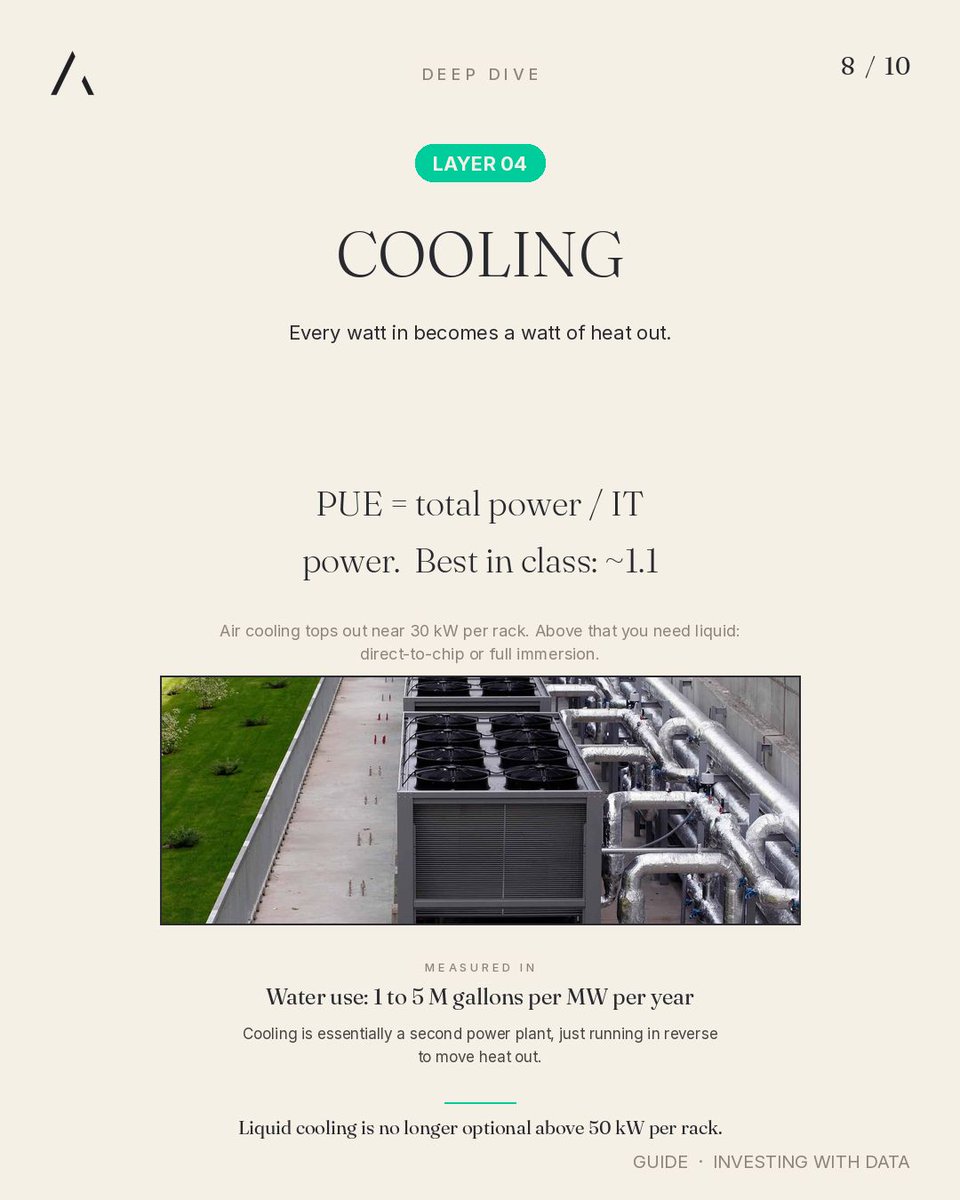
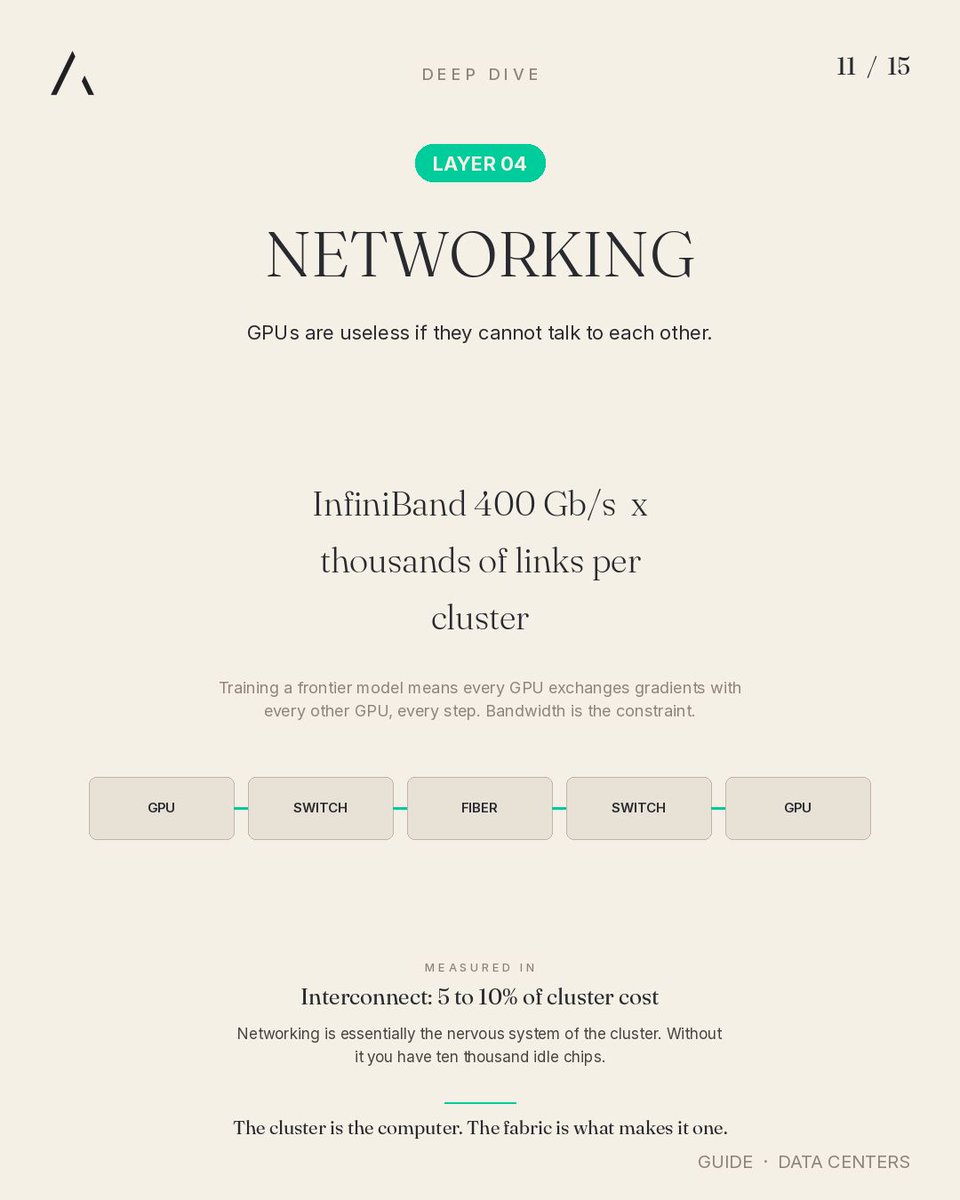
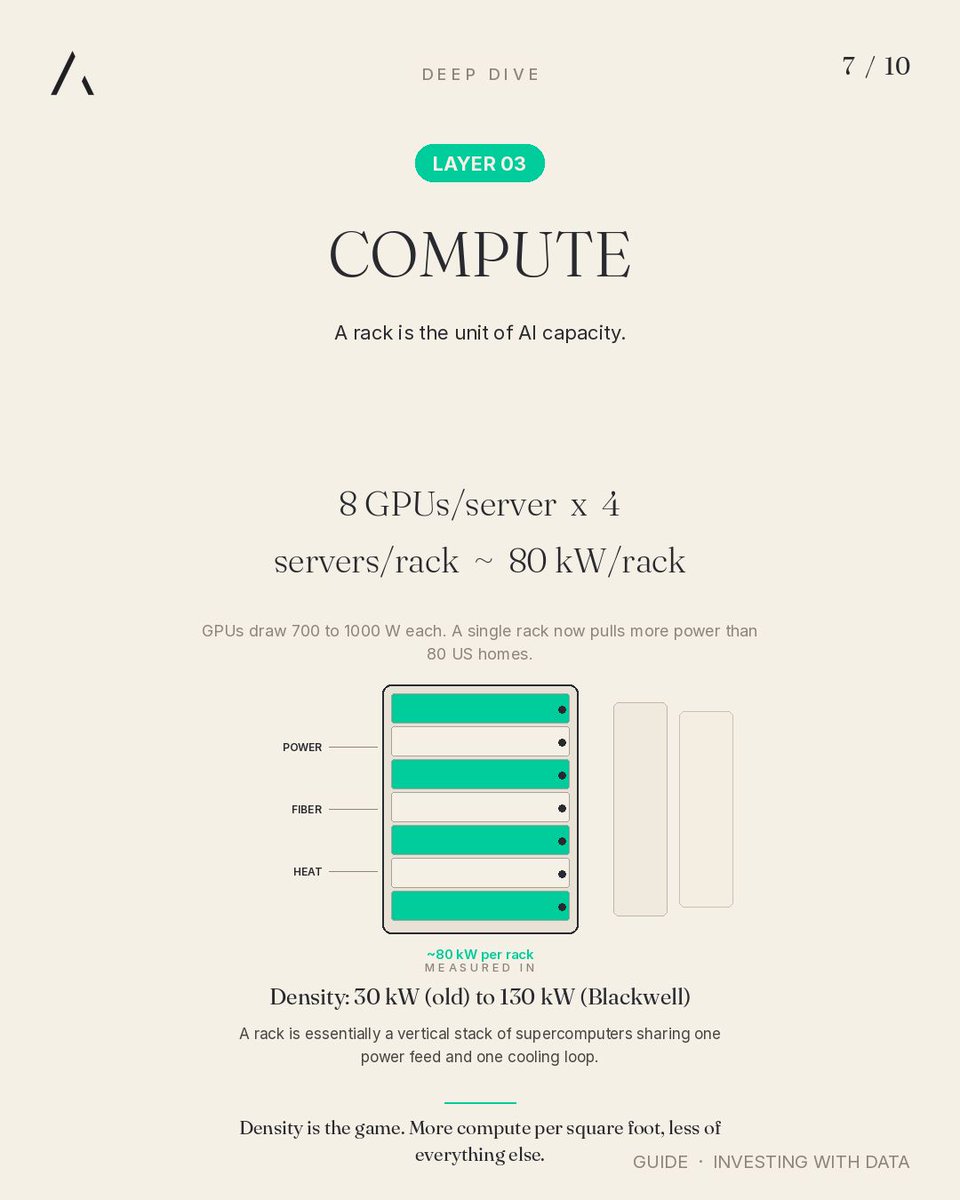
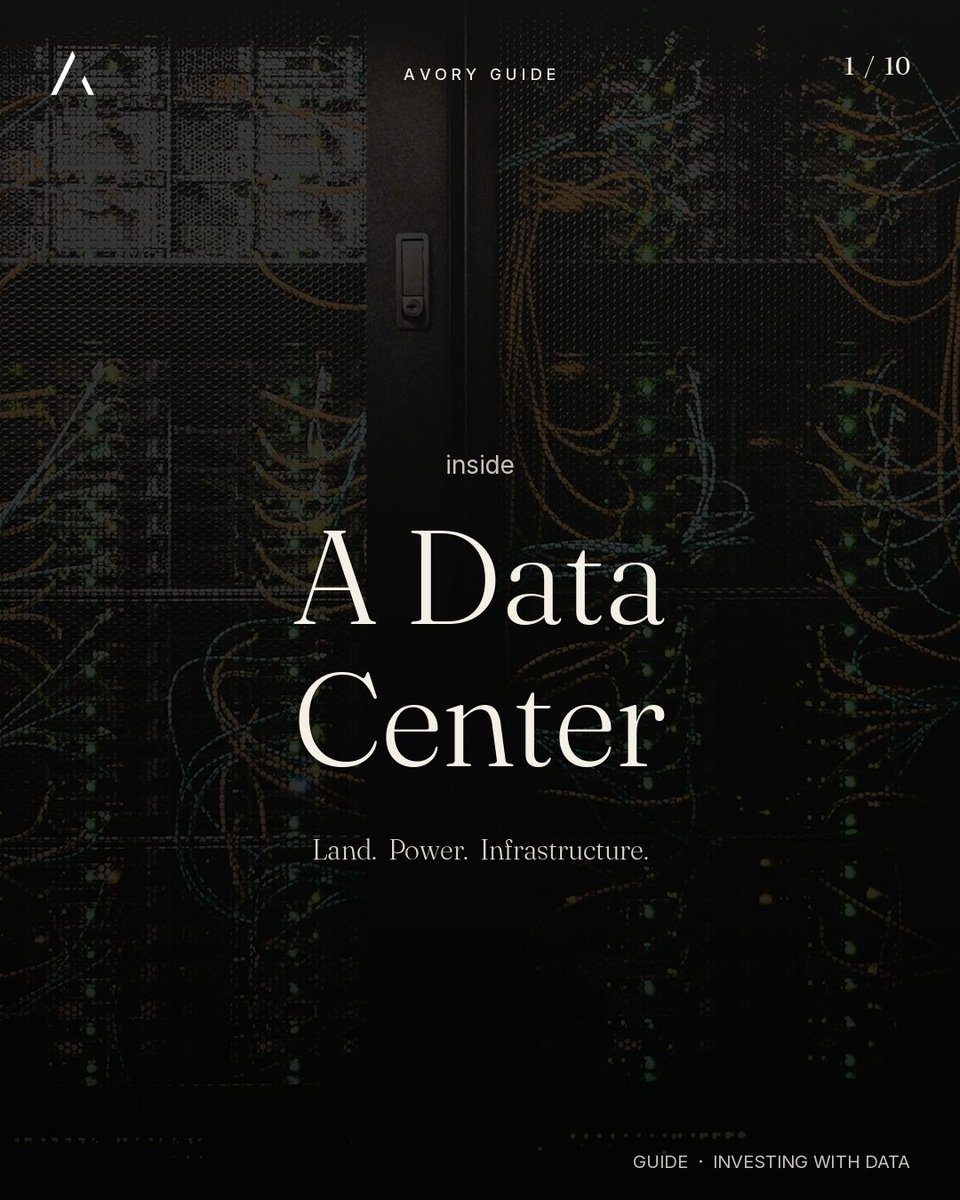
Every AI prompt starts with dirt and electricity.
We just dropped a new guide at Avory & Co.
The data center, broken into the three layers that actually matter. Land. Power. Infrastructure. In that order.
This is how we think about the entire AI build out.
ALT Avory Data Center Guide cover.
1
2
5
4,021
Jun 8
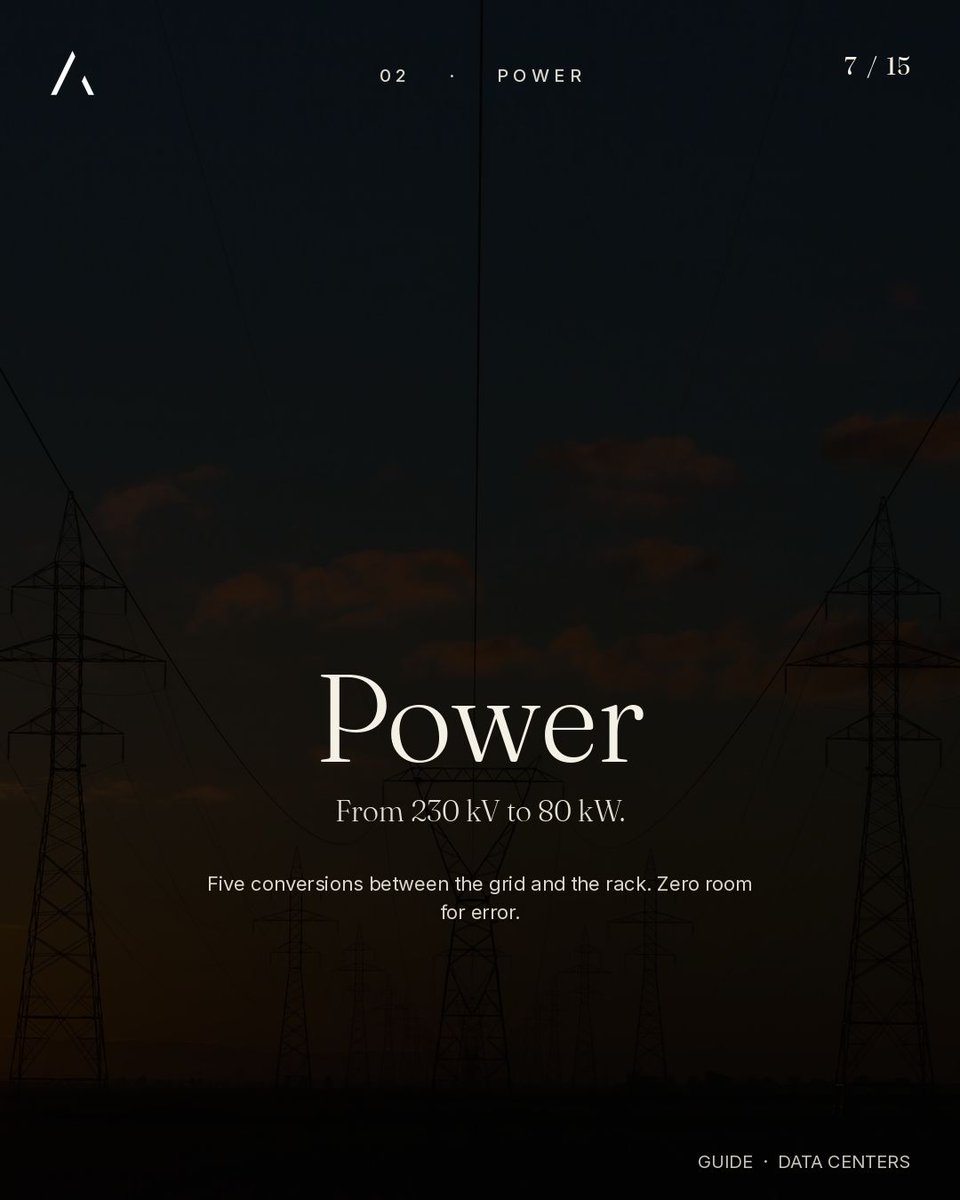
02 Power.
The bottleneck of the decade. The reason every hyperscaler is suddenly a utility analyst.
ALT Power intro.
2
1
390
Jun 8
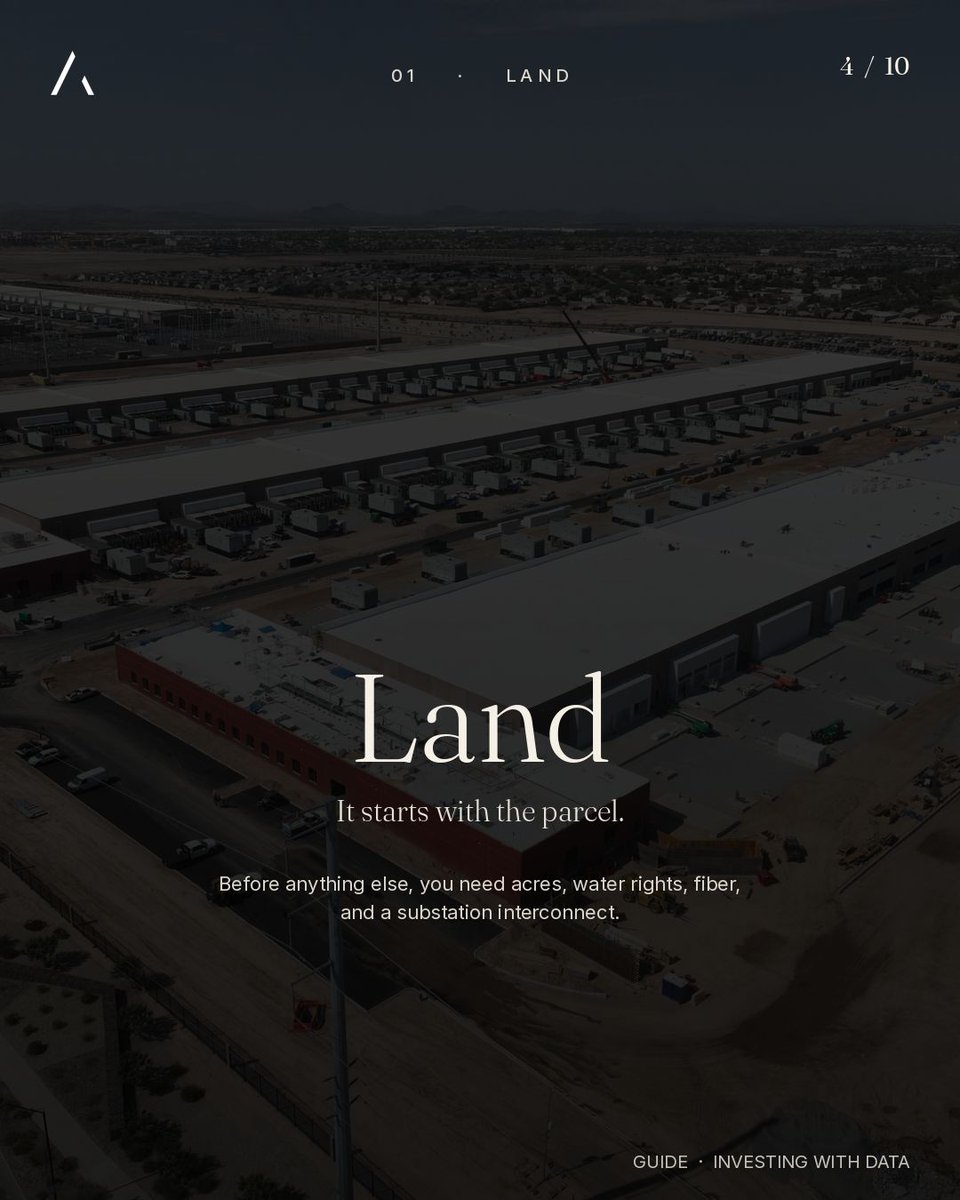
01 Land.
The parcel. Boring. Slow. The first decision and the one that locks everything that follows.
ALT Land intro.
2
228
Jun 8
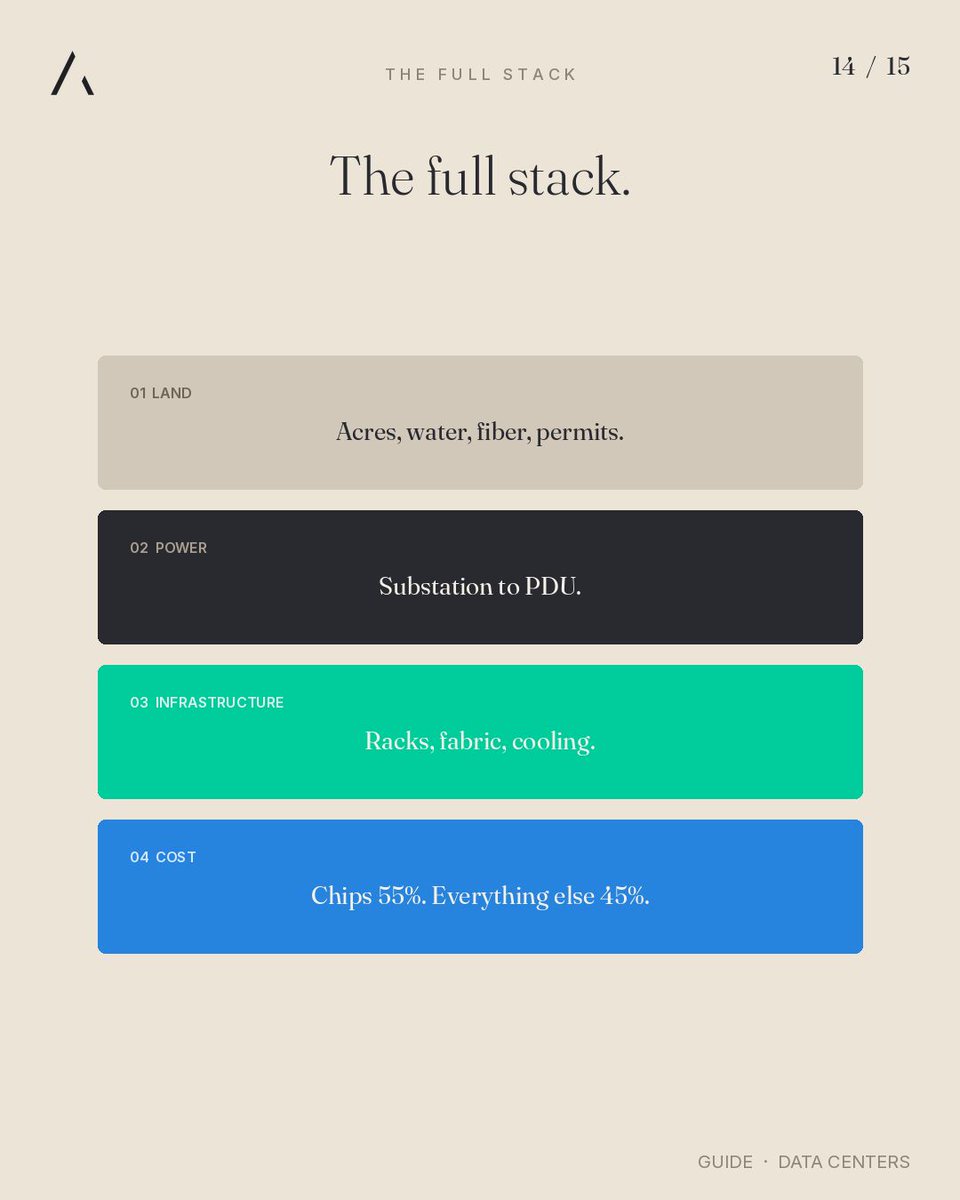
The full stack in one frame.
Land holds power. Power feeds infrastructure. Infrastructure makes tokens.
That's the whole AI build out compressed.
ALT Full stack synthesis.
1
126
Jun 8
Land. Power. Infrastructure. In that order. Always.
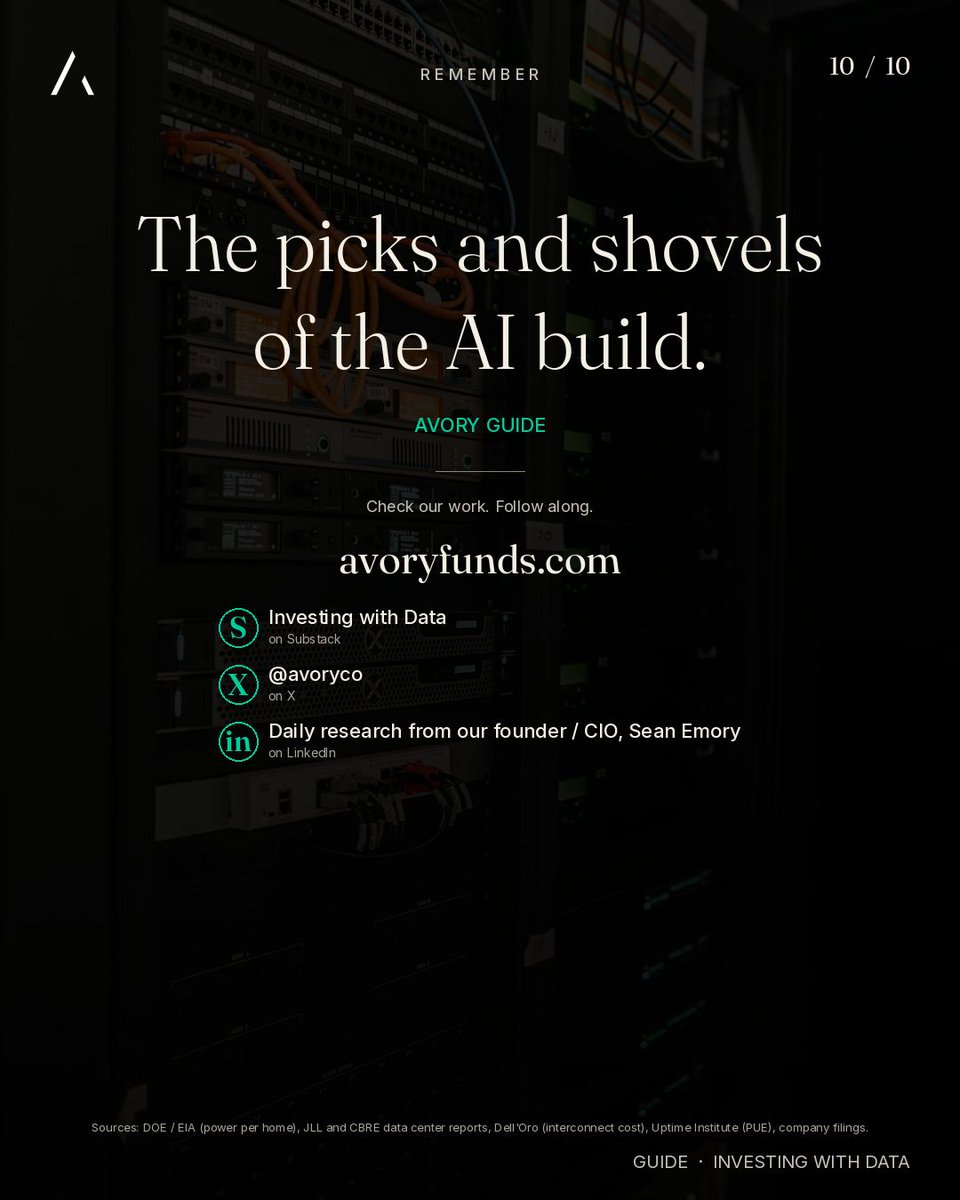
Full guide. Visit our site for more research and our investment strategies: linktr.ee/avoryco
ALT Close slide.
114