
An observer
Joined February 2017
- Tweets 8,734
- Following 1,270
- Followers 942
- Likes 13,927
517 Photos and videos











Urfee retweeted

“You cannot build defence, AI or robotics without #CriticalMinerals, especially heavy #RareEarths.”
#HREE Chairman Ivan highlighted to @TheStockNet why mineral security is a priority for U.S. & Western economies, with China controlling ~95% of heavy rare earth production.
6
6
429

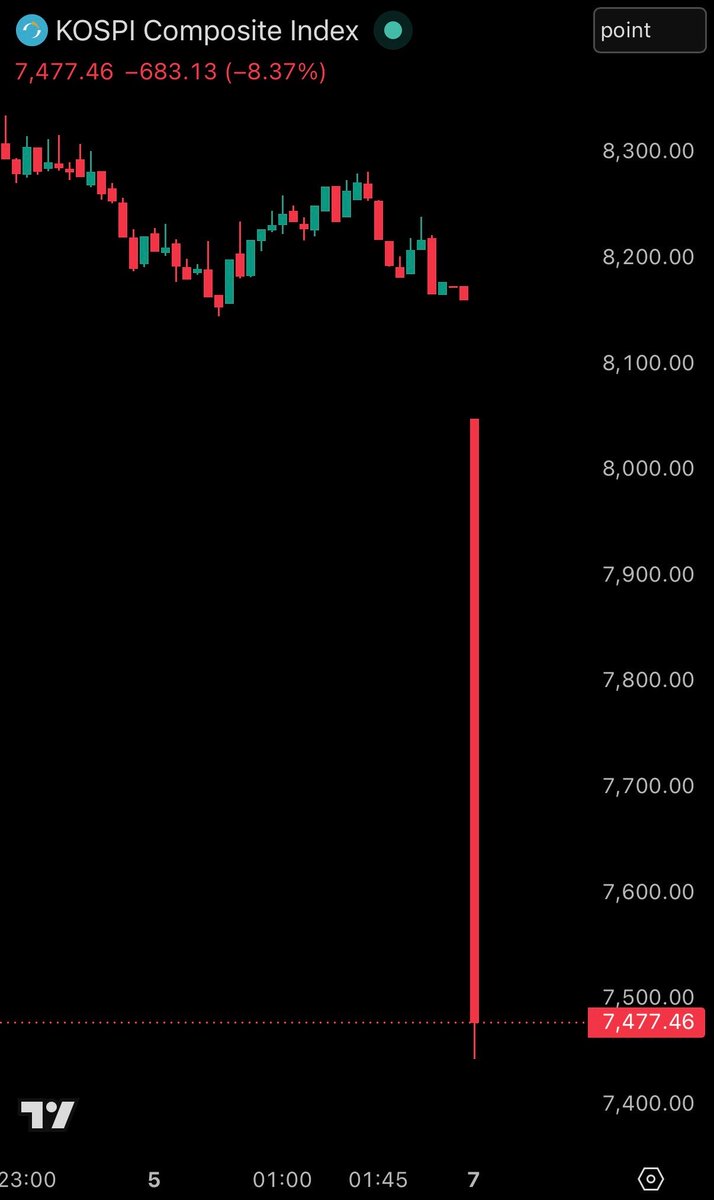
As Hana Securities analyst Kim Doo‑un put it: "This is not an economic recession, but a simultaneous convergence of currency instability, rising interest rates, and semiconductor profit‑taking."

BREAKING: South Korea’s stock market has been halted after falling -8.4% at the open.
307
Gov spends → sells bonds → Fed buys bonds (creates M2) → people get cash via stimulus, benefits, payroll, contracts → low savings record debt → spending chases limited goods → inflation sticks → Fed can’t cut → yields spike → leveraged assets crash → recession.
13 Jan 2025

Since the Fed was founded in 1913, the US money supply has contracted only 4 times. Each contraction was followed by a RECESSION.
The US money supply (M2) contracting since July 2022 means AN ECONOMIC SLOWDOWN IS BAKED IN THE CAKE.
My latest with @DanielaCambone on @ITMTrading.
209
Neoliberal privatization and deregulation (e.g., 1994 Interstate Banking Act) expanded credit, replacing saving with spending.
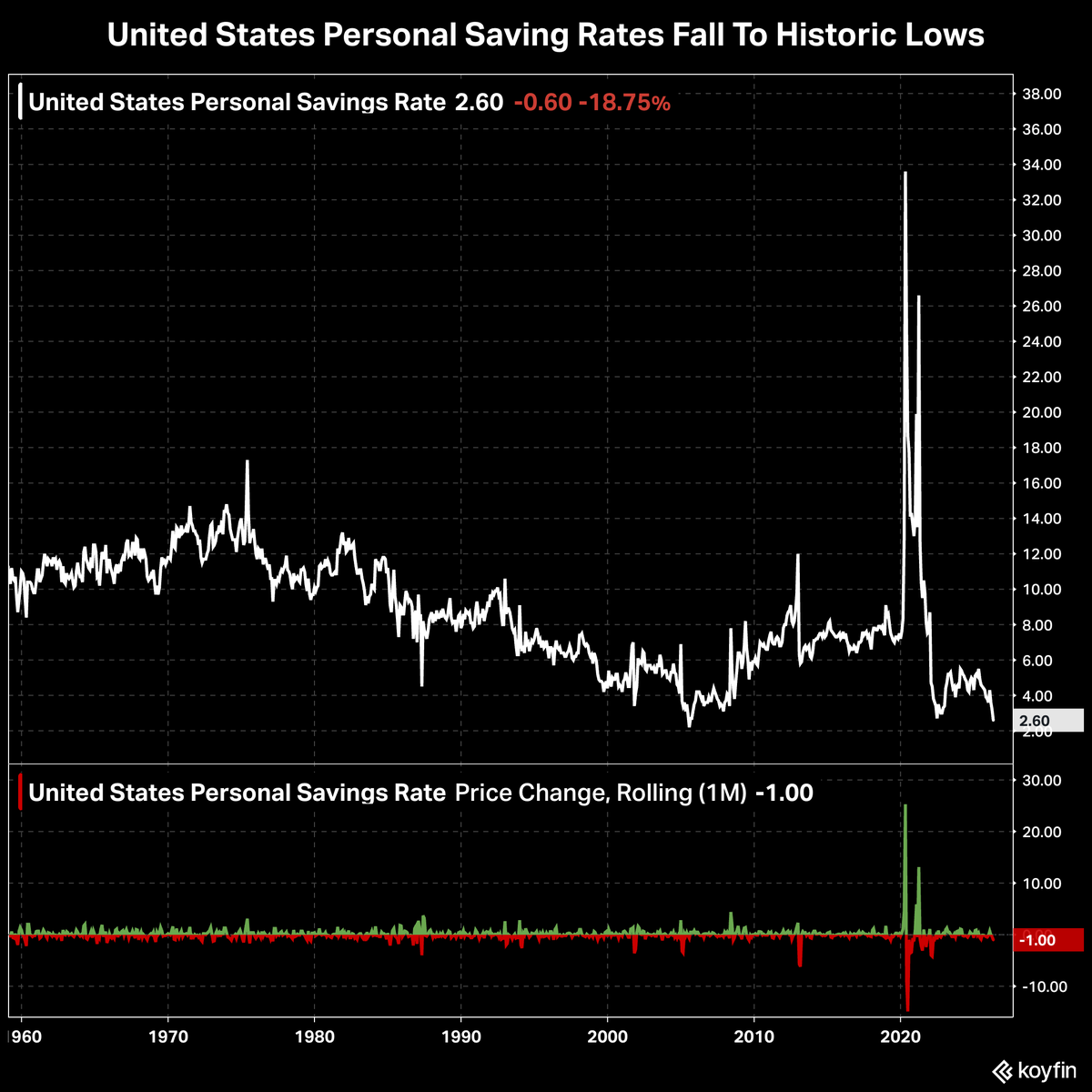
Saving rate fell from 11.1% (1980s) to 2.6% (2026).
Jun 1

The United States Personal Saving Rate has declined to 2.6%.
Since our data begins (in 1959) there has only been once instance when the rate was lower, in the summer of 2005 (2.2%).
US savings rates are at historic lows right now.
202
Budget 2026: Can Pakistan address this equation?
Spending > Earning,
Interest > Earnings,
Corruption > Growth,
New Loans > Recovery,
Imports > Exports,
Debt > Development,
Circular Debt > Energy,
Low Investment > Jobs.
Easy solution: tax on people.
Real fix: address systemic issues.
Which will Pakistan choose?
The trap is complete.
1
201
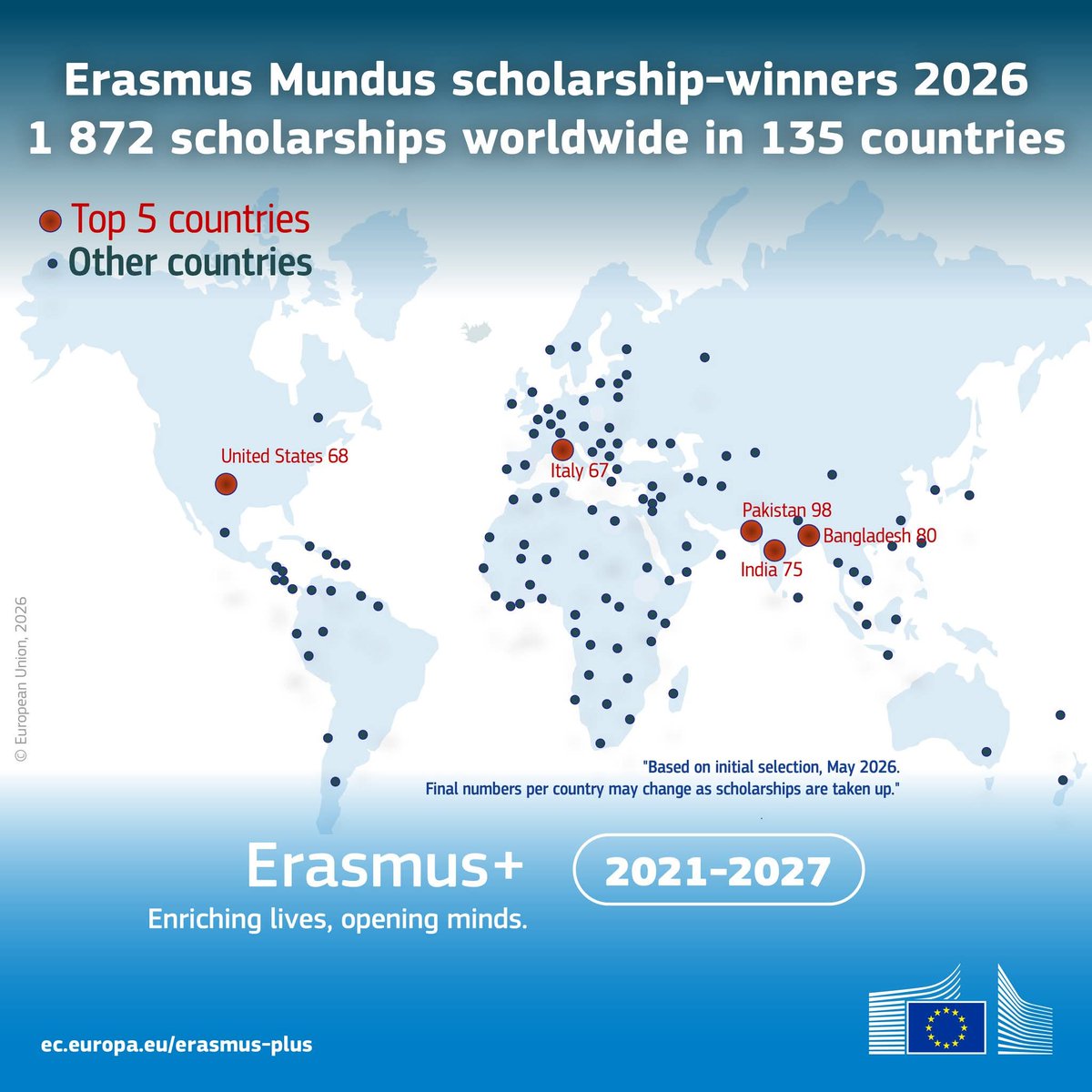
Pakistan, globally ranked #1 for five consecutive years, had its students secure 98 fully funded Erasmus Mundus scholarships in 2026, ahead of key countries such as Bangladesh (80), India (75), the United States (68), and Italy (67), proving that the right environment boosts performance. 👏👏👏
May 29

‼️ Good News: Erasmus Mundus 2026 results are out!
🇵🇰 Pakistan continues to top the global charts for 🇪🇺 @EUErasmusPlus fully funded scholarships - for the fifth consecutive year. 💪
Congratulations to the 98 students from 🇵🇰! 👏👏👏
@KaroblisR
313
Henry Ford understood it in 1914 when he doubled wages so workers could buy his cars. The current corporate class appears to be collectively betting that someone else will maintain consumer demand while they individually automate. That is a collective action trap, rational for each firm, catastrophic for the system.
82
It is falling because the structural conditions for family formation, affordable housing, secure income, accessible childcare, time have been quietly stripped from the bottom half.
A society that produces record stock market wealth while its young people cannot afford children is consuming its own future. It is eating its seed corn. #NeoliberalPolicyImpact #ExtractingMindset
What is happening here?
The US birthrate is now down -30% since pre-2008 levels while financial wealth is at record highs.
Why? Because only asset owners are able to afford this economy.
As shown in our below analysis, this crisis accelerated in both 2008 and 2020.
And, with every recession and every round of inflationary economic stimulus, the crisis simply accelerates even further.
Now, we are seeing the biggest divergence between the S&P 500 and the US birth rate in history.
The result? Tons of young Americans simply cannot afford to have kids in another sign of the "K-Shaped" economy.
The US is facing a massive demographic crisis.
1
1
232