
Powerless, IT TAKES GOD
Joined January 2022
- Tweets 72,648
- Following 2,612
- Followers 2,332
- Likes 28,490
1,911 Photos and videos





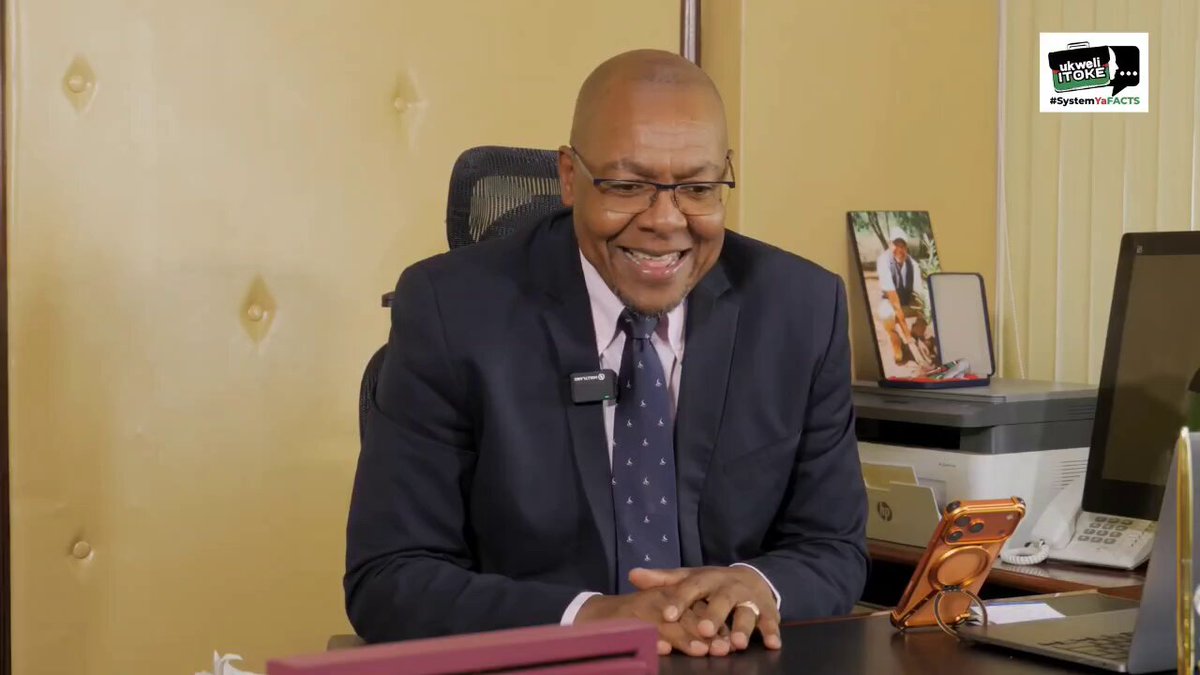
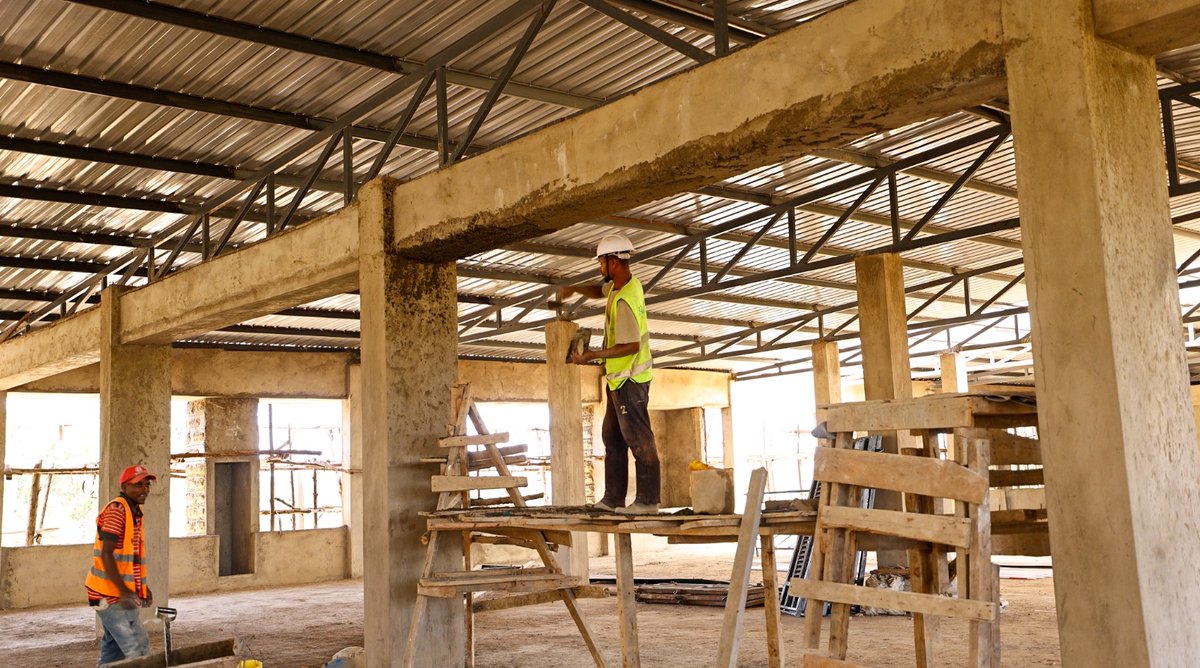

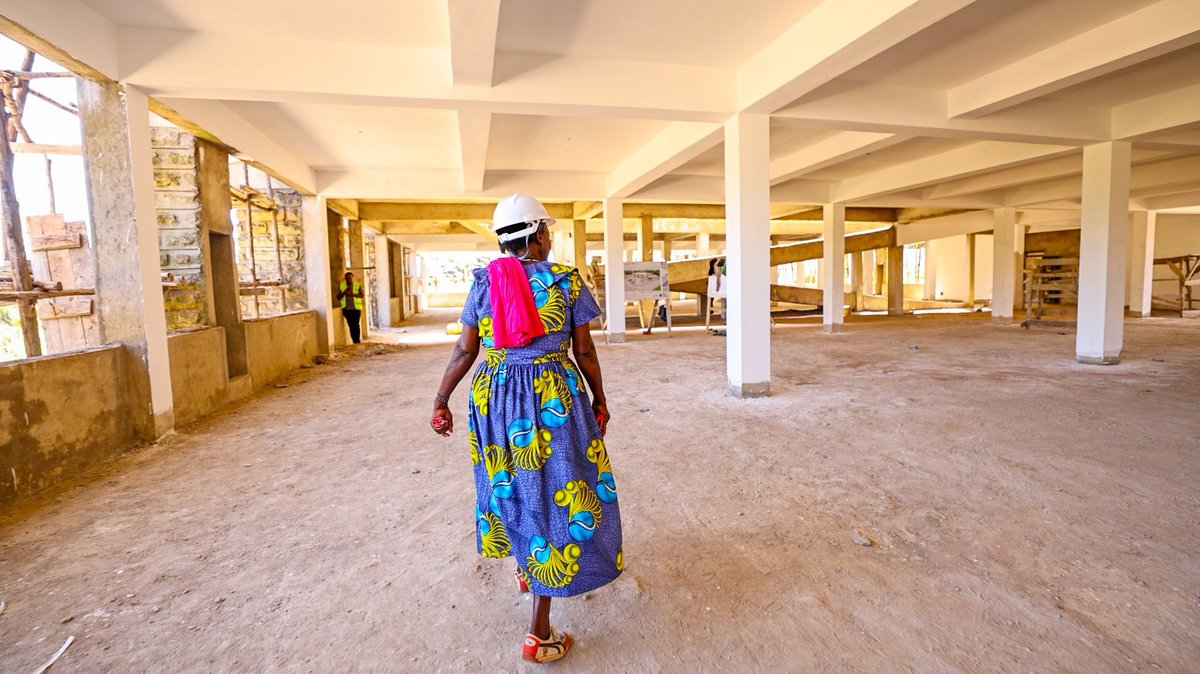
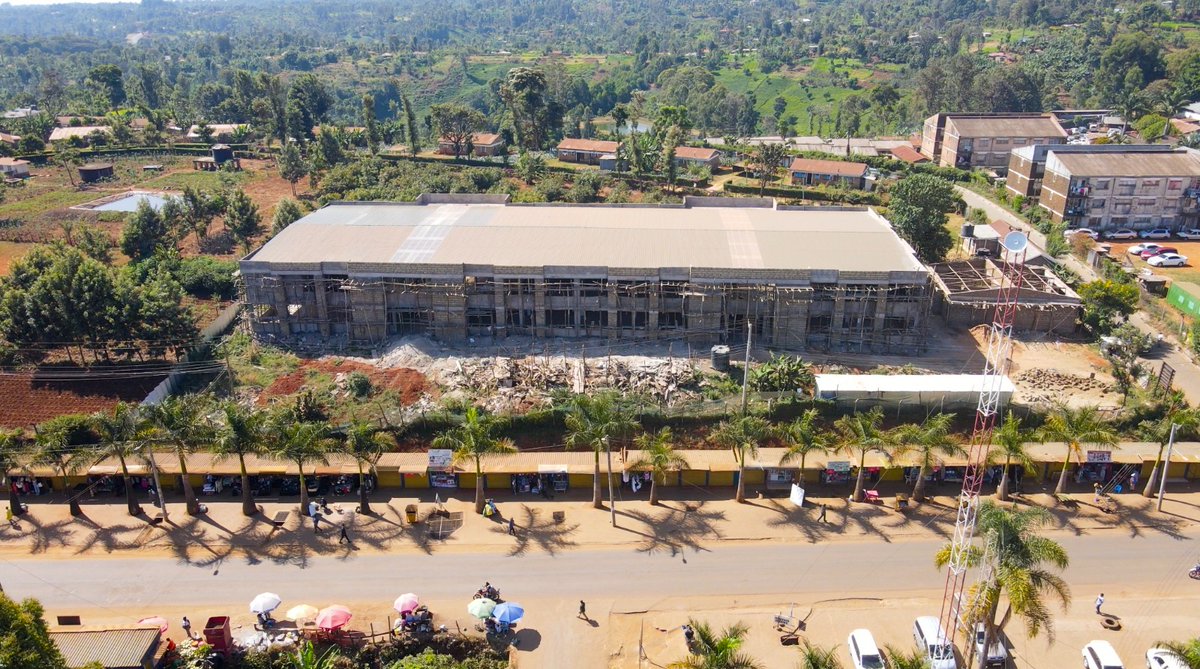



Legal identity is the passport to financial inclusion through mobile money and formal banking sectors. Simplifying card distribution directly stimulates grassroots economic growth across all regions. #FixingTheIDCrisis KNCHR 2007 Report
1
6
Every community contributes to the rich fabric of the Kenyan nation. Ensuring equal access to identity cards protects this diversity and promotes equal citizenship for every individual. #FixingTheIDCrisis KNCHR 2007 Report
1
8
The restoration of equal registration rights signifies that the 20-year struggle was not in vain. The nation now moves forward into an era of complete administrative fairness. #FixingTheIDCrisis KNCHR 2007 Report
12
Winnie🇺🇸🇿🇦🇰🇪 retweeted

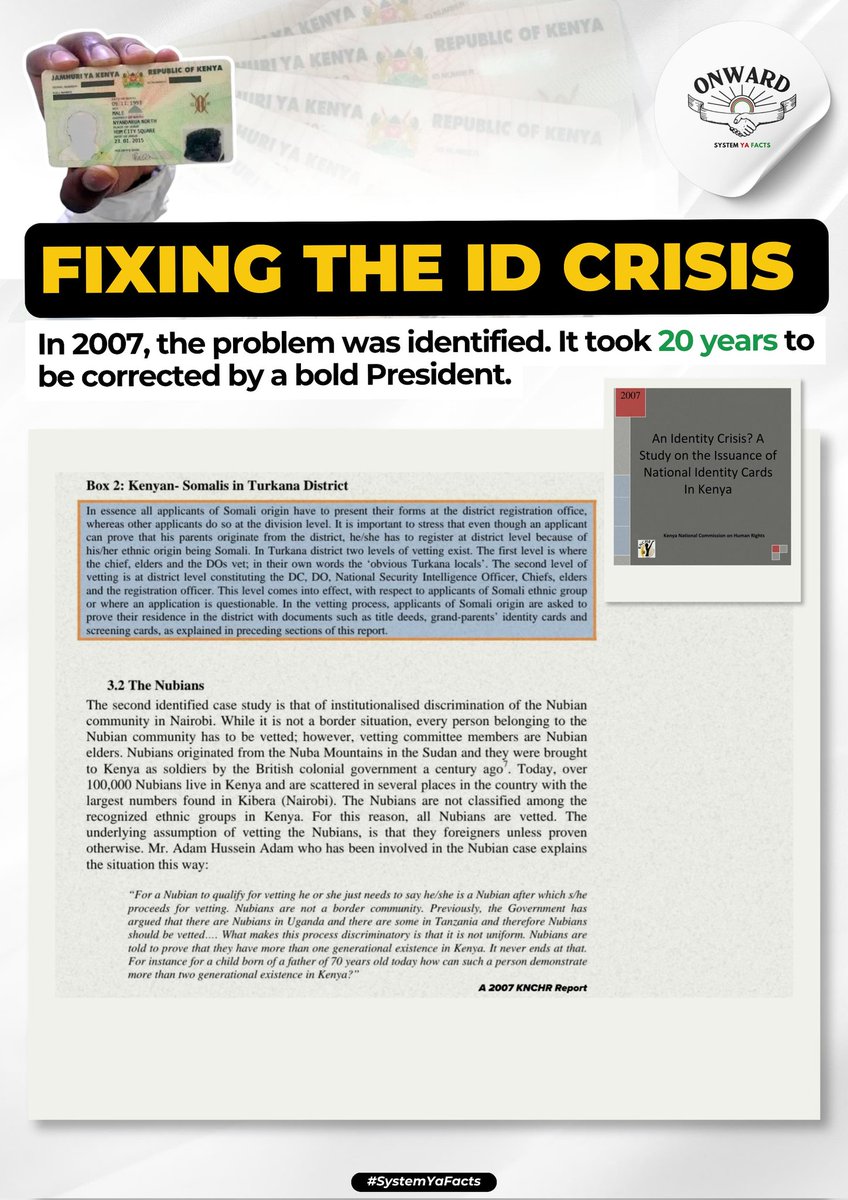
Equal citizenship requires equal access. Removing discriminatory barriers in the ID application process helps ensure that rights are not determined by geography or background. #FixingTheIDCrisis KNCHR 2007 Report
5
2
15
Winnie🇺🇸🇿🇦🇰🇪 retweeted

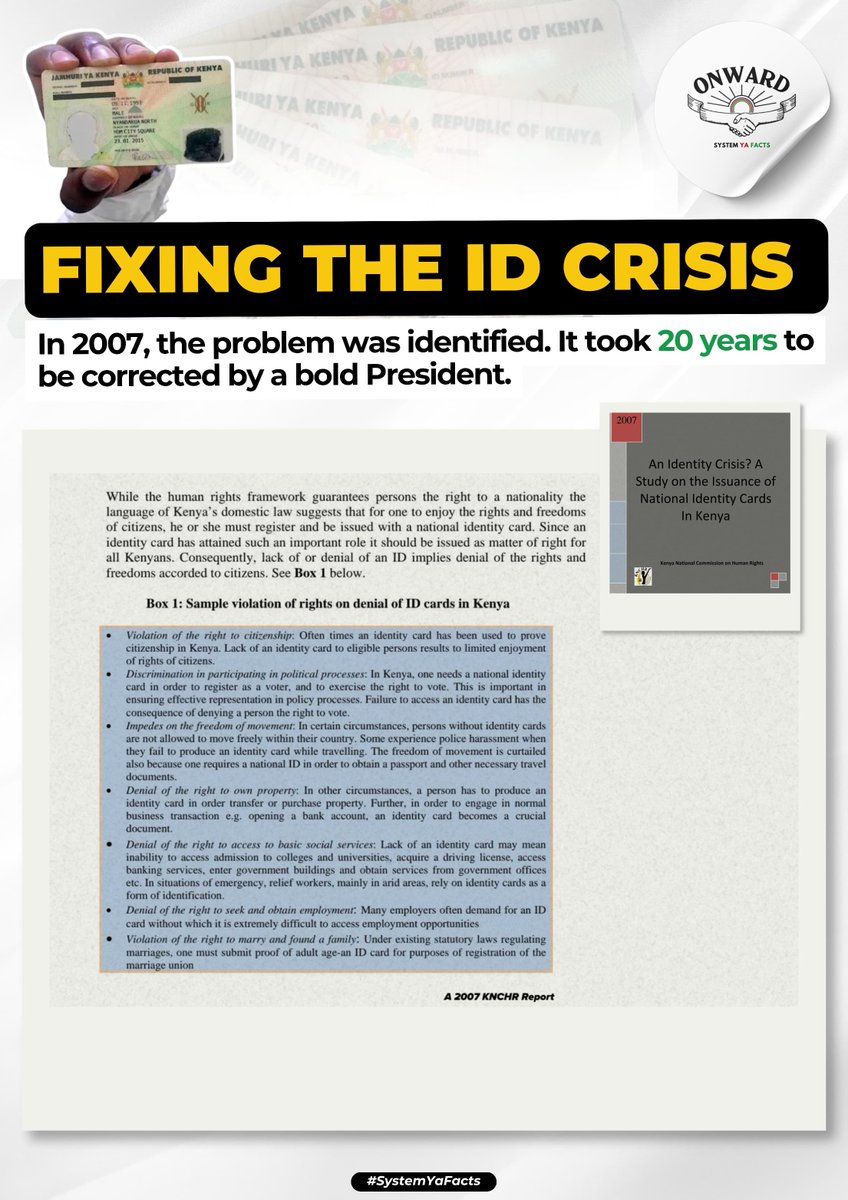
The Constitution recognizes no hierarchy of citizenship. Every Kenyan deserves equal treatment before the law. The KNCHR 2007 Report reminded us of this truth long before reforms began. #FixingTheIDCrisis KNCHR 2007 Report
1
10
1
27
Winnie🇺🇸🇿🇦🇰🇪 retweeted

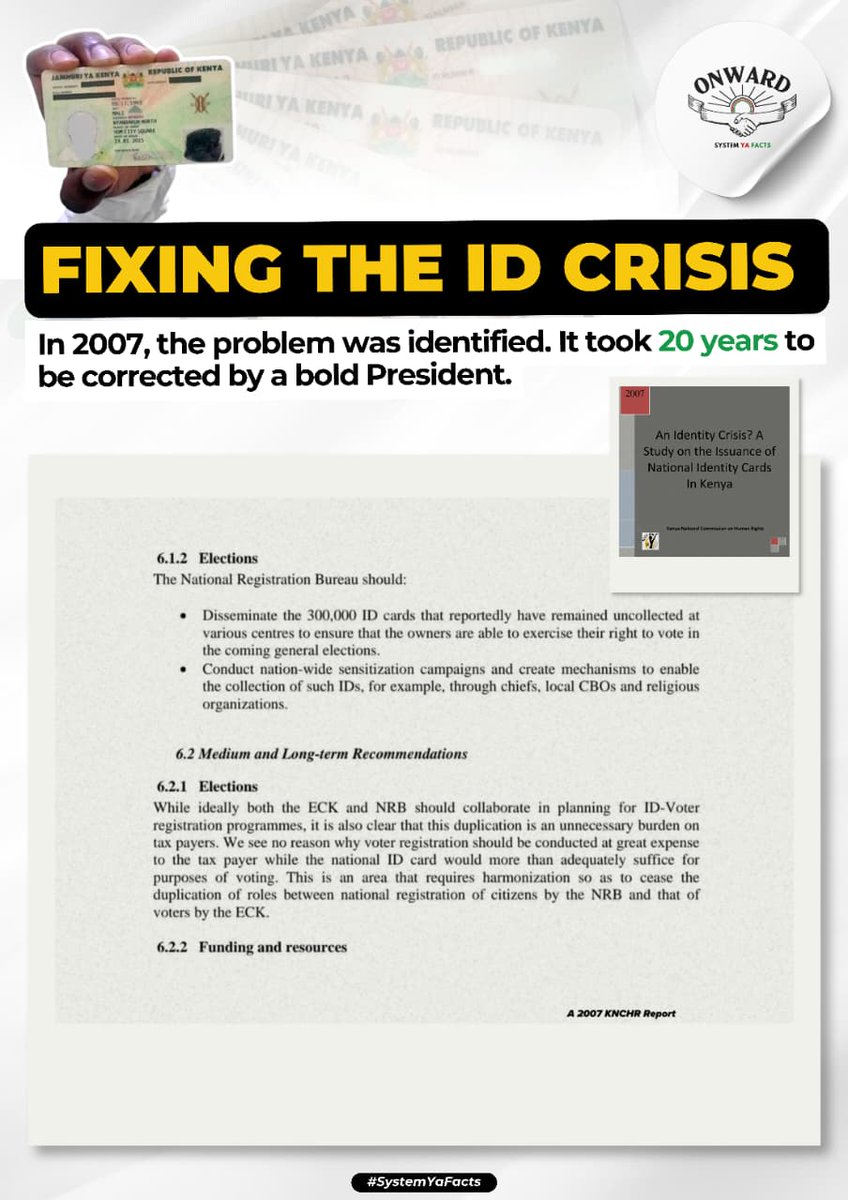
#FixingTheIDCrisis | KNCHR 2007 Report
Marginalized communities faced heavier scrutiny.
Some were treated as outsiders in their own country.
Their applications took much longer.
Trust in government weakened over time.
The report called for equal treatment.
2
16
Winnie🇺🇸🇿🇦🇰🇪 retweeted

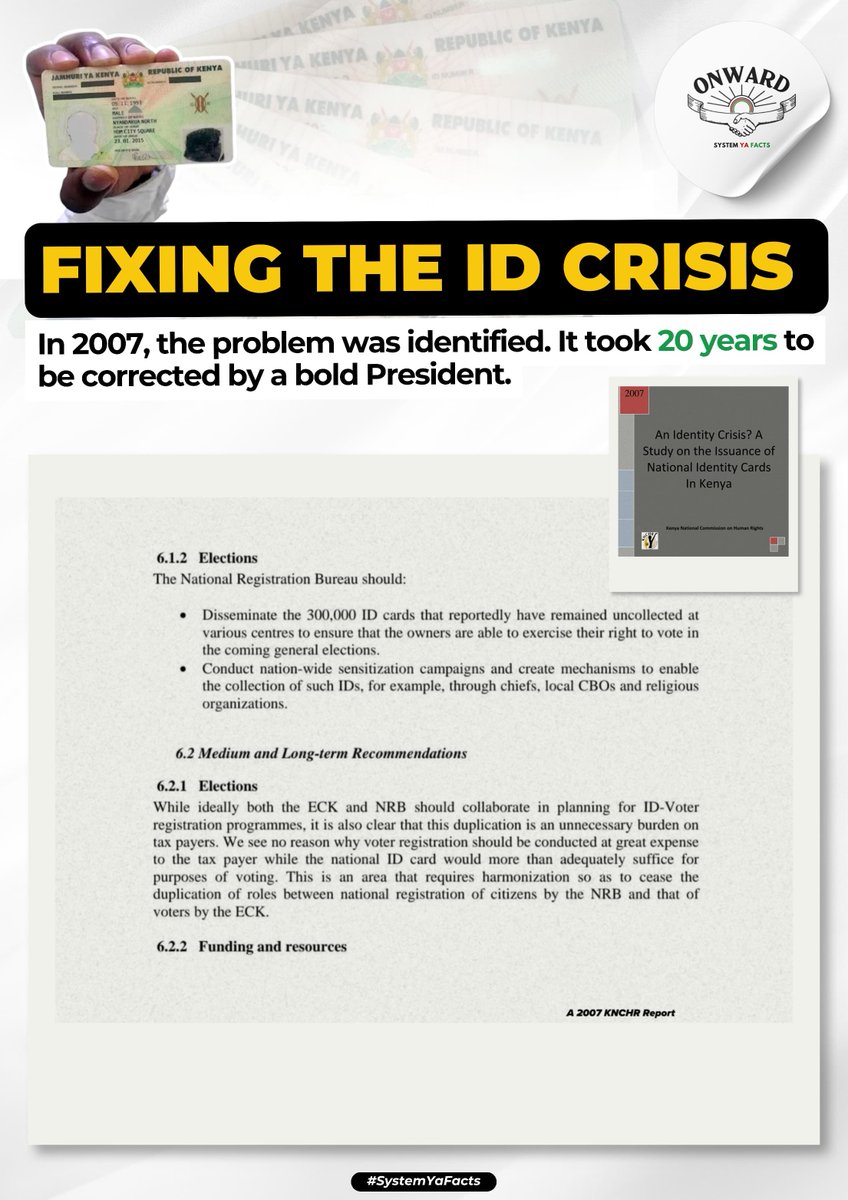
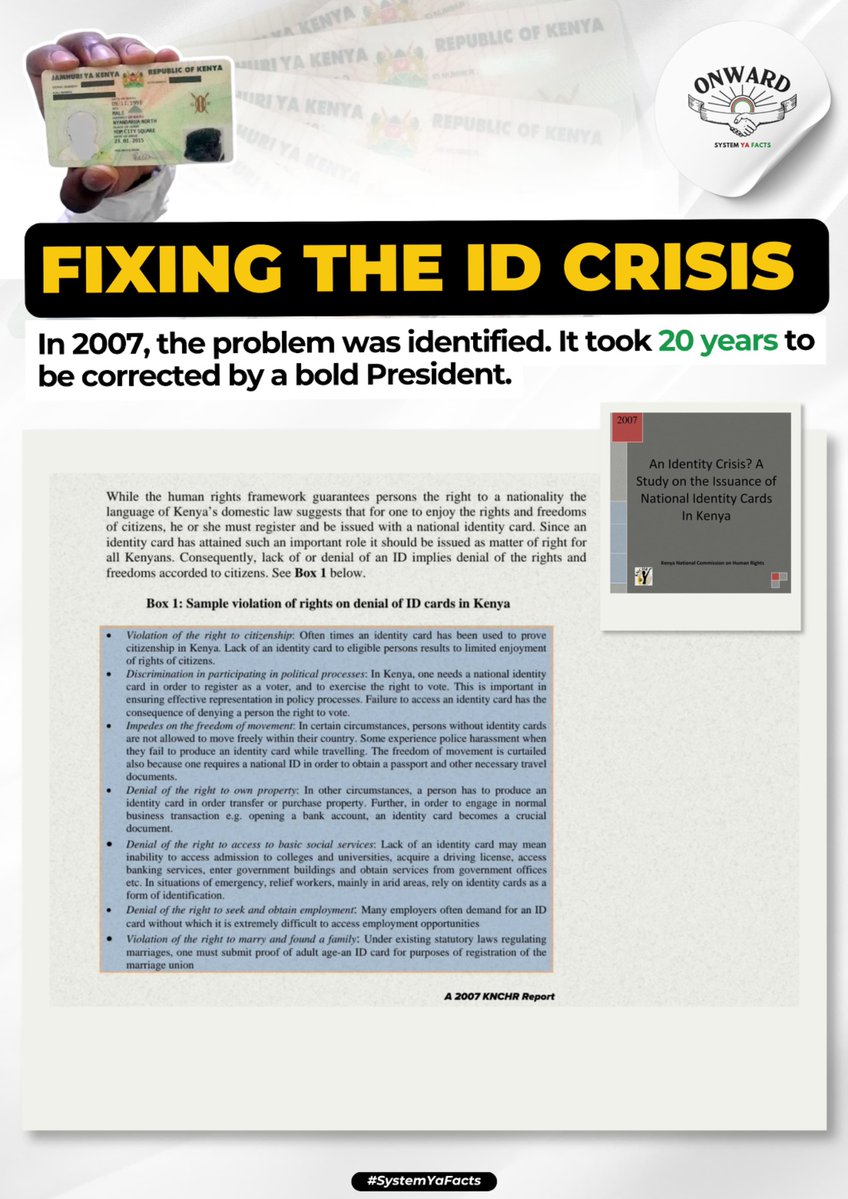
The KNCHR 2007 Report documented instances where citizens were asked to provide additional documents beyond standard requirements, creating confusion and inconsistency in the process #FixingTheIDCrisis
1
8
Winnie🇺🇸🇿🇦🇰🇪 retweeted
#FixingTheIDCrisis | KNCHR 2007 Report
Delays in IDs hurt small businesses.
Owners couldn’t register companies.
Bank loans became harder to access.
Economic growth slowed for many.
The ID crisis had financial costs.
1
9
Winnie🇺🇸🇿🇦🇰🇪 retweeted

Access to a national ID should never depend on a person's ethnicity, location, or family background. This principle was at the heart of the concerns raised by the KNCHR in 2007. #FixingTheIDCrisis KNCHR 2007 Report
5
1
9
Winnie🇺🇸🇿🇦🇰🇪 retweeted

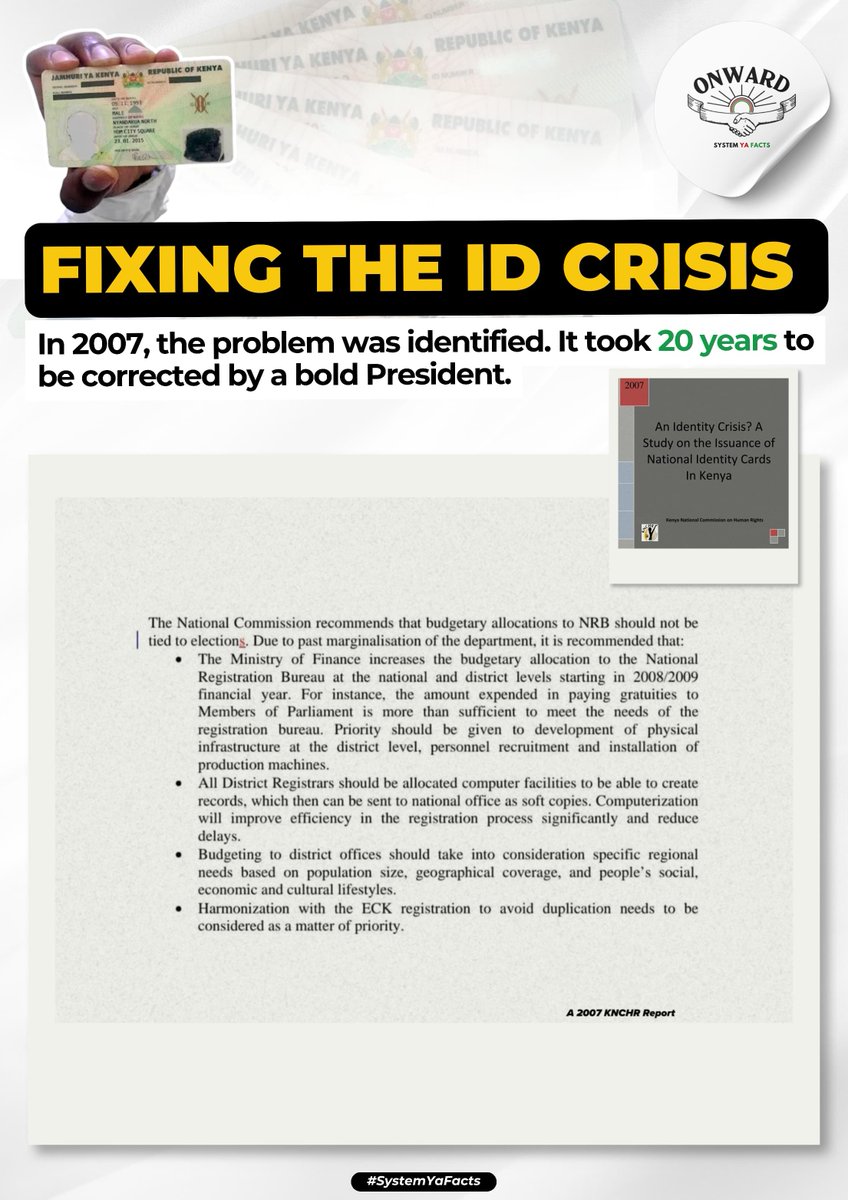
The Kenya National Commission on Human Rights in its KNCHR 2007 Report warned that identity documentation was being used to exclude rather than include citizens. Reforms now seek to reverse that reality. KNCHR 2007 Report #FixingTheIDCrisis
2
12

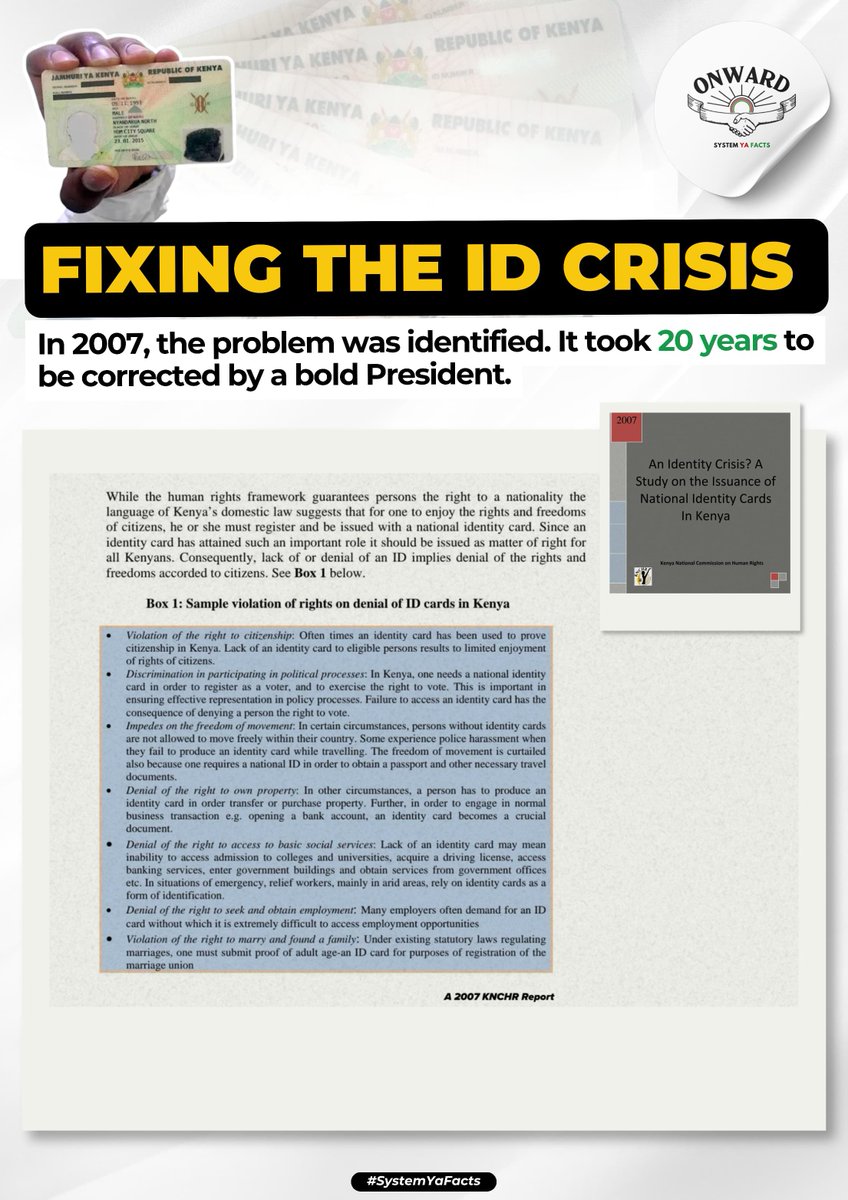
When barriers to identification are removed citizens gain greater access to rights services opportunities and pathways to prosperity and growth. #FixingTheIDCrisis
KNCHR 2007 Report
12
25
Winnie🇺🇸🇿🇦🇰🇪 retweeted

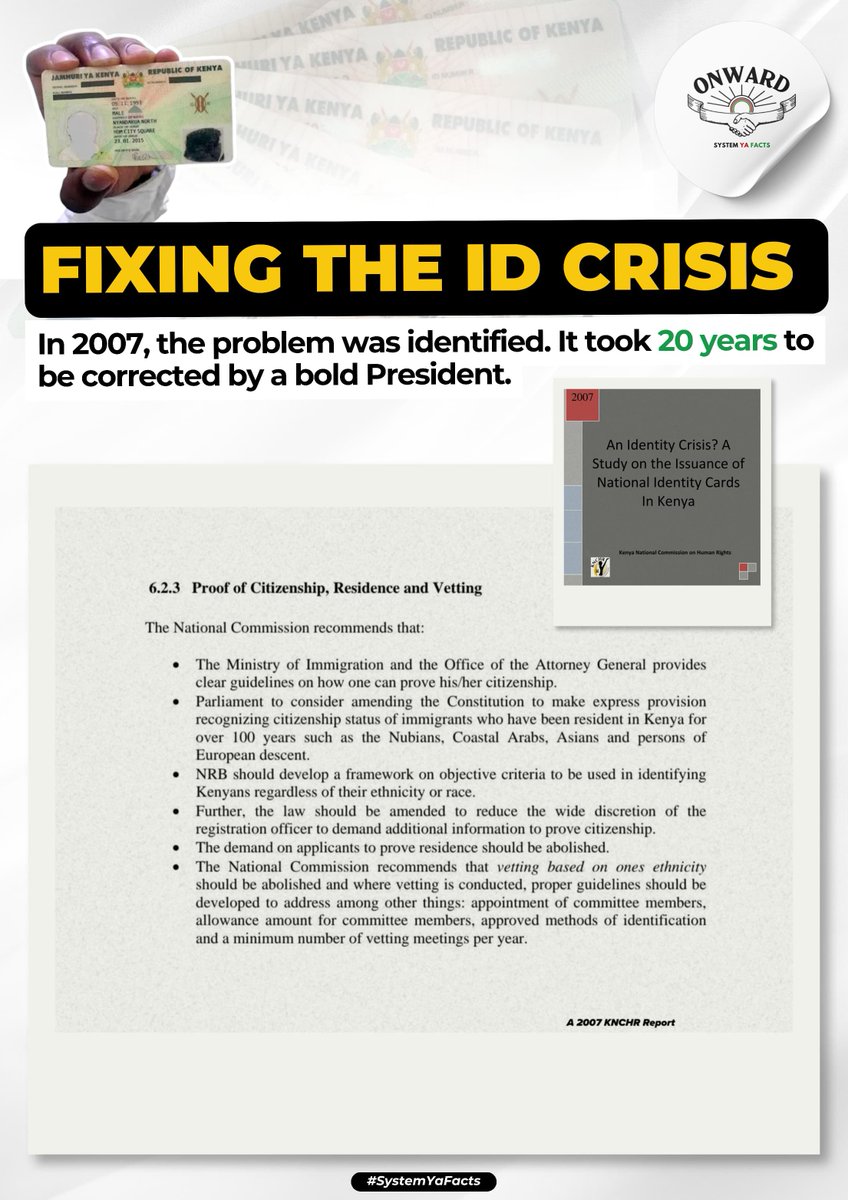
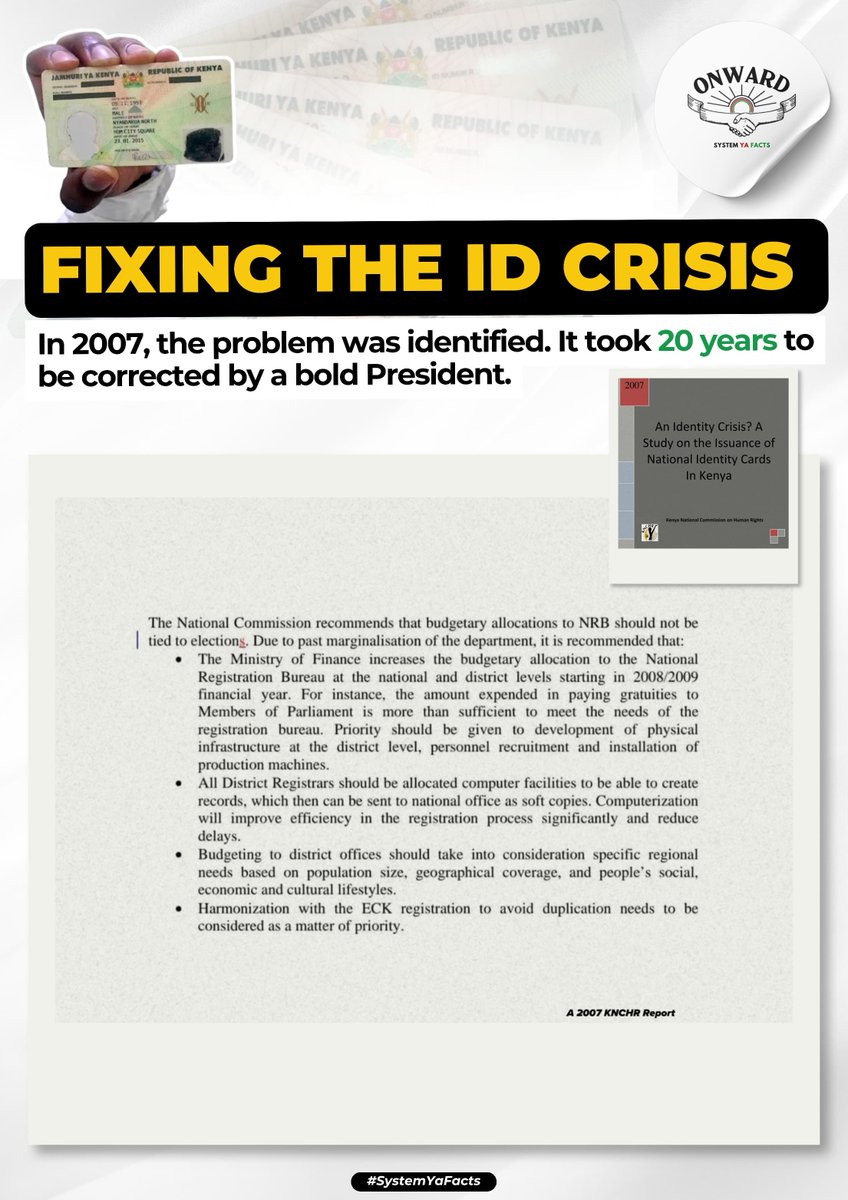
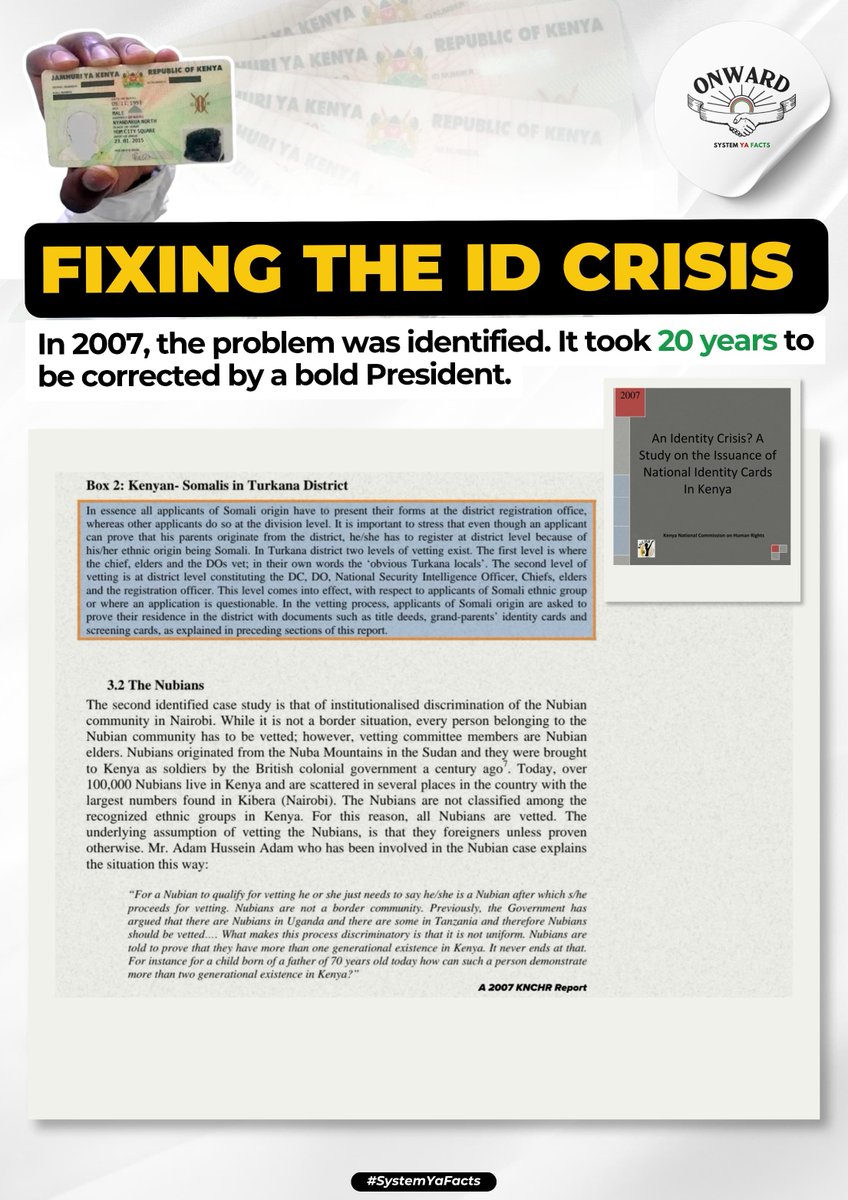
New registration reforms completely removed the discriminatory vetting requirements that targeted specific communities. Every eligible citizen now enjoys a simplified and equal path to obtaining official state identification. #FixingTheIDCrisis KNCHR 2007 Report
1
9
Winnie🇺🇸🇿🇦🇰🇪 retweeted
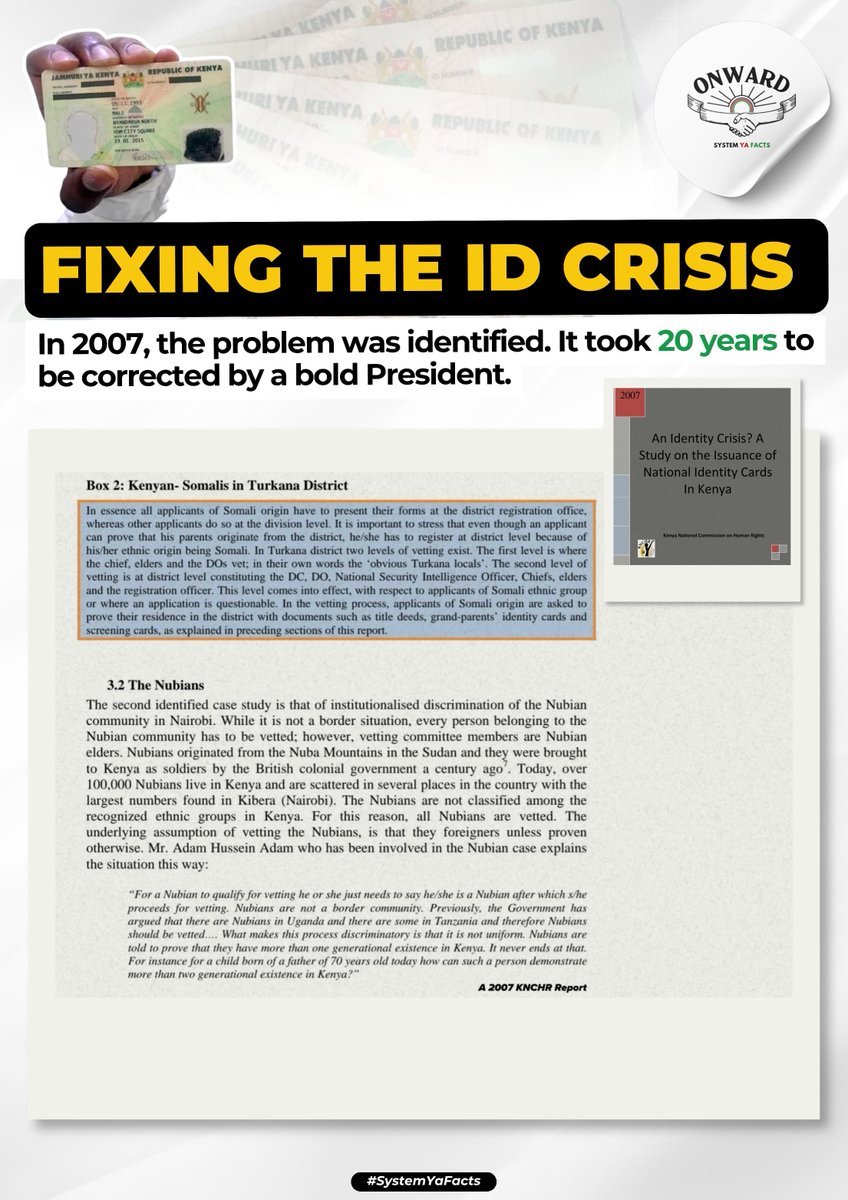
Equal access to identity documents is a restoration of human dignity for marginalized populations. The recent policy shifts ensure that citizenship is no longer a privilege for a select few. #FixingTheIDCrisis KNCHR 2007 Report
1
3
13
Winnie🇺🇸🇿🇦🇰🇪 retweeted
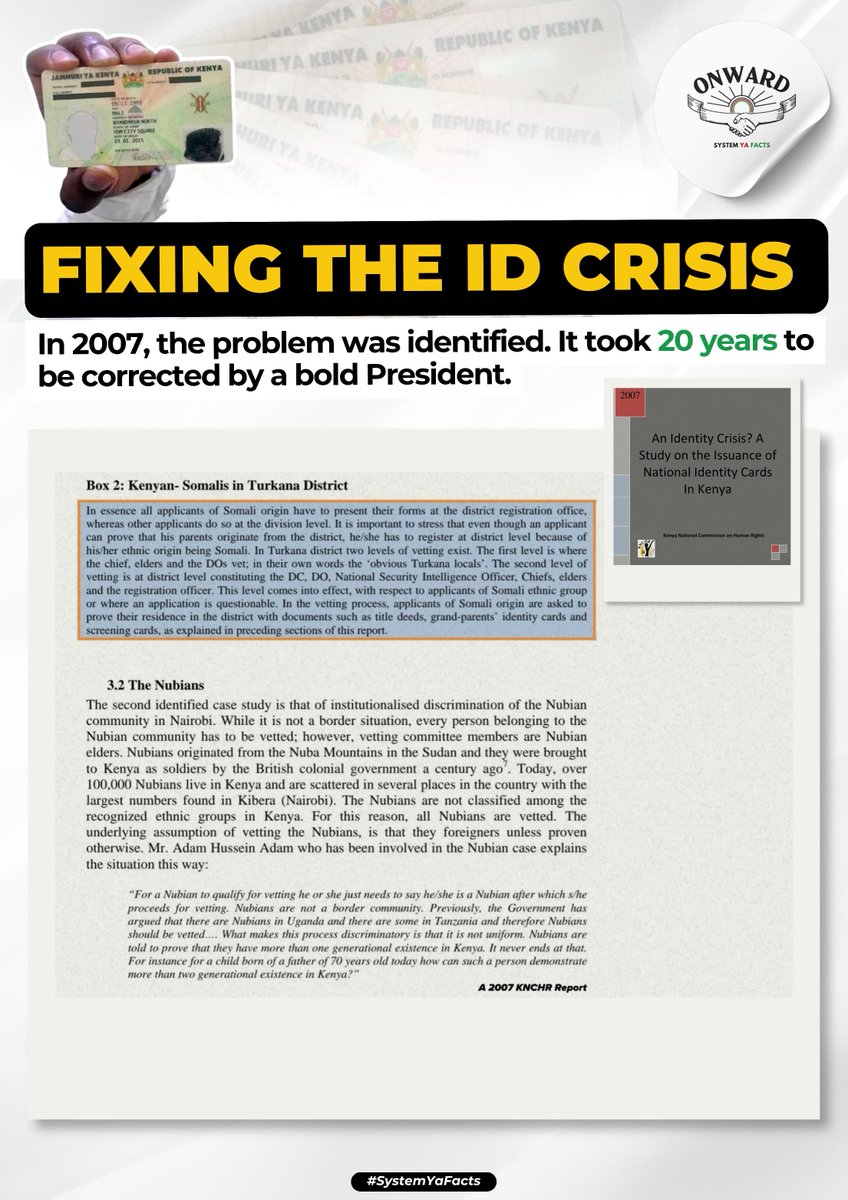
Economic exclusion directly correlates with the lack of official identification documents in remote areas. Providing equal access to cards helps eradicate poverty by enabling formal business registration. #FixingTheIDCrisis KNCHR 2007 Report
1
2
7
Winnie🇺🇸🇿🇦🇰🇪 retweeted
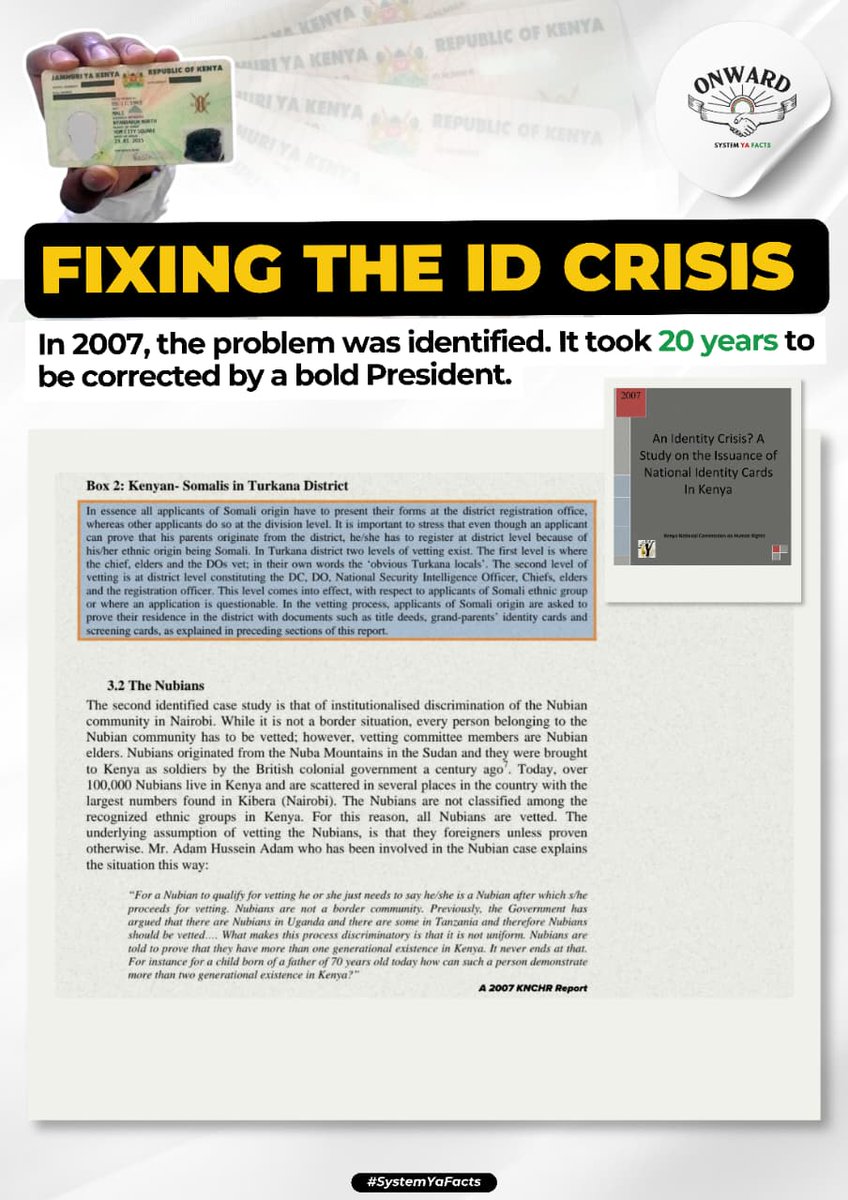
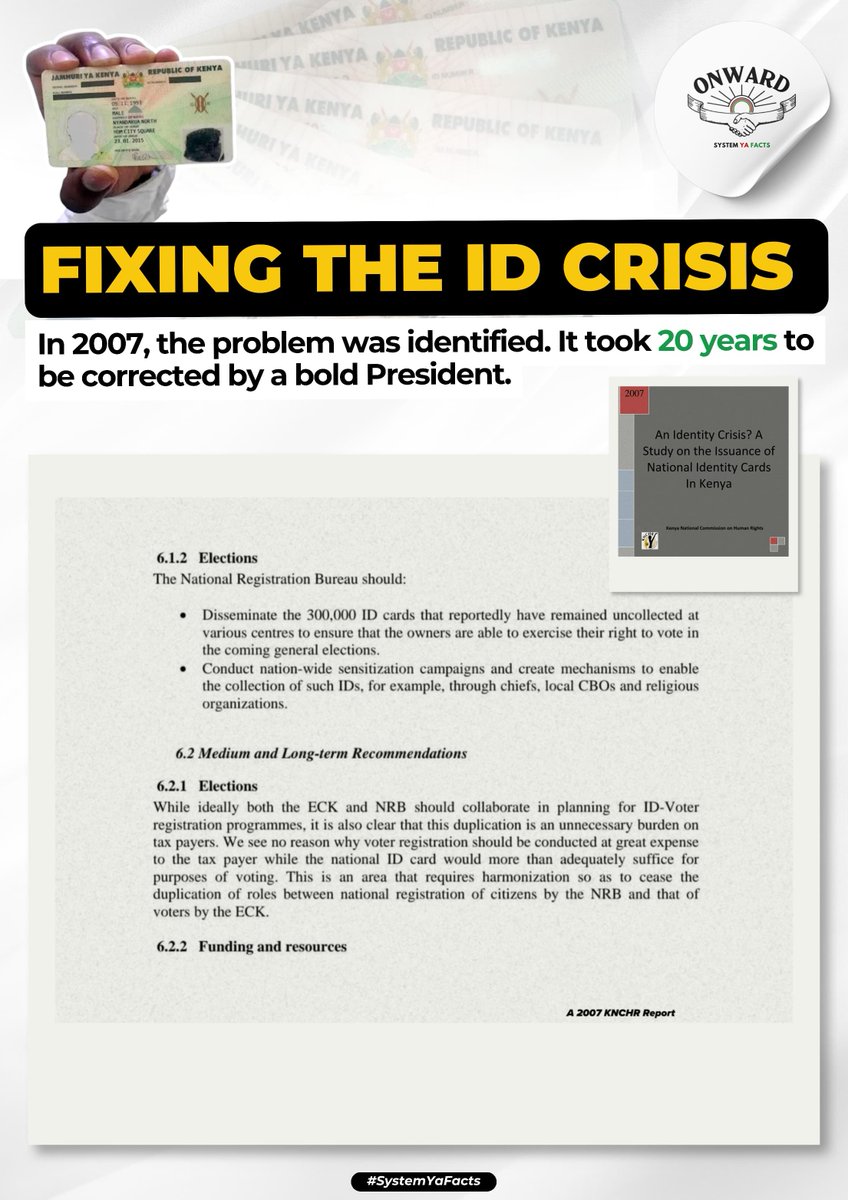
The removal of unnecessary vetting targets the roots of institutional tribalism within civil registration departments. A unified approach ensures every applicant undergoes the exact same legal procedure. #FixingTheIDCrisis KNCHR 2007 Report
1
2
11
Winnie🇺🇸🇿🇦🇰🇪 retweeted
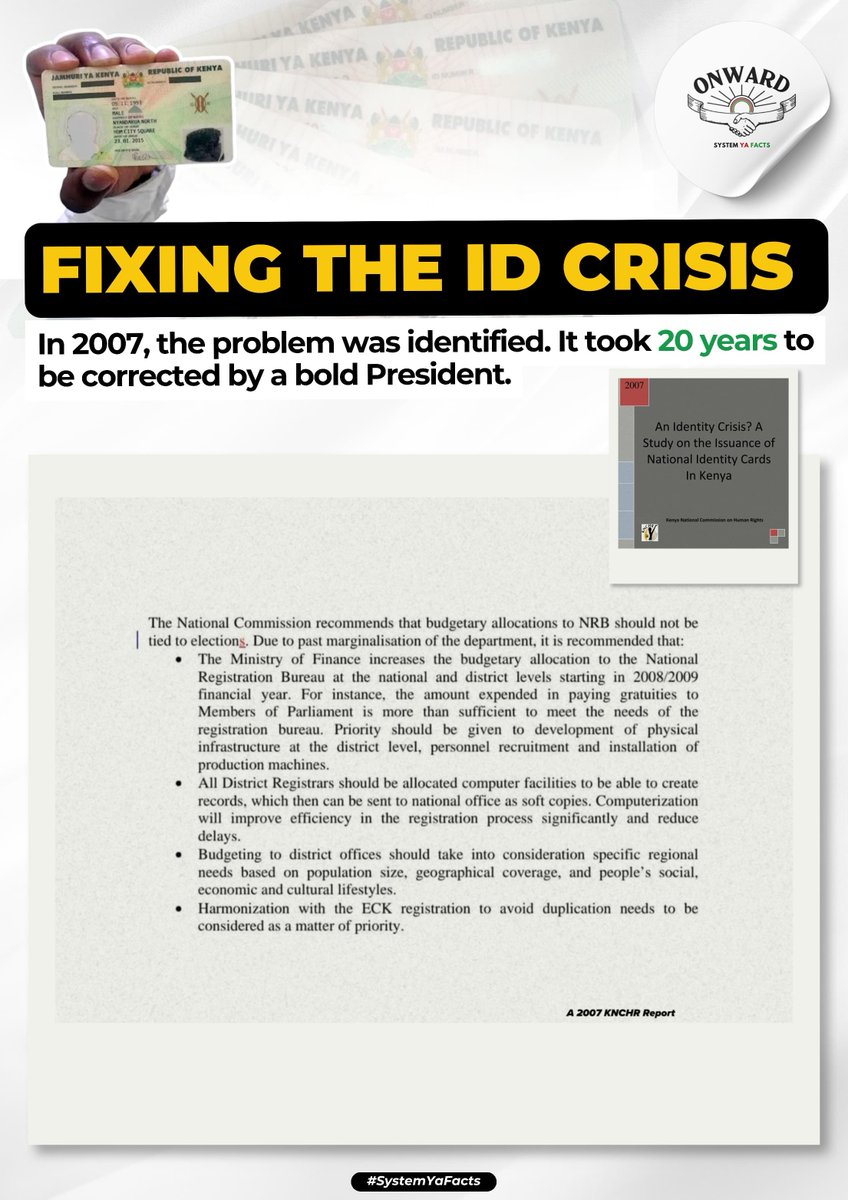
Some Kenyans waited months. Others waited years. Many gave up entirely. The ID crisis created invisible citizens locked out of national life. KNCHR highlighted this injustice back in 2007. #FixingTheIDCrisis KNCHR 2007 Report
3
25
Winnie🇺🇸🇿🇦🇰🇪 retweeted
The removal of discriminatory vetting barriers was not just policy reform. It was a restoration of equality and dignity for every Kenyan who had been unfairly excluded. A correction long overdue. #FixingTheIDCrisis KNCHR 2007 Report
7
18
Winnie🇺🇸🇿🇦🇰🇪 retweeted

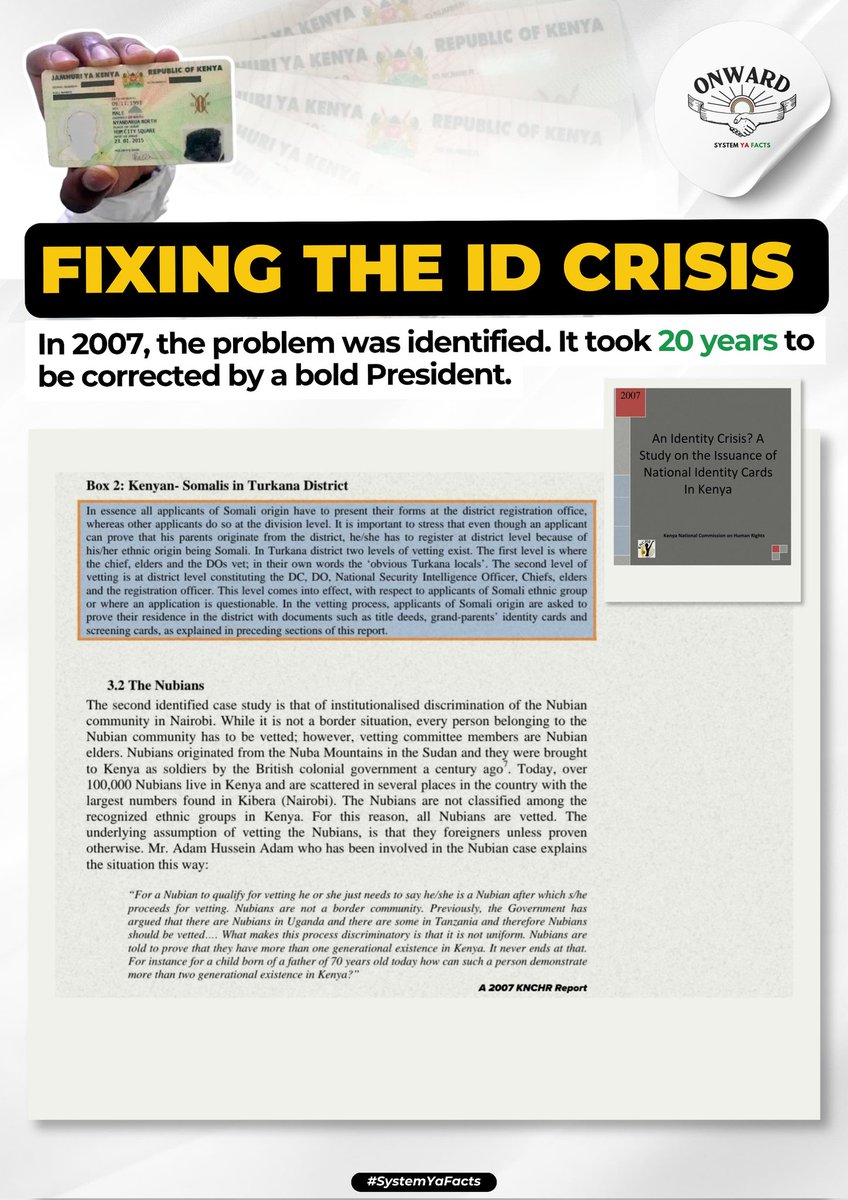
Kenyan Somalis were often subjected to special vetting processes involving chiefs, security officials, and committees, as documented in the KNCHR 2007 Report on identity issuance.
#FixingTheIDCrisis
2
12