
Joined August 2025
- Tweets 39
- Following 27
- Followers 262
- Likes 115
1 Photos and videos

Pinned Tweet

12 Sep 2025
@ikadotxyz @iamknownasfesal Our proposal for the Zero Trust P2P Lending Protocol has been submitted!
1
4
33
2,007
Inkwell Finance 「🦑」 retweeted

May 29
01 · @DagonSolana 🥇
a confidential matching engine. private DEX, sealed-bid auctions, CPMM.
every bid stays secret. prices still clear.
powered by @encrypt_xyz. this is what encrypted capital markets actually look like.

4
10
46
1,907

we are actively working to make encrypt and ika work better for developers based on their needs
if you’re building and have anything that would make your life easier let us know
Apr 28

mock-up development update for @encrypt_xyz
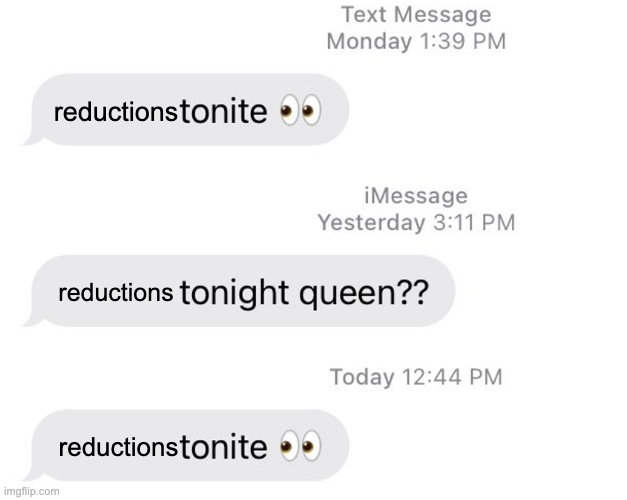
- new reduction functions(sum, min, max, any, all)
- we identified few bugs about graphs and fixed
- pc-token example now has TransferWithRecipient(returning confidential actual transferred value back to CPI call, for to use in DeFi)
- pc-swap example now shows how cross-chain program composability works with CPIs
the examples generally show how everything can work, do not take it as base and use as an example instead, examples are not final and are subject to change
1
5
36
1,690
this is cool but @toly will likely shill @encrypt_xyz FHE clusters for institutions way harder than noir or off-chain execution environments
FHE cluster design (onchain, composable, defi) generates significantly more revenue for @solana
revmaxxing
Apr 16

"There's no such thing as privacy in a box that will solve for everything. What we have is a menu of options for privacy you can choose from."
@catgu_, Head of Product, Digital Assets, @SolanaFndn
6
9
34
1,447
Inkwell Finance 「🦑」 retweeted

Apr 15
why doesn't anchor take the opportunity to start fresh, take what they've learned, and help quasar
4
10
977
Inkwell Finance 「🦑」 retweeted
Apr 15
FHE private dark pool 🤫 @DagonSolana
Apr 15

The future is not going to build itself.
Build the fucking future.
1
4
16
305
what does bridgeless capital markets mean?
how can a @solana program control assets on other chains?
the answer lies in the dWallet primitive, and the 2PC-MPC protocol that is the heart of @ikadotxyz
a dWallet has an address on any network and can sign transactions on those networks
for a signature to be generated, the user and a 2/3 threshold of the ika network nodes are cryptographically required, that's the core of the 2PC-MPC protocol - it's a 2 party computation (user network), where the 2nd party (the network) is actually a nested multi party computation between the ika nodes
the user part means a dWallet is not custodial, the user doesn't trust the ika network, and even if the entire network is compromised, a signature cannot be generated without the user
the network part means a solana program can determine whether a signature is generated, so custody and interoperability logic can be enforced on any asset and any chain. no need for bridges, a solana program can operate with any native asset without wrapping, fragmentation and bridge risk
besides this novel zero-trust structure we achieved breakthroughs with our cryptography research allowing us to dramatically reduce latency, increase throughput, scalability and support more pariticipants than other threshold signature algorithms (for comparison, ika has over 70 participants an can scale to 100s, while the near mpc network has about 8 participants)
the end result is the only fast, scalable and decentralized solution that also gives users cryptographic zero-trust guarantees - packaged as developer infra, for building novel custody and interoperability use cases
btw fun fact: 2PC-MPC uses threshold homomorphic encryption to support this nested approach, where the threshold of ika nodes compute the partial signature homomorphically. we did a lot of research on FHE, which led to @encrypt_xyz and encrypted capital markets
2
13
48
2,189
Inkwell Finance 「🦑」 retweeted
Apr 14
The ecosystem that is coming will require encrypted versions of all protocols/standards.
There is a $15,000 sidetrack for working with @encrypt_xyz and/or @ikadotxyz in the @colosseum
Don't sleep on this opportunity. We aren't @DagonSolana
1
7
32
1,490
Inkwell Finance 「🦑」 retweeted
Apr 11
Got a bit excited when you mentioned "encrypted ordering schemes" as a mitigation category.
Our FHE-encrypted private matching system is built on @solana with @encrypt_xyz. The @colosseum awaits.

2
2
14
439
Inkwell Finance 「🦑」 retweeted
Apr 11
We're deep into the weeds of what is possible with the current state of the encrypt-pre-alpha devnet.
Can't wait to see what's coming next.

myself and @iamknownasfesal are on non stop calls with @colosseum builders, also now through the weekend, so many motivated people want to build something exciting on @solana
@ikadotxyz and @encrypt_xyz can help your project stand out
comment here or reach out to @iamknownasfesal we’ll hop on a call and give you product / implementation advice
1
3
21
430
Inkwell Finance 「🦑」 retweeted

Apr 1
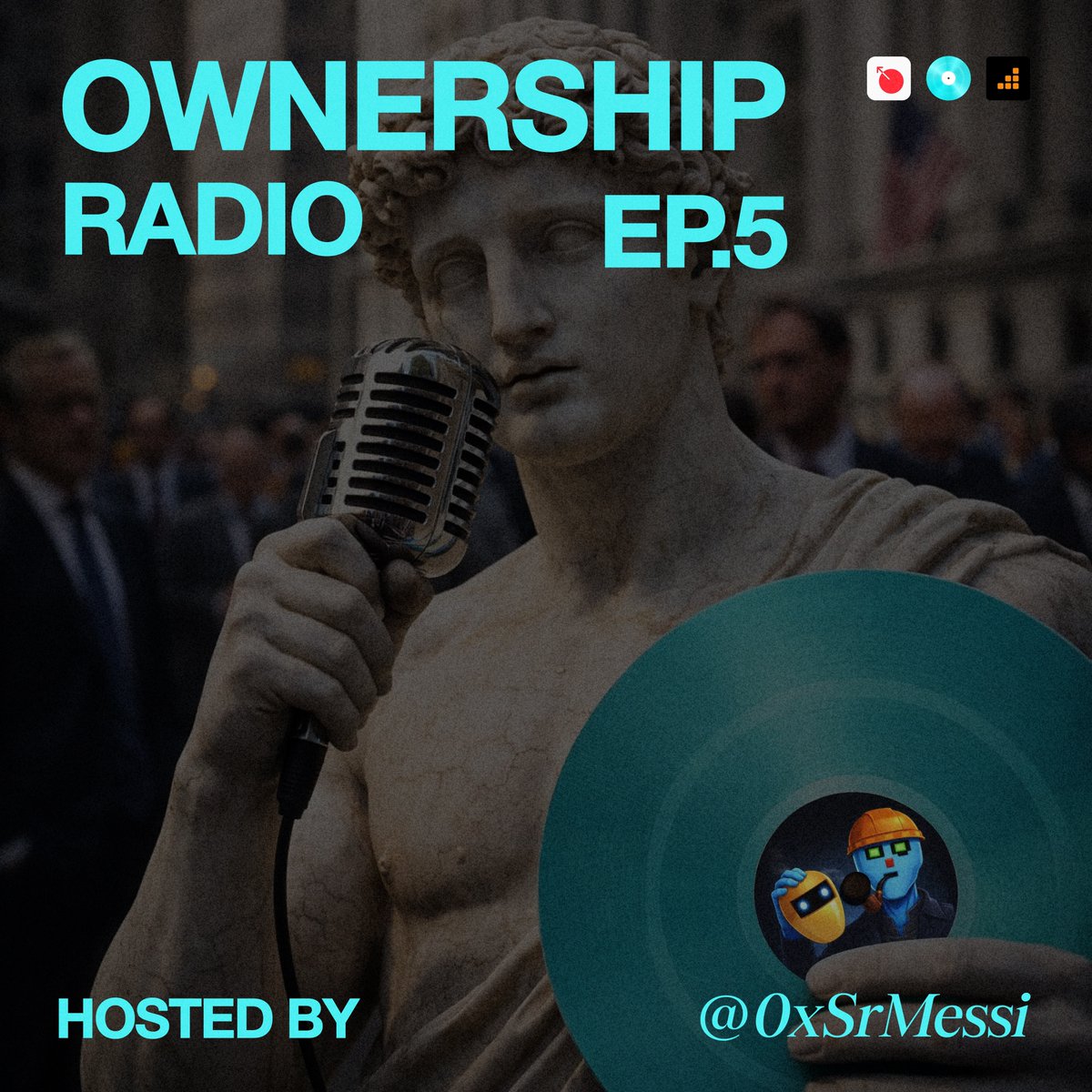
Ownership Radio #5. Sunday. 3PM UTC.
> Interview with @ikadotxyz, @encrypt_xyz and @__Inkwell on their move to @Solana
> Interview with @BedrockFndn on their new capital formation system
> Other @MetaDAOProject and @futarddotio news & proposals
Hosted by @0xSrMessi and @8bitpenis
Set your reminder with the link in the replies 🎙️
14
12
51
9,024
Inkwell Finance 「🦑」 retweeted
Mar 31
I’m ready to encrypt
Mar 31
Encrypt is coming to Solana.
Fully homomorphic encryption for the Solana Virtual Machine. Applications that compute on encrypted data without ever decrypting it.
Encrypted Capital Markets.
2
23
419
omg @Lmvdzande is a legend and @__Inkwell is the first @ikadotxyz builder to consider futarchy! i might have to retract everything i ever said about futarchy if it helps them 😲
2
3
16
525
Mar 11
What's behind the score:
- 10 behavioral analyzers (revenge trading detection, wash trade flagging, Kelly sizing)
- 4 ML models with heuristic overlay
- Revenue oracle pipeline: Plaid Polymarket EVM Solana DeFi flows
- Ika 2PC-MPC dWallets: funds locked to whitelisted destinations only
The backend is a UX layer. The enforcement is pure on-chain.
Mar 11

Leviathan by Inkwell Finance
Credit scores enhanced with:
• on-chain wallet history
• bank account data
• prediction market behavior
• social credit signals
Designed for revenue-based financing and programmable credit.
1
5
18
674
Revenue that cannot run. No courts. No covenants. Just code that enforces.
Leviathan: the Hobbesian sovereign for on-chain lending. 🦑

1
5
16
572
Inkwell Finance 「🦑」 retweeted
Mar 2
Warning 🚨 these builders are coming for the whole web3 game.
@goNativeCC
@umiapp_
@WaaPxyz
@KairoGuard
@rheifinance
@__Inkwell

17
30
132
8,821
Zero collateral. Revenue-backed. Patent pending. This is what happens when you fix enforcement at the cryptographic layer instead of patching it with liquidation bots.
Mar 7
Every on-chain lender right now requires 150% collateral.
You deposit $150K to borrow $100K. That's not lending. That's a pawn shop with extra steps.
We do 0% collateral. Revenue-backed. Because when the money can't run, you don't need collateral. You need cashflow.
1
6
10
508
Our founder is finally talking about what we've been building. Cryptographic enforcement for on-chain lending. No flight risk. No collateral. Just math.
Mar 6
I'm building a system where borrowed money literally cannot be stolen.
Not "we'll sue you." Not "we'll slash your collateral."
Cryptographically impossible. The transaction gets rejected before it hits any chain.
Patent pending. Thread soon.
3
9
358
Inkwell Finance 「🦑」 retweeted

Mar 1
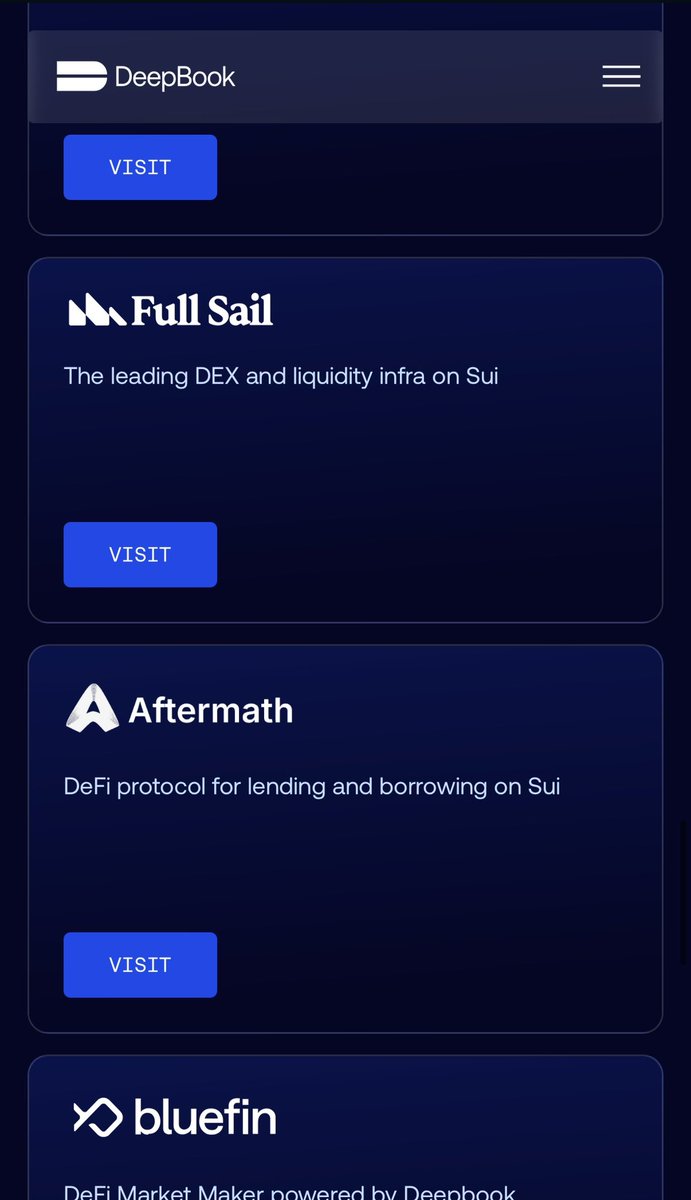
Ecosystem partner looks good here!
Honored to be recognized on @DeepBookonSui with other legendary builders on SUI like @AftermathFi and @bluefinapp.
We’re the people’s exchange — the leading DEX and liquidity infrastructure on Sui. 🌊 ⛵️
6
6
35
3,273