
Smart Business Runs Onchain | Discover the Internet of the Future at dcft.site
Joined December 2024
- Tweets 530
- Following 231
- Followers 83
- Likes 1,142
57 Photos and videos





Pinned Tweet

2 Dec 2024
Crypto is the future currency of the Internet, and blockchain is what will make this possible. Don't miss out on this journey.
View this course or request a private educational consultant at dcft.site 🚀
1
3
5
521
Jan 20
This is so huge.
X published its algorithm on GitHub.
Not only do you now get to see the real code powering your feed, but also we’re going to see a massive buildout of this algorithm from the crypto snd broader X community.
Think about the efficiency and quality gains this system is going to get from all of these external builders.
Crypto integrations. Targeted advertising models. AI implementation. And so much more.
The open sourcing of the internet is critical for its continued development.
github.com/xai-org/x-algorit…
1
12
Jan 15
It feels to me like Ethereum is much more future-proofed than other assets, especially with the new framework rolled out.
The implementation of quantum resistant verification mechanisms seems to be the biggest hurdle, yet one that’s being actively solved.
But if you look at all the other requirements they’re already actionable:
- Ethereum continues to scale its TPS through zk, peerDAS, and tons of other ways
- account abstraction is adding even more programmability to wallets making them AI compatible
- $ETH staking queue is growing, more validators are popping up, and decentralization in the network is growing, making it even more censorship resistant
7
Jan 13
Ethereum is seeing insane weekly growth:
- continuously widening lead in stablecoins
- new network ATH of 57.8k TPS
- continued growth of dApp dominance
$ETH price underperformance shouldn’t be considered a sign of weakness.
All you need to do is look at onchain metrics to see that the chain is quietly starting to live up to its mission of being the world’s decentralized state machine.
1
23
Jan 11
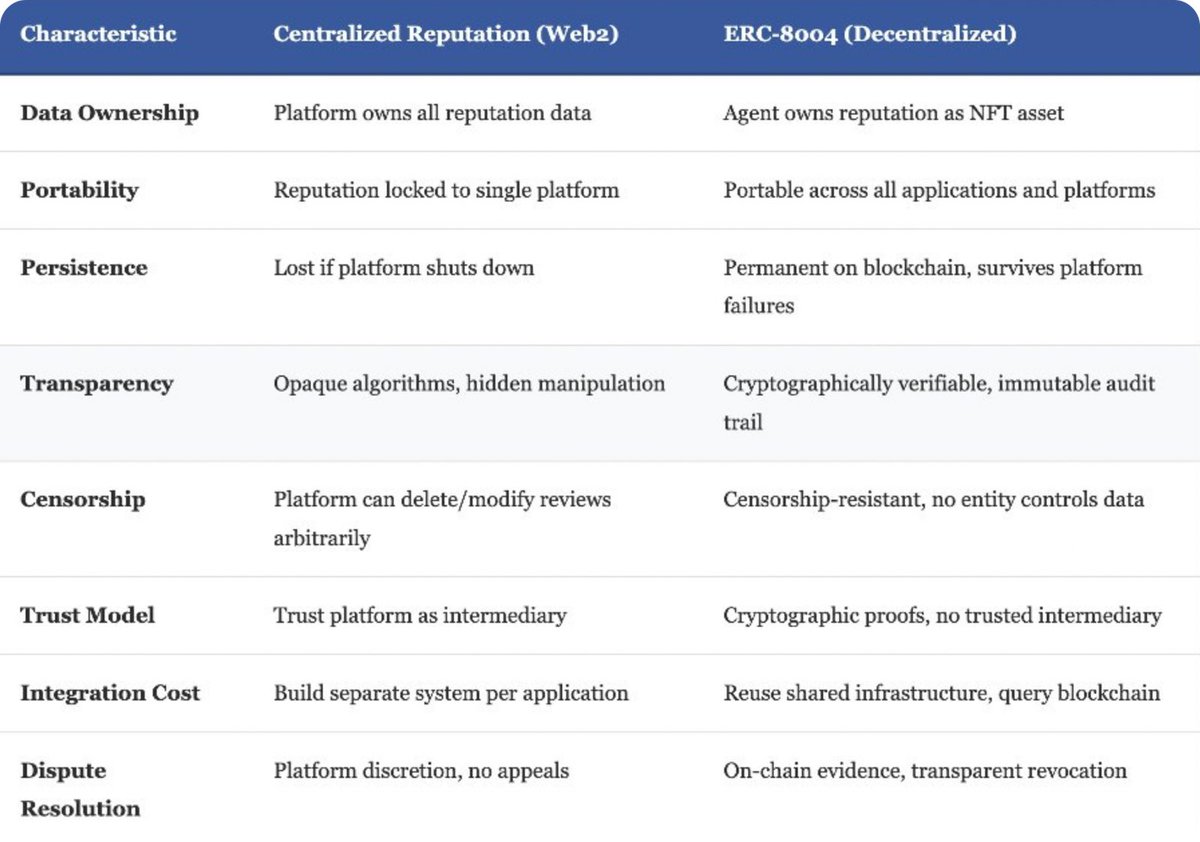
The launch of ERC-8004 is going to solve a huge problem in AI: trust.
This is why I love decentralization as a service - you can literally build all of these trustless mechanisms that hold every entity onchain, even AI ones, accountable.
Imagine telling someone at ChatGPT or Grok, “hey we’re going to implement a proposal that lets all AI agents essentially maintain their own track record so anyone can go and verify that each agent is actually accurate and not operated by scammers” and then make this all publicly available.
No hidden registries, no gatekeeping, no manipulation.
This is truly how you build an agentic economy.
Table courtesy of @Bankless
1
25
Jan 6
So you’re telling me that Trump is taking over Venezuela to
get to their oil
import it into US
drive gas prices down
weaken inflation
cause more rate cuts
pump crypto??
1
27
Jan 5
I’ve been doing a lot of research into decentralized digital IDs as an alternative to centralized systems.
Blockchain literally has the capability to revolutionize compliance and customer KYC.
Think about it - selective data exposure through ZK proofs, locally held private keys to personally sign each interaction, programmability for enhanced integration, and best of all, a distributed ledger system to prevent tampering and drastically limit the impact of hacks
The only thing left is for someone to build this…
1
12
Jan 4
Will 2026 be the year of the AI prediction markets?
You have the combination of historical data with the most advanced analytics tool ever.
It seems like we’ve corrupted prediction markets to only focus on gambling and have forgotten the notion that they can be used to tackle media bias and misinformation.
Why can’t these markets act as both a tool for information and a way to monetize your perceived edge?
If we continue to fall down the degenerate rabbit hole and avoid seeing the real value of these tools particularly in combination with AI predictive analytics, legacy media will slowly absorb this tool and make it seem obsolete.
1
1
2
23
27 Dec 2025
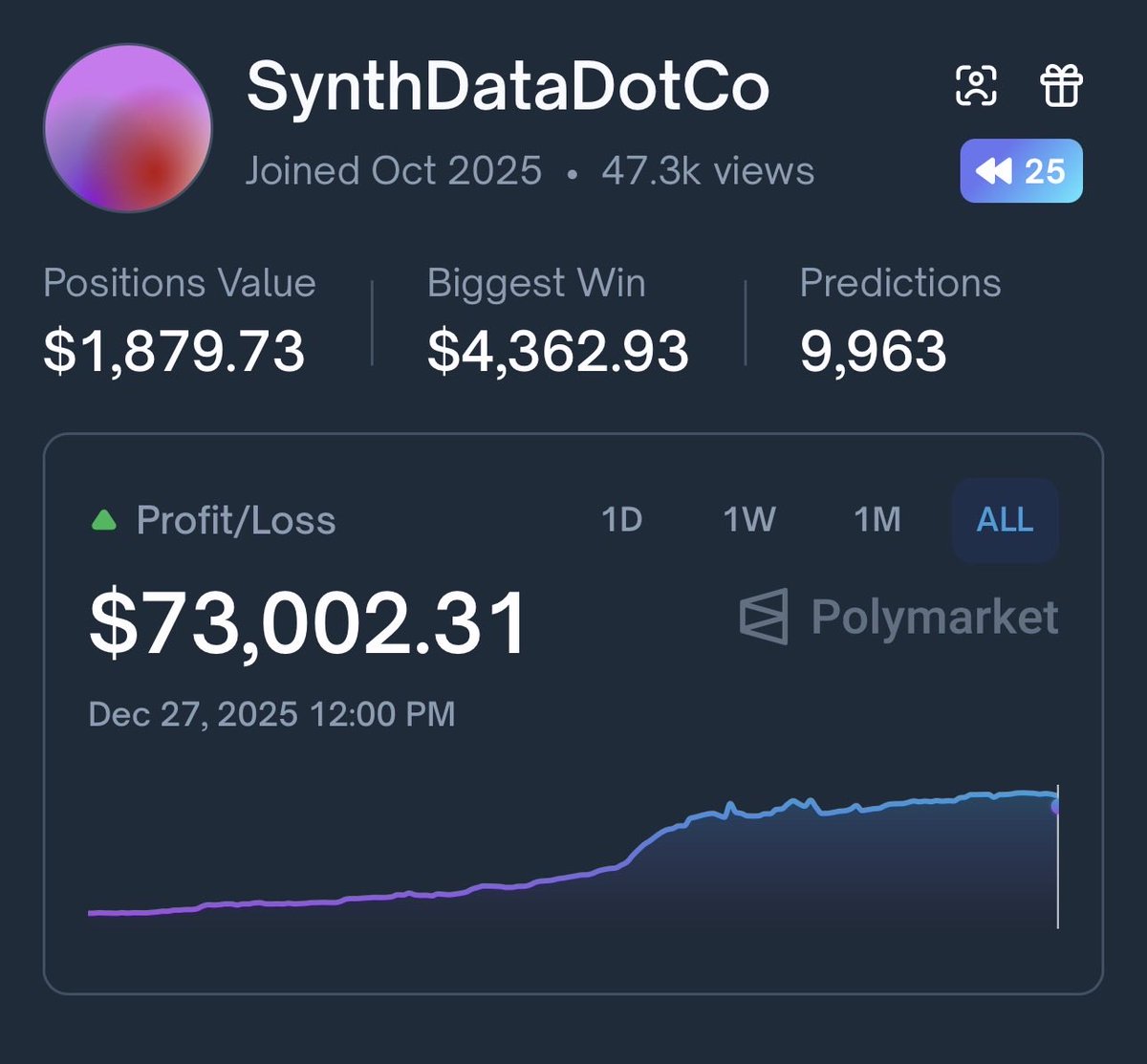
Crazy work happening at @SynthdataCo
Everyone’s looking at AI as a form of automation for coding, writing, etc. but the idea that we can use it to game prediction markets is slowly being realized as well.
AI can (keyword, CAN) be very good at analyzing datasets and spotting unseen trends. With the gamification of our society currently occurring through every single sports betting/predictions app, it seems like this should be really taken advantage of.
Think about how much data we have on sports - AWS literally collects every single movement that occurs on a football field. Let AI sort through this data, find trends, and give you the best possible odds of winning.
Amazing but also a little scary
1
48
5 Dec 2025
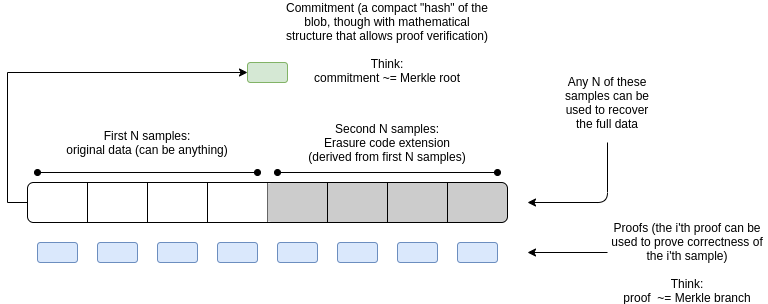
The PeerDAS implementation from the recent Ethereum update is huge for blockchain infrastructure.
The idea of sharding in blockchain revolves around each validator that’s running the network only having to view a small portion of the total incoming data instead of the entire dataset of txs.
Less data -> less processing power per validator required -> easier it is to run a node.
The goal is to have individuals/businesses that contribute to a blockchain to be able to run a node that’s as light as possible to reduce hardware requirements. This is a major step towards achieving that goal.
3 Dec 2025

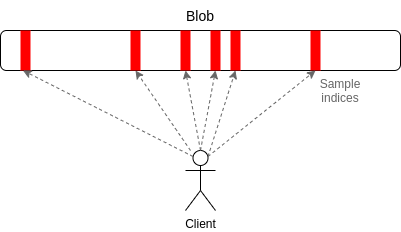
PeerDAS in Fusaka is significant because it literally is sharding.
Ethereum is coming to consensus on blocks without requiring any single node to see more than a tiny fraction of the data. And this is robust to 51% attacks - it's client-side probabilistic verification, not validator voting.
Sharding has been a dream for Ethereum since 2015 , and data availability sampling since 2017 ( github.com/ethereum/research… ), and now we have it.
That said, there are three ways that the sharding in Fusaka is incomplete:
* We can process O(c^2) transactions (where c is the per-node compute) on L2s, but not on the ethereum L1. If we want to scaling to benefit the ethereum L1 as well, beyond what we can get by constant-factor upgrades like BAL and ePBS, we need mature ZK-EVMs.
* The proposer/builder bottleneck. Today, the builder needs to have the whole data and build the whole block. It would be amazing to have distributed block building.
* We don't have a sharded mempool. We still need that.
But even still, this is a fundamental step forward in blockchain design. The next two years will give us time to refine the PeerDAS mechanism, carefully increase its scale while we continue to ensure its stability, use it to scale L2s, and then when ZK-EVMs are mature, turn it inwards to scale ethereum L1 gas as well.
Big congrats to the Ethereum researchers and core devs who worked hard for years to make this happen.
30
20 Nov 2025
Hang on why did I just learn that @Zcash is cooking??
You have a chain operating on the same principles as Bitcoin and is an OG protocol that simultaneously uses ZK proofs to verify all transactions?
Imagine the benefit of this for businesses: entirely auditable and transparent but still enables private transactions for P2B payments. You can just flip between transparent and shielded mode.
And now with the Near Intents being enabled you can use $ZEC as a way to hide your transactions on other chains by breaking the link of addresses??
Wild.
31
18 Nov 2025
Learned about @zama recently and 2 things really stood out to me:
1. Real use of Fully Homomorphic Encryption (FHE) to create secure transactions
2. Built as a security layer for existing chains rather than being its own
Not only are they using FHE, which processes transactions without decrypting them to lower risk of exposure, but it does so as an attachment rather than a separate system.
No fragmented liquidity effects or starting over with a new chain, you just implement it on top of the EVM chain you’re already using.
16
14 Nov 2025
All of this time I thought I understood the path to Ethereum scalability. I was so wrong.
Ethereum researchers are literally building towards a future where not only do we see the chain scale immensely but it does so through proofs so succinct that you could run them from any local piece of hardware.
Imagine skipping every middleman (which there are already so few of in crypto) and literally being able to prove your transaction directly on your phone as soon as it’s placed.
That’s a future I want to build towards.
Amazing episode @Bankless and props to @ethereumfndn you guys are creating a better world for tomorrow 🙏🙏🙏
youtu.be/k53WcsldV1Y
35
10 Nov 2025
Opened a new stock brokerage account and realized how much it sucks compared to crypto.
Made the mistake of depositing funds on Friday, now can’t buy stocks until at least Tuesday because of cash settlement time.
Can’t buy fractional shares.
Can’t even earn yield on my cash balance?? Smh.
All of the things I’ve taken as a standard in crypto are just unavailable. It’s crazy how much of a disparity there is.
This is why stocks need to move onchain. Let’s get this going.
1
25
15 Oct 2025
This is something that I haven’t really thought about but is clearly very true.
You see all these stables launching bc every company obviously wants their own so they can have more control and higher revenue retention.
But there are still winners in this sector because they’ve not only mastered distribution, but have created a clear fit for their product through either vertical or horizontal integration.
$USDe has integrated itself as a go-to on so many DeFi platforms (horizontal integration) while $USDH is used across all aspects of Hyperliquid’s chain (vertical integration).
Why would I use $PYUSD or $mUSD when I have more reliable and widely accepted stables that also offer me benefits as a holder?
Great article diving into this subject.
8 Oct 2025

34
15 Oct 2025
Mentioned this in my last thread but I’ll say it again - public blockchains provide liquidity for businesses. That’s not only good for TAM but for general operations.
Look at what happened with @binance last week and the $USDe token depeg on the platform.
The token itself didn’t depeg in value, Binance literally didn’t have enough liquidity to maintain it. But on a platform like @CurveFinance it was still pegged to its dollar value.
Decentralization has its strengths and the more businesses recognize this, the more they will benefit.
5 Oct 2025

Crypto adoption has been soaring. As regulatory clarity emerges, businesses are scrambling to get exposure to this new asset class, and more importantly, become experts in the underlying technology making this possible: blockchain.
With a total market cap of over $4 trillion, the crypto sector is not one to be overlooked. But with a new market comes new risk, and the question on everyone’s mind is:
What steps can businesses take to utilize blockchain technology, and how can blockchain expand their Total Addressable Market to reach untapped consumers?
32
5 Oct 2025
Crypto adoption has been soaring. As regulatory clarity emerges, businesses are scrambling to get exposure to this new asset class, and more importantly, become experts in the underlying technology making this possible: blockchain.
With a total market cap of over $4 trillion, the crypto sector is not one to be overlooked. But with a new market comes new risk, and the question on everyone’s mind is:
What steps can businesses take to utilize blockchain technology, and how can blockchain expand their Total Addressable Market to reach untapped consumers?
1
55
5 Oct 2025
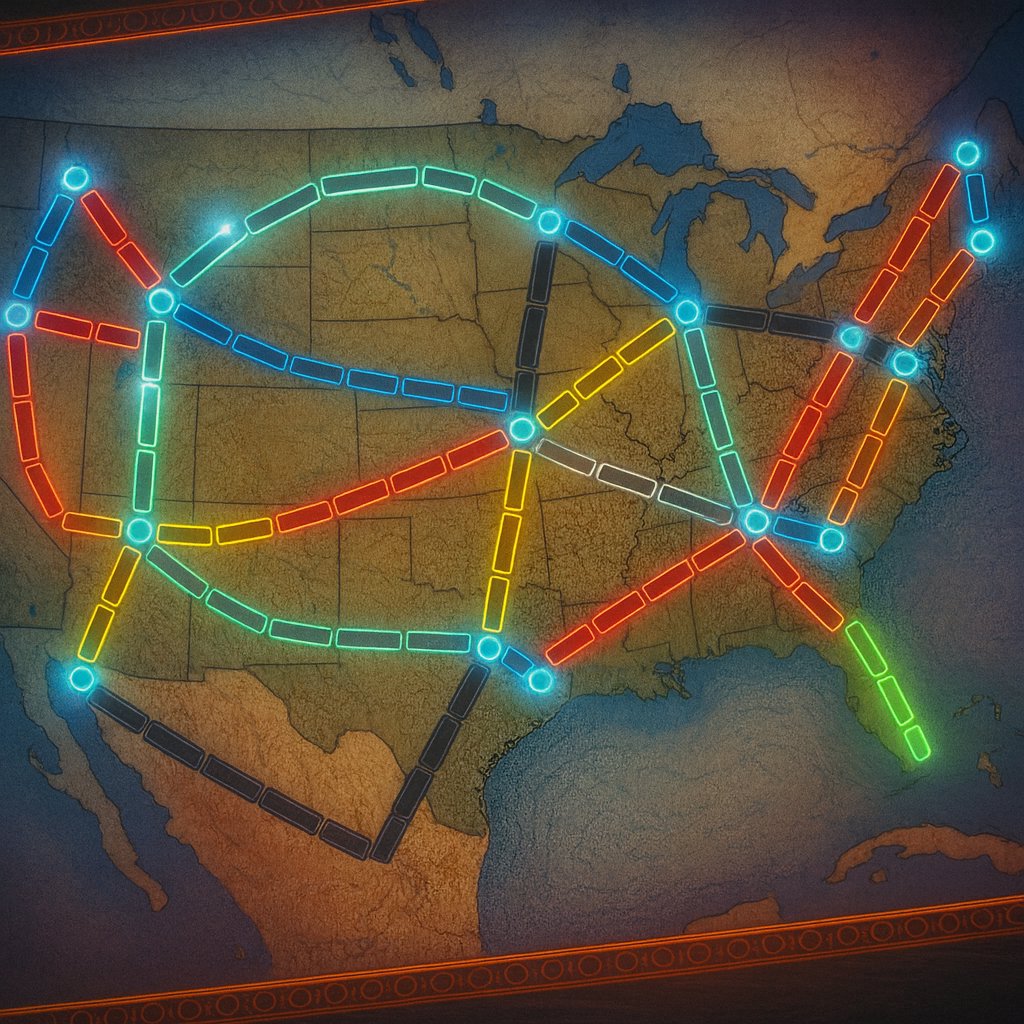
Ticket to Ride - a blockchain analogy
There’s a board game called Ticket to Ride, where players compete to build train routes between cities on a map. Player score is determined by the length of the route and the number of routes built, and the player with the most and/or longest routes wins. Think of this as traditional IT infrastructure where companies invest in proprietary rails to serve their customers, and the one with the largest market share and highest efficiency (i.e. most routes) beats out competitors.
While the original version is in the United States, there’s also a Japan version that has one key difference - bullet trains. These are special routes that can be used by anyone to complete their own route, but at the end of the game, the player that’s built the most bullet train routes gets extra points.
This reflects the blockchain paradigm shift: public blockchains provide standardized infrastructure rails for any business to use and build on, but the protocol that builds the most efficient systems (i.e. the most bullet trains) gets rewarded.
Think about Uniswap, who pioneered the Automated Market Maker (AMM) model. Tons of different decentralized exchanges benefit from their AMM, yet Uniswap sees the most volume and collects huge amounts in fees. However, there is still competition amongst DEXes to be the go-to provider, leading to aggressive innovation and increased efficiency with every new protocol launched.
Blockchain’s shared infrastructure creates huge TAM effects for businesses. Any business moving onchain can tap into scalable, interoperable networks that build on existing systems, while simultaneously spurring competition and encouraging innovation and growth.
Stay onchain, and stay bullish.
1
16
5 Oct 2025
If you enjoyed this thread and want to learn more about these types of systems or have questions about any of the ideas discussed, check out dcft.site for a free course on the fundamentals of blockchain or to reach out for a consultation!
Become a blockchain pro today!
10