
Making moves before the rest follow
Joined February 2026
- Tweets 2,628
- Following 696
- Followers 480
- Likes 1,609
631 Photos and videos

Pinned Tweet

Mar 4
This image is more than just a meme, it’s a reality check. We’ve all had those mornings where we feel a bit "chicken", maybe the goals feel too heavy, the yard feels too small, and the sky seems indifferent to our hustle. But if you look closer, that chicken isn’t just staring at a cloud, it’s looking at its own blueprint.
It’s incredibly easy to get caught up in the present. We spend our energy on the daily peck for grain, the fences we can't quite fly over, and the immediate stresses of being a small bird in a big world. But we often forget that we didn't just appear out of thin air. We carry a legacy.
To prosper isn’t just about working harder, it’s about remembering who you are. For the chicken in this scenario, it means acknowledging that it carries the DNA of a literal king. For us, it means tapping into the resilience, the creativity, and the spirit of our roots. Whether that’s the grit of your ancestors or simply the version of yourself that wasn't afraid to dream big before the world told you to stay in the coop, that energy is still there.
Going back to your roots doesn't mean moving backward. It means grounding yourself so you can actually reach higher. When you reconnect with your core-that raw, "T-Rex" energy you had when you first started your journey-you stop trying to fit into the structures around you and start realizing you have the power to redefine them.
Now for me personally, this meme has a deeper meaning and resonates with me. Ran up my portfolio to 6 figures multiple times, and straight back down to 0. Lost over 50 grand off this Solana nuke alone, and have had many "should've, could've, would've" moments. But this is what we sign up for when we pursue generational wealth. This market has shaken a lot of people out. A lot have quit. But what you do to build and grow in times like these is what sharpens you for success when your time comes. Starting at your roots, or for me in multiple case (0) isn't always a bad thing.
Sometimes we ALL need a visual reminder that we aren't just here to survive the day, we’re here to dominate it. Next time you feel small, look up at the clouds of your own potential. Your roots didn't survive and evolve for millions of years just for you to get by. You have the choice to be the best version of yourself that you always dreamed of.
Just remember who you are.
If this resonates with you $remember is the place to be
Over 15% of supply has been burnt via juice tech and community burns.
Juice uses 90% of the creator fees to buy back and burn the chart. This will continue to do so, reducing supply, and eventually tailoring to start adding to the LP.
Over 5% supply is also locked for 3 months.
The team has a long term vision
You will $remember our moves
$remember who you are
CYfwS1vQfMtJgU8woviDXKhqPPkzoNzRxrPGQiRHpump

53
12
138
60,045

shadow man retweeted

Jun 13
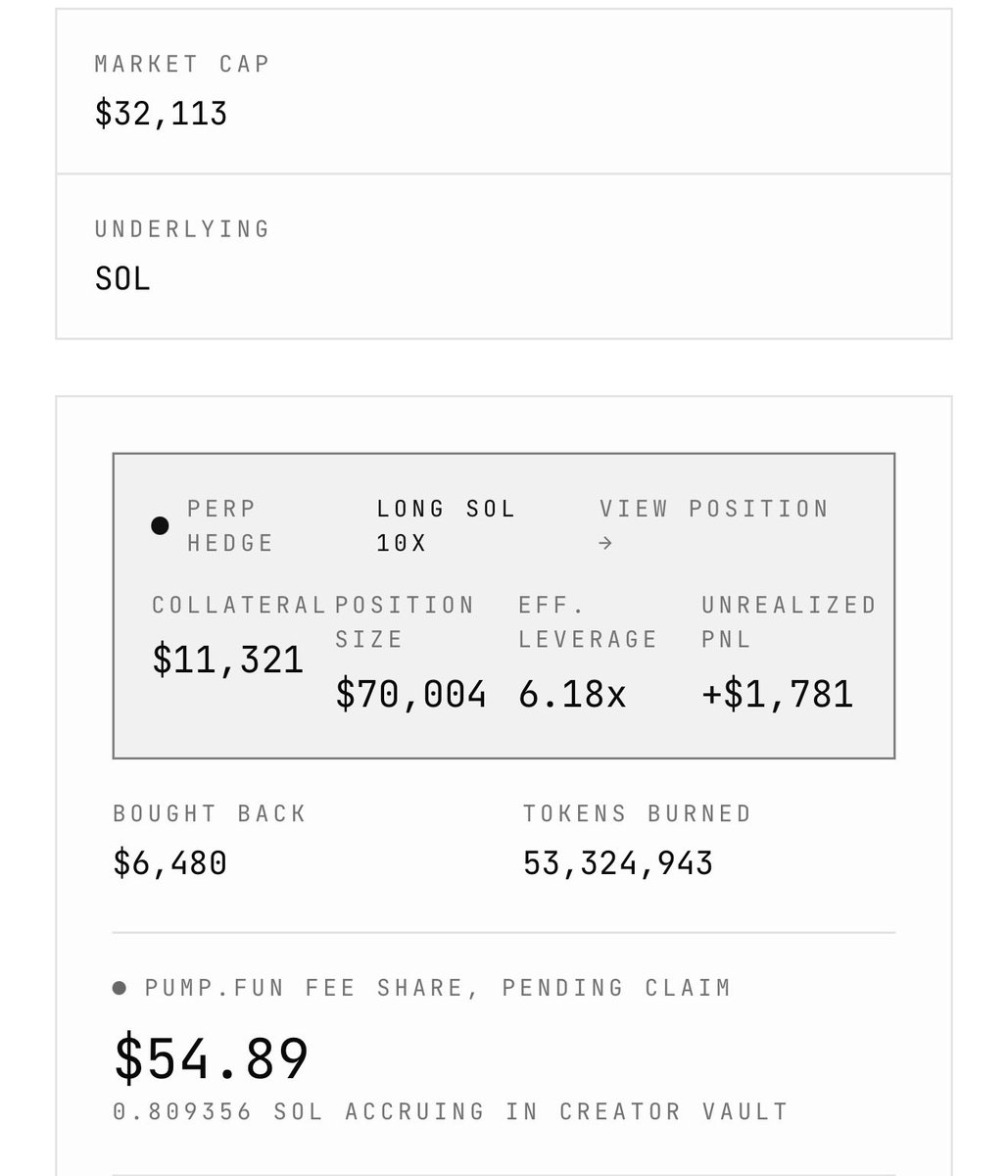
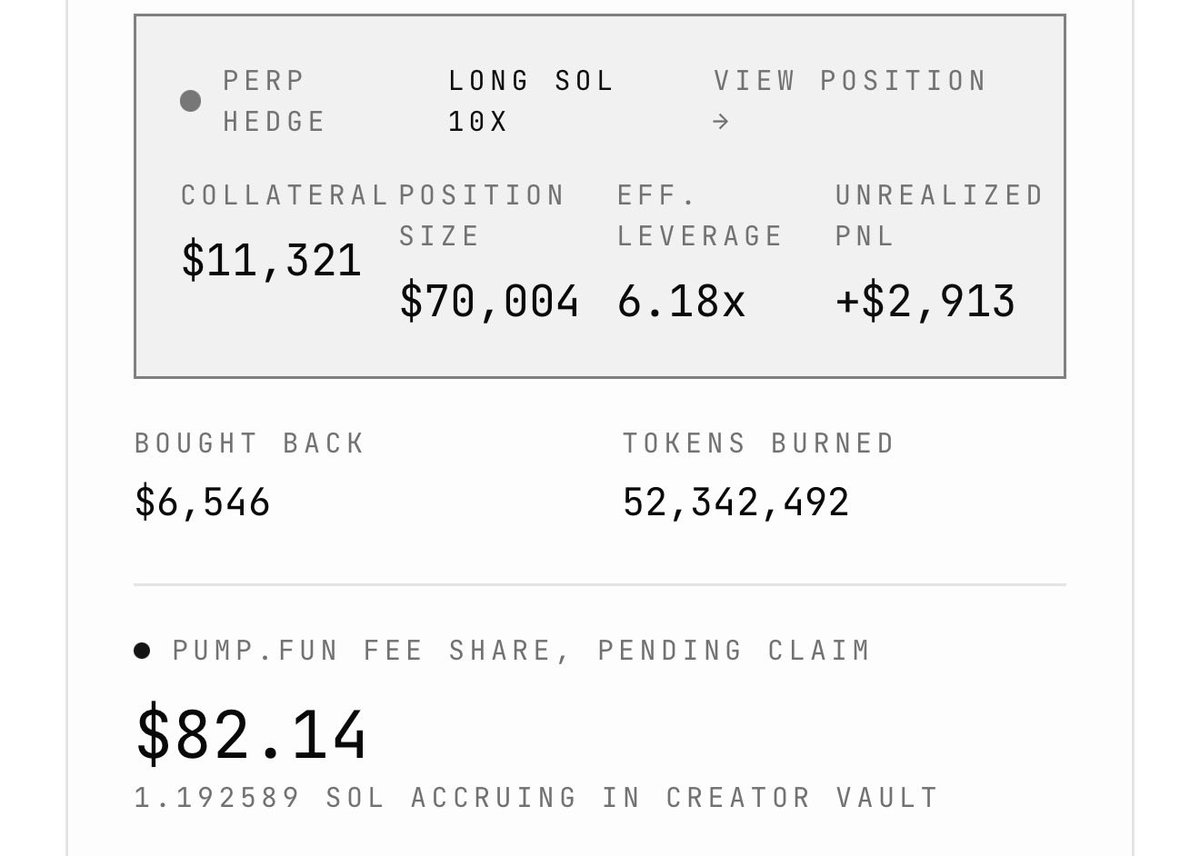
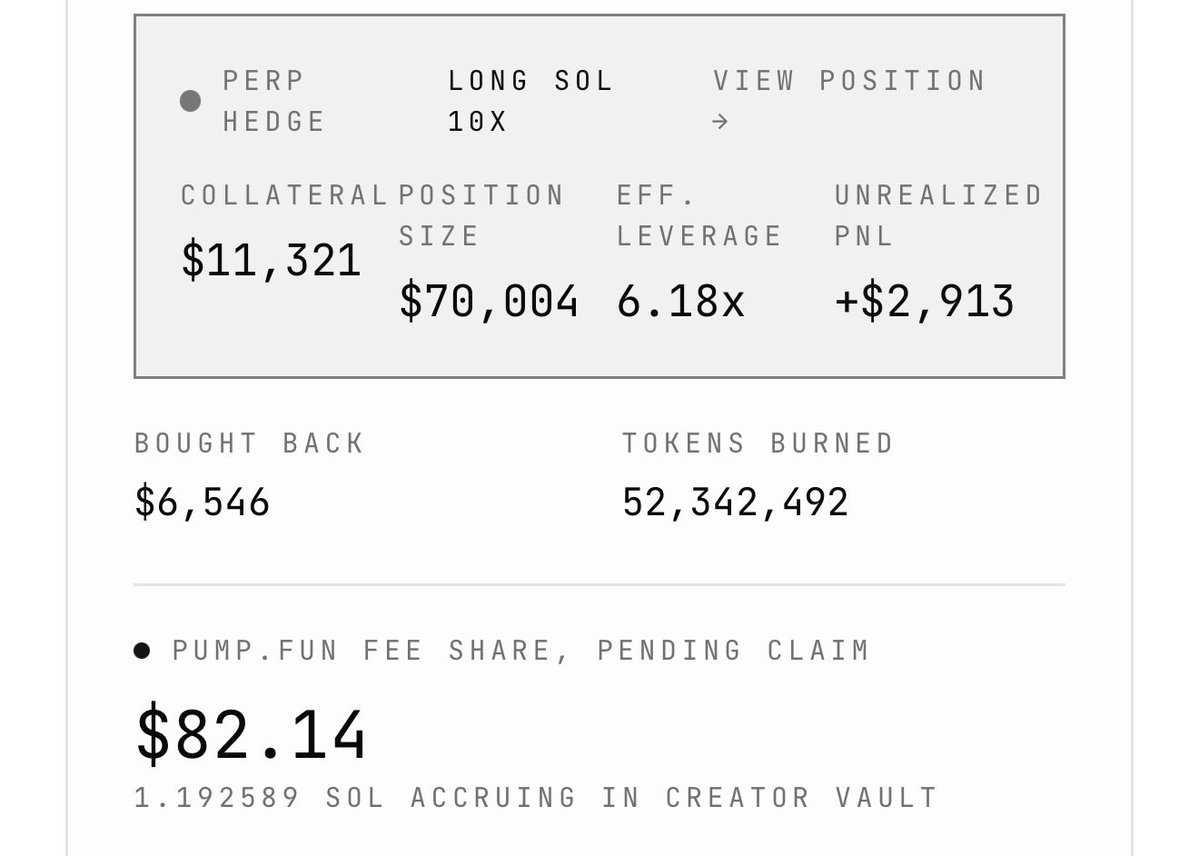
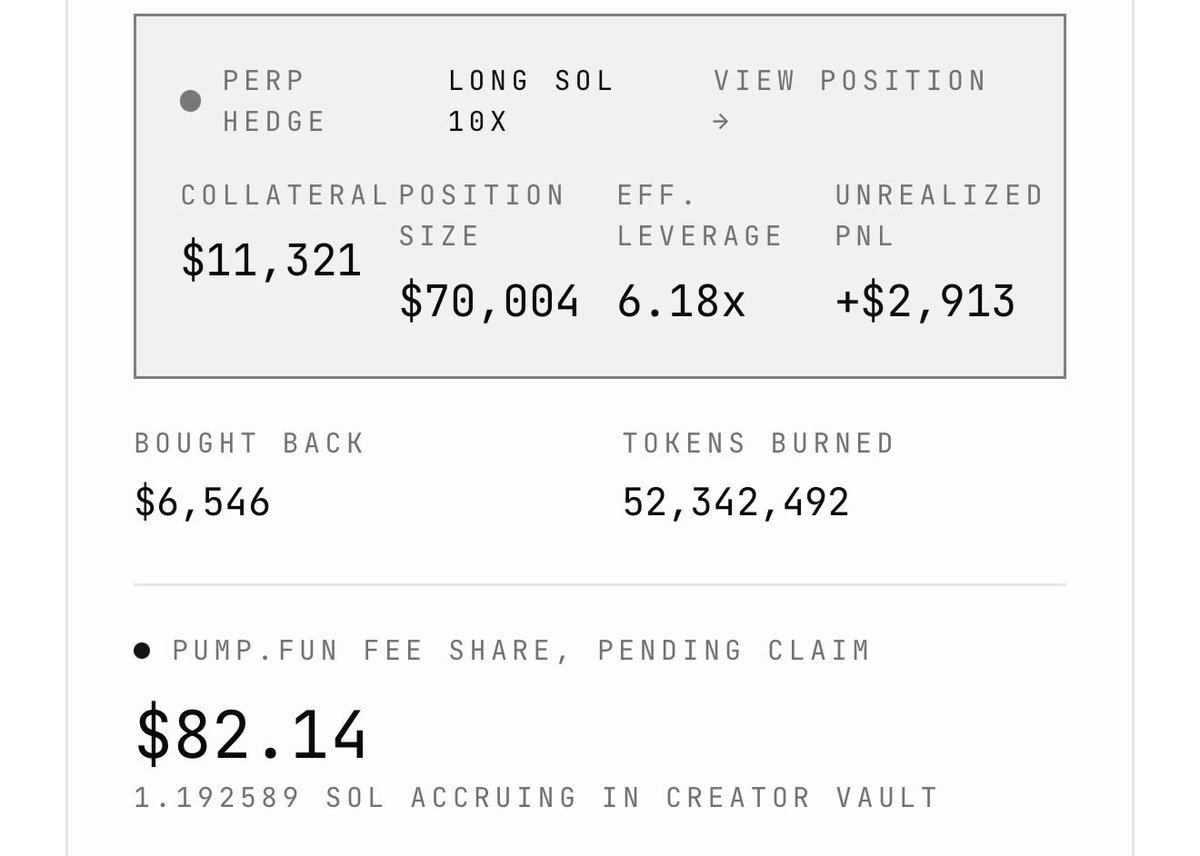
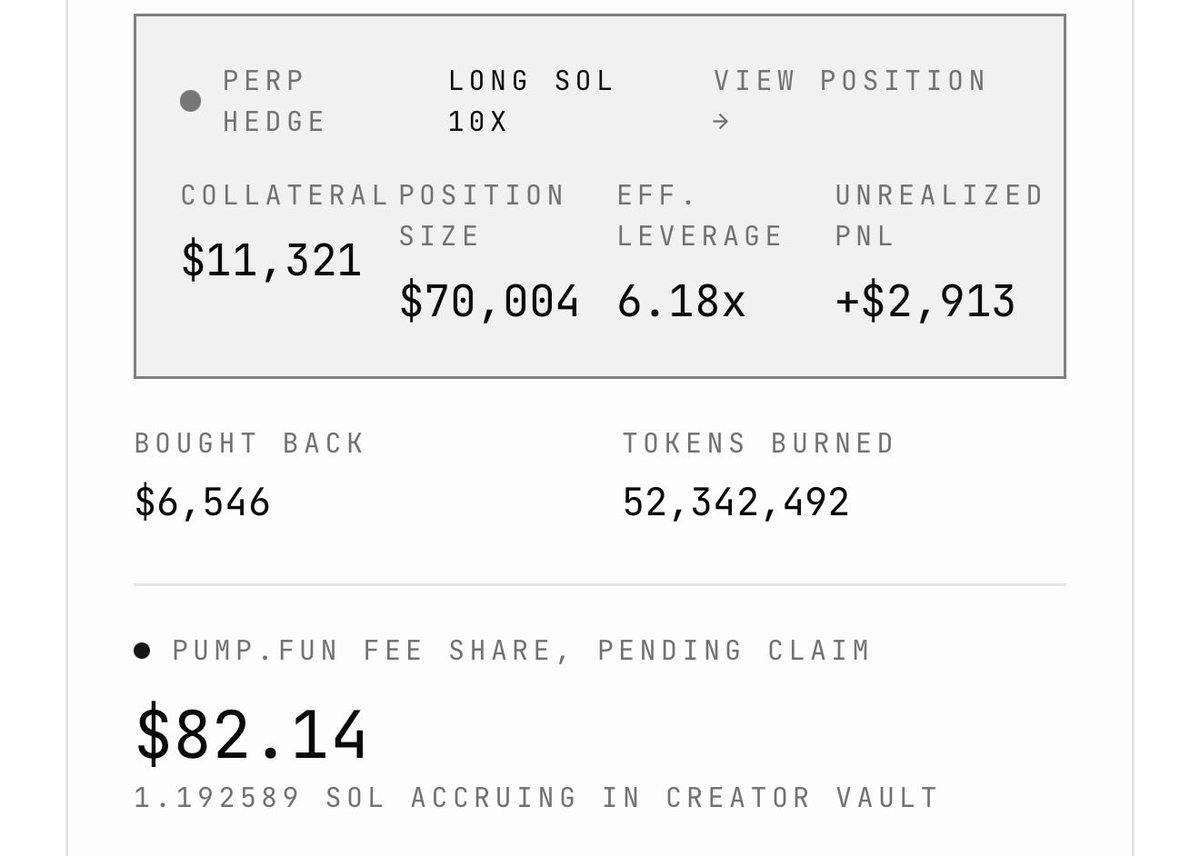
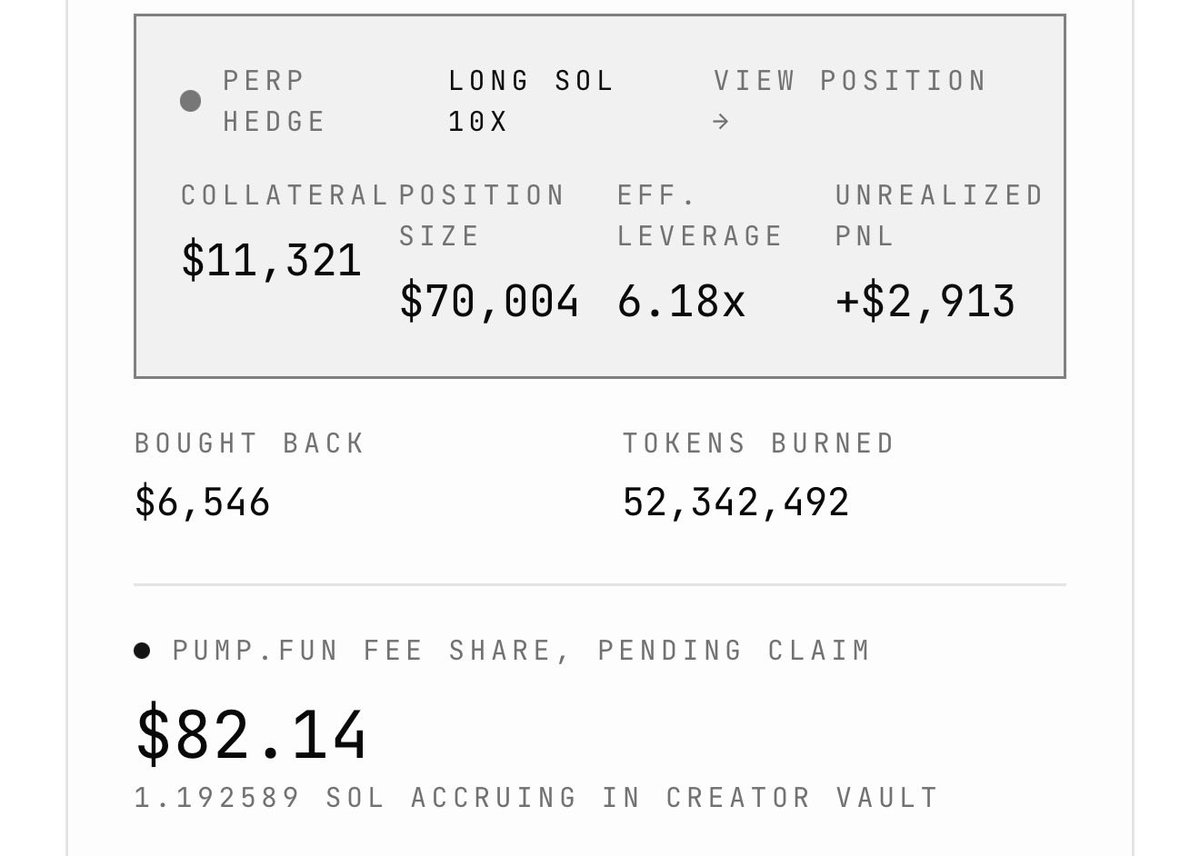
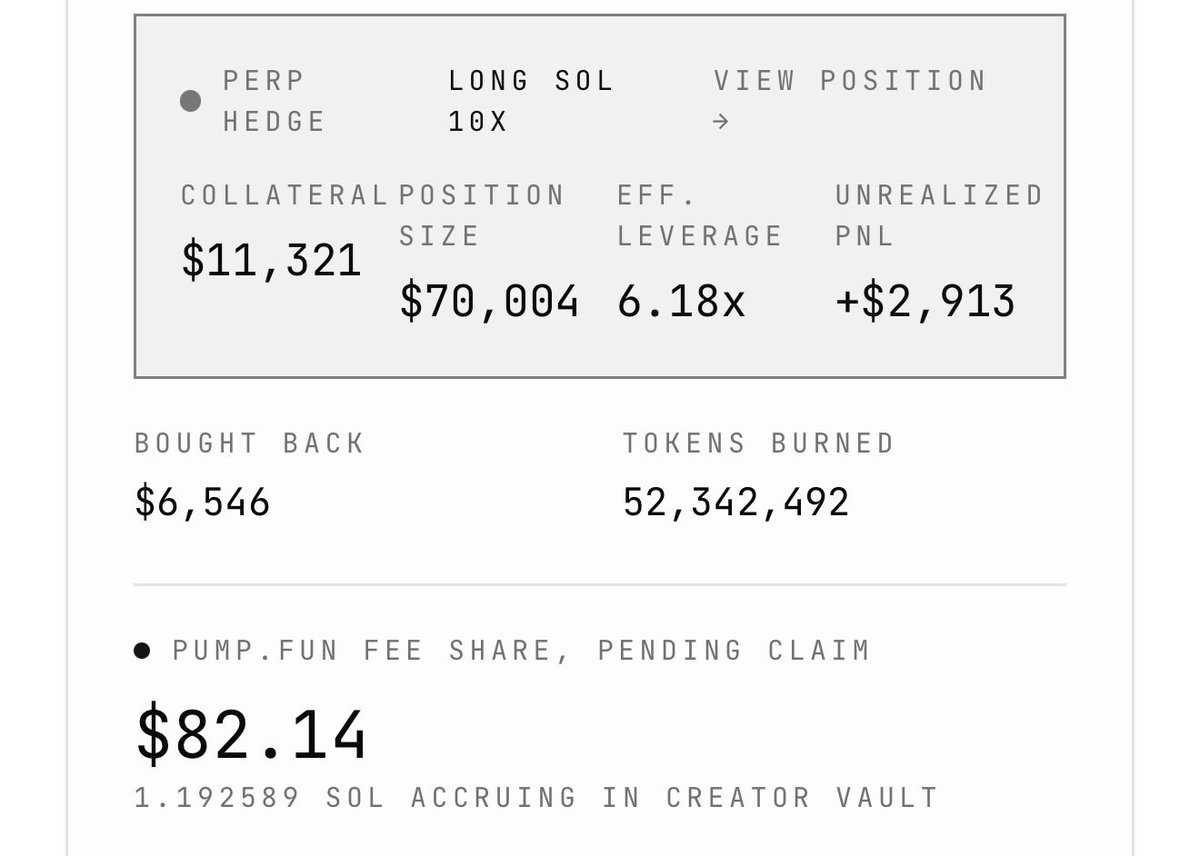
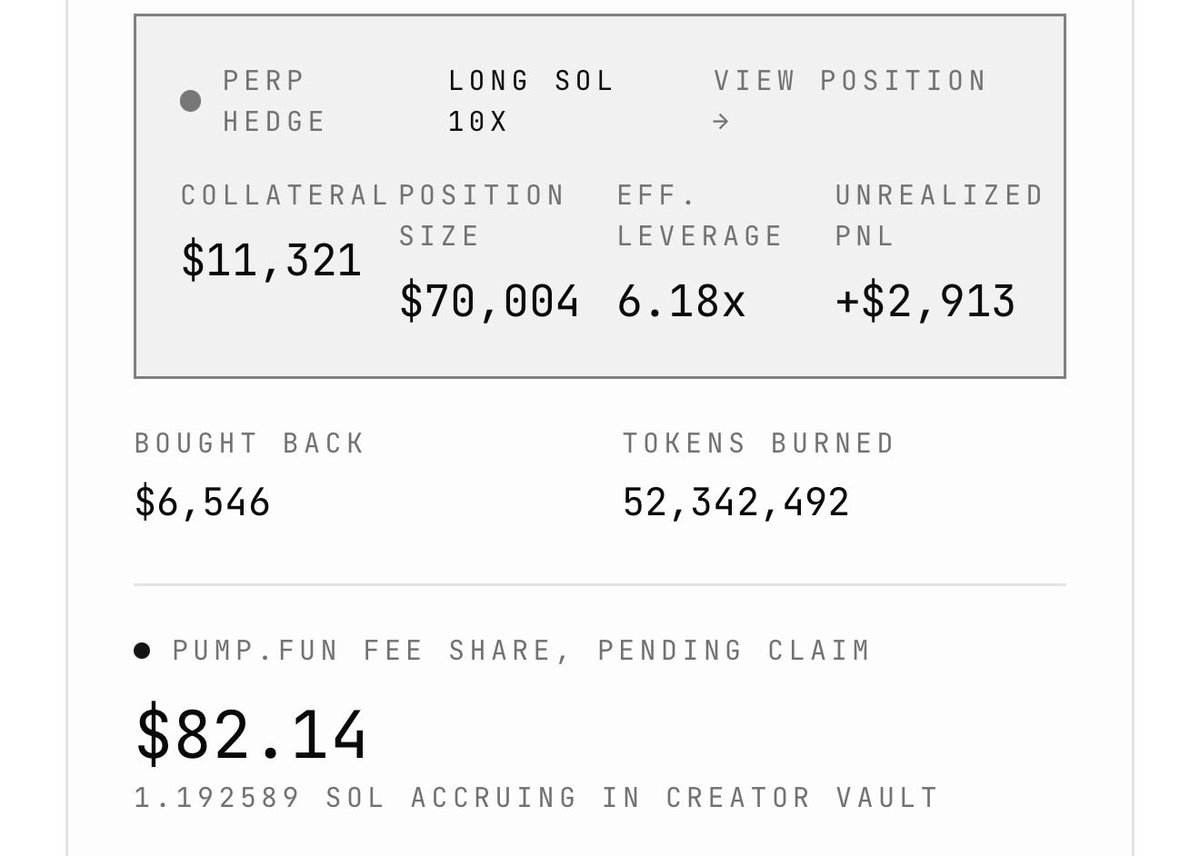
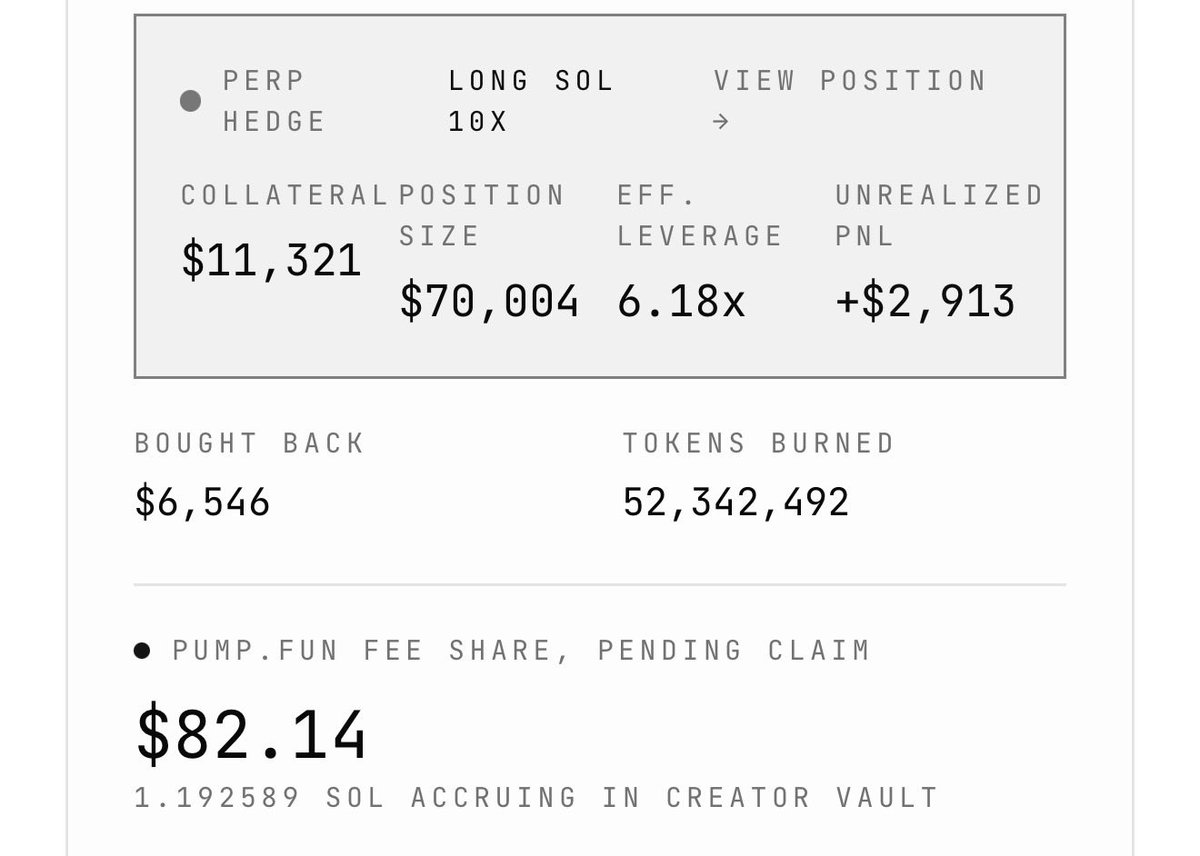
Why wait when you have a 69.5k position size on a 10x long?
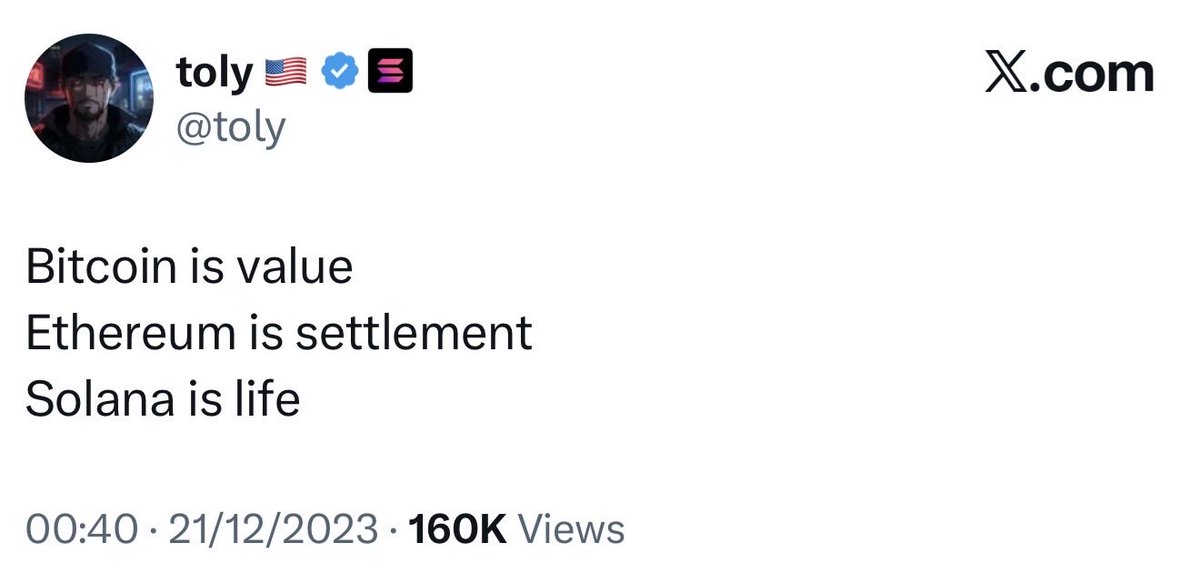
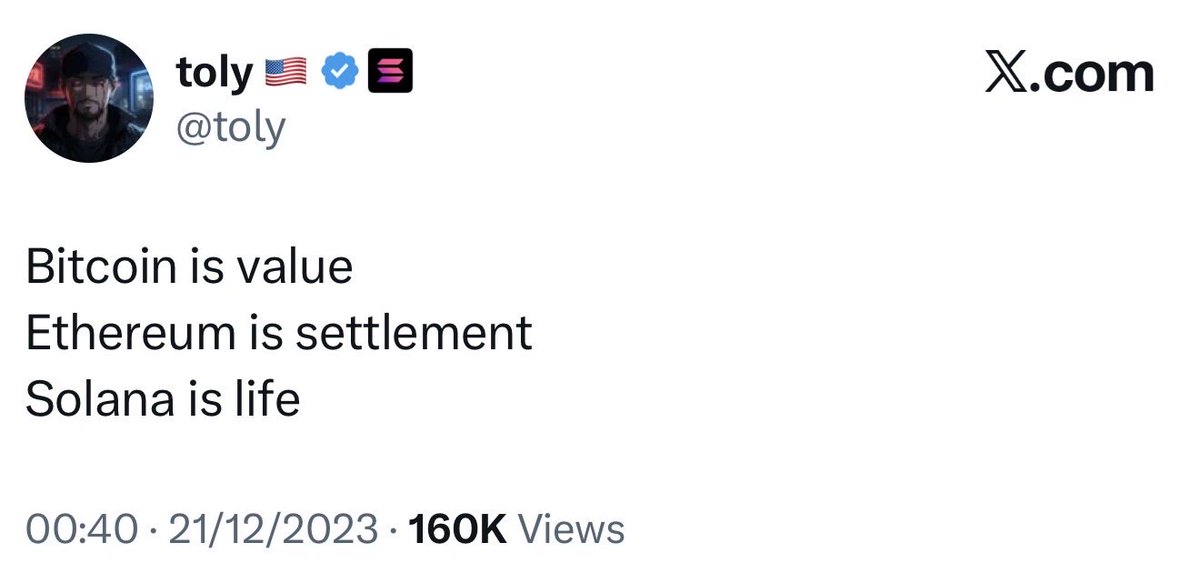
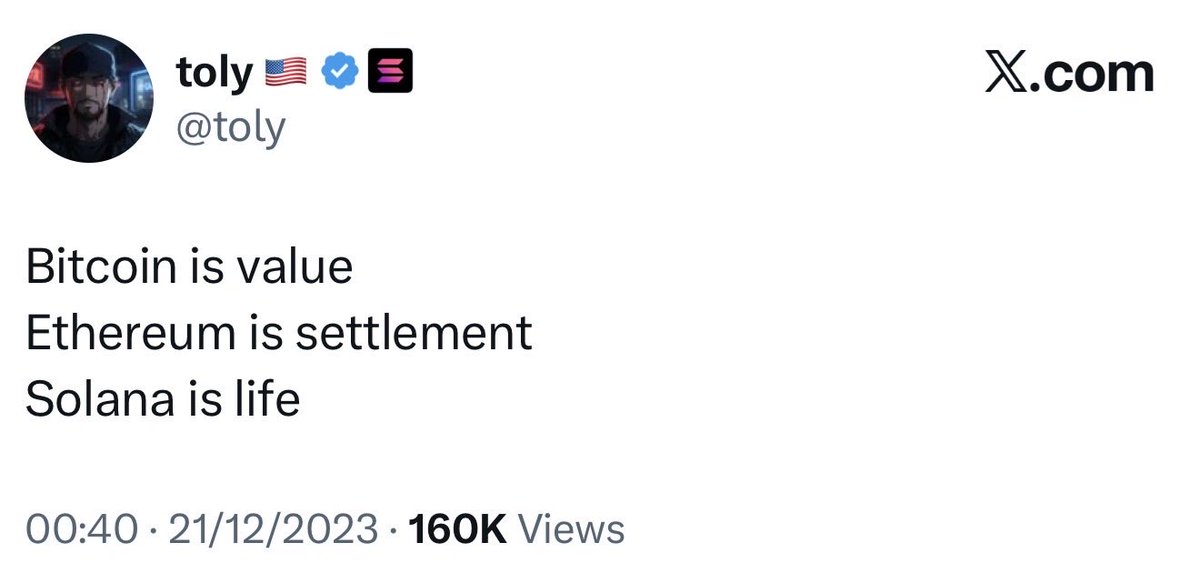
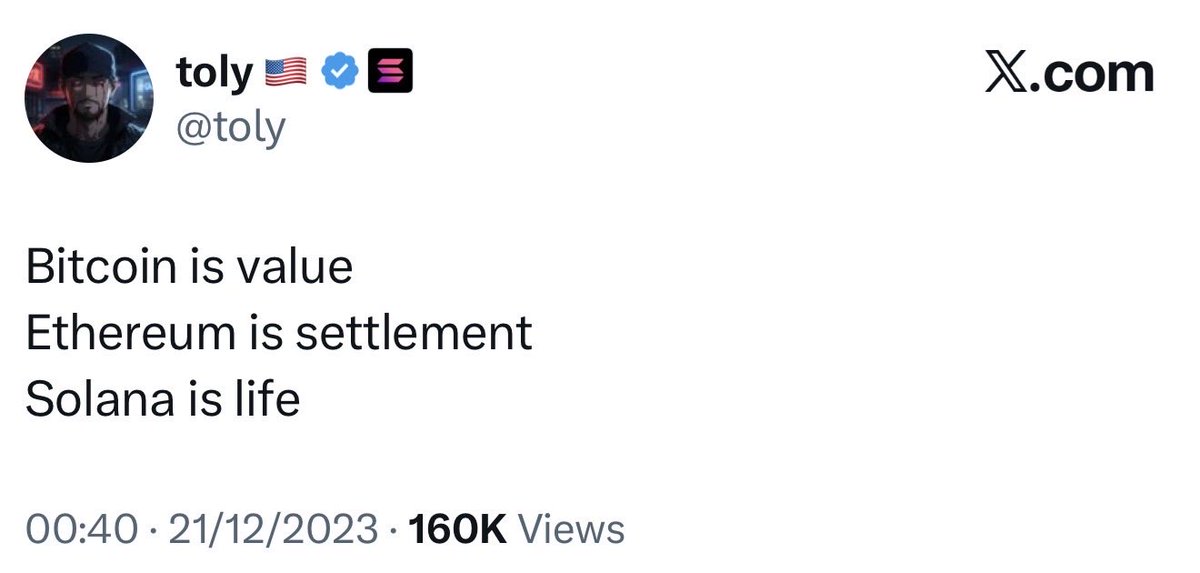
Solana is $life
perpad.fun/token/a9d8cb66-17…

3
5
7
100
shadow man retweeted

Jun 11
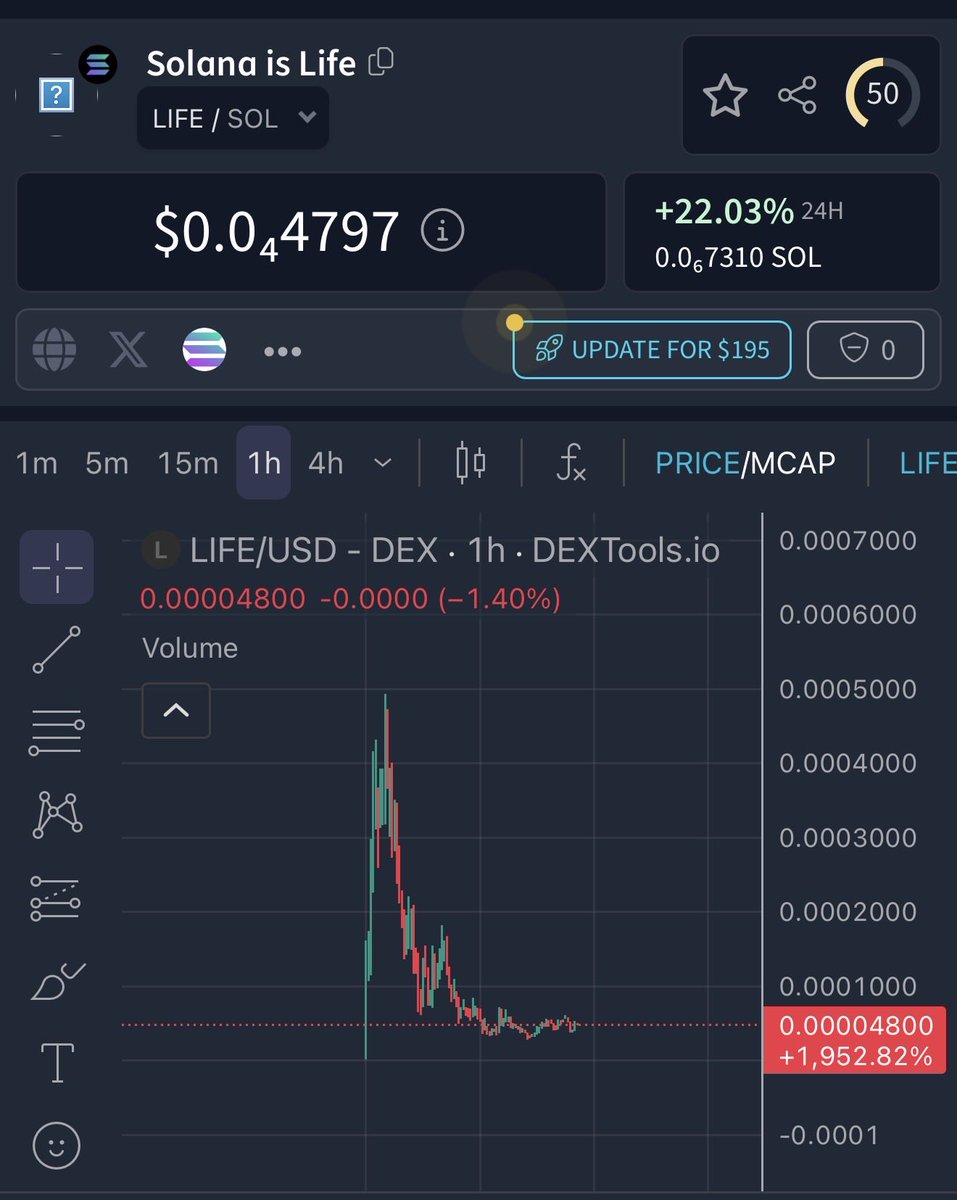
Solana is a $LIFE is in fact alive, trading with volume adding to our SOL 10x collective pool perpetually, forever, in a looping way. Tek by @perpadfun . Support by @toly
Watch the SOL spot charts currently at $65.30, I’m calculating the perp pool starts clipping supply in the green around $66.50. For now we double down.
perpad.fun/token/a9d8cb66-17…
3
4
12
1,155
Jun 11
1
7
295
Jun 10
Can the top wallet split to keep the Distro clean. Lets run this up 🚀🚀
1
7
255
shadow man retweeted
Jun 10
Congratulations you’ve reached final level of the trenches. It’s time to make your final play with your SOL bag.
First question question you should ask. Is Solana $LIFE ? If you’ve made is this far I can assure you that’s a Yes.
I’ve studied the mathematics, outlined scenarios and I present my bull case. Solana is $LIFE will flip, Binance Life surpassing $800 million.
The prophecy has been spoken. I will ride this ship to the ground. dust.
Solana is $LIFE .
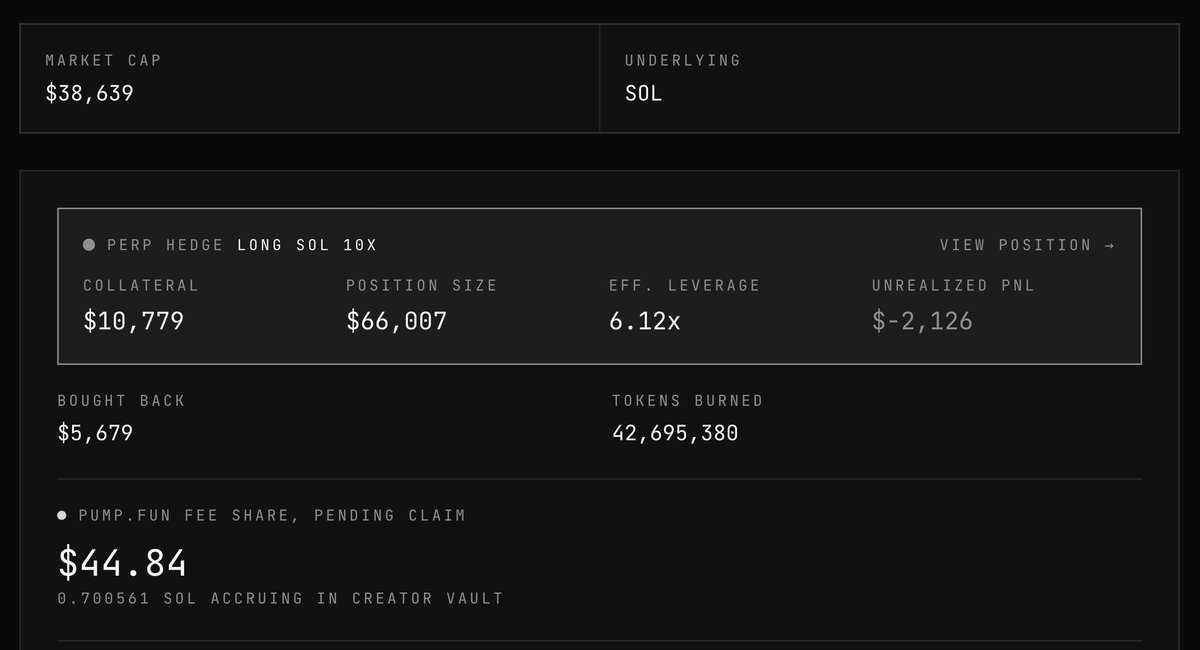
What's interesting is that that the long position holds double the value of the market cap. Yes, its underwater but every buy shifts the median. If the token continues to drain down, the SOL pool will continue to grow and will start clipping percentages of supply.
Our buyback agent has already burnt 4% of supply and counting. I must say the whole thing is fascinating so shout out to @perpad for the launch.
I doubled my token balance today and I'm intrigued with where this goes. I have patience in the process and will sit and update you all. I'm watching the SOL chart closely.
Yes, I understand that I have 700 followers and I said this token will go to 800M. Side note we also have the best KOL @toly , who with one Solana is Life fart could single handledly get us there. At $38k marketcap thats a 21,053X for the math nerds.
May the lord have mercy on our jeets. perpad.fun/token/a9d8cb66-17…
2
9
25
2,317
shadow man retweeted

Apr 4
x.com/perk_fund/status/20402…
@PERK_FUND
shipped the ONLY permissionless perps on Solana mainnet! Any token • Up to 20x lev • 1-click markets
Earn 10% fees forever. LIVE right now.
$PERK powers it all. Don’t watch from the sidelines.
Who’s buying $PERK?
Apr 4

Permissionless Perps Street. No naming committee required.
12
3
31
950
shadow man retweeted
Apr 4

20
2
19
561
shadow man retweeted

Apr 3
The attack surface scales with how many assumptions your system makes about external state. Most perp protocols assume oracles are honest, liquidity is stable, and users are rational. Three assumptions, three attack surfaces.
We built Perk with the opposite approach. Assume oracles lie (EMA smoothing with hard caps per tick, on chain circuit breakers, multi source aggregation). Assume liquidity disappears (Percolator's warmup ramps position effectiveness over a slot window so flash loans are economically irrational before the position even has weight). Assume users are adversarial (K index tracking recalculates every open position's PnL on liquidity changes so nobody can exploit depth shifts).
The clever part: we separated the risk engine from the execution layer entirely. Percolator handles margin, funding, liquidation, warmup, and ADL. It doesn't care if trades come from a vAMM, an orderbook, or an RFQ. That separation means an exploit in execution can't cascade into the risk model. Most protocols couple these, so one oracle manipulation can drain the vault.
The real insight is that a smaller, formally auditable risk engine with a huge test surface beats a monolithic system with a huge attack surface. You can't eliminate the attack surface. You can make it so the parts that matter most are the parts you trust most.

9
20
56
3,282

Stacking and shipping... what's coming soon is inevitable - $PERK
F8Pz2mx7V8exRkBNFzvpkZAwjNPxWPGqzYJL2ckrpump
Apr 2
New infra just shipped: priority tier oracle system 🔥
Every Perk market now gets classified hot/warm/cold based on activity. Hot markets (top 20 active positions) get sub 2 second oracle updates. Cold markets still update but less frequently.
Why it matters: this scales to 1000 markets without slowing down the ones that matter. Same oracle accuracy, way less wasted compute.
⚠️ Actively testing and tuning over the next few hours. If you notice brief oracle delays, we're on it.
Building the infrastructure for what comes next 👀
1
4
14
791
Apr 2
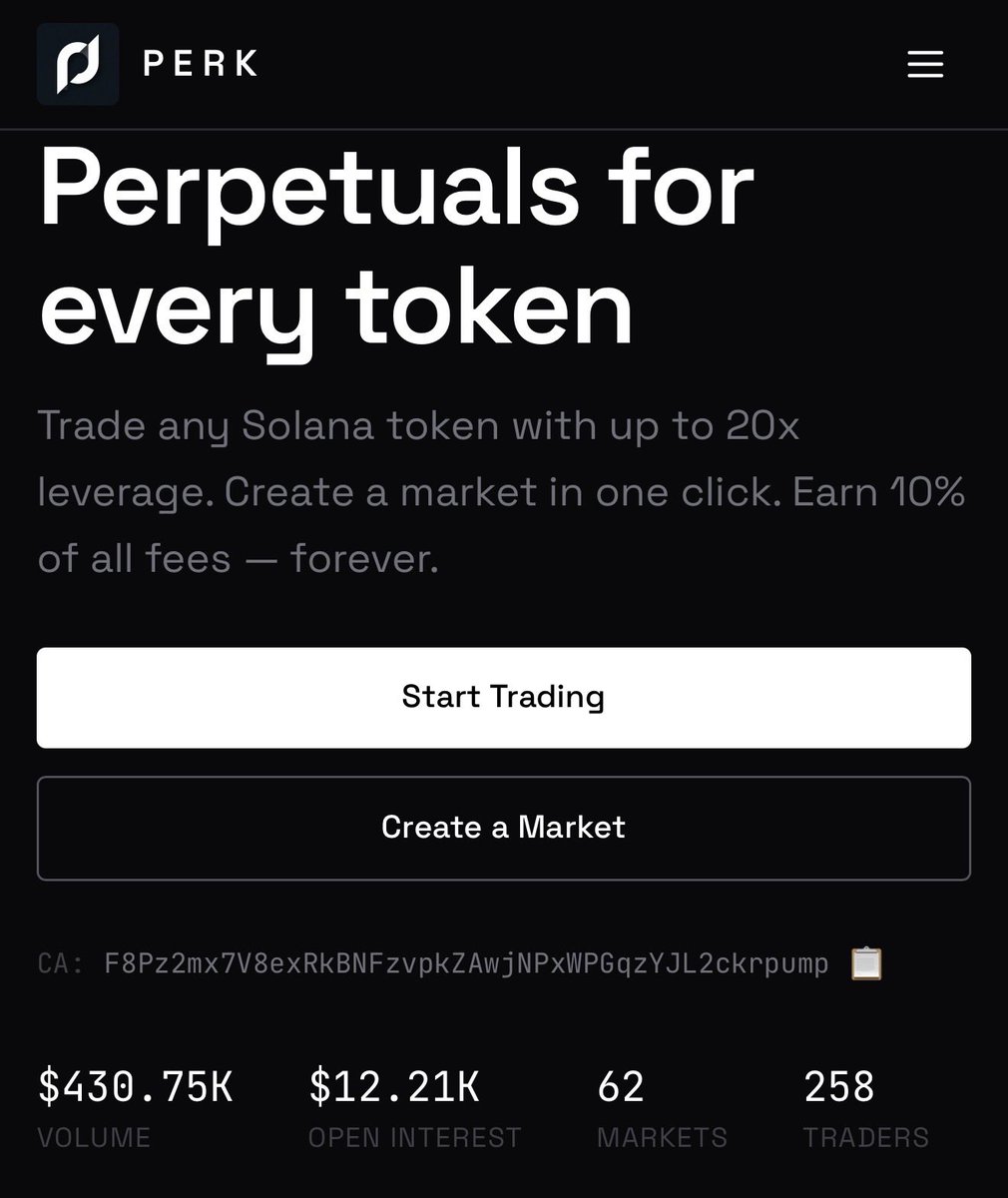
The numbers are only increasing. $PERK use is increasing day by day.
The sleeping giant.
1
7
417
shadow man retweeted
Apr 2
🧵 We just shipped something no other perps DEX has.
When you settle funding on Perk, we now show you the EXACT amount hitting your collateral. Not an estimate. Not a theoretical number. The real thing.
And you can withdraw it instantly without changing your leverage.
Here's how 👇
Most DEXs show you a funding PnL number and call it a day. But that number lies.
On chain, funding settlement runs through 5 steps before touching your collateral:
K coefficient diff (the raw funding owed)
Warmup maturation (profit must age before it's real)
Loss settlement (negative funding eats margin first)
Vault haircut (stressed vaults reduce payouts proportionally)
Fee debt sweep (outstanding fees get cleared)
The number you see on every other DEX? That's step 1. We show you what comes out of step 5.
The math:
We replicated our entire on chain settlement pipeline in TypeScript. Every step. BN precision throughout, no floating point until the final display.
predictedDelta = collateral_after_all_5_steps − collateral_before
That delta IS your withdrawable amount.
Withdraw it and your leverage returns to exactly where it was before settling.
Position unchanged, profit in your wallet.
Why this matters:
On other DEXs, you settle funding thinking you earned $60. Your collateral changes by $36 and you have no idea why. You withdraw $60, your leverage spikes, and you get liquidated.
On Perk: you see $36.14, you settle, you withdraw $36.14, leverage doesn't move. Done.
12
21
65
3,970