
Joined February 2025
- Tweets 3,375
- Following 437
- Followers 571
- Likes 39,761
267 Photos and videos









Pinned Tweet

Jun 6
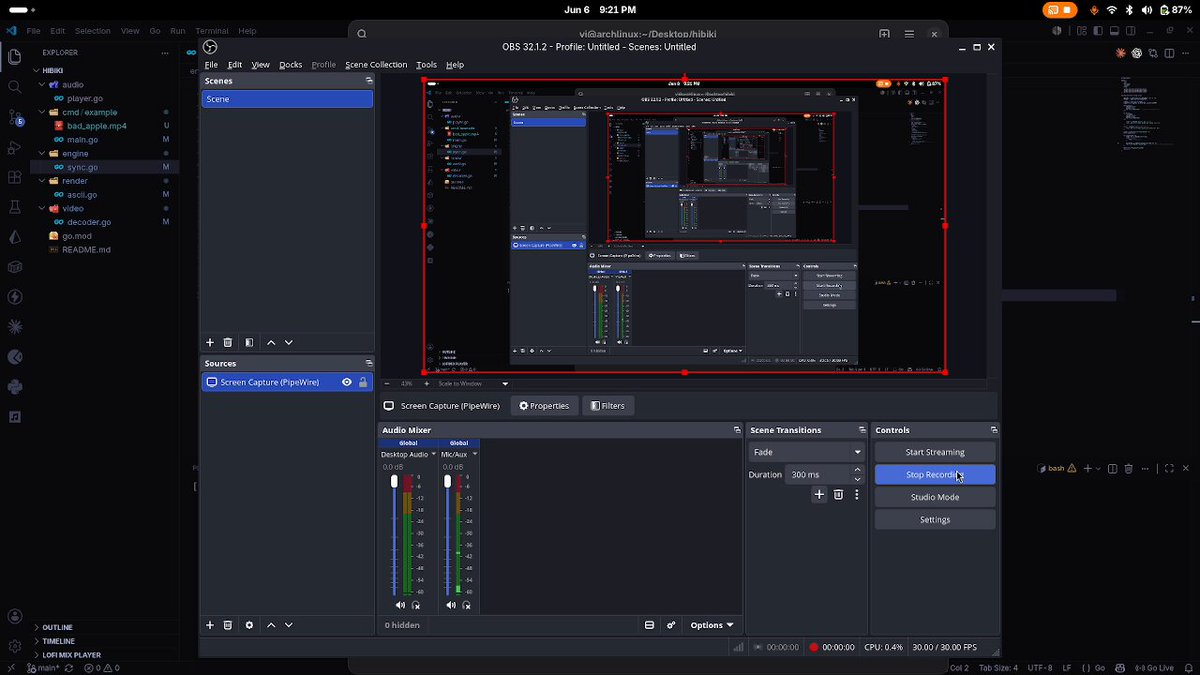
Here's Hibiki - a high-performance, synchronized ASCII video and audio playback engine designed for the terminal.
Enjoy seeing bad apple on the terminal displayed as ascii characters. (1/n)
4
5
33
1,179
Hell yeah
Especially the bangalore/chennai people
6h

best thing about being on here is that now i have people i look forward to meet in all states and i'm gonna be catching y'all like pokemon (done with ncr).
6
112
Remind me to never drink on an empty stomach again

Great success
Tech frontier lounge's first ever meetup has been hosted somewhat successfully
Plan actually made it out of the group chat for once lmao, met all my oomfs. Hope y'all had fun too
Thanks for joining @jerkeyray @JanaSunrise @_vector15 @mk0x0FF @triorDeep @no_one010101 @stevenstank775 @BolatwtX @fr_axvra @DevanshAr05 @vennictus
Hope to see more dedicated builders at the next one! Link below for more details. Until next time, Delhi NCR signing off


3
10
277
Vector retweeted
Great success
Tech frontier lounge's first ever meetup has been hosted somewhat successfully
Plan actually made it out of the group chat for once lmao, met all my oomfs. Hope y'all had fun too
Thanks for joining @jerkeyray @JanaSunrise @_vector15 @mk0x0FF @triorDeep @no_one010101 @stevenstank775 @BolatwtX @fr_axvra @DevanshAr05 @vennictus
Hope to see more dedicated builders at the next one! Link below for more details. Until next time, Delhi NCR signing off
26
4
52
4,099

Vector retweeted

Jun 11
If you're in Delhi and actually build things - code, ai, side projects, whatever, you should check this out
ill be there as a speaker

2
1
11
717
Jun 11
Everyone pull up. Excited to meet you people there
I'll be there as a speaker btw🙂
Jun 11
Ok hear me out
What if Delhi had a dev meetup that felt like hanging out at a cafe with people who get it. Not a conference, not a hiring fair, just builders talking shop
That's the tech frontier lounge. first one at 4pm, June 14th, Hauz Khas. Further details upon registration.
Demos, products and talks welcome. Come through. bring your weird vibecoded side project.
Link in replies

2
1
11
620
Vector retweeted

Jun 11
Ok hear me out
What if Delhi had a dev meetup that felt like hanging out at a cafe with people who get it. Not a conference, not a hiring fair, just builders talking shop
That's the tech frontier lounge. first one at 4pm, June 14th, Hauz Khas. Further details upon registration.
Demos, products and talks welcome. Come through. bring your weird vibecoded side project.
Link in replies
6
7
28
2,629
Vector retweeted
Jun 10
I was laid off so I rebuilt their product but better (in 2 weeks from scratch)
Open Canvas - a multiplayer site builder with an agent at the cursor.
Most website builders ask you to fill in a template.I built one that lets you design - on a free-form canvas, with an AI agent at your cursor, where your whole team co-edits live and visitors see your publish update without refreshing.
What makes it different:
• Drag 14 design primitives anywhere — not into fixed slots
• AI agent edits in plain English, you preview before it lands
• Real-time co-editing (Yjs CRDT, Figma-style cursors)
• Publish → every open visitor tab updates in <100ms
Under the hood: one Cloudflare Worker, serverless Postgres, a first-class CMS, version history, a blocking accessibility audit, AI image gen, custom domains — all shipping as pure HTML, zero client-framework weight.
It's MIT-licensed and built in the open
124
86
1,214
189,287
Vector retweeted

Jun 9
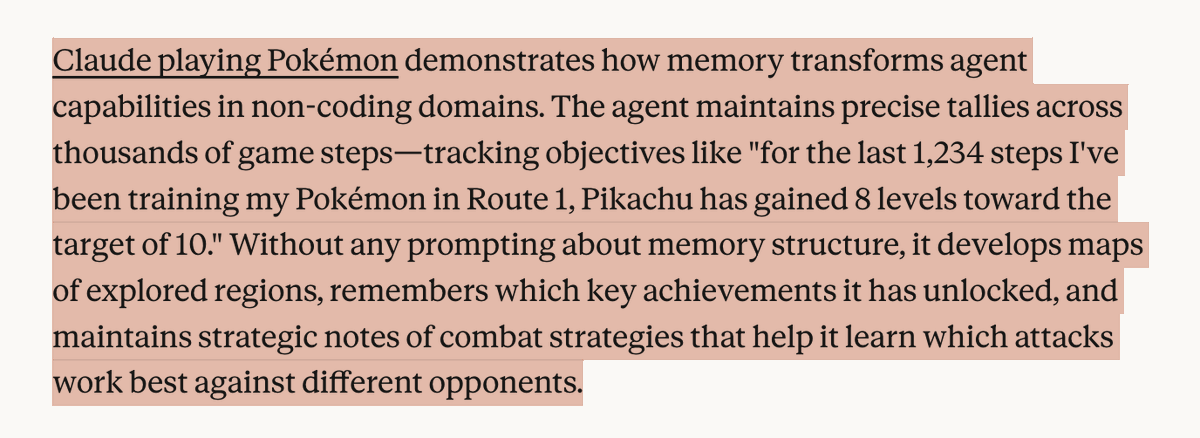
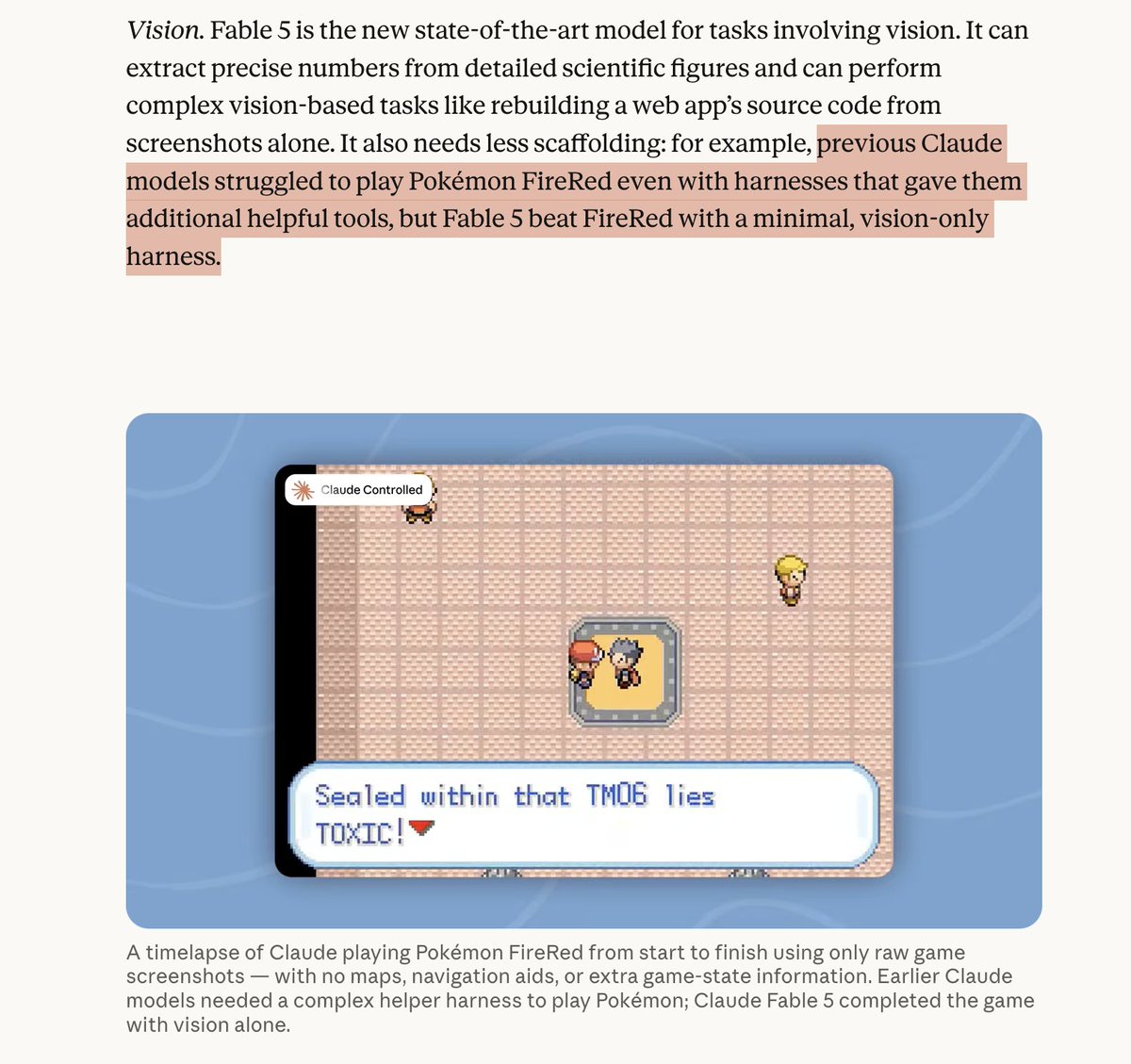
i love how anthropic keeps using pokemon as a benchmark for claude
5
2
45
821
Vector retweeted

Jun 8
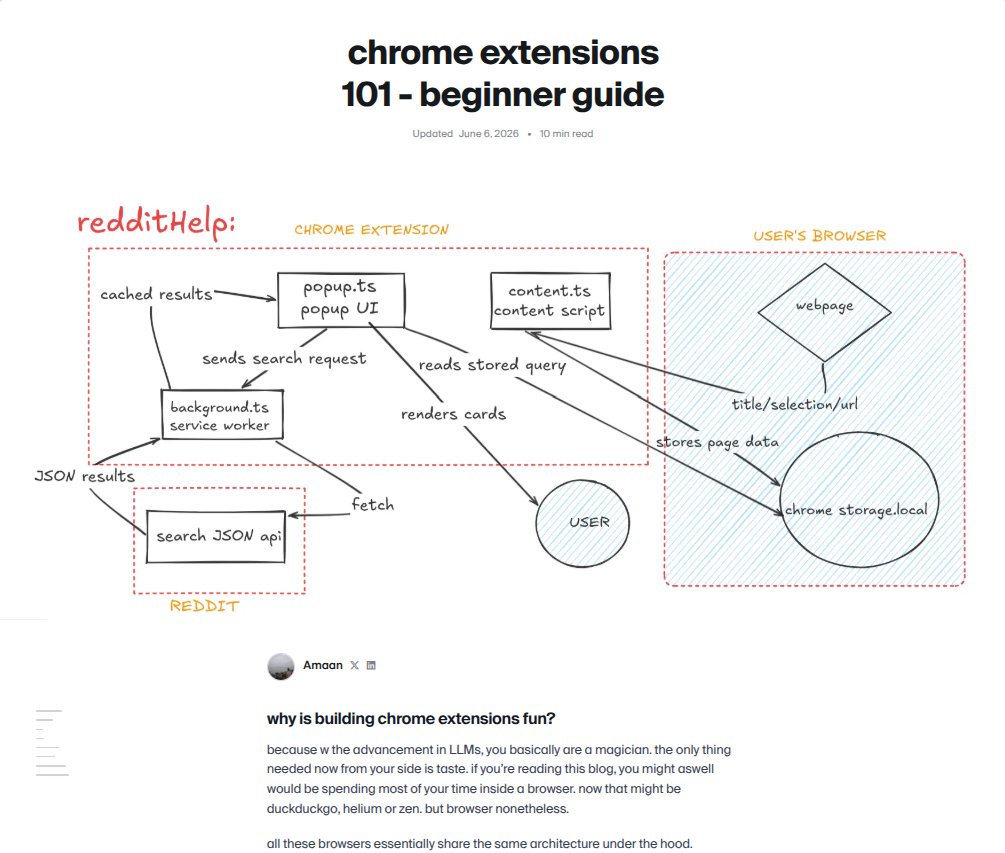
wrote a small ~10 min beginner blog on chrome extensions and thinking through product ideas
[link in comments]
1
2
15
348
Jun 9
Microsoft when you win in solitaire:


7
140
Jun 8
Yep
You don't rise to the level of your goals, you fall down to the level of your systems
Jun 8

i was thinking most ppl keep saying i wanna start gym, read books, do this, do that, but are never able to bc they just keep thinking that and don’t come up with an action plan. for me its logical if i wanna start smth new, i need to change my routine and commit to it. thoughts?
6
65
and now, stage 2 is wrapped up
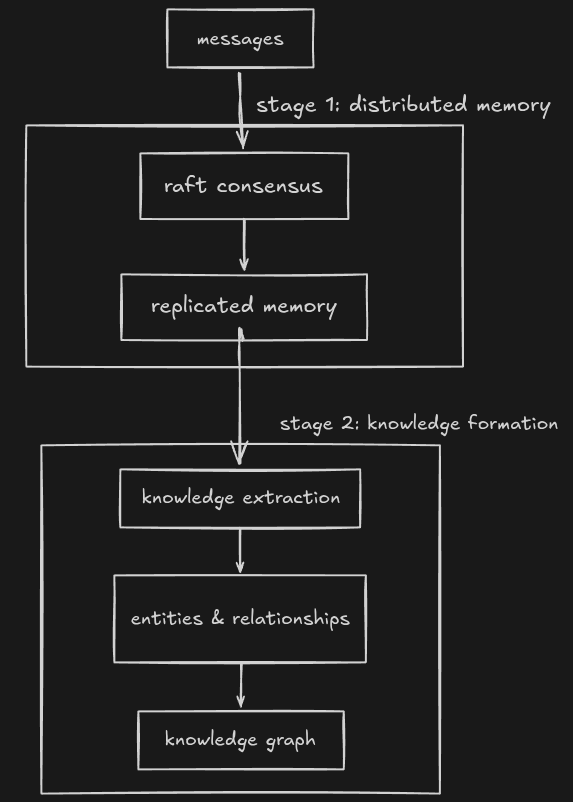
a lil recap: stage 1 was "how do we store memory durably?". and the goal of stage 2 was to answer "how does memory become knowledge?"
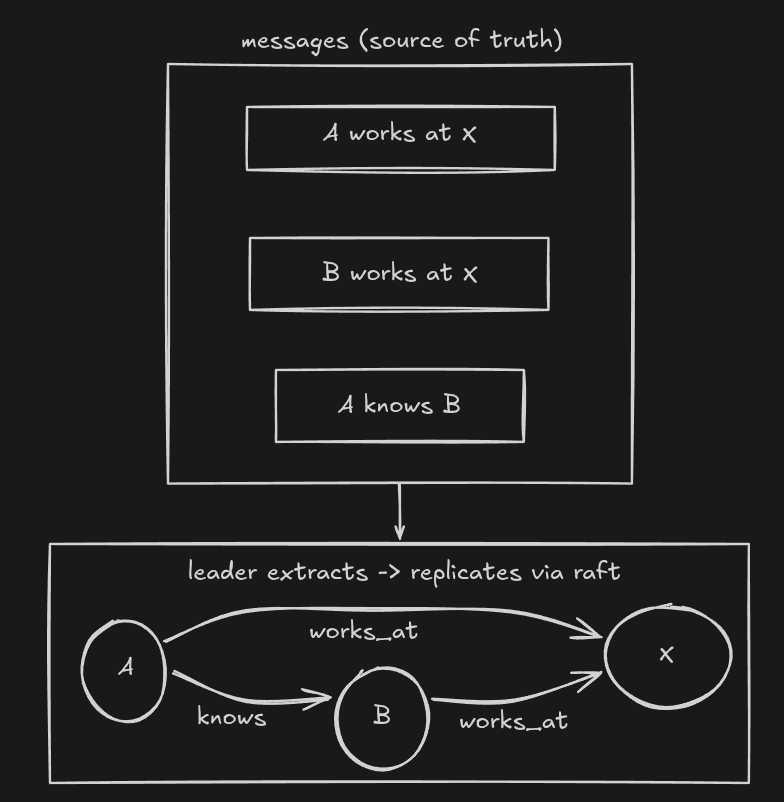
the answer ended up being a knowledge graph. messages still go in the same way, but now the leader also extracts entities and relationships from each one, and replicates those through raft as a proper command. so every node ends up with the same graph
so instead of only doing semantic search, you can now directly ask "who works at X?" or "find the path from A to B"
the distributed part was a bit tricky to get down. extraction had to go through Raft because LLM extraction isnt deterministic, and per node extraction would have given you divergent graphs. so the leader extracts once and replicates everywhere
messages stay the source of truth. the graph is the derived state built on top of them
up next: collective memory. multiple autonomous systems sharing one knowledge substrate
we're getting closer to answering the bigger question :)
repo below ^^

so, stage 1 of engram was about making memory survive failure. basically turning it into a distributed system from the previous single node system
and so now, we have 3 nodes, raft, grpc, leader election, log replication, failover, and all that fun distributed systems stuff
moving onto stage 2, we've got something different
to keep it simple, in stage 1 we solved the "how do we store memory?" question. and now in stage 2, i aim to solve the "how does memory become knowledge?" question
the current plan is to take messages, extract entities relationships from them, and gradually build a knowledge graph on top of em
think something like:
"X works at ABC"
"Y works at ABC"
"X knows Y"
so it all becomes structured knowledge that can be queried directly instead of it being retrieved through semantic search alone
for the system, the graph remains the derived state and the messages stay the source of truth
and stemming from that "memory as an infra" post i made, the goal is still to answer that one specific question:
if autonomous systems become full blown entities, how do they turn so many memories into knowledge they can actually reason over and use efficiently?
engram is just my attempt at finding out exactly the answer to that question, while learning a hell lot in the process
stay tuned :)
2
2
17
585
Vector retweeted

Jun 8
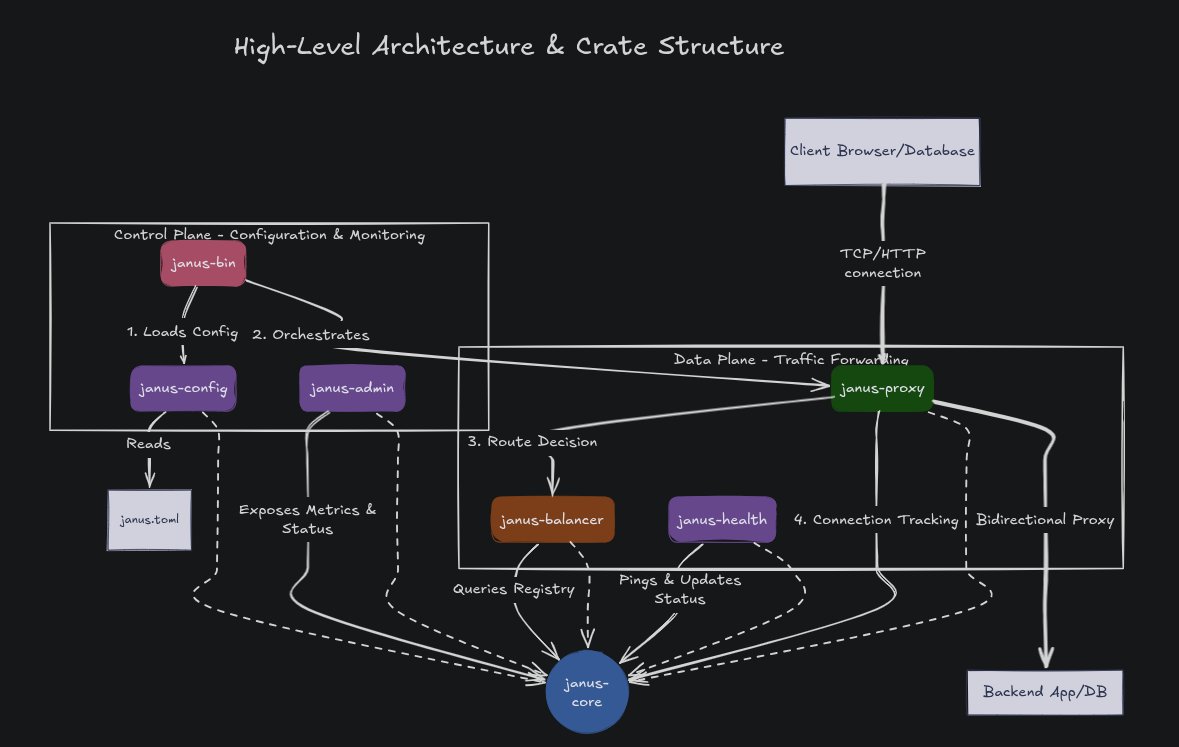
lore 1: high-level architecture and crate structure
to separate control from performance in my hybrid load balancer project, i divided things into two worlds across a cargo workspace:
data plane:
- 'janus-proxy' (network i/o)
- 'janus-balancer' (selection algorithms)
control plane:
- 'janus-config' (configuration management)
- 'janus-admin' (metrics api)
- 'janus-health' (health checking)
- 'janus-bin' (orchestration)
what is a data plane?
- it has one very simple role: handling incoming client connections.
- speed is critical here, which is why it must avoid slow system operations.
- its job is to accept connections, read and write bytes, decide where traffic should go, and forward the data.
what is a control plane?
- it is responsible for system management tasks such as configuration, health monitoring, metrics collection, startup, and graceful shutdown.
- the data plane should only focus on routing and handling traffic.
- you do not want the data plane worrying about configuration changes while processing incoming requests.
- a request should never have to wait because someone opened the dashboard, reloaded a config file, or checked metrics. the control plane takes care of those responsibilities and makes the data plane's job easier.
why this division?
- let's say your load balancer is handling 100k requests per second.
- if every request had to check whether configurations changed, whether a backend became unhealthy, or whether some metric was updated, you would waste a lot of time and eventually money.
- why should your connection handler care about changes that might not even happen?
- this is where the control plane comes in.
- it maintains the system's configuration and state, then provides the necessary information to the data plane so it can focus entirely on moving traffic.
communication between the data plane and control plane?
- i said the control plane gives instructions to the data plane, but how?
- everything that is modified by the control plane and read by the data plane is stored in a shared state module that both can access.
- this shared state contains things like runtime server state, backend health metrics, routing information, and other important operational data.
- the control plane updates it whenever changes happen, while the data plane reads from it during request processing without having to perform expensive checks itself.
next upcoming topic: cli argument parsing & main entrypoint (janus-bin)
Jun 7

Janus - Building a hybrid TCP & HTTP/1.1 load balancer in Rust.
github.com/omanshchoudhary/j…
4
10
598


Vector retweeted

Hot take the infra stuff around ai is way cooler than model training
58
73
1,511
155,025
Jun 6
Here's Hibiki - a high-performance, synchronized ASCII video and audio playback engine designed for the terminal.
Enjoy seeing bad apple on the terminal displayed as ascii characters. (1/n)
4
5
33
1,179
Jun 6
Had a ton of fun building it, plus was my first introduction to goroutines and channels.
Repo link in the comments, be sure to check it out and star it!!!
(n/n)
1
7
94
Jun 6
3
32