
Blockchain stalker and high risk investor.
Joined July 2009
- Tweets 3,033
- Following 400
- Followers 3,107
- Likes 2,428
453 Photos and videos



Pinned Tweet

13 Dec 2023
Okay so I've received a ton of questions since starting to post these delayed honeypots. Mainly these two:
- How can it be a honeypot when every scan is showing a clean/safe when renounced contract?
- How can I find out that it's a honeypot when the scanners doesn't show it?
So for the first question the answer is as simple as it is confusing. The scanners doesn't pick up the honeypot at launch, since there isn't one. Makes no sense, right? Let's take it step by step.
1. Scammer funds a new wallet.
2. As the address of a new contract deployment can be calculated in advance, the scammer does exactly this, but doesn't deploy the contract. Yet.
3. The calculated address is added to the code of the token contract, for example as the marketing wallet. After funding another new wallet, the dev will now deploy the token contract.
4. When trading starts, funds will flow to the marketing wallet added and if you check it on etherscan, it looks like any ordinary wallet. And since it's just a wallet, scanners doesn't see it as malicious. But as this is just a calculated future smart contract address, the devs doesn't have any keys for it and can currently not move the funds.
5. When happy with the token progress, the scammer will deploy a malicious contract from the wallet in step 1. As this is deployed on the marketing wallet address, the MW is suddenly no longer a regular wallet, but a smart contract tied to the token which allows the devs to either manually or automatically make it unsellable and/or take control of LP functions in the contract to drain even locked or burnt LP's.
6. RIP user funds.
For the second question, I can't reveal exactly how I find these as I believe it would help the scammers avoid detection more than it would help most people avoid buying into them - but there are still measures that can be taken to dodge them.
1. Load the contract into code reader on @etherscan and search for 0x.
They can't turn the deployer into a contract, so if the token use the deployer as tax receiver and you find no other wallet reference in the code, you should be safe from this type of delayed honeypot.
If you find a wallet address that leads to a fresh wallet and the word private just before, it's a red flag.
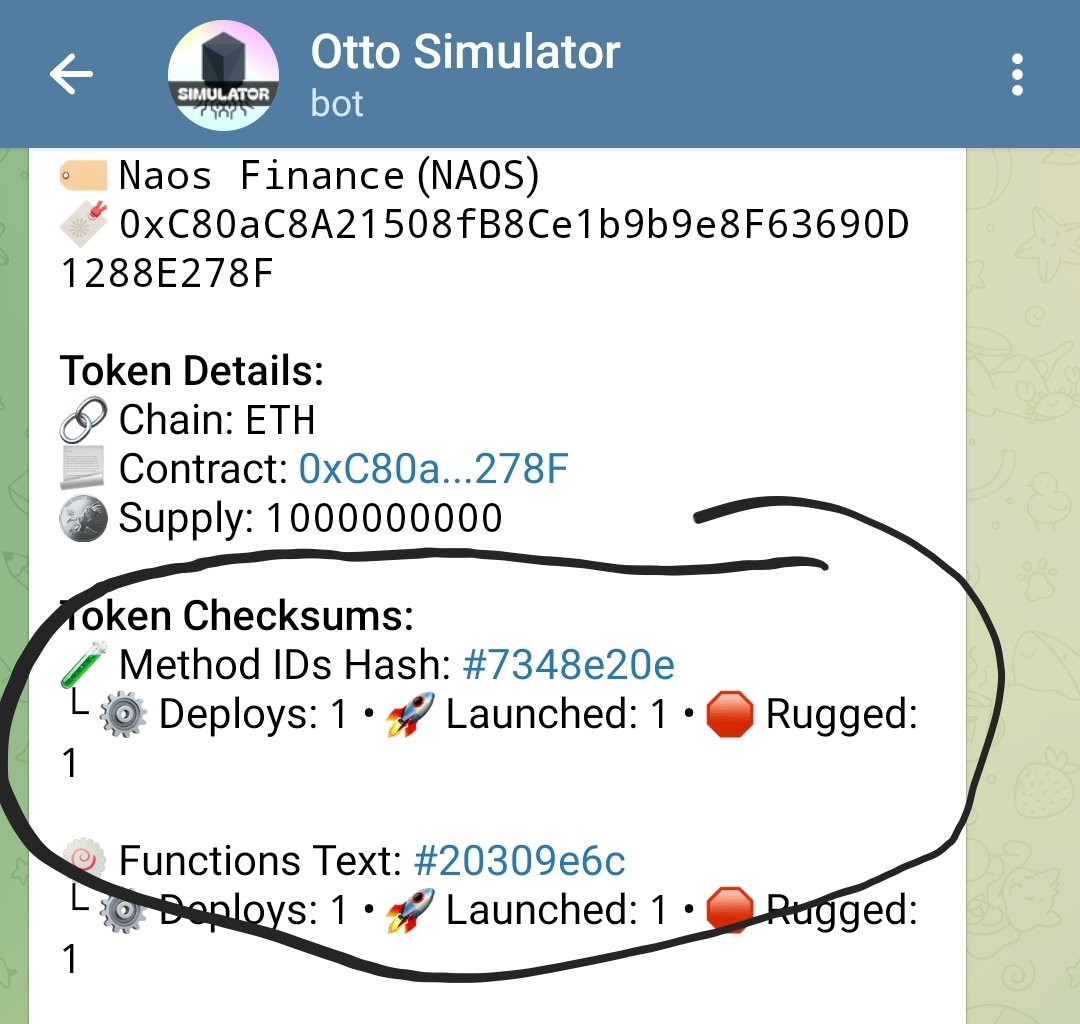
2. Scan the contract on telegram with @OttoBots_xyz. Avoid anything with only 1 deployment (check screenshot). Unique contracts rarely end well.
3. Enter their tg and try to work honey or hp into a sentence. These scammers usually have autodelete on a number of combinations of honey and pot.
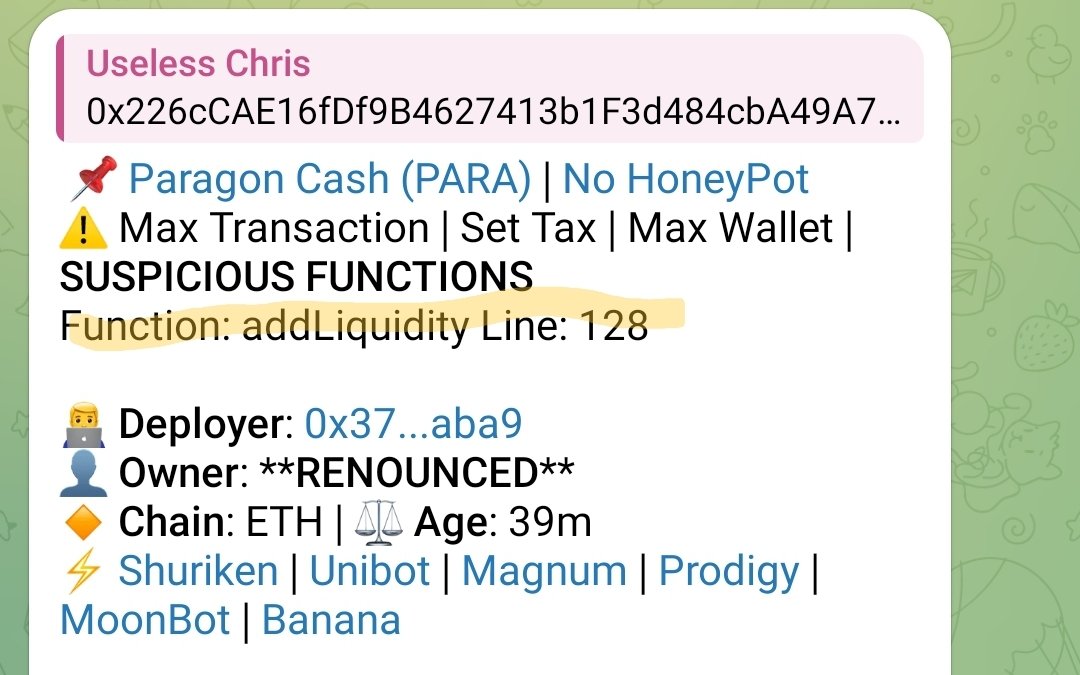
4. Be vigilant about suspicious functions even in renounced contracts, like the one from.@TTFBot in the screenshot.
37
48
171
50,313
2 Sep 2025
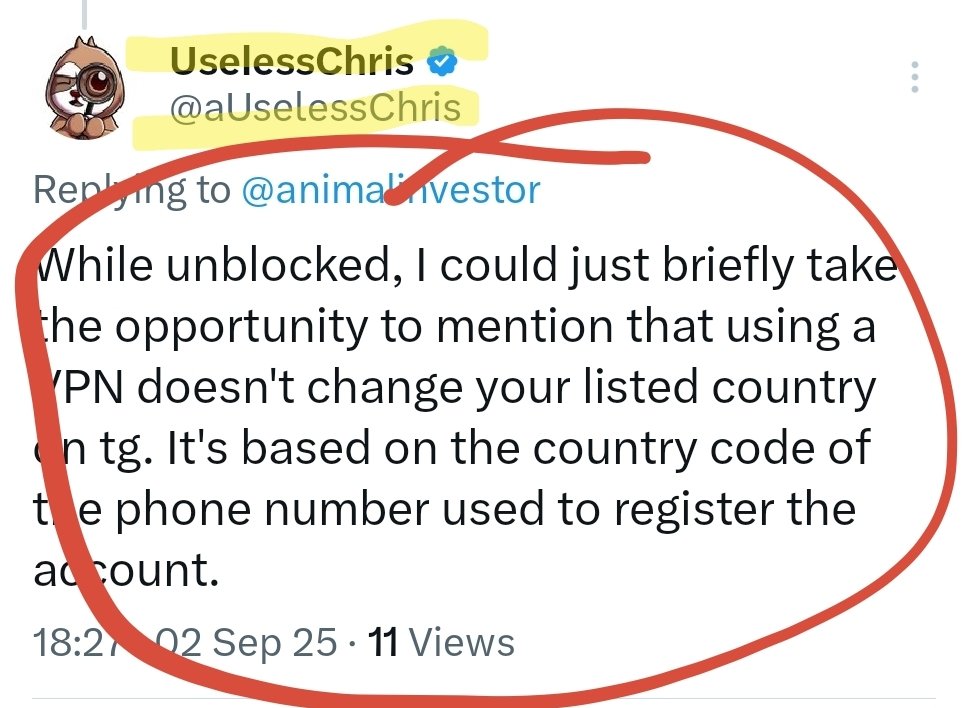
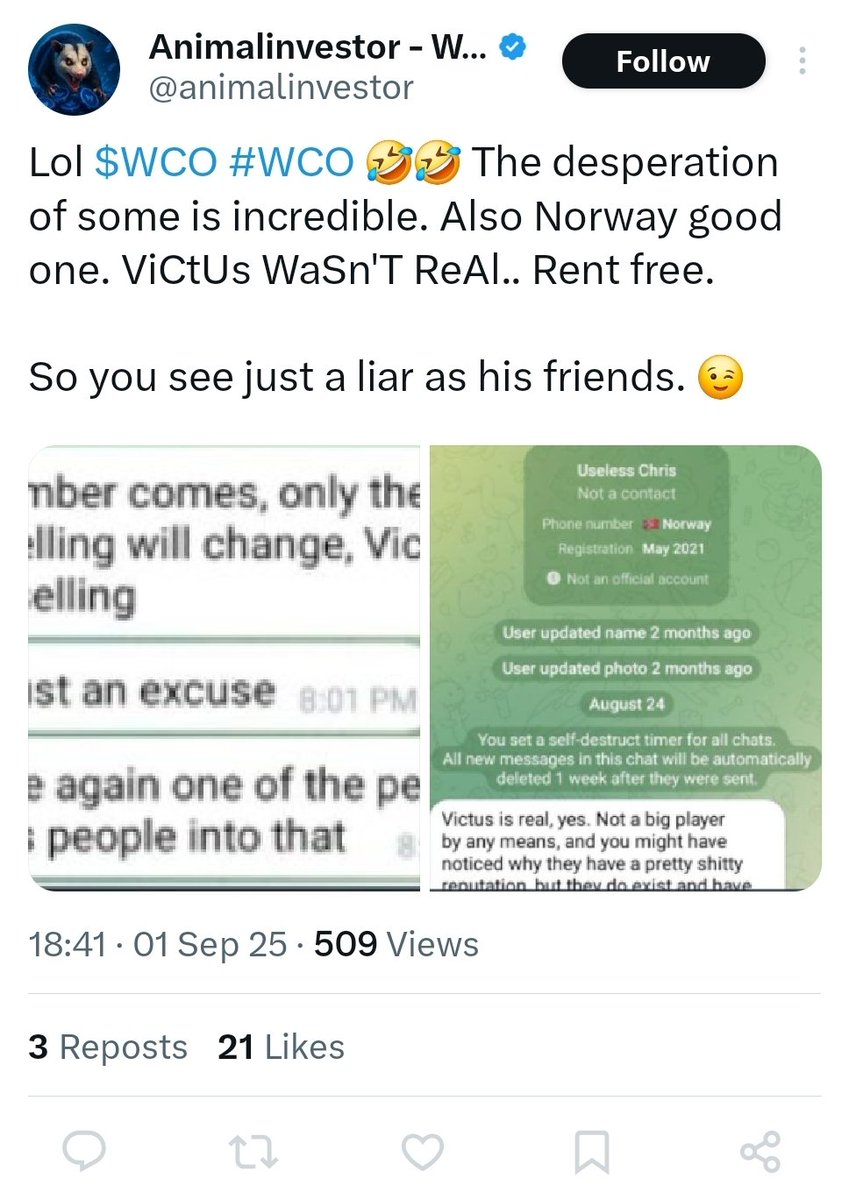
I'd argue that both desperation and rent-free would apply more to people who need to crop pictures to hide the fact that the screenshot on the left isn't me.
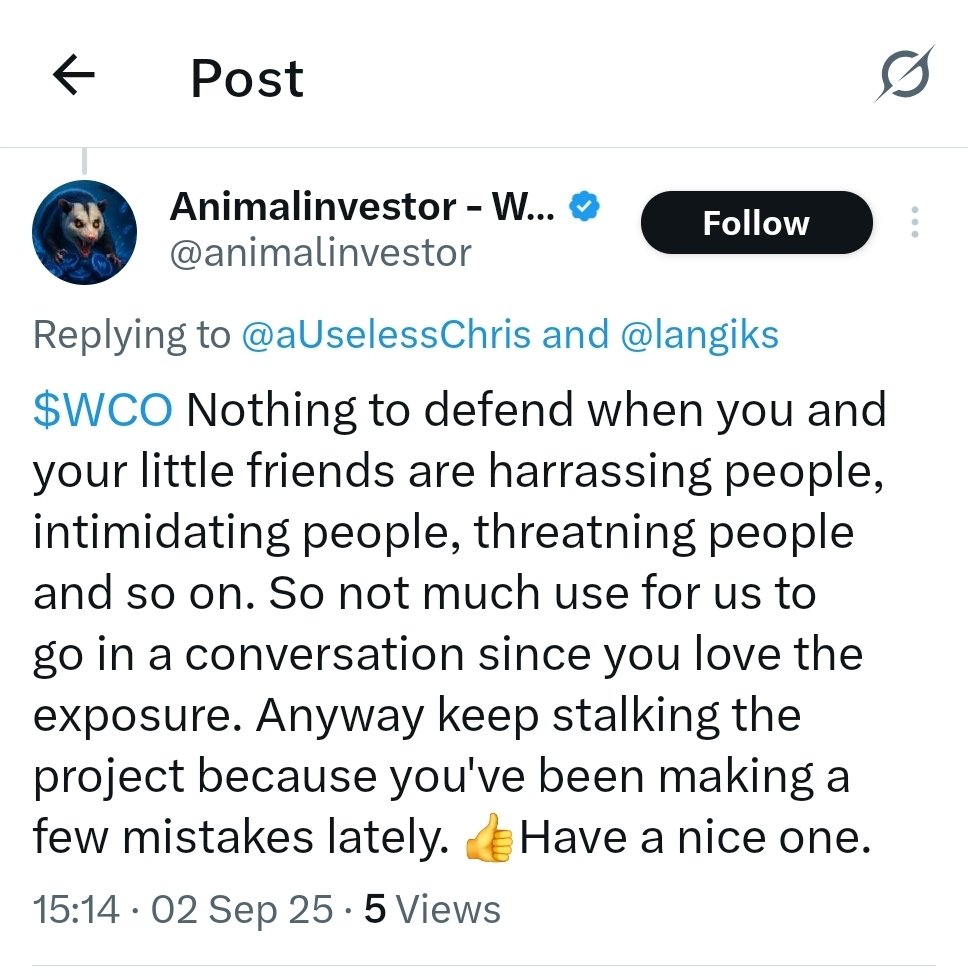
That's the $WCO wayfinders in a nutshell for you. Can't defend their project using facts and hiding behind blocks 24/7.
4
4
12
1,576
1 Sep 2025
With @victusglobal seemingly out of the picture, these would be the final stats:
@WChainNetwork received:
$1m
Victus received:
3,023,342,146 $WCO
30.23% of total supply
51.8% of circulation
Market value of $WCO on delivery:
$1,758,937.88
Discount given to Victus:
43.15%
5
6
18
1,437
17 Aug 2025
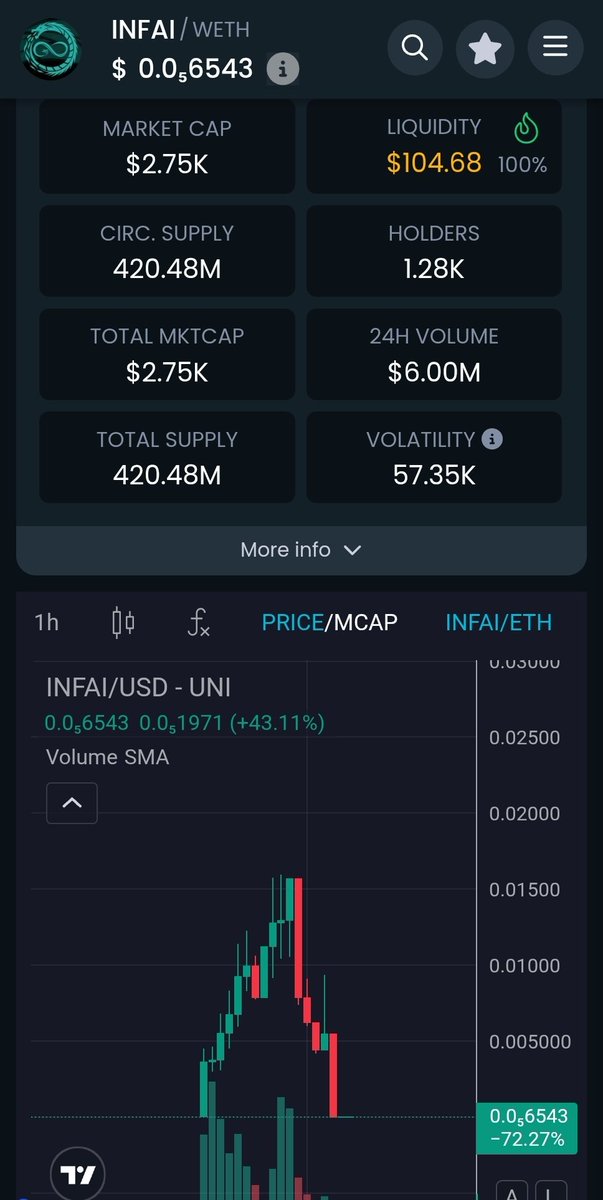
Add @INFAICommunity $INFAI to tokens to avoid. LP will get drained later on, and I suspect that any real users buying among the fake volume until then will get their bag siphoned.
0x756d2c966eF280D84b1c17dA185146Bb1Aa78B3f
17 Aug 2025

Scammers always try to get ahead and it looks we have a string of new projects that manage to trick most standard automated audits.
So avoid @MarginAiNet $MARGIN as the LP will get drained. LP being burnt is irrelevant in this case.
0x7135476F3D048c97C3E9007f2848372fd8765184
3
1
5
1,023
18 Aug 2025
First one down showing that a burnt LP indeed isn't a factor in these cases.
336
17 Aug 2025
Scammers always try to get ahead and it looks we have a string of new projects that manage to trick most standard automated audits.
So avoid @MarginAiNet $MARGIN as the LP will get drained. LP being burnt is irrelevant in this case.
0x7135476F3D048c97C3E9007f2848372fd8765184
2
1
5
1,615
12 Aug 2025
Been a while since I did any predictions on fresh tokens, but barring any panic moves from the team side I'd expect @maze_chat $MAZE to be pushed hard the upcoming week or so before a quick exit on team wallets. Stay safe.
0x4b5AaE28e585a7C28d1A7Bba70BBb5fD376Eabb9
4
8
893
12 Aug 2025
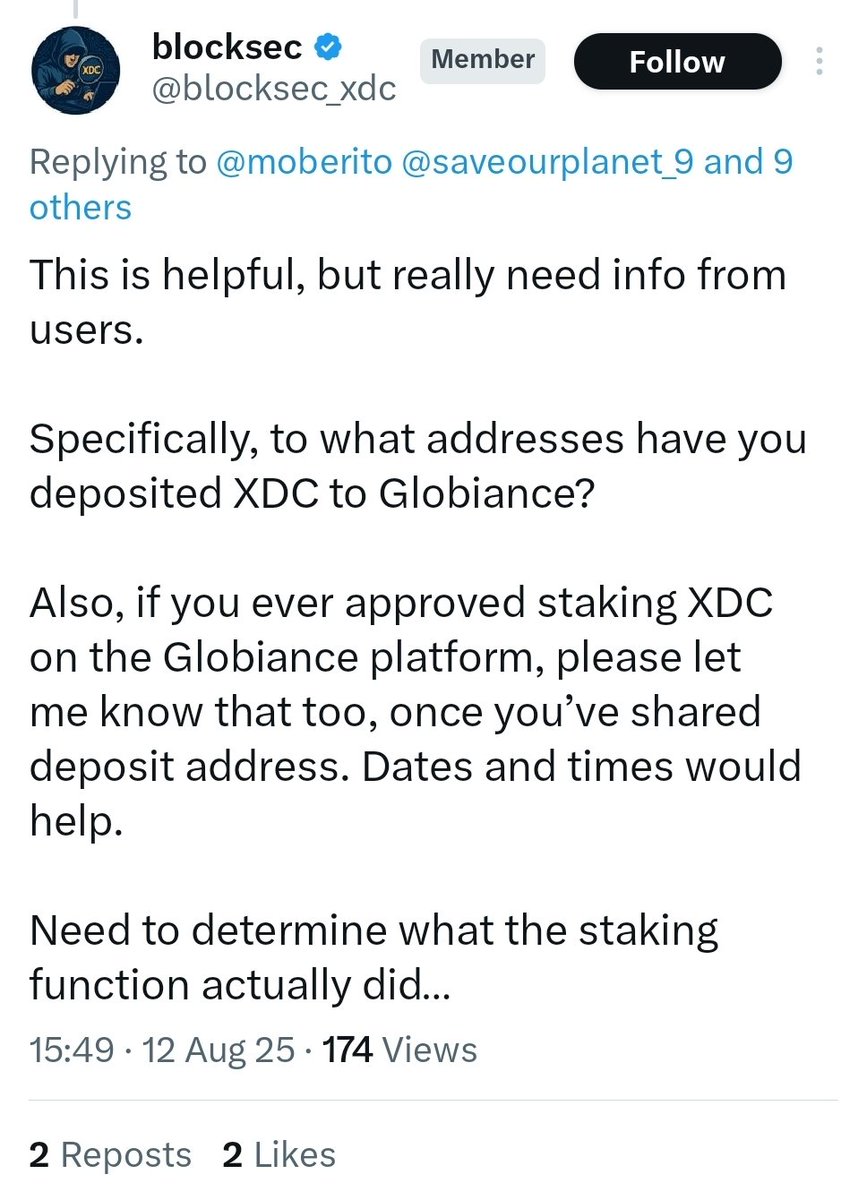
Any #Globiance users might want to be vigilant about sharing too much information here.
Your personal deposit txns and addresses are not needed to figure out where your funds went.
12 Aug 2025

Blame games aside, let's get to the bottom of this ... and figure out what @Oliver_LaRosa really did with user funds.
If you'd like to help, please share (here or via DM) any addresses you know to be associated with Globiance/Oliver, and any other data information you have.
3
12
25
5,850
17 Jul 2025
13/ Scenario C:
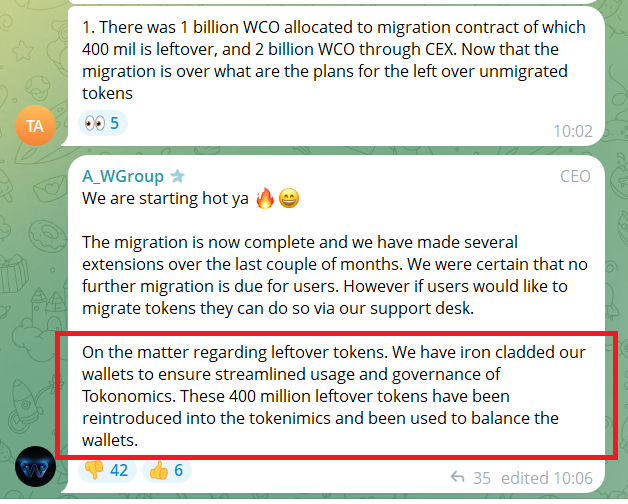
The hack was an inside job, as all previous published data shows, and migrating anything was pointless as the team could just retrieve the supply again by emptying the migration contract once the process closed.
1
1
614
17 Jul 2025
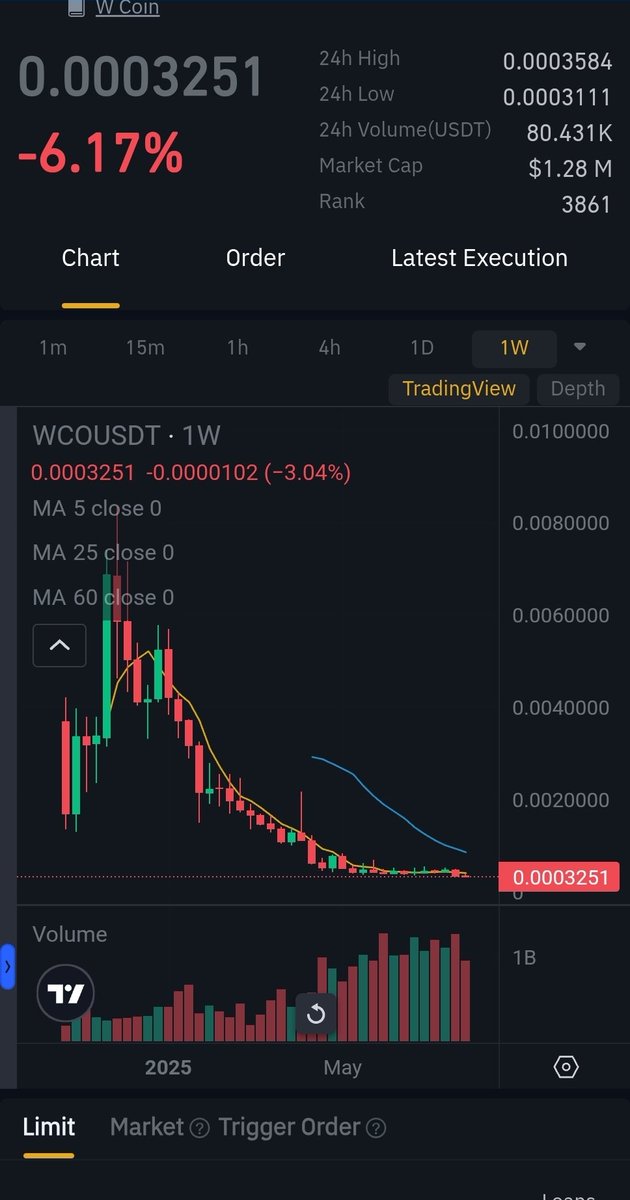
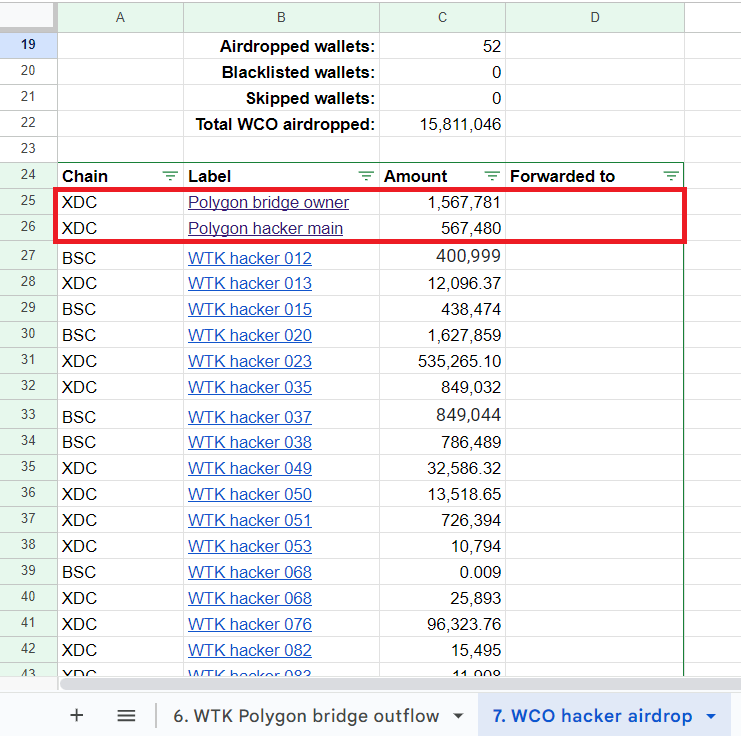
14/ On the positive note for $WCO supporters, this does show that 15m $WCO was indeed recovered from the hack, intentional or not. It is however far from the 375m claimed that we have previously concluded would be a mathematical impossibility.
x.com/aUselessChris/status/1…
24 Jun 2025
16/ 375m $WTK recovered?
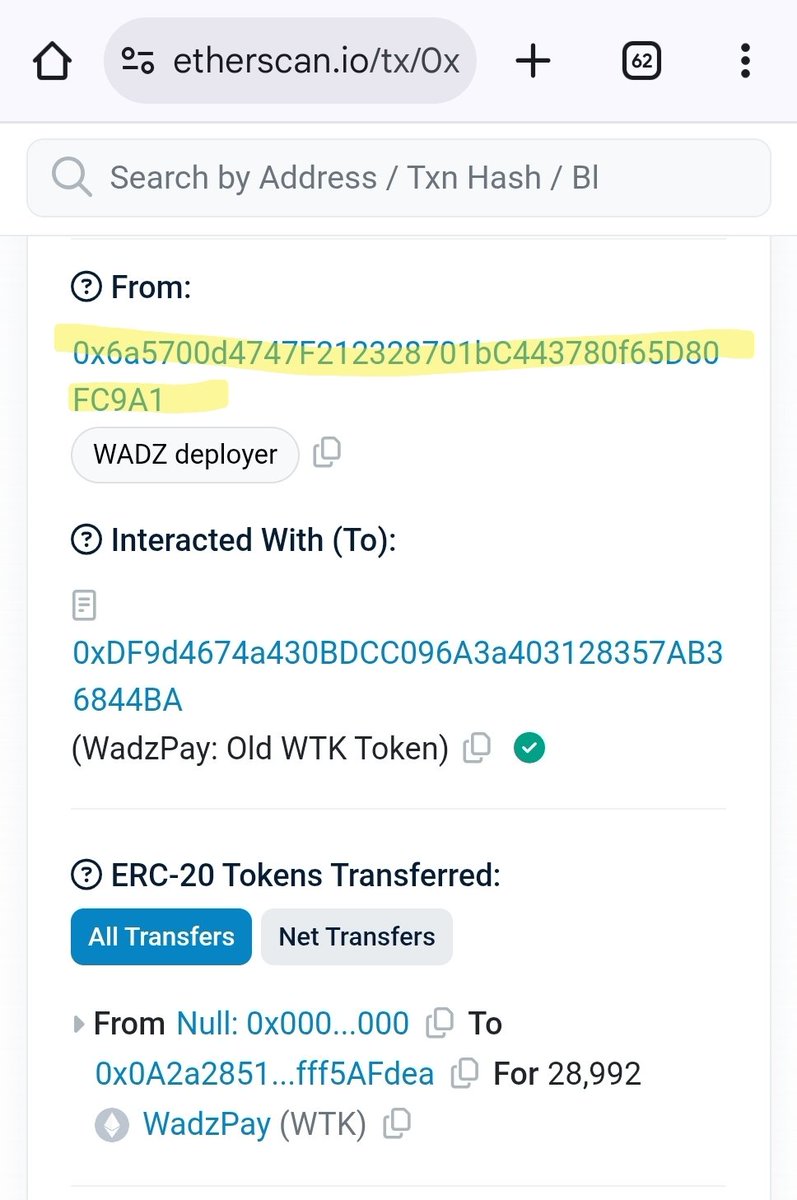
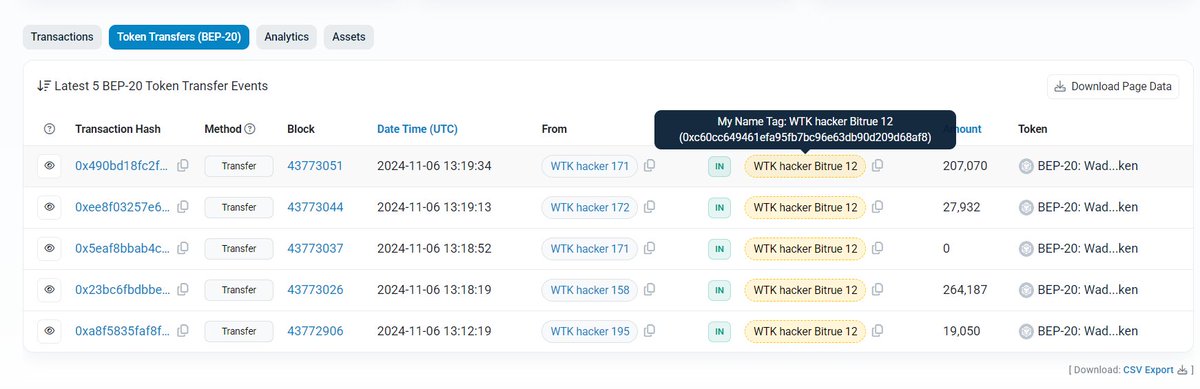
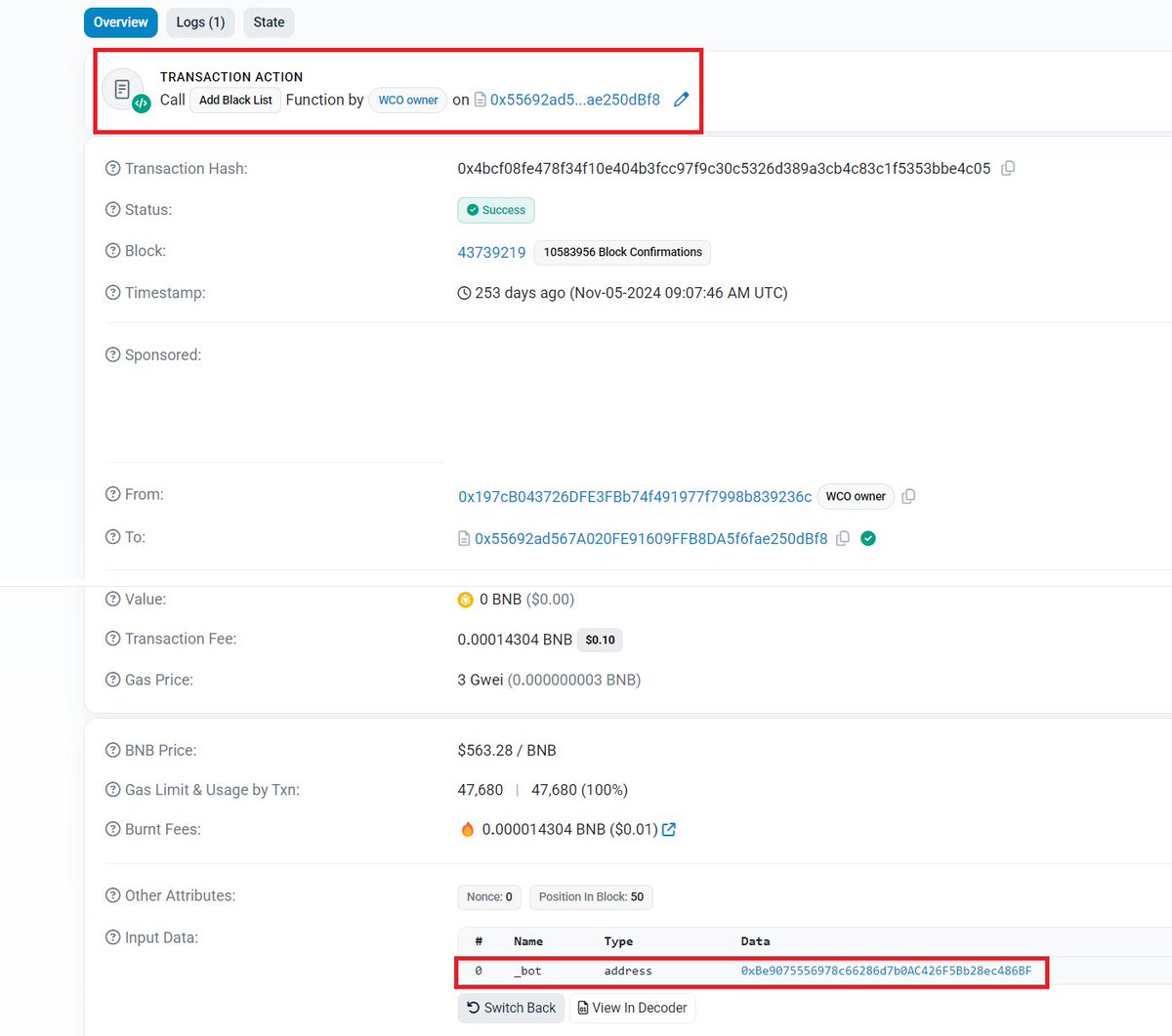
Hard no. With 1.17b sold, it would not even be possible to seize more than 161m. On top of that, any blacklisting done can be seen on-chain. Not a single hacker wallet ever got blacklisted.
1
1
724