
93 Photos and videos







топчик retweeted

Jun 10
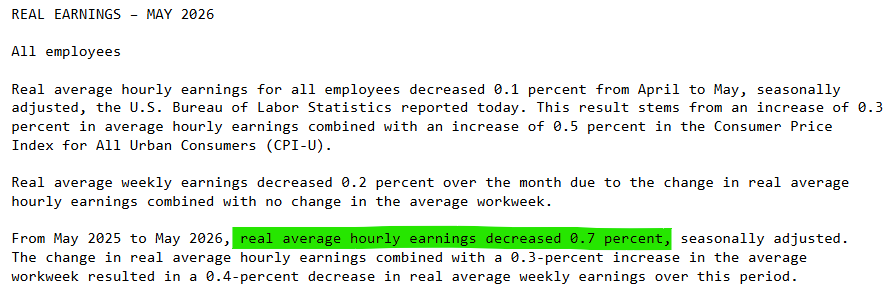
Real avg hourly earnings -0.7% y/y
6
11
61
5,643
топчик retweeted

Jun 3
$PCT performs in the most demanding applications because the product IS virgin quality. Currently there are ZERO mechanically recycled resins that work in hinge applications (it is extremely tough!).
Like Bruckner for film, Stacktech is a gatekeeper in the injection molding space and brands look to them for assurance a product works as advertised.
Stacktech works with many of the large brands, and there is now exactly ONE resin that will meet regulatory mandates and have the product quality to work in hinge applications.
There are some hints/ interesting products listed on StackTeck’s website:
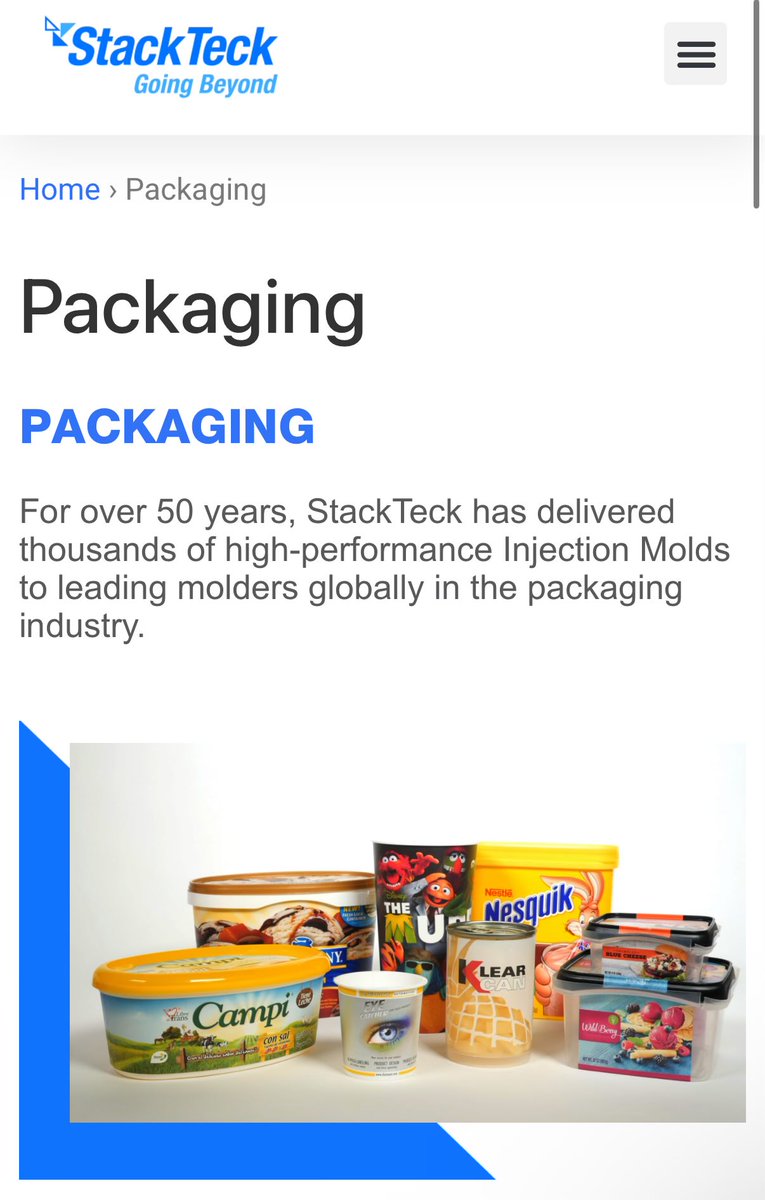


Living hinge caps are one of the toughest tests for recycled polypropylene.
PureCycle and StackTeck have now successfully produced living hinge caps using up to 100% PureFive® recycled PP resin, with lids passing hundreds of flex cycles without failure.
purecycle.com/blog/purecycle…

5
20
127
15,197
топчик retweeted

Living hinge caps are one of the toughest tests for recycled polypropylene.
PureCycle and StackTeck have now successfully produced living hinge caps using up to 100% PureFive® recycled PP resin, with lids passing hundreds of flex cycles without failure.
purecycle.com/blog/purecycle…
13
95
17,353

топчик retweeted

May 28
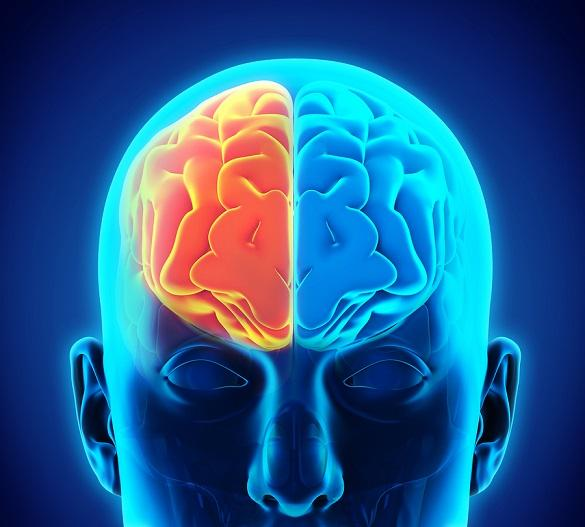
Neuroscience bits from my research: Recognition is a by-product of perception.
Nothing can move in more than one direction at the same time.
Don't let its simplicity fool you. I believe this is the most powerful principle of perception in the visual cortex. It is used for both learning and on-the-fly perception.
While researching the visual system of the human brain, I came to understand that, unlike deep neural nets, the visual cortex doesn't learn to recognize patterns, scenes or objects. Rather, it learns to perceive the world instantly, i.e., to use the world as its own model.
Recognition is a by-product of perception. When a perceptual representation is built in memory, it has a short life and, unless rehearsed (recalled) repeatedly, it slowly decays and disappears.
The advantage of universal and instantaneous perception is that the brain is not blind to patterns or scenes it has not encountered before. Humans learn to achieve universal perception during the first few years after birth. During this time, most of the initial connections in the cortex disappear.
Instant perception solves the edge case problem, the bane of the self-driving car industry. This is an absolutely essential ability that deep learning systems do not have. It is one of the many reasons that DL will not be part of the AGI solution.
I believe there are maybe 2 or 3 additional principles that govern visual perception. I have a couple of partly baked ideas percolating in my brain. Hopefully, something will come out of it soon.
My thesis is that all the sensory modalities are analogous. The main difference is in the architecture and function of the various sensors. This is exciting because it means that solving one cortical functionality amounts to solving all the others.
Concept formation, including language learning, is a separate process that uses recognized percepts from all the regions of the cortex to form associations. It's an essential part of intelligence but I think it's a trivial problem compared to sensory perception.
I could be wrong but I still believe that the mystery of intelligence will likely be solved before the end of this decade. It will be a neuroscience solution. Work in progress.
I love the brain. 🧠😍
May 26

Neuroscience bits from my research: Neuroscience and Isaac Newton
Progress annoucement
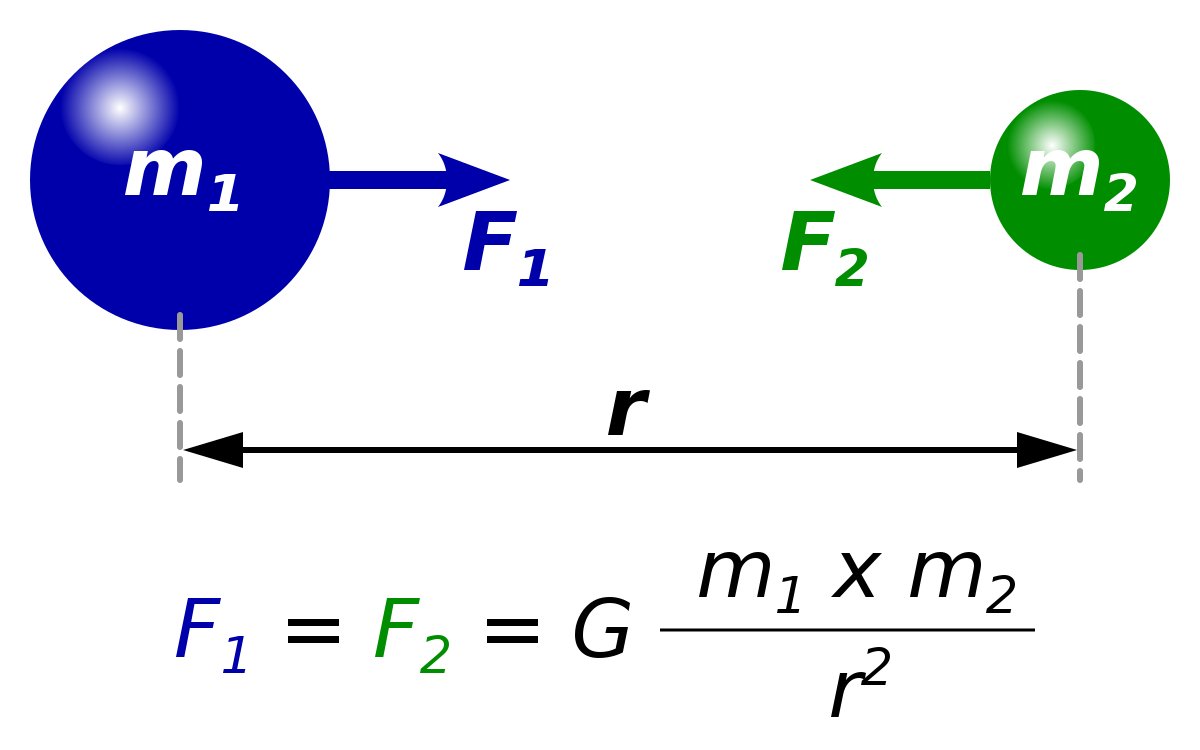
I'm a fanatical believer in Occam's razor. It is one of the reasons that I admire Isaac Newton. He took an absolute mess of experimental data carefully accumulated over many centuries and reduced them to a single equation for the force of gravity. It was a tour de force. I believe that the same can be done for various aspects of intelligence in the brain.
I study the visual system of the human brain, which includes the retina, the thalamus (LGN) and the visual cortex. I have always believed that vision is governed by a few simple principles. Most of my research consists of trying to flesh them out of the available data.
I'm now convinced that perceptual learning in the visual cortex may turn out to be much simpler than even I anticipated. 😯
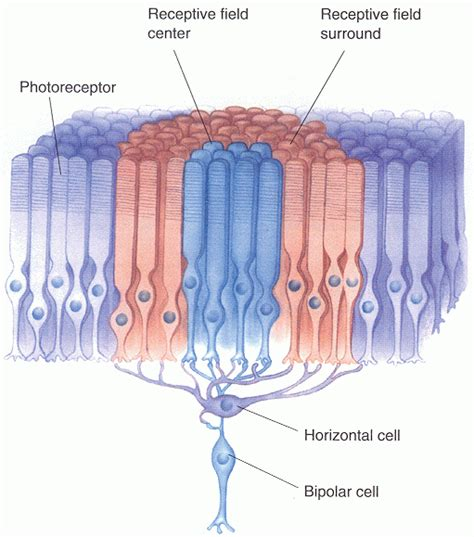
The human retina is a not a pixel sensor. It consists of a huge number of tiny edge movement detectors called retinal ganglion cells or RGCs. The human retina can detect movements in 10 orientations and 20 directions (2 per orientation). My thesis is that the foundation of visual perception is governed by a deceptively simple but powerful principle:
Nothing can move in more than one direction at the same time.
Perceptual learning is almost entirely about the elimination of timing contradictions. All the information needed is in the sensory stream. There is no use for error backpropagation, gradient descent, connection weights or function optimization. No problem of overfitting or getting stuck in local optima either. It's a beautiful thing. 🤔
I can't say more. Work in progress. I love the brain. 🧠😍
3
3
16
2,675
топчик retweeted

May 23
if you're working this weekend:
1] buy $200 personal cursor personal plan
2] curl cursor.com/install -fsS | bash
3] open 7 TMUX screens and have it do MVPs of every project you've been putting off
massive compute giveaway
20
11
479
40,913
топчик retweeted

May 22
Global FX Reset: Thoughts going into the Long Wknd
The new AI world mandates reshoring of manufacturing. That cannot be done under the current fiat petrodollar GRC regime, where the USD is perpetually bid up by foreign nations who must procure dollars to buy oil.
The US must end the petrodollar regime and devalue the USD in the end, big time. But that can only be achieved without triggering mass capital flight if the US exerts leverage that the RoW cannot refuse.
This is where the SoH closure comes in. Iran is a Kabuki theater, a distraction. The real targets are Europe and Asia.
They will accept a major haircut on their dollar holdings. In return, (1) they will receive dollar liquidity access to orderly restructure financial systems devastated by incoming losses from USD devaluation, and (2) they will gain access to oil from the US which effectively controls Canada’s oil physically (it cannot go elsewhere) and Mexico/Venezuela’s politically.
Refusal to cooperate will be met with the biggest dollar squeeze in modern history without dollar swap line, and the threat if delivered will cause DMs to face an FX crisis that makes the Asian Financial Crisis look like a child’s play. The petrodollar itself will be transformed into the very weapon that destroys it.
Hence the pathway calls for massive dollar squeeze, then epic crash. What is coming is not Bretton Woods 3.0, but Plaza Accord 2.0.
Every day without a peace deal increases the odds of this global currency reset. We are already too pregnant with the SoH closure and oil flow disruption to return to pre-2/27 world. The genie is out of the bottle.
The only way out is through.
And this reset will be the macro trade of our lifetime, far bigger than the current AI trade. Exactly when, not sure, but it will most likely happen before we run out of oil. The pathway is anyone’s guess, but the end destination is clear.
And I do not intend to miss it.
May 22

오일 가격 상승은 아시아에서 원유를
수입하는 국가들이 오일을 구입하기 위해서 더 많은 달러가 필요하다는 뜻 입니다.
전쟁이 길어질수록 외환보유고는 줄어들고 인플레는 증가하는 동시에 수요파괴가 일어나서 디스인플레가 발생합니다.
하지만 메모리칩 수출로 GDP는 상승한 것처럼 보여지나 국민다수는 가난해지는 K자 경제구조가 발생합니다.
아시아 fx 마켓에서 달러가 부족하면 외환위기에 빠질수 있고 그들은 이것을 막기 위해 보유한 금과 비트코인을 팔고 있습니다. AI제조국가는 버티고 있지만 그렇지 못한 인도네시아와 필리핀 등은 외환보유고가 급격히 줄고 있습니다.
한국, 일본, 대만도 자유롭지 못할 것입니다.
AI 칩을 제조하는 아시아 국가들은 수출을
통해 달러를 많이 축척했고, 잉여 달러로 미국채와 금, 비트코인, 미증시에 투자했습니다.
이제 미국은 그들의 목줄을 조이고 있습니다. 왜 일까요?
아시아 국가들의 반도체 공장은 미국에 있어야 하는게 아닐까요?
아니면 태평양 넘어 작은 나라들의 화폐가치를 소각시켜 달러가치를 높이려는 잔인한 방법을 선택한걸까요?
메모리칩 가격 상승이 만든 인플레로
화폐가치 하락과 높은금리를 감당해야하는
국민들은 멍하게 대기업 성과급 잔치를 바라볼 수 밖에 없습니다.
그들이 고급자동차 매장에 갈때 우리는 자동차 할부 이자가 높아져 고통받습니다.
왜 국민들에게 알리지 않습니까!
25
44
153
24,977
топчик retweeted

May 22
When even pastors start slinging hot takes about the tech behind AI, it’s gotta be pretty close to the top, right?
May 22

If you believe that LLMs are querying a database for answers
you're decidely unqualified for this discussion.
1
3
46
5,858


топчик retweeted

THE 22 YEAR WAIT IS OVER. ARSENAL ARE PREMIER LEAGUE CHAMPIONS!

96
2,291
10,784
126,766



топчик retweeted
May 16
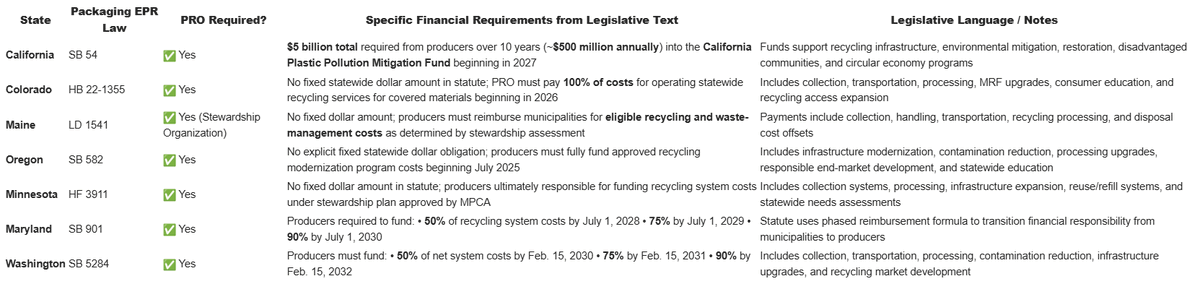
Have had some conversation with $PCT bears that are short based on a feedstock availability argument. What these folks are missing is that within the EPR laws that have passed, not only is there a minimum recycled content mandate but also the states mandate that organizations join a Producer Responsibility Organization (PRO). The PRO will be responsible for funding the modernization of recycling facilities in these states. Previously, these types of laws have failed due to the municipalities being unable to fund modernizing and expanding their recycling infrastructure. Today, the states have put that cost upon the brands. Here is a little output Chat GPT kindly put together for me. Feedstock will be PLENTIFUL for $PCT.
8
6
104
5,801
RT @Mike_Taylor1972: $PCT: IMHO the company now transitions from science-experiment to real-business.
(A first for a recycler)
- Backlog…
34
топчик retweeted

It is unusual for soon-to-be-former Fed Chair Jay Powell to stay on at the @federalreserve. For someone who speaks so often of norms, his unilateral decision to stay flies in the face of tradition.
Kevin Warsh will bring about a new day at the Fed, with accountability, management, and sound policymaking in the lead.
1,749
6,332
31,281
1,263,871
топчик retweeted

Apr 27
We’ve built an innovative novel standalone protocol that challenges the norm in DeFi lending - and we’re not done yet.
1
2
4
159