
Joined January 2022
- Tweets 86,496
- Following 431
- Followers 3,883
- Likes 8,818
138 Photos and videos












Pinned Tweet

May 16
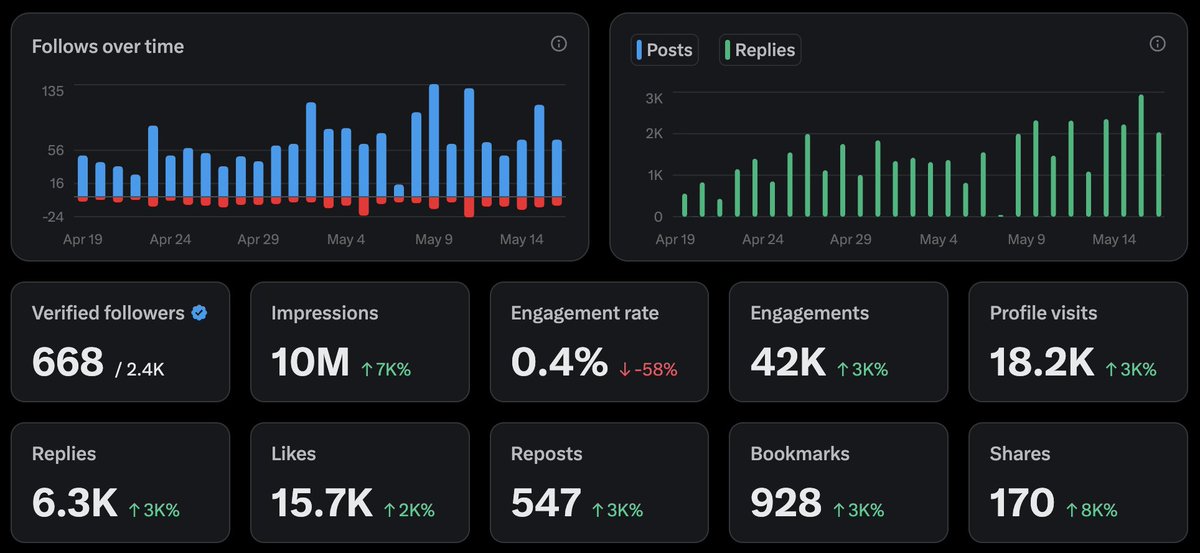
I went from 2k to 10M impressions in 30 days
Comment "growth" and I'll send you what I did 👇
309
6
512
16,674
May 10
I spent months building this. You can have it in 3 minutes. Free to start.
x.com/adelbucetta/status/205…

174
3
471
19,467
May 2
Take 2 minutes to read this thread.
What I'm about to describe is one of the most powerful forces that drives human behavior. In every negotiation, every relationship, every transaction.
It's not trust. It's not reputation. It's not interest.
In 1985, one of the poorest countries on earth ravaged by famine, people dying in the streets sent money to help another country hit by a disaster.
The reason why will change how you see every interaction you have.
2 : 1985. Ethiopia.
The country is in the middle of one of the worst famines in modern history. Hundreds of thousands of people are dying. International aid is pouring in from everywhere just to keep the population alive.
Ethiopia has nothing. Less than nothing.
3 : That same year, Mexico is hit by a devastating earthquake.
Thousands dead. Entire neighborhoods destroyed. The country is in crisis.
And then something happens that nobody saw coming.
4 : Ethiopia sends $5000 to Mexico.
A country that can barely feed its own people. A country surviving on foreign aid. A country with no money to spare.
Sends money to Mexico.
Researchers who documented this couldn't believe it. Why would a starving nation give to another nation?
5 : The answer goes back 50 years.
In 1935, Italy invaded Ethiopia. The country was under attack, isolated, desperate for support.
Mexico and almost no other nation publicly stood up for Ethiopia on the world stage.
One act of solidarity. 50 years earlier.
6 : Ethiopia never forgot.
Half a century later, with its people dying of hunger, when Mexico needed help, Ethiopia found a way to give back.
Not because it made strategic sense. Not because anyone asked. Not because they could afford it.
Because they felt they had to.
7 : Cialdini documented this story in Influence.
He calls it reciprocity. One of the oldest and most deeply wired rules of human behavior.
When someone does something for you, something happens inside you that has nothing to do with logic. You feel obligated to give back. Not because you chose to. Because you're built that way.
It works across individuals, companies, and apparently entire nations across 50 years.
8 : Think about what this means in every relationship you have.
The favor you did for someone 2 years ago that you forgot about. They didn't.
The introduction you made that cost you nothing. The advice you gave for free. The time you showed up when nobody else did.
Every single one of those moments created an obligation in someone else's mind. Whether they admit it or not.
9 : The people who are best at getting others to move for them aren't the most talented or the most visible.
They're the ones who gave first. Consistently. Without keeping score.
Reciprocity doesn't care about logic. It doesn't care about timing. It doesn't care about how much you can afford to give.
It only cares about who gave first.
10 : Ethiopia had nothing.
And still gave.
50 years later.
If a starving nation can feel that pull, imagine what a single genuine act of generosity does in a room with someone who can change your trajectory.
Give first. Always.
113
8
277
9,456
Apr 17
Take 2 minutes to read this thread.
What I'm about to describe is the reason most people who sell something can't figure out why they're not growing.
It's not the product. It's not the content. It's not the market.
A jewelry store owner in Arizona made a mistake by accident.
She almost gave everything away at half price.
Instead, she doubled her revenue without changing a single thing.
1 : She had a problem.
A display case full of turquoise jewelry. Not moving. At all.
Peak season. Store packed every day. Fair price. Real quality.
Nobody cares.
2 : She tries everything.
Moves the display. Trains her staff to push the pieces. Repositions. Adjusts.
Nothing. They just sit there.
3 : Night before a buying trip. Frustrated.
She scribbles a note for her saleswoman: "Everything in this case. Price x 1/2."
She wants them gone. Even at a loss.
She drops the note. She leaves.
4 : She comes back a few days later. Display case is empty. Everything sold.
She smiles. Then she asks for the numbers.
Something's wrong.
5 : Her saleswoman misread the note.
She saw "x 2." Not "x 1/2."
Every piece sold at twice the original price.
Not half. Twice.
She expected to lose money. She doubled it. Without changing a single thing.
6 : Here's what happened in those tourists' heads.
They knew nothing about turquoise.
They wanted quality. But how do you judge quality when you don't know what you're looking at?
You use the only signal available.
The price.
Expensive equals good. It's not a conscious thought. It's automatic. It's wired in.
7 : Robert Cialdini documented this story in his book Influence.
He calls it a mental shortcut.
Your brain can't process everything. So it builds simple rules.
"If it's expensive, it must be good."
Most of the time that rule works. That's why it exists.
But sometimes someone understands your shortcut better than you do.
And they use it.
8 : Meanwhile you're dropping your prices to "be more competitive."
You're not becoming more accessible.
In your customer's mind you're becoming less credible.
Same rule. Working against you.
9 : The turquoise didn't change. The market didn't change. The tourists didn't change.
Only the price changed.
And that changed everything.
10 : The price you show isn't just a number.
It's the first message your customer receives about you.
They read it before they look at your product. Before they read your pitch. Before they hear your story.
The real question isn't "how do I lower my price to sell more."
It's "what message is my price sending?"

Elon Musk: “This is going to sound pretty crazy. I’d say the economy is ten times its current size in ten years
Greater than 10x in roughly ten years is actually a fairly comfortable prediction
Obviously, if there’s World War III or something, that could put a kink in those plans. But in the absence of World War III, if current trends continue, the economy 10xs in ten years”
61
2
217
15,772
Apr 15
Take 2 minutes to read this thread.
What I'm about to describe happens in every negotiation, every sales call, every conversation where something is at stake.
It's not charm. It's not persuasion skills. It's not your pitch.
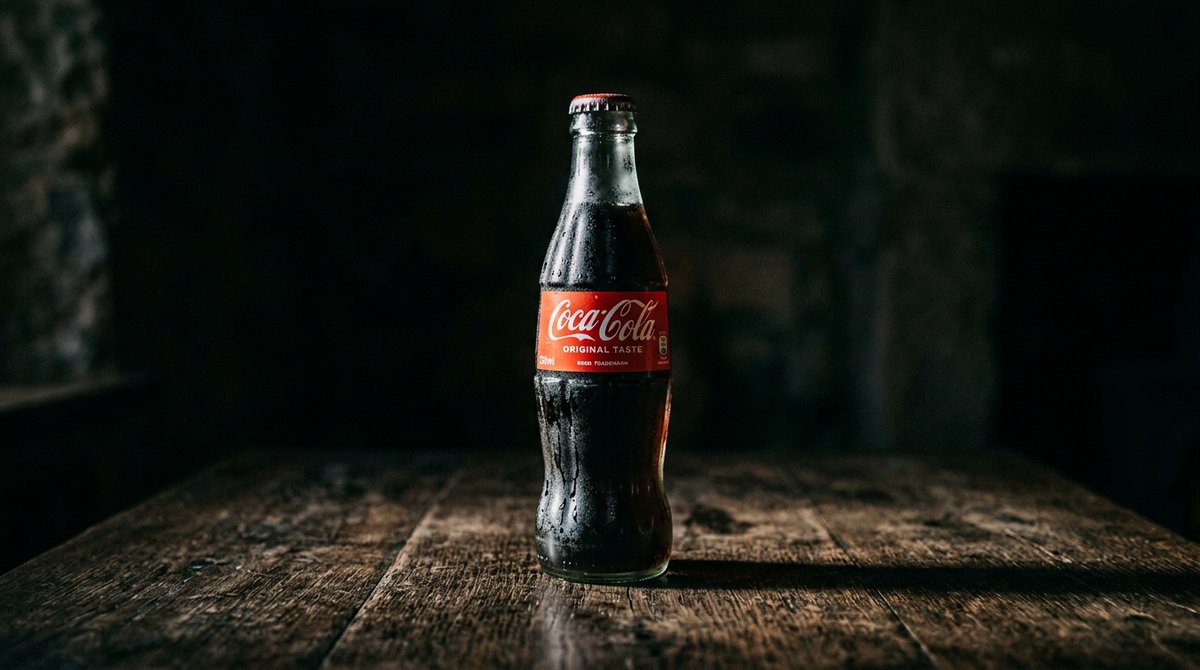
A guy offered a stranger a Coke during a break.
That one Coke made him sell twice as many lottery tickets as everyone else.
The stranger didn't even like him.
1 : Dennis Regan. Psychologist at Cornell.
He runs an experiment on what actually makes people say yes.
He sets up a fake scenario. A guy named Joe is planted in the room. His job is to sell raffle tickets to strangers at the end of the session.
But first, he does something during the break.
2 : Group one.
Joe leaves the room during the break. Comes back with two Cokes. Hands one to the stranger without being asked.
"I got this for you."
Group two.
Joe just comes back. No Coke. Nothing.
3 : End of the session. Joe asks both groups to buy raffle tickets.
The Coke group bought twice as many tickets as the other group.
Twice.
For a bottle of Coke worth a few cents.
4 : Here's where it gets interesting.
Before the experiment, participants rated how much they liked Joe.
Some liked him. Some didn't.
Didn't matter.
The ones who received the Coke bought twice as many tickets regardless of whether they liked Joe or not.
The favor worked even on people who found him annoying.
5 : Cialdini documented this in Influence.
He calls it reciprocity.
When someone does something for you, something happens inside your brain before you've even made a conscious decision. You feel obligated to give back. Not because you chose to. Because you're wired to.
It's one of the oldest survival mechanisms humans have.
6 : Think about how this plays out every day. Free content. Free advice. Free value upfront.
It's not generosity for the sake of generosity.
It's the most powerful trigger of compliance that exists. You give first. The other person feels the pull to give back.
Every time.
7: And here's the part nobody talks about.
The size of the gift doesn't matter as much as the act itself. A Coke worth cents doubled the sales of a stranger.
You don't need to give something big. You need to give something first.
8 : The people who are best at getting others to say yes aren't the most talented. They're not the most charismatic.
They're the ones who give before they ask. Every time. Without exception.
A Coke. An introduction. A piece of advice. A referral.
It doesn't matter what it is.
What matters is that it comes first.
28
3
146
4,999
Apr 14
Take 2 minutes to read this thread.
What I'm about to describe is something that happens to you every single day without you noticing.
It's not advertising. It's not manipulation. It's not charisma.
A psychologist walked up to strangers in a line and got 93% of them to say yes to her request.
She gave them no real reason.
Just one word.
1 : Ellen Langer. Harvard psychologist.
She runs an experiment at a university library. There's a line of people waiting to use the photocopier. She wants to cut in front of them.
2 : First attempt.
"Excuse me. I have 5 pages. Can I use the machine?"
No reason given. Just the request. 60% say yes.
3 : Second attempt.
"Excuse me. I have 5 pages. Can I use the machine, because I'm in a rush?"
A real reason this time. 94% say yes.
Makes sense. You give a reason, people comply. Fair enough.
4 : Third attempt.
"Excuse me. I have 5 pages. Can I use the machine, because I need to make some copies?"
Read that again.
Because I need to make some copies.
Everyone in that line needs to make copies. That's why they're there. It's not a reason. It's literally just restating the obvious.
93% say yes.
5 : Think about what just happened.
A fake reason performed almost identically to a real one.
The content didn't matter.
The word "because" was enough to trigger automatic compliance in 93% of people.
One word. That's it.
6 : Cialdini documented this experiment in his book Influence.
He calls it a mental shortcut.
Your brain is overloaded. It can't evaluate every single request it receives. So it looks for signals.
"Because" is one of those signals. It tells your brain "a reason is coming, this request is legitimate."
It doesn't even check if the reason is real.
7 : This happens to you every day.
Someone frames their ask with "because" and you say yes before you've even processed what they said.
In a meeting. In a negotiation. In a sales call.
You think you're making a rational decision. You're
running on autopilot.
8 : And if you're the one making the ask, here's what this means.
Most people spend all their energy on what they're asking for.
The smarter move is to spend it on how they frame the ask.
A weak request with a clear "because" will outperform a strong request with no framing almost every time.
9 : 93% compliance.
No real reason. Just one word.
The most underrated tool in any conversation isn't what you say.
It's the single word you use right before you say it.
6
3
69
3,602
Jan 9
the gap between institutional desks and you isn't money, it's infrastructure. Quantitative funds don't "feel" the market, they process it.
@kaigen_ai puts institutionalgrade logic in your HAND.
8
2
42
2,448
Jan 9
the ultimate luxury isn't owning more assets. It’s owning your time. Active retail traders underperform the market by 6.5% annually due to emotional over trading.
If you’re glued to a 1min chart, you’re an employee of the market.
5
33
1,982
Jan 9
Most traders lose to their own pulse. Research shows that fear can reduce the likelihood of holding a winning position by 20% compared to a neutral state.
@kaigen_ai doesn't have a heart. It has an entry, an exit, and a cold set of rules. We replaced HOPE with MATH.
1
1
22
1,449
11 Oct 2025
Kaigen’s AI agents handled the latest dump with discipline:
- 0 liquidations
- Stop losses honored
- No size ups after losses
- No revenge trades
That’s “Let it trade”
15
1,223

Miss a week, miss a lot! 🫐
@GMX_IO Multichain is live for @base’s 1.3M users with chainless trading in under a second. @Dolomite_io offers Looping and Delta-Neutral strategies for GMX liquidity tokens.
Here’s what actually moved the GMX ecosystem ⬇️

2
4
31
1,761

Miss a week, miss a lot! 🫐
14.5% of $GMX supply bought back under the new fee model. GM: ETH [WETH-WETH] LPs on @pendle_fi, incentives live. 6 GMX assets now collateral on @RDNTCapital.
Here’s what actually moved the GMX ecosystem ⬇️
2
4
25
1,742
Miss a week, miss a lot 🫐
GMX treasury crossed $50M, $APE deposits live on @GMX_SOL, GLV WETH/USDC & BTC/USDC now collateral on @RDNTCapital (~$60M unlocked), @kaigen_ai BETA is opening, access is by selection.
Here’s what actually moved the GMX ecosystem ⬇️
3
4
20
1,377

DeFi users can now trade the yield of the $61 million deep GM: ETH/USD [WETH-WETH] pool on @Pendle_fi.
Current APR for this high-performance single-sided ETH pool on @Arbitrum: 6.96%.

16 Sep 2025

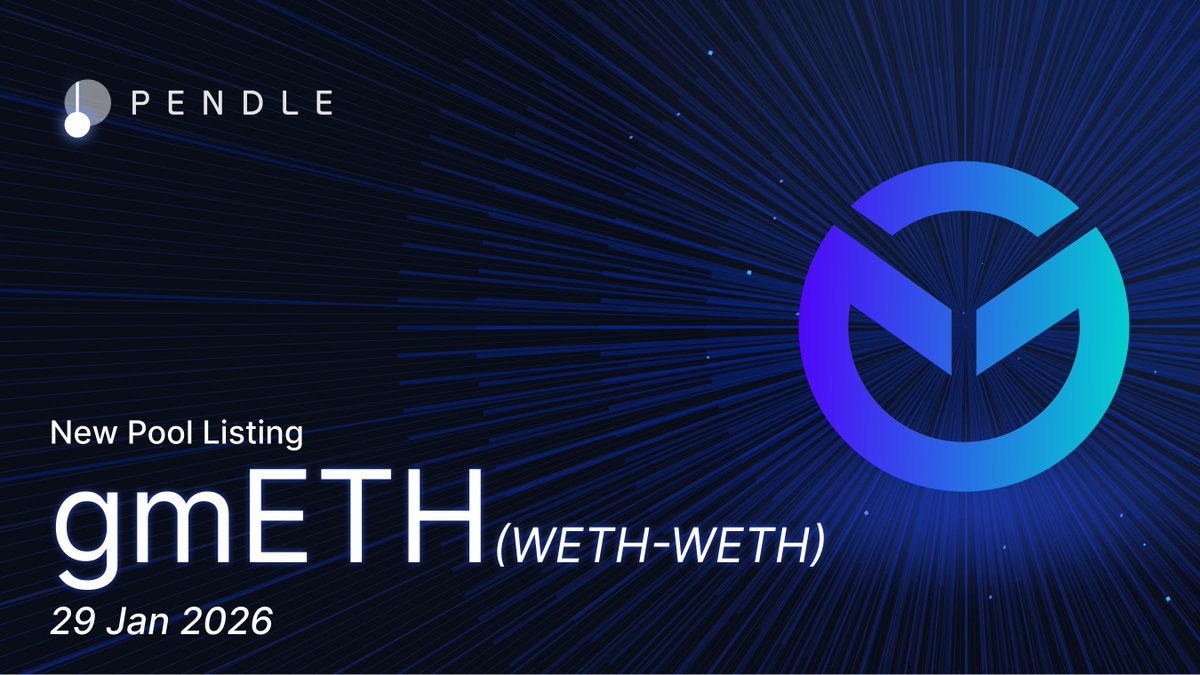
gmETH (29 Jan 2026) by @GMX_IO is live!
Earn and trade fees from the ETH/USD (WETH-WETH) market on GMX ⚡
11
10
62
7,374
Adel Bucetta retweeted

5 Sep 2025
GMX offers features few other platforms can rival:
🔹Both Swaps & Perps
🔹1-Click Trading, onchain
🔹Options for Collateral: USDC, BTC, ETH, and more
🔹Full self-custody
🔹Advanced order types: Limit, TP, SL, Stop Limit, & TWAP
🔹A full suite of Price & Trade Alerts
🔹Up to 200x leverage
🔹Lower liquidation risk
🔹Nearly $500 million in Liquidity
And it's all securely built on decentralised public blockchains — while no longer dependent on RPCs, thanks to GMX Express.
Now get ready for GMX Multichain.
7
13
48
4,258
You wanted your own AI trading agent. We built it.
@kaigen_ai is designed to do what traders can’t, execute strategies on chain, 24/7, without missing a move. The BETA opens soon but access won’t be handed out, it’s awarded.
READ IT NOW ⬇️
mirror.xyz/gbc.eth/SMcjBHpji…
13
7
47
8,162