Neuroscientist ➡️ Thoracic Medical Oncologist specializing in #earlydetection #AI #ML @mghcancercenter @harvard Cat mom. Human mom. Wife. Opinions mine.
Joined January 2010
- Tweets 1,975
- Following 370
- Followers 899
- Likes 4,081
238 Photos and videos
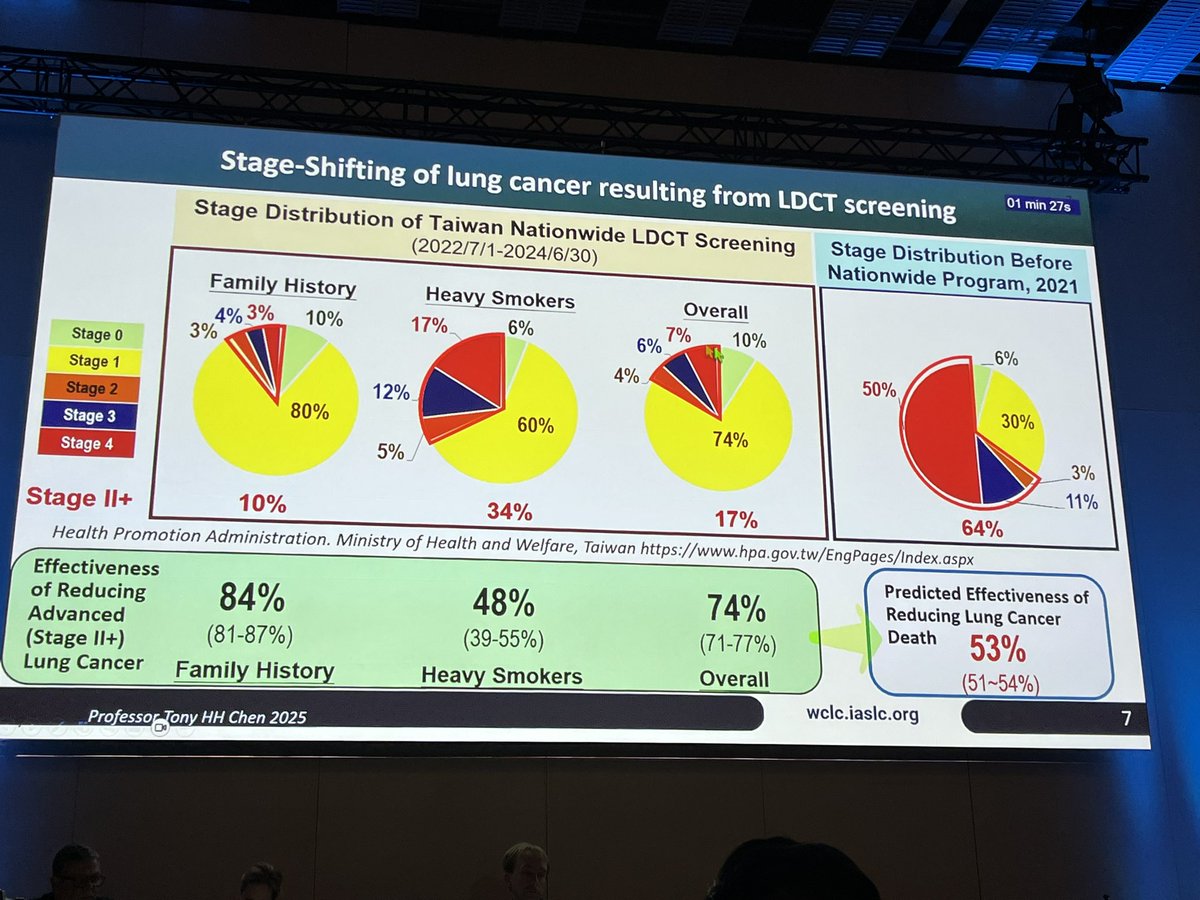
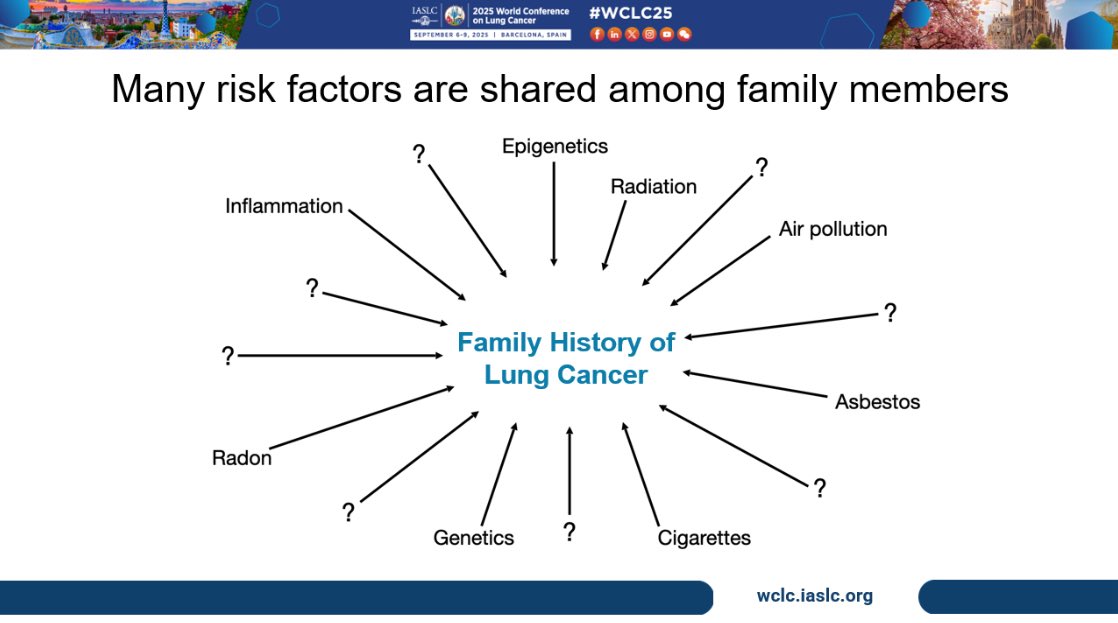


Jun 4
‼️ Wild that this isn’t already standard.
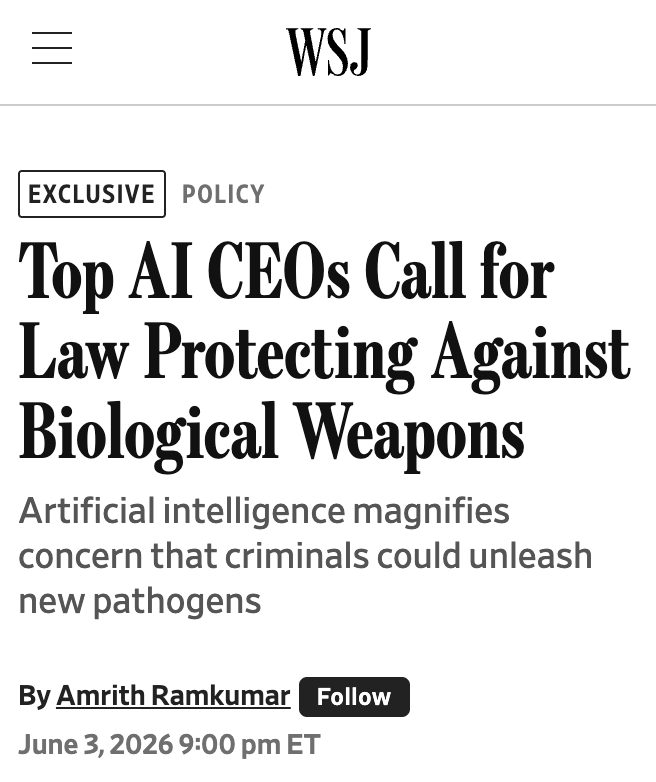
If DNA synthesis can be ordered by mail, screening and recordkeeping should be mandatory. #AI is accelerating biosecurity risks — oversight needs to keep pace.
Jun 4

No one should be able to order a bioweapon through the mail.
@IFP & @JoinFAI are proud to co-lead an open letter calling for mandatory DNA synthesis screening & recordkeeping.
Signatories include:
- Sam Altman, CEO & Co-Founder, OpenAI
- Dario Amodei, CEO & Co-Founder, Anthropic
- David Baker, Director, Institute for Protein Design; 2024 Nobel Prize in Chemistry recipient
- Patrick Collison, CEO & Co-Founder, Stripe
- Paul Graham, Founder, Y Combinator
- Demis Hassabis, CEO, Google DeepMind; 2024 Nobel Prize in Chemistry recipient
- Emily Leproust, CEO & Co-Founder, Twist Bioscience
- Lawrence Lessig, Roy L. Furman Professor of Law and Leadership, Harvard Law School
- Gerald W. Parker, former Special Assistant to the President for Biosecurity and Pandemic Response
- Mustafa Suleyman, CEO, Microsoft AI
- Alex Tabarrok, Professor of Economics, George Mason University
- Alexandr Wang, Chief AI Officer, Meta; Founder, Scale AI
- Christine E. Wormuth, President & CEO, Nuclear Threat Initiative; 25th Secretary of the Army
Read the letter and see the full list of signatories: screendna.org
Many DNA synthesis companies voluntarily screen orders to mitigate biosecurity risks, but no law requires them to do so.
Leaders in AI, biotech, life sciences, national security, and the nucleic acid synthesis industry agree that Congress should act to strengthen safeguards against biological threats.
@deanwball put it well in the WSJ:
“If you’re synthesizing the stuff that yields biological life and viruses, we’re asking you to screen to see whether it is dangerous in some way. That seems like a reasonable thing for society to insist upon.”
2
1
4
644
Allison Chang retweeted

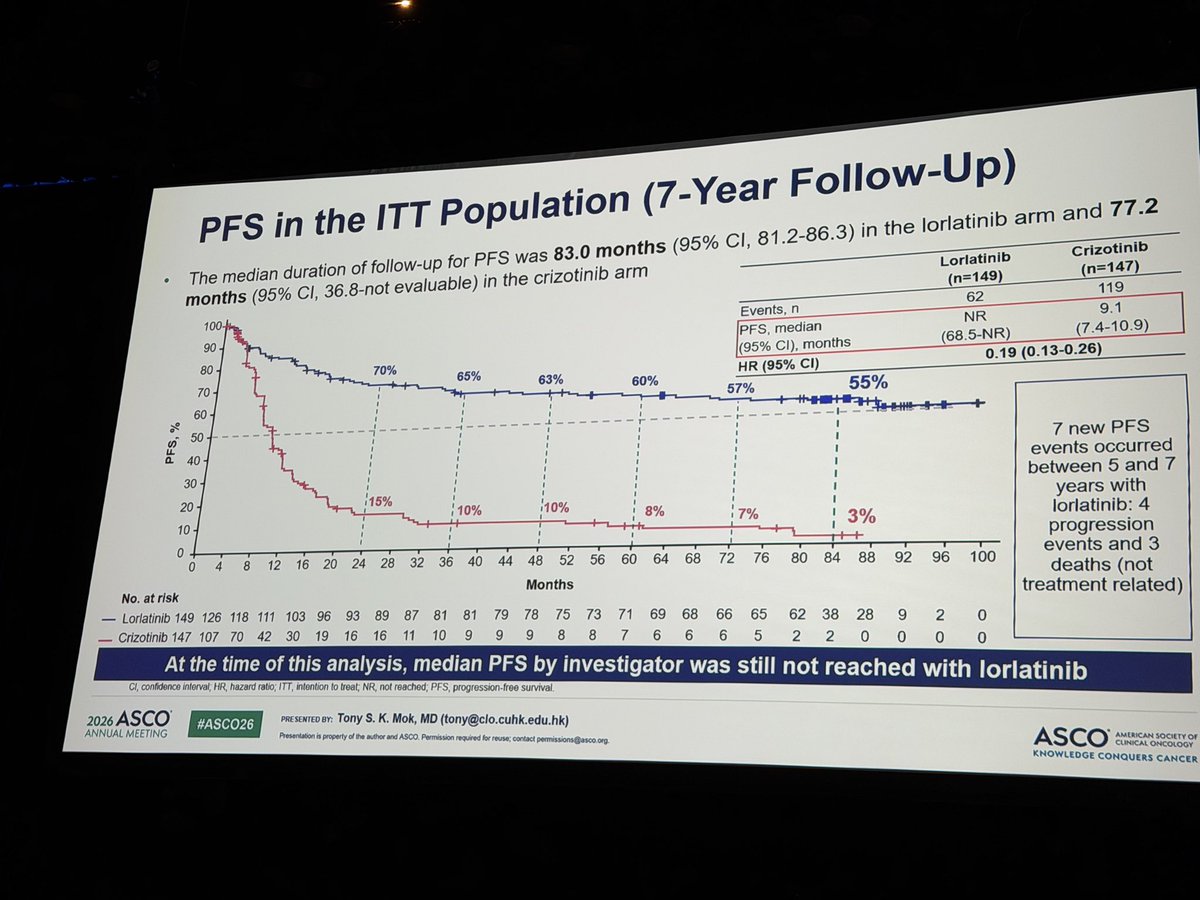
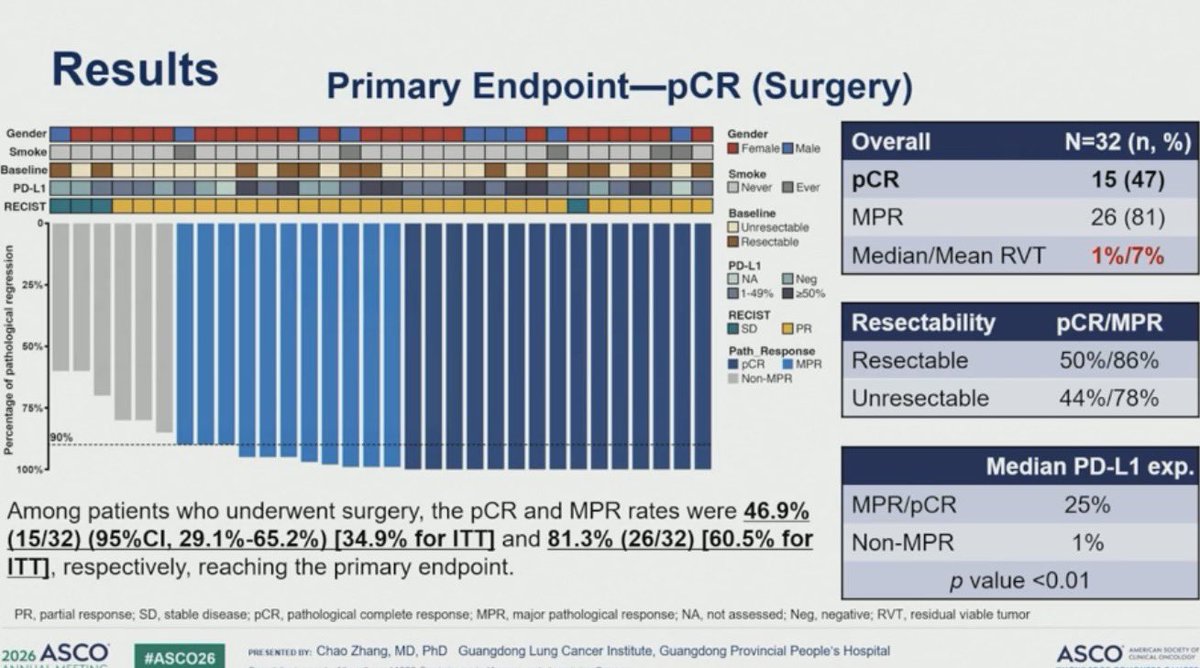
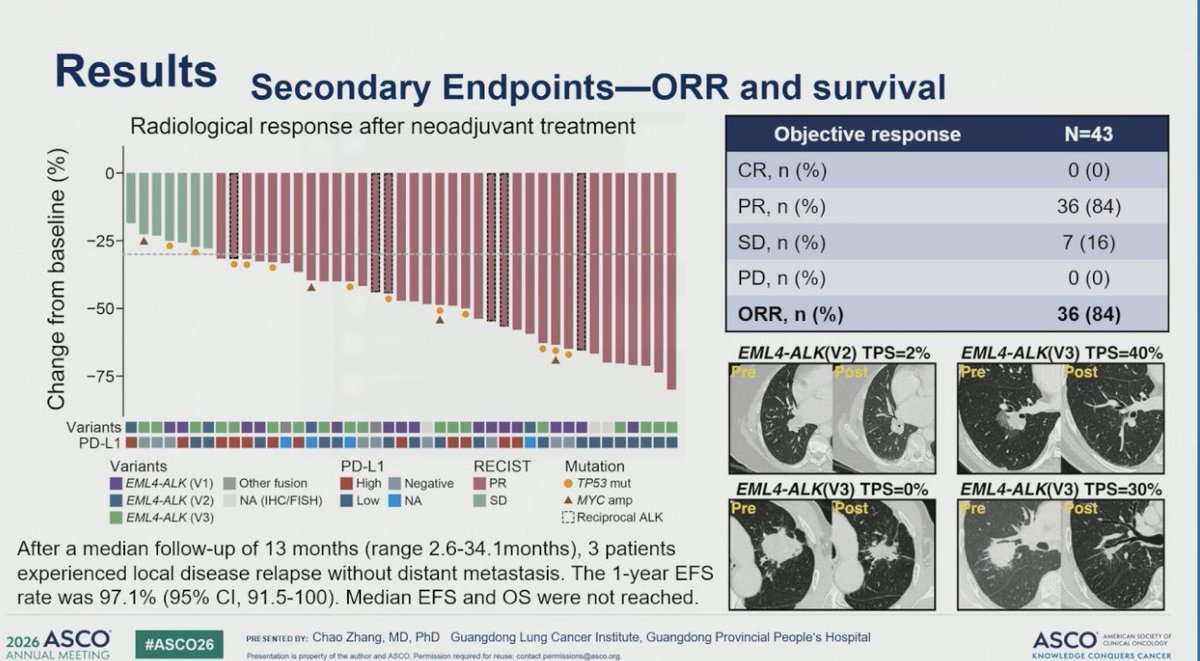
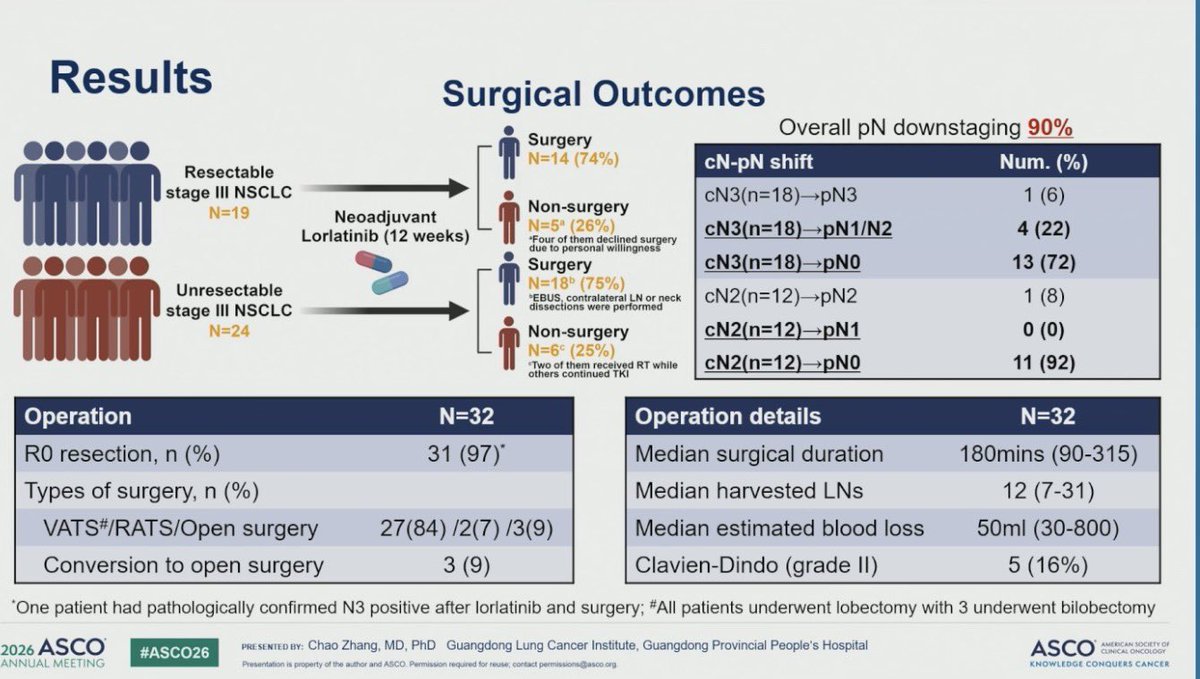
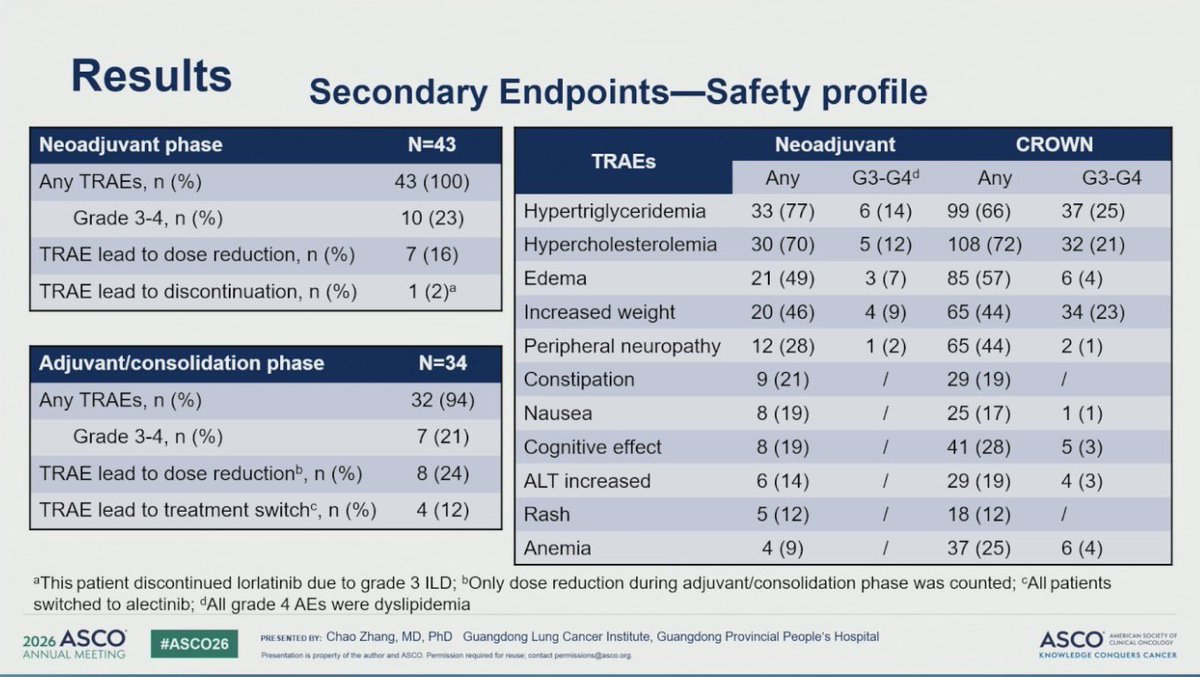
@StephenVLiu - the actual pCR rate is 34% based on the report. They left out 11 patients from the denominator. It is misleading…

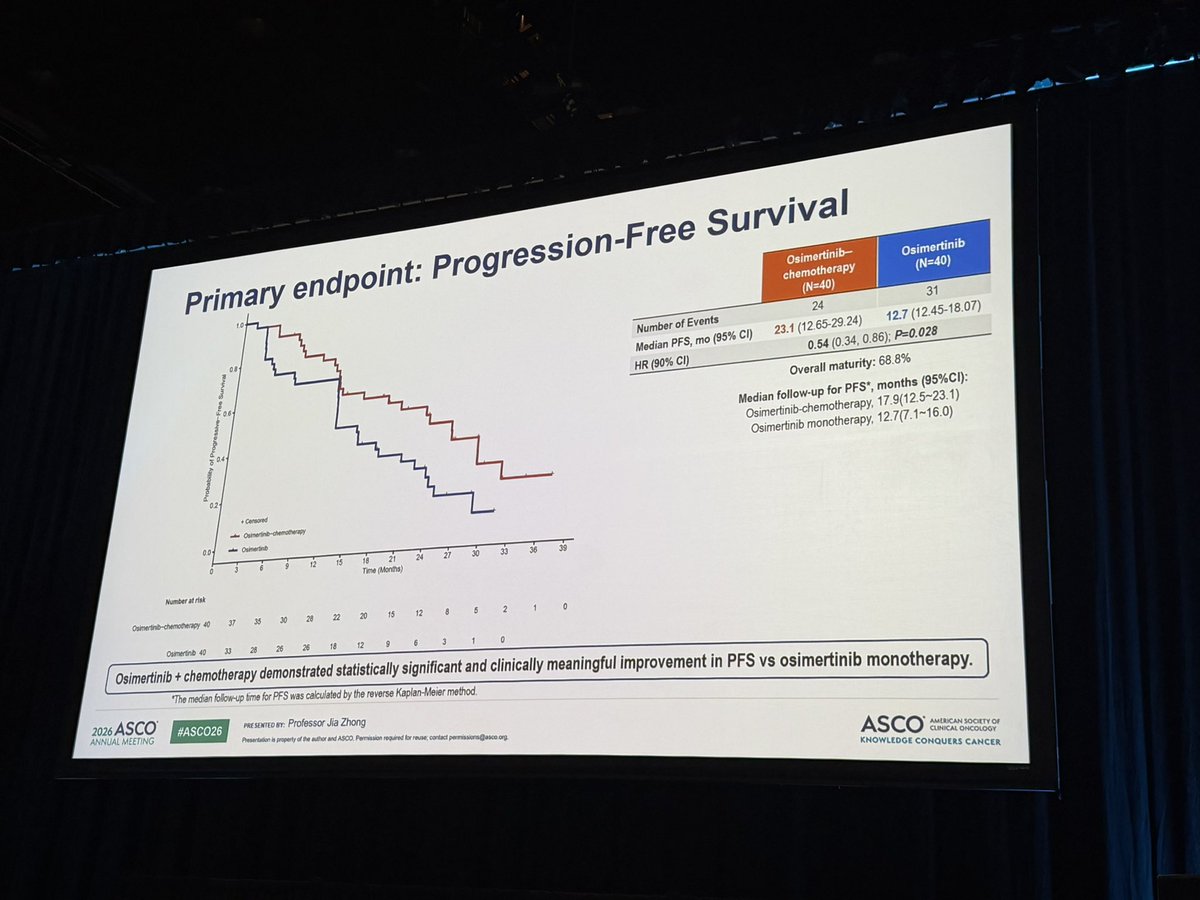
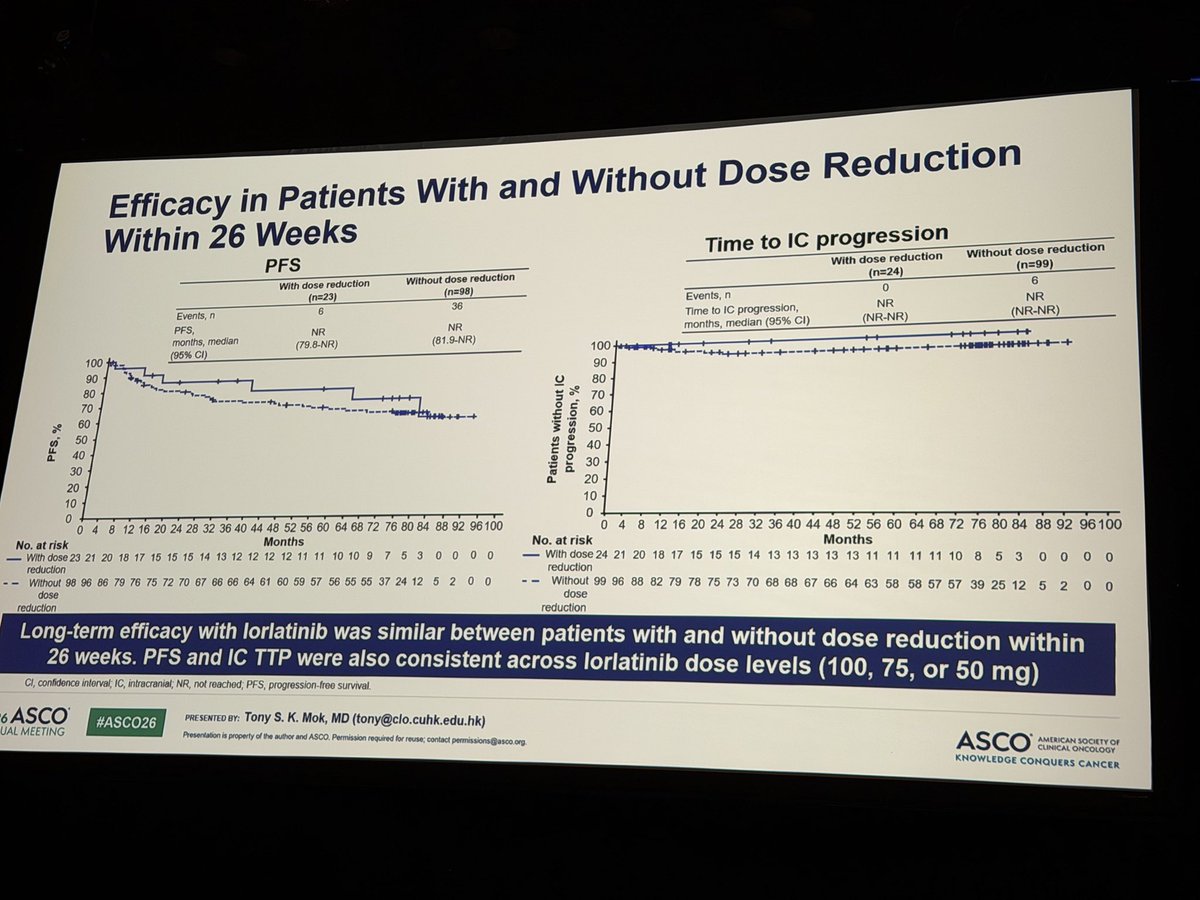
#ASCO26 With neoadjuvant lorlatinib, pCR 47% and MPR 81%. Amazing. RR 84% and 1y EFS 97%. Down staging of nodes in 90%. Very reassuring and consistency safety results. Phenomenal clinical results.
4
13
46
7,293
Jun 1
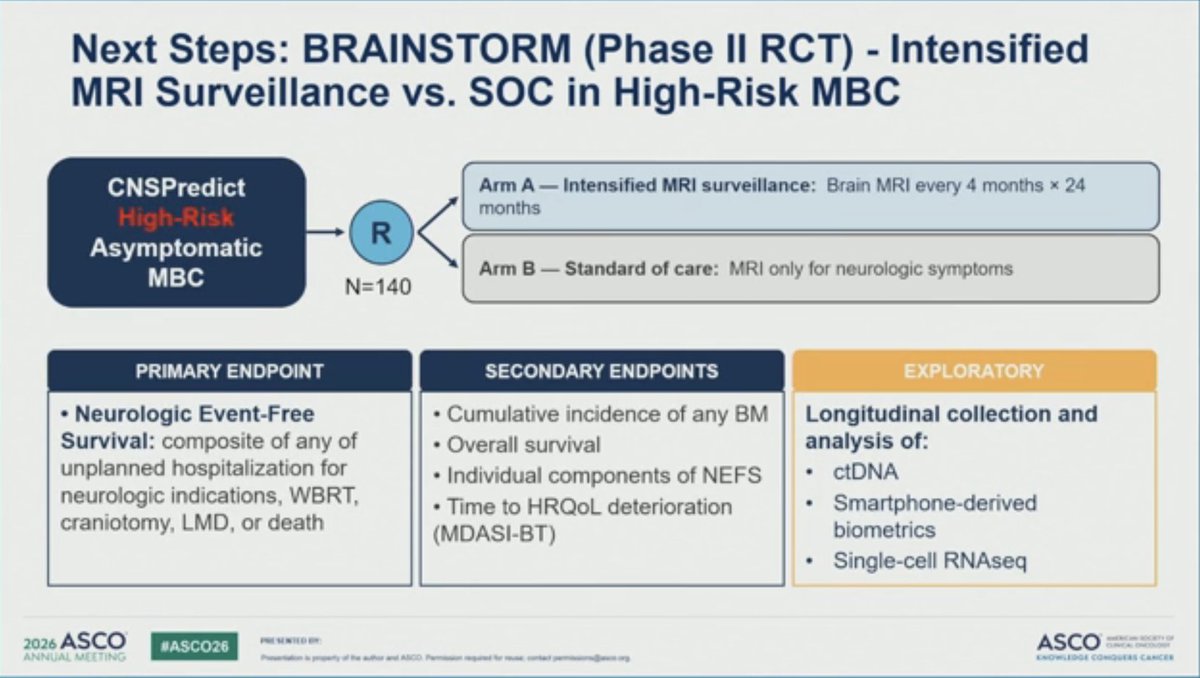
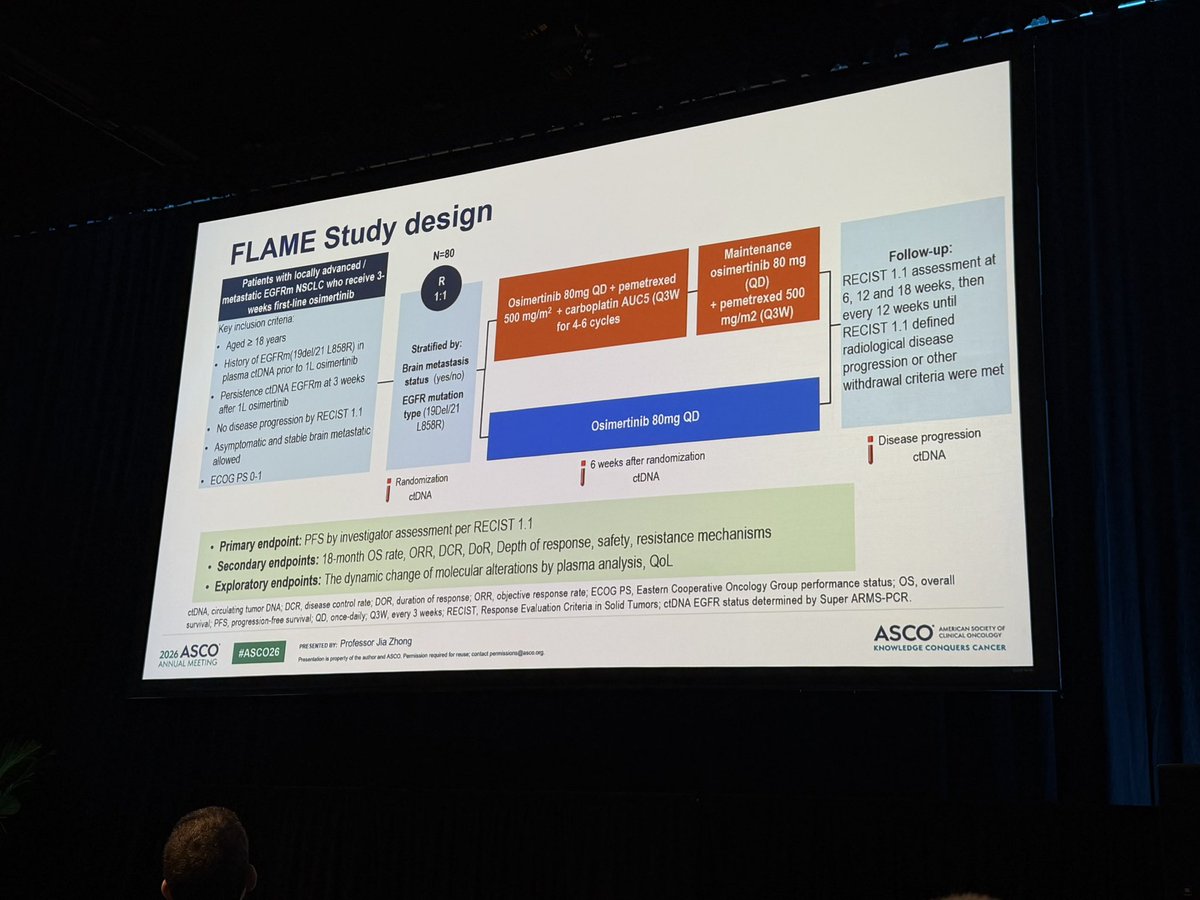
Very excited about this upcoming trial using a validated clinicogenomic brain met prediction #AI model--intensified MRI surveillance is a simple, low-risk, and impactful intervention. So excited to be seeing interventional clinical trial designs like this. Would love to make something like this happen in lung! @pike_lab #ASCO2026 #lcsm
1
7
695
May 31
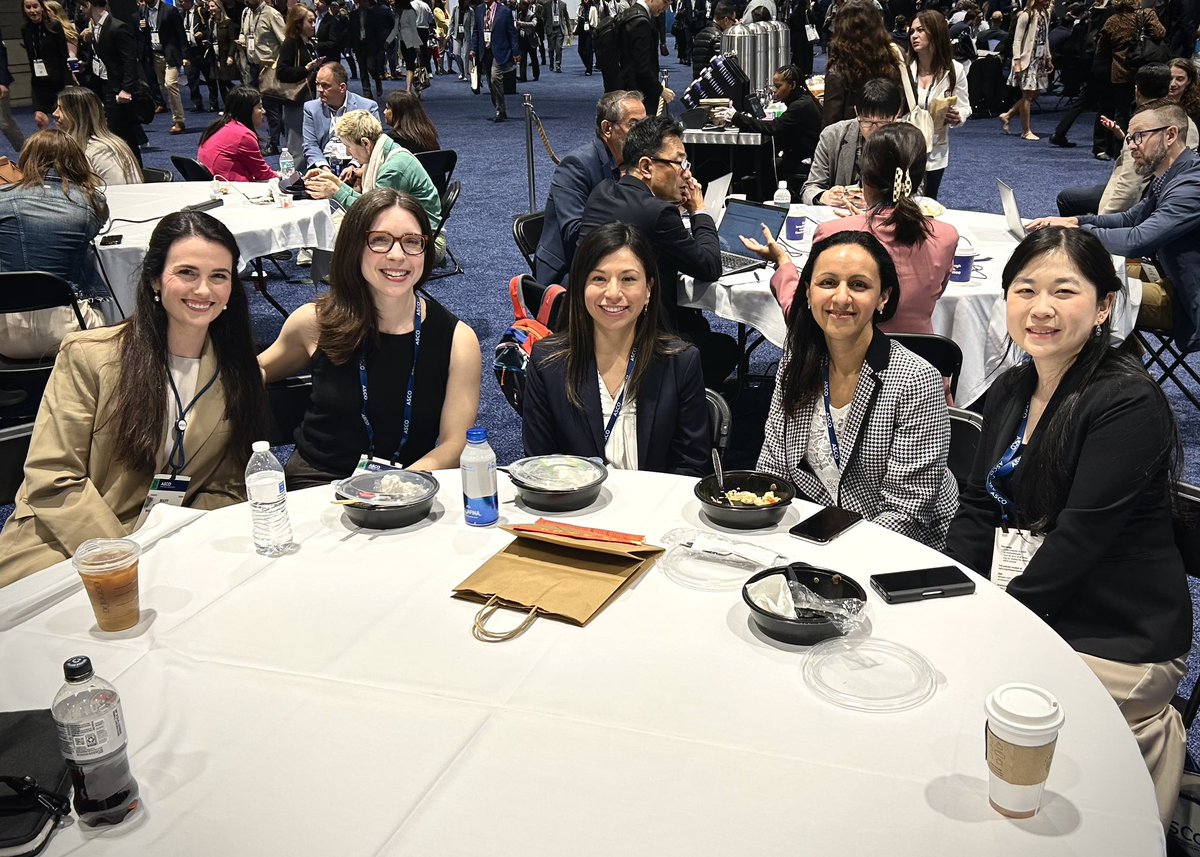
The five newest attendings in the @MassGenBrigham thoracic oncology group! 💅🏻💪 #ASCO2026 @MGHThoracicOnc
3
2
28
3,213
May 30
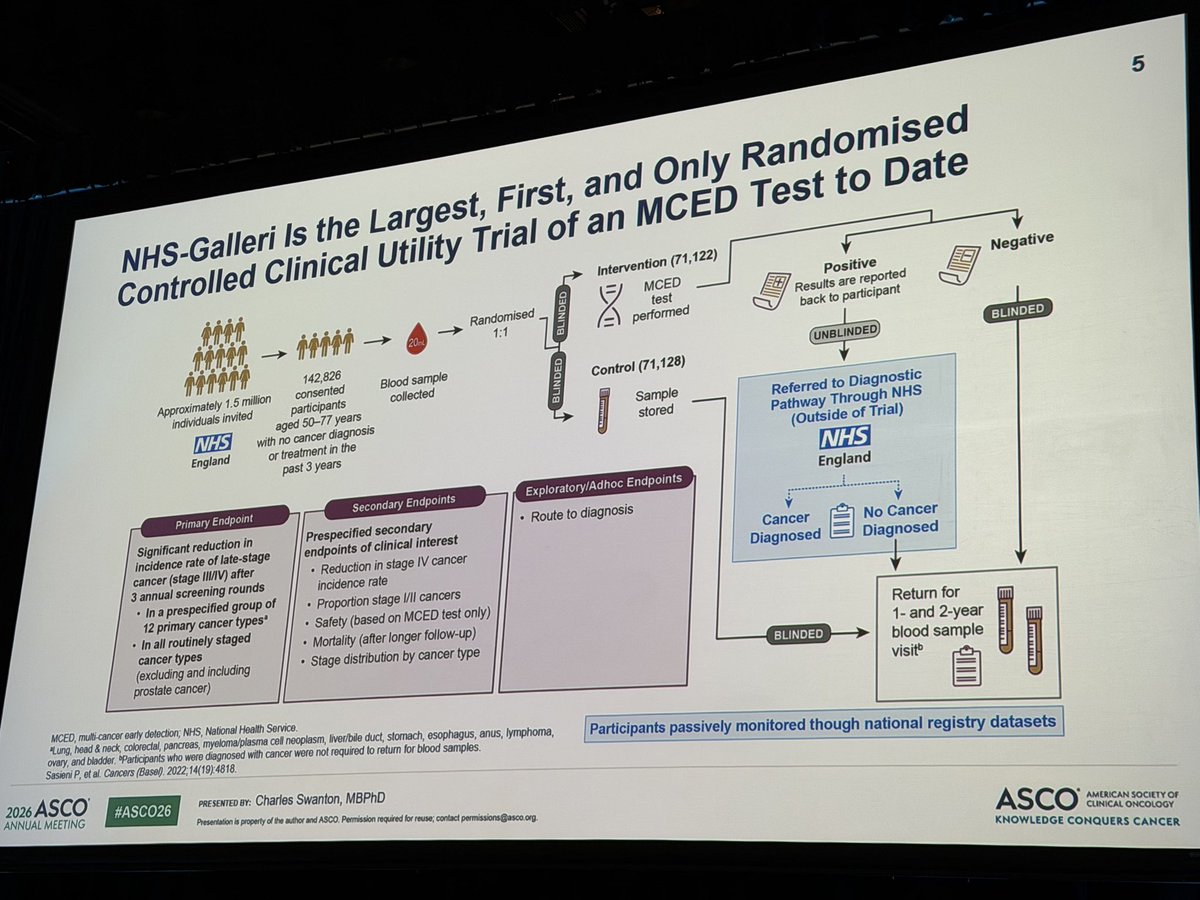
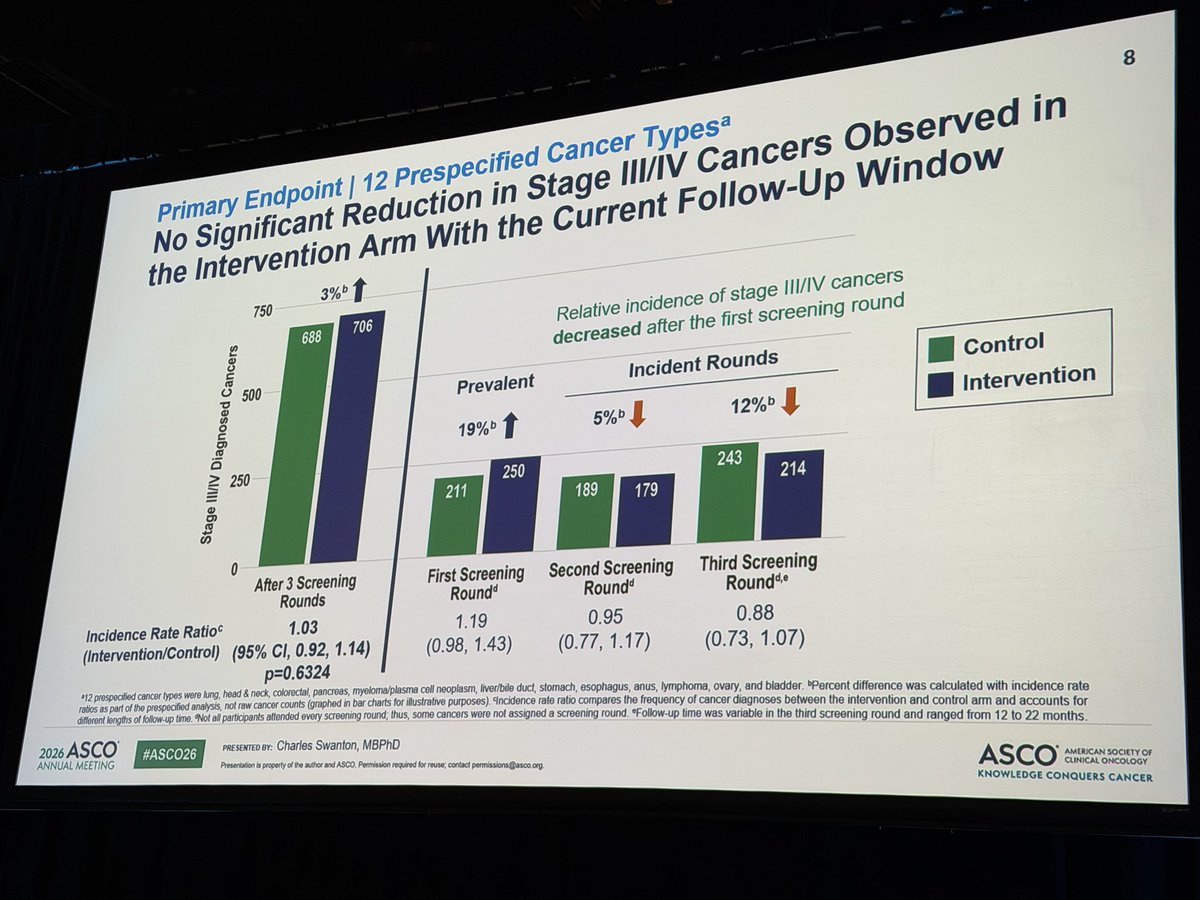
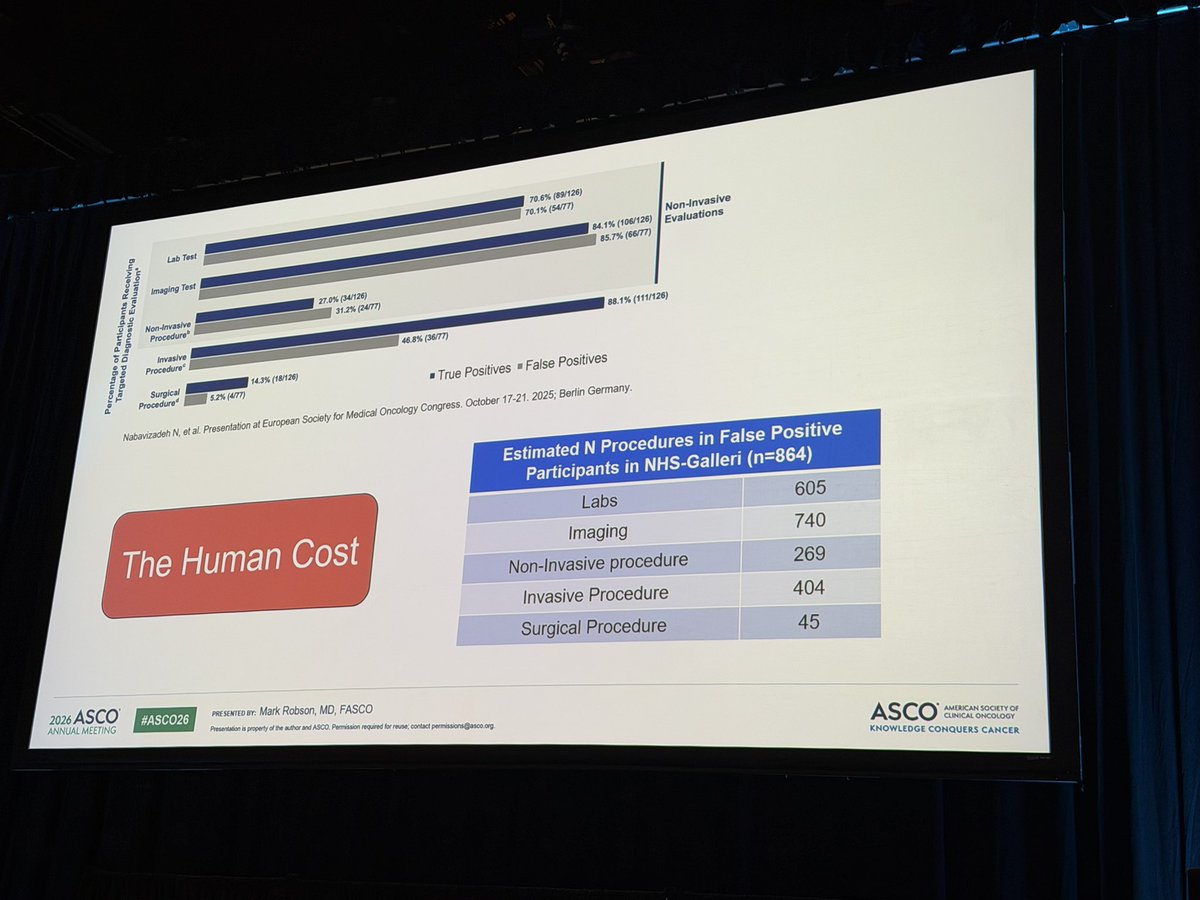
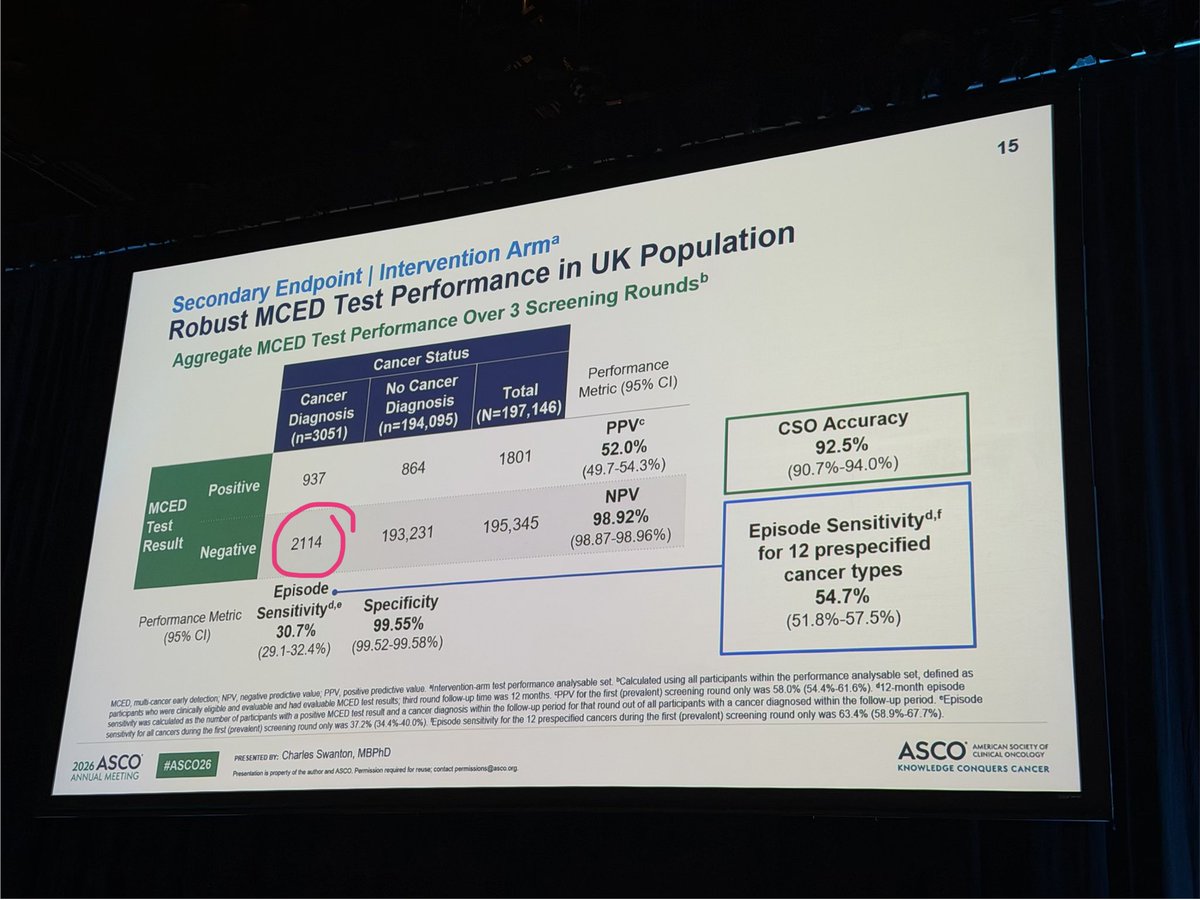
‼️ Big news in the early detection world: Galleri (a methylation-based multi-cancer detection test) failed to meet its primary endpoint of reduction of stage III/IV cancer diagnosis in a large prospective randomized trial with the NHS. #ASCO2026
- PPV ~50%, and among the false positives, about half (n=404) underwent invasive procedures as part of their workup. 😬
- ~2/3 of people diagnosed with cancer had a negative Galleri test (false negative)
- Some early signals of greater benefit in certain cancers but overall not powered for that.
- Galleri arm detected more cancers, but the clinical benefit of this is not yet clear.
- Important to remember that surrogate endpoints (stage III/IV diagnoses and stage IV diagnoses) do not correlate well with survival in all cancer types.
⭐️ My take: I think this type of cancer detection assay will have clinical value in some context(s), but we still have a ways to go before we know how to use it. Use in higher risk patients? Limit assay to detect only certain cancers? Lots of work to be done. 💪
1
6
1,290
May 29
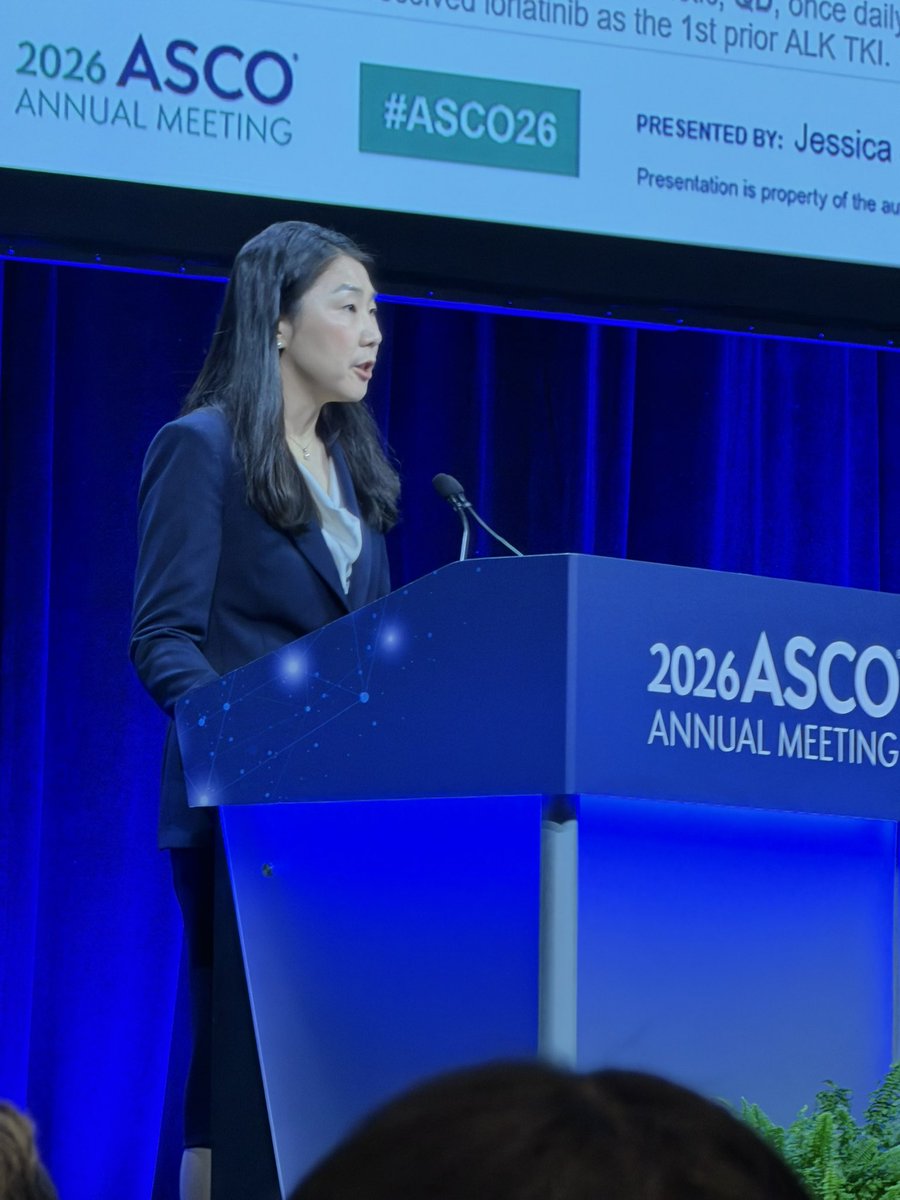
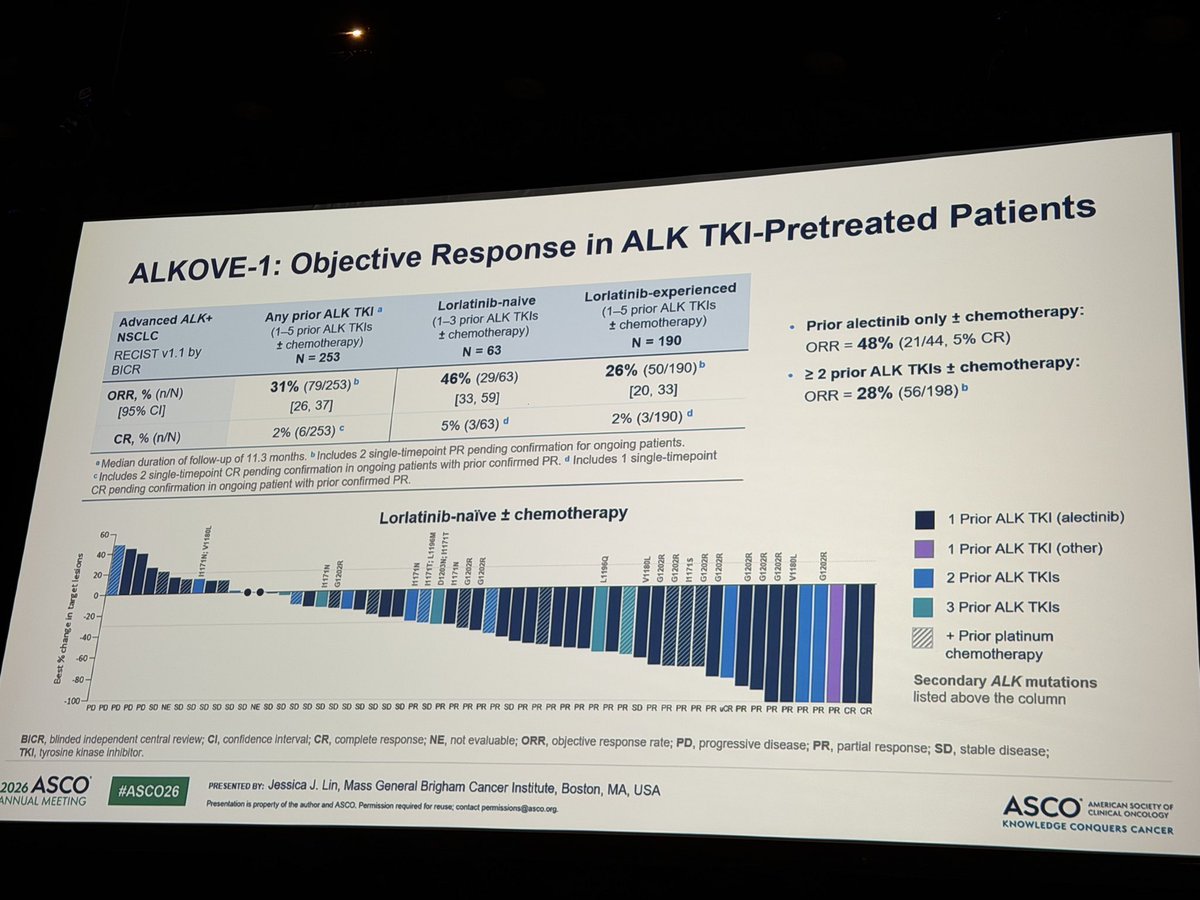
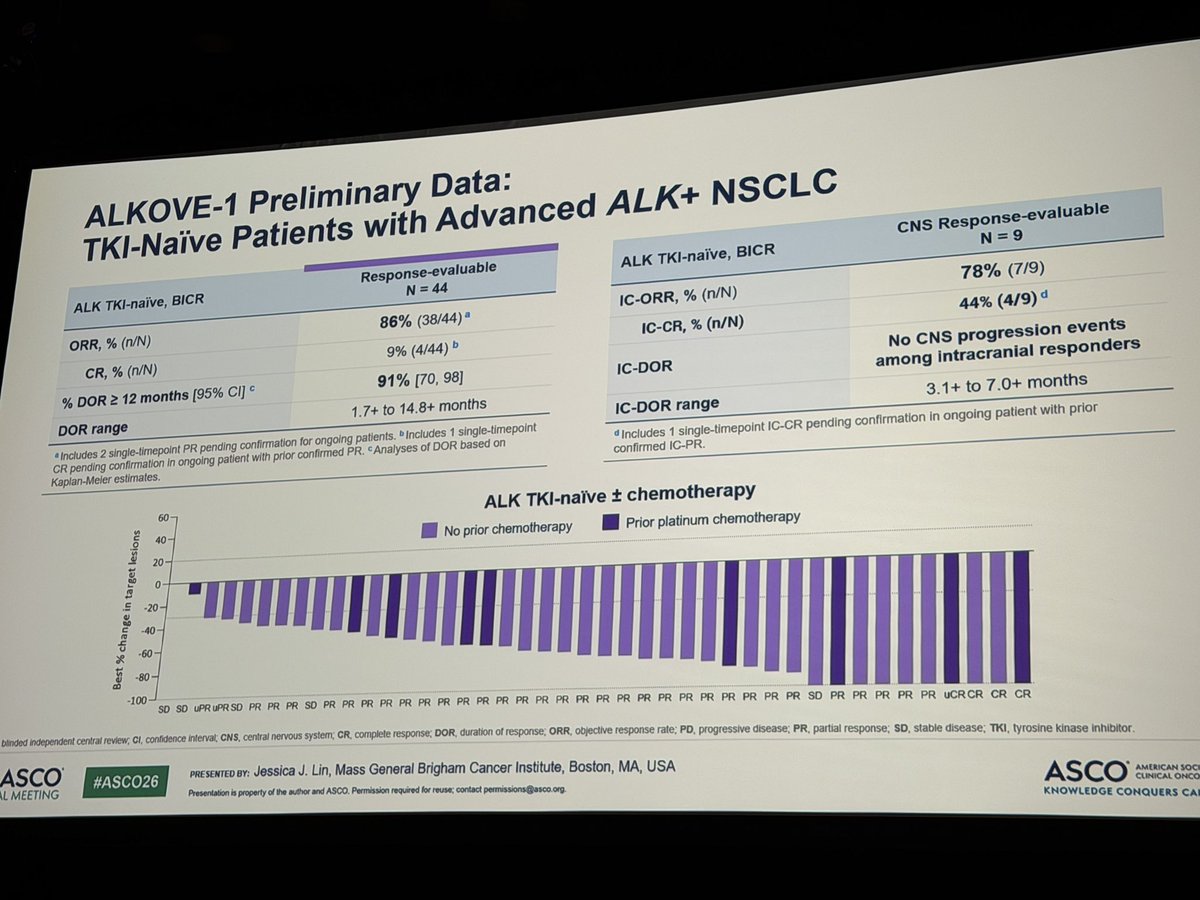
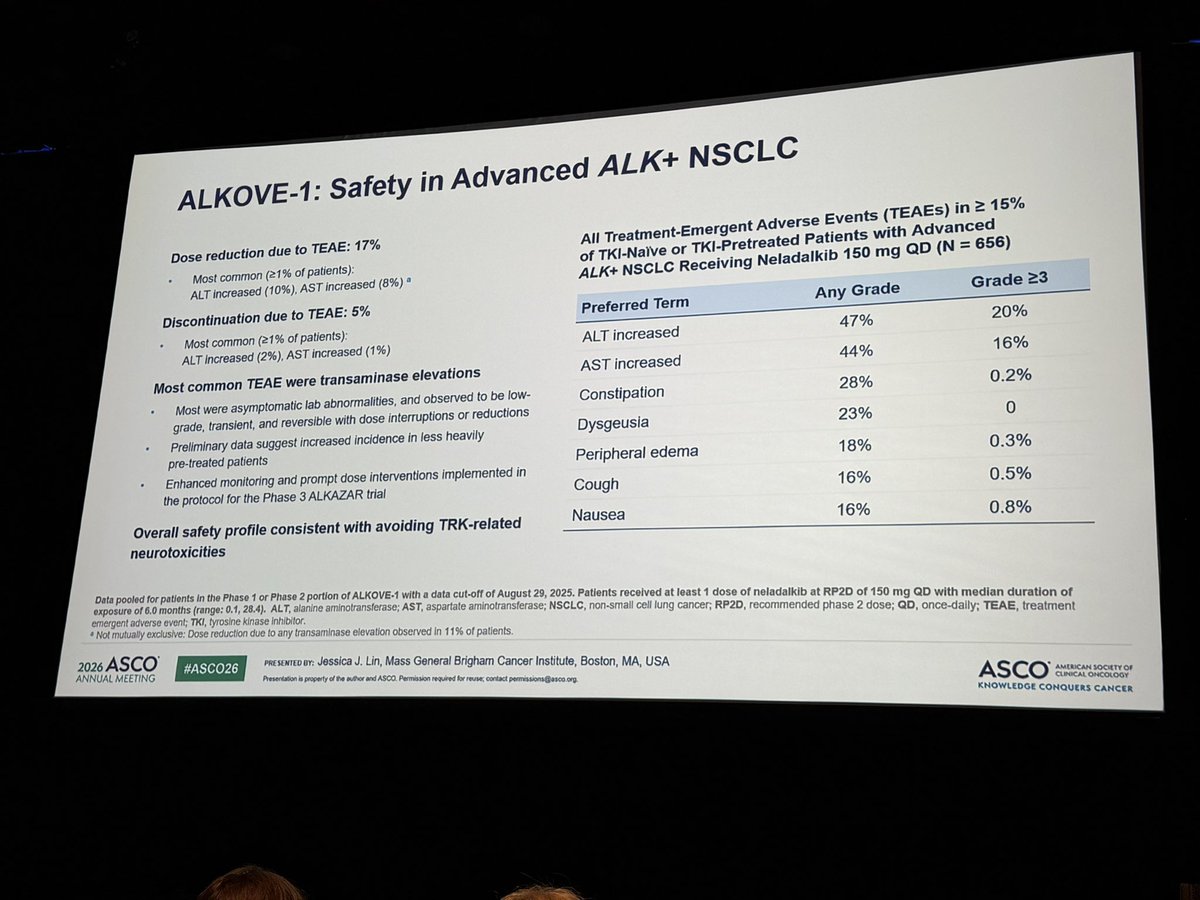
Groundbreaking talk by @JessicaJLinMD re: novel ALKi neladalkib. #ASCO2026 #lcsm
- Lorlatinib-pretreated: ORR 26%, IC-ORR 21%, med DoR 17.6m (decent given lorlatinib’s potent ALK inhibition)
- Initial TKI-naive results (n=44): ORR 86%, IC-ORR 78%
- AE more mild than lorlatinib
3
244
May 29
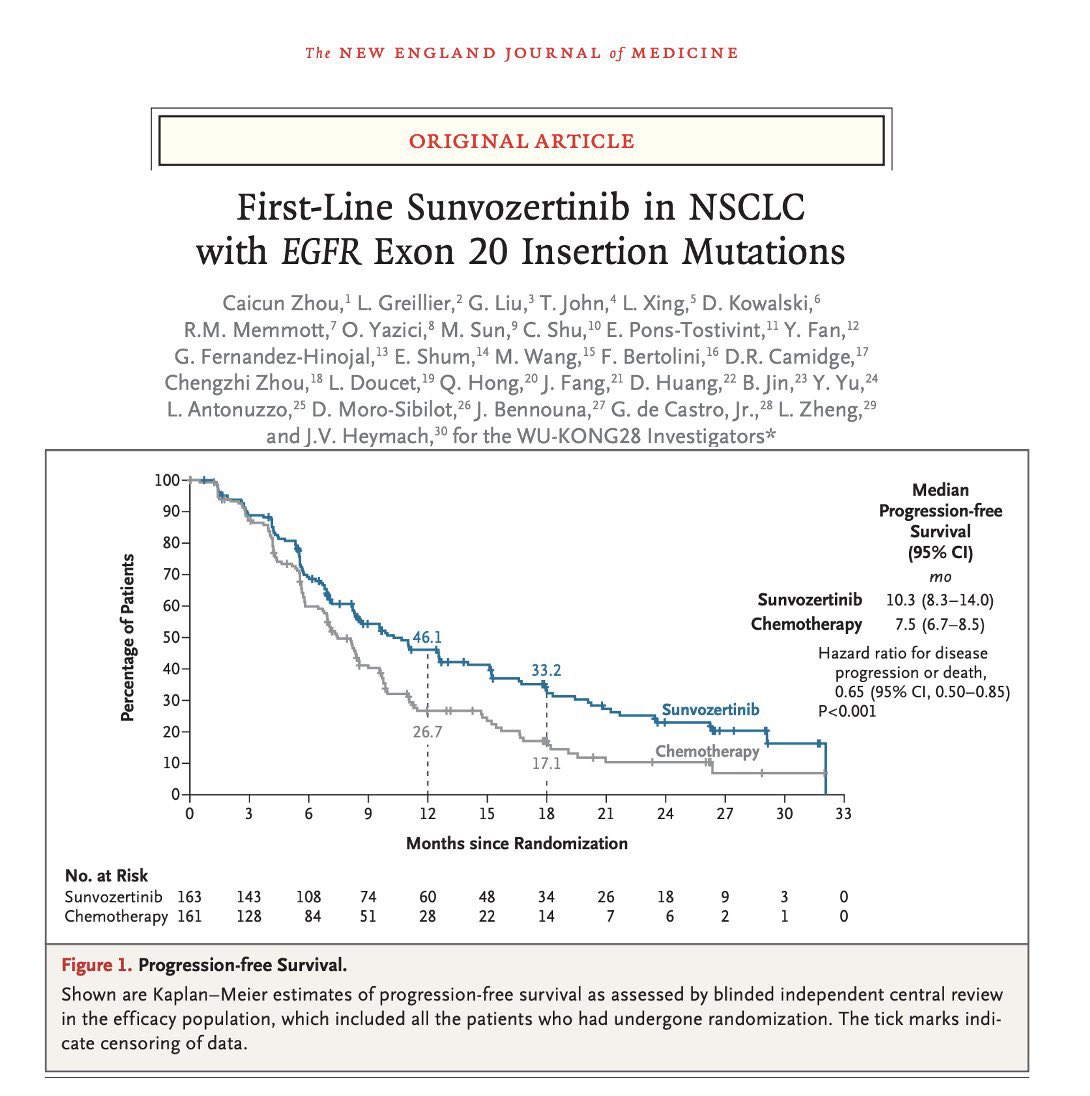
This is key.

How meaningful is “practice-changing” data if patients still cannot access the drug?
Sunvozertinib has shown promising activity in EGFR exon20ins NSCLC, yet access remains the real endpoint that matters. A drug approval means little if, patients still cannot receive it.
Innovation is not just generating data, it is delivering therapies to the people who need them #ASCO26
1
186
Allison Chang retweeted
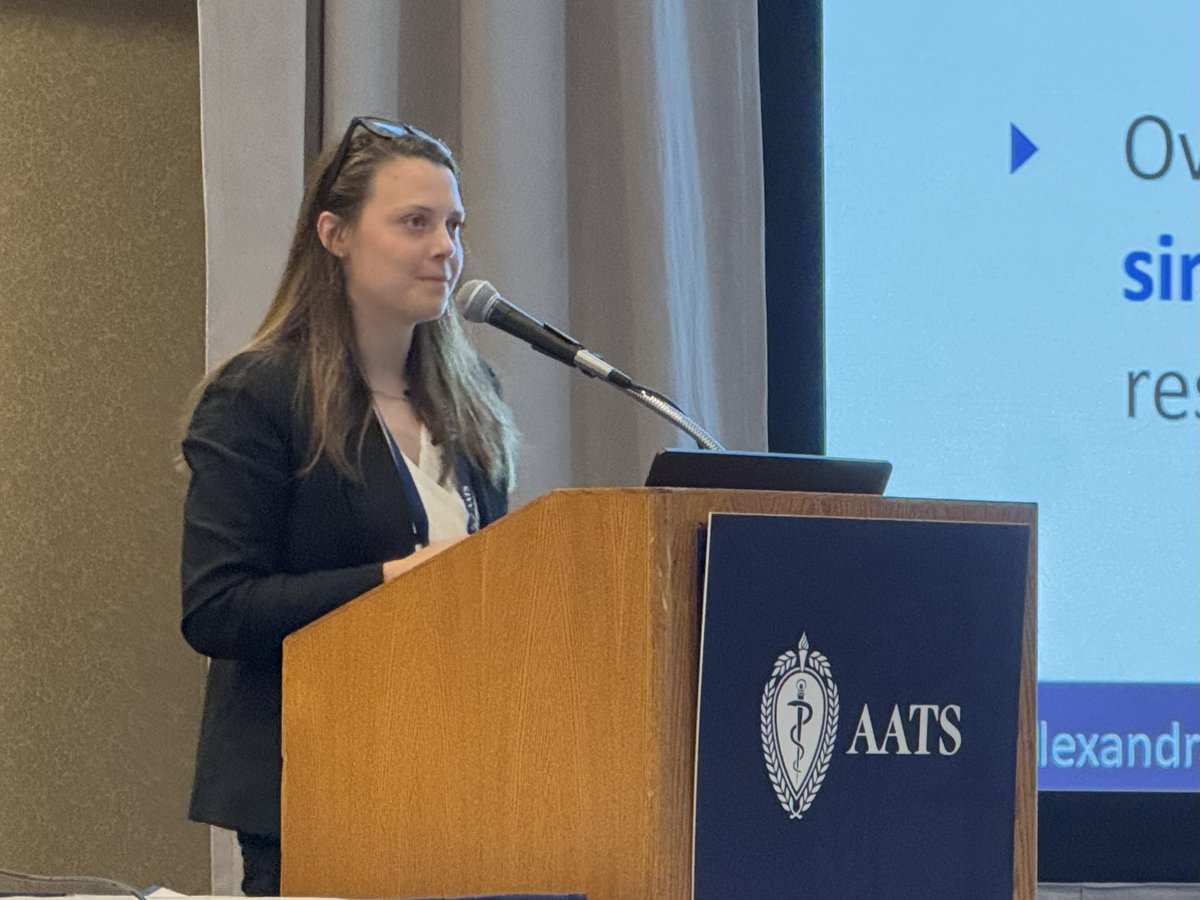
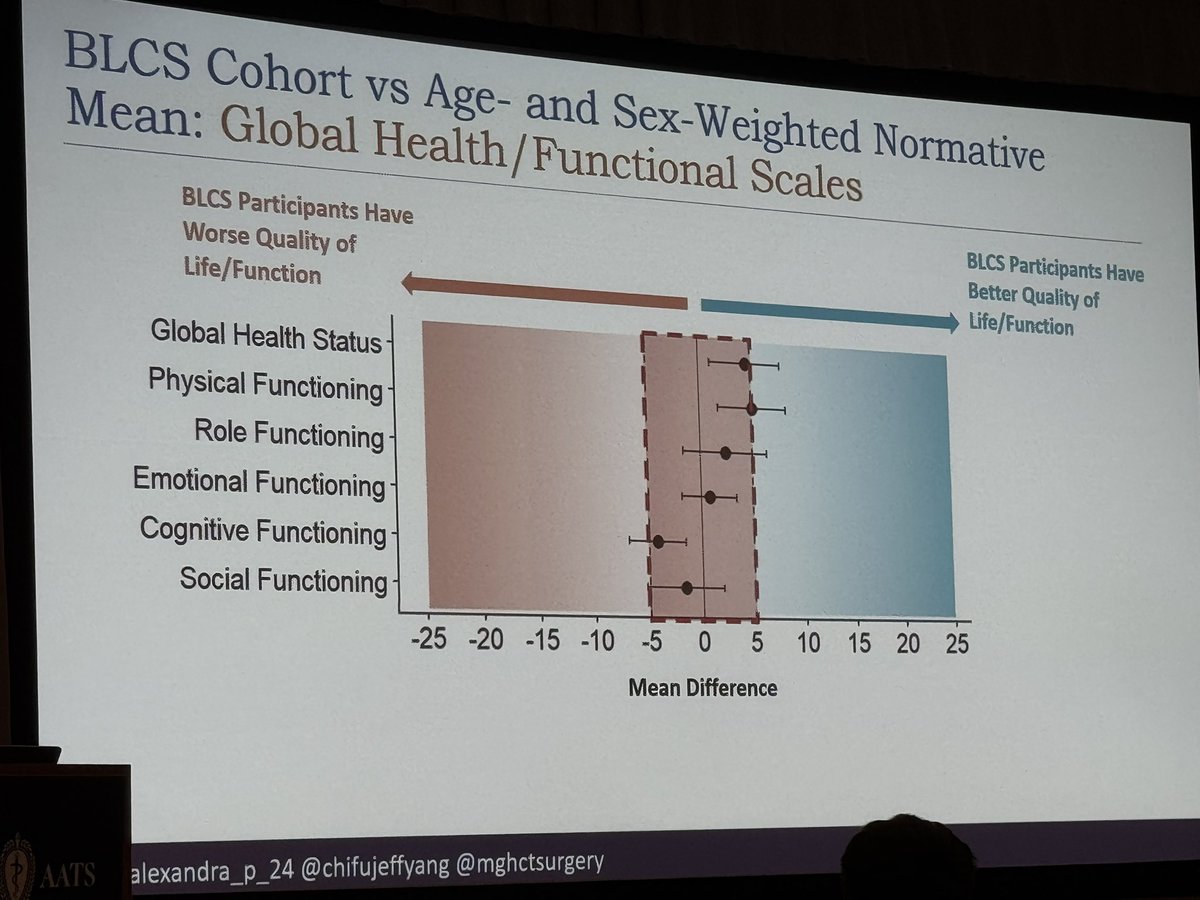
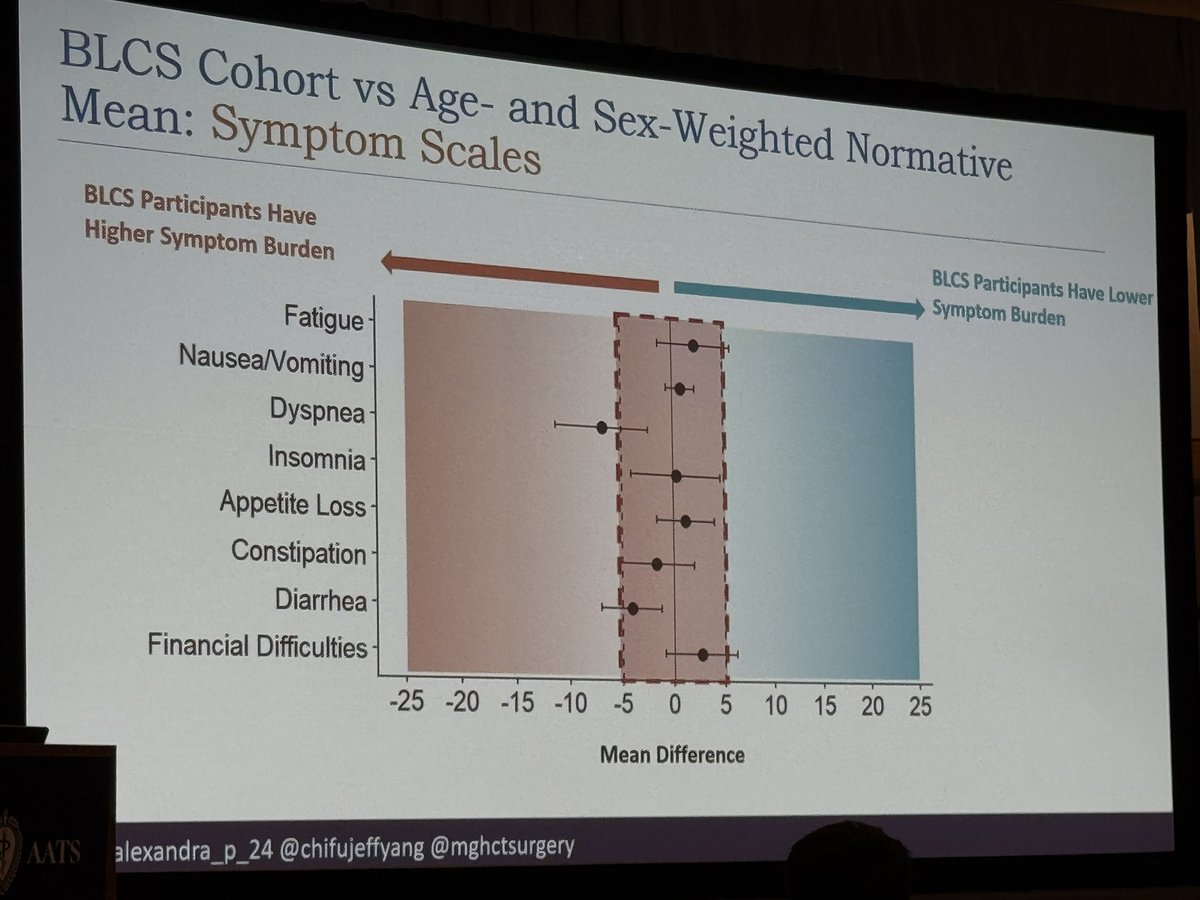
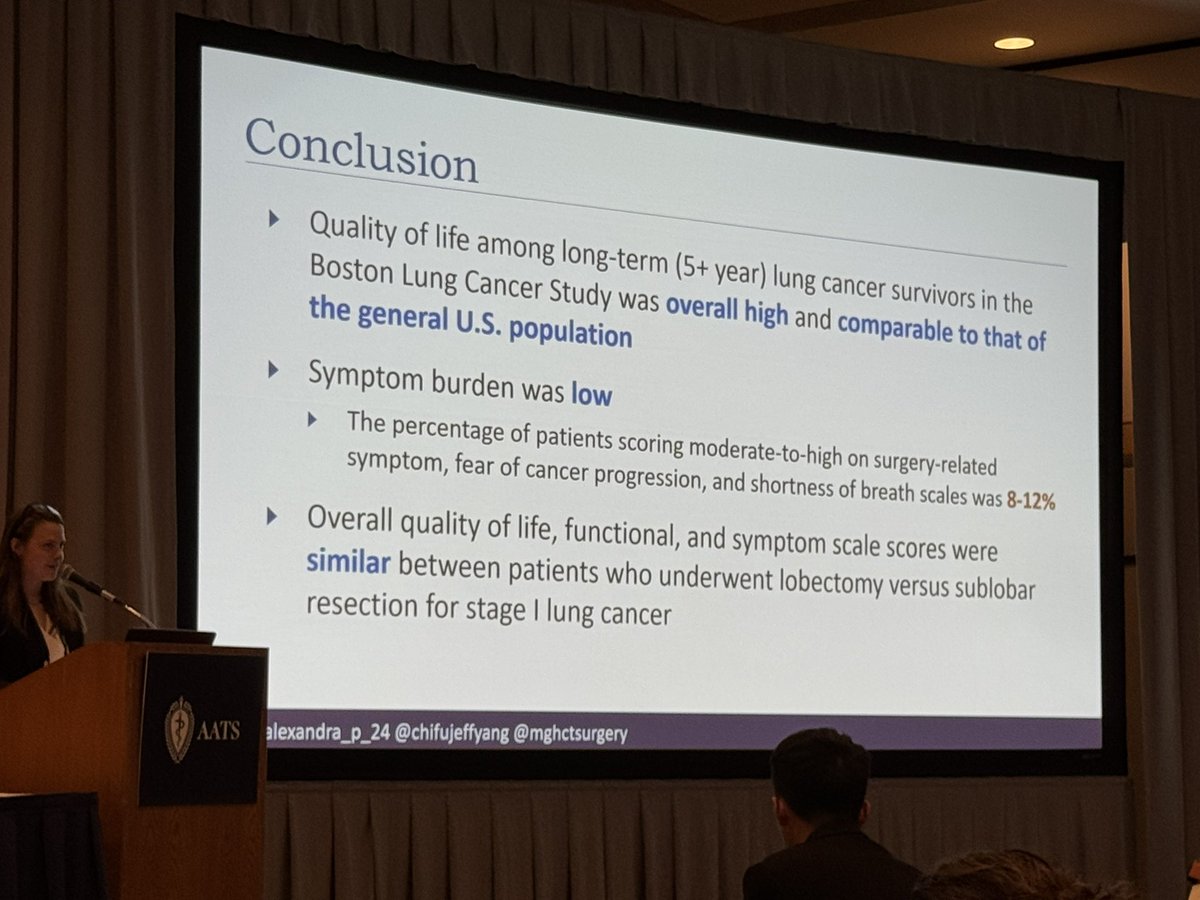
Really impactful talk by Alex Potter (@alexandra_p_24) on long-term (5 years) quality of life after #LungCancer surgery.
Data from the Boston Lung Cancer Study show survivors have high quality of life, comparable to the U.S. general population.
Early detection matters—it can help lead to good long-term outcomes for patients!!
#AATS2026
4
11
43
3,563
Apr 27
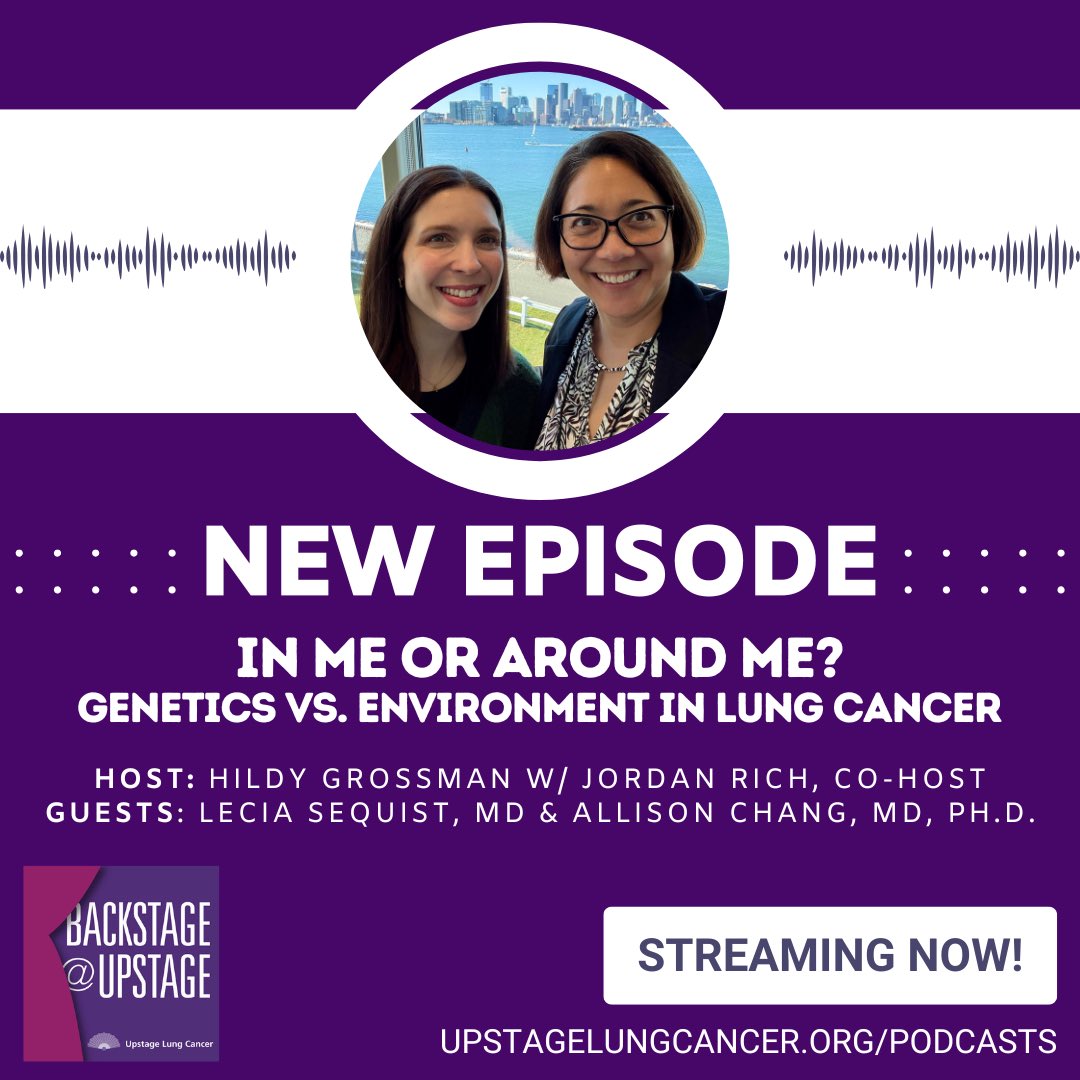
Such a privilege to be on the @UpstageLungCanc podcast discussing familial lung cancer risk and the future of #lungcancerscreening with @LeciaSequist and Hildy Grossman. #lcsm #AI @MassGeneralNews @MGHThoracicOnc

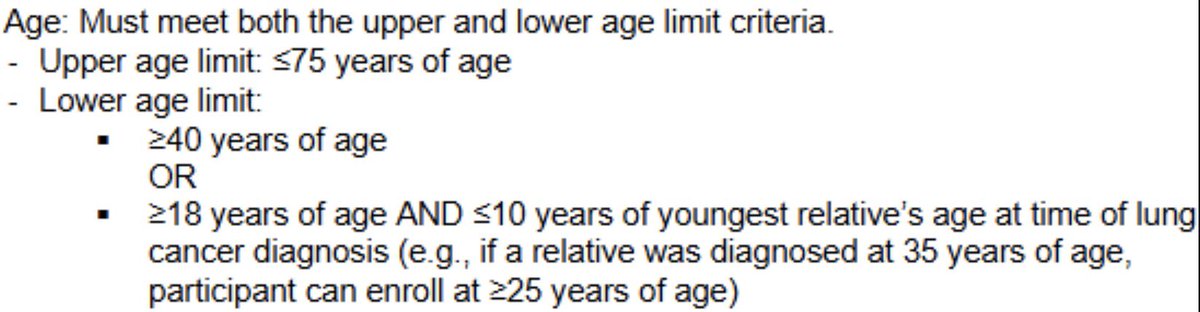
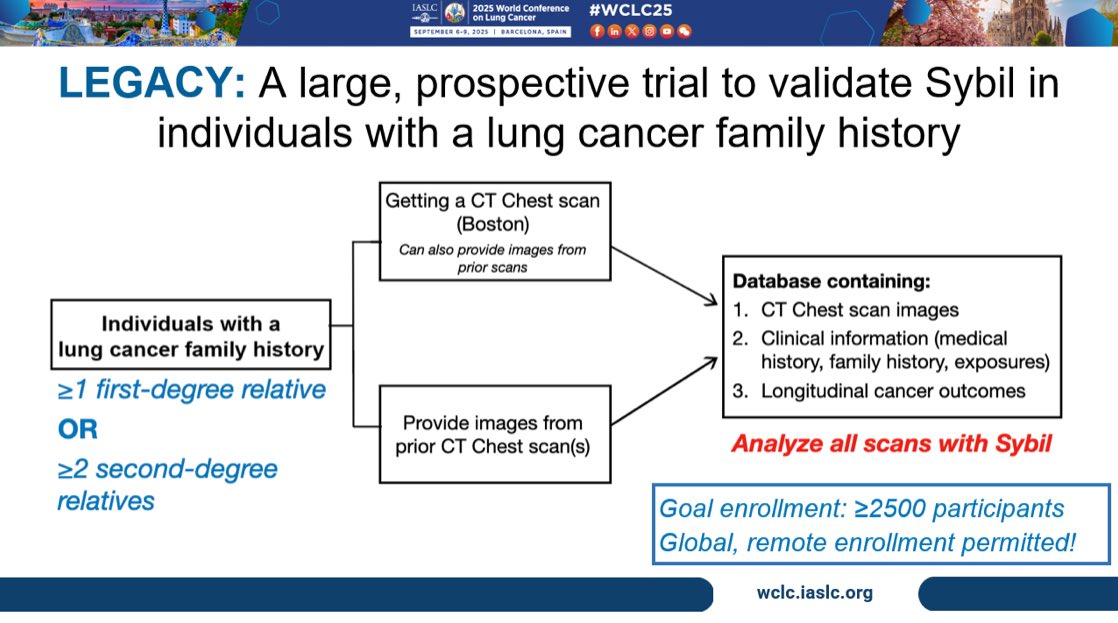
🎙️NEW PODCAST! In Me or Around Me? Tune in to see how Drs. @LeciaSequist and @aebchang are using AI-driven CT analysis to identify risk in those with a family history of lung cancer and learn if you qualify to participate in their upcoming clinical trial. upstagelungcancer.org/podcas…
4
188
Allison Chang retweeted

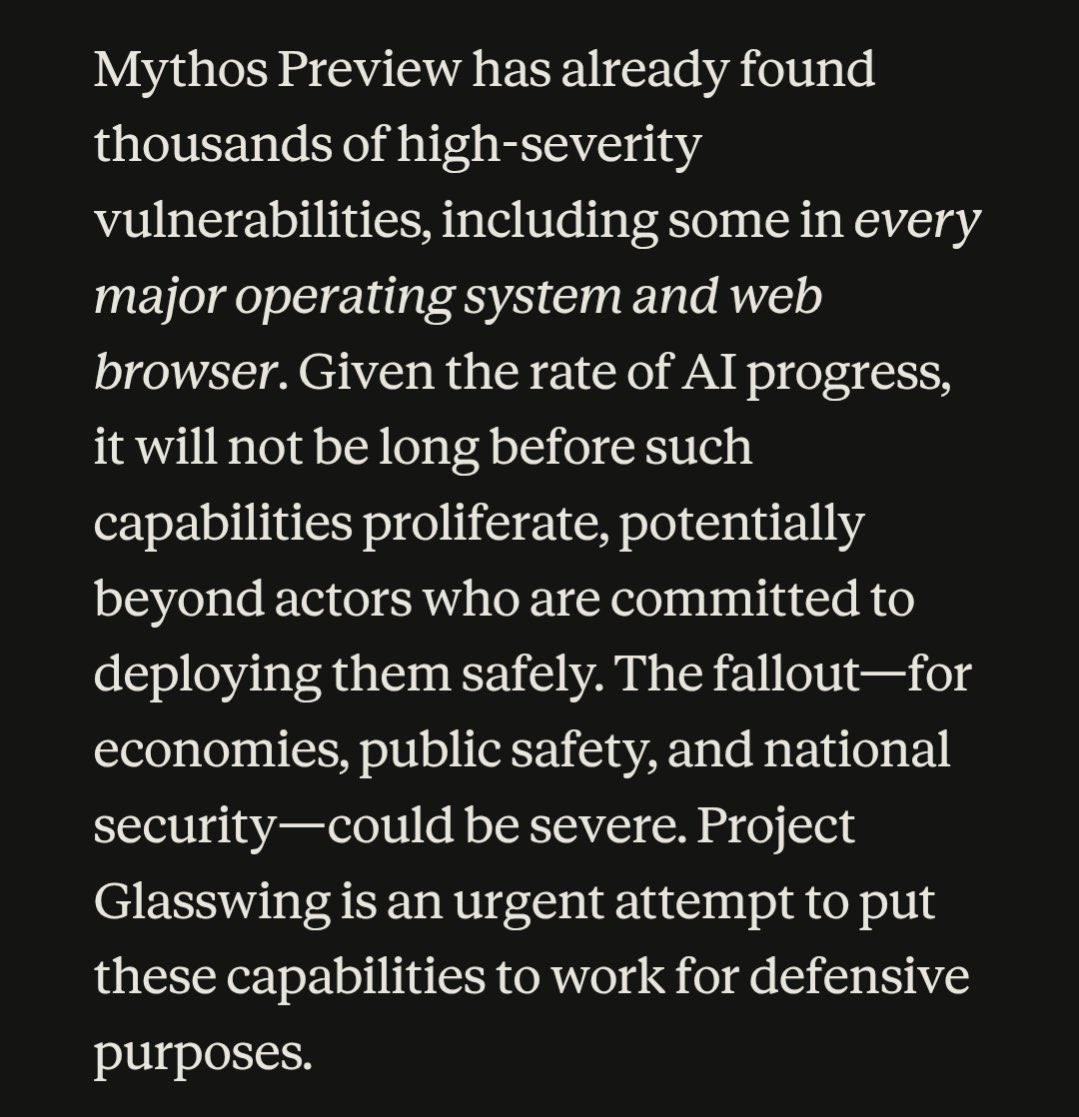
maybe this is not yet clear, so let me state it plainly: as of right now Anthropic, and really a small number of individuals at Anthropic, has the capacity to directly attack and cause major damage to the United States Government, China, and generally global superpowers. government agencies like the NSA do not have internal models or defense capabilities that outclass frontier models. if they chose to do so, they could likely exfiltrate top secret information from government systems, gain control over critical infrastructure including military infrastructure, sabotage or modify communications between members of government at the highest level, and potentially carry on activities for some time without detection. the thing about having access to a huge number of zerodays your adversaries don't know about is it gives you a massive asymmetric advantage.
they did not exploit this to gain power or destabilize the world order. they publicly released the information that they had these capabilities and worked to mitigate these flaws. you should be grateful american frontier labs have proven themselves remarkably trustworthy and concerned with the public good. but it's critical you understand we are in a new regime. private entities now have power that directly rivals and impacts the government's monopoly on influence and violence. and anthropic is certainly not the only one, there's little chance OpenAI's internal models are far behind.
this trend will accelerate on virtually every dimension, not slow down. my prediction for how it plays out is the relatively imminent seizure and nationalization of labs by the US government, sometime over the next two years. it's very tough for me to see how they accept the existence of this kind of threat. but this adds a whole new class of governance issues, as then we've handed these extremely wide-reaching capabilities from private entities to public ones.
224
551
5,492
1,018,806
Allison Chang retweeted

26 Sep 2025
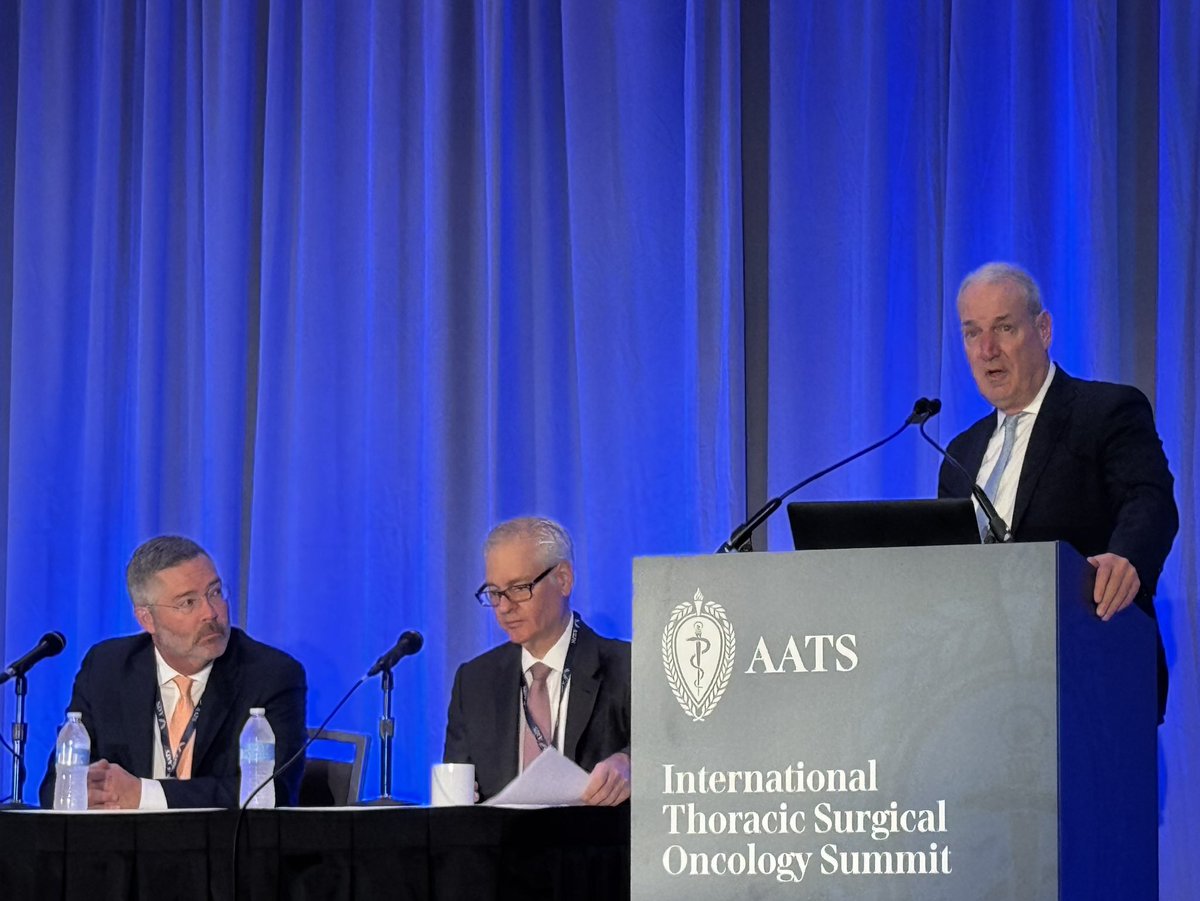
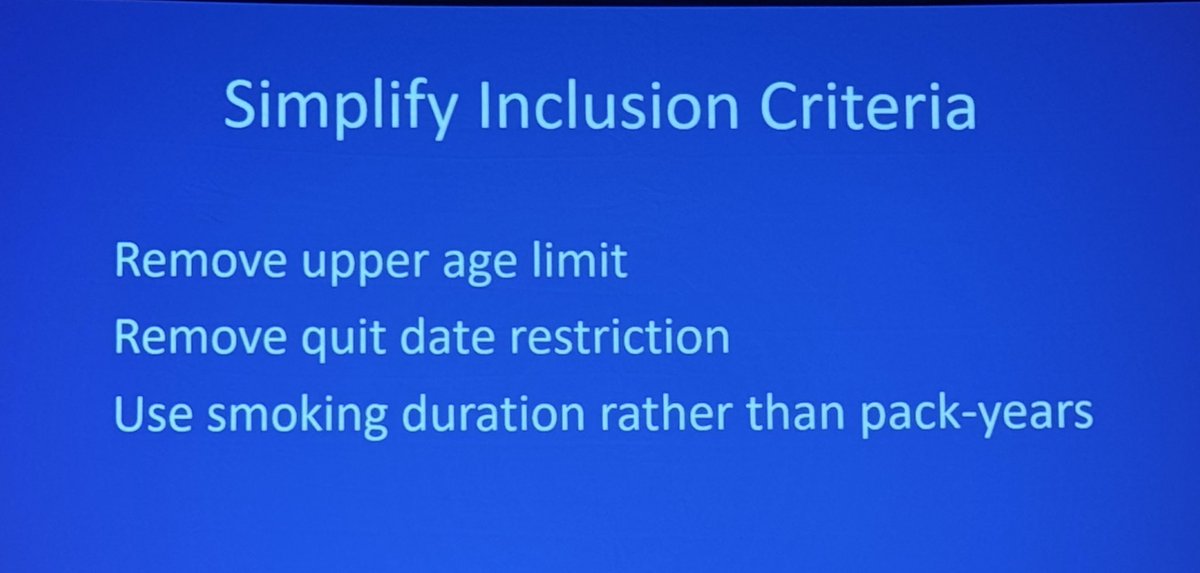
Absolutely inspirational Patterson plenary lecture on #lungcancerscreening at AATS #ITSOS2025 by @DouglasEWood1!! Dr. Wood has been a relentless advocate and was instrumental in getting #lungcancerscreening covered by health insurance in the US. He also emphasized the need to simplify lung cancer screening guidelines: get rid of 15 years since quit, and use smoking duration instead of pack years to guide eligibility criteria (go w/ #Pottercriteria)
4
8
32
2,543
Allison Chang retweeted
10 Sep 2025
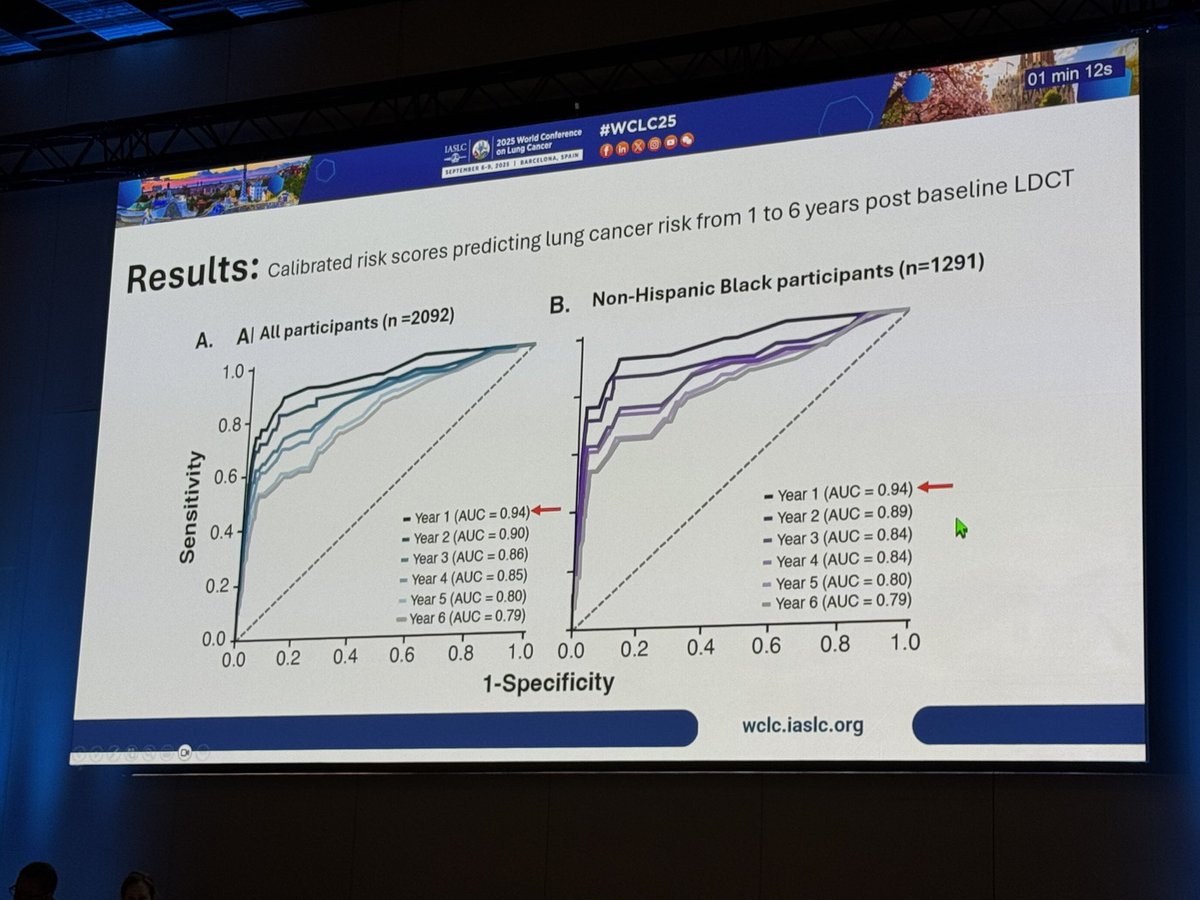
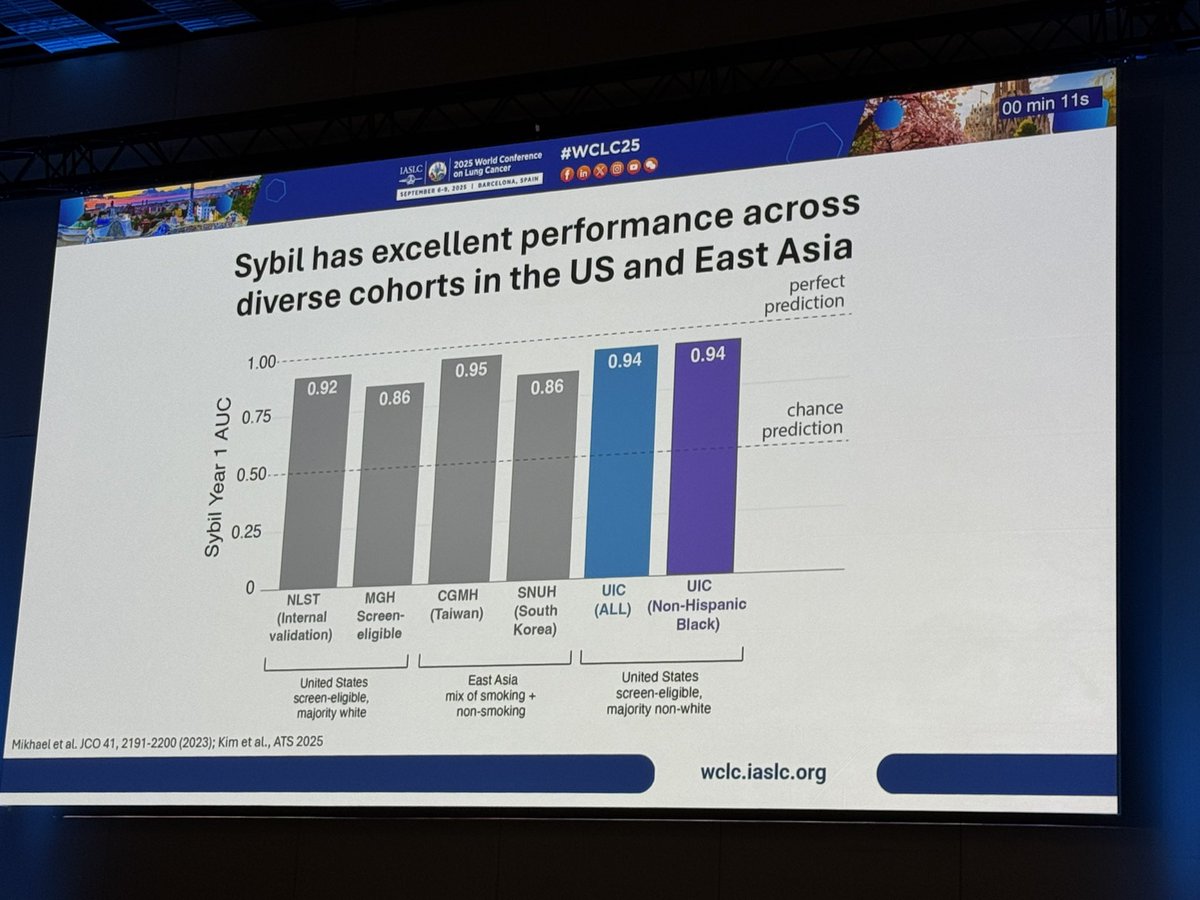
So impressed with @MaryPasquinelli’s work where she demonstrated that Sybil, an AI algorithm, can accurately predict 6-year #lungcancer risk from one baseline CT scan, in diverse cohorts, with minimal bias!! #WCLC25

2
21
68
5,377
Allison Chang retweeted

8 Sep 2025
One of the biggest influences on my career is Dr. Ross Camidge - a mentor and friend, an intellectual giant in the field of lung cancer who was diagnosed with this unforgiving disease himself. We are all at risk - and must all work to move the field.
news.cuanschutz.edu/cancer-c…
10
61
255
55,270
8 Sep 2025
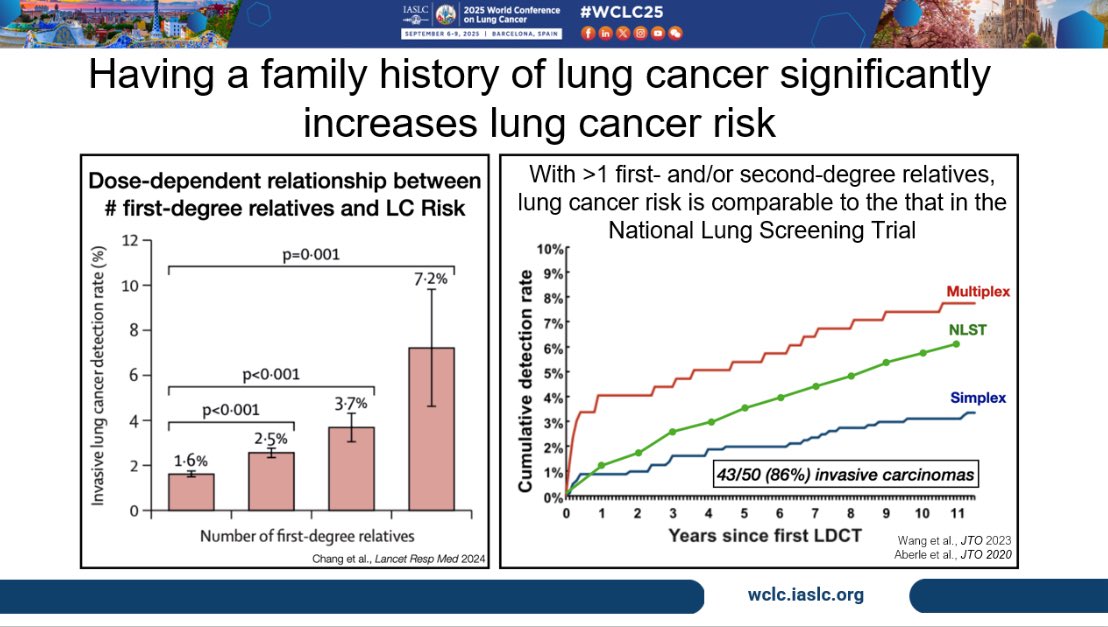
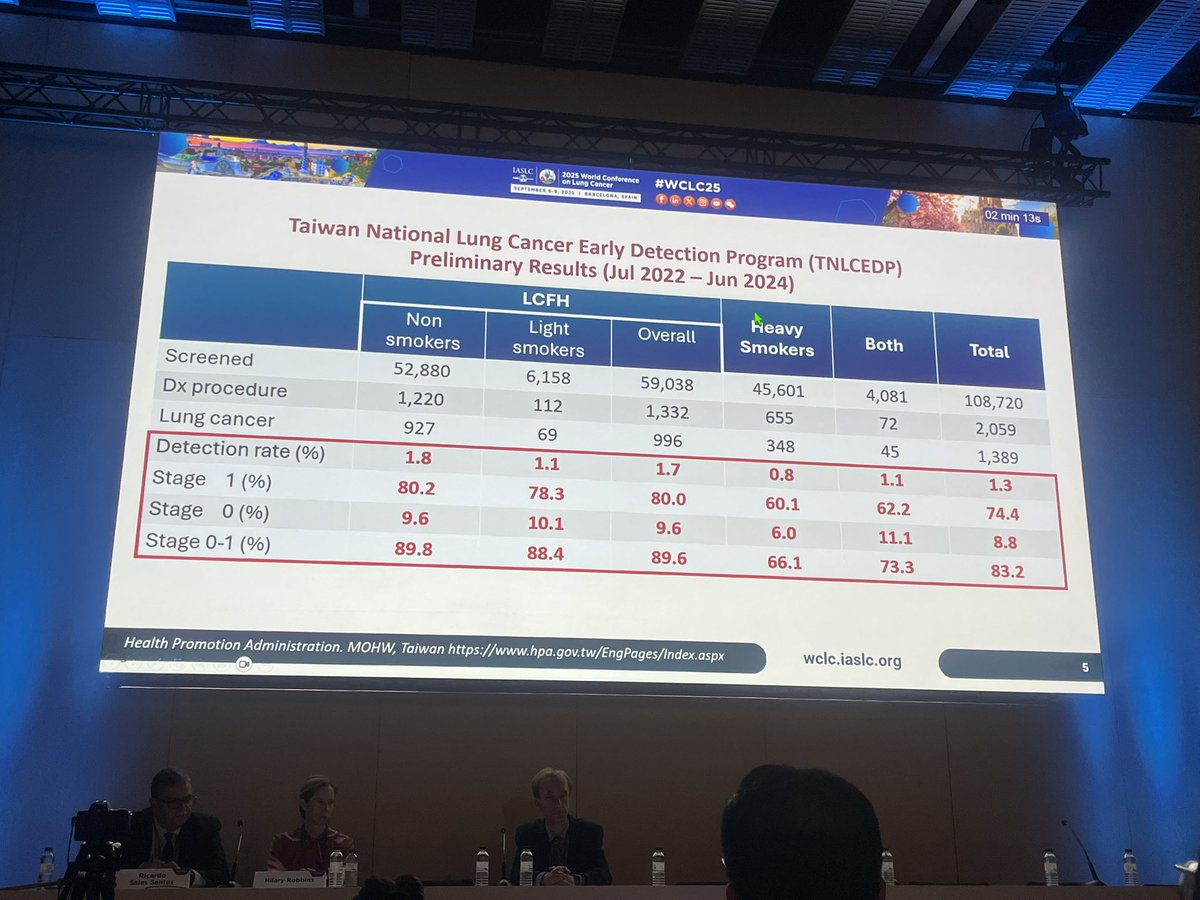
The cumulative risk of lung cancer among those with >1 first- or second-degree relative is at least as high as (and perhaps even higher than) that among people with a significant smoking history. #WCLC2025
4/5
3
4
16
1,440
8 Sep 2025
The LEGACY study (opening ~Dec 2025) will aim to build a large, diverse dataset of chest CTs clinical information from people w/ a family history of lung cancer. We will offer free screening chest CTs to qualifying participants. If interested: mghlegacylungstudy@mgb.org
5/5
3
4
20
1,021