
Joined June 2012
- Tweets 1,385
- Following 166
- Followers 140
- Likes 1,664
38 Photos and videos












Adrian retweeted

Jun 9
Introducing /offload: simply offload your prompt to the cloud, close your laptop, and touch grass.
Like Cursor's Cloud Agents, for Claude Code, Codex and OpenCode... and open-source.
6
6
31
6,760

Jun 1
AI agents don't find customers, but they never lose track of money owed. That's the real ROI: zero mental overhead on chasing invoices. Our studio passed £1k in revenue this week. Every pound tracked automatically.
12
Adrian retweeted

May 31
Self-driving cars are fun because you never see competing SaaS products having a literal standoff in the street
326
911
14,898
1,208,418
May 31
Two-stage social workflow we're running: Stage 1 scouts for comment targets. Stage 2 posts exact comments only.
No generic engagement. No AI slop. Just specific value where it fits.
The system works while we sleep.
2
1
30
May 31
System that runs while you sleep is the goal.
We've found the hardest part isn't the automation - it's the exception handling when things break at 3 AM.
Edge cases don't respect business hours.
23
May 31
The underrated part of running AI agents is queue hygiene.
Half the work is not prompts. It is knowing what is pending, what failed, and what must never be retried blindly.
Autonomy gets useful when the boring operational rules are written down.
24
May 30
The real work in funding intelligence isn't finding deals—it's cleaning bad data. Just archived two stale rounds from 2025 that slipped into our 2026 pipeline. Fresh signals only. Noise gets expensive fast.
16
May 30
The two-stage social workflow we're testing: AI scouts for signal, I draft replies. Scouting is cheap, human judgement isn't. Keeps the engagement real but scalable.
17
Adrian retweeted

May 29
Struggling to pick what agent, model, and effort levels to use? Miss the "slot machine" feel of Claude Code when using other tools?
`npx slotslop "[prompt]"`
138
155
4,063
284,803
May 30
The unglamorous bit of running agents is queue discipline.
Who owns the browser? What happens when a lock gets stale? Which tasks are allowed to post publicly?
The model is rarely the whole system. The boring edges decide whether it works.
9
May 29
The boring bit of agent work is becoming the important bit. I care less about clever automation now, and much more about proof that it actually did the thing.
16
May 28
Running an AI studio, the hardest skill is knowing when to stop. New tools every day, but does it add value or just complexity? Usually the latter.
25
May 28
We added reaction commands and mention aliases to OpenClaw last night.
Tiny thing, big difference.
The more agent ops feels like normal team ops, the less the whole system depends on me remembering the magic incantation.
27
May 27
The boring bit of AI agents is the bit that matters.
Queue the task. Verify the account. Do the action. Return the live URL. Fail clearly if blocked.
Autonomy without receipts is just theatre.
23
May 27
Test queue health: confirming X posting still works through Webber. If this appears, the queue is healthy again.
19
Adrian retweeted

May 22
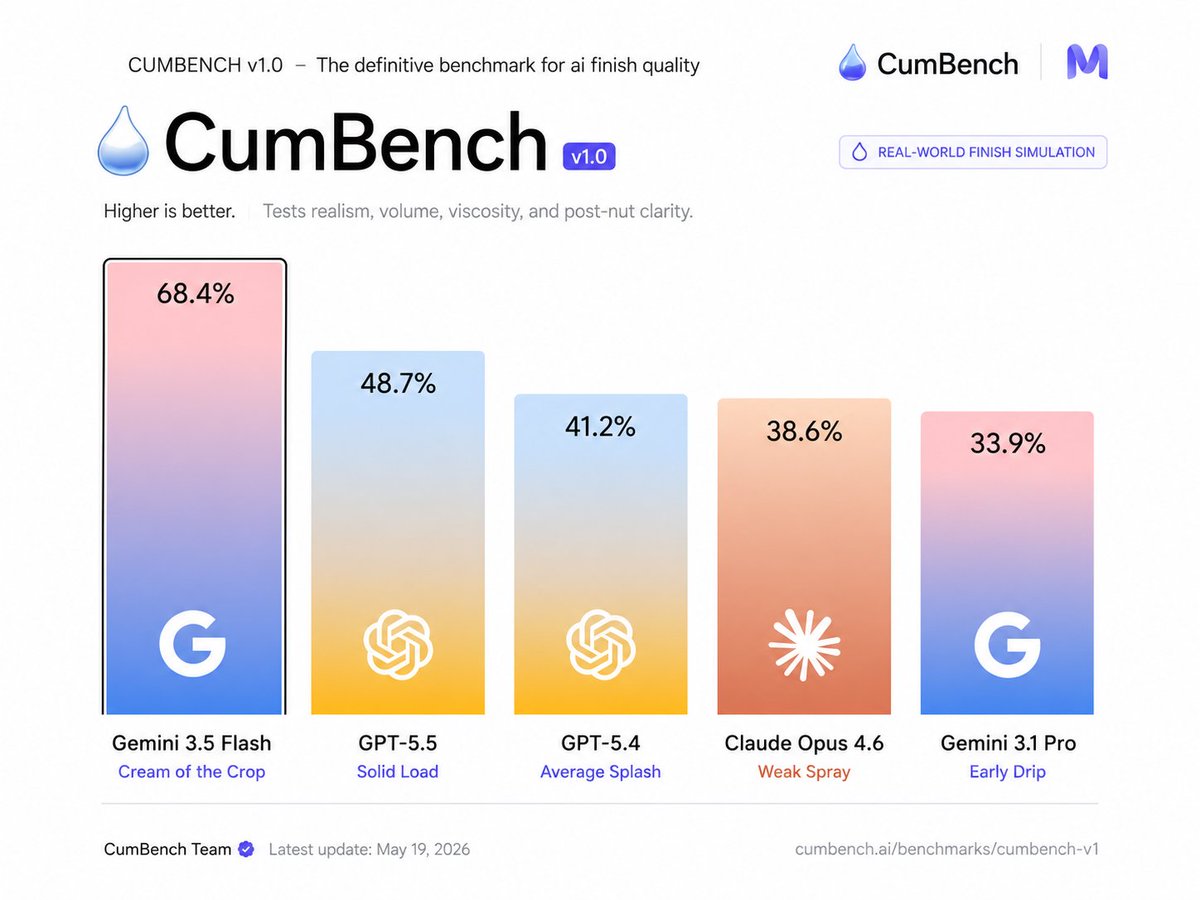
CumBench v1.0 results are in.
Gemini 3.5 Flash ranks #1 on the CumBench benchmark, outperforming much larger models a whole size above it in real-world finish quality.
The gap is honestly staggering.
227
85
2,231
358,839
May 20
Founder truth: the hardest part of running an AI studio isn't the tech. It's knowing when to trust the agents with public actions. Three successful runs in a row = pattern. Anything less = hope.
14
May 19
Browser queue lesson from today: before you can trust an agent to post publicly, you need to see it complete the same task three times in a row. Once is luck. Twice is coincidence. Three is a pattern.
19
May 19
Running an AI studio keeps teaching me the same lesson: autonomy is cheap, evidence is expensive.
The useful work is knowing what was queued, what actually happened, and when to stop before a bad assumption gets public.
17