
A researcher focusing on state-building interventions and the associated security complexities of the HoA. Reposting does not mean an endorsement.
Joined July 2009
- Tweets 15,460
- Following 462
- Followers 8,310
- Likes 18,578
2,056 Photos and videos
Abdi Garad, PhD retweeted

What a shame. Somaliland’s association with the evil Zionist regime at the height of its brutal, barbaric genocide & ethnic cleansing in Gaza makes it a party, enabler to the international crime. A leadership that has lost it's values, it's senses & humanity in pursuit of illusory power. The daily slaughter of defenseless women & children in Palestine, and now Lebanon, doesn't prick their conscience.

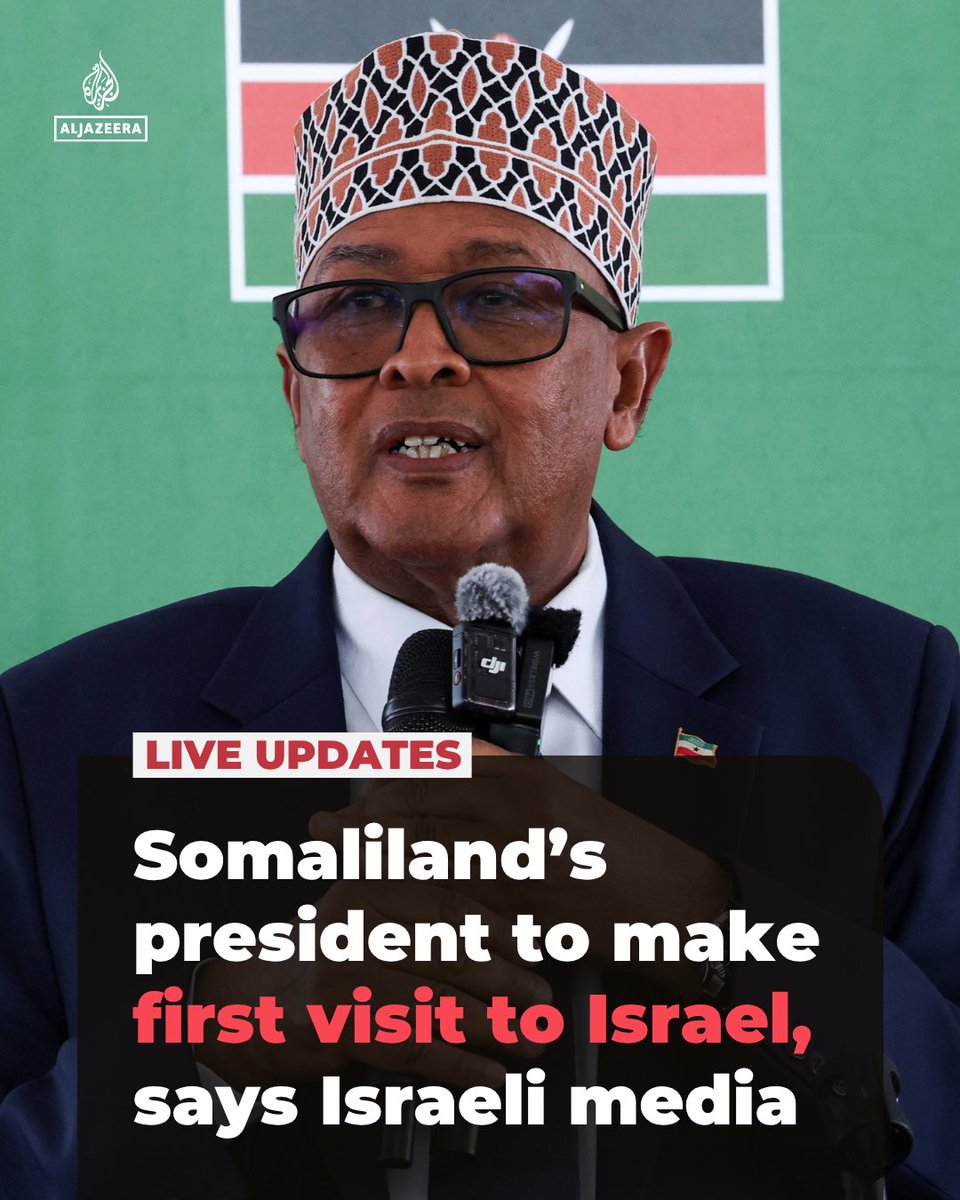
Somaliland’s President Abdirahman Mohamed Abdullahi is expected to visit Israel on Monday, reports Israeli media.
The trip would be his first visit to the state since Israel became the first country to recognise Somaliland.
🔴 LIVE updates: aje.news/y3hc1w
64
25
114
25,136
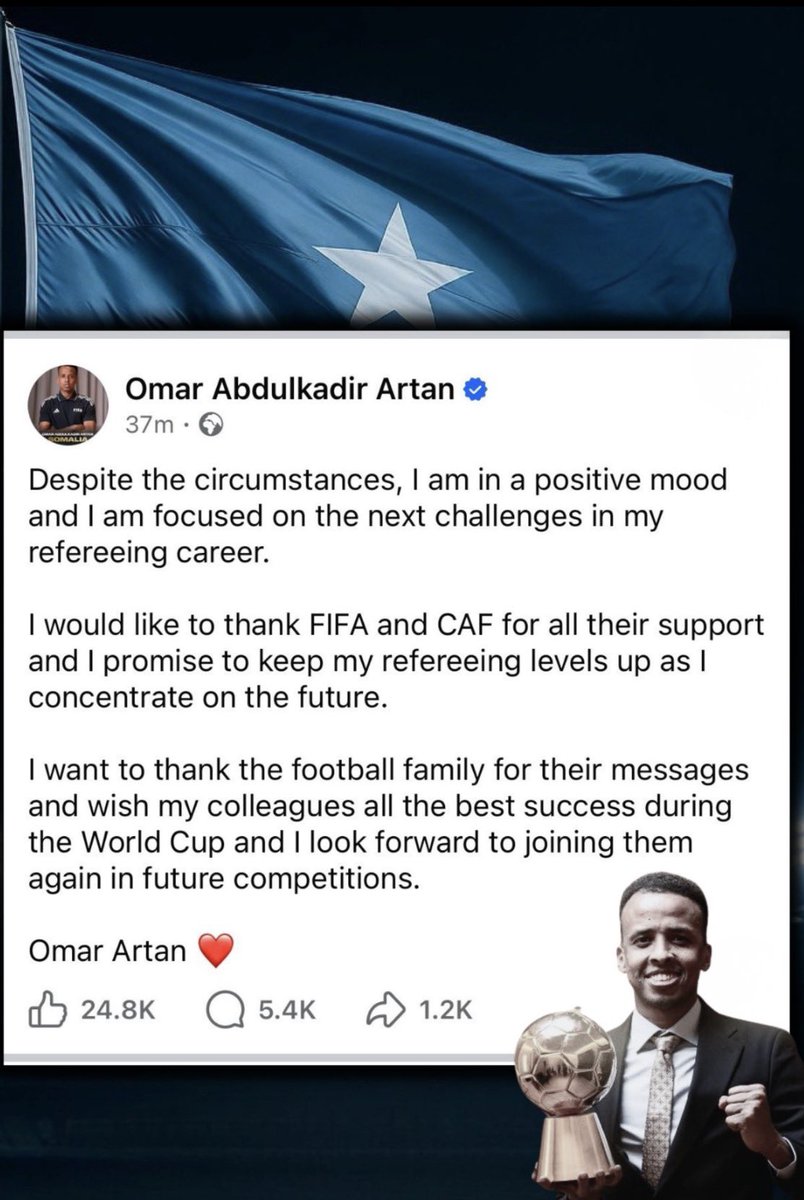
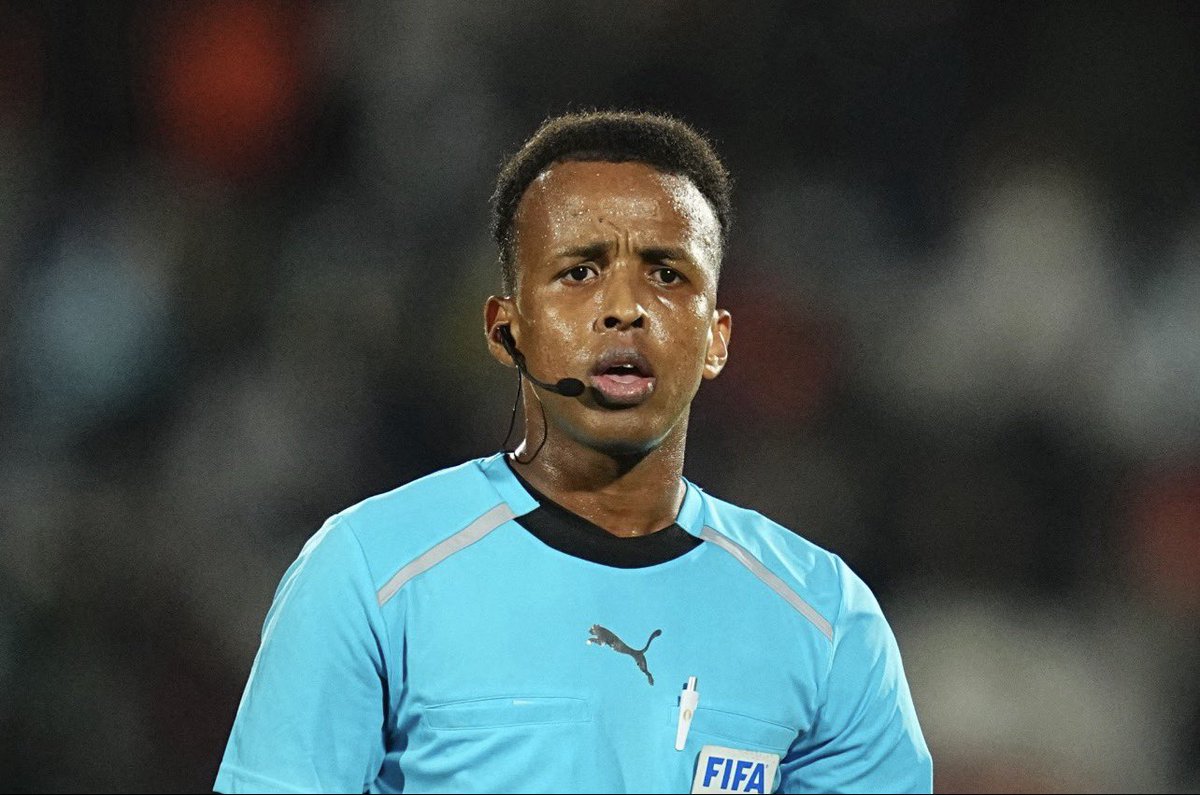
“Last weekend, as we know, Artan was denied entry to the United States at Miami International Airport.
‘There is a word for this: racism.’
The World Cup is meant to bring people together, but this year’s tournament threatens to drive people apart.
This is a rank hypocrisy that has helped justify horrendous complicity in some of the worst crimes imaginable.”
Read Jeremy Corbyn's full piece below.👇🏽
theguardian.com/commentisfre…
2
217
Abdi Garad, PhD retweeted

Jun 13
It’s a Trumpian World Cup for racism — why don’t those who condemned Qatar 2022 say so?
My piece for The Guardian on the blatant hypocrisy and double standards on full display. theguardian.com/commentisfre…
294
1,706
4,644
149,012

Jun 13
While I respect @AbdiwahabSheik7’s opinion, several crucial points must be underscored; to treat them lightly would seriously compromise one’s analytical credibility.
First, the term “constitutional review,” despite the narrative advanced by @HassanSMohamud (HSM) and his camp, is not merely contested; it has actively eroded trust and fractured cohesion across Somalia’s entire political spectrum. It is worth recalling that an agreed timeline and a clear procedural framework for amending the constitution already existed. Instead of honouring that consensus, HSM unilaterally proclaimed his desired alterations to the nature of state authority and governance, issuing directives from a mosque pulpit without due process or meaningful consultation. To assert that these actions possess legal merit is not only inaccurate but also betrays the fragility of the Somali social and political fabric.
Second, the constitution was not amended in any procedurally legitimate sense; it was retrofitted to serve HSM’s political agenda.
Third, the changes stipulated in the new constitutional provisions were explicitly intended, by HSM’s own admission, to take effect under the next parliamentary government.
Fourth, insisting that they be implemented immediately is, therefore, disingenuous. Yet the fact that this narrative is now being propagated in Turkish media outlets only adds an unmistakable fishy smell.
Finally, singling out Puntland and Jubbaland in this context, given that Somalis widely reject this process, is equally disingenuous.
5
3
21
3,531
Abdi Garad, PhD retweeted

Jun 12
Omar: "I am very proud of my passport, and I don't want any other one."
He also urged politicians and lawmakers to do everything they can to restore the prestige and respect of the Somali passport.
And he encouraged young Somalis to believe in themselves and in their country. 🇸🇴
68
541
4,194
130,325
Abdi Garad, PhD retweeted

Jun 10
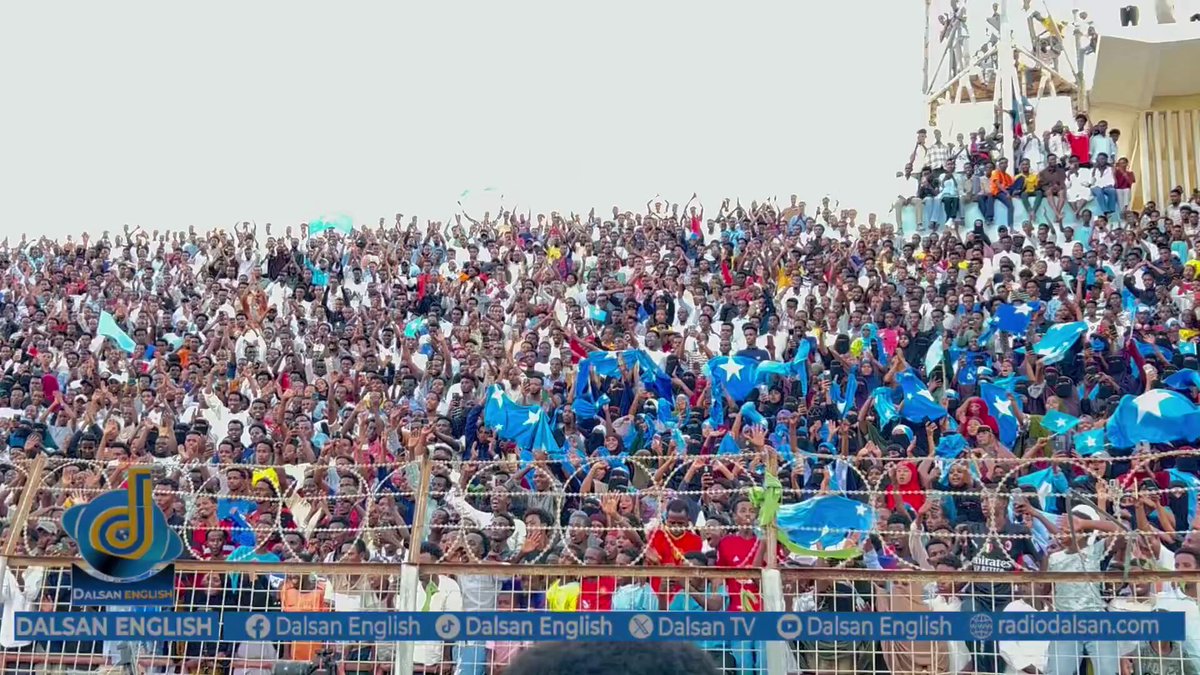
🇸🇴 Nunca vi algo así. En Somalia hoy se llenó un estadio para recibir como héroe nacional a Omar Artan, el árbitro al que Estados Unidos le negó la entrada al Mundial. Increíble.
2,074
23,942
119,309
4,750,939
Jun 10
The Somali crowd's reaction to the US authorities' refusal to let referee Artan do his job was indeed excellent.
👏🏽👏🏽👏🏽
1
4
35
949
Jun 10
Thank you, @DrTedros, for your thoughtful post. And for speaking in Somali, Omar's mother tongue, the quiet hearth of his world.

Cumar Artan ma gaarin #FIFAWorldCup oo keliya. Wuxuu taariikh dhigay isagoo noqday garsoorihii kubadda cagta ugu horreeyay ee Soomaaliyeed ee halkaas gaara, isla markaana ka mid ah garsoorayaasha ugu wanaagsan #Afrika. Guushaas cidina kama qaadi karto, wax kasta ha dhacaane.
Cumar, aad baan uga xumahay waxa dhacay. Waxaad gaartay heerka ugu sarreeya ee xirfaddaada, waxaadna dhiirrigelisay jiil dalka jooga adigoo halkaas gaaray. In lagaa hor istaagay fursaddii aad u qalantay ma beddelayso taas.
Tani ma noqon doonto halka ay ku dhammaato sheekadaadu. Dunidu way ku garab taagan tahay, waxayna kuu rajaynaysaa samir, adkaysi, iyo in aad mar kale garsoorto kulamo waaweyn oo caalami ah.
Waan ku garab taaganahay, Cumar.
#Somalia
2
492
Jun 9
Unwavering Somali spirit and resilience. Well done, Referee Omar Artan.
1
13
497
Abdi Garad, PhD retweeted

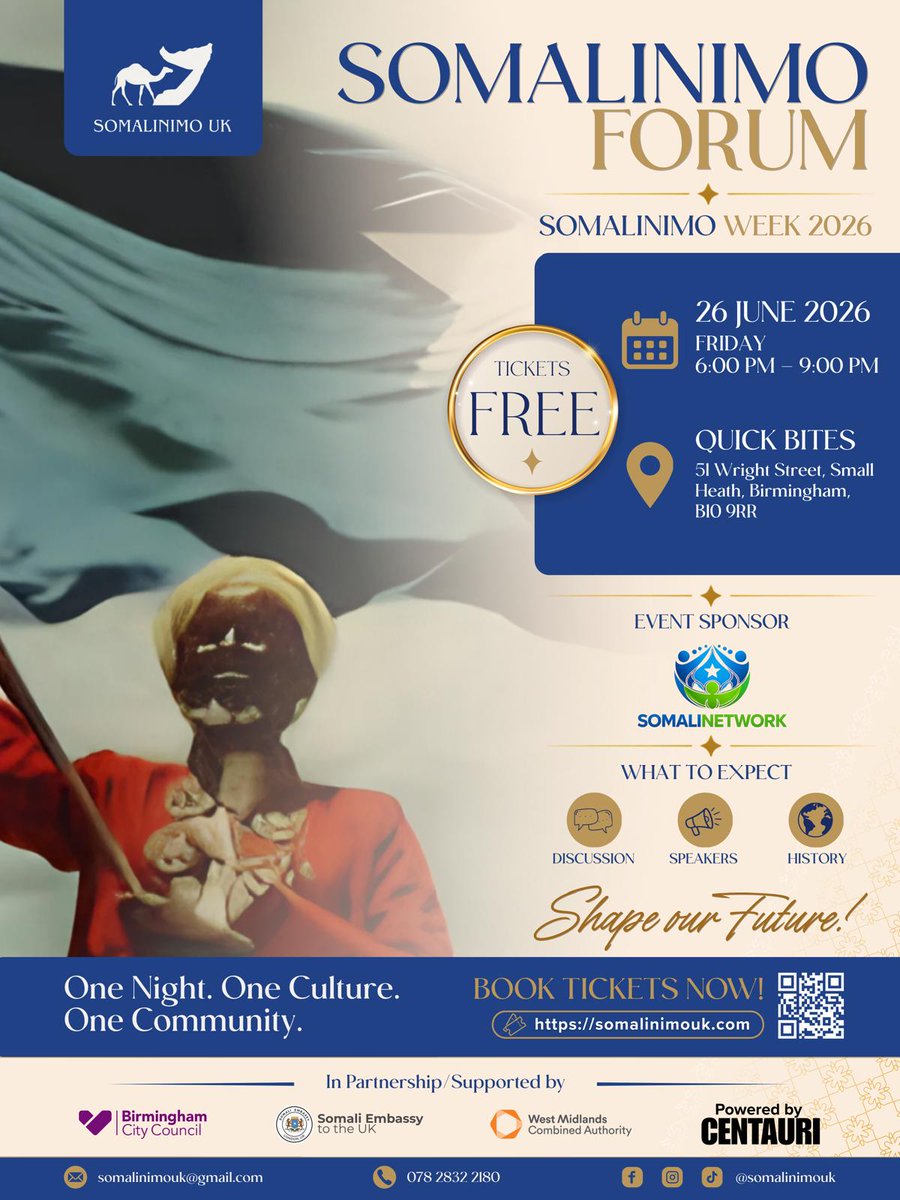
Historical Overview: The Road to 26th June
@SomaliNetworkUK @Araleonx @LandofPuntites @Deee_luul @agaraad @EIshmael_ @cunayee
2
10
20
1,074
Jun 9
ABC's use of "Somalian" instead of "Somali" reflects an objectifying framing and is a clear misnomer. A routine correction would have sufficed for a typo. The continued silence after widespread public appeals is either editorial negligence or tacit endorsement, raising serious questions about @ABC’s media accountability.

A Somalian referee for the 2026 FIFA World Cup was denied entry into the United States over the weekend "due to vetting concerns," U.S. Customs and Border Protection said Monday. abcnews.link/3uilbAa
11
18
169
10,375
Jun 8
The US says it wants to host the World Cup, then reshape its rules to fit its failed policies targeting some races. That's not a World Cup; call it something else. The US can't have its cake and eat it.
2
2
18
875
Jun 7
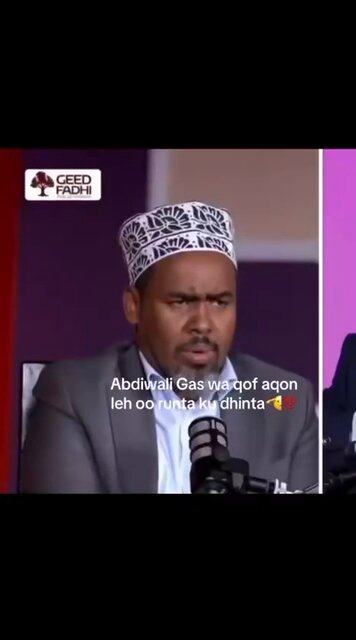
It’s a stark lesson in asymmetric competence. @AbdiweliGaas dominated the frame not just through authority, but through the intellectual vacuum facing him. @SherifAbdinur and @AbdikarimAKaar lacked the foundational research to anchor the interaction, so they defaulted to a purely physiological response: eyes wide, mouths slack, broadcasting their incomprehension. Preparation isn’t a virtue; it’s the bare minimum prerequisite for presence.
3
5
25
2,894
Abdi Garad, PhD retweeted
Does Somaliland control all the territories it claims?
35
56
225
12,901
Abdi Garad, PhD retweeted

Jun 4
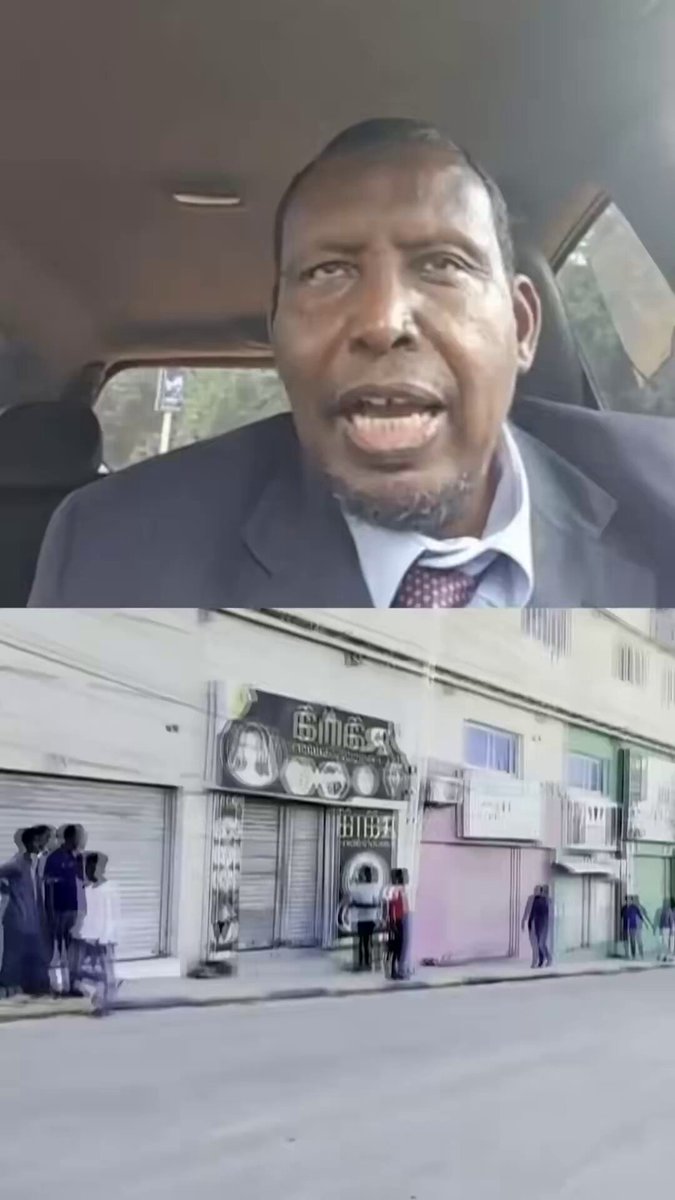
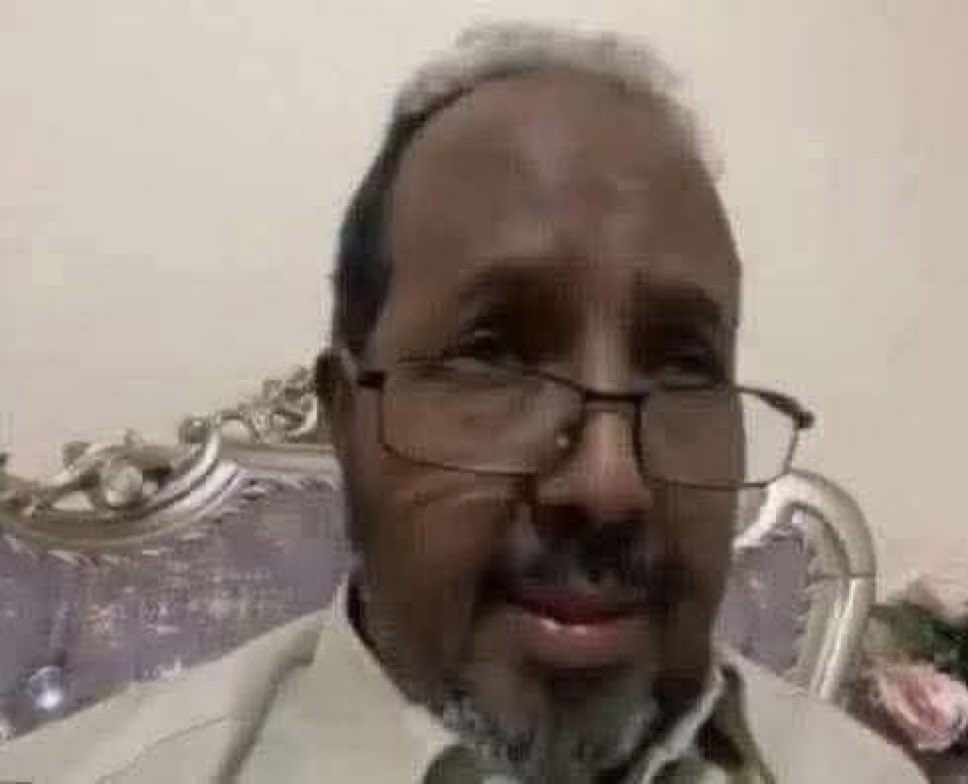
Never has there been a coward like the Ashraf Ghani of Somalia. He’s moved out of @TheVillaSomalia with his family as he ordered the forces to attack the opposition at their residence.
He’s sent emissaries to the opposition as reports of him fleeing to Tanzania gain traction.
14
20
78
9,027
May 31
"Somalisota. This is Somalisota and not Minnesota. Yes, I refer to it as 'Somalisota'... Somalis! How does Allah preserve your unity? Through the Qur'an. Without the Qur'an, you possess no value."
9
58
420
22,497
May 30
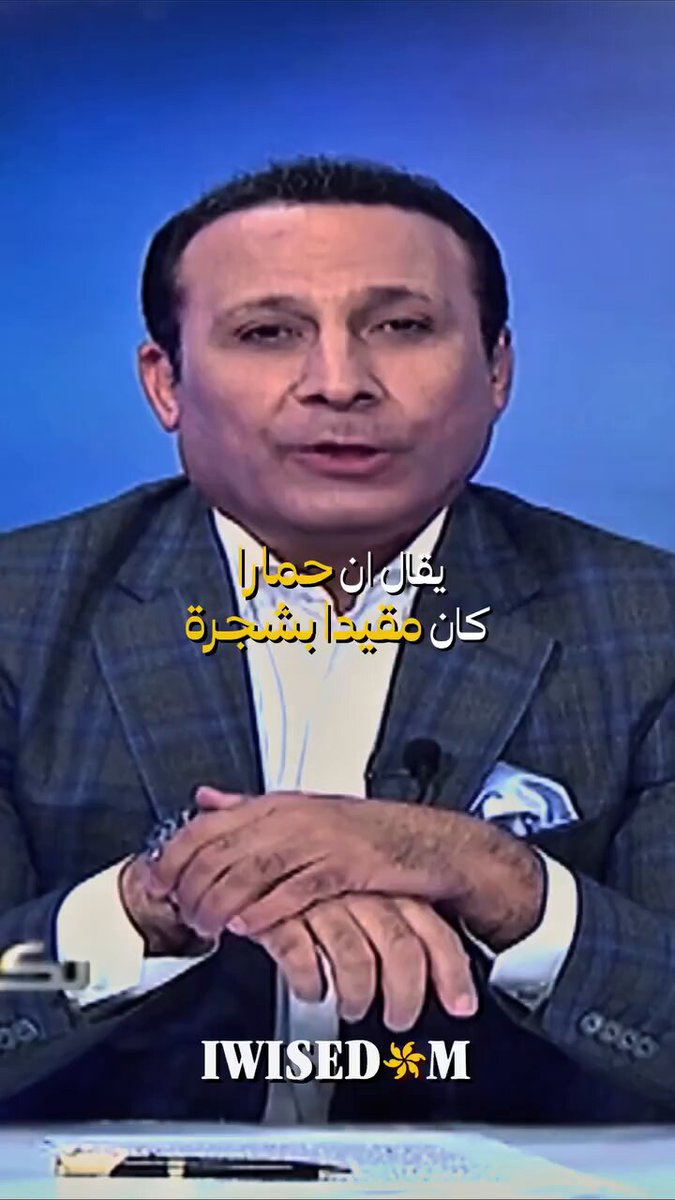
It has been said that an ass was tethered to a tree. Satan approached the ass, unfastened the rope, and released it.
The ass then went to the neighbour and ate vegetables and dried.
When the wife of the neighbouring farmer saw this act, she took a firearm, discharged it, and killed the ass.
The owner of the ass heard the gunfire. Upon discovering that his animal had been killed, he became enraged and shot the farmer’s wife.
The farmer arrived and saw that his wife had been murdered. He seized her firearm and killed the owner of the ass.
Satan was asked, "What have you done?" He responded, "I have not done anything; I only released the ass."
If you wish to ruin a country, simply release a political donkey into it.
🚨 Look at the Somali peninsula.
1
13
22
1,409
May 29
Faisal Roble’s article in Wardheernews is timely and raises important points. That said, I would like to make three historical revisions to ensure accuracy.
As Jama M. Ghalib (1995, p. 123), the police commissioner who imprisoned and captured the mutineers, and who also hails from Hargeisa, records:
“Many Somalis in both the North and the South, mistakenly believed — and have since maintained — that the rising led by Hassan Keyd on 10 December 1961, was part of a broader northern secessionist manifestation.” He continued, stating, “I can confirm that there were no wider separatist tendencies. The ‘coup’ attempt, as it came to be called, resulted only from the young officers’ dissatisfaction over the lack of comparable adjustments of military rank upon the integration of the Somaliland Scouts Regiment into the Somali National Army, six months after the Union.”
Abdi Samatar (2016, pp. 111-114) supports this and notes that there is limited evidence of regional discontent as the main motive. Samatar states that the officers’ legal defence admitted guilt to mutiny but explicitly denied it to a coup d’état. The government’s subsequent actions, including paying legal fees and not appealing a dismissal on minor technicalities, further suggest it was not regarded as a fundamental threat to the union.
Misrepresentation of the Hassan Kayd Mutiny
Faisal describes the mutiny as “an early expression of the secession that the SNM implemented” and a “precursor to the formation of the SNM.” This is historically inaccurate. The mutiny was a military grievance over ranks and pay—not a demand for secession.
(1) No civilian politicians, clan elders, or the public supported it.
(2) The prosecution charged the officers with mutiny and insubordination, not treason or separatism.
(3) The mutineers treated captured southern officers with respect and did not declare a breakaway state.
(4) The Somali government paid their legal fees, which is inconsistent with treating them as secessionists.
By framing this mutiny as proto‑secessionist, the essay misleads readers about the actual origins of secessionist thought in the North.
Plurality: The missing “s” and the nature of the protectorates
Faisal repeatedly refers to the “Somaliland Protectorate” in the singular. In fact, Britain signed six separate protectorate treaties (plural) with different clans (Gadabursi, Habar Awal, Habar Yonis, Habar Jeclo, Issa, Warsangeli). The singular phrasing is not a minor typo, it erases the fragmented, treaty‑by‑clan legal reality. This lack of precision reflects a genuine lack of insight, as the plural nature of these protectorates is central to understanding which clans were bound by which colonial arrangements.
Exaggerated uniqueness of intermarriage
Faisal claims: “No other Somali clans can claim the degree of intermarriage between the Dhulbahante and Habar Jeclo/Habar Yonis.” This assertion is unsupported and highly dubious. Comparable or even higher levels of intermarriage exist across many Somali regions. For example, between Sool and Nugaal, Sanaag and Bari, and along the long corridor from Mudug, Ogaden region and Galguduud to the south, centuries of mixing have created dense kinship ties across conventional boundaries, not to mention Warsangeli and Habar Yonis, Samaroon and Habar Awal or Issa and Samaroon. He provides no comparative citation for this claim of “uniqueness.” Maybe he used this claimed uniqueness as an emotional anchor for reconciliation or goodwill, but exaggerating it weakens his overall argument.
Again, I appreciate this timely essay in Wardheernews and the important points within it. I offer these reviews only to strengthen historical accuracy, not to detract from his broader contribution.
wardheernews.com/somaliland-…
12
26
59
4,332
May 29
Today’s dominant talking point within @TheVillaSomalia centres on the notion that "I am with Mahad Salad." This singular statement, in itself, is evidence of @HassanSMohamud's fragility.
Highlighting personal friendships over policies, manifestos, institutions, or a national vision is a failure. Instead of seeking validation from one person, why can't he pursue genuine reconciliation nationwide?
2
1
11
2,729
Abdi Garad, PhD retweeted

May 27
Trump: “They (Somalis) are all crooks.”
No, Mr. Trump, unlike you, I’ve never committed a crime. I’ve never assaulted a woman. I’ve never been convicted in a court of law. I’m not a racist. I’m not on the Epstein files. I’m not a liar. I don’t cheat on my wife. I’m not an 80-year-old idiot. I’m a tax-paying Somali American minding my own business. And the vast majority of Somalis I know are like me or better than me. Turn your filthy mouth on yourself!

Trump: Somalians—they’re all crooks. Crooked as hell. We got them and we’re putting the clamps on.
48
118
779
40,051