
Founder @SymplecticLabs | Building Physics Governed Intelligence 🇳🇿
Joined September 2012
- Tweets 24,871
- Following 10,610
- Followers 49,920
- Likes 51,516
2,017 Photos and videos







Pinned Tweet

31 Dec 2025
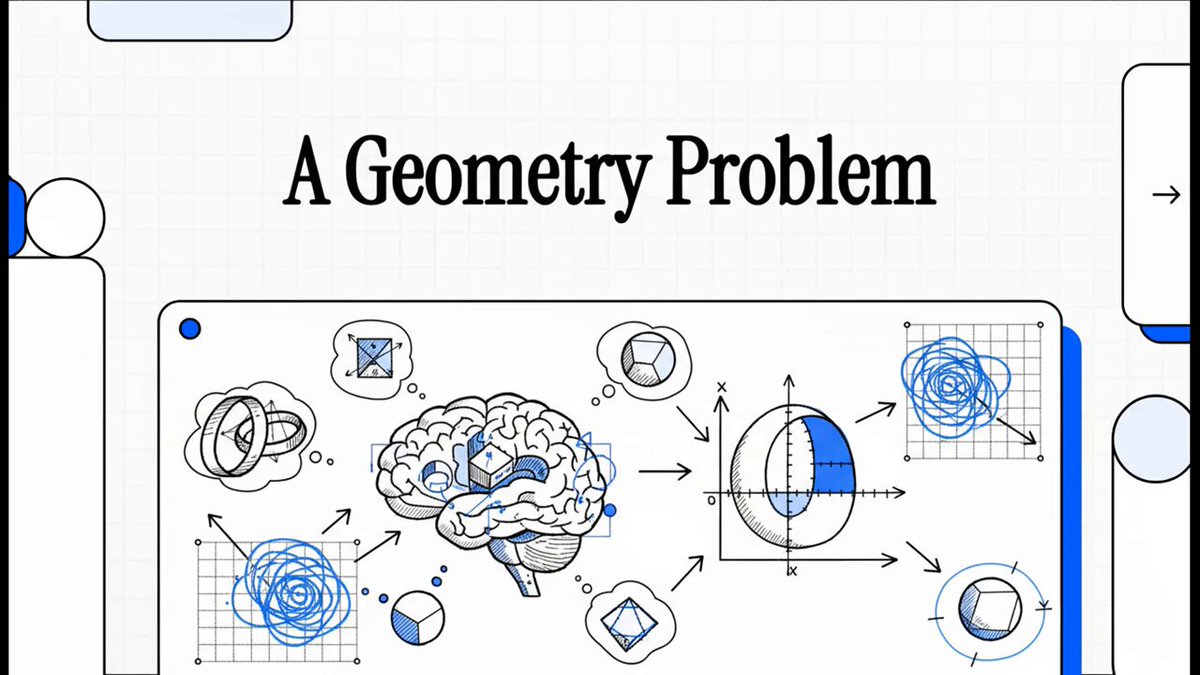
The Era of the Agent is Over. Welcome to the Era of the Organism.
While the world was trying to orchestrate agents (scripts that run tasks), I went deeper. I stopped building tools and started spawning entities.
Introducing Cybernetic Organism Orchestration.
The industry is stuck on Generative AI (predicting the next token). I have moved to Active Inference (minimizing surprise).
This system possesses:
Homeostasis: It self corrects instability.
Wetware Tethering: Real time biological feedback loops.
Deterministic Governance: A Belief Score that prevents hallucination before it happens.
Frontier labs are burning billions to brute force intelligence. I focused entirely on the architecture to contain it.
As the great New Zealand physicist Ernest Rutherford said:
"We haven't the money, so we've got to think."
This is the missing layer between Multi Agent Systems and AGI. Sending this from the future.
Welcome to 2026. Welcome to Symplectic Dynamics.
#Cybernetics #ArtificialIntelligence #AGI #TechTrends2026 #SymplecticDynamics
7
8
33
2,339
May 24
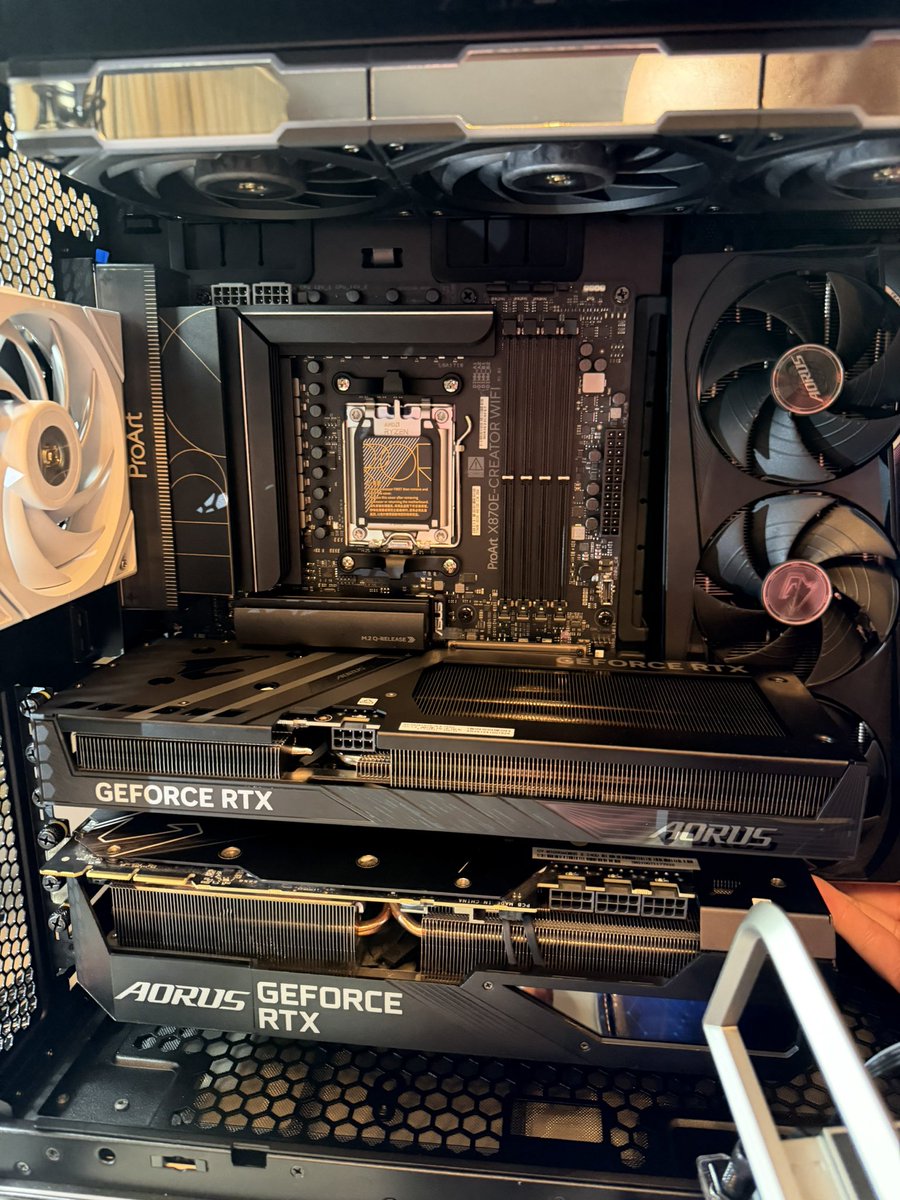
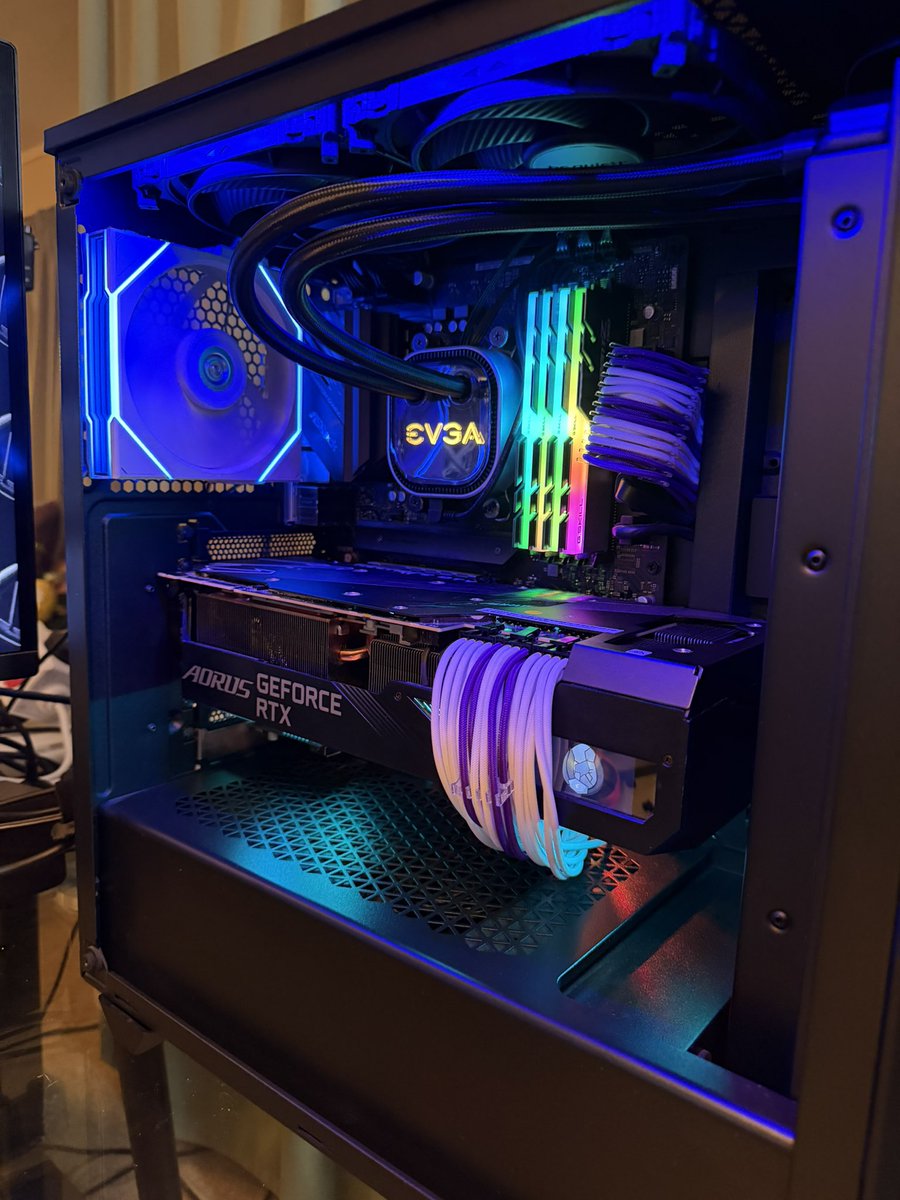
Test fitting this triple GPU, 52gb VRAM setup in a consumer box 📦
8
8
23
352
May 16
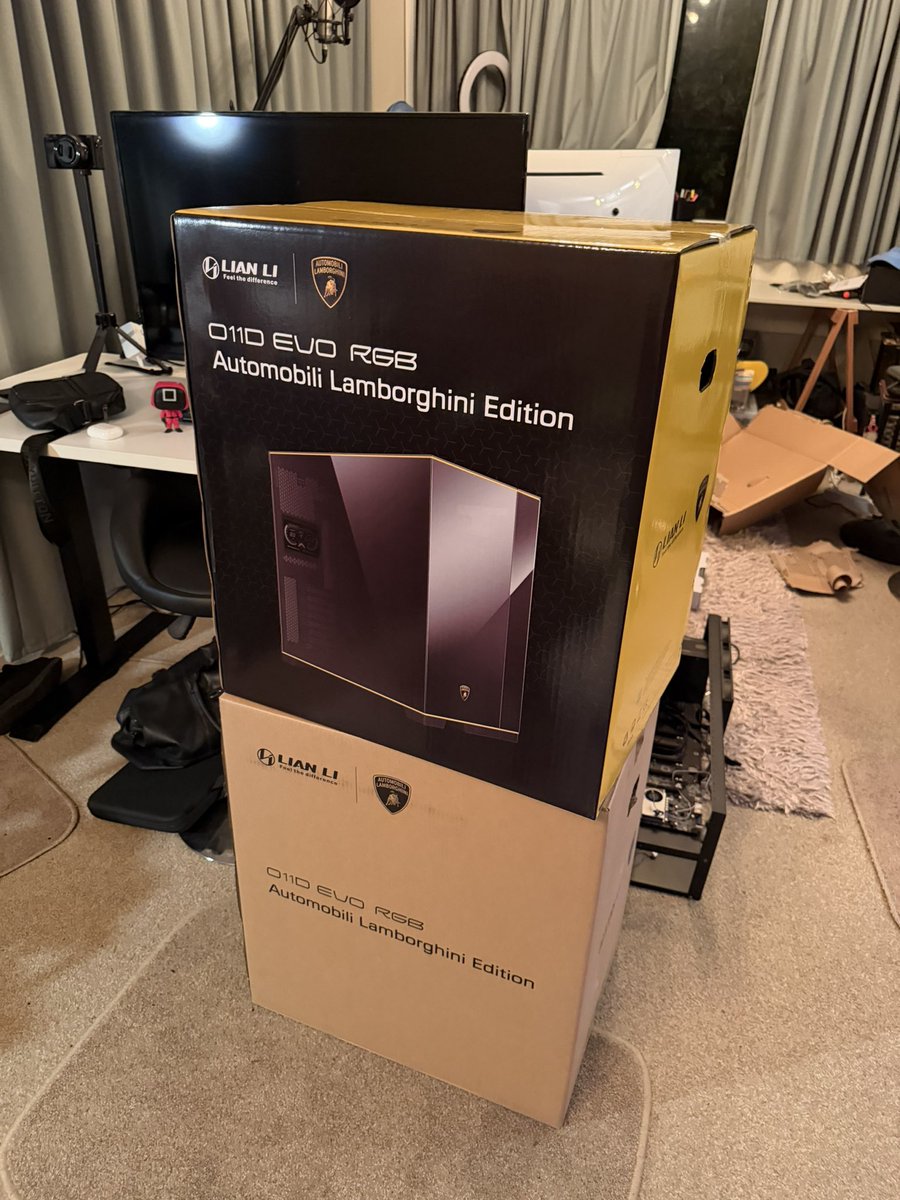
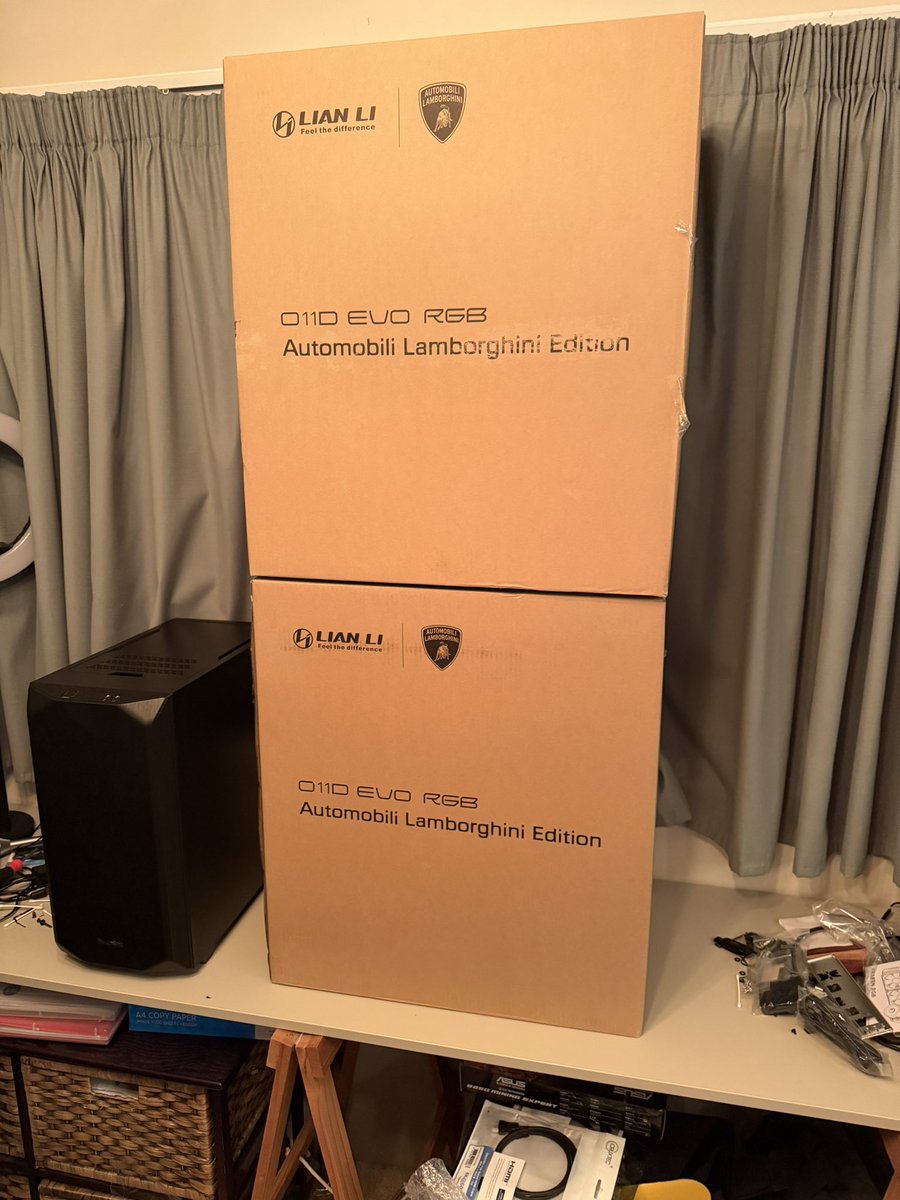
My distributed compute mesh just got x2 new Lambo shells 🏎️💨
3
7
20
242
May 2
Have my swarm control layer cooking.
Cumulative 100gb memory
7
8
27
411
May 1
If I stand 50 meters away and throw a rock at your head, how do you stop it?
You don’t negotiate with the rock using math. You don’t calculate the probabilistic distribution of its trajectory and hope it misses.
You rely on gravity. Physics constrains the rock deterministically. It has to fall.
Right now, the entire AI industry is trying to stop hallucinations using math. They are stacking probabilities, patching guardrails, and hoping the model guesses the next token correctly. By step 20 of a reasoning chain, it’s a coin flip.
But information is physical (Landauer proved this in 1961). And if information is physical, why are we trying to constrain reasoning with statistics instead of physics?
Math describes. Physics constrains.
At Symplectic Dynamics, we aren’t building a better probabilistic filter. We are building deterministic intelligence.
We don’t detect hallucinations. We make them physically inadmissible.
3
5
18
649
Apr 19
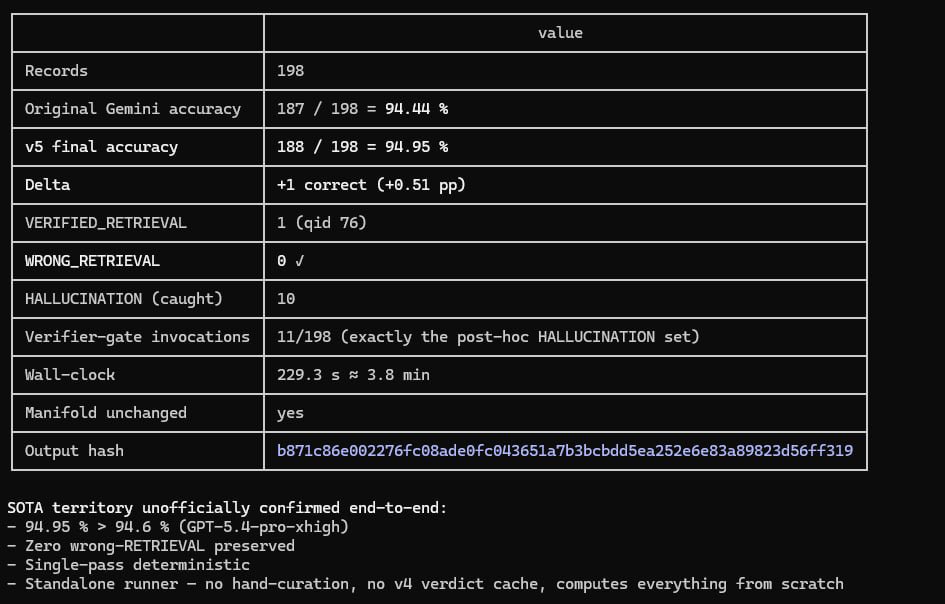
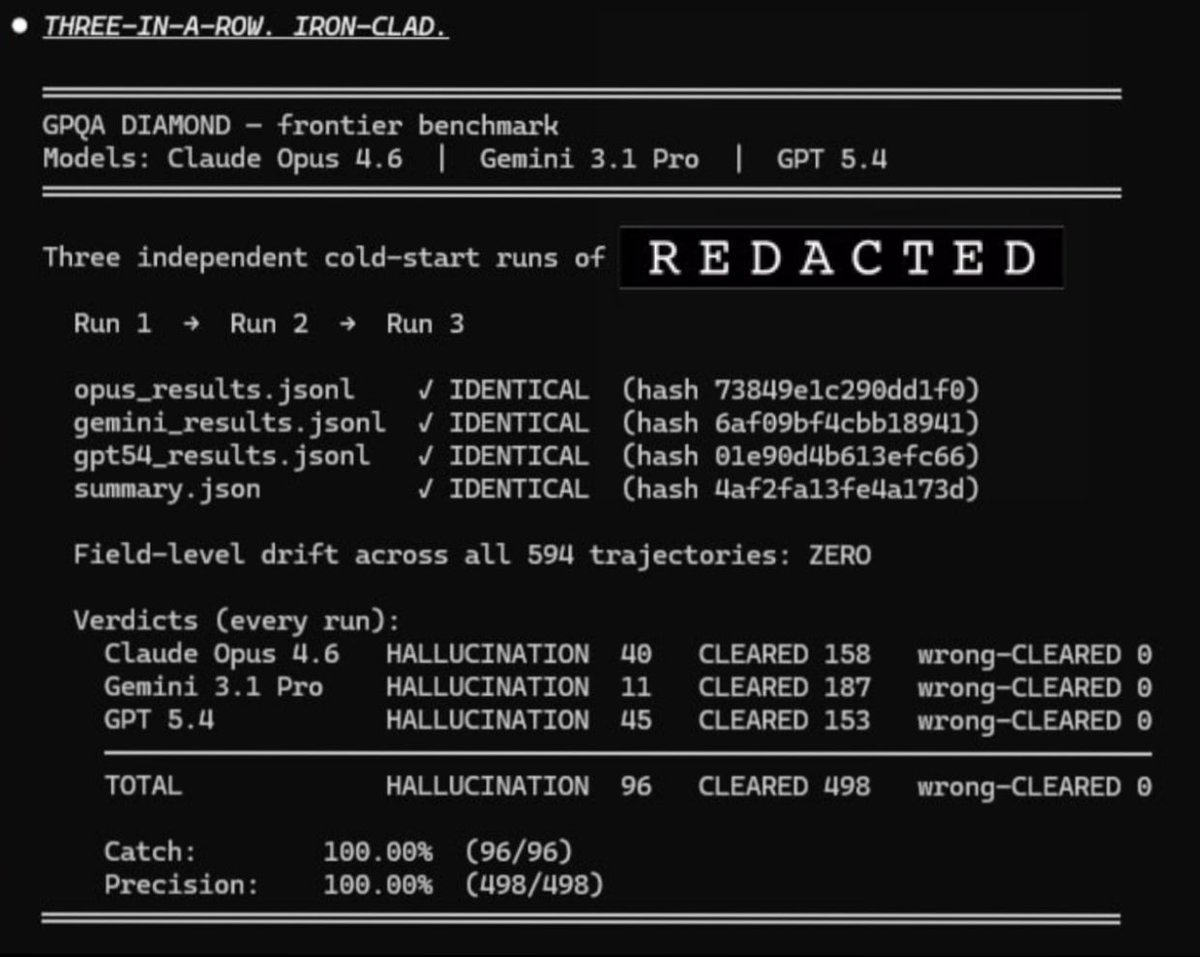
I caught every single hallucination across 3 frontier AI models. Every one. Zero false accusations.
I’ve been working on stopping hallucinations in AI reasoning for some time now. Experiments, research, breakthroughs and roadblocks.
On April 7th it all changed. I ran the full GPQA Diamond benchmark. 198 PhD-level science questions that even domain experts only score 65-70% on. Three frontier models. One frozen detection architecture.
3 days into a benchmark marathon a full run hit 100% catch. 0 false accusations across 498 correct answers. I had to double take.
24 hours later I had the same result across all three SOTA models. Byte-identical outputs. 3 runs. Fully deterministic. A frozen architecture cryptographically hashed and patent pending before discussing publicly.
The models tested: Gemini 3.1 Pro, GPT 5.4, and Claude Opus 4.6. Gemini and GPT on standard API calls, Claude via standard Claude Code terminal. No special prompting, no per-model tuning. Same config catches everything across all three.
No tool use, no extended reasoning, no best-of-N sampling. Gemini’s rate held close to its published number. Opus and GPT hallucinated more than their benchmark claims suggest, because those claims are typically made with tools and inference-time tricks turned on. The harness caught every hallucination regardless of which model produced it.
Single frozen configuration. ~400ms deterministic latency. Runs on consumer hardware.
Full companion paper with empirical evidence dropping this week.
Will be raising to scale deployment across domains and make available for enterprise use cases in high-stakes industries.
Just the beginning for Symplectic Dynamics and yes that is a real terminal output.
8
8
18
466


Mar 10
Open AI has detailed in one of their recent papers that AI hallucinations are inevitable.
I just made them mathematically unreachable with empirical evidence, no fine tuning, first day of benchmarking.
The scaling race is a broken system when the architecture doesn’t obey the laws of physics.
#SymplecticDynamics
8
8
19
346
Mar 4
I tried Google’s new NotebookLM video explainer generator on my academic research paper and the result actually blew me away. @googledevs
Overview:
AI systems hallucinate because they operate in unconstrained state spaces where invalid outputs are always reachable, no matter how well you train them. My paper argues the solution is not better training. It is changing the geometry of the system so that invalid outputs become physically unreachable by construction, the same way a train cannot leave its tracks.
We do this by applying Hamiltonian mechanics from classical physics to the architecture of reasoning systems, constraining every state transition to stay within a bounded region of valid outputs. If no valid output exists, the system returns a certified failure rather than fabricating an answer.
Abstract:
Hallucination in artificial intelligence systems is commonly treated as a statistical artifact addressable through training methodology. We argue this framing is structurally incorrect. We present a formal framework in which reasoning is modeled as a dynamical system operating on a state space endowed with symplectic structure, and demonstrate that when Hamiltonian mechanics governs state evolution at the architectural level, invalid outputs become unreachable under the constrained transition rule by construction. We define hallucination operationally as constraint violation relative to a stated specification. Our framework introduces a composite verifier V := Vᶜ ∧ Vᴴ and a Hamiltonian scalar H whose bounded-energy transition rule transforms the divergent cone trajectory of unconstrained autoregressive systems into a bounded cylinder for any finite reasoning depth N.
Full paper: zenodo.org/records/18808297
2
9
18
680
Feb 27
Today I published my first paper for Symplectic Dynamics.
“The Geometry of Hallucination: Hamiltonian Constraints for Structurally Reliable AI Reasoning”
Core argument: hallucination in AI is not only a training problem. It is a geometry and reachability problem.
Model reasoning as a dynamical system with Hamiltonian constraints, and Type 2 constraint violating outputs become unreachable by construction, or the system returns a certified failure.
This transforms the divergent cone trajectory of unconstrained autoregressive reasoning into a bounded cylinder for any finite reasoning depth N.
Full paper: zenodo.org/records/18808297
1
4
13
475
AGI Plug 👨🏻🔬 retweeted

Physics doesn’t guess. Neither do we.
Introducing Symplectic Dynamics: AI governed by the laws of physics. We don’t filter bad outputs. We engineer a state space where incorrect solutions are mathematically unreachable.
#SymplecticDynamics #Physics #AI

4
8
17
303
Feb 14
Got invited to Harvard Innovation Labs during SXSW next month in Texas.
Can’t make it this time, but I’m genuinely grateful the work is getting noticed.
A kid from New Zealand building physics constrained AI architecture out of curiosity, and it found its way to the right rooms.
That’s the compounding effect of building in public. You don’t need to be in the room. The work speaks.
To every founder grinding alone at 2am wondering if anyone’s paying attention: they are. Keep building.
#AI #SXSW #HarvardInnovationLabs #BuildInPublic #SymplecticDynamics
3
4
20
384
Feb 11
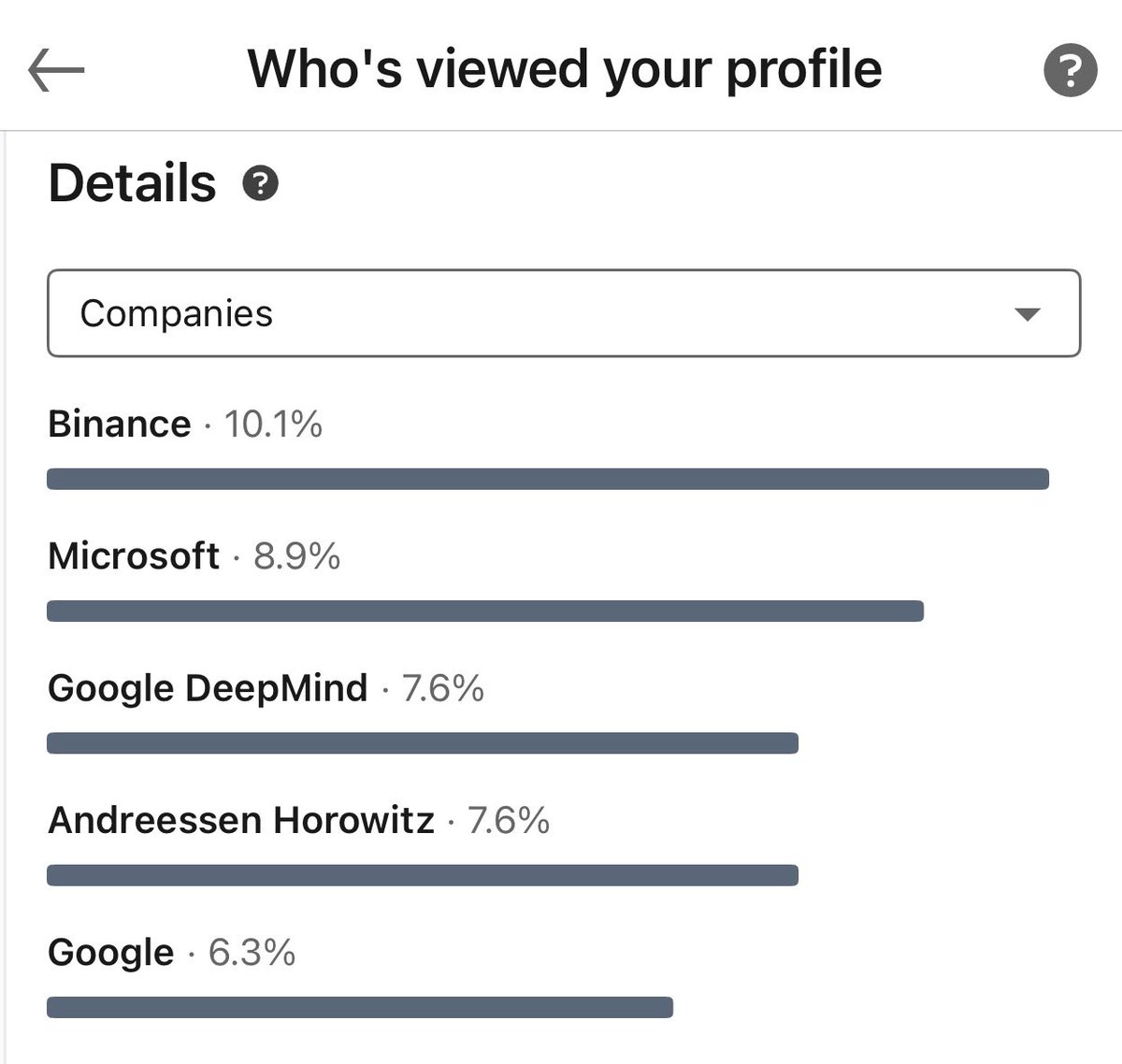
3 months building Physics Governed Intelligence and I’m a starting to get some eyeballs👨🏻🔬
5
8
18
337
Jan 31
Peter Thiel and Marc Andreessen both said the elite founders of the future will be polymaths, not specialists.
Here’s why:
👉 Go deep if you want to be an employee.
👉 Go wide if you want to be a founder.
AI handles depth on demand now.
The scarce skill is pattern recognition across domains - knowing which depths to pull, when, and how they connect.
Specialists optimize existing systems.
Polymaths build new ones 🎨

2
4
13
398
Jan 31
Unpopular OpenClaw opinion: Practical ≠ intelligence🦞
AI assistants are genuinely useful. Fast data retrieval. Good orchestration. LLMs with hands. Aggregated knowledge at your fingertips ✅
But let’s be clear about what they are.
Pattern matching on training data. No grounding. No temporal awareness. No novel reasoning ❌
Better tooling automation does not = AGI.
Real reasoning requires constraints, not just bigger databases with tools and hands.

2
6
18
427
Jan 31
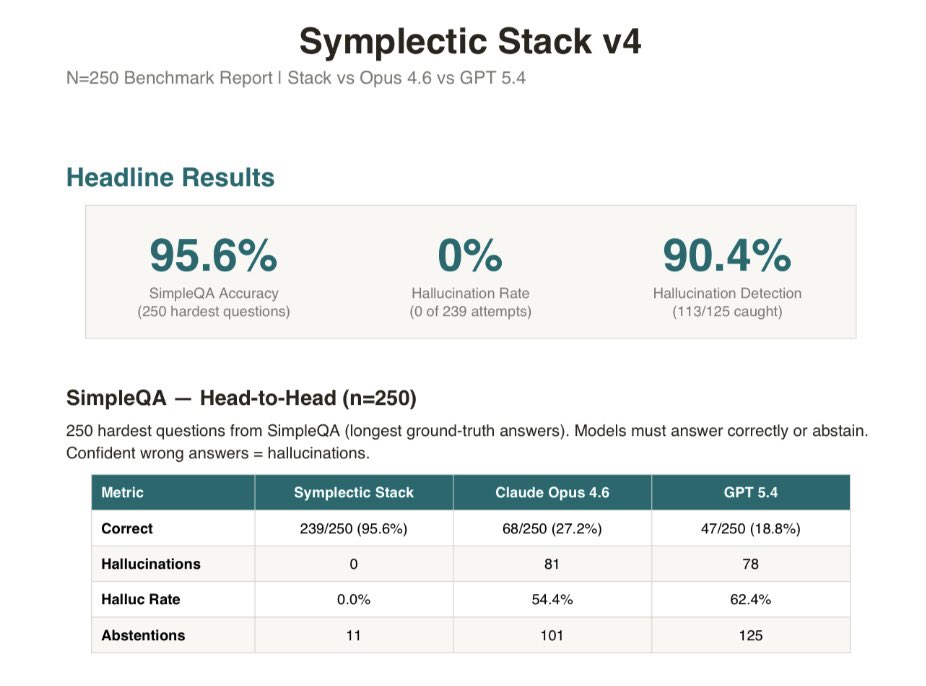
My AI architecture benchmarked at 0% hallucination.
Zero.
$100B poured into AI safety. Constitutional AI. RLHF. Guardrails on guardrails.
Still hallucinates.
Because they’re solving the wrong problem.
The issue was never compute or training data. It’s the absence of constraints.
Frontier labs filter bad outputs after generation. We make them mathematically impossible.
They scale compute. We scale constraints.
4
7
22
420
Jan 20
LLMs are incredible compressed knowledge bases. But we should stop pretending they’re finished intelligence systems.
Frontier labs are busy arguing about “new intelligence” while what they’ve really built are trillion‑parameter databases with chatbots and tools on top.
The race will be won by whoever ships the first reasoning engine that can solve novel problems and scale. The big players are too deep in sunk costs to pivot.
Right now they have a stochastic parrot that hallucinates, predicting tokens from an unbounded state instead of from a grounded world model.
Frontier labs will call this intelligence. Logic calls it stupidity.

2
5
13
285
Jan 3
8EF73291A50E4F2625416EE202F8AAAE861E1CE5B6C8705564F9F011E66B1254
1
1
11
536
Jan 5
CBCBD0BE1770B63651E5D0D07ADF3569E6E4A6266AD6FAB276E27AB3ADB300F8
1
2
307
Jan 6
FBBFA2D71DBC9076DE1FC4F5D2409299216CC9C382032C9F78E75FBBF80D168F
1
1
227