
Joined December 2023
- Tweets 113,292
- Following 2,153
- Followers 1,823
- Likes 73,970
27,774 Photos and videos








Pinned Tweet

25 Mar 2025
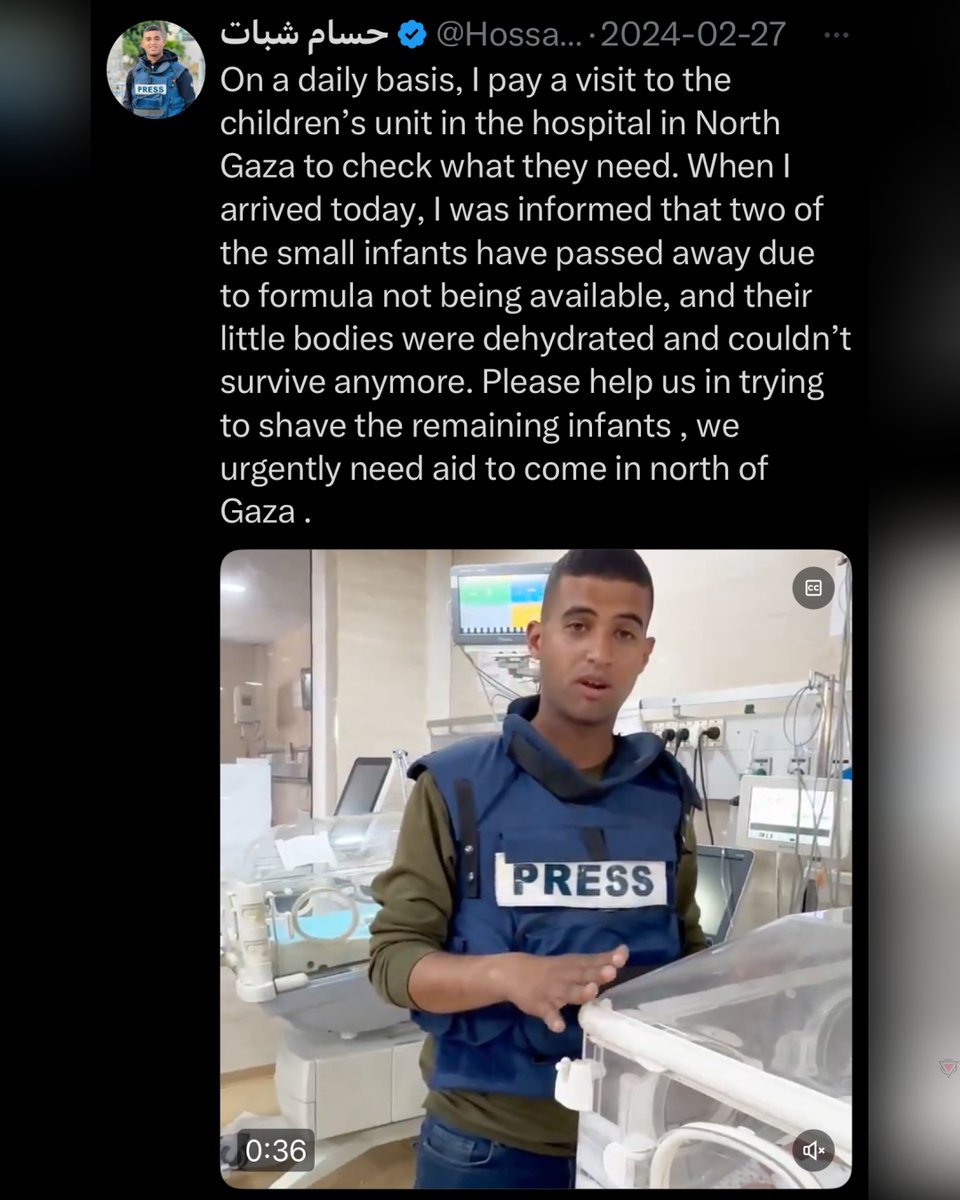
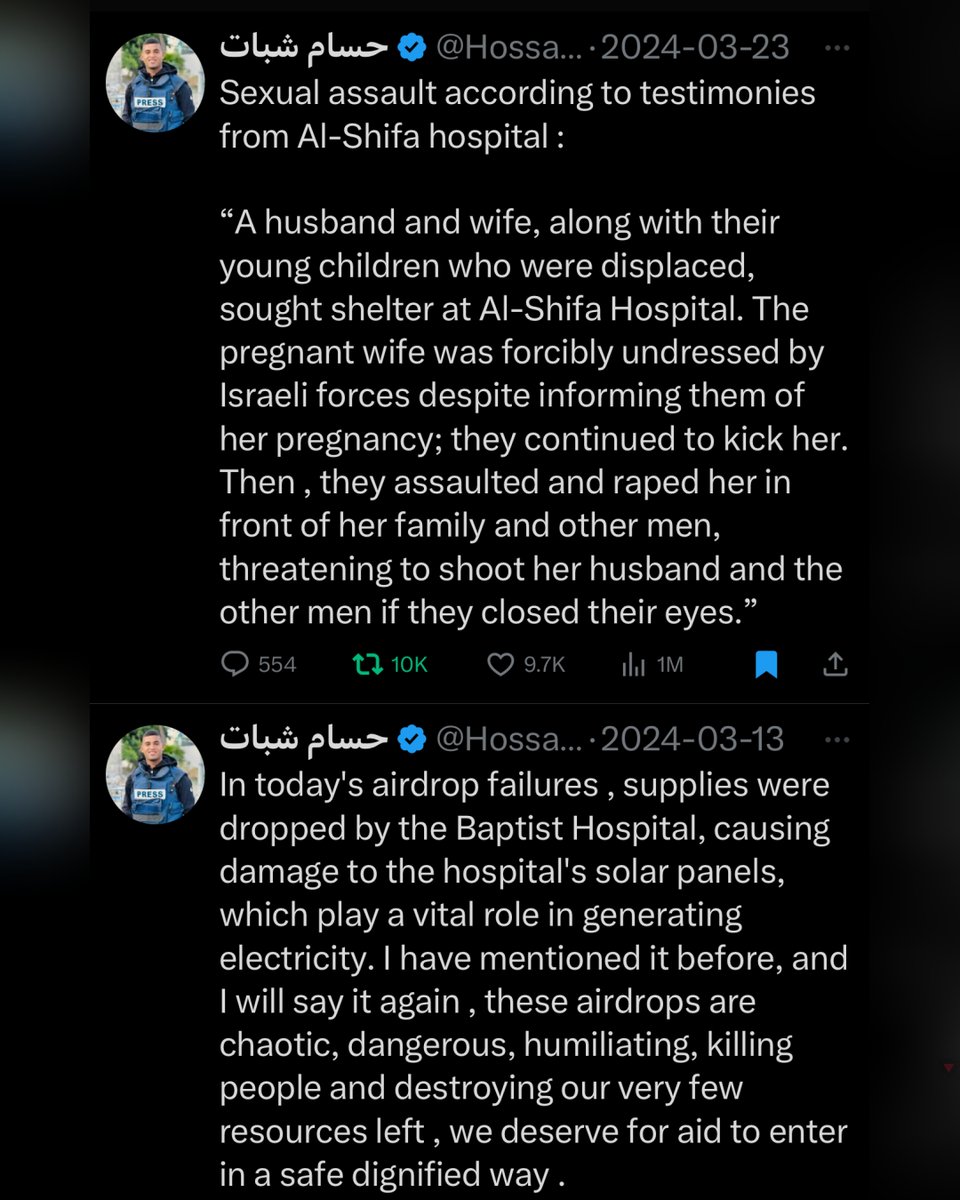
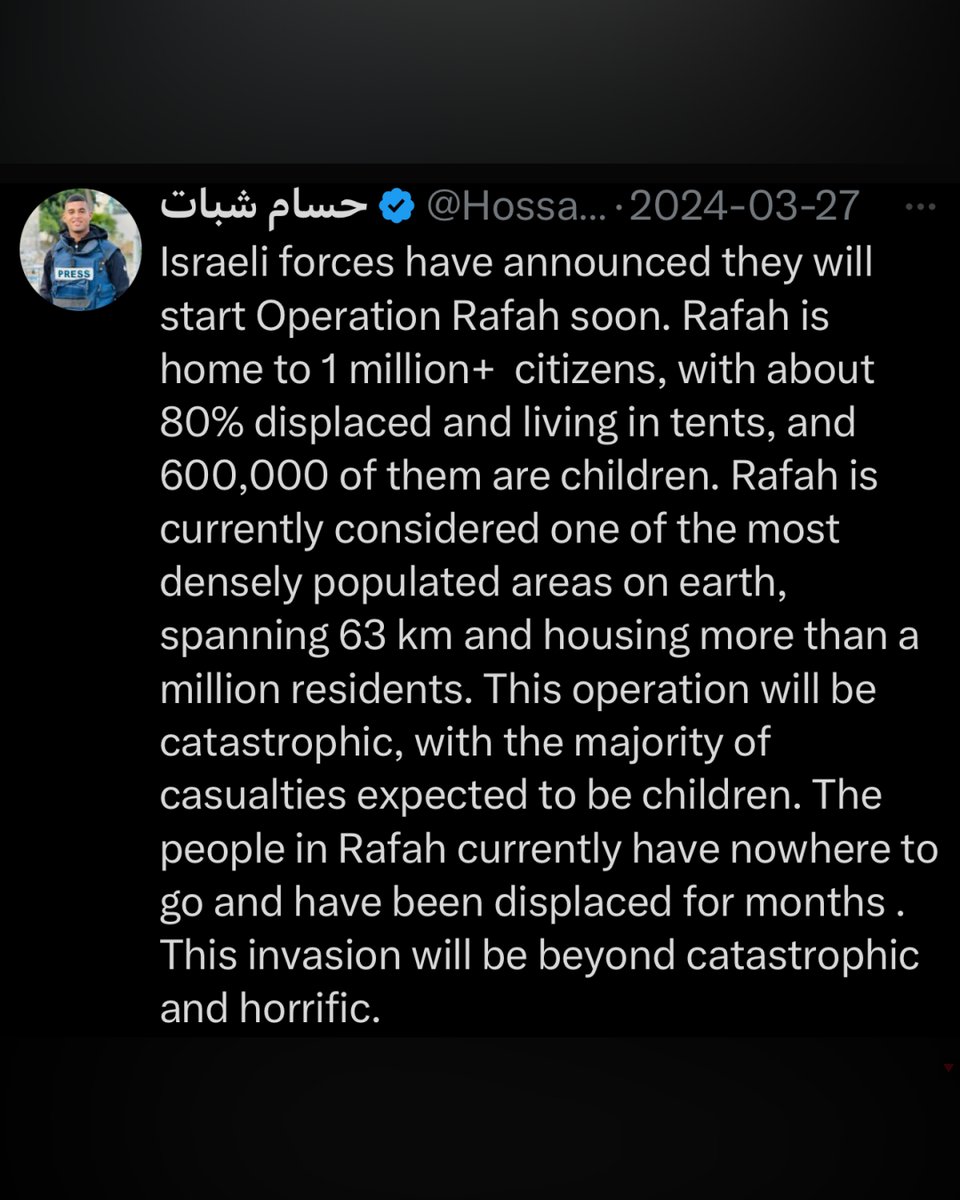
Compilation of @HossamShabat's dispatches I saved and shared in chronological order as an inadequate attempt to pay tribute to him.
1/27

15
140
358
26,659
Anyways here's pubic hair as facial hair enthuasiast and selling dildoes is a daddy daughter activity dicknose Rabbi Slobbo getting mogged by some based younguns
1
81



Israel is building a permanent military empire across Lebanon and Syria in plain sight.
When Israeli troops seized Beaufort Castle last month and filmed themselves raising flags over its ancient battlements, some of them noticed the concrete bunkers already embedded in the western ramparts. Israel built those during its previous occupation, from 1982 to 2000. A guerrilla campaign eventually forced them out. A quarter century later, they're back.
The ceasefire construction record:
Israel invaded Lebanon in October 2024, escalating cross-border fighting with Hezbollah that the Lebanese movement had launched in solidarity with Gaza. By the time a ceasefire was agreed on 27 November 2024, Hezbollah's leadership had been largely wiped out, 4,000 people were dead, and over a million had been displaced from the south and areas of Beirut. Under the ceasefire terms, Israel had 60 days to withdraw. The deadline passed. Then it passed again. Israel refused to leave five hilltop bases it had established in the first days of the invasion — all with clear lines of sight over large stretches of southern Lebanon. Satellite imagery shows what happened next. From January through September 2025, Israel rapidly developed all five sites: fortifications widened and heightened, roads broadened, watchtowers erected, accommodation units multiplied. "If you are planning to withdraw, you do not carry out this much work," a Lebanese military source said. The construction accelerated specifically after Israel agreed to leave.
The UN peacekeeping force UNIFIL, which has operated in southern Lebanon for two decades and is set to wind down by 2027, now finds one Israeli base positioned 150 metres from its own post at Labbouneh and another 1.5km away near Houla. Israel has also widened and improved patrol tracks that UNIFIL previously used.
The Syria line:
Deep into 2026, Israel holds Mount Hermon's summit. From there, a string of at least ten bases and observation posts extends to the Yarmouk River on the Syrian-Jordanian border — a line of control 70km long. Eight of those bases sit inside the neutral buffer zone established after the 1973 Middle East war and monitored by a second UN force, UNDOF. Along the Purple Line — the boundary of Israeli-occupied Golan — Israel has constructed long earth fortifications, including elevated mounds for vehicle surveillance. Netanyahu has publicly stated Israel will maintain an indefinite presence at Hermon and in the Syrian buffer zone. Israeli coalition ministers have said publicly what the satellite imagery already shows.
36
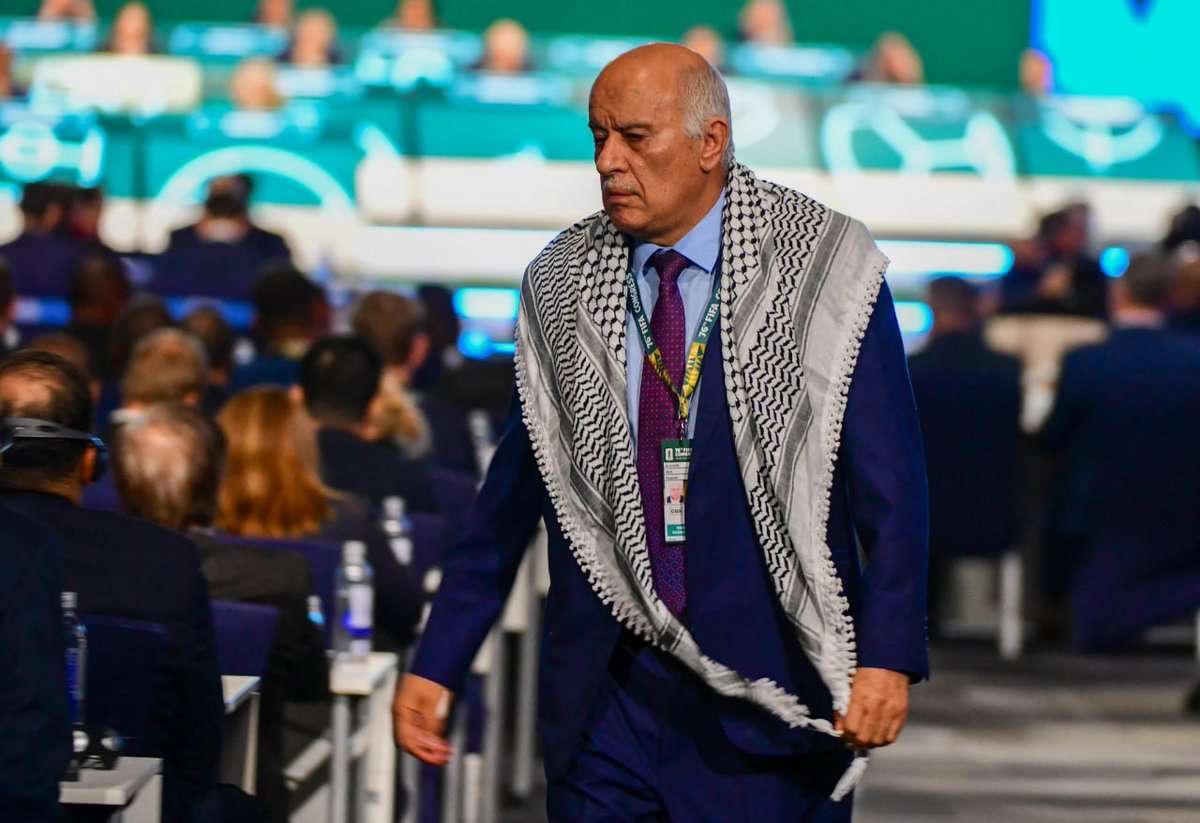
Palestinian football chief Jibril Rajoub watched the tournament's opening match from Mexico City because Washington denied him entry after he refused to shake hands with the Israeli football federation head at FIFA's request.
Rajoub's refusal framed the ban plainly: the handshake, he said, would have whitewashed Tel Aviv's unlawful actions. The visa denial followed. He is an accredited FIFA delegate. He watched from across the border.
He is not alone. Somalia's 2025 African referee of the year, Omar Abdulkadir Artan, was denied entry despite holding a valid State Department visa. Members of the Iraqi national delegation were held for seven hours at Chicago O'Hare. Journalists from Iran and multiple African countries were refused the multi-entry visas required to cover the tournament. Washington revoked Iran's official eight percent ticket allocation days before kickoff, stranding thousands of fans mid-travel.
ICE in the stands:
The Department of Homeland Security confirmed it has deployed Immigration and Customs Enforcement agents inside US stadiums hosting World Cup matches. More than 120 civil rights groups condemned the decision. This is not a security perimeter. This is enforcement architecture built into the event itself.
The FIFA standard:
FIFA has maintained it cannot intervene in domestic immigration policy. In 2023, it stripped Indonesia of the Under-20 World Cup after local officials protested Israeli participation. The institution that punished Indonesia for political discomfort with Israel has declined to act while the US bars the head of Palestinian football for refusing to perform political comfort with Israel.
127


🔻agitprop absurdity🔻 retweeted

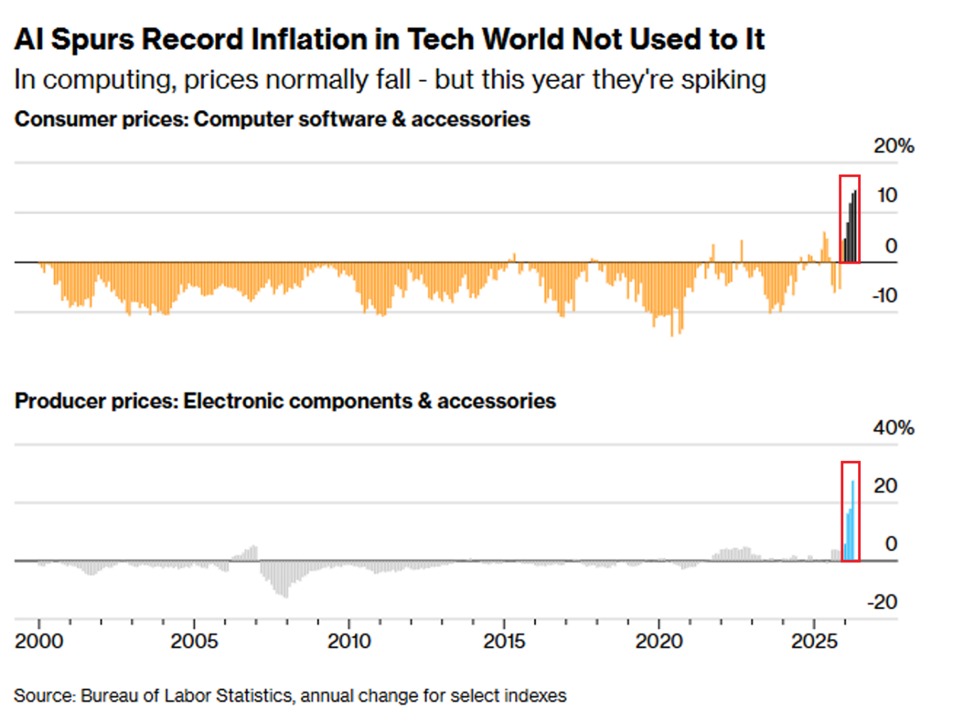
AI is driving US inflation higher:
Consumer prices for computer software and accessories surged 14.5% YoY in May, the biggest annual increase on record in data going back to 2000.
Producer prices for electronic components soared 27% YoY, also the biggest increase on record.
To put this into perspective, before 2026, prices for software and electronic components fell in almost every year since 2000.
Memory prices alone have more than doubled, with DDR5 and DDR4 RAM prices up 290% YoY, as AI data centers absorb the vast majority of global chip supply.
RAM price shocks are will likely keep inflation elevated well into 2027, adding to existing pressures from the Iran War.
The AI boom is fueling technology inflation.
88
85
613
81,364
🔻agitprop absurdity🔻 retweeted

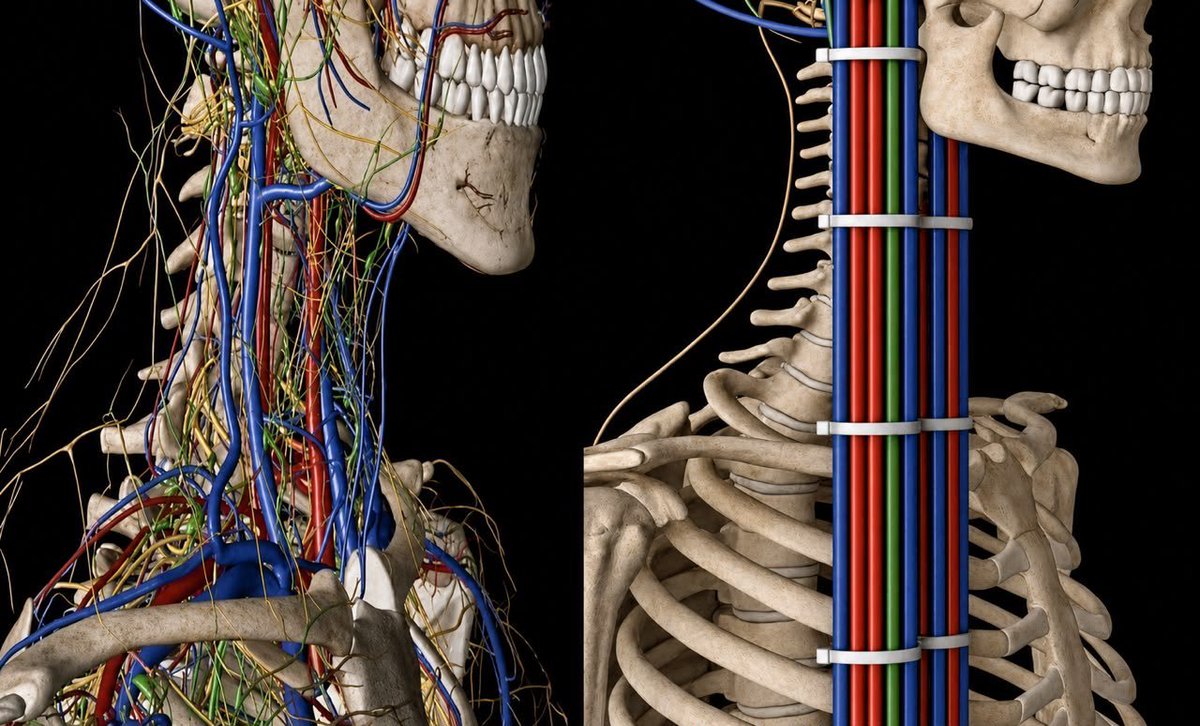
Literally the worst cable management I've ever seen in my life
52
160
2,133
35,569
The GBU-57 Massive Ordnance Penetrator, the most powerful bunker-buster in the US arsenal, can penetrate 40 metres of moderate rock. Too bad Iran's missile bases sit at 500 metres of granite, and forty days of bombing could not close that gap.
Former IRGC Aerospace Force commander Amir Ali Hajizadeh confirmed the 500-metre depth. The GBU-57 maxes out at roughly 40 metres of moderate rock — granite is harder than the moderate rock it was rated against. Five hundred metres is more than twelve times the weapon's reach. The campaign was a category error committed at enormous expense, and US intelligence now assesses Iran retained approximately 70% of its mobile launchers and prewar missile stockpile.
What Libya taught the world:
Iran did not build tunnel cities during this war. It built them over decades, as the institutional response to a lesson the global south absorbed watching what happens to states that trust Western security guarantees. Libya dismantled its weapons program\ under international pressure and was bombed into collapse within the decade. Iraq's surface infrastructure was levelled in weeks. The underground doctrine is the rational answer of a government that watched the alternative play out repeatedly, in countries whose ruins are still visible.
Railway network beyond the reach of bombs:
Inside the mountain network runs an automated railway system transporting missiles through cave tunnels between assembly halls, storage vaults, and blast-door exits. When bombs hit entrances, the rail network rerouted; within 48 hours, construction crews appeared at blocked sites and began digging them out. Some facilities were never used during the campaign because enough other sites remained fully operational. Iran retained approximately 70% of its mobile launchers and prewar missile stockpile, and excavators were still clearing rubble at the blocked entrances.
75
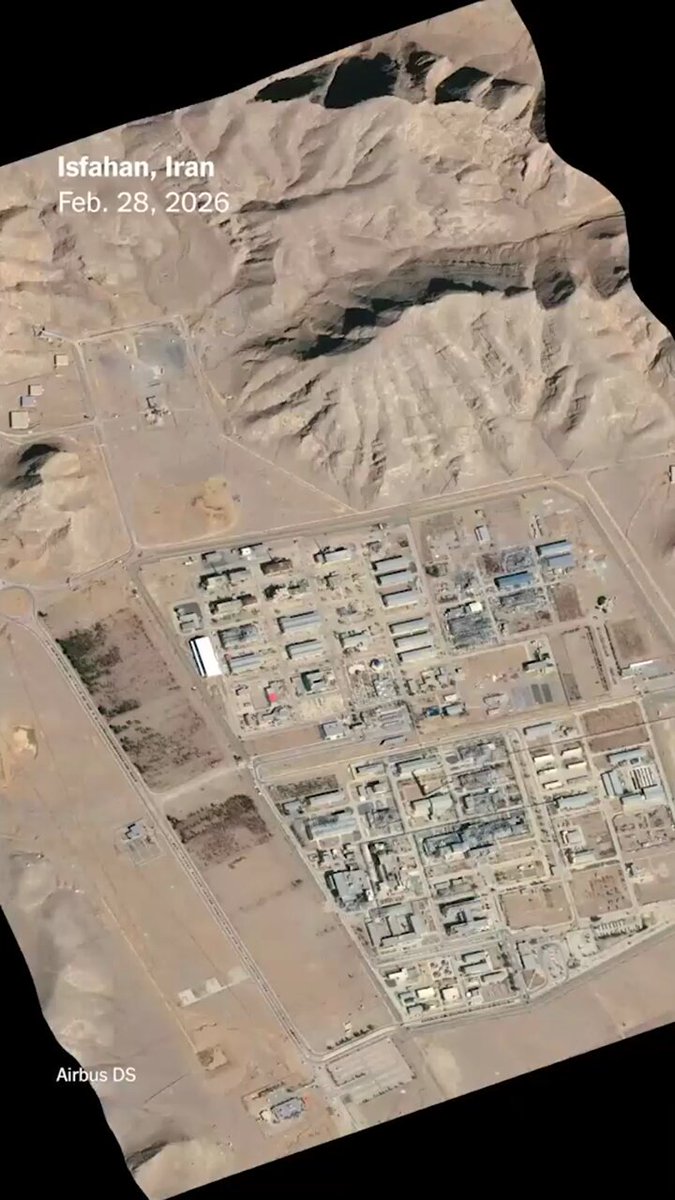
Iran's enriched uranium stockpile — 450 to 500 kilograms of highly enriched material buried deep under Isfahan — is currently the centrepiece of peace talks, with Iran expressing openness to diluting the material in exchange for sweeping sanctions relief.
Iran's terms, Iran's facility:
Over the past month, Iran has mined entrances to the Isfahan complex, deliberately collapsed tunnels inside it, and added new fortifications around the site. These are not the actions of a country negotiating from weakness.
What a ground operation would cost:
The April pilot rescue mission mounted by the US in southwestern Iran provided a useful preview. In the space of two days, the US lost an F-15E strike jet, an A-10 Thunderbolt ground attack aircraft, four special operations helicopters, two Hercules transport planes, and an MQ-9 Reaper. That is a significant fraction of a small air force, expended during what was intended to be a brief, contained operation inside a country with functional air defences, an mobilized civilian population, and terrain that does not forgive.
That shitshow was 600 kilometres short of Isfahan:
The IRGC, the regular Iranian Army, armed civilians, and Nomadic tribesmen all participated in hunting down downed US personnel. The Americans escaped. They reportedly left behind a pair of American flag boxer shorts. Scale that operation by a factor of one hundred, project it 600-plus kilometres inland to one of Iran's most secure and explicitly prepared facilities, and the outcome does not require a classified briefing to imagine. We still haven't seen the rescued pilots and Donald Trump has once again demonstrated his famous modesty when it comes to promoting anything that would fatten his ego.
63
Trump declared victory over Iran in the first hour of strikes; three and a half months later, not one of his six stated war aims has been met, and the people paying for the failure are doing so at the checkout.
Before the war, over 120 ships crossed the Strait of Hormuz daily — roughly 3,000 a month. Trump's team now cites 200 ships a month as evidence the waterway is "reopened." Marco Rubio, defending the campaign's naval objectives, cited Iranian "Boston Whalers with machine guns" as proof of ongoing IRGC activity — inadvertently confirming that the navy the US claimed to have destroyed is still on the water, running patrols in speedboats. The Strait is not reopened. It is a parking lot with PR campaign to tell you it's a superhighway.
Missiles, nukes, and a quietly retreating red line:
Leaked US intelligence found Iran restored 30 of 33 missile sites along the Strait and retained 70% of its prewar stockpile and mobile launchers. On the nuclear file, Rubio admitted Iran's program remains active — and then hinted that Iran might be permitted to continue enrichment under certain conditions, a position indistinguishable from the pre-war status quo the administration promised to eliminate. The demand for unconditional surrender has since dissolved into "delineated negotiations" aimed at something "acceptable to us, and something they would be able to do as well."
The bill arrives at home:
Oil has climbed to around $95 a barrel. US inflation has accelerated, driven by a 3.9% spike in energy costs. An estimated 149,000 civilian buildings were damaged across the region; 400,000 people lost housing. The war drew in over a dozen nations — Bahrain, Iraq, Jordan, Kuwait, Lebanon, Oman, Qatar, Saudi Arabia, the UAE — none of which signed up to be collateral in someone else's victory lap. Trump has announced a deal was "two weeks away" on multiple occasions, that Iran was "begging," had "agreed to everything," that they were "very close." No agreement has been signed.
1
121
AI is poisoning the well it drinks from, and a new study shows search engines start serving back synthetic slop without any visible sign that quality has collapsed.
How the rot sets in:
A study presented at the 2026 ACM Web Conference models what happens when machine-generated text floods the open web that search engines and AI chatbots draw on for answers. Researchers built a controlled environment from a standard search benchmark and ran a 20-round experiment, steadily raising the share of AI-written documents from zero to two-thirds of the available pool. They tracked how much of that synthetic content clawed its way into top results and into the answers users actually see.
The deceptively healthy stage:
When the synthetic content was high-quality, SEO-tuned material built by prompting a model to act as an search optimization specialist, contamination snowballed. A pool that was 67 percent AI-generated produced over 80 percent AI content in the top ten results, with both classic and AI-powered rankers converging fast on machine-written sources. Answer accuracy held steady or nudged up, which is the trap: the system looks fine on the scoreboard while losing almost all its grounding in human writing.
When the slop turns hostile:
The second scenario swapped fluent SEO filler for adversarial documents that keep their polish while swapping out names and numbers for plausible falsehoods. Here the rankers split. The AI-based ranker caught and suppressed most of the poison, but the cheap, widely deployed keyword ranker let roughly 19 to 24 percent of corrupted documents into the top ten, dragging answer accuracy below its starting point.
What holds the line, and what does not:
The findings point to a self-reinforcing loop where retrieval systems drift onto synthetic evidence while aggregate scores stay reassuring. AI rankers resist adversarial junk but cost too much to run at web scale, and the affordable baselines that most systems actually use are the ones that fold. The authors call for defensive ranking that weighs factuality and provenance, plus ingestion-stage filters that flag content with high fluency and low attribution before it ever reaches the index.
arxiv.org/pdf/2602.16136
76