
189 Photos and videos

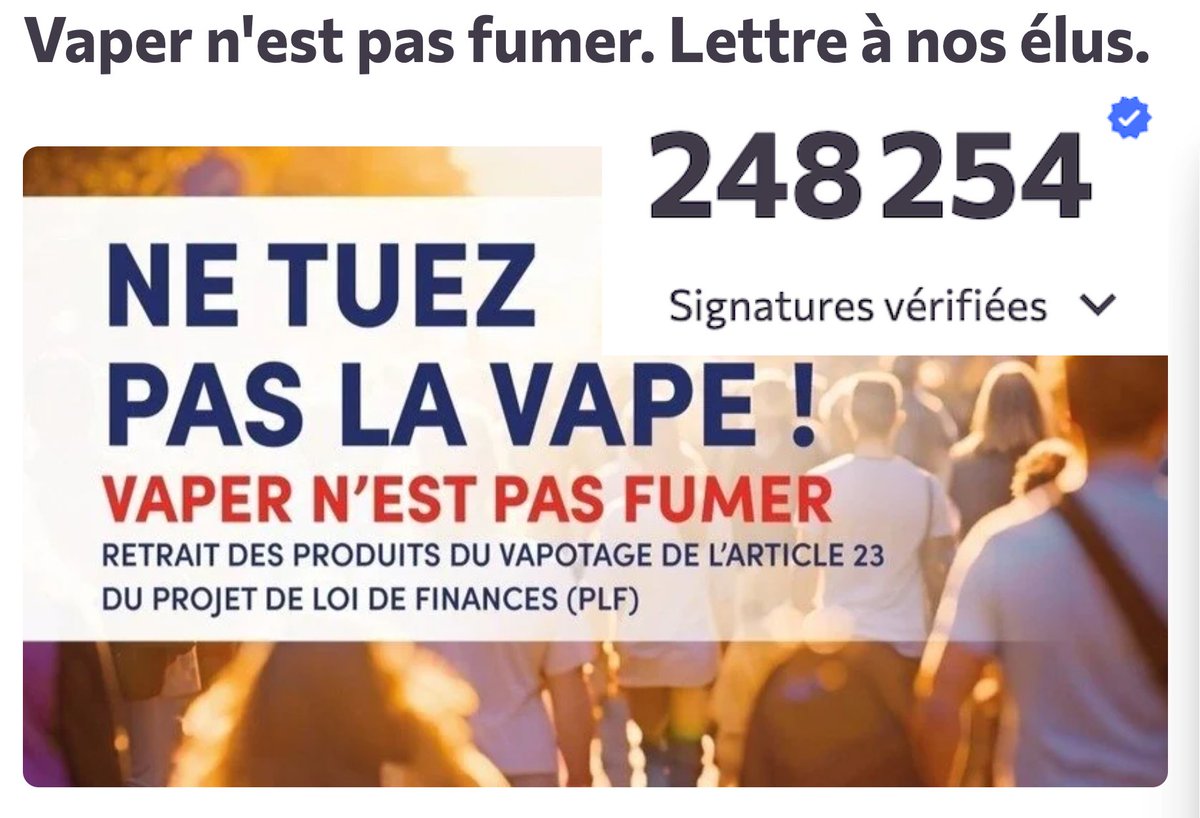

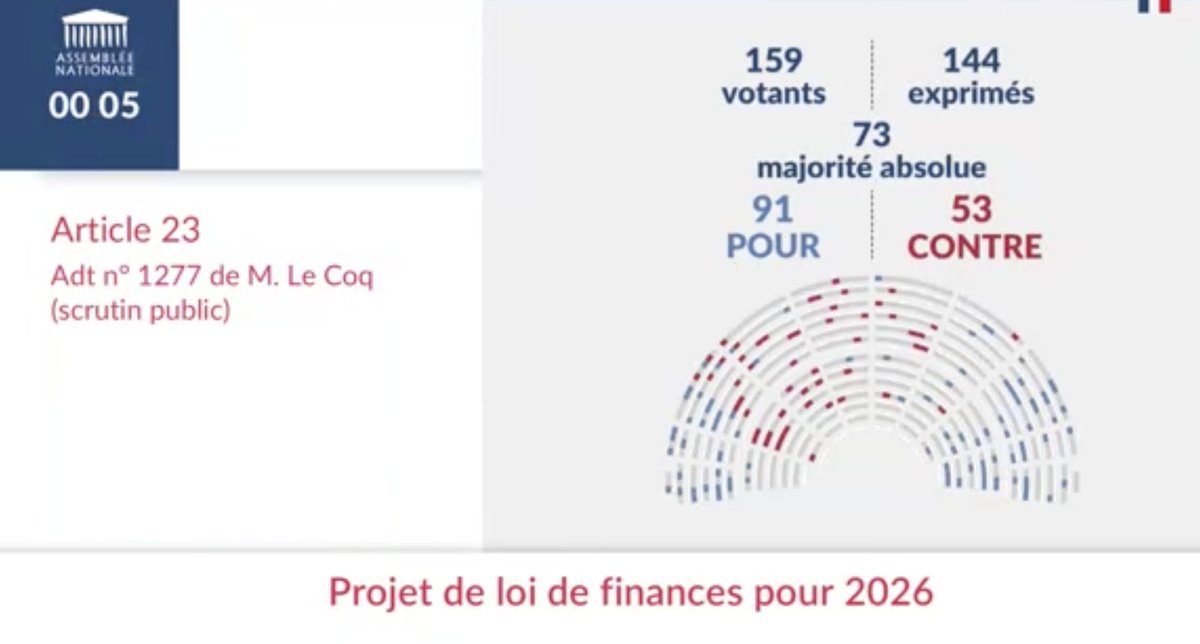




Aiduce, c'est vous.
𝗔𝗱𝗵𝗲́𝗿𝗲𝘇, 𝗹𝗶𝗸𝗲𝘇, 𝗽𝗮𝗿𝘁𝗮𝗴𝗲𝘇, 𝗶𝗻𝘃𝗶𝘁𝗲𝘇 𝗲𝘁 𝗽𝗮𝗿𝘁𝗶𝗰𝗶𝗽𝗲𝘇 𝗮𝘂𝘅 𝗮𝗰𝘁𝗶𝗼𝗻𝘀.
adherent.aiduce.org/
@aiduce | facebook.com/Aiduce | Communauté Aiduce
𝘢𝘣𝘰𝘯𝘯𝘦𝘮𝘦𝘯𝘵📧𝘱𝘰𝘴𝘴𝘪𝘣𝘭𝘦 𝘱𝘢𝘳 𝘴𝘶𝘫𝘦𝘵
1
16
9
1,500
aiduce retweeted

The EU's consultation on the update of its tobacco control rules is open for submissions until 15 June (midnight Brussels time). Have your say and add your comments at the link below
👇👇👇
ec.europa.eu/info/law/better…
8
13
210
aiduce retweeted
“The design appears less like an open consultation and more like a path towards a pre-selected conclusion: more restrictions, more bans, and greater regulatory control over all nicotine-based products.”
eunews.it/en/2026/06/11/crit…
17
28
496
aiduce retweeted





L'#OMS critiquée par la communauté pour avoir appelé à l'interdiction des cigarettes électroniques aromatisées
junonews.com/p/who-hit-with-…
7
9
229
aiduce retweeted
Taxer le vapotage serait une aberration contre la santé publique. En anglais, les taxes sur le tabac ou l’alcool se dénomment “sin tax”, “taxes sur le péché”. Une telle taxe insinuerait qu’il est mal de vapoter alors qu’au contraire c’est un chemin de rédemption proposé au fumeur

🚨 𝐋𝐂𝐏 : 𝐅𝐚𝐮𝐭-𝐢𝐥 𝐭𝐚𝐱𝐞𝐫 𝐥𝐞 𝐯𝐚𝐩𝐨𝐭𝐚𝐠𝐞 ?
La tabacologue 𝐌𝐚𝐫𝐢𝐨𝐧 𝐀𝐝𝐥𝐞𝐫 corrige le député 𝐂𝐡𝐚𝐫𝐥𝐞𝐬 𝐝𝐞 𝐂𝐨𝐮𝐫𝐬𝐨𝐧 : l'ANSES a montré qu'aucun des risques du tabagisme n'est avéré pour le vapotage. Elle rappelle également que la France a la chance de disposer d'une filière indépendante qui propose des produits sûrs et contrôlés. Elle ne veut pas envoyer ses patients chez les buralistes pour se procurer leurs produits.
8
29
74
3,655

Faut-il taxer le vapotage ? "Pour un jeune qui va se mettre à vapoter, il y en a quatre qui arrêtent de fumer. La vap' est un concurrent [du tabac] chez les jeunes", lance Marion Adler, médecin, tabacologue
#ChaqueVoix
5
15
31
8,127
Faut-il taxer le vapotage ? "Aujourd'hui, c'est le meilleur levier que nous avons pour le sevrage tabagique (...) il est d'autant plus efficace qu'il est indépendant de la filière du tabac, à ce titre il ne doit pas y avoir de confusion", considère @AnnaPic_AN #ChaqueVoix
7
14
31
2,971
aiduce retweeted

May 31
“Plusieurs substituts peuvent être utilisés en parallèle : patchs, gommes ou cigarette électronique. Le vapotage permet aussi de conserver le geste et les sensations associées à la cigarette.”

Journée mondiale sans tabac : les prescriptions de substituts à la nicotine en hausse, la meilleure technique pour arrêter de fumer ow.ly/nC2F106z9ZC
6
8
716
La Commission Européenne consulte les citoyens à propos de "marketing"
Consultation flash ouverte 𝗱𝘂 𝟭𝟴 𝗺𝗮𝗶 𝗮𝘂 𝟭𝟱 𝗷𝘂𝗶𝗻 2026 (minuit, heure de Bruxelles).
N'hésitez pas à répondre, factuellement, poliment, sincèrement.
ec.europa.eu/info/law/better…
1
9
8
454
Une analyse de la consultation (sa forme)
Comme souvent avec les QCM @EU_Commission, c'est orienté, préférez ne pas répondre ("Je ne sais pas") et compléter par un texte, en particulier celles qui mêlent les produits ou/et affirment un risque équivalent.
x.com/plopnl/status/20578843…

This is not how you run an impartial/unbiased survey!
Structural Issues Affecting the Entire Survey
STRUCT-1 — Age grouping — 'young people' defined as aged 10–24
STRUCTURAL BIAS
The survey defines 'young people' as anyone aged 10–24. This bundles three legally and developmentally distinct groups into a single category: children (under 16), who cannot legally purchase these products anywhere in the EU; minors aged 16–17, who are also legally prohibited from purchase; and young adults aged 18–24, who are lawful consumers in all EU Member States. This conflation is consequential. Uptake statistics drawn from this 14-year age band will be substantially driven by legal adult behaviour among 18–24 year olds, but the survey language and framing consistently reads the results as a child protection issue. Questions on initiation age, access channels, product appeal, promotion effects, and flavour bans are all materially distorted by this definition. A 19-year-old buying a vape legally in a shop and a 13-year-old obtaining one through a friend are not the same regulatory problem — but this survey cannot distinguish them.
STRUCT-2 — Product equivalence — all products treated as a single regulatory category
STRUCTURAL BIAS
The survey repeatedly groups cigarettes, heated tobacco products, nicotine e-cigarettes, nicotine-free e-cigarettes, and nicotine pouches together under 'tobacco, nicotine, and non-nicotine products'. This implicitly treats them as equivalent in terms of harm, appeal, and regulatory need. It is not. Combustion products (cigarettes, waterpipe tobacco) carry the highest and best-established harm burden. Heated tobacco products produce fewer combustion byproducts but are not without risk. Nicotine e-cigarettes are non-combustion and widely used as cessation tools; the UK OHID (2022) review assessed them as substantially less harmful than smoking. Nicotine-free e-cigarettes carry minimal direct pharmacological harm. Treating these as a single group in questions about measures, bans, and regulation systematically implies that restricting a nicotine-free vape is equivalent to restricting a cigarette — which distorts responses on virtually every policy question in the survey.
Question-by-Question Assessment
Q1 — Measures protecting people from tobacco effects are 'beneficial for society
STRONGLY LEADING
Bundles a contested policy preference into the premise of the opening question. Disagreeing requires the respondent to position themselves as opposed to public health protection — a socially unacceptable stance that suppresses critical responses before the substantive survey begins. It sets a normative anchor that colours all subsequent questions.
Q2 & Q3 — Which products are 'most attractive' to young people / adults?
MODERATELY LEADING
The word 'attractive' implies deliberate design for youth appeal — a contested regulatory claim that presupposes manufacturer intent. 'Most used by' would be factual and neutral. The split between 'young people (10–24)' and '25 ' is the only age distinction offered, meaning the question structurally cannot reveal whether elevated use among the 10–24 group is driven by children, minors, or legal adults.
Q4 — Are you a current or former user?
NEUTRAL
Factual and direct. No significant bias.
Q6 — At what age do young people start using these products?
ACCEPTABLE
The question itself seeks factual input and is reasonably neutral in construction. Its limitations are structural rather than wording-based.
Q7 — Through which channels do young people obtain products?
ACCEPTABLE
The channel options are comprehensive and the structure is balanced. The premise that young people do obtain these products is reasonable in context.
Q8 — Market growth data followed by agreement on increased consumption
STRONGLY LEADING
Front-loads dramatic market growth figures — heated tobacco up 3,000x, e-cigarettes up 5x, nicotine pouches up 16x — then immediately asks for agreement that use has increased 'particularly among young people'. The statistics prime the respondent toward agreement before the question is read. The phrase 'particularly among young people' anchors the frame toward a child protection narrative without evidence that growth is disproportionately concentrated in that group. Notably, the data that traditional tobacco sales declined substantially over the same period — consistent with adult smokers switching to less harmful alternatives — is not presented.
Q9 — Digital promotion 'influences' uptake among young people
STRONGLY LEADING
Presents digital promotion as a causal driver of uptake, then asks only to what extent — no option exists to say the relationship is uncertain, weak, or that current evidence is insufficient to establish causality. The direction of causality (promotion causes use rather than use creating demand for promotion) is assumed. The question asks only about 'young people', with no acknowledgement that 18–24 year olds are legal consumers for whom commercial communication is not inherently problematic.
Q10 — 'Further EU action is needed' on digital promotion
STRONGLY LEADING
Presupposes a regulatory gap and asks only about the scope of new action, not whether action is warranted. Respondents cannot say that current national or EU measures are sufficient, or that EU-level intervention is not the appropriate response.
Q11 — Differing national laws 'hinder' the single market
MODERATELY LEADING
The agree/disagree framing embeds the negative conclusion in the premise. Respondents who believe national regulatory diversity has merit — a well-established subsidiarity argument — have no positive option to express that view, only 'disagree' with a negative framing. The value of, for example, countries experimenting with different flavour restrictions and observing outcomes is not offered as a perspective.
Q12 — Importance of various legislative objectives
NEUTRAL
The best-constructed question in the survey. It covers public health, harm reduction, consumer information, and administrative burden objectives — a genuinely balanced set. All importance levels are available. Two improvements would strengthen it further.
Q13 — Effectiveness of restrictive product measures
STRONGLY LEADING
Lists only restrictive regulatory measures and asks how 'effective' they are at 'reducing uptake and/or harmful effects' — presupposing they are effective and that the relevant outcome is reduced uptake rather than, say, reduced harm among continuing users. No option exists to say a measure might be counterproductive. This matters: flavour bans may redirect users toward cigarettes; disposable bans may push users toward higher-nicotine refillables; plain packaging has documented associations with illicit trade growth in some jurisdictions.
Q14 — The scope 'has not kept pace' with market developments
STRONGLY LEADING
Asks respondents to agree only that scope 'has not kept pace', with no option to say the current scope is appropriate. The market data provided (nicotine pouch growth) is selectively presented to support scope expansion. The parallel observation — that traditional tobacco sales declined substantially over the same period, consistent with substitution to less harmful products — is absent. A neutral presentation of these data points would invite a more considered response.
Q15 — Importance of bringing unregulated products within scope
ACCEPTABLE
Reasonable in structure. The limitation is positional — it follows the leading Q14, which anchors scope expansion as already agreed — and it does not ask what level of regulation should apply, implicitly suggesting that inclusion means treatment equivalent to tobacco.
Q16 — EU rules 'need to include' a fast-response regulatory mechanism
STRONGLY LEADING
Presupposes a need and asks only to agree. Does not surface the significant democratic accountability concerns associated with fast-track delegated regulatory powers that can be exercised without full legislative procedure, nor the risk of regulatory overreach in a domain touching lawful adult consumer products.
Q17 — Technology-neutral definitions 'could help ensure' coverage
MODERATELY LEADING
Frames technology-neutral definitions as unambiguously helpful ('could help ensure coverage') before asking for agreement. The trade-off — reduced legal certainty, risk of unintended coverage of products that should not fall under tobacco law, potential for regulatory overreach — is not presented.
Q18 — Plain packaging would 'strengthen' the market and public health
STRONGLY LEADING
Uses the verb 'strengthen' to frame plain packaging as self-evidently beneficial. Evidence is contested: some studies show limited impact on smoking prevalence; others document associations with illicit trade growth and brand counterfeiting. Intellectual property and trademark implications are substantive concerns that are not acknowledged. No negative outcome option is offered.
Q19 — Labelling and packaging measures are 'effective in ensuring' objectives
ACCEPTABLE
Reasonable structure with a comprehensive list of measures. The framing 'effective in ensuring objectives' is mildly positive but not strongly leading. The main weaknesses are the absence of 'counterproductive' as a response option and the positional effect of following Q18.
Q20 — Flavour prohibition would 'strengthen' market functioning and public health
STRONGLY LEADING
The most problematic question in the survey, combining leading wording with embedded contested claims and two structural biases. The preamble states as fact that flavours 'seem to play a key factor influencing young people's decision to start using these products' and that they 'create the impression the product is less harmful'. Both are empirically contested — particularly the harm perception claim, which is not well-supported in the primary literature. The question then asks only whether a ban would 'strengthen' outcomes, with no option to say it could be harmful. The harm reduction literature documents a clear risk: adult smokers who have switched to flavoured e-cigarettes may return to cigarettes if flavours are banned, producing a net harm increase.
Q21 — The traceability system 'should also cover' other products
STRONGLY LEADING
The extension is presented as the obvious default. No option to say the current scope is appropriate or that a different system would suit non-tobacco products better.
Q22 — How important is it to 'strengthen' enforcement areas?
STRONGLY LEADING
Presupposes that strengthening is always the appropriate direction and asks only how important that strengthening is. Respondents cannot say any area is adequately covered at current levels or that requirements in some areas could be reduced.
Summary
Of the 22 questions assessed, 10 are strongly leading, 4 are moderately leading, 2 carry structural bias that affects the entire survey, 4 are acceptable with caveats, and 2 are neutral. No question is simultaneously neutral on wording, correctly disaggregated by age, and correctly disaggregated by product type. The age-grouping and product-equivalence problems are the most consequential because they are invisible at the question level — they look like design choices rather than biases — but they systematically pre-shape the conclusions the data can support. A consultation that conflates children with legal adults and cigarettes with nicotine-free products will inevitably produce results that support the most restrictive available policy options, regardless of how individual questions are worded.
1
1
2
76
Le hoax des cerveaux (de 🐁) face à… la réalité.

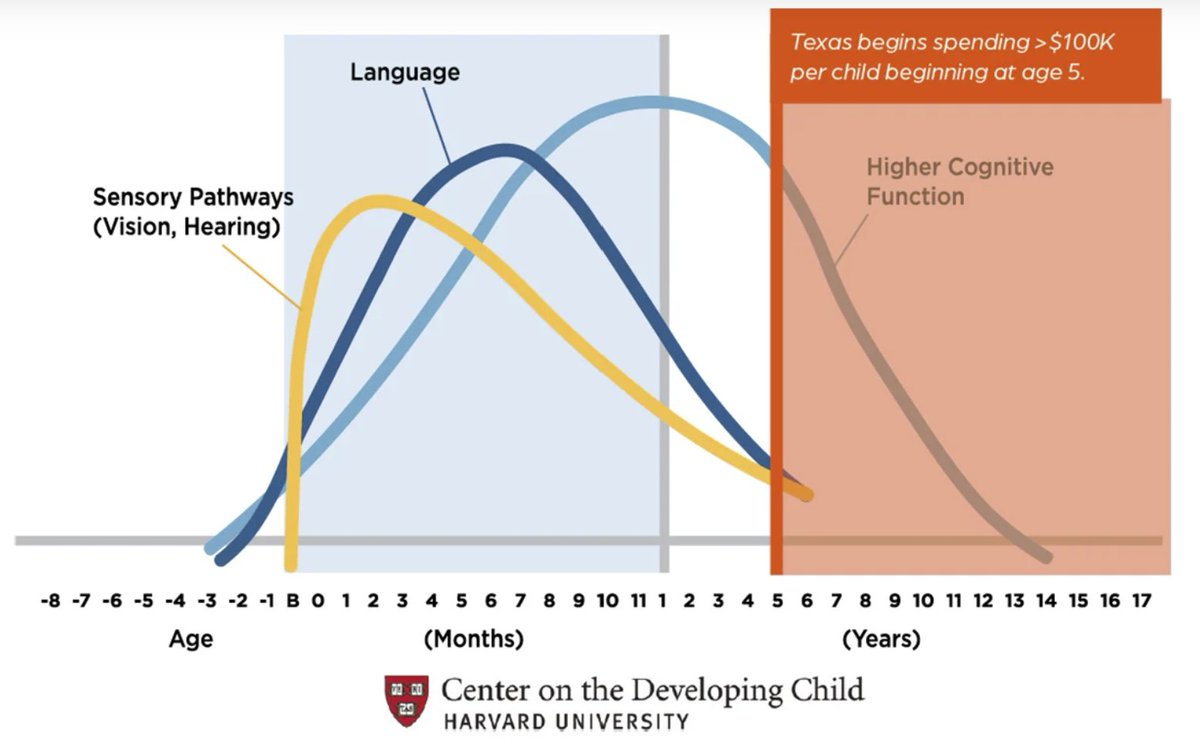
The claim, "nicotine harms developing brains" first appeared in the 2014 US Surgeon General Report, "The Health Consequences of Smoking." Is this harm claim true?
Action on Smoking & Health UK is a respected evidence-focused non-profit with no industry ties. ASH UK disagrees with this now-widespread harm claim.
And 15 past-Presidents of the world's top professional society in the field of Tobacco Control agree with ASH UK. They call the "brain harm" claim "speculative" because there is no human evidence.
I have to point out:
(1) If nicotine harmed developing brains, 1 in 3 living US adults over the age of 40 would have brain harms from smoking in their teens. THEY DON'T.
(2) 60% of young men returning from WWII would have had brain harms from smoking cigarettes in their K-rations. THEY DIDN'T.
To be blunt: This is an invented harm. It is a propaganda tactic, not TRUTH.
ASH UK: ash.org.uk/uploads/ASH-evide…
15 past-SRNT Presidents: ajph.aphapublications.org/do…
6
10
325
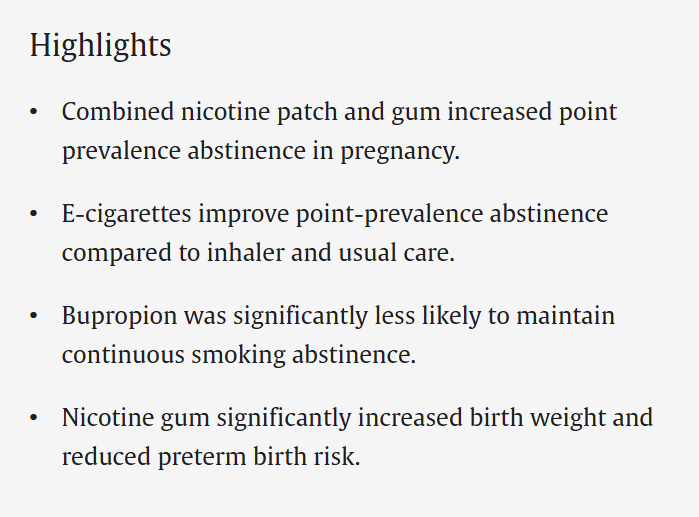
Conclusions : vapotage💨 patches fonctionne bien pour arrêter🚬 enceinte.
(Ça fonctionne bien aussi en générale, certaines options s'additionnent positivement, vapotage, autres substituts, etc.)
On notera que les gommes augmentent le poids à la naissance et réduisent les risques.

"Conclusions
The combination of a nicotine patch and gum and E-cigarette use are effective for smoking cessation in pregnant women."
sciencedirect.com/science/ar…
1
6
7
251
68 députés, s'essaient à une action, un peu inepte, très nuisible.
L'exposé nie la science, invente un complot absurde contre lequel lutter. Une loi confondant fumée et vapeur…
Demandez à vos élus de s'y opposer pour éviter le ridicule au législateur…
assemblee-nationale.fr/dyn/1…
10
14
391
aiduce retweeted

Apr 30
Le projet de loi voulant étendre à la cigarette électronique l’approche du paquet neutre des cigarettes est un non-sens en termes de politique de santé. En effet, la réduction de risque attendue de la vape est telle qu’il faudrait au contraire tout faire pour la promouvoir.
📢 𝐂𝐨𝐦𝐦𝐮𝐧𝐢𝐪𝐮𝐞́ 𝐅𝐈𝐕𝐀𝐏𝐄 𝐬𝐮𝐫 𝐥𝐞 𝐩𝐫𝐨𝐣𝐞𝐭 𝐝𝐞 𝐩𝐚𝐪𝐮𝐞𝐭 𝐧𝐞𝐮𝐭𝐫𝐞 𝐩𝐨𝐮𝐫 𝐥𝐚 𝐯𝐚𝐩𝐞 📢
Diffusés il y a quelques jours, les messages de la FIVAPE ont été repris par quelques médias, notamment M6 hier soir. Rappels :
👉 “Tromper intentionnellement la population sur la perception des risques est malhonnête et immoral pendant que 68 000 français meurent encore chaque année du tabagisme.”
👉 “ Les mesures de restrictions pour empêcher les jeunes d’être attirés et d’accéder au vapotage existent depuis des années, et elles sont objectivement suffisantes. Mais le vrai trou dans la raquette est l’inaction des pouvoirs publics à les faire respecter”
👉“Partout dans le monde, les mesures qui visent à réduire l’attractivité du vapotage atteignent toujours leur objectif premier de contraction du marché qui se traduit par une baisse des ventes . Mais elles s’accompagnent systématiquement aussi d’une recrudescence du tabagisme et de l’émergence d’un marché noir incontrôlable.”
𝐋𝐚 𝐩𝐫𝐨𝐩𝐨𝐬𝐢𝐭𝐢𝐨𝐧 𝐝𝐞 𝐥𝐨𝐢 𝐩𝐨𝐫𝐭𝐞́𝐞 𝐩𝐚𝐫 𝐥𝐞𝐬 𝐝𝐞́𝐩𝐮𝐭𝐞́𝐬 𝐍𝐢𝐜𝐨𝐥𝐚𝐬 𝐓𝐡𝐢𝐞𝐫𝐫𝐲 (𝐄𝐄𝐋𝐕) 𝐞𝐭 𝐏𝐢𝐞𝐫𝐫𝐞 𝐂𝐚𝐳𝐞𝐧𝐞𝐮𝐯𝐞 (𝐄𝐏𝐑) 𝐯𝐢𝐬𝐞 𝐚̀ 𝐧𝐞𝐮𝐭𝐫𝐚𝐥𝐢𝐬𝐞𝐫 𝐥𝐚 𝐝𝐢𝐟𝐟𝐞́𝐫𝐞𝐧𝐜𝐞 𝐞𝐧𝐭𝐫𝐞 𝐯𝐚𝐩𝐨𝐭𝐚𝐠𝐞 𝐞𝐭 𝐭𝐚𝐛𝐚𝐠𝐢𝐬𝐦𝐞. 𝐂𝐞𝐭𝐭𝐞 𝐜𝐨𝐧𝐟𝐮𝐬𝐢𝐨𝐧 𝐞𝐬𝐭 𝐢𝐧𝐚𝐝𝐦𝐢𝐬𝐬𝐢𝐛𝐥𝐞.
fivape.org/projet-loi-paquet…
2
21
34
2,029

aiduce retweeted
Apr 20
Le rapport d'éval° TPD par la comm° attribue les résultats à ses actions sans justification et ignore les données
-> le tabagisme baisse, surtout grâce aux alternatives
-> en particulier chez les jeunes adultes
-> aucune évaluation des effets délétères des mesures proposées

The Evaluation Report is a bureaucrats’ evaluation, focused on rule-making activity, implementation, and compliance: it does not address whether the tobacco control framework is an effective public health or consumer protection regime.
ethra.co/news/184-eu-commiss…
5
8
132
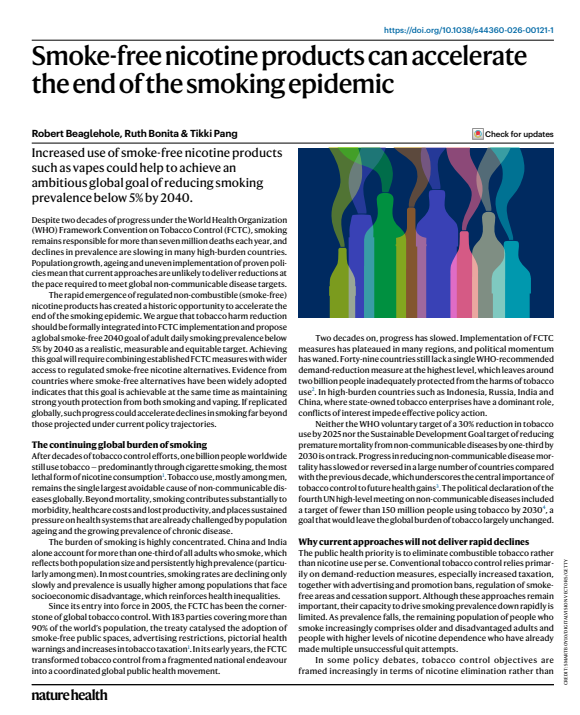
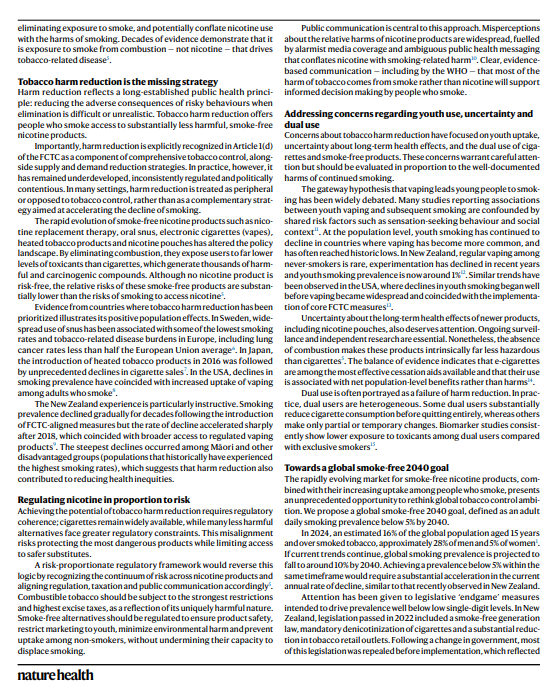
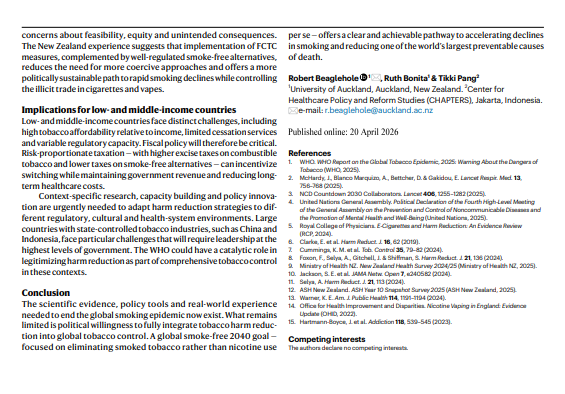
Les produits nicotinés sans fumée peuvent accélérer la fin du tabagisme. Nature avril 2026
Apr 20
Comment | Published: 20 April 2026
Smoke-free nicotine products can accelerate the end of the smoking epidemic
Robert Beaglehole, Ruth Bonita & Tikki Pang
Nature Health (2026)
nature.com/articles/s44360-0…
5
12
278
aiduce retweeted

Apr 10
France : le #RESPADD prend position sur la vape avec un guide sourcé pour les professionnels de santé
fr.vapingpost.com/respadd-po…
2
4
89
Nombre d'études en labo. sur les émissions du vapotage ne sont pas fiables. Mauvaise configuration et régime d'aspiration irréaliste induisent surchauffe et inflation des composés toxiques. Les études doivent indiquer des conditions reproductibles (puissance, résistance, régime).

Today, @RobertoSussman explains why many lab studies on e-cig emissions are unreliable. Poor setups and unrealistic puffing can overheat devices, inflating toxins. Proper testing requires reporting power, resistance, airflow, and reproducible conditions.
youtu.be/d0HQUe1uQSs
1
2
101