
Joined July 2014
- Tweets 164
- Following 35
- Followers 618
- Likes 19
52 Photos and videos

17 Sep 2024
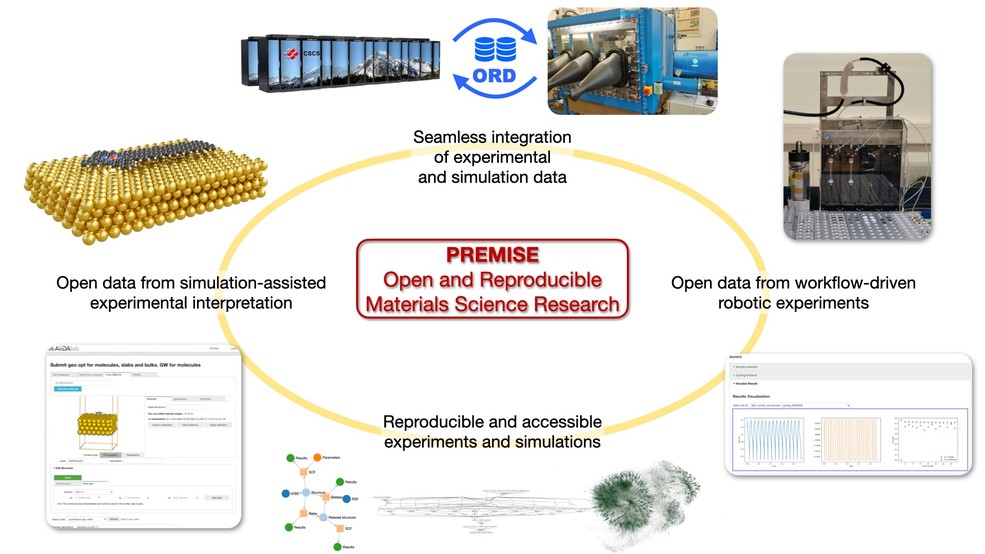
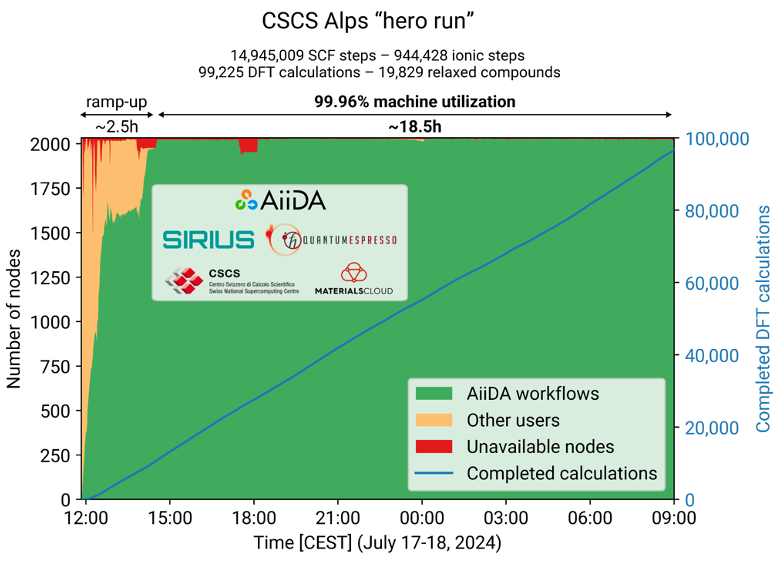
Thanks to AiiDA, we could demonstrate a sustained 99.96% utilization for over 20 hours of the full supercomputer Alps (@cscsch's new near-exascale supercomputer), computing tens of thousands of compounds! You can read more in the @nccr_marvel highlight below
17 Sep 2024

How a team of #MARVEL scientists completed a computational marathon that showcased the power of Switzerland’s new #Alps supercomputer, and the efficiency of the #AiiDA computational materials science platform. Read more 👉 nccr-marvel.ch/highlights/Ai…
1
6
493
27 Aug 2024
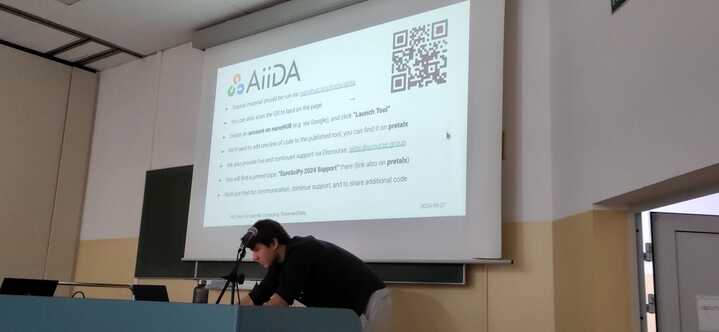
AiiDA is being presented at the @EuroSciPy this week! Both talks and a tutorial, focusing on the new WorkGraph syntax to make writing workflows much easier. If you are at the conference, come to check it out!
76
27 Aug 2024
Materials Cloud has been selected as one of the three Open Science Projects featured by @EPFLOpenScience epfl.ch/research/open-scienc…! You can check the video here: youtube.com/watch?v=jud_FsGe…
2
75
5 Sep 2023
Today we announce the launch of our new communication platform: aiida.discourse.group
Join us with all your questions, discussions, and requests for support. Our developers and community are looking forward to be able to help out!
2
4
404
3 Jul 2023
2 new post-doc/research software engineer positions open at @psich_en (Switzerland): join the @aiidateam to extend AiiDA's support for large data and next-generation HPC! Info on how to apply here: psi.ch/en/pa/job-opportuniti…
Deadline: July 30, 2023
psi.ch
3
2
777
22 Jun 2023
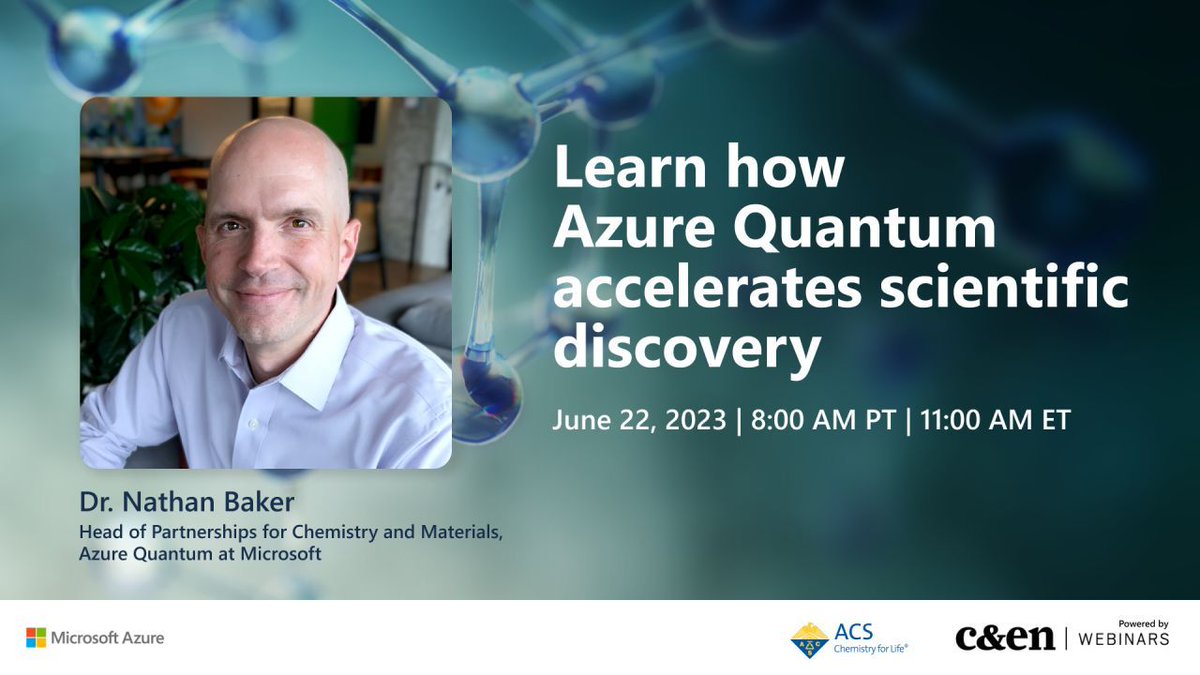
Check the Microsoft webinar today, where they introduce their platform Azure Quantum Elements - AiiDA is tightly integrated in it!
21 Jun 2023

Join us tomorrow and learn more about today’s news and how we’re accelerating scientific discovery with Azure Quantum Elements. Dr. @nathanabaker along with @aiidateam and @Johnson_Matthey will share the details with @AmerChemSociety at 8:00 a.m. (PDT).
connect.discoveracs.org/CENW…
1
2
343
AiiDA Team retweeted

2 Jun 2022
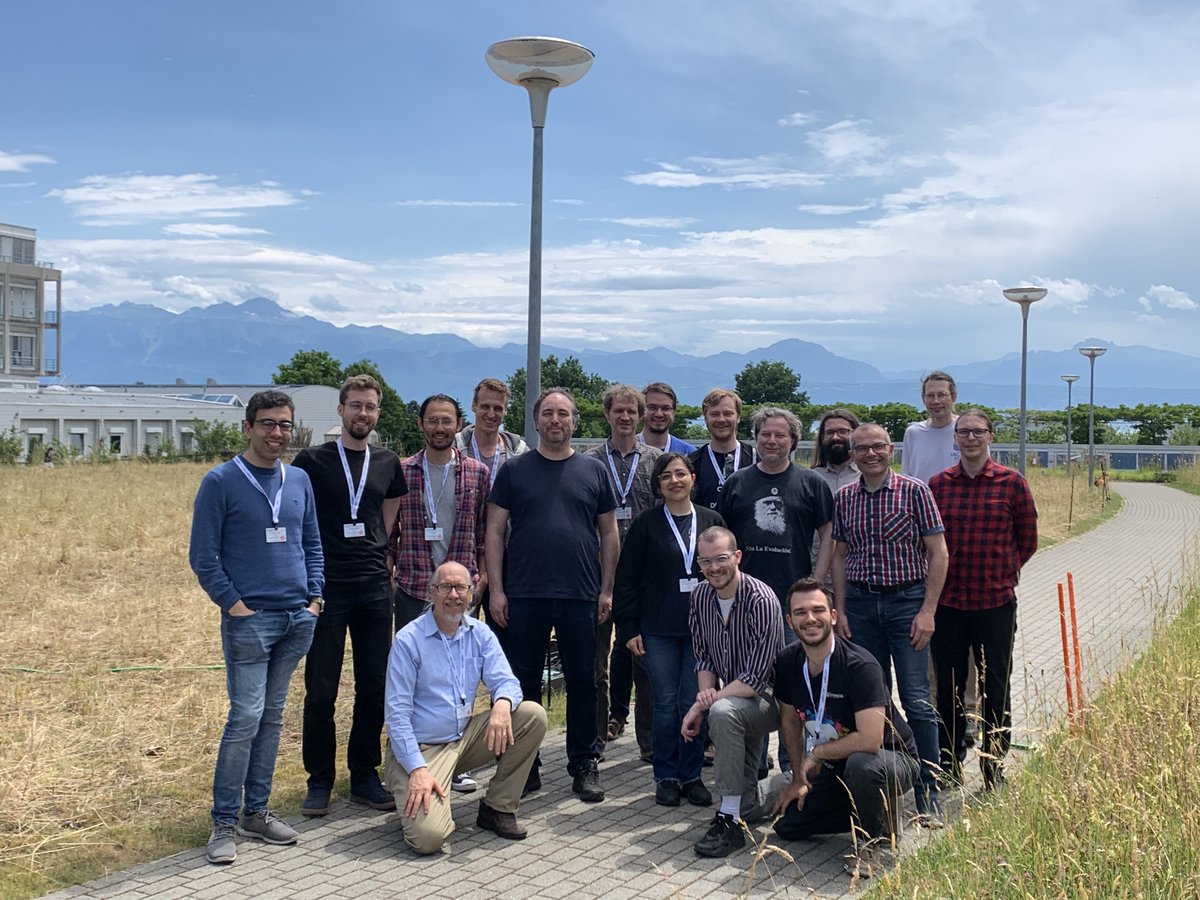
We are already on the 4th day of the Flagship workshop "Open Databases Integration for Materials Design" here in CECAM-HQ!
Today, participants (online and on-site) are discussing about OPTIMADE #implementation. They will meet again tomorrow morning before leaving #Lausanne
3
9
18 May 2022
AiiDA appears in the "Tools of the Trade" of Nature Reviews Physics (nature.com/articles/s42254-0…)
#MARVEL_NCCR @nccr_marvel #MaX_CoE @max_center2
3
14
28 Apr 2022
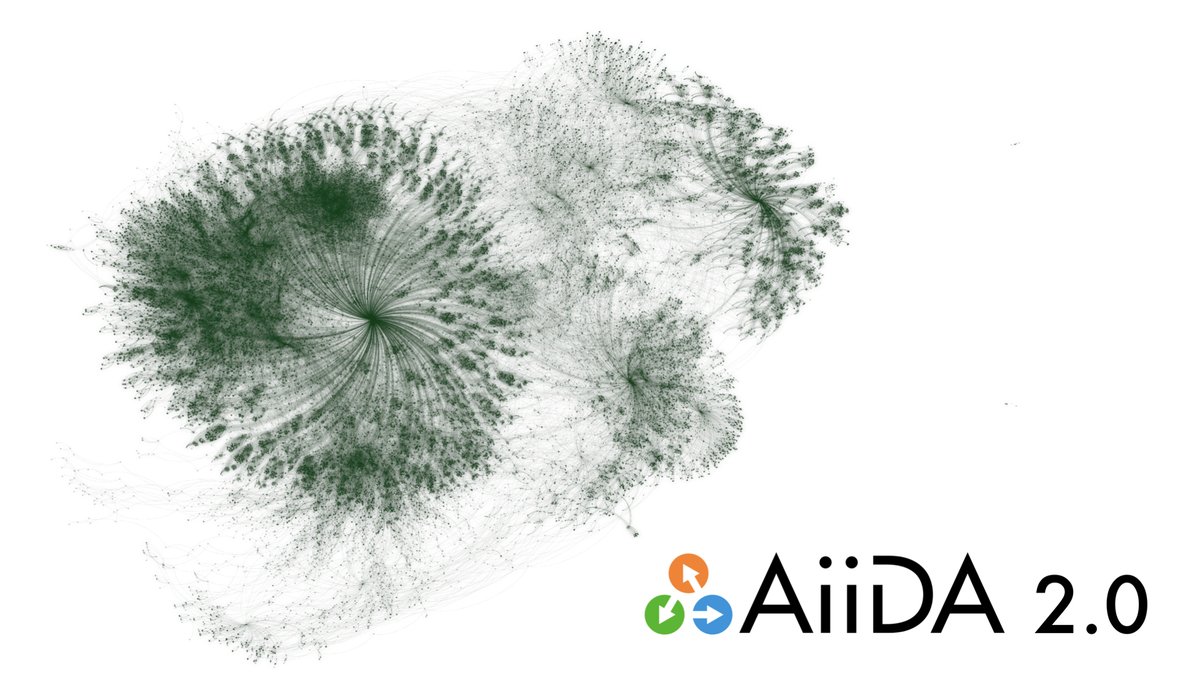
The brand new AiiDA 2.0 has been released! Improved performance in the storage capabilities and the import/export functionality, among others!
More information here: bit.ly/3MAcRo9
#MARVEL_NCCR @nccr_marvel
#MaX_CoE @max_center2
@QuantumESPRESSO
4
11
AiiDA Team retweeted

17 Feb 2022
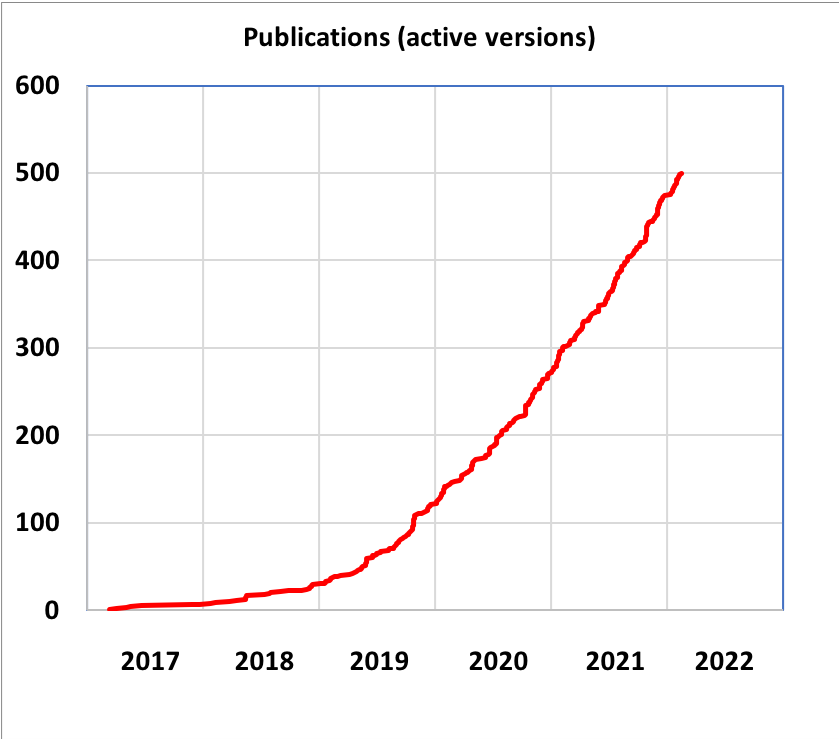
Congrats to the #MaterialsCloud Archive team on the 500th submission!!
The 1st 100 records took 20 months, the last 100 only 5, with new submissions coming in every day...
nccr-marvel.ch/news/communic…
@aiidateam @snsf_ch @OpenResearch_EU @GOFAIRofficial @max_center2 @BIGMAP_EU
1
1
14
17 Feb 2022
Two open positions at @EPFL_en for postdocs/software engineers on coupling #MaterialsCloud Archive with simulations using #AiiDA and #AiiDAlab!
Deadline: March 20th, 2022.
Details and how to apply: theossrv1.epfl.ch/uploads/Ma…
@nccr_marvel @BIGMAP_EU
6
11
28 Jan 2022
Learn how to compute many materials properties via Wannier functions at the Wannier 2022 Summer School, at ICTP (Trieste, Italy), 16-20 May 2022. Registration deadline: 15 Feb 2022. Will also explain how to automatically obtain Wannier functions via AiiDA! indico.ictp.it/event/9789/
3
9
15 Dec 2021
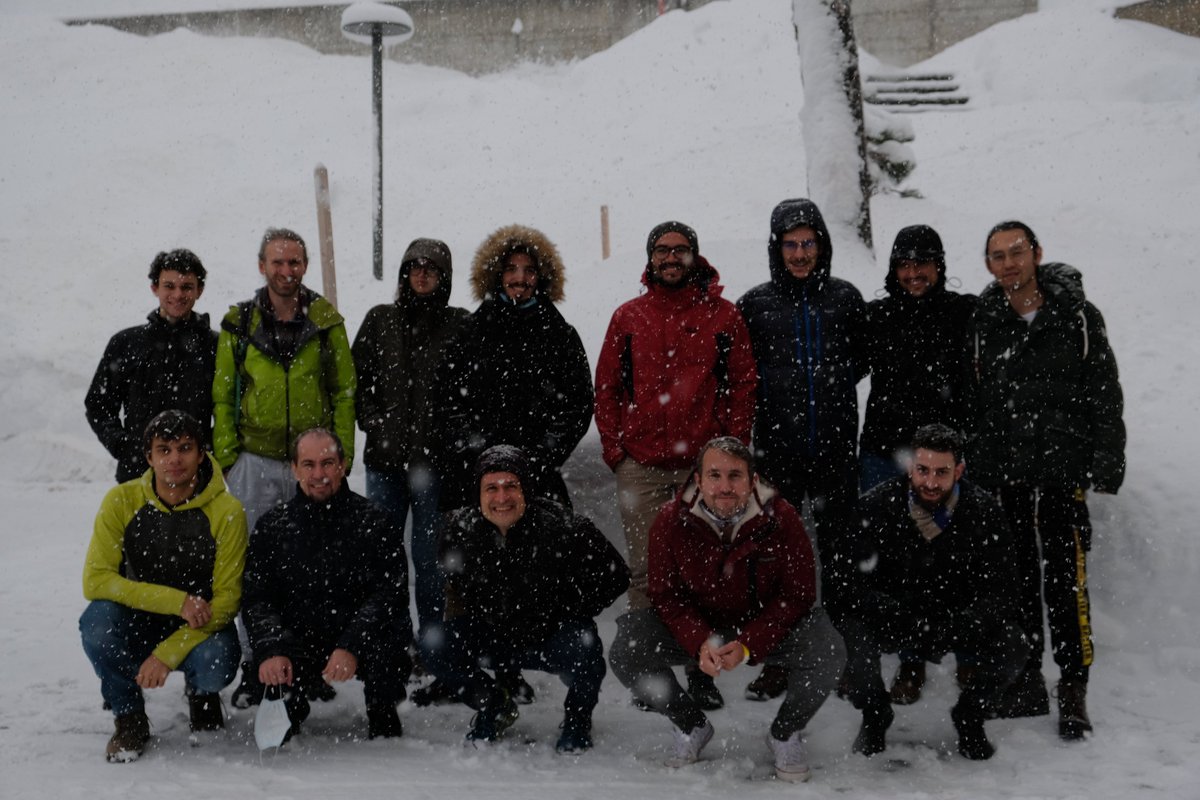
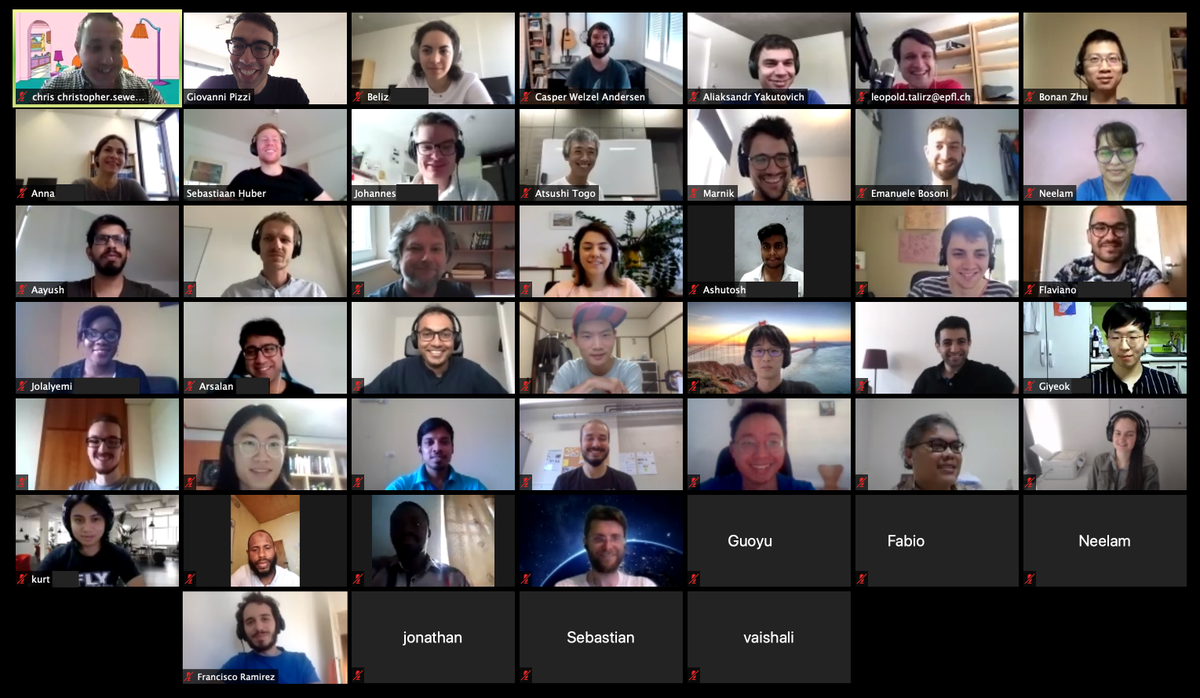
Last week (6-10 Dec 2021) we had a coding week for AiiDA, in Leysin (bit.ly/3yAIiJu). Thanks to all the participants on-site and online. Looking forward to the next similar events in the future!
@nccr_marvel @max_center2 #Hackathon #developers #coding
1
14
24 Nov 2021
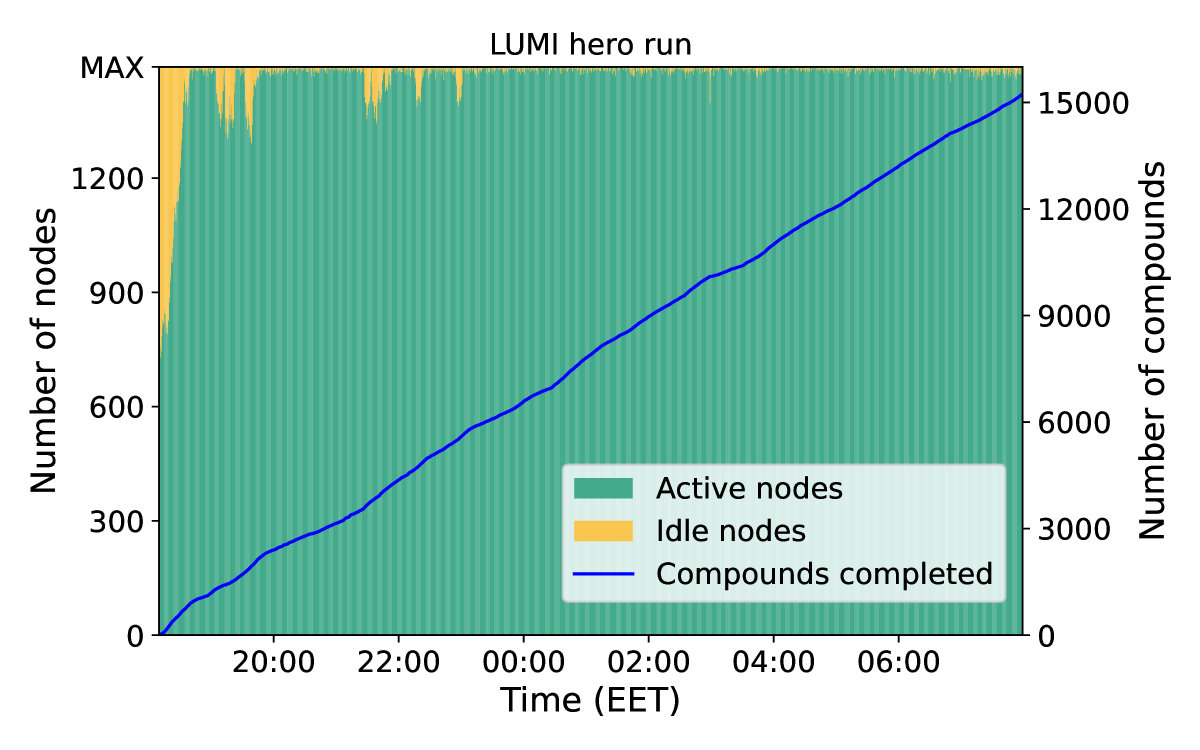
Friday night was our hero run on LUMI-C! AiiDA orchestrating 55704 Quantum ESPRESSO calculations to optimize the geometry of 15324 inorganic compounds - record utilization of 196608 AMD Epyc cores.
#lumisupercomputer #lumieurohpc @nccr_marvel @max_center2 @QuantumESPRESSO
6
26
5 Oct 2021
We're hiring a Materials Cloud Software Engineer/Web developer at EPFL!
Position renewable yearly up to 4 years. Applications should be submitted by Oct 31st, 2021.
All details at this link: theossrv1.epfl.ch/uploads/Ma…
4
7
19 Aug 2021
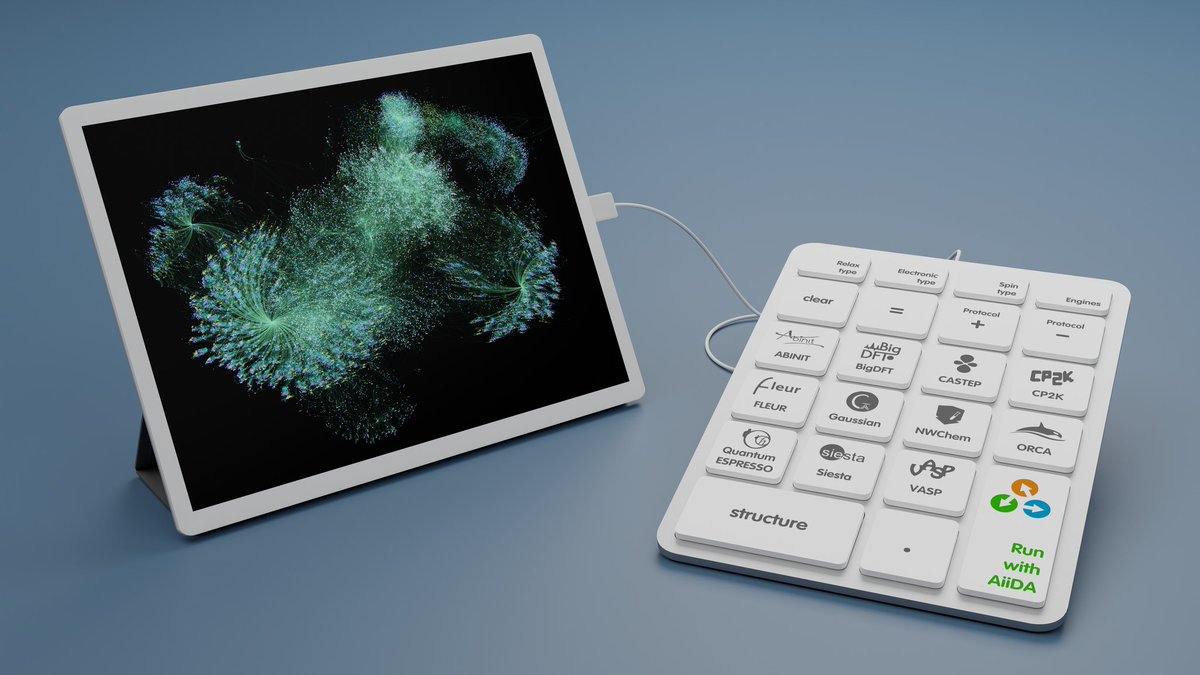
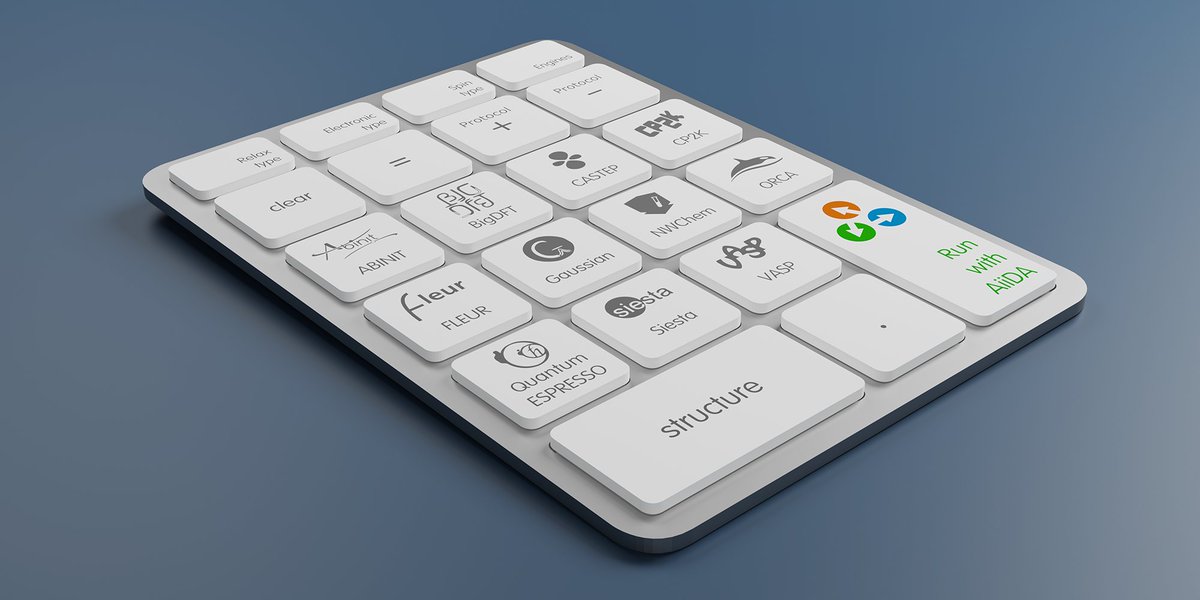
Check out our new paper on common AiiDA workflows for materials properties via 11 different quantum codes: identical input/output format and fully automatic parameter choice! npj Comput. Mater. 7, 136 (2021), doi.org/10.1038/s41524-021-0… @max_center2 @CH_universities @EPFLOpenScience
19 Aug 2021
Common workflows for computing material properties using different codes can boost reproducibility, simplify interoperability and cross-verification, and open up their use to a wider range of researchers. More in @Nature_NPJ Comput. Mater.: bit.ly/3mgZSy6 @max_center2
1
6
AiiDA Team retweeted
19 Aug 2021
Common workflows for computing material properties using different codes can boost reproducibility, simplify interoperability and cross-verification, and open up their use to a wider range of researchers. More in @Nature_NPJ Comput. Mater.: bit.ly/3mgZSy6 @max_center2
6
15
12 Aug 2021
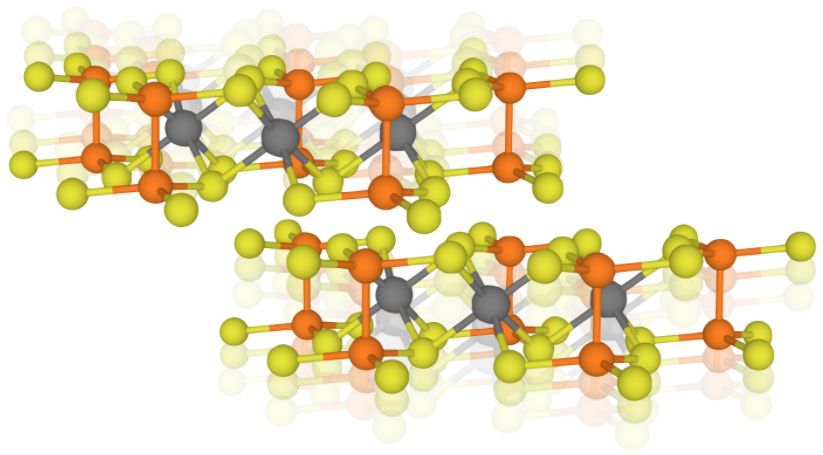
The paper reviewing the theory behind the Materials Cloud tool to predict the low-frequency infrared and Raman modes of 2D materials is now published on ACS Nano: doi.org/10.1021/acsnano.0c10… Tool: materialscloud.org/work/tool…
@nccr_marvel @max_center2 @CH_universities #OSSCAR
1
4
7 Jun 2021
The registration for the AiiDA virtual tutorial has been extended until June 17th (23:59 CEST). Don't miss your chance!
More information: aiida.net/aiida-virtual-tuto…
@max_center2 @BIGMAP_EU @nccr_marvel @intersect_eu @QuantumESPRESSO @CH_universities
5
11
19 May 2021
This year's AiiDA virtual tutorial will be held on 5-9 July 2021! Register before June 10th:
aiida.net/aiida-virtual-tuto…
@max_center2 @BIGMAP_EU @nccr_marvel @intersect_eu @QuantumESPRESSO @CH_universities
7
10