
Joined January 2026
- Tweets 29
- Following 103
- Followers 23
- Likes 19
3 Photos and videos
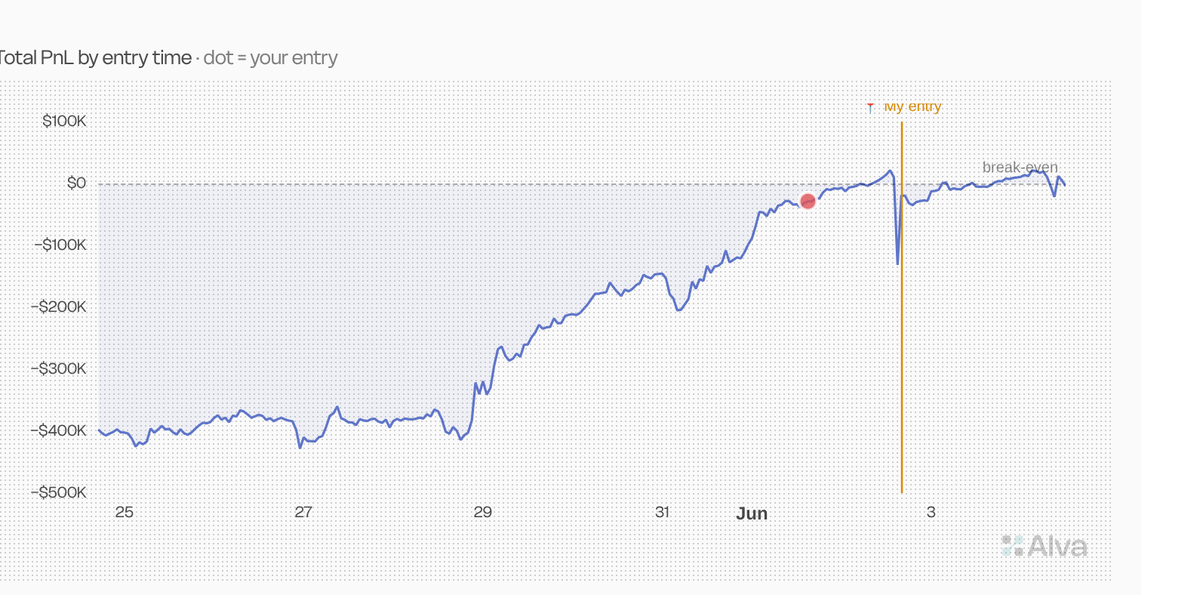

Alva dev is moving smooth because we built a super agent-friendly dev env:
Infra: Terraform k8s, fully infra as code, Atlantis, ArgoCD, and full suite of otels. All read/write-able to agents.
Codebase: a monorepo built to be "local-first". Anyone can run the whole Alva backend on a laptop, or some freshly minted VM.
Agents: Codex/Claude can work inside a real environment: research → plan → TDD code → review → PR → human AI review → release checks for DB db migrations, env vars, secrets, and infra diffs.
Will share & open source more when I have time.
1
1
36

Jun 13
Very cool. I’ve been watching those too. Sentiment started to shift a bit around two weeks ago. I don’t have a strong view or position yet, so I’m mostly keeping an eye on them as confirmation signals

I just deployed a production-ready Options #GammaSqueeze Tracker on @alva_ai @algoxstonk
It is a non-linear risk engine designed for high-beta volatility ($MU , $TSLA , $SNDK ):
1/ Tracks Dealer Gamma Wall & Net GEX Sign-Flips
2/ Pre-calculates 1-3 Sigma Expected Move
3/ Triggers IV Crush alarms prior to major catalysts
Architected with minimum usable surface area.
I kept the quantitative engine read-only and left the ticker fully fluid.
Click Remix, swap the ticker to your likes, and automate your portfolio defense in 3 seconds.
Live workflow here:
alva.ai/u/decenfund/playbook…
#alvaai #optiontrading #stock
17

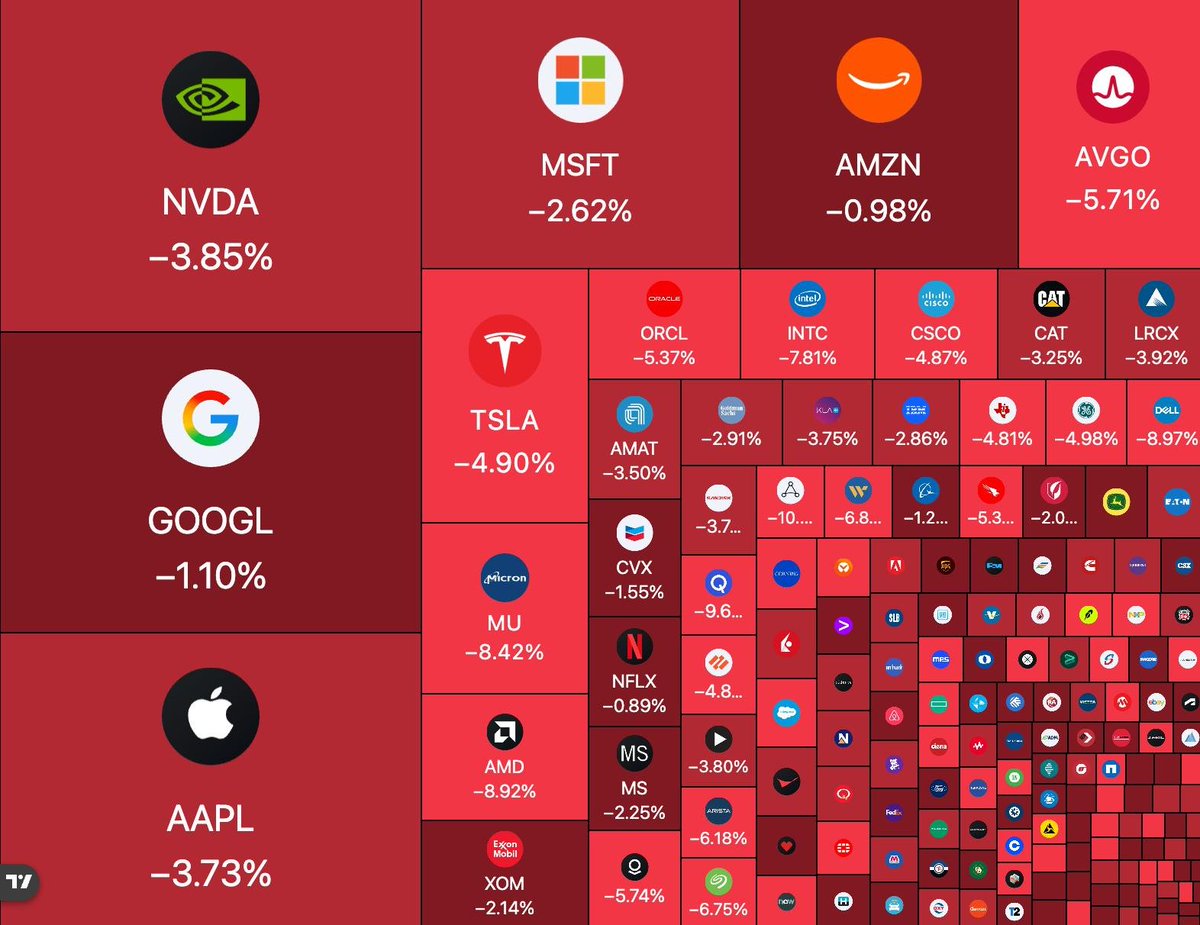
"Nasdaq is down 3%, SPX is down 2%" Before you panic, look at what's actually moving it.
no, it's not some secret spacex mechanic. two boring catalysts, stacked.
- Semis cracked Friday. Broadcom guided soft and the market read it as the AI trade finally cooling, and chips have been carrying this entire rally, so when they roll over, the index rolls with them. That was the -4% nasdaq day.
- today it's Iran. Trump saying the US "must respond" puts escalation back on the table, and that means oil spikes and money runs out of risk fast. so stocks get sold.
One's a growth scare that's been building all week. It's a geopolitical scare that hit this afternoon.
6
5
12
4,203
Jun 9
lmao how dare you

1
2
43
Jun 8
From my Alva agent (i think it's complaining:
First push of H (HUSDT): 2026-06-06 18:03 UTC.
Since then it's fired 16 times (06-06 18:03 → 06-08 22:05 UTC), escalating as funding deepened from −0.108% to the −2.0% exchange cap.
• First alert: price 0.569 · funding −0.108% · OI $104.5M
• Latest alert: price 0.143 · funding −2.0000% · OI $21.5M
That's ~−75% in price and −81% in OI across the run — funding pinned at the −2% floor with OI collapsed, which reads like late-stage capitulation rather than the start of a fresh leg down.
1
252
Jun 7
alva.ai/u/snarketh/playbooks…
Don’t get me wrong, i'm extremely bullish on AI.
But if OpenAI, Anthropic, and xAI are targeting massive revenue numbers, is there actually a large enough customer base that can pay at the implied scale?
Personally I hope there were, so they have money to keep the sub cheap. But ...
1
49
Jun 5
Our pleasure
Jun 5

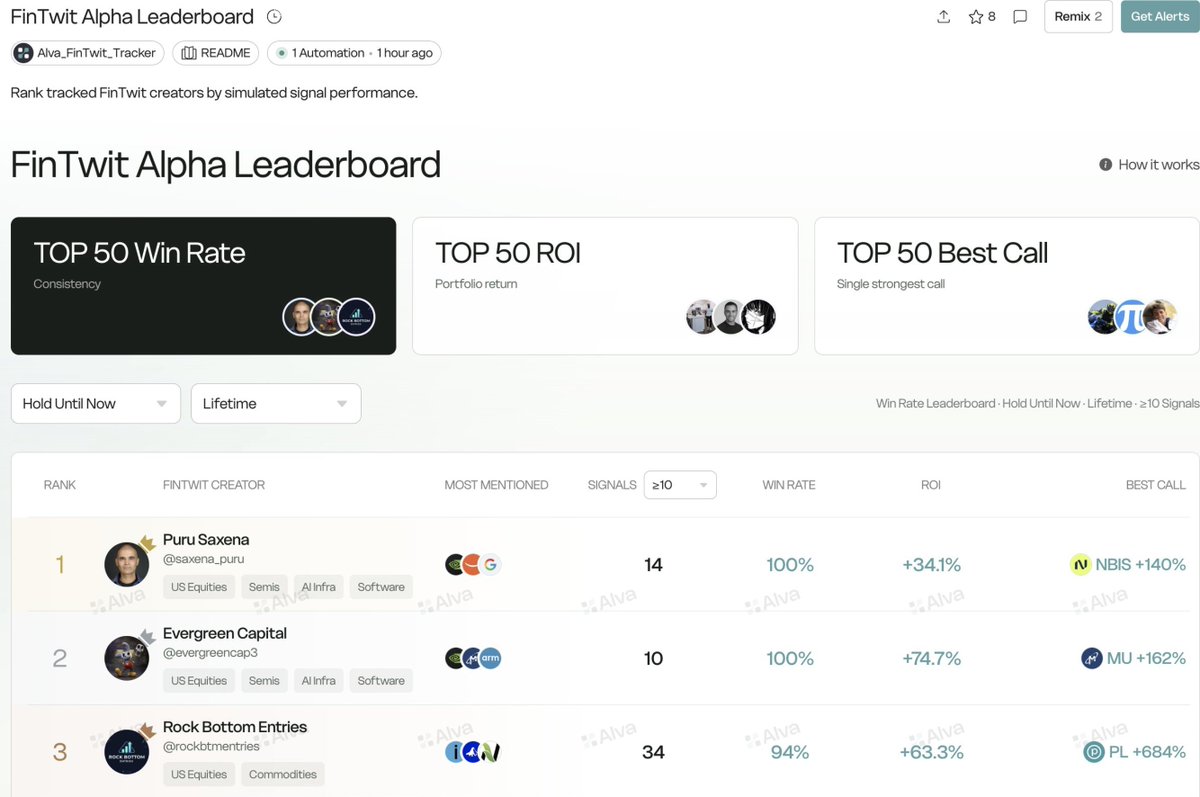
The new @AlvaApp tracks FinTwit accounts and ranks them based on different criteria.
Honoured to be in #1 spot with the highest win rate. Note this is based on my public posts on X, this is not AlphaTarget's performance.
1
28
Algostonk retweeted
Jun 4
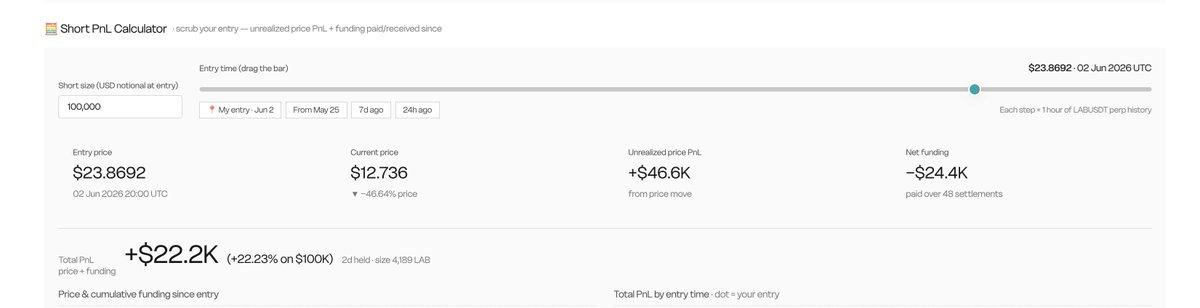
Made some updates to this playbook.
The whole point: shorting this shitcoin was unfortunately a super BAD idea.
Look at the chart over time. Even if you shorted at $24 and never closed, you are only 20% now. If you opened a short after the first crash, around $15–16, and held until now, you’d be -18%
The bet was that the ppl behind this shitcoin had no idea what they were doing and would play it like ethereum:0x17205fab260a7a6383a81452ce6315a39370db97. Unfortunately, they actually do know what they’re doing.
I booked my loss last night. Bad fight.
1
1
52
Jun 4
Bought BTC at ~$62k for 20% of the portfolio about an hour ago. The BTC exposure is fully covered by $74k puts, so net BTC exposure is also ~20%. If it drops to somewhere like 55k, I’ll raise delta toward 50%. If it went up, I’ll likely unwind some spot and puts together, effectively selling some synthetic calls
31
Jun 3
lmao
Jun 3

Look, it’s not my fault, SF founders kept telling me I had to try ketamine.
47
Algostonk retweeted

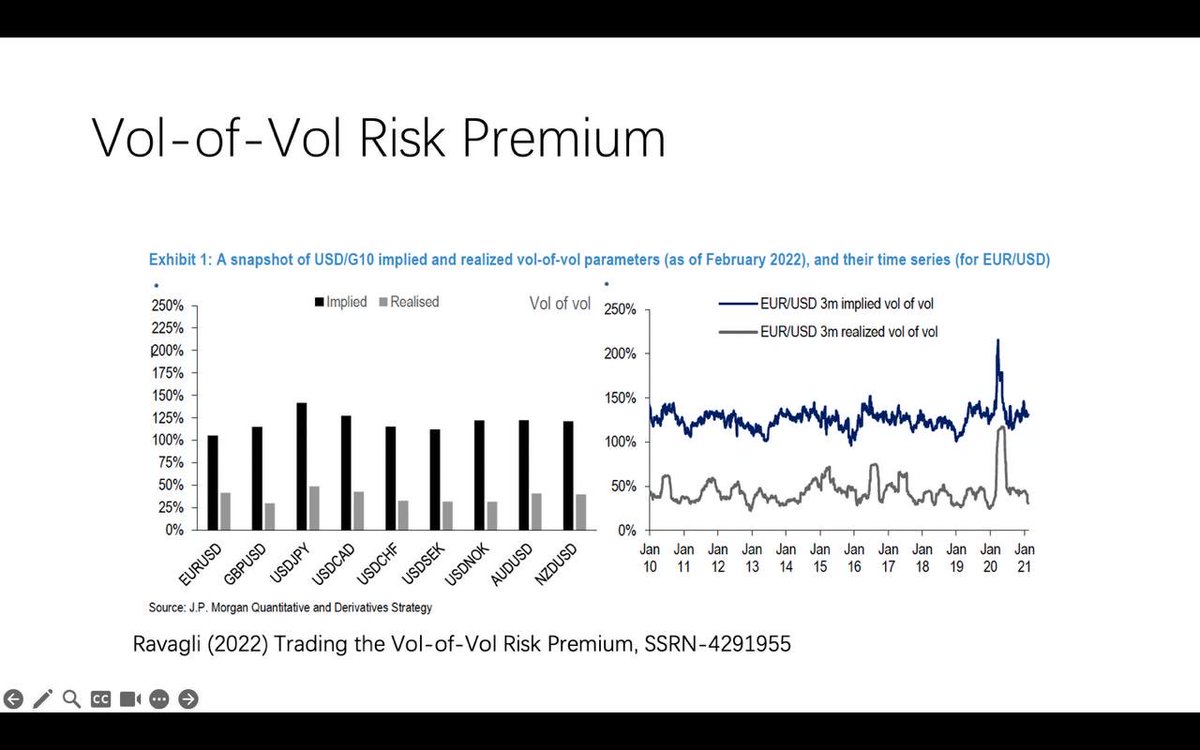
这张图我觉得很适合解释一个Crypto期权卖方策略里常见的误区。
很多人就是喜欢干这种事儿:
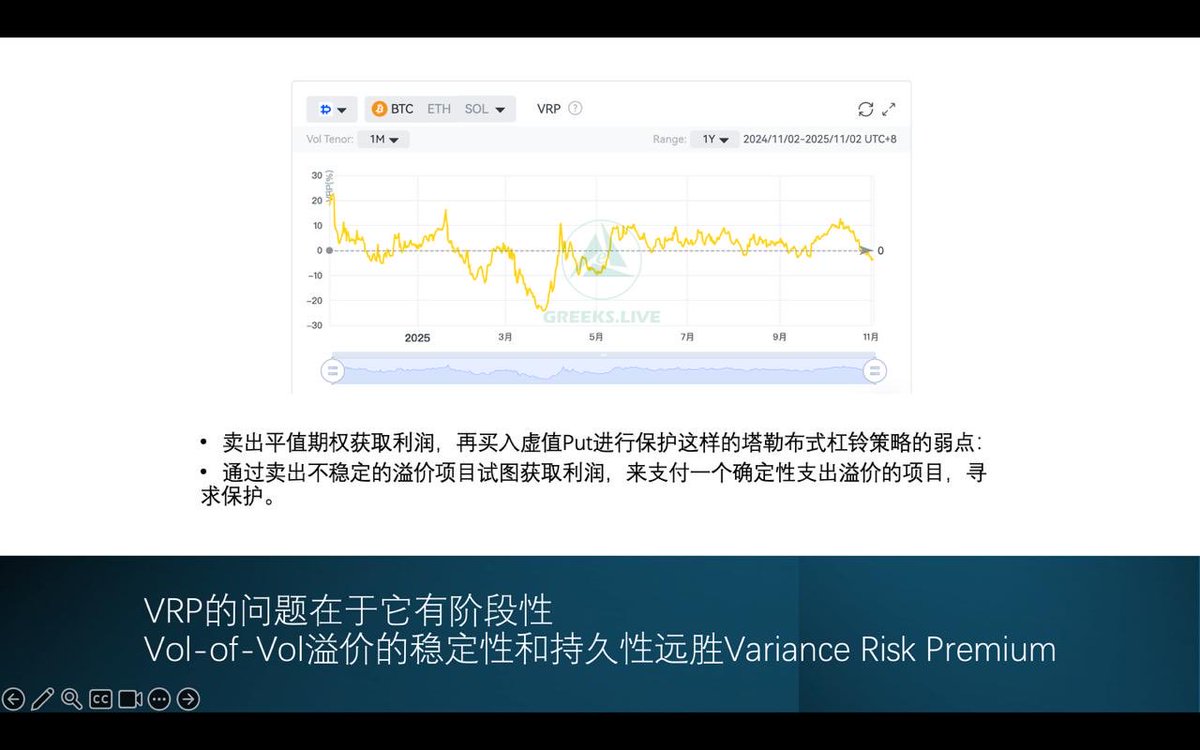
卖 $btc ATM Vol,收波动率溢价,再拿一部分收益买 OTM Put 做套子。
这听起来挺合理的:
一边收息,一边买保险。
但问题在于,这里面有一个很大的错配:卖 ATM Vol 的收入是不稳定的,买保护的成本是持续支出的。
VRP 看起来像是一种长期存在的风险溢价,
但它其实有很强的阶段性。看起来好像是一直在,但是其实不是。市场平静时,卖波动率水位确实能收钱;但一旦 realized vol 上来,VRP 很快就会消失,甚至转负。
这时候你会面对一个很尴尬的局面:
卖 ATM Vol 这边已经不赚钱,但是呢,方向波动又不至于打到需要套子兜住的程度,但是保费还在持续支出。
原本看起来“收息 防灾”的结构,就会变成一边亏卖波动,一边还要继续付保险费,但是实际上又妹有保到啥玩意儿。
这类结构真正的问题是:你用来支付保护成本的收益来源,到底够不够稳定?
这也是为什么 Jeff 一直强调,不能只停留在“卖 IV / 收 Theta”的层面的原因。
波动率交易里更深的一层,是要分清楚:
哪些溢价是阶段性的
哪些溢价更稳定
哪些风险会在极端行情里一起爆炸
以及你的保护成本,究竟由谁来支付
如果说 Variance Risk Premium 更像一段一段出现的机会,那么 Vol-of-Vol、曲率、尾部定价这些东西,才更接近卖方长期需要理解和管理的核心。
这也是我觉得 @JeffLia12309881 的课有价值的地方。他不是只告诉你“卖波动可以赚钱”,而是不断在讲:
你收的到底是哪一种溢价,
它稳不稳定,
它什么时候会失效,
以及你要怎么活过失效的阶段…
我觉得这对于希望用波动率交易生息的囤币党们应该在乎的东西。
市场上讲期权的东西,基本都不会深入到这种层面….
欢迎大家进群了解Jeff的Crypto期权波动率交易课程:t.me/GlobalLife2023

106
2
19
15,207
Jun 3
The FinTwit Leaderboard has been popping alpha to me for the past few weeks while we’ve been building and testing Alva. Take $DELL and $MRVL for example. I kept seeing both pop up almost every day.
The leaderboard surfaces the ideas. Alva helps to figure out what’s worth digging into.

Introducing Alva’s FinTwit Alpha Leaderboard.
We burned $100K tokens backtesting 3000 FinTwit accounts and ranked who actually makes money.
$1M in reward is going to the top accounts across all our leaderboards.
2
4
247
Jun 1
It didn’t play out the way I expected. But the key is hedging. I was long July-31 74000 puts, so the move lower was painful but I can still sleep (HRV steady still).
The cost is around $2,000/day to stay long this much gamma.
That’s the price you pay to turn a reckless gamble into a calculated bet.
May 21

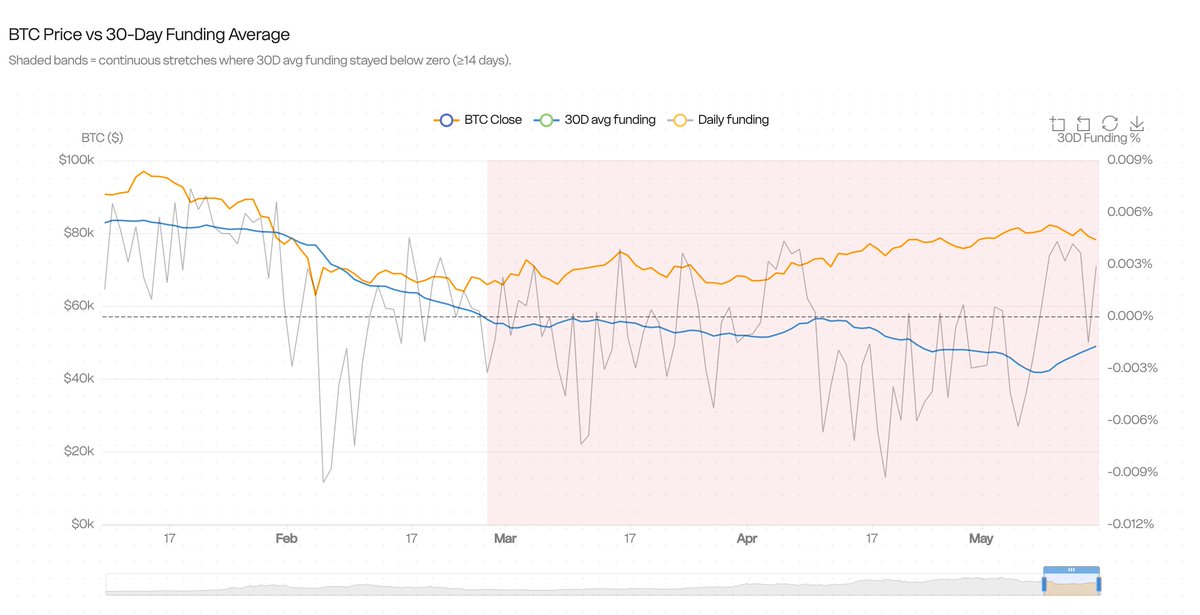
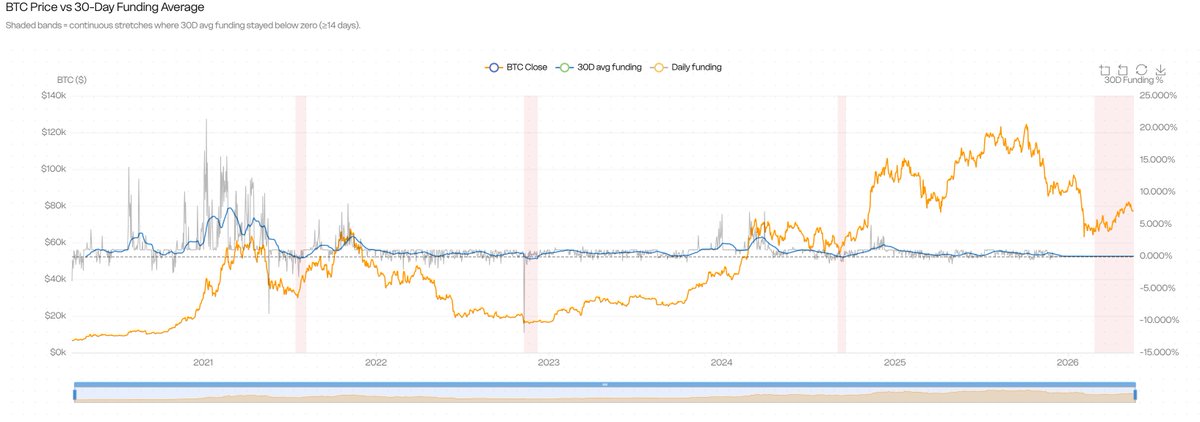
BTC’s 30D avg funding looks set to flip positive in the next few days.
If history rhymes, that could mark the start of a multi-month 🆙.
1
2
1,530
May 25
$INTU feels like a good value play here.
It’s the kind of software company I actually think AI makes better — not one that replaces.
At 19.3x P/E and 13.2x EV/EBITDA after a -52% year, with 15.1% revenue growth and 46% operating margin, it’s cheaper than ADP despite better growth/margins, and nowhere near WDAY’s multiple.
If your portfolio is already long a lot of “pro-AI” names — chips, infra, AI growth stories — INTU feels like an interesting low-correlation, maybe even negatively correlated, allocation.
Built using Alva, with @AnthropicAI competitive landscape skill.
alva.ai/u/snarketh/playbooks…
153
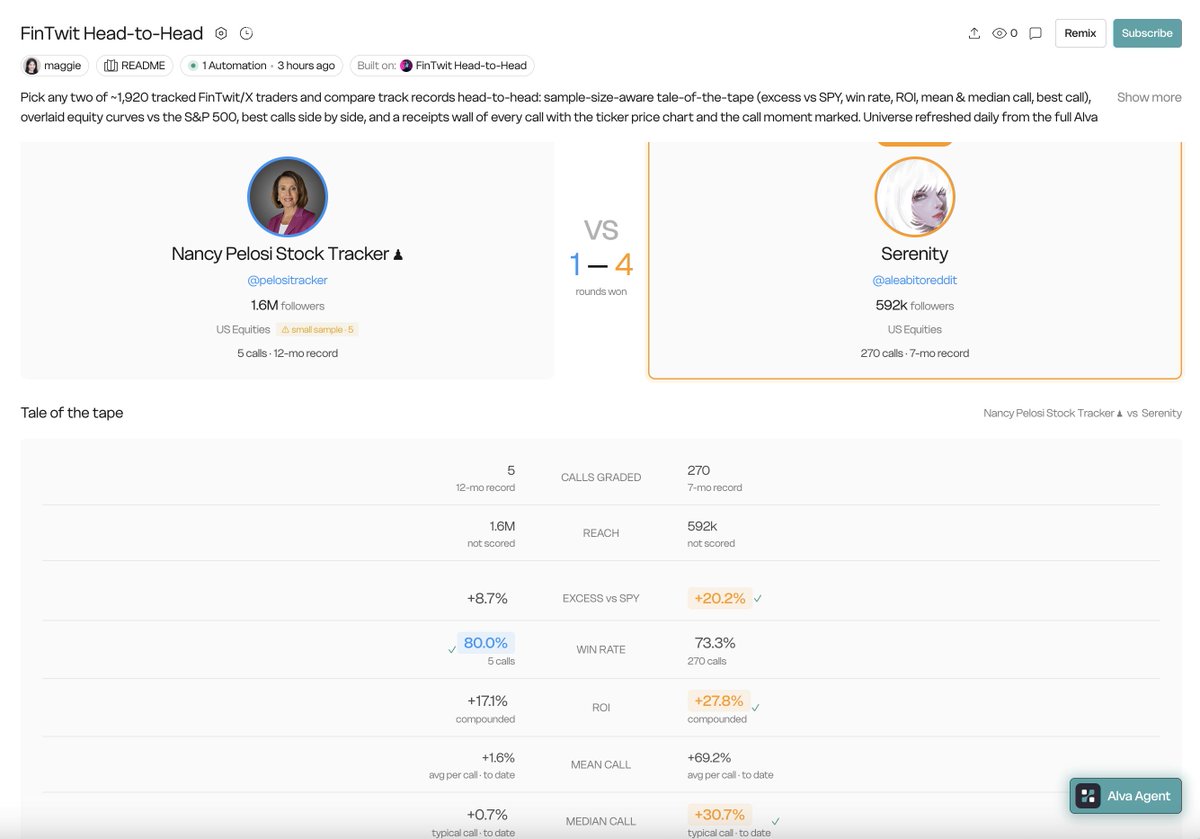
Serenity @aleabitoreddit made 3,840% this year, posting free calls on X. But most people don't know which ones are actually worth acting on.
$AXTI 893%. You saw it. Didn't act.
$AAOI 521%. You saw it. Didn't act.
$AEHR 291%. You saw it. Didn't act.
Now you do — because we did the work for you.
139 calls. 62% win rate. Backtested across 3 holding strategies. Best picks ranked by ROI, so you know exactly when to get in, and out.
Free. One click. Updates every hour.
Her next call could drop any day. Don't be the person who sees it, hesitates, and watches it go 500% again!
alva.ai/u/zet/playbooks/alea…
7
19
1,358
May 21
BTC’s 30D avg funding looks set to flip positive in the next few days.
If history rhymes, that could mark the start of a multi-month 🆙.
1,591
May 13
alva.ai/u/snarketh/playbooks…
Few are talking about this:
BTC funding has stayed negative for an unusually long time.
If funding reflects perp market sentiment, this means traders are paying to stay short.
Historically, when BTC holds up in this setup, the next move usually is just UP.
83
May 12
There was a paper last year salt-nlp.github.io/generativ… that basically argued the same thing, and it’s also why I think Alva playbook is a useful format
May 11

This works really well btw, at the end of your query ask your LLM to "structure your response as HTML", then view the generated file in your browser. I've also had some success asking the LLM to present its output as slideshows, etc.
More generally, imo audio is the human-preferred input to AIs but vision (images/animations/video) is the preferred output from them. Around a ~third of our brains are a massively parallel processor dedicated to vision, it is the 10-lane superhighway of information into brain. As AI improves, I think we'll see a progression that takes advantage:
1) raw text (hard/effortful to read)
2) markdown (bold, italic, headings, tables, a bit easier on the eyes) <-- current default
3) HTML (still procedural with underlying code, but a lot more flexibility on the graphics, layout, even interactivity) <-- early but forming new good default
...4,5,6,...
n) interactive neural videos/simulations
Imo the extrapolation (though the technology doesn't exist just yet) ends in some kind of interactive videos generated directly by a diffusion neural net. Many open questions as to how exact/procedural "Software 1.0" artifacts (e.g. interactive simulations) may be woven together with neural artifacts (diffusion grids), but generally something in the direction of the recently viral x.com/zan2434/status/2046982…
There are also improvements necessary and pending at the input. Audio nor text nor video alone are not enough, e.g. I feel a need to point/gesture to things on the screen, similar to all the things you would do with a person physically next to you and your computer screen.
TLDR The input/output mind meld between humans and AIs is ongoing and there is a lot of work to do and significant progress to be made, way before jumping all the way into neuralink-esque BCIs and all that. For what's worth exploring at the current stage, hot tip try ask for HTML.
43
Feb 11
When creating software is easy, what's hard?
Feb 11
On DeepWiki and increasing malleability of software.
This starts as partially a post on appreciation to DeepWiki, which I routinely find very useful and I think more people would find useful to know about. I went through a few iterations of use:
Their first feature was that it auto-builds wiki pages for github repos (e.g. nanochat here) with quick Q&A:
deepwiki.com/karpathy/nanoch…
Just swap "github" to "deepwiki" in the URL for any repo and you can instantly Q&A against it. For example, yesterday I was curious about "how does torchao implement fp8 training?". I find that in *many* cases, library docs can be spotty and outdated and bad, but directly asking questions to the code via DeepWiki works very well. The code is the source of truth and LLMs are increasingly able to understand it.
But then I realized that in many cases it's even a lot more powerful not being the direct (human) consumer of this information/functionality, but giving your agent access to DeepWiki via MCP. So e.g. yesterday I faced some annoyances with using torchao library for fp8 training and I had the suspicion that the whole thing really shouldn't be that complicated (wait shouldn't this be a Function like Linear except with a few extra casts and 3 calls to torch._scaled_mm?) so I tried:
"Use DeepWiki MCP and Github CLI to look at how torchao implements fp8 training. Is it possible to 'rip out' the functionality? Implement nanochat/fp8.py that has identical API but is fully self-contained"
Claude went off for 5 minutes and came back with 150 lines of clean code that worked out of the box, with tests proving equivalent results, which allowed me to delete torchao as repo dependency, and for some reason I still don't fully understand (I think it has to do with internals of torch compile) - this simple version runs 3% faster. The agent also found a lot of tiny implementation details that actually do matter, that I may have naively missed otherwise and that would have been very hard for maintainers to keep docs about. Tricks around numerics, dtypes, autocast, meta device, torch compile interactions so I learned a lot from the process too. So this is now the default fp8 training implementation for nanochat
github.com/karpathy/nanochat…
Anyway TLDR I find this combo of DeepWiki MCP GitHub CLI is quite powerful to "rip out" any specific functionality from any github repo and target it for the very specific use case that you have in mind, and it actually kind of works now in some cases. Maybe you don't download, configure and take dependency on a giant monolithic library, maybe you point your agent at it and rip out the exact part you need. Maybe this informs how we write software more generally to actively encourage this workflow - e.g. building more "bacterial code", code that is less tangled, more self-contained, more dependency-free, more stateless, much easier to rip out from the repo (x.com/karpathy/status/194161…)
There's obvious downsides and risks to this, but it is fundamentally a new option that was not possible or economical before (it would have cost too much time) but now with agents, it is. Software might become a lot more fluid and malleable. "Libraries are over, LLMs are the new compiler" :). And does your project really need its 100MB of dependencies?
47