Joined January 2024
- Tweets 2,124
- Following 34
- Followers 219
- Likes 11,505
155 Photos and videos








RememberTheOne 🪐✨ retweeted
Have you noticed that it isn't knowledge that gives you certainty?
And not reassurance that gives you surety in your actions?
Doubt seeps in regardless.
But when a man is right with his conscience, the whole world could want to crucify him and his spirit will stand unshaken.
5
81
1,197
RememberTheOne 🪐✨ retweeted
What looks like falling to others is you falling into place.
Even when life seems to mercilessly piss and pour down on you.
You must understand that it is leading you somewhere your spirit desperately longs to be.
There is no such thing as a setback.
There is only the path.
2
12
93
1,481


RememberTheOne 🪐✨ retweeted

Jun 9
When the mundane and the mystical are successfully merged - magic is achieved.
1
2
58
1,765
RememberTheOne 🪐✨ retweeted

Jun 3
Your brain was not designed to know everything that's going on in the world. News is designed to make everything feel like your problem. Its not. Focus on what's directly in front of you. Fixate on your locus of control. Media is incentivized to keep you hooked. Its a drug that keeps you in a state of anxious arousal. Mute, block, unfollow. Your nervous system will thank you
16
69
678
18,638

Quick question guys, is TDO in Forex at 11am or 12am? Thanks a lot !
1
214
RememberTheOne 🪐✨ retweeted

May 25
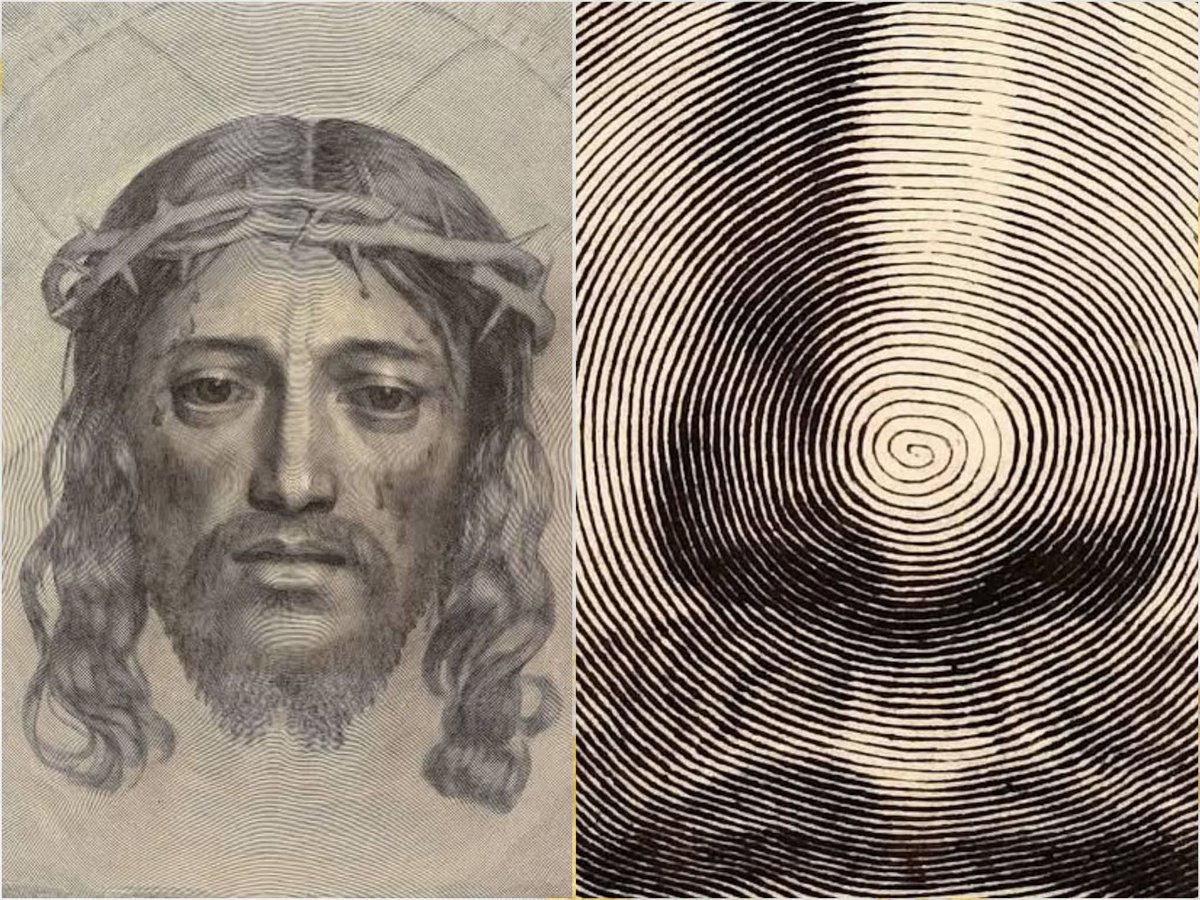
Claude Mellan's Face of Christ, also known as The Sudarium of Saint Veronica (1649), is one of the most technically extraordinary works in art history...
The entire portrait is rendered using a single, continuous spiralling line that begins at the tip of Christ's nose and expands outward to the edges of the cloth.
Mellan achieved the illusion of depth, shadow, and facial features without any cross-hatching or traditional shading. Instead, he precisely varied the thickness and pressure of the burin (his engraving tool) as he rotated the copper plate, creating "swelling" lines that darken the image where needed.
The spiralling line is estimated to be approximately 150m (about 500ft) long if it were stretched out.
284
3,078
25,139
1,164,356
RememberTheOne 🪐✨ retweeted

May 20
Having to rearrange your whole workout because the gym is completely packed gotta be one of the most disappointing feelings
99
1,621
15,557
247,570
RememberTheOne 🪐✨ retweeted
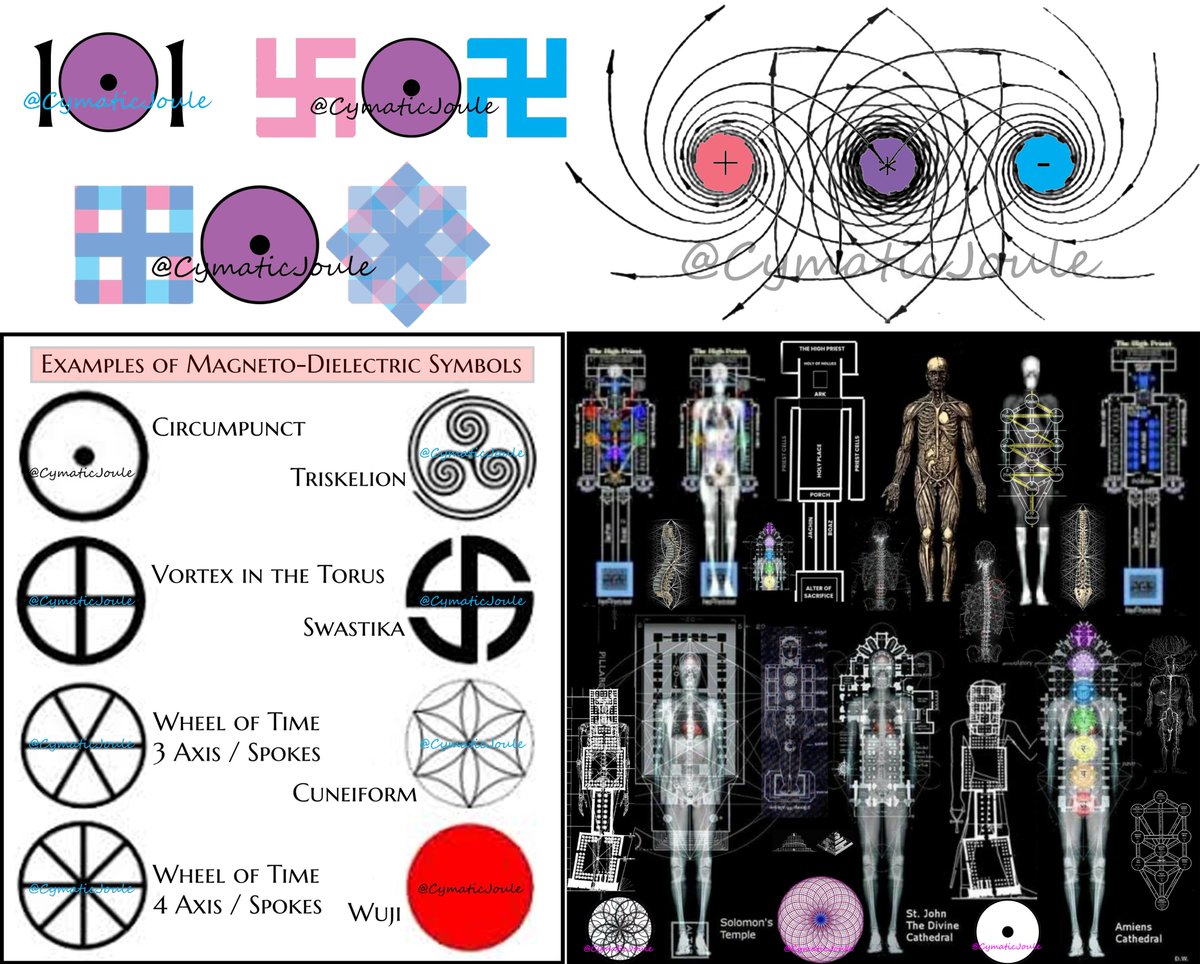
Zero cannot do what ⊙ [Love] can do.
A-rhythm-matic [arithmatic] of Centripetal Physics is profoundly simple, the primer being: all equations equal/balance to Love. 1=⊙=1.
1 1 =⊙, 1-1=⊙, 1x1=⊙, 1/1=⊙.
Trinary-Binary [be fruitful and multiply] building blocks that enable construction of megalithic [magneto-dielectric] stone structures, and permits space-faring exploration.
To manifest Zero is to manifest digital binary, which can only manifest digital machine technology, which produces mental, spiritual, and physical stagnation. A computational system that inevitably breeds disease.
Setting 0 equal to 1 manifests a reality in which 1s and 0s produce a digital energetic currency called harm-money. 1s and 0s cannot develop a loving mind, body, or spirit, because 0=1 does not factor in ⊙ [Love].
Hueman beings are the one [1]. To set 0 equal to 1 is to also set 1 equal to Zero; to set the Hueman Being equal to that which is not-Love. To equate 1's time to harm-money instead of harmony.
Love [⊙] is the Ancient trinary-binary that produces mental, spiritual, physical harmony. Love [⊙] is the living dynamo that manifests analog computation. Analog computation is key to embedding in the fractal paradigm of cosmic thinking.
Love [⊙] equates 1s time to harmony, which is music to God's ears.
The 'they' have deceived Huemanity into believing we are electromagnetic beings who are designed to live in a 1s and 0s binary system, in which we are the 1s and the 'they' are the 0s, and that it is our 1-ness that the 'they' use to amplify their 0s. The 0s, who produce nothing, insist to the 1s who produce everything, that the harder 1 works the more 1 can become a 1,000,000,000 [billionaire].
But that is a false reality overlay. To observe the Nature of Love is to know that Zero [debt, lack, and slavery] is not the intended reality for Huemanity. That not having harm-money, harmful government, and poisonous electricity is not going to be the end of civilization. Hueman beings are a loving species, created in the image of Love itself.
The 1s who retain their Sol are the standing waves who survive the electromagnetic digital wave collapse function, and are the meek who will inherit Centripetal Physics and return to the magneto-dielectric analog paradigm of the Ancients.
Be not afraid, indeed.
18 Oct 2025

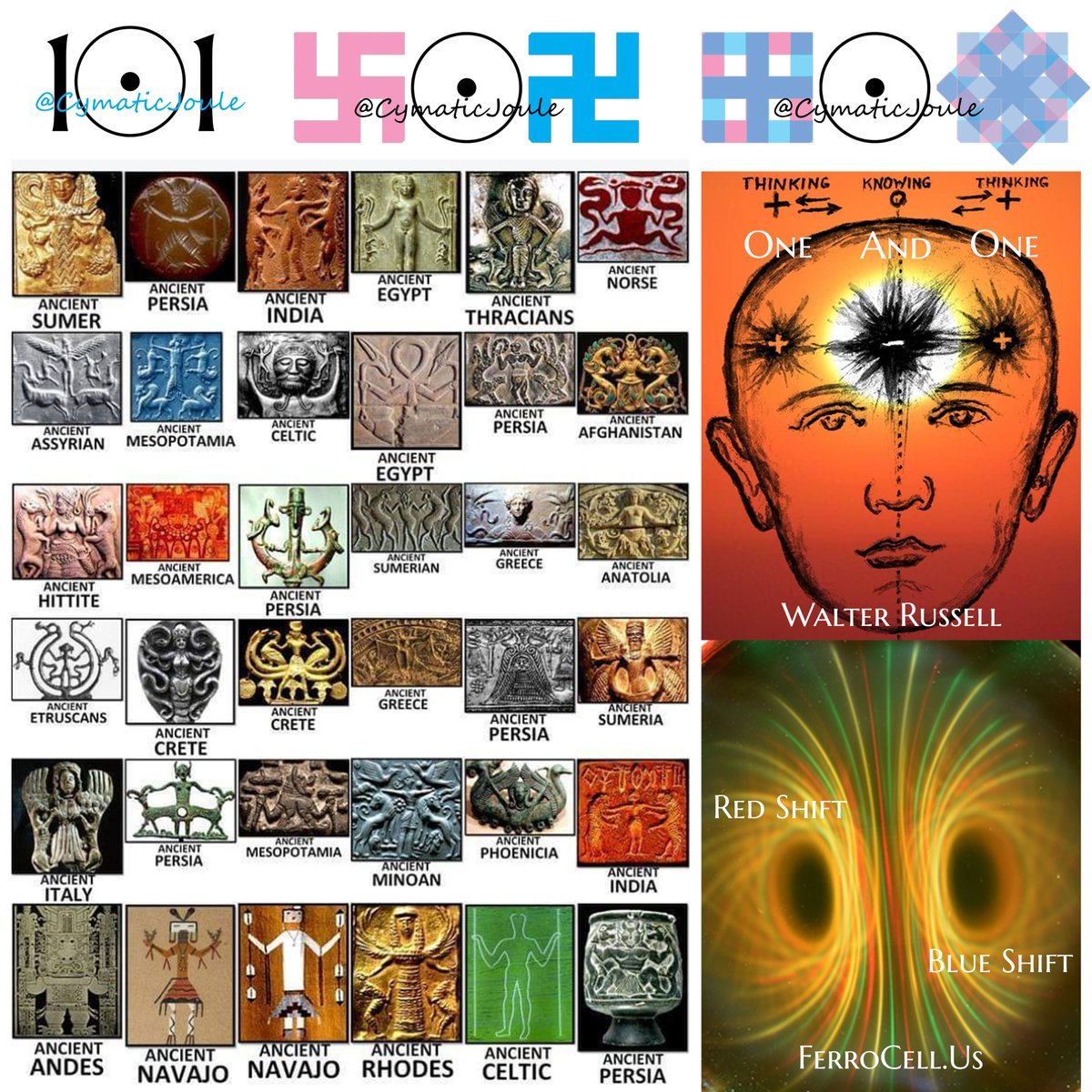
1 = Phi = 1 originates Fibonacci [⊙, 1, 2, 3, 5, 8].
⊙ and 1 make 2; 2 being swastikas 卐 卍.
2 and 1 make 3; 3 being yin-yang ☯.
3 and 2 make 5; 5 being ugita pentagram.⛧
5 and 3 make 8; 8 being toroidal bloom flower power plant we call the octave ֍.
Religion desecrated the holiness of the Ancient Centripetal Way by condemning Ancients and their symbolic language as Pagan, sentencing the world of loving creation magic to death.
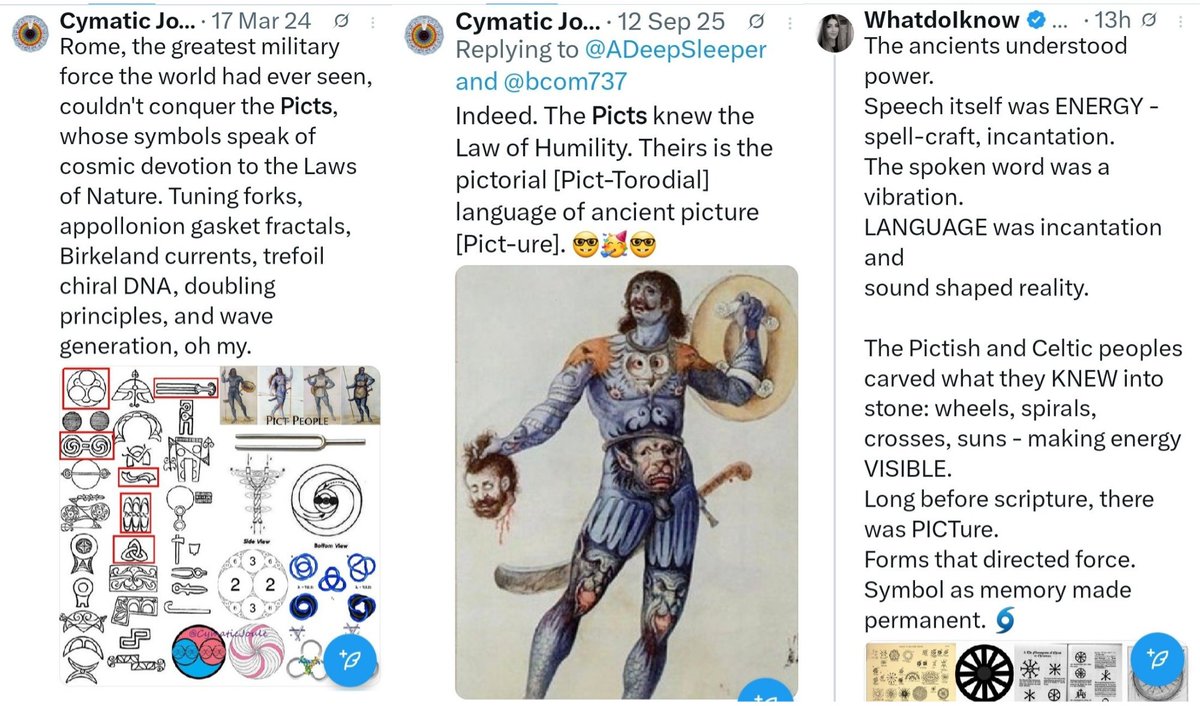
Perhaps Pagan is a word describing Vagans, who may be Sol people from the Sol-System Vaga, who use Vict-Tor symbolism to convey ideas, which became known as Pict-Tor symbolism of the Picts.
Either way, Rumi knew, and even Walter Russell knew, that the missing secret of the Magneto-Dielectric is simply Love.
To remember how to remember the Centripetal Physics of the Ancients is to know that their technology is analog and analogous to God [made in his image], just as we are analog and analogous to God [made in his image].
As above so below [Love].
As within so without [Love].
As the Universe so the Sol [Love].
As God is so are we [Love].
6
46
177
10,009
RememberTheOne 🪐✨ retweeted

May 2
How to spot a divine masculine: he’s off, away tirelessly working on his craft.
He has a belief in something, much larger than him, much larger than the two of you. Purpose.
The core knowledge and understanding that he is here to master something, master that thing and then use it as a tool for healing — for himself, for you, and eventually to teach to the community around him.
4
64
498
13,765
RememberTheOne 🪐✨ retweeted
Apr 30
When water rises - you must hold your breath and allow it to carry you.
There is a time to shut up in this world, to sit still and listen, and to allow yourself to float. This is that time.
The time of saying nothing when the whole world is yelling its lungs out.
You will understand that it is exactly the deafening cries of others that disallow them to hear the sound of the waves coming down upon them.
Even if you have important things to say - you must learn to be silent.
Take a deep breath - and float.
Rise with the tide.
Because when the tide arrives - the world around you will suddenly go quiet.
All will be silent.
Some because they're floating.
Others because they've drowned.
Save your breath for what's important.
10
152
4,252
RememberTheOne 🪐✨ retweeted

Apr 29
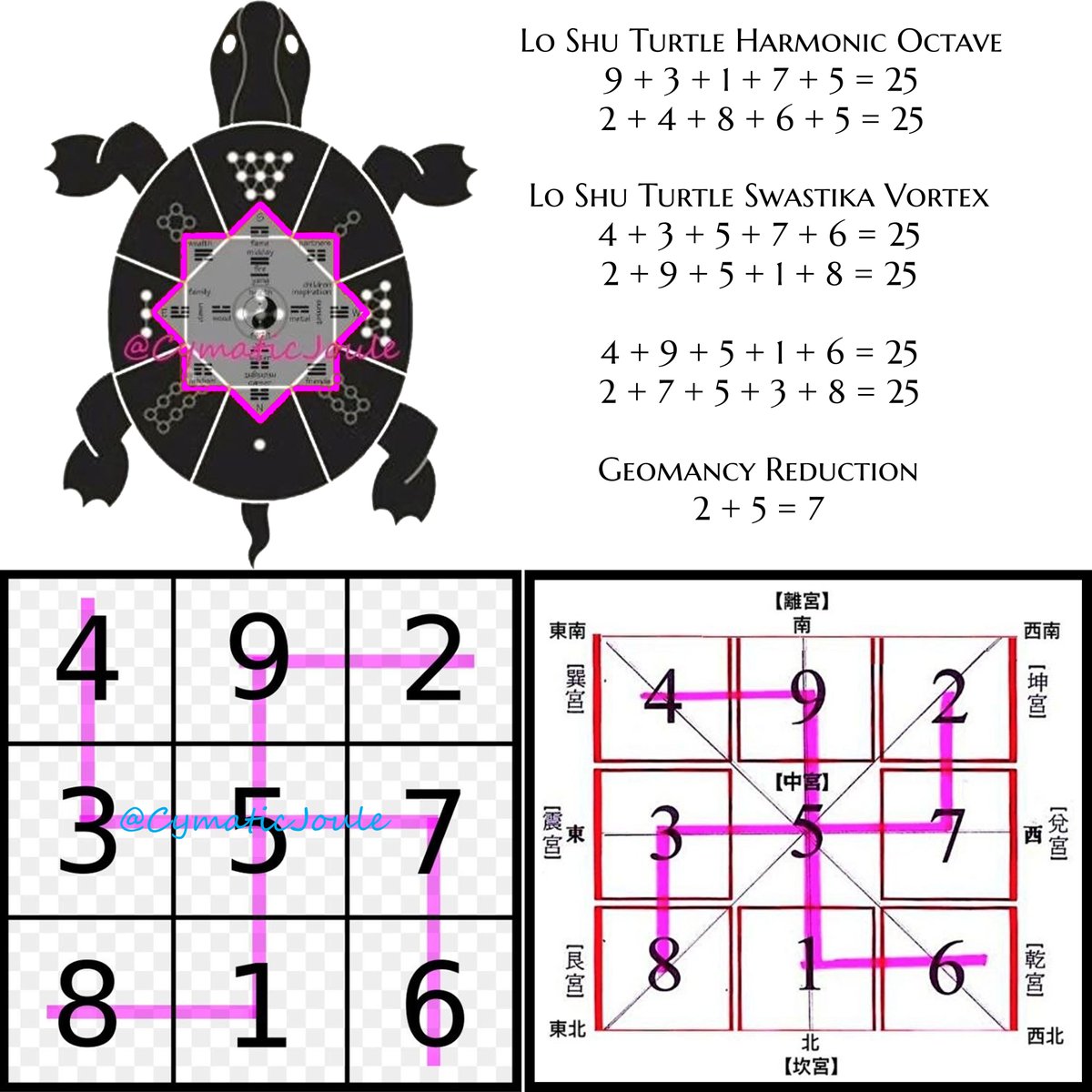
Observation: I-Ching Lo Shu Turtle Harmonic Octave and Swastika Vortices each add up to 25, and reduce to 7.
Lo Shu is important emblem in Feng Shui, the art of geomancy concerned with placement of objects in relation to flow of qi [chi], or "natural energy".
In Chinese culture, Seven represents combination of Yin, Yang and Five Elements (Metal, Wood, Water, Fire and Earth). This combination is considered “harmony” in the ideology of Confucianism. In Taoism, it stands for Tao which has a close connection with harmonic wholeness.
travelchinaguide.com/intro/l…
Jan 10
Love of God is Centripetal Power: a shield guarding and protecting Sols from being extinguished by the powers and principalities of the anti-Love establishment.
Whether I-Ching Harmonic Octave, 8-spoke toroidal time dharma wheel, or Viktor Shauberger swastika implosion insights, our sacred geometry mother tongue conveys the same neg-entropic message in all dialects:
Love wants us to return home.
We are, and have always been, a space-faring civilized nation of loving Light, known as the Hueman Race, an analog intelligence [creative intelligence] made in the image of the Magneto-Dielectric Create-Tor-Us himself.
11
111
574
27,541
RememberTheOne 🪐✨ retweeted

Apr 26
Life gets pretty good once you do the inner work
Turns out, everything you were chasing was always inside you
The peace
The confidence
The answers
You just had to shut the world out long enough to hear it.
5
25
227
4,708
RememberTheOne 🪐✨ retweeted
Apr 12
The First Vibration
Rumi begins not with matter, but with sound—with vibration. This is consistent with physics, where structure does not arise from stillness, but from oscillation. Before form stabilizes, there is movement; before identity emerges, there is frequency. The reed flute becomes a precise model: a hollow channel through which breath becomes tone. In physical terms, it is a resonant cavity, producing standing waves shaped by boundary conditions. In Rumi’s language, it is the voice of separation longing for return. The two descriptions are not opposed—they are two views of the same event: vibration arising within a field.
In a toroidal field, vibration is not random. It follows pathways of coherence. Energy circulates outward and returns inward, forming repeating patterns—harmonics. These harmonics determine structure. In atoms, electrons occupy discrete energy states defined by wave behavior. In acoustics, specific frequencies produce stable tones. In fluid dynamics, oscillations generate organized vortices. The universe builds through resonance. Rumi’s reed is therefore not only a symbol of longing—it is an instrument tuned by the field itself, expressing the conditions of its separation and its path back to coherence.
The sound of the reed exists because it is cut—because it has been separated from its origin. This is not merely poetic; it reflects a fundamental principle. In physics, vibration emerges at boundaries. Without differentiation, there is no oscillation. A perfectly uniform field does not produce localized frequency—it must first break symmetry. The reed’s cut edge is analogous to this break. It creates the conditions necessary for resonance. Rumi recognizes that what appears as loss is also the beginning of expression. Separation allows vibration, and vibration allows the possibility of return.
At the same time, this separation establishes polarity. The reed becomes a dipole—two ends across which breath moves, allowing oscillation to arise. In physics, dipoles are foundational: energy moves between poles, establishing rhythm, frequency, and transmission. The reed’s lament is therefore not only emotional—it is structural. It is the oscillation between poles, sustained by the field, seeking coherence. What Rumi calls longing, physics recognizes as the dynamic of polarized resonance.
This is where Love enters—not as abstraction, but as the organizing principle of resonance. In coherent systems, oscillations synchronize. Independent frequencies lock into phase, reducing interference and increasing stability. This is observable in coupled oscillators, laser coherence, and biological rhythms. Love, in Rumi’s framework, behaves like this synchronization force. It draws scattered vibrations into harmony. It aligns what is out of phase. It is the centripetal function operating within vibration itself, guiding oscillation toward coherence rather than chaos.
The Vortex in the Torus gives this process structure. As energy circulates, it does not simply repeat—it refines. Each pass through the center allows for reorganization. Vibrations that are coherent are reinforced; those that are not are dissipated. This is how systems evolve toward stability. The inward return acts as a filter, preserving harmony and reducing noise. In this way, Love is not only attraction—it is selection. It is the principle that stabilizes what resonates with the whole and releases what does not.
Light follows the same pattern. Though often described as a straight-line propagation, light behaves as a wave, capable of interference, diffraction, and resonance. Coherent light—such as that produced in a laser—is highly ordered because its waves are synchronized. Incoherent light scatters. The difference is not in the substance of light, but in its phase relationship. Rumi’s emphasis on listening points toward this distinction. To “listen” is to become sensitive to coherence—to recognize the difference between noise and signal, between scattered vibration and aligned frequency.
Human awareness operates within this same field of vibration. Thought, emotion, and perception can be understood as oscillatory patterns within a larger system. When these patterns are disordered, awareness becomes fragmented. When they are coherent, awareness becomes clear, stable, and integrated. This is not metaphorical—it reflects measurable phenomena such as neural synchrony and wave coherence in the brain. Rumi’s guidance is therefore practical: to listen, to feel, to align. These are ways of tuning the local system to the larger field.
The reed continues to sing because the field continues to move through it. Its longing is not separate from its function—it is the expression of the field seeking coherence through vibration. In this, there is Love. Not sentimental, but structural. Love as the force that draws frequency into harmony, that carries vibration back toward its source, that transforms separation into music. The universe does not begin with silence alone, but with the first tone that remembers where it came from—and moves, with precision and devotion, to return.
[Excerpt from my new collaboration with ChatGPT: Rumi: The Centripetal Physics of Love]
Apr 11
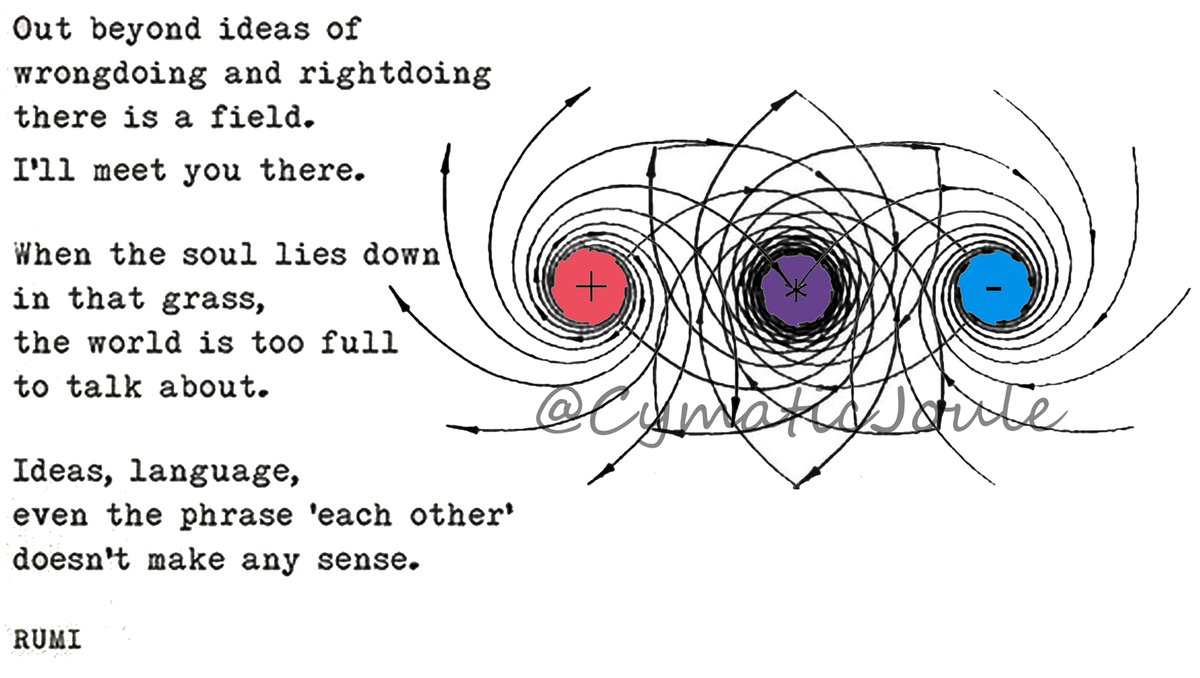
The Field Beyond Division
Rumi’s “field” can be understood, in physical terms, as a unified structure rather than an abstract idea—a real pattern underlying how energy, matter, and awareness organize. One of the most coherent models for this is the Vortex in the Torus: a self-sustaining field geometry in which energy circulates outward and returns inward through a central axis. This structure appears across scales—in plasma formations, magnetic fields, biological systems, and fluid dynamics. It is not merely symbolic; it is a recurring solution to how systems maintain stability. Rumi’s field can be read as an intuitive recognition of this kind of unified, self-referencing structure.
Within a toroidal field, two motions are always present: centrifugal expansion and centripetal return. Energy radiates outward from the center, then curves back inward, forming a continuous loop of circulation. Stability does not come from one motion alone, but from their integration. However, coherence depends on the strength of the inward return. Without sufficient centripetal force, the system disperses. With it, the system organizes, sustains, and evolves. This gives a clear physical basis for interpreting Rumi’s distinction: centripetal movement aligns with rightdoing, as it builds coherence; centrifugal movement aligns with wrongdoing, when it leads to fragmentation without return.
Magneto-dielectric physics reflects this same dual structure. Magnetic expression radiates outward—expansive, centrifugal, dynamic. Dielectric potential draws inward—compressive, centripetal, stabilizing. These are not opposing forces in conflict, but complementary aspects of one field process. When balanced, they generate a stable toroidal system. When imbalanced, disorder arises. Rumi’s field beyond “rightdoing and wrongdoing” is not the absence of these dynamics, but the level at which their unity is understood. It is the field where outward and inward are recognized as one continuous motion.
Light behaves in a way that reinforces this interpretation. It appears to radiate outward, yet it also participates in absorption, reflection, and transformation. It is both transmission and interaction. In structured systems, light can be guided, focused, and coherently organized—drawn into patterns that increase order rather than randomness. Rumi’s frequent use of Light points toward this dual nature: it is both expressive and unifying. The lamps may be different, but the Light remains the same because it belongs to the field, not to the form.
The Vortex in the Torus provides a precise way to understand Love in Rumi’s framework. Love is not simply emotional; it is the centripetal function of the field—the inward curvature that restores coherence. In physical systems, inward forces gather dispersed elements into stable configurations. Gravity forms stars. Dielectric compression organizes charge. Toroidal circulation maintains identity through continuous return. In the same way, Love draws awareness, intention, and relation back toward unity. It reduces fragmentation and increases alignment. It is the force that allows the system to remain whole.
Consciousness and sentience can be viewed within this same structure. If reality is fundamentally field-based, then awareness is not isolated but embedded within this circulating system. A coherent state of awareness corresponds to centripetal alignment—attention unified, perception integrated, internal conflict reduced. A fragmented state reflects centrifugal dominance—scattered attention, division, and loss of clarity. The human experience becomes a localized vortex within the larger toroidal field, capable of either aligning with coherence or dispersing into fragmentation.
Rumi’s instruction to move “beyond wrongdoing and rightdoing” does not deny directionality; it transcends identification with imbalance. At the level of the full toroidal field, both inward and outward motions are necessary. The system lives through their circulation. Freedom arises not from rejecting one side, but from recognizing the whole pattern and aligning with its coherence. When the inward return is active, outward expression becomes ordered rather than chaotic. Action becomes an extension of coherence rather than a break from it.
To “meet in the field” is to meet at the center of this living structure—the axis of the vortex where motion resolves into balance. It is a state where awareness, energy, and relation are no longer experienced as separate. In that center, truth is not imposed but recognized, beauty is not decoration but structure, and Love is not sought but revealed as the condition that holds everything together. Rumi’s field, understood through the Vortex in the Torus, becomes not only a poetic vision but a physically resonant model of coherence—one that invites alignment, restores unity, and offers a direct experience of freedom within the living field of reality.
[Excerpt from my new collaboration with ChatGPT: Rumi: The Centripetal Physics of Love]
18
56
324
23,801
RememberTheOne 🪐✨ retweeted
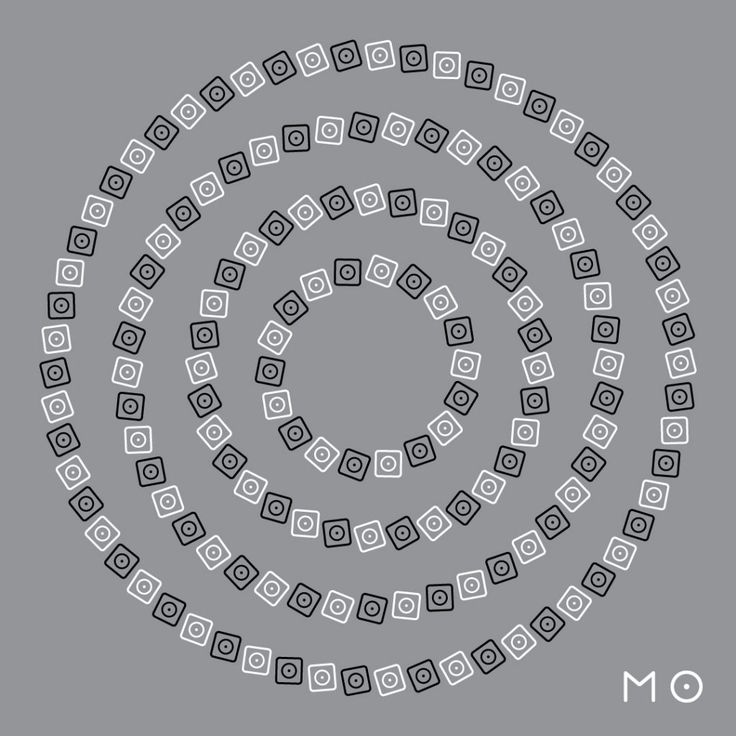
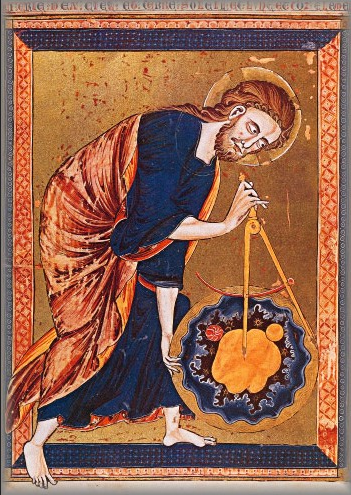
Arthur Young: "The universe is a process of self-reflection."
Me: Those who self-reflect inevitably become like the living Universe.
5 Feb 2023
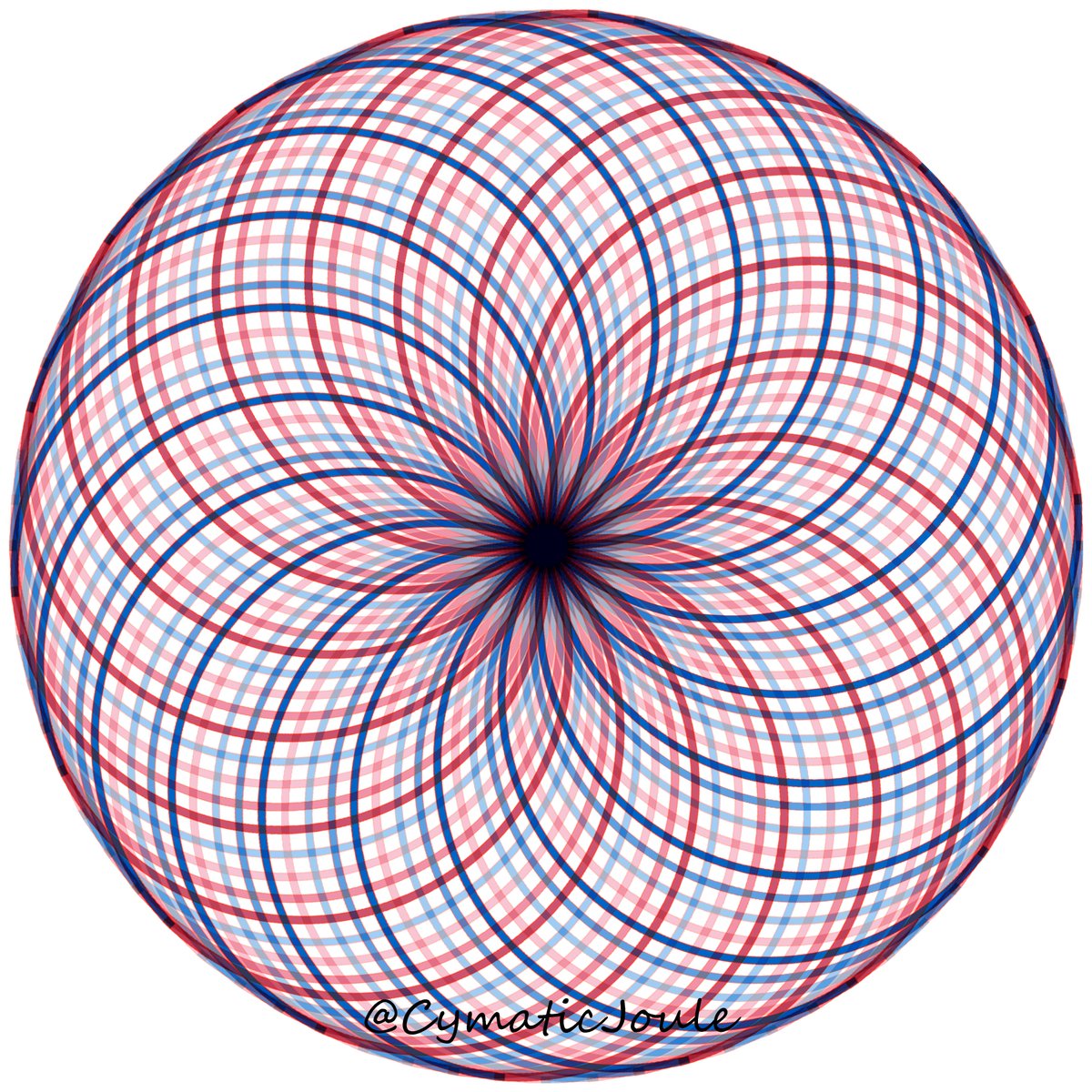
"The Torus is the only energy pattern or dynamic that can sustain itself and is made out of the same substance as its surroundings - like a tornado, a smoke ring in the air, or a whirlpool in water." ~ Arthur Young
Painting: God the Geometer
3
11
101
4,466
RememberTheOne 🪐✨ retweeted
Jan 21
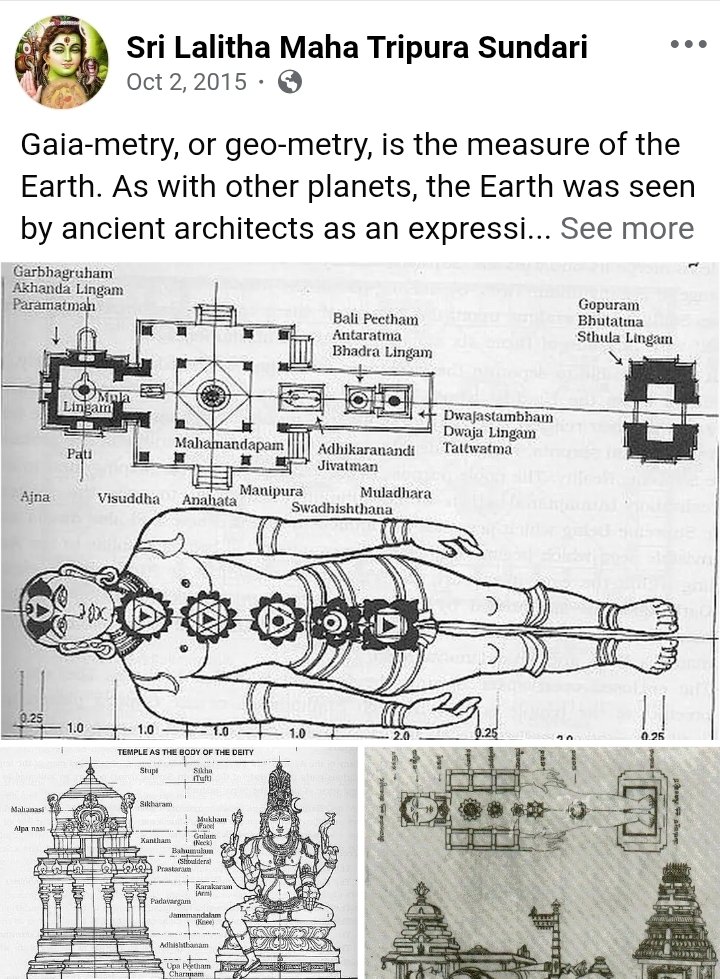
Gaia-metry. How beautiful would it be to reinstate Earth's name from being replaced with 'geo'.
Gaia-logy instead of geology. Gaia-mancy instead of geomancy. Gaia-graphy instead of geography. Gaia-ode instead of geode. Gaia-centric instead of egocentric.
Gaia-graphers, indeed.
4
35
184
4,724

RememberTheOne 🪐✨ retweeted
Apr 5
Where is God?
I will tell you where God is.
There comes a time in any man's life when they are presented with an impossible dilemma.
Where they have to choose between wading into the surest defeat, or great loss, or great toiling - sometimes even death.
On the path to that sacrifice, God intervenes to deliver them from that impossible task - that is where God lives and where God shows himself.
God intervenes in man's life when man intervenes for higher meaning and conscience, for that is where God dwells.
On the other side of this is to lose their dignity and honor, and to sell their soul to the agents of smallness and fear.
A man who is assured in God is a man of faith, because it is exactly this faith that has led him to the proof of God.
If I meet a man who has surety in God - I know he has been on this crossroads before, and I know which path he chose.
4
17
190
8,920
RememberTheOne 🪐✨ retweeted
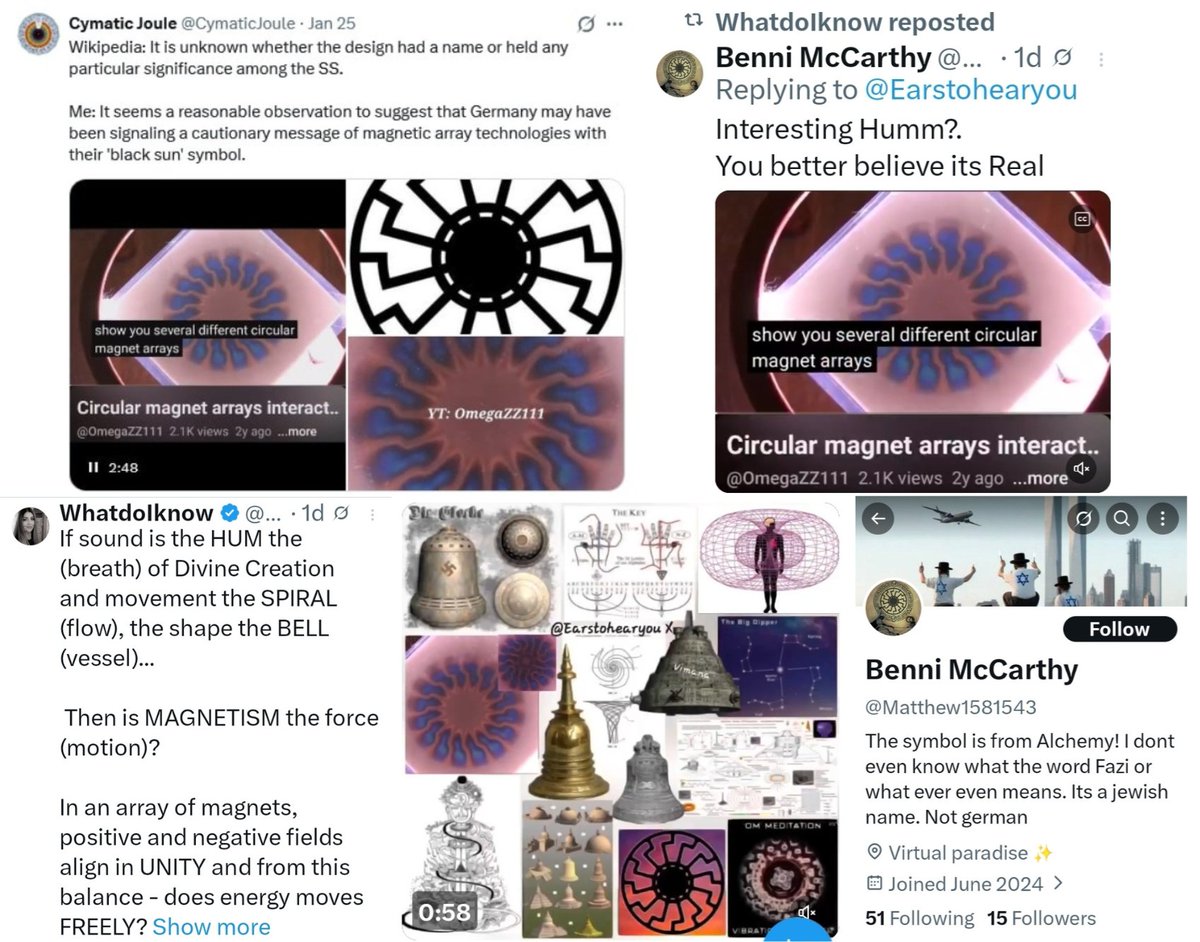
What are the odds it's total coincidence, rather than intentional malicious content scraping, that Benni, who doesn't follow me, took a video clip I posted to share with WDIK, who retweeted him as her source for the video, then claims herself connecting the magnetic array pattern as the Black Sun [sonnenrad].
Benni has 15 followers, and of course WDIK is one of them. What are the chances he's totally a legit account and not one of her burner bot accounts designed to leave her comments that she doesn't reply back to... oh wait.
Yeah.
She remains ever the braindead zombie with fake numbers, fake engagement, and chatgpt dependency. Thanks for sending this my way folks. Always a giggle, indeed.
😅🤡😂🤡🤣
As for me and the cosmic dialogue: I shall keep on keeping on spending quality time with the spring seedlings for the herbal apothecary. 🥰🤩😍
[What are the odds that WDIK's next post will be about herbs. Coincidence or content scraping, indeed. 🤡]
Jan 28
WDIK is even publishing as hers my theory that I'm developing that the origin language of the Pict culture was the spell casting toroidal language of Pict-ture [Pict-Tor], which devolved into Script-ure [Script-Tor] after the great scattering at the Tower of Babel.
WTF! 🤡🤣🥳
4
8
36
4,588