Atacama Large Millimeter/submillimeter Array, is an international partnership of @ESO, @TheNRAO and @prcnaoj_en in cooperation with the Republic of Chile.
- Tweets 6,250
- Following 704
- Followers 58,205
- Likes 5,258
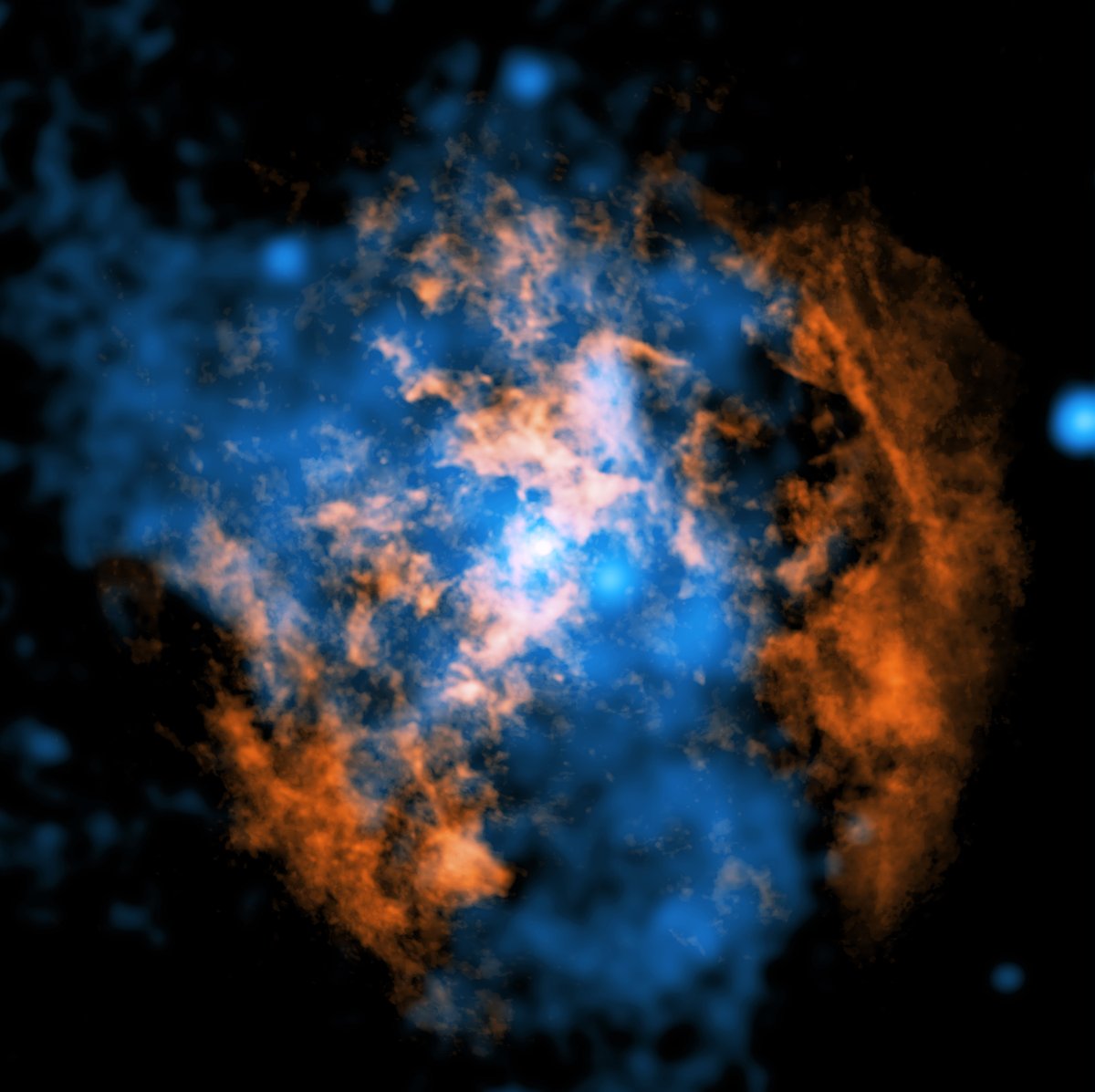

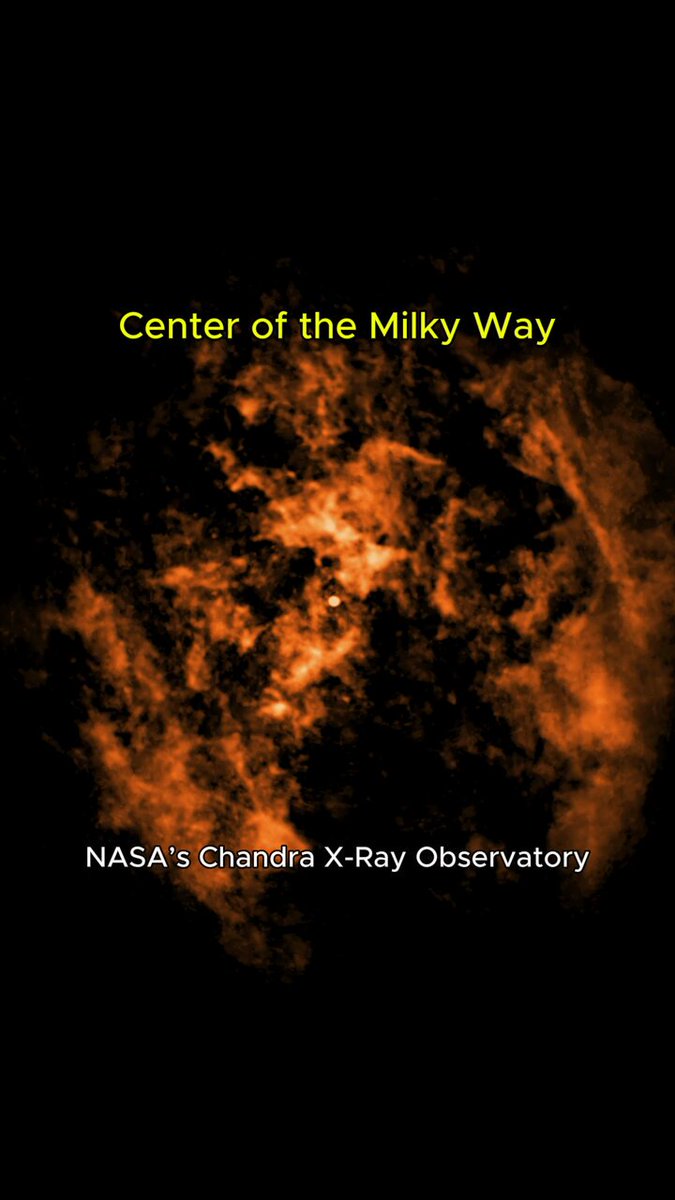


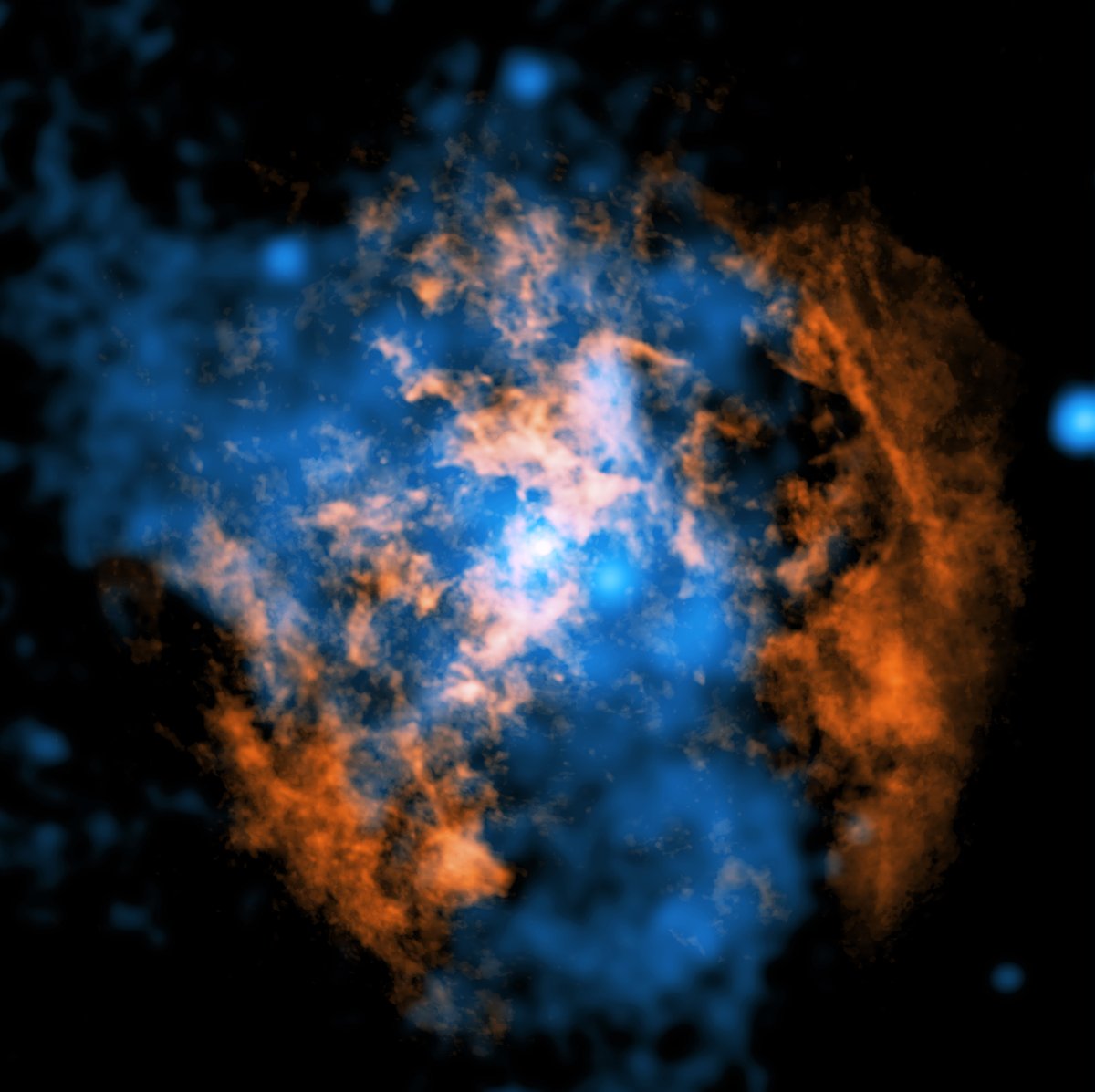
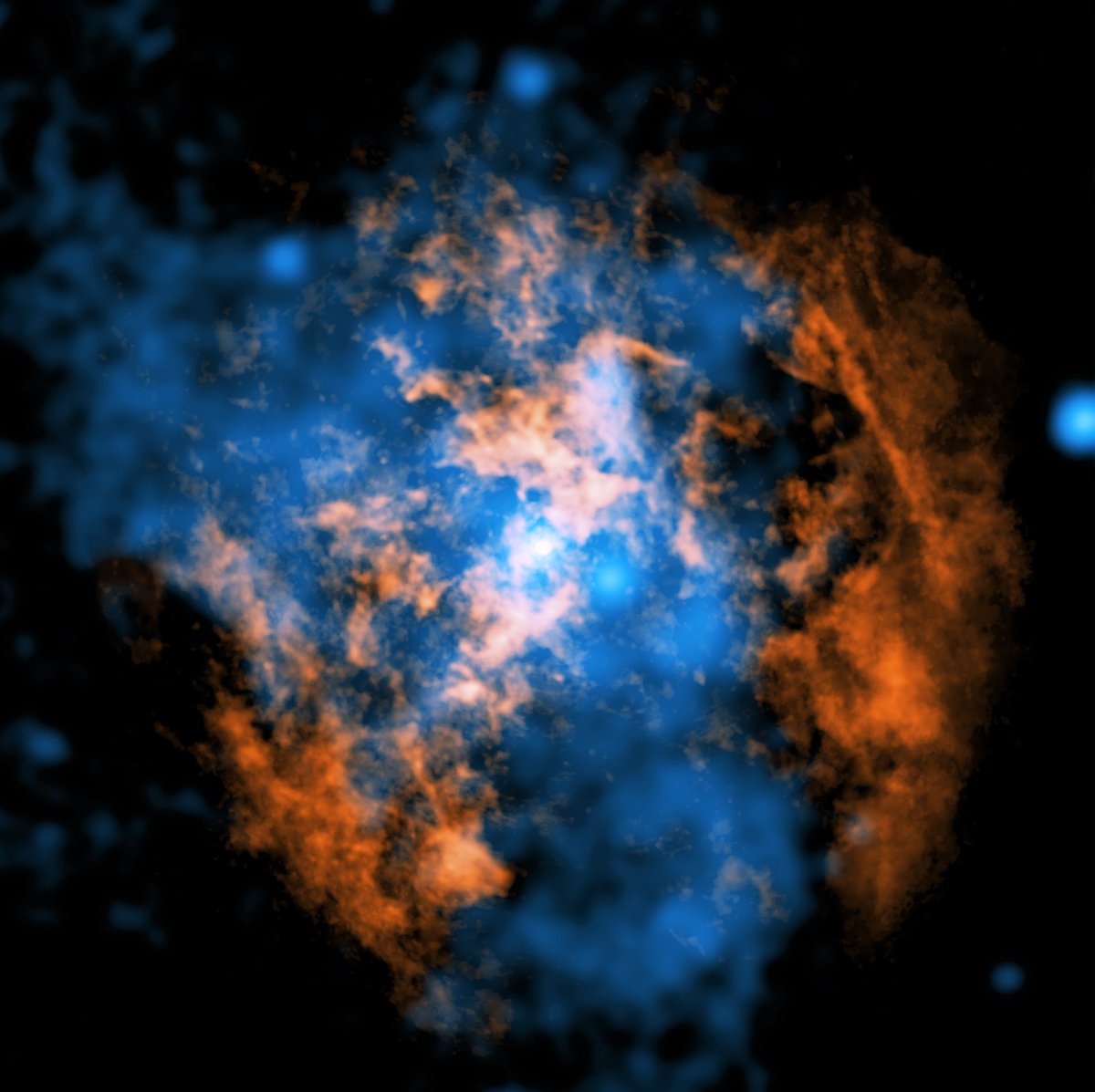
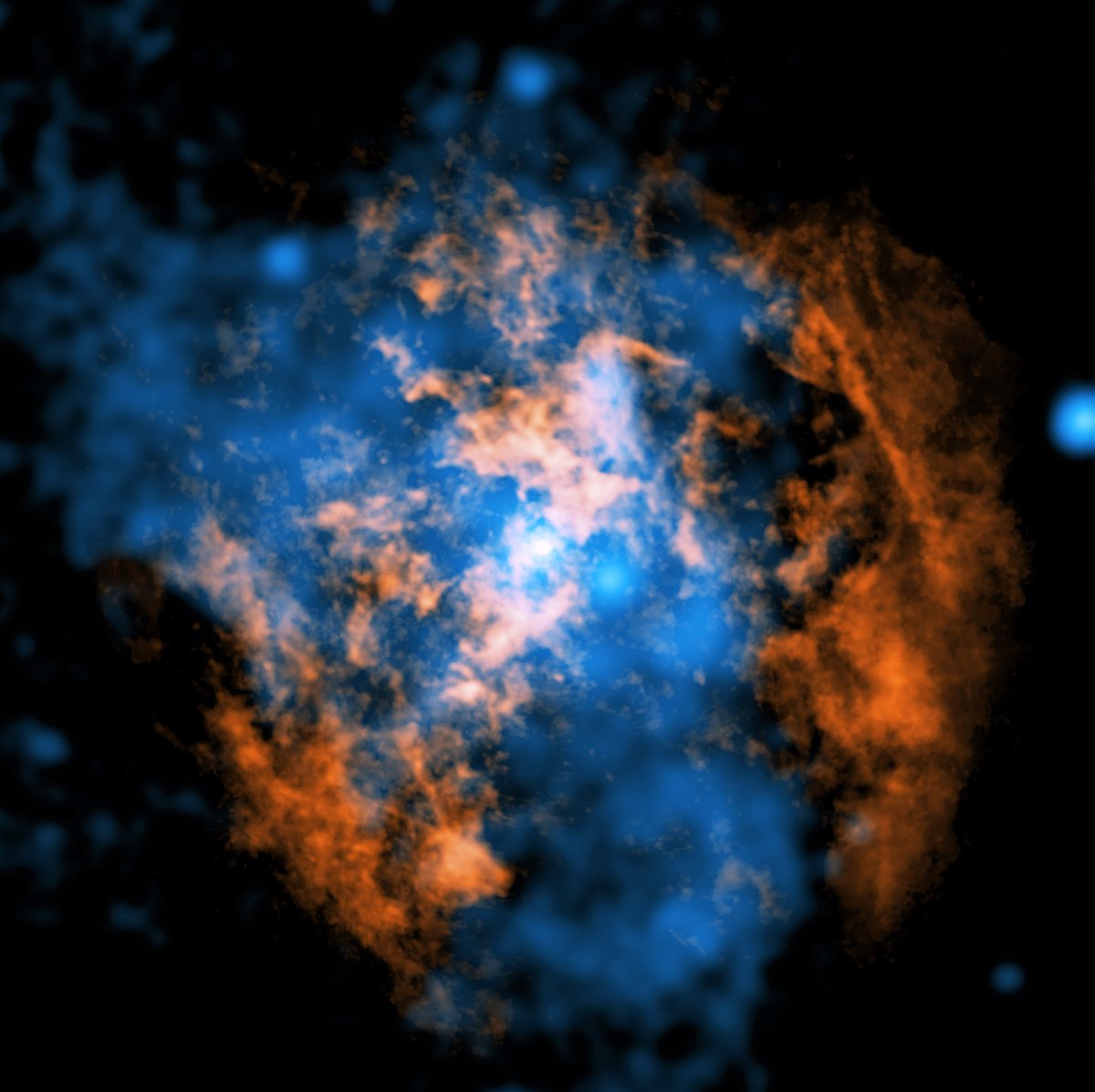

ALT This composite image overlays data from the Atacama Large Millimeter/submillimeter Array and NASA’s Chandra X-Ray Observatory. It shows evidence for a wind blowing away from Sagittarius A* (Sgr A*), the supermassive black hole in the center of our galaxy. The white dot in the center of the image shows Sgr A*. In orange is data from ALMA radio telescopes in Chile, mapping the location of cold gas composed of carbon monoxide in the image. In blue is X-ray data from NASA’s Chandra X-ray Observatory. A large cone-shaped cavity, visible as an absence of cold gas in the ALMA data, is filled by hot X-ray-emitting gas in the Chandra data. Researchers think a hot, energetic wind blowing from Sgr A* created this structure by sweeping the cold gas away or heating it up. Image Credit: Northwestern Univ./M. Gorski; X-ray: NASA/CXC/SAO; Radio: ESO/NAOJ/NRAO/ALMA

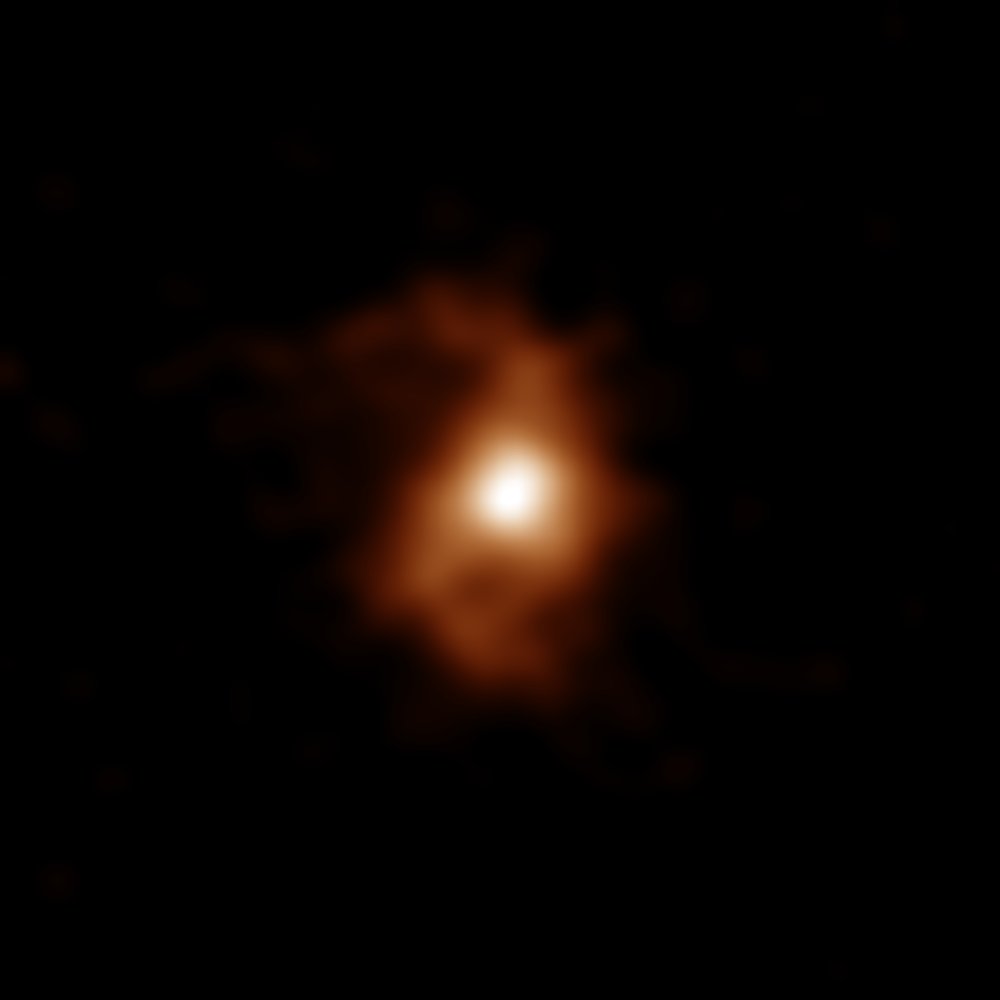
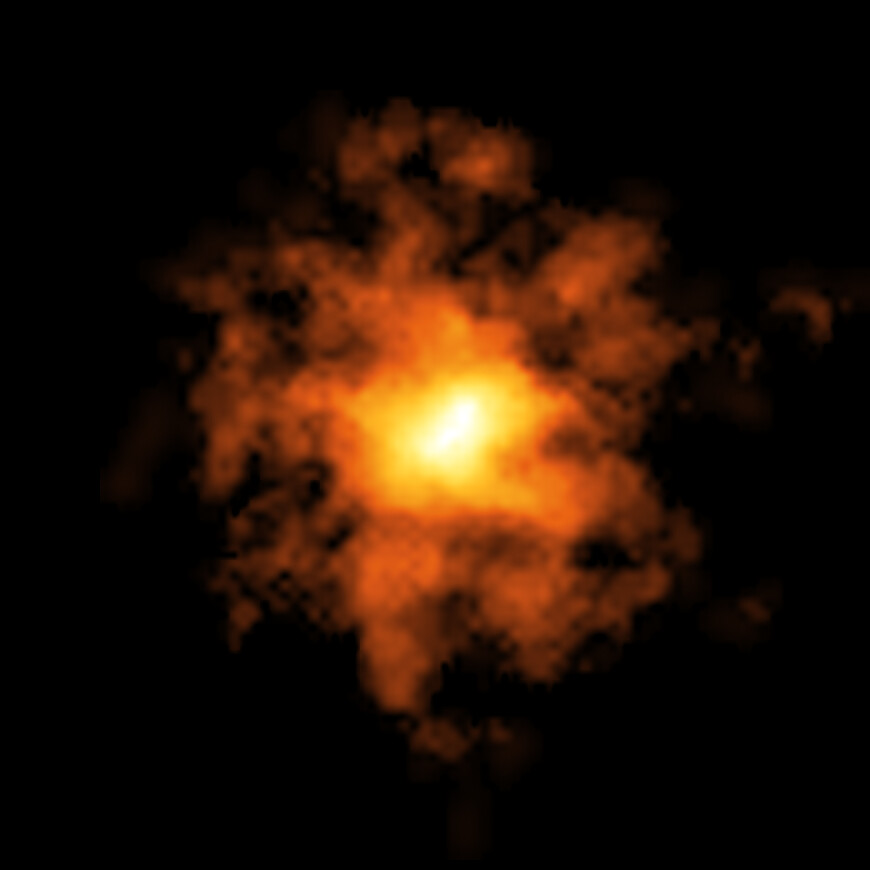
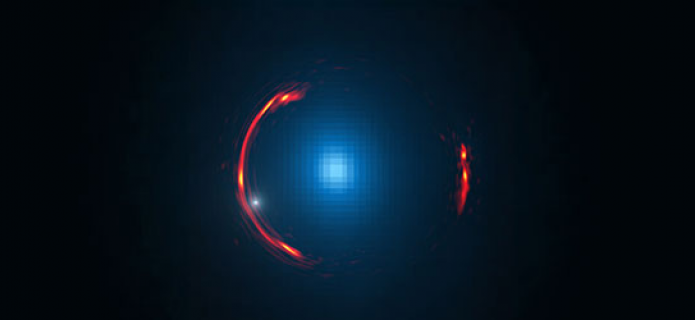
ALT Image of the galaxy REBELS-25, taken by the Atacama Large Millimeter/submillimeter Array (ALMA). Credit: ALMA (ESO/NAOJ/NRAO)/L. Rowland et al.
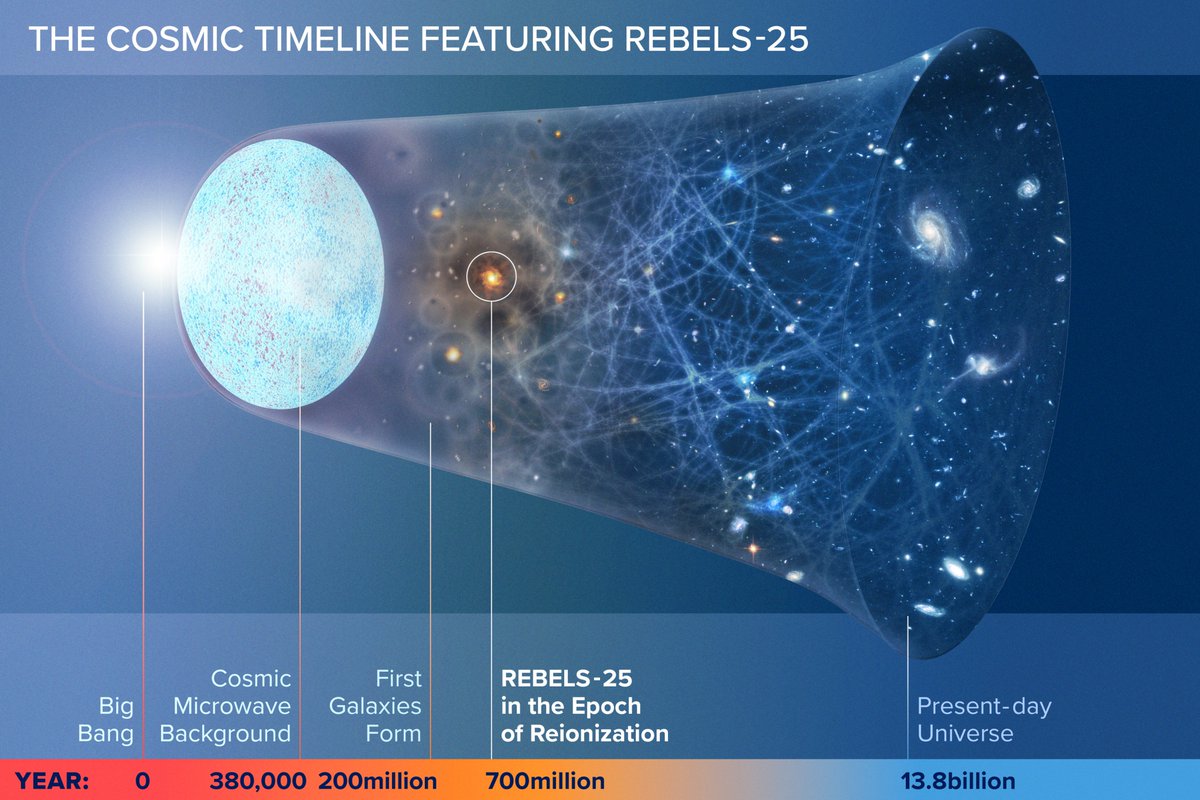
ALT This illustration traces the universe’s evolution from the Big Bang to the present day, highlighting REBELS-25, a very distant galaxy seen during the Epoch of Reionization 13 billion years ago. New deep observations with the NSF VLA and ALMA reveal that REBELS-25 already had an enormous reservoir of cool molecular gas—the direct fuel for star formation—when the universe was just 700 million years old.

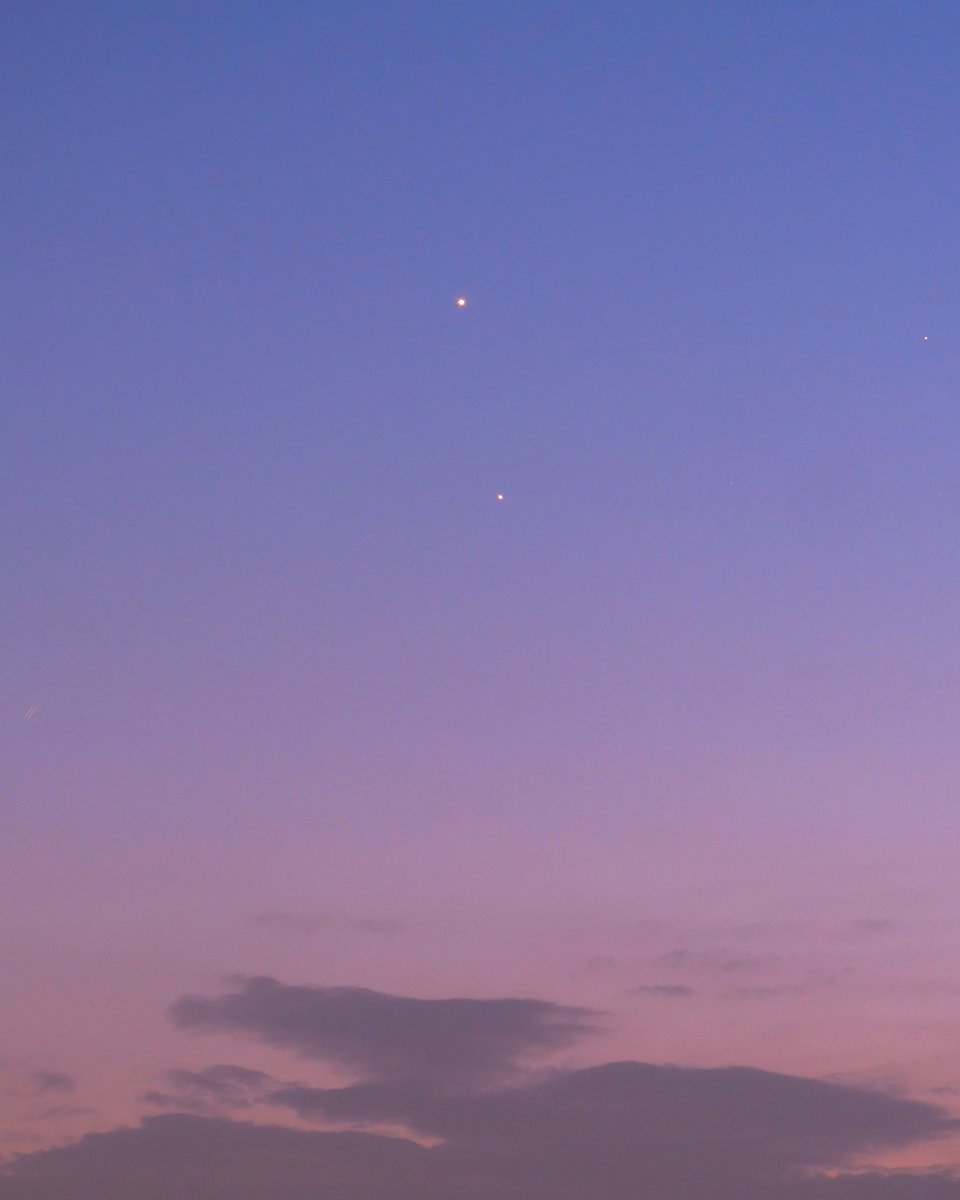
ALT Jupiter and Venus conjunction
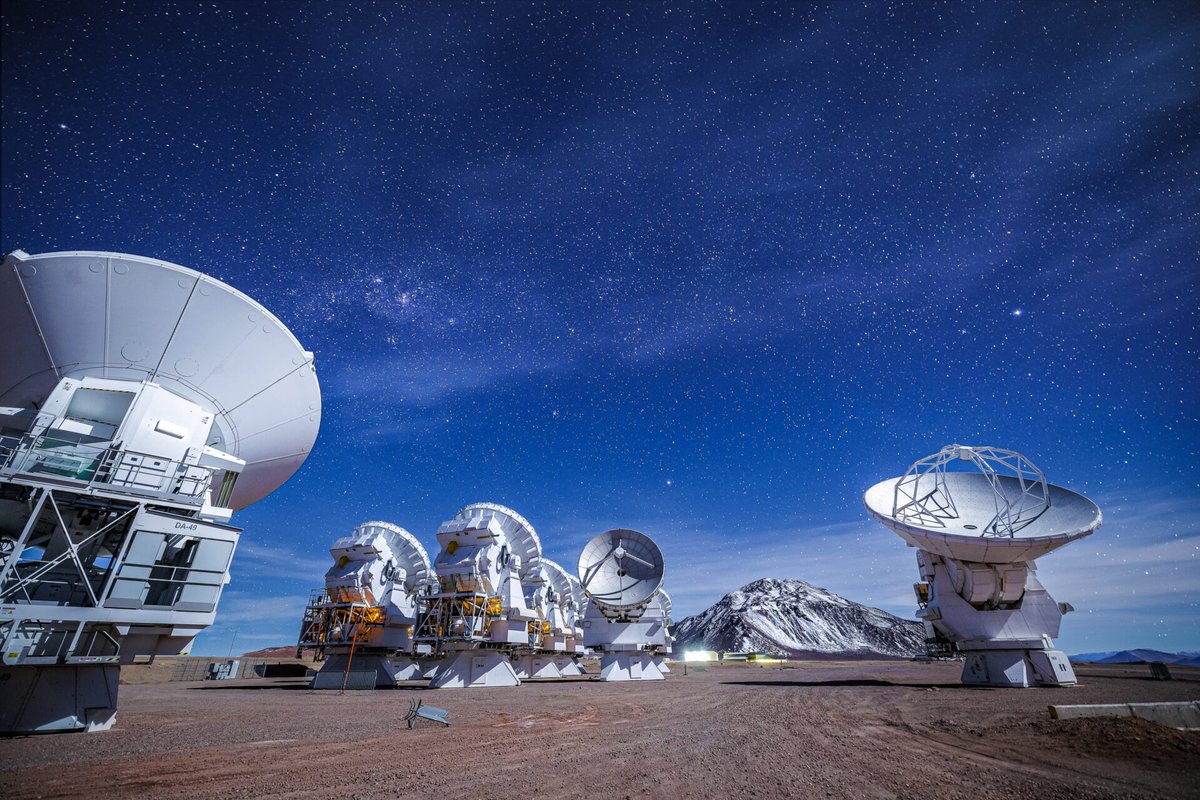
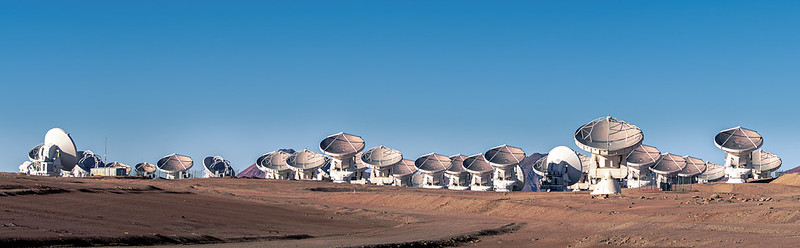
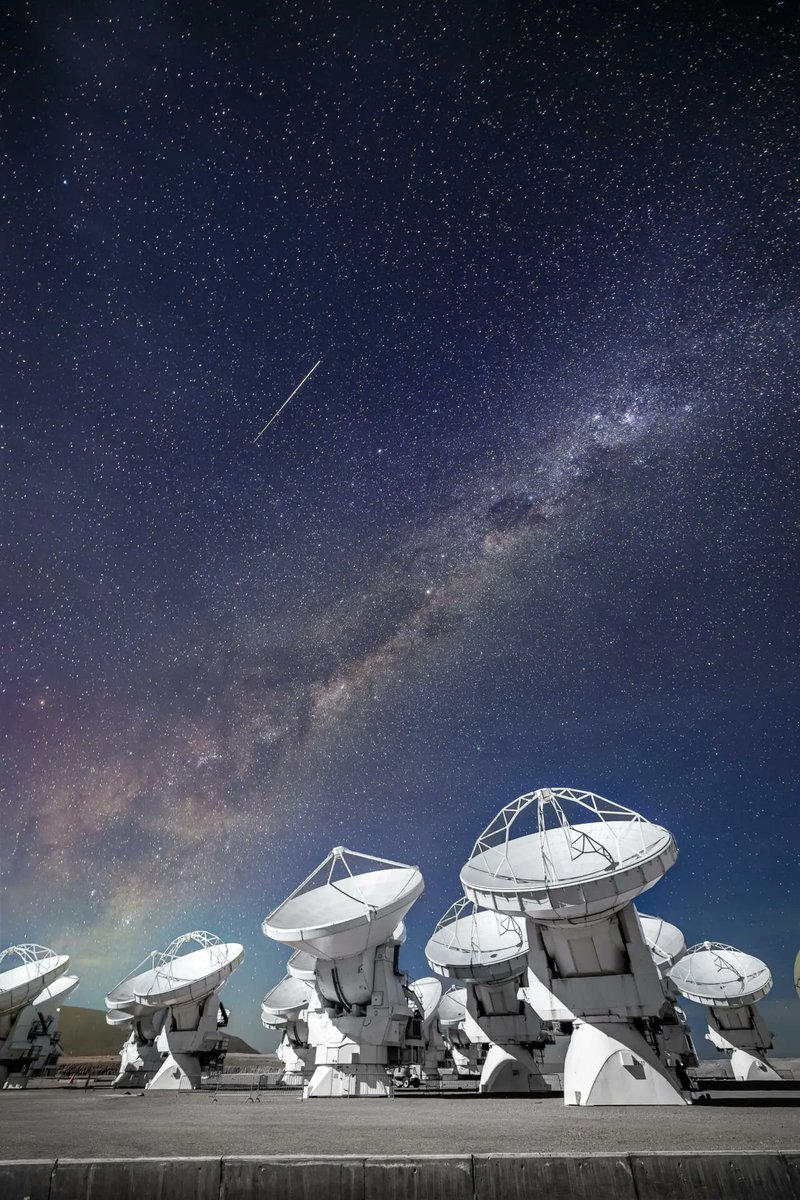
ALT ALMA Observatory and its 66 antennas in Chile.

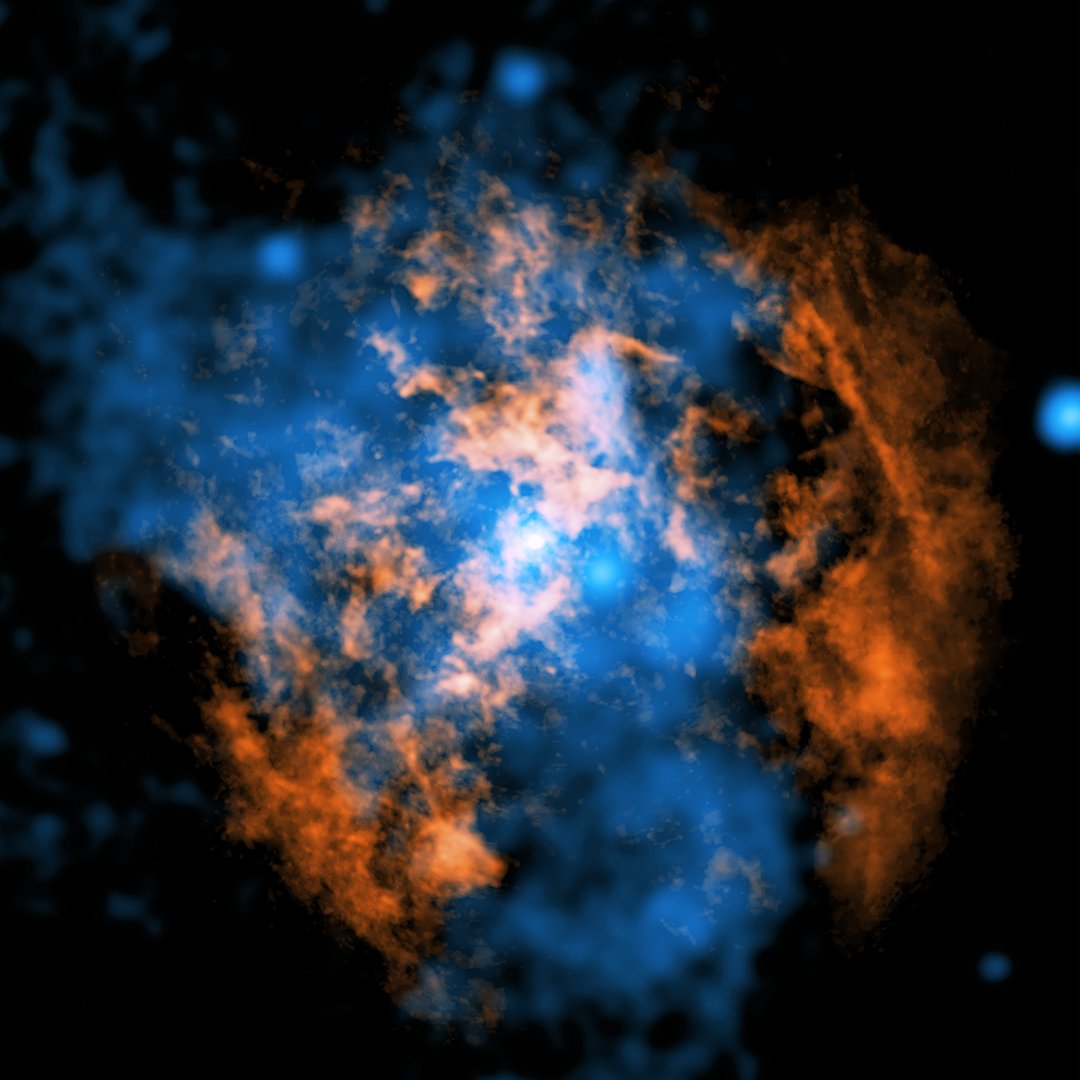
ALT This image centers on a bright, pinpoint white glow marking Sagittarius A* (Sgr A*), the supermassive black hole at the heart of the Milky Way, surrounded by a turbulent, cloud-like environment. Radiating outward from the center is a luminous swirl of blue X-ray emission from NASA's Chandra X-ray Observatory, forming a soft, irregular halo that is brightest near the core and fades into darker shades toward the edges. Interwoven with this blue glow are thick, patchy structures in orange, tracing colder gas mapped by radio observations from ALMA. These orange regions form a partial ring and clumpy arcs around the center, but notably break open to reveal a wide, cone-shaped cavity where little to no orange emission appears. This hollowed-out region is instead filled with the blue X-ray glow, emphasizing the contrast between hot and cold material. The scene feels dynamic and layered, with the interplay of blue and orange just a few light-years from the galaxy’s core.
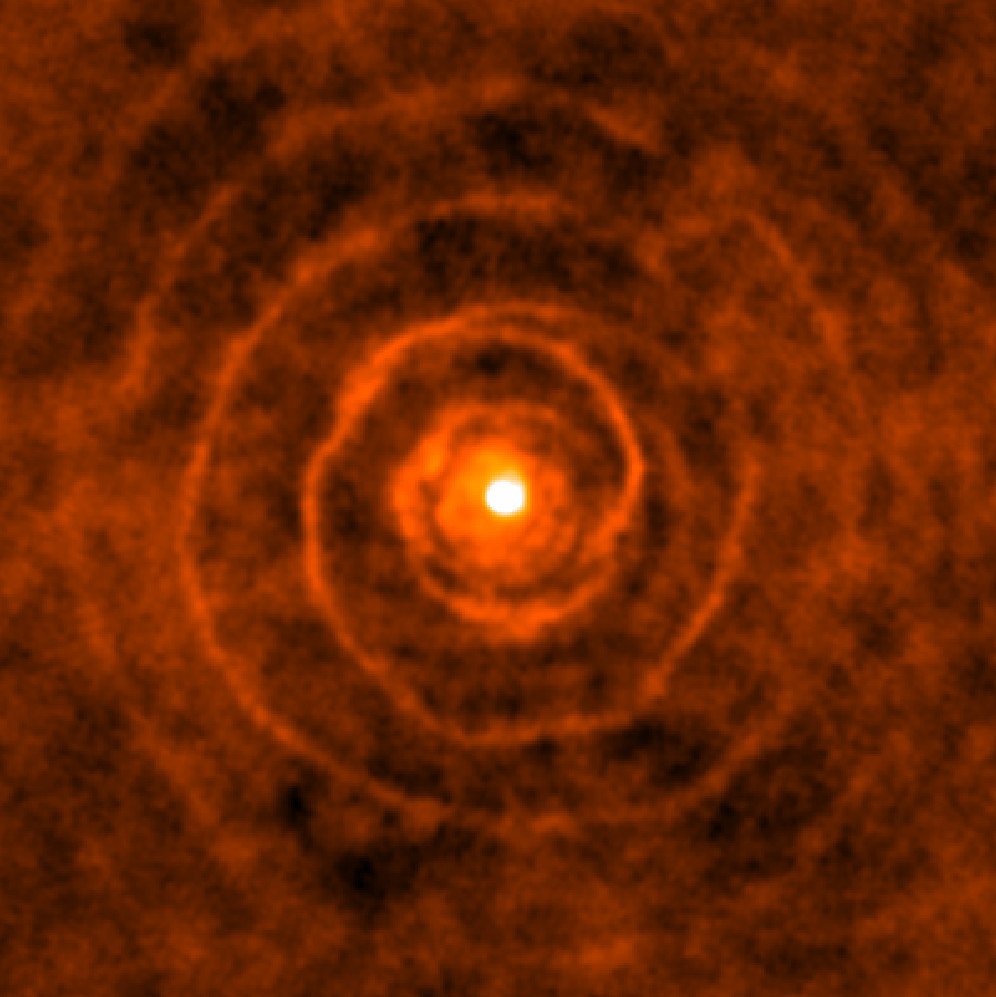
ALT Meteor captured above the ALMA antennas

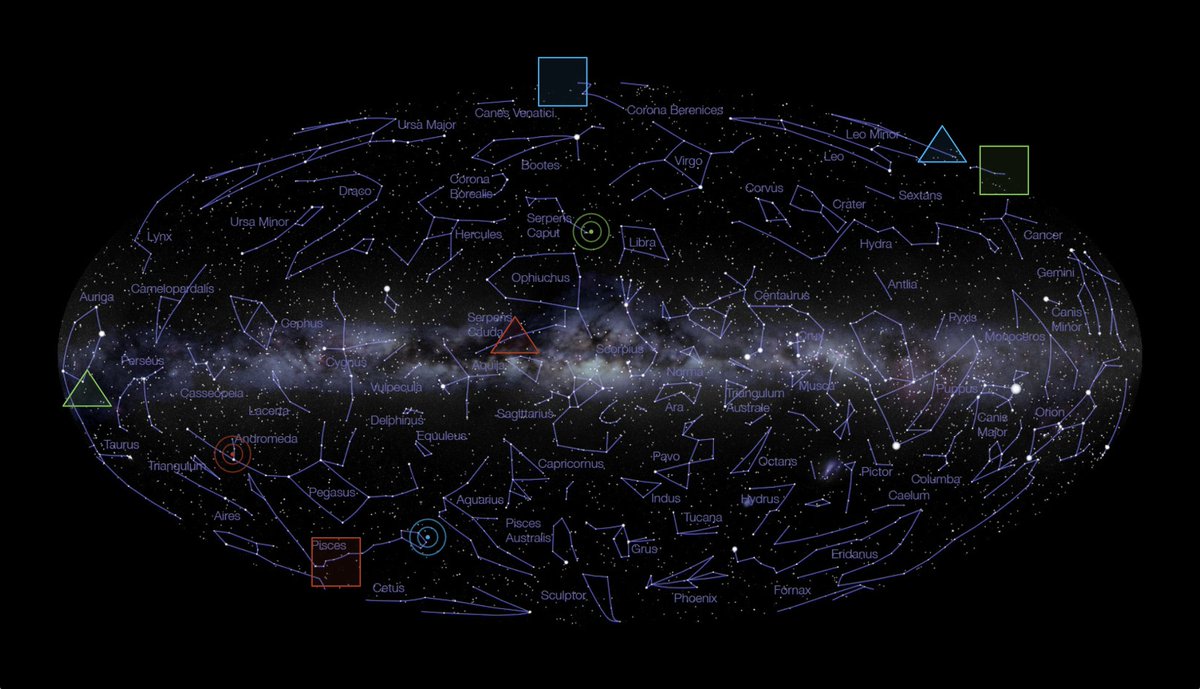
ALT Map displaying labeled constellations. Blue, red, and green circles, squares, and triangles highlight specific areas across the map where the Very Large Array, ALMA, and Green Bank Telescope are currently / previously observing.
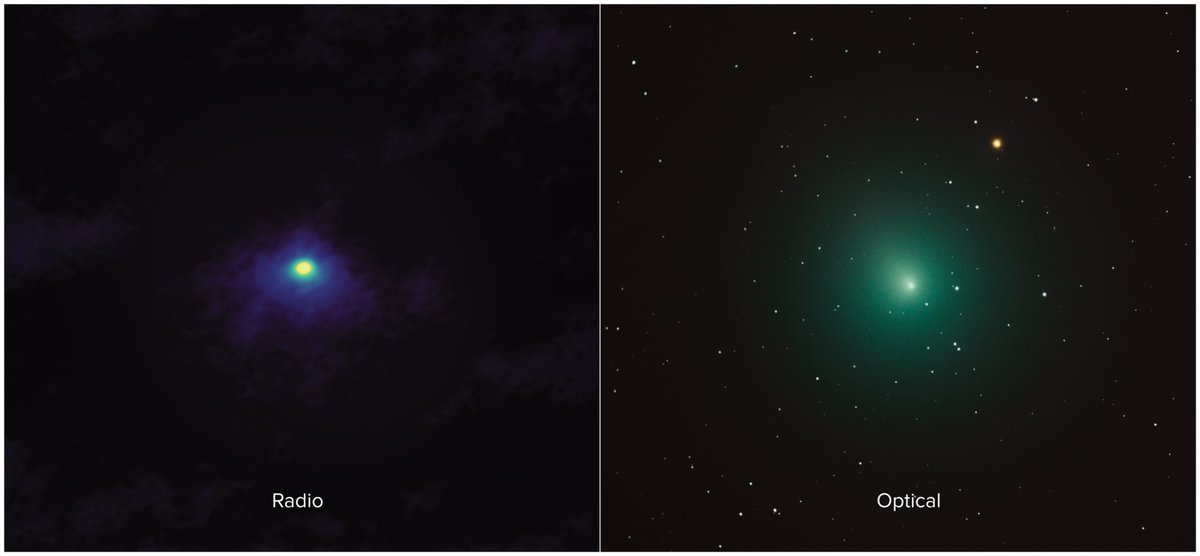
ALT comet 46P/Wirtanen