
Institutional grade reports and real time signals for funds, family offices and market professionals by @swissblock__
Joined May 2025
- Tweets 367
- Following 12
- Followers 12,928
- Likes 51
218 Photos and videos

Jun 16
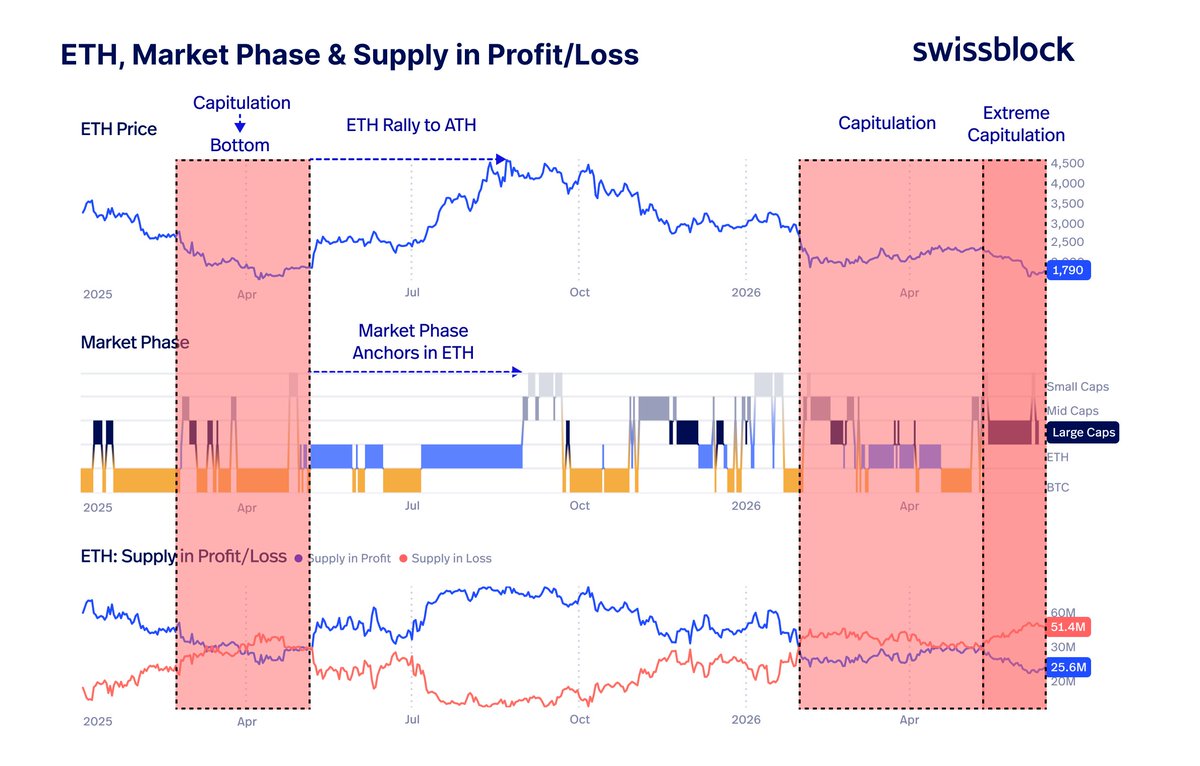
If we talk about Capitulation, ETH is experiencing the kind of sustained and intense stress that has historically been associated with bottom formation.
Last year, ETH bottomed after a relatively short Capitulation Phase.
Market Phase anchored in ETH, stress peaked, and that process ultimately became the foundation for ETH's rally toward new highs in the summer of 2025.
This time is different.
$ETH has spent months trapped in a persistent Capitulation State.
Under normal conditions, this level of stress would already be consistent with a bottoming process.
The problem? The stress is still ongoing.
Capitulation creates bottoms only after selling pressure begins to exhaust.
Now the question is whether this process is approaching exhaustion, as Bitcoin begins allowing the broader environment to relax.
Jun 15

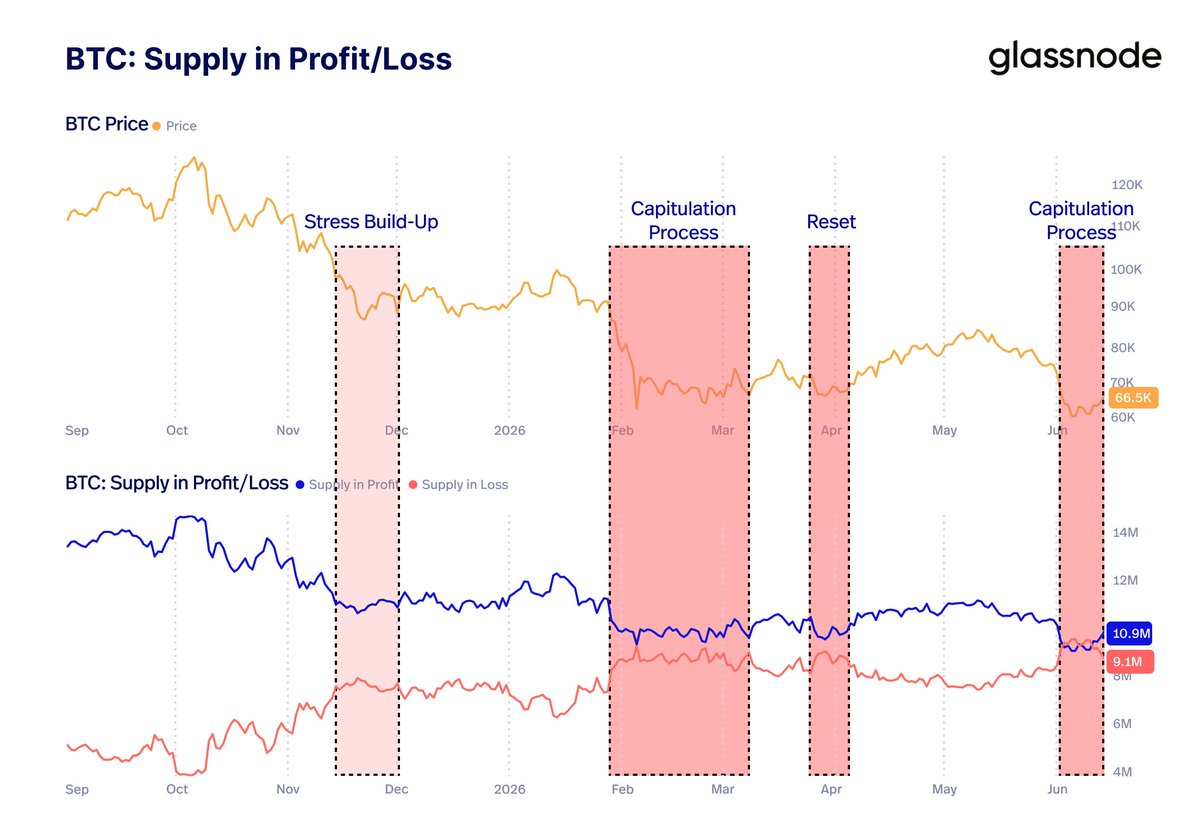
How is Bitcoin looking in terms of capitulation?
Still stressed.
After the most intense phase of tension in the Supply in Profit/Loss bands, BTC has not fully escaped the stress regime yet.
But there is an important change:
6
37
6,190
Jun 9
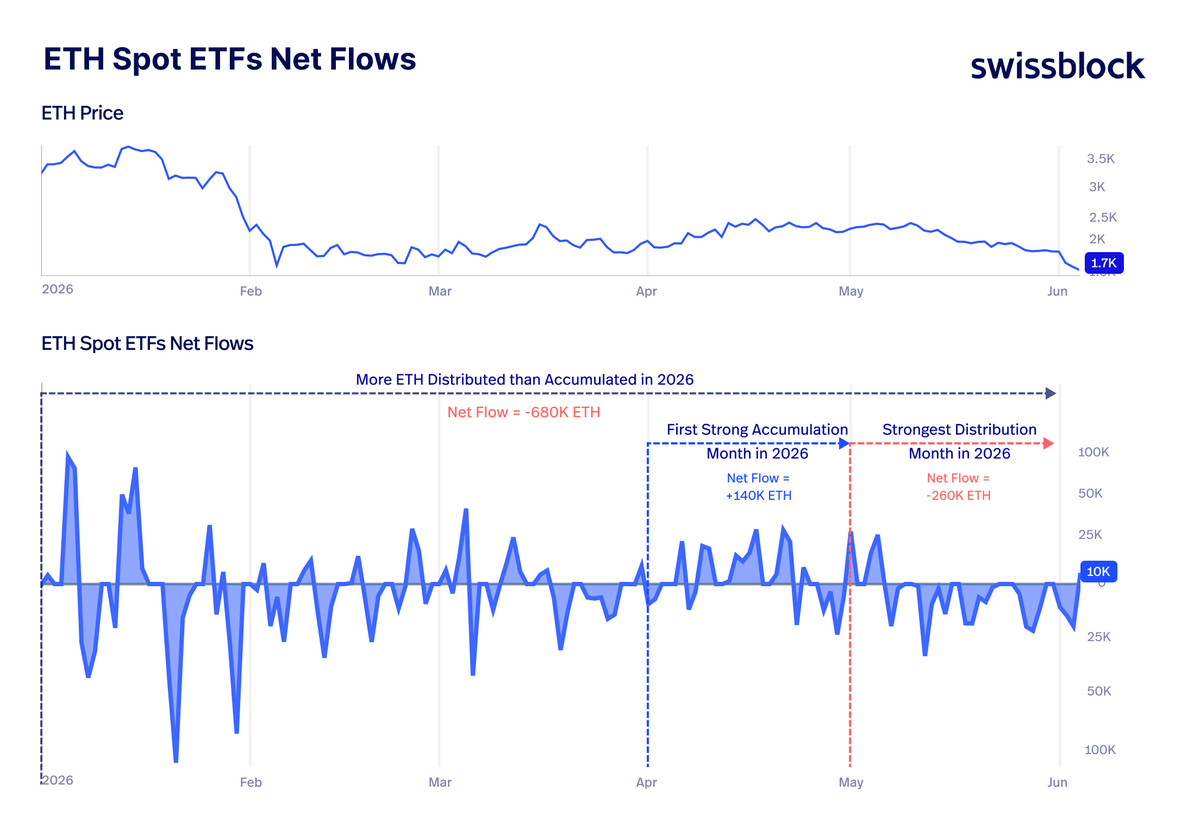
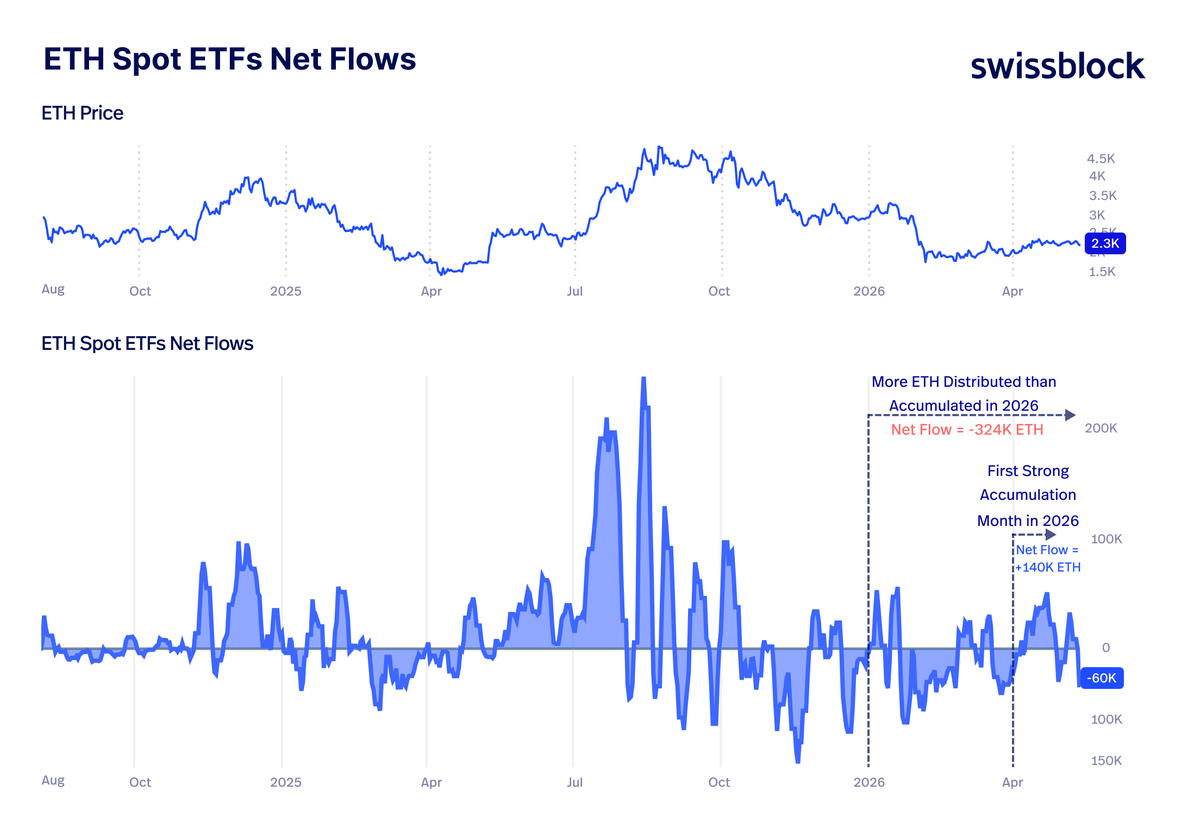
ETH Spot ETFs are still not providing a reliable structural tailwind.
Despite April delivering the strongest accumulation month of 2026, May completely reversed the signal.
The numbers are clear:
→ April: 140K ETH net accumulation
→ May: -260K ETH net distribution
→ 2026 total: -680K ETH net flow
ETH ETFs have distributed more ETH than they have accumulated this year.
ETH still lacks a sustained institutional demand engine.
April showed institutions were willing to buy stabilization.
May showed they were not willing to keep buying weakness.
Until ETH ETF flows can sustain multiple months of accumulation, rallies remain vulnerable to fading back into volatility.
4
21
3,626
Jun 4
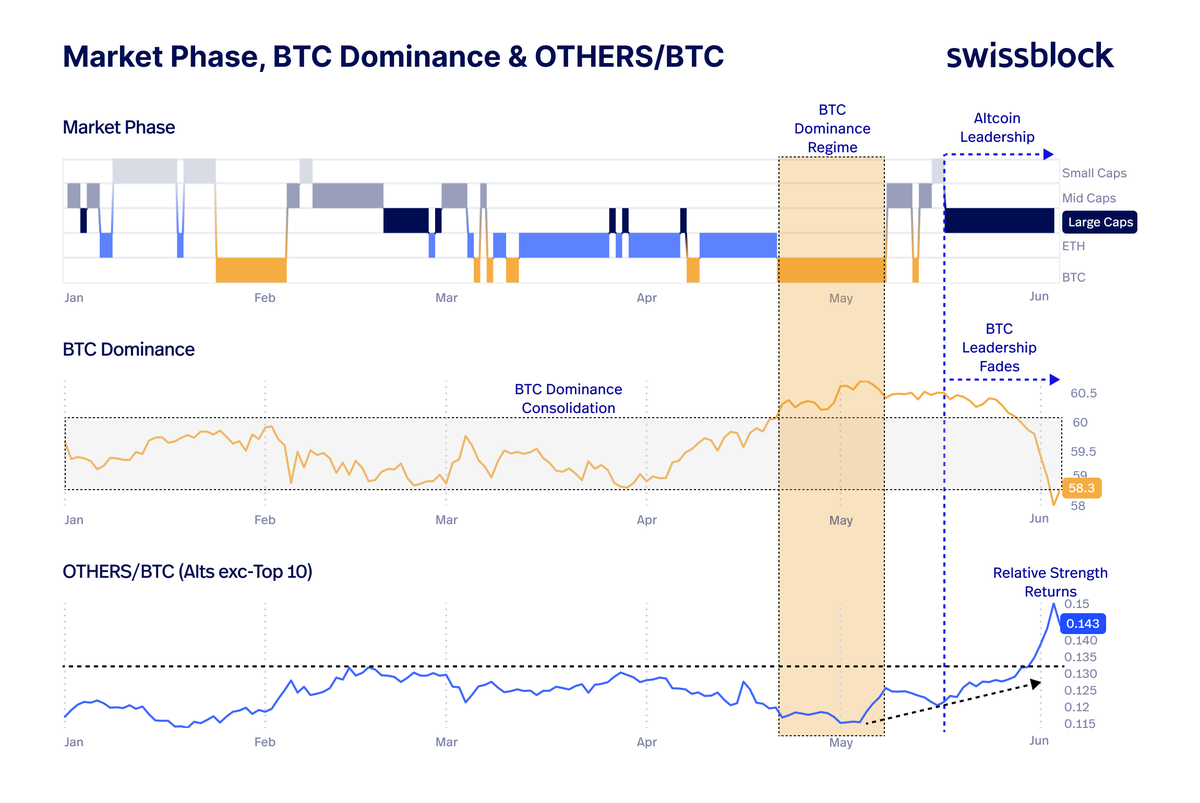
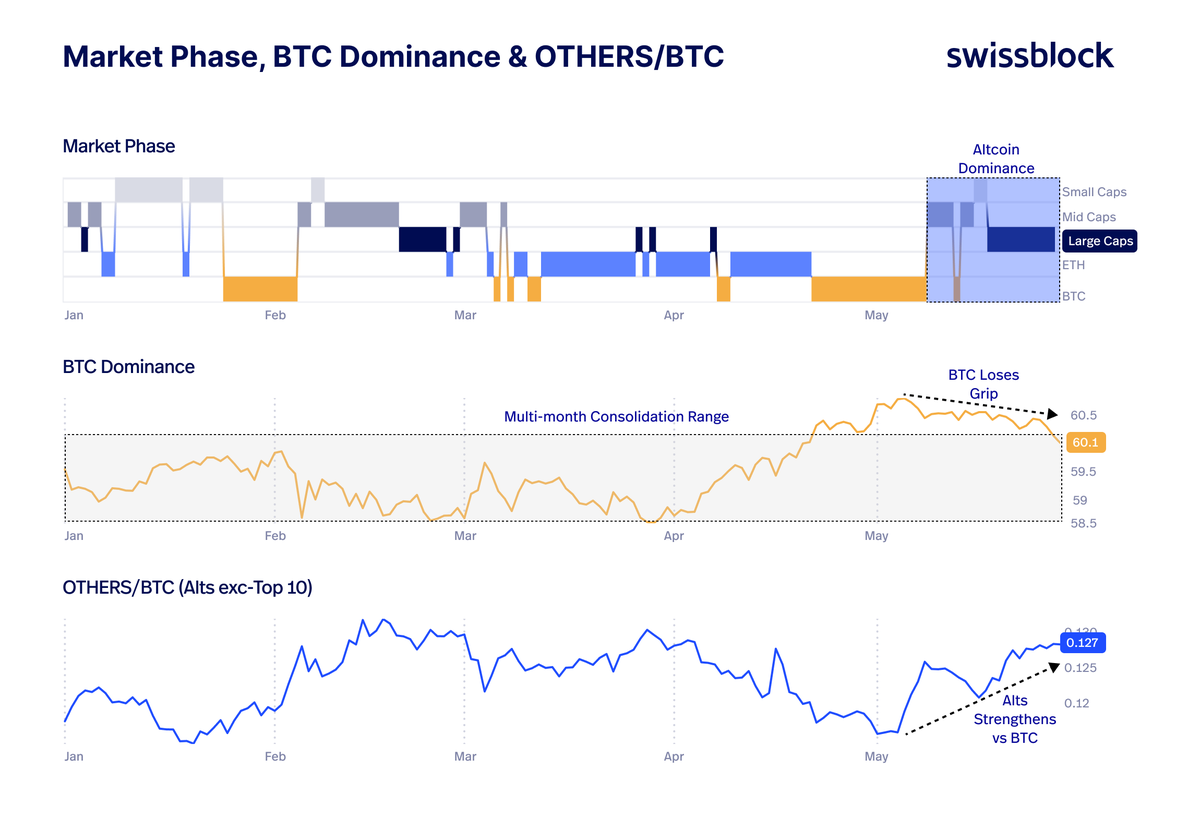
Unusual strength has emerged across altcoins.
While Bitcoin has retraced the entire recovery from the February lows, Alts vs BTC are breaking out with force, marking a new phase of altcoin leadership.
But the key question is:
Is this altcoin strength, or simply Bitcoin weakness?
Bitcoin dominance spent months trapped in a consolidation range. May briefly produced a Bitcoin-led regime, but that leadership has now broken down.
Once BTC lost leadership, Market Phase rotated toward Large Caps as alts began strengthening.
That means this is altcoin strength derived from BTC weakness. Not a confirmed structural rotation.
And that is the risk. This kind of altcoin strength can become a trap.
If alts have resisted better than BTC, the market may still come for them next once Bitcoin weakness spreads.
3
5
30
4,306
Jun 1
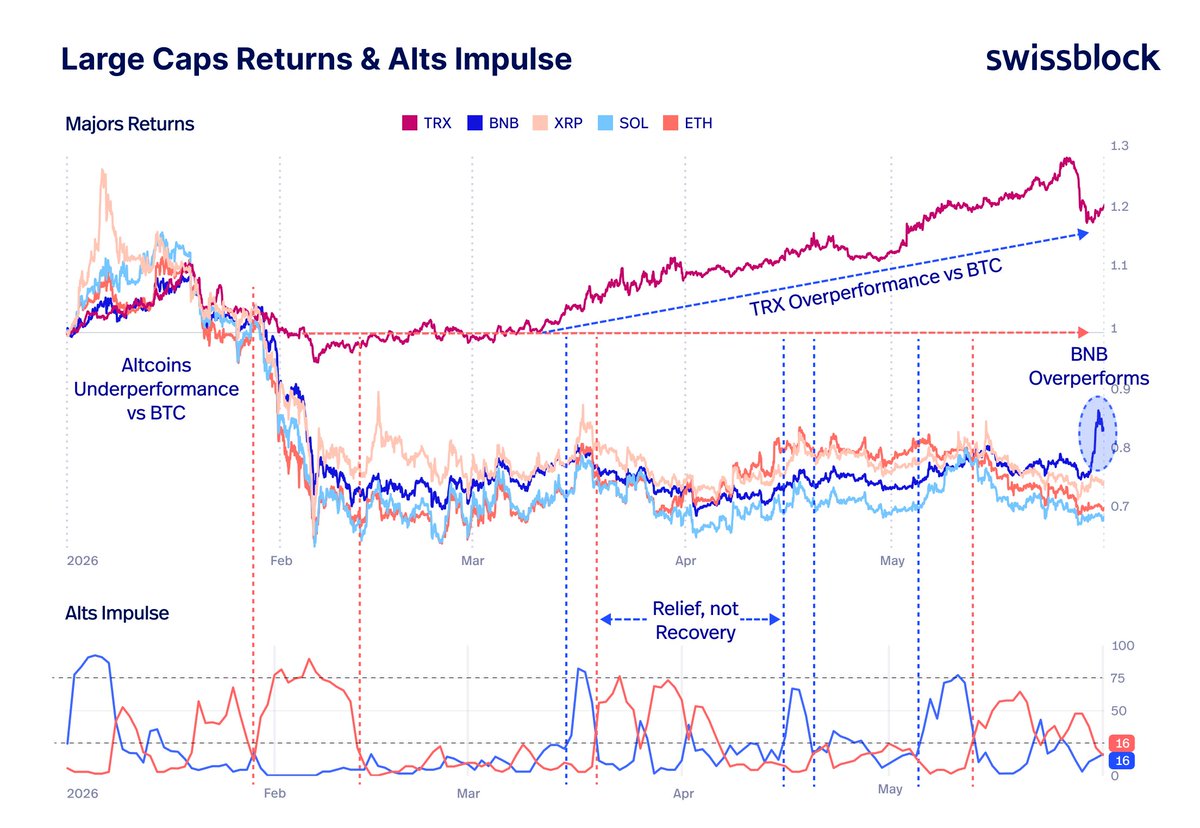
Only one of the Top 5 altcoins has outperformed BTC.
Different from past cycles or not, major altcoins have followed the same script:
→ ETH keeps making lower highs vs BTC
→ SOL remains trapped in relative underperformance
→ XRP failed to build sustained leadership
Only two assets stand out:
→ TRX, the clear structural winner of 2026
→ BNB, now attempting to break away from the pack
Meanwhile, Altcoin Impulse remains neutralized, still suppressed below ignition.
And once momentum does turn on, the focus may shift toward more impulse-sensitive altcoins.
3
25
4,611
May 28
This is the moment when BTC dominance should be strengthening.
But instead, it is falling back into its multi-month consolidation range.
Market Phase has consistently been signaling altcoin dominance.
But alts are not leading because they are structurally strong.
They are leading because BTC is weakening.
That creates a very different altcoin environment:
→ More volatile
→ More tactical
→ Higher risk when chasing altcoin dips
Everything now depends on whether Bitcoin can stabilize structurally.
3
1
19
1,830
May 22
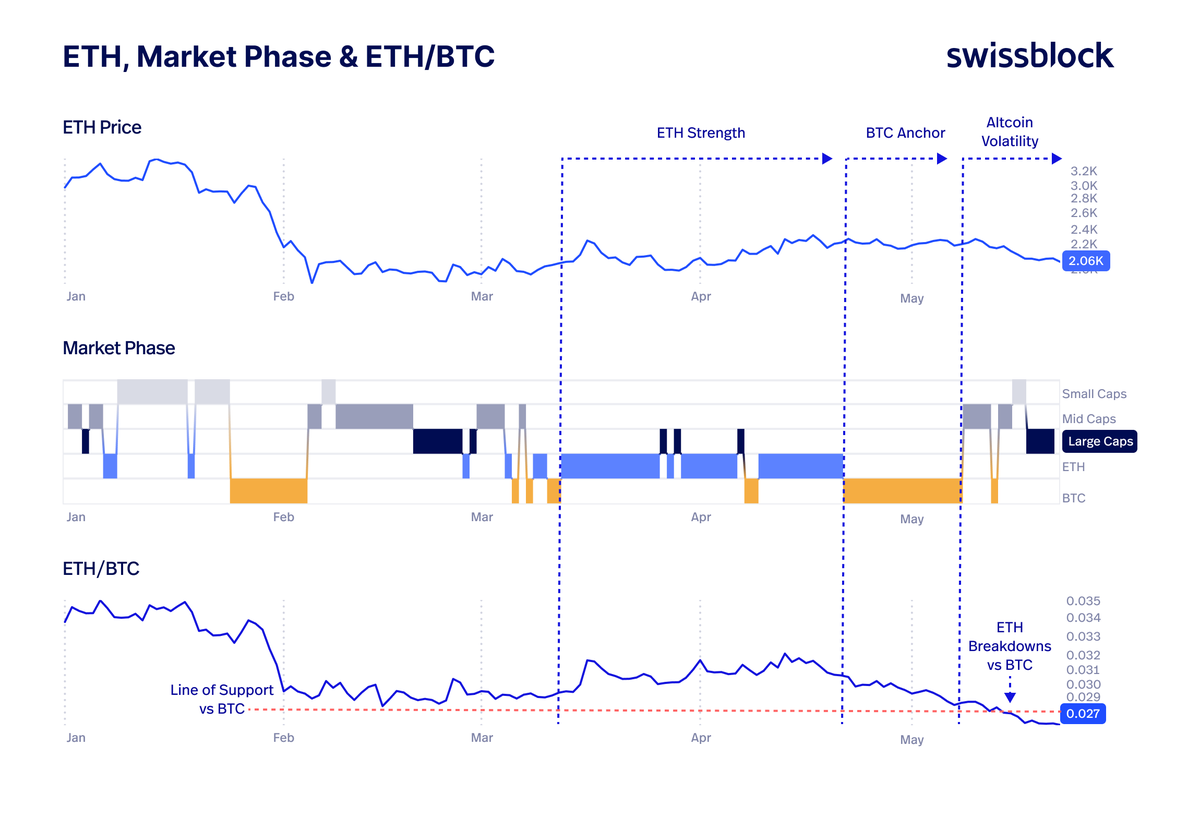
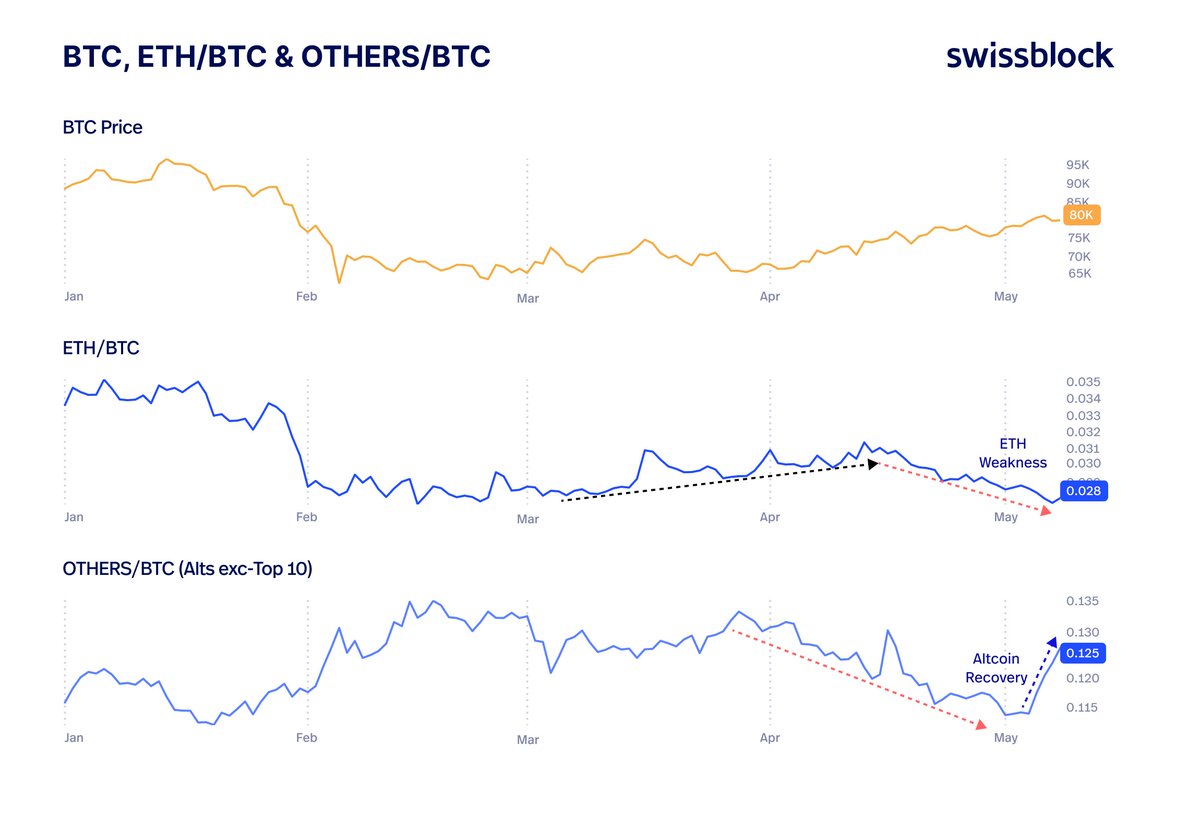
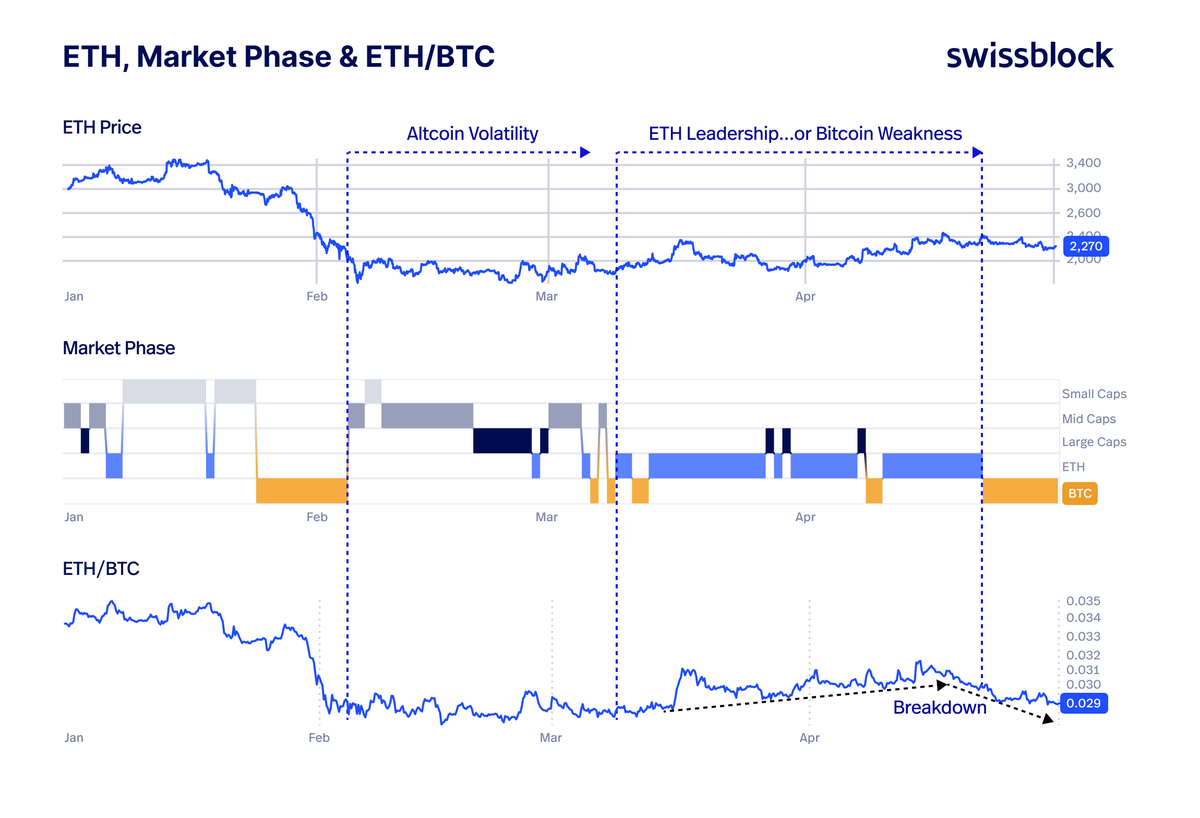
ETH has lost ground against Bitcoin.
Not even the recent altcoin volatility phase has helped. Actually, the opposite happened:
ETH/BTC has continued weakening and is breaking down its monthly support.
ETH still showed relative strength into early April, but once BTC anchored the market again, ETH started losing leadership.
Now ETH price has formed a short-term downtrend with lower highs.
If ETH fails to hold this six-week low, the next risk is clear:
sub-$2,000 comes back into view.
5
3
16
2,333
May 21
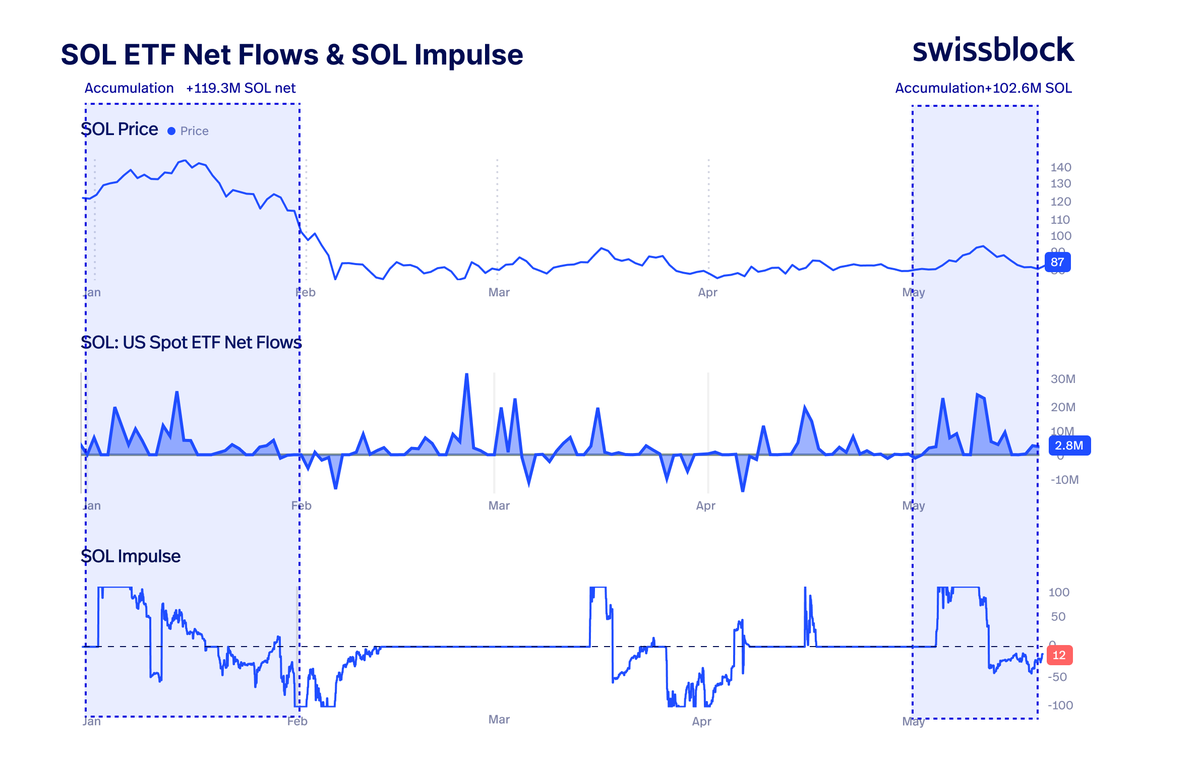
What is happening with SOL ETFs?
They have less history than BTC and ETH, but the signal is clear:
SOL ETFs have been in sustained accumulation throughout 2026.
January delivered the strongest monthly inflow, while May has reaccelerated sharply.
That means SOL ETF demand remains structurally supportive, despite intermittent distribution in February, March, and April.
But there is one important nuance:
SOL impulse has not been consistent throughout the accumulation phase.
That tells us ETF demand is supportive, but not enough by itself.
That tells us ETF demand has helped sustain the structure, but not ignite momentum.
A typical accumulation structure.
1
3
20
1,988
May 20
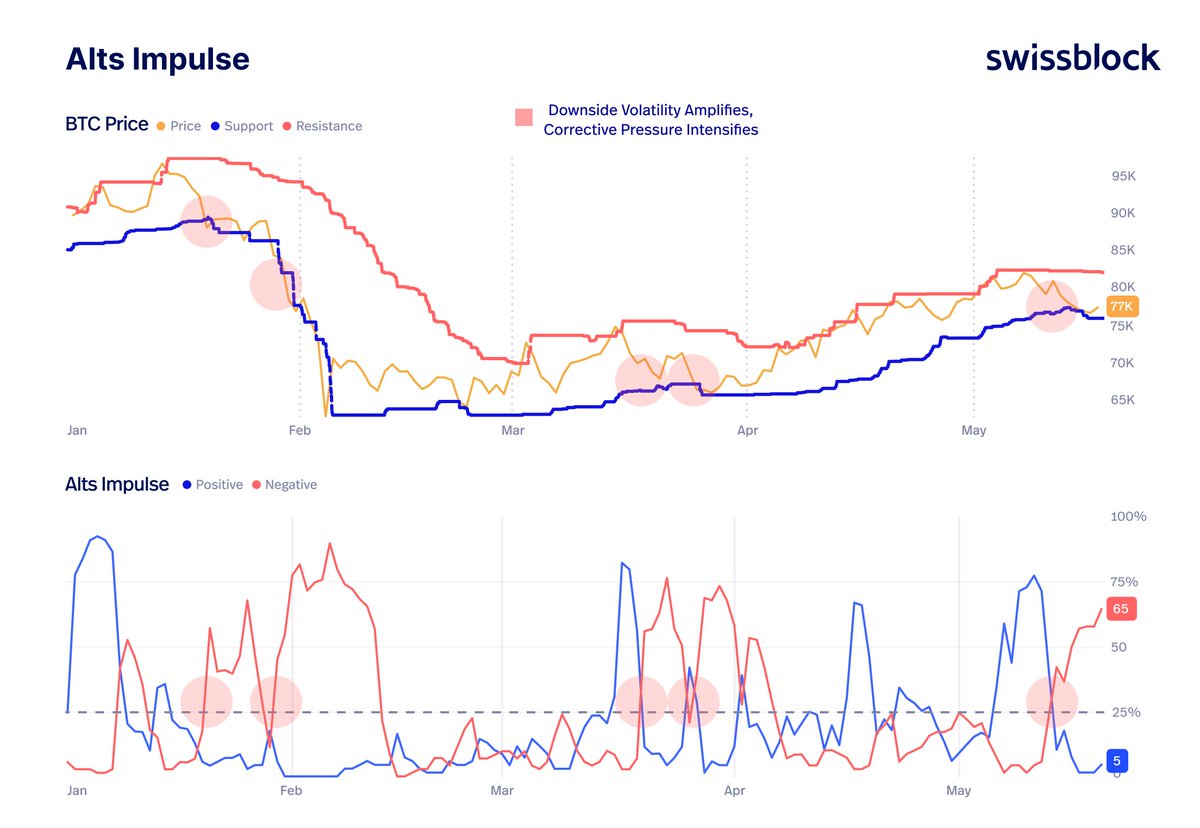
Altcoins are under a corrective pressure regime.
Every time BTC moves down toward its support zone, negative impulse crosses the 25% threshold while positive impulse fades.
That is the key pattern.
Under bear-market structures, every time Bitcoin weakens near resistance or fails to sustain expansion, downside volatility amplifies aggressively across alts.
But the issue is not just downside.
The real problem is that positive impulse remains suppressed until negative impulse turns off.
As long as corrective pressure dominates, altcoin rallies remain fragile and easy to reverse.
4
24
2,041
May 14
ETH ETF flows had their strongest month of the year in April.
But despite that, ETH ETFs have still distributed more ETH than they have accumulated in 2026 overall:
→ Net Flow 2026: -324K ETH
That reflects the bigger problem behind alts this year:
ETH never became a sustained leadership engine.
Without ETH strength and traction, most alt rallies fade back into volatility.
2
7
33
4,313
May 11
A potential rotation window has opened.
But one risk remains:
Is this the start of a real altcoin rotation…
or another altcoin trap?
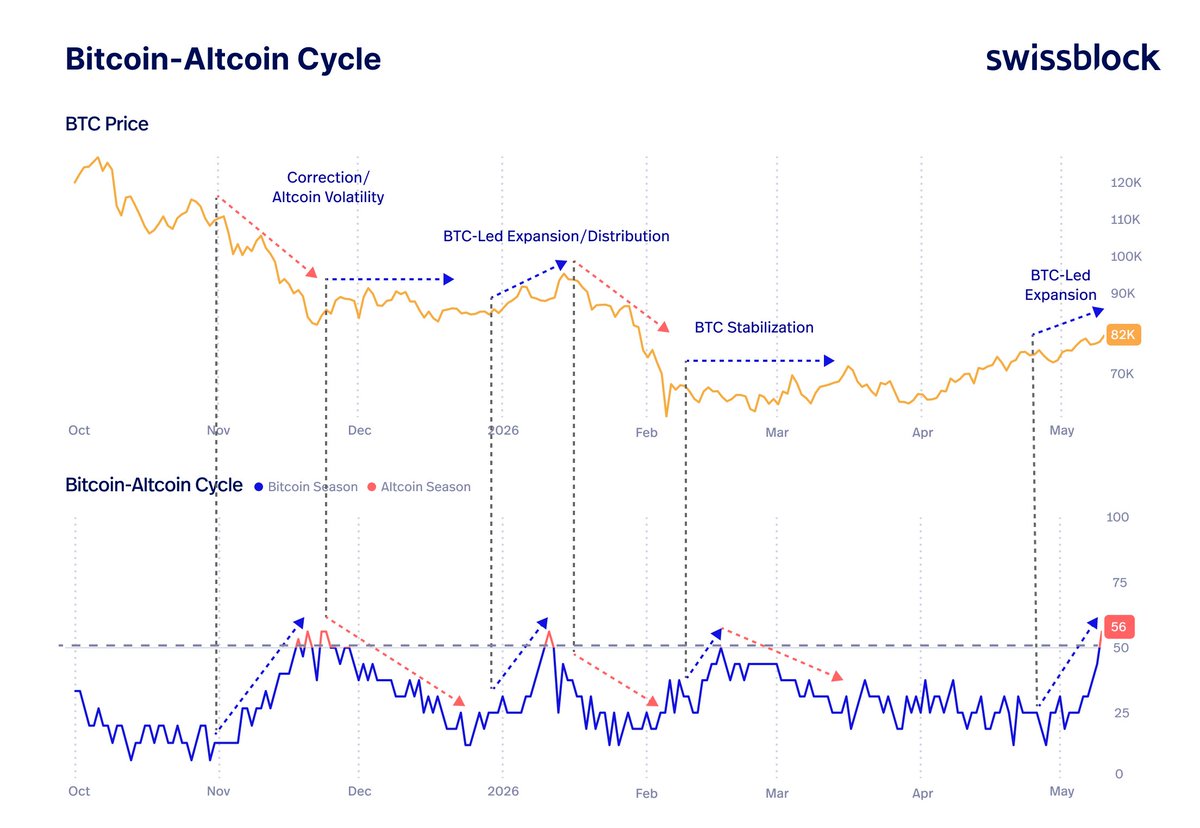
Since Bitcoin entered its bearish phase, most altcoin strength attempts have followed the same path:
→ BTC correction → altcoin volatility
→ BTC-led expansion → late altcoin burst
→ BTC distribution → trapped alt traders
BTC stabilization came after a deep downside and capitulation.
No, we're at a BTC-led expansion, and an early altcoin rotation attempt
Alts are showing strength again, but so far these rotation attempts have ended poorly.
They often appear in the late stages of BTC expansion, attract retail, and reverse quickly.
The key? Understanding what would power a potential rotation
3
7
45
3,204
May 8
Altcoins have given a second warning.
They are starting to show strength while Bitcoin consolidates.
But ETH remains the concern.
ETH/BTC is still weak, even as OTHERS/BTC begins to recover.
That divergence tells us alts may be front-running a potential rotation, skipping the usual ETH leadership phase.
We need to watch ETH closely for signs of reclaimed strength.
A healthy rotation usually starts with ETH.
Otherwise, this is just altcoin volatility, which can be reversed fast and easily if Bitcoin weakens.
May 6

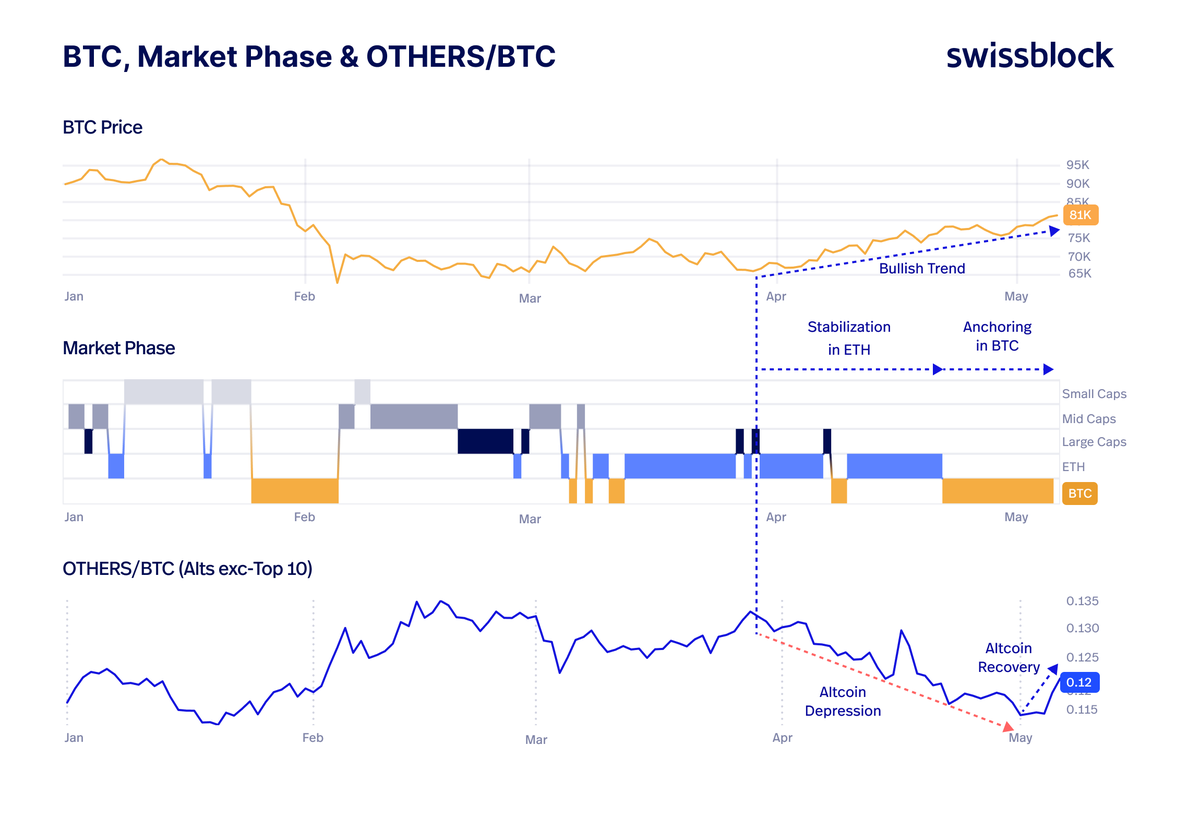
This is still a BTC-led market.
But alts have shown their first sign of life.
After a deep depression phase, ETH first stabilized the market but compressed altcoin volatility.
Then BTC reclaimed leadership, strengthened its bullish trend, and pushed to a 3-month high.
Now alts are showing early recovery signs.
A small relief window is opening as Bitcoin reaches its limits.
The key:
Can this relief become sustainable?
Only if BTC confirms expansion above $80K.
2
7
90
10,868
May 6
This is still a BTC-led market.
But alts have shown their first sign of life.
After a deep depression phase, ETH first stabilized the market but compressed altcoin volatility.
Then BTC reclaimed leadership, strengthened its bullish trend, and pushed to a 3-month high.
Now alts are showing early recovery signs.
A small relief window is opening as Bitcoin reaches its limits.
The key:
Can this relief become sustainable?
Only if BTC confirms expansion above $80K.
Apr 29

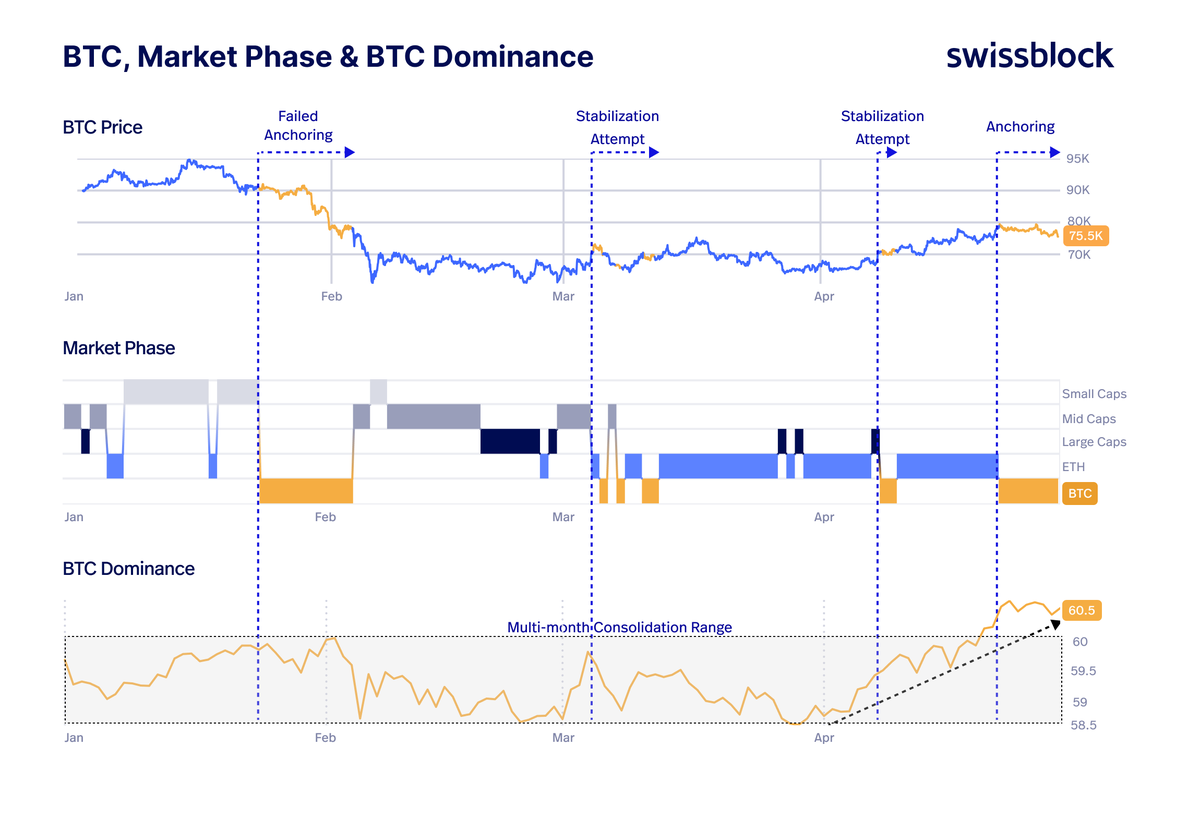
A crucial regime shift is unfolding in Bitcoin.
The Market Phase has anchored in BTC.
Capital is concentrating in Bitcoin, not rotating outward.
That mainly strengthens BTC, but the important part is the timing:
This shift is happening just as BTC is starting to break higher, while BTC dominance breaks out of a multi-month range.
This is typical of pre-expansion phases.
For Bitcoin to lead the market, this structure needs to hold.
Otherwise, weakness can return quickly and drag the entire market with it.
1
11
39
17,028
May 5
With Bitcoin capturing $80K, alts aren’t recovering yet.
They’re just reacting.
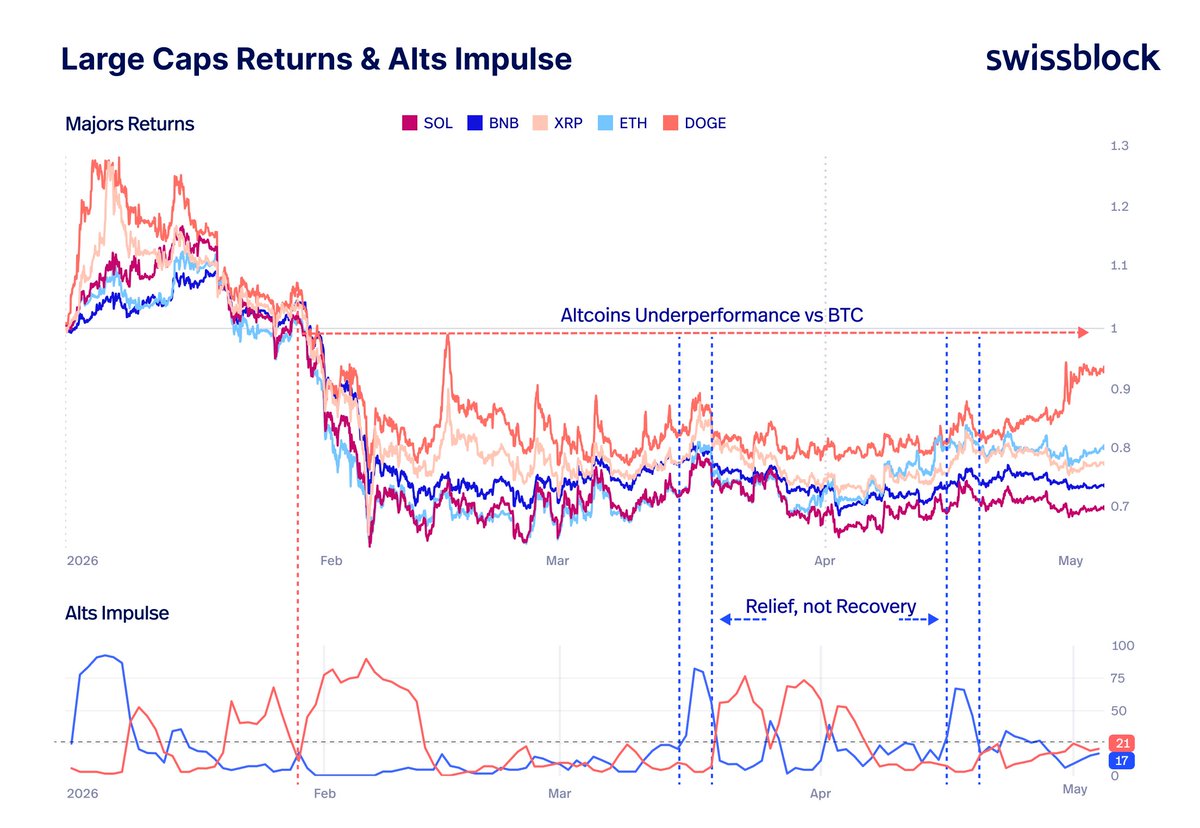
Large caps continue to underperform BTC, and every rally looks the same:
→ Quick spike in momentum
→ Immediate fade
Impulse confirms it:
Alts have not recovered.
They have only seen relief.
For momentum ignition, impulse needs to flip and sustain above 25%.
If Bitcoin consolidates above $80K, it may only be a matter of time before rotation starts moving into alts.
6
37
2,624
May 1
Bitcoin has reasserted dominance.
But that has weakened alts.
At this point, if BTC sneezes, alts get the flu.
Why?
ETH “led” from March into April, but not from real strength. It was mostly BTC weakness.
The normal rotation is:
BTC leads → ETH follows → alts ignite
The key now:
If BTC consolidates above $80K, rotation into ETH/alts can begin.
If BTC loses leadership before that, it signals BTC weakness, and alts would not just catch the flu, they would get hit hard.
1
8
32
3,837
Apr 23
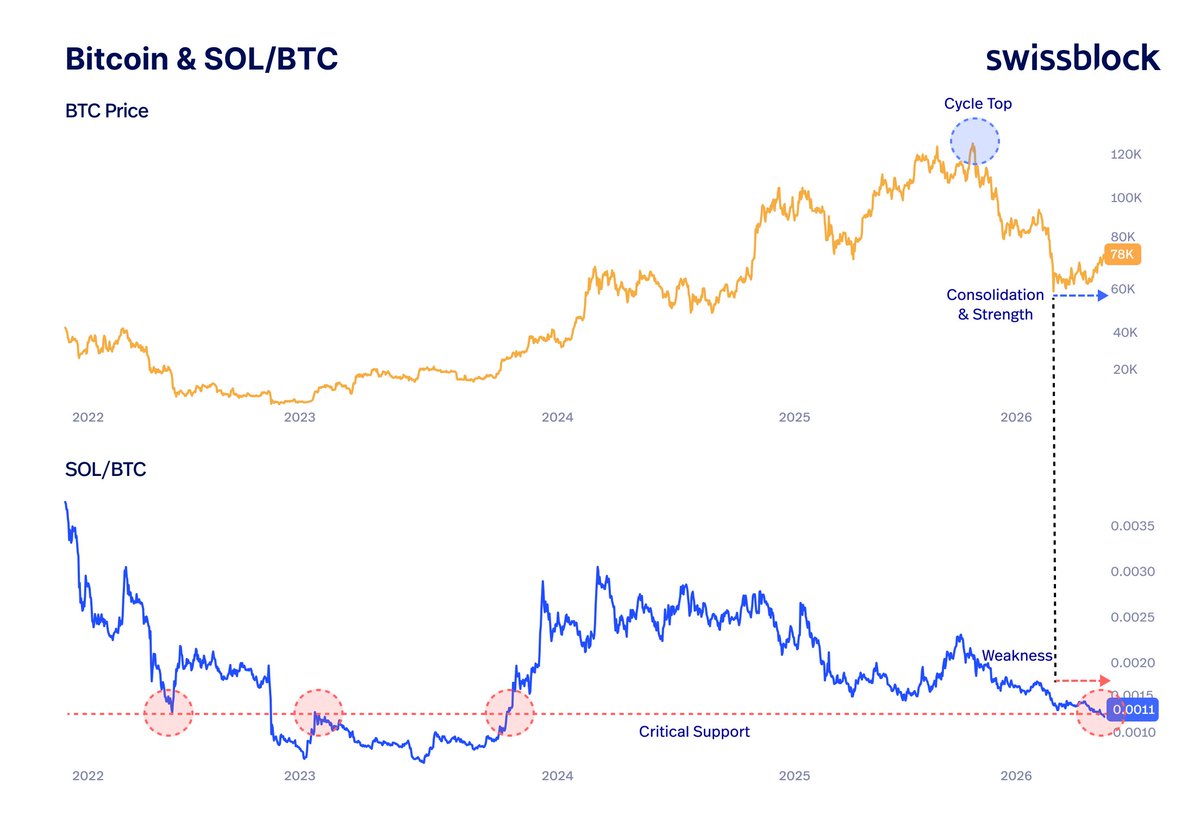
SOL/BTC is hanging off a cliff.
It’s now sitting at critical support.
Bitcoin has consolidated and is showing strength, but SOL/BTC keeps weakening, testing a multi-year support zone.
That reflects the state of altcoins right now: broad weakness, just reacting to BTC. Flows remain highly concentrated.
Bitcoin needs to confirm bullish expansion first.
Otherwise, if this level breaks, SOL and the rest of alts could be dragged lower fast.
3
24
2,275
Apr 23
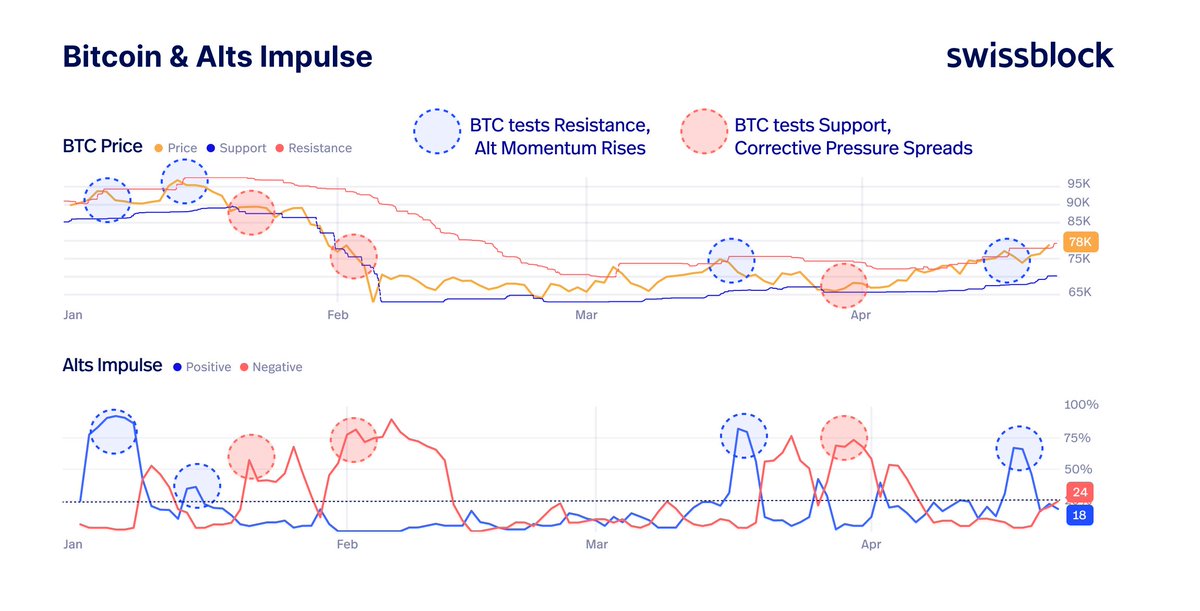
Bitcoin has pushed higher. Altcoins haven’t really followed.
Normally, BTC testing resistance helps alts ignite, with positive impulse rising above 25%.
But this time, the rally was brief, and negative impulse tries to dominate.
That tells you alts are still lagging BTC’s upside.
For alts to improve, Bitcoin likely needs to break out and consolidate.
Until then, this is not the best environment to deploy aggressively, short-term alt rallies can reverse fast.
2
7
34
2,583
Apr 16
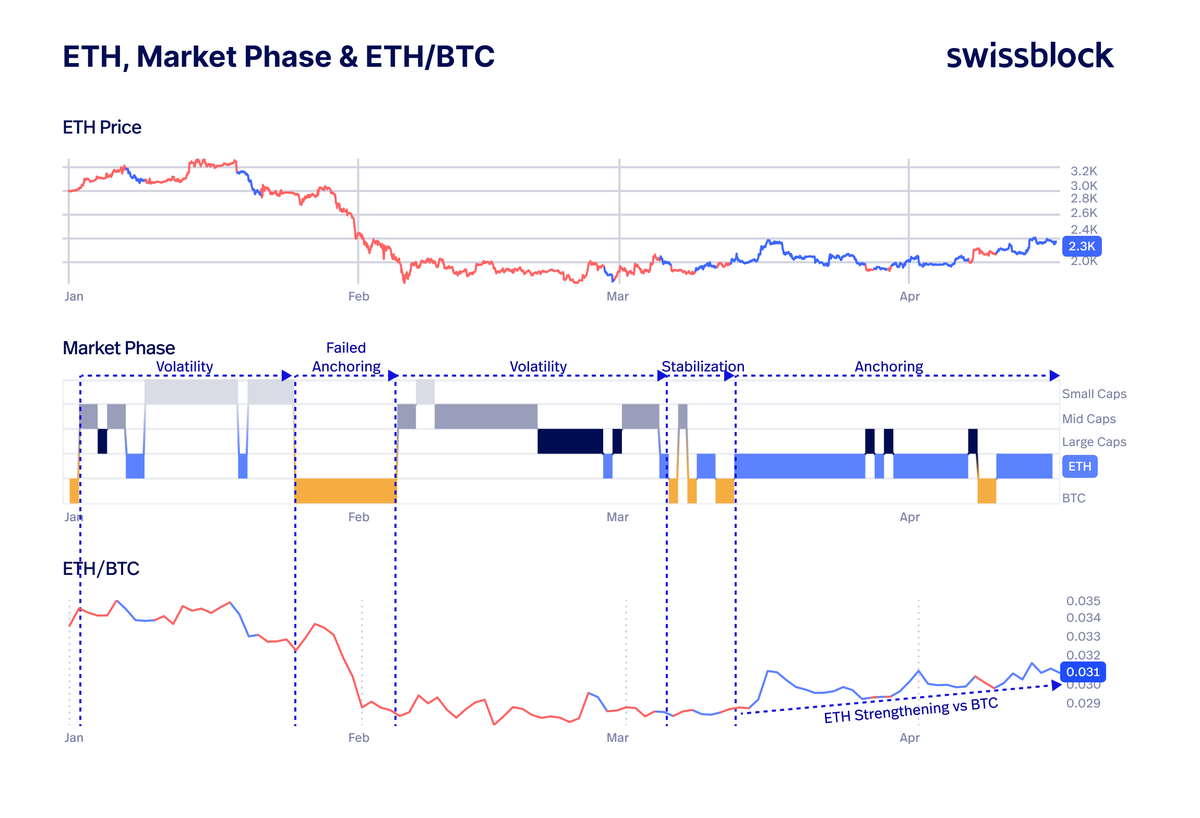
Bearish trends are defined by unleashed volatility and failed anchoring.
Ideally, BTC stabilizes the system. But when BTC goes flat, ETH can step in as an auxiliary anchor.
Now Market Phase has shifted:
failed anchoring → stabilization → early anchoring,
while ETH/BTC keeps strengthening.
That could open a wider window for alts, if BTC stays stable and ETH shows inherent strength.
4
30
3,490
Apr 15
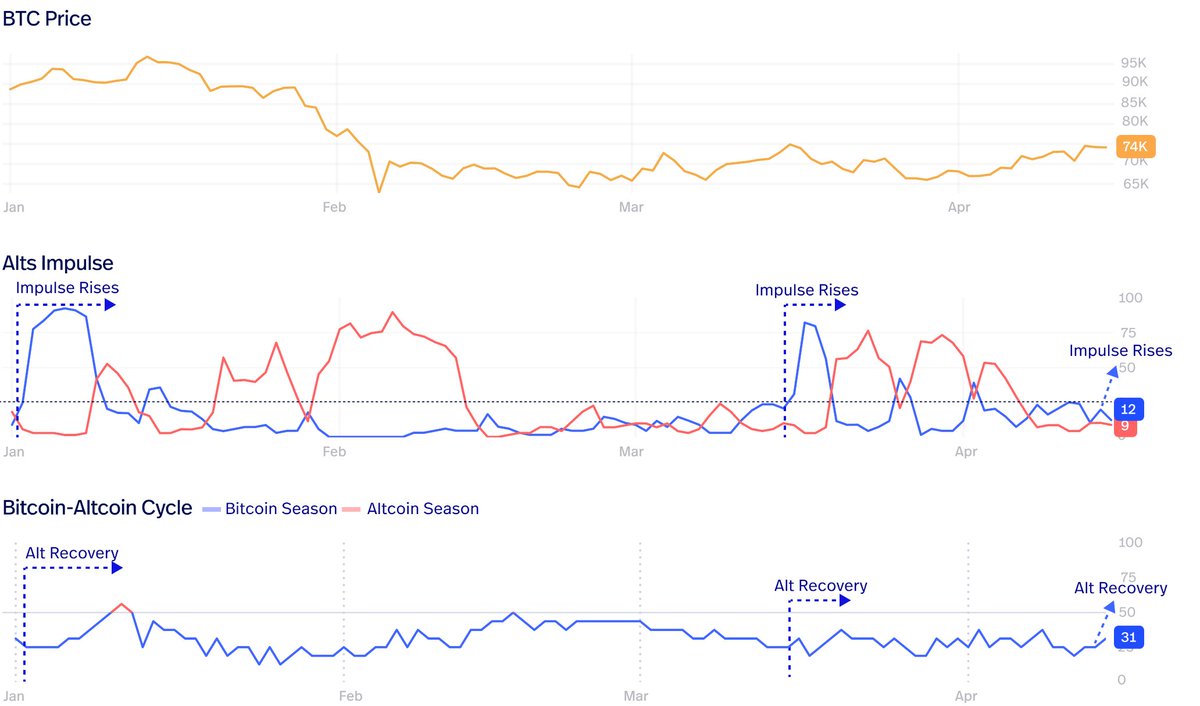
Bitcoin has made its move. Now, is it alts’ turn?
So far, alts have stayed in the background during BTC’s upside.
What we need next:
Positive impulse trending above 25% → broad altcoin momentum ignition
Market Cycle shifting toward "Altcoin Season" → altcoin recovery, not full expansion
That would open a brief window for alts, but it usually closes fast unless BTC gives them enough oxygen.
2
23
2,128
Apr 13
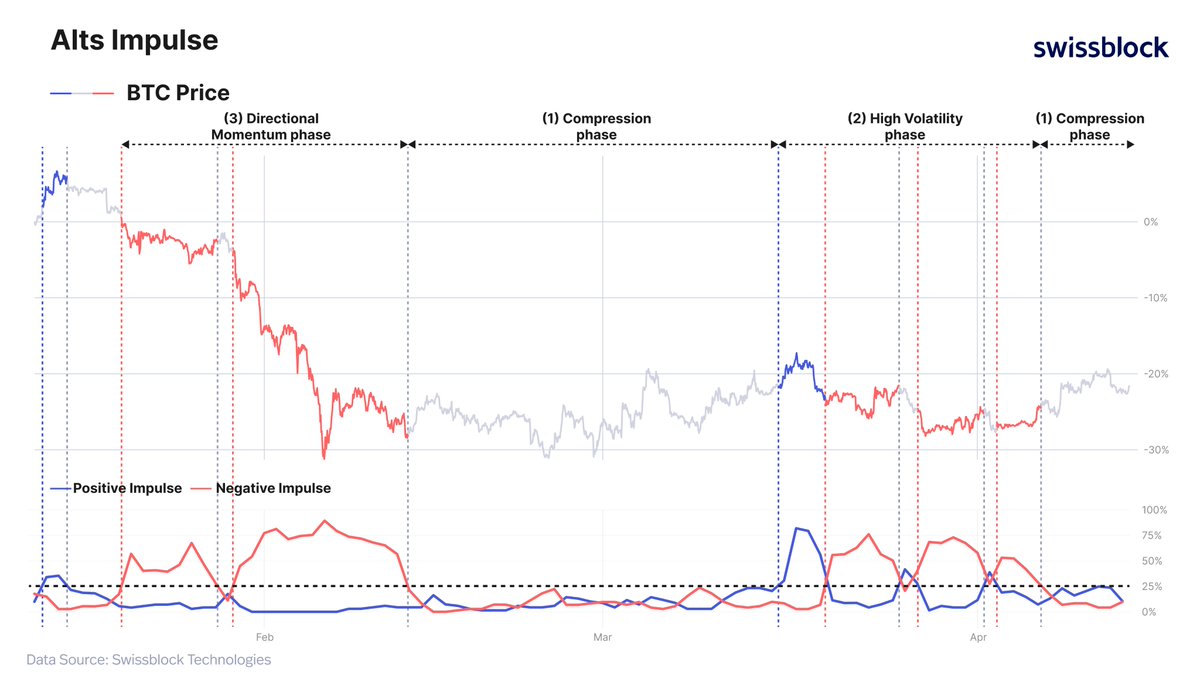
Alts impulse is now in a Compression phase,
a regime where neither momentum traction nor corrective pressure dominates.
The High-Volatility phase of the past few weeks has now led into this pause.
What comes next?
A Directional Momentum phase, the moment when the next big move gets triggered.
6
38
5,059
Apr 10
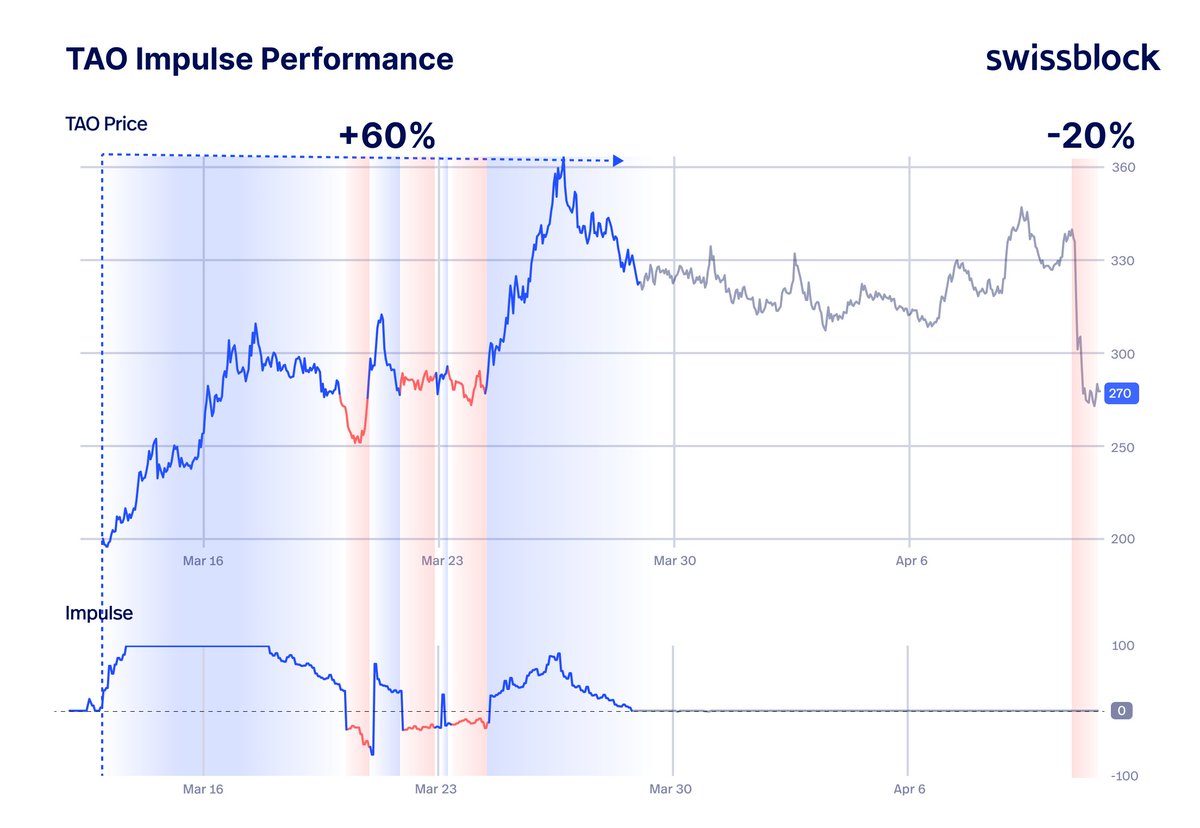
$TAO was first driven by fundamentals.
Positive impulse triggered, final ignition followed, and price delivered a 60% move.
Now fundamentals flipped into uncertainty.
Panic exit, ~20% drop in one shot.
The catch? Negative impulse has not fully triggered yet.
Neutral impulse suggests no intrinsic downside so far, and that this correction is still reactive.
But if negative impulse triggers, corrective pressure would spread fast, and TAO would likely still have downside left to cover.
1
2
16
5,079