We are a US-based civil rights organisation working to build a fairer, egalitarian society based on the principles and philosophy of Dr. B.R. Ambedkar.
Joined October 2015
- Tweets 3,707
- Following 766
- Followers 12,479
- Likes 8,319
548 Photos and videos

Pinned Tweet

14 Oct 2023
Unveiling the statue of Dr Ambedkar at Accokeek Maryland USA
246
1,528
8,360
482,090
Ambedkar International Center (AIC) retweeted
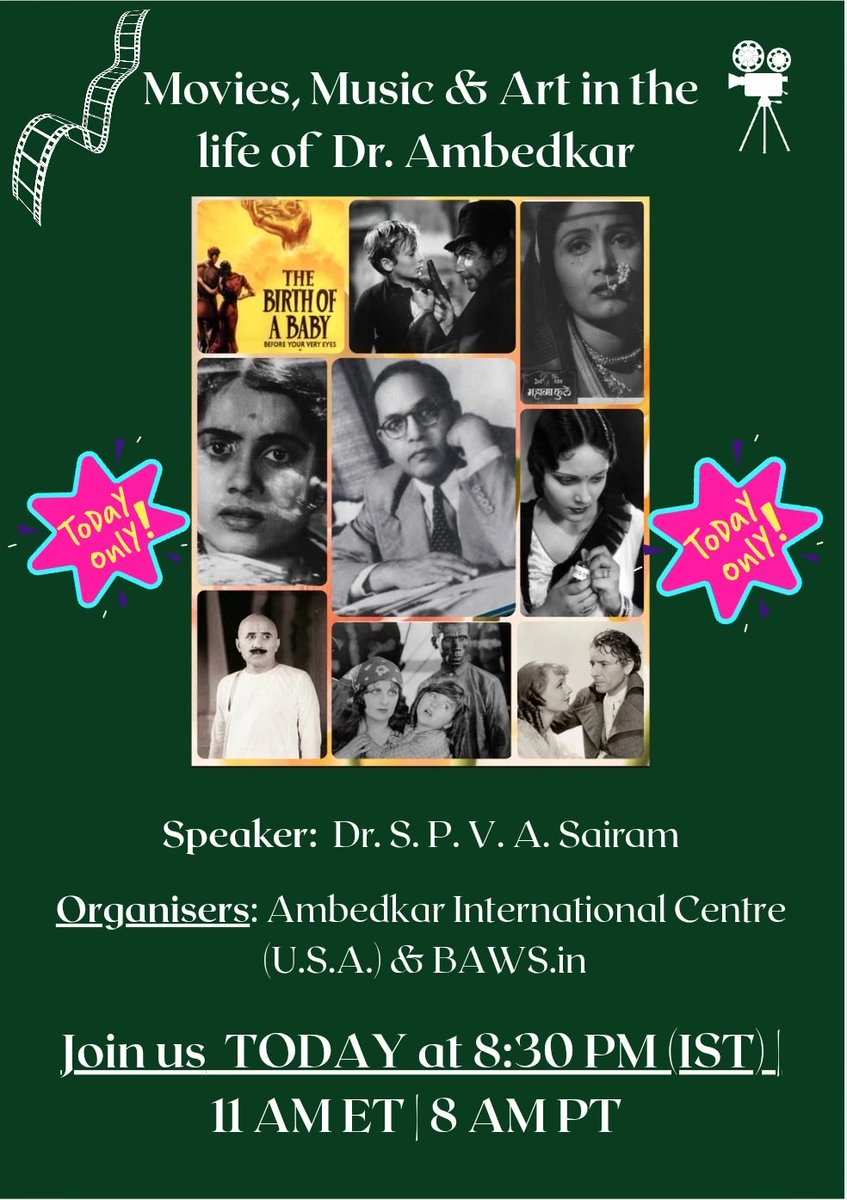
A great talk by Dr Sairam.
Recording is available here. A must watch. You will learn personal aspects of Babasaheb.
youtube.com/live/L8CI12r0MrM
5
16
161

Remember to join us at 8:30 PM IST tonight!
(Some of you have questioned the premise of this talk, come over to find the answer!)
baws.in/funfact/baws-talk-13…
4
6
157
📍 Sorkhi Village, Hansi, Haryana
A disturbing incident from Haryana has sparked outrage across India.
Baru, a 32-year-old Dalit man, stated that he was suffering from diarrhoea and had gone to the fields when villagers accused him of stealing a water-pump motor. According to his statement, he repeatedly asked to be handed over to the police if he was suspected of any wrongdoing.
Instead, he says he was beaten, tied with a rope, and hung upside down inside a well, with his head repeatedly lowered into the water. Fearing for his life, he later confessed under pressure despite maintaining his innocence.
The video of the incident went viral, leading to public outrage and the registration of an FIR against multiple accused.
No allegation can justify mob violence, torture, or the denial of human dignity. Every individual deserves justice, due process, and equal protection under the law.
#JusticeForBaru #DalitLivesMatter #HumanRights
1
19
33
573
Ambedkar International Center (AIC) retweeted

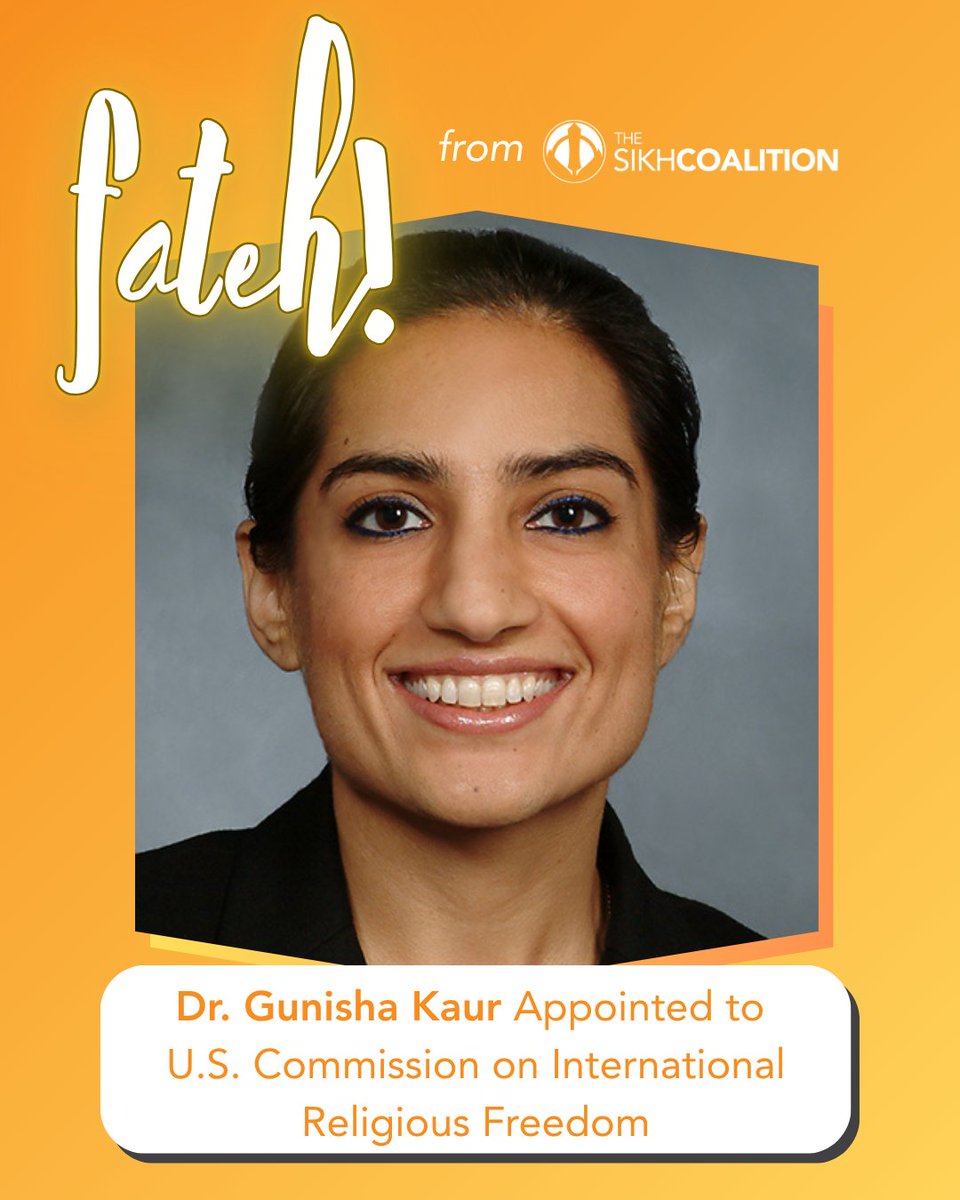
This spring, our close ally and friend @sikh_coalition's very own Dr. Gunisha Kaur was appointed as a commissioner to @USCIRF!
This is a huge accomplishment not just for Dr. Kaur, but for our entire South Asian American community.
Congratulations, Dr. Kaur! 🎉👏

Congratulations to Dr. Gunisha Kaur on her appointment by @SenSchumer to serve as a commissioner of @USCIRF!
We look forward to continuing our collaboration with the Commission which will benefit immensely from Dr. Kaur's professional qualifications and Sikh perspective.


2
19
745
Ambedkar International Center (AIC) retweeted

Jun 12
@obed_manwatkar @PatankarPrachi @AjoyDharmavaram @alitheasm @Anjmeh @AbhishekSamson @EarlyIndian @BrindaAdige @Brinelle_Dsouza

11 June #TheDayInHistory
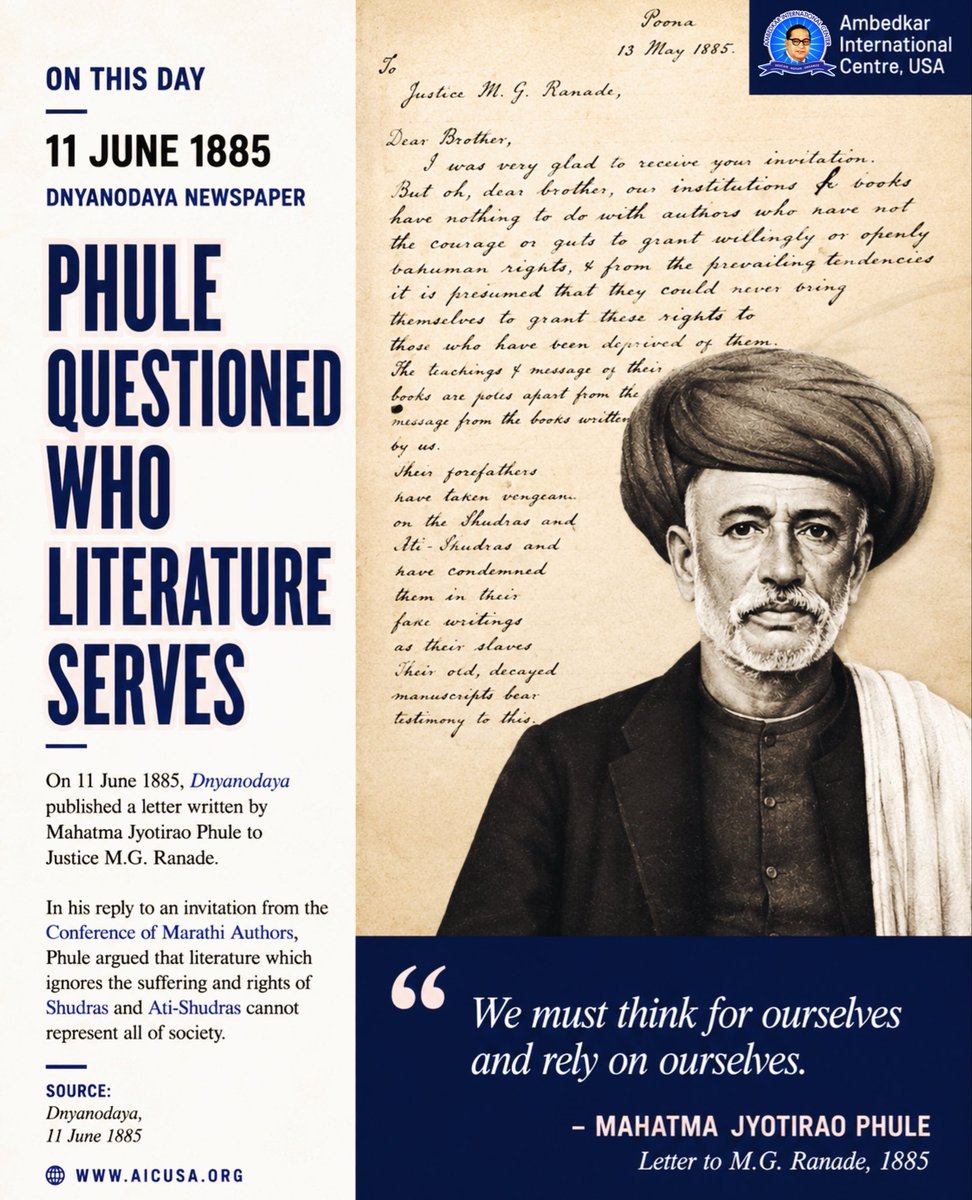
On this day in 1885, Dnyanodaya newspaper published a letter written by Mahatma Jyotirao Phule to Justice M.G. Ranade.
Ranade had invited Phule to attend the Second Conference of Marathi Authors. In his response, Phule questioned whether literature and social institutions that ignored the experiences, suffering, and rights of Shudras and Ati-Shudras could truly represent all sections of society.
Phule argued that generations of caste oppression had been justified through writings and traditions that denied dignity and equality to large sections of the population. He criticized those who spoke of reform while remaining unwilling to confront caste privilege and social injustice.
He reminded his readers that the hardships endured by Shudras and Ati-Shudras could not be understood through speeches alone and called for honesty in addressing the realities of social inequality. Rather than depending on those who had historically excluded them, Phule urged oppressed communities to develop self-respect, self-reliance, and independent thinking.
One of the most enduring lines from the letter reads:
"We must think for ourselves and rely on ourselves."
More than 140 years later, Phule's words continue to raise an important question: Who does literature serve, and whose voices are left unheard?
Source: Dnyanodaya, 11 June 1885 (Letter from Mahatma Jyotirao Phule to Justice M.G. Ranade)
#JyotiraoPhule #JaiBhim
2
8
182
Students are in the news again. Recent paper leaks led to over 17 suicides in India. However, it is not incidental but an endemic issue.
FromAbhishek Matta and Ashok Dhanavath
@AshokD97
@CJP_2029
thehindu.com/opinion/op-ed/t…
4
23
561
Ambedkar International Center (AIC) retweeted

Jun 8
In an economy marked by insecurity, inequality, and limited pathways to stable employment, academic credentials have come to bear the burden of aspirations, putting students under pressure
✍️Abhishek Matta and Ashok Dhanavath
thehindu.com/opinion/op-ed/t…
1
8
23
3,990
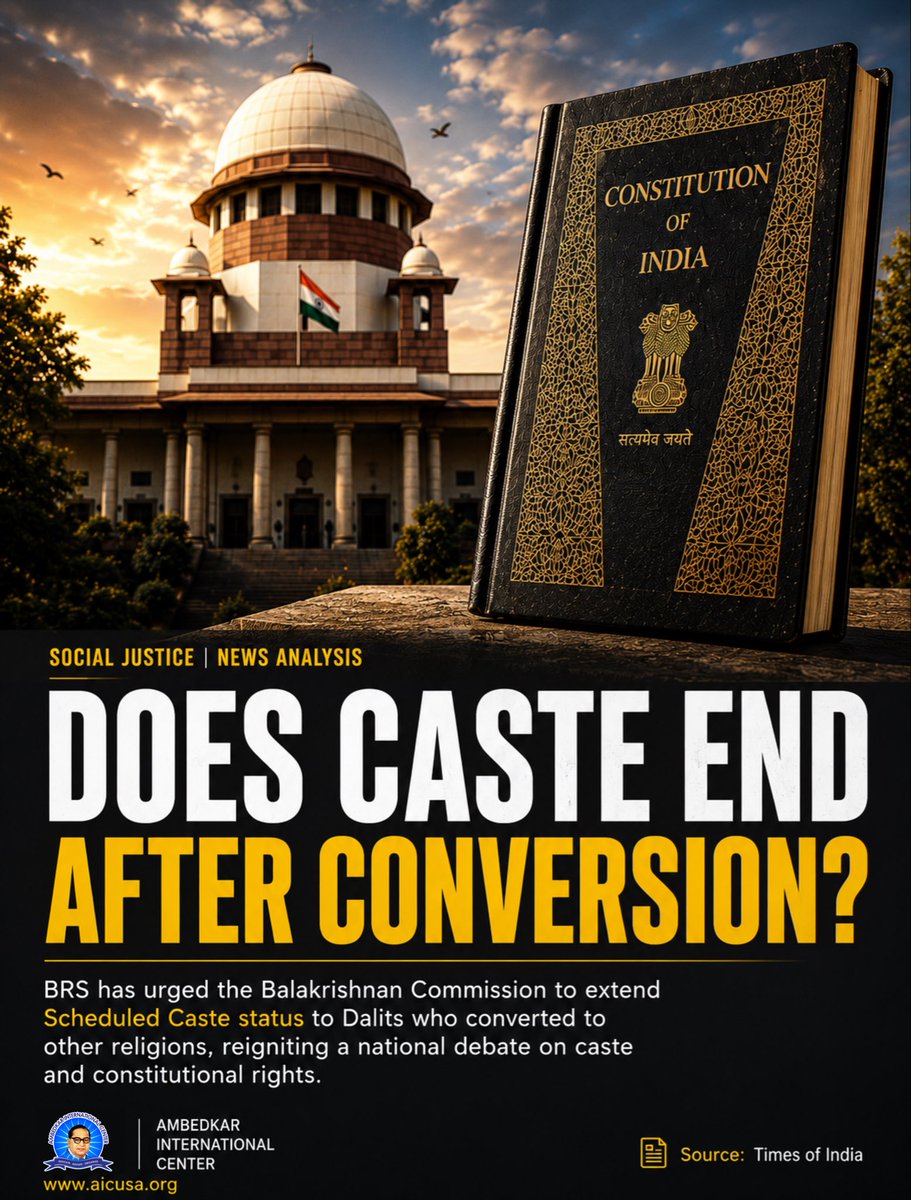
If a person changes their religion...
Does caste disappear too?
A major debate on caste and constitutional rights has resurfaced in India.
A political party from Telangana has asked a government-appointed commission to consider extending Scheduled Caste (SC) status to Dalits who converted to religions such as Christianity and Islam.
The argument is simple:
If caste-based discrimination continues even after conversion, should constitutional protections end?
Supporters say social exclusion, discrimination, and economic marginalisation often persist despite a change in religion. They argue that public policy should be guided by lived reality, not religious identity alone.
The commission examining the issue is expected to study whether Dalits who converted to other religions continue to face caste-based disadvantages and whether existing laws adequately address those realities.
For generations, oppressed communities have fought not only for legal rights, but for dignity, equality, and representation.
The question remains:
Can a change of faith erase a system that has shaped lives for centuries?
What do you think?
Source: Times of India
#JaiBhim #BabasahebAmbedkar #SocialJustice #DalitRights
8
18
51
995
11 June #TheDayInHistory
On this day in 1885, Dnyanodaya newspaper published a letter written by Mahatma Jyotirao Phule to Justice M.G. Ranade.
Ranade had invited Phule to attend the Second Conference of Marathi Authors. In his response, Phule questioned whether literature and social institutions that ignored the experiences, suffering, and rights of Shudras and Ati-Shudras could truly represent all sections of society.
Phule argued that generations of caste oppression had been justified through writings and traditions that denied dignity and equality to large sections of the population. He criticized those who spoke of reform while remaining unwilling to confront caste privilege and social injustice.
He reminded his readers that the hardships endured by Shudras and Ati-Shudras could not be understood through speeches alone and called for honesty in addressing the realities of social inequality. Rather than depending on those who had historically excluded them, Phule urged oppressed communities to develop self-respect, self-reliance, and independent thinking.
One of the most enduring lines from the letter reads:
"We must think for ourselves and rely on ourselves."
More than 140 years later, Phule's words continue to raise an important question: Who does literature serve, and whose voices are left unheard?
Source: Dnyanodaya, 11 June 1885 (Letter from Mahatma Jyotirao Phule to Justice M.G. Ranade)
#JyotiraoPhule #JaiBhim
14
46
700
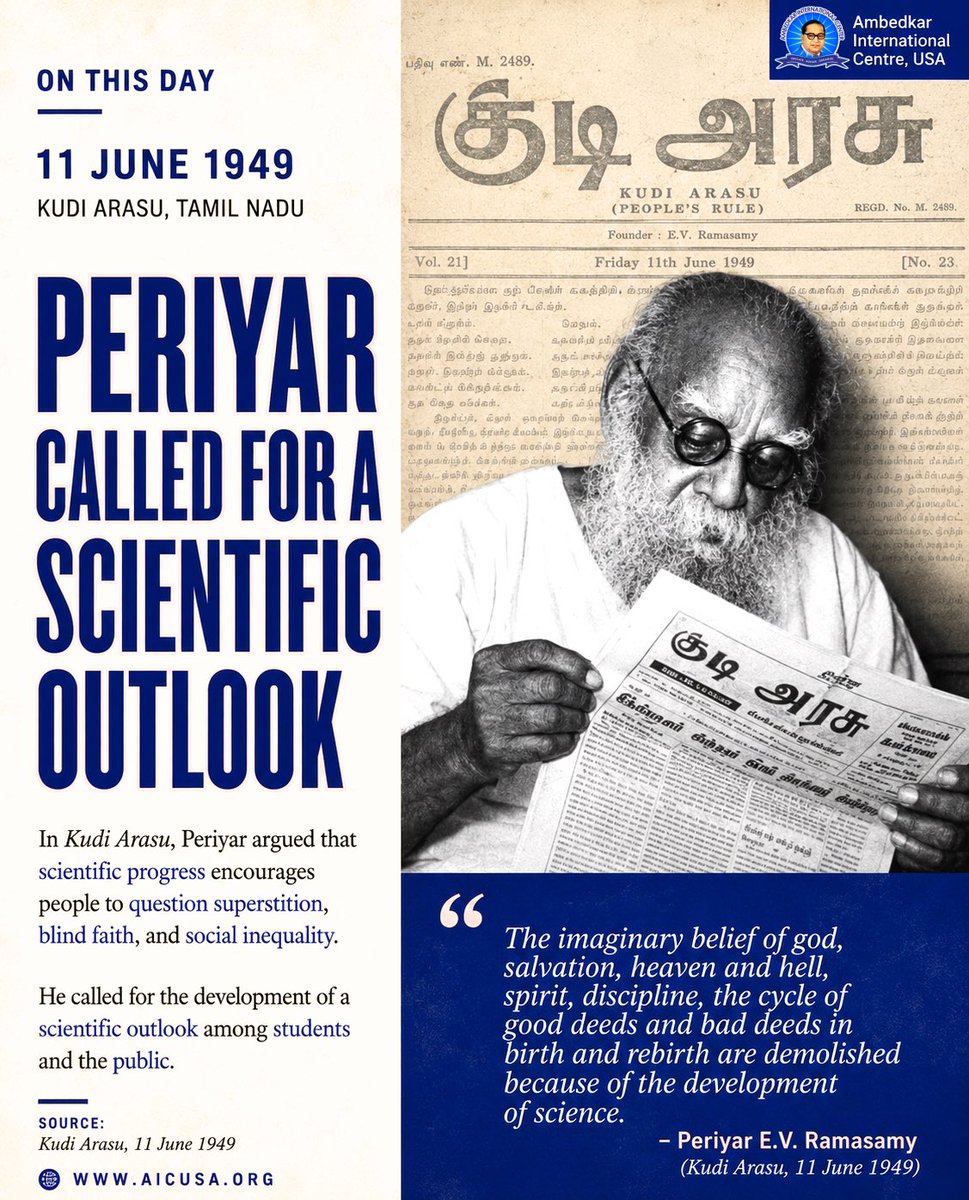
On this day, 11 June 1949, Periyar E.V. Ramasamy used the pages of Kudi Arasu to emphasize the importance of developing a scientific outlook among students and the public.
Periyar argued that scientific progress encourages people to question superstition, blind faith, and ideas that hinder social progress. He believed that reason, education, and critical thinking were essential for building a more equal and just society.
Through publications such as Kudi Arasu and Viduthalai, Periyar consistently promoted rationalism and urged people to examine social practices through evidence and logic rather than unquestioned tradition.
His advocacy of scientific thinking was closely connected to his broader struggle against caste discrimination, social inequality, and oppression.
More than seven decades later, his call for reason, inquiry, and scientific temper continues to inspire discussions on education, equality, and social reform.
Source: Kudi Arasu, 11 June 1949
#Periyar #JaiBhim
3
25
93
1,491
Ambedkar International Center (AIC) retweeted

Jun 10
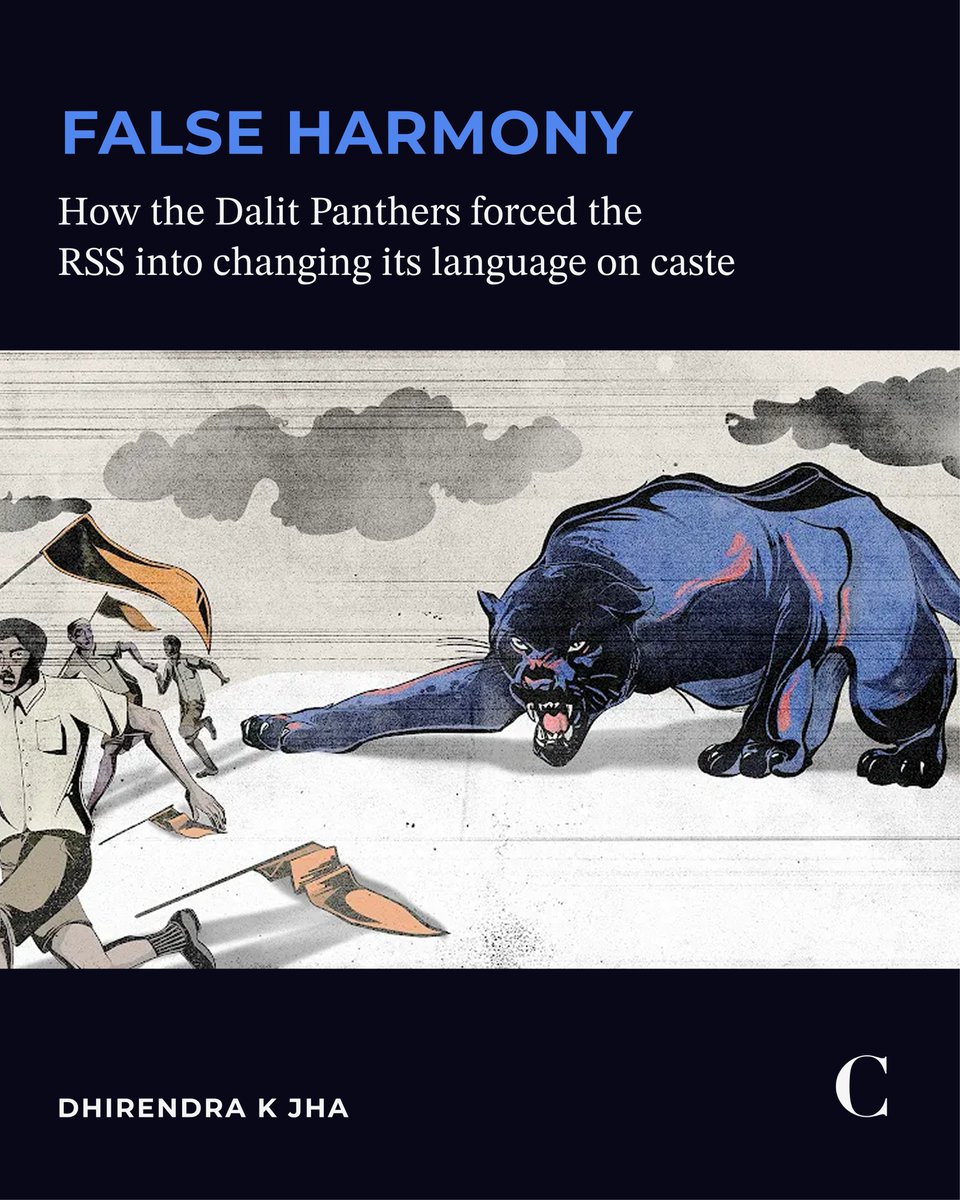
The Dalit Panthers was founded in July 1972, as the nation approached 25 years of independence. JV Pawar, now 82 years old, told me in Mumbai that the group’s history can be traced back to an Irani restaurant in Dadar, where young Dalit Marathi writers and poets—including Namdeo Dhasal, Daya Pawar, Arjun Dangle, Prahlad Chendwankar and Pawar himself—would meet regularly.
At first, it was a literary group. But after the findings of the Committee on Untouchability, Economic and Educational Development of the Scheduled Castes—headed by L Elayaperumal, tabled in parliament in 1970—the group started spending more and more time discussing atrocities against Dalits. The committee found widespread caste discrimination, harassment and atrocities committed against the Scheduled Castes across the country and recommended tightening the laws against caste discrimination—which played a role in the passage of the Scheduled Castes and the Scheduled Tribes (Prevention of Atrocities) Act in 1989.
Read the entire report on How the Dalit Panthers forced the RSS into changing its language on caste: caravanmagazine.in/history/h…
6
28
84
3,830
If passengers file a case in the US against Boeing, they have better chance of securing compensation and hopefully finding truth.
Jun 10

There is little doubt now that the Air India Ahmedabad crash was a result of electronic systems failure in the Boeing 787. This fault was known to Boeing & Air India. The Aircraft Investigation body is delaying its report to cover up for them.
Meanwhile they pressure victims to settle!

1
2
14
241
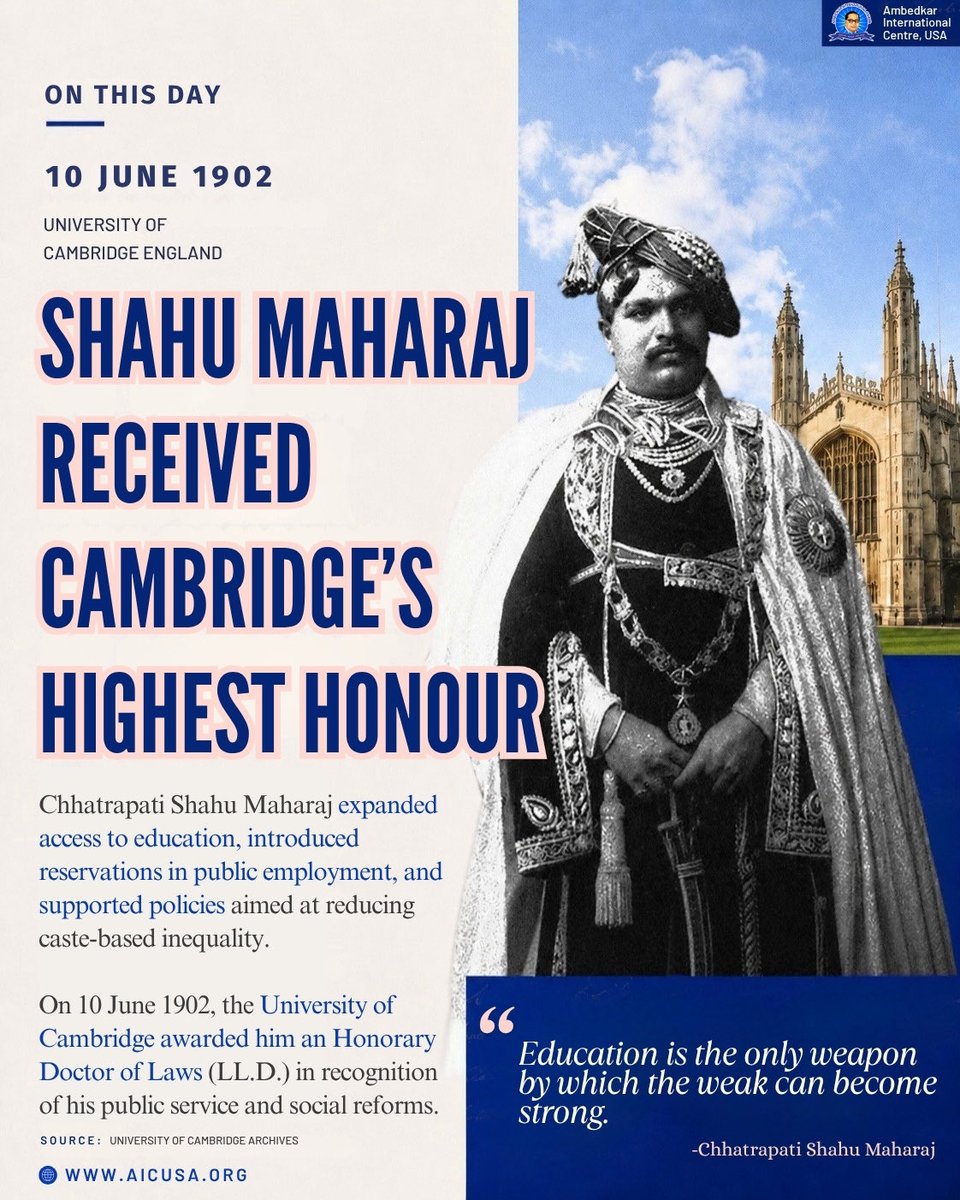
On this day, we remember a moment when the world took notice of a ruler who was transforming society through education and social justice.
Chhatrapati Shahu Maharaj of Kolhapur dedicated his reign to expanding educational opportunities, challenging caste discrimination, and creating pathways for marginalized communities to participate in public life. His reforms laid the foundation for some of India's earliest affirmative action policies and helped thousands gain access to education and government employment.
During his visit to England in 1902, the University of Cambridge awarded him an Honorary Doctor of Laws (LL.D.) in recognition of his contributions to education, public welfare, and social reform. Contemporary records and historical timelines place this honour on 10 June 1902, during his visit to England. Later sources also note Cambridge's recognition of his work in the educational and cultural spheres.
More than a century later, Shahu Maharaj remains a symbol of progressive governance, social equality, and the belief that education must reach those whom society has left behind.
“Education is the only weapon by which the weak can become strong.”
Source: University of Cambridge recognition records, Chhatrapati Shahu Maharaj historical timelines, and archival biographies of Rajarshi Shahu Maharaj. (Chhatrapati Shahu Maharaj)
2
17
79
554
RT @SushantSin: Important reportage by @MeSanjayy. "If they are politically active about caste discrimination, they are targeted and discri…
33
Good to read before Saturday talk!
(Details of talk in previous tweets)
theculturecafe.in/p/an-unexp…
4
11
343
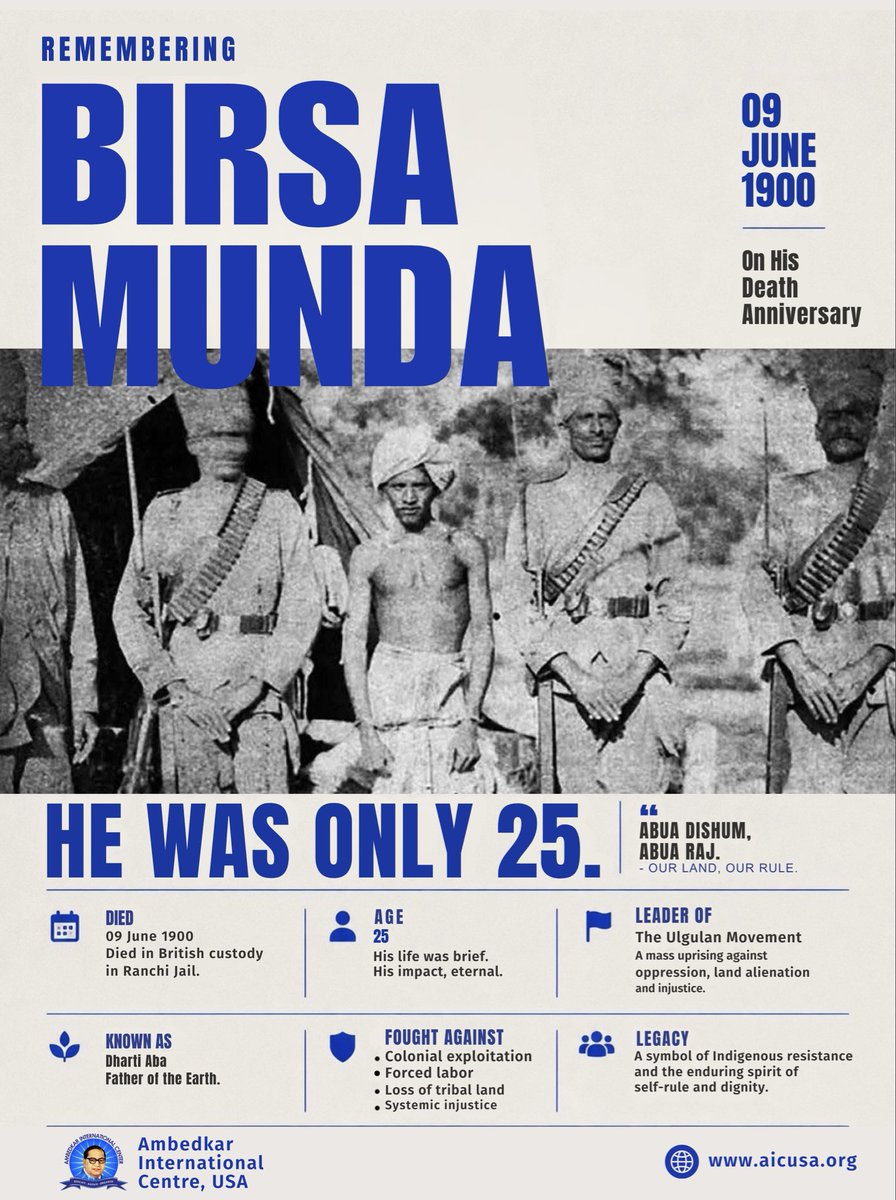
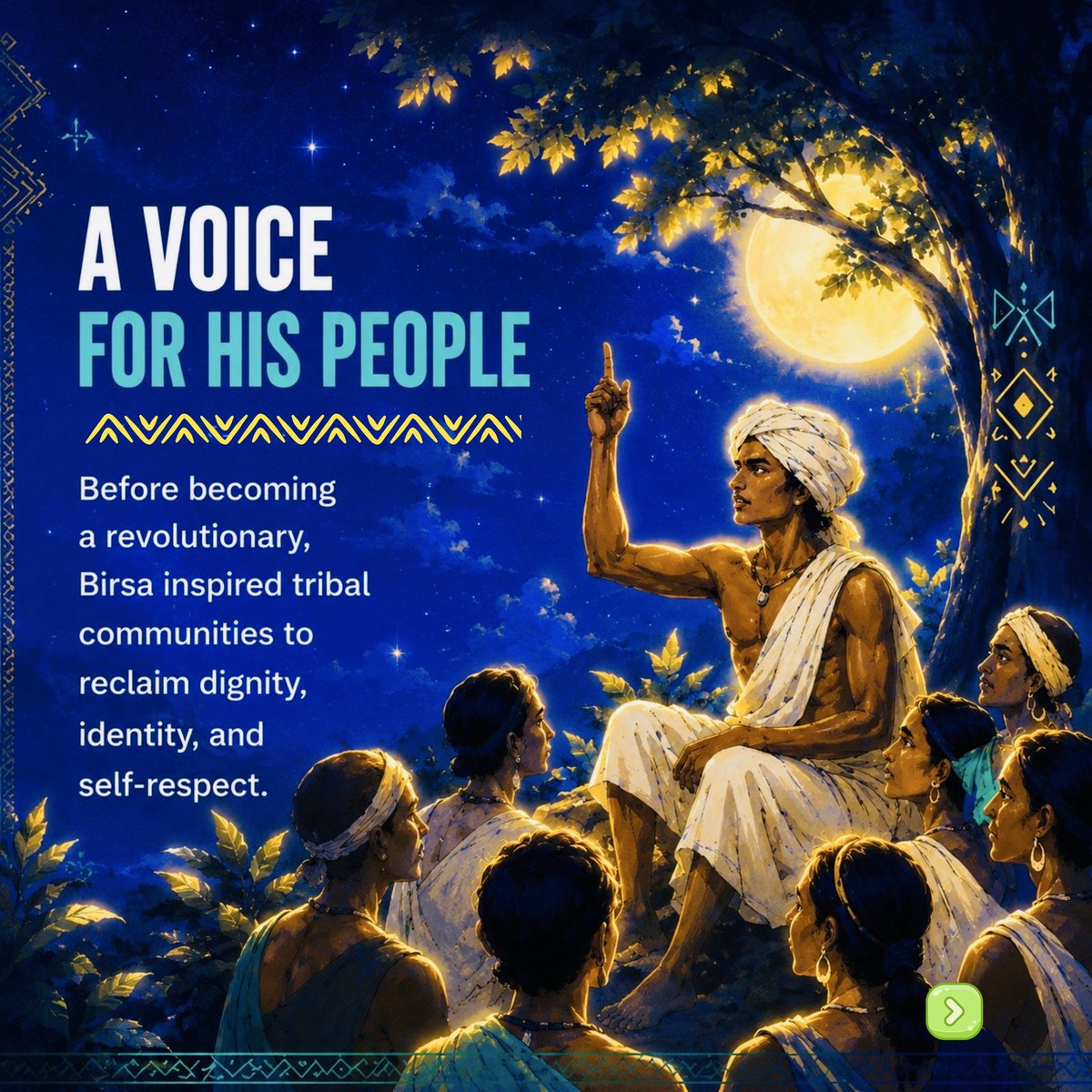
Born on 15 November 1875 in Ulihatu, present-day Jharkhand, Birsa Munda emerged as one of the most influential Indigenous leaders in India's history. At a time when colonial policies, forced labor practices, missionary influence, and land alienation were disrupting traditional tribal life, Birsa became a powerful voice for social reform, cultural identity, and community rights.
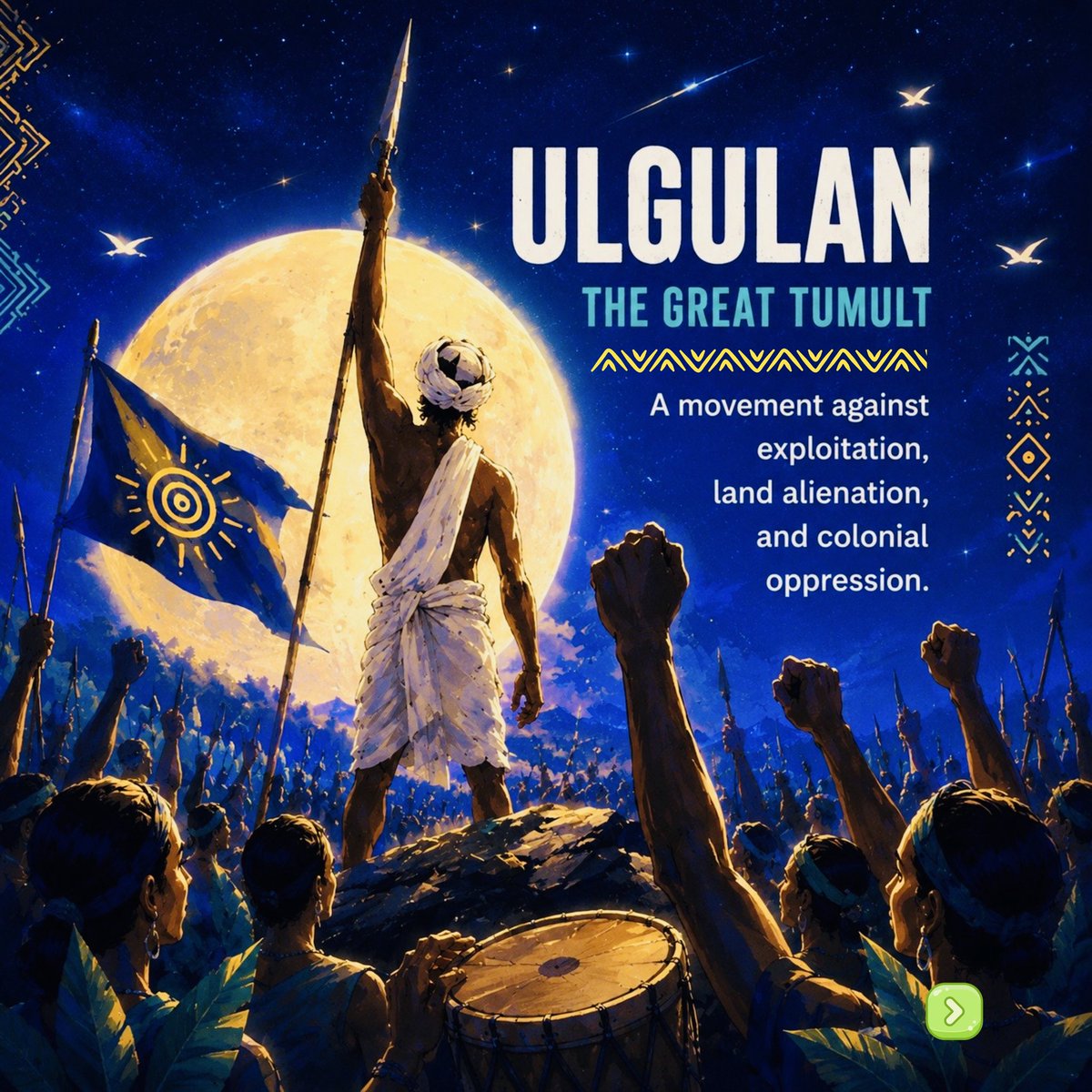
During the 1890s, he mobilized members of the Munda community and other tribal groups, encouraging them to resist exploitation and reclaim control over their land and way of life. His movement, known as Ulgulan (The Great Tumult), challenged both colonial authority and systems that marginalized Indigenous communities.
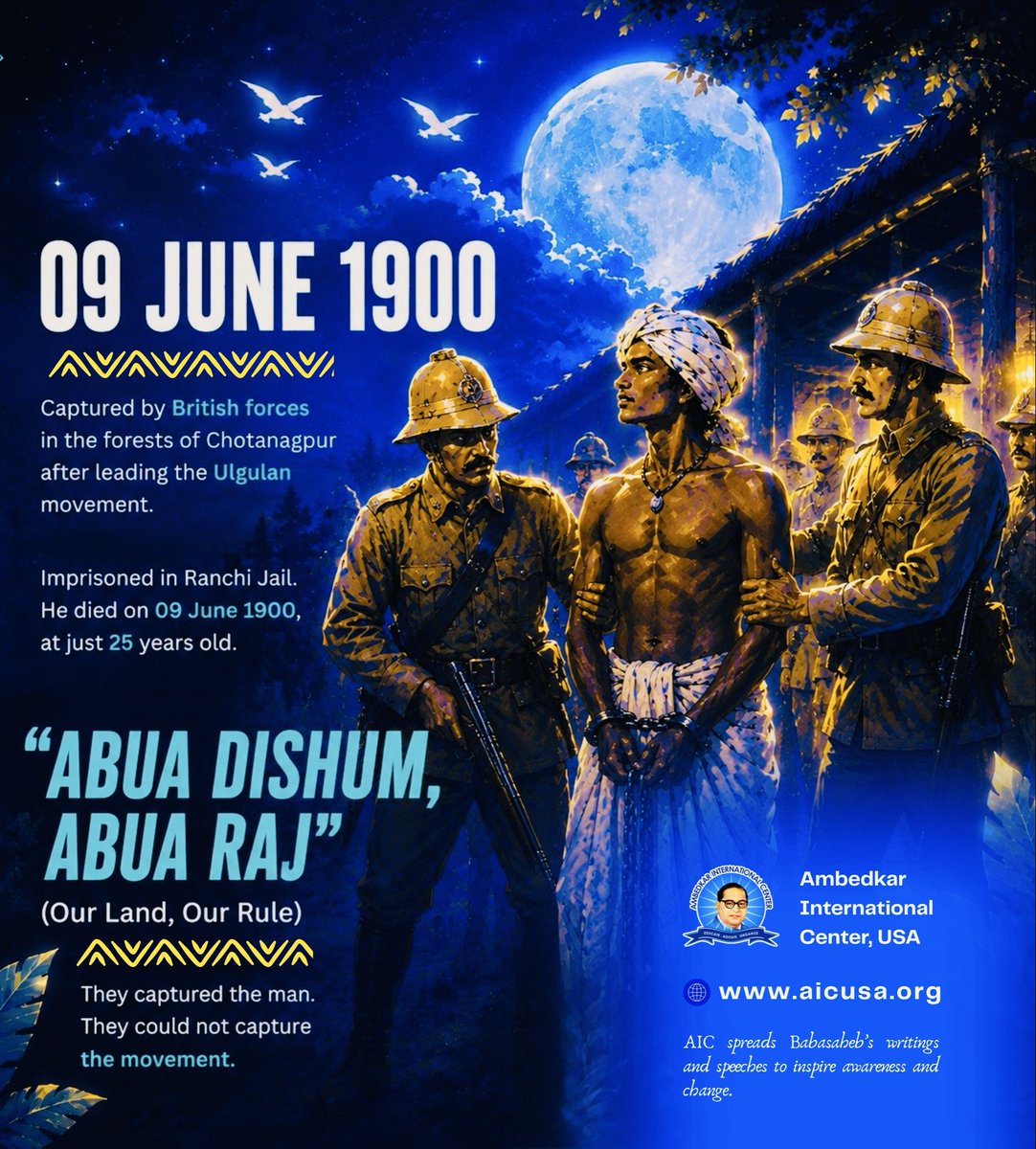
Birsa's message inspired thousands. He advocated for self-governance, social unity, and the protection of traditional rights, giving rise to the enduring slogan: “Abua Dishum, Abua Raj” - “Our Land, Our Rule.”
On 3 February 1900, British authorities captured Birsa Munda during a crackdown on the movement. He was imprisoned in Ranchi Jail, where he died on 9 June 1900 at the age of 25. The official colonial record cited cholera as the cause of death, though questions surrounding the circumstances of his death have continued to be discussed by historians and communities over the years.
Though his life was brief, his impact was profound. The movement he inspired contributed to later legal protections for tribal land rights, including the Chotanagpur Tenancy Act of 1908. Today, Birsa Munda is remembered as “Dharti Aba” (Father of the Earth) and remains a symbol of Indigenous resistance, self-determination, and social justice.
His legacy continues to remind us of the importance of preserving cultural identity, protecting community rights, and ensuring that marginalized voices remain part of the historical narrative.
Source:
Ministry of Tribal Affairs, Government of India; National Archives of India; Encyclopaedia Britannica.
#BirsaMunda #AdivasiHistory #AmbedkarInternationalCenter
17
68
949
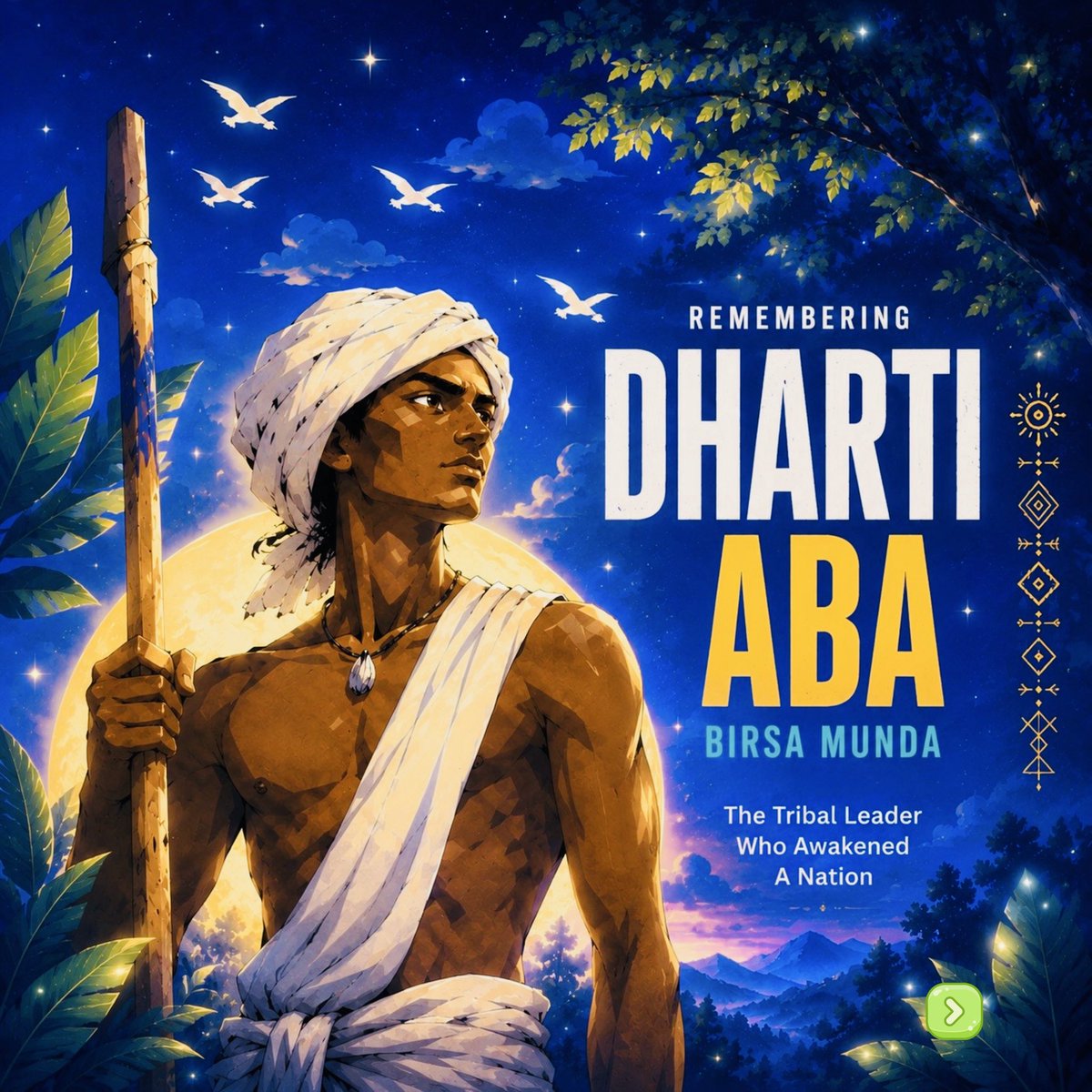
REMEMBERING BIRSA MUNDA
(15 November 1875 – 9 June 1900)
On this day, we remember Birsa Munda, one of the most influential Indigenous leaders in India's history.
Born in Ulihatu in the Chotanagpur region (present-day Jharkhand), Birsa emerged as a social reformer, spiritual leader, and a powerful voice against colonial exploitation and the alienation of tribal lands.
In 1899, he led the Ulgulan ("The Great Tumult"), a mass movement challenging British rule and oppressive land systems that had displaced tribal communities from their ancestral lands.
Arrested by British authorities on 3 February 1900, Birsa Munda died in Ranchi Jail on 9 June 1900 at the age of just 25.
Though his life was brief, his struggle for dignity, self-rule, land rights, and Indigenous identity continues to inspire generations.
Known as "Dharti Aba" (Father of the Earth), Birsa Munda remains a symbol of resistance, courage, and the enduring fight for justice.
"Abua Dishum, Abua Raj"
(Our Land, Our Rule)
#BirsaMunda #AdivasiHistory #IndigenousResistance #jaibhim
Source: Government of India Tribal Affairs records, National Archives of India, and historical accounts of the Ulgulan movement.
10
64
570
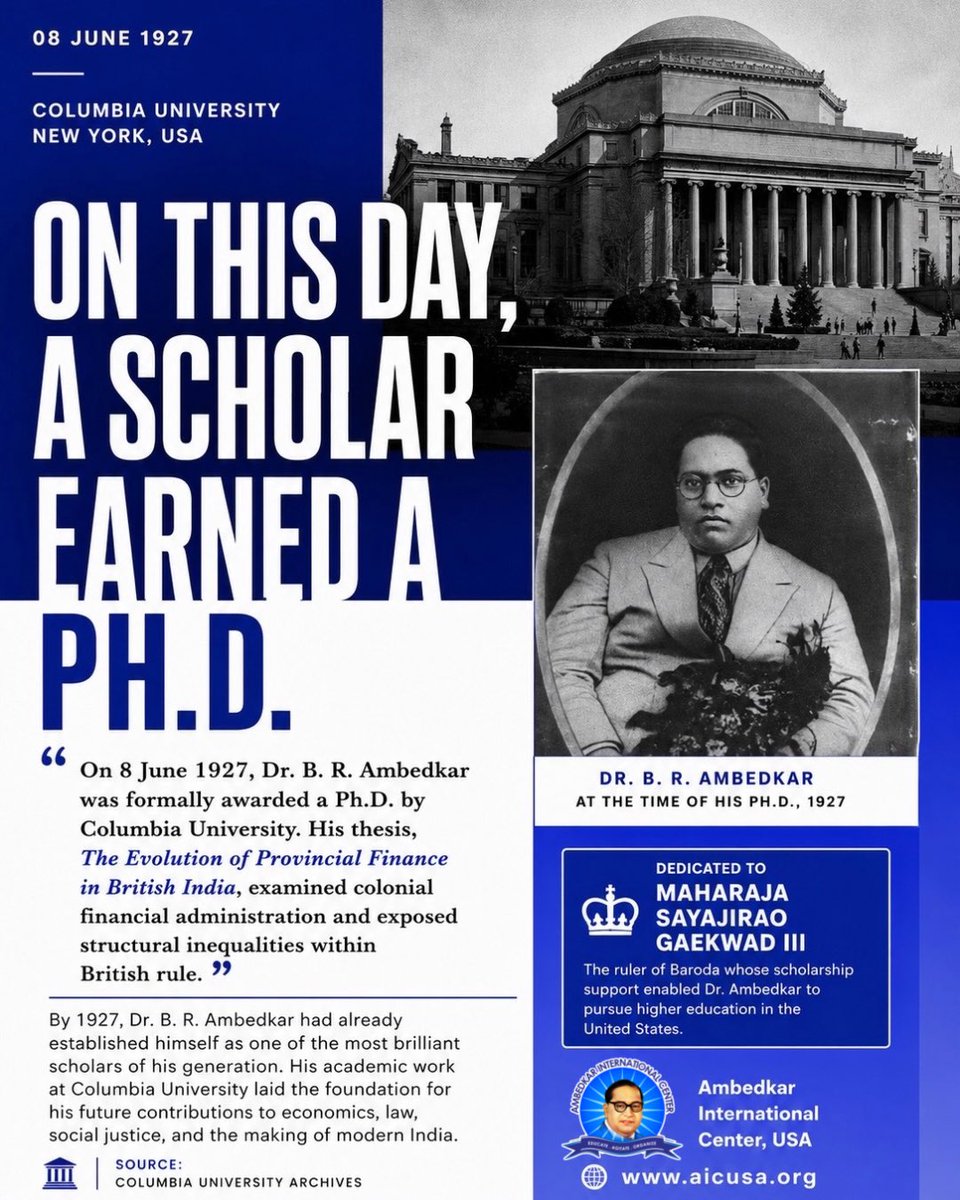
📚 ON 8 JUNE 1927
On 8 June 1927, Dr. B.R. Ambedkar was formally awarded a Ph.D. by Columbia University, becoming one of the most accomplished Indian scholars of his time.
His doctoral thesis, The Evolution of Provincial Finance in British India, was far more than an academic exercise. It examined how the British colonial government managed public finances and how financial powers were distributed between the central administration and the provinces.
Ambedkar carefully analyzed government budgets, taxation, public expenditure, and revenue-sharing arrangements. His research highlighted how excessive centralization of financial authority limited provincial autonomy and affected governance across British India.
The thesis also offered a detailed historical account of the evolution of India's fiscal system under colonial rule, exposing structural weaknesses and inequalities within the administrative framework.
Importantly, Ambedkar dedicated this work to Maharaja Sayajirao Gaekwad III of Baroda, whose scholarship support made his studies in the United States possible.
Years before becoming the chief architect of the Indian Constitution, Ambedkar had already established himself as a distinguished economist, researcher, and public intellectual. His work at Columbia University demonstrated the depth of his understanding of economics, public finance, and governance-subjects that would later influence his vision for a modern democratic India.
A scholar. A thinker. A nation-builder.
#DrBRAmbedkar #jaibhim #KnowledgeAwarenessAction
1
29
118
1,476
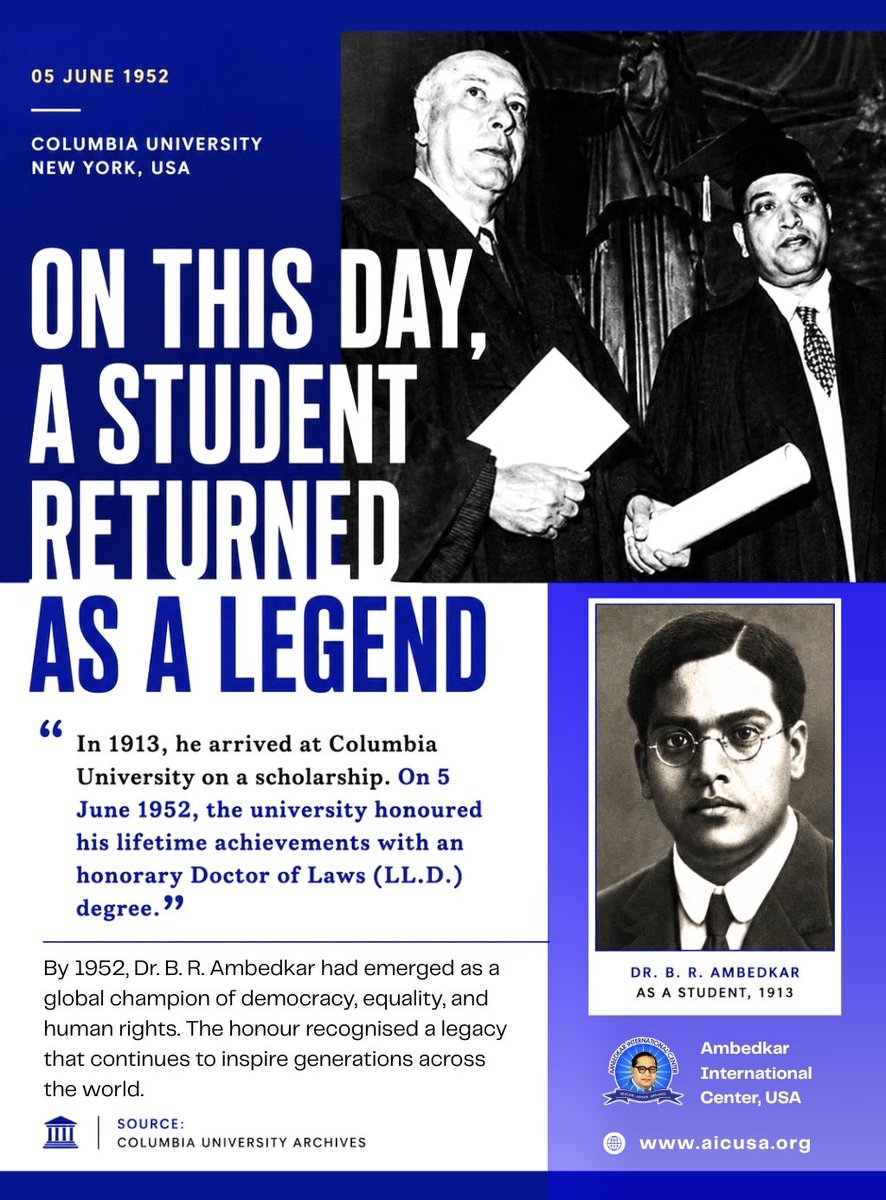
📜 On This Day | 5 June 1952
Thirty-nine years after arriving at Columbia University as a scholarship student, Dr. B. R. Ambedkar returned to the same institution to receive an honorary Doctor of Laws (LL.D.) degree.
The honour recognised not only his academic achievements, but also his profound contributions to democracy, social justice, equality, and human rights. By 1952, Dr. Ambedkar had emerged as one of the most influential thinkers and nation-builders of the twentieth century.
His journey remains a powerful reminder that education, perseverance, and purpose can transform individual aspiration into a legacy that inspires generations.
From scholarship student to global statesman - a journey that continues to inspire.
Source: Columbia University Archives
#OnThisDay #DrBRAmbedkar #jaibhim
18
63
653