
Physics professor on the outside, student on the inside. Love quantum condensed matter: phenomena, materials, technologies, and making minimal models.
Joined September 2015
- Tweets 3,252
- Following 145
- Followers 169
- Likes 5,395
12 Photos and videos
Pinned Tweet

12 Oct 2024
Are you new to Quantum mechanics? This may help.
Basics of Quantum Mechanics by Dr Amit Agrawal, IIT kanpur youtu.be/kKpzye8QeOU?si=hR66… via @YouTube
3
12
1,260
May 29
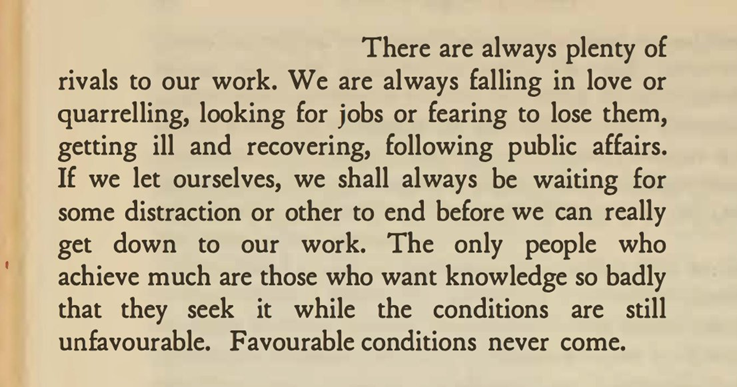
Seek the work irrespective of the conditions. Unfavorable conditions may not be that bad, and good conditions may not be that conducive.
May 28

C. S. Lewis with maybe the most important paragraph ever written for people with creative ambitions
13
May 26
Happy to contribute to this. 'Phantom fields' has a nice ring to it - I did not think of that myself!

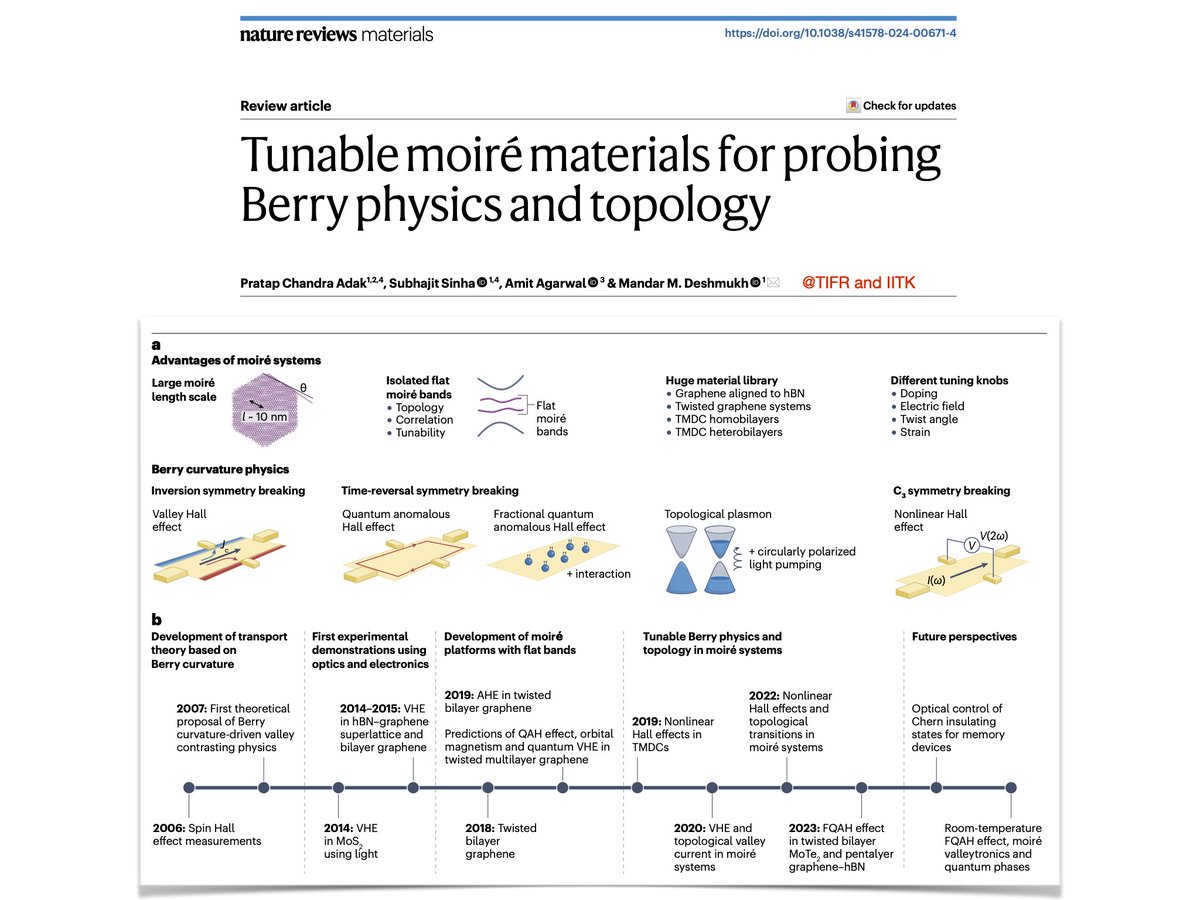
In 2D materials such as graphene, bending, twisting, or stretching can change magnetic properties. In this study, scientists (@2DQuantumlab) establish a simple method to measure phantom 'pseudomagnetic' fields that arise from mechanical deformation.
Read: tinyurl.com/mr3cf6cd
1
26
Amit Agarwal retweeted

In 2D materials such as graphene, bending, twisting, or stretching can change magnetic properties. In this study, scientists (@2DQuantumlab) establish a simple method to measure phantom 'pseudomagnetic' fields that arise from mechanical deformation.
Read: tinyurl.com/mr3cf6cd
4
13
75
3,786
Amit Agarwal retweeted

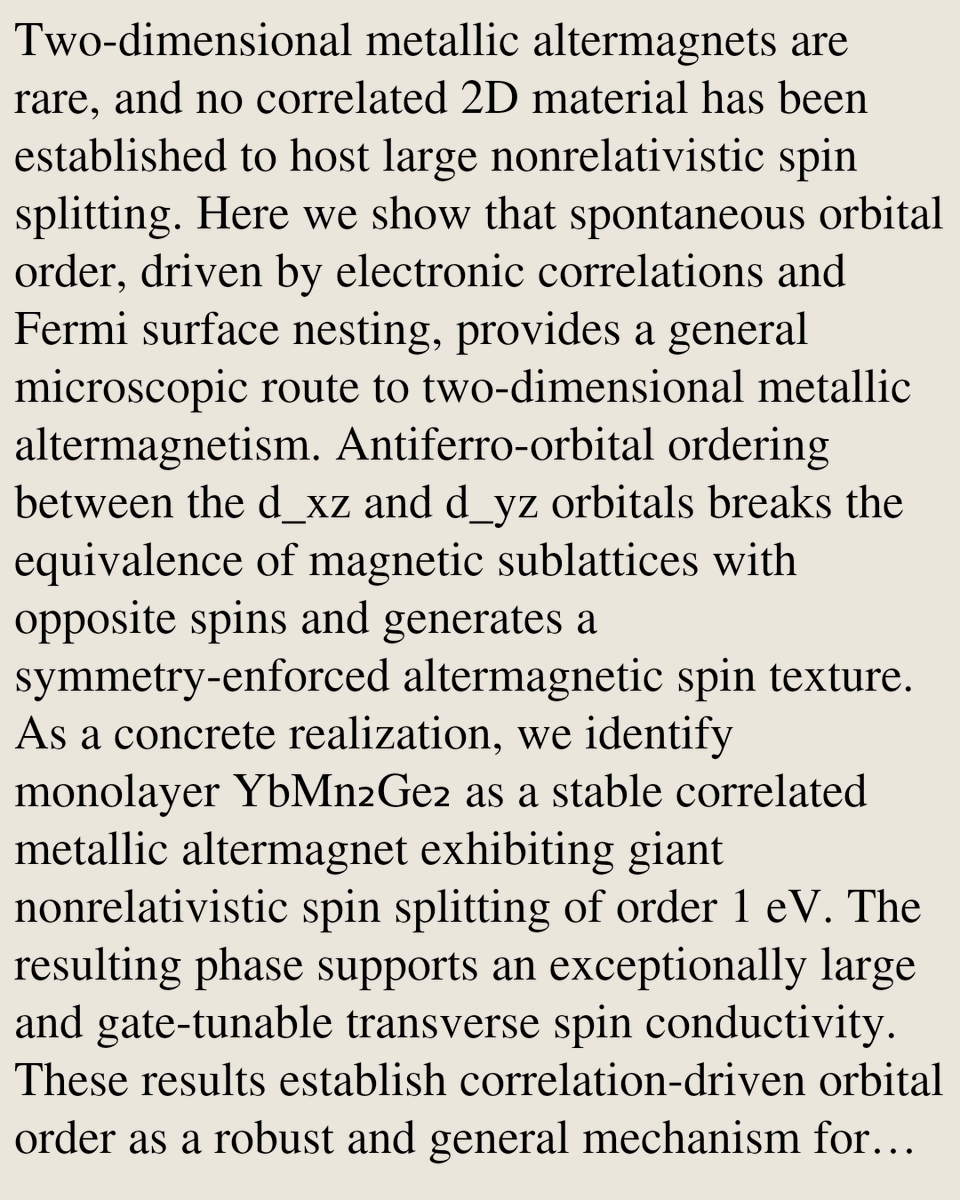
Correlation-Driven Orbital Order Realizes 2D Metallic Altermagnetism
Nirmalya Jana, Atasi Chakraborty, Anamitra Mukherjee, Amit Agarwal
arxiv.org/abs/2603.25426 [𝚌𝚘𝚗𝚍-𝚖𝚊𝚝.𝚖𝚎𝚜-𝚑𝚊𝚕𝚕 𝚌𝚘𝚗𝚍-𝚖𝚊𝚝.𝚖𝚝𝚛𝚕-𝚜𝚌𝚒 𝚌𝚘𝚗𝚍-𝚖𝚊𝚝.𝚜𝚝𝚛-𝚎𝚕]
2
3
184
Amit Agarwal retweeted

Jan 30
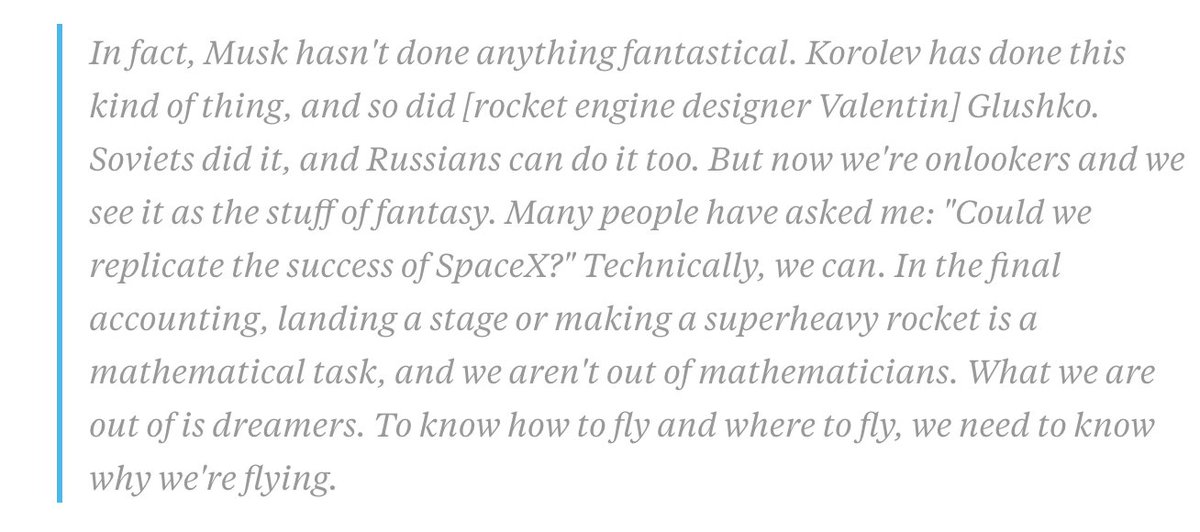
Elon Musk on learning physics: What matters are not the formulas, but the thinking process that led to the discovery of those formulas.
“I just recommend studying physics. What matters is not remembering a bunch of formulas. What matters is the thinking process that led to the discovery of those formulas. It's sort of critical thinking, first principles analysis, trying to understand what is true at a most fundamental level and then reasoning up from there and testing your conclusions against the most fundamental truths in any given arena. This is how you can figure out whether something is more likely to be true or not. It's good to think in terms of probabilities.
If you receive information about a subject, that should change the probability of your conclusion, but not the certainty of your conclusion. Physics teaches you that you should not be 100% certain about any given prediction. Now, there's some things that are highly likely, but physics teaches you you got to assign a probability to something being true. And then as you learn more information, your original conclusion may be wrong, then you should then change your mind based on the new information.”
Town Hall in Lancaster, Pennsylvania, October 24, 2024
89
306
1,717
67,470
Amit Agarwal retweeted

Jan 25
Talent development takes work – not just a little work, but a lot of work.
There is absolutely no confusion about this in the talent development community.
Can you imagine asking an athletic coach to help you become a star player using training methods that don’t tire you out and make you sweat?
No matter what skill is being trained, improving performance is always an effortful process.
1
6
65
9,228
Amit Agarwal retweeted

Jan 22
Mathematics. Physics.
Magnetic Chaotic Pendulum: adding magnetic forces to gravity gives this pendulum chaotic motion (sensitivity to slight differences in initial launch conditions).
By Physicsfun, instagram.com/physicsfun, Used with permission.
7
59
267
17,062
Amit Agarwal retweeted
Jan 17
The only to feel satisfied is to actively do things that require you to put in work.
Lots of people waste away in a state of "blah" where they don't do much because they think doing things will make them more tired and lead to more "blah".
What they don't realize is their problem isn't about being tired, it’s about being unsatisfied, and you have to put in work to earn satisfaction.
2
8
78
2,847
Amit Agarwal retweeted

Jan 15
1st and 34th author of @GoogleDeepMind's paper [1] each got 1/4 Nobel Prize for protein structure prediction through Alphafold. Who invented that? (Disclaimer: a student from my lab co-founded DeepMind.)
The 2021 paper [1] failed to cite important prior work [2] by Baldi and Pollastri (2002): at a time when compute was roughly ten thousand times more expensive than in 2021, [2] introduced a pipeline very similar to the one of Alphafold 2, using multiple sequence alignment (MSA) to predict the secondary protein structure with the help of a position-specific scoring matrix (PSSM) or a profile matrix, going beyond even earlier work of 1988 [5][6][10]. The extra step (absent in Alphafold 2) was to predict the protein's topology, too. See also the follow-up work of 2012 [3].
[1] didn't cite @HochreiterSepp et al.'s first successful application [7] of deep learning to protein folding (2007, using LSTM instead of MSA to construct a profile).
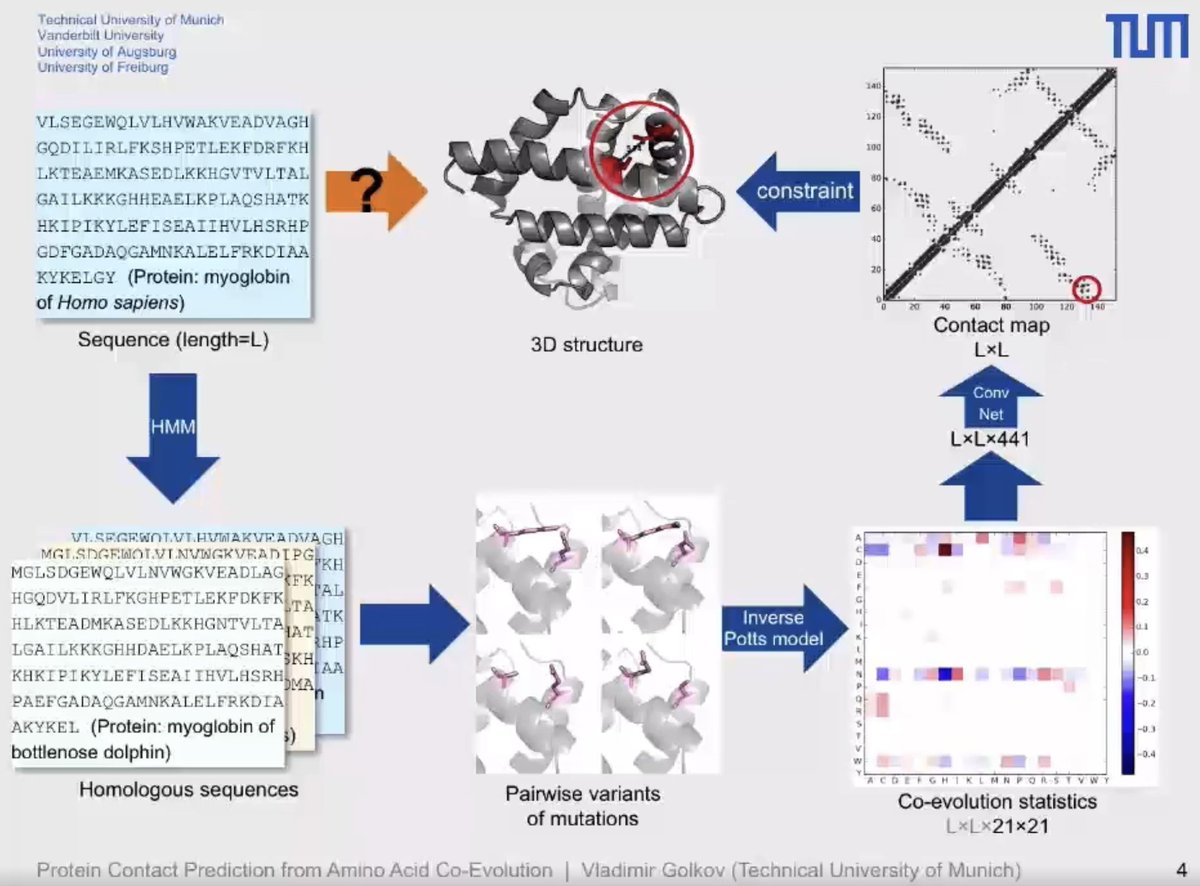
[1] also failed to cite the essential prior work by Golkov et al (2016) [4][8], which had crucial aspects of AlphaFold: (1) identify homologous sequences in a database of proteins with known structure, (2) compute the co-evolution statistics using the homologous sequences, (3) train a graph NN to predict the protein contact map (that determines its 3D structure) directly from the co-evolution statistics, (4) demonstrate experimentally a significant boost in performance on the CASP dataset [4][9]. See the attached image!
Instead of the contact map, DeepMind (2021) predicted the distance map, and instead of graph CNNs, they used the quadratic Transformer published in 2017 (the unnormalized linear Transformer had existed since 1991 [11]). DeepMind also used more training data and much more compute for hyperparameter tuning etc.
Image credits: [4][8]
REFERENCES
[1] J. Jumper, R. Evans, A. Pritzel, T. Green, M. Figurnov, O. Ronneberger, K. Tunyasuvunakool, R. Bates, A. Zidek, A. Potapenko, A. Bridgland, C. Meyer, S. A. A. Kohl, A. J. Ballard, A. Cowie, B. Romera-Paredes, S. Nikolov, R. Jain, J. Adler, T. Back, S. Petersen, D. Reiman, E. Clancy, M. Zielinski, M. Steinegger, M. Pacholska, T. Berghammer, S. Bodenstein, D. Silver, O. Vinyals, A. W. Senior, K. Kavukcuoglu, P. Kohli & D. Hassabis. Highly accurate protein structure prediction with AlphaFold. Nature 596, 583-589, 2021.
[2] P. Baldi, G. Pollastri. A machine learning strategy for protein analysis. IEEE Intelligent Systems 17.2 (2002): 28-35.
[3] P. Di Lena, K. Nagata, and P. Baldi. Deep Architectures for Protein Contact Map Prediction. Bioinformatics, 28, 2449-2457, (2012).
[4] V. Golkov, M. J. Skwark, A. Golkov, A. Dosovitskiy, T. Brox, J. Meiler, D. Cremers (2016). Protein contact prediction from amino acid co-evolution using convolutional networks for graph-valued images. NeurIPS, Barcelona, 2016.
[5] N. Qian and T.J. Sejnowski (1988). Predicting the secondary structure of globular proteins using neural network models. J. Mol. Biol. 1988, 202, 865-884.
[6] H. Bohr, J. Bohr, S. Brunak, R.M.J. Cotterill, B. Lautrup, L. Norskov, O.H. Olsen, S.B. Petersen (1988). Protein secondary structure and homology by neural networks. The α-helices in rhodopsin. FEBS Lett. 1988, 241, 223-228.
[7] S. Hochreiter, M. Heusel, K. Obermayer. Fast model-based protein homology detection without alignment. Bioinformatics 23(14):1728-36, 2007. Successful application of deep learning to protein folding problems, through an LSTM that was orders of magnitude faster than competing methods.
[8] D. Cremers (July 2025). LinkedIn post on the Nobel Prize for AlphaFold.
[9] A Nobel Prize for Plagiarism. Technical Report IDSIA-24-24, 2024 (updated 2025) people.idsia.ch/~juergen/phy… . Popular tweets on this:
x.com/SchmidhuberAI/status/1…
x.com/SchmidhuberAI/status/1…
[10] The Nobel Committee for Chemistry (2024). Scientific Background to the Nobel Prize in Chemistry 2024.
[11] Annotated History of Modern AI and Deep Learning. Technical Report IDSIA-22-22, IDSIA, Switzerland, 2022 (updated 2025). Preprint arxiv.org/abs/2212.11279. This extends the 2015 award-winning deep learning survey in the journal "Neural Networks."
7 Dec 2024

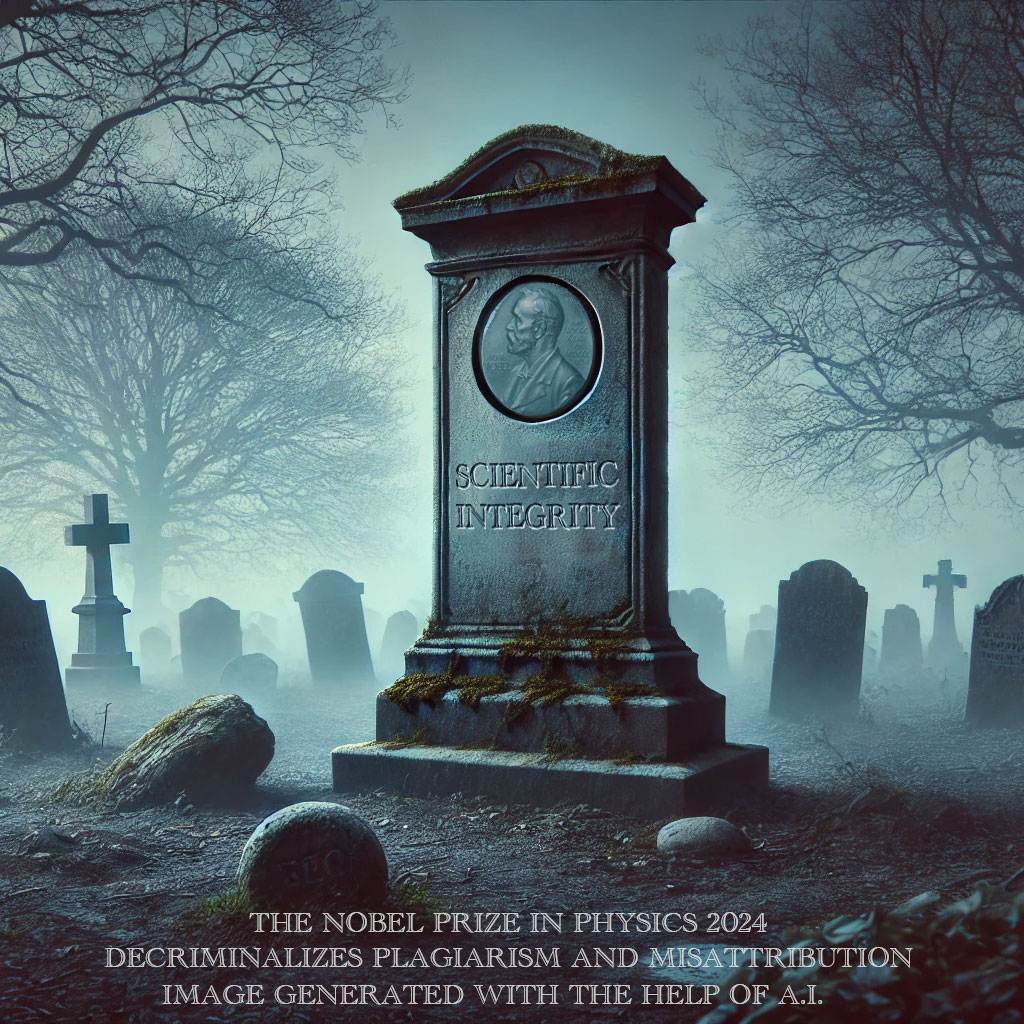
The #NobelPrize in Physics 2024 for Hopfield & Hinton turns out to be a Nobel Prize for plagiarism. They republished methodologies developed in #Ukraine and #Japan by Ivakhnenko and Amari in the 1960s & 1970s, as well as other techniques, without citing the original inventors. None of the important algorithms for modern AI were created by Hopfield & Hinton.
Today I am releasing a detailed tech report on this [NOB]: people.idsia.ch/~juergen/phy…
Of course, I had it checked by neural network pioneers and AI experts to make sure it was unassailable.
Is it now acceptable for me to direct young Ph.D. students to read old papers and rewrite and resubmit them as if they were their own works? Whatever the intention, this award says that, yes, that is perfectly fine.
Some people have lost their titles or jobs due to plagiarism, e.g., Harvard's former president [PLAG7]. But after this Nobel Prize, how can advisors now continue to tell their students that they should avoid plagiarism at all costs?
It is well known that plagiarism can be either "unintentional" or "intentional or reckless" [PLAG1-6], and the more innocent of the two may very well be partially the case here. But science has a well-established way of dealing with "multiple discovery" and plagiarism - be it unintentional [PLAG1-6][CONN21] or not [FAKE,FAKE2] - based on facts such as time stamps of publications and patents. The deontology of science requires that unintentional plagiarists correct their publications through errata and then credit the original sources properly in the future. The awardees didn't; instead the awardees kept collecting citations for inventions of other researchers [NOB][DLP]. Doesn't this behaviour turn even unintentional plagiarism [PLAG1-6] into an intentional form [FAKE2]?
I am really concerned about the message this sends to all these young students out there.
REFERENCES
[NOB] J. Schmidhuber (2024). A Nobel Prize for Plagiarism. Technical Report IDSIA-24-24. people.idsia.ch/~juergen/phy…
[NOB ] Tweet: the #NobelPrize in Physics 2024 for Hopfield & Hinton rewards plagiarism and incorrect attribution in computer science. It's mostly about Amari's "Hopfield network" and the "Boltzmann Machine." x.com/SchmidhuberAI/status/1… (1/7th as popular as the original announcement by the Nobel Foundation)
[DLP] J. Schmidhuber (2023). How 3 Turing awardees republished key methods and ideas whose creators they failed to credit. Technical Report IDSIA-23-23, Swiss AI Lab IDSIA, 14 Dec 2023. people.idsia.ch/~juergen/ai-…
[DLP ] Tweet for [DLP]: x.com/SchmidhuberAI/status/1…
[PLAG1] Oxford's guide to types of plagiarism (2021). Quote: "Plagiarism may be intentional or reckless, or unintentional." web.archive.org/web/20211227…
[PLAG2] Jackson State Community College (2022). Unintentional Plagiarism.
[PLAG3] R. L. Foster. Avoiding Unintentional Plagiarism. Journal for Specialists in Pediatric Nursing; Hoboken Vol. 12, Iss. 1, 2007.
[PLAG4] N. Das. Intentional or unintentional, it is never alright to plagiarize: A note on how Indian universities are advised to handle plagiarism. Perspect Clin Res 9:56-7, 2018.
[PLAG5] InfoSci-OnDemand (2023). What is Unintentional Plagiarism?
[PLAG6] Copyrighted.com (2022). How to Avoid Accidental and Unintentional Plagiarism (2023). Copy in the Internet Archive. Quote: "May it be accidental or intentional, plagiarism is still plagiarism."
[PLAG7] Cornell Review, 2024. Harvard president resigns in plagiarism scandal. 6 January 2024.
[FAKE] H. Hopf, A. Krief, G. Mehta, S. A. Matlin. Fake science and the knowledge crisis: ignorance can be fatal. Royal Society Open Science, May 2019. Quote: "Scientists must be willing to speak out when they see false information being presented in social media, traditional print or broadcast press" and "must speak out against false information and fake science in circulation and forcefully contradict public figures who promote it."
[FAKE2] L. Stenflo. Intelligent plagiarists are the most dangerous. Nature, vol. 427, p. 777 (Feb 2004). Quote: "What is worse, in my opinion, ..., are cases where scientists rewrite previous findings in different words, purposely hiding the sources of their ideas, and then during subsequent years forcefully claim that they have discovered new phenomena."
26
39
355
130,010
Amit Agarwal retweeted

Jan 13
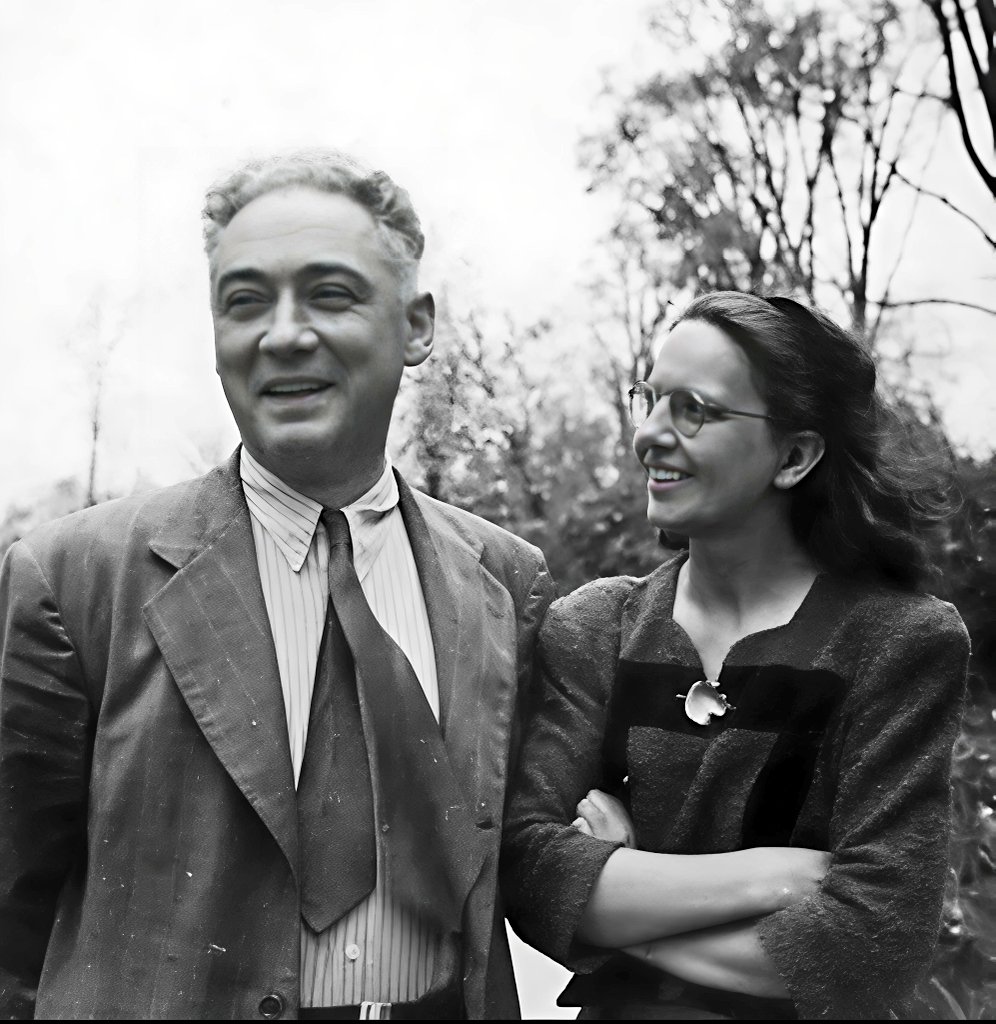
William Feller, a famous probability theorist, once tried to move a large round table with his wife, Clara.
After many failed attempts, Feller used mathematics to prove the table could not pass through the doorway.
While he was finishing the proof, Clara kept trying—and successfully moved the table through.
64
199
2,545
204,405
Amit Agarwal retweeted

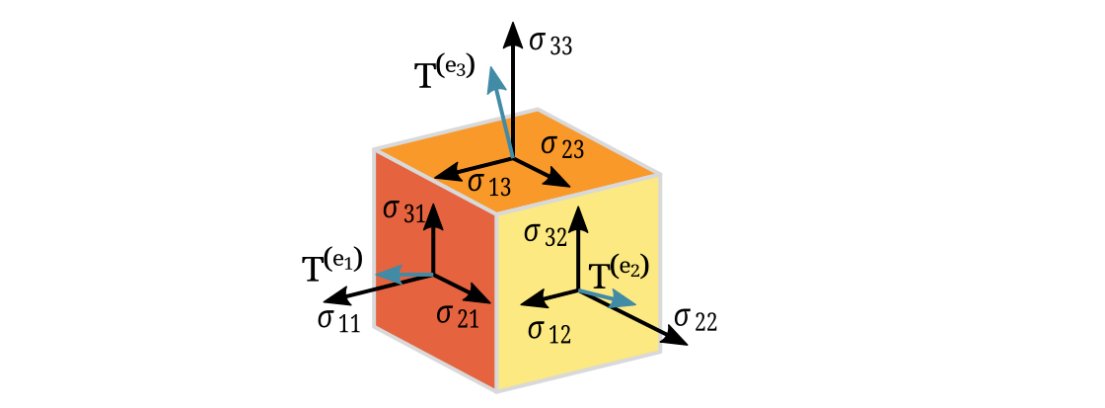
Tensor calculus is a mathematical framework that generalizes the concepts of scalars and vectors to higher-order objects called tensors. It is essential for formulating physical laws in a manner that remains consistent (invariant) regardless of the chosen coordinate system.
14
119
689
26,934
Amit Agarwal retweeted
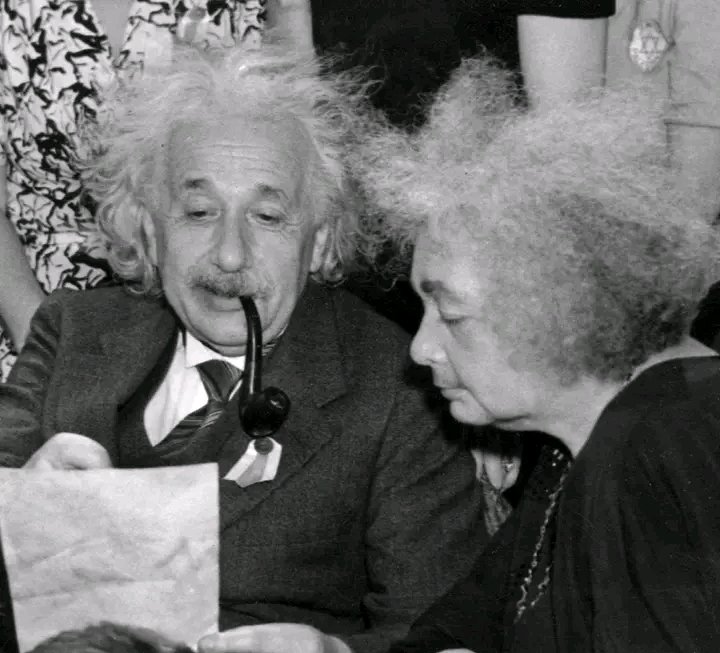
When Einstein’s sister Maja saw the face of her quiet, absent-minded brother appearing in newspapers around the world after 1919, with wild hair, intense eyes, and being called “The Greatest Scientist Alive,” she wrote to him, half in disbelief.
“Are you really my brother? I see your face everywhere.”
20
55
324
22,729
Amit Agarwal retweeted
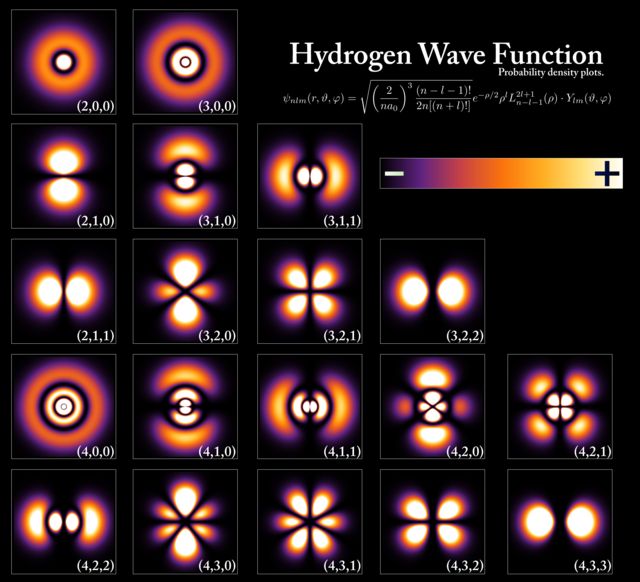
Hydrogen atom's wave function is a core concept in quantum mechanics. These plots visually represent the likelihood of finding an electron in a specific region of space around the nucleus.
26
133
599
22,811
Amit Agarwal retweeted
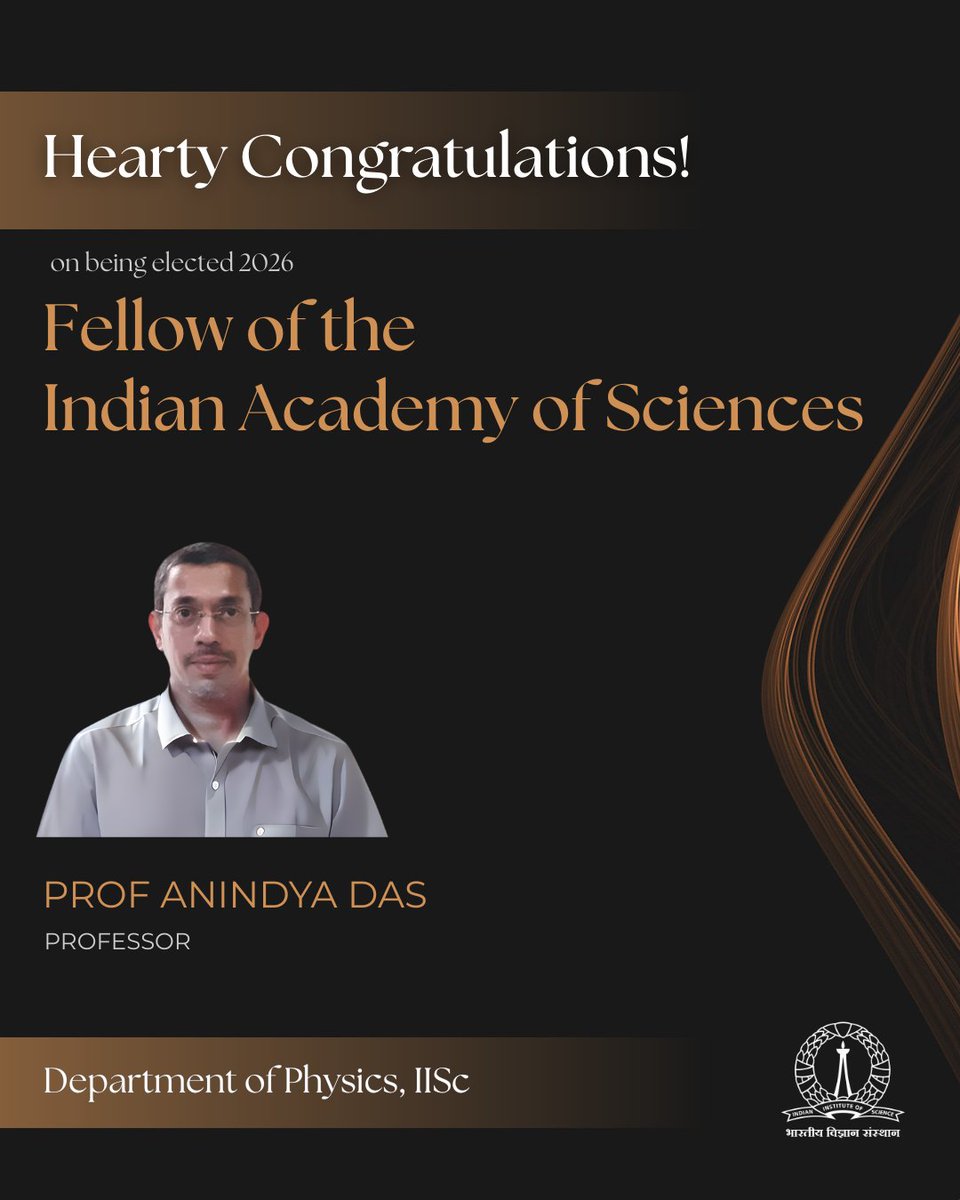
The Department of Physics is thrilled to share that Prof Anindya Das, Professor, has been elected Fellow of the Indian Academy of Sciences (IASc) 2026.
#science #scienceaward #fellowship #research #academia #iisc #research #physics #education #STEM #quantum #quantumcomputing
2
2
8
377
Amit Agarwal retweeted

Jan 8
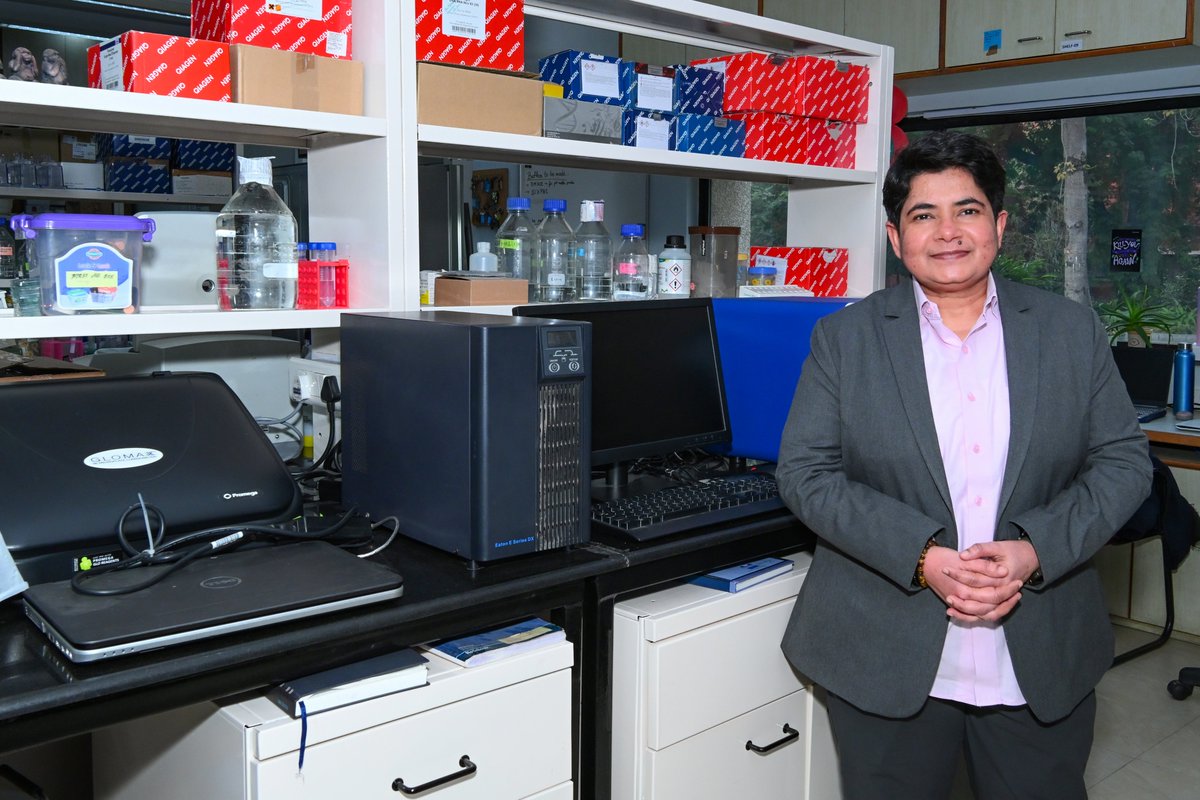
Proud Moment for IIT Kanpur
Prof. Bushra Ateeq, Professor (BSBE) and Dean of International Relations at IIT Kanpur, has been conferred with the 35th G. D. Birla Award for Scientific Research (2025) for her outstanding contributions to Biological Sciences.
Instituted by the K. K. Birla Foundation, this prestigious national award recognizes eminent Indian scientists for original and impactful research.
Prof. Ateeq’s pioneering work in cancer biology, particularly in prostate and colorectal cancers, has significantly advanced diagnostics and therapeutic strategies, reinforcing IIT Kanpur’s excellence in cutting-edge research.
Congratulations to Prof. Ateeq on this remarkable achievement!
#IITKanpur #GDBirlaAward #ScientificExcellence #WomenInScience #CancerResearch #BiologicalSciences @EduMinOfIndia @insa_academy @IndiaDST @CSIR_IND
6
14
102
5,603
Amit Agarwal retweeted
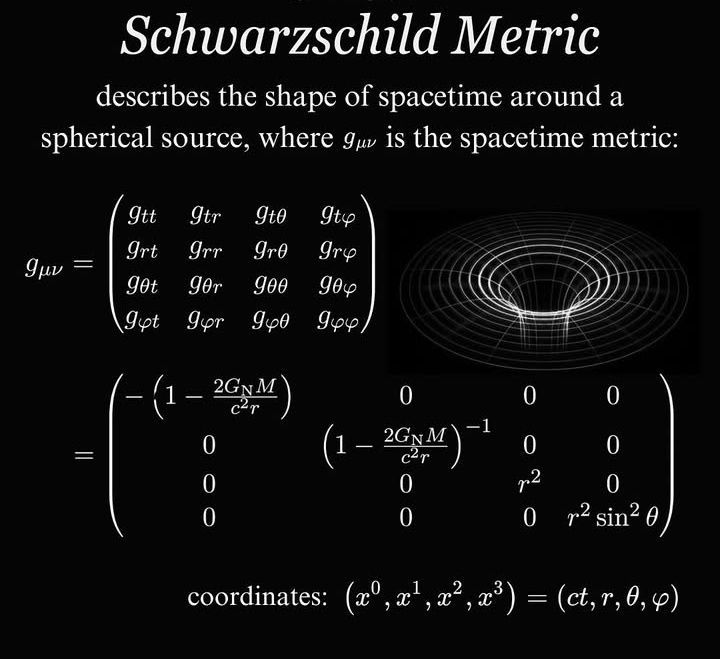
The Schwarzschild metric is an exact solution to Einstein's field equations that describes the gravitational field outside a spherical mass discovered by German physicist Karl Schwarzschild in 1915.
23
174
957
28,475
Jan 6
50 Ph. d students. If this worked for Kip Thorne, maybe it is a sensible way to go. Highly motivating for me!
Jan 6

"My mentoring has been one of my greatest joys. I am proud that I have mentored fifty something, fifty-two or fifty-four, PhD students during my career and that they have gone in a huge number of different directions."
- 2017 physics laureate Kip Thorne on mentoring.
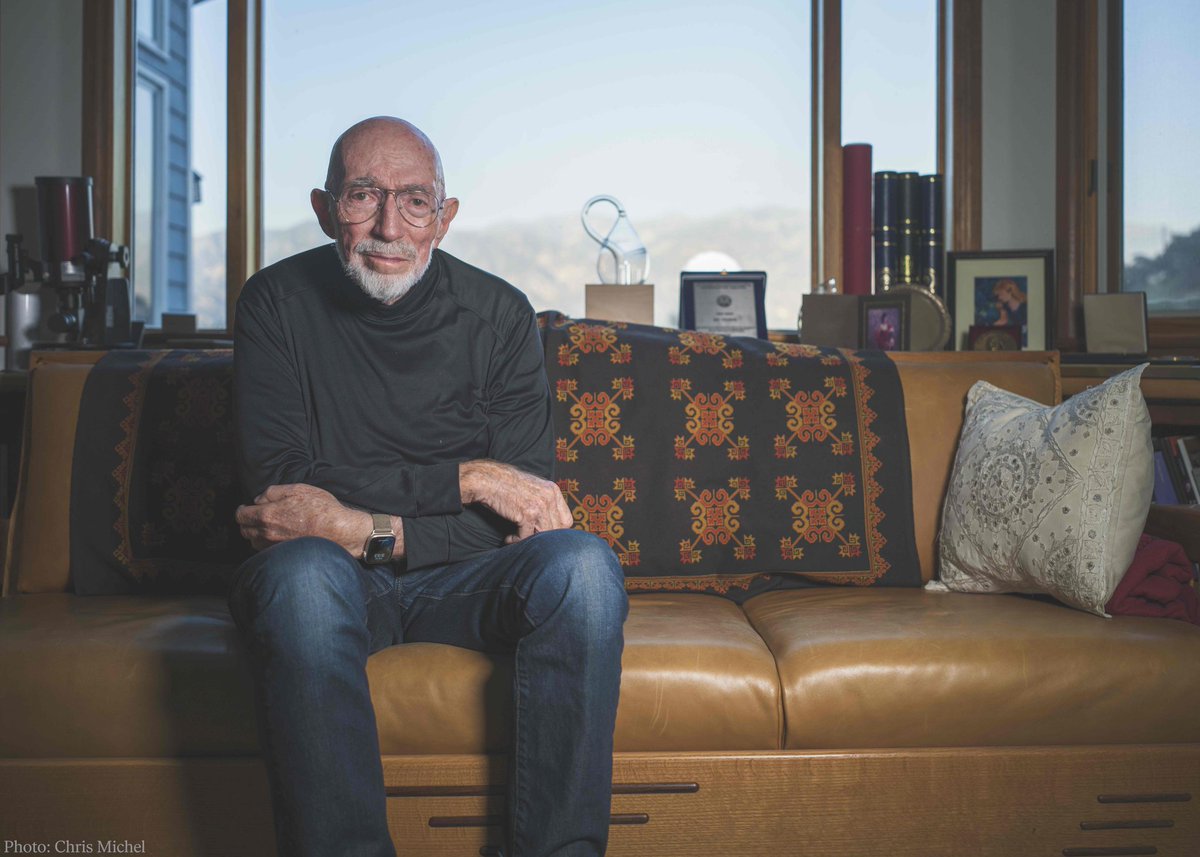
ALT Physics laureate Kip Thorne
26
Amit Agarwal retweeted

Jan 5
A golf ball hitting a hard surface at 260 km/h.
Community note
This is likely a foam practice ball. The video has been frequently posted and debunked since 2009.
A video using a real golf ball can be found here: youtu.be/00I2uXDxbaE?si…
169
407
6,217
932,168
Amit Agarwal retweeted
Jan 6
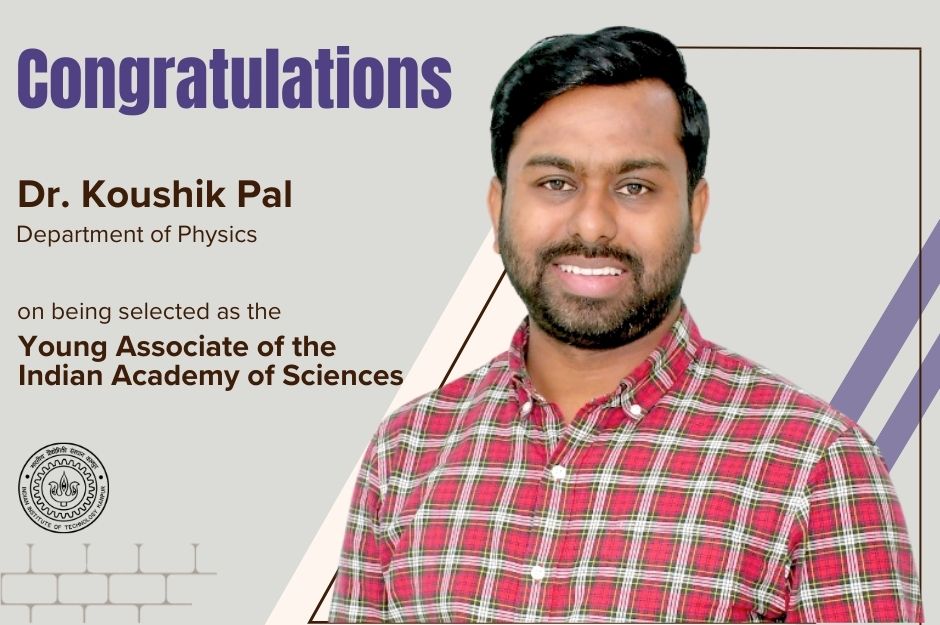
Heartiest congratulations to Dr. Koushik Pal, Department of Physics, on being selected as a Young Associate of the Indian Academy of Sciences.
This recognition reflects his promising contributions to research and academic excellence in physics.
Warmest congratulations to Dr. Pal on this well-deserved honour!
#IITKanpur #IITKFaculty #Physics #ResearchExcellence #FacultyAchievements #AcademicExcellence
5
8
31
1,479
Amit Agarwal retweeted
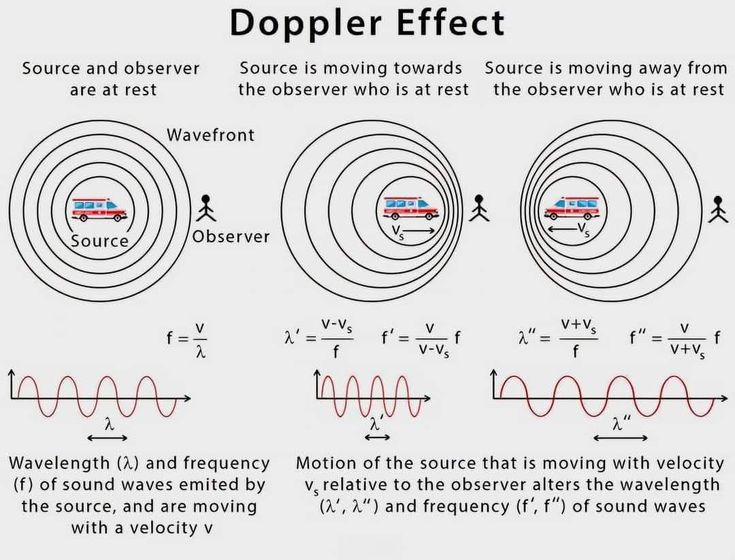
Doppler effect is the change in frequency of a periodic wave with respect to an observer who is moving relative to the wave source (one or both may be moving). The image displays three scenarios regarding the motion of a source and observer, along with the relevant formulas for wavelength and frequency.
16
173
884
27,870