
Researcher and PhD candidate @ RWTH Aachen University. I work in the intersection between math, physics and software. Simulating the macroscopic world 🌍🦀
Joined April 2021
- Tweets 1,403
- Following 157
- Followers 219
- Likes 2,379
69 Photos and videos



Andreas Longva retweeted

25 Nov 2024
MPM continues to be the GOAT multi-phase physics solver, and I always like to point out / brag that it was introduced into computer graphics by @DisneyAnimation.
25 Nov 2024

I've been doing simulation and vfx studies for years and I must say, Bifrost MPM is just mind-blowing. The simulation quality and performance are on another level. and Yes, I think it's better than Houdini.
Made in @AdskMaya and Bifrost, rendered with @arnoldrenderer
2
16
121
5,447

13 Nov 2024
I'm up and running on Bluesky in an attempt to join the exodus. Fingers crossed it sticks.
56
11 Nov 2024
If there's one thing AI is *actually* good at (but not perfect), it's translation. This comes at a good time for the EU — which traditionally has been limited by language barriers — as European countries need to cooperate more than ever to secure their own interests
1
99
11 Nov 2024
Jesus Christ, this is like a trailer for a prequel to 1984

1
78
6 Nov 2024
It's a dark day for democracy in the world.
My heart bleeds for Ukraine. Europe, it's time to step up the game. Better late than never.
100
Andreas Longva retweeted

3 Nov 2024
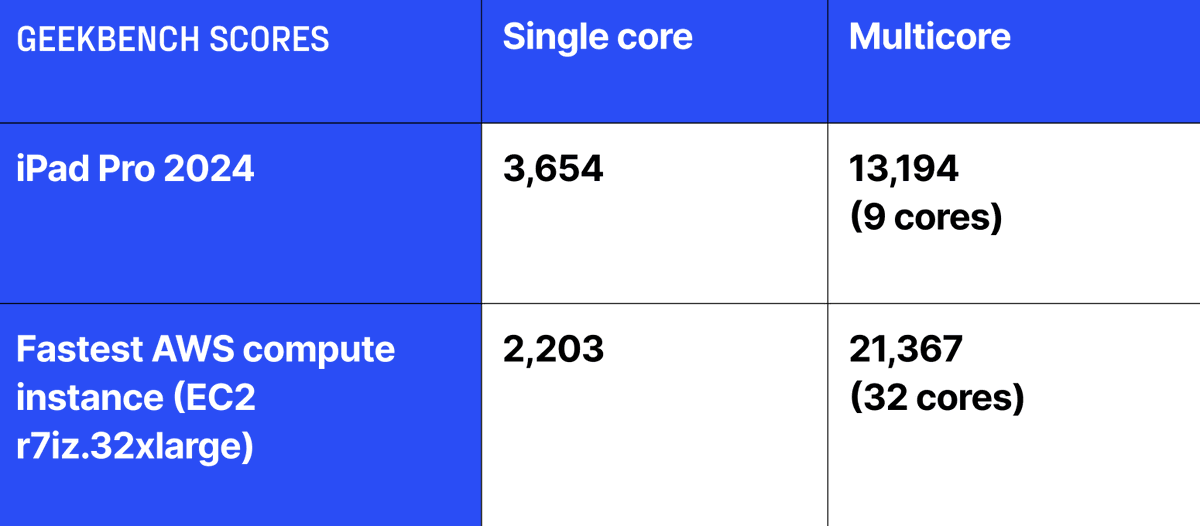
With the release of the latest M4 Macs, Apple Silicon CPUs are now officially on par with the fastest CPUs in the world - at an order of magnitude better energy efficiency. This milestone feels like the perfect time to reflect on why I made a big bet on local computing when I started Shapr3D. 👇
In 2016, I made a controversial decision: instead of building Shapr3D as a cloud app, I chose to make it a native app. This decision has proven incredibly successful. It has allowed us to work with some of the world’s largest enterprise companies, providing a private cloud solution (offering all the benefits of the cloud without enterprise IT blockers) and enabling a cost-efficient PLG go-to-market engine.
But it wasn’t an easy decision back then. Who writes native apps anymore? The cloud-for-everything was touted as the future!
It turns out, not entirely. At least, not for every application. In 2016, I was intrigued by the evolution of Apple’s ARM chips and made a big bet on their potential. Apple Silicon and the ARM chip revolution have changed the game, and now we are reaping the benefits of being a native app. While the Microsoft ecosystem is catching up, it’s now clear that local computing cloud collaboration is the right approach for CAD.
1. Today, the undisputed king of computing (in single-core performance, the metric most critical for CAD) is the Apple M4 chip. Even the latest iPad (!) is 60% faster than the fastest single-core compute instance on AWS, and the M4 Macs provide the fastest single-core performance in the world. Today, you can buy the one of the world’s fastest computers for just $600, the price of an M4 Mac mini.
2. Cloud computing costs are prohibitively high for compute-heavy applications. The cloud works well for less computationally intensive applications (like CRM), but shifting as much computation as possible to the client side is the way forward, whether the client is a web client or a native app. A prime example is Figma, which has a thick web client doing substantial computation locally in the browser. This approach has major go-to-market implications as well: achieving sustainable unit economics with a PLG/freemium model is impossible when the cost per free user ranges from $5-20/month per engaged user.
3. Of course, you still need the customer benefits of the cloud. Collaboration, data management, versioning, sharing, and license management all need to happen in the cloud. But that doesn’t mean that all (geometry) computation has to happen there.
4. Back in 2016, one of the main arguments for “everything moving to the cloud” was that Intel CPUs were stagnating in performance and were energy inefficient. Well, Apple/ARM/TSMC solved this problem. We now have the world’s fastest CPUs in mobile devices, powered by batteries, with an actual 10-hour battery life.
5. Enterprise companies are still hesitant to store their manufacturing data in a third-party cloud. Our architecture has enabled us to build a private cloud solution that easily passes enterprise IT checks, allowing all customer data to be stored in their private cloud with virtually zero IT overhead and just a few hours of setup time.
6. Native apps are simply… better. They’re snappier, faster, smoother, and more responsive, with no back-and-forth latency to the cloud. They even work well when the network connection is poor.
Long story short: I’m incredibly excited about Apple Silicon and ARM. We’re witnessing a 20-30% annual improvement in computational power, coupled with unparalleled energy efficiency. iPads now deliver workstation-grade computing power. There’s a supercomputer in your pocket. We truly live in the future.
This evolution is a complete game-changer and a real opportunity to build next-gen applications that were previously unimaginable.
3
4
46
1,709
Andreas Longva retweeted

Our CDTs (Centers for Doctoral Training) are great program-based opportunities for fully-funded PhD positions. Specifically, consider the Machine-Learning CDT:
mlsystems.uk/
If you are interested and specifically want to work with me on ML geometry, contact me!
1
5
14
3,380
Andreas Longva retweeted

15 Oct 2024
The NVIDIA HiFi Physics team is looking for interns with interest/skills in
1⃣ Physics simulation (solids/fluids/differentiable etc)
2⃣ Digital Humans
3⃣ Neural Rendering/Geometry, Video Models
4⃣ Monte Carlo Methods
5⃣ Digital Fabrication
Apply: nvidia.wd5.myworkdayjobs.com…
1
23
128
14,239
Andreas Longva retweeted

The program for MIG '24 is posted! There are 22 paper presentations on impressive work from the research community. Plus exciting keynotes talks from @LingjieLiu1, Moritz Bächer, and Eakta Jain. Not to mention a poster session and networking opportunities. See you in Arlington!
1
4
9
2,543
13 Oct 2024
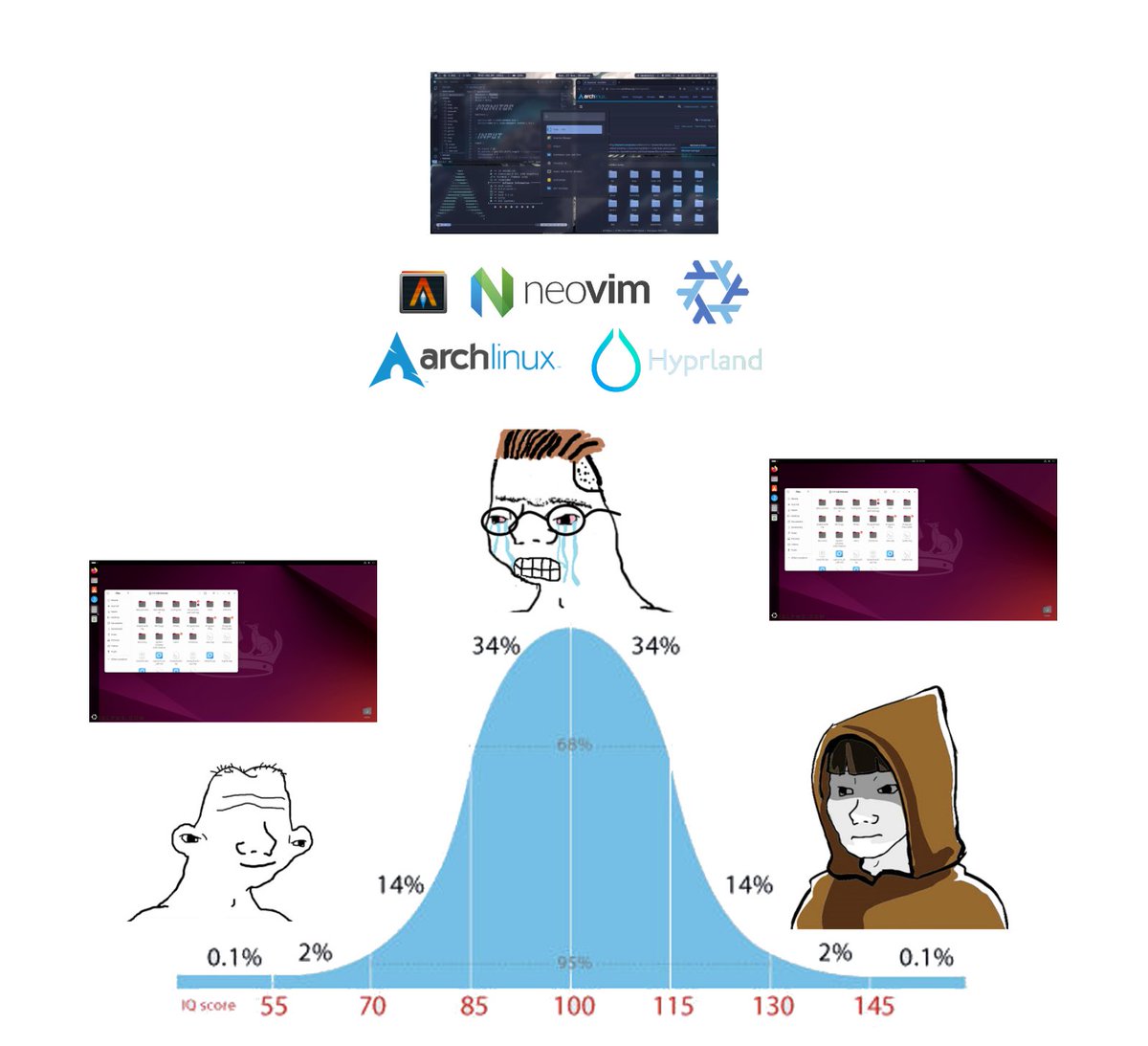
This captures my philosophy pretty well. I wasted too much of my life trying to fix issues with non-standard setups.
For many years now I've been using bog-standard Ubuntu and basically no custom workflows that require setup or tweaking. Life is good.

1
133
Andreas Longva retweeted

4 Oct 2024
Want to come up with (neural) graphics techniques for the next generation of mixed reality and AR? My team at @RealityLabs Research is hiring research scientists!
metacareers.com/jobs/5210583…
1
2
5
2,609
2 Oct 2024
Me when entering an important event in my calendar
ALT An image of the reminder settings, where I've elected to be reminded 2 hours, 1 day, 3 days and 2 weeks in advance of the event
86
Andreas Longva retweeted

30 Sep 2024
My @SIGGRAPHAsia 2024 Tech. Comm. paper about my work at @sidefx is up! We can author 2D or 3D incompressible velocity field using control curves.
30 Sep 2024

Galerkin Method of Regularized Stokeslets for Procedural Fluid Flow with Control Curves. arxiv.org/abs/2409.18276
2
7
50
4,203
Andreas Longva retweeted

26 Sep 2024
We are hiring for our PhD internships for 2025!
If you have experience in computer graphics, physics-based simulation and applied machine learning for virtual humans and simulation. Please send me a message or apply online.
metacareers.com/jobs/3434790…
3
17
2,261
Andreas Longva retweeted

25 Sep 2024
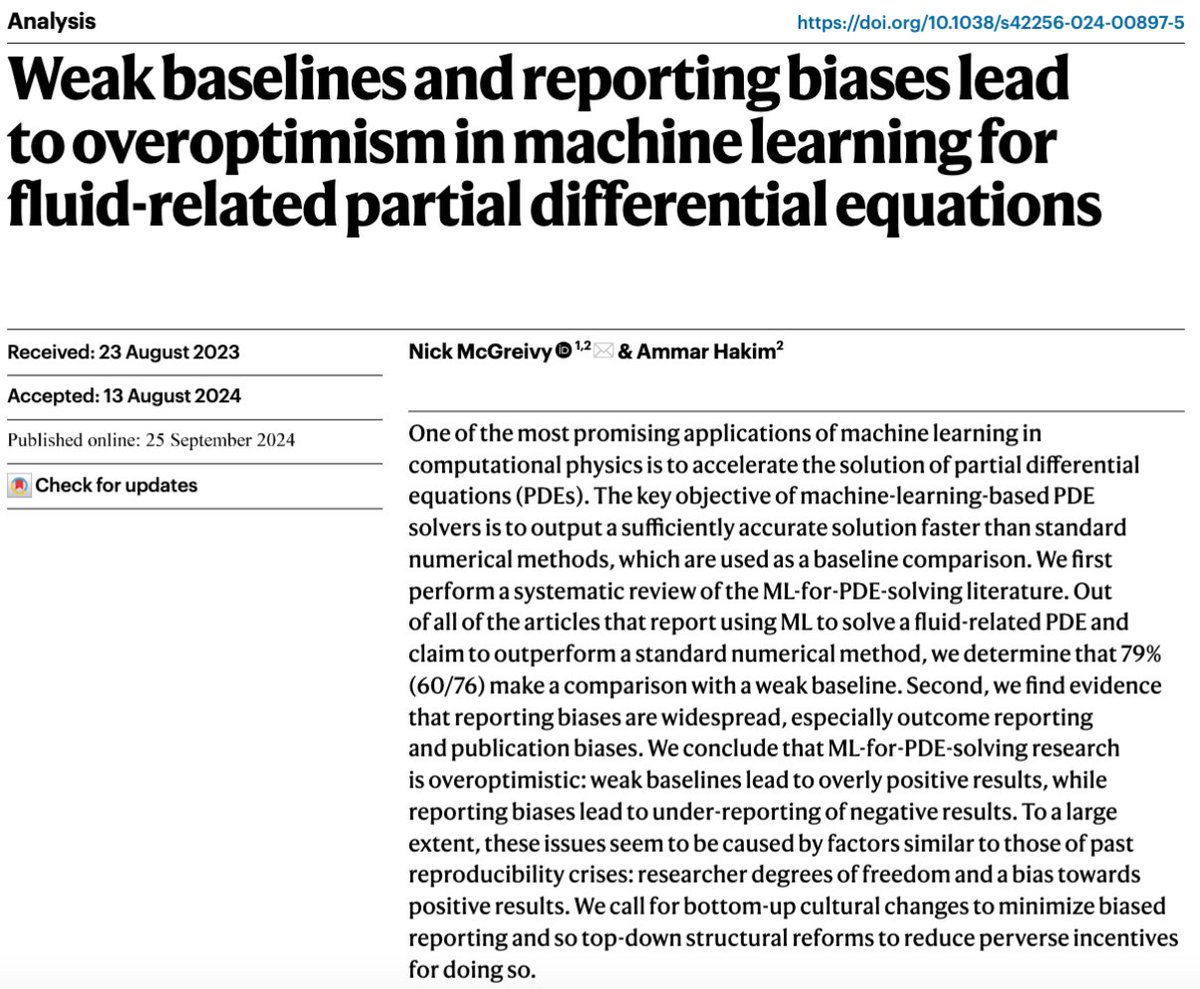
Our new paper in @NatMachIntell tells a story about how, and why, ML methods for solving PDEs do not work as well as advertised.
We find that two reproducibility issues are widespread. As a result, we conclude that ML-for-PDE solving has reached overly optimistic conclusions.
8
100
484
123,881
22 Sep 2024
This aligns a lot with how I use ChatGPT. It's great for helping me produce plots, reformat some data, helping me spot problems in gnarly LaTeX, correct my German in emails etc. But still mostly worthless for writing "real" code for most of my use cases
22 Sep 2024

People ask me (question?) how I use "AI".
I wrote a post beginning of the year with some of my *daily* use-cases bartwronski.com/2024/01/22/h…
(The use has only increased since then and includes coding assistants. They are like asm ->C -> using IDEs ->Python -> ... level of change)
2
3
463
22 Sep 2024
I think the lack of usefulness for coding in my case is multifactorial. For one, virtually all of my projects are things that to some extent nobody else has ever done before. So not a great use case for LLM.
But also, using LLMs takes me out of the problem solving mindset
80
Andreas Longva retweeted
Do you have late breaking results, or would like to share recently published work with the MIG community? Submit a poster!
The deadline for poster submissions is Sept 13th through the EasyChair portal easychair.org/my/conference?…
1
2
329
28 Aug 2024
Was looking at beginner guitars when this helpful ad popped up.
At least shipping is free!
2
190
Andreas Longva retweeted

24 Aug 2024
Missed #SCA2024? Maybe you want to see my crazy multigrid-like solver for deformables?
Paper, presentation, and code are on my website: alexandremercieraubin.com/Wo…
3
3
15
740