
@AnyoneFDN relay operator | Monero is privacy that matters.
Joined October 2025
- Tweets 951
- Following 150
- Followers 233
- Likes 953
165 Photos and videos






Jun 12
The UK is pushing harder on #privacy with encryption backdoors, on-device scanning, and expanding surveillance powers.
The answer is layered privacy.
OS-level privacy Network-level privacy
GrapheneOS (@GrapheneOS)
• Hardened, privacy-focused Android for Pixel phones
• No Google dependency required
• Zero telemetry by default
• Industry-leading mobile security
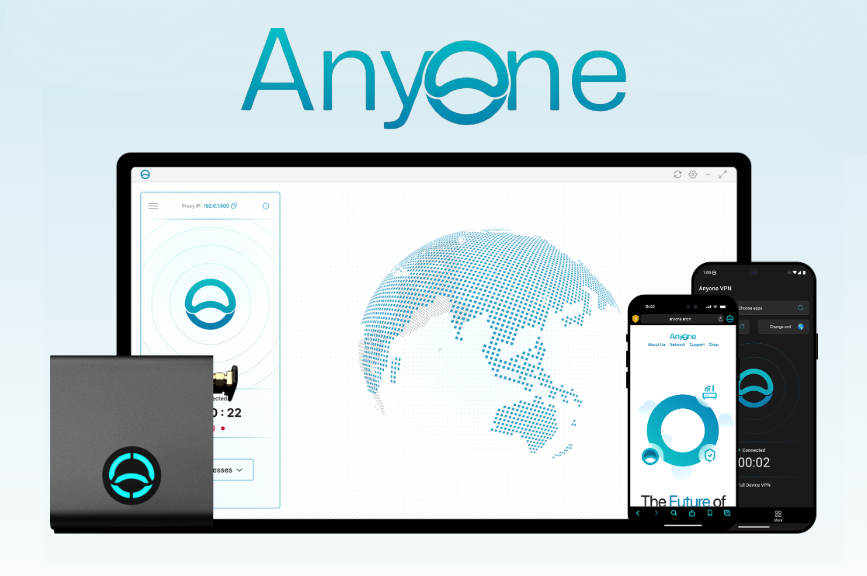
ANyONe Protocol (@AnyoneFDN)
• Decentralized onion-routing network
• Anonymous traffic routing
• Metadata protection through community-run relays
• Zero logs by design, no single point of failure
GrapheneOS → protects your device
ANyONe → protects your network
Two layers. One goal.
Own your device. Own your connection. Own your data.
anyone.io
grapheneos.org
$ANYONE #DePIN #relayup #UKPrivacy #GrapheneOS #VPN #onionrouting
4
9
26
357
Jun 11
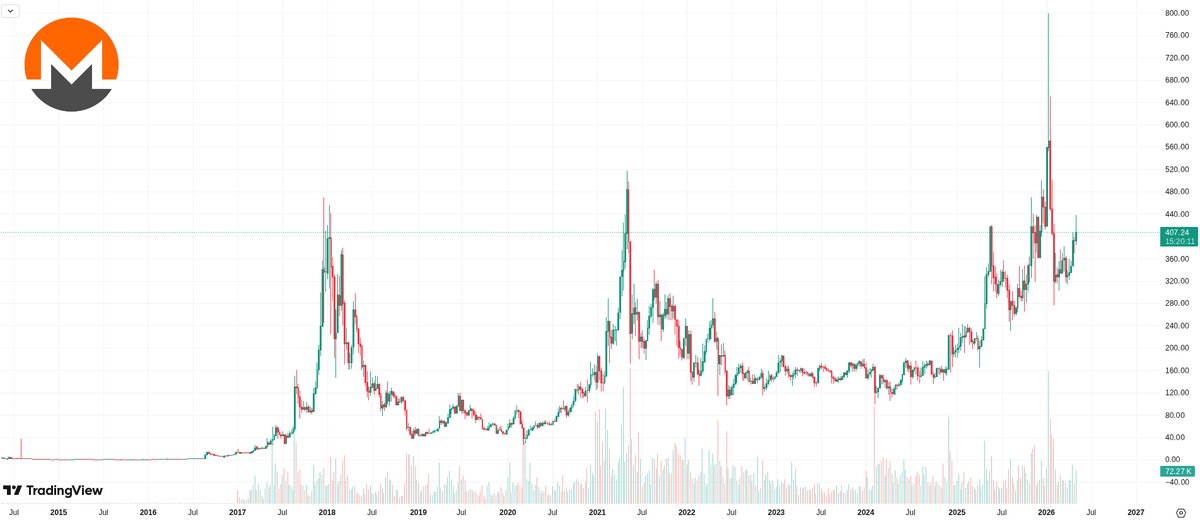
I tend to be cautious about people who preach privacy yet fail to mention Monero.
If #privacy matters, the conversation should include the tools that actually provide it.
monero:native #Monero #crypto #PrivacyMatters #XMR
6
131
Jun 11
Hidden Services: Building the private web on the ANyONe Protocol
The internet has been built around publicly visible servers and centralized infrastructure.
ANyONe Protocol (@AnyoneFDN) is helping create an alternative, where services can operate privately, users can connect anonymously, and both can communicate without relying on centralized infrastructure.
Why this matters
The internet publishes DNS records, exposes IP addresses, and reveals where applications are hosted. Hidden services change that model by abstracting infrastructure behind the network, enabling:
▫️ Privacy-first application design
▫️ Censorship-resistant publishing
▫️ Decentralized services
▫️ Community-run infrastructure
Privacy stops being a feature. It becomes a property of the network.
The human-readable .anyone domains
To make hidden services more accessible, ANyONe Protocol has introduced a privacy-preserving DNS system that maps human-readable .anyone domains to hidden services without revealing destination information.
Instead of sharing long cryptographic addresses, users can access memorable .anyone domains while preserving the anonymity and security guarantees of the network.
The goal is simple: make private services as easy to access as traditional websites while preserving anonymity end-to-end.
Beyond websites
Hidden services are not limited to web pages.
As the ecosystem matures, they can support a broad range of privacy-preserving applications, including:
▫️ Private APIs
▫️ Decentralized AI services
▫️ Anonymous messaging infrastructure
▫️ Secure developer tools
▫️ Self-hosted applications
▫️ Distributed file-sharing platforms
▫️ Community-operated communication networks
As .anyone domains, hidden-service tooling, privacy-preserving DNS, and decentralized hosting continue to mature, the network moves closer to its long-term vision:
A private internet where #privacy is the default, not an afterthought.
Check out this early example of a hidden website running on the ANyONe network:
Raw hidden-service address👇http://sovzswxhl3hfchhkle5hpr7pvv5gz5glhvgl5lnqw4vcllsfncmu7bad.anyone
Human-readable address 👇
http://vps-directory.anyone
$ANYONE #DePIN #VPN #HiddenServices #Decentralized #CensorshipResistance
4
26
101
2,222
Jun 7
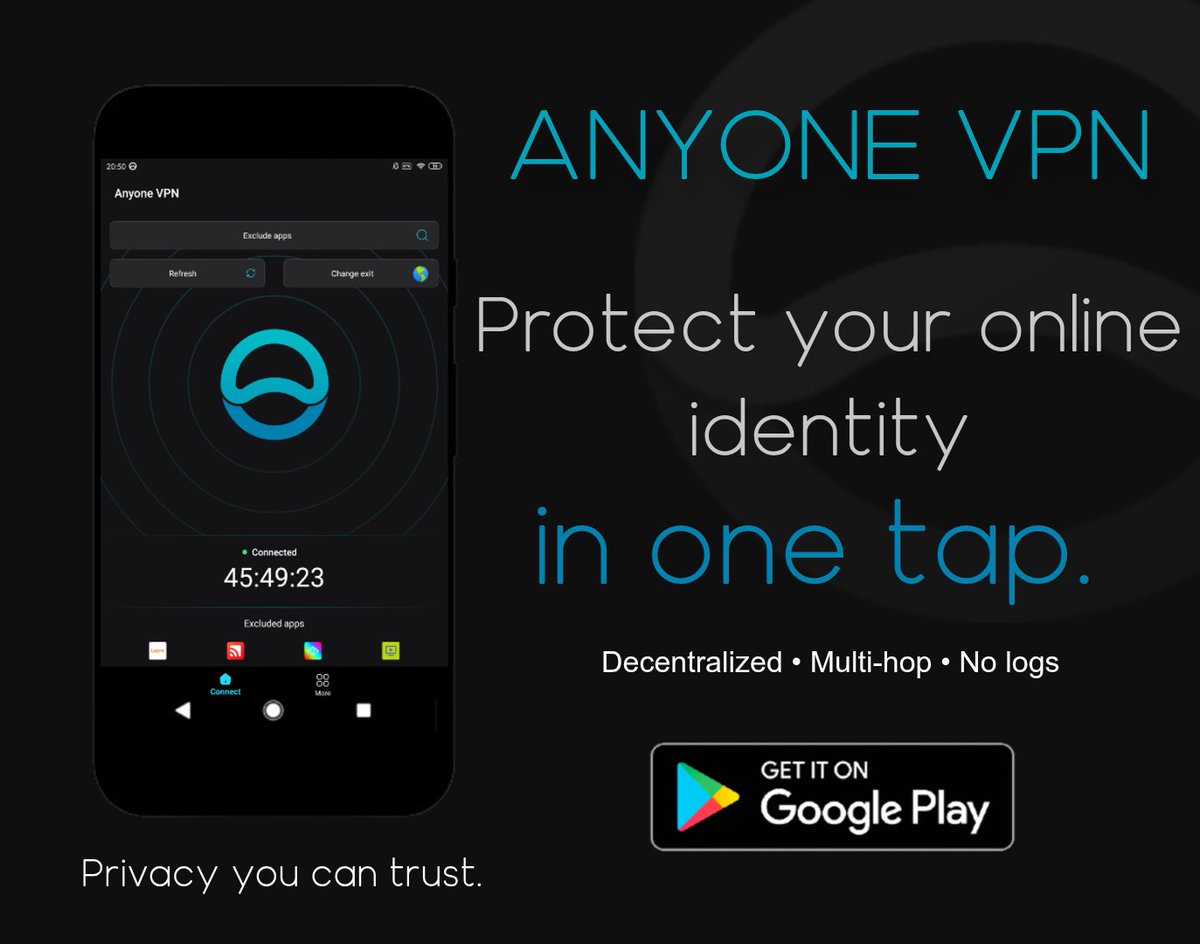
Anyone Protocol: the decentralized #VPN alternative that actually delivers.
🔒 Anonymous routing
🛡️ End-to-end encryption
🌐 Decentralized infrastructure
💻 Open-source code
🚫 Zero logs by default
Privacy-first. Trust-minimized. BUILT FOR ANYONE.
Try it on Google Play:
play.google.com/store/apps/d…
@AnyoneFDN $ANYONE #Web3 #CyberSecurity #PrivacyDoneRight #DePIN #privacy #onionrouting
May 3

📢 VPN bans incoming? Time to go decentralized.
While governments debate cracking down on traditional VPNs, check out the ANyONe Protocol VPN app for Android in action.
✅ Fully decentralized #DePIN network
✅ No central servers, no logs, no signup
✅ Multi-hop encrypted circuits
✅ Per-app tunneling - pick exactly what gets protected
✅ Powered by thousands of incentivized community-run nodes
✅ Free & open-source
This isn’t another corporate #VPN that can be forced to hand over data. It’s community-run nodes doing the heavy lifting.
👉 Grab it on Play Store or sideload the APK from GitHub:
github.com/anyone-protocol/A…
Who else is upgrading to decentralized #privacy before the bans hit harder?
anyone.io/
@AnyoneFDN $ANYONE #relayup #tor #androidvpn #PrivacyMatters
1
11
67
977
Jun 6
Building through bear markets
The hype dies. Narratives fade. VCs tighten their belts. Attention moves on. What’s left is infrastructure.
Bull markets can make anything look alive.
Bear markets do the opposite.
Anyone Protocol (@AnyoneFDN) isn’t slowing down.
Still building.
Not because sentiment is strong, but because the need for #privacy is real.
That’s the difference between a trade and a protocol. Between speculation and infrastructure.
When the next cycle turns (and it will), the winners won’t be the ones who waited for momentum.
They’ll be the ones who built through the downturn.
Privacy as a human right decentralized physical infrastructure networks (#DePIN), doesn’t need bull-market tailwinds to stay relevant, but real adoption.
anyone.io
#relayup #privacy #ETH #VPN
4
7
26
272
Jun 5
I don't want to be just another one taking advantage of this "incident" involving #Zcash to promote #Monero, but this whole thing is just the tip of the iceberg.
And time will prove that I'm right.
$XMR is THE #privacy coin.
That's why you can't find it on any major CEX.
#crypto $ZEC #scam
4
215
Jun 4
Don't let censorship and surveillance become the new norm.
The internet was created to connect people, share ideas, and empower individuals - not to concentrate control in the hands of a few gatekeepers.
Contribute to, build, and use technologies that keep communication open, private, and resilient.
@AnyoneFDN
docs.anyone.io/
$ANYONE #VPN #DePIN #PrivacyMatters #privacy
2
9
53
502
Jun 4
De-Googled. Encrypted. Self-hosted. Open-source.
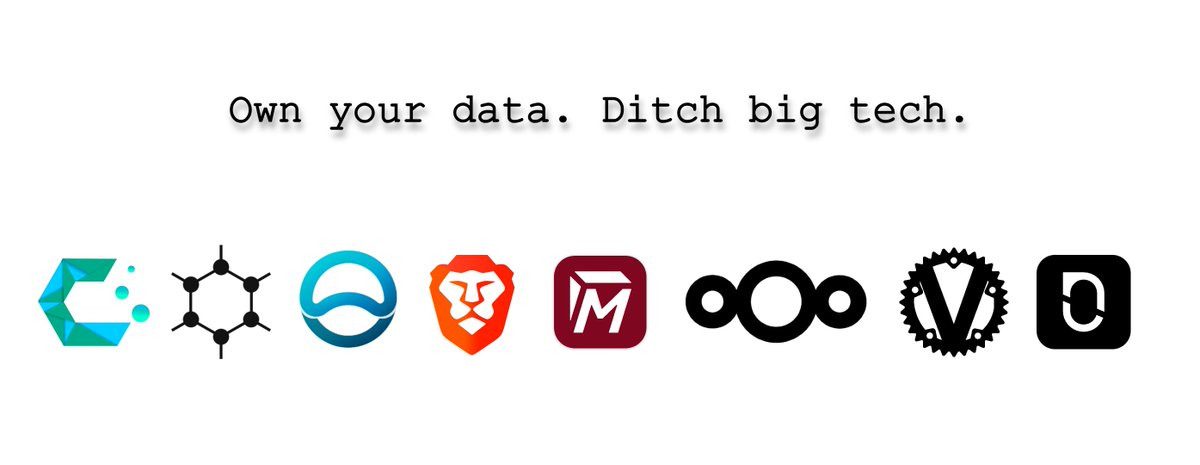
My #privacy stack, tool by tool:
1/ CachyOS (@CachyOS) - my desktop OS.
Arch-based, tuned for speed with optimized packages a custom kernel that genuinely feels snappier than any other OS.
Replaced: Windows.
2/ GrapheneOS (@GrapheneOS) - the de-Googled heart of my Pixel phone.
Hardened Android on a Pixel, with sandboxed Google Play and per-app network sensor permissions.
Replaced: stock Android.
3/ Anyone Protocol (@AnyoneFDN) - the network privacy layer.
A decentralized privacy network that routes traffic through independent, community-run relays instead of trusting one centralized company.
Replaced: traditional VPNs.
4/ Brave (@brave) - my daily-driver browser.
Blocks ads and trackers by default. No extensions to wire up. YouTube premium killer.
Replaced: Chrome.
5/ Tuta (@TutaPrivacy) - encrypted email.
End-to-end encrypted, including subject lines and your contacts - which most "secure" mail quietly skips.
Replaced: Gmail.
6/ Nextcloud - my own cloud.
Files, calendar, contacts, photos - all self-hosted, so I'm the only company with access.
Replaced: Google Drive.
7/ Vaultwarden - passwords manager on my own server.
Lightweight Rust build of Bitwarden. Same apps & extensions, but the vault lives on my hardware.
Replaced: passwords.txt on a USB drive
8/ Notesnook (@notesnook) - encrypted notes.
Everything's end-to-end encrypted, even from Notesnook themselves, and it's fully open source.
Replaced: Google Keep.
Result:
Less tracking. More ownership. More control.
None of it happened overnight. Replace one tool at a time.
Owning your data is a habit, not a purchase.
$ANYONE #VPN #opensource #linux #selfhosting #digitalsovereignty
4
2
14
384
Jun 1
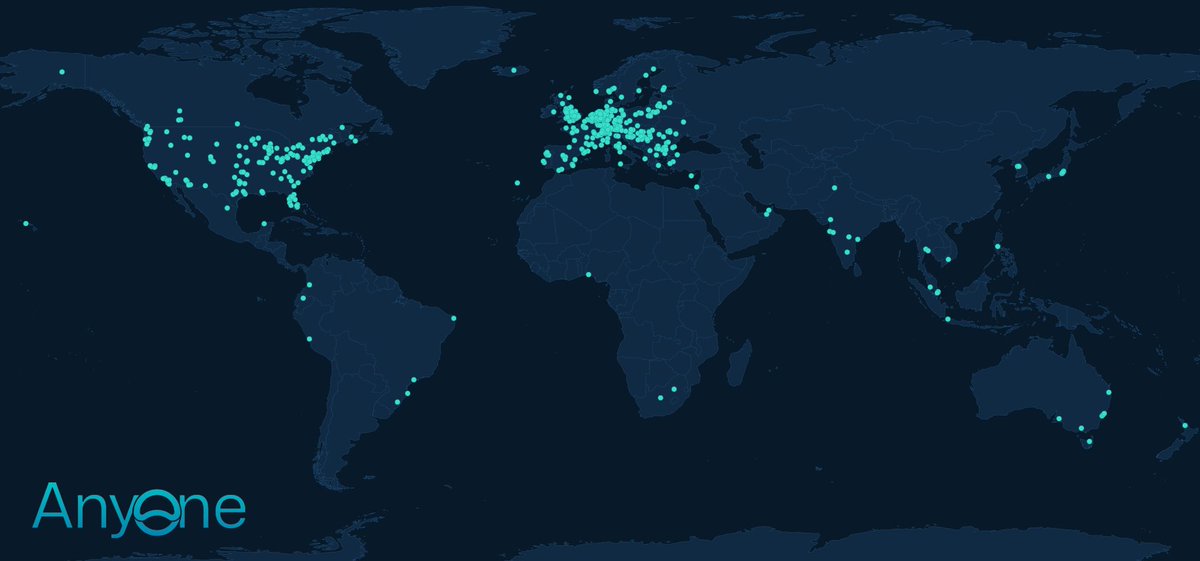
18 relays em Portugal.
Mais de 7,500 em 62 países.
Não te limites a ser um utilizador da internet.
Começa a protegê-la.
Cada relay conta.
Para uma internet mais privada.
docs.anyone.io/quickstart
@AnyoneFDN $ANYONE #VPN #privacidade #DePIN
1
5
46
820
May 29
The ANyONe hidden services: A new era of censorship-resistant internet
The ANyONe Protocol (@AnyoneFDN) ecosystem is expanding, and hidden services are the latest major development.
At its core, it enables hosting and access websites, applications, or services that are hosted within the ANyONe network and can only be accessed by users also using it. These services are anonymous and do not reveal the IP addresses of either the service provider or the users accessing it. Instead, hidden services use special .anyone domain names that are only resolvable within the ANyONe network.
Key features:
Censorship-resistant access: .anyone domains operate independently of traditional DNS providers, allowing access to services even in restricted environments.
Hidden-service support: Think Tor-style .onion addresses but natively integrated with anon client. Recent client update (v0.4.10.2) adds .anyone suffix support short memorable names that map via a dedicated DNS service, also mirrored as hidden services enhancing security and privacy for users while maintaining global accessibility.
One-click deployment: Installation scripts simplify the process of deploying the latest client, making advanced privacy infrastructure accessible to developers and users alike.
SDK & integration: Developers can integrate ANyONe’s ecosystem into applications with minimal friction, supporting a wide range of decentralized solutions.
This release marks a significant step toward a resilient, privacy-centric internet where users maintain control over access and identity.
ANyONe's ecosystem is built for those who value freedom of information, network sovereignty, and digital self-determination.
$ANYONE #DePIN #Privacy #Decentralization #CensorshipResistance #Web3 #InternetFreedom
May 28

The Anyone hidden ecosystem is here.
Access censorship-resistant sites via their .anyone domain name.
Use our one-click scripts to install the latest client and check it out:
🔹 docs.anyone.io/connect/scrip…
See the new DNS endpoint, which is also mirrored as a hidden service:
🔹 dns.ec.anyone.tech/tld/anyon…
13
82
1,090
May 26
Crypto isn’t just about flipping tokens for lambos.
DePIN proves it.
Decentralized Physical Infrastructure Networks use tokens to coordinate something traditional systems struggle with: thousands of individuals running real-world hardware for a shared network.
Bandwidth. Storage. Compute. Wireless. Mapping.
Infrastructure bootstrapped by people who would never sign a corporate contract, but will set up a node if the purpose and incentives make sense.
Take the case of the ANyONe Protocol.
Formerly known as ATOR Protocol, @AnyoneFDN is, essentially, a privacy-focused decentralized network supported by over 7,500 independent relays distributed across 62 countries.
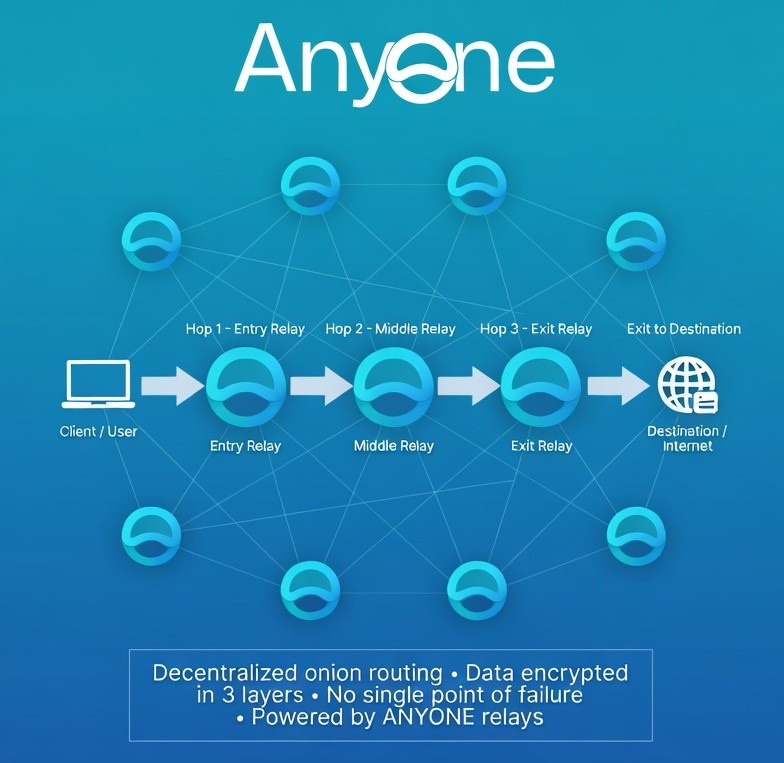
Instead of routing traffic through a corporate #VPN that can log activity, comply with subpoenas, or quietly change policies, traffic moves across independently operated relays using onion routing and crypto-native incentives to keep operators online and help the network grow.
More relays means a bigger anonymity set, faster and more reliable traffic, and a network that's harder to disrupt.
It’s philosophically closer to the Tor network than to a commercial VPN provider - participation is open to anyone, and no single entity owns the network.
This is the side of #crypto that rarely trends on CT.
No leverage. No memecoin casino. Just infrastructure answering the question skeptics always ask:
"Why does this need a blockchain?"
Because coordinating and rewarding independent operators worldwide is exactly what crypto is built to solve.
You can’t bootstrap a global #privacy relay network with Stripe invoices and enterprise procurement.
Privacy is a right.
#DePIN is one way we rebuild it.
Run a relay.
Earn $ANYONE.
Strengthen the network.
1
7
28
443
May 25
The next phase of the internet won’t be faster.
It’ll be private by default.
Centralized VPNs were never going to give us real #privacy.
Their business depends on owning your data.
The alternative is decentralized privacy infrastructure:
• Community-powered relays
• Onion routing
• Crypto incentives
• Open-source
Privacy that scales without trusting corporations or governments.
We’re already at 7,500 active relays and counting.
The question isn’t whether privacy becomes infrastructure.
It’s who controls it.
ANyONe Protocol is making sure it’s the people.
anyone.io
@AnyoneFDN $ANYONE #DePIN #VPN #relayup #ETH
1
6
40
419
May 25
Want real privacy in your app without building infrastructure?
ANyONe Protocol makes it dead simple. Install an SDK, route traffic through the decentralized network, done.
Demo: a #Zcash ($ZEC) wallet anonymized through the $ANYONE network with one command.
Zero friction for the user.
Perfect for:
▫️Privacy-first wallets
▫️AI agents
▫️Secure messaging
▫️IoT / home automation
▫️Any dApp that wants privacy by default
66,000 NPM installs and counting.
The future of #privacy is decentralized & programmable.
Start here: docs.anyone.io/sdk
@AnyoneFDN #DePIN #ETH #VPN #relayup
May 20
The Anyone NPM package gives users all the tools needed to quickly route apps through the Anyone Network.
In this demo, we start the Anyone client from npm, then launch a zcash:native wallet through the Anyone proxy, anonymizing all traffic automatically.
Its time to be anyone on @Zcash.
1
7
52
1,132
May 19
The strongest narratives are the ones the world ultimately has no choice but to adopt.
Privacy is one of them.
While centralized entities continue scaling data collection and monitoring, @AnyoneFDN is building the infrastructure for private, decentralized routing.
A global, incentivized onion-routing #DePIN.
7,500 community relays. 80 GB/s bandwidth.
Just #privacy that actually scales: powered by regular people running nodes and earning $ANYONE for keeping the network secure, fast and reliable.
The future doesn’t ask permission.
It routes through ANyONe network.
#VPN #ETH
1
4
32
366
May 17
Running an ANyONe (@AnyoneFDN) relay is an act of building infrastructure, not just income.
Every relay you spin up makes the #privacy network harder to surveil, faster to use, and difficult to control.
More relays = a bigger anonymity set
More relays = faster, more reliable traffic
More relays = no entity can ever own the flow
No corporation.
No single point of failure.
No surveillance apparatus.
Just a network that belongs to everyone, and answers to no one.
You’re not just earning.
You’re building the future.
Run your relay now.
docs.anyone.io/relay/start
$ANYONE #relayup #DePIN #VPN #crypto
3
6
62
509
May 12
This is what a real #DePIN looks like. 🔥
7,400 relays.
61 countries.
One decentralized network.
Zero borders for privacy. 🌍
Built by the community.
Operated by the community.
Scaled by the community.
This is how resilient networks are born.
The ANyONe network is expanding into a truly global #privacy infrastructure layer. 🛡️
Decentralization at scale.
Run a relay 👉 docs.anyone.io/quickstart
@AnyoneFDN $ANYONE #relayup #VPN #crypto #ETH
11
71
762