Coaching in leadership and soft skills. Supporting women in STEM. Looking to a return to 🇪🇺. A believer in science and sex realism.
Joined May 2009
- Tweets 5,467
- Following 5,499
- Followers 3,555
- Likes 188,427
103 Photos and videos
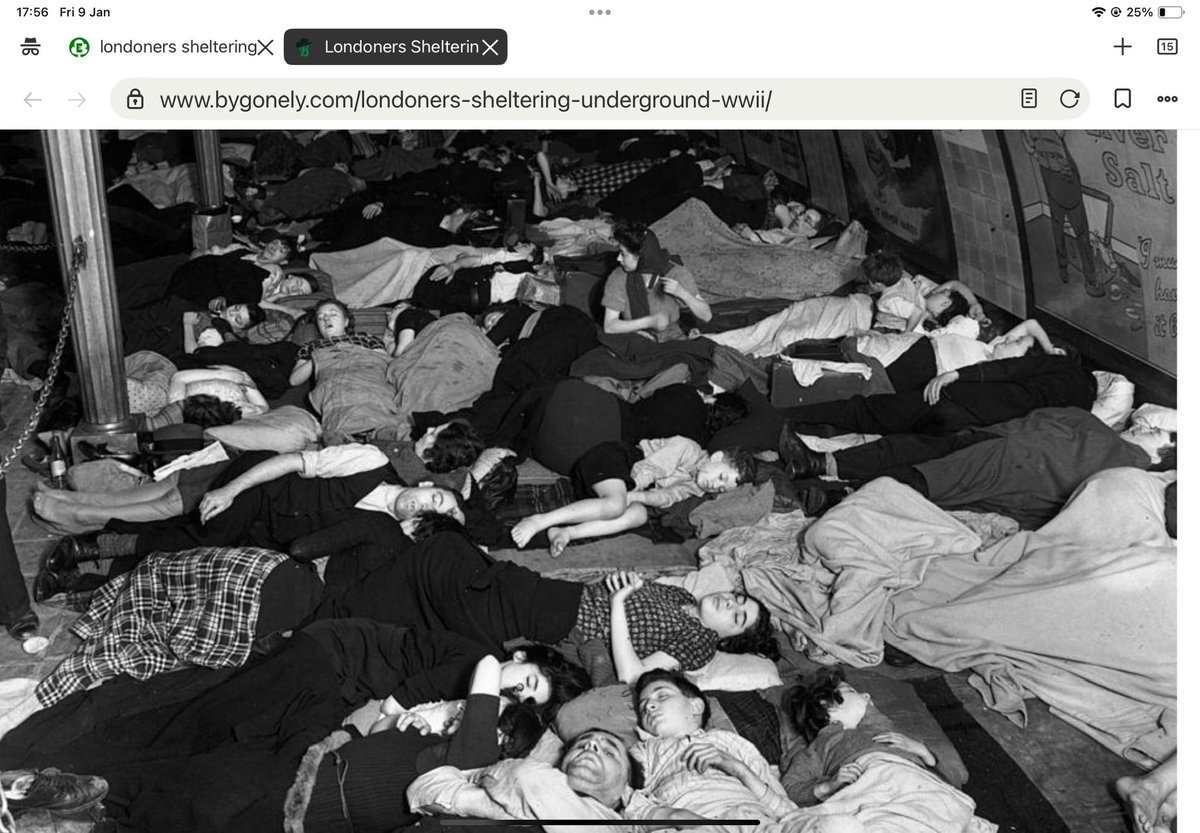







What’s happening to the ponies @NaturalEngland ?

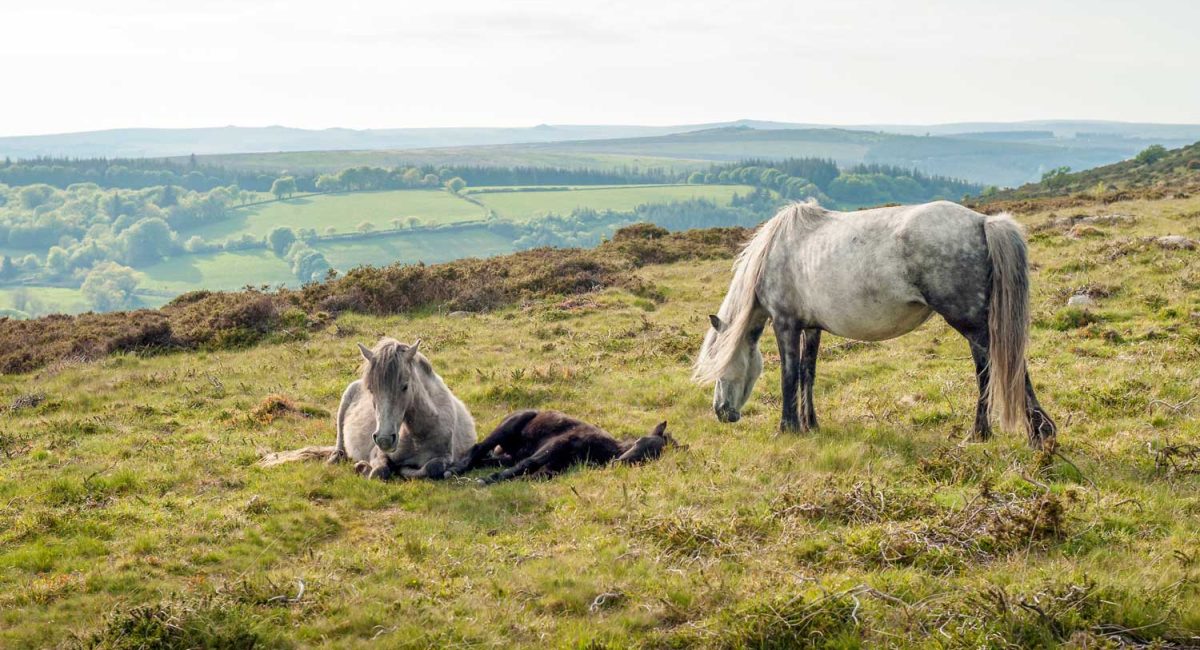
Dartmoor's hill ponies have grazed those commons for longer than there has been a country called England. Fewer than a thousand are left, down from six thousand a generation ago. The United Nations listed them as endangered in 2023. So, naturally, the body charged with protecting nature has decided to get rid of nine in ten of the survivors.
There is a process, obviously.
Natural England's new grazing contracts now count the ponies in the same bucket as the cattle and sheep. A commoner with a fixed quota has a choice: keep a semi-wild pony worth nothing at market, or use the slot for a lamb he can sell. Guess which one survives the spreadsheet. The rest are gathered in the autumn drifts, and with nowhere to put thousands of unhandled moorland ponies, the next stop is the abattoir.
Natural England would like it noted that it has not ordered a cull. It has merely built a machine whose only output is a cull, switched it on, and handed the bolt gun to a farmer so the fingerprints land elsewhere. Very tidy.
And now the funny part. The pony is the best tool on the entire moor for eating Molinia, the coarse purple grass strangling Dartmoor into a brown monoculture. Cattle and sheep won't touch it. The ponies hoover it down and clear the ground for the orchids, the wildflowers and the insects behind them. Remove the ponies and the moor chokes into precisely the lifeless scrubland the contract was meant to prevent.
So the conservation strategy, in full: protect the habitat by deleting the animal that maintains the habitat. A masterclass.
Better still, Natural England's own Fursdon review looked at this exact question and told them, in plain English, not to lump ponies in with cattle and not to cut pony numbers. They read it, praised it, said they fully supported it, then did the precise opposite.
Four thousand years these animals have run Dartmoor with no committee and no contract. They could be gone within one, and the people who did it will write it up as a win for nature.
3
As well as being a distinguished woman of science, Elizabeth proved that women were as competent, if not more so, than men. She broke down every barrier against women in medicine and my great aunt was one of her first to practice medicine in Ireland. Proud of her.
Jun 9

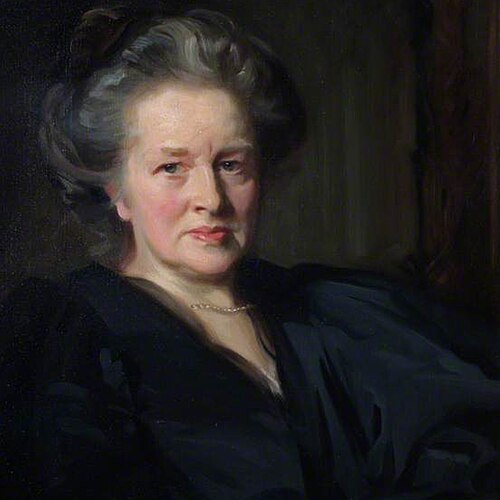
Woman of the Day Elizabeth Garrett Anderson, born OTD in 1836 in Whitechapel. First woman to qualify in Britain as a physician and surgeon, co-founder of the first hospital staffed by women, first woman Dean of a medical school, first woman elected to a school board, first woman Mayor. How did this remarkable woman manage to achieve all of that in her 81 years?
She was inspired by her meeting in 1859 with Bristol-born Elizabeth Blackwell who became the first woman doctor in the US some ten years earlier. The following year, 23 year old Elizabeth confided in her 13 year old sister Millie her friend, Emily Davies, as they were brushing their hair by the fireside at home.
Emily pointed out, “Women can get nowhere unless they are as well educated as men. I shall open the universities.” “Yes,” said Elizabeth, “we need education but we need an income too and we can't earn that without training and a profession. I shall start women in medicine. But what shall we do with Millie?” Emily knew exactly what was needed: “After these things are done, we must see about getting the vote. You are younger than we are, Millie, so you must attend to that."
Elizabeth’s first hurdle was to overcome the opposition of her parents. Her father believed “the whole idea was so disgusting that he could not entertain it for a moment”. That wasn’t uncommon. Victorian beliefs about women’s physical, mental, and emotional natures led to men — well, you know how expert they are on all matters pertaining to women — arguing that menstruation and education were incompatible.
She applied to the medical school at Middlesex Hospital. No women allowed, so she enrolled as a nursing student instead and employed a tutor privately to study anatomy and physiology three evenings a week. When she sat in on some medical classes, male students complained. In fact they raised a petition against her, so she was obliged to leave but did so with an honours certificate in chemistry and materia medica.
Next, Elizabeth tried applying to other medical schools. They turned her down, all of them, so armed with her certificate in anatomy and physiology, she applied to the Society of Apothecaries. Its charter meant it could not legally exclude her on account of her sex and so on 28 September 1865, she sat the exam in the Apothecaries Hall with 51 men. She was one of just three who passed. Top marks too. This meant she could lawfully practise medicine, so how did the SA celebrate this success? It immediately changed its rules to prevent other women from using the same loophole.
Elizabeth couldn’t persuade any hospital to offer her a post despite her excellent academic record so she opened her own practice in London. It took off when cholera broke out and people panicked. Well, even a mere woman was better than nothing. By then, she had opened St Mary's Dispensary for Women and Children, and in the first year, treated 3,000 new patients in 9,300 outpatient visits.
Learning that the Sorbonne was considering admitting women as medical students, Elizabeth studied French until she was fluent and finally obtained her much prized medical degree in 1870, at the age of 40.
In the same year, a letter was published in The Lancet representative of the views of many male medical practitioners, particularly specialists in gynaecology and obstetrics: that women lacked “the coolness and strength of nerves” required of a doctor, and “the constitutional variations of the female system, at the best are uncertain and not to be relied upon”.
Those pesky periods again, sapping our brains.
The British Medical Register refused to recognise Elizabeth’s degree.
Still unable to find a hospital post, Elizabeth did the only sensible thing she could do. In 1871, she opened the New Hospital for Women. It staffed entirely by women and Elizabeth Blackwell came on staff as a professor of gynecology. It was hugely popular and enjoyed an excellent reputation for patient outcomes.
In 1873, she became the first woman to be admitted to the British Medical Association. It immediately voted to bar any other women members and held that position for nearly twenty years.
Ever heard of Patriarchy Chicken? Welcome to Patriarchy Snakes and Ladders.
When one of the Edinburgh Seven, Sophia Jex-Blake, opened the London School of Medicine for Women in 1874, Elizabeth taught there and in a 1877 meeting in support of the school, said that there was "nothing injurious to the health, the morals, or the manners of women in a medical education, and that the results were likely to prove beneficial to the female sex and to the nation". The two women didn’t always see eye to eye but in 1883, Elizabeth was elected as Dean of the LSMW. She continued to lobby strenuously for women to enter the medical profession.
The British Medical Register eventually capitulated in 1877 and agreed to register women as medical practitioners. The BMA capitulated in 1893 because its members “needed no convincing of the justness of her demands…she had already by her professional and public life done this very thoroughly", and overwhelmingly voted in favour.
Six years after she retired in 1902, she became the first woman mayor in Britain, Mayor of Aldeburgh.
Elizabeth Garrett Anderson died in 1917 at 81, having kept her promise to Emily and to her sister, Millie. Millicent Garrett Fawcett.
"Women can less easily afford to be second-rate, their professional work will be more closely scrutinised; mistakes will ruin them more quickly than they will men.”
2
89
SarahMcCloughry 🇺🇦🇪🇺🇬🇪FBPE #StandwithUkraine retweeted

Jun 8
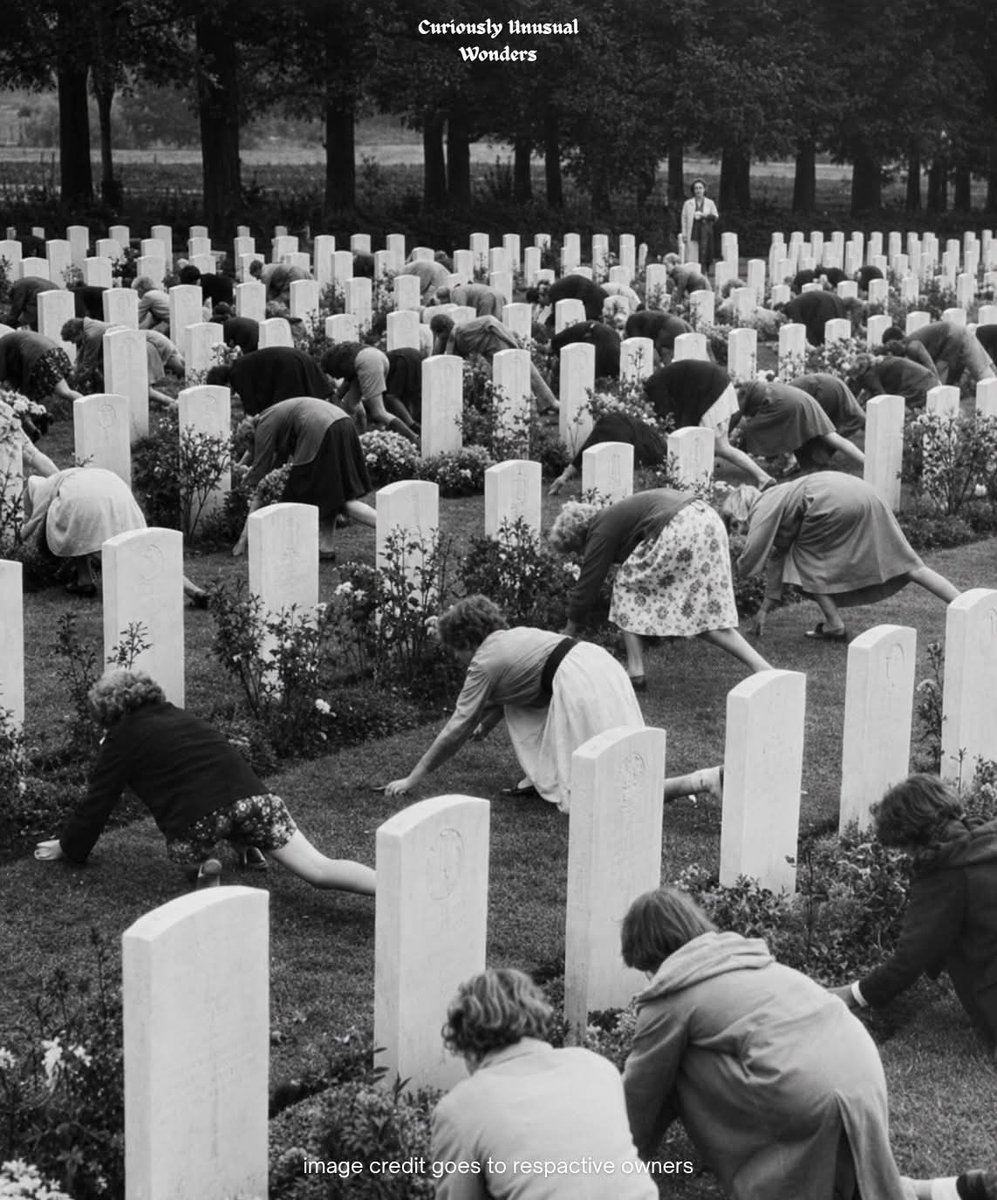
They looked at the neat rows of graves and said, "These men will never be forgotten."
That was the solemn vow made by the residents of a small Dutch town called Oosterbeek just after the devastation of World War II.
The sky above this community near Arnhem had once been filled with thousands of falling paratroopers, but today, it is filled with the soft voices of children whispering to the quiet earth.
For over eight decades, the youngest citizens of this village have guarded a sacred promise made to teenagers and young men who crossed the ocean to fight for a freedom they would never live to see.
If you walk through the local military cemetery today, you will find 1,759 white headstones standing in perfect, silent rows. These graves belong to the airborne soldiers who lost their lives in September 1944 during the brutal Battle of Arnhem. When the gunfire finally stopped and the smoke cleared, the grieving locals knew they had to do something to honor the sacrifice.
They decided to keep their promise in the most beautiful, living way possible. Instead of just building cold stone monuments or holding formal political speeches, they passed the torch of memory directly into the hands of their children.
Every single year since 1945, the school children of Oosterbeek have adopted a specific soldier's grave. A child is given a name, an age, and a hometown of a fallen hero. They learn about where the soldier grew up, what he loved, and how his life ended on that fateful autumn day.
The locals affectionately call these young caretakers the flower children.
During the annual memorial service, a profound silence falls over the entire area. Hundreds of school children walk through the cemetery gates, clutching bright, fresh flowers in their small hands.
They approach their assigned headstones with deep reverence, treating the fallen soldiers not as strangers from an old history book, but as beloved members of their own families.
One young girl, carefully wiping a stray leaf off a white stone, looked up and said, "He was only nineteen when he died here, so I come to visit him because his own mother never could."
The children, some as young as six years old, kneel on the grass to pull weeds and arrange their bouquets. They whisper soft words of gratitude in Dutch to soldiers who arrived from the United Kingdom, Poland, and Canada. These men gave up their entire futures for a country they had never even visited before.
Families of the fallen soldiers still travel from all corners of the globe to witness this incredible scene. For decades, aging mothers, brothers, and later nieces and nephews, have stood at the edge of the cemetery with tears in their eyes. Seeing a young child gently tending to the grave of their lost relative brings a rare kind of comfort.
The sharp pain of an ancient loss transforms into a warm, shared gratitude that spans across generations and oceans.
Freedom is never free, and its cost is etched deep into the soil of this town. The people of Oosterbeek have found a way to honor that heavy price by teaching their children that true bravery does not just belong in heavy textbooks or official government ceremonies.
True bravery lives on through quiet gestures, caring hands, and the simple act of remembering those who can no longer speak for themselves.
A long time ago, those young soldiers fell from the sky to save a village of strangers. Today, the great-grandchildren of that same village reach out their hands to keep those soldiers alive in the heart of humanity, ensuring they will never truly fade away.
27
335
1,029
10,031
A woman who opened doors for other women to follow.
Jun 8
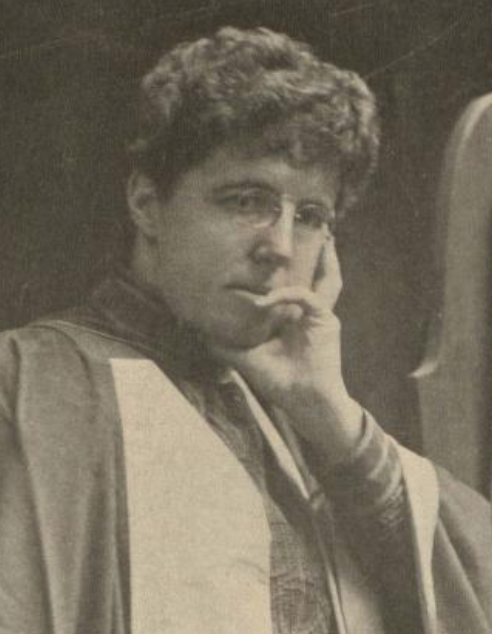
Woman of the Day mathematician Charlotte Angas Scott, born OTD in 1858 in Lincoln, the first woman in Britain to achieve a doctorate in mathematics and the one whose success in the Cambridge Mathematical Tripos caused the University to relent…a little.
Her father and grandfather were Congregational Church ministers, one of the very few churches to support equality for women. When her father became headmaster of an independent school, he provided a tutor for his seven year old daughter.
Charlotte thrived and won a scholarship in 1876 to Girton College. Accommodation was basic.
“When retiring for study after an extremely simple 'tea' in the Common Room, they would pick up three things en route to their rooms…two candles, a bucket of coals, and a chamber pot.”
The standard of education however was first class. Emily Davies, founder of Girton, ignored Cambridge’s refusal to recognise women candidates for the famously demanding Mathematical Tripos exams and trained Girton students from the beginning.
In 1880, Charlotte was given special permission to sit the Tripos. She came eighth but was not accorded the title of Eighth Wrangler. Of course she wasn’t. Mastery of the Tripos exams accorded a bachelor's degree with honours, but Cambridge refused to award women degrees. Eighth Wrangler went to the man who came ninth. Charlotte was barred from the graduation ceremony and her name was cancelled from the list.
Male students at Cambridge were aware of the injustice and made their point. “The man read out the names and when he came to 'eighth', before he could say the name, all the undergraduates called out 'Scott of Girton', and cheered tremendously, shouting her name over and over again with tremendous cheers and raising of hats.”
The women of Girton went one better. One of Charlotte’s contemporaries wrote: “At dinner we clapped and cheered her…Then we told her there would be College Songs in Hall at 9. She was led in by Miss Welsh up an avenue of students to the top of the hall, while 'See the conquering hero comes' was played on the piano and sung by us all. At the top Miss Herschel was standing on a sort of dais, and when we had finished singing she recited an ode to Miss Scott, composed by Miss Welsh for the occasion, and then crowned her with laurels, while we clapped and applauded with all our might.”
Within three months, a petition to Cambridge to allow women to sit exams as a right and to graduate gathered over 8,000 signatures.
You have no idea how radical this was. Cambridge was so repressive that its Proctors threw unaccompanied women (such a corrupting influence on its highly suggestible male students!) into the Spinning House, a workhouse for prostitutes and suspected prostitutes. Even accompanied women were not spared. In 1891, 17-year-old Daisy Hopkins was arrested for the crime of "walking with a member of the university". She sued, but the trial ripped her reputation to shreds and prompted public outrage. In the end, Parliament had to intervene and remove the Proctors’ power of arrest in such instances. But I digress.
The University relented a smidgen. The following year, in 1881, women were allowed to sit the Tripos but placed on a separate list — well, we can’t have them showing up the men, you know — and instead of a degree, they were awarded a Certificate of Proficiency, which makes it sound as though they’d passed their basic road safety and cycling test.
Undeterred, Charlotte was appointed by Girton in 1880 as a lecturer in mathematics and gave lectures at Newnham College from 1880 to 1883. As if that didn’t keep her busy enough, she took an external University of London degree (it didn’t discriminate against women) and was awarded BSc with First Class honours in Mathematics in 1882. She received her doctorate in mathematics in 1885, the first woman to do so.
When Bryn Mawr College opened in Pennsylvania in 1885, the first higher education institution in the US to offer graduate training for women, Charlotte was the natural choice as the first head of its mathematics department. She expected rigour, once rebuking the Principal of the College:
“I am most disturbed and disappointed at present to find you taking the position that intellectual pursuits must be "watered down" to make them suitable for women, and that a lower standard must be adopted at a woman's college than in a man's. I do not expect any of the other members of the faculty to feel this way about it; they, like nearly all men that I have known, doubtless take an attitude of toleration, half amused and half kindly, on the whole question; for even where men are willing to help in women's education, it is with an inward reserve of condescension.”
Does that strike a chord?
Charlotte rolled up her sleeves, urged other American colleges to set up joint exam boards for secondary school students, acted as chief mathematics examiner for the new College Board, set up the Bryn Mawr College Mathematics Journal Club to mentor women students and supervised seven Ph.D students. Oh, and published textbooks, edited the American Journal of Mathematics, authored over thirty papers published in journals all around the world, and was a founder member of the American Mathematical Society and its first woman vice-president.
Charlotte returned to England soon after she retired. She died in 1931, 17 years before Cambridge finally admitted women as full students, but she did everything in her power to open doors for women in mathematics in the UK and the USA.
2
67
Magnificent!

3
83
A reasonable and fair minded case made.

1
6
1,599
Beautifully outlined and depressingly true.
May 31
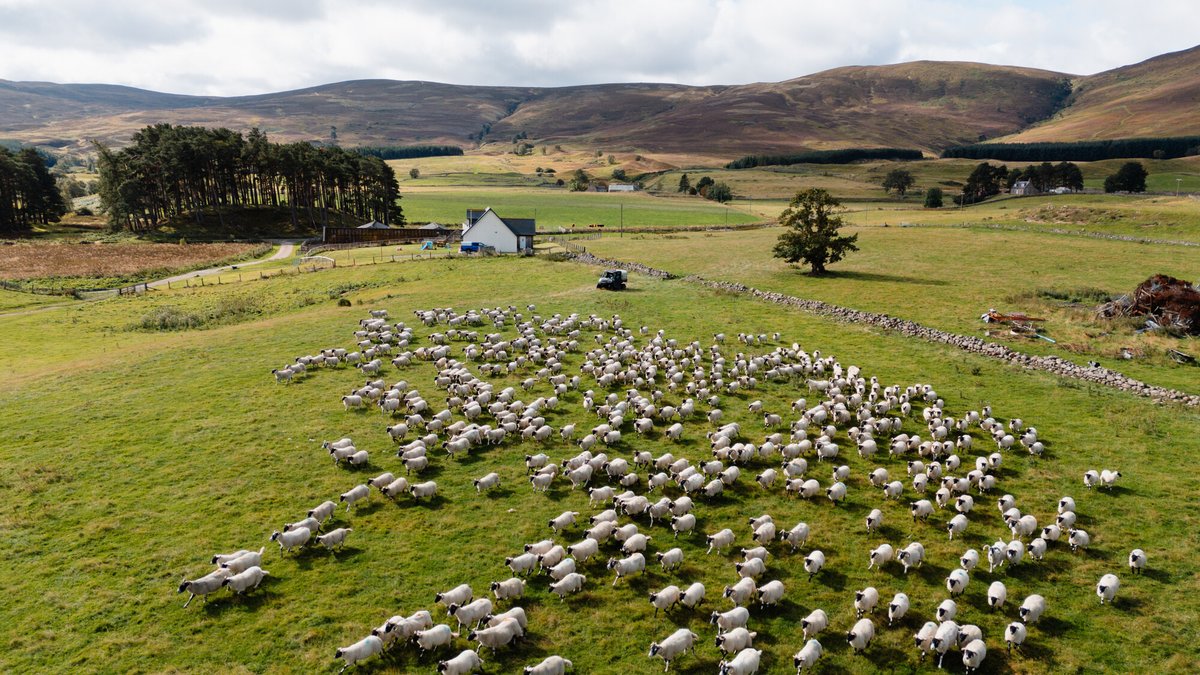
A tenant farmer in the Cairngorms says land that sold for £500 an acre a few years ago now goes for £5,000. He is being moved off ground his family has worked for generations, because he cannot outbid the people buying it. The buyers are corporations, and they have no intention of farming a single acre of it.
Here is how the trick works. A company keeps emitting carbon exactly as before. Same factories, same flights, same supply chain, same product. Then it buys a Scottish hillside, plants some trees, and announces to the world that it is now carbon neutral, or, if it is feeling brave, carbon negative. The emissions never fell. It simply bought a landscape to point at.
Take BrewDog. In 2020 it bought a 9,300-acre Highland estate, propped up with public grant money, and promised a million trees and the crown of the world's first carbon negative beer business, removing twice the carbon it emitted, forever. By 2023 roughly half of the 500,000 trees it had managed to plant were dead, killed by drought, with critics noting the planting was drying out the peat and releasing carbon of its own. The advertising regulator ruled its carbon-negative claims misleading. In 2024 it quietly dropped the badge and dismissed the entire carbon credit market as a flood of cheap schemes whose benefit was "questionable, maybe even non-existent." Then it sold the estate to a firm whose actual business is selling carbon offsets.
That is the whole model in one story. Public money in. Dead trees out. A green halo worn for four years and then dropped. The farmer who used to be on that land, gone. The hillside passed to a company that exists purely to sell other people the right to keep polluting.
This is no fringe case. In one recent year, half of every estate sold in Scotland went to investment funds, corporations and charitable trusts rather than anyone who would farm it. A third of the deals for plantable land are now done off-market, in secret, precisely so the local community never gets the chance to bid.
So this is what net zero looks like on the ground. A man who produced food is priced out of his own glen. A corporation that produced emissions buys the glen, calls itself a force for good, and sells the carbon. The land stops feeding anyone. Nobody's emissions actually went down by a gram.
The food was real. The farmer was real. The carbon saving is a line in a slide deck.
And we have somehow decided the villain in all this is the man with the sheep.
1
1
46
SarahMcCloughry 🇺🇦🇪🇺🇬🇪FBPE #StandwithUkraine retweeted

May 31
I want to recap what actually happened at M&S, because some people seem determined to turn this into something it was not.
I went early evening because I thought the shop would be quieter. I was shopping with my teenage daughter, who is autistic and has sensory issues around clothing.
Anyone who parents a child with sensory difficulties will understand how hard clothes shopping can be. Fabric, fit, seams, tightness, waistbands, labels, texture, all of it matters. Something can look perfectly fine on the hanger and be completely unbearable once worn.
Ordering several sizes online and returning them is neither logistically nor economically feasible for us, and in any case my daughter likes to touch and see things before deciding whether she is comfortable with them. That approach simply doesn’t work for her.
So, for the avoidance of doubt, nothing would have suited me better than for my daughter to be able to try the clothes on and ensure she has enough things to see her through Summer.
That was the whole point of going to the changing rooms.
I was not looking for confrontation. I was not trying to make a political point. I was trying to make an ordinary shopping trip work for an autistic teenage girl who finds clothes difficult.
I walked into the changing area calmly and practically. My intention was to find a suitable cubicle, ideally the larger disabled one, check that it felt safe and manageable, and then encourage my daughter to follow me in.
That was the plan.
Had she been able to try the clothes on, it would have saved time, stress, uncertainty, returns, and the familiar nightmare of buying something that later turns out to be impossible for her to wear.
So the idea that I somehow wanted there to be a problem is absurd.
The changing room was supposed to be the solution.
The problem arose when my daughter became distressed by the presence of a male member of staff supervising the changing area. I had not anticipated her reaction. It was not scripted by me. I did not wind her up. I did not march in looking for a row.
She reacted. I saw her distress. I took it seriously.
And yes, I think a teenage girl, particularly an autistic teenage girl, is entitled to feel safe and comfortable in a changing-room environment.
This is not complicated. It is not about hating anyone. It is not about being difficult. It is not about “vibes” or emotional projection or whatever patronising theory people wish to attach to it online.
It is about a vulnerable young woman trying to buy clothes, and finding that the space provided did not feel safe or appropriate to her.
Parents of autistic children spend a lot of time trying to prepare, adapt, reassure, smooth things over, and make ordinary life manageable. Sometimes it works. Sometimes it doesn’t.
On this occasion, it didn’t.
But I will not apologise for taking my daughter’s distress seriously. Or believing that M&S should change their policy.
444
1,071
7,342
380,335
SarahMcCloughry 🇺🇦🇪🇺🇬🇪FBPE #StandwithUkraine retweeted

May 28
I live in Ince. This utter weapon is spewing nothing but hate and lies. It’s NOT a mosque, it’s a community centre that includes a small prayer room, amongst other things (such as a foodbank). Take your disgusting racism @RobKenyonReform and fuck off out of my constituency.
May 28

St Mary’s Church in Ince once served the people of Makerfield. Now it’s a mosque.
Our Christian heritage is being erased. Reform UK will ban the conversion of churches and protect Britain’s traditions.
309
1,802
6,816
217,110
All power to his elbow. Now we need swift boxes as well!

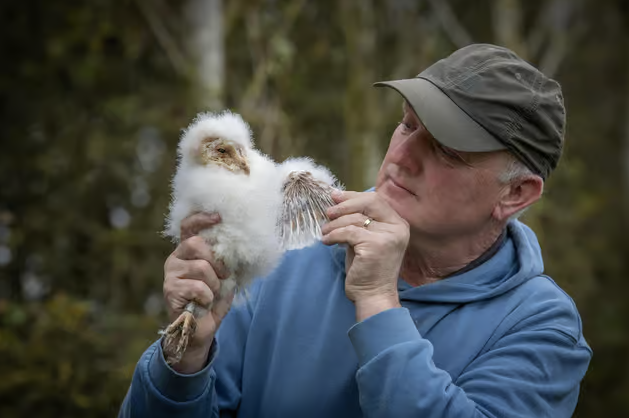
A bricklayer in East Yorkshire has spent 35 years putting up barn owl nest boxes on weekends. This year, the region saw 308 owlets hatch.
His name is Robert Salter. He's 56 and does bricklaying full time. In 1990, he saw a piece on the news about a man in Lincolnshire installing barn owl boxes, and decided he'd do the same. He started with five.
He now has more than 350 boxes scattered across fields, farms, outbuildings, and trees in East Yorkshire. Every June, he takes four weeks off from bricklaying and visits them with his wife Sue. Scrambling up ladders, ringing chicks, cleaning boxes, repairing the ones the weather got to. He's a licensed bird ringer for the British Trust for Ornithology.
In 2024, the region ringed 95 owlets. In 2025, the count was 308. The Barn Owl Trust says that nationally, this year was "pretty poor" for barn owl breeding, but east Yorkshire is the exception, and it's the exception because of one man with a ladder.
The barn owl population in the UK was estimated at 4,000 pairs in the mid-2000s and crashed to roughly 1,000 by the early 2010s. The species is still recovering.
Most of conservation is one person who refuses to give up.
1
4
82
I’m shocked at this absurdity.
1 Dec 2025

I've received a statement from Emanuel Brünisholz, who starts a ten-day prison sentence in Switzerland tomorrow for saying that men and women have different skeletons. You can write to the Swiss Federal Dept of Justice and police at info@gs-ejpd.admin.ch to protest this disgraceful situation.
*******
In 2022, I wrote on Facebook that a human skeleton can only be male or female. I pointed out that if, two centuries from now, someone were to unearth the remains of today’s LGBTQI people, they would find nothing but male or female skeletons. To imagine that one would find anything other than male or female struck me as a fantasy divorced from reason, so I described it as a a mentally ill idea.
For that remark I was fined 500 Swiss francs. I refused to pay, and so, on the 2nd of December 2025, I will serve ten days in prison. It is worth noting that, legally speaking, this prison sentence is not a punishment for refusing to pay the fine. Instead, the prison sentence is an alternative way to be punished for the Facebook post itself. I have chosen to trade a monetary fine for time behind bars.
I am fully prepared to go to prison, if that is what it takes to expose the absurdity and authoritarianism of the trans ideology that has now taken root in Switzerland. I intend to face it with good humour; I will not let myself be bent or broken by those who hope to silence me through pressure or intimidation. That, after all, is their aim: to wear me down until I fall quiet. I have no intention of doing so.
The LGBTQ movement behaves like a zealous sect. They try to brand me a homophobe to shut me up. I am nothing of the sort. I repair wind instruments for a living, and I come from a left-wing, tolerant household. What troubles me is watching the activists in that movement exploit ordinary LGB people for political ends that strike me as dangerous nonense. These tactics have begun to cast a long shadow over Switzerland and Europe alike, as a kind of woke dictatorship.
My thanks go to Graham Linehan, who understands this battle all too well. In times like these, solidarity among reasonable people who are willing to speak freely and plainly is essential.
- Emanuel Brünisholz
1
34
Very exciting.
May 25

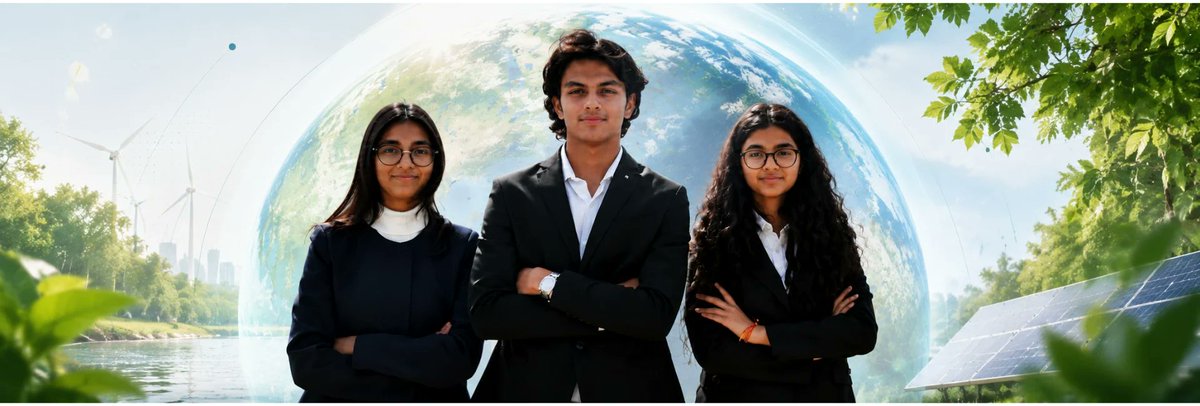
Three 16 year old Indian students can remove microplastics from water using tamarind seeds.
And they've received a $12,500 grant from The Earth Prize to develop this solution.
How did they do it?
Tamarind seeds have something called polysaccharide - which is a sticky compound that can natural polymer. Kinda like a plant-based glue.
This glue when mixed with water can pull out microplastics and clump them together.
And these kids are using the same principle to develop their product called "Plas-Stick" - which is just this power made from waste tamarind seeds.
Now, "Plas-Stick" is still in its developmental stage and there is a lot that needs to be done before it can be scaled.
But if they pull this off - we could have a simple, biodegradable and scalable solution to purify water for billions of people in the world.
And that's something.
Kudos to Vivaan Chhawchharia, Ariana Agarwal, and Avyana Mehta.
P.S. Video and Picture taken from @TheEarthPrize
1
148
Can this be true? Or is this a send up?

101
SarahMcCloughry 🇺🇦🇪🇺🇬🇪FBPE #StandwithUkraine retweeted

Following Reform UK’s @RobKenyonReform being revealed to have made disgusting remarks in response to a horrific post about @carolvorders, she’s responded.
See her response here: instagram.com/reel/DYrMWloIS…
#PervyPlumber
149
1,410
3,201
114,028
I was raped at 9 by boys aged 12-14. It has taken me the best part of 50 years of working on myself to recover from what they did and I still dissociate from time to time. This judge was reprehensible in his remarks and actions.

'Of course they knew what they were doing.'
After three teenage boys avoided jail in a gang-rape case, @aliciakearns tells @ShelaghFogarty she believes the judge 'cares more about the future of the boys than the girls'.
146
2,485
13,701
209,148
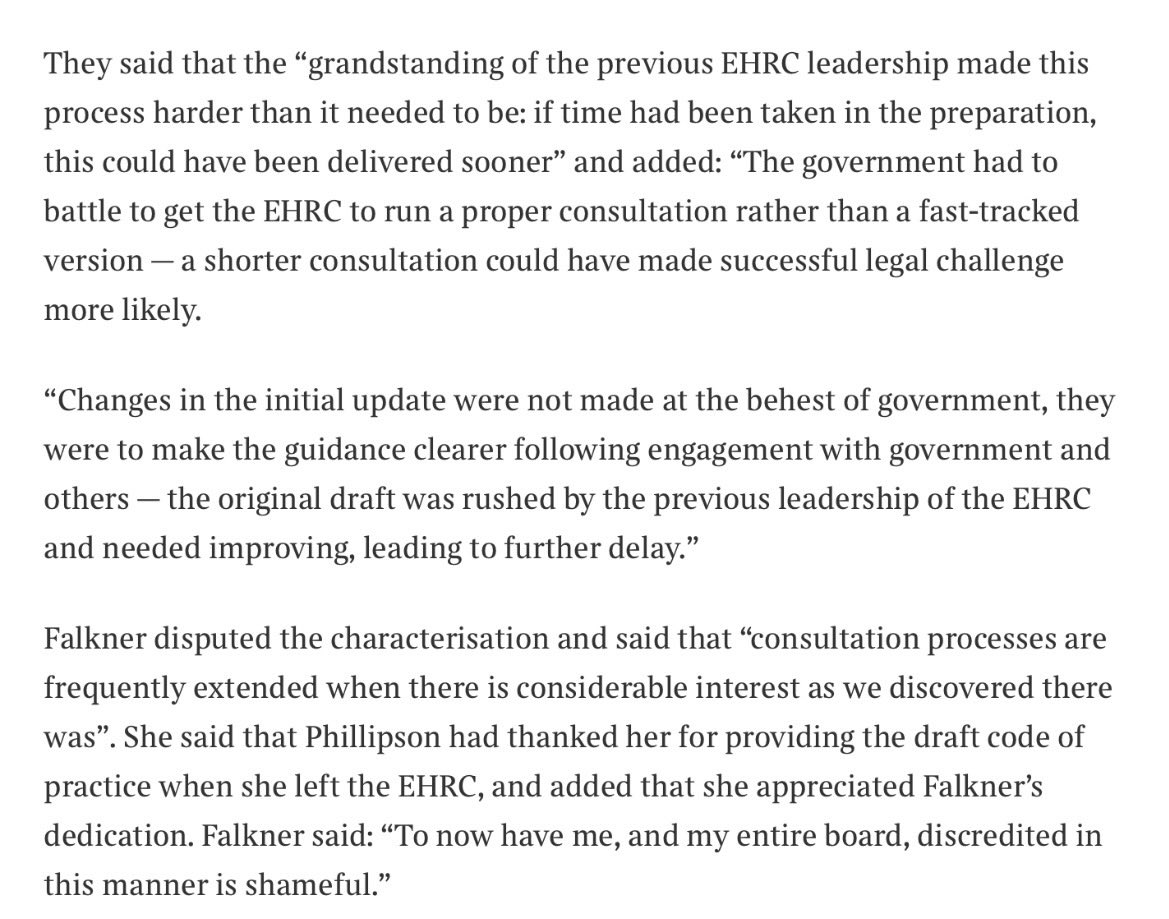
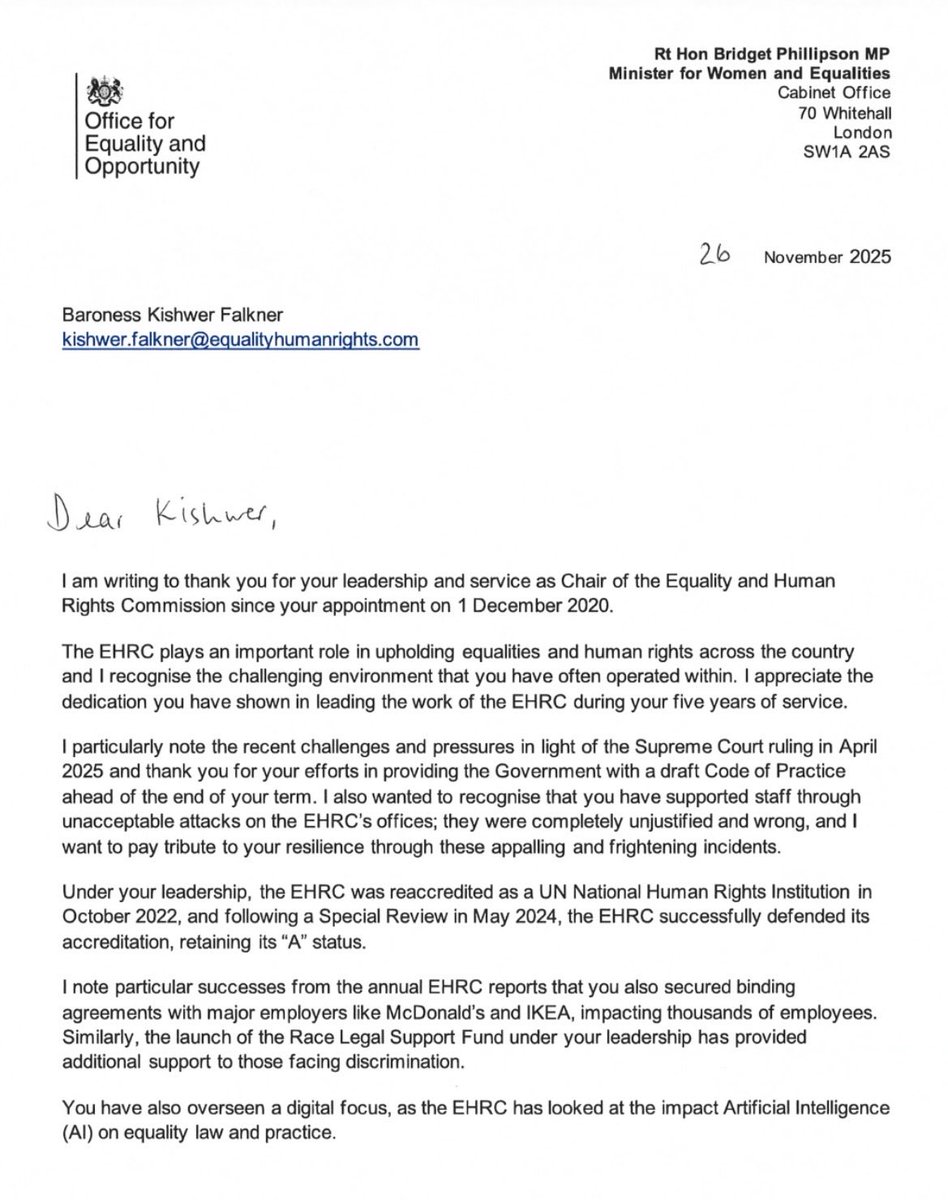
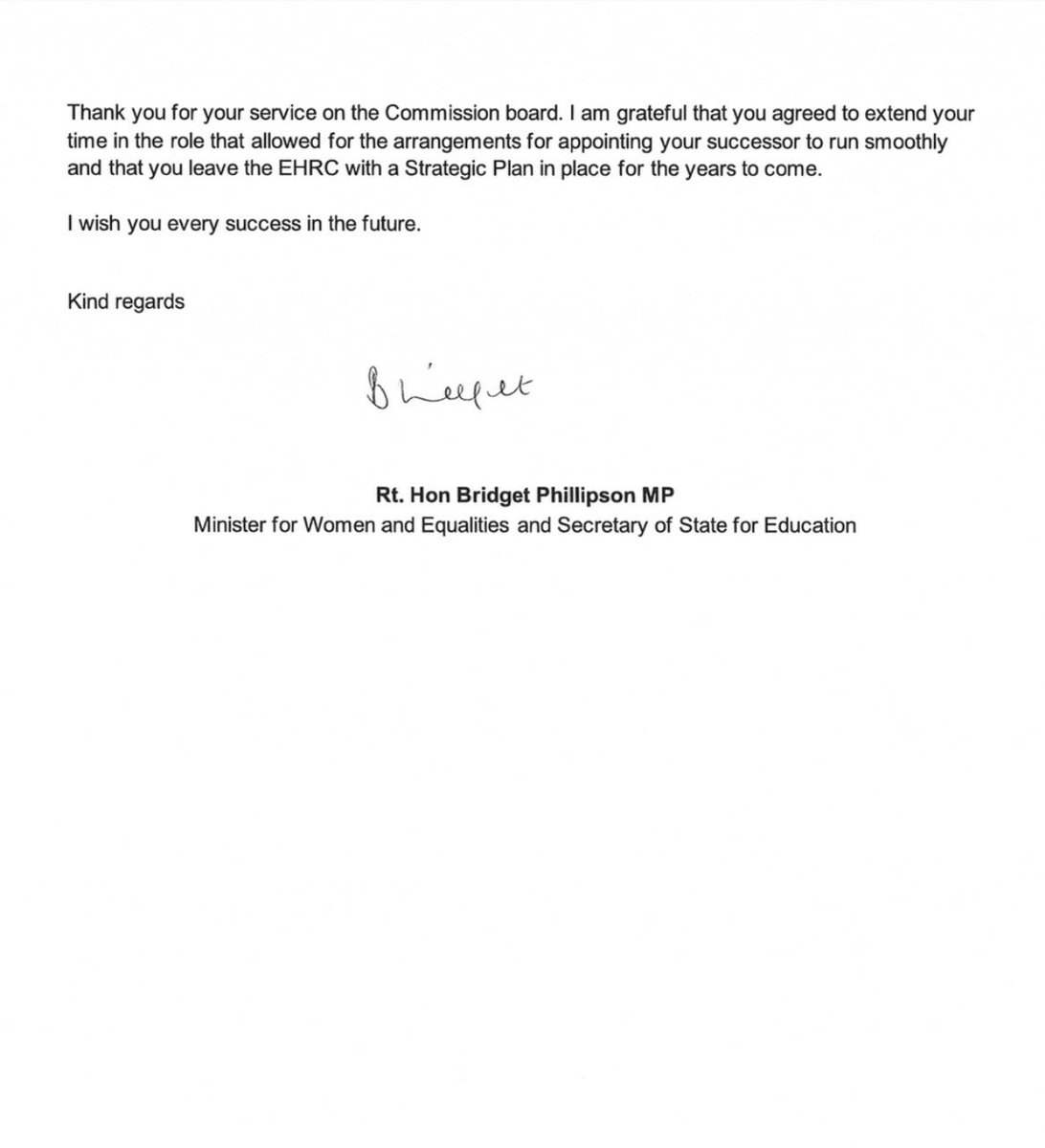
Extremely disappointing from Bridget Phillipson. @KishwerFalkner has been outstanding in her courage and integrity.

Sad to read in @thetimes that Bridget Phillipson is blaming me for delay to EHRC Code. She certainly stoops low. She had Code for 3 months when she sent me this letter last November - no indication of any grandstanding then.
1
1
14
803
The power of small rodents to prevent local authorities from spending millions of pounds on infrastructure!
May 22

London Underground station flooding has reportedly been reduced by around 90% thanks to a group of engineers: beavers.
After conservationists reintroduced a family of beavers into a nearby city park, the animals built dams and restored wetlands that now absorb and slow floodwater naturally.
Authorities had planned major man-made flood infrastructure, but the beavers effectively created their own system — while also boosting biodiversity and restoring the ecosystem around them.
1
20
121
30,676
SarahMcCloughry 🇺🇦🇪🇺🇬🇪FBPE #StandwithUkraine retweeted

May 22
It's very good that the Code has been laid, but it's also important to be clear that it is not for lawyers or judges. It’s for members of the public who are not trained lawyers to help them to understand the law. The Code of Practice does not make new law; it merely provides authoritative guidance to the public on what the law is.

Our draft Code of Practice for services, public functions and associations was laid in Parliament by the Minister for Women and Equalities today: ow.ly/amQF50Z2N4Z
You can read the draft Code of Practice in full at: ow.ly/v6qG50Z2N4Y
17
256
977
36,119
SarahMcCloughry 🇺🇦🇪🇺🇬🇪FBPE #StandwithUkraine retweeted

May 20
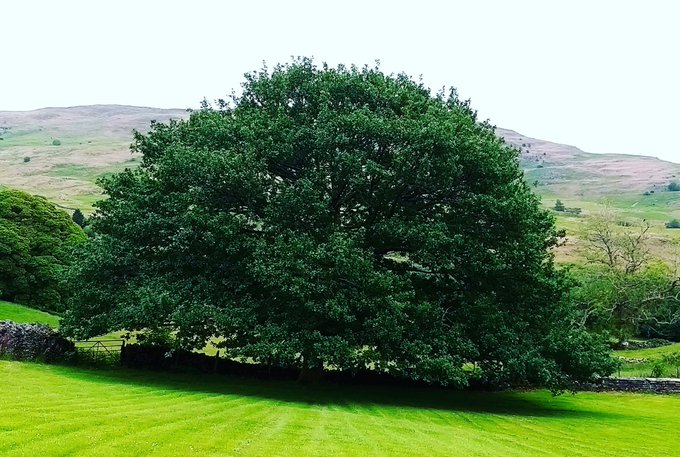
A single 400-year-old ancient oak produces 234,000 litres of oxygen a year while soaking up carbon dioxide, and can support more than 2,000 species of bird, insect, fungus, and lichen.
40
1,059
2,555
29,999
I understand storks are a sacred symbol to Ukrainians of Spring, peace, family and country. Storks mate for life. The villagers are taking care of her having lost her mate. A commitment to life, love and peace.
May 21

In Vinnytsia, Ukraine, a female stork was widowed when her mate died. She is incubating her eggs and is unable to feed herself.
Local residents have started feeding her.
4
200