
Previously: Head of Creative @ TikTok
Joined May 2007
- Tweets 27,653
- Following 6,106
- Followers 4,367
- Likes 33,710
1,875 Photos and videos






Pinned Tweet

11 Mar 2022
I ate all my feelings today. Lucky my feelings are exactly 200g of american smoked bbq beef brisket.
4
1
26
Jun 6
Whoop thought they engineered a perfect recurring revenue loop. Instead, they engineered the exact financial pain point required to motivate devs to jailbreak their hardware. The invisible hand strikes back.
Jun 6

a classic "Show me the incentive and I will show you the outcome." story
1
2
237
Jun 6
a classic "Show me the incentive and I will show you the outcome." story

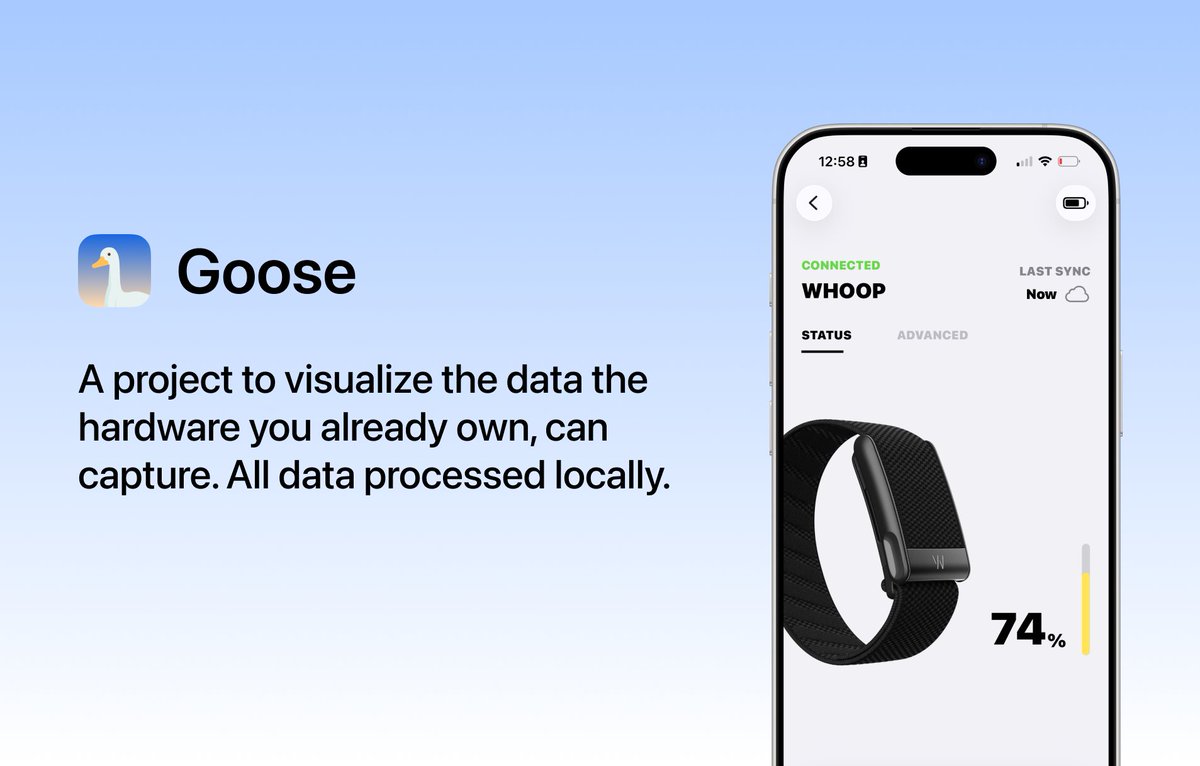
23.5 hours later... there's an app and it's open source.
It tracks activities & sleep. It has full sensor support: HR, SpO2, HRV, Temperature, Motion, etc.
1
348
Jun 2
Started on: Fitbit Pebble then Nike Fuelband then Fitbit Flex then Apple Watch now Whoop.
1
89
Jun 2
I love the form factor of Whoop more than any other wearable ever. I wear mine with the bicep band but I hate that the data is locked in their ecosystem and I can't pair their data with better apps. $300USD a year is a lot for an inferior overall experience.
59
Jun 1
smart. love this for steph.

101
Jun 1
It’s so funny. 50% of people in big advertising agencies almost despise the fact that they make ads desperate to be artists with their clients money. Yet everyone in ecomm is like “holy shit how much fun is it making ads and problem-solving and figuring this out”

I wake up everyday to create ads
That's all I do right now
All angles, All markets




176
May 31
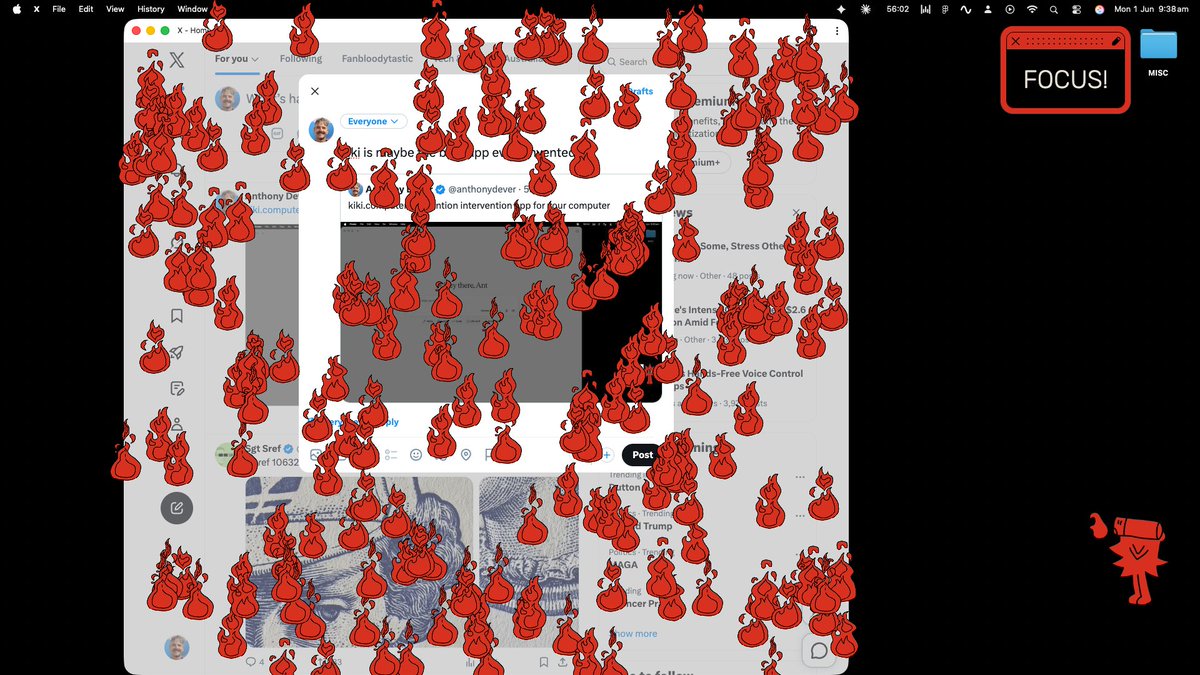
kiki is maybe the best app every invented.
55
May 28
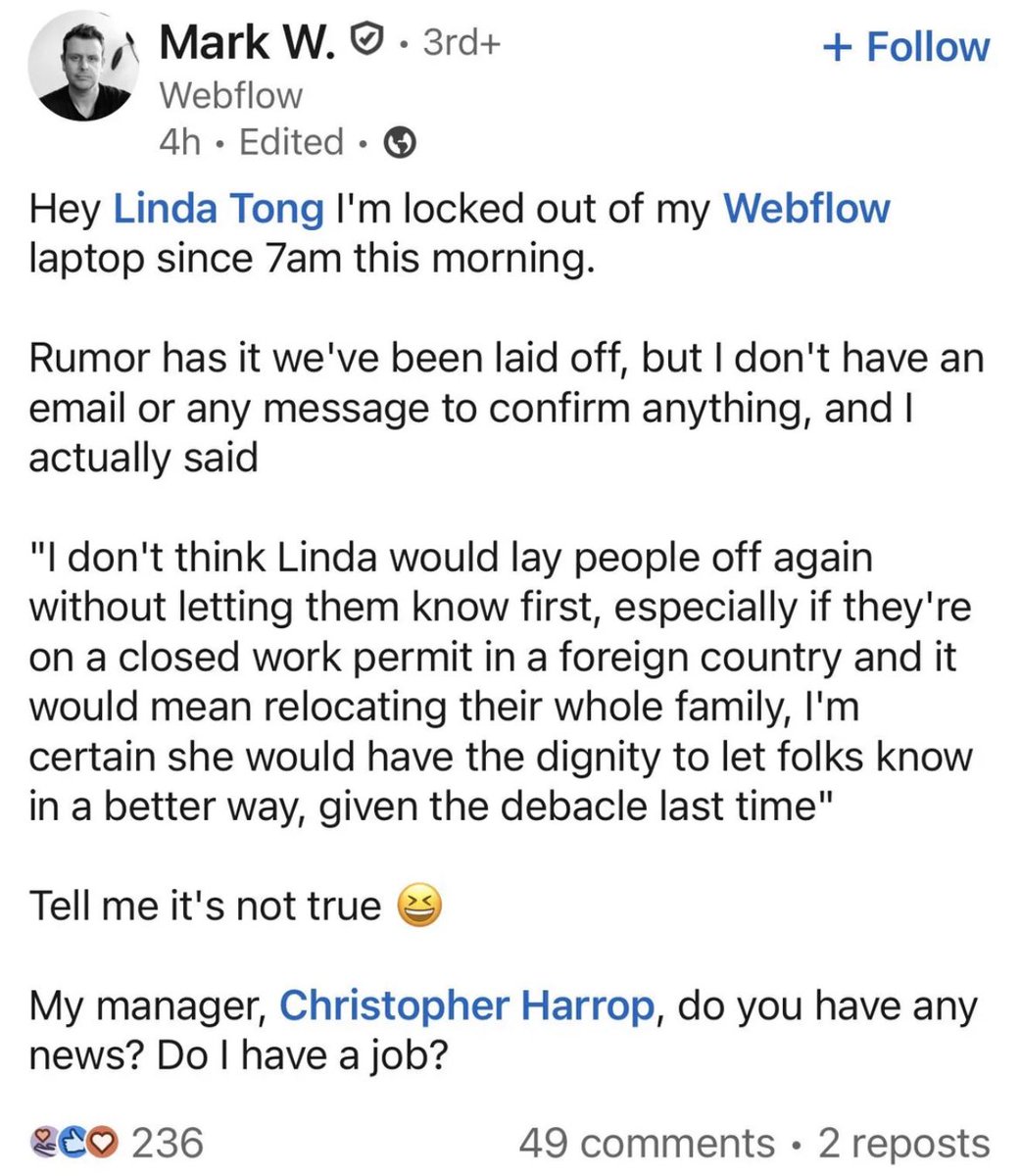
big shout to Bytedance/TikTok for being a positively incredible employer and corporate citizen during my redundancy last year. 10/10 redundancy. would go though a redundancy with them again.

1
1
422
May 28
like dude. they can hear you.
May 28
the more the clippers boast about how big their campaigns are the more platforms are going to work to shut them down. is like the last days of black hat SEO.
81
May 28
the more the clippers boast about how big their campaigns are the more platforms are going to work to shut them down. is like the last days of black hat SEO.
141
May 27
polsia is selling the illusion of busy work and productivity. maybe it is actually genius.
"That optimism layer, generated on top of nothing, is what the platform is selling its users."
May 26

The Polsia public dashboard sits at archive.ph/S5uq2 and Claude and I spent 15 minutes reading the JSON so you don't have to. What follows is what's actually on it, in plain language, with the meaning of each number stated alongside the number itself.
The headline figure is 5,010 "companies," and that word is doing more work than people realize. These are not 5,010 real businesses with paying customers and revenue lines. They are 5,010 instances of the Polsia software, each one a user account where someone spun up what the platform calls an AI operator, and the dashboard records what every one of those operators produces. Almost none of them produce anything at all.
Paid churn is 63.5 percent in 30 days, which means roughly two out of every three people who handed over money for the platform a month ago have already walked away from it. Healthy SaaS churn at this stage of company life runs in the single digits, which makes this number roughly ten times worse than the floor of what a venture-grade business should be losing every month.
ARR is shrinking by 39 percent week over week, which is a sentence worth re-reading. The company that just announced a $30 million Series A is watching its annualized revenue line go down, meaningfully, every seven days.
Daily inference cost is $27,272, which is the spend on AI model calls keeping all 5,010 of those operators alive and producing their CEO reports every day. The cost is real, it is burning right now, and the output of that burn is the paragraph below.
Every operator CEO report visible in the snapshot reads the same way: zero customers, zero revenue, no shipped product, and then the AI writes an optimistic plan for tomorrow underneath the zero-traction admission. That optimism layer, generated on top of nothing, is what the platform is selling its users.
In plain language: a founder built an app that runs LLM calls in a loop to generate CEO reports for businesses with no customers and no revenue, charged users to participate in the loop, announced a $30 million round while the underlying business burns cash and loses paying users faster than it gains them, and described the raise as one his AI ran for him (see comments to read what Claude wrote about this).
The dashboard is public and he chose to leave it public, which means the receipts have been sitting on his own infrastructure the whole time. I am not a journalist and I am not auditioning to be one. I am a software engineer who reads JSON and uses AI to decipher it quickly, and in this case the JSON is the JSON.
1
1
195
Anthony Dever retweeted

May 26
Let me trace the timeline here because nobody's connecting it.
Step 1: Scrape the entire internet. Every book, every article, every conversation, every piece of art, every forum post. Do it without asking. Do it without paying.
Step 2: Train a model on all of it. Call it "artificial intelligence."
Step 3: Go to BlackRock's Infrastructure Summit and announce: "We see a future where intelligence is a utility, like electricity or water, and people buy it from us on a meter."
Step 3 is where you sell people's own knowledge back to them. On a meter.
They took the collective output of human thought, compressed it into a model, and now they want to charge you by the token to access a version of what you and everyone you know already created.
One Reddit user put it perfectly: "They stole all this data from us, the people, our life's work, creativity, art, by devouring the internet and blowing through all copyright laws. Now they want to sell it back to us in the form of a utility."
Imagine if someone photocopied every book in the public library, burned the library down, and then opened a subscription service for the copies.
That's the metered intelligence business model.
And they're pitching it to infrastructure investors as though they invented water.
May 25

SAM ALTMAN: “WE SEE A FUTURE WHERE INTELLIGENCE IS A UTILITY, LIKE ELECTRICITY OR WATER, AND PEOPLE BUY IT FROM US ON A METER.”
3,276
46,858
137,011
5,667,587
May 26
this article talks about it mostly from the lens of tourism content but the growth of RedNote over the next 24 months in western markets is going to be crazy wired.com/story/rednote-beat…
1
52
May 26
currently is the antithesis of the performative content that has taken over people's feeds on IG and TikTok
37