Сandidate for President of Ukraine
Joined September 2017
- Tweets 4,622
- Following 9
- Followers 563,528
- Likes 127
3,515 Photos and videos


6 Oct 2025
- In Russia, many name “left globalists” the main political evil in the world.
I agree, Tramp administration increasingly thinks so too.
But naive me assumed we should fight globalists directly with institutions and policy.
Instead, Moscow has chosen a different path: to defeat an ideology by firing rockets at civilians - Ukrainian and Russian alike.
A question to Mr. Putin:
- how many of our children, and how many of yours, must die before you count this as victory over left globalists?..
101
12
117
52,851
Arestovych retweeted

11 Sep 2025
If you believe free speech is for you but not your political opponents, you're illiberal.
If no contrary evidence could change your beliefs, you're a fundamentalist.
If you believe the state should punish those with contrary views, you're a totalitarian.
If you believe political opponents should be punished with violence or death, you're a terrorist.
14,690
135,839
597,288
24,524,756
5 Sep 2025
- Putin’s invite to Zelensky to Moscow with “100% security guarantees” is a challenge.
Not to go - look weak.
To go - have a unique chance.
34 years of mutual mistakes and insults - time to face the roots of the conflict.
But this chance will be missed.
Putin dares a historic step.
Ukrainian politicians can’t - they only think in elections.
456
236
1,496
176,436
19 Aug 2025
The Strategic Dilemma of Ukraine: Project Choices and Historical Continuities:
- The key task for Ukraine today in all these Alaskan tales is to preserve political independence in the long term.
Despite the shared symbolic capital with Russia and Belarus, there are evident fundamental divergences in views on rights and freedoms, and on what is proper and possible in forms of political organization.
The inevitable paradox is that within the framework of a narrow, nationalist project, Ukraine has not preserved these views but has lost them (in practice), becoming maximally similar to Russia and Belarus, adopting the form of an authoritarian dictatorship - an excessive trait of shared historical roots, stemming from Byzantium.
Russia’s fundamental decision to convert symbolic capital into political capital, i.e., the forcible seizure of former imperial territories, and the collective West’s refusal to share symbolic capital with Ukraine (we are not considered part of Europe and have been denied entry into the EU and NATO), raises the question of the prospects for the independence that still remains.
Ukraine has only one way to preserve it: acknowledging the shared symbolic capital with Russia and Belarus, adopting a neutral status, and building good-neighborly relations with Russia and Belarus while maintaining political independence and the unique role of a “crossroads of worlds”- between Russia and Europe.
Economically, the most promising role is that of a “steppe corridor” - between Russia, Central Asia, the South Caucasus, and the EU.
In short, this is about a fundamental shift in project orientation - from a narrow, nationalist one to a broad, transit-oriented one.
In a sense, this could be called a “Great Return” - to Ukraine’s natural historical and cultural role.
By way of analogy - modern Kazakhstan.
If this is not done voluntarily, the change in project orientation (the main directions of foreign and domestic policy and development strategy) will happen forcibly.
The timeframe is 10–15 years.
The cost will be the loss of political independence, and instead of Ukraine, there will be a federal district called “Little Russia”- with all the ensuing consequences for discussions about rights, freedoms, and distinctive features.
Any negotiations, any strategies that do not address this shift in project orientation are meaningless - truly, “bandages for the dead.”
Such is the choice, and such is the price.
In conclusion, the fundamental challenge for Ukraine lies not in tactical maneuvers but in recognizing the strategic perspective: the necessity of reimagining its role as a neutral, transit-oriented state in order to preserve independence in the emerging geopolitical order.
121
89
396
98,523
21 May 2025
- The murder of Andrеy Portnov is 99% likely Zelensky preparing for elections.
Threats of murder from Telegram channels associated in Ukraine with the Office of the President, immediately directed at me and Anatoliy Shariy, and a possible threat to Oleksiy Honcharenko, reveal the intent:
- to deprive the so-called “OPZZh” (The Opposition Platform – For Life) electorate of potential “leaders.”
Yesterday, even the completely controlled KMIS (Kiev International Institute of Sociology), taken hostage by Zelensky, gave me “…7% trust,” although not long ago it was “…1-1.5%.”
This means, in reality, it could be even more interesting, and that’s already looking like a parliamentary fraction.
The political terror unleashed by Zelensky’s regime has turned into blatant international terrorism; a Ukrainian citizen was killed on the territory of a NATO and EU country.
It will be interesting to see how Zelensky’s “…dear European partners” react to this.
As for me.
I won’t just keep speaking, saving people’s minds from the khutor dictator and his hoodie-dictatorship.
One day, I will come back for him.)
374
544
1,986
253,334
2 May 2025
- The sanctions imposed by the Zelenskyy regime against Ukraine’s fifth President Petro Poroshenko and me are an illegal mechanism to exclude political competitors from future elections.
The Constitution of Ukraine expressly prohibits the use of sanctions against its own citizens.
Zelenskyy has already imposed such measures on 8,300 citizens.
He employs them as a tool for extrajudicial reprisals targeting political and business rivals.
This constitutes a violation of fundamental human rights.
I am confident that democratic nations will judge the true nature of this regime by its actions.
301
216
1,104
142,633
20 Mar 2025
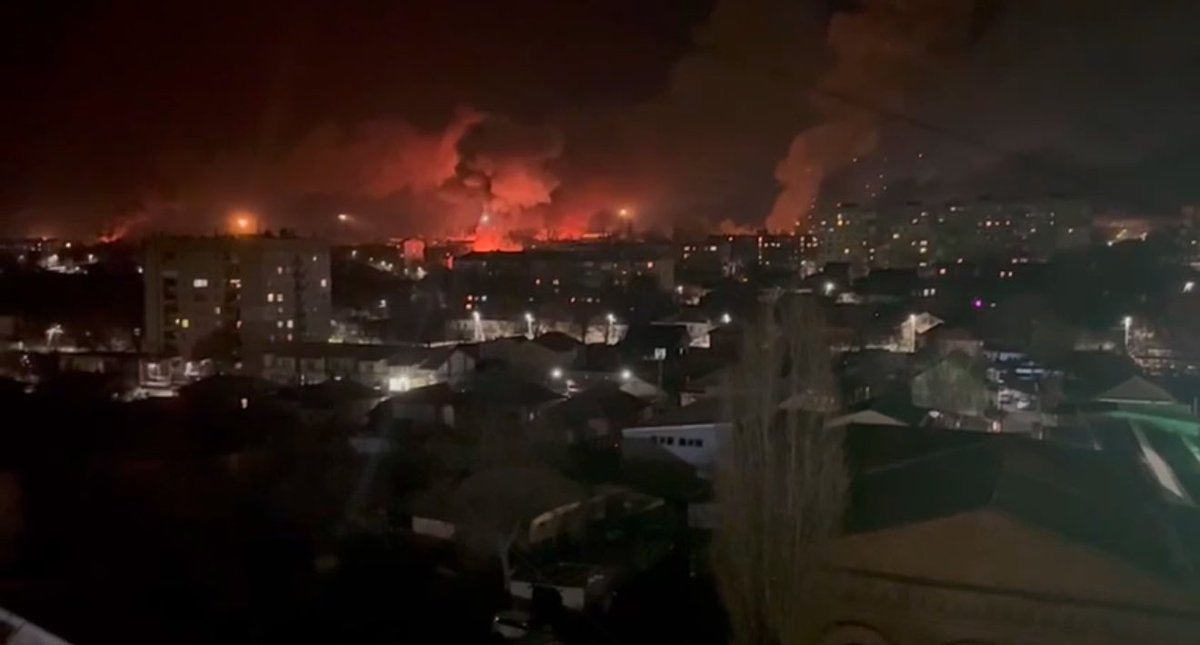
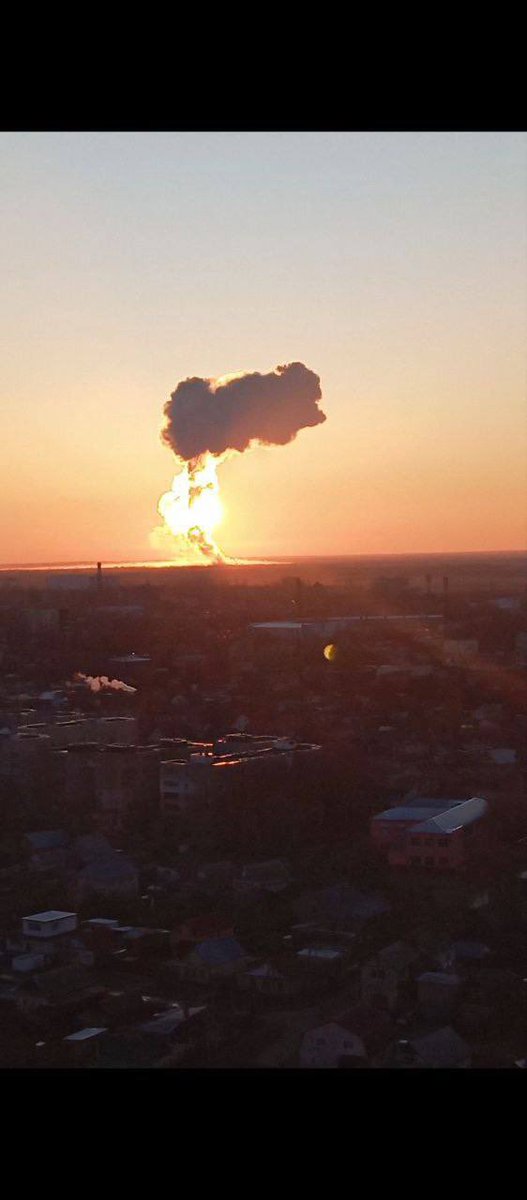
- The Russians struck Kropyvnytskyi at night (four children wounded), while we hit the Engels airbase (Russian strategic bombers).
This is how both sides show Donald Trump that the sum of the contradictions he’s taken on to resolve is somewhat greater than he anticipated.
Still, I believe he’ll manage.
The photo shows a target hit near the Engels airbase.
116
21
182
104,876
16 Mar 2025
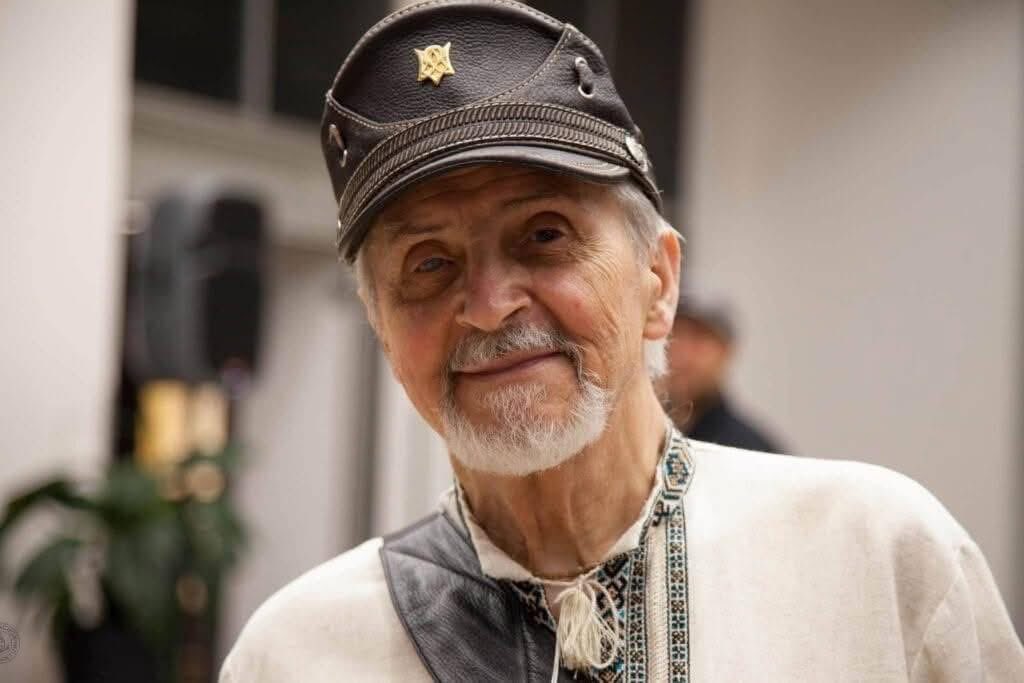
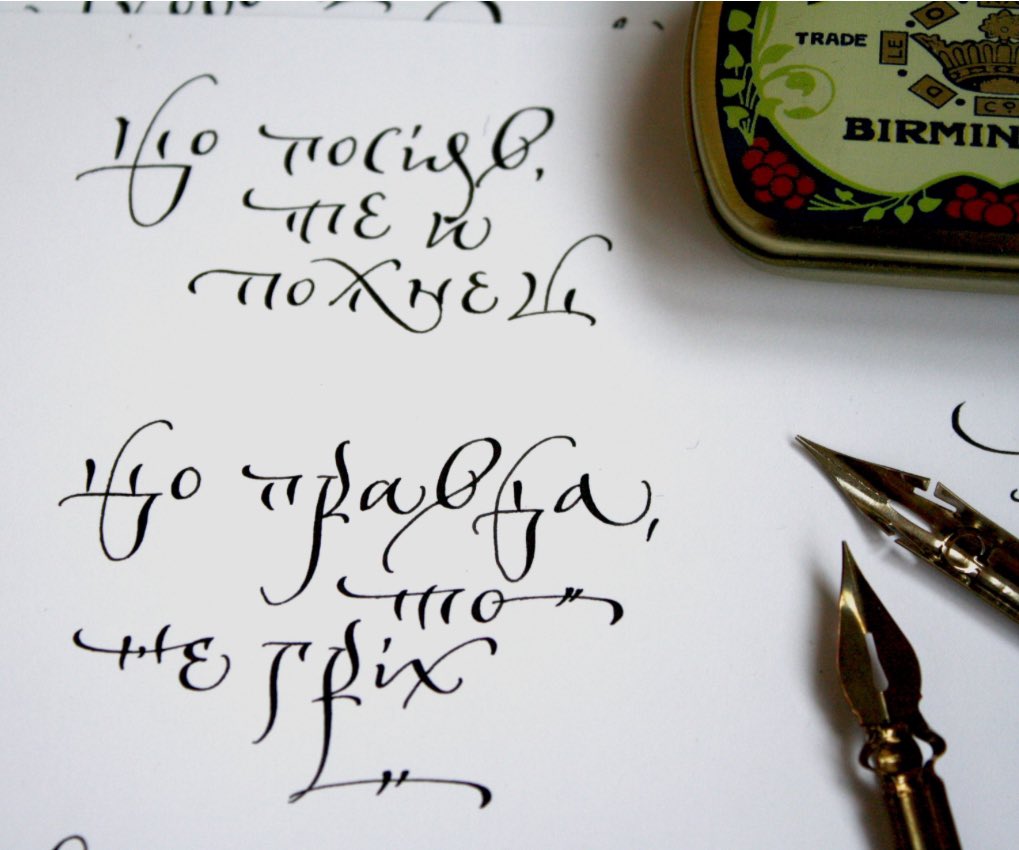
- Vasyl Chebanyk, the author of the brilliant font “Ruthenia,” has passed into eternity at the age of 91.
It is impossible not to admire Ruthenia.
Ruthenia is the soul and style of Ukraine.
May the Kingdom of Heaven embrace this Man.
53
13
202
61,727
14 Mar 2025
- Many in Ukraine have managed to call Trump a "traitor" and even managed to rename coffee from "Americano" to "Europiano".
Big children do not know how to think and be patient.
Today, when President Trump has limited the possibility of Russian payments for oil, these people are starting to re-evaluate.
The main problem in Ukraine is not the country's weakness.
Weakness arises from problems with understanding the mechanisms of real politics.
131
17
347
74,910
6 Mar 2025
- Zelensky and the Europeans are saving Ukraine so much that it is becoming smaller and smaller.
I suggest: let's stop saving us.
And maybe we'll save what we still have.
However, there is another option - we'll start saving ourselves and then, perhaps, we'll even be able to add to what we still have left.
But to do this we need to stop thinking like a Victim. A Victim always waits for a Savior.
And a savior always saves her at her own expense.
292
90
847
111,920
4 Mar 2025
- Zelensky said that it took him several dozen hours to get to the White House, which in itself is a sign of respect.
The next step will be: America should be grateful that I exist at all.
247
96
1,300
143,618
3 Mar 2025
- It is obvious to me that Zelensky has taken the entire country hostage and is simply trying to get himself a plane and three suitcases of money.
Trump's dilemma in this case is clear:
- negotiations with a terrorist or the lives of hostages.
It's time to call Bruce Willis or Mel Gibson
245
135
1,126
128,741
1 Mar 2025
- Zelensky is not just proposing war - he’s proposing war without weapons.
He weakened the army (failed 55% of the defense procurement plan), lost U.S. support, and divided the country.
Without him, Ukraine would fight better and make peace faster and more effectively.
I stand for peace.
There is a way out - Zelensky, step down.
534
334
2,408
232,388
1 Mar 2025
- We the Ukrainian people, and by default, the Ukrainian government, must understand that our partners who have stood by us the past three years are needed now more than ever.
-But we also must realize that there is a new administration in the White House and that the rhetoric and negotiating style used with the Biden administration will not work with the Trump administration.
-The era of blind support and blank checks is over. This does not mean we cannot rely on the United States to be our partner and supporter, it just means we have to understand what this administration is looking for in order to have continued support. And we must be better prepared when sitting in front of the international media.
-I firmly believe that President Trump will not “force” a bad deal for Ukraine and that he appreciates the strength and courage the Ukrainian people have shown. But he also doesn’t want to see blood continue to be spilled with no end in sight.
-The Oval Office is a sacred place. Regardless of the occupant. A certain level of respect and decorum must be shown at all times, even if one disagrees with the occupant. There is a proper way to show disagreement while still maintaining respect…I believe President Zelensky crossed that line.
-It is clear President Trump wants to help find a negotiated Peace, one that satisfies both sides. And we must remember, what is said in public as an opening offer, is not always what is in a final agreement. President Zelensky should not have reacted to President Trump as if his position was his “final” position, but rather understand the real negotiating takes place behind closed doors, not in front of the media.
@realDonaldTrump @WhiteHouse @SecRubio @StateDept
322
123
1,067
146,009
28 Feb 2025
- At such a critical time in the existence of Ukraine and our fight for freedom, we need allies, not enemies.
We need allies that can give us weapons to defend our cities and weapons our soldiers can use on the front lines to protect our homeland. What we don’t need it to make enemies of those that have been our friends.
President Zelensky was going to the White House to sign an agreement that would give new opportunities to Ukraine. Two hours later, American-Ukrainian relations were problematic as never before.
We should always be grateful to the American people for the help they have given us. An hour ago, risks arose that could threaten the very existence of Ukraine: air defense of our cities, weapons for soldiers at the front, financial assistance to stabilize the budget.
Human relations can always have their ups and downs. Relations between countries must remain strong. We should continue efforts that will make American-Ukrainian relations effective, predictable and partnership-based.
@realDonaldTrump @WhiteHouse @SecRubio @StateDept
237
55
774
136,545