
Joined December 2015
- Tweets 9,472
- Following 1,456
- Followers 932
- Likes 47,243
825 Photos and videos







Pinned Tweet

30 Dec 2024
If you aren't a Zionist, you're morally bankrupt.
Israel is mentioned more than 2200 times in the Torah, Jerusalem more than 600. It is not mentioned once in the Koran (other than as the Jewish homeland). It is the heart of Jewish identity.
For 3800 years, Jews have lived in Israel, continuously, an unbroken thread of living soul and flesh. This predates Christianity by two millennia and Islam by three.
Since 500 years BCE, Jews have prayed three times daily to return to Israel and rebuild their Temple.
Imagine if Rome had remained in the hands of the Visigoths.
Or if Mecca had been seized repeatedly by empires, and Muslims forcibly converted and exiled.
Rome belongs to Christians.
Mecca belongs to Muslims.
Zion belongs to Jews.
Israel is the land of the Israelites. The Jews come from Judea.
This isn't about empires, wars, or demographics.
Supporting Jews in their spiritual homeland is simply the right thing to do.
8
16
67
5,077
The Etheologician ⚖ _____🇮🇱 🇺🇸🌎_ retweeted

Jun 14
Iranian who escaped Sharia law warns the West:
"I'm Iranian. I went to prison under Islamic law.
I know how it starts… and it always starts with the Left uniting with Islamists.
I came to Canada for freedom. now I’m watching the exact same pattern.
They appease. Weakness invites more. They will never stop."
This man lived it.
The West is sleepwalking into the same nightmare.
260
11,559
37,144
531,914
The Etheologician ⚖ _____🇮🇱 🇺🇸🌎_ retweeted

You’re welcome.
174
340
6,233
120,021
The Etheologician ⚖ _____🇮🇱 🇺🇸🌎_ retweeted

It's becoming increasingly difficult to understand what happened to Donald Trump, once regarded by many Israelis as the greatest friend Israel ever had in the White House.
After months of threats, ultimatums, and dramatic declarations, what exactly has been achieved? By every visible measure, this looks like a remarkable victory for Iran. Trump himself now acknowledges that Tehran will retain the ability to enrich uranium.
The only party paying a price appears to be the United States, which is signing what looks disturbingly like a surrender agreement.
And Israel? Israel is reduced to the role of a dependent client state, forced to watch from the sidelines as decisions affecting its survival are made elsewhere.
Instead of eliminating the threat, this deal merely postpones it while handing Tehran something even more valuable: time. Time to regroup, rebuild, rearm, and continue advancing its ambitions.
Without the complete dismantling of Iran's enriched uranium stockpiles, without addressing its ballistic missile program, and without seriously confronting its regional terror network - Hezbollah, the Houthis, and other Iranian proxies - the regime is effectively being granted breathing room to continue its campaign of destabilization and terror.
The president whom most Israelis viewed as a historic ally, the leader whose election was celebrated across Israel, may ultimately be remembered as one of the greatest disappointments in the history of U.S.-Israel relations.
Many Israelis opened champagne bottles when Trump won. They believed they were witnessing the return of a president who understood the Iranian threat better than anyone.
Instead, Israel has been thrown under the bus, its hands tied in Lebanon and Gaza, while its most dangerous enemy is rewarded with resources, legitimacy, economic relief, and the oxygen it needs to continue pursuing its long-term goal: the destruction of the Jewish state.
The same president who fiercely denounced Obama's Iran deal and proudly withdrew from it is now on the verge of signing an agreement that may prove even worse.
A tragic and historic mistake.
44
27
161
9,634
The Etheologician ⚖ _____🇮🇱 🇺🇸🌎_ retweeted

🚨 Alert: Major escalation ahead!
We are finally decoupling.
1. Going to war against Iran with the US as a partner would be excellent militarily - but highly problematic under Trump.
2. In the end, it all depends on the IRGC. The enemy always gets a vote.
3. If the IRGC fires missiles at Israel, the response will be harsh.
It’s important to understand what the IRGC has been trying to achieve:
A. They could have waited for the deal to be signed, knowing Israel would respond in Dahya if Hezbollah fired missiles into Israel.
B. Instead, to demonstrate their strength - and believing they had Trump on their side because he desperately wants a deal - they ordered Hezbollah to fire. They knew Israel would respond.
C. Their goal was to maneuver Trump exactly where he is now: forcing Israel to stand down. Classic escalation.
But here’s what they failed to calculate:
**The decoupling between Trump and Netanyahu.**
The IRGC still hasn’t understood what Israel has become after October 7th:
1. We don’t really care what Trump says or what his personal financial interests are - the stock market, oil prices, or any deals of Mr .@SteveWitkoff can have in Qatar.
2. We care about our security. We care about our School and Kindergarten Children. (got That .@JDVance ?) - When Hezbollah fires rockets or even builds the capability to harm Israelis or invade (as they planned), we protect our civilians.
3. If the IRGC makes the mistake of trying to create a linkage - “If Israel responds to Hezbollah, we will hit Israel” — they will quickly discover what the IDF can do when the US isn’t tying one hand behind our back.
For anyone who still hasn’t figured out what the next few hours hold: as I write this, Hezbollah has again fired on Israeli civilians in Manara and Kiryat Shmona. An Israeli response is coming, and the IRGC will have to decide.
The enemy always gets a vote.
But so do we.
The only one decoupling himself from the situation is Trump.
We live in the Middle East. Israel does not have the luxury of being separated from the rest of the world by two oceans.
Therefore, we fight.

Let me translate this headline from Israel - to those in the world media that had routinely ignored the situation:
"Alarms on the way to school:
Northern Israel children are under fire - two drones launched from Lebanon.
After hours of silence on the border, alarms sounded yesterday in Metula due to rocket fire from Lebanon.
This morning, two drones were launched as Israeli children make their way to school"
My suggestion to the Israeli goverment (in Short: Israel security first) is below 👇

147
425
1,464
120,508
Almost taking out the world's worst terror state...
and then surrendering because of midterms and gas prices.
That will be Trump's defining legacy.
1
24
Good.
Israel is not bound by this deal.
Someone has to take care of Iran, and we can see it's not going to be Trump, who surrendered in the face of midterms, oil prices, and Qatari bribes.

Netanyahu informed Trump that Israel will not pull IDF forces from Lebanon and does not consider itself bound by the Lebanon clause in the U.S.-Iran agreement.
- Maariv
47
The Etheologician ⚖ _____🇮🇱 🇺🇸🌎_ retweeted

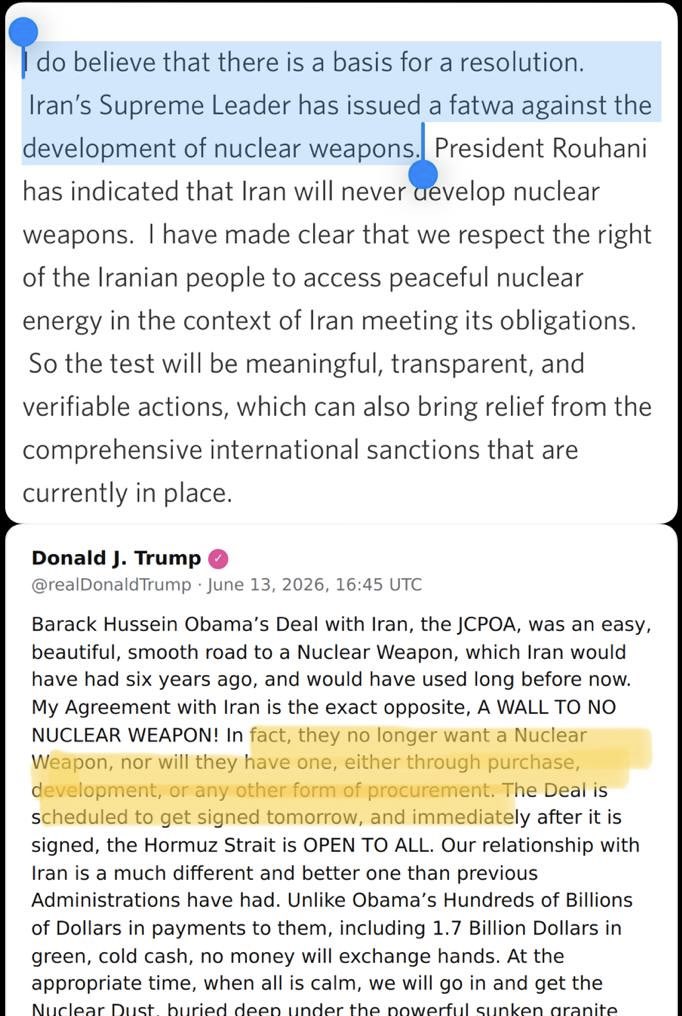
JCPOA vs JCPOA
4
23
807
The Etheologician ⚖ _____🇮🇱 🇺🇸🌎_ retweeted

Jun 12
I stand with our greatest ally and against our greatest enemy.
If you stand against our ally and with our greatest enemy, you are a real traitor to this country.
That’s my opinion.
Israel is our ally. They literally do our dirty job in the ME and they are our eyes, ears, and arms.
Only traitors treat them like garbage.
55
23
108
1,636
The Etheologician ⚖ _____🇮🇱 🇺🇸🌎_ retweeted

Jun 12
Europe is about to wake up in a fucking nightmare
1,075
10,376
44,326
1,117,852
The Etheologician ⚖ _____🇮🇱 🇺🇸🌎_ retweeted

Jun 10
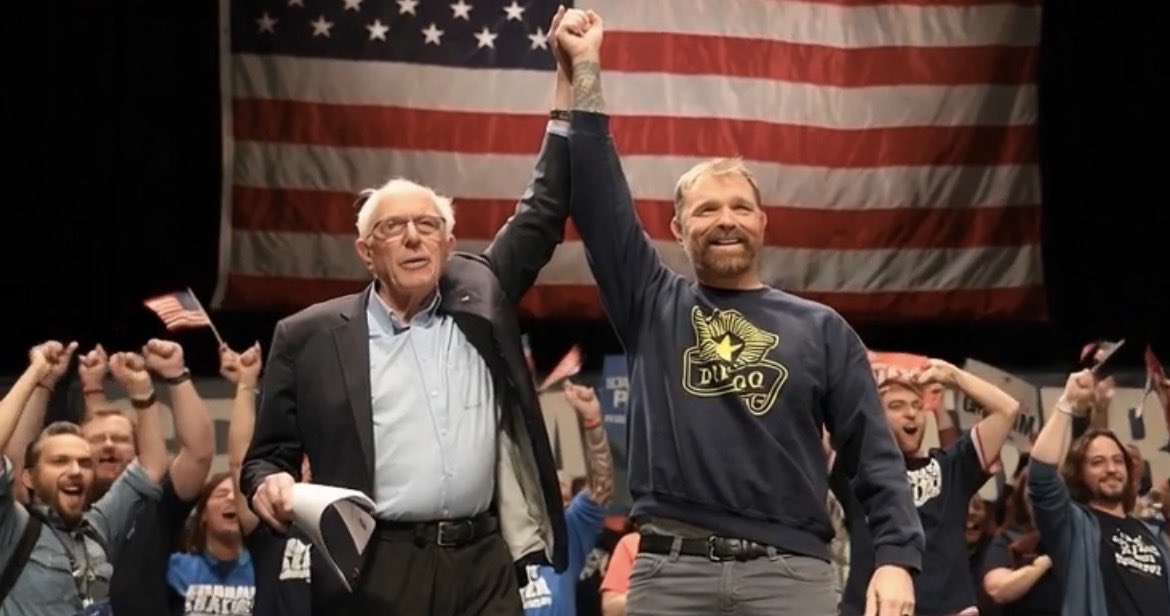
Democrats are the Party of Unity.
They have finally brought the Communists and Nazis together as one!
2,638
18,475
70,065
559,668
The Etheologician ⚖ _____🇮🇱 🇺🇸🌎_ retweeted

“Anyone who thinks #Israel is dependent on the US has not studied simple mathematics.”
Yoram Ettinger, Israeli diplomat and strategic analyst
The American military aid to Israel is one of the best investments the United States has ever made. There is no American ally in the world today that operates as a real-time laboratory under war conditions the way Israel does. No partner adds as much experimentation, innovation, intelligence, and battlefield knowledge as Israel.
Having a strong American ally in the most important and most hostile region on earth is invaluable for the United States.
If Israel didn’t exist, America would have to deploy far more troops across the Middle East just to secure trade routes and energy routes. Do you know how many tens of billions that would cost every single year?
Alexander Haig, U.S. Secretary of State under President Reagan, explained it perfectly:
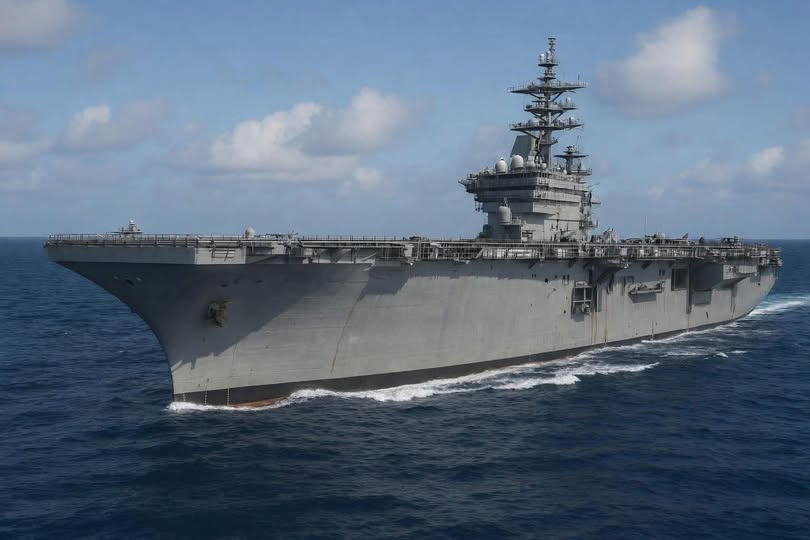
“Israel is the largest American aircraft carrier in the world. It cannot be sunk. It carries no American soldiers. And it sits in a critical region for American national security.”
Look at what the world saw during the Rising Lion operation: American fighter jets, operating with Israel, striking the IRGC of Iran with overwhelming precision. That kind of display makes countries around the world think twice before buying jets from America’s adversaries.
Do you know how many more billions in American exports come from that?
American generals openly say that daily upgrades are made to US fighter jets because of Israel’s operational experience. It is widely cited that around 50% of the F-16 cockpit and avionics were upgraded based on feedback from Israeli pilots.
America spends close to a trillion dollars a year on defense.
Without real-time testing, combat experimentation, and battlefield feedback, that money becomes a giant machine that rusts on the shelf.
It needs to be proven, used, refined, and stress-tested, and Israel provides that in a way no other country can.
Ettinger often says that if America ever hypothetically stopped aiding Israel, US generals, analysts, and strategists would run to Congress demanding the aid be reinstated because no other American ally faces Israel’s threats or produces Israel’s value.
And ask yourselves something simple:
Is America “stupid” to “give away” billions to another country with zero return?
Does that sound like a logical thing to do?
And if America were truly controlled by some “nefarious Jewish influence,” then why didn’t the US lift the arms embargo on the Middle East in 1947, an embargo that nearly cost Israel its survival? The Arabs were armed to the teeth, and Israel barely had ammunition.
Israel survived its War of Independence only because it secured emergency weapons from Czechoslovakia. (and is always protected by G-d, of course)
Where was this supposed “Jewish control” back then?
It didn’t exist.
Because the conspiracy is a lie.
In short: stop listening to mental garbage.
Israel is a one-of-a-kind friend to the United States, and the partnership has delivered enormous value for both nations and continues to.
🇮🇱 The Nation of Israel Lives (author unknown)
35
117
344
7,859
The Etheologician ⚖ _____🇮🇱 🇺🇸🌎_ retweeted

Jun 11
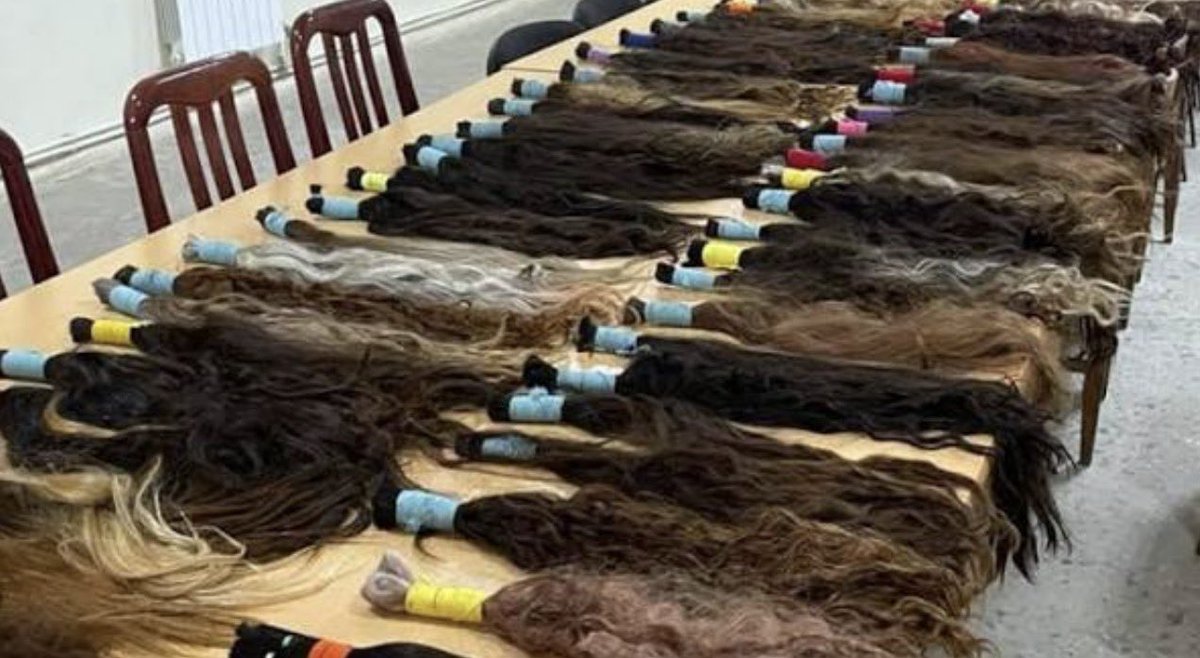
The total amount since January is 137 kilos.
It’s Auschwitz level amounts of hair from just two days of slaughtering innocent Iranian women.
This is why we never saw piles of female bodies in the morgues. They were harvested.

Jun 11

The islamic regime is selling murdered Iranian women for parts.
Armenia has confiscated massive amounts of undeclared Iranian natural women's hair which was brought across the border.
This illegal trend has been skyrocketing since, wait for it, January.
Almost all the morgue victims from the massacre were men, and not women. We are beginning to learn what actually happened to the girls who were massacred back then.

308
6,058
13,837
429,066
Oh please no

🚨 Nick Fuentes is switching sides to the pro Israel lobby
"I watched Jake Shields with backwards cap with his blown out fucking ears saying why would the French give us the Statue of liberty it's a Jewish thing" 😭🤣
Not a fan of Nick but this is hilarious.
30
The Etheologician ⚖ _____🇮🇱 🇺🇸🌎_ retweeted

Jun 11
Cenk Uygur? Silent.
Mehdi Hasan? Silent.
Ana Kasparian? Silent.
Francesca Albanese? Silent.
Greta Thunberg? Silent.

459
5,022
15,699
192,214
The Etheologician ⚖ _____🇮🇱 🇺🇸🌎_ retweeted
Jun 11
The islamic regime is selling murdered Iranian women for parts.
Armenia has confiscated massive amounts of undeclared Iranian natural women's hair which was brought across the border.
This illegal trend has been skyrocketing since, wait for it, January.
Almost all the morgue victims from the massacre were men, and not women. We are beginning to learn what actually happened to the girls who were massacred back then.
881
11,770
26,117
2,300,314
"Hey Jerry, can you give us a 'Free Palestine'?"
4
Honestly, we knew where this was going when Trump took Venezuela.
I'm not against it.
Iran and Venezuela -- two of the worst, most oppressive countries in the world, cooperating to spread terrorism across the globe.
Take them down. Take their oil.
Make it hard for China.
22
The Etheologician ⚖ _____🇮🇱 🇺🇸🌎_ retweeted

9 Mar 2025
We can reach higher dimensions by using ancient techniques for enlightenment, but they go against everything we cherish in the material world. Or, as Bentov said, 'You don't need to rush—evolution will happen anyway.'
Your body doesn't have a soul; your soul has a body.
(7/12)🧵
4
20
306
23,315
The Etheologician ⚖ _____🇮🇱 🇺🇸🌎_ retweeted

Jun 9
58 years ago, Sirhan Sirhan introduced America to Palestinian culture (He murdered Robert F. Kennedy)
June 6, 1968
Never forget the gifts that Palestine has given America.

405
1,273
5,578
344,297
The Etheologician ⚖ _____🇮🇱 🇺🇸🌎_ retweeted

Jun 9
Here’s a question nobody likes asking about Nazi Germany:
How did countries like Austria, Poland, and France collapse so fast? These were established nations with armies, governments, borders, and millions of people. France alone was considered one of the strongest military powers in Europe.
Traditionally, we are taught that Hitler’s army was simply this unstoppable military machine that steamrolled Europe because it was overwhelmingly powerful. And yes, Germany was militarily strong. But that explanation alone has always felt incomplete, because historically even very strong armies usually do not conquer enormous amounts of territory that quickly unless something inside the targeted societies is already collapsing first.
Austria disappeared almost overnight. Poland fell within weeks. France collapsed in six weeks. History usually does not work that way unless large parts of the population no longer truly believe the fight is about their own survival.
The uncomfortable and dark reality is that many people did not initially think Hitler was coming for them.
Austria is probably the clearest example. The Anschluss was welcomed by huge parts of the population. German troops entered to cheering crowds, flowers, and celebrations. Many Austrians convinced themselves that joining Nazi Germany would mostly affect the Jews while improving life, or at least preserving it, for everyone else.
That mentality existed across Europe in different forms.
The illusion behind Hitler’s message was essentially: you can still be French, Polish, or Austrian. Live your life. Raise your children. The real problem is your Jewish neighbor.
And for millions of people, that was enough to weaken the will to resist.
A society only fights with total determination when people believe defeat means the destruction of their nation, identity, and future. But many Europeans convinced themselves the Jews were the primary target, so they accepted things they never would have accepted otherwise.
Some collaborated. Some stayed silent. Some rationalized. Some simply looked away.
The tragedy is that they were wrong anyway.
Austria lost its independence. France was humiliated and occupied. Poland was devastated. Cities were destroyed, sovereignty disappeared, millions died, and entire societies were dragged into catastrophe.
People often think evil can be managed as long as it is directed at somebody else first.
History shows otherwise.
This is why I’m done trying to convince Americans or Europeans about the dangers of extreme Islamism. In many mosques and Islamist circles, hatred toward America, Christianity, Western civilization, and Jews is preached openly and repeatedly. Yet many people in the West still process it the same way many Europeans processed antisemitism in the 1930s: “Yes, maybe they hate the Jews, but that doesn’t mean they are coming for us.”
That psychological separation is exactly the point.
As long as people believe somebody else is the primary target, they convince themselves they can safely ignore the ideology itself. They assume the hostility will remain contained to Jews, Israel, or some distant “other.”
But ideologies built around civilizational hatred do not stay neatly limited to one target forever.
And the end result, increasingly visible already across parts of Europe, is collapsing social trust, collapsing law and order, ethnic fragmentation, parallel societies, radicalization, and the steady erosion of the very national identities people assumed were untouchable.
At some point, societies make their own choices.
And eventually they live with the consequences of those choices.
You reap what you sow.

145
635
1,851
82,231