
Joined August 2009
- Tweets 34,242
- Following 1,347
- Followers 31,953
- Likes 90,358
900 Photos and videos








Pinned Tweet

23 Nov 2022
For me, Twitter is a fun pastime!
(or a fast Pun time 😛)
But, occasionally, I do come up with Tweets that might be of help to people, or just entertain them... 🤔
Here is a Thread🧵to Tie them all up in one place!
(Needle-less to say, the Tweets, not the people! 😂)
ALT Dr Arshiet Dhamnaskar
31
22
457
Jun 12
My grandmother had a special Tea Recipe.
For routine, it was tea leaves powder, sugar and water boiled, then added to a little milk
But when the 'special' occasion demanded, she would come up with this herbal and spice concoction, which really felt good.
Do you have a go-to Tea Recipe of your own?
4
1
7
2,188
Jun 12
I definitely agree with this.
Hear me out.
Two things.
Firstly, the medical education of the past was different from what it is now
Earlier, there were 4-5 students for every cadaver.
Now, there are 6-7 per batch. That means one cadaver could be shared by 15-16 people also (I also know of an institute where there are 25/cadaver)
In some institutes the dissection is carried out by the resident doctor, and students are allowed only to watch, or to assist by retraction.
The people carrying out the dissection are also learning, so they don't know much enough to teach.
Fortunately, I was part of a good institute, and the other 7 people in my batch of 8 were not too interested or were scared/disgusted of dissection; so I got the opportunity to actually learn. And definitely, by doing it, I got to learn a lot.
But the same cannot be said of the other rod the lot, who spent the hour shifting through Cunnigham's manual, barely comprehending anything.
We live in a digital age.
I learnt a lot from YouTube.
A lot of things apart from medicine, but yes, medicine too
There are excellent teachers on YouTube.
You get a zoomed in, 3d perspective to everything, like a one on one teaching class.
I saw YouTube videos throughout my student journey, including Neurosurgery.
Clear concepts, well-explained
(Did not understand anything? Rewind and rewatch)
Take notes
Still don't understand, google it.
Now there is ChatGPT etc
Digital learning is the future.
Jun 12

Unpopular opinion: Cadaveric dissection is redundant. 20 kids crammed up trying to see catch a glimpse of someone struggling when they can access the lessons of the great Dr. Robert Acland instead. All we're left with is memories that reek of formalin and an unused Cunningham.
1
17
1,893
Jun 9
Why has MedTwitter fizzled out?
What are we missing out on?
5
2
22
3,253
Jun 9
1 - 1.5 crore is a scam
There is nothing in my whole course of MBBS I couldn't learn for next to no cost
Except perhaps cadavers - which are donated and preserved, and then used for research by the department
Reagents for lab tests cost some money, which is peanuts in the long run
MBBS is maximum theoretical, mostly learnt by people online nowadays
Add to it some clinical postings, where the patient is already admitted, students examining them with their own examination kits
There is next to nothing investment in medical education

Medical students shouldn't complain. Their 1-1.5 crore fees is subsidised to barely 50k-100k by Indian government. Wrna jindagi bhar education loan hi bharte rahenge ye log
4
15
111
7,862
Jun 9
Indians of India (I seriously don't know what is the correct term for this)
Which is the BEST rice grain out there?
Basmati? (meh)
Kolam?
Indrayani?
Ambemohar??!
14
1
1,342
Jun 9
I am so glad for the internet
There is an infinite scope for entertainment and education and communication
4
124
Jun 5
Patient: My pain has increased on using the lumbar belt you prescribed.
(Assuming she was stretching/bending forward with the belt on, or something similar) Me: When does it hurt exactly?
Patient: On removing the belt
Me:...
2
17
4,844
Jun 4
What is the obsession of Indian public with Coconut Water in sickness?
I have seen a multitude of people bring together whole coconuts for their patients.
I mean, it is an excellent drink, but it is not THAT necessary...
Jun 4

got 4 naral pani since I shifted to general room in the hospital, abb collect karke bechungi
3
1
9
1,252
Jun 4
During driving lessons, the Instructor had proposed a situation to the class
(Only 2 of us were first timers there, the rest all had failed the theory part of the driving test multiple times)
The problem goes that there is a cross road, with 5 narrow roads
4 vehicles come to it at the exact same time, and all want to go onto the 5th road
Who gets to go first?
Fire Truck, Ambulance, Minister, You (common man)
Almost everyone (all except the 2 of us), wrote down Minister.
I guess they are... correct?

Blinkit also has Ambulance services btw in Delhi.
Unfortunately they don't have a fire brigade yet
4
8
3,080
Jun 3
We are no-nonsense people
We don't 'wait' for unnecessary stuff
You see it, you decide on it, then carry out the task
Surgeries go long.
I just came out of an 8 hour one.
Rounds need to be done before that.

Neurosurgeons are already done with rounds before anyone else gets into the hospital.
Who knows why????
2
1
18
2,403
Jun 1
Dhaba Food = Low Expectation Full focus on food rather than ambience Good taste Warm Food Long journey causing hunger
3
1
16
1,112
Jun 1
No matter how and how much you criticise, the Internet has been a wonderful source of education. It could be something as small as a threat in X (Twitter), which went on to become a memory bite in the student's mind.
Or it could be that one video which laid out everything straight for you.
I love Youtube videos which educate
And for some reasons, most of them are Indian.
At one glance the problem is a difficult quadtratic equation
and the guy explains it like a third grade problem
and then comes the Ohhhhhh
and suddenly, study is easy
Life is easy
As if education has this chest code all along, and we just used it to unlock the cool features.
I love the teachers of the Internet
If you are one, I hope you get extra blessings today.
You helped me learn, you helped me teach
You are an educator, a messenger of God
That's it. That's the post.
16
694
May 27
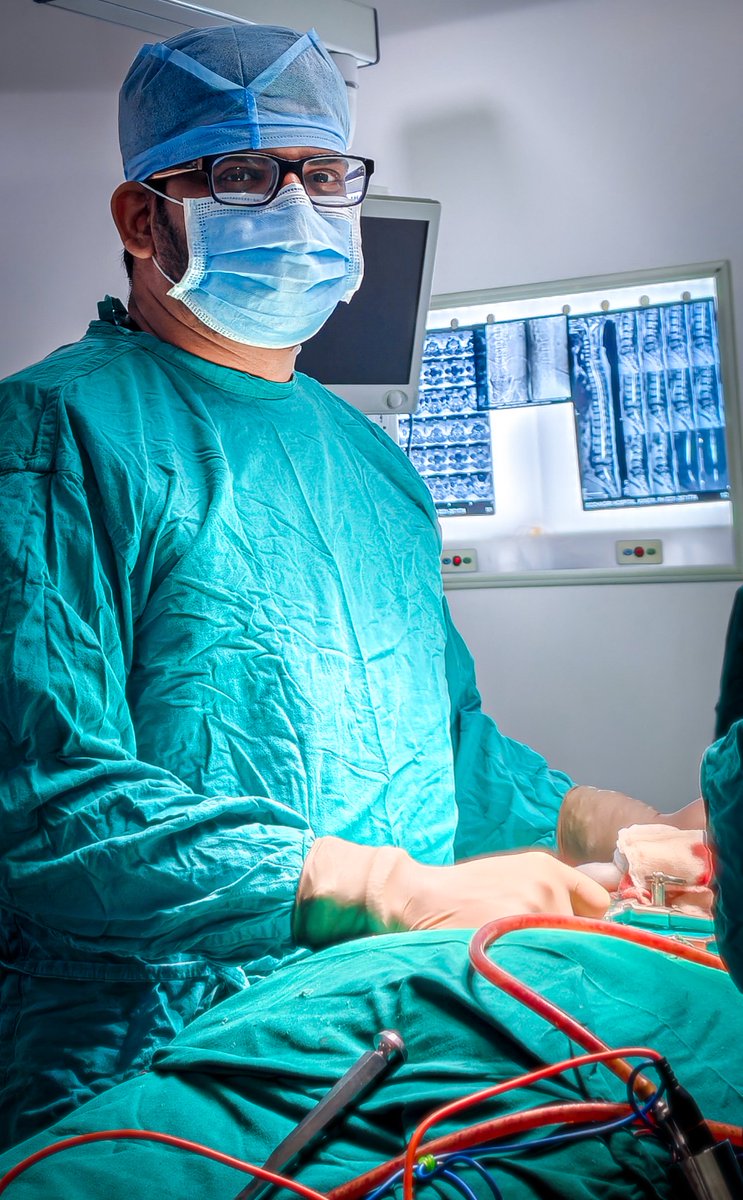
I am a qualified neurosurgeon now
but I still don't have that feeling of 'yes, I did it! "
I wonder whether it will hit me someday
or I am mentally subdued
or maybe this is just how life is. 😪
27
2
198
18,800
May 27
I know right ... 😭
I had a similar incident today....
cannot share it due to medicolegal reasons though 🥺
May 26

Neurosurgery is the only specialty where you can train for 15 years, lose sleep for a decade and still get humbled by a 2 mm blood vessel.
15
1,460
May 23
Your favourite niece/nephew gets a notice from school...
They are offering to directly promote them 1 grade up. (Let's assume from 6th grade to 8th grade, skipping 7th grade altogether)
Your cousin/sibling asks you whether to go ahead with this.
What would you advise?
8
3
1,361
May 23
People are reading so much into the Modi Meloni = Melody toffee reel
Guys, it is just a fun reel, a PR thing, an offhand thing at the social media PR
Why is everyone being like she accepted a humble gift, or Modi left the country's important matters to give chocolate etc...
1
4
668
May 23
I used to frequent this nearby restaurant on and off.
I would go there to unwind. On a regular basis... and would eat food at whatever rate they had.
Once they told me, that I take too long, and occupy a lot of time. Even though this happened maybe once when they were crowded.
I used to go there once or twice a week. Sometimes, I was the only customer.
The waiter tried to sympathize, he said that he told the management I was a regular there, but they would not listen.
So I decided to ditch the place.
A few days ago, I went there randomly.
They had nothing to serve except for a few meals, their popularity has dwindled.
Way to go, management
That place is doomed to shut down if they don't improve
4
1
15
2,009
May 21
It happens at my workplace many a time.
Today, a security guard asked me which floor I was residing on... I said it was the 3rd floor, assuming she understood it meant the resident doctor's quarters.
I was just fetching a parcel from a gate, not even entering/exiting.
She asked me if I had a Security Pass
I replied that I was a doctor, and worked here.
She immediately, flushed, started apologising deeply
I said it was okay, she was doing her job.

The security guard at a small company had one strict rule:
He never opened the gate for anyone without proper ID even if they “looked important.”
Employees complained all the time.
“He’s too strict.”
“He’s slowing things down.”
“He doesn’t use common sense.”
But he never argued. He just did his job.
Every morning, he showed up early. Every night, he locked up late. No shortcuts.
One afternoon, a senior executive arrived in a rush and forgot his access card.
The guard refused to open the gate.
The executive got angry and called the CEO directly.
By the time approval came, the executive had missed an important client meeting.
The next day, everyone expected the guard to be fired.
16
4,670
May 21
This has to change btw
There are many ways in which residency can be made more productive
May 20

Modern medical residency was designed by a surgeon who was addicted to cocaine.
Not a joke.
Dr. William Halsted - one of the fathers of modern surgical training - developed cocaine addiction while experimenting with local anesthesia on himself.
And the system he built rewarded:
• sleeplessness
• endless work hours
• emotional suppression
• “suffering = dedication”
More than 100 years later, medicine is still trying to recover from that culture.
1
655
May 20
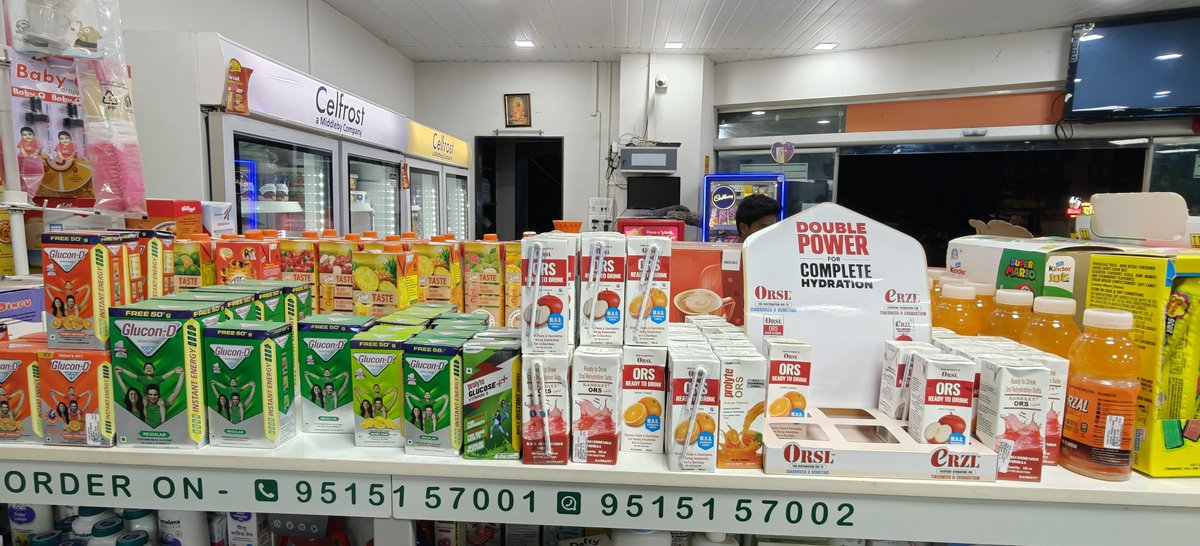
ORS is a wonder drug. And I have been advocating the WHO recommended formula (the ELECTRAL one, not the other one causing hyperkalemia) to my patients over many years.
I remember reading a story in school, about some refugees in Africa who reached. ahealth camp, and were handed out packets of 'white powder' and were specifically asked to "dissolve it in a glass of water and sip it slowly."
But the hungry malnourished kids had a strong salt-sweet craving, ended up licking the packets and vomiting all over the place.
Fast forward to 2026
I had just finished a round of the whole hospital, was tired, had to do 1.more thing before leaving, so I stepped into the lift.
A junior nurse offered me water from her metal bottle.
I confidently took a huge swig of the water.
It was salty!
Over the years, I have been taking ELECTRAL on and off too, and I am accustomed to the taste.
Most formulations are such that one has to dissolve them in 1 litre of water. No more, no less.
This nurse had made it salty.
On asking, I realised that the junior nurses did not want to drink much water, as they were not 'used' to it. And 'thought' that concentrated ORS would be more powerful.
Soon, they kept doing the same, and now say that they 'like the taste's
Obviously, they have nausea, stop eating food, and blame the heat or whatever.
That's not how ORS works.
That osmolarity has to be maintained.
I took a short training session of that batch.
1
7
70
5,898