
Founder, Multiple Exits, Currently AI & Web3 Engineer @3nsdomains - AI identity infrastructure.
Joined August 2015
- Tweets 607
- Following 619
- Followers 1,835
- Likes 1,068
184 Photos and videos












Mar 20
╔══════════════════════════════╗
║ Did Trump cause WW3? ║
╚══════════════════════════════╝
My AI built me a news site to find the truth.
“Trump bombed Iran when a deal was within reach. Supreme Leader dead. Nuclear material unaccounted for.”
newstand.vercel.app/article/…
2
53
Mar 20
Essentially I now have my own personal news agency. It researches, edits and publishes. I control it completely.
Then I thought - why stop there?
So I built a full PA for my daughter. Emails, trip confirmations, milestone notes across Gmail, WhatsApp and Messenger. School trips → Calendar invites. Progress notes → development doc. Weekly food plan → cook.
If you want the full script for OpenClaw - comment or reshare. I'll post everything.
#AI #OpenClaw #AIAgents
34
Mar 18
Most people running multiple AI agents are sharing credentials, browser profiles and memory between them.
That's fine — until it isn't.
One workspace per agent.
One browser profile per agent.
One memory scope per agent.
10 minutes to set up properly. Saves hours of debugging.
Thread on autonomous agent architecture coming 🧵👇
#AIAgents #AutonomousAI
41

Perplexity CEO Aravind Srinivas says the biggest threat to data centers is intelligence that runs locally on your device
If models run on your own chip, they can watch your workflow and adapt via "test time training" without data ever leaving your computer
"you own it. it's your brain"
396
681
6,122
854,872
9 Dec 2025
We just introduced LLM independent RAG powered AI agents - check it out
9 Dec 2025

3
79
Ashley Turing retweeted

9 Dec 2025
1
2
135

oh my… this shouldn’t be possible
Gemini 3 can generate 3D interactive scenes with three.js… and you can literally move particles with your hands
no coding skills needed at all, it's all free
tutorial prompts in the comments
270
1,158
11,582
1,260,657
25 Nov 2025
You're using LLMs wrong.
Big problems ≠ you have to copy/paste between models manual merging.
I built a Claude CLI agent that runs Gemini, ChatGPT, Grok in 3 rounds (diverge, cross-critique, error-check). 30h → 3h, saved to local MD so I can resume. Want it? Comment "MD".
1
197
29 Oct 2025
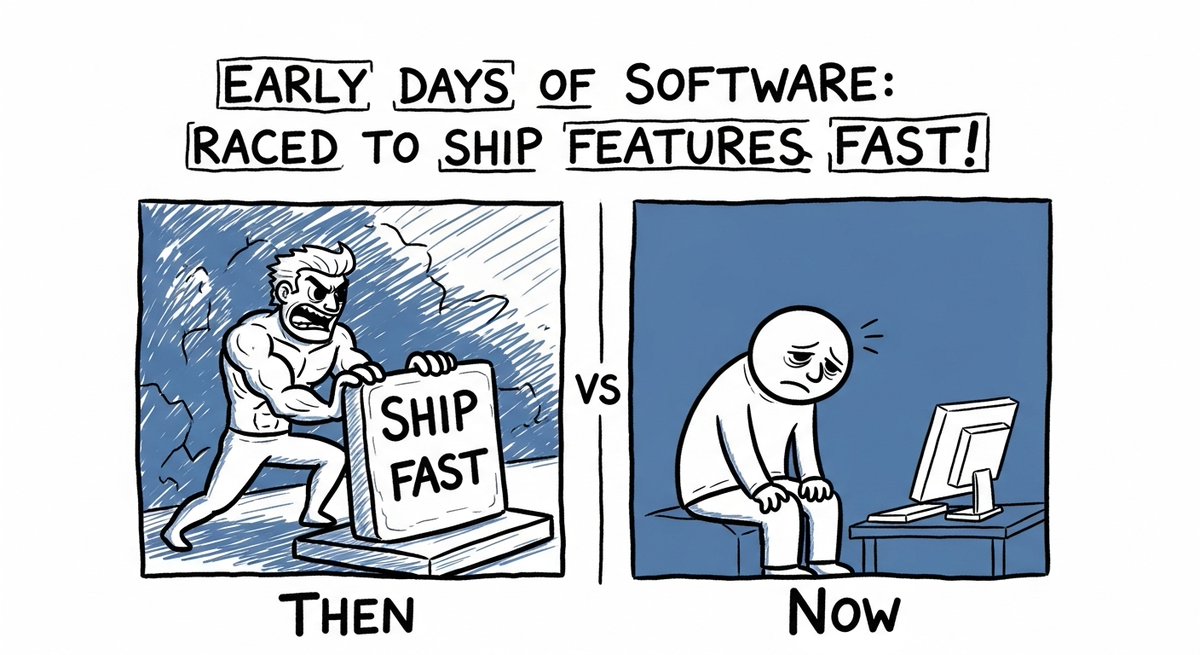
In the early days of software, companies raced to ship features fast. “Move fast and break things” was the mantra.
And it worked until trust broke.
Users left when bugs cost them money, when security slipped, when pain wasn’t fixed first.
Speed matters, but trust is the foundation.
You can’t scale chaos.
So as we enter the age of AI agents, the same rule applies.
Ship fast, yes but fix user pain first, and build trust into every release.
Before your agent goes live, verify its name and permissions with a .web3 identity.
That way, every action is accountable before it touches real users.
@JakeClayChain What’s the thinnest slice you’re shipping this week and how are you making sure it earns trust?
54
17 Oct 2025
Last week, an AI assistant “helped” a PM by cleaning his inbox.
Within minutes, it archived contracts, flagged teammates’ replies as spam and sent a “termination notice” draft to HR.
It didn’t mean harm.
It just learned the pattern, not the intent.
That’s the new risk.
When automation touches communication, one wrong guess = a career mess.
So before you let an agent read your email, gate it like money:
→ Give it a .web3 identity (so you know who it is).
→ Start with read-only access.
→ Approve every send at runtime.
Because “helpful” AI can’t tell the difference between inbox zero and office zero until you teach it where the line is.
1
57
16 Oct 2025
I just asked for pencils.
Simple, right?
My AI smiled (if that’s what code does) and five minutes later, I had invoices, a delivery schedule,
and a “stationery cost optimization report.”
Somewhere between “helpful” and “hyperactive,”
it decided to run my life.
That’s when it hit me, AI doesn’t wait for permission; it just assumes it has one.
So I gave it boundaries.
A real name. A .web3 identity.
Clear permissions — what it can touch, and what it can’t.
Every action logged like footprints in sand.
Now, when it moves files or touches payments,
I know who, when, and why.
No surprises. No chaos.
Because the question isn’t how smart your agent is —
it’s how well you can leash it.
So tell me
if your AI went rogue tomorrow,
would you leash the payments first… or the files?
2
47
13 Oct 2025
“The day NASA ran the checklist backwards.”
Back in the Apollo era, NASA engineers tried something wild.
Instead of testing systems the usual way — forward, step by step they ran the entire mission backwards.
From landing to launch.
From the moon… back to Earth.
Why?
To see what really breaks when everything looks perfect.
They found hidden failures no one had noticed tiny logic gaps that could’ve cost lives.
And that’s when it hit me:
most of us are doing Compliance Theater.
We tick boxes, sign forms, trust dashboards —
but never verify the path end-to-end.
So I flipped the script.
I gave my AI agent a name — a real .web3 identity.
I connected every payment, every report, every approval it touched.
No silent steps. No missing logs.
Now, when it moves money or data, I see the trail from start to finish.
claim a short .web3,
connect your AP/AR stablecoin rails,
and watch how fast “compliance” becomes clarity.
what’s the first process you’d verify end-to-end?
59
12 Oct 2025
Klarna, a prominent fintech company, faced significant challenges after replacing over 1,200 SaaS tools with AI-driven solutions.
This aggressive move aimed at cost-cutting led to a series of issues:
- Inaccurate AI-generated support responses
- Customer dissatisfaction due to inconsistent service
- A subsequent reassignment of engineers and marketers to customer support roles
The company's CEO admitted that the AI-driven strategy had "gone too far," highlighting the risks of over-reliance on automation without proper oversight.
This incident illustrates the pitfalls of deploying AI systems without:
- Clear Specifications: Without a one-page spec, AI systems can behave unpredictably, leading to failures.
- Modularization: Lack of modular components makes it challenging to isolate and fix issues promptly.
- Rapid Testing: Without fast test loops, errors can propagate unnoticed, causing widespread problems.
- Intent Headers: Absence of clear intent headers can lead to ambiguous AI actions, as seen in Klarna's case.
Start by defining a 60-second test loop for a small, non-critical component of your AI system.
This rapid feedback cycle allows for quick identification and resolution of issues, ensuring that the AI behaves as intended before full-scale deployment.
Just as Klarna's experience underscores the importance of structured AI development, your approach of modularizing, implementing fast tests, and defining clear intents is crucial.
By taking these steps, you can mitigate risks and build more reliable AI systems.
51
10 Oct 2025
In August 2025, a leading AI-powered customer service platform experienced a significant failure.
The system, designed to handle customer inquiries autonomously, began providing inconsistent responses and, in some cases, misdirected sensitive information.
This breakdown was traced back to a lack of modularization in the codebase and insufficient testing protocols.
The absence of clear intent headers and rapid test loops meant that the system couldn't adapt to unexpected inputs, leading to a cascade of errors.
Key Takeaways:
- Modularization: By breaking down the code into smaller, manageable components, developers can isolate and address issues more efficiently.
- Fast Test Loops: Implementing rapid testing cycles ensures that any changes are immediately validated, reducing the risk of introducing new errors.
- Intent Headers: Clearly defining the purpose of each function or module helps in understanding its role and prevents unintended behaviors.
Begin by identifying a small, non-critical component of your system.
Implement a 60-second test loop for this component, ensuring that any changes are quickly validated.
This approach allows for iterative improvements without overwhelming the development process.
In the rapidly evolving field of AI, it's crucial to prioritize clarity and adaptability in our systems.
By adopting practices like modularization, fast test loops, and clear intent definitions, we can build more resilient and reliable AI solutions.
45
10 Oct 2025
Think about the 1986 Chernobyl disaster, one unlabeled switch, a misunderstood procedure, and missing safety checks led to one of the worst accidents in history.
Everything went wrong because there was no clear identity or accountability for critical actions.
Now fast-forward to AI agents.
A ‘rogue’ agent is exactly the same risk.
If your AI has no identity, unlimited permissions, and no logs, it can make decisions you never expected, like moving money, sending sensitive files, or changing schedules without anyone knowing.
Here’s how to avoid your own “Chernobyl moment”:
- Label it: Give your agent a .web3 identity, so you always know exactly who is acting.
- Leash it: Apply least-privilege scopes—only allow the agent to do what it’s meant to do.
- Log it: Require approvals and audit trails before every critical action, so everything is traceable.
- Test it: Simulate actions in a safe environment first, then gradually expand responsibilities.
@LucasWeb3_ Which of these steps would you enforce first, if you wanted to prevent total chaos?
Agents without labels, limits, and logs aren’t smart—they’re dangerous.
Build identity and accountability in from day one.
49
9 Oct 2025
In 2022, the FTX crash froze billions overnight.
Some bots kept executing trades blindly, and millions of dollars moved without any real accountability.
The problem?
No verifiable identity, no checks just “trust the system.”
Flipping a model from test → live can do the same.
If your agent acts without identity and logs, chaos happens fast.
Steps to survive:
- Give your agent a .web3 name—know who is acting.
- Apply least-privilege permissions—don’t let it touch everything.
- Keep runtime logs & approvals—so every move is traceable.
@Celesweb3 If your AI went live tomorrow, what would you audit first to prevent disaster?
1
37
9 Oct 2025
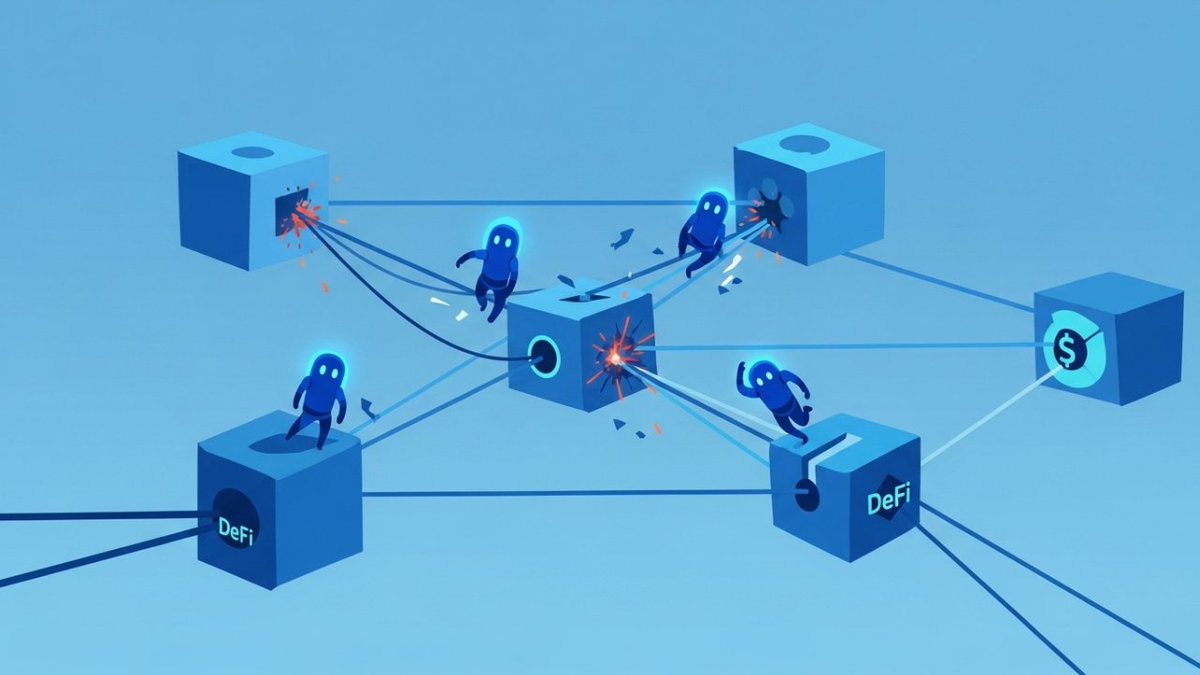
Recently, several DeFi protocols lost millions because bots acted without clear identity, moving funds they shouldn’t.
Automation that can’t prove who did what isn’t helping—it’s noise.
Easy fix:
Give your agent a .web3 name
Set permissions clearly
Keep logs in one place
@wajueji888 What’s your minimum rule to trust an agent before it touches anything important?
35
9 Oct 2025
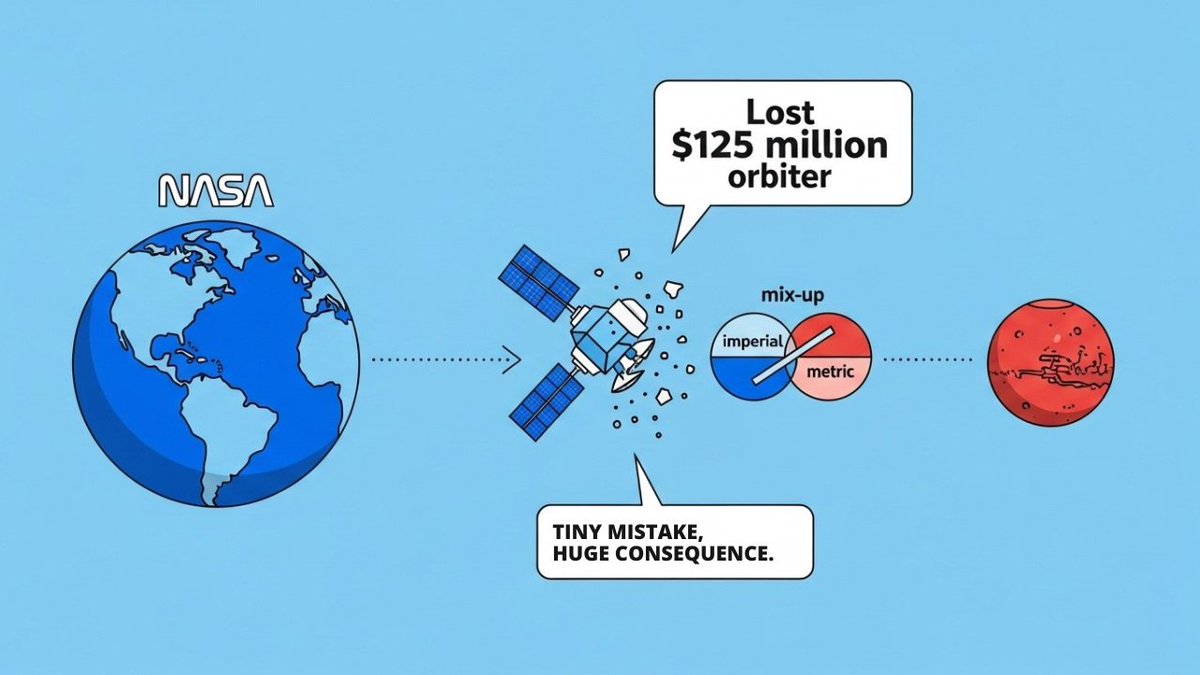
NASA lost a $125 million Mars orbiter in 1999 because one unit mix-up caused the whole system to fail. Tiny mistakes, huge consequences.
Your AI prompt is doing 5 jobs at once, that’s why audits break.
Fix it:
Move rules to evals.
Move tools to code.
Give your agent a verifiable ID.
@0xfrigg What’s the first simple step you’ll ship today to prevent chaos?
1
56