- Tweets 1,777
- Following 656
- Followers 629
- Likes 594

















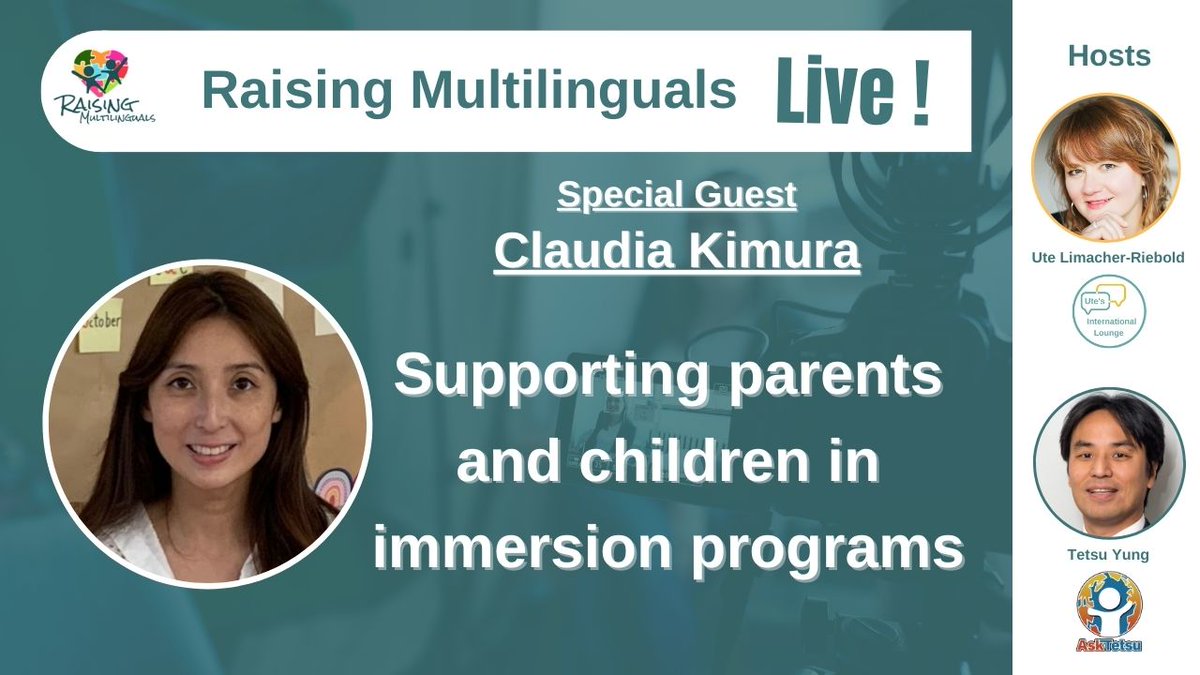
ALT Setting up a quality bilingual education program is not as easy as it seems, and requires a level of dedication that only comes with total conviction. One pro who has been involved in the creation of multiple bilingual/multilingual programs for many decades is Dr. Fabrice Jaumont. In this interview, Dr. Jaumont will walk us through why's, what's, and the how's of integrating bilingualism/multilingualism into the education system in order for our next generation of global citizens to thrive in the ever-connected world of tomorrow. Please join our conversation on Tuesday 21May 2024 at 13:00 New York / 18:00 London / 19:00 Paris on Facebook, YouTube and/or LinkedIn! Ute (@Ute's International Lounge) Tetsu (@AskTetsu) Feedback: https://bit.ly/RML-Feedback ***** Fabrice Jaumont is a scholar-practitioner, award-winning author, non-profit leader, and education advisor based in New York. He currently serves as Education Attaché for the Embassy of France to the United States.
ALT Raising children with multiple languages and making sure they understand and speak them is already a great challenge for many. When the home languages are not the school languages, many parents wonder what to do when they want their children to also learn how to read and write in their languages. How we parents teach our children to read and /or write in our home languages when they have different scripts of what our children learn at school? How proficient should we be in the target language, if we want to teach our children how to read and write? What are alternative solutions? Please join our conversation on Tuesday 16 April 2024 at 10:30am New York / 3:30pm London / 4:30pm Amsterdam / 10:30pm Singapore, on Facebook, YouTube and/or LinkedIn! You are very welcome to share your questions, experience, doubts and suggestions in the comment sections and we'll share them right on screen with our guest!


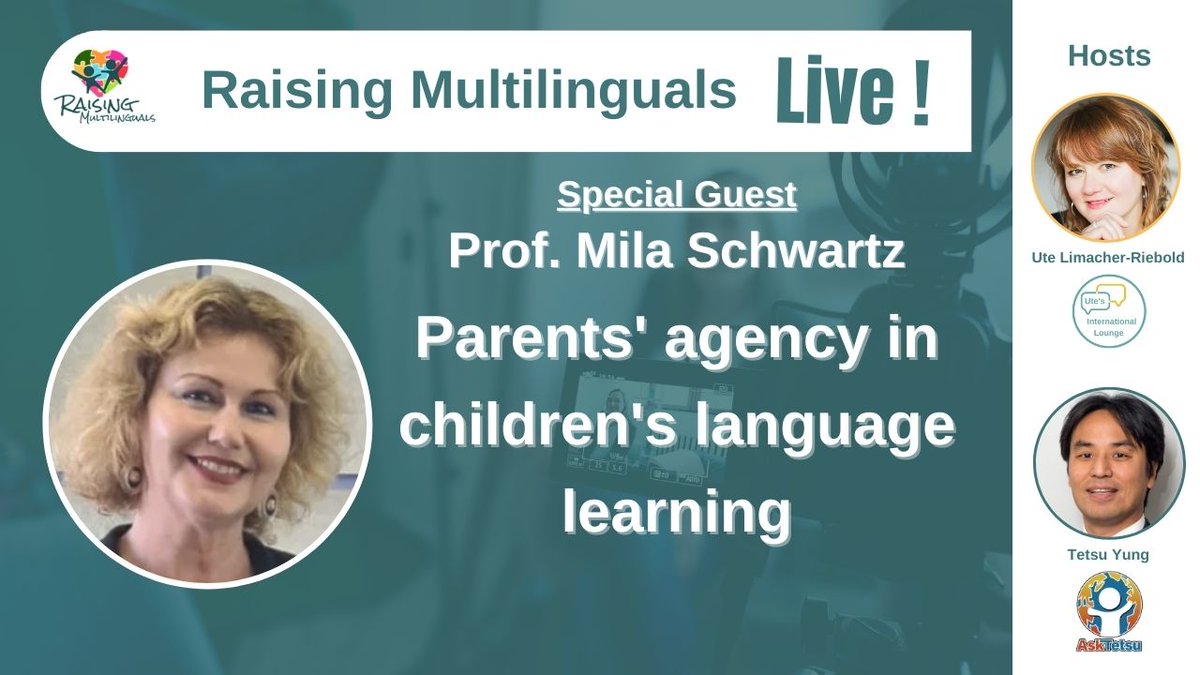
ALT We know that when we raise our children with multiple languages, it is important to find effective strategies to manage those languages. It is not only about determining "who speaks what language with whom and when". Parents' language beliefs, their experiences and expectations play a crucial role too. Mila Schwartz defined home language strategies as "deliberate strategies aimed to manage "language input, and to control its quality and quantity in each family context and practice" (Schwartz 2020, 196). How does proactive home language maintenance look like? How can we efficiently use multiple languages at home and all keep motivated to use them? What is the parent's agency when it comes to our children's early language learning? What should parents be aware of when supporting the children's home language skills? Prof. Mila Schwartz will share insights about the Parents' agency in children's language learning and their interaction with Early Childhood Educators and Care.


ALT When we raise our children abroad and want to transmit our languages to them, we sometimes become aware of our own limits. If we have already lived abroad for a while, i.e. outside of the country where our language is spoken, we can feel "not fluent enough" to transmit our language to our children. How fluent should we be in the main language we transmit to our children? How can we maintain our heritage languages whilst living abroad? What impact does it have on our own language proficiency when we use our language only with our children? Is there a correlation between SES and children's language skills? Dr. He Sun will share insights into this topic based on her research and experience. Please come and join the conversation on Tuesday 20 February 2024 at 8am New York/ 2pm Amsterdam/ 9pm Singapore time on Facebook, YouTube and LinkedIn, to find out what aspects are crucial for transmitting our heritage language in an efficient way to our children.


ALT When our children attend school in an additional language, we want them to have the best support to quickly attain the required proficiency in the school language. Often times, the home languages shift into the background. Research shows that welcoming home languages at school, has a positive effect on the children's academic performance. What can teachers do to support children learn the school language as additional language and foster also the home language at school? What are practices that allow teachers to efficiently teach the subjects whilst also allowing children to use their other languages? What can parents expect from EAL teachers* and how long should children get their support? Kuldeep Matharu and Deborah Perrin will share insights into the work of EAL teachers and teacher trainers, and the ways multilingualism can be embraced at school.
ALT When our children attend school in an additional language, we want them to have the best support to quickly attain the required proficiency in the school language. Often times, the home languages shift into the background. Research shows that welcoming home languages at school, has a positive effect on the children's academic performance. What can teachers do to support children learn the school language as additional language and foster also the home language at school? What are practices that allow teachers to efficiently teach the subjects whilst also allowing children to use their other languages? What can parents expect from EAL teachers* and how long should children get their support? Kuldeep Matharu and Deborah Perrin will share insights into the work of EAL teachers and teacher trainers, and the ways multilingualism can be embraced at school.
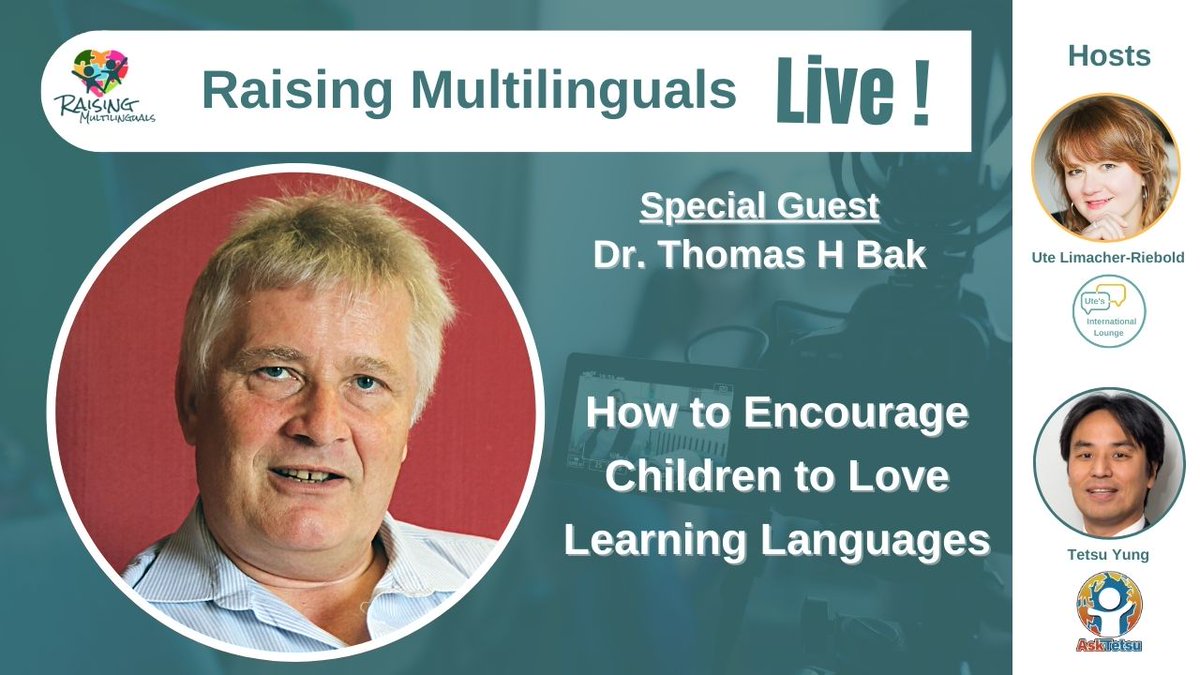
ALT In the past decades there have been many discoveries about how the brain works throughout the lifespan, and its neuroplasticity has changed the view on lifelong learning. We know that we can learn languages at any stage of life. But there are several factors that influence the learning experience and outcome. What is effective for adults might not be so for children. What does language learning look like in the brain of a child? What are the relevant connections between the brain and languages we should be aware of? On Tuesday 19 December 2023, Dr. Thomas H Bak will share with us what "loving learning languages" means from a neuroscientific perspective, and what we need to consider if we want our children to enjoy language learning. Come and join us on Tuesday 19 December 2023 at 1pm New York / 6pm London / 7pm Amsterdam on Facebook, YouTube and Linkedin, to find out how we can encourage our children to love learning languages – from a neurological perspective.