
@COSTprogramme CA21153 - Network for implementing multiomic approaches in atherosclerotic cardiovascular disease prevention and research (AtheroNET)
Joined February 2023
- Tweets 50
- Following 27
- Followers 69
- Likes 7
19 Photos and videos


Pinned Tweet

17 Mar 2025
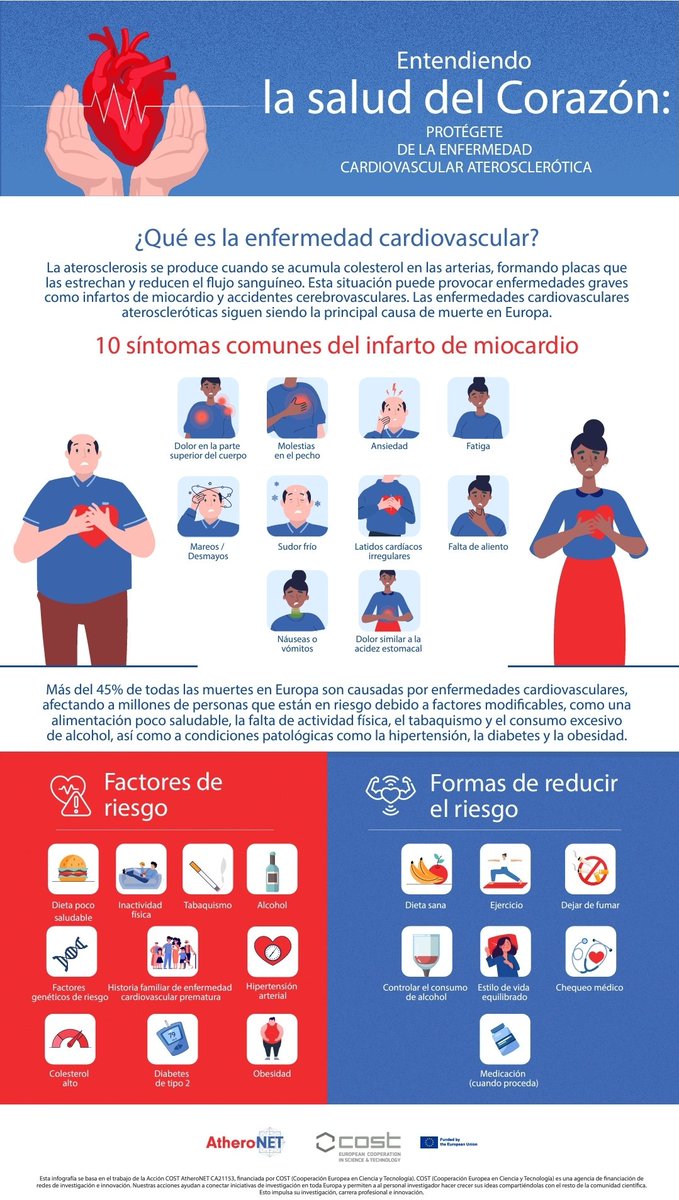
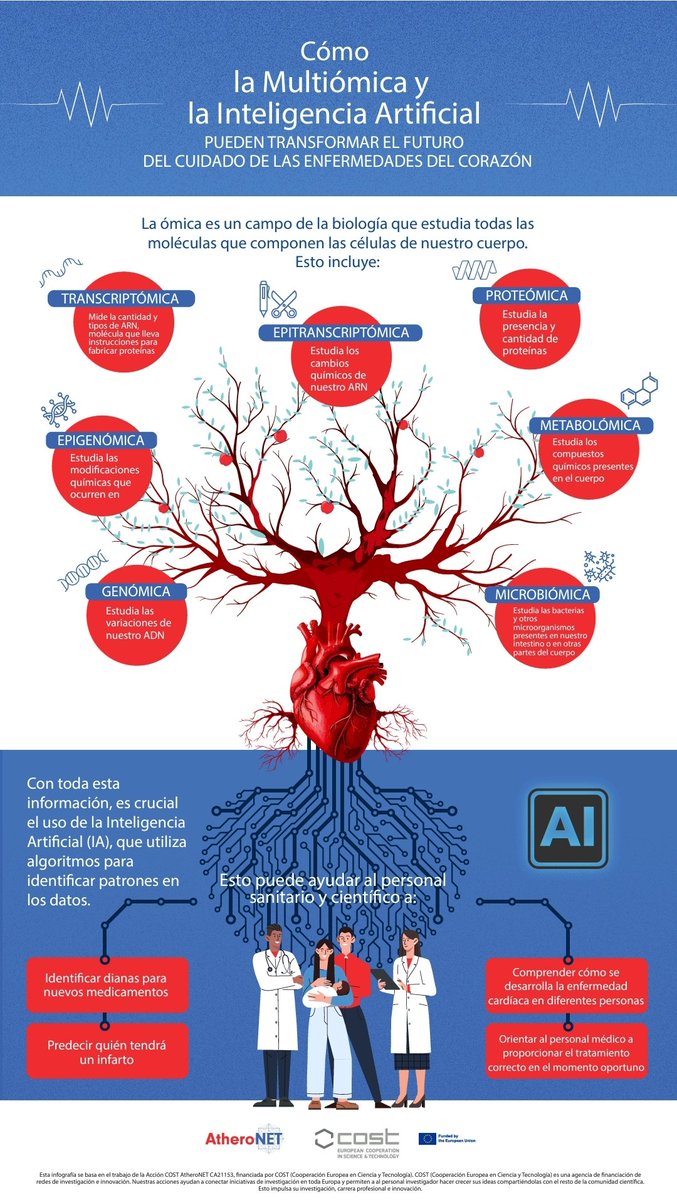
The AtheroNET communications working group has translated our infographics to multiple languages! These documents describe 1) heart health and 2) the use of AI and multiomics to study cardiovascular disease for general audiences.
doi.org/10.5281/zenodo.14861…
#scicomm #hearthealth #AI
1
1
1
136
3 Apr 2025
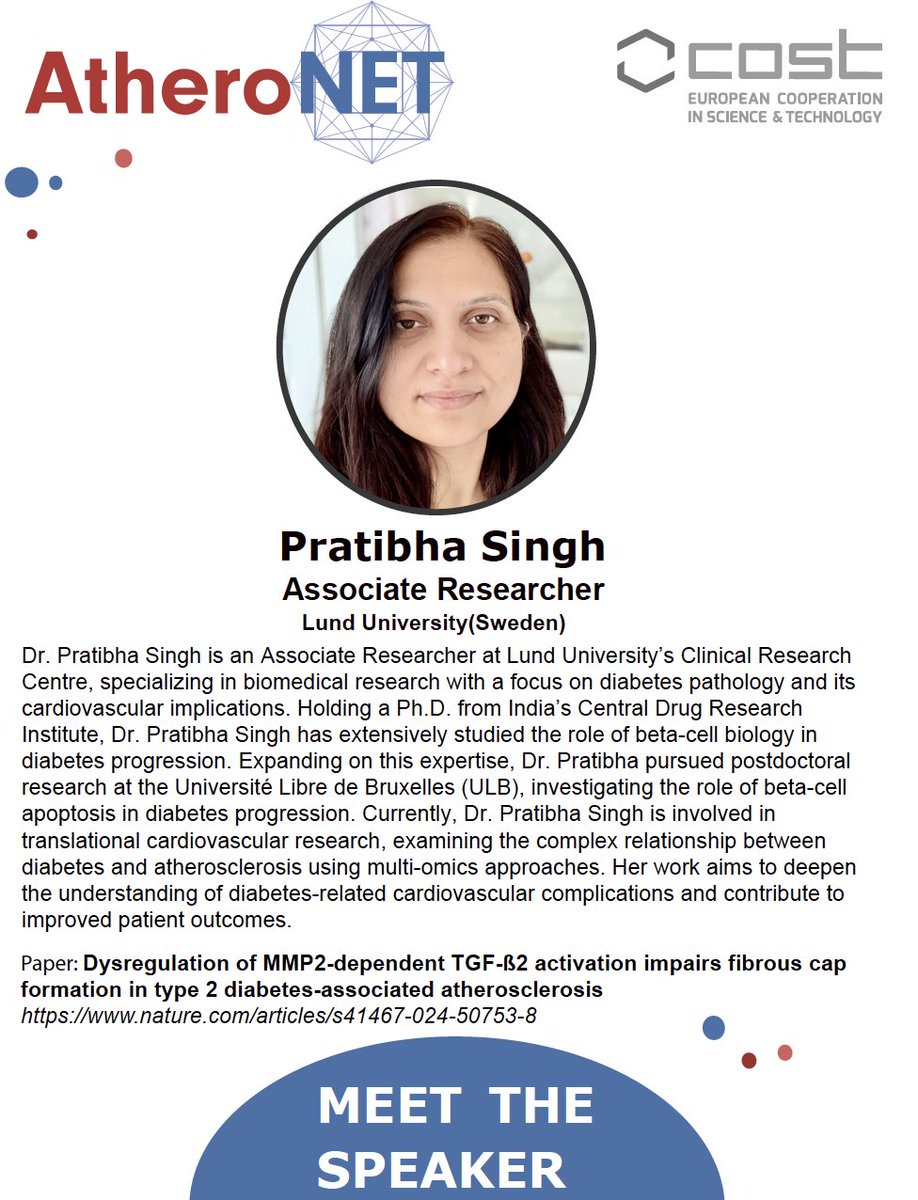
We're excited to host Dr. Pratibha Singh for our next journal club on April 14th at 15:00 CEST. Can't wait to discuss! #atherosclerosis
nature.com/articles/s41467-0…
2
4
100
17 Mar 2025
Our heart disease infographics are now in multiple European languages! 🌍🫀 They cover risk factors & the use of AI multiomics in heart disease research. Check them out & share! 🔗 lnkd.in/diTgYGWi
#HeartHealth #AI #Multiomics #AtheroNET
1
1
46
17 Mar 2025
The AtheroNET communications working group has translated our infographics to multiple languages! These documents describe 1) heart health and 2) the use of AI and multiomics to study cardiovascular disease for general audiences.
doi.org/10.5281/zenodo.14861…
#scicomm #hearthealth #AI
1
1
1
136
17 Mar 2025
Albanian, Armenian, Bosnian, Catalan, Danish, French, German, Greek, Icelandic, Macedonian, Polish, Portuguese, Russian, Serbian, Slovak, Spanish, Turkish, and Ukrainian are currently available. Please use and share with patients, user groups, or other stakeholders.
38
AtheroNET COST Action retweeted

13 Mar 2025
Muy contento por haber colaborado en la traducción de las infografías sobre salud cardiovascular y ciencias ómicas en investigación cardiovascular de @AtheroNET
3
4
160
8 Jan 2025
Congrats to AtheroNET members for their work online now with Vascular Pharmacology. This is a comprehensive overview of cellular models in #atherosclerosis for #omics research.
authors.elsevier.com/c/1kIOh…
2
3
146
AtheroNET COST Action retweeted

3 Jan 2025
Happy New Year from the @AtheroNET #journalclub team!🎉 Join us on the 13th of Jan at 3 pm CET to learn more about premature aging, VSMC/EC crosstalk, and EC dysfunction in atherosclerosis disease.
🗓️Save the date, mark your calendars and join us!
🌐Meeting link 👇🏽
1
1
1
81
20 Nov 2024
For those of you making your way to BlueSky, follow us there @atheronet.bsky.social #scisky
27
AtheroNET COST Action retweeted

25 Oct 2024
🫀@miron_sopic is investigating the links btw various #rna molecules, their modifications, & #CardiovascularDiseases to improve treatment.
⭐In #Luxembourg, Miron enjoys the strong emphasis on translating #research into real-world applications.
researchluxembourg.org/en/in…

ALT In Conversation With Our Young Researchers: Miron Sopić
5
6
318
23 Sep 2024
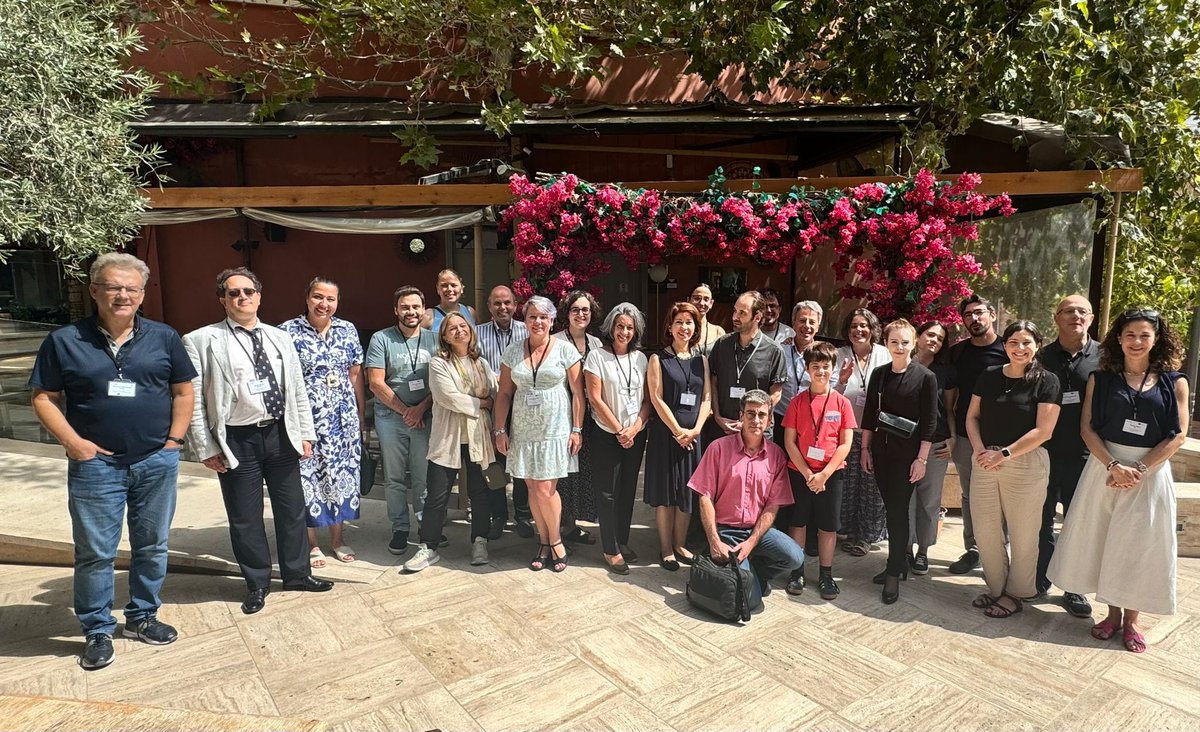
We had a successful Extended Core Group meeting in Heraklion, Crete last week. Thanks to all participants for the fruitful collaboration and discussion regarding aims and deliverables of the network. Thanks to @kardassis and Christos Tsatsanis for hosting us.
3
6
322
19 Sep 2024
Today we've had updates from our working groups. Did you know that you can apply to join a working group of interest on our website?
lnkd.in/dSAqUh6b
2
50
18 Sep 2024
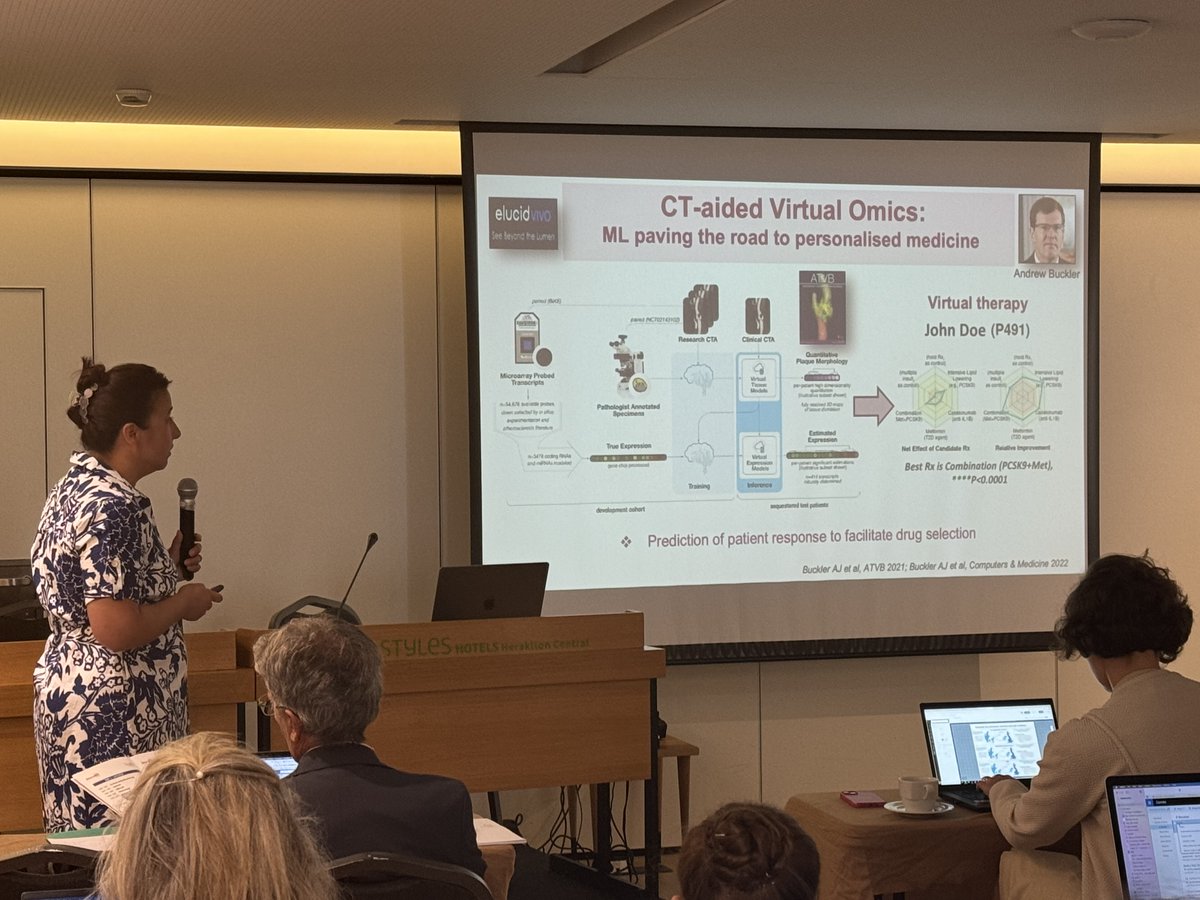
The extended Core Group meeting in Crete starts with an excellent presentation by Associate Professor Ljubica Matic of @ki_vasc: "Multi-omics and multi-modal integrations for prediction of adverse events in atherosclerosis patients"
1
5
52
18 Sep 2024
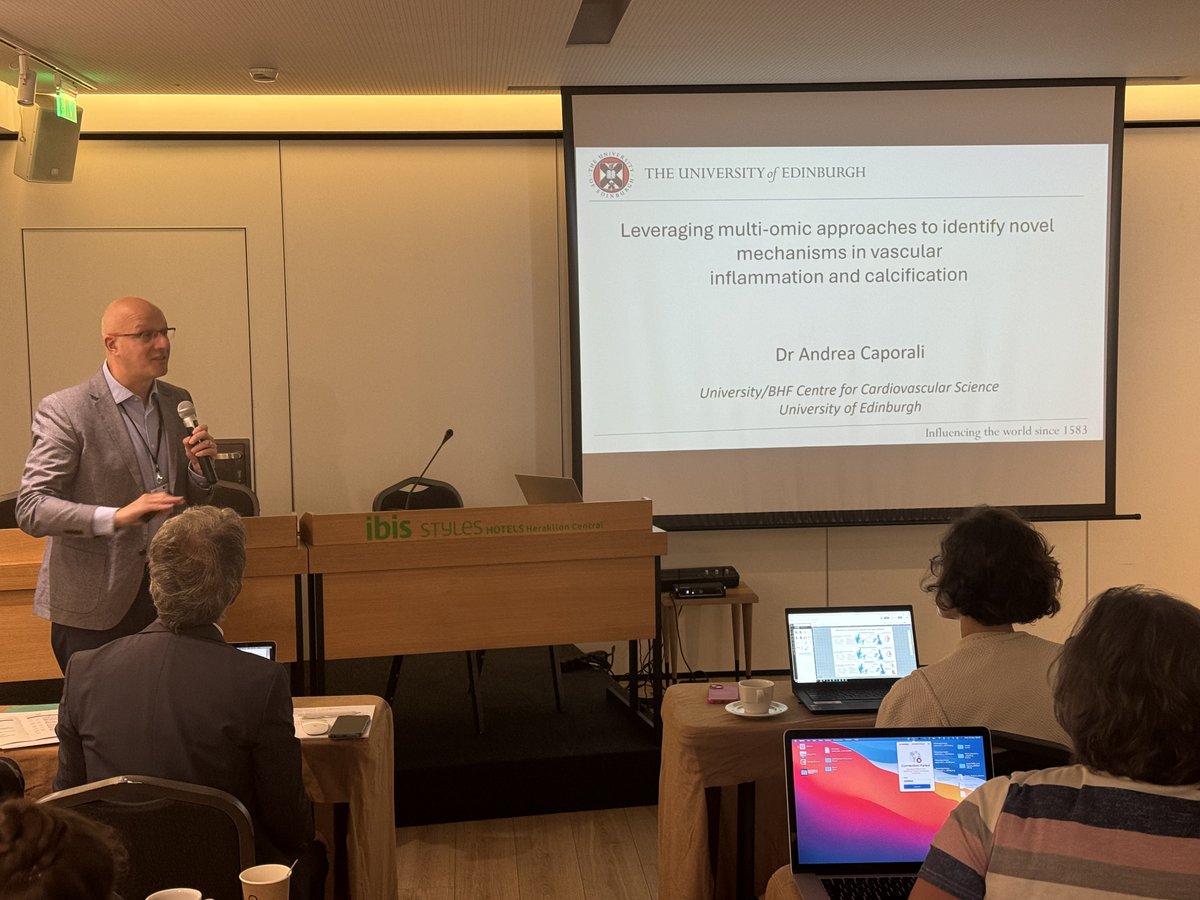
Next @caporalilab shares his research, "Leveraging multi-omic approaches to identify novel mechanisms in vascular inflammation and calcification"
3
55
13 Sep 2024
An editorial is out in @JAHA_AHA by an AtheroNET YRI
ahajournals.org/doi/full/10.…
13 Sep 2024

We highlight some areas for future study:
-robust GWAS on dementia subtypes for new instruments for sleep apnea-dementia MR
-RCTs to disentangle the relationships between sleep apnea, adiposity, & CVDs
-MR studies w/ genetic instruments for sleep traits (e.g. quality, chronotype)
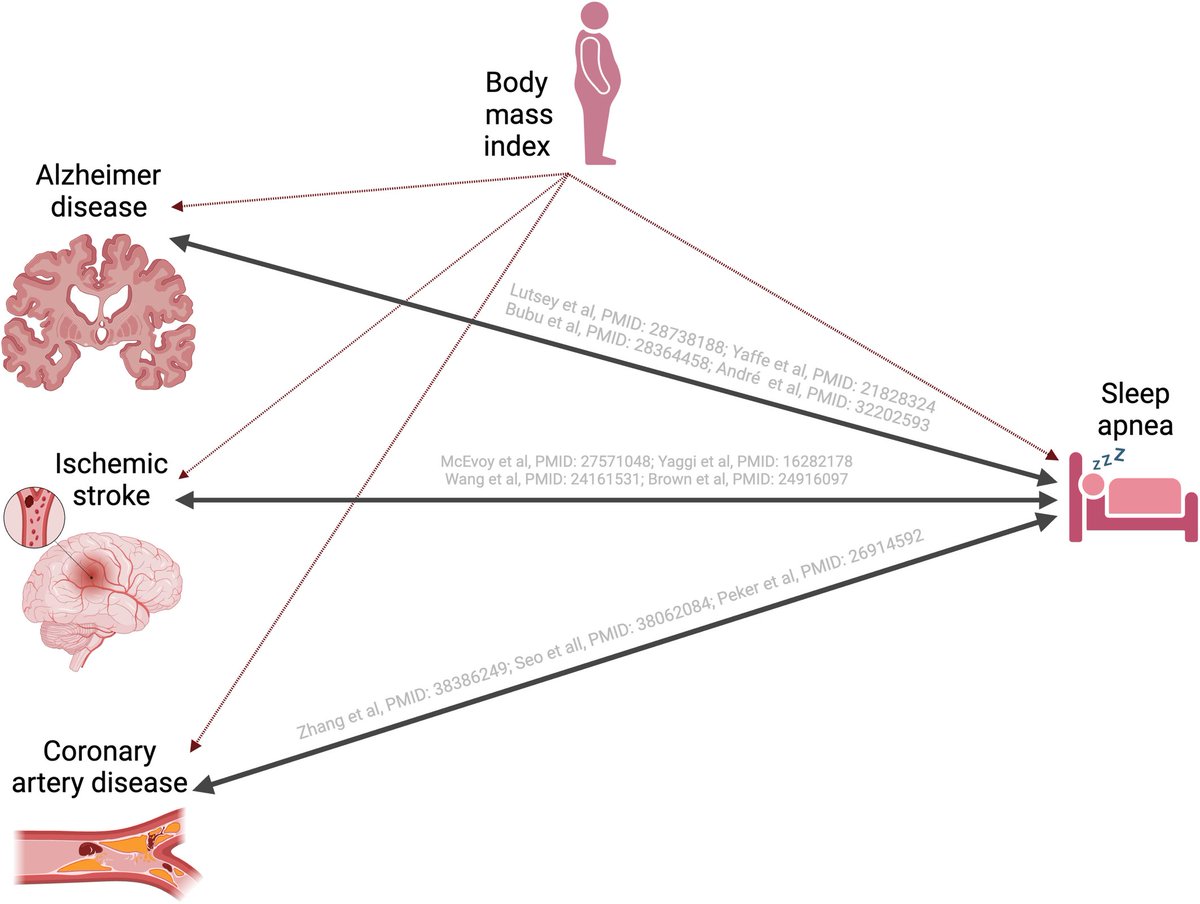
1
2
109
AtheroNET COST Action retweeted
12 Sep 2024
We are back!🥁🥁🥁
In our first session after the summer break, we will discuss the role of resident memory T cells in atherosclerotic plaque stability.
Join us on the 23rd of September at 3 pm CET to learn more!
eur02.safelinks.protection.o…
Webinar ID: 676 8110 5320

2
1
203
28 Jun 2024
A Guidelines paper on mitochondrial RNA analysis has been published in the journal Molecular Therapy - Nucleic Acids. This paper is a common effort from members of @CardioRNA and @AtheroNET COST Actions.
doi.org/10.1016/j.omtn.2024.…
Happy reading !
2
2
115
10 Jun 2024
View our latest webinar: New approaches to inhibit miRNAs in an atherosclerosis pre clinical model!
NOEMI ROTLLAN
@AtheroNET COST Action
@CardioScopeMSCA
youtu.be/ImAZl5PabZg
2
4
97
2 May 2024
Webinar 9 is now available on our YouTube channel.
Explore the clinical potential of circRNA with Dr Fabio Martelli, director of the Molecular Cardiology Laboratory at the IRCCS San Donato Polyclinic, Milano, Italy.
youtu.be/sxvN_0fq0wk
@AtheroNET @CardioScopeMSCA
1
1
77
2 May 2024
Save the date: our next webinar session is scheduled for Monday 29 April 2024, at 17:30 CET.
The lecture will be held by NOEMI ROTLLAN, Principal Investigator at IIB Sant Pau, Barcelona, Spain.
Join from the webinar link: lnkd.in/dti7CY8n
@AtheroNET @CardioScopeMSCA
1
1
42
11 Apr 2024
Save the date: Monday 29 April 2024, at 17:30 CET. Webinar session: circularRNAs, their regulation and functions.
Presenter: Fabio Martelli, IRCCS Policlinico San Donato, Milano, Italy.
Join from the webinar link: lnkd.in/eQAhgZVS
COST Action @AtheroNET @CardioScopeMSCA
2
3
187