
CTO & Cofounder @ jump.ai. Deep thoughts on software development. Trying to leave the world better than I found it. @Ch_JesusChrist
Joined June 2009
- Tweets 11,554
- Following 390
- Followers 1,236
- Likes 6,247
359 Photos and videos







Adam Kirk retweeted

Jun 8
if you’re still writing loops that prompt coding agents you’re falling behind. you need to build a meta agent that infers what loops you would have wanted based on your vibe and then write those loops
261
233
4,597
201,865

Player/coaches with 15 direct reports. Interested to see how this goes.

This is an email I sent earlier today to all employees at Coinbase:
Team,
Today I’ve made the difficult decision to reduce the size of Coinbase by ~14%. I want to walk you through why we're doing this now, what it means for those affected, and how this positions us for the future.
Why now
Two forces are converging at the same time. We need to be front footed to respond to both.
First, the market. Coinbase is well-capitalized, has diversified revenue streams, and is well-positioned to weather any storm. Crypto is also on the verge of the next wave of adoption, with stablecoins, prediction markets, tokenization, and more taking off. However, our business is still volatile from quarter to quarter. While we've managed through that cyclicality many times before and come out stronger on the other side, we’re currently in a down market and need to adjust our cost structure now so that we emerge from this period leaner, faster, and more efficient for our next phase of growth.
Second, AI is changing how we work. Over the past year, I’ve watched engineers use AI to ship in days what used to take a team weeks. Non-technical teams are now shipping production code and many of our workflows are being automated. The pace of what's possible with a small, focused team has changed dramatically, and it's accelerating every day.
All of this has led us to an inflection point, not just for Coinbase, but for every company. The biggest risk now is not taking action. We are adjusting early and deliberately to rebuild Coinbase to be lean, fast, and AI-native. We need to return to the speed and focus of our startup founding, with AI at our core.
What this means
To get there, we are not just reducing headcount and cutting costs, we’re fundamentally changing how we operate: rebuilding Coinbase as an intelligence, with humans around the edge aligning it. What does this mean in practice?
- Fewer layers, faster decisions: We are flattening our org structure to 5 layers max below CEO/COO. Layers slow things down and create coordination tax. The future is small, high context teams that can move quickly. Leaders will own much more, with as many as 15 direct reports. Fewer layers also means a leaner cost structure that is built to perform through all market cycles.
- No pure managers: Every leader at Coinbase must also be a strong and active individual contributor. Managers should be like player-coaches, getting their hands dirty alongside their teams.
- AI-native pods: We’ll be concentrating around AI-native talent who can manage fleets of agents to drive outsized impact. We’ll also be experimenting with reduced pod sizes, including “one person teams” with engineers, designers, and product managers all in one role.
In short: AI is bringing a profound shift in how companies operate, and we’re reshaping Coinbase to lead in this new era. This is a new way of working, and we need to leverage AI across every facet of our jobs.
To those who are affected
I know there are real people behind these decisions — talented colleagues who have poured themselves into this company and our mission. To those of you who will be leaving: thank you. You’ve helped build Coinbase into what it is today, and I am sincerely grateful for everything you've done.
All impacted team members will receive an email to their personal account in the next hour with more information, and an invitation to meet with an HRBP and a senior leader in your organization. Coinbase system access has been removed today. I know this feels sudden and harsh, but it is the only responsible choice given our duty to protect customer information.
To those affected, we will be providing a comprehensive package to support you through this transition. US employees will receive a minimum of 16 weeks base pay (plus 2 weeks per year worked), their next equity vest, and 6 months of COBRA. Employees on a work visa will get extra transition support. Those outside of the US will receive similar support, based on local factors and subject to any consultation requirements.
Coinbase prides itself on talent density. Our employees are among the most talented people in the world, and I have no doubt that your skills and experience will be highly sought after as you pursue your next chapters.
How we move forward
To the team that is staying, I know this is a difficult day. We’re saying goodbye to colleagues and friends you've been in the trenches with. But here’s what I want you to know as we move forward together:
Over the past 13 years, we have weathered four crypto winters, gone public, and built the most trusted platform in our industry. We’ve made it this far by making hard decisions and by always staying focused on our mission. This time will be no different – nothing has changed about the long term outlook of our company or industry. And most importantly, our mission has never been more important for the world. Increasing economic freedom requires a new financial system, and we’re building it.
The Coinbase that emerges from this will be more capable than ever to achieve our mission.
Brian
1
5
476
This is actually one of the most optimistic things ive seen. Even though there are a lot of very altruistic logicians in red, there’s still so many “all for one” blue people they still won. Im inspired.
Apr 24

Everyone in the world has to take a private vote by pressing a red or blue button. If more than 50% of people press the blue button, everyone survives. If less than 50% of people press the blue button, only people who pressed the red button survive. Which button would you press?
1
1
317
Adam Kirk retweeted

Apr 5
The Church of Jesus Christ of Latter-day Saints, by the numbers:
20
107
945
97,661
We need to rethink “perfectionism” in parenting. Just love your kids, like your kids, look out for their best interests. I think enjoying your kids is pretty much all that matters to them, so just figure out how you need to parent so that you enjoy your kids.
Apr 4

The fastest way to undermine a child's thinking is to praise them for the right answer.
When you say Good job, you are training your child to think about your approval. You are training them to perform for you.
A Socratic parent asks: Why do you think that? They do not announce whether the answer is correct. They ask follow-up questions. They present evidence that contradicts the claim. They create the conditions for the child to discover the weakness in their own reasoning.
Getting a child to pause and think is the entire victory.
In a conventional classroom, Good job means compliance with the teacher's version of knowledge. In a Socratic environment, independent judgment is the goal.
3
2
377
For our org, its not about communication, its for ownership. I need people to be the driving force behind orchestrating and accomplishing an objective. I don’t see how AI could replace that yet.
Apr 2

Jack Dorsey just published something that should be required reading for every founder.
The premise: the org chart needs to be replaced entirely. And the argument starts 2,000 years ago.
For thousands of years, every organization on earth has run on the same logic the Roman Army invented.
Small teams report to a leader → Leaders report to managers → Managers report to executives.
The whole structure exists for one reason: to route information up and down the chain.
That's it. The whole system exists to solve a bandwidth problem.
Jack's argument is simple: AI solves it better.
Block built what they call a "world model" - a continuously updated picture of everything happening across the company. Every decision. Every customer. Every transaction. Every bottleneck. In real time.
No status update needed. No weekly sync. No manager to translate what's happening on the ground into language the executive can understand.
When the world model carries the information, you don't need the layers.
So they eliminated them.
Block now runs on three roles:
Individual contributors who build.
DRIs who own specific outcomes for a fixed period.
Player-coaches who develop people while still doing the work themselves.
No middle layer. The system handles coordination. The humans handle the work.
I've coached thousands of founders. The number one problem is always the same: information latency.
By the time a problem surfaces from your front line to leadership, it's already compounded. By the time a decision travels back down, the damage is done.
That lag costs you deals, people, and momentum. And most founders accept it as the price of scale.
Block is trying to prove you don't have to anymore.
I think they're right.
Because the hierarchy was never the point - it was just the best tool we had. The moment something better exists, the layers eventually collapse.
This is either the biggest structural shift since the 1850s - or it breaks at scale like everything else before it.
Either way - every founder should be asking the same question: how much of your org exists just to route information?
If the answer is "most of it" - that's your problem. And your opportunity.
-DM
1
285
Adam Kirk retweeted

The v0.1 release of Expert (the new, official #ElixirLang LSP) is final! 🎉
The best Elixir LSP experience keeps getting better.
Tremendous thanks to all the contributors, and to @JumpAdvisorAI for sponsoring Paweł on my team to work on it full-time. 🙏
github.com/elixir-lang/exper…
1
38
245
8,433
Slow is smooth, smooth is fast
Mar 25

I'm usually not one to write thought pieces without much technical depth. But here we go.
Slow the fuck down.
mariozechner.at/posts/2026-0…
5
280
I bet they are getting 10x normal volume of vibe coded apps
Mar 17

iOS developers: How long is App Review taking for everyone these days?
It is now taking longer to get our app approved than it is to build the actual features.
2
274
YAGNI (don’t build speculative flexibility)
I think this principle requires balance. My rule of thumb, after talking to Product, is a combination of 1) how hard will it be to refactor for that flexibility later 2) how confident are we we'll need it.
If the combination of the two is high enough, I think you SHOULD build speculative flexibility
5
310
Adam Kirk retweeted
This is a huge milestone.
At Jump, we’ve had Paweł Świątkowski (katafrakt on the internet) working full time getting Expert dialed in for our large codebase. The stability and reliability are now hands down the best #ElixirLang LSP experience I’ve had, and we’re not done yet.

We've officially published the first release candidate for the Expert language server and would appreciate all the help we can get to test it! #myelixirstatus
Thank you everyone who has helped get us this far, it really has been a monumental effort.
2
6
71
7,214
There would have to be a major inflection from the current trend. AI will one day be an amazing SWE end to end, but extrapolating the last two years…it wont be 6-12 months

Anthropic CEO, Dario Amodei:
"We might be 6-12 months away from models doing all of what software engineers do end-to-end”.
x.com/cgtwts/status/20137955…
1
3
652
Adam Kirk retweeted

Feb 20
Americans, after discovering we will never receive our DOGE checks and that all $175 billion in tariff revenue is being sent back to the companies, even though all of their prices had already been raised to account for it.
Feb 20

BREAKING: The US government now may owe US companies $175 billion in tariff refunds, per CNN
573
5,562
73,497
5,614,547
Adam Kirk retweeted

Feb 19
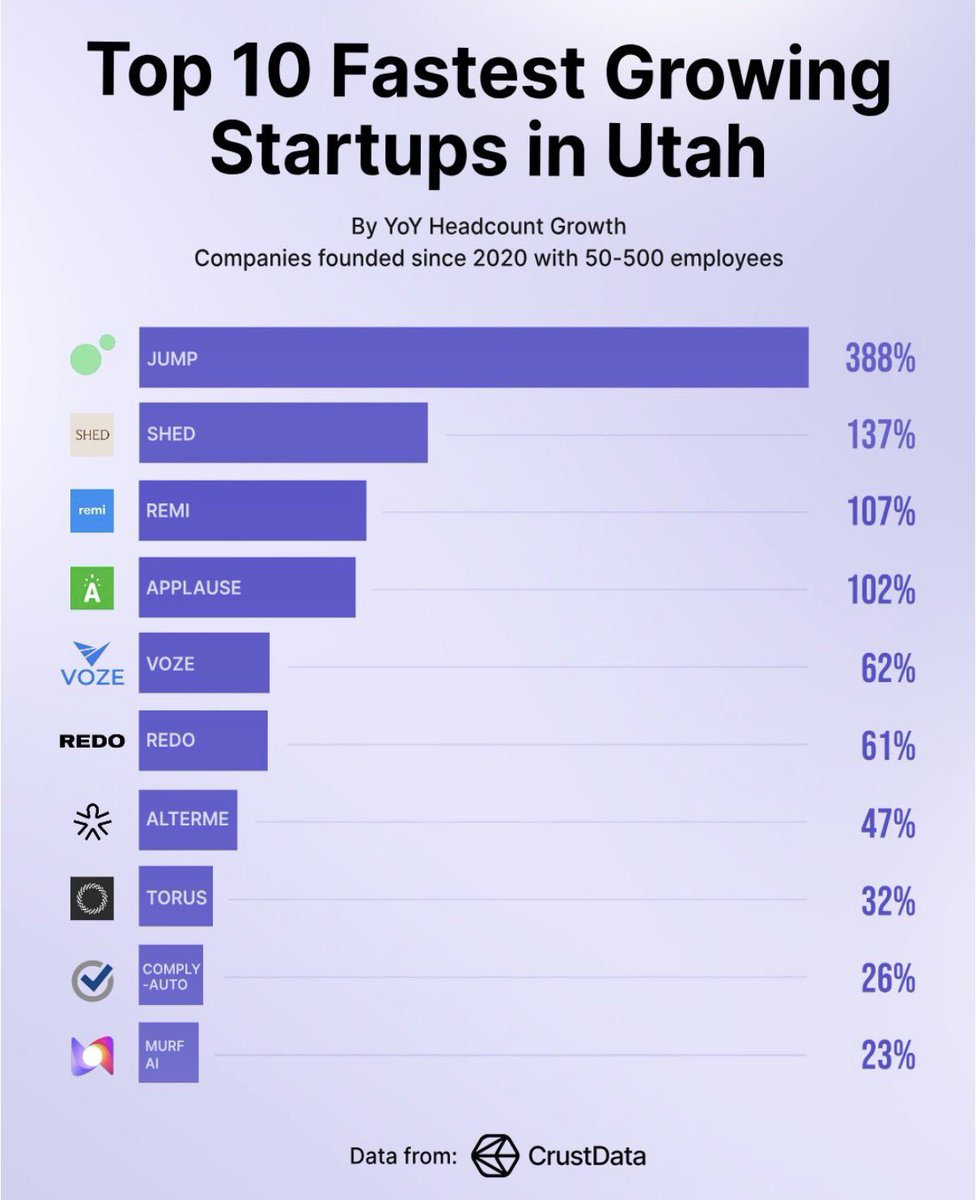
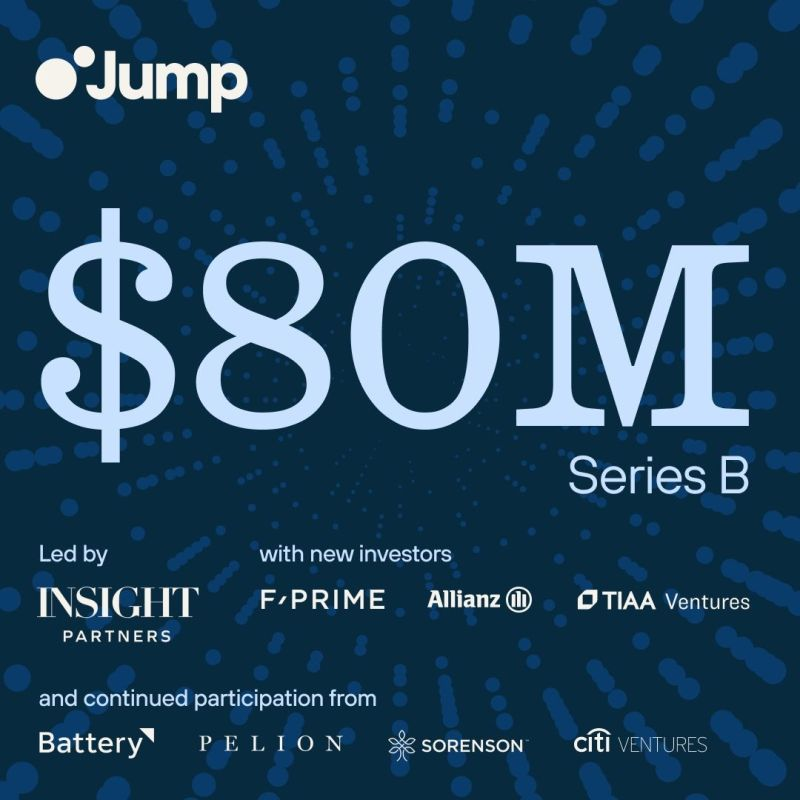
big day for @JumpAdvisorAI - one of the most exceptional AI companies on earth.
truly incredible execution in creating and winning a new market of AI for financial advisors.
L
F
G
3
2
33
3,548
Adam Kirk retweeted

Feb 17
It annoys me that so many people are under the impression that this guy, Steven Bradbury, is some subpar goober who lucked his way into gold.
That could not be further from the truth.
This is one of the most satisfying victories in the history of the Olympics if you know the full backstory.
This medal final was during his fourth Olympics, in Salt Lake City in 2002.
Earlier in his career, he was among the best athletes in the world in this specific event, the 1000 meter short-track men's speed skate.
But despite his talent, he just had some of the shittiest luck in the sport. We're talking a decade of shit luck.
In the '94 Winter Olympics, he was considered the odds-on favorite to take gold, but he fell in his heat after getting illegally pushed by an opponent (who was later disqualified). He didn't get a re-do. That was it. He got shoved by some asshole, and his Olympics was over.
Then in the '98 Winter Olympics, he was a favorite to at least medal in the same event but got caught up in a collision that wasn't his fault and failed to advance.
In 1994, he got his thigh sliced open by a competitor's skate during a race, which required 111 stitches and 18 months of recovery time.
In 2000, he broke his neck during training because a skater in front of him fell and tripped him up. That required a bunch of screws and plates being inserted into his skull and back and chest.
And doctors told him that he should stop skating. But he didn't wanna give up. It meant too much to him.
So, there he was in Salt Lake City in 2002, past his prime, a walking erector set, going up against opponents who were faster and younger and in their prime.
He manages to win his heat and advance to the quarterfinal but then has the shit luck (yet again) of having to go up against the best two athletes in the quarterfinal and only the top two advance.
He finishes third and thinks: "Damn, I gave it my best shot." But then, the second place finisher is disqualified, so Bradbury gets to advance to the semifinal.
Now, at this point, he's thinking: Well, shit, I'm not as fast as these younger guys, and I got a bad habit of getting taken out by crashes that aren't my fault.
So, he consults with the Australian national coach, Ann Zhang, and they decide that he should hang back from the pack and hope the pack crashes.
That is a perfectly valid strategy. If you crash, you lose, but speed skaters risk crashing to gain an advantage in order to win.
It may not feel exciting, but it is a valid strategy and just as risky: avoid crashes entirely and hope that pays off.
It paid off in the semifinal: the pack, including the defending Olympic champion, jostled too much and crashed. Bradbury wins and advances.
So, he's improbably in the final and takes the same approach, and it works: the entire pack jostles too much and crashes, and Bradbury's risk of hanging back pays off.
This victory was not some un-athletic schlub lucking his way into gold.
It was a journeyman athlete who never gave up and played smart after a career of shitty luck and finally got his due after it being snatched away from him so many times.
Hands down, one of my favorite Olympics stories.
Feb 15

"Dude there's no way you could ever win unless every single person in front of you crashed"
653
5,653
56,084
3,519,414
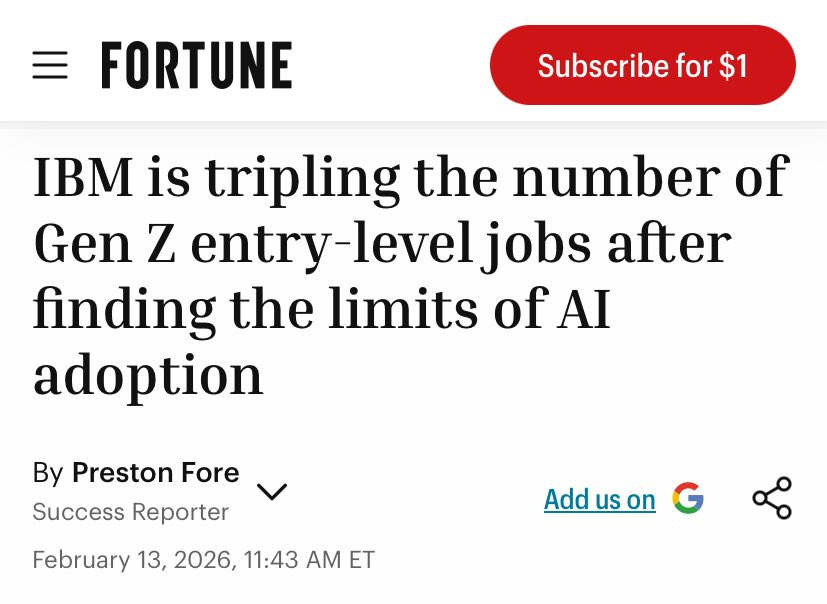
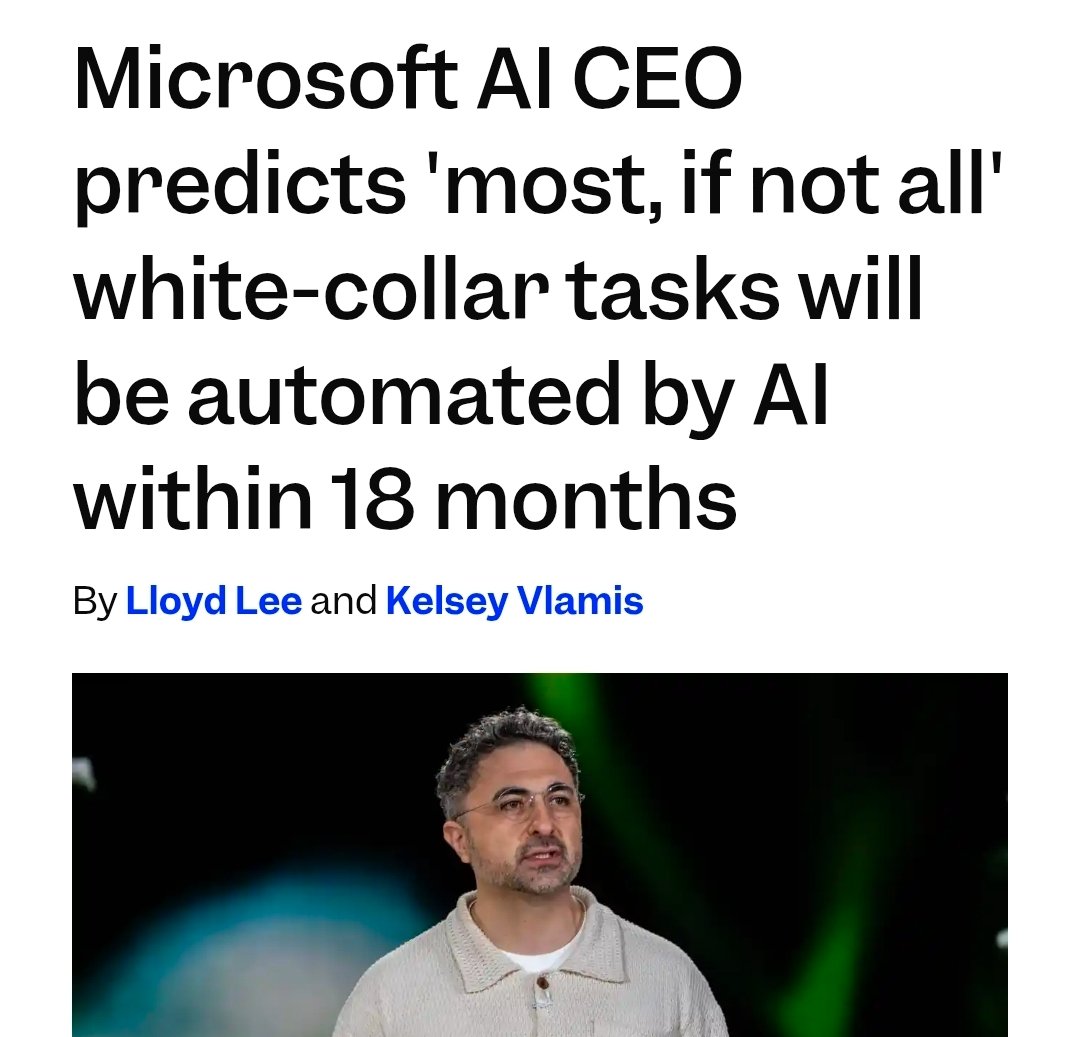
Perfectly illustrates the difference between those who’s jobs depend on AI taking over everyone else’s job and those who’s jobs depend on actually shipping value to customers

1
3
332