
Former co-lead Protocol @ethereumfndn — research in public
Joined October 2012
- Tweets 5,556
- Following 1,555
- Followers 12,111
- Likes 6,806
433 Photos and videos




Pinned Tweet

May 11
Excited to announce this evolution of Protocol, the @ethereumfndn teams stewarding, researching and developing the Ethereum protocol.
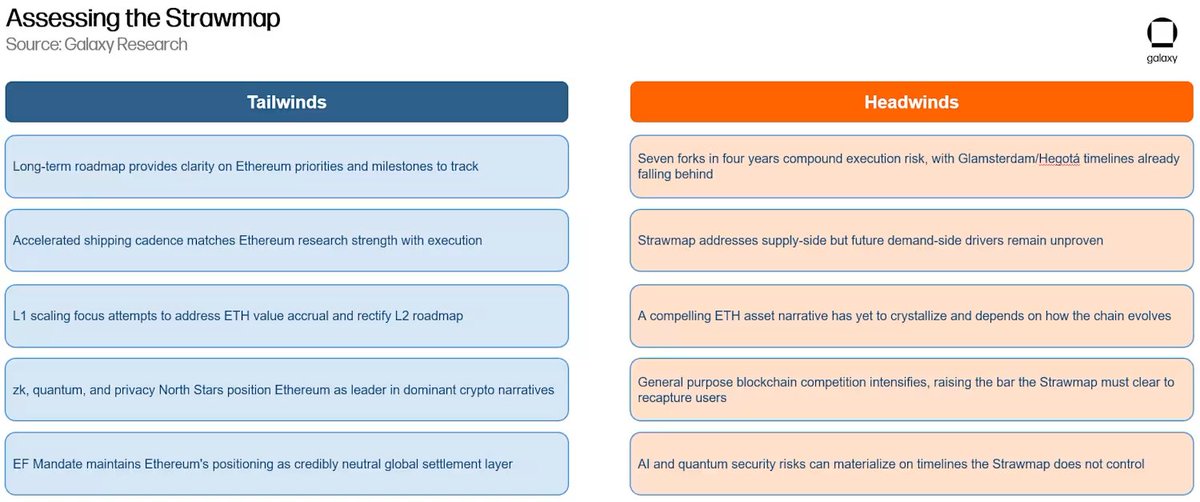
After our re-launch of Protocol in June last year, @TimBeiko, @ralexstokes and I are now passing the torch to our talented colleagues @corcoranwill @kevaundray and @fredrik0x. They are taking on the task of delivering on Scaling, UX and Hardness objectives, with the protocol strawmap in their pocket (strawmap.org/).
---
It is also time to announce that I made the decision to leave the Ethereum Foundation, my home for the past 6.5 years ❤️
I am so grateful for this opportunity I had, to work with amazing individuals, on the most impactful project there is.
Looking back from when I started (here it is -> x.com/barnabemonnot/status/1…), it has been a wild ride from early EIP-1559 work, to the Merge, to MEV markets, to staking, finality, interoperability and UX; and from my beginnings in the Robust Incentives Group to co-leading Protocol for the past year.
Over this past year, our Protocol priorities, particularly our "Improve UX" work, shifted my attention to nearer-term questions. Throughout, I've been excited to take on a more product-centric view. Making Ethereum's unique features more available to users today is on my mind; so is participating in the plurality of ways that Ethereum gets built.
I'd love to hear from friends old and new about what excites them at the moment, and share where I'm at. Please reach out!
May 11

There's a new chapter starting for the Protocol cluster. We're welcoming new leads and coordinators, and continuing our work toward Glamsterdam, Hegotà, and the Strawmap.
More in the blog below 👇
89
32
543
118,934

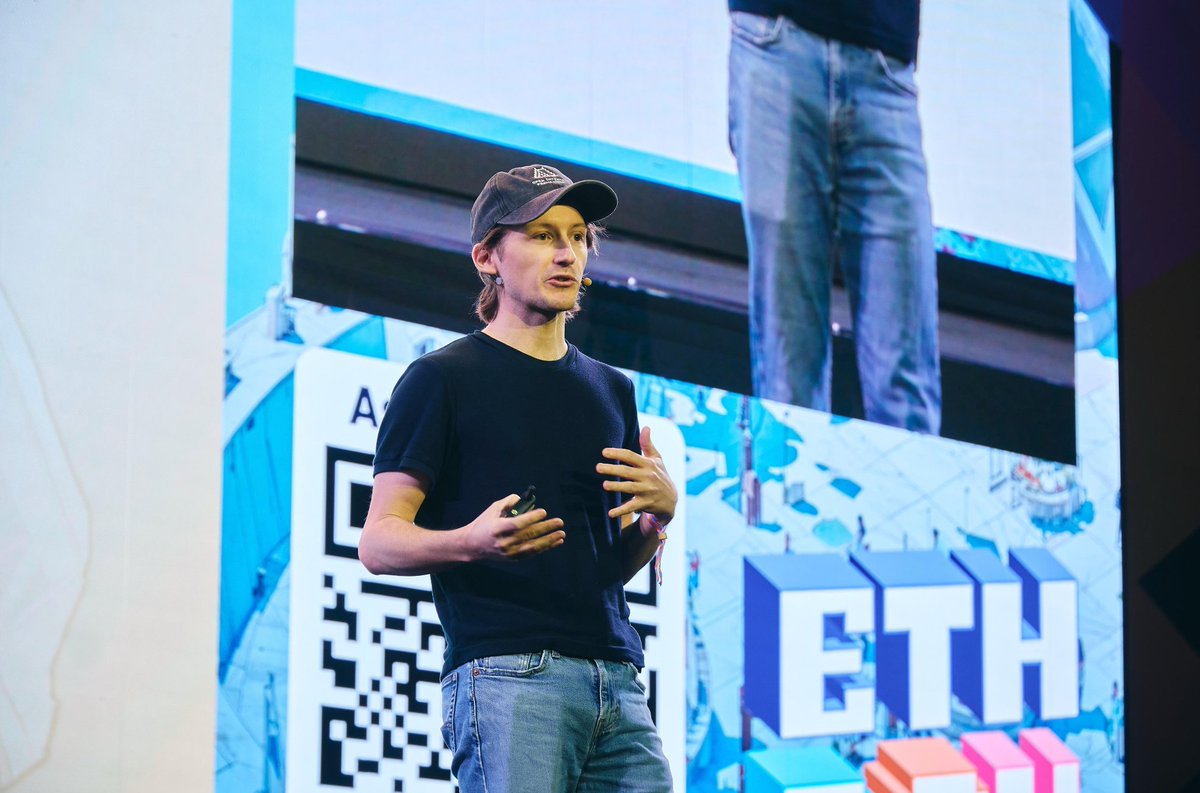
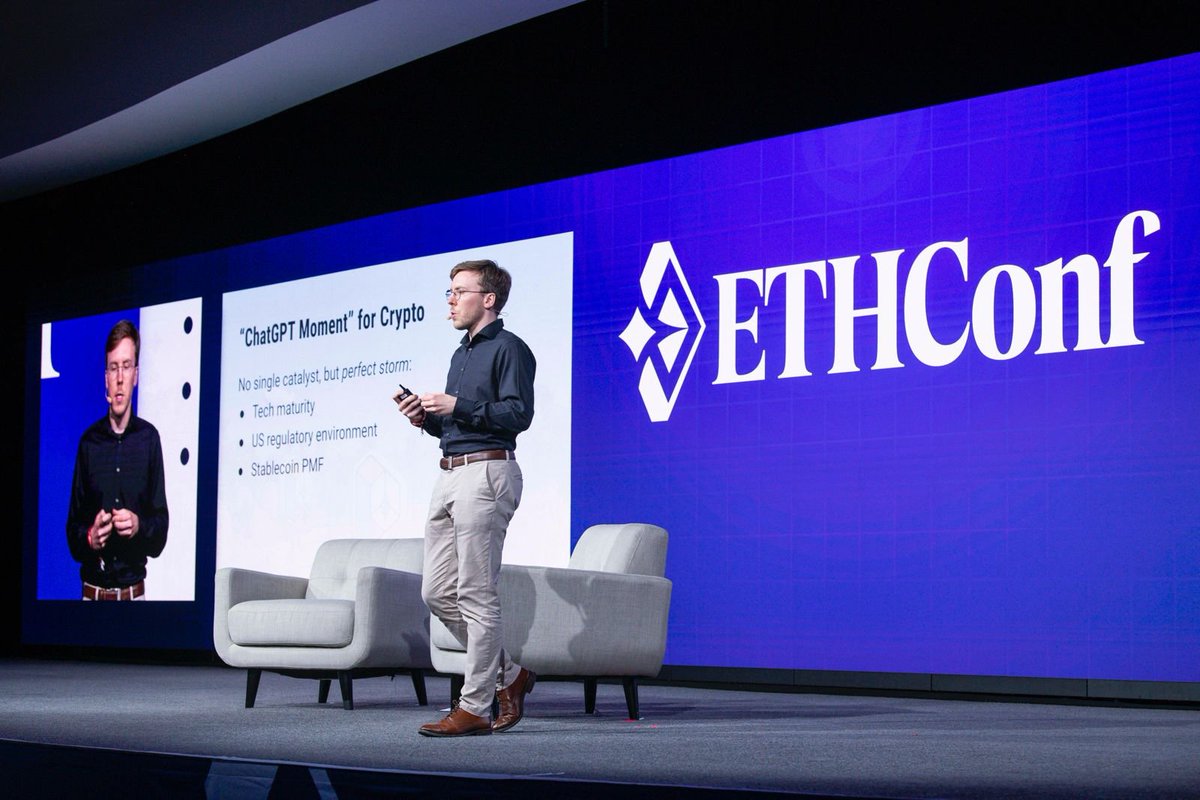
"I really think Ethereum's best time is yet to come."
The first decade of smart contracts was about building the infrastructure. The decade of real-world adoption has started, and Ethereum's role has to change with it.
@adietrichs of @ethereumfndn on the Main Stage at ETHConf.

5
24
199
6,974

Base Azul is active, and Base is now multi-proof!
State proposals can be backed by two proof types: either an AWS Nitro TEE attestation or a Succinct SP1 ZK proof. TEE proposals are whitelisted, while SP1 proof submission is permissionless.
Mechanics 🧵 👇

Base Azul is officially live on mainnet
This upgrade makes Base even faster and more secure
Making it ready to be the home of global finance
4
10
76
5,761
barnabe.eth retweeted

Jun 5
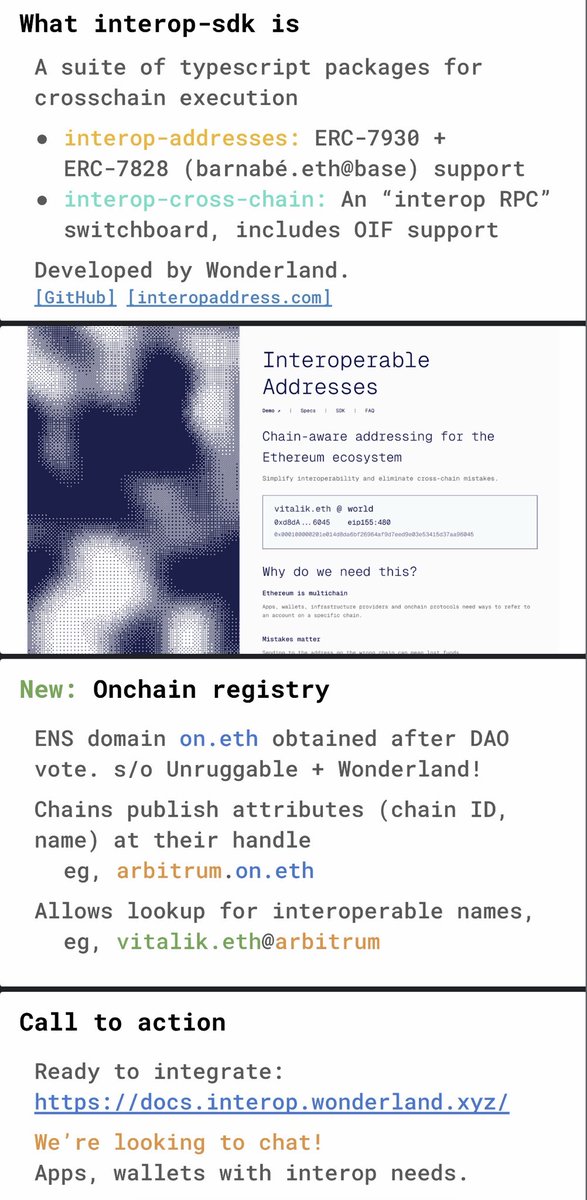
Introducing the cross-chain module of the interop-sdk: Move value across blockchains, seamlessly.
6
18
51
6,856
barnabe.eth retweeted

🎙️ going live again today on slopcomputer!
🐋 this time with @0xrcinus from @Wonderland x.com/i/broadcasts/1AGRnnYle…
10
13
54
2,795
barnabe.eth retweeted

May 29
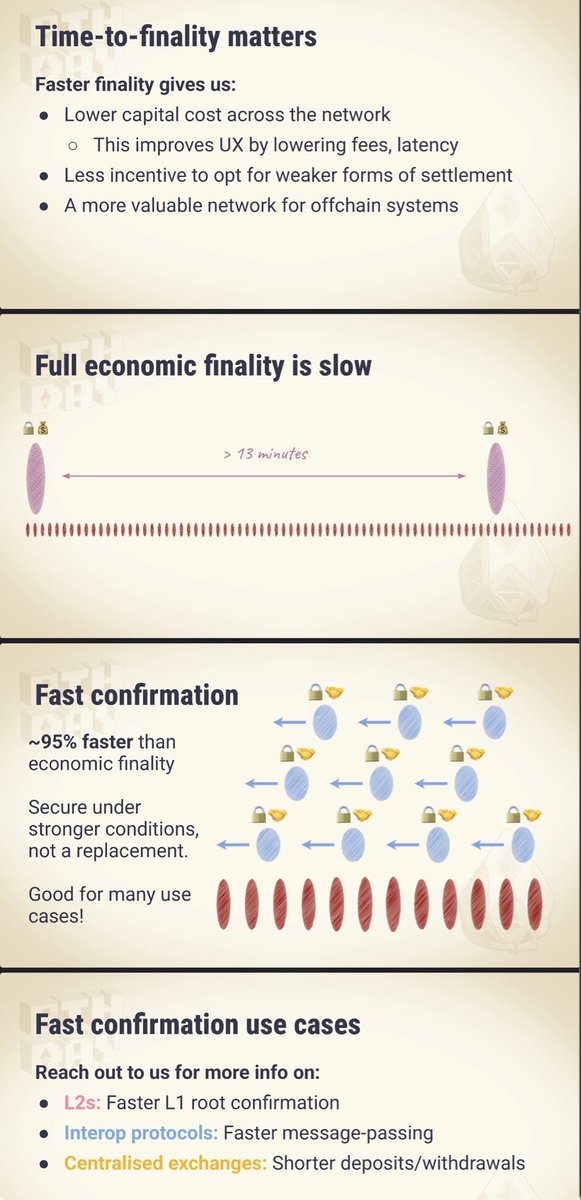
Ethstaker will have Community Call #66 to talk about Fast Finality!
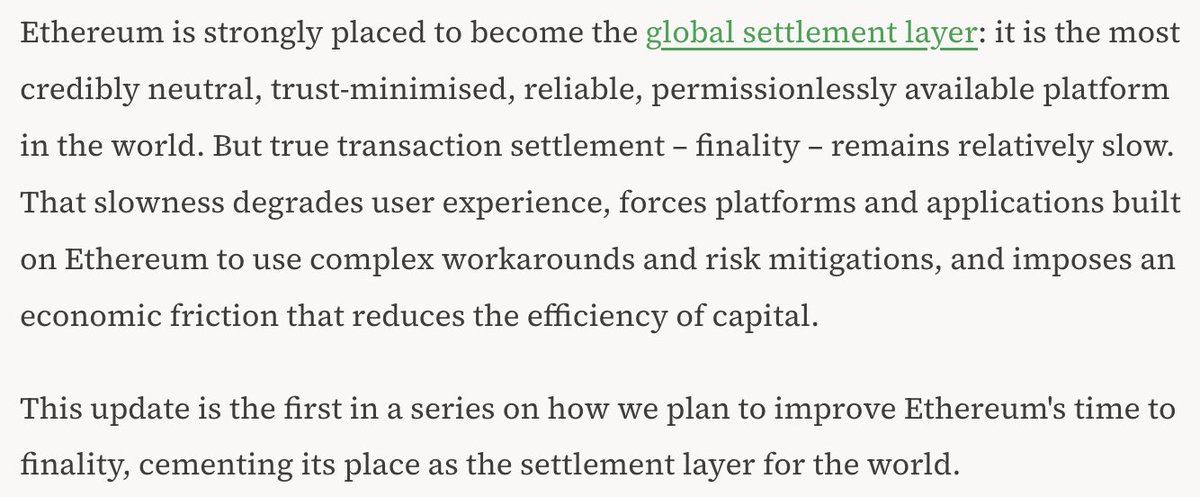
Why does finality matter and what does slow finality cost stakers today? What's being done about it?
We'll have @benjaminion_xyz, @robsaltini, @Butta_eth, and others.
When: Wednesday June 3 @ 15:00 UTC
Tune in and ask questions in the chat!
Youtube link in next tweet
2
7
16
2,198


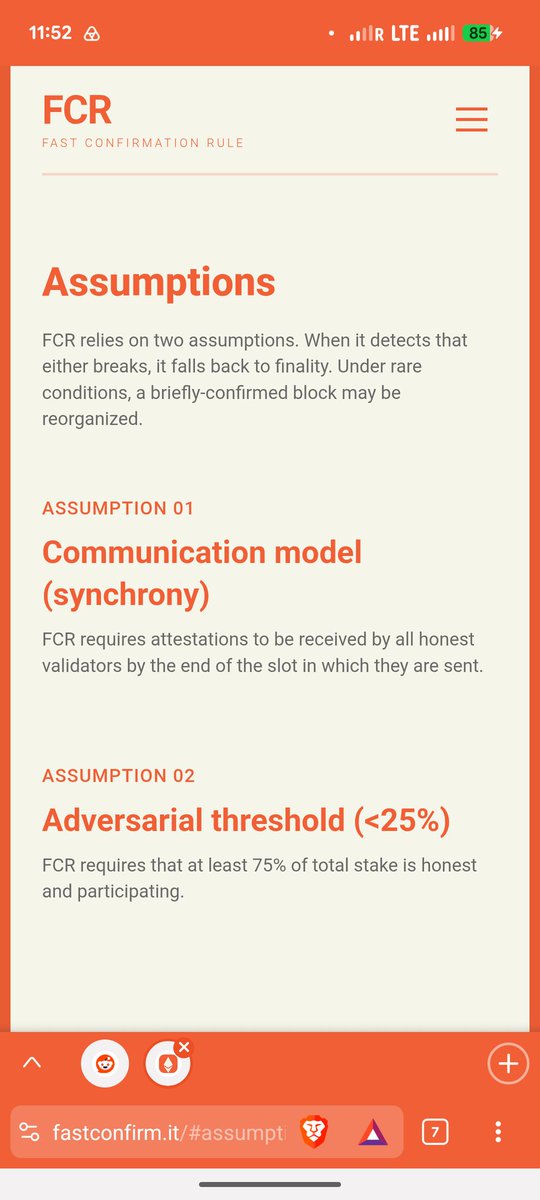
Not surprising that there's no safety violations, safety assumptions are very minimal, by design: we accept strong assumptions for liveness and latency (96% of the time conf time is 1 slot, the network works *really* well!) for very strong safety guarantees
May 29

We built a simulator for the fast confirmation rule, and replayed a years worth of blocks and attestations on Mainnet.
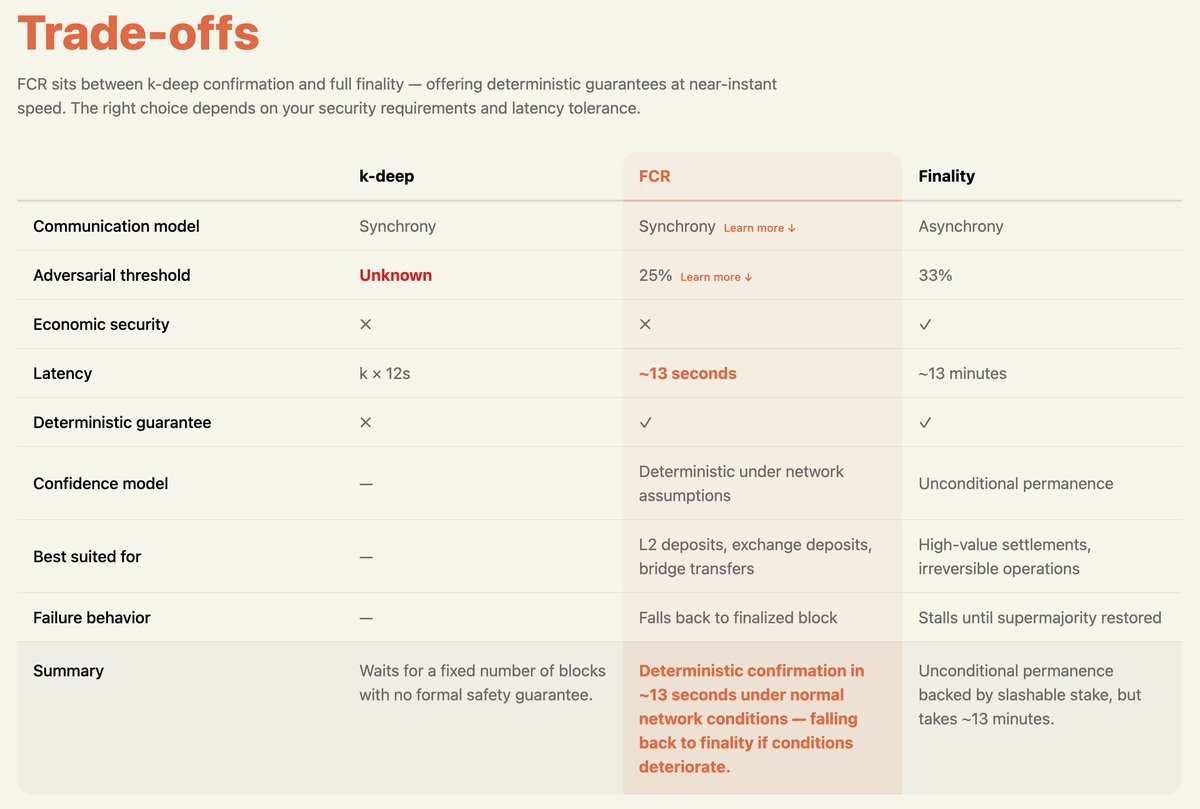
Across 800,000 mainnet slots, roughly 96 out of every 100 slots would have been fast-confirmed within 12 seconds.
Zero false confirmations.
Read more below!
1
3
19
1,963
May 29
A year of backtesting for the Fast Confirmation Rule confirms (!) that:
- 96% of past blocks would have been fast-confirmed in a single slot. This could mean deposits from Ethereum to L2s or CEXes available in about 12 seconds!
- The remaining 4% are usually confirmed fast too, usually much faster than other, less secure confirmation rules such as k-deep confirmations
- No false confirmation is ever issued
Client implementations continue 🫡
May 29
We built a simulator for the fast confirmation rule, and replayed a years worth of blocks and attestations on Mainnet.
Across 800,000 mainnet slots, roughly 96 out of every 100 slots would have been fast-confirmed within 12 seconds.
Zero false confirmations.
Read more below!
6
19
179
9,603
May 28
With multiproofs, withdrawal times are reduced by up to 7x from Base to L1! A step towards more seamless interop across Ethereum.
Base Azul is officially live on mainnet
This upgrade makes Base even faster and more secure
Making it ready to be the home of global finance
2
9
88
5,056
barnabe.eth retweeted

May 27
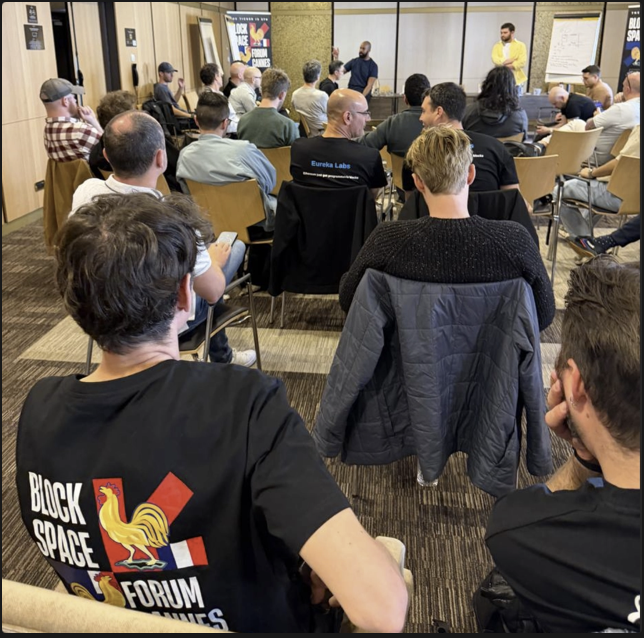
1/ Today, Ethereum's PBS market is limited by structural gaps. The Blockspace Forum exists to address them. This post (links to follow) presents an initial design of Multi-Party Block Construction (MPBC), which builds on a year of workshops and conversations across Ethereum.
5
19
55
8,480
May 26
Expanding the 8211 smart batching stack!

Introducing Smart Batching SDK
Every batched tx today has the same hidden flaw:
every parameter is frozen at signing time. Blind to chain state.
That's why "swap → supply" reverts on a 0.0001 WETH mismatch. Why "send everything" leaves dust. Why cross-chain UX is so painful.
ERC-8211 fixes that. And it just got a TypeScript SDK.
1
1
14
2,522
May 26
Revisit some thoughts on 8211 in an agentic world
Apr 8

Excited to present ERC-8211, an effort led by @biconomy and supported by our Improve UX track!
Smart batching fills a gap between users, agents and complex onchain execution, including crosschain execution.
---
In our interop work, we've identified three layers of functionalities:
- Representation: A crosschain action is made machine-legible via some structure, eg., an array of calls à la ERC-5792 or an intent ("I want X").
- Orchestration: Particularly in asynchronous settings, actions are composed with multiple steps. Some entity is required to trigger these calls at the right time, in the right place and with the right inputs.
- Liquidity/message-passing: Moving liquidity crosschain is the goal of intent-based bridges. More generally, passing messages, beyond just value, is the critical building block of crosschain actions.
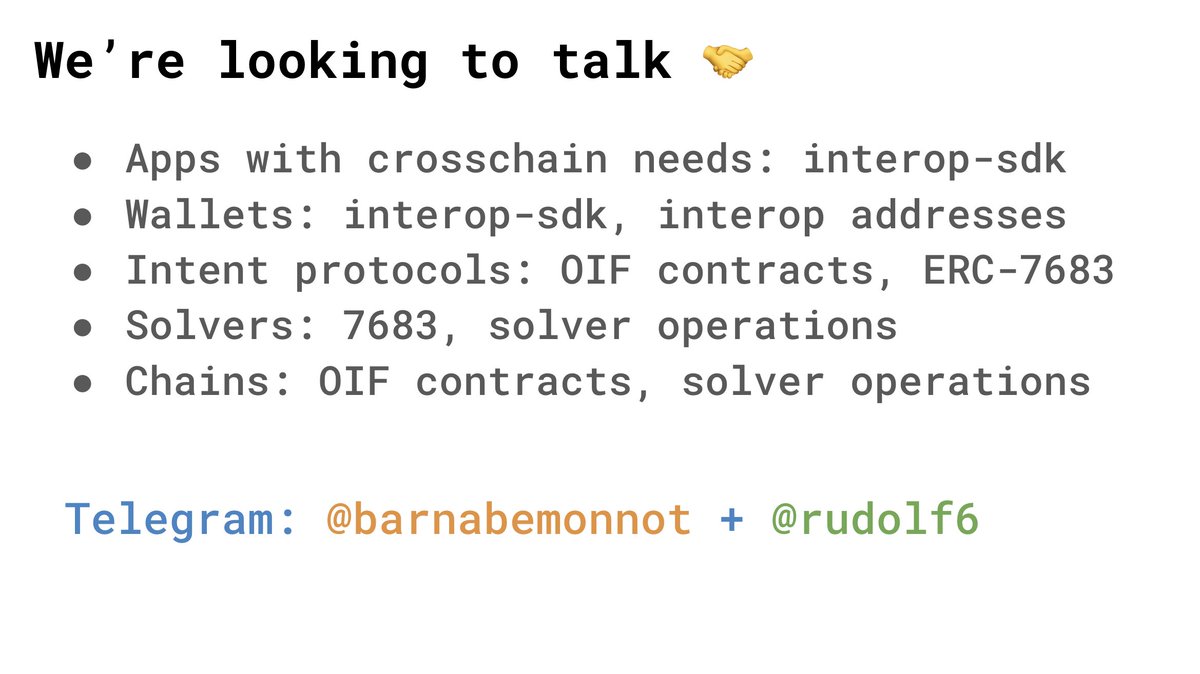
We've been working on the liquidity layer with Open Intents Framework. The framework provides standard, secure and modular components towards instantiating a common marketplace for fast liquidity.
Meanwhile, orchestration may be delegated away, with another party taking on the duty to solve an intent or triggering the right calls. However, with the rise of personal agents, it is much more viable for the user to represent and control the orchestration of their complex crosschain actions, via their agent.
---
Enters ERC-8211. Smart batching represents execution to make it:
- Sufficiently concise for user-friendliness, unlocking the excellent UX of a single signature for many operations
- Sufficiently flexible for agent-friendliness, with dynamic values obtained during runtime, and predicates gating execution as it happens, for further user security
Smart batching is also friendly to composition with different accounts and different bridge models. This means using secure account and bridge primitives, safety is preserved even as the agent vibes its way through bigger smart batches with more complex steps.
---
This is an invitation then to build new ways of interacting onchain and crosschain, with agents as guides and smart batching under the hood. Find more details in the linked post and on erc8211.com/
2
912
barnabe.eth retweeted

May 26
LI.FI Intents is the Open Intents Framework, in production, at scale 🤝

8
42
2,132
May 26
Exciting to see the Open Intents Framework mature with new products that are ready for broad adoption!
May 26

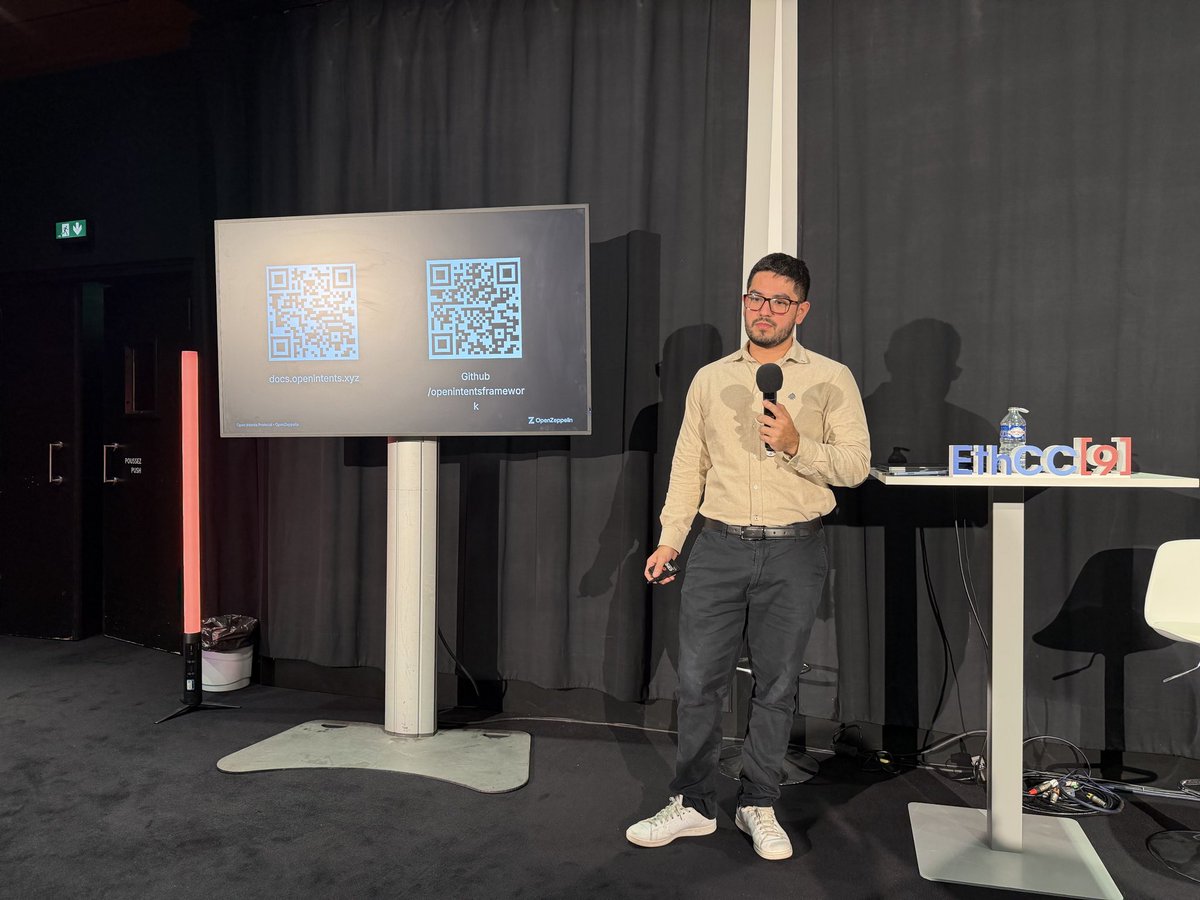
The Open Intents Framework is designed as shared infrastructure for intents.
A modular, open framework that the ecosystem can build intents on, together.
Today, it takes its next step: adoption at scale.
6
4
83
5,931
May 26
Nice outlook by @rudolf6_ here x.com/rudolf6_/status/205931…
May 26

the OIF connects all chains seamlessly & securely
Been cooking for over a year. Now the OIF is hitting adoption at scale, thanks to teams like @lifiprotocol and many others
The future is:
- Ethereum L1 for asset issuance
- Canonical bridges for secure transfers across chains (using ZK)
- Intents for ultra fast transfers
- Sync composability for using assets/apps across chains without transferring at all
Next up: plugging more trustless settlement mechanisms into OIF
Anyone can contribute! DMs open. And openintents.xyz for more info
10
852
barnabe.eth retweeted

May 26
Introducing LI.FI Intents.
Infrastructure for apps, wallets, and neobanks to:
• Enable stablecoin payments
• Access real-world assets
• Tap into compliant onchain liquidity
Built for enterprises bringing financial products onchain.
306
1,151
2,212
797,548
May 26
The frame transaction universe expands with a new EIP 👀
May 26

New EIP-8272: Recent Roots for Frame Transactions
by @soispoke, @nero_eth and @VitalikButerin
Another EIP to enable native, trustless, censorship-resistant privacy on Ethereum.
tldr: Private transactions on Ethereum often need to prove against a recent commitment tree root. This EIP lets a FrameTx carry that root directly in its signed envelope.
The protocol checks that the root was written onchain for the referenced slot and is still inside the usable window. This means validation can use the root without reading arbitrary application storage.
The goal is to help private transactions get FOCIL inclusion guarantees by making recent roots part of the partial state attesters will store after the transition to zkEVM.
Target fork: Hegota
Links below 👇
33
4,977
May 22
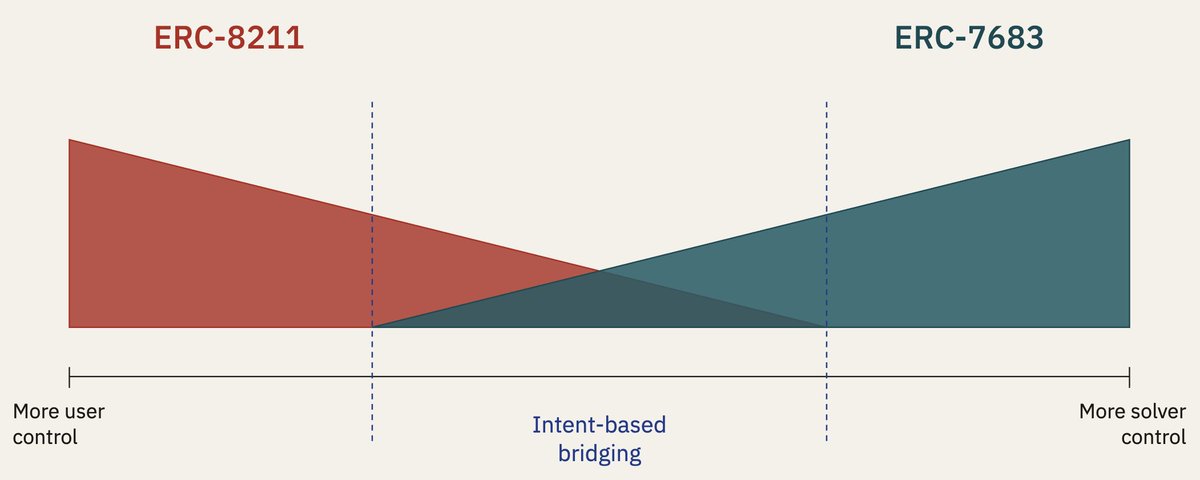
Wanted to give my own thoughts on the interplay between ERC-8211 smart batching and ERC-7683 programmable solvers.
My mental model is pictured below: Expressing user-controlled execution vs solver-controlled steps, meeting in the middle for liquidity transfers over intent-based bridges.
Take a complex crosschain action:
1. Swap USDC for ETH on Arbitrum
2. Bridge ETH from Arbitrum to L1
3. Deposit ETH into a vault
More or less of these steps can be delegated to a solver, encoding conditions for them using 7683's language.
Otherwise, it's also possible for a user to write these as a batch of calls, and with ERC-8211, add smarter features to the batch such as onchain predicates gating execution, as well as dynamic values injected at runtime (eg, using the exact output of a previous call to feed into a following call, avoiding dust).
The one irreducible case where both 8211 and 7683 may come into play: The user wishes to bridge their assets using an intent-based bridge, while controlling the execution happening before and after the bridge (steps 1 and 3 above).
For this intent-based bridging step, the user must find a solver to front funds on the other side, and so cede control to this solver temporarily to make the funds appear, before resuming execution. ERC-7683 encodes the order for liquidity, that provides a shared type legible to 7683-compliant solvers, making the market wider and liquidity deeper.
ERC-8211 🤝 ERC-7683
3
8
60
8,622
barnabe.eth retweeted

May 21
Open standards are how the @ethereum ecosystem moves forward.
We are proud to have collaborated with the @ethereumfndn Platform team to build the Open Intents Framework core components: solver, broadcaster, and APIs.
All open-source and fully audited ↓
openintents.xyz/
18
41
99
30,729