
WWII battlefield guide based in The Netherlands. I lead tours across Europe, sharing the stories of the men who fought, where they fought.
Joined January 2010
- Tweets 3,198
- Following 300
- Followers 10,391
- Likes 10,440
2,228 Photos and videos
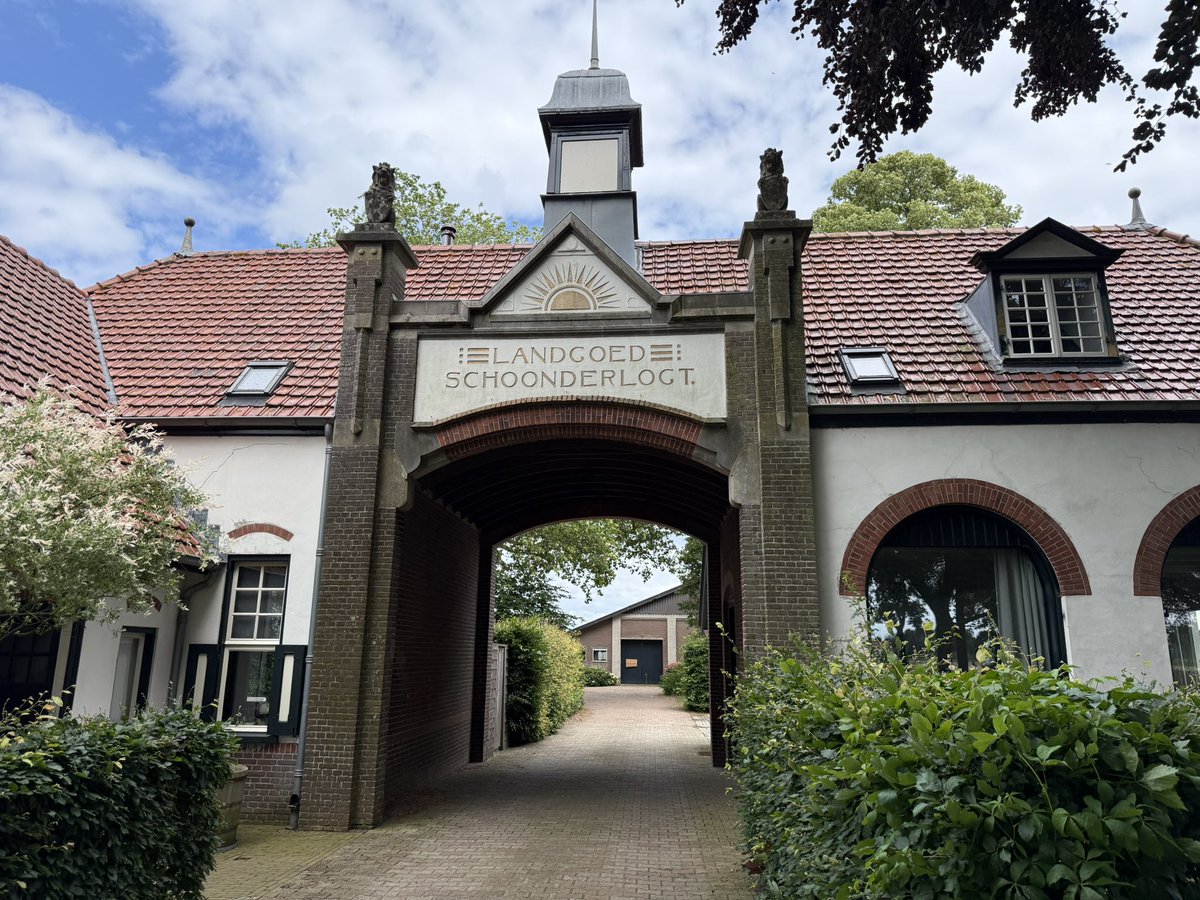

That gate is one of the most reproduced backdrops in the 506th’s story. Captain Dick Winters was photographed under it in the autumn of 1944, by then executive officer of the 2nd Battalion, 506th Parachute Infantry Regiment. Their headquarters was here at Schoonderlogt, near Elst, while the 101st Airborne held the Island between the Rhine and the Waal. The estate is still private. I brought a National WWII Museum group to the spot today.
6
98
3,481
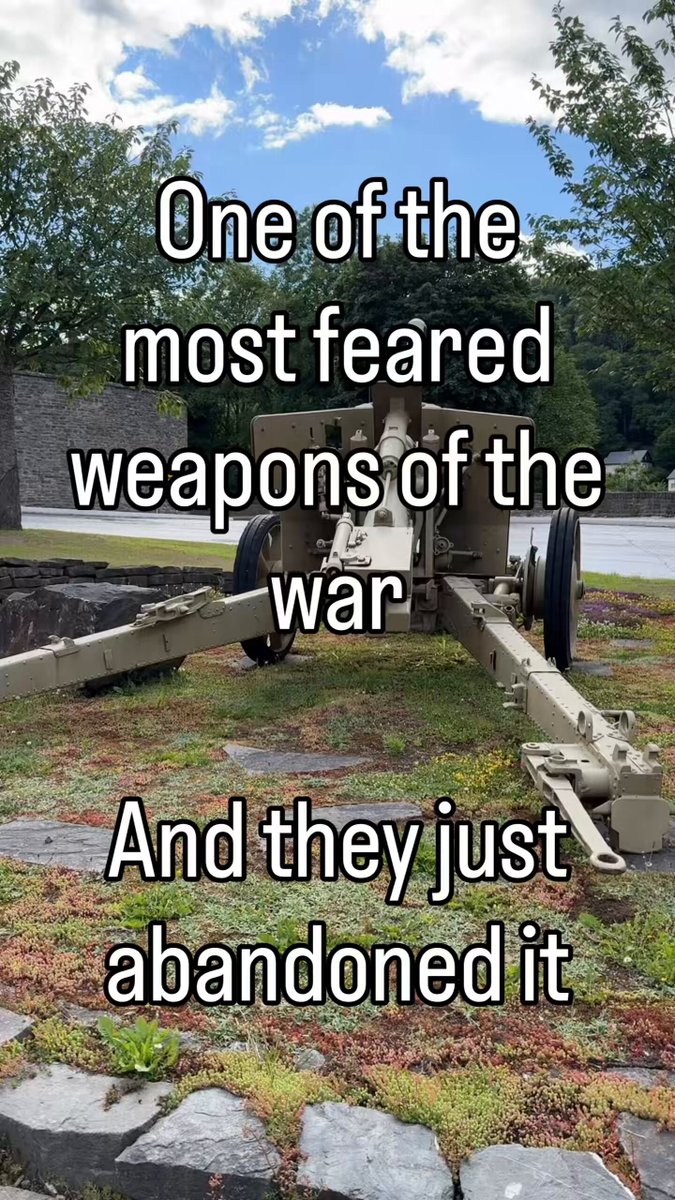
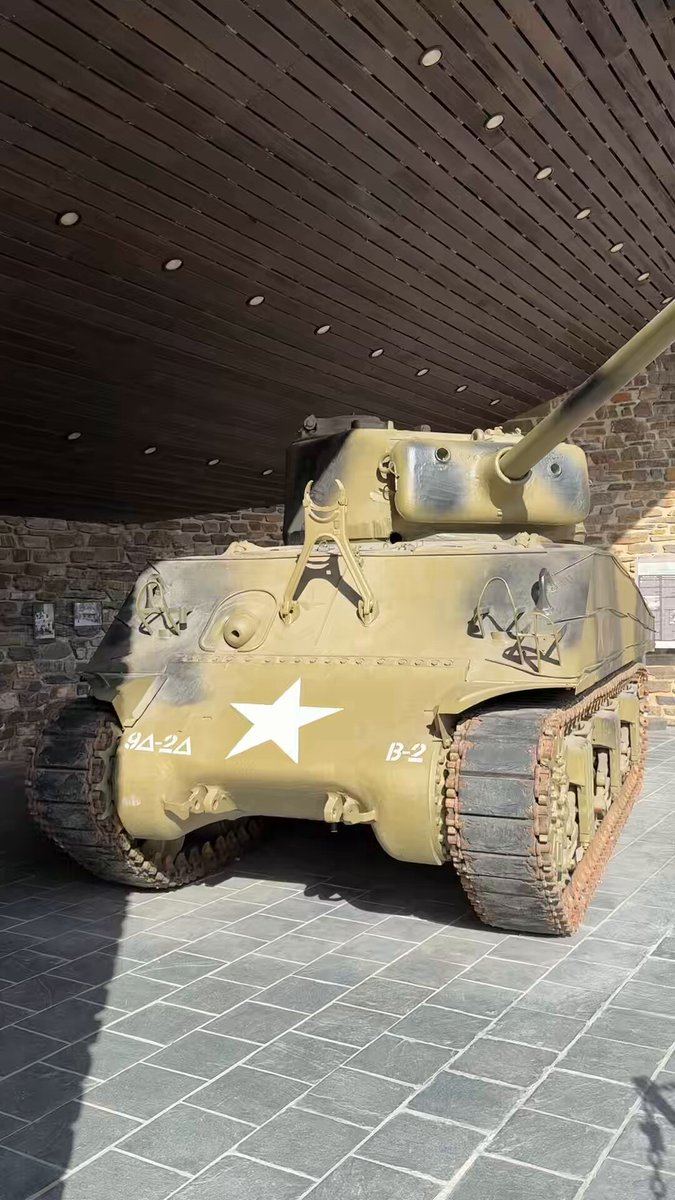
One of the most feared weapons of the war. The crew didn’t blow it up. They just walked away. Clervaux, 1945.
6
16
344
33,508
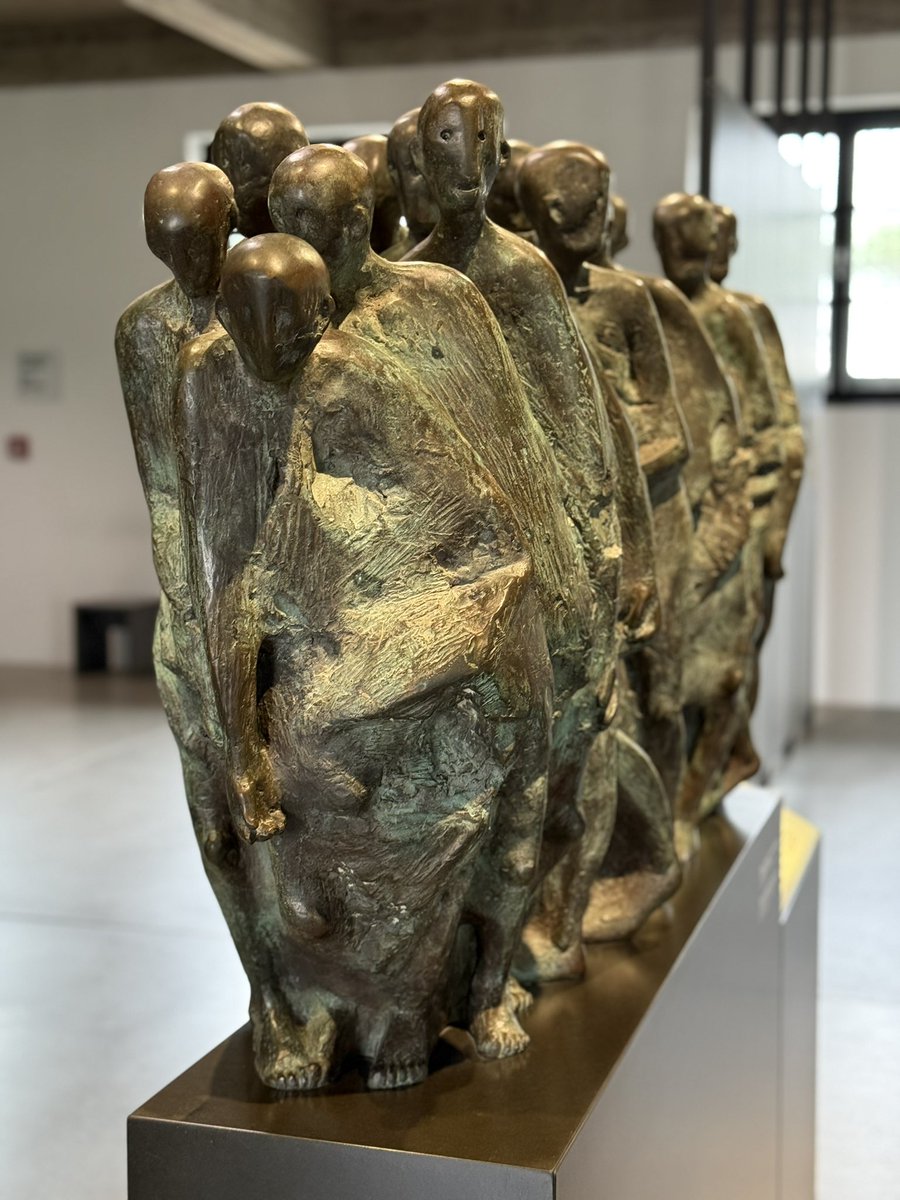
Twenty-two identical bronze figures stand along one route through Bavaria. Each marks ground the Dachau prisoners crossed in the last days of the war. This cast is inside the camp itself, where the march began on 26 April 1945. The SS forced almost 7,000 prisoners south towards Tegernsee. The sculptor, Hubertus von Pilgrim, made a single huddled figure and let the repetition do the work. More than a thousand never reached the end of the road.
We visited the site today with the National WWII Museum.
1
16
753
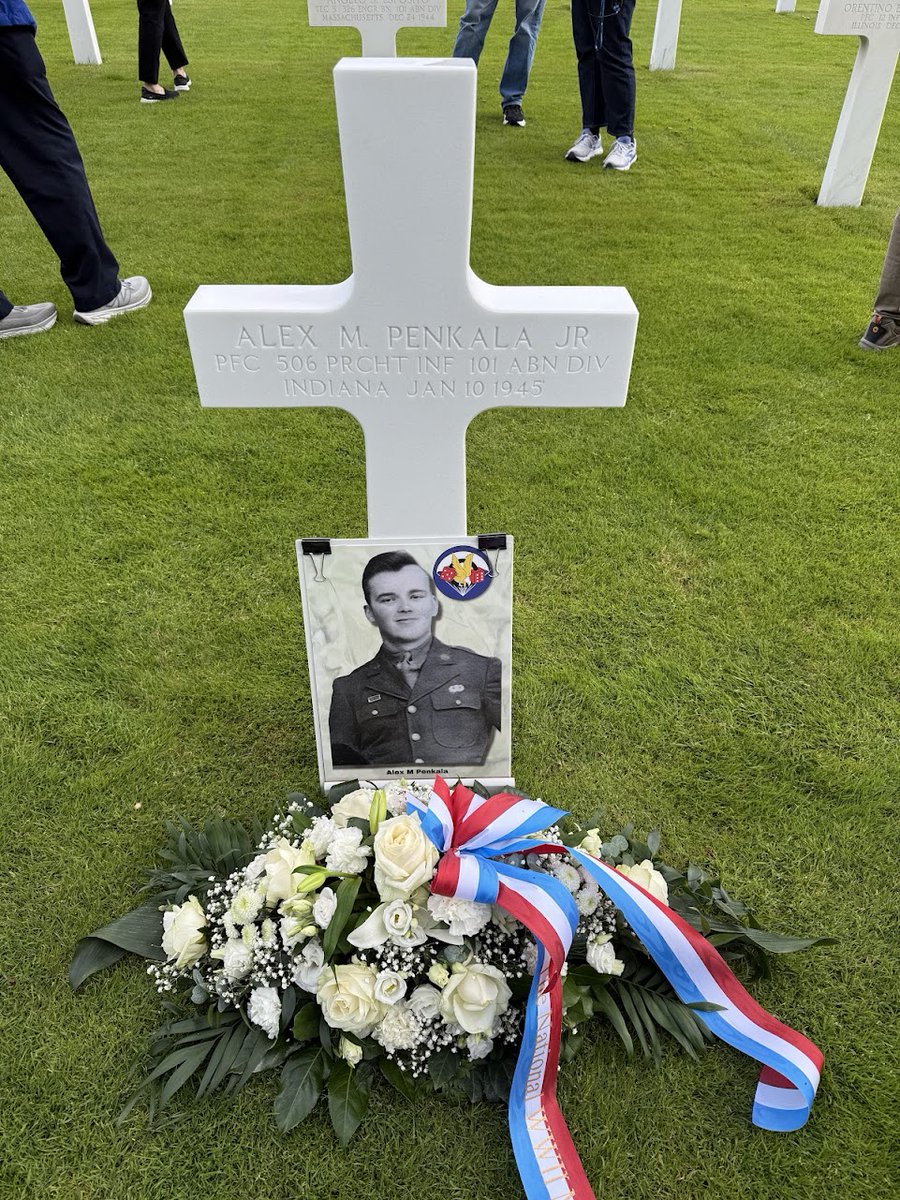
He wrote home from the Netherlands to say everything was fine. It was the last letter his family received. Alex Penkala Jr. had jumped into the Netherlands with Easy Company during Operation Market Garden. In Eindhoven, a girl remembered him signing her ration book.
Weeks later, on 10 January 1945, a German shell struck his foxhole in the woods near Foy. He and his friend Skip Muck were killed instantly. Penkala was twenty. He is buried at the Luxembourg American Cemetery.
We visited his grave today with the National WWII museum Easy Company Tour
42
207
2,196
37,786
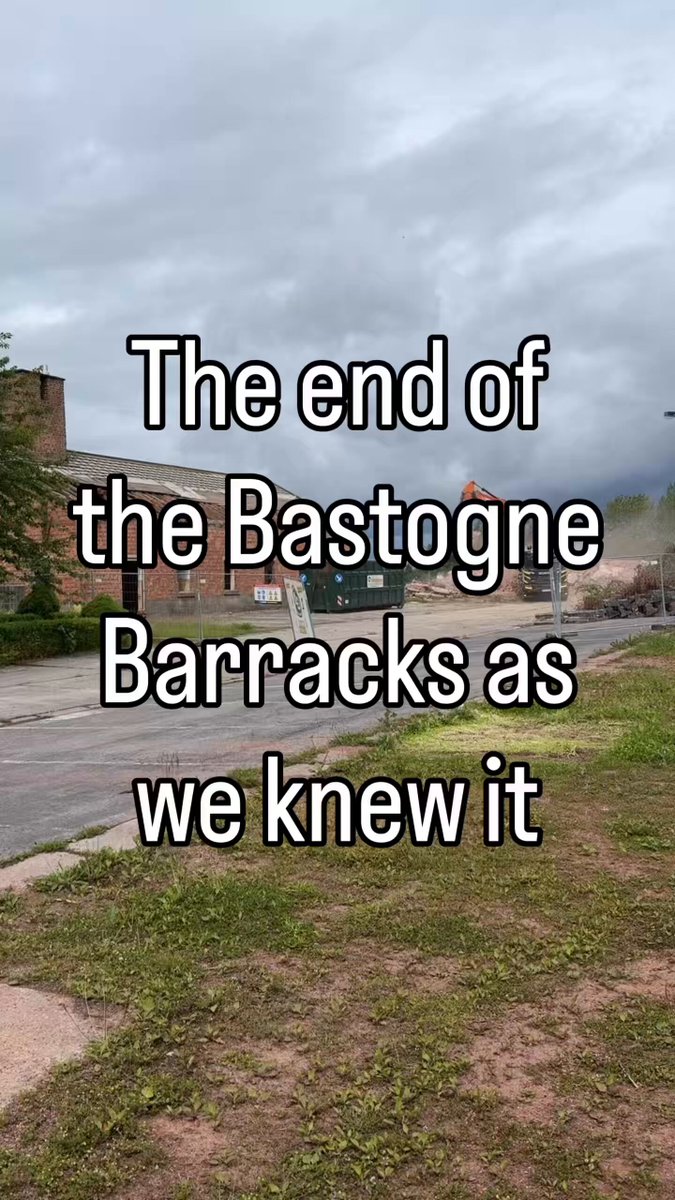
The end of the Bastogne Barracks as we knew it….
5
3
46
6,050
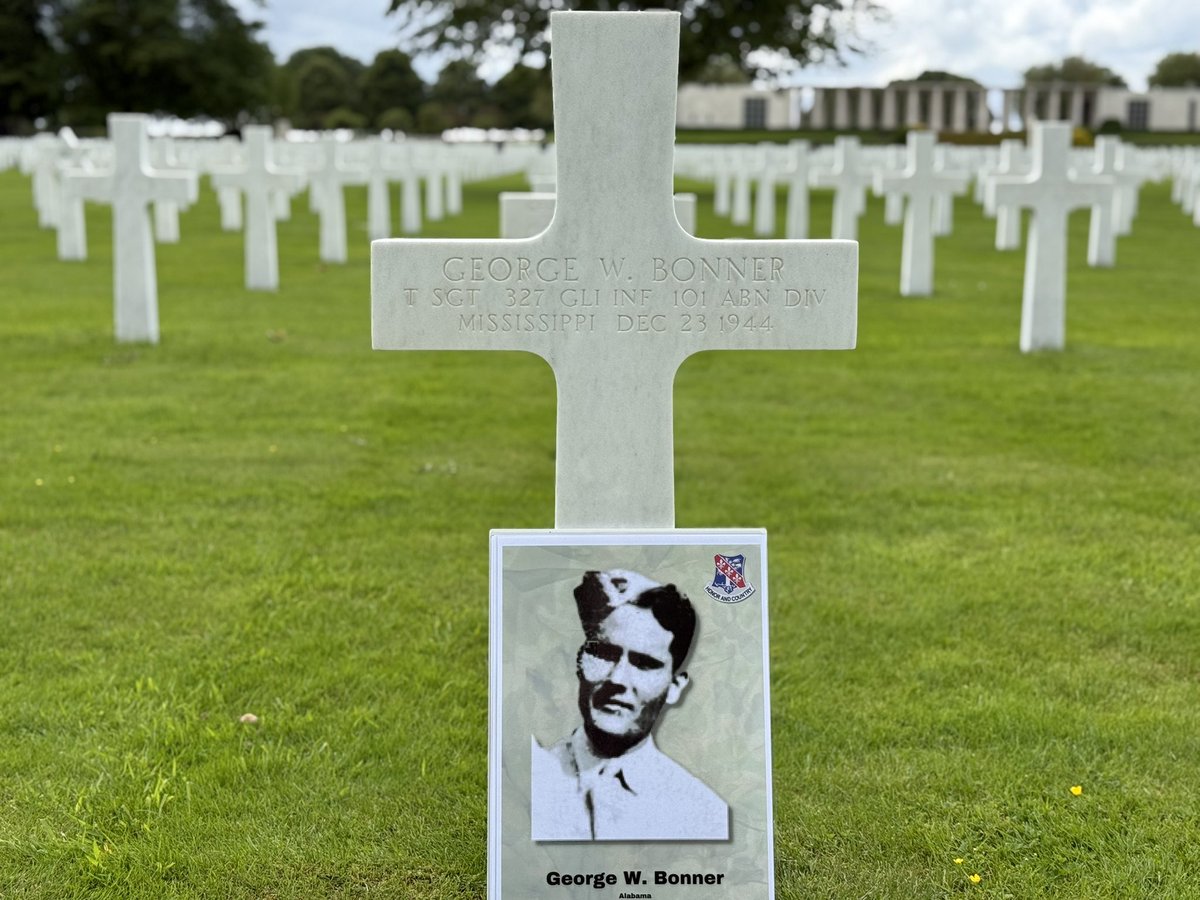
George W. Bonner
At Henri-Chapelle, a medic of the 101st Airborne lies in Plot H, Row 13. He could have walked back to his own lines. He chose to stay with the wounded, and the enemy took him.
George Bonner is my adopted soldier here. I tend his grave, and the groups I guide through the Ardennes stand at it with me.
He was a farm hand from the Alabama-Mississippi line who enlisted in August 1940, more than a year before Pearl Harbor. He was twenty. By the winter of 1944 he was a Technical Sergeant in the Medical Detachment of the 327th Glider Infantry Regiment, with a wife, Toy, at home.
On 23 December 1944, near Bastogne, German tanks and infantry overran Company C of the 3rd Battalion, 327th, and left many men wounded. Bonner and four other medics went out into the fire to reach them. They got most of the wounded into a nearby house. Then they were surrounded and captured. They could have slipped away. They did not.
Bonner was already hit, shell fragments in his thigh, arm and side. He died of those wounds in German hands on 26 December 1944, the day after Christmas. He was 24.
The German medical company buried him in the village cemetery at Asselborn, in Luxembourg, under a cross bearing his name, and returned his belongings, down to a comb and a photograph. After the war he was recovered, identified, and brought here.
7
35
331
4,152
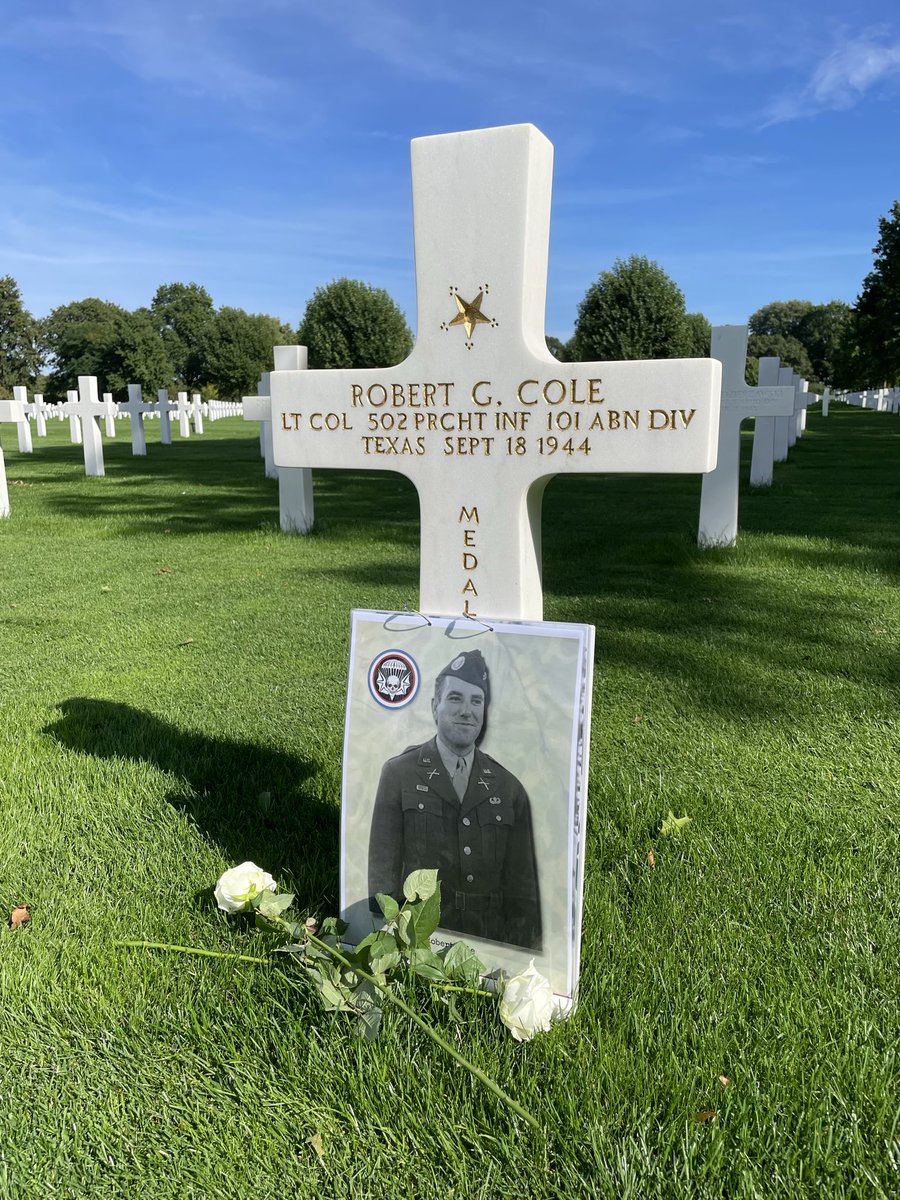
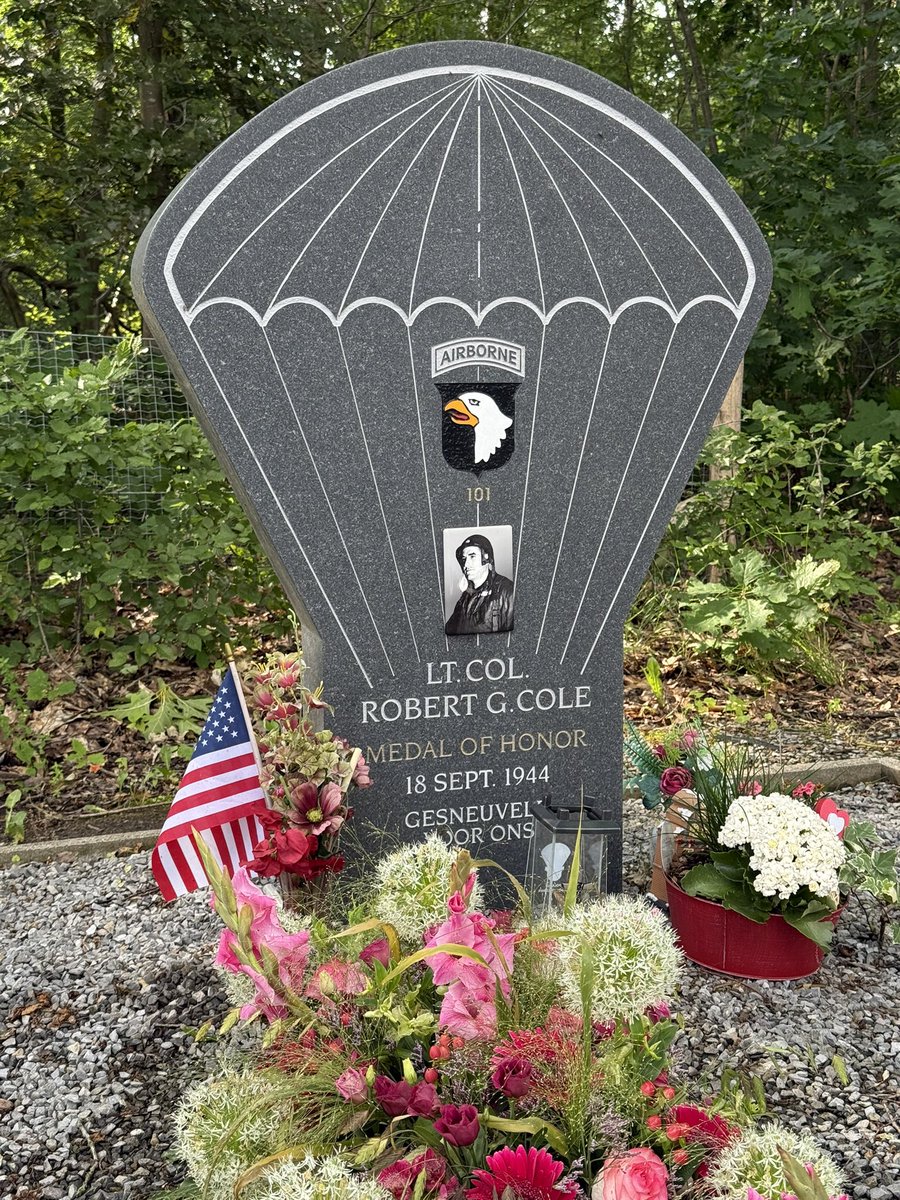
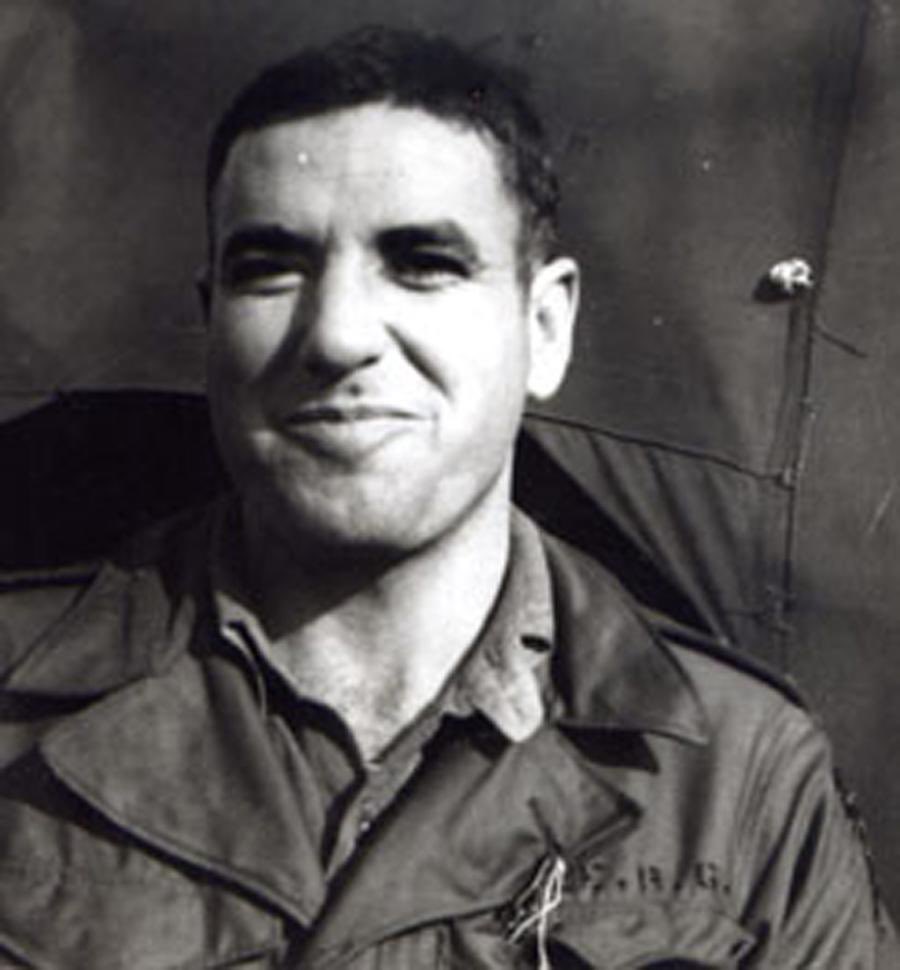
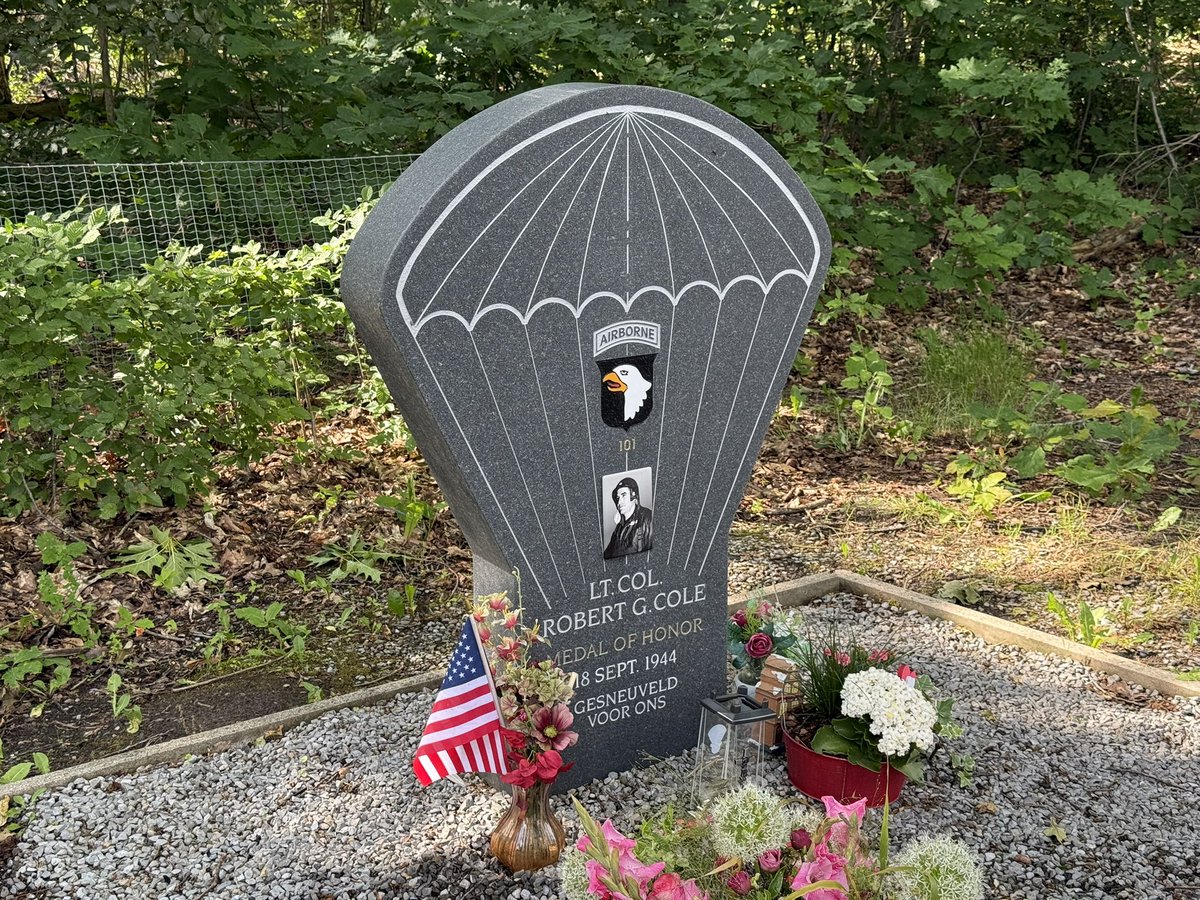
The 101st Airborne’s only Medal of Honor from Normandy went to a man who never lived to receive it.
9
52
1,113
41,707
On 18 September, P-47s were supporting the battalion. Word came to put out orange recognition panels on the ground, marking the line so the fighters stayed off his own men. Cole went out to set them himself. He raised his head to look for the plane, and a sniper in a farmhouse shot him. He was 29.
4
1
45
2,138
The medal came through two weeks later. His mother accepted it at Fort Sam Houston, on the parade ground where he had played as a boy.
38
1,606
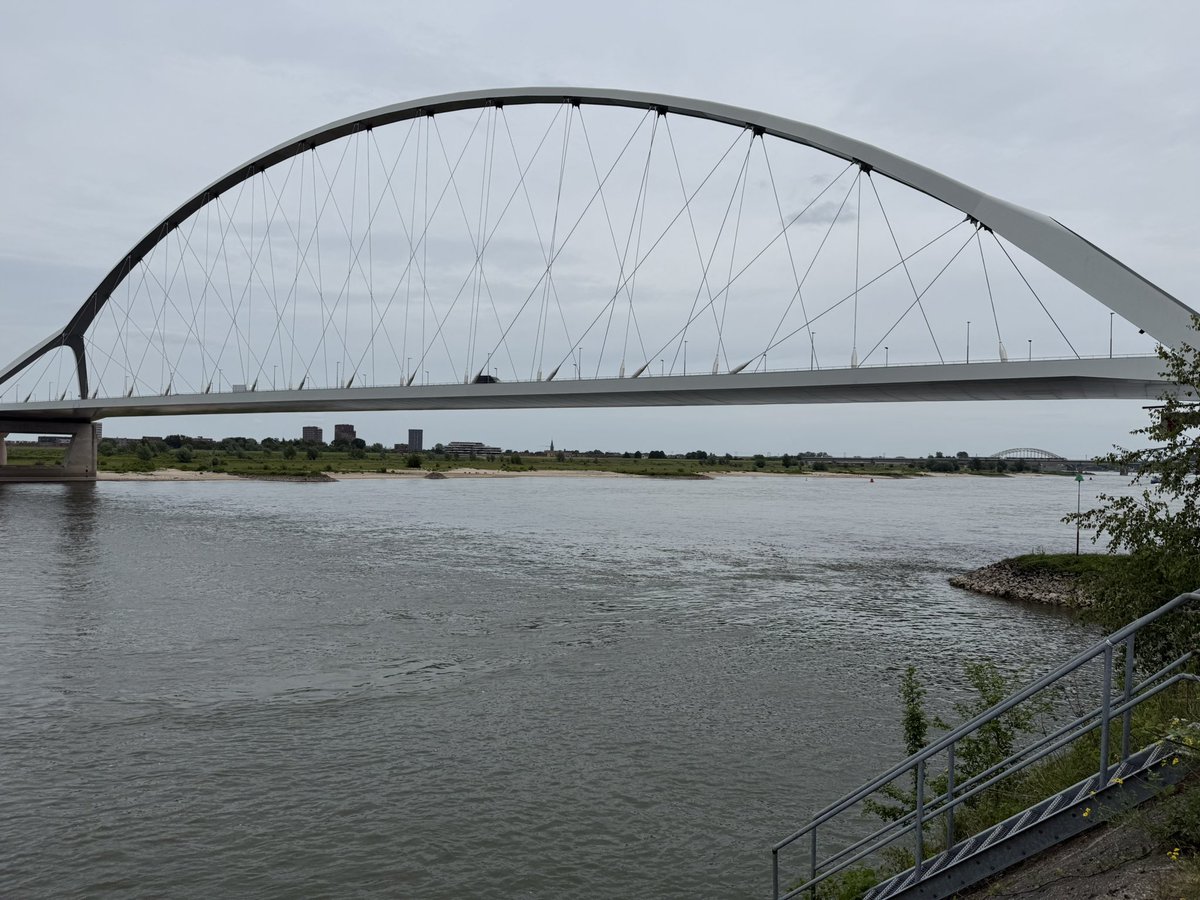
The lights on the De Oversteek bridge in Nijmegen are an artwork. Forty-eight pairs, installed when the bridge opened in 2013, one pair for each soldier killed in the Waal crossing. Every evening at sunset they come on in sequence, at the pace of a slow march, from the south bank to the north. The crossing they mark was made on 20 September 1944 by the 3rd Battalion, 504th PIR, in canvas boats, under German fire. The march has run every night since 19 October 2014. We visit it with the National WWII Museum on our Easy Company tour.
5
38
1,095
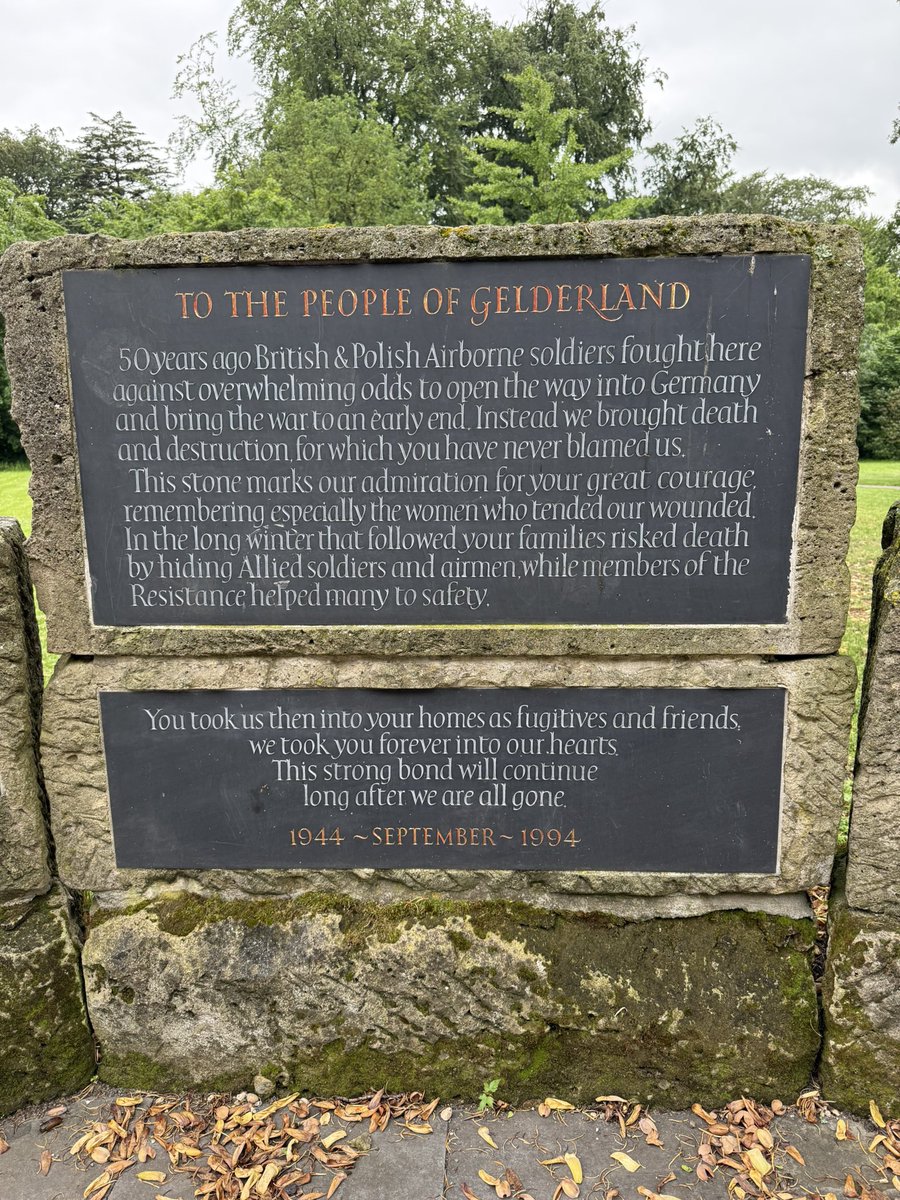
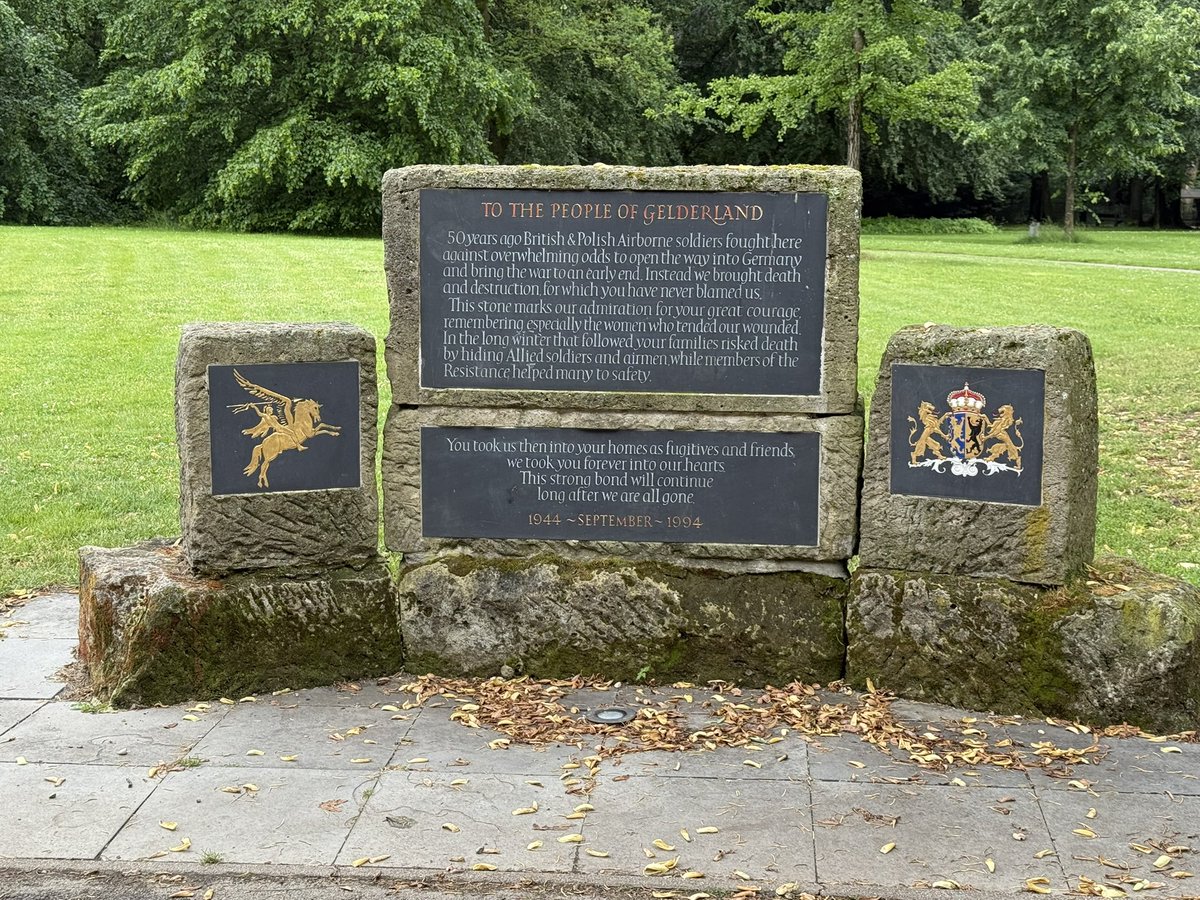
Most war memorials honour the men who fought. This one was written by those men, to thank the people whose towns got destroyed.
It stands at the entrance to the Airborne Museum Hartenstein in Oosterbeek, wartime headquarters of the British 1st Airborne Division.
1
8
89
1,945
British and Polish airborne veterans gave it to the people of Gelderland in September 1994, fifty years after the battle. They came to open the road into Germany. Instead, in their own words, they brought “death and destruction, for which you have never blamed us.”
I stopped here today with a group from Blackpool, back for a second day on the Market Garden ground.
1
22
635
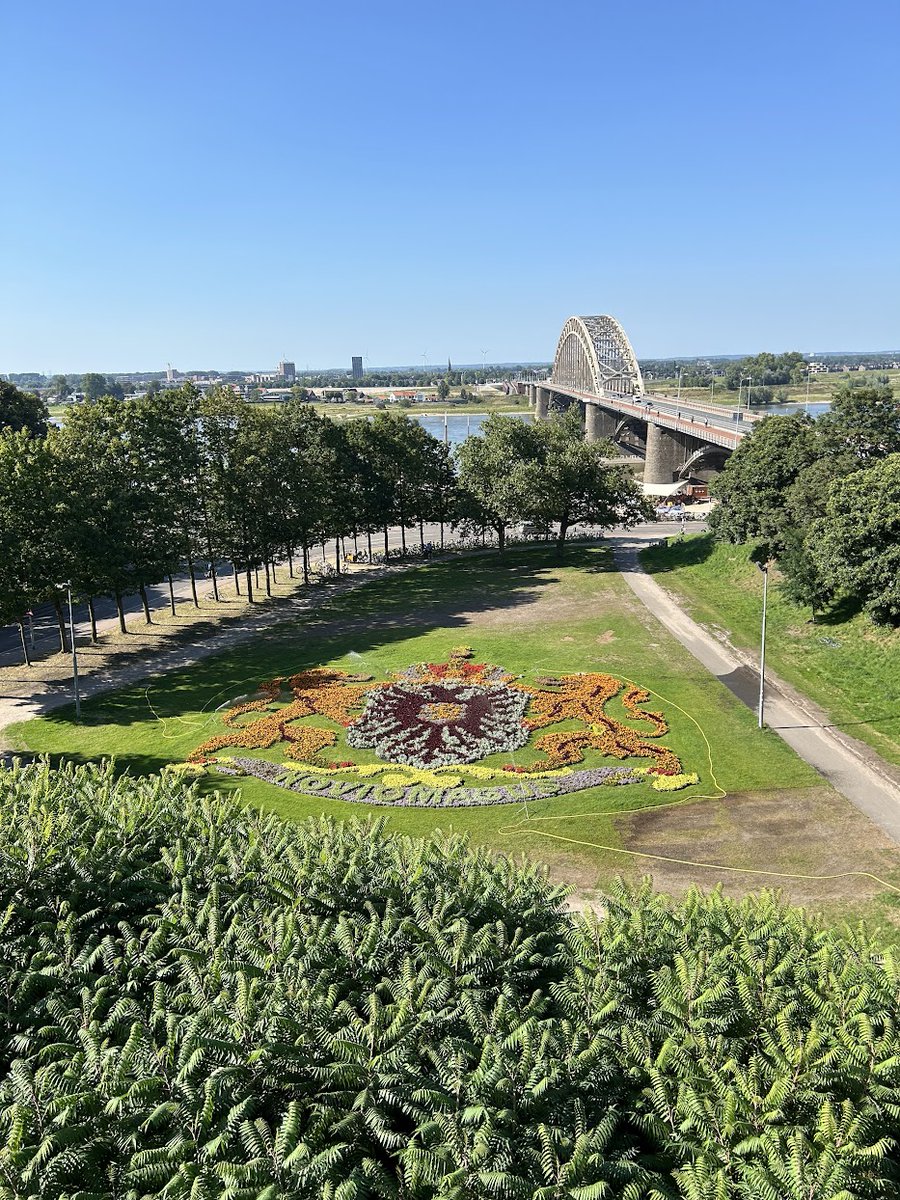
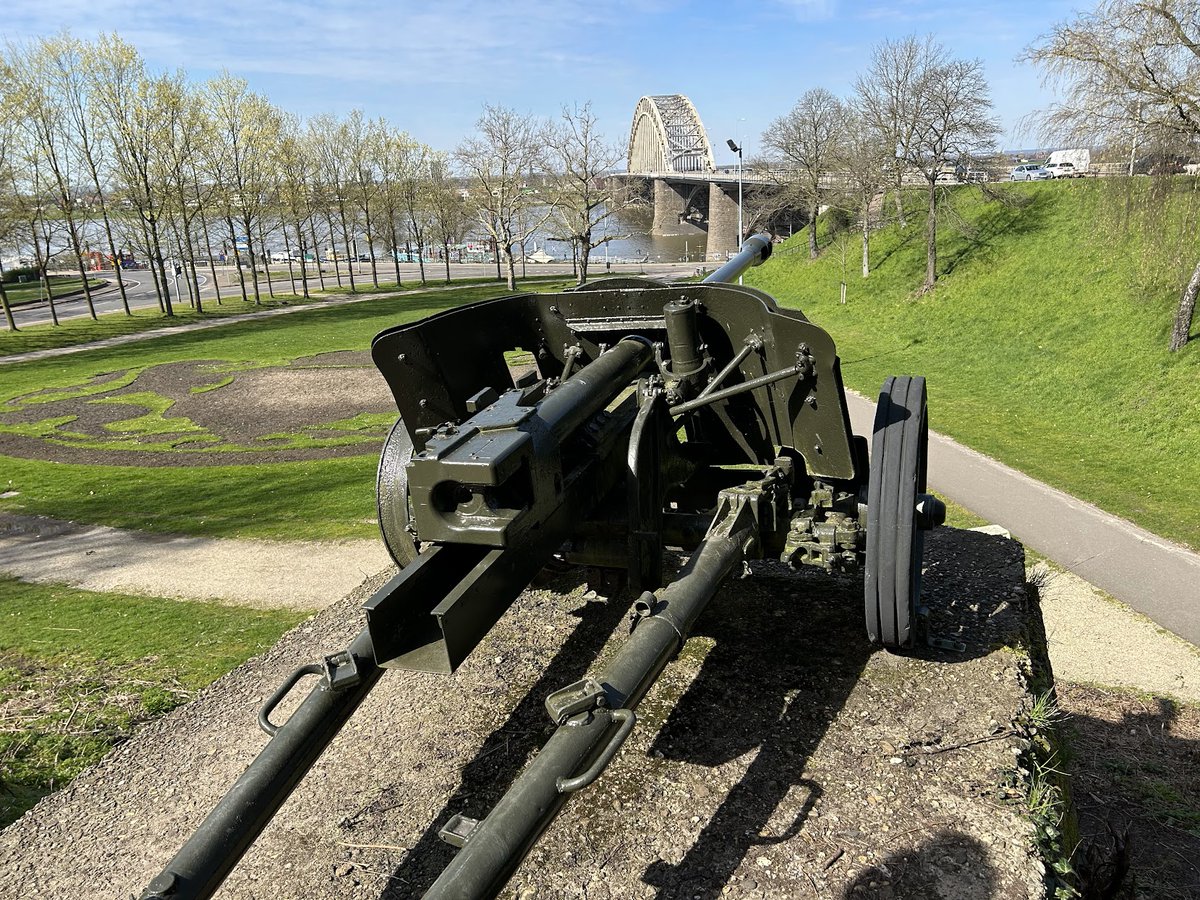
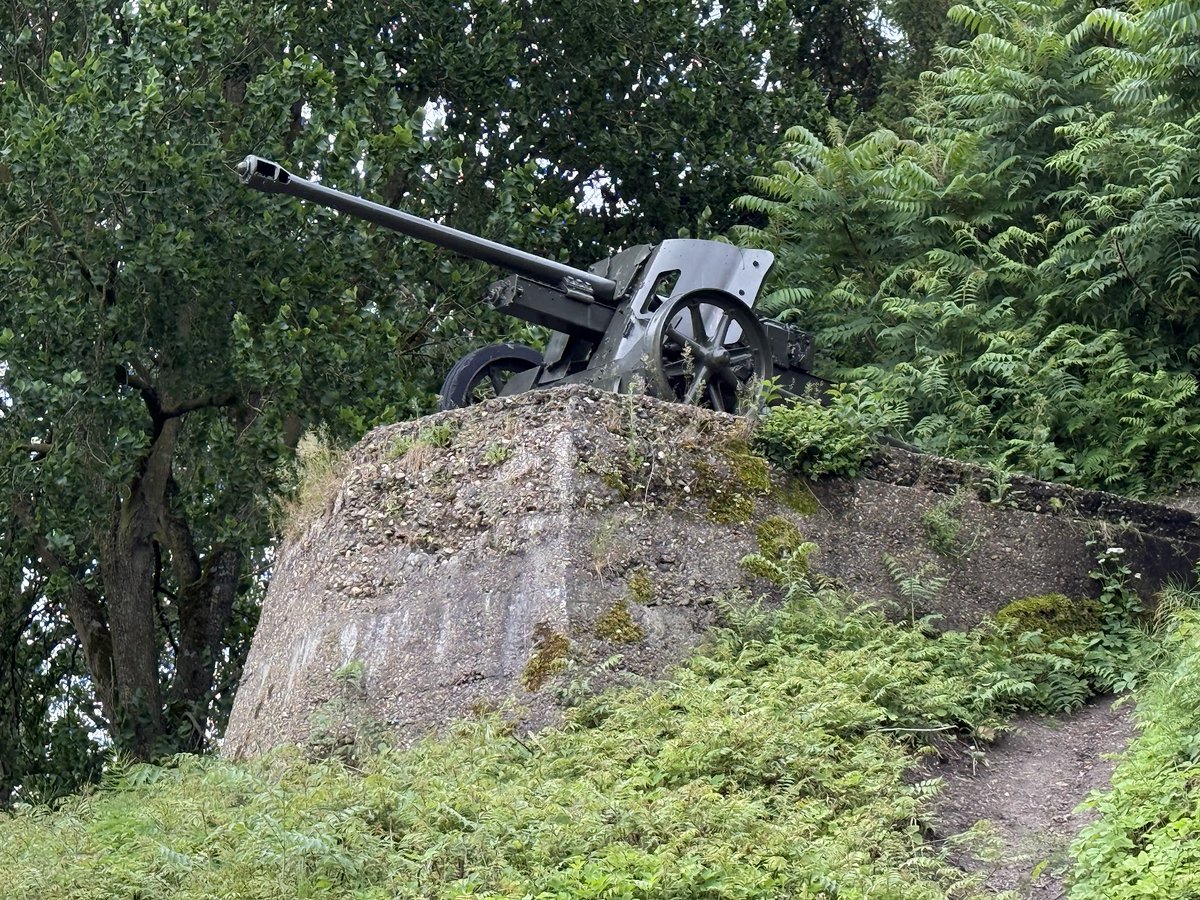
The German defence here was built to stop an attack coming up the road from the south. The blow that took the Nijmegen bridge came across the river behind it.
1
1
54
1,602
A 5cm Pak 38 now stands on a plinth in the Hunnerpark as a memorial, in the ground Kampfgruppe Euling dug into on 18 September 1944, covering the road onto the bridge from the south. For two days the line held against the 82nd Airborne and XXX Corps armour.
1
23
820
On 20 September the 504th Parachute Infantry crossed the Waal downstream in canvas boats. With Americans on the north bank, the southern defence was outflanked and the bridge taken intact. We visited this location today on a battlefield tour with a group of friends from Blackpool.
19
632
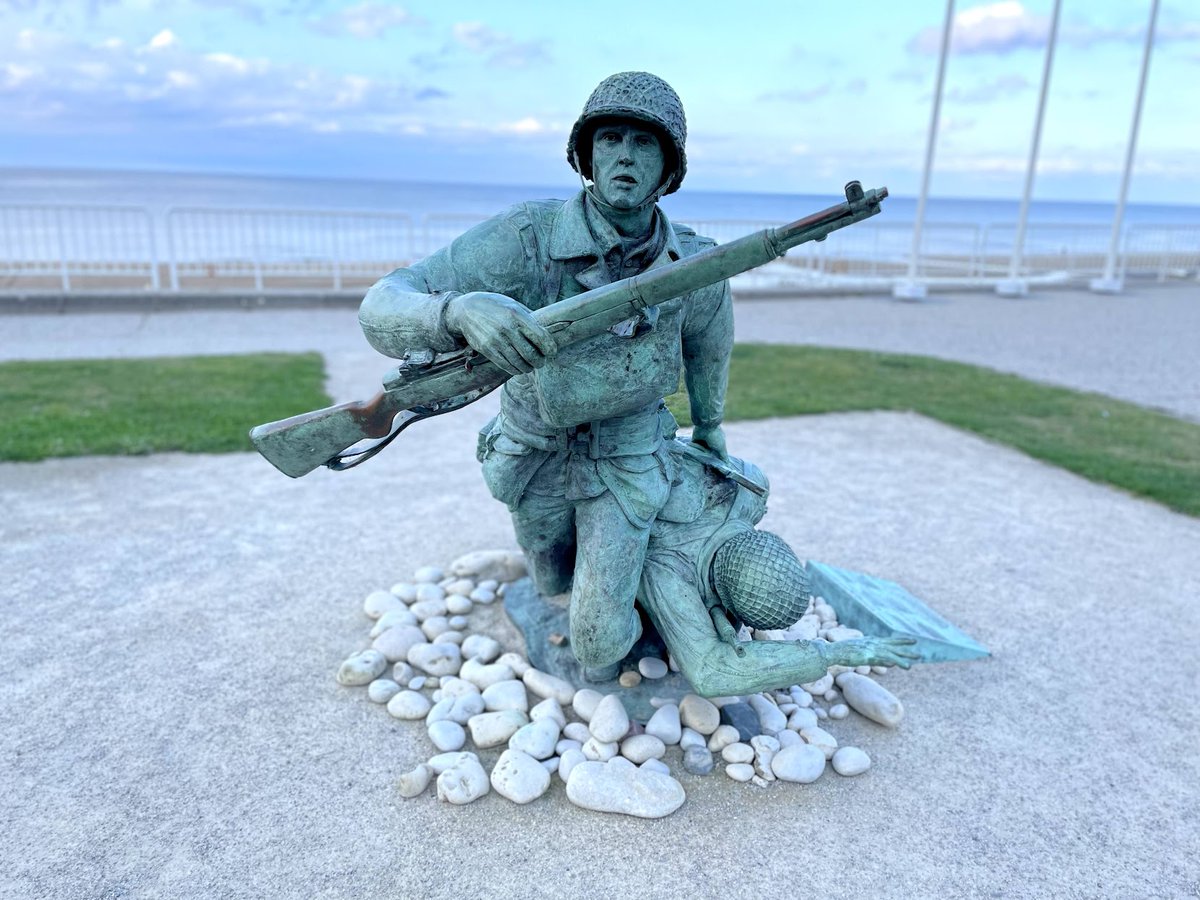
At half past six on the morning of 6 June 1944, the first wave touched down on Omaha Beach. The 116th Infantry Regiment of the 29th Division came ashore here at Vierville-sur-Mer, into machine-gun and mortar fire from the bluffs above. The lead companies were destroyed within minutes of the ramps dropping.
5
21
154
4,017
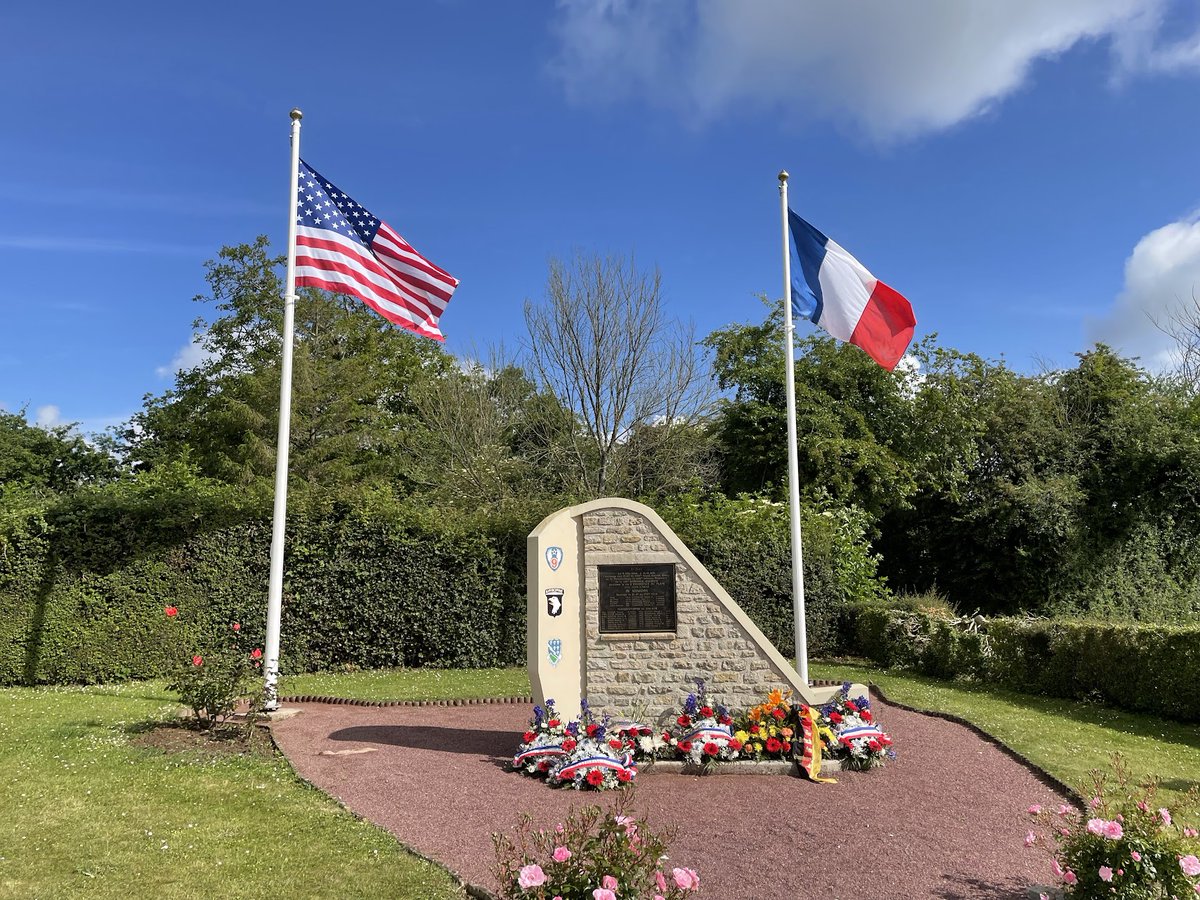
Every parachute hook was still locked. When the crash site near Beuzeville-au-Plain was excavated, that one detail proved none of the men had got out. This is where Easy Company lost its commander before the company fired a shot.
On the night of 5-6 June 1944 a C-47 carrying First Lieutenant Thomas Meehan III and the entire company headquarters group was hit by flak and came down here, north-east of Sainte-Mère-Église.
All twenty-two aboard died, and command of Easy Company passed to Lieutenant Richard Winters. A recovered watch had stopped at 01:12, the moment of the crash.
14
160
1,322
30,333
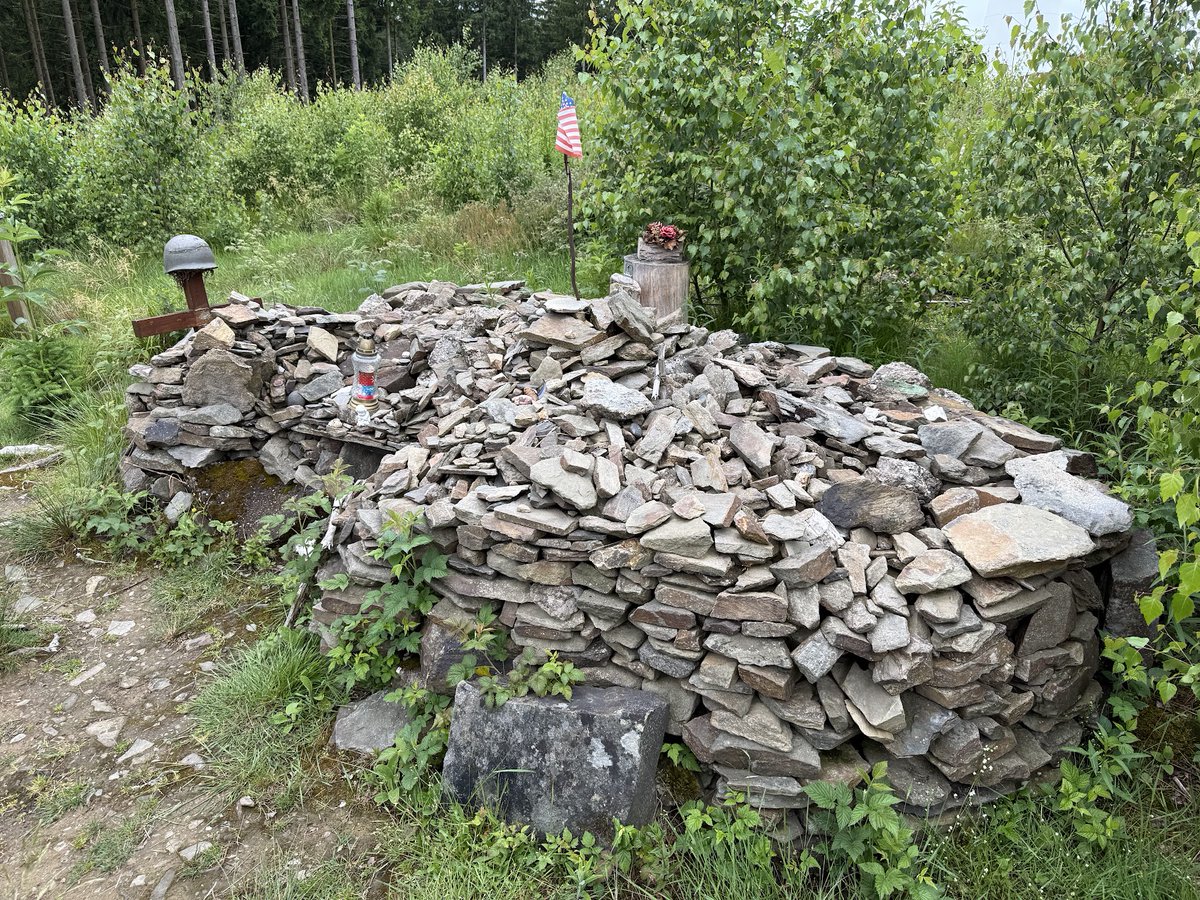
He stood 2.01 metres tall. That is how they finally confirmed his identity. PFC Robert Cahow, 311th Infantry Regiment, 78th Infantry Division, was killed in the Hürtgen Forest on 13 December 1944, bringing in wounded men under fire. A mine killed him, and German fire kept his comrades from reaching the body.
2
11
267
14,939
For more than 55 years he lay in an unmarked grave, until a German mine-clearance team found him in 2000. His remains went to a U.S. Army laboratory in Hawaii for identification, and in May 2001 he was buried with full military honours in Clear Lake, Wisconsin, the town he had left for the war.
We visited the spot today on our Hürtgenwald battlefield tour.
1
1
52
1,527