Truth, Freedom, Mindset
Joined August 2010
- Tweets 178
- Following 66
- Followers 21
- Likes 484
38 Photos and videos

Whose turn is it?

2
투표지 부족과 불가능한 사전투표 통계로
수많은 국민들이 의혹을 가지는 상황에서,
선관위는 선거인 명부를 공개하고 투표 별 숫자와
실제 투표수를 비교해서 무결성을 입증하면 되는데
왜 절대로 선거인 명부 공개를 안할까?
선관위에 대한 국정원 조사와 감사원 감사를 법으로 막고,
오히려 선관위 허위 비방시 징역 10년 법을 발의한 것이 민주당이다. 온 국민이 들고 일어나는 작금의 상황에서도
부정선거를 부실선거로 몰아가고
여기 저기서 불가능한 확률의 통계적 증거가 발견되어도
진상 규명 전에 부정선거를 음모론으로 단정 지으며 사전투표 폐지를 반대하는 것이 민주당이다.
윤대통령이 계엄까지 해서 조사하려 했던 선관위를 이번에도
국정조사로 대충 시간 끌고 넘기려 하는 것을 온 국민이 안다.
수년 전 부터 선관위에 대한 감사원의 감사와 국정원의 조사를 막도록 법을 입법한 곳은 어디인가?
그간 모든 비리와 부패의 온상인 선관위를 지키고 대변해온 그들의 모든 행적은 스스로 선관위와 함께 부정선거를 자행한 반국가세력이자 그 주체라는 것을 이미 넘치게 증거하고 있다.
20
송파 '미개표' 추가 발견..서울시의원 비례 결과 뒤집혀 / SBS youtu.be/vgm_l2B6N10?si=UUGS… via @YouTube
6
53
bcspl retweeted

Jun 6
어떤 홍콩 사람이 한국의 6.3 잠실 민주화 운동을 보면서.
60
821
2,711
36,715
bcspl retweeted

Jun 6
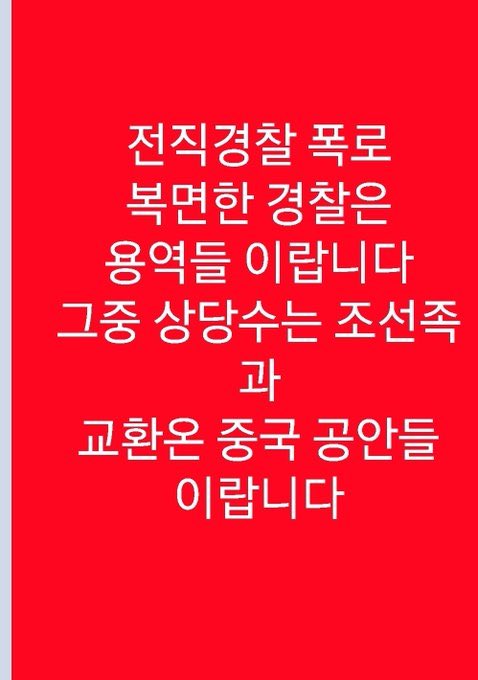
긴급: 현장 경찰관리자가 공안으로 추정되는 사람들에게 우리 “용역” 분들 저기로
이동해주세요. 라고하였습니다.
한국말로 용역이란?
한쪽 당사자가 상대방의 요청에 따라 특정 업무(서비스)를 수행하고, 그 대가로 보수를 지급하기로 하는 계약을 뜻합니다.
그러면 대한민국 정부가 중국 공안에게
돈을 지불하고 경찰 치안 업무를 하고있다는
건가요? 대한민국 경찰인원은 충분히 많은데 말이죠! 트위터 사용자 여러분 트윗 재인용
및 파렴치한 만행을 널리 알려주세요.
EMERGENCY: On-site police officers tell the alleged public security officers, "service" go over there
Please move.
What is service in Korean?
It refers to a contract in which one party performs a specific task (service) at the request of the other party and pays compensation in return.
Then, the Korean government will tell the Chinese police
He's paid to do police security
Is that it? There are enough police officers in the Republic of Korea! Twitter users, re-apply with tweets
And please let us know about shameless atrocities.
44
938
1,729
31,471
wow
Jun 6

중국 공안: 대한민국 한국 경찰 하청이라고 인정하다.
영상속 경찰복 입은 남성은 중국 공안이며,
본인은 한국 경찰 하청이라고 대한민국 국민에게
발설 하였다. 해당내용은 국가안보와 직결되며,
대한민국 국가 안보위기이며, 소리없는 전쟁이다.
해당 게시글 트위터 인용 및 공유 부탁드립니다.
China Public Security: South Korea admits to being subcontracted by the South Korean police.
The man in the police uniform in the video is a Chinese police officer,
I told the Korean people that I was subcontracted to the Korean police
I opened my mouth. This is directly related to national security,
It is a national security crisis in the Republic of Korea, and it is a silent war.
Please quote and share the post on Twitter.
28
부정선거 언급하면 체포한다고 했다.
잠실 투표소 시민의 충격 증언
youtube.com/shorts/JpMUz1xiE…
198
bcspl retweeted
Jun 6
🚨실시간, 잠실에 “2030 청년 시민들 인파 ㄷㄷ”
43
998
3,213
43,960
bcspl retweeted

Jun 6
The Korean people are determined to take their country back.
Jun 6

2/ The crowd outside the Olympic Park handball arena, where sealed ballot boxes were stored, has grown every day since Thursday.
Today: thousands, packed tight, waving Korean and American flags, many in their 20s and 30s, women and men. They chanted non-stop.
47
590
2,084
19,371
South Korea Takes a Hard Left Turn Against America (WSJ Opinion, 2026년 6월 1일, Nicholas Eberstadt & Lawrence Peck)
이 기사는 최근(2026년 6월 초) WSJ에 실린 오피니언/칼럼으로, 민주당(더불어민주당, Minju Party)과 이재명 대통령을 "hard-left(강경 좌파/급진 좌파)"로 규정하며, 한미 동맹 위협, 친북·반미 성향, 장기 집권 시도 등을 강하게 비판하는 내용입니다. "폭로" 성격의 뉴스 기사가 아니라 보수 성향 미국 전문가들의 의견 기고문입니다.
한국어 번역 (전문 번역)
한국, 미국을 향한 급진 좌파 전환 서울의 급진파 집권 세력이 자들의 무기한 집권을 허용하는 헌법 개정을 추진하고 있다.
Nicholas Eberstadt 및 Lawrence Peck 2026년 6월 1일
한국 관리들이 미국 군사 기지의 지휘 통제소를 습격해, 국내 수사 명목으로 미 공군 비행 관련 세부 정보를 압수했다. 한국 의원들과 검찰은 성공적인 미국 기업(아시아의 아마존으로 불리는 쿠팡)에 대한 형사 조사를 시작했는데, 이는 우발적인 데이터 유출 사건임에도 불구하고, 더 심각하고 고의적인 유출을 저지른 한국(및 중국) 기업들은 그냥 넘어간다. 한국 정부 장관이 북한 핵 시설 관련 기밀 정보를 공개적으로 누설한 것으로 알려졌으며, 이는 미국이 서울에 자신감을 갖고 공유한 정보를 사실상 평양에 알려준 행위다.
오늘날 미-한국 동맹의 현주소다. 이 파트너십은 예측 불가능한 트럼프 행정부와 씨름하고 있을 뿐만 아니라, 서울의 너무도 예측 가능한 무모함—hard-left 정부—과도 씨름하고 있다. 트럼프의 거래적이고 종종 일방적인 동맹 접근 방식은 잘 알려져 있지만, 동맹의 다른 쪽 정부는 훨씬 더 많은 주의를 기울일 필요가 있다.
오늘날 한국을 장악한 급진파는 이재명 대통령과 그의 민주당(Minju, 또는 “Democratic” Party)이다. 그들은 지난해 6월, 전 대통령 윤석열이 6시간 동안 계엄령을 선포하려 한 어이없는 시도로 탄핵된 후 승리했다.
한국 언론인과 외신 기자들은 종종 이재명과 민주당을 “자유주의자(liberal)”로, 윤석열을 “보수주의자(conservative)”로 부른다. 그러나 민주당의 극좌 지도자들은 자유주의자를 경멸하는 경향이 있다. 비평가들은 그들의 궁극적 목표가 자신들의 무기한 집권을 허용하는 광범위한 법적 개정을 강요하는 것이며, 한국이 힘들게 얻은 자유주의 헌법이 위험에 처해 있다고 우려한다.
민주당은 얼마나 좌파인가? 2021년 그들은 베이징에서 중국 공산당 100주년 기념 행사에 참여했다. 민주당은 중국 및 다른 공산·권위주의 정당 깃발과 나란히 당기를 게양했다.
민주당 지도자들은 1980년대 전두환 군사 독재에 맞서는 투쟁에서 경력을 시작했다. 그러나 한국의 공식 야당들이 민주적 헌정 체제로의 전환을 요구하는 동안, 미래 민주당 인물들의 정치는 “민족해방” 운동—북한 국가 이데올로기가 스며든 친평양 지하 운동—을 연상시킨다. 그 활동가들과 동조자들은 자신들의 불완전한 정부를 증오했으며(그리고 나아가 “이 괴뢰 국가를 떠받치는 양키(Yankees)”를 증오했지만), 평양의 괴물 같은 체제는 비판하지 않았다.
한국의 현 총리 김민석은 1985년 서울 주한 미국 문화원 점거 및 공격 학생 시위(“저항”)에 참여했다. 그와 다른 민주당 지도자들은 젊은 시절 활동이나 신념을 아직 포기하지 않았다.
오늘날 민주당이 운영하는 한국에서 미국인들은 동맹에 거의 공감하지 않고, 미국 안보 이니셔티브와의 협력을 더 줄이려는 동맹국과 마주하고 있다. 이란 전쟁에서 한국은 호르무즈 해협 개방에 직접 지원하지 않았는데, 한국 석유 수입의 3분의 2 이상이 그곳을 통과함에도 불구하고 말이다. 서울은 지난달 물라(이란)들에게 인도적 지원을 제안하고 별도의 외교 대화를 제안했다. 덤으로 이재명은 이스라엘의 가자 지구 행동을 홀로코스트에 비유했다.
이재명과 민주당은 중국 경쟁에서 미국 편이 아님을 분명히 했다. 대선 캠페인 중 이재명은 대만에 무슨 일이 일어나든 상관없다고 선언했다. 4월에는 이재명의 국방장관이 한국 주재 중국 대사와 양자 국방 협력을 논의했다.
미-한국 동맹의 핵심은 북한 위협이지만, 지금은 그것조차 문제가 되고 있다. 대통령 당선 전 이재명은 북한에 800만 달러의 비밀 자금을 유입시켰다는 혐의로 재판을 받고 있었다. 그는 잘못이 없다고 부인한다. 대통령 재임 중에는 기소 면책 특권이 있으며, 그는 이 혐의로 법정에 서지 않도록 할 계획이다. 플랜 A는 현재 국회에 계류 중인 특별법으로 그의 사건을 기각하는 것이다. 플랜 B는 무기한 집권일 수 있다.
한국 헌법은 대통령을 1선제로 규정한다. 이재명은 그 조항을 개정할 것을 제안했다. 헌법 개정을 위해서는 입법부 3분의 2 이상의 슈퍼마저리티가 필요한데, 그는 아직 부족하다(아슬아슬하게). 그러나 2028년 총선에서 유권자들이 그 슈퍼마저리티를 주기를 바란다. 그것이 안 되면 언제나 법률전(lawfare)이 있다.
이재명은 이미 윤석열 계엄령 “반란”을 조사하기 위한 특별검사를 임명했다. 만약 수사관들이 야당이 윤석열 행동을 somehow 도왔다고 라벨을 붙인다면(민주당 대표가 촉구한 대로), 민주당 다수파는 헌법재판소에 청원하여 그들의 국회의원 자격을 박탈할 수 있고, 그렇게 함으로써 이재명이 헌법 개정에 필요한 슈퍼마저리티를 얻을 수 있다.
이재명과 그의 당은 헌법을 더 “민주적”으로 만들기 위한 추가 “개혁” 제안을 띄웠다. 이러한 변화는 민주당의 권력 장악을 공고히 하고, 한국을 사실상 일당 국가로 바꿀 수 있다.
미국은 한국에 많은 친구와 동맹을 가지고 있다. 그러나 그들은 민주당 안에 있지 않다. 워싱턴이 깨어나지 않는 한, 한국 국내 자유와 미-한국 동맹에 대한 위협은 더욱 커질 가능성이 높다.
원문 (Original English Text)
South Korea Takes a Hard Left Turn Against America The radicals in charge in Seoul are pushing constitutional revisions to permit their own indefinite rule.
By Nicholas Eberstadt and Lawrence PeckJune 1, 2026
South Korean officials storm the command center of an American military base, seizing details about U.S. Air Force flights in the name of a domestic investigation.
South Korean legislators and prosecutors launch a criminal inquiry into a successful American company (Coupang, sometimes called the Amazon of Asia) for a seemingly accidental data breach, while local Korean (and Chinese) firms skate by for more-serious, deliberate disclosures.
A South Korean government minister publicly discloses what is alleged to be classified information about a North Korean nuclear site, effectively revealing to Pyongyang intelligence that America had shared with Seoul in confidence.
Welcome to today’s U.S.-South Korea alliance. The partnership is grappling with the unpredictable Trump administration—and also the all-too-predictable recklessness of the hard-left government in Seoul. Mr. Trump’s transactional, often peremptory approach to American allies is well-known. But the government on the other side of the alliance deserves much more attention.
The radicals in charge of South Korea today are President Lee Jae-myung and his Minju (or “Democratic”) Party. They swept to victory last June, after the disgraced former president, Yoon Suk Yeol, was impeached for a bizarre six-hour attempt to declare martial law.
South Korean journalists and foreign reporters often refer to Mr. Lee and Minju as “liberals” (and to Mr. Yoon as a “conservative”). But Minju’s far-left leaders tend to despise liberals. Critics fear their ultimate aim is to impose far-reaching legal revisions to permit their own indefinite rule—and that the country’s hard-won liberal constitution is at risk.
How far left is Minju? In 2021 it joined the celebration of the 100th anniversary of the Chinese Communist Party in Beijing. Minju raised its party banner alongside the flags of the Chinese and other communist and authoritarian parties.
Minju’s leaders cut their teeth in the struggle against Chun Doo-hwan’s military rule in the 1980s. But while South Korea’s official opposition parties were agitating for a transition to democratic constitutional governance, the politics of future Minju figures is reminiscent of the “national liberation” movement—a pro-Pyongyang, underground operation infused with North Korea’s state ideology. Those activists and their fellow travelers reviled their own imperfect government—and, by extension, the Yankees “propping up” this “puppet state”—but didn’t criticize Pyongyang’s monstrous regime.
South Korea’s current prime minister, Kim Min-seok, in 1985 participated in a student attack and takeover of the Seoul American Cultural Center for the “resistance.” He and other Minju leaders haven’t renounced their youthful activities or beliefs.
In today’s Minju-run South Korea, Americans contend with an ally that is largely unsympathetic to the alliance and wants to cooperate less, not more, with U.S. security initiatives. In the Iran war, South Korea hasn’t directly assisted in opening the Strait of Hormuz, even though more than two-thirds of the country’s oil imports pass through it. Seoul last month offered the mullahs humanitarian aid and proposed a separate diplomatic dialogue. As a sweetener, Mr. Lee publicly likened Israeli actions in Gaza to the Holocaust.
Mr. Lee and Minju have made clear they aren’t on America’s side in the China competition. During his presidential campaign, Mr. Lee declared that he didn’t care what happens to Taiwan. In April, Mr. Lee’s defense minister discussed bilateral defense cooperation with China’s ambassador to South Korea.
The centerpiece of the U.S.-South Korea alliance is the North Korean threat—but even that is a problem now. Before he won the presidency, Mr. Lee was on trial for allegedly funneling $8 million in secret funds to the North. He has denied wrongdoing. Mr. Lee is immune from prosecution while president, and he has plans to make sure he never has to face court on this charge. Plan A is a special bill, now before the National Assembly, that would dismiss his case. Plan B may be to stay in office indefinitely.
South Korea’s constitution stipulates the presidency is a one-term job. Mr. Lee has proposed amending that provision. He can’t amend the constitution without a two-thirds legislative supermajority, and he lacks one—barely. But he hopes the voters give him that supermajority in the 2028 National Assembly elections. If that doesn’t work, there is always lawfare.
Mr. Lee has already empaneled special counsels to investigate the Yoon martial-law “insurrection.” If the investigators label the opposition party as somehow abetting Mr. Yoon’s action (as Minju’s party chief has urged), the Minju majority could petition the Constitutional Court to ban its members from the National Assembly—and thereby grant Mr. Lee the supermajority he needs to amend the constitution.
Mr. Lee and his party have floated proposals for making the constitution more “democratic” through further “reforms.” These changes could cement Minju’s hold on power, and effectively transform South Korea into a one-party state.
America has plenty of friends and allies in South Korea. But they aren’t in Minju. Until Washington wakes up, the threats to South Korea’s domestic freedom, and to the U.S.-South Korea alliance, will likely grow.
Mr. Eberstadt is a researcher at the American Enterprise Institute. Mr. Peck is an adviser to the North Korea Freedom Coalition.
3
717
Election fraud in South Korea has been going on SINCE AT LEAST 2020. We must make this fact known to the world!!!
youtu.be/9jKRDm2_MFA?si=ougi…
36
Election fraud in South korea HAS BEEN GOING ON SINCE AT LEAST 2020. We must make this fact known to the world.

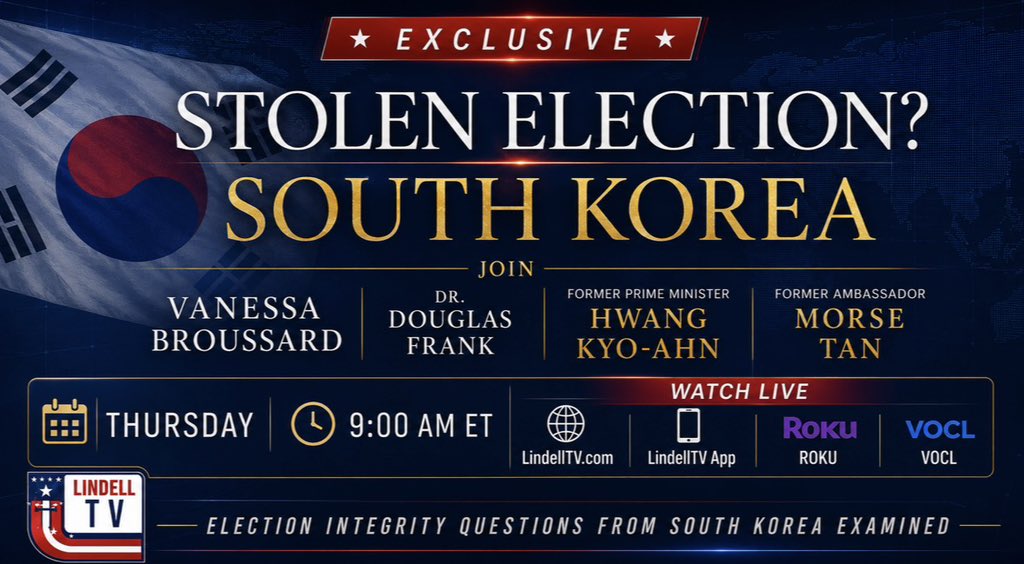
🚨 What is happening in South Korea?
Questions surrounding their elections last night have sparked controversy, major protests, and international attention.
Tomorrow, I’ll be joined by Dr. Douglas Frank, Former Prime Minister Hwang Kyo-Ahn, and Former Ambassador Morse Tan for an exclusive conversation from South Korea you won’t see anywhere else.
📅 Thursday
⏰ 9:00 AM ET
📺 LindellTV.com | LindellTV App | Roku | VOCL
33
Zechariah 14:9 NKJV
[9] And the Lord shall be King over all the earth. In that day it shall be— “The Lord is one,” And His name one.
bible.com/bible/114/zec.14.9…
15