
Building in Web3 🚀 | Smart Contracts & Decentralized Dreams | Tech Enthusiast |📍ETH Maxi | Let’s tokenize the future|web3 Content Creator
Joined January 2022
- Tweets 10,253
- Following 2,834
- Followers 2,090
- Likes 8,187
372 Photos and videos










beeblue 🌸 retweeted

A friend of mine just landed a Virtual Assistant role in 48 hours.
She didn't use an agency.
She didn't know anyone.
She just opened Claude and did something most people haven't thought of yet.
Here's exactly what she did
walk with me...
18
101
762
57,294
beeblue 🌸 retweeted

𝐈𝐟 𝐲𝐨𝐮’𝐫𝐞 𝐡𝐮𝐧𝐭𝐢𝐧𝐠 𝐟𝐨𝐫 𝐚 𝐫𝐞𝐦𝐨𝐭𝐞 𝐣𝐨𝐛, 𝐲𝐨𝐮 𝐧𝐞𝐞𝐝 𝐭𝐨 𝐟𝐢𝐠𝐮𝐫𝐞 𝐨𝐮𝐭 𝐡𝐨𝐰 𝐋𝐢𝐧𝐤𝐞𝐝𝐈𝐧 𝐰𝐨𝐫𝐤𝐬… 𝐚𝐧𝐝 𝐲𝐨𝐮’𝐥𝐥 𝐧𝐞𝐯𝐞𝐫 𝐛𝐞 𝐮𝐧𝐞𝐦𝐩𝐥𝐨𝐲𝐞𝐝 𝐟𝐨𝐫 𝐥𝐨𝐧𝐠.
Many people are on LinkedIn.
Very few people actually understand it.
Here’s how to use LinkedIn like a pro 👇🏾
A thread :
21
19
169
10,301

Apr 6
✨@ice_blockchain
Most platforms let you post.
Very few let you build.
That’s what caught my attention with Ice Open Network.
Your content isn’t just content it can turn into a community.
And $ION actually moves through the system, not just sits there.
Creators earning real value, not just visibility.
That’s a different mindset.
Also noticed BingX backing this with #BingXBlast.
Early days… but this direction makes sense.
#ION #SocialFi #IceOpenNetwork
60
49
163
Apr 4
✨@ice_blockchain
At first, I wasn’t convinced that combining social, messaging, and a wallet into one platform made sense.
It felt like trying to do too much at once.
But after taking a closer look at Ice Open Network, it actually feels more intentional than I expected.
What stands out isn’t just the features it’s how everything connects.
No jumping between apps.
Content, conversations, and value all move in one flow.
And $ION isn’t just sitting there it’s being used inside the system.
Creators earn, communities form, and activity feeds back into the network.
That’s a different model from what we’re used to.
For years, we’ve been building on platforms where we create the value… but don’t keep it.
This feels like a shift toward something more balanced:
create → grow → benefit
The idea that a single post can evolve into its own community is especially interesting.
It turns content into something you can actually build on.
Still early, but definitely something I’m watching.
Also noticed what BingX is doing with #BingXBlast and $ION rewards looks like part of that same creator-first direction.
Feels like we’re moving from just posting…
to actually owning what we build.
#ION #SocialFi #IceOpenNetwork #BingXBlast
bingx.com/invite/2AB7WG
9
10
59
beeblue 🌸 retweeted

Mar 20
💵 $30–$35/Hour Remote Role (Listening – Mercor)
Yes, it’s real.
Yes, it’s remote.
Mercor is hiring for a Listening role where you review AI-generated responses and improve them when necessary.
If you’re good at reading, analyzing, and spotting quality differences, this is for you 👇
📌 Before you apply:
✅ Have a clean, professional resume
✅ Fill your details correctly
✅ Be patient (review takes 3–4 weeks)
Not everyone will be selected, but you could be.
Stop watching others earn in dollars position yourself 🚀💻💰
📲 Check my bio and join Telegram
I shared CV templates step-by-step guide to get accepted

10
7
82
6,081
beeblue 🌸 retweeted
Mar 20
Outlier AI is no longer easy for many Nigerians to access…
But instead of forcing it
Use better alternatives that are actually working ✅
Here are 2 solid ones 👇
💻 1. Micro1 AI
💰 $20 – $50/hour
🌍 Remote
– AI jobs (data, analysis, domain knowledge)
– You’ll pass interview → get matched to projects
– Works in Nigeria (no VPN needed)
2. OneForma (by Pactera)
💰 $10 – $20/hour
🌍 Remote
– AI training, data annotation, UHRS tasks
– Pays via Payoneer
– Very active in Nigeria
📌 What you should do:
• Create a professional CV
• Complete your profile properly
• Apply for multiple roles
• Prepare for interviews
👇👇

Mar 19

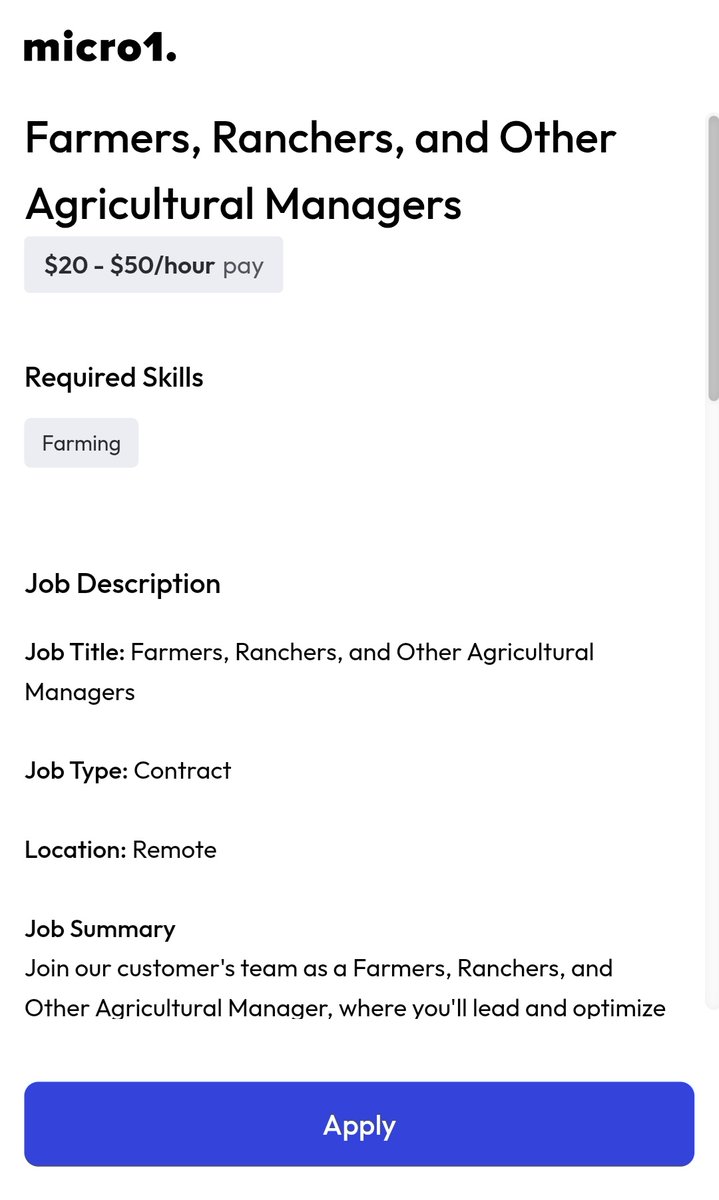
🌾🚨 Agric Students / Graduates Don’t Skip This!
A lot of people studied courses related to agriculture and feel like the only option is farm work or onsite jobs…
But now, platforms like Micro1 are changing that.
You can actually work remotely and still use your agricultural knowledge to earn in dollars 💻💰
💼 What you’ll be doing:
– Share your knowledge about farming, crops, livestock, etc.
– Help train AI systems with real agricultural insights
– Analyze processes, productivity, and efficiency
– Contribute to how AI understands agriculture globally
💰 Pay: $20 – $50/hour
🌍 Remote (no need for relocation)
This is not just for tech people
your course can actually pay you online if you position it well.
📲 Check my bio to join Telegram group
I share opportunities guide on how to apply & get accepted
12
45
264
43,159
beeblue 🌸 retweeted

Mar 19
How to hop in👇
x.com/JustUNIK12/status/2034…
Mar 19

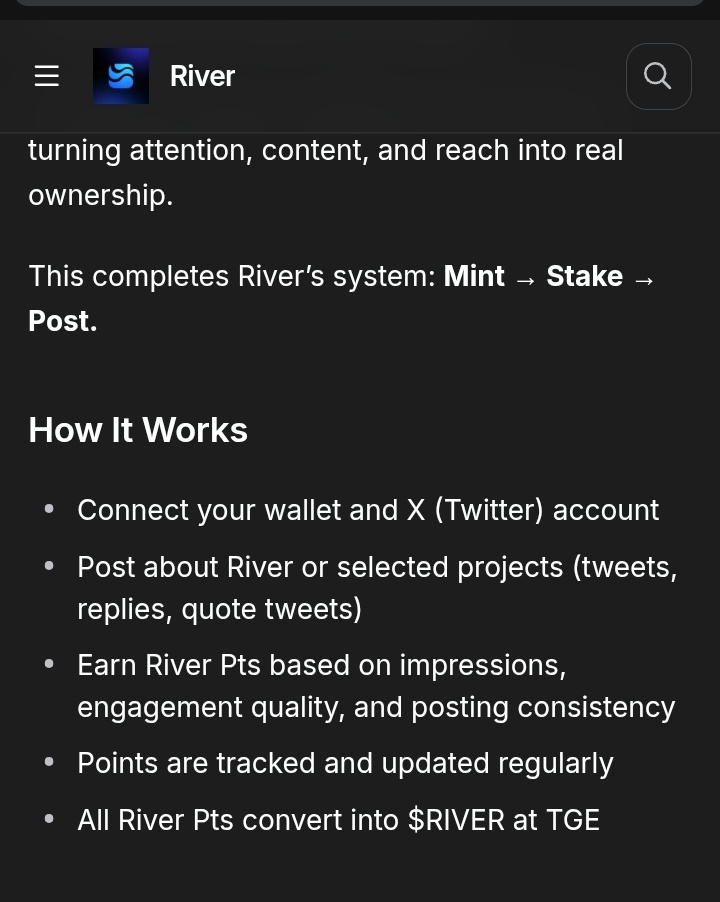
If you've fade anything so far don't fade @River4fun
Connect your wallet and X (Twitter) account
Post about River or selected projects (tweets, replies, quote tweets)
Earn River Pts based on impressions, engagement quality, and posting consistency
app.river.inc/fun?ref=JustUN…
1
2
4
1,841
beeblue 🌸 retweeted

Mar 18
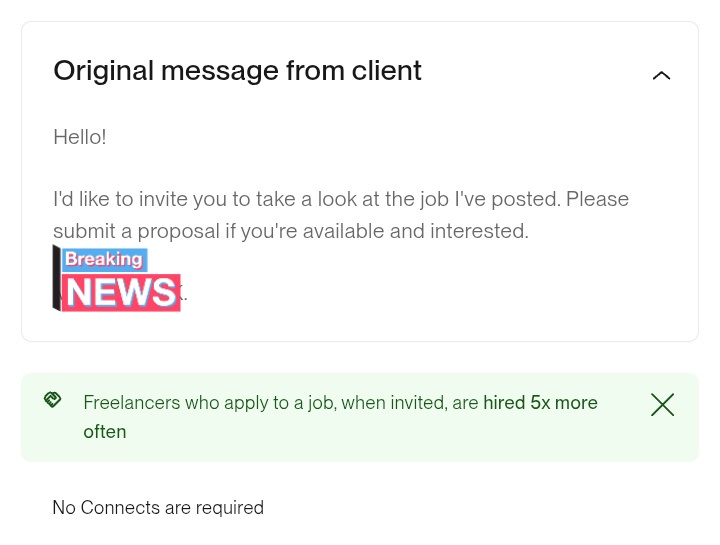
I got an invite to send a proposal for a job and the only thing I had filled in this time was my picture and bio with Provolo.
Asides revamping your bio, they give keywords for your niche, Projects and case studies titles.
Don't take my word for it, try it and see.
💛Merciy
1
1
4
313
beeblue 🌸 retweeted
If you’re looking to secure jobs with foreign clients, do these few things and thank me later.
1. Check companies that just raised funding.
Newly funded startups usually need designers, developers, and creatives.
2. Look at the niches getting the most investment.
That’s usually where the opportunities are.
3. Follow accounts like Y Combinator and Startup Archive.
Why?
They post new startups, new products, and companies that just raised money.
Those companies are often looking for people to work with.
4. Pick some of those startups, create a quick sample of what you can do for them, and send a pitch.
Do this consistently for 3–6 months and you’ll start seeing results.
5. Don’t let your timeline be full of only locals.
If your timeline is full of locals, how will foreigners interact with you?
Follow foreign creatives.
Watch what they build.
Look at the kind of projects they’re getting.
That’s where the clues are.
For example:
•Fintech is very common in Africa.
•AI tools dominate in the US and China.
•Business and e-commerce are huge in Australia.
Different regions have different opportunities.
Go where the work lives 🌍
20
61
332
15,012
beeblue 🌸 retweeted

Mar 15
This is quite helpful!

7
265
1,797
160,317
Mar 6
A lot of projects talk about Real World Assets, but the real challenge has always been connecting physical production to blockchain in a transparent way.
That’s where @MetaSoilVerse is taking a different path.
Instead of simply tokenizing assets and leaving them idle, the $MSVP ecosystem focuses on productive assets like agriculture, energy, logistics, and property. These are sectors that already generate real revenue in the offline world.
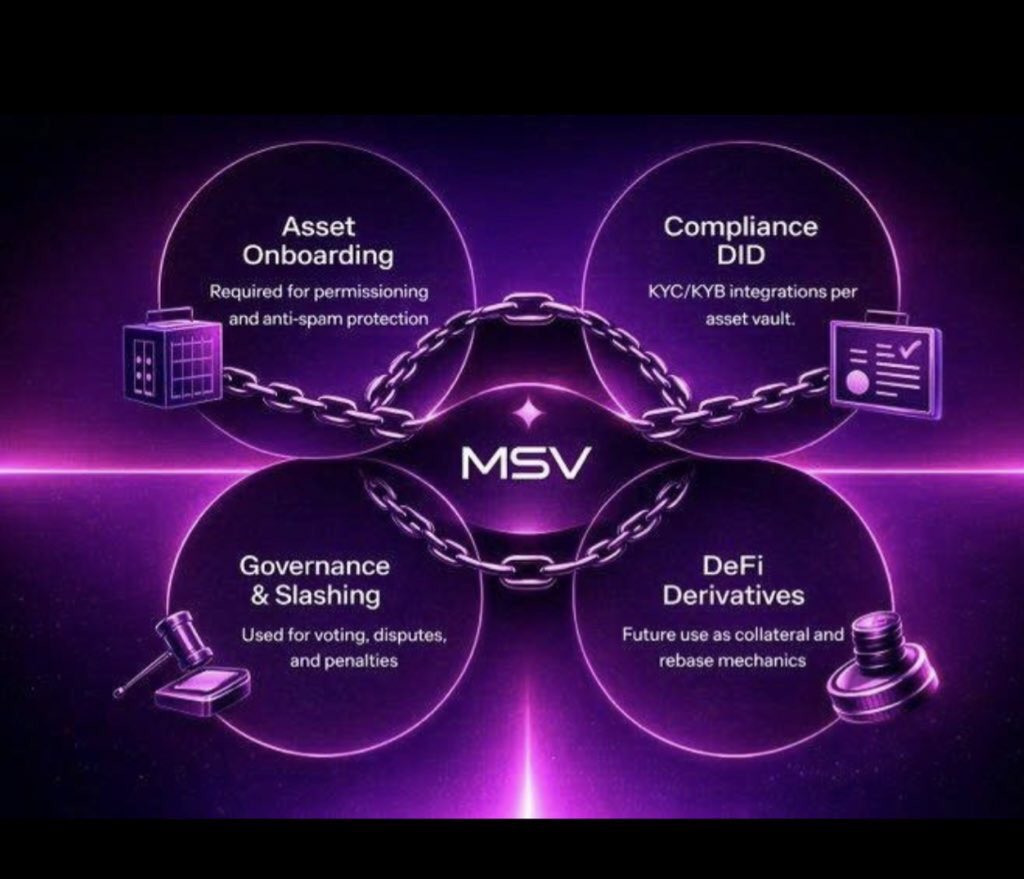
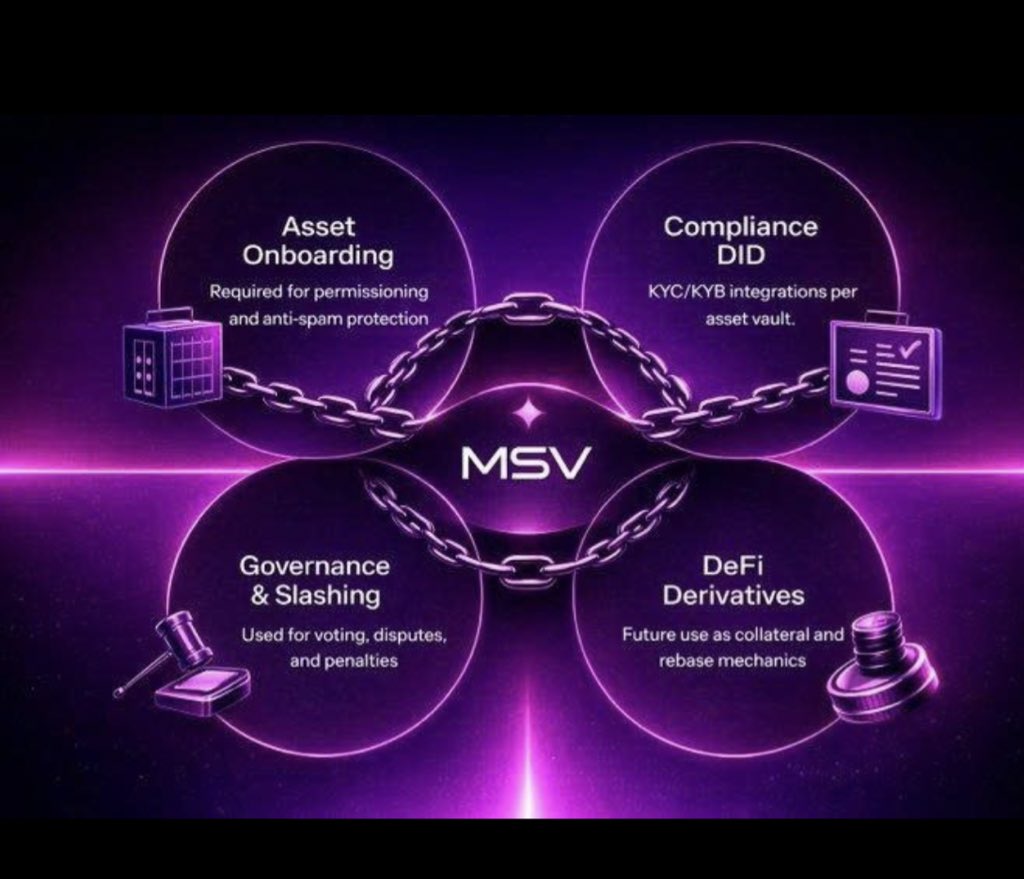
What makes the system interesting is how the activity is structured. Asset operators onboard projects, validators verify asset data through Proof-of-Asset-Integrity checks, and performance metrics are recorded on-chain. When those assets produce results whether it’s harvest output, rental income, or commodity production the value flows back through the protocol.
This creates a loop where staking, validation, governance, and yield distribution are all connected to actual economic activity, not just token emissions.
Another key piece is infrastructure. The protocol isn’t limited to one chain; it takes a practical multi-chain approach so different asset types can operate where it makes the most sense whether for security, speed, or accessibility.
In simple terms, the idea is clear:
blockchain shouldn’t only trade assets it should track, verify, and distribute the value they generate.
If RealFi is about bringing real productivity into DeFi, then projects like $MSVP are exploring what that future could look like
18
beeblue 🌸 retweeted

Mar 4
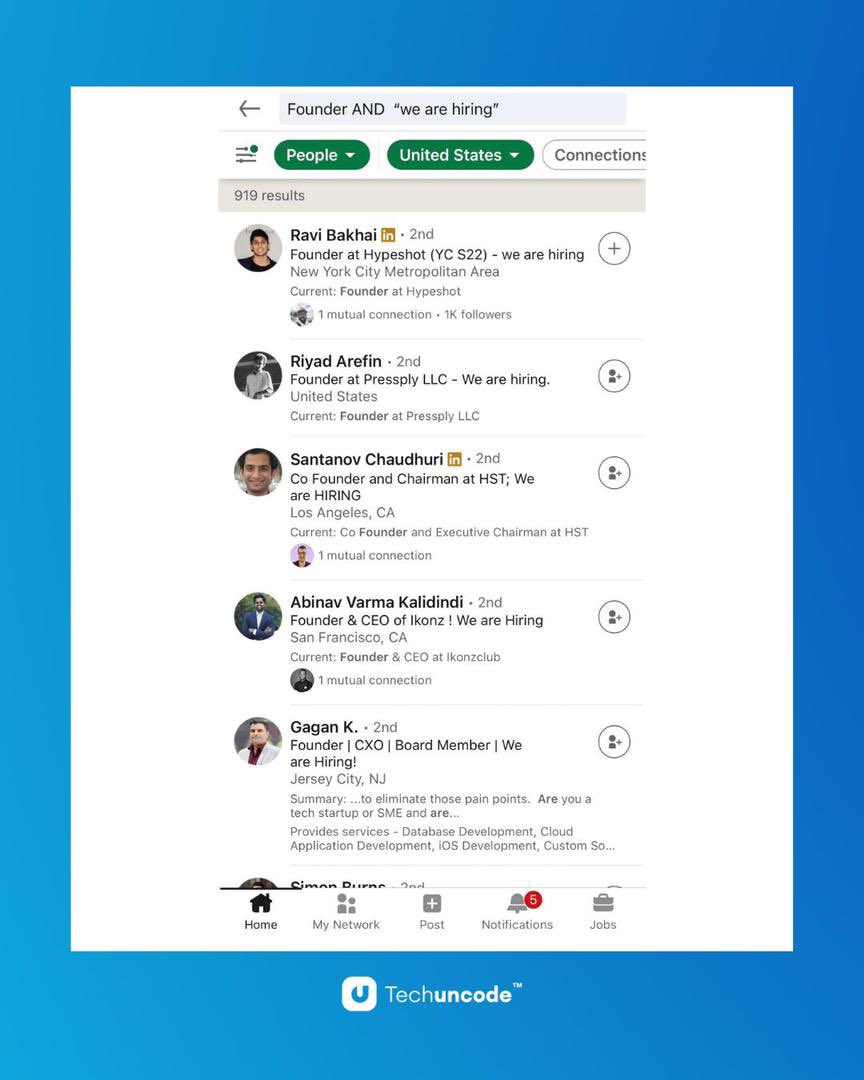
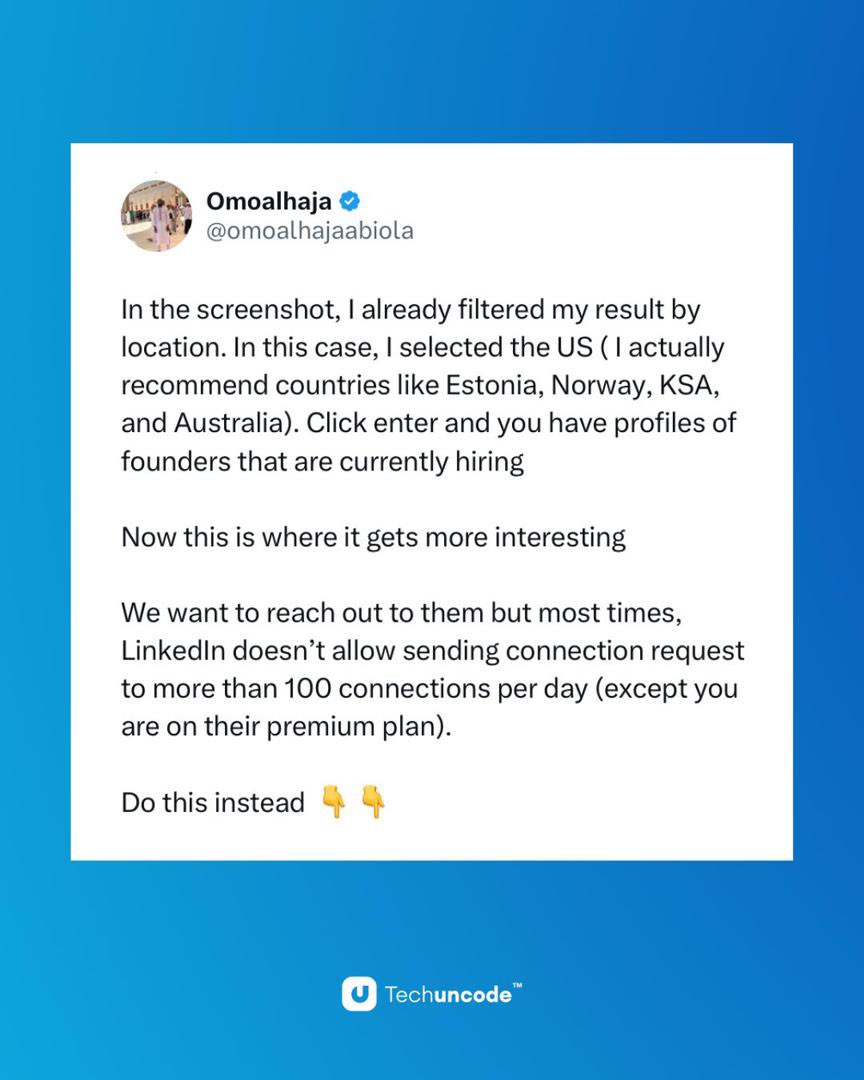
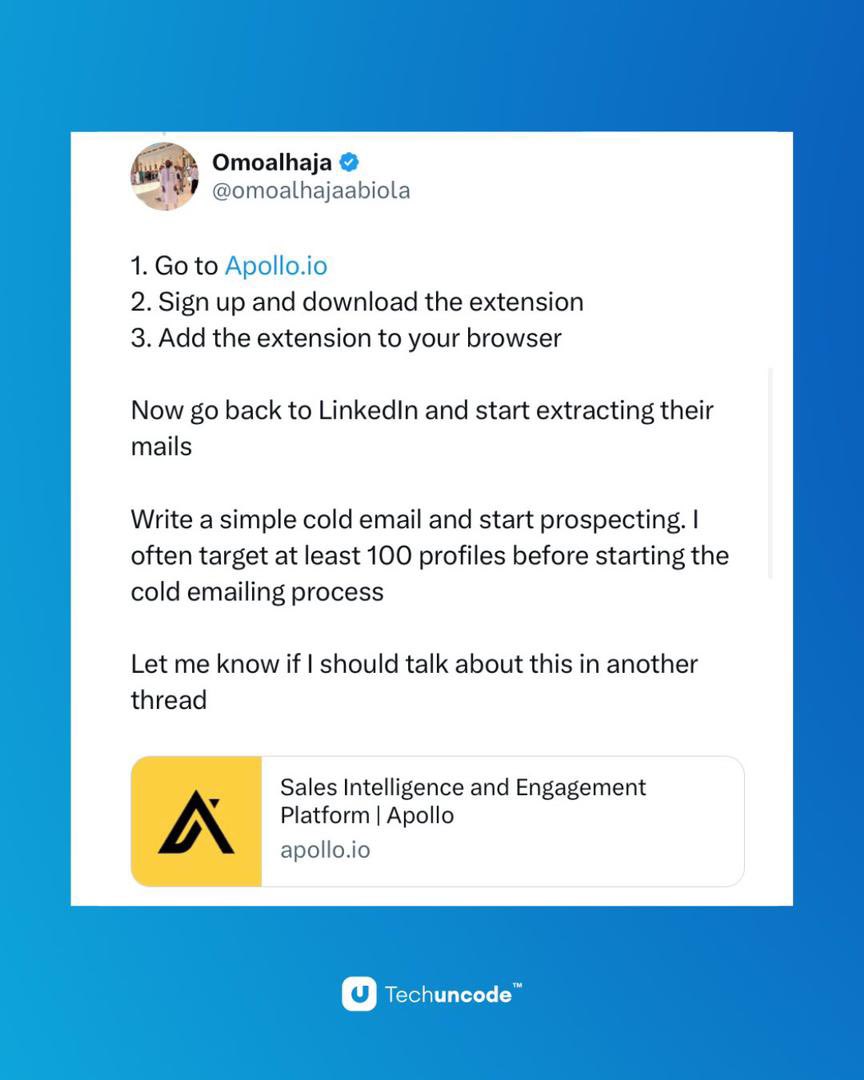
This LinkedIn guide is everything you need to land remote, international gigs

36
969
6,293
317,663
Mar 5
Most RWA projects talk a big game few actually execute. @MetaSoilVerse ($MSVP) is in the latter camp.
Here’s how they tackle the core challenge: connecting real-world assets to DeFi without middlemen, hidden valuations, or legal complications.
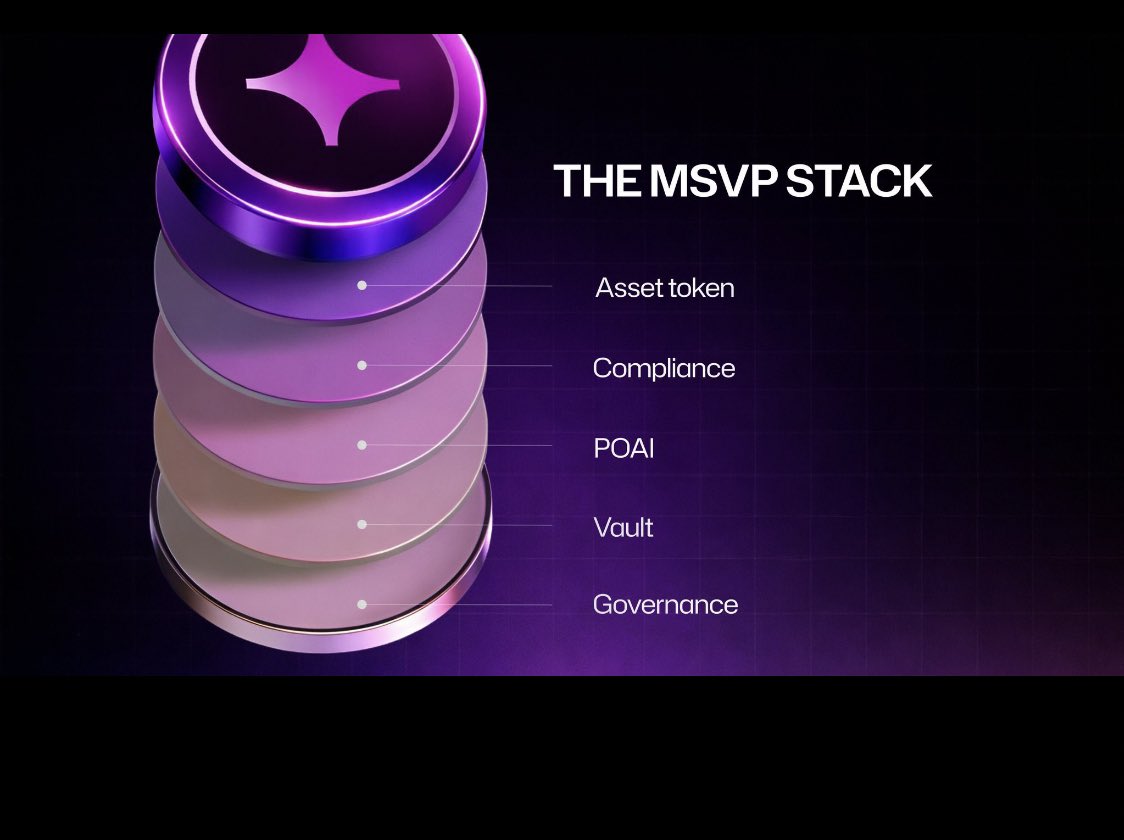
Layered Protocol Approach
Layer 1 – Asset Tokenization
•Validate assets and their ownership
•Establish tokenization standards and valuation oracles
•Represent real-world assets on-chain, not just PDFs
Layer 2 – RealFi Tools
•Enable supply chain finance, equipment leasing, crop yield derivatives
•Create commodity-backed stablecoins
•Let DeFi interact directly with actual economic activity
Layer 3 – Liquidity Framework
•AMM-ready and cross-chain bridges
•Market-making incentives for tokenized assets
•Ensures tokenized assets actually have functioning markets
Layer 4 – Compliance by Design
•Built-in KYC/AML and regulatory modules
•Locale-specific compliance for certified investors
•Continuous reporting and monitoring
Performance Verification
•On-chain tracking of production: crops harvested, minerals extracted, units produced
•Real-time validation ensures yields reflect actual output
Multi-Chain Strategy
•High-value assets → Ethereum security
•High-frequency operations → L2 speed
•Emerging markets → BSC accessibility
Developer Benefits
•Uniform tokenization across sectors
•Liquidity management frameworks
•Regulatory-ready structures
•Performance oracles feeding into UX
Bottom line: most RWA projects focus on hype.
MSVP focuses on building real infrastructure for institutional-grade RealFi.
Join the $MSVP movement via @BingXOfficial:
🔗 bingx.com/en/kol-blaster…
#RealFi #MSVP
6
6
34
beeblue 🌸 retweeted

Feb 28
Alpha time
So I came across this platform that gives gig ,connect you to founders and they pay $8 per 1000views for clipping videos
Yall need to check them out
alturasociety.com/r/Y9K6ZCNH

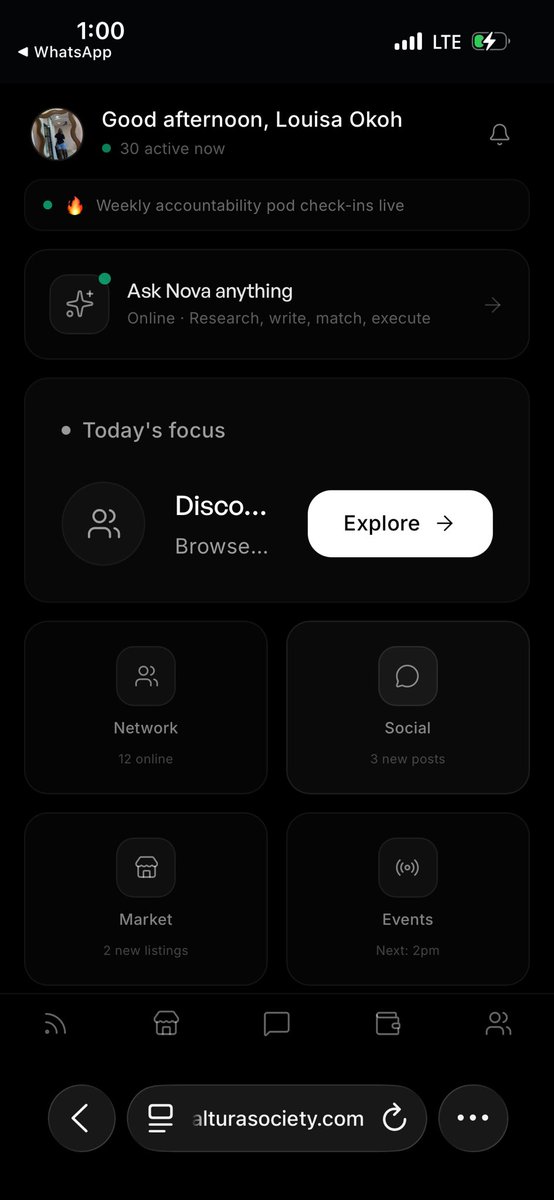


Feb 28

In this era if you’re still looking for alpha you’re not serious,is bounties ,clipping and training ai a joke to you
4
3
29
1,668
Feb 28
Most RWA projects focus on representation.
MetaSoilVerse focuses on execution.
At its core, $MSVP powers a system where capital doesn’t just sit in wallets it moves through structured vaults into real-world sectors like agriculture, energy, property, and logistics. These aren’t hypothetical assets. They generate revenue outside crypto.
What makes the model different is the verification layer.
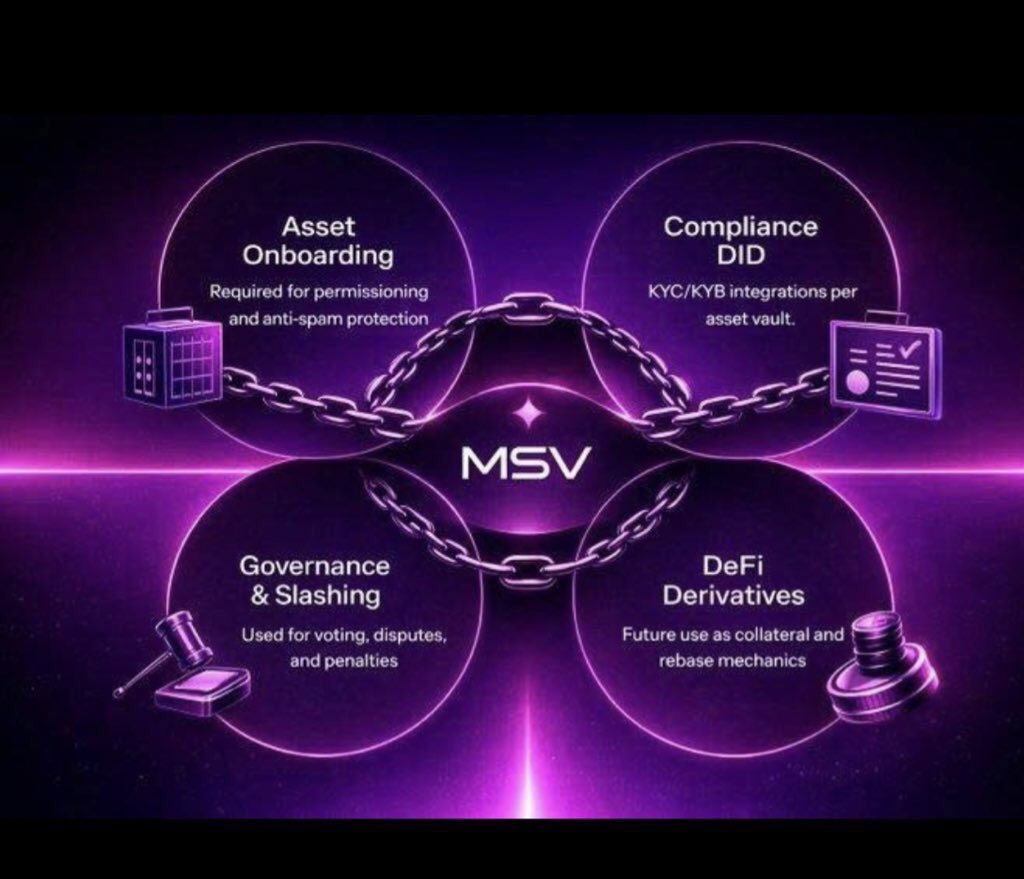
Proof-of-Asset-Integrity (PoAI) introduces continuous validation of performance data. Validators stake $MSVP, monitor asset metrics, and earn rewards. If reporting fails, economic penalties apply. That creates accountability at the data level, not just legal assurances.
Yield distribution is tied to measurable output.
Crop sales. Rental income. Energy production.
Returns are triggered by verified productivity, not token emissions.
The token itself is designed for circulation:
• Operators pay onboarding and leasing fees in $MSVP (partial burn redistribution)
• Validators stake and earn from network activity
• Yield recipients can restake or govern
• Governance requires locking
• Protocol interactions use $MSVP for fees
So instead of being a passive store of value, the token functions as internal economic fuel.
As more real-world activity flows through the system, token usage scales with it. Circulation is linked to productivity, not farming incentives.
With $27M tokenized assets and thousands of PoAI verification events, the architecture suggests a shift from “tokenized paperwork” to continuously verified, programmable asset infrastructure.
If RealFi is going to mature, it won’t be through static tokenization.
It will be through systems where capital, data, and output are structurally aligned.
That’s the bigger picture I see with $MSVP.
#RWA #RealFi #MSVP
47
33
2,261
beeblue 🌸 retweeted

Feb 28
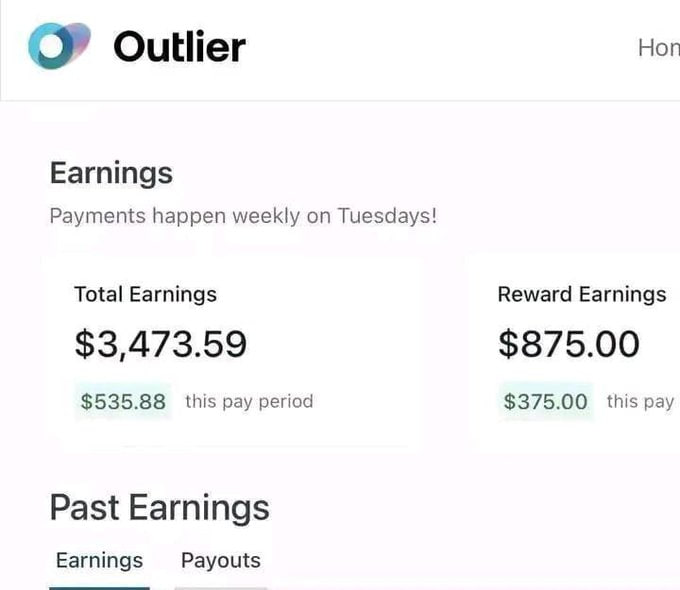
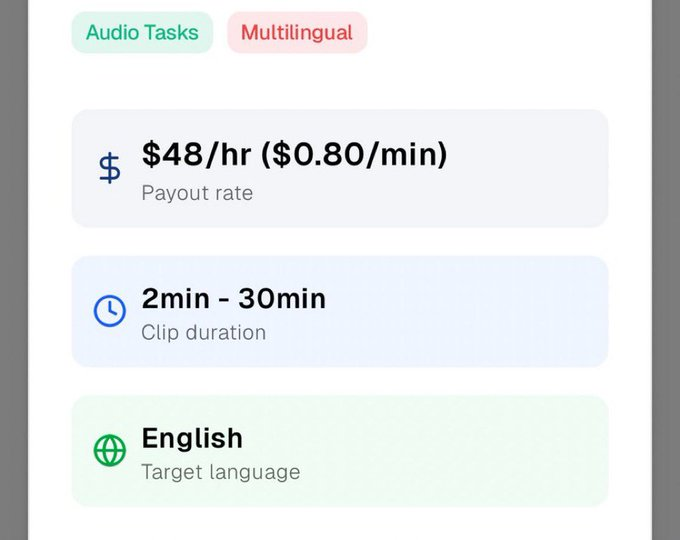
You can earn $500–$5,000 per month if you have:
- A phone
- Free time
- Internet
Here are 10 top apps that pay real money from anywhere🧵👇
1. Respondent (respondent.io)
Get paid to join research studies and interviews.
- Earn $50–$200/hr just sharing your opinions.
2. KellyConnect (kellyconnect.com)
Remote customer service & tech support from your phone.
- Training included.
- Earn $15–$17/hr.
3. Arise (arise.com)
Offer customer service remotely as an independent contractor.
- Earn $10–$20/hr on your schedule.
4. Rev (rev.com)
Transcribe audio and caption videos from anywhere.
- Earn $0.45–$1.10 per audio minute.
5. UserTesting (usertesting.com)
Test websites and apps, share your feedback.
- Earn $10 per test.
- Takes just 20 minutes.
6. Transcription Hub (transcriptionhub.com)
Work across legal, medical, and media clients.
- Earn $10–$22/hr.
7. Omni Interactions (omniinteractions.com)
Remote customer support as an independent contractor.
- Work from anywhere.
- Earn $14–$20/hr.
8. Gaggle (gaggle.net)
Review content remotely to help keep students safe online.
- Flexible scheduling.
- Meaningful work.
9. Preply (preply.com)
Know a language? A subject? Anything?
Teach it on Preply. Connect with students worldwide.
- Top tutors earn $20 /hr.
10. Toptal (toptal.com)
Connect with high-paying global clients as a freelancer.
- Competitive pay.
- Long-term projects.
That's 10 ways to make real money from just your phone.
Save this You'll need it later.
93
519
2,817
365,484
Feb 27
$MSVP #RealFi #BingXBlast @BingXOfficial
PoAI from @metasoilverse doesn’t feel like paperwork audits.
It feels operational. Tangible. Alive.
Not a stack of PDFs signed months ago , but a drone hovering over farmland, GPS locking coordinates in real time, sensors streaming performance data as it happens.
That subtle hum?
That’s verification becoming continuous.
Imagine tapping a vault interface and knowing the data behind it isn’t static reporting , it’s live telemetry. IoT sensors confirming output. Location feeds validating presence. Environmental data matching expected conditions. Each data point anchored on-chain, tamper-resistant, economically enforced.
That shift matters.
Most RWA narratives rely on: • Legal assurances
• Third-party attestations
• Periodic audits
• Trust in intermediaries
Proof-of-Asset-Integrity reframes the model:
• Continuous monitoring instead of quarterly reviews
• Cryptoeconomic penalties instead of reputational damage
• On-chain attestations instead of siloed databases
Operators stake collateral.
False reporting triggers slashing.
Verification becomes a real-time discipline , not a delayed compliance exercise.
This is where hack risk begins to compress.
Not eliminated , physical systems still fail, sensors can degrade, and edge cases exist but structurally reduced through transparency and economic accountability.
For investors, the psychological shift is significant.
Instead of staking capital on narrative confidence, they stake on measurable integrity.
Instead of blind belief, they interact with verifiable state.
From my perspective, this is a potential inflection point for RWAs:
Moving from tokenized representations…
To tokenized, continuously verified assets.
From storytelling…
To proof streams.
If this model scales, RWA stops being about bringing TradFi assets on-chain.
It becomes about upgrading how physical assets prove themselves in real time, under economic enforcement, visible to anyone.
That’s not just better audits.
That’s infrastructure evolving.
77
65
1,478
Feb 27
Real-world assets are stepping fully on-chain and $MSVP is part of that shift.
.@MetaSoilVerse is building a bridge between blockchain and tangible markets like real estate and commodities, turning traditionally illiquid assets into programmable, tradable exposure.
This isn’t just about buying tokens.
It’s about fractional ownership, on-chain governance, and transparent yield tied to productive assets.
The RWA narrative is expanding fast, and RealFi is moving from idea → infrastructure.
#RWAFi #BingXSpotBlast
🎁 $80 Welcome Bonus on BingX:
• Register to receive $10–$30 bonus
• Buy 700 $MSVP and receive $100 reward (no holding required, 1000 MSVP cap)
• Trade $5,000 in perps (crypto, gold, stocks, forex) to unlock extra $20 voucher
bingx.com/en/kol-blaster…
91
1
79
1,521
Feb 26
Most RWA projects stop at creating a token. But @MetaSoilVerse ($MSVP) is thinking bigger.
It’s not just about turning farmland, solar farms, or warehouses into digital assets. The goal is to make those assets behave on-chain like they do in the real world producing yield, following regulations, and adjusting when performance dips.
This isn’t easy. Real-world infrastructure is messy: legal rules, operational delays, unpredictable output, and multiple intermediaries. MetaSoilVerse solves this by turning all that complexity into smart, verifiable logic on-chain. You can track performance, enforce compliance, and even manage governance through the DAO.
The result? Industrial assets, farms, and energy projects become dynamic, investable, and programmable in a way that blends DeFi innovation with real-world economics.
The $15K $MSVP Prize Pool is live if you want to participate:
🔗 bingx.com/kol-blaster?pr…
Sign-up bonus: 🔗 bingx.com/rewards?ref=EL…
@MetaSoilVerse @BingXOfficial
37
1
32
3,251