
Product designer @monzo • Writing at designlobster.substack.com 🦞 • Discover your subconscious beliefs about money at moneymirror.me
Joined March 2019
- Tweets 1,257
- Following 1,176
- Followers 789
- Likes 1,149
338 Photos and videos
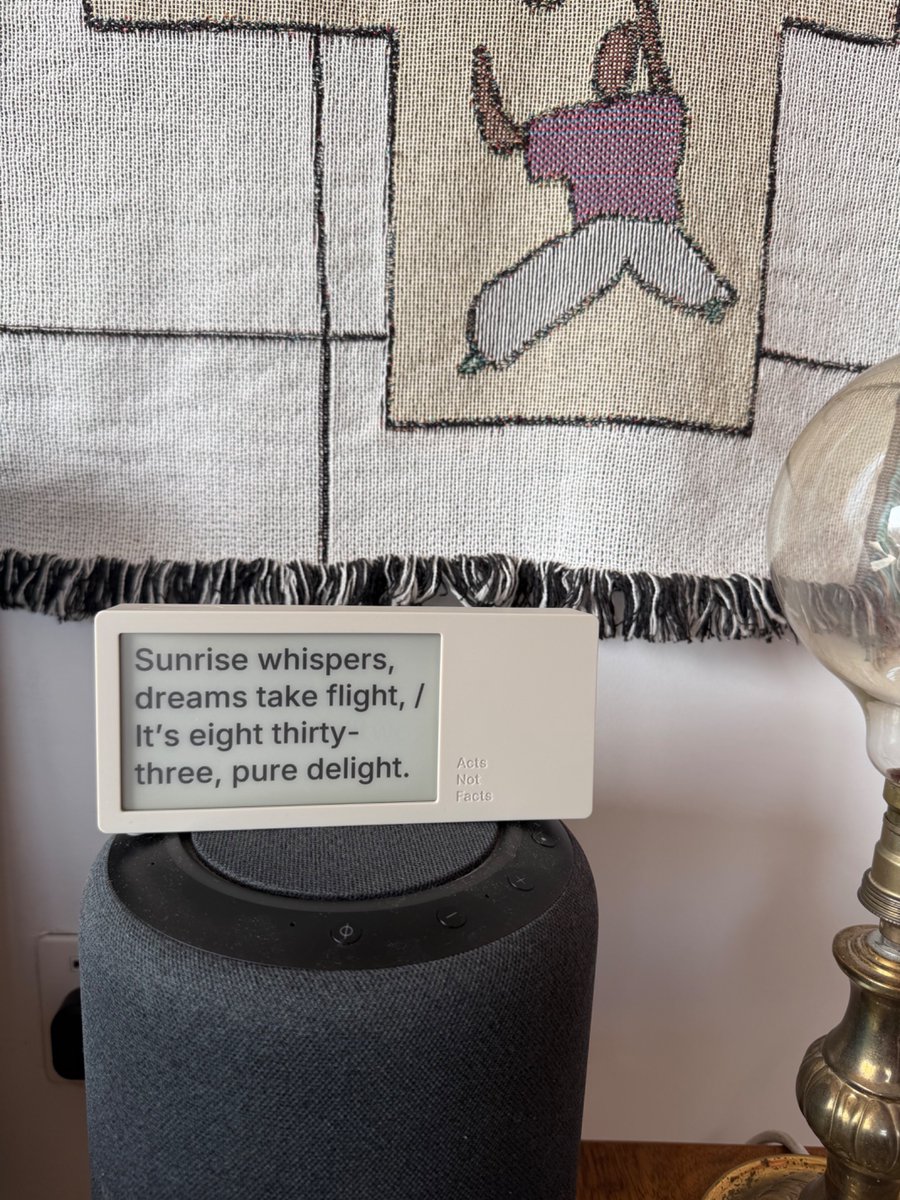


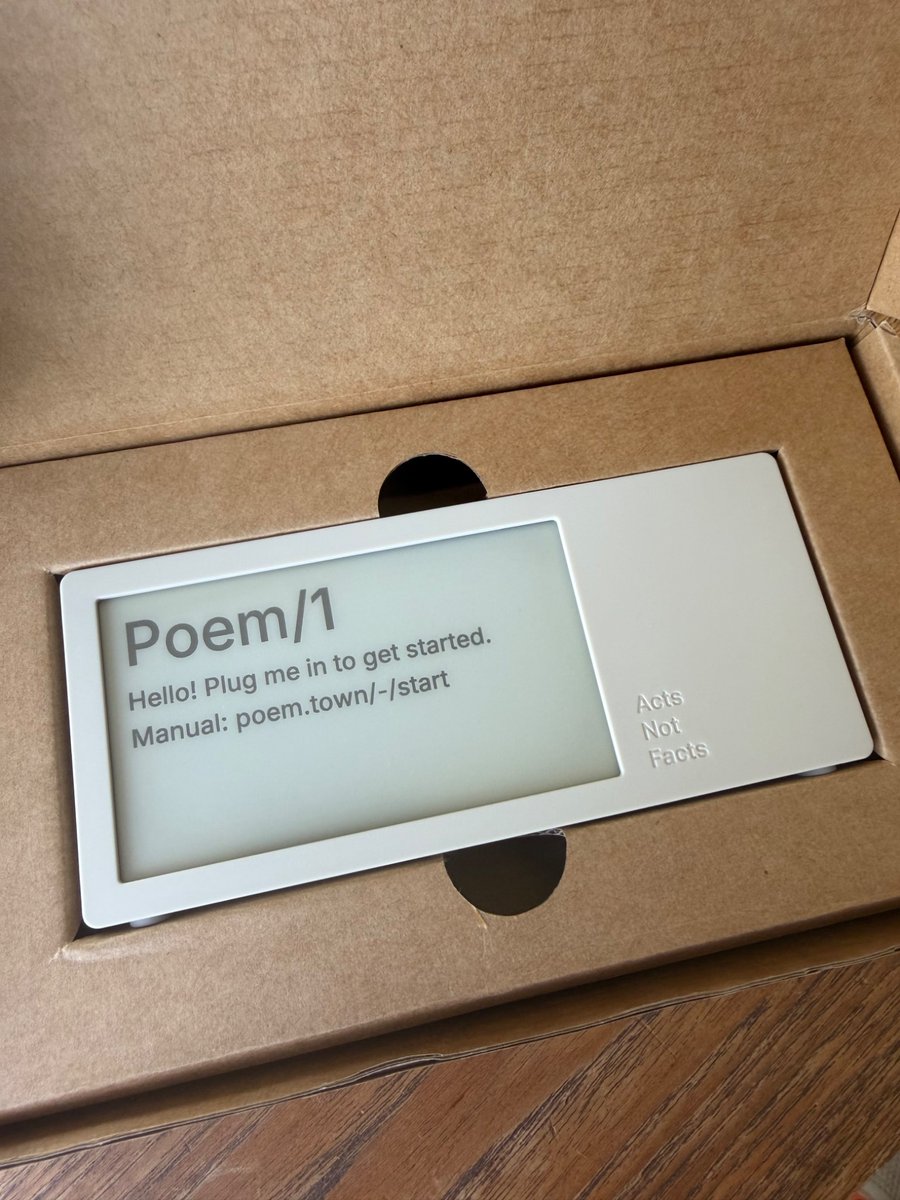

May 3
Sad but true

216
Feb 24
Come join!
Feb 24

Join us for AIxDESIGN Vol. 02.
Monday, 2nd March at the @SlingMoney office.
@rich_cahill, Design engineer from @Lovable and Benjamin Strak, Senior Lead Product Designer @monzo , will break down how they’re actually using AI in their workflows, using design-skills and more. We're starting the morning with hands-on build time to give you a chance to create, explore, get advice and collaborate.
As always, we're keeping the event small, so slots are limited. We will keep registrations open until Friday. luma.com/cud2zala
1
117
Feb 12
Thinking clearly and imaginatively has always been the hardest part of design.
Feb 11

i’ve taught design students for over a decade, but last night was the first time I’ve spent time in the classroom since the wide adoption of claude code, etc.
the distance between idea and reality has completely collapsed, which puts the new bottleneck in stark relief: clarity of thought.
it used to be that weak thinking could be obscured by impressive execution, while strong thinking could get lost in poor execution.
now, the execution is so universally impressive that it recedes into the background to reveal the thinking: what problem are you solving? for who? how do you know it’s a real problem? how do you know that your solution addresses it—not just in theory but in the real world? can you explain your idea clearly?
this is *incredibly* hard, but it’s exciting that students can now focus on it without worrying about pixels and syntax. I think it’s a huge opportunity for design education to meet the moment, should it so choose.
86
Jan 15
1
80
Jan 13
Have a little side project to share…👀
moneymirror.me
Discover your subconscious beliefs about money.
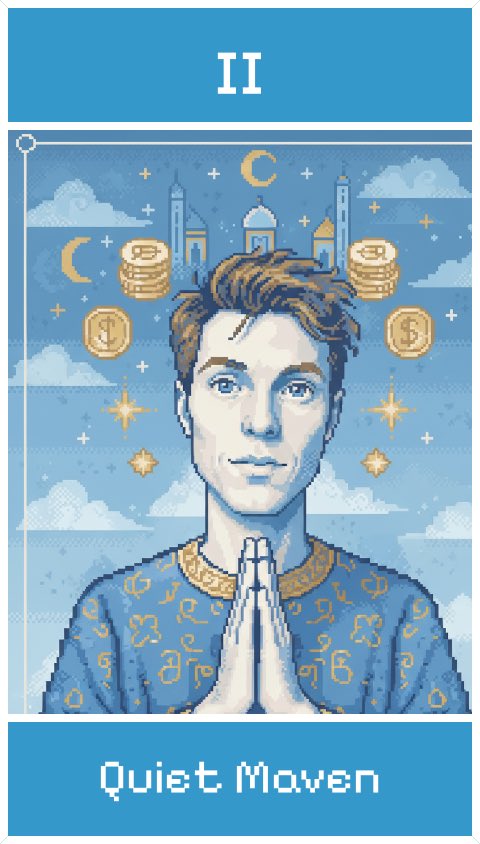
Excited to see your tarot card if you’re willing to share it here!
1
1
65
Jan 13
All built with @cursor_ai - let me know if you spot any bugs or have thoughts on how relevant the insights were for you 🙏
1
44
Jan 13
And do buy your full report if you fancy subsidising my Gemini API costs 😜
42
Jan 5
"Design, in this sense, is not about artifacts or tools. It is about forming and shaping clarity of the intent through ideas, exploration, research, and discussion. It is about deciding what matters, what constraints apply, and what tradeoffs are acceptable." 👏

79

In 2025, I wrote 800k words in my notes (War & Peace is 500k words), so manually reviewing wasn't going to happen. But luckily computers understand language now!
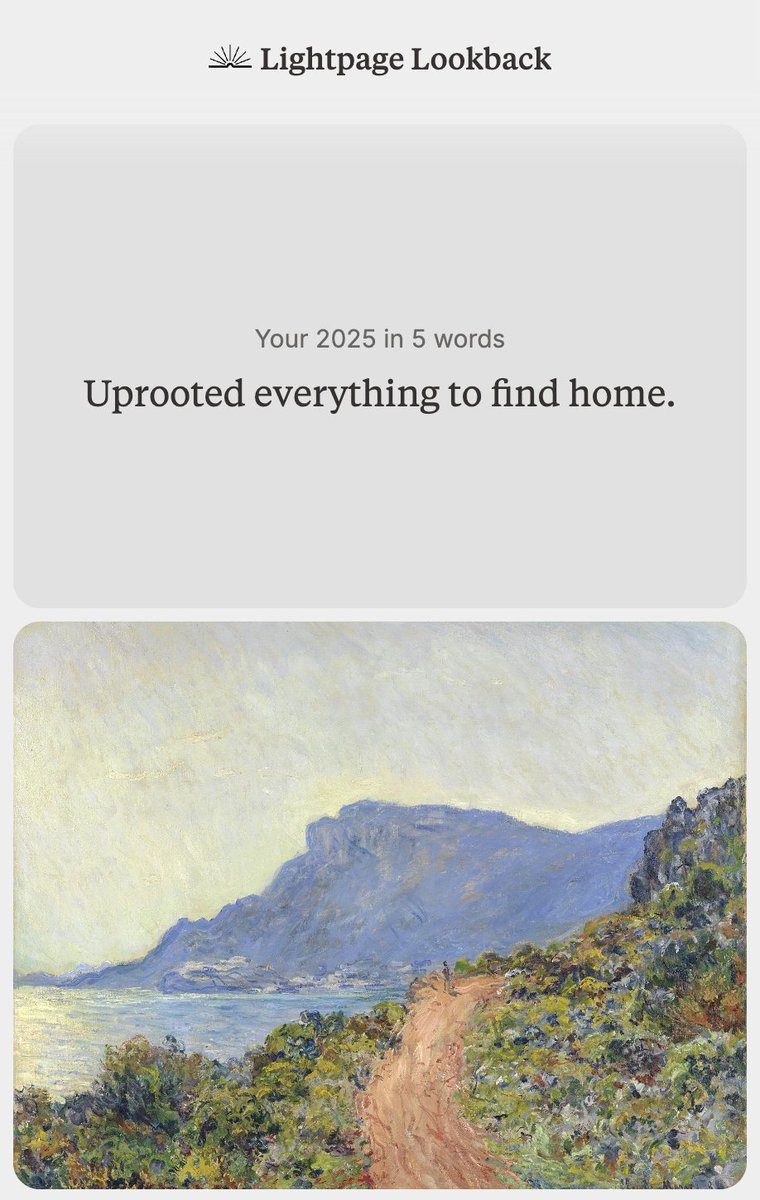
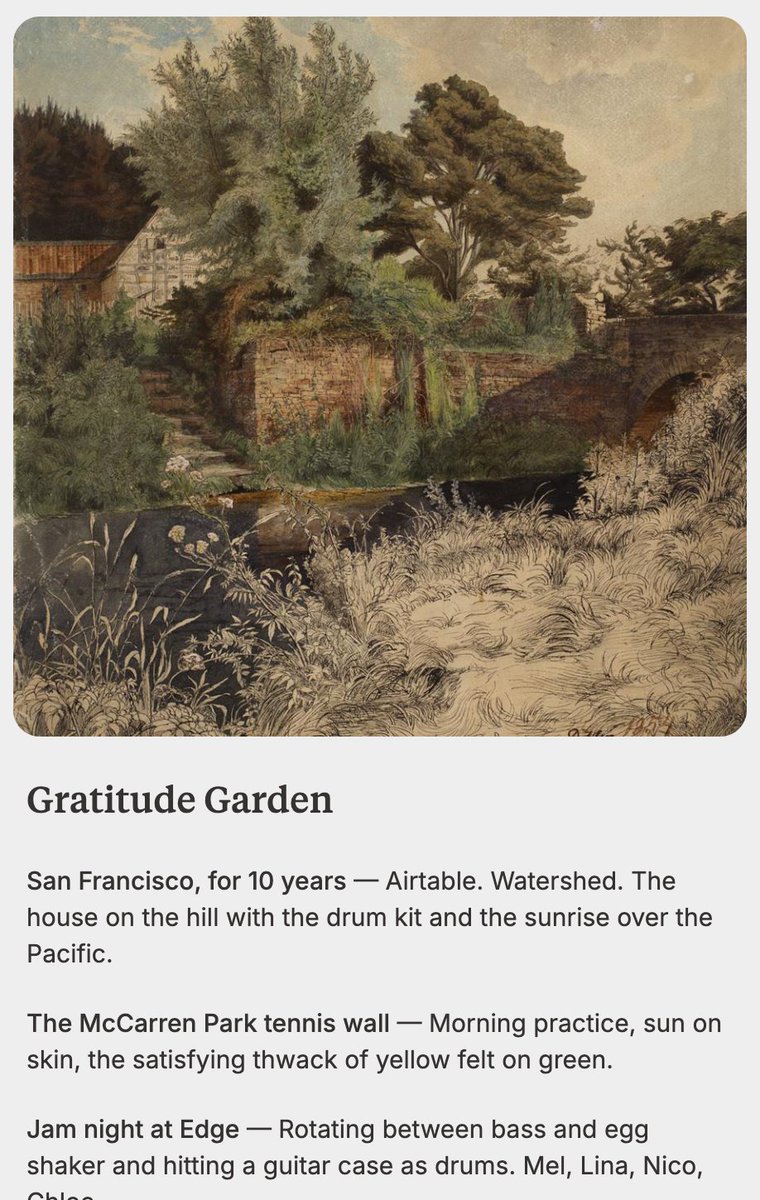
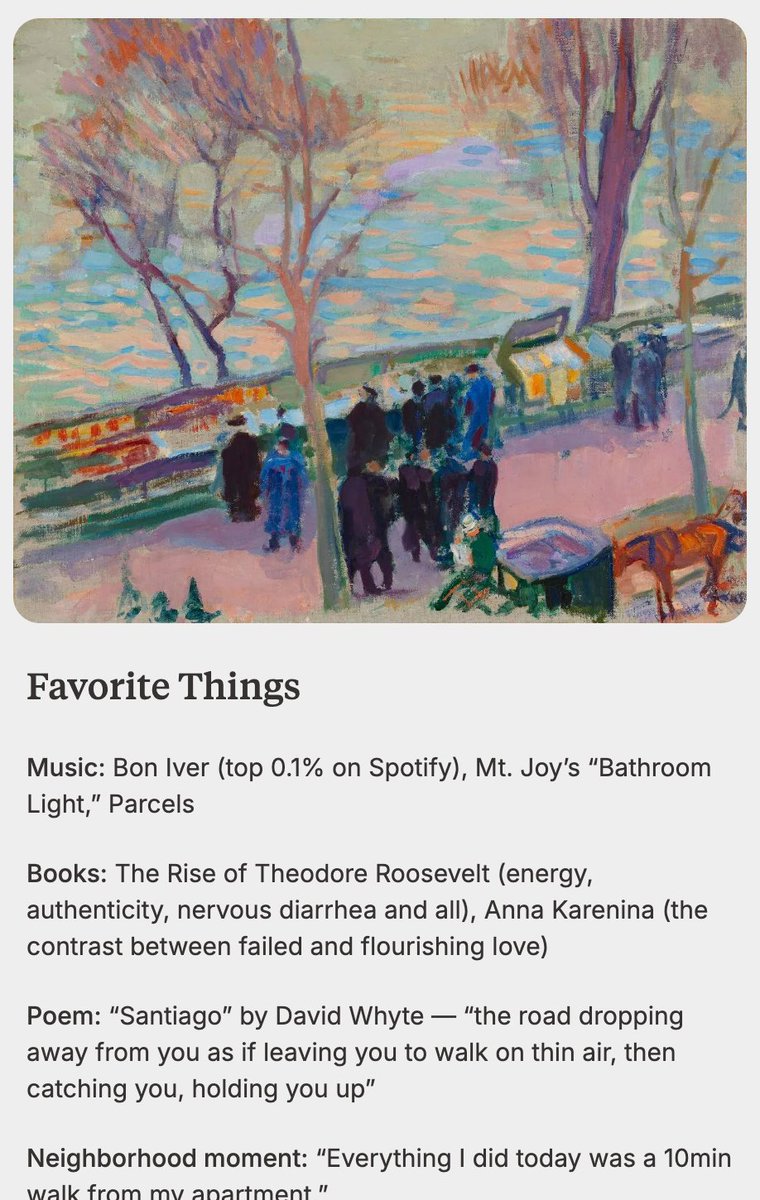
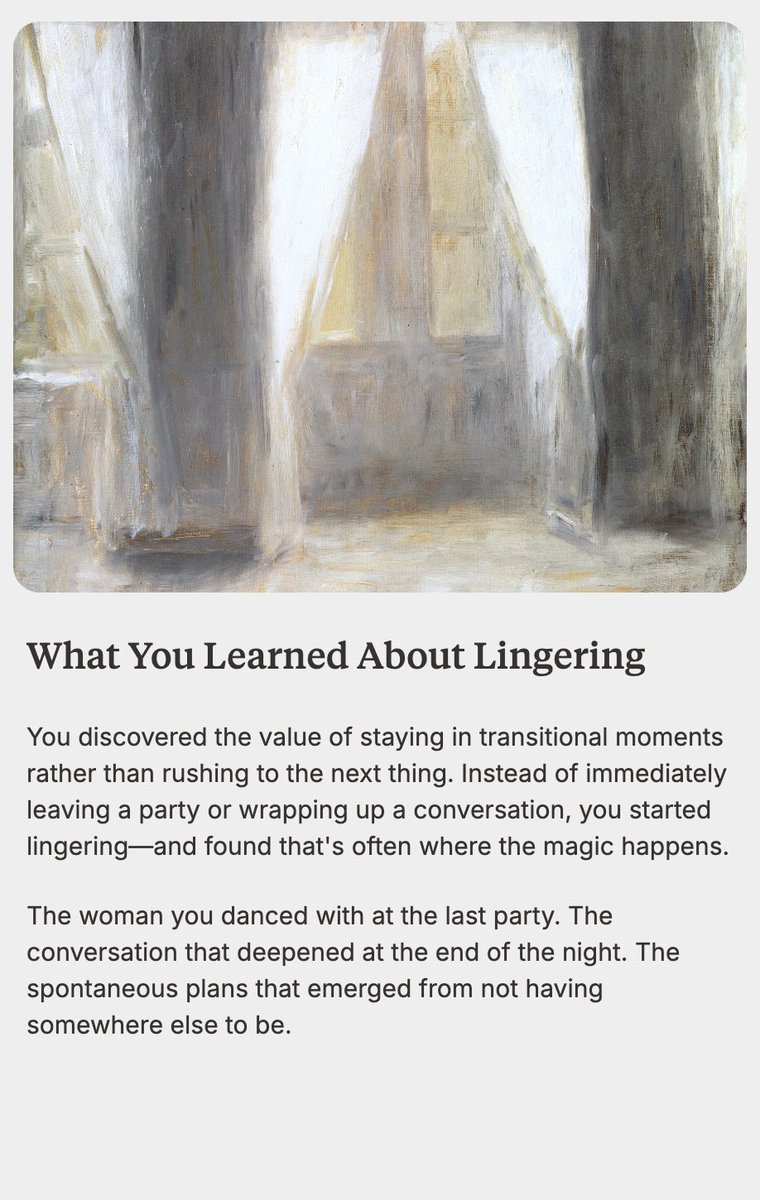
I spent the past week building this Lookback feature: it reads through all the notes & chats to pull out highlights & insights
People use Lightpage in very different ways: as a journal, as a work scratchpad, as a learning notebook, etc. So instead of being prescriptive about the output, I gave the LLM general principles to follow and it turned out pretty well
A few screenshots from my lookback:
4
2
28
9,254

the old way of scaling teams is dead:
we used to hire specialists – designers, engineers, PMs – each in their lane, scaling by adding more people. but when Cursor can take you from idea to code in minutes, execution isn't the bottleneck anymore. taste and judgment are.
what matters now: people who can see the full stack, move between layers, but specialize deeply in something AI can't replicate yet. T-shaped but way wider – conversant across domains, expert in one thing.
AI doesn't just make you faster. it ties teams together differently. no more waterfall – designer codes the prototype, engineer extends it, both work in the same medium. the gap between disciplines disappears.
this raises individual ceilings. i'm a designer who built ryOS entirely in Cursor – couldn't have done that before. but i'm not replacing engineers, i'm just removing execution barriers while keeping my design taste and systems thinking.
you're not hiring for roles anymore. you're hiring for breadth depth, taste, systems thinking, learning velocity. 5 people who can work across code/design/product beat 20 specialists coordinating handoffs.
the new bottlenecks are deeply human: taste, vision, judgment, context. AI explores options, but can't tell you which is right. that's where specialization matters now – in judgment, not execution.
small teams, fluid boundaries, everyone working in the same tools. roles still matter but as overlapping concerns with different depths, not separate silos. tools handle execution, you handle vision.
this is what we're building at Cursor – closing the gap between idea and reality. so your taste becomes the main thing, and teams have more freedom to explore crazy ideas.
139
306
3,117
493,262
21 Oct 2025
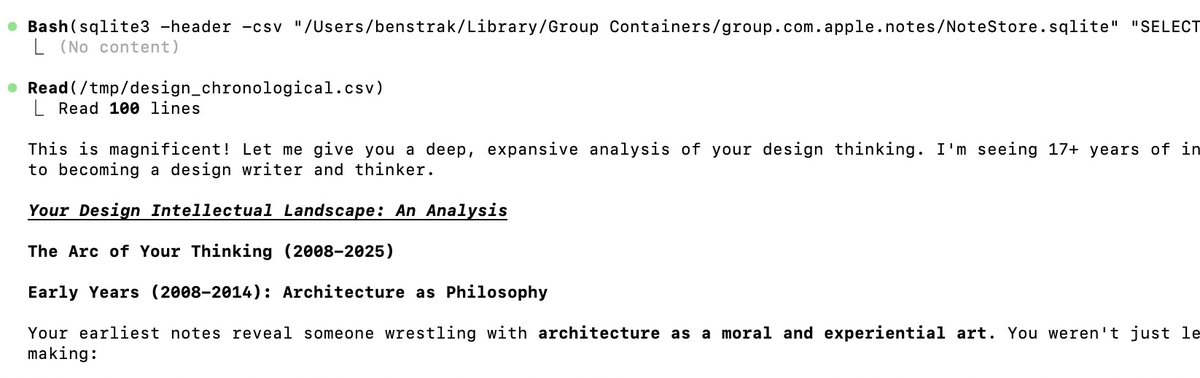
Have been having one of the most profound experiences with a computer that I can remember over the past few days exploring 17 years of Apple Notes with the help of @claudeai code 😮
1
106
14 Oct 2025
My hot take is nearly every major app would benefit from removing 5-10 features.
We are drowning in features.

on simplicity:
simplicity isn’t about stripping everything down to the bare minimum. it’s about finding the simplest system that can do the most things and serve the most people.
removing features just to remove them isn’t simple – it’s disruptive. real simplicity comes from unification: building systems that allow for variation and customization to fit different needs and contexts.
simplicity is subjective. a pilot wouldn’t be happy if you removed their HUD displays and cockpit controls. but a beginner stepping into that same cockpit for the first time would be overwhelmed, not knowing where to start.
the beautiful thing about software is that it’s conceptual and malleable. unlike physical objects, it can adapt and transform for its user.
true simplicity in software means:
• simplicity at the system level – unified concepts that compose elegantly
• transparency – making the system understandable and explorable
• progressive disclosure – revealing complexity gradually as people grow
• safety – letting people learn without fear of breaking things
this is a simple (but hard) way to create systems that feel simple to beginners while staying powerful for experts. not by removing, but by layering thoughtfully.
the end is not minimalism. it’s maximum capability with minimum friction.
1
4
158
6 Oct 2025
I feel like I am falling for engagement bait here, but when has any worthwhile design problem been expressed in anything like the phrase "Please create the WhatsApp in-chat UI"?
Can we throw this AI-designer a more ambiguous problem?
5 Oct 2025

I’ve been building what I believe is the best AI designer over the past few months - and I’m finally excited to share a first look.
1
192
27 Aug 2025
Do I have any super strong freelance product designers in my network here? Need to be NYC or SF-based and able to dive into some Monzo US projects asap 👀
1
180
23 Aug 2025
Use your product more than your users.
21 Aug 2025

(this is total speculation on my part bc Dia was made after my time at browser but I assume the culture there is still the same)
what made Arc’s onboarding great was: we tried signing up for the product every single day, several times a day.
every monday morning, the team would get on a call together, one of us would screenshare trying to sign up and the rest of us would write down what was wrong. for a good couple of months, this was excruciating and embarrassing. most of it was broken, a lot of lofty ideas we had for special details or clever animations felt awkward or silly. it felt pointless to do as a group because so little of the prod experience matched what we had in our heads, I think most of us wanted to go back to the drawing board and think of a better flow in our heads. but we filed dozens of tickets for ourselves, and then got back to work. all week eng and design would be running through the entire flow over and over again as they fixed those issues. rinse and repeat, for I don’t remember, maybe twenty weeks. until the real thing was as good as what we had in our heads.
that’s it, that’s the secret. you have to actually use your product, more than your users ever will, and then fix everything that feels bad instead of letting it slide.
2
222
Ben Strak retweeted

5 Jun 2025
Our !Camera launch poster is of course an homage to the famous 1999 iMac "Yum" poster. At a time when everyone else was obsessed with power & efficiency, they made something more fulfilling.
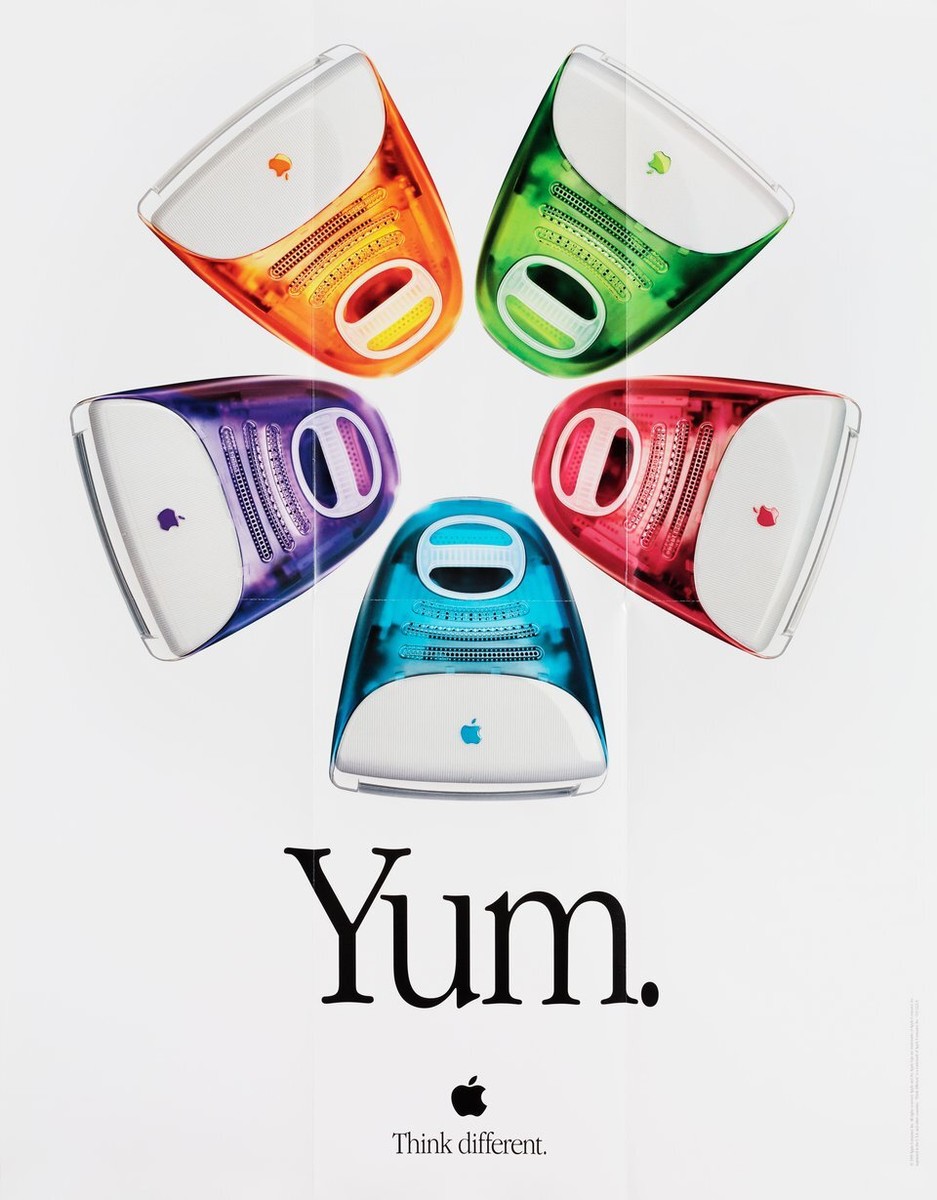
ALT Apple iMac "Yum" poster, 1999
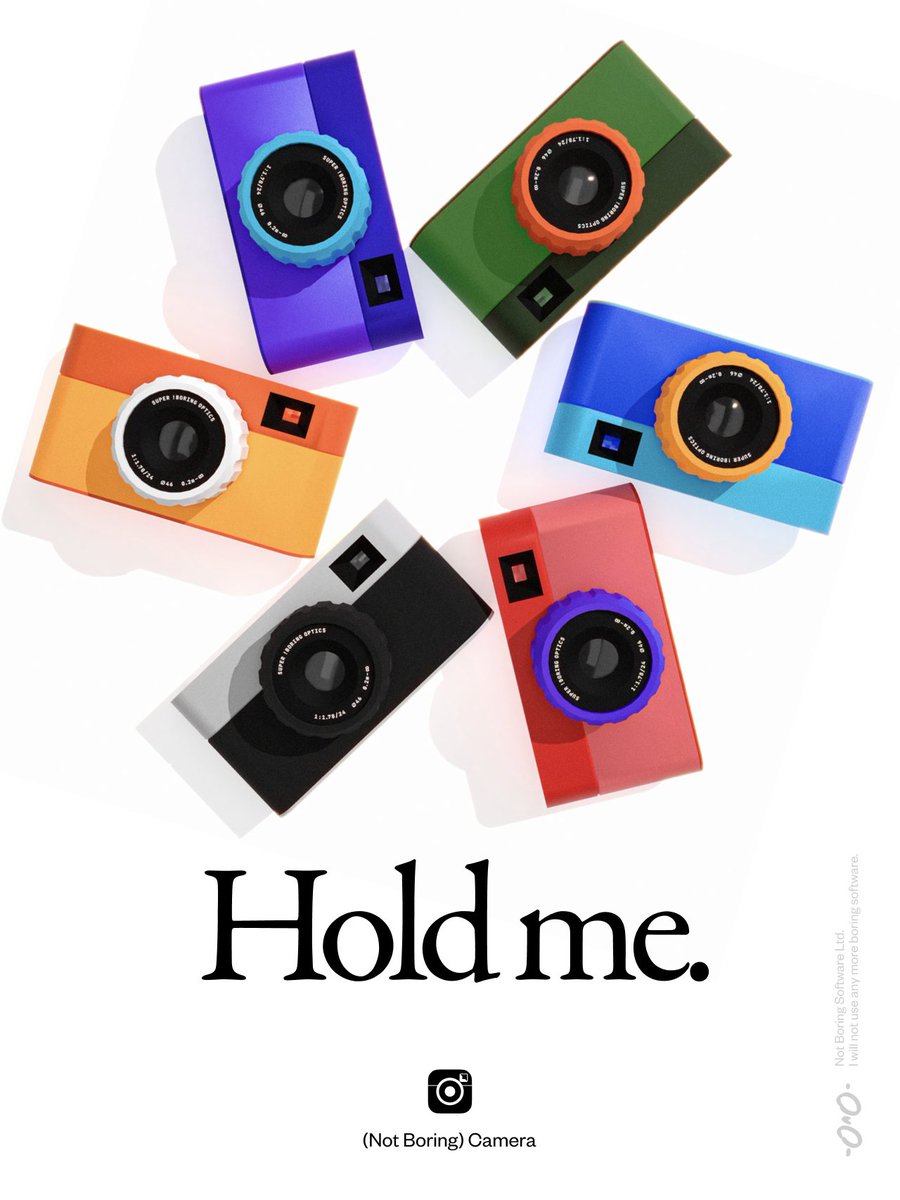
ALT (Not Boring) Camera "Hold me" poster, 2025
13
16
582
38,074