
CEO of @Circular_fi & @arbmesol | Member of @SuperteamCAN & @Ferno_ag
Joined August 2018
- Tweets 347
- Following 275
- Followers 453
- Likes 972
69 Photos and videos
Pinned Tweet

Apr 30
ArbMe is finally live!
Trading platforms stole $1 billion from you in 2025... this year, traders are taking back control.
The extension lets you arbitrage your own trades and earn cashback by arbitraging your price impact.
A new era is beginning.
Trade to Earn.

Trenchers, ArbMe Extension is now live and lets you earn cashback on your @solana Axiom trades.
Trading platforms stole $1 billion from you in 2025 by arbitraging your transactions, the time to change has come.
ArbMe lets you keep trading on whichever platform you want.
- It runs in the background.
- Analyzes your trades.
- Performs price arbitrage for you.
- Distributing the profits directly to your wallet as SOL cashback.
With our Chrome/Firefox extension, in 2026 traders are taking back control.
Currently available on: Axiom, Jupiter, Circular... more platforms coming soon.
Developed for @colosseum Frontier.
A new era is beginning for traders.
Download the extension and start earning cashback 👇
chrome.google.com/webstore/d…
Trade to Earn.
2
16
1,459
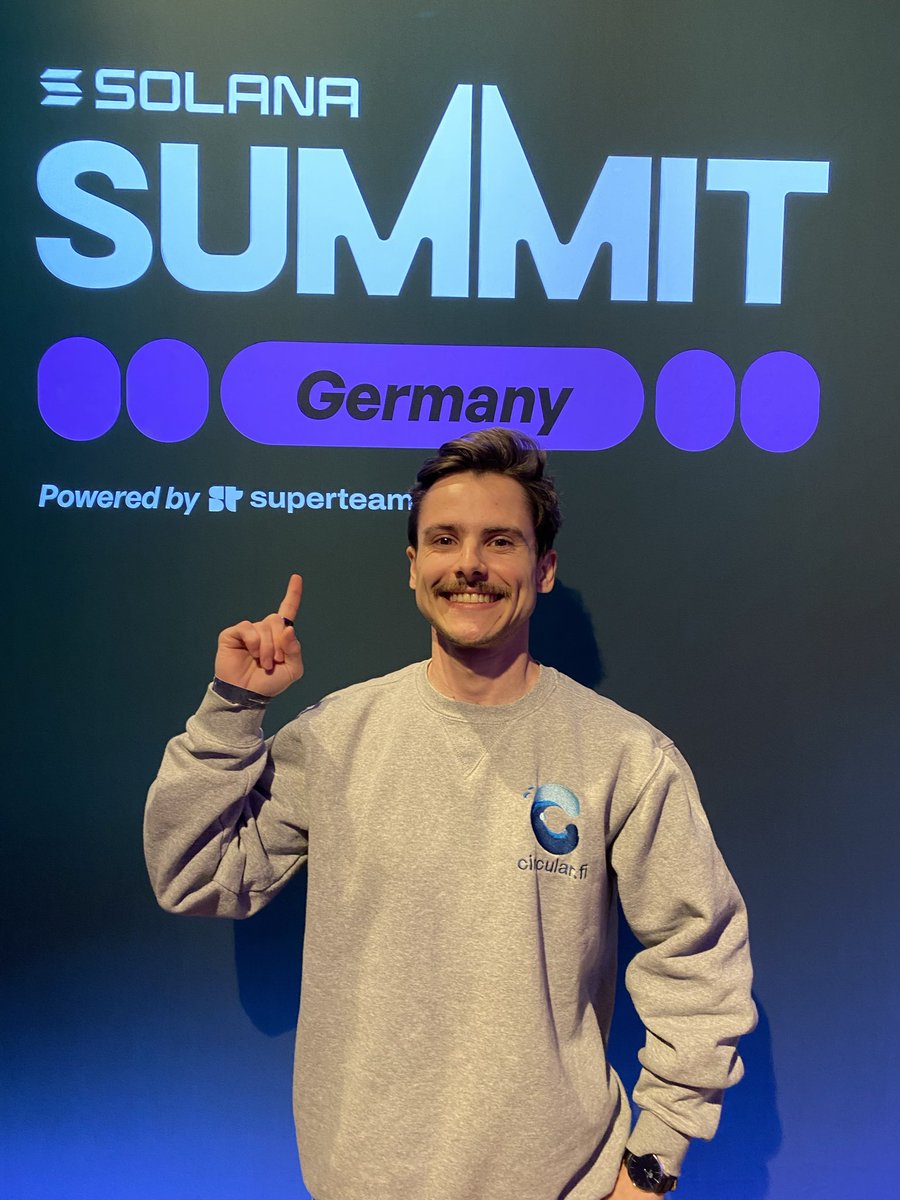
The @solana summit germany organized by @SuperteamDE was truly incredible!
It was my first time in Germany, meeting the builders is always an amazing experience but the energy here is absolutely wild!
Also super happy to see my mates from @SuperteamCAN they’re the best 🍁
4
1
42
814
Jun 9
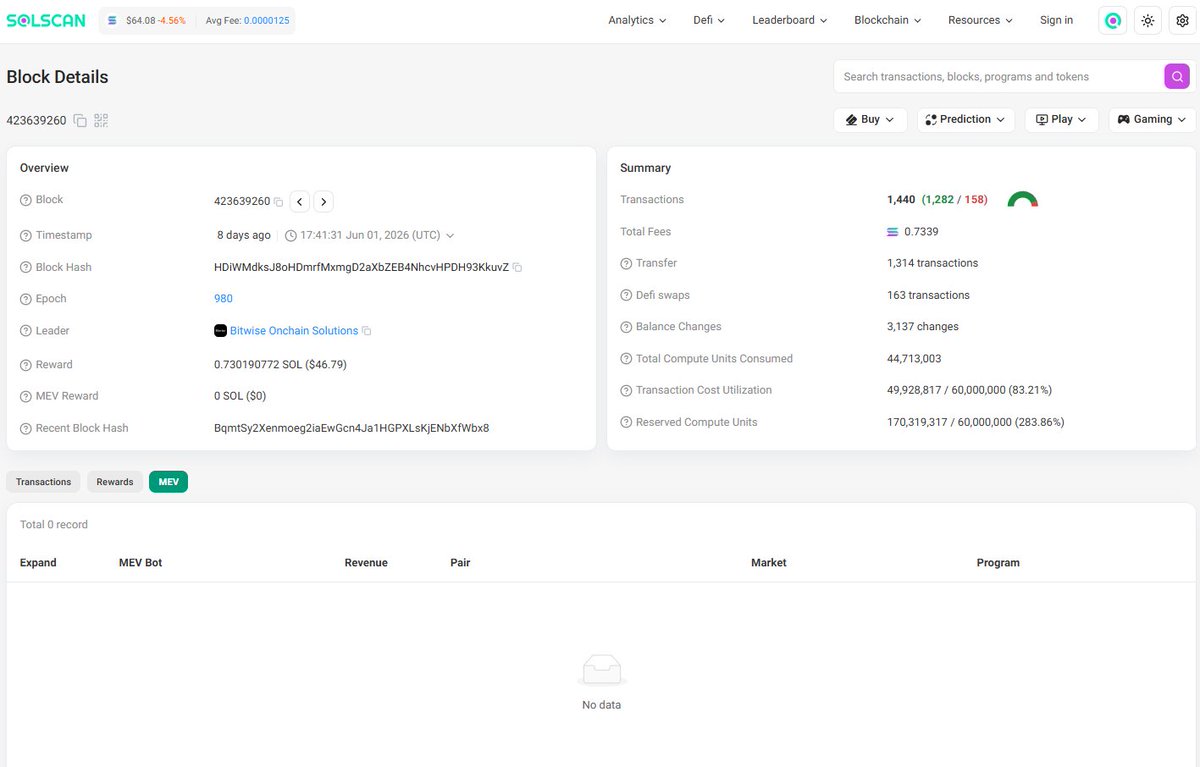
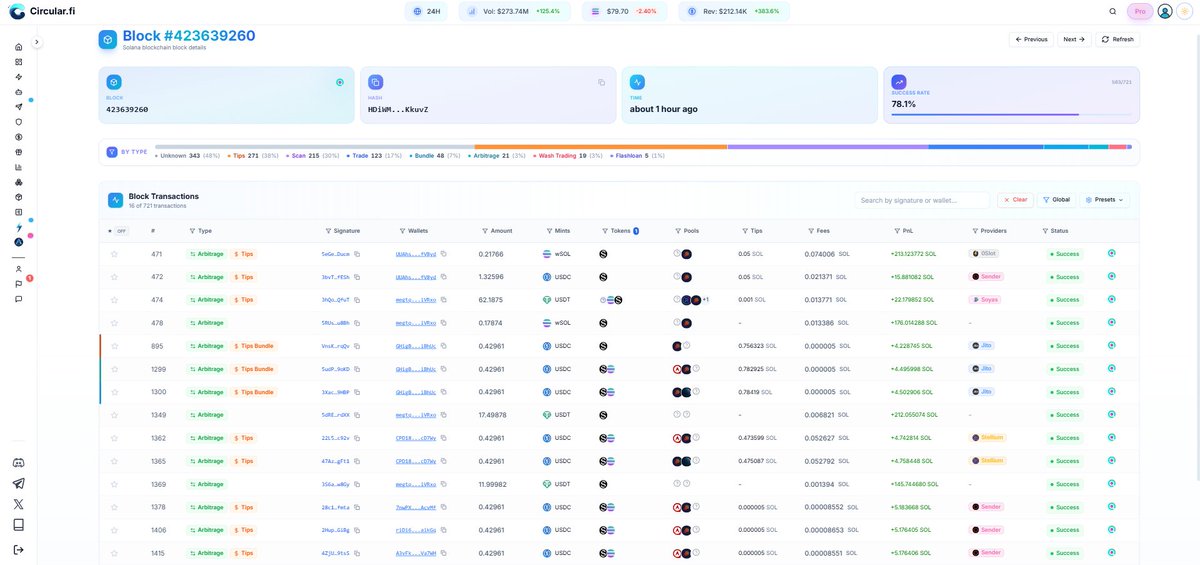
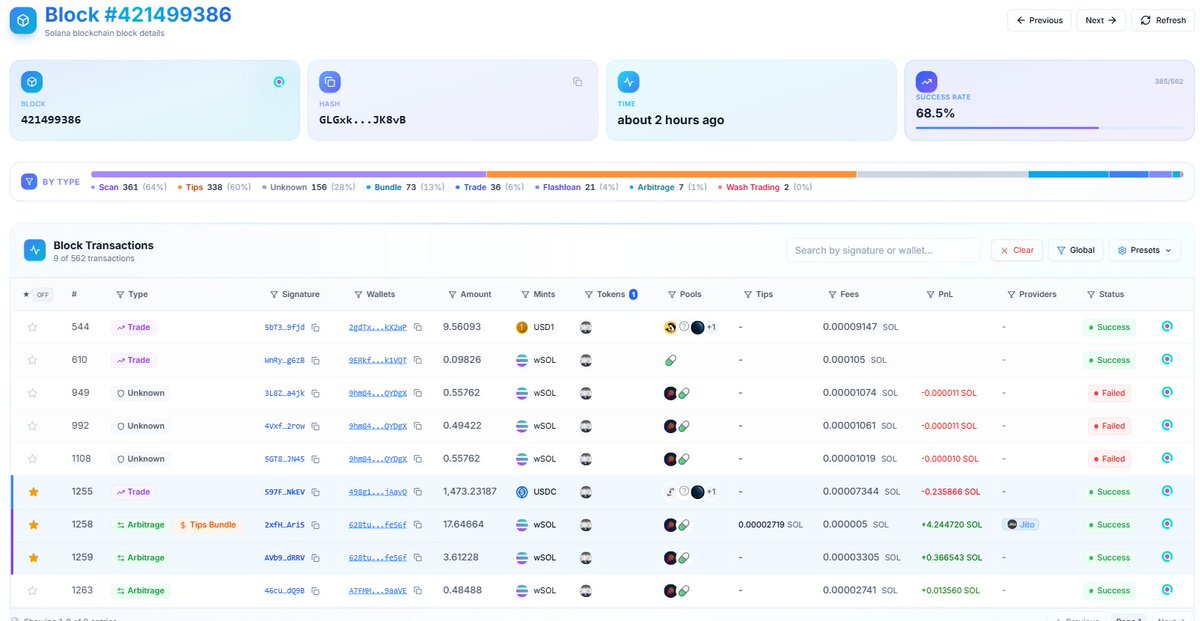
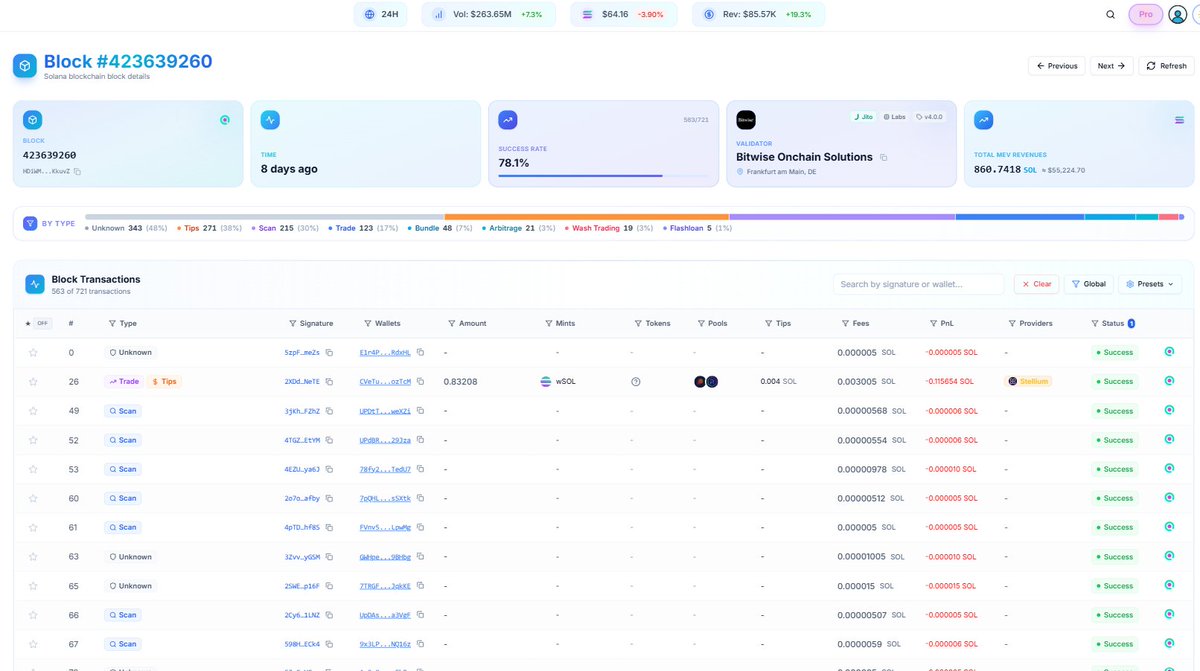
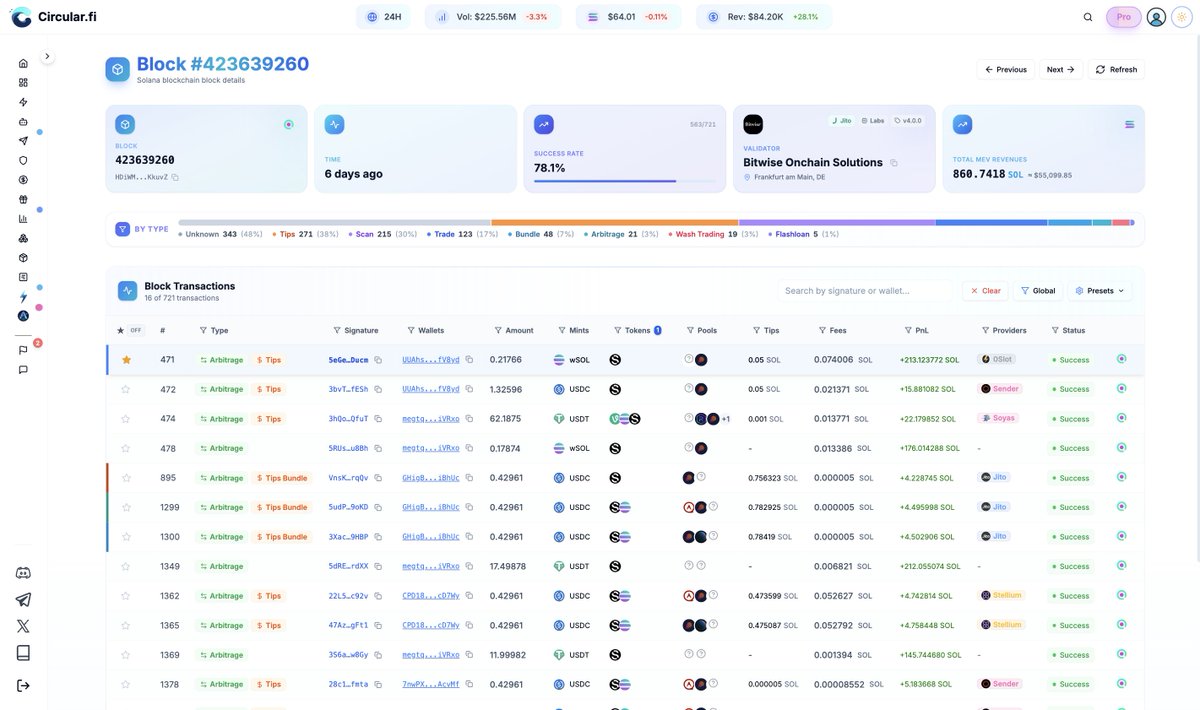
Are you really paying attention to what's happening on @solana? In this block, over $55k (860 $SOL) was generated through arbitrage.
On Solscan when I open a block, the "MEV" section is always empty, showing no revenue even though there was a huge amount of MEV in the block.
So I asked my team to improve the block page to display the actual MEV revenue from a block.
Now you can see two new types of information:
- Which type of validator validated the block (Agave, Agave-Jito, Harmonic, Firedancer, ...)
- The actual MEV revenue generated in the block
This is a game-changer for block analysis for any on-chain analyst.
It also allows you, when you see a large arbitrage transaction, to better understand the block in which it occurs.
Transparency is what we've been championing for nearly two years at @Circular_fi as the leader in Solana arbitrage data.
Copied but never matched.
Accelerate.
Jun 9

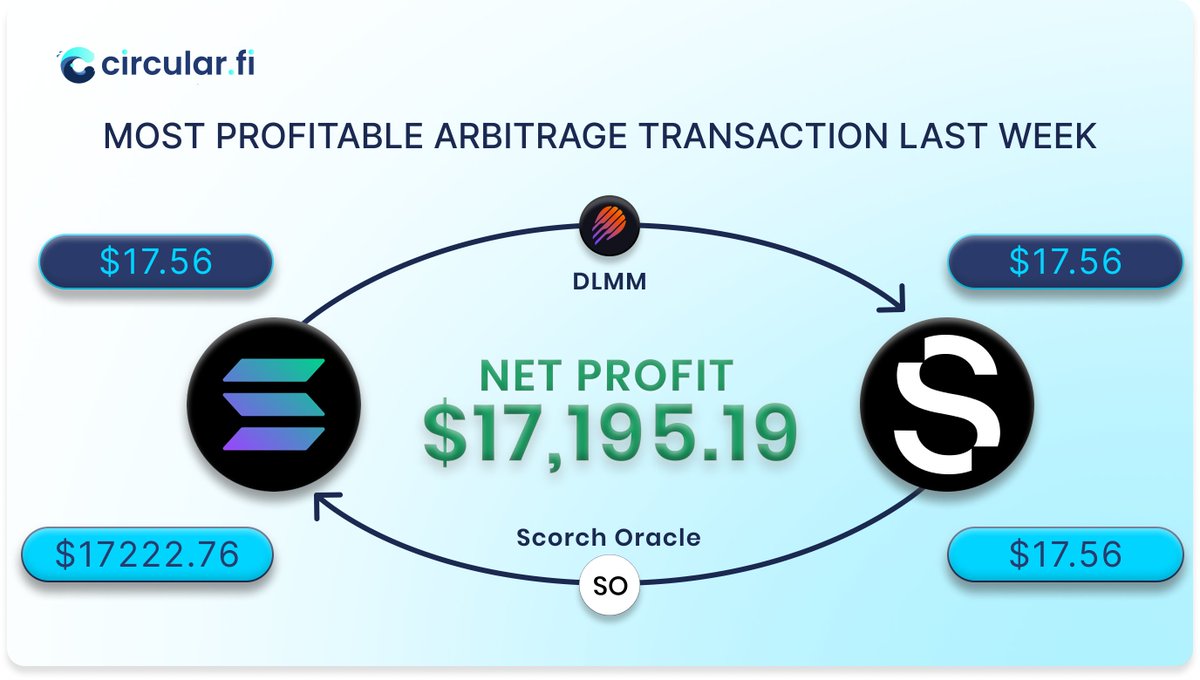
🚀 One of the biggest MEV arbitrages on @Solana DeFi last week spotted by Circular.fi
Input: $17.56 → Output: $17222.76
Route: $SOL → $SKR→ $SOL
Via: @MeteoraAG → Scorch Oracle
💸 $17195.19 profit

4
3
66
8,059
Jun 1
I agree: MEV is dead on @solana.
I read and reacted to @buffalu__ article over a month ago, but it gave me a lot to think about as the CEO of one of the largest MEV data applications.
After going through the opinions of traders and companies over the past month, I realize that MEV is still very often associated with sandwiching, mostly because the topic is misunderstood.
If we exclude all the malicious parts of MEV, what is the concrete idea behind this practice?
The idea is to monetize transactions.
Nothing more complex than that.
Most of the time, the expected monetization from MEV comes from arbitrage between DEXs.
This practice is profitable for the arbitrager, but it also makes the market healthier by bringing the quote you see on your frontend closer to the actual execution value, meaning the real amount of tokens you will receive.
In arbitrage, we need to clearly distinguish between several practices:
- Spam: on-chain computation, not the most efficient for the chain
- Shreds: off-chain computation, moderately efficient
- Orderflows: off-chain computation, extremely efficient
But we have the same problem with the word "Orderflow".
It is the most efficient and healthy approach for the market, but people assume orderflow is a bad practice because it is often associated with sandwiching.
There are already companies in the market representing around 35% of generated revenues.
I won't name them in this tweet, but looking at Circular's top 10 makes it very easy to understand (one of them does not use Jito because they are a direct competitor 👀).
Today, 35% of revenues are generated through orderflows.
Which means 65% of revenues are still generated through shreds or spam.
My opinion: no clear leader has emerged, and there is no solution that everyone knows, for several reasons:
- The use of the word "MEV"
- The use of the word "orderflow"
- The fact that these players want to stay in the dark, fearing a bad image and the loss of customers
After considering all these factors, and coming back to the article, I decided that with Circular, we are going to build a layer.
Death to the terms "MEV" and "Orderflow".
If the only purpose is to monetize transactions in a healthy way, why not call it exactly what it is?
A monetization layer.
Healthy. Clean. Transparent. Without harmful behavior for the chain.
At @Circular_fi, we want to create the first Solana transaction monetization layer, giving full traceability to flow providers while also making it accessible to everyone.
Everyone should be able to monetize their transactions.
Validators. Wallets. dApps. AI. Traders.
If this monetization layer had existed in early 2025, we could have already redistributed over $1 billion to flow providers.
But our goal is not only to receive transactions earlier than the rest of the network simply to get an arbitrage hedge.
Our goal is to build technologies on top of this hedge that will benefit the entire ecosystem.
The ultimate goal?
To use our monetization layer as a prediction layer, allowing us to build the most powerful and trustable aggregator in the ecosystem, giving traders the ability to truly get the most optimal quote and execution possible.
That is possible.
We're going to do it.
Accelerate.

5
4
42
8,706
May 29
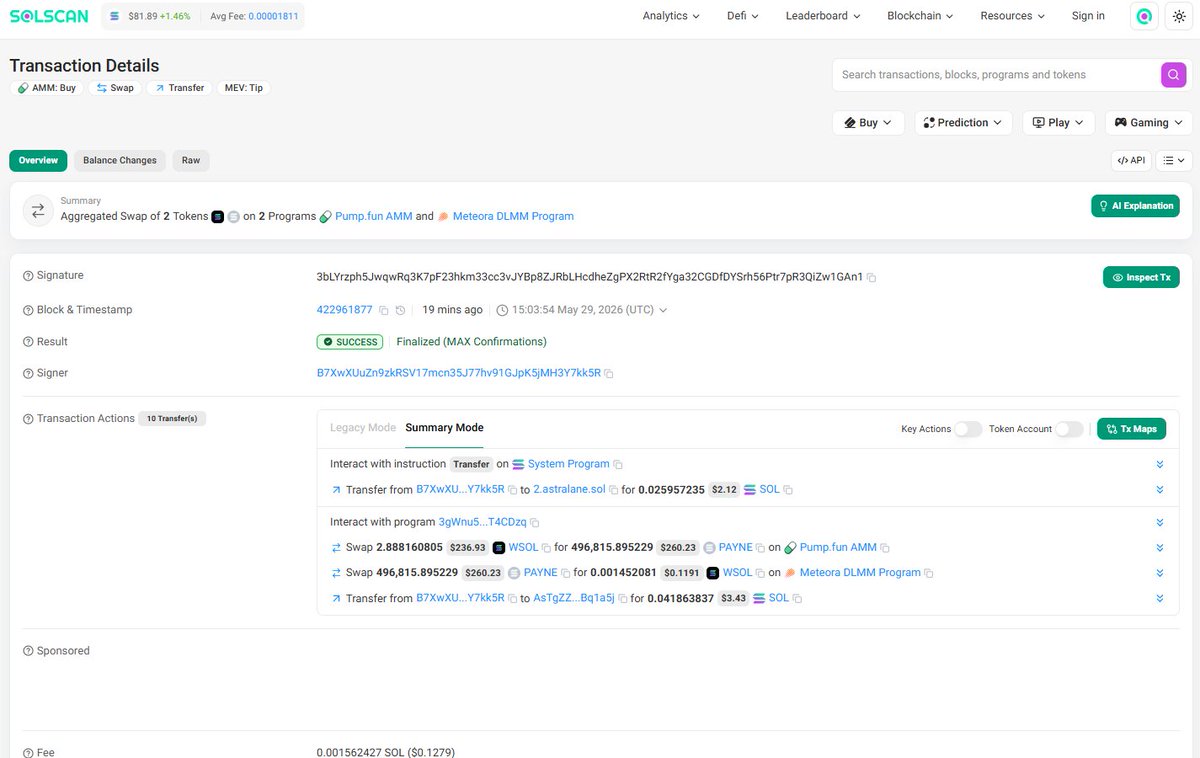
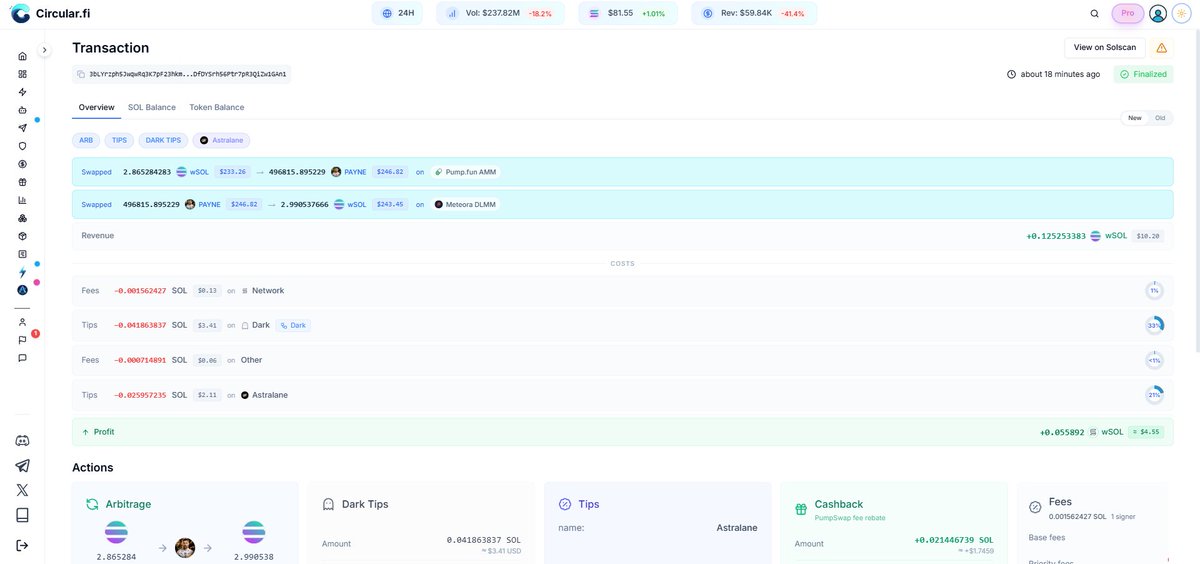
If you understand the data better than Solscan on Solana, you're on the right way 😎
Solscan output token: 0.001452081 SOL
Circular output token: 2.990537666 SOL
3bLYrzph5JwqwRq3K7pF23hkm33cc3vJYBp8ZJRbLHcdheZgPX2RtR2fYga32CGDfDYSrh56Ptr7pR3QiZw1GAn1
1
16
490
May 29
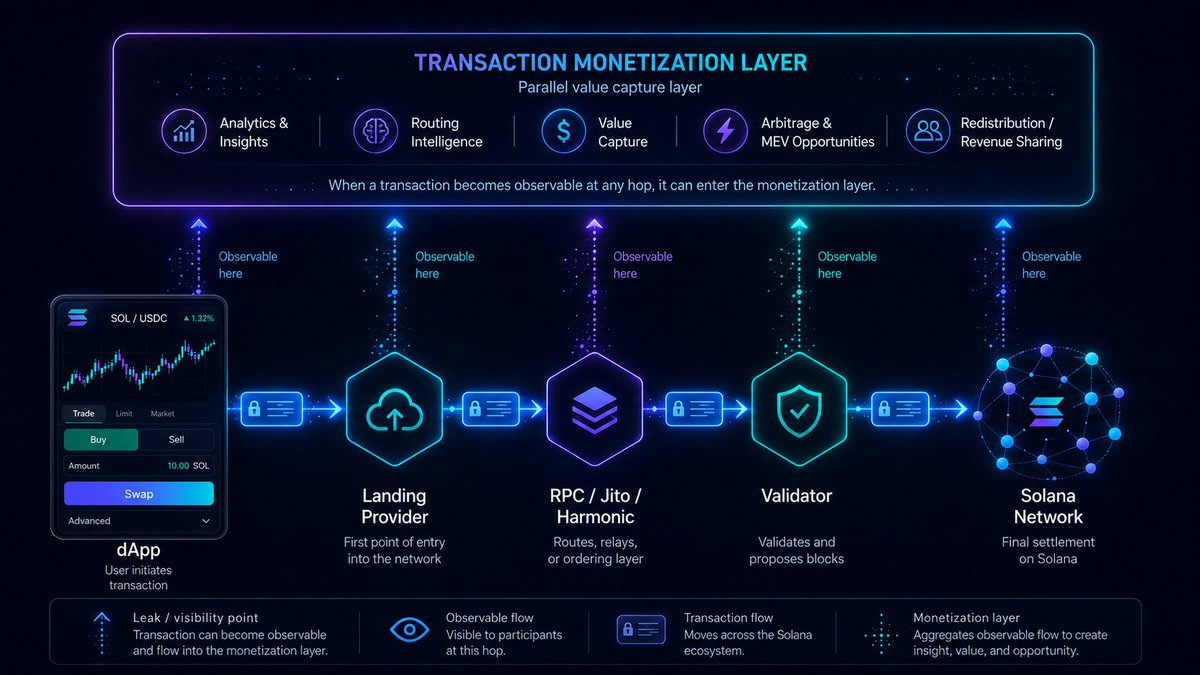
Have you ever heard about transaction monetization layers on Solana? It was a $1b market in 2025 but it could be bigger in the future.
In theory on the Solana network, a transaction remains private until it is officially recorded on the blockchain.
But in practice, there is an entirely different world evolving in parallel.
A monetization layer is built on top of Solana, allowing actors known as flow providers to monetize their transactions.
Flow providers can take several forms:
- Traders: They can share their own transactions with a monetization layer
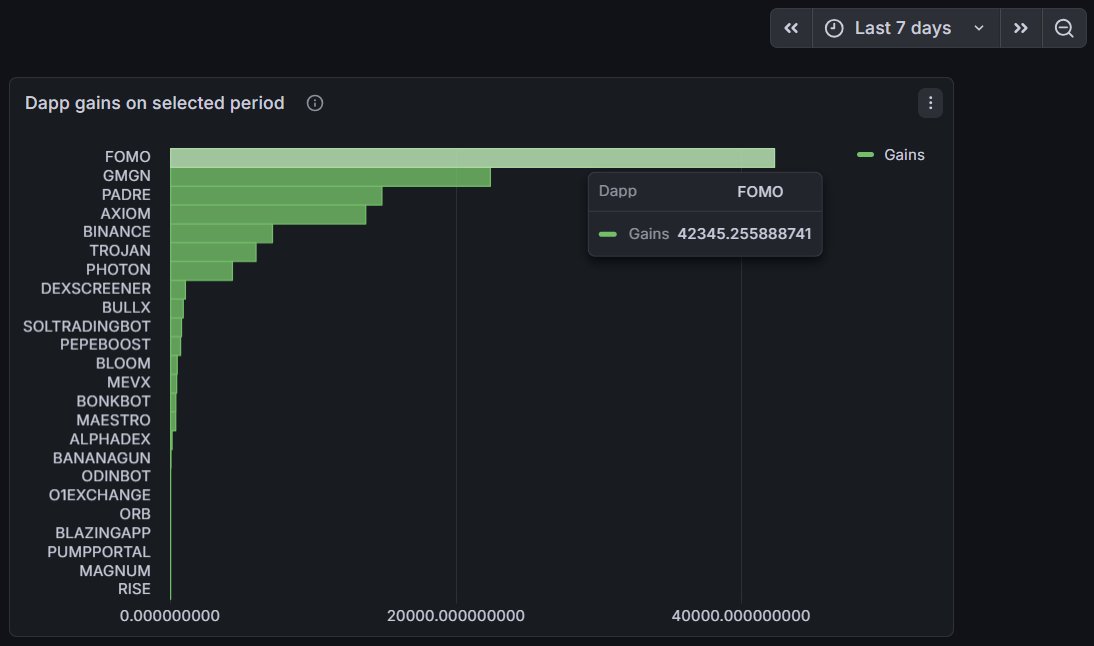
- dApps / Wallets: Axiom, FOMO, Terminal, ...
- Landing providers: Temporal, Astralane, Fast, ...
- RPC / MEV infrastructure: Helius, Jito, Harmonic, ...
- Validators: Figment, Jupiter, Binance, ...
(These are examples. It does not mean that all of them already use a monetization layer).
A transaction on Solana is more than just a transaction. It creates value.
The main value that can be monetized in a healthy way for a company is through arbitrage.
If a transaction is going to create an imbalance or inefficiency in an AMM and you have that information in advance as a flow provider because you are part of the transaction transmission path to the network, you can monetize it.
Today, monetization layers are mostly focused on arbitrage because it allows a transaction to be monetized without having any harmful impact on the end user, simply capturing the value that was leaked during the trade.
Monetization layers are important for the ecosystem because they enable two main things:
- Generate extra yield for flow providers
- Stabilize markets, helping keep quoted prices as close as possible to execution prices during trades
This is where monetization layers stand today.
But if we take the thinking further, what is the future of monetization layers?
In my view, there are several ways these layers can improve, especially around prediction, which could enable a healthier and more optimal DeFi ecosystem with better resource sharing enabled by this type of infrastructure.
Routing prediction
The approach taken by @dflow is very interesting and similar to what some arbitragers already do: determine an execution route initially, then during on-chain trade execution by the validator, try to find a route that generates more output than the one determined off-chain.
But this approach has some limitations. During on-chain execution, due to Solana's structure, they can only search very limited on-chain routes, typically between 1 and 6 liquidity pools maximum depending on the size of the trade.
If you have advance information about the trades that are going to be executed, this would allow an aggregator to pre-compute the impact of incoming trades and determine a more optimal route to maximize output value.
Let's take an example:
I trade 100 USDC → SOL.
- Jupiter shows me an output of 1 SOL.
- DFlow shows me an output of 1 SOL, but during execution finds a better route and gives me 1.02 SOL.
- An aggregator based on a Monetization Layer shows me 1.05 SOL because it has already accounted for the impact of transactions before they are even executed and can predict the fees/tips required to reach an optimal position in the block.
This approach could drastically improve DeFi and the prices traders receive for their trades.
Price prediction
PropAMMs allow SOL-USDC traders and now increasingly more trading pairs, to get better on-chain prices compared to CEXs like Binance. That is a fact.
This also implicitly means that traders will increasingly migrate on-chain to get the best price, right?
In the future, monetization layers will be able to predict the price of any asset in advance.
We are not talking about predicting the price of a memecoin here, but the price of Nasdaq assets and gaining an edge over traditional traders.
Large HFT firms compete in microseconds to execute their orders in traditional markets. Having even a few milliseconds of advantage could create a real competitive edge with massive impact.
Prediction is, in my opinion, one of the most important areas a monetization layer should focus on in the future, without having to leak the transaction itself.
This is the crucial point: the monetization layer must have the transaction in advance, but must absolutely not leak it, in order to avoid behavior that is harmful to the network.
This is where @Circular_fi positions itself.
We are currently building a monetization layer for Solana and its ecosystem participants, enabling better revenue sharing for flow providers while also improving the efficiency of DeFi.
What about you? How would you improve DeFi efficiency with a monetization layer built on top of Solana?
1
1
19
720
May 22
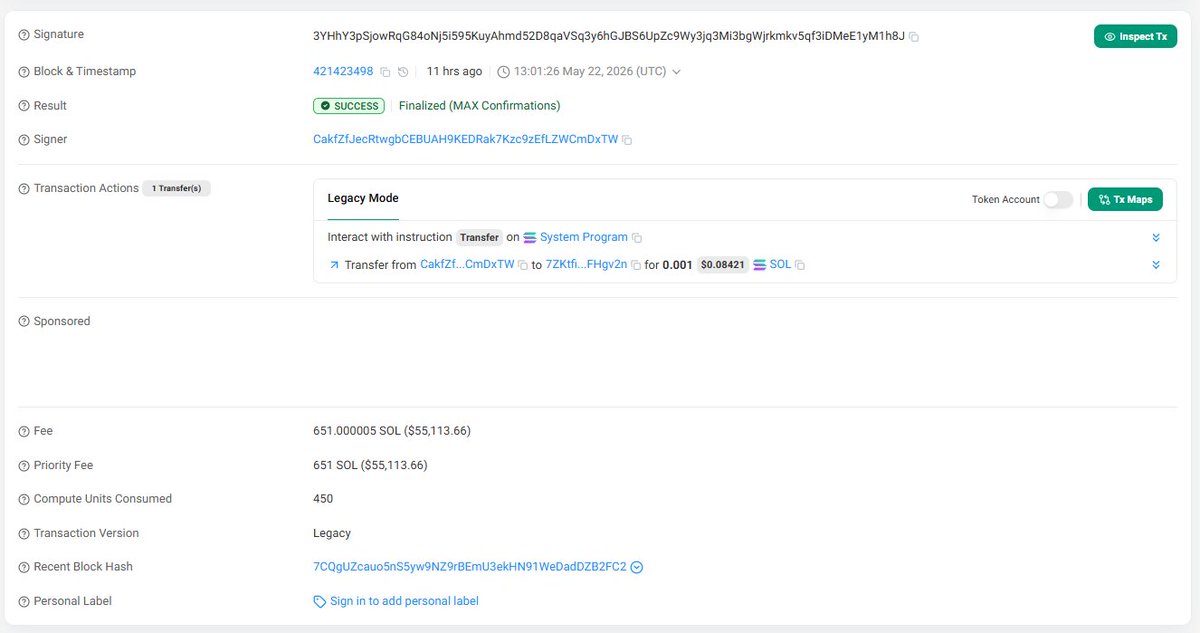
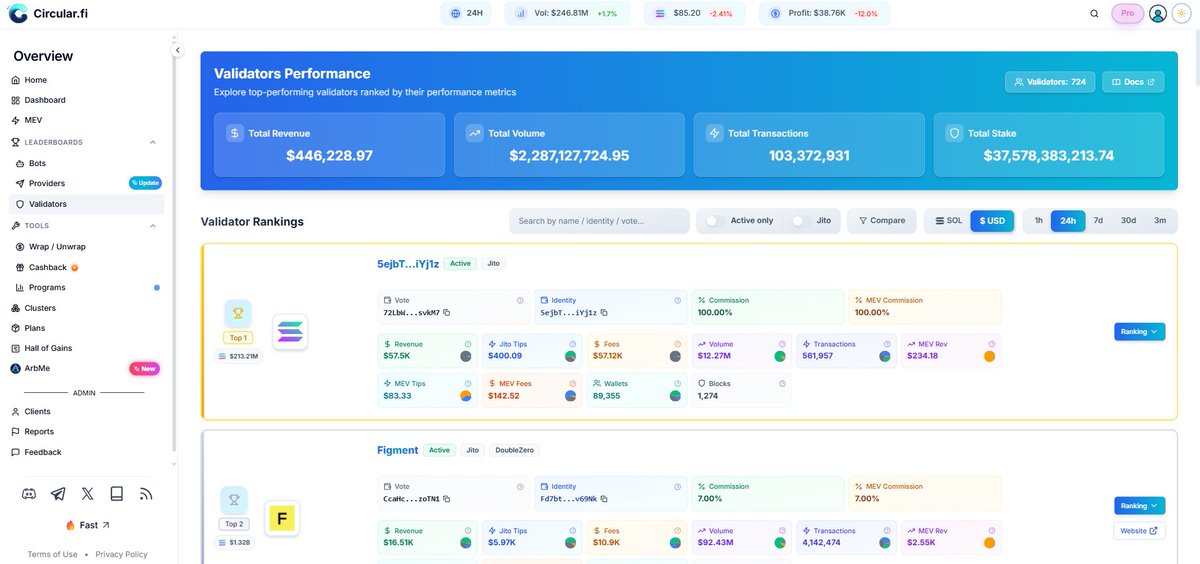
Money laundering or a setup error? Either way... this guy paid $55k in fees to transfer $0.08 on solana...
Even my bank doesn't charge that much :(
3YHhY3pSjowRqG84oNj5i595KuyAhmd52D8qaVSq3y6hGJBS6UpZc9Wy3jq3Mi3bgWjrkmkv5qf3iDMeE1yM1h8J
7
20
1,944
May 22
Have you ever heard about the inefficiency of AMMs? When you trade on-chain, you lose money.
As a daily Solana user, I make swaps every day.
Simpler, cheaper, faster.
But I have a crazy statistic to share with you: traders on Solana lost $1 billion in 2025 because of the math.
What does math have to do with any of this?
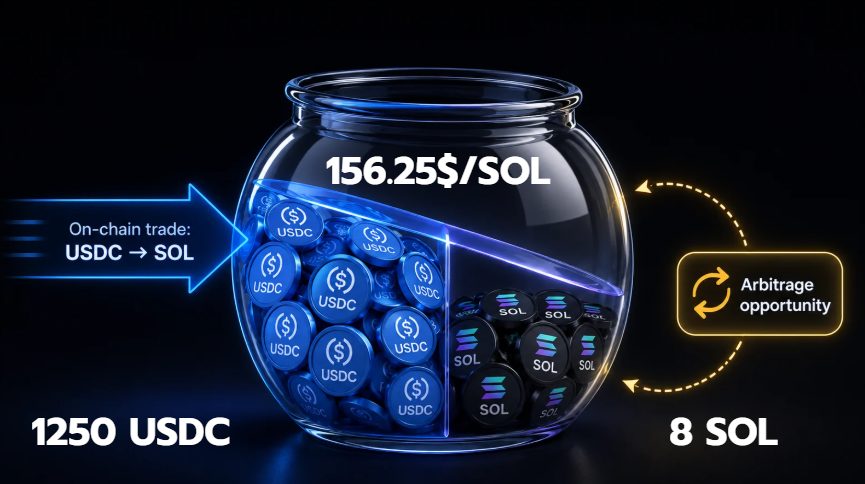
An AMM/liquidity pool operates, for the most part, without an order book but using math (x * y = k).
This mathematical formula is the core concept behind an AMM.
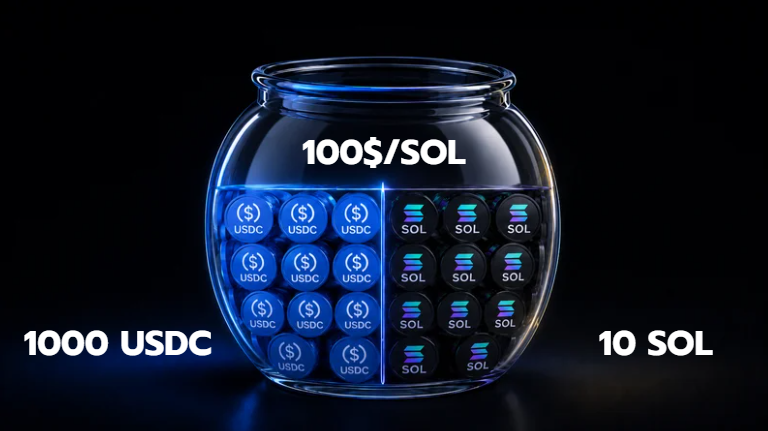
Let's take a simple example:
x = USDC
y = SOL
Market price of $SOL is $100.
If I deposit 1,000 USDC, I’ll also deposit 10 SOL so that my liquidity pool has a market price of $100 per SOL (1,000/10 = $100).
Now, let's do the calculation (x * y = k):
1,000 USDC (x)
*
10 SOL (y)
=
10,000 (k).
Great so we know the mathematical value our liquidity pool aims to achieve: 10,000.
Now let's make a trade of 250 USDC to exchange it for SOL… how much do you think you'll get back?
If the price is $100 per SOL, by exchanging 250 USDC you'll get 2.5 SOL, right?
Absolutely not!
Let's do the math again:
1,250 (1,000 initial USDC 250 deposited by your trade)
*
7.5 (10 initial SOL - 2.5 withdrawn by your trade)
=
9,375.
9,375, not 10,000.
Whereas:
1,250 * 8 = 10,000.
So the liquidity pool will give you 2 SOL instead of 2.5 SOL.
You just lost 0.5 SOL.
This is what's known as AMM inefficiency.
Now the question is: how can you protect yourself from this?
Arbitrage.
You can recover the value you lost by arbitraging liquidity pools.
In this case, if I buy SOL from another liquidity pool and sell it on this one, I’ll rebalance it to 1,000 USDC – 10 SOL and capture the lost value (0.5 SOL).
It was by realizing this that we built @arbmesol for the @colosseum.
It's an extension that lets you recover the SOL you lose during your trades on Solana as cashback directly into your wallet.
Now that you know this and that a solution exists… you're the only one responsible for losing SOL due to the inefficiency of AMMs.
Trade to Earn.
4
6
32
2,474
May 21
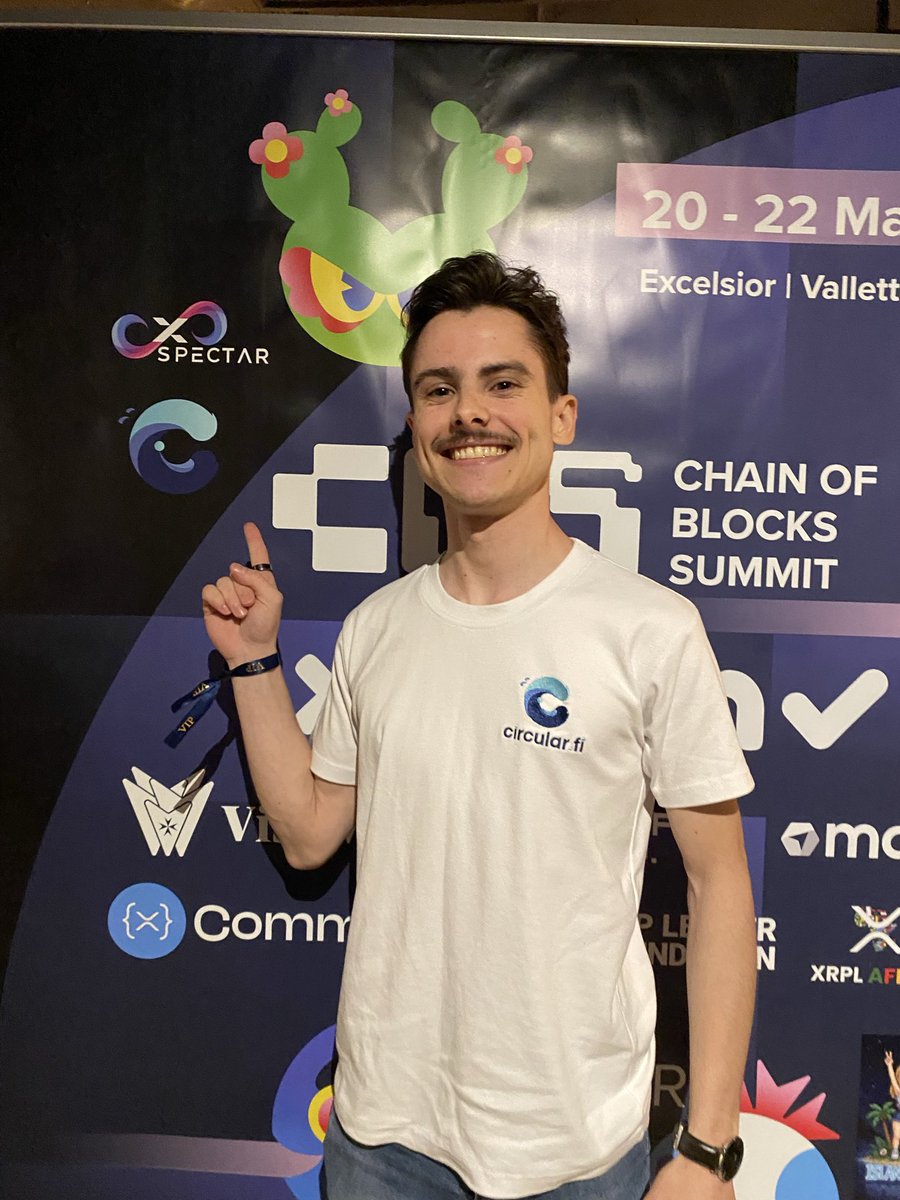
Today I gave a pitch on @Circular_fi and our ambitions with @arbmesol at @theBlocksSummit.
It's always an incredible experience to pitch as a founder.
But pitches are rarely just pitches, we're mingling with other players in the blockchain space.
It doesn't matter if the other founders are from Solana, Ripple or Ethereum… sharing ideas and understanding other ecosystems is always the best part of this kind of event.
Exploring new ideas is the key.
I think I love it… @SolanaEvents, where's your next event?
2
23
667
May 21
Confirmed. Our submission to the Solana Colosseum Frontier hackaton was well received 🫡
What have we done? We've created an extension that lets you earn cashback on your Solana trades.
Just that.
arena.colosseum.org/projects…
May 21

The @Solana Frontier Hackathon product directory is live!🏔️
Frontier was the largest crypto hackathon ever & one of the largest in tech history with 2,857 submissions.
Winners and Colosseum's next accelerator startups will be announced next month.
arena.colosseum.org/projects…
2
19
1,784
May 20
Great evening at the @theBlocksSummit welcome reception, tbh I was surprised to see people from the Solana ecosystem… we’re everywhere 🔥
2
24
461
May 20
Dammn! You can now get the best solana quotes on @Titan_Exchange and earn cashback on your trades if your price impact is high!
Best of both worlds.
ArbMe V1.1.0 now supports @Titan_Exchange
You can now farm your airdrop and try ArbMe while trading on Titan.
When your swaps create price impact, value is created around them.
ArbMe helps capture part of that value and gives a share back to users.
We keep expanding where Solana users trade.
If you trade on Solana without ArbMe, you may be leaving value behind.
8
189
May 20
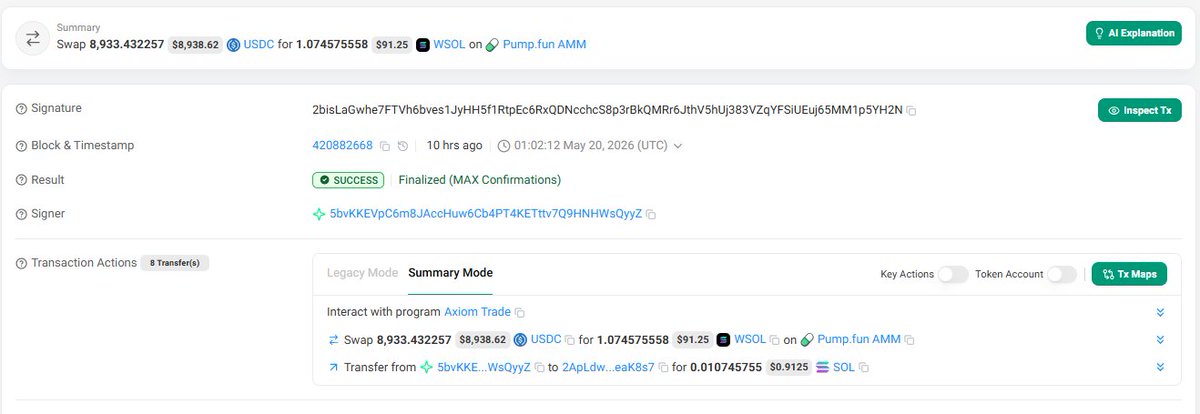
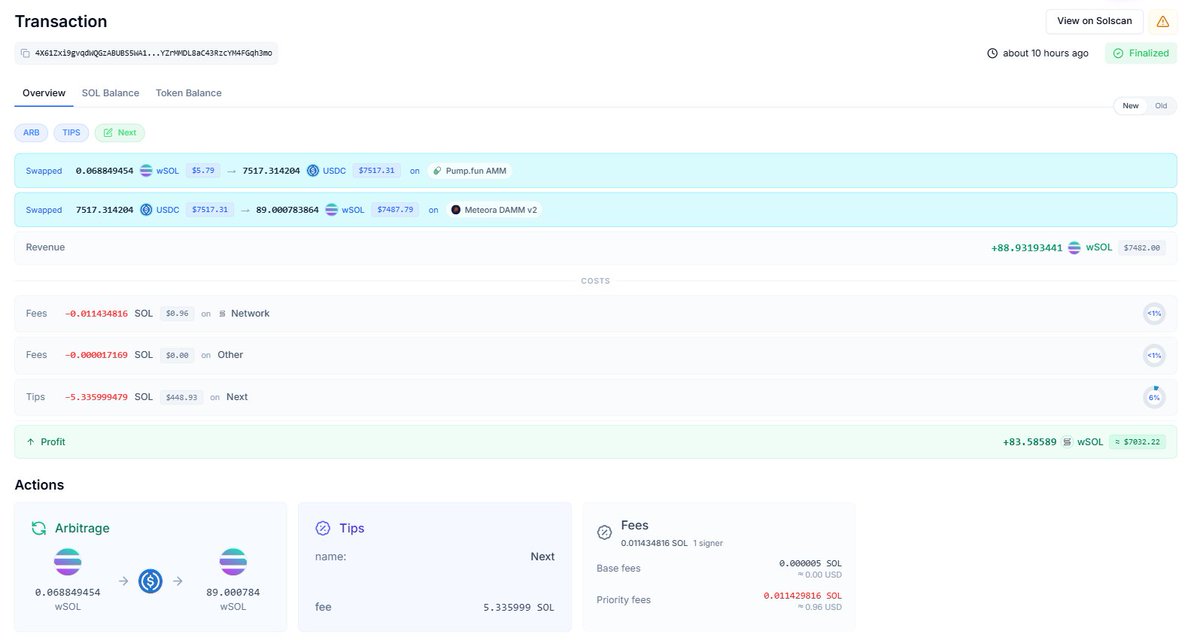
$SOL just hit an ATH 🥳 but the way it happened will surprise you.
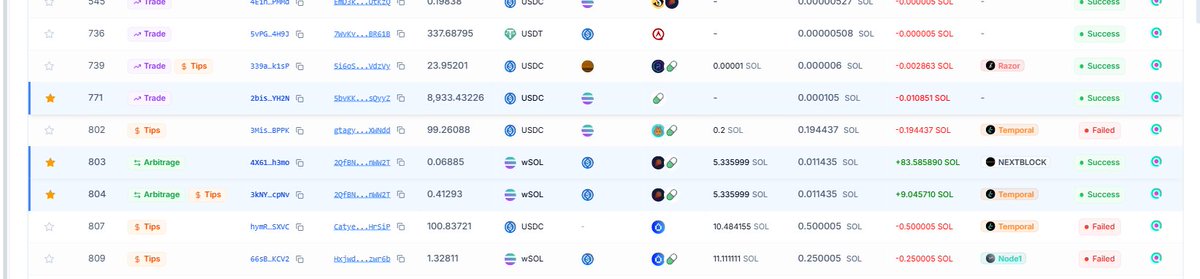
This Axiom solana user just lost ~$9k during a USDC-to-SOL swap.
Axiom routed their swap to a liquidity pool containing $200 for a $9k swap, which completely unbalanced the pool's price at $8,313.45/SOL, a new ATH for SOL but the worst possible trade for the user.
If this user had @arbmesol installed on their browser, they could have recovered that $9k through arbitrage.
That's the hedge we offer you… securing your trades and mitigating the price impact they may cause.
Trade to Earn.
6
2
29
2,949
May 20
Trade: 2bisLaGwhe7FTVh6bves1JyHH5f1RtpEc6RxQDNcchcS8p3rBkQMRr6JthV5hUj383VZqYFSiUEuj65MM1p5YH2N
Arb: 4X61Zxi9gvqdWQGzABUBS5WA11Cq5f5e9mqTGarkzypkYcVvT2nFPgE4urC8QQWYZrMMDL8aC43RzcYM4FGqh3mo
404
May 19
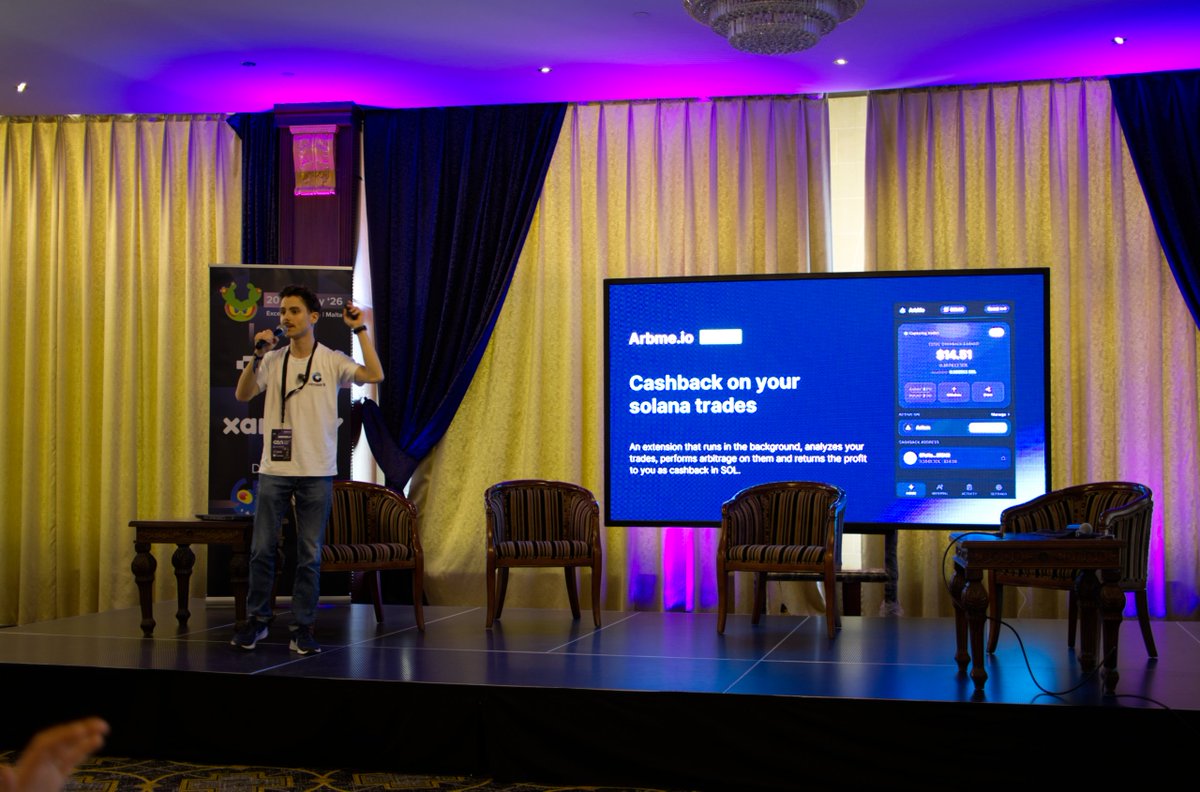
I'll be giving a pitch on @arbmesol this Thursday to explain how traders can get back some of their slippage as cashback through arbitrage on Solana.
Major blockchain events like Chain of Blocks are rare in Malta and deserve a big support, can't wait to be there!

🎤 Speaker Announcement!
We’re excited to welcome Ben Boulin, CEO of @Circular_fi & @arbmesol, to the #ChainOfBlocksSummitEU26 stage.
💧 “Building Liquidity and Arbitrage Opportunities”
@bencirc is a computer engineer and MEV/arbitrage expert who entered crypto through Bitcoin in 2015, explored Ethereum and NFTs in 2020, and later specialized in DeFi and liquidity systems.
Through Circular.fi, a @solana-based MEV Hub, he focuses on real-time MEV tracking, deep portfolio analytics, and helping users better understand and optimize on-chain trading dynamics.
In this session, Ben will explore:
“How can you earn cashback on the slippage of your swaps through arbitrage?”
Looking forward to a highly practical and insightful discussion around liquidity, MEV, #DeFi infrastructure, and the evolving Solana ecosystem 🚀
🗓 MAY 20th-22nd | Valletta, Malta
🎟 Tickets: luma.com/8xdc6wgg
#Web3 #Solana #MEV #Blockchain #Malta

2
3
23
1,178
May 18
New supported platform on @arbmesol, we just integrated @MeteoraAG to protect your trades from high slippage and price impact on @solana.
Lots of new dApps are coming... stay tuned!
ArbMe V1.1.0 now supports one more Solana platform @MeteoraAG
More coverage means more swap flows where ArbMe can detect potential opportunities @met_lparmy
High slippage should not impact your decision always mean lost value.
1
11
463
May 16
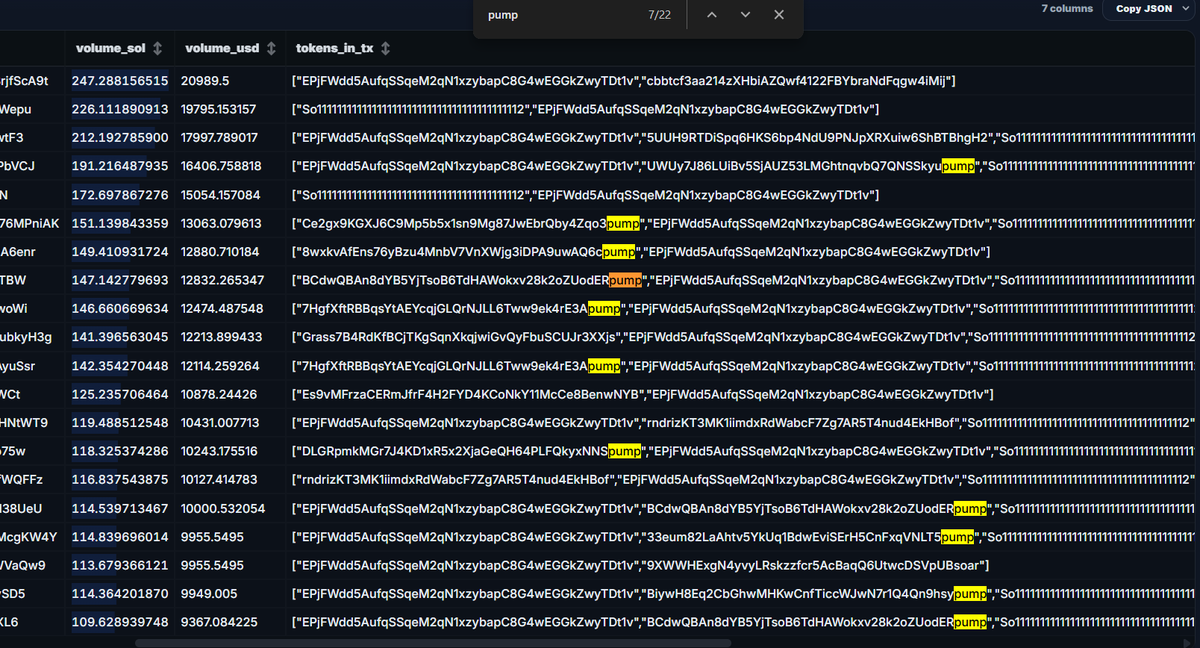
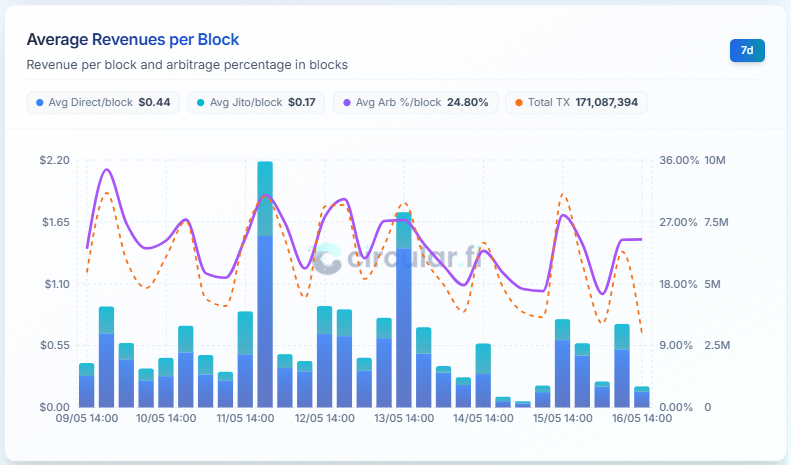
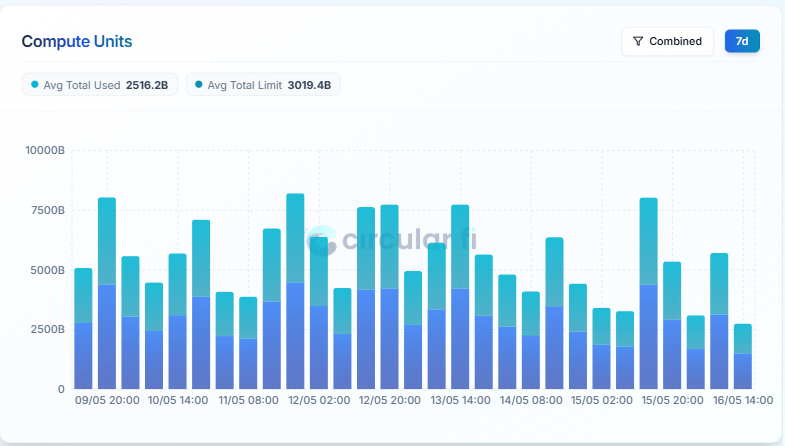
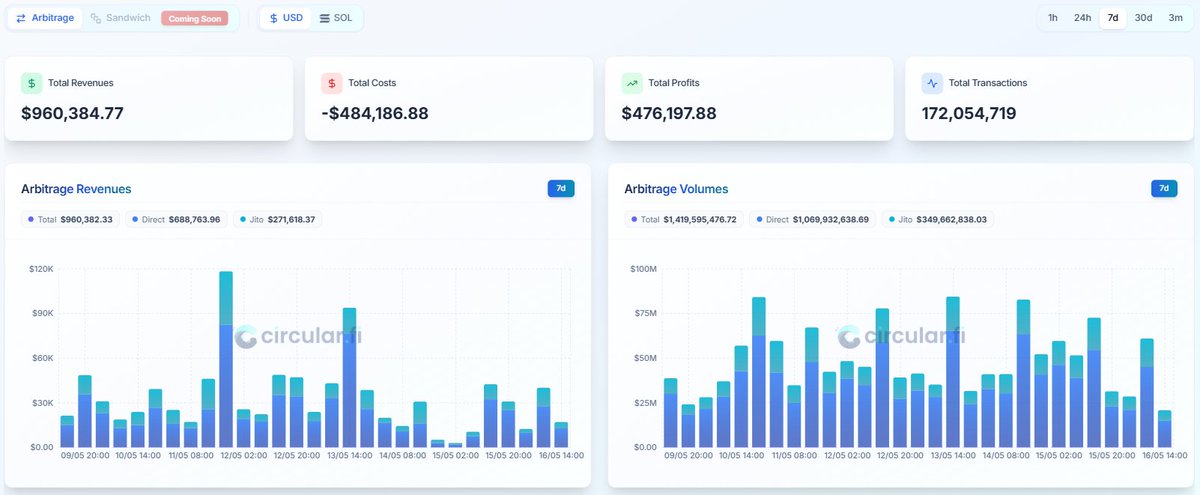
Have you ever looked at what types of transactions land in a block on @solana? In the last 7 days, 25% of blocks were filled with arbitrage transactions and hasn't dropped in CU with the p-token upgrade.
What's most surprising is when you dive into the data and realize what kind of transactions are landing in the blocks.
On-chain arbitrage is a trading strategy that allows you to buy a token from liquidity pool A and instantly resell it on liquidity pool B.
This is a very important strategy for DeFi, because in addition to generating profits for arbitragers, it stabilizes the market and makes it more efficient: a quote on @JupiterExchange or @Titan_Exchange doesn't necessarily mean that the value displayed on your screen will be the value you actually receive... Arbitrage exists so that the value displayed on your screen is as close as possible to the value you will actually receive.
But the question we might ask is: why haven't the CU consumed by arbitrage decreased since the p-token upgrade?
There are several strategies in arbitrage:
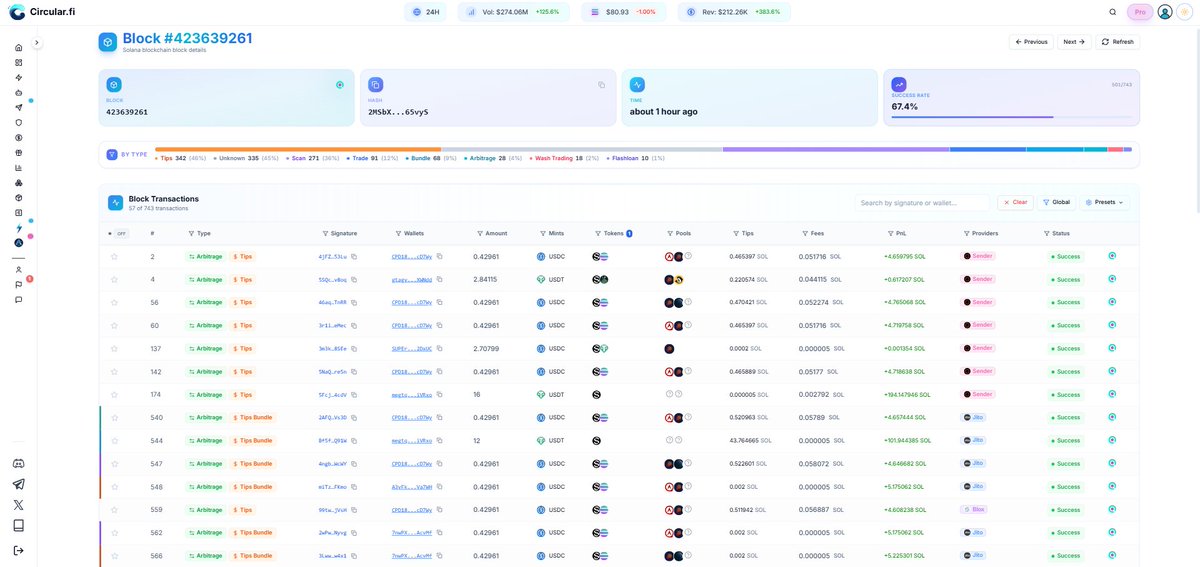
- (Quality) Backrunning with orderflow: obtaining a trade before it even hits the network to determine whether its price impact will create an opportunity, and placing an arbitrage trade immediately after it land on the network (this is what we do with @arbmesol).
- (Quality) Analyzing new transactions that have just land on the network via shreds; this strategy is the most difficult and requires an ultra-optimized infrastructure to ensure you get the transaction first, which is why @doublezero now plays such a crucial role in MEV.
- (Spam) This strategy is completely different. The idea behind it is to select a few tokens with the highest arbitrage potential and volume at a given moment and send at least one transaction per block so that your on-chain program can calculate whether there is an arbitrage opportunity between different pools when it executes.
The spam strategy is why arbitrage didn't drastically reduce these CU costs during the p-token upgrade.
CU is used to calculate opportunities, not to execute them, which results in maintaining the high volume of CU used even though AMMs and token transfers are now 90% cheaper.
Arbitrage is constantly evolving.
A year ago, spam strategy accounted for 50% to 60% of transactions in a block; now it's less than 25%.
At @Circular_fi, by tracking the entire arbitrage market, we’ve seen that over the past year, spam arbitrage has been used less and less as the trend reverses and shifts toward orderflows.
An orderflow is a simple concept: for example, when @AxiomExchange sends your transaction to the network, they simultaneously route it to a server so they can calculate the value they can generated if your transaction creates an arbitrage opportunity.
But an orderflow is also much more efficient for the network: if the AMM's inefficiency or the value leaked by the trader is captured in a single index within the block (for example, index 250 for the trade transaction and index 251 for the arbitrage transaction), this creates a "patch" for the AMM's inefficiency and contributes to a much more stable network.
My vision for arbitrage over the coming months and years is that everything will happen through orderflows; a sort of parallel layer alongside the normal network that will allow entities to perform arbitrage without spamming the network, while simultaneously stabilizing it.
Now the question we might ask is: who should get these profits... the trader? the validator? the dAPP? or the arbitrager?
5
40
1,896
May 15
If you think @arbmesol is a game-changer for traders on @solana... just wait to see the next update 🫡
May 15

Every time you lose money due to slippage on Solana, you’re generating value for someone.
You buy into a pool, move the price, and create an imbalance. For years, arbitrage bots have captured that delta silently, automatically, right after your trades.
@arbmesol flips who gets paid.
We detect the opportunity your trade creates, execute the arb behind it, and send your profit share back to your wallet in SOL.
No routing changes. No extra confirmations. No manual claiming.
Already live across 7 Solana dApps.
v1.2.0 is almost ready: new integrations, plus a redesigned reward system that gives the heaviest traders a real edge. 👀
Trade to Earn.
1
14
753