
Designing success for B2B SaaS @pixel1studio. Advocate for continuous improvement elegant design. Tweets on design trends company growth.
Joined November 2009
- Tweets 2,313
- Following 1,016
- Followers 331
- Likes 4,813
604 Photos and videos






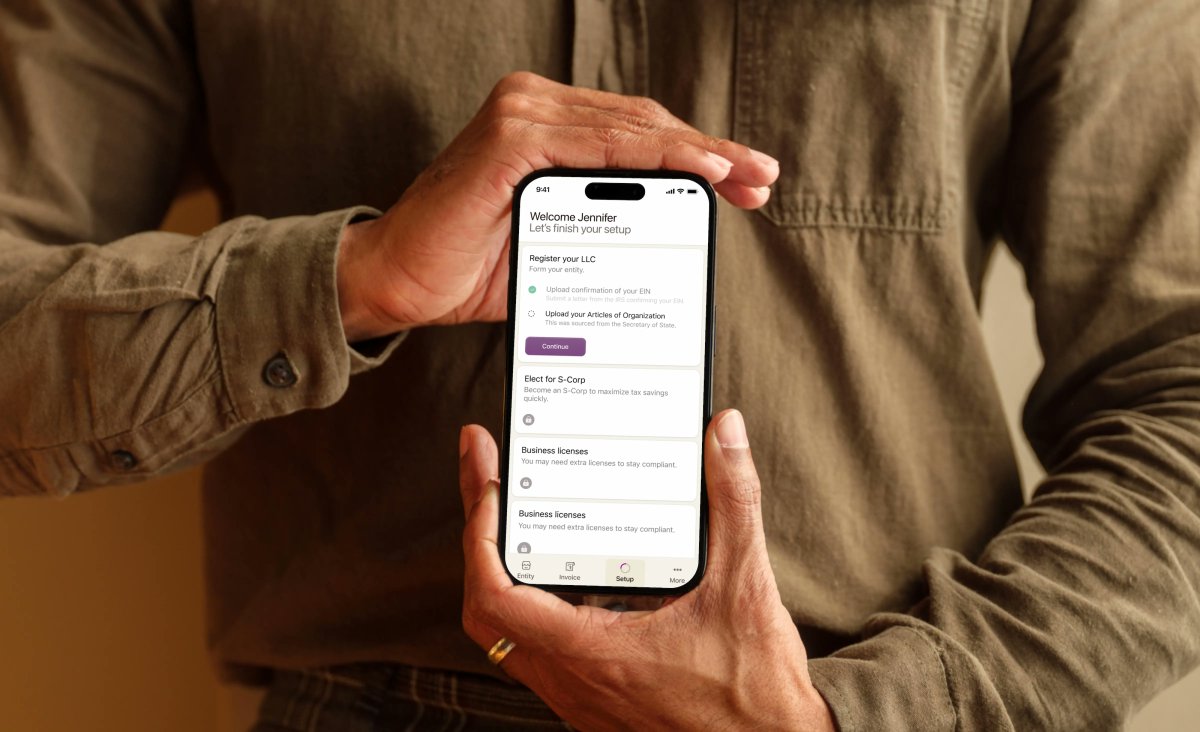






Pinned Tweet

27 Mar 2025
"Amazing execution, Not a single issue nor confusion from customers!!!!! You guys are setting the bar super high!!!! ❤️ 🤩 ! Thank you so much for thiss!!"
VP Customer Support, Apollo.io for work done by @pixel1studio
1
6
2,135
Jun 12
Worst thing your brand can do in 2026
is look exactly like everyone else
I reviewed 100 dev tools this week and only remembered 1
They all had the same gradient background, the same layout, the same Vercel-style design.
The one I remembered had bold colors, an unusual layout, and an opinionated design that took a clear stance.
When you are starting out, you do not have brand recognition, customer logos, or word of mouth.
All you have is a first impression.
If that first impression is "we look exactly like everyone else," you have wasted it.
A differentiated brand gets remembered. When someone sees it again a week later, they recognize it.
When they are talking to colleagues about solutions in your space, your name comes up.
The brands that break through early look different enough to stick.
Even if some people hate it, that is better than nobody remembering you at all.
Memorable beats safe when you are new.
1
24
Jun 11
10 paying customers from broken onboarding beats 0 from a perfect one
This sounds counterintuitive, but it's one of the clearest signals you have product-market fit.
If people are pushing through broken onboarding to pay you, the value is strong enough that they will deal with the friction to get to it.
Most founders have the same reflex when they see a drop-off. They rebuild the entire experience.
But if you are too focused on onboarding, you may be missing that your product is not solving the problem people expect it to solve.
The real issues are usually one of two things:
1/ You're not communicating the right value. This happens, but it's rarer in the early stage.
2/ You're missing what customers actually want to do first. This is more common and requires an actual understanding of the customer to solve.
People often do #1 in hopes it solves #2.
Here's the better approach:
1/ Launch with the simplest possible onboarding that gets people to the core value. If people are paying you despite the bad experience, you know the product works. Now you can optimize onboarding to unlock more customers.
2/ If people aren't paying you even with perfect onboarding, you have a different problem that onboarding won't fix.
When you're in the early stages, your goal is to figure out if you're solving a real problem.
Bad onboarding with paying customers tells you yes.
Perfect onboarding with no paying customers tells you no.
Once you know the answer, you can optimize everything else.
1
2
17
Jun 10
Startups with 1 audience and 1 offer get the best design outcomes
When your business strategy is clear,
You're focusing on one target audience, you have one offer, and that offer is extremely tailored and efficient.
You can scale the operations aspect of it usually without much friction and just increase your revenue.
Most businesses don't grow by doing more things. They grow by doing one thing better.
Example, Apple famously cut 70% of its product line when Steve Jobs returned.
A few versions of each product, done extremely well. They went from 90 days from bankruptcy to the most valuable company in the world.
What's interesting is that design has the same underlying principle.
The clearer what you're trying to achieve, the better your design is going to be.
If you're able to distill your business into a couple of important rules or metrics, then you can use those as a way to guide the design direction.
The design direction can create its own design thought process and spread that out to the rest of the product, so you get a good outcome.
The design doesn't have to compensate for an unclear strategy; instead, it can just execute on a clear direction.
10
Jun 9
9 out of 10 founders say "we want something like Vercel.”
This happens so often that we gave it a name at Pixel One:
“The Copy Trap”
Here's why it's a trap:
1/ If you are solving a real problem, people will buy from you regardless of the design. So you launch with your Vercel-style website, and people start signing up.
You think the design is working. But they would have bought anyway because you are solving a high-priority problem. You have no idea if your branding reached its potential or if it is actively hurting you.
2/ When you copy a design that's been seen 1000 times, you haven't taken a stance and are going to get “muddy” results at best. You're not saying anything specific about who you are or who you're for.
3/ Nobody will remember you. If your website looks like all the others, you're forgettable. A differentiated brand sticks in people's heads.
Here's what we recommend instead: Have a bold brand that gets strong reactions.
When you have something bold, some people will love it, and some will hate it. That's both sides of the coin, and that's exactly what you want.
You get a much better understanding of your target audience, and you can refine based on real feedback.
Your context is different, your audience is different, and your positioning is different.
Copying someone else's design without their context just makes you bland.
2
53
Jun 8
🚨🚨 That was fast
All June spots are filled.
If you need to start a project in Q3, DM me now.
We are seeing more demand than usual this quarter.
If you want to work with Pixel One before summer ends, DM me and I will add you to the July waitlist →
4
Jun 8
3 minutes is all you get to win a founder
I've sat in 100s of design presentations.
Some start with the process: We did this competitive audit and looked at 10 different apps in detail. Then we did the app audit.
or
Some skip straight to the solution: The founder experiences it, judges whether it solves their problem, and forms an opinion that you'll struggle to move.
If they don't like it, everything you say after that point is wasted air.
Here’s what the how the best presentations start:
They open with a quick mention of the research, just enough to show they were thorough, and then go straight to the outcome.
Solution on screen, walking you through the user flow, letting you react to what they actually built.
They keep the whole thing to 2-3 minutes. Process stays on standby for when you have questions (this works especially well with tech founders)
What happens next falls into 3 buckets:
1/ They love it
The process becomes a natural follow-up. They'll ask how you got there, and you can elaborate freely.
2/ They hate it
Leading with process would have made it worse. They'd feel like they paid for all that research and still didn't get the right answer.
3/ They're on the fence
This is where your research earns its keep. Use it to argue for your decisions and find the middle ground.
One caveat: this is specifically for tech founders. They're familiar with design (a lot of them think like junior designers in their own way), so they don't need the education piece.
15
Jun 5
Ask your designer to explain your business in 1-2 sentences.
If they can't, they don't understand it.
A lot of designers, especially the ones we've interviewed and the ones who are newer, often are not able to clearly explain what the project they're on is about.
This is a huge red flag.
I think this comes from the idea that designers can get away with a lot of things.
“I don't fully understand the business, but I kind of understand what they want to do in terms of this project, so I'm going to design around that”
When you ask the same person to describe what the desired outcome of their project is or what the goal is, they have trouble explaining it.
This lack of clarity often translates into the design.
You can see they didn't fully understand the project. The design decisions don't reflect what the project was actually trying to do.
So here's a good test for founders:
Ask your designer to explain in the least number of sentences possible what your business is about, what it is that you're doing.
If the answer you get is clear and has clarity, then the person truly understood what it is that you're doing.
If the answer is not clear, then they did not understand.
Good design comes from a deep understanding of the business.
If your designer can't explain your business simply, they don't have that understanding.
Can your designer pass the three-sentence test?
2
20
Jun 4
A client told me personas are useless, I (almost) agree.
He reasoned that companies he's observed without personas seem to do better work.
Most teams treat their persona like the only user. The persona should be a stand-in for users with the same motivation.
Example: Uploading a photo
You create two personas, a 40-year-old and a 15-year-old,
You see them as completely different use cases, so you build different flows, features, and interfaces.
That leads to product bloat and makes it extremely hard to ship quickly.
The better approach is to focus on user motivation instead of demographics.
A 40-year-old may have the same motivation to upload a picture as a 15-year-old. Focus on what success looks like emotionally rather than who they are demographically.
The motivation is common.
This is how people came up with jobs-to-be-done.
If you take personas too literally, you end up designing different experiences for different demographics instead of solving the same problem well.
When you design for motivation instead of demographic personas, you build simpler products that work for more people.
16
Jun 3
Pixel One designers get bonus pay to go beyond the brief
We created this internal ritual at Pixel One called “Elevate Cash.”
Every few weeks, designers can submit highly polished versions of their work.
Something they took beyond what the client requested, showing craft and attention to detail.
If it meets our bar, we reward them with $$$ cash.
The idea is to put money where your values are and reward the behaviors you want to see more often.
And I've been very pleasantly surprised.
But recently, something made me realize this is worth way more than the cash we pay out.
One of our designers took screens from an existing client project we were working on, the client did not ask us to polish these screens (It wasn't in scope)
But the designer polished them anyway for Elevate Cash, and the client was so happy about it that they immediately made it a project.
Eventually, it got shipped into the product.
We do what clients hire us for. We also do the work they didn't ask for when it makes the product better.
Team culture is built by what you're willing to reward.
What you incentivize is what you get.
25
Jun 1
Pixel One calls it the “Copy Trap,” and almost all founders fall in
First thing a founder says on a call is, “We like Vercel, we like Ramp, we want something like that.”
This happens so often that we gave it a name at Pixel One:
“The Copy Trap”
Here's why it's a trap:
1/ If you're solving a real problem, people will buy from you anyway, regardless of the design. So you launch with your Vercel-style website, and people start signing up.
You think great, the design is working. But the truth is, they would have bought whether they liked your website or not because you’re solving a high-priority problem for them (hooray). You have no idea if your branding reached its potential or if it's actively hurting you.
2/ When you copy a design that's been seen 1000 times, you haven't taken a stance and are going to get “muddy” results at best. You're not saying anything specific about who you are or who you're for.
3/ Nobody will remember you. If your website looks like all the others, you're forgettable. A differentiated brand sticks in people's heads.
Here's what we recommend instead: Have a bold brand that gets strong reactions.
When you have something bold, some people will love it and some will hate it. That's both sides of the coin, and that's exactly what you want.
You get a much better understanding of your target audience, and you can refine based on real feedback.
Your context is different, your audience is different, and your positioning is different.
Copying someone else's design without their context just makes you bland.
14
May 29
Bad onboarding with paying customers beats perfect onboarding with none.
This sounds counterintuitive, but it's one of the clearest signals you have product-market fit.
If your onboarding is broken, confusing, and people are still pushing through to become paying customers, it means you're solving a real problem. The value is strong enough that they'll deal with the friction to get to it.
When you're in the early stages, your goal should always be to optimize for learning. The startups that end up doing really well, I can tell right away from the first call. They come with learnings and insights that other founders don't have. They come in with that customer-first mentality.
But most founders have the same reflex when they see a drop-off. They think: our onboarding sucks, and we know it because there are all these UX heuristics we're not following, and people are dropping off before they complete.
So they rebuild the entire experience, trying to reduce friction. But if you're focused too much on onboarding, you may be missing that your product just isn't solving the problem people expect it to solve.
You must know that people who use your product love it before going all in on onboarding. Otherwise, it's just a new coat of paint with the same issues underneath.
The real issues are usually one of two things:
1/ You're not communicating the right value. This happens, but it's rarer in the early stage.
2/ You're missing what customers actually want to do first. This is more common and requires a genuine understanding of the customer to solve.
People often do #1 in hopes it solves #2.
Here's the better approach:
1/ Launch with the simplest possible onboarding that gets people to the core value. If people are paying you despite the bad experience, you know the product works. Now you can optimize onboarding to unlock more customers.
2/ If people aren't paying you even with perfect onboarding, you have a different problem that onboarding won't fix.
When you're in the early stages, your goal is to determine whether you're solving a real problem.
Bad onboarding with paying customers tells you yes.
Perfect onboarding with no paying customers tells you no.
Once you know the answer, you can optimize everything else.
9
May 27
High-risk project, 30-day deadline, and we messed up!
This client came to us with the highest-risk project we could possibly take.
1/ It’s an industry we don’t know, because we’ve never worked on construction management software before.
2/ It’s a product we don’t know, because we’ve never worked with their existing product.
3/ It’s a new team, so we don’t know how they like to work or what their process looks like.
We still said yes and delivered the entire new product within one month, but our first user flows were messy because we made assumptions that almost ruined everything.
Here’s what we got wrong:
We’re working in risk management for construction, where the goal is to figure out how a project can fail and reduce those risks.
Our tool pulls information from projects and turns it into requirements for subcontractors, so you can hire different trades and get accurate quotes based on the drawings.
This is usually a very manual process: you read through all the drawings, create documents, and constantly flip back and forth to reference the drawings, just to make sure you’re producing the right document.
One of the solutions we created was allowing you to add a scope of work or an item yourself.
But we didn’t realize that you would never actually do this, because every item you add always comes from past knowledge and must be referenced back to that past knowledge. That meant our whole flow was built on a false assumption.
These users think entirely in exceptions: if I’m doing X, Y, and Z, then there might be risks on N, Q, and R, and those risks are what they’re really looking for. The software exists for these edge cases, but the technology we chose, AI, still struggles with those exact situations.
Here’s how we fixed it:
We started talking directly to customers, got recordings of their calls, and connected with people who actually work in this domain.
I listened to a risk‑management professional for two hours as they walked through a real project. That alone saved us a huge amount of time, because we finally understood exactly what they were fighting against. Then we built a new solution that turned the project around.
The lesson here is simple: domain knowledge is something you can’t guess your way through. Teams that invest in this are rare because it means going beyond the brief and committing extra time and resources.
The first week will either save or destroy the project, and we chose to fight against the odds and won.
15
May 26
A tiny shop with hour-long waits only sells 1 item for $30
There's a bagel shop near my apartment in New York that's been here for a century.
The branding isn't modern or sleek, and it is a tiny space in an old building.
But every weekend, there's a line out the door.
The interesting bit is that they only sell Bagels.
Over 100 years, they've added variations, but they're still fundamentally serving one thing.
Two blocks over there's another shop, and they sell only Pastrami sandwich.
The line wraps around the entire block, and people wait an hour for a $30 sandwich.
These places majorly work because they have a clear offer.
Their only job is to focus on making the best sandwiches.
If we were to design for them, the process would be clear: How do we make people understand this is the best pastrami they'll ever have? How do we communicate that value?
All the answers are right there because they have total clarity at the business level.
Imagine that same sandwich shop also did breakfast, brunch, cocktails, and dinner.
The design process would include: What's the emphasis? What's the brand? What are we known for?
Much harder to answer.
What early-stage founders can take away is focus on one small thing and go all in, and when you know your one thing works, you can build around it.
When you're doing five things at once, you're just creating confusion for yourself and your customers.
What's the one thing your business does better than anything else?
17
May 25
First-time founders optimize for perfection; second-time founders optimize for learning.
The difference:
First-time founders: "We're building for finance professionals who need better tools.”
v/s
Second-time founders: "We talked to 15 hedge fund managers dealing with slow data reconciliation, missed alerts, and manual reporting.”
When you're an early-stage founder your goal should be to optimize everything you do for learning.
You should aim to learn as much as possible about your customers, your industry, and the challenges they’re facing.
The faster you get those learnings, the more successful your company will be.
When Airbnb started, they didn't say "we're building a platform for all types of accommodations."
They said, "We're helping people rent out rooms in their luxury homes.”
They got very specific, collected information, and expanded.
First-time founders get so afraid of being wrong that they stay deliberately vague with their audience, their positioning, and their design, and that costs them later.
Being decisive also speaks to your brand and design.
It doesn't matter if you get it wrong at that time; getting it wrong means you've learned something.
Each wrong answer narrows the right one.
P.S: I wrote a full guide on optimizing for learning at every stage: Link in comments
2
1
16
May 25
Your growth should be capped by how good your product is, not by how many people you can hire to onboard new customers.
Collective is a compliance and accounting platform.
But every new customer required hours of manual work from the operations team before they could activate users.
The ops team became the bottleneck, and the only way to grow faster was to hire more people to do the same manual work.
We redesigned their onboarding in a 4-week sprint, cutting activation time by 50%.
Writing about exactly how today, live now [link in comments]
19
May 22
At some point, every SaaS company leads to this problem:
You cannot onboard customers faster than your operations team can process them.
It usually sneaks up on you.
Manual onboarding works fine at 50 customers, it feels manageable, and then somewhere on the way to 500, it becomes the thing capping your growth.
Tomorrow I am publishing a case study on how Collective solved this, and what the design actually looked like.
Subscribe to read it first. [link in comments]
1
1
18
May 22
Subscribe to Pixel One Newsletter here -
Medium - pixel1.medium.com
Substack - substack.com/@benpixel1
Looking for design support? book a call - pixel1.notion.site/180d48e86…
15