Die hard Yinzer. Founder and lead instructor of Solve for Why Poker Training Academy (@solveforwhytv), Host of the @onlyfriends_pod
Joined May 2010
- Tweets 31,427
- Following 89
- Followers 49,986
- Likes 34,025
3,304 Photos and videos
Pinned Tweet

2 Jul 2022
The #WSOP is the truest grind we experience as live pros. I have so many memories from the past 16, but none as vivid as finding out my mom OD'd. I can't explain why it comes to mind as the Main approaches, but I find myself, again, revisiting that moment.
thevoicewithin.me/2015/06/09…
132
27
860
Matt Berkey retweeted

With all the buzz around RFID tables, I thought it would be a good time to do an AMA regarding it.
I’ve played on just about every RFID setup over the past 15 years, and also happen to help run one of the largest RFID gaming companies in the world @rflabsinc
Ask away!
21
3
62
29,266
Matt Berkey retweeted

Jun 12
I take Cialis, but not for sex.
It’s actually a longevity medicine.
Cialis (Tadalafil) is great for the same reason it gives you fantastic erections… it improves blood flow.
Studies show that Tadalafil…
34% reduced all-cause mortality
27% reduced major heart disease
34% reduced stroke
32% reduced dementia
It has also shown benefit in insulin sensitivity, metabolic health, and reduction of body fat.
Women have blood vessels too, so theoretically they'd get the same longevity upside. The research is thinner, but early signals are promising.
It’s sad that when men and women could benefit from it can miss out because it’s taboo.
My protocol is 5mg daily and I've been on it for about two years.
*Observational research shows associations, not causation. Outcomes may be influenced by underlying differences in study populations. This is not medical advice and is shared for informational purposes only.
857
453
10,290
4,562,165
Matt Berkey retweeted

Jun 11
SPENCER HOROWITZ WITH ONE OF MY FAVORITE BAT FLIPS THE SWING STRAIGHT INTO THE FLIP AND PNC PARK IS ROCKING
48
308
7,999
488,663

Matt Berkey retweeted

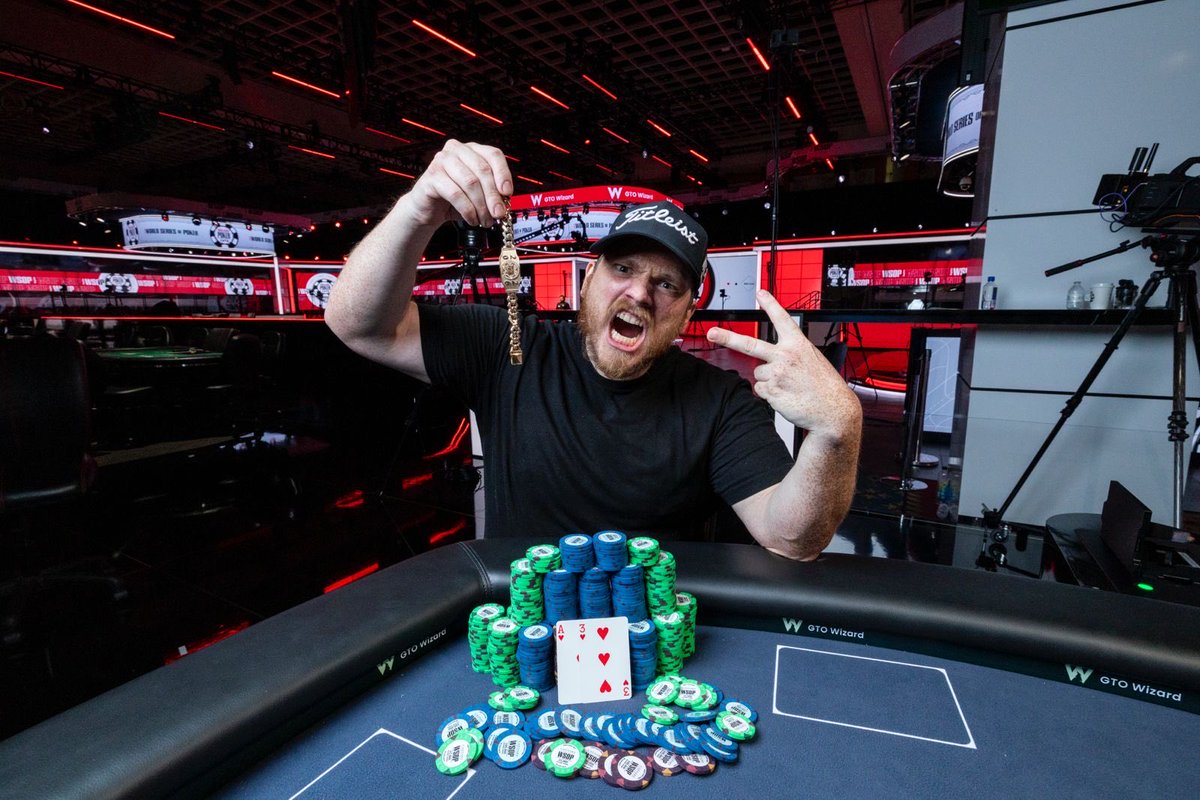
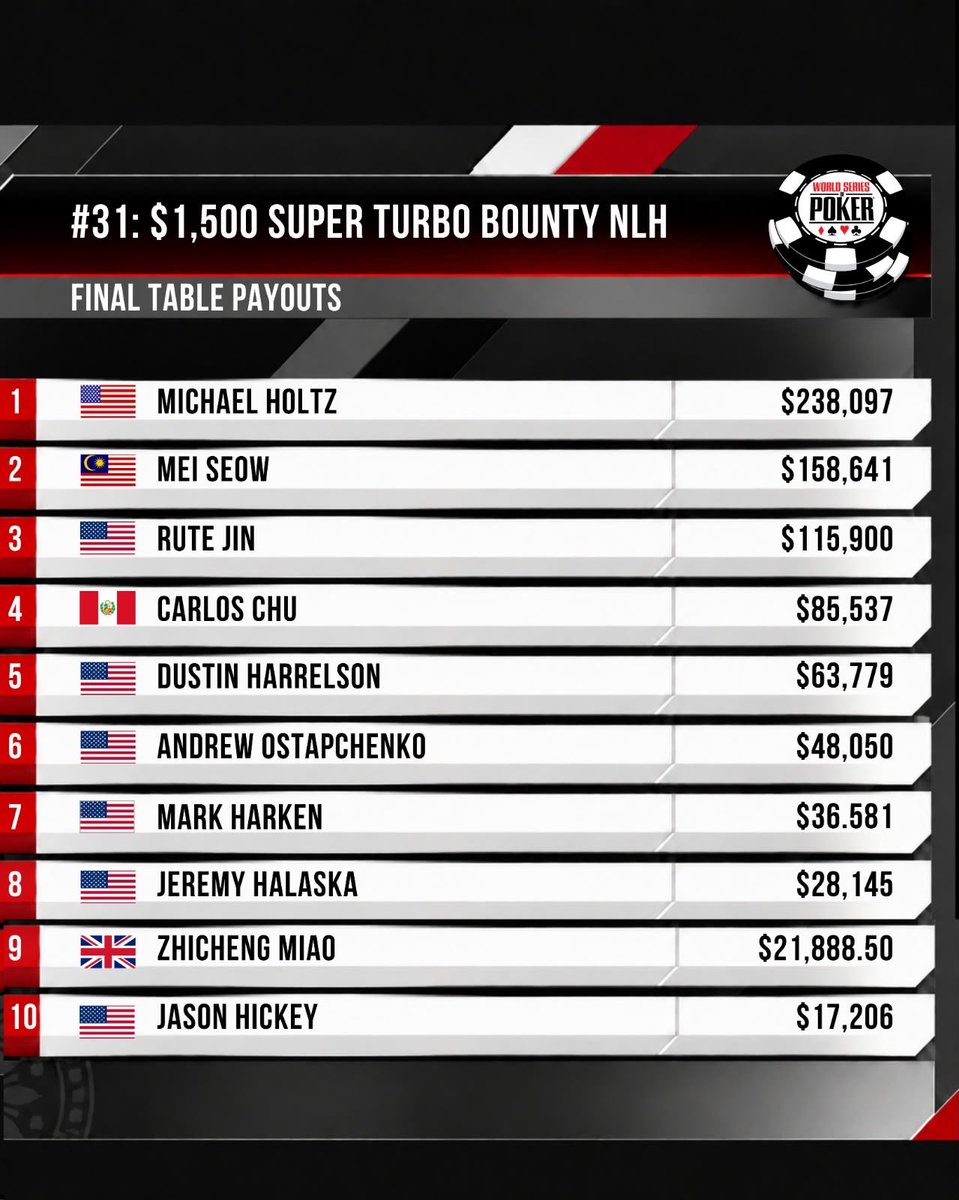
Mike Holtz Wins Turbo Bounty Event!
@PokerNews podcast host @mikeholtzpoker captured his second WSOP bracelet after defeating Mei Seow heads-up in Event #31: $1,500 Super Turbo Bounty No-Limit Hold’em.
Holtz outlasted a field of 2,103 entries to secure a career-best payday of $238,097
Congrats!
21
6
194
23,498
Jun 5
It's unfortunate the powers that be don't better understand/respect the talent that truly makes a product consumable. No shade to the rest, but Ali, Schulman & Vitch are in an elite class that can elevate a stream from watching paint dry to being front & center to a prize fight
Jun 5

Sigh I’m very sorry, bait & switched by whoever makes production decisions for @wsop. I’m super upset, skipped plo/8 which I final tabled last year to do NLSD & they didn’t show it. You probably won’t see me on the stream again, I can’t work with this unprofessional incompetence
16
11
195
28,272
Jun 2
Sports are awesome @JasonKoon

WVU walks it off & has the entire stadium singing Country Roads
Chills
3
2
31
8,563
Matt Berkey retweeted
poker already lived this. solvers didnt kill the game, they killed the edge. watched it happen to my own. the money didnt vanish, it moved to whoever adapted fastest and crushed the ones who didnt. AI doesnt shrink the pie. it reprices who gets a slice
6
2
48
9,376
Matt Berkey retweeted

Jun 1
Suga Sean value-bet a flush. Berkey had the bigger one waiting.
@SugaSeanMMA @berkey11 via @PokerStars
2
1
46
8,804
May 31
Despite how much the WSOP is expanding their coverage this year, no amount of additional tourney tables shown will get the real content the fans deserve. Thank God for the men in the trenches doing the lord's work. Someone build Benba a chicken tender tally X bot account!
May 29

Me and @RealKidPoker offered @shaundeeb a bet on the 25k fantasy for 250k. He thinks he’s 60-65% to win, so I wanted odds. He refusing to give any odds.
After discussing whether he would have more buy ins or eat more chicken fingers this summer I offered even money - but no chicken fingers. He declined.
@JoshuaArieh then calculated that Shaun is paying ~83k in equity to eat chicken fingers this summer.
By the way the current tally for Shaun is:
Buy ins - 3
Chicken fingers - 4
3
1
42
19,411
May 27
God I love the Series. Good luck you animals.
May 26

30m into table nickyp already threatened to spit on a player at the table if they were outside now he’s trying to fight him some things never change at the Wsop
5
119
18,367
May 26
This video singlehandedly captured 3 years of talking hands from Bobby's Room with @LandonTice

11
4
158
30,178
Matt Berkey retweeted

This is gross for @berkey11. @jasonkoon has the goods
Live now at psta.rs/PSFDBGOTEp2 the second show of Season three of the #BigGameonTour
2
14
5,514
Matt Berkey retweeted

May 24
As I wrote in response to Tom's original post, a backer earning even a 1% ROI with zero correlation to markets over a couple days time is an unbelievably good investment that people would kill for in financial markets. The hard part is determining the ROI. If I *KNEW* you were winning at 1.5, then paying 1.49 is still a fantastic deal for the investor.
The problem is, we are both just guessing your win rate, and unless I am the most knowledgeable and plugged-in poker player on the planet, there is very strong adverse selection - the only deals that are available to me are the ones that the smarter investors have already passed on.
The question is much more about what the ROI is and what the range of plausible error is in our estimate than it is about the backer/player split.
For example, if somebody has played a million spin-n-gos, we can have a very tight estimate on their ROI, and all of a sudden if they're playing one for a ton of money, I think that ROI is probably a floor (opponents might play worse than normal), so I would very willingly invest at 1% discount to estimated ROI.
But, again this is a market. Just because I would be *willing* to take only 1% of the EV doesn't mean that's what I will settle for. If time is short, and other backers are limited, then I will extract as much value as I reasonably can.
In tournament backing, many people are willing to pay a premium to gamble because sweats are fun (thus prices are artificially high), information is very opaque, there is a counterparty risk, there is adverse selection, and there isn't any ability to short, which would drive bad prices down.
This is a lot of words to basically say: The backer/player split is more about creating a cushion for ROI estimation error than it is about allocating actual known EV.
May 24

I think whenever you sell action for tournament an important thing to do before setting markup is determining the backer/horse profit split. If you're winning at 10% ROI, what's a fair MU to sell at?
8
5
87
38,115

👀 @berkey11 stepped into the driver's seat on The Big Game on tour and left @shaundeeb by the side of the road.
poker.org/latest-news/big-ga…
2
5
1,871

Even if they're a strong player with a good track record, should MTT pros markup their action?
In literally any other area of finance, you pay to offload risk, or get paid to take on risk.
If I have a raffle ticket with a 50% chance of being worthless, and 50% chance of being worth $1000, how much should you pay for it? The ticket's EV is $500, but you should rightfully demand a discount given that you're taking on all the risk.
So I'd argue that MTT pros should actually discount their action (from it's estimated value), rather than selling it at a premium.
May 23

I’m all for selling action and reducing liability to your own bankroll and letting friends sweat. But if you have zero proven results… and have an ABI of $20 why are we charging a markup on $500 entry events lol… baffles my mind. Not throwing shade but let’s be realistic here
39
3
79
72,461
Matt Berkey retweeted

When I moved to Austin 5 years ago and came across poker in Texas, I was so excited to get involved.
What we went through over the last couple of months has probably been the most stressful time of my life. I was personally facing criminal charges despite doing everything the right way.
I cant describe what it was like to go through something like that, particularly with a family and having always done my best to ensure legal compliance.
The lodge reopens on Tuesday. And it would mean a lot to me, and our team, for everyone in our community to show up and support us.
The lodge is good for poker. We have phenomenal staff and love putting on terrific events. We have made it through to the other side and I could not be happier for us to once again be able to host our members to play some cards.
Tuesday.
May 26th.
Shuffle up and deal.
112
84
1,542
165,235
Matt Berkey retweeted

May 21
i always thought losing was the dangerous part
biggest losses of my poker career almost always followed crazy win streaks
everything working
thinking i'd figured it out
same thing in business
we sold like crazy last spring
suddenly i was the greatest business mind alive
upgraded the studios with shit we didn't need
automatic blinds. new flooring.
money was going to keep flowing. obviously
nothing breaks right away
just small mistakes stacking up
yea losing hurts
but winning lies
3
1
48
7,943
May 22
Easily wins Best new follow of the year. Poker Twitter could use fewer hot takes and more story tellers.
May 22

biggest loss was 3x my biggest win
let's start there
2006. mid 20s. ran my bankroll to around $1m. back when a million actually felt like a million
two years of grinding. the dream. never having to work again. felt invincible
sat heads-up against one of the best in the world at the time. TheSalmon (erik sagstrom)
didn't take long. i wasn't good enough
48 hours
all of it gone
still remember the last pot. calling off his check-raise with the nut flush on a paired river
that "it's over" feeling
took 2 years to rebuild. longer to get over it
—
the biggest win?
around $300k in 2008. against a guy with screen name jandrew
always pictured him as some proper british grandpa. neat hair, calm, never tilted
what was amazing about jandrew: he never bluffed. literal 0%
he'd play. lose $5-10k. leave quietly
one day he stayed
lost a few buy-ins
something snapped
jumped to $250/500
suddenly shoving $50k pre with garbage
grandpa was gone. i was up against a different animal
would've rather played the grandpa. slowly grind him down
maniac was all-in every other hand. had to close my eyes and call or fold
he went busto that night
never saw him again
6
1
143
90,519