
Postdoc in Carolyn Bertozzi’s group
Joined October 2018
- Tweets 23
- Following 132
- Followers 91
- Likes 47
Photos and videos
Brendan Floyd retweeted

28 Oct 2022
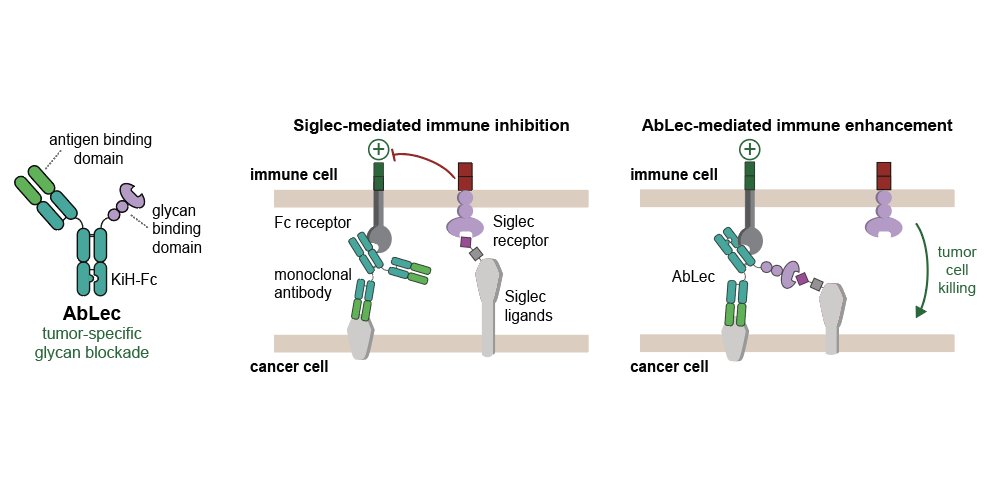
Excited to share our new @biorxivpreprint! We developed antibody-lectin (AbLec) chimeras as a modular molecular architecture to target sugars, or glycans, for cancer immunotherapy. 1/n tinyurl.com/5yw69eeu #glycotime @CarolynBertozzi @Stanford_ChEMH @StanfordUChem @HHMINEWS
8
69
376
Brendan Floyd retweeted

6 Oct 2022
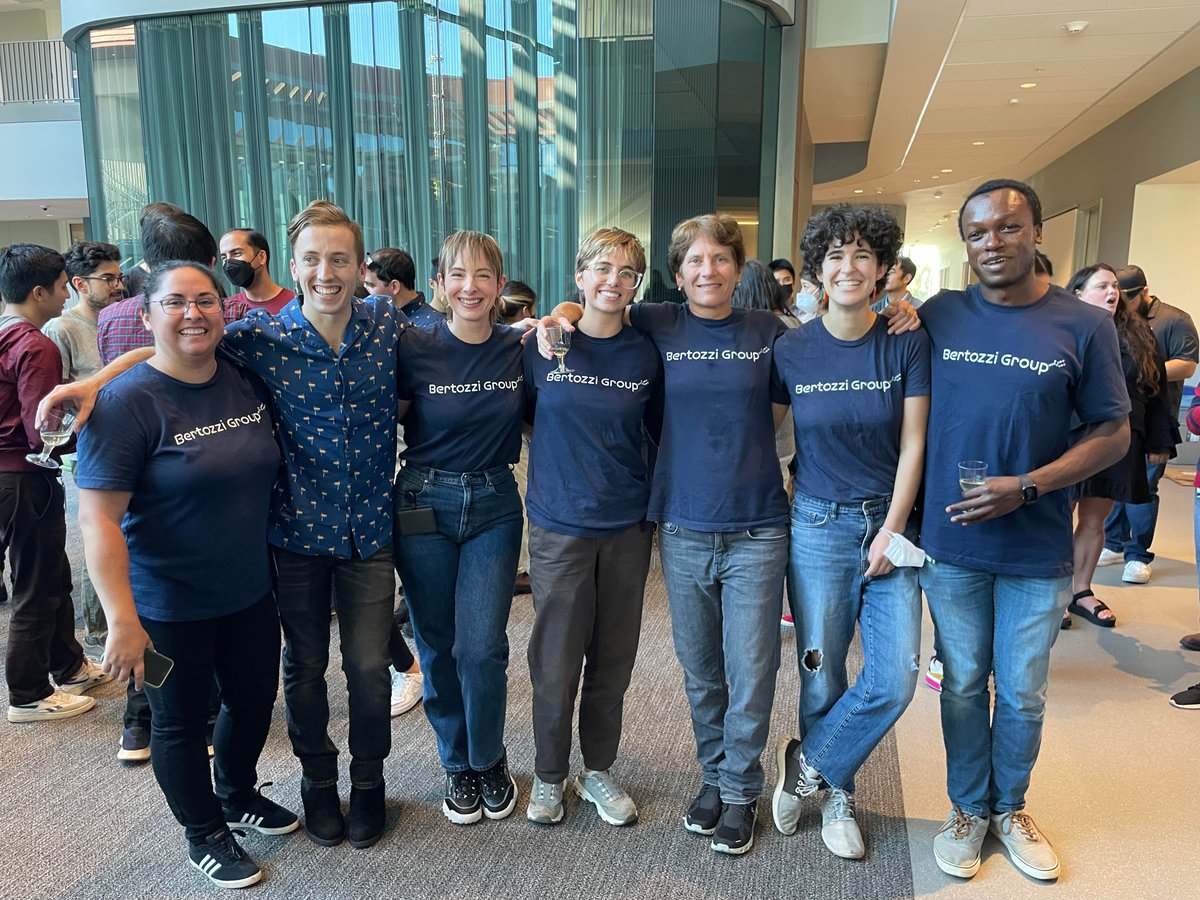
Congrats to my PhD advisor @CarolynBertozzi for winning the @NobelPrize!
In addition to your brilliant science, you are a role model and inspiration to many young queer scientists, including some of the current ones in your lab (pictured)! #NobelPride
1
27
627
Brendan Floyd retweeted

5 Oct 2022
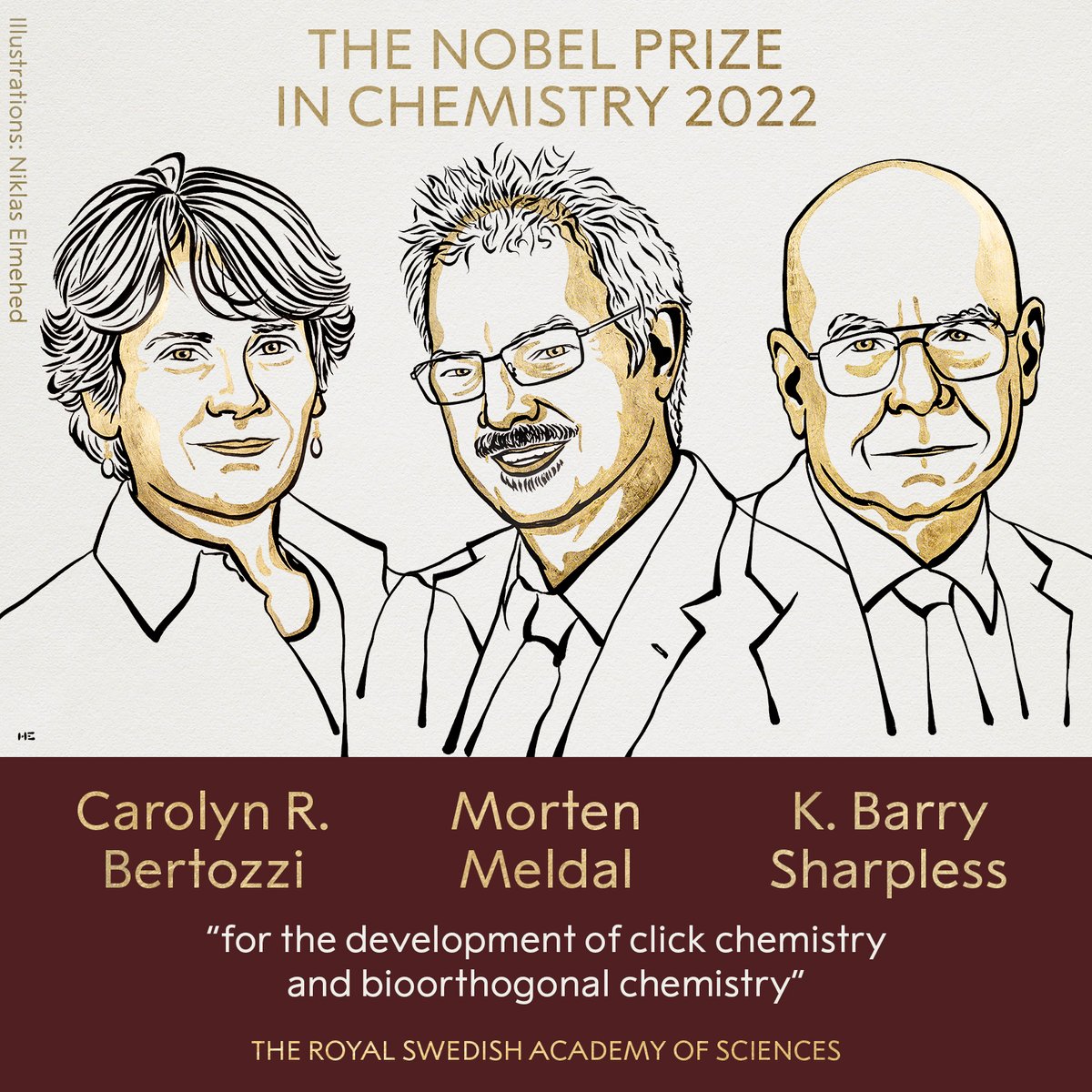
BREAKING NEWS:
The Royal Swedish Academy of Sciences has decided to award the 2022 #NobelPrize in Chemistry to Carolyn R. Bertozzi, Morten Meldal and K. Barry Sharpless “for the development of click chemistry and bioorthogonal chemistry.”
333
9,596
25,505
Brendan Floyd retweeted

20 Sep 2022
Wanna be a postdoc with me and @edward_marcotte? We’re combining imaging and proteomics to explore vertebrate development.
The position is very generously funded 👇🏻. Email either of us if you’re interested! Please RT! apply.interfolio.com/108900
2
61
73
Brendan Floyd retweeted

24 May 2022
Congrats to @ColleenMulvihi2! Our latest manuscript on the humanization of yeast & GPCRs! Wonderful collaboration with @edward_marcotte & @VincentjjMartin @ut_mbs!
nature.com/articles/s41467-0…
4
24
56
Brendan Floyd retweeted

4 Jun 2021
What's 𝘢𝘤𝘵𝘢𝘶𝘭𝘭𝘺 hiding in your go-to cloning plasmid?
The plasmids we use typically have long histories of cutting & splicing and forgotten junk often litters plasmids.
Excited to announce the release of pLannotate: plannotate.barricklab.org
10
111
387
Brendan Floyd retweeted

16 Sep 2020
We are very excited to present our newest preprint on BioRxiv: hu.MAP2.0: Integration of over 15,000 proteomic experiments builds a global compendium of human multiprotein assemblies. biorxiv.org/content/10.1101/…
1
29
58
Brendan Floyd retweeted

5 Aug 2020
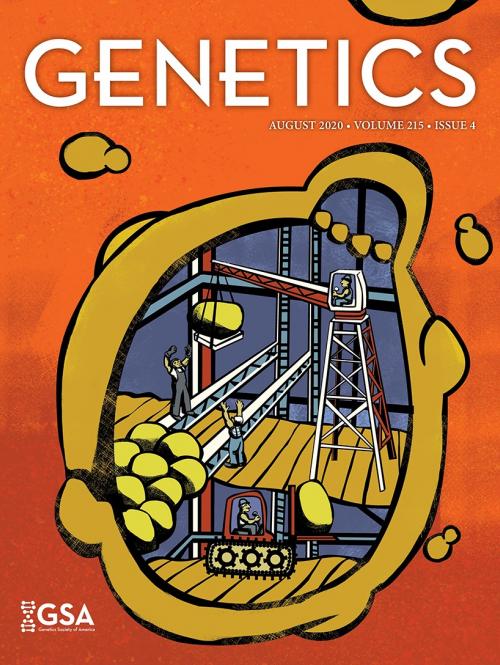
Happy to share that our work on humanizing the yeast cytoskeleton is out in this month's issue of Genetics. 1/ @jonmlaurent
@Aashiq_Kachroo
@edward_marcotte
genetics.org/content/215/4/1…
2
16
32
Brendan Floyd retweeted
18 May 2020
Feels surreal to see our work on humanizing expanded gene families in yeast finally come out in @PLOSBiology! Great effort by @jonmlaurent @Ashley_Teufel @Aashiq_Kachroo @ClausWilke & @edward_marcotte. #APOYG #HumanizedYeast #Evolution #GeneFamilies
2
9
16
Brendan Floyd retweeted

14 May 2020
My newest paper has finally been published in @ChemicalBiology.
Thanks to the entire Anslyn, Marcotte, and @erisyon Labs!
#realtimechem #peptides #chemicalbiology
pubs.acs.org/doi/abs/10.1021…
1
2
6
Brendan Floyd retweeted

31 Mar 2020
A timely protocol from the Ellington lab @CSSBatUT
for RT-qPCR COVID19 assays in low resource settings, using RTX polymerase (easily purified from available constructs) as an alternative to the combination of RT/Taq polymerases: biorxiv.org/content/10.1101/…
17
21

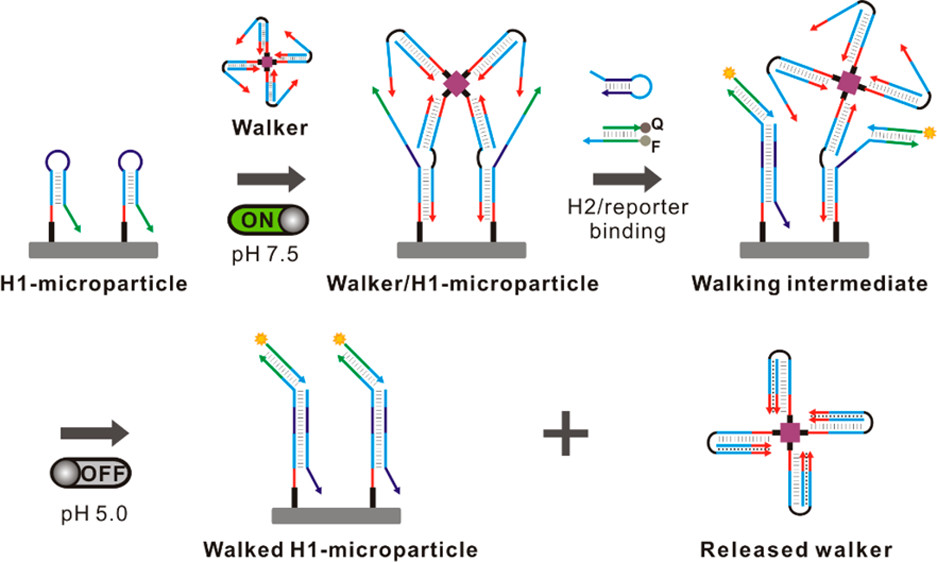
#Weekend @acsnano #socialdistancing #reading #2 A pH controlled #DNA walker bit.ly/DNAwalk20 from Andy Ellington @UTAustin & Cheulhee Jung @UniversityKorea /PSW @PSWnano #nano
4
9
Brendan Floyd retweeted

18 Mar 2020
New Resource online now at Cell: A Pan-plant Protein Complex Map Reveals Deep Conservation and Novel Assemblies zpr.io/tSi8k
8
13
Brendan Floyd retweeted
2 Mar 2020
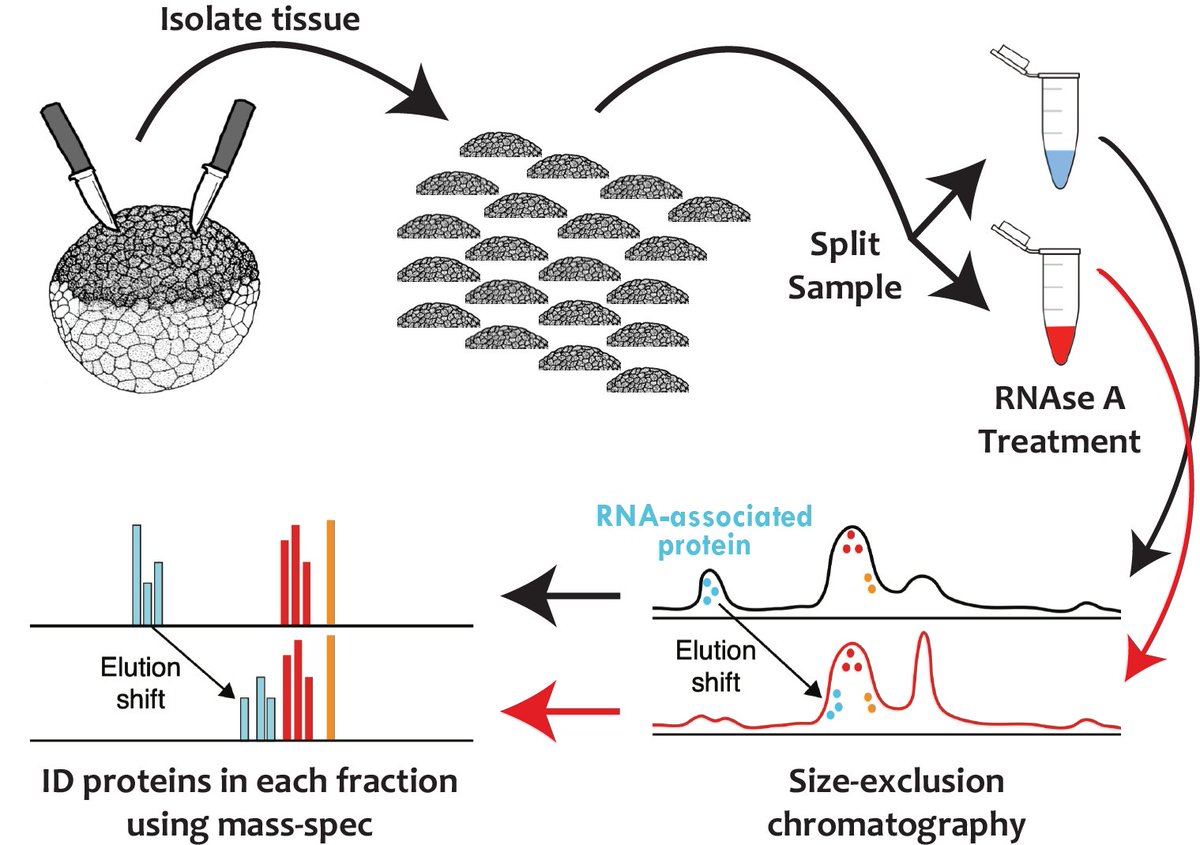
Very excited to put our newest preprint on BioRxiv. In it, we explore the RNA-associated proteome of a vertebrate embryonic tissue and identify new components of a membraneless organelle linked to human ciliopathies. biorxiv.org/content/10.1101/…
3
24
44
Brendan Floyd retweeted

31 Jan 2020
Ecstatic to share our work: science.sciencemag.org/conte…
We engineered symbionts of honey bees to fight pathogens. Lots of people helped, including @zgkotti @DaviesLab et al. Thanks to @Myrmecos for the breathtaking photo. Thanks so much to @NancyMoran15 and @barricklab for guidance.
15
97
270
Brendan Floyd retweeted
17 Jan 2020
New preprint from @Peptide_Chem, @bfloyd1, and coworkers on a versatile approach for capturing and releasing peptides. It's become our go-to prep for single molecule protein sequencing experiments, simplifying the handling of low abundance peptides.
biorxiv.org/content/10.1101/…
1
16
23
Brendan Floyd retweeted

12 Aug 2019
A dream of single-cell proteomics
nature.com/articles/s41592-0…
6
16
Brendan Floyd retweeted

12 Aug 2019
Seeing without looking: our DNA microscopy review is out in @TrendsinBiotech cell.com/trends/biotechnolog…, covering five strategies to spatially locate >millions of molecules via DNA sequencing only, no optical microscopes required! 1/
2
22
37
Brendan Floyd retweeted
13 Jun 2019
Humanization of yeast genes with multiple human orthologs reveals principles of functional divergence between paralogs biorxiv.org/content/10.1101/…
5
8
Brendan Floyd retweeted
18 Dec 2018
Motile ciliogenesis uses phase separated organelles! Wallingford lab's @rlhuizar and Chanjae Lee led our project to explore them and their disruptions as potential mechanisms behind ciliopathies. Paper out now! doi.org/10.7554/eLife.38497 @eLife
7
9