
I've been known to push electrons around.
Joined May 2010
- Tweets 6,754
- Following 538
- Followers 301
- Likes 1,062
195 Photos and videos












Giuseppe Rota retweeted

Jun 11
Btw, Anthropic is not the first company that keeps the good models to themselves. Google’s internal coding models are trained on their own codebase, and are not available publicly
92
45
2,397
177,609
Giuseppe Rota retweeted

May 11
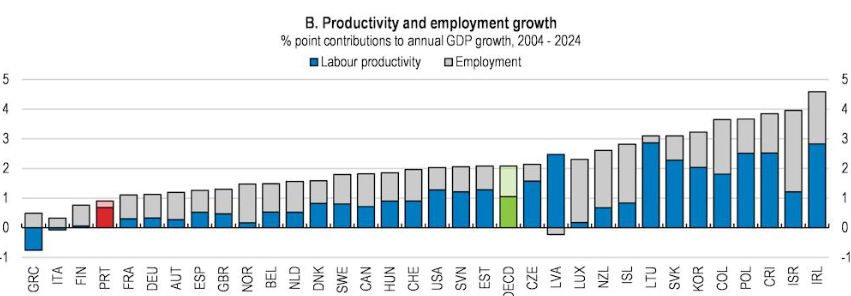
Italy is the clearest example of how a rich country can slowly destroy itself through decades of bad management.
Since the late 1990s, Italy has had almost zero productivity growth.
Real wages have stagnated. And public debt is now around 137% of GDP, projected to move toward 139% overtaking Greece as the highest in the eurozone.
It is the result of 25 years of
1. Low innovation and very low adoption of new technologies
2. Family and insider succession in many companies, weakening meritocracy
3. Underdeveloped VC industry, startup ecosystem and R&D base
4. Political capture by lobbies and organised crime
5. Extreme administrative, judicial and business bureaucracy
6. Political fragmentation
7. Demographic collapse
No country can remain rich forever if productivity does not grow, debt keeps rising and politics only manages decline instead of reversing it.
109
347
1,245
80,428

We’ve agreed to a partnership with @SpaceX that will substantially increase our compute capacity.
This, along with our other recent compute deals, means that we’ve been able to increase our usage limits for Claude Code and the Claude API.
4,731
11,930
130,544
23,979,966
Giuseppe Rota retweeted

May 7
It’s an honor just to be nominated
217
248
9,830
620,853
Giuseppe Rota retweeted

Feb 4
you can outsource your thinking
but you cannot outsource your understanding
283
4,188
18,508
2,865,941
Giuseppe Rota retweeted

I think of this tweet every day.
I can't stop myself.
Every time I see anything YC related now, it immediately comes to mind.
I hope to be free of this tweet someday.

53
94
3,481
147,520
Giuseppe Rota retweeted

Mar 13
Meta's Avocado model sucks and is delayed again
Mar 12

META HAS DELAYED THE RELEASE OF ITS NEW AI MODEL "AVOCADO" AFTER INTERNAL TESTING REVEALED IT LAGGED BEHIND RIVAL MODELS FROM GOOGLE, OPENAI, AND ANTHROPIC IN REASONING, CODING, AND WRITING PERFORMANCE.
13
2
290
310,356
Giuseppe Rota retweeted

The BBC put Elon's image first, despite the fact that he has never visited the Epstein island, but conveniently omit King's brother Andrew in the headline.
Andrew is all over the files, having visited the Epstein island a number of times, with some really scary photographs in the files.
Or Peter Mandelson, who visited the Epstein Island AND leaked government documents to Epstein, and is under police investigation.
Note: X, owned by Elon, is the main rival to the BBC News business.

968
4,271
35,944
933,427
Giuseppe Rota retweeted

Feb 2
The Niri window manager feels like exactly what I was looking for. Holy shit this is good.

173
150
4,147
759,252
Giuseppe Rota retweeted

Jan 31
This is how markets work
84
505
6,684
920,600


been a week and i still see people dunking on the game engine post
don't get why they don't just say "we didn't know what we were doing and now we have a mess that we're doing our best to deal with"
instead of being like "let me teach you something about programming"
30
8
608
42,938
Giuseppe Rota retweeted

Jan 25
They executed him on his knees in the street. I cannot believe what is happening to my country. I say this not as a Democrat, or a Republican, but as an American. They are boiling us like frogs, trying to acclimate us to the destruction of our nation.
141
631
7,299
153,564
Giuseppe Rota retweeted

Jan 25
Adding mouse pointer shapes to Textual.
On supported terminals, you can set the mouse cursor shape to show when the cursor is over a given widget.
All the cool kids are doing this these days.
3
8
119
9,100

the pool of people who have access to copilot is huge
every enterprise microsoft customer has already bought it for their employees
it's pretty amazing they're supporting OpenCode when other company is aggressively doing the opposite

OpenCode can now officially be used with your Github Copilot subscription
with the $39 pro subscription you get access to the best coding models
wonderful to see them support open source and user choice of tooling in this way

138
81
2,787
202,079
ship something shitty fast and fix it later culture just does not produce anything great
there's mountains of rationale as to why you should do that but i've never seen it work and it always turns the company into a painful place to work
nothing going on right now changes this
114
71
1,354
67,773
Giuseppe Rota retweeted

23 Dec 2025
So many people asked me what I think about this (ok, maybe just one..) so:
I actually side with Yann here. The key is distinguishing theoretical universality from practical generality.
Yes, brains are approximately Turing-complete, with enough time and paper we could compute anything. But under real constraints as finite memory, finite time, finite attention, we handle only a tiny sliver of possible problems.
The space of possible functions is unimaginably vast, and we can represent an infinitesimal fraction. We feel general because we can't perceive our blind spots, not because we lack them.
22 Dec 2025

Yann is just plain incorrect here, he’s confusing general intelligence with universal intelligence.
Brains are the most exquisite and complex phenomena we know of in the universe (so far), and they are in fact extremely general.
Obviously one can’t circumvent the no free lunch theorem so in a practical and finite system there always has to be some degree of specialisation around the target distribution that is being learnt.
But the point about generality is that in theory, in the Turing Machine sense, the architecture of such a general system is capable of learning anything computable given enough time and memory (and data), and the human brain (and AI foundation models) are approximate Turing Machines.
Finally, with regards to Yann's comments about chess players, it’s amazing that humans could have invented chess in the first place (and all the other aspects of modern civilization from science to 747s!) let alone get as brilliant at it as someone like Magnus. He may not be strictly optimal (after all he has finite memory and limited time to make a decision) but it’s incredible what he and we can do with our brains given they were evolved for hunter gathering.
22
17
216
81,810