
Astrophysicist @NASA. NASA @XRISM_jp Project Scientist. Associate PI for @AXISprobe. I mostly play golf and hang out with my dogs. Go Noles.
- Tweets 2,301
- Following 408
- Followers 394
- Likes 4,618

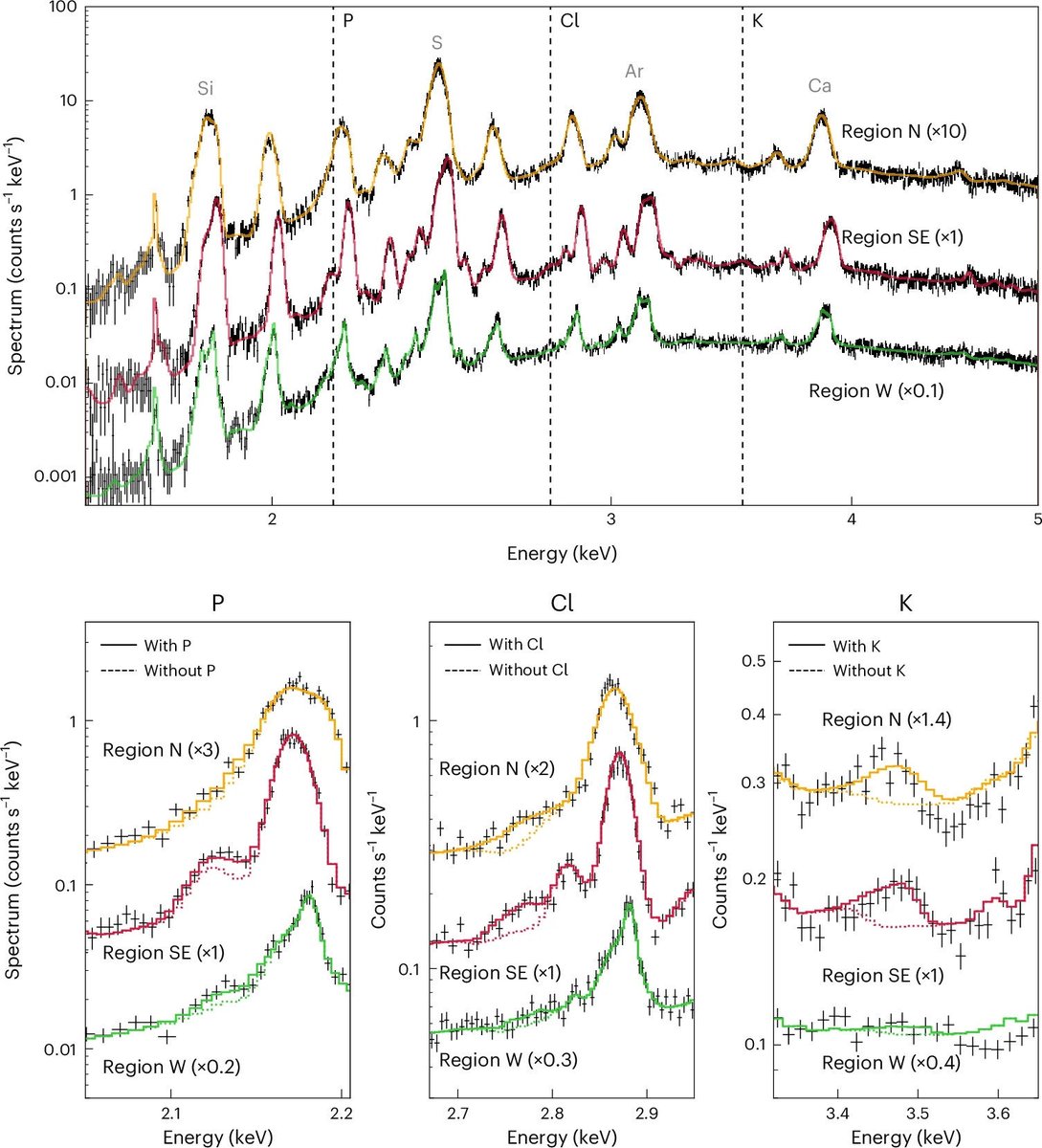













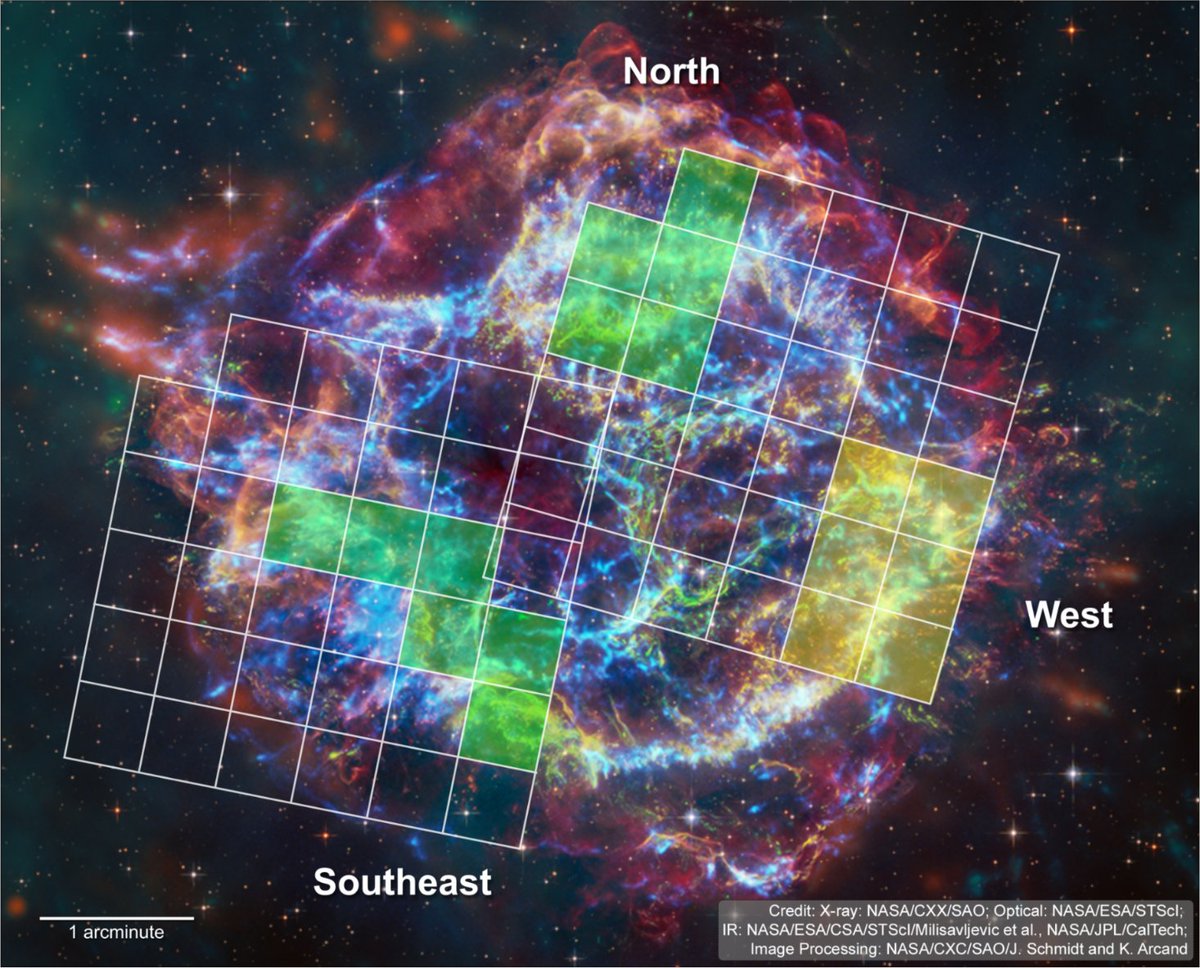
ALT Supernova remnant Cassiopeia A appears as a large circular object outlined by electric blue filaments, set against a black background. Strings of vibrant colors weave throughout, with blue representing Chandra data, red, green, and blue representing Webb data, and Hubble data showing a multitude of stars that dot the view. Two nearly square grids are laid on top of the remnant slightly overlapping. The upper grid has six squares filled yellow, representing a non-detection of chlorine and potassium. In the opposite corner of the grid, five squares are filled green, representing positive detections of chlorine and potassium. The lower grid has six boxes filled green in a wide M-like shape. The image is labeled “North” at the top center, “West” on the right, and “Southeast” to the left. This image is watermarked “Credit: X-ray: NASA/CXX/SAO; Optical: NASA/ESA/STScI; IR: NASA/ESA/CSA/STScI/Milisavljevic et al., NASA/JPL/CalTech; Image Processing: NASA/CXC/SAO/J. Schmidt and K. Arcand.”

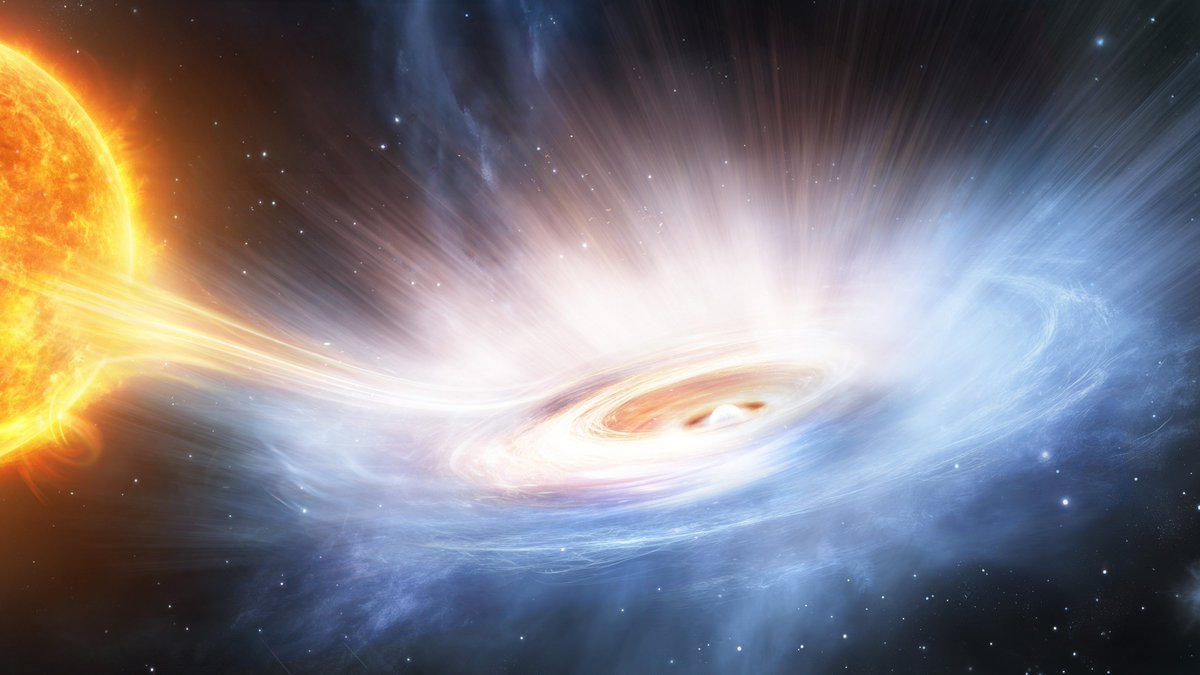
ALT Artist’s impression of the powerful winds blowing from the accretion disc in X-ray-bright system GX13 1. The focus of the image is a blue-to-pink disc of swirling material, circling around a sparkling white ball in the centre. Bright rays primarily white to pink rise towards the top of the image, like a wind blowing off the circling matter. To the left of the picture, a yellow to orange ball is partially visible, representing a star. The star appears to be feeding the disc via a stream of orangish matter that connects the two.

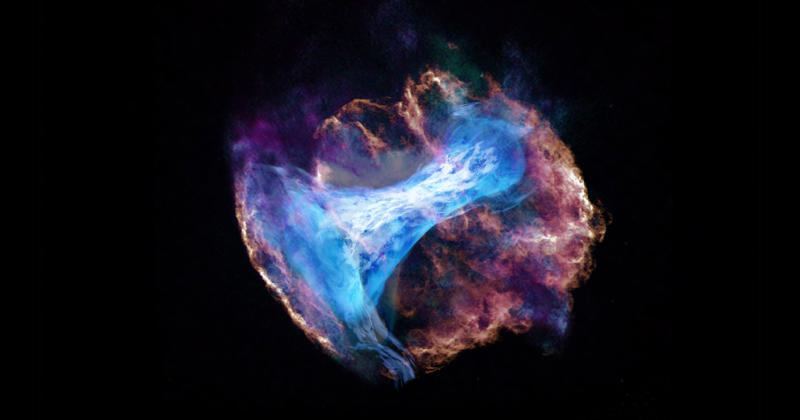
ALT 「W49B」の想像図/XRISM (X線)、パロマー天文台(米国・サンディエゴ/赤外線)、超大型電波干渉計群(米国・ニューメキシコ州/電波)での観測結果を参考にして作成 (クレジット:JAXA)
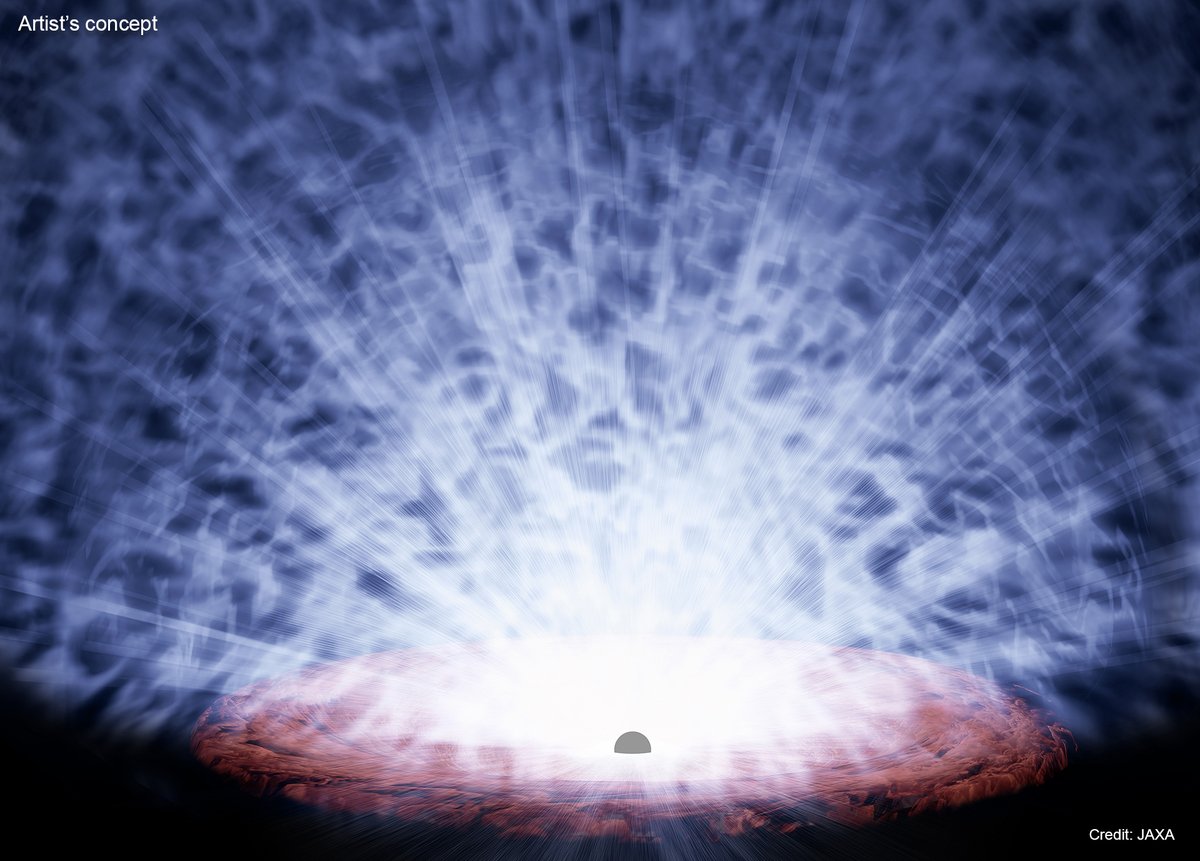
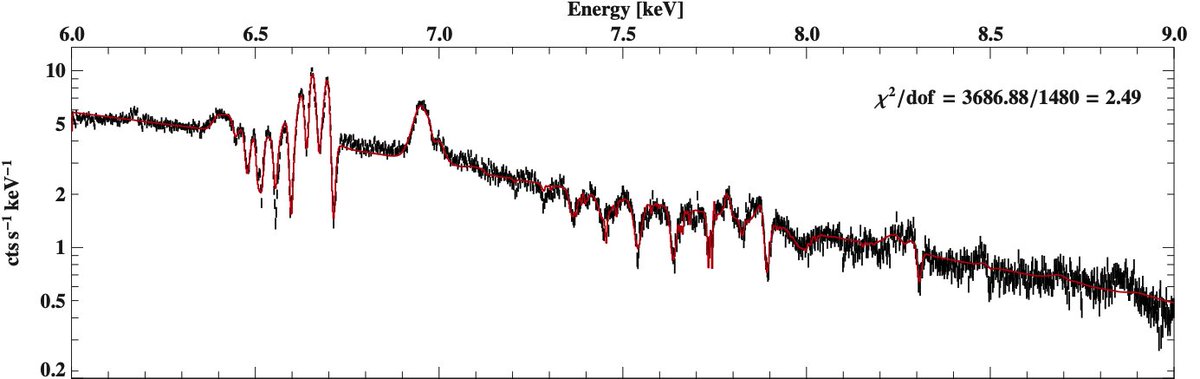
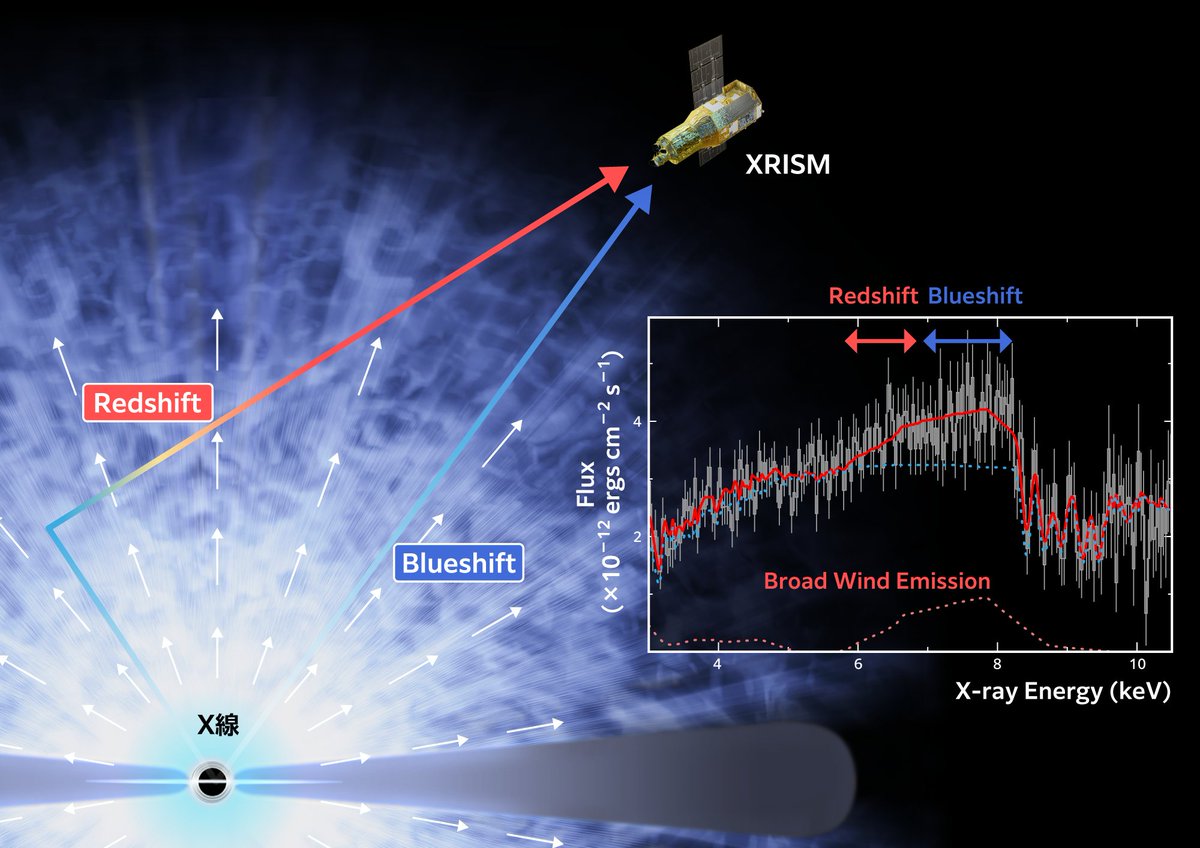
ALT An artist’s concept of the supermassive black hole PDS 456 depicts high-speed winds being ejected from the vicinity of the black hole, which is represented by a small grey half-circle near the bottom of the image. The black hole is embedded in the center of a swirling, pancake-shaped accretion disk (in brown) surrounded by a bright glow that dims toward the edges of the image. The wind emanates outward above this disk, represented by translucent white streaks and clumpy clouds. The image is watermarked with “Artist’s concept” and “Credit: JAXA.”

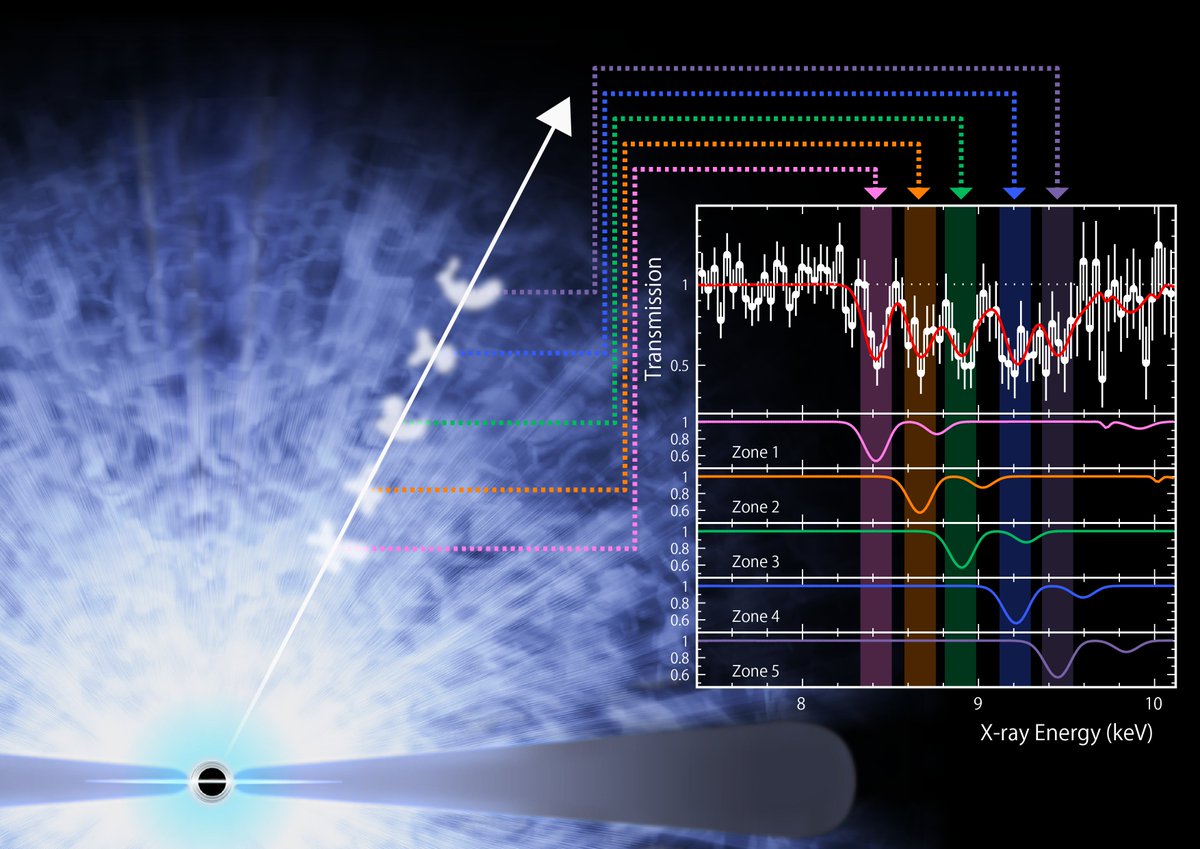

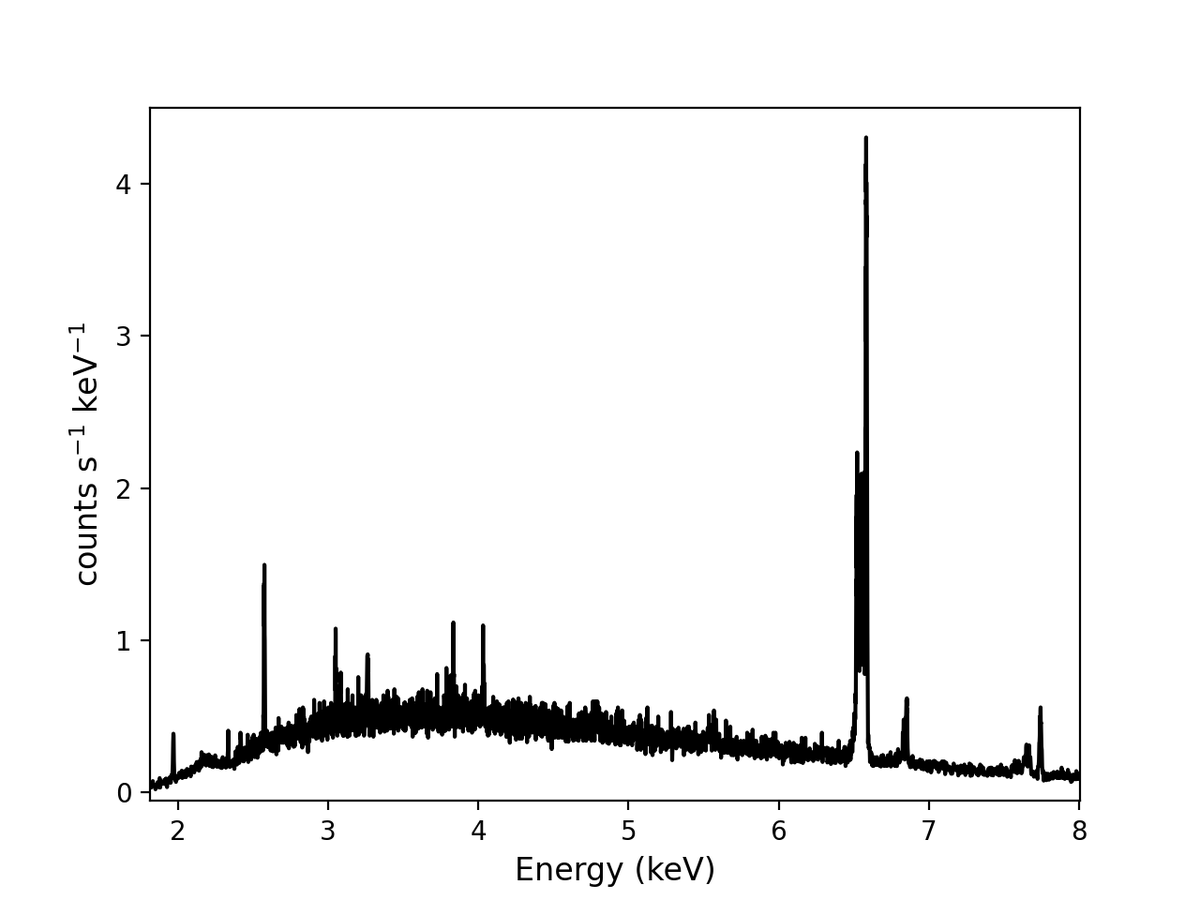
ALT XRISM’s Resolve instrument captured data from the Centaurus Cluster of galaxies. The spectrum is a graph on a black background with white axes. X-ray energy runs across the bottom from less than 2 kiloelectronvolts (labeled keV) to more than 7. The vertical axis is X-ray brightness and labeled counts per second per keV. The data is a spiky white line with several tall peaks. In the background is an image of the central region of the Centaurus Cluster captured by the Chandra X-ray Observatory. The cluster has a bright knot of pale yellow light at the center, surrounded by irregular concentric rings in shades of pink and purple. It looks a little like a stylized flower. The image is labeled “X-ray Spectrum of Centaurus Galaxy Cluster Measured by XRISM Resolve” and watermarked “Credit: JAXA.”
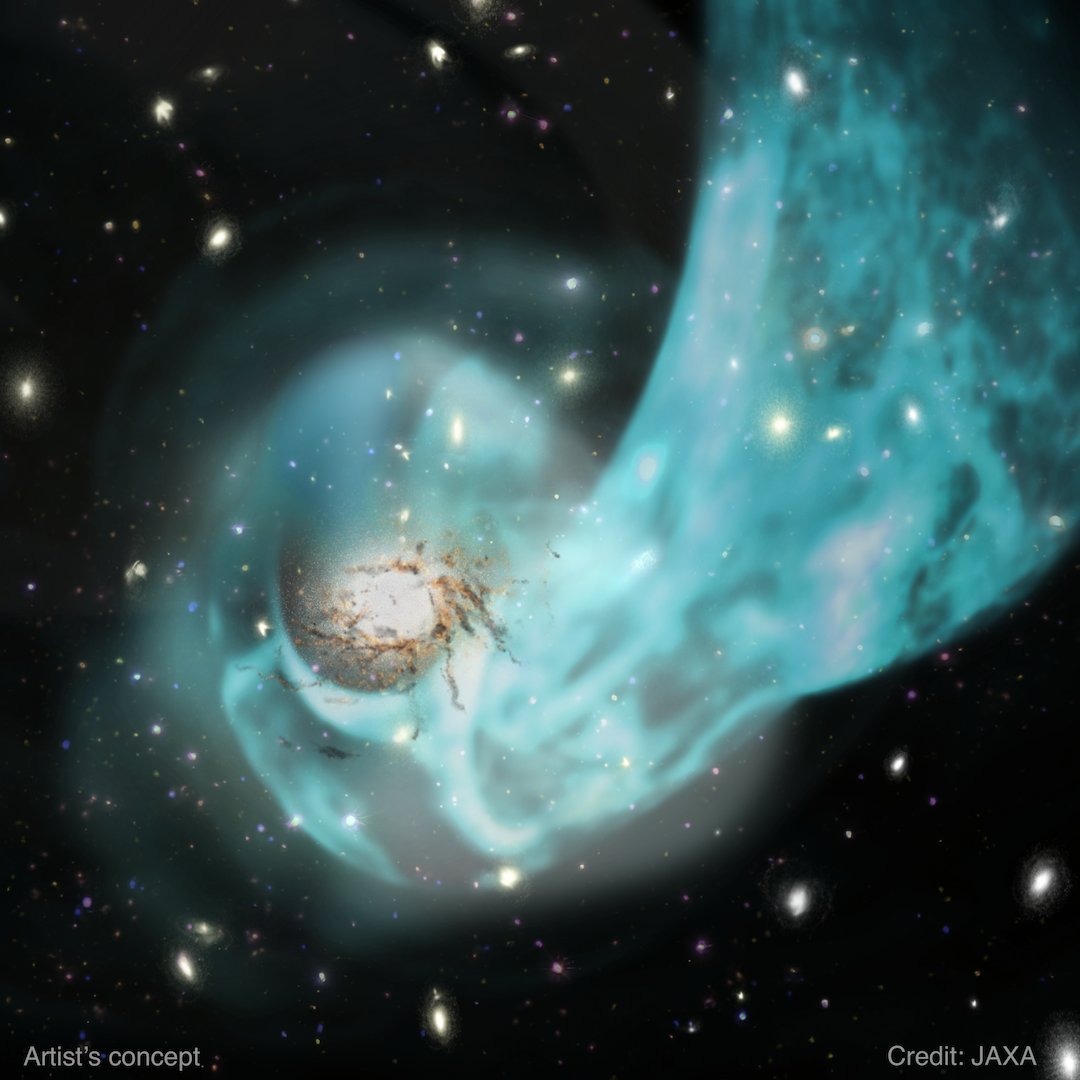
ALT This illustration depicts the center of the Centaurus cluster based on data from XRISM and other observatories. The black backdrop features dozens of round and oval spots in shades of yellow, red, and blue, representing the galaxies in the cluster. Just to the left of center is a large bright oval surrounded by tendrils of tan and dark brown like a small firework. A cloud of patchy electric blue representing the hot gas encircles the bright oval and swings up to the right, like a scarf flung around someone’s neck. The image is watermarked “Artist’s concept” and “Credit: JAXA.”
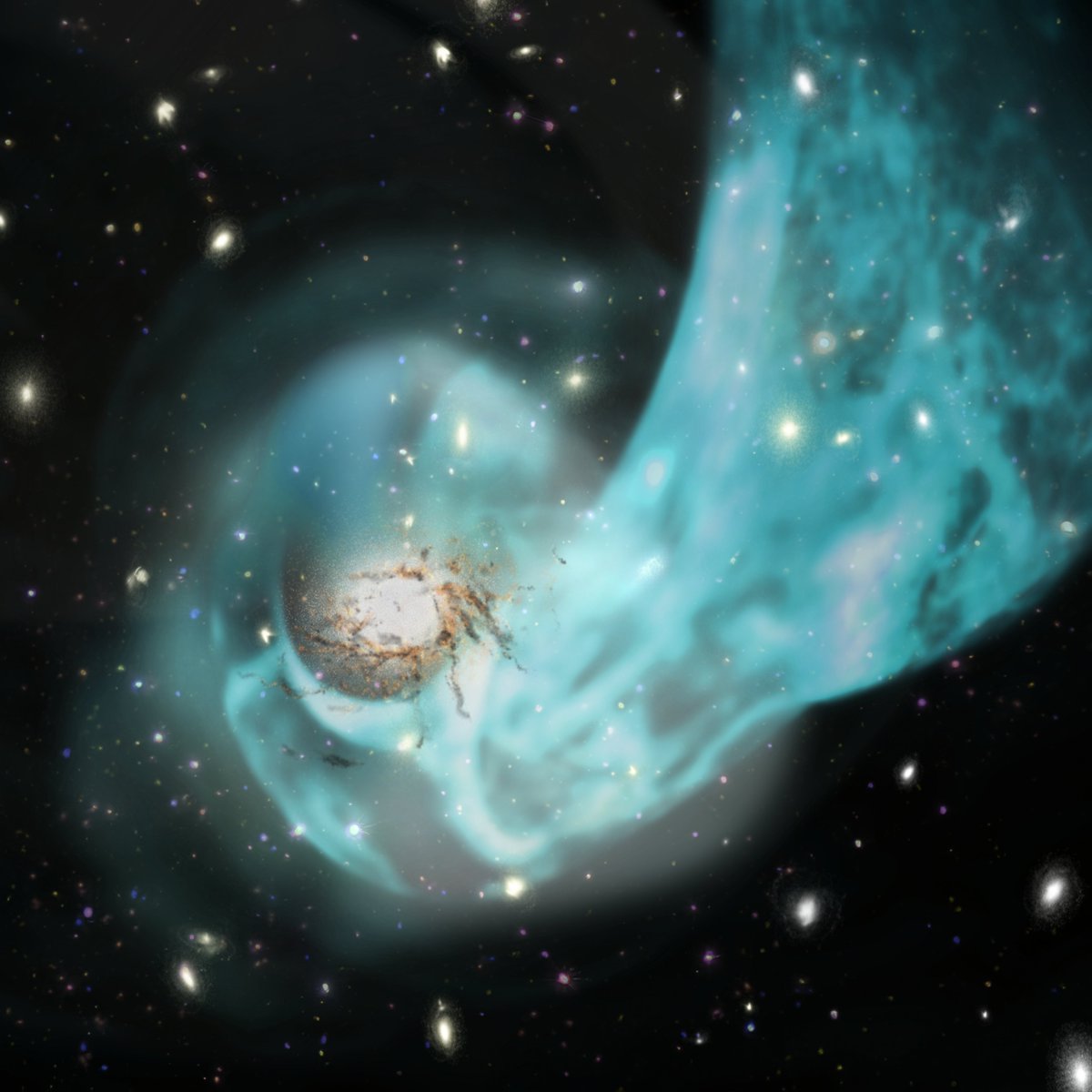
ALT Illustration of the center of the Centaurus Cluster drawn based on XRISM observations and other observations. The bluish color indicates high-temperature gas. The white indicates galaxies, and the reddish brown indicates low-temperature gas. (credit: JAXA)
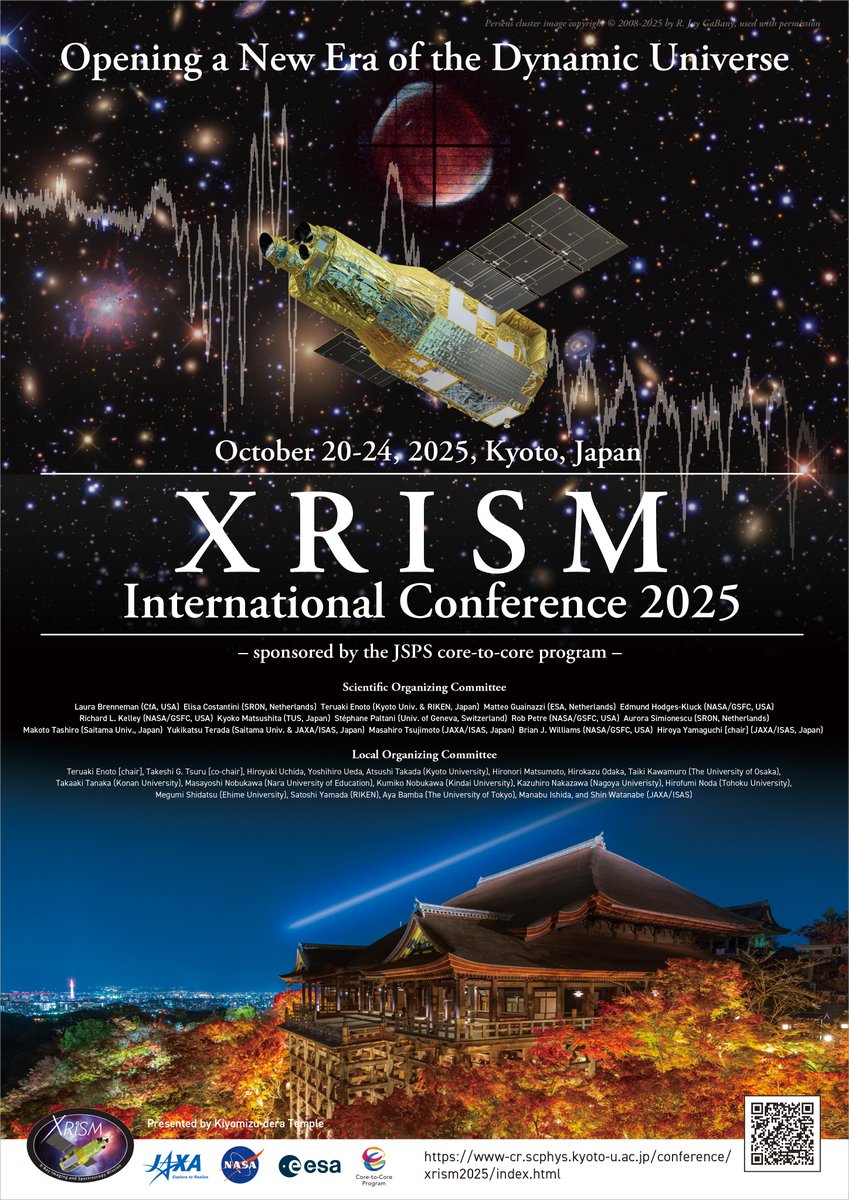
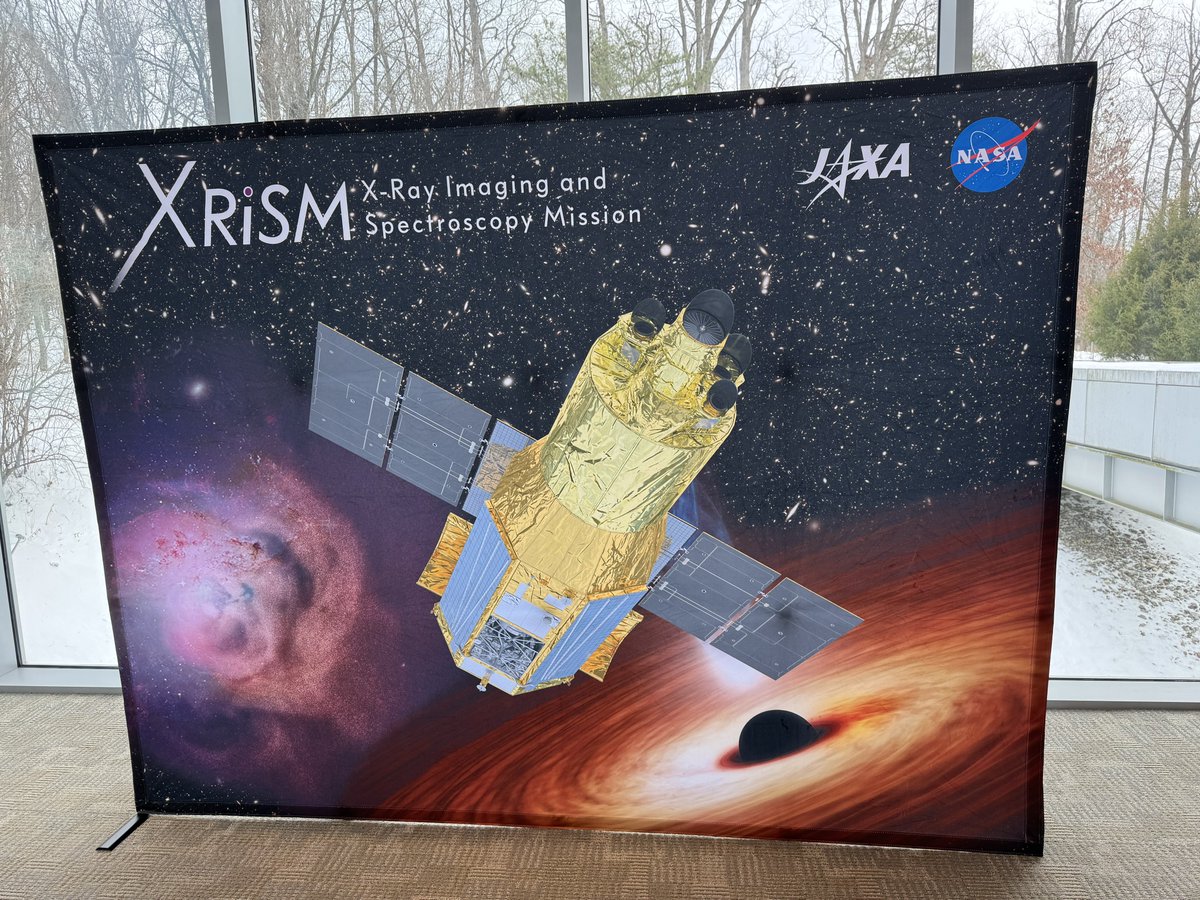
ALT Poster of the 1st XRISM International Conference. The X-Ray Imaging and Spectroscopy Mission (XRISM), launched on September 7th, 2023, is a collaborative mission between JAXA and NASA, with contributions from over 70 institutions in Japan, the U.S., Canada, and Europe. With the successful combination of high-resolution spectroscopy and wide-field imaging, XRISM has provided us with an unprecedented view of the Universe, opening a new era of high-energy astronomy. This conference will highlight the scientific achievements from the first two years of XRISM and identify key issues we should address in the next observation cycles. Conference topics also cover theoretical studies related to XRISM observations and synergies with other observatories, including future missions.