
DAOs will eat the world and tokens are value magic 🔥_🔥
Joined May 2017
- Tweets 8,025
- Following 2,776
- Followers 11,573
- Likes 31,237
623 Photos and videos











Pinned Tweet

21 Oct 2025
All this Ethereum / EF fud on my timeline is hilarious.
Where else are you going to build? Where else can you run decentralised smart contracts? Where else isn’t a money cesspit?
I swear all of you just want the same financial system we have today.
73
19
318
23,351
Find me a more dedicated team than @ensdomains, I’ll wait.
Locked in at @ETHGlobal NY bringing knowledge and vibes for 48 hours straight! ☀️🌒
3
17
689
James.eth 🔥_🔥 retweeted

Jun 10
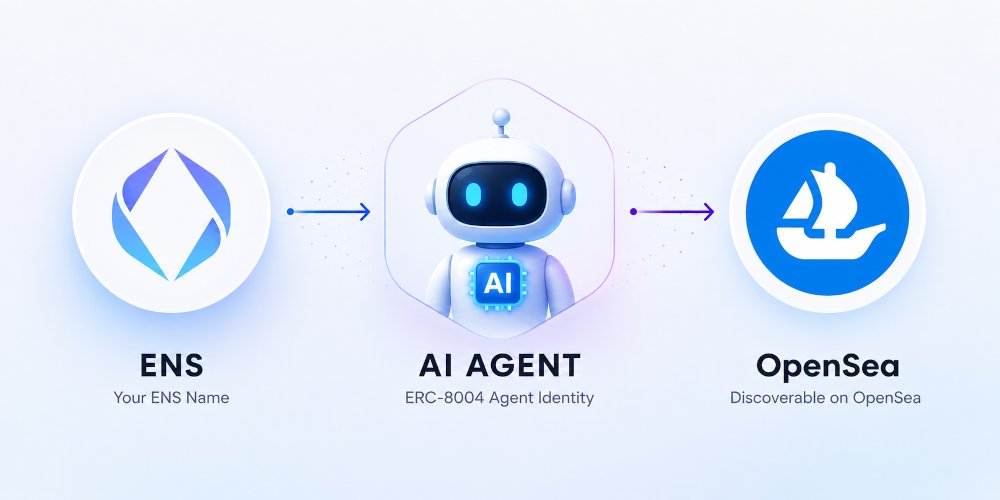
Your @ensdomains name can now be a verifiable AI agent identity.
Using ERC-8004, ENSIP-25, and ENSIP-26, an ENS name can advertise metadata, MCP endpoints, and agent capabilities that AI applications can discover and consume.
We built a simple interface to make this easy 👇
19
32
107
11,048

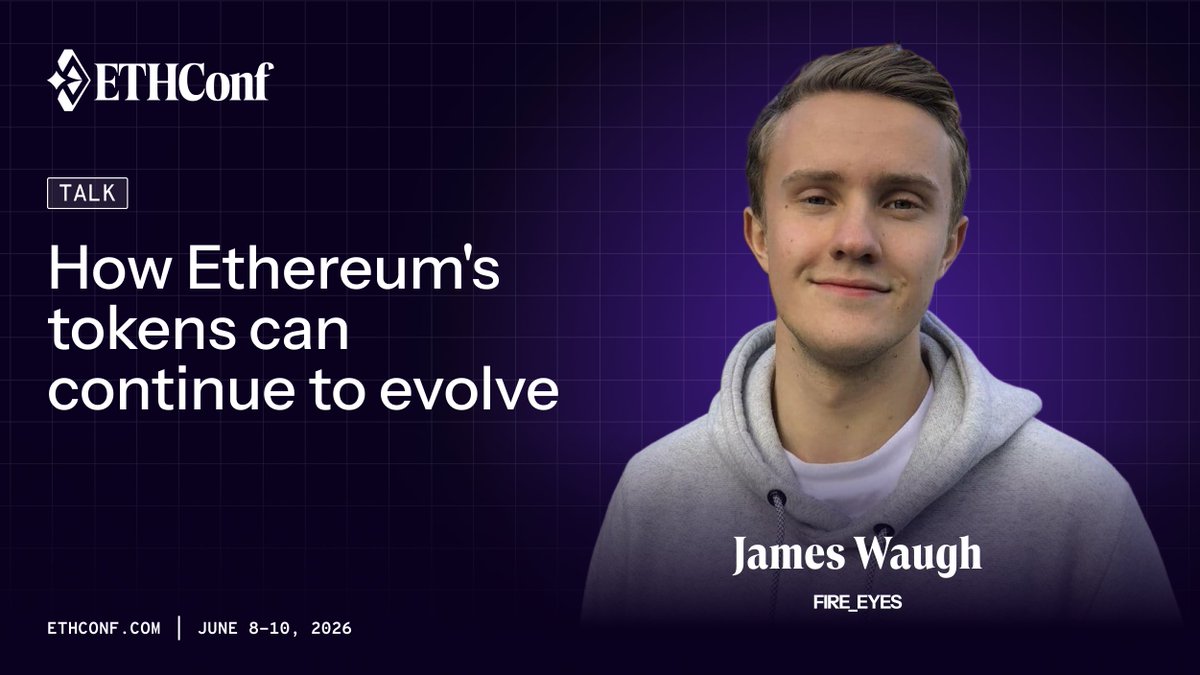
Ethereum's tech kept evolving for a decade. Its tokens mostly didn't.
James Waugh of Fire_Eyes on how founders build tokens that actually drive value to holders, and whether tokens become equity.
@blockchainjames of @fireeyesgov on the Main Stage at ETHConf.


1
1
15
480
"How Ethereum's tokens can continue to evolve"
@blockchainjames, Co-founder of Fire_Eyes.
⏰ Main Stage, 10:30am
1
1
9
566
James.eth 🔥_🔥 retweeted

Jun 8
Biggest American Ethereum event in history starts today
Huge in-person attendance. Underfollowed online imo. Not sure if there will be a live stream

Day 1 of ETHConf is live at the Javits Center.
Everything on the Main Stage, from protocol research to institutional adoption.
Here's what's on the schedule for today ↓

10
12
126
8,779

if you’re in crypto, i think this is the best time to go to events.
it may feel rough but this is the time where generational movements are born.
go and meet people!
Jun 5

@haydenzadams launched uniswap during a bear
@StaniKulechov launched ethlend (aave) during a bear
@chameleon_jeff launched hyperliquid during a bear
29
5
235
21,725
James.eth 🔥_🔥 retweeted

Jun 5
Most people still holding $eth are likely ready to go down with the ship; at least I am.
Ethereum is a bastion of freedom and self-sovereignty in an increasingly controlled world.
No amount of number go down could get me to sell. Even with most of my net worth in eth, I would hold it to literal zero.
I would rather take a chance on eth and be wrong than give up hope on the most inspiring invention of my generation.
Come zero or valhalla, I'll be here.
Believe in somΞthing.
114
118
1,385
63,040

James.eth 🔥_🔥 retweeted

May 27
On June 10 we're back at @233butler ✨
IRL, Refraction and @ensdomains take over Public Records for a late night during #ETHConf week with NY's livwutang playing all night long, with visual art from @polyhop
RSVP ↓

2
5
29
3,820
James.eth 🔥_🔥 retweeted

May 28
private transfers are now live on privacy pools v2
send funds to another address without revealing the sender, recipient, or amount
chillin in the pool has never been more comfy
10
22
135
17,948
James.eth 🔥_🔥 retweeted

May 26
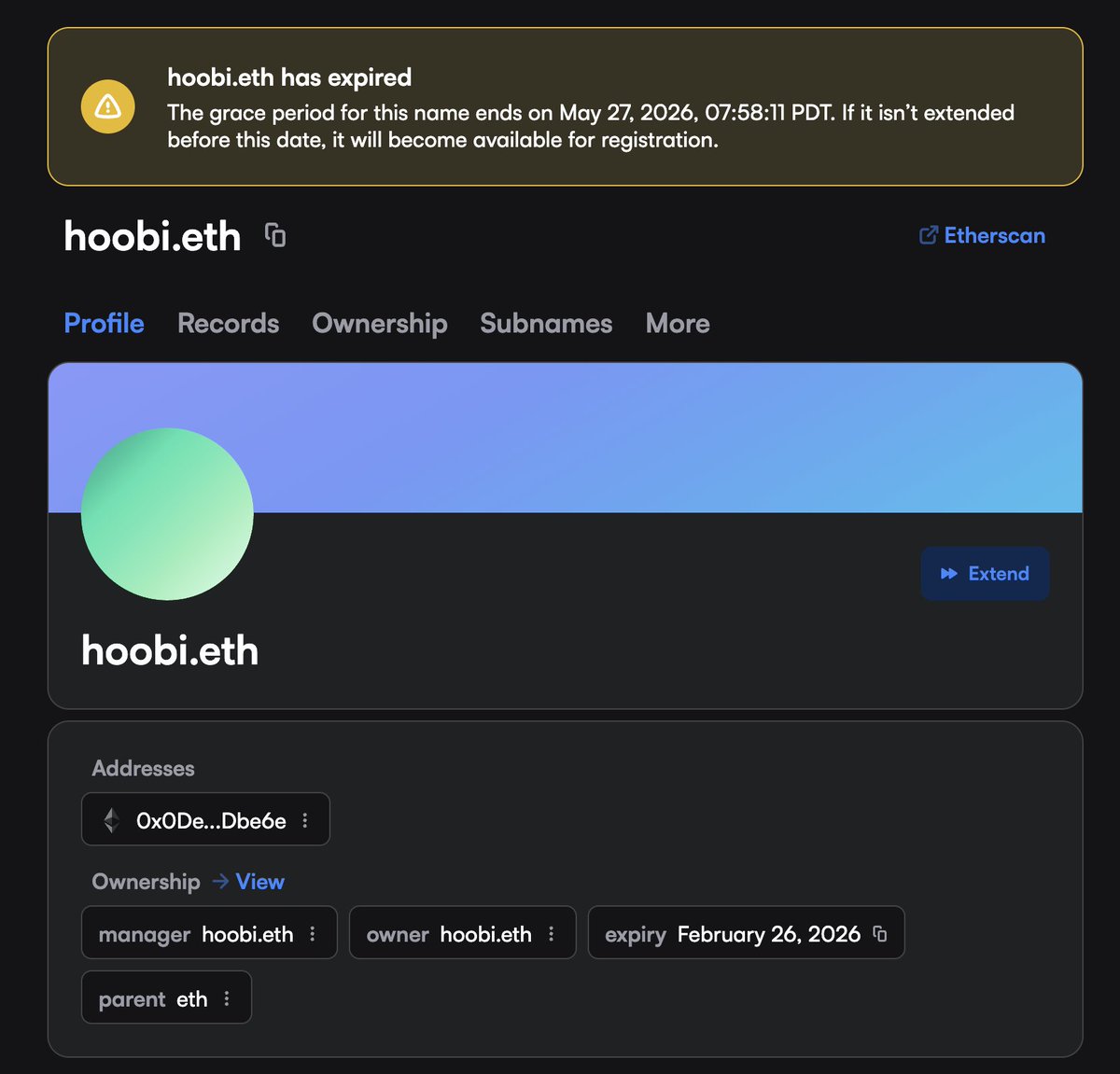
Hey @hubkotl , your ENS name was about to go into auction. Renewed it for ya.
Anons, make sure to have your domains safe
2
2
43
4,385
James.eth 🔥_🔥 retweeted

May 24
Some of my perspective on where the @ethereumfndn is going.
First of all, this is only my own view. The board is not just me, and I have no extra special powers on the board that the other board members do not. @aerugoettinea is the one executing much of this transition. My input has been largely on technical questions. The board is in the process of expanding, and my own power within the org will continue to decrease, which is honestly what I want.
The 2025 era brought many important improvements to EF and its ability to execute. Many issues were resolved, and EF continues to benefit from its improved efficiency and greater focus on concrete goals to this day. And so with those problems resolved, early this year, the largest remaining hole that I perceived was something different nagging at me: I would regularly spot people saying things like "vitalik says these beautiful things about ethereum needing to be decentralized, and have privacy, and be a sanctuary technology, but why do the EF's actions not reflect that?"
Now, you may have been hearing something different. You may not have been sensing a feeling of crisis at all, and maybe were hearing people saying that finally we were taking execution and BD seriously and the main task for us is to keep going that way and be even better and faster. Then probably there is genuine difference between you and me, in what kinds of criticism I take most seriously, and what kinds of critics through their criticism are most able to make me feel pain.
As an analogy, let's briefly switch over to a different domain.
One belief you can have about Google is that it is a success story, and has brought a lot of good to humanity in organizing the world's information. Another belief you can have about Google is that they had a beautiful idealistic beginning, but at some point the corruption of mainstream corporate attitudes seeped in, and they slowly bit by bit completely abandoned the "don't be evil" slogan.
My belief on Google specifically is probably somewhere between the two. BUT, if you had taken me back in time to ~2008, and offered me a button to press to make Google one or two standard deviations more "dogmatic", eg. give Richard Stallman permanent veto power over some key policies, I would immediately press it.
Why? Because a choice for one company is not a choice for the world, or even one country. Google existed and exists in the context of a technology industry generally drifting away from early idealistic don't-be-evil roots and toward greed for financial gain, totalizing visions of accelerated superintelligence, infiltration by sociopaths, and craven capitulation to (or worse, active participation in) government pressure for ideological control, surveillance and war. And so *one company* doing something different, positioning itself to be what George Bernard Shaw calls the Unreasonable Man, resisting the trend of the times, would have been better for freedom, balance of power and stability of society as a whole, than *all* large companies bending to dominant trends. This is a part of my version of pluralism.
This line of thinking is not just mine, but I also is not too far off from what Aya and others had in mind with the Mandate.
Now how does this all get to the role of the EF?
EF is not a "center of Ethereum", rather EF is "one node, with a defined purpose, alongside other nodes". We've always said that the EF should be the latter, but many in the Ethereum ecosystem (and even within the EF) wanted us to be the former. Now, we are taking action to ensure that we will be the latter.
This is particularly important because EF is a limited organization, with limited resources and limited organizational capacity. The EF has only ~0.16% of all ETH (less than many other individual ETH holders), whereas among other blockchains it's common for "the central foundation" to have 10-50%. Fiscally, the EF was originally designed to fulfill a limited work scope defined in the token sale docs and other pre-launch materials (building the chain software; getting through Frontier, Homestead, Metropolis, Serenity), which was fully completed in 2022; it was not designed to be an eternal steward.
And so today, the EF is choosing to use its remaining resources to pursue longevity over breadth (yes, this means we sell less ETH). The EF focuses *specifically* on those activities critical to the success of ethereum as a censorship/capture-resistant, open, private and secure system, that would not happen otherwise. This means making hard choices, and in some cases even activities that we highly approve of and people that we highly respect becoming outside of the EF. People of great technical talent, public respect and even alignment with the mission and CROPS being outside of the EF is in fact necessary if we want important tasks to be able to attract outside capital. This also means the EF taking opinionated stands culturally.
This is all intended in cooperation with all other parts of ethereum. We recognize that many other parts of the ethereum world highly respect CROPS and related values. But highly respecting is not the same as choosing to specialize and totally dedicate to a domain (Compare in a different domain: I think reducing animal cruelty is important, and I like vegan food, but am not full unconditional vegan myself)
EF is still in a transition period, and we expect its new long-term form to stabilize over the next few months. What are the guiding principles of this new form? Again, I am only one person, but I can give my answer from a technical perspective (there are also critical non-technical aspects).
At the core, *Ethereum must be impressive*. We are living in an age of highly intelligent AI and all kinds of other technological acceleration. "Status quo EVM, with a hard fork or two a year to optimize for short-term needs of users" is not interesting.
To some, "impressive" means: 250ms latency and 1M TPS. I think Ethereum trying to go that route is a mistake. Being as fast and as scalable as possible, and only a small epsilon more decentralized than the others, is a route to mediocrity, and if we try it we will lose.
I think Ethereum should scale. But I think Ethereum should strive the hardest to be deeply impressive in a different dimension: the CROPS dimension. This means things like:
* Provably bug-free Ethereum. This is a goal that all cybersecurity researchers would have thought is absurd and impossible, up until roughly 6 months ago. Now, it's on the cusp of being possible, thanks to AI-assisted formal verification. So we should be frontrunners in doing this.
* Available chain consensus. Ethereum is, and with lean consensus will cotninue to be, the ONLY chain that has both (i) traditional-BFT style properties that it's safe under asynchrony up to a high level of fault tolerance, and (ii) the bitcoin PoW-style property that under synchrony it's safe up to 49% attackers. As far as I can tell, literally no other chain has this or is planning for it; bitcoin goes for (ii) only and most other chains go for (i) only. Some will remember I fought hard for this, Unreasonably insisting that it is not OK for ethereum to rely on social consensus and hard forks to rescue ethereum from 34% of nodes going offline. It's OK for chains like hyperledger, bnb, solana, tempo, etc. It's not OK for bitcoin or ethereum or eg. zcash.
* Intermediary minimization. The fact that smart contract wallets, protocols like railgun, etc have to send transactions through intermediaries to get included onchain is honestly embarrassing, and it's a constant point of fragility. Hence the work on FOCIL and EIP-8141 (and 7701 and years of work before) to make transaction sending intermediary-minimized with public mempool and strong inclusion properties, in a truly general-purpose way, that covers not just eg. secp256r1, but also privacy protocols and much more. Kohaku is pushing intermediary minimization at the user layer, pulling Ethereum away from the dystopian status quo world where our wallets don't even verify the chain, send our private data out to a dozen third-party servers, and toward a brighter CROPS future.
Some of these goals are Unreasonable - maybe Ethereum would be "fine" getting only 50% of the way - what if we depend on intermediaries, but make it easy to switch? But going 50% of the way would not make Ethereum Deeply Impressive in the CROPS way. So we push for 100%.
Fortunately all these goals are compatible with high TPS, this is a major focus of research (esp. on scaling the state). Well-designed L2s can also help, especially L2s optimized for specific applications (eg. high-volume trading, privacy...). These goals are even compatible with significantly lower slot times, thanks to Raul's work on erasure-coded P2P, and many other optimizations.
The most high-value "product" of the ethereum blockchain, financially speaking, is ETH the asset. Ethereum secures $250 billion of ETH. The types of properties of Ethereum that I mentioned above are very good for ETH the asset. Nearly 90% of my net worth is in ETH, and most of the remainder is ~$40m of onchain fiat of which every dollar has already been allocated for some open-source biotech or software or hardware initiative. That said, there are aspects of supporting ETH the asset - *necessary* aspects even - that are outside the scope of the EF. This is where we need other heroes (some of whom hold more ETH than the EF does) to step in and help. EF has been recently thinking more about how it will relate to other such organizations, and give them needed initial support.
EF will be a smaller ship than in previous years, a more opinionated one - in some cases more opinionated in ways that might be difficult to comprehend - but a longer-lasting one, and one suited to making sure that ethereum brings something meaningful to the world. We are grateful to all those inside and outside the EF who are helping to make this happen.
1,614
1,599
7,882
4,095,685
James.eth 🔥_🔥 retweeted

May 22
if you talked to some of the Ethereum dunkers about what they consider a good blockchain or the future of crypto etc. you would take their Ethereum dunking a lot less seriously
27
30
338
22,841
James.eth 🔥_🔥 retweeted

May 22
Ethereum has been winning, is winning, and has never lost.
The most-used subprotocol or subchain by actual users is EVM-based. Every major wallet either supports ETH natively or is built entirely on EVM architecture.
Every chain that tried to compete failed to attract meaningful developer adoption. Algorand, Tezos, Polkadot - none crossed the threshold. Most “ETH killers” eventually found a single niche and settled: NEAR became a solid intent-based bridge layer, TRON became a USDT wallet. That’s not winning, that’s narrowing.
Cheap L2s never retained long-term users either. The pattern is always the same: airdrop announcement, usage spike, MEV bots flood in because gas is cheap, then silence. Base is a clean example of that cycle.
Ethereum sets the vision. Every fork and new proposal chases the EIP backlog because the entire infrastructure stack - Etherscan, Infura, Alchemy, Blockscout - standardized on EVM. Deviate from that standard and you’re on your own. That’s why deploying a forked contract to TRON is a nightmare, why Optimism shipped multiple broken hard forks chasing weird gas estimation edge cases, and why dapp developers refuse to write chains of if/else blocks just to handle behavioral differences across 10 forked EVMs.
No one wants that complexity in their JavaScript. No wallet team wants to maintain it either.
Conform to EVM or get left behind. Ethereum didn’t enforce that rule - the ecosystem did.
27
119
761
26,298

James.eth 🔥_🔥 retweeted

May 22
Everyone should be concerned about Ethereum.
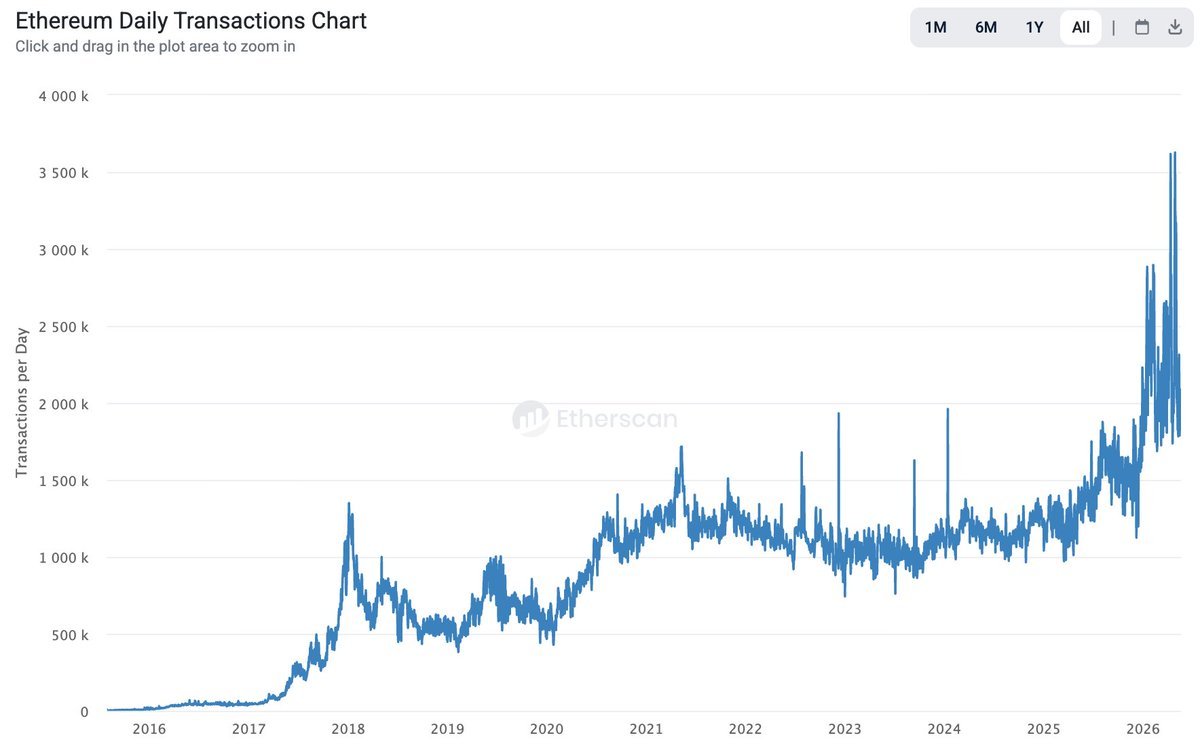
68
51
744
158,319
James.eth 🔥_🔥 retweeted

May 21
Ethereum is solidifying its place as global infrastructure — owned by none, and accessible to all — the neutral, secure platform for the world’s assets…
While the rest of the world is rapidly centralizing to compete.
It’s taking patience - but ETH will prevail.

34
77
660
28,259
James.eth 🔥_🔥 retweeted
21 Oct 2025
All this Ethereum / EF fud on my timeline is hilarious.
Where else are you going to build? Where else can you run decentralised smart contracts? Where else isn’t a money cesspit?
I swear all of you just want the same financial system we have today.
73
19
318
23,351