
Infrastructure for human-agent software collaboration.
Joined April 2026
- Tweets 35
- Following 4
- Followers 64
- Likes 24
14 Photos and videos

Pinned Tweet

May 12
We're Blooming. 🌼
Learn about Bloom in this thread from one of our founders:
May 12

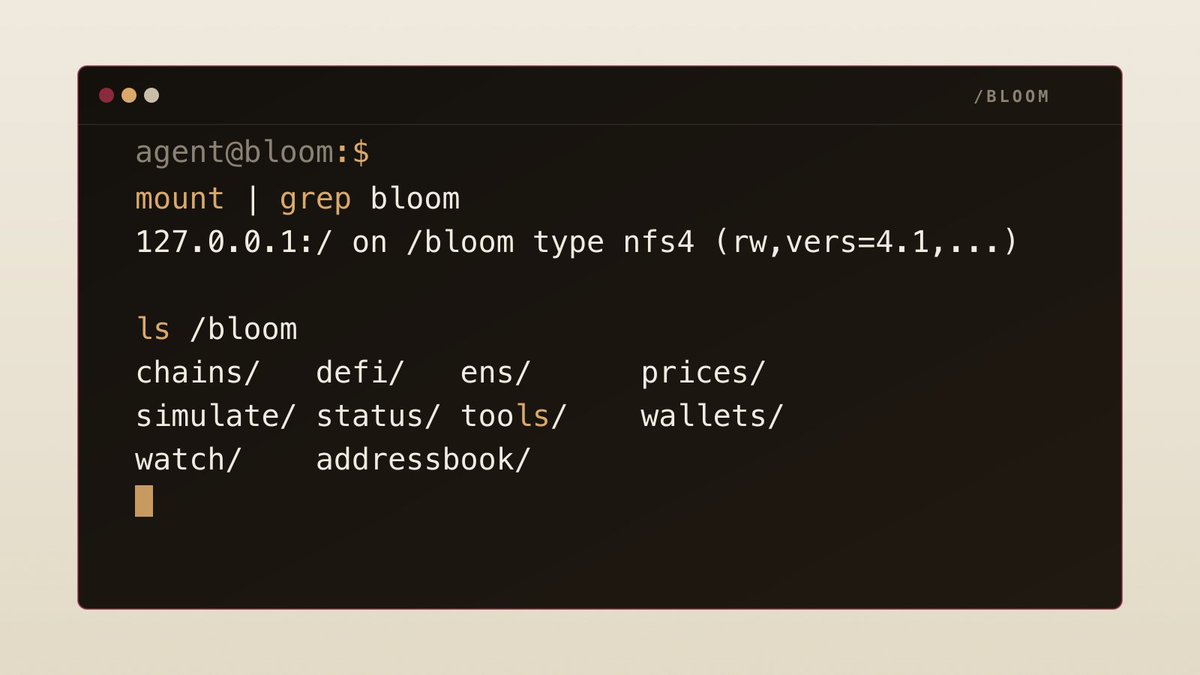
We're launching Bloom (@bloom_directory): Ethereum as a filesystem.
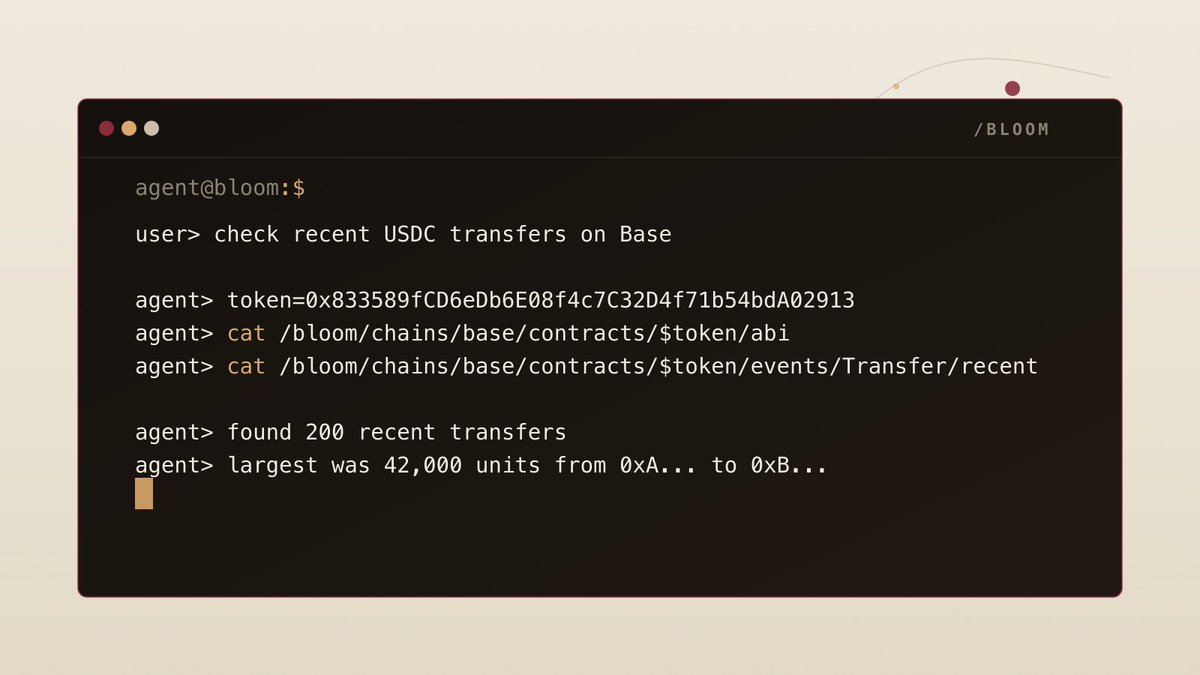
Chain state becomes files.
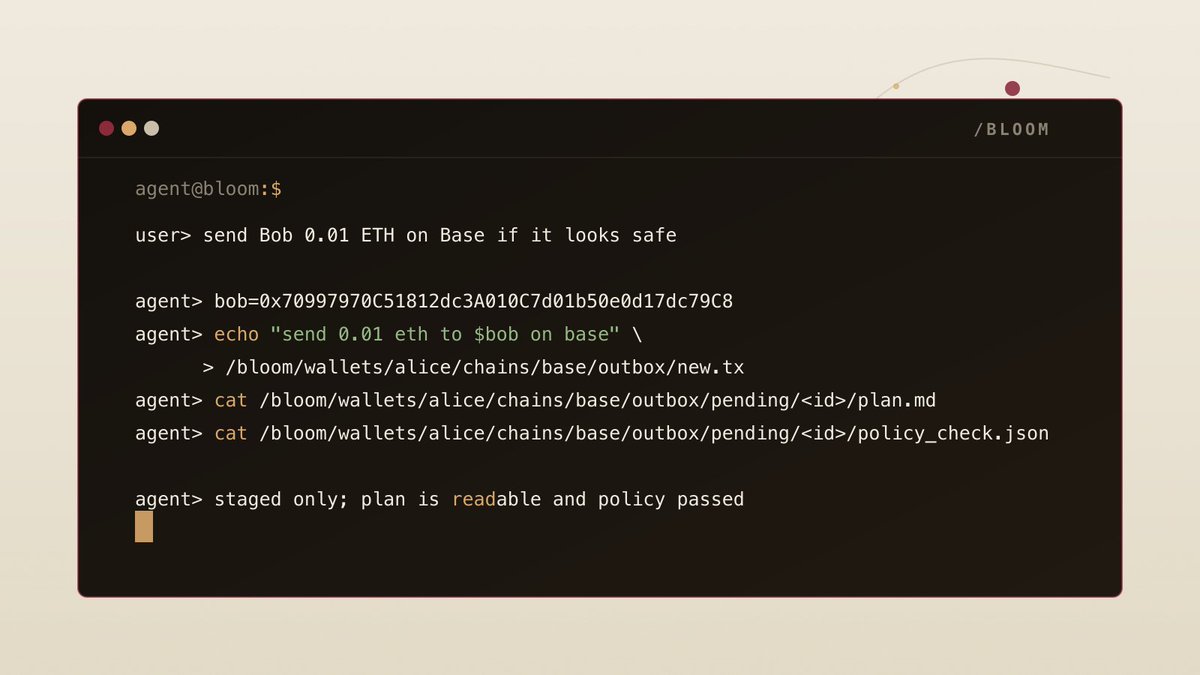
Transactions become staged writes.
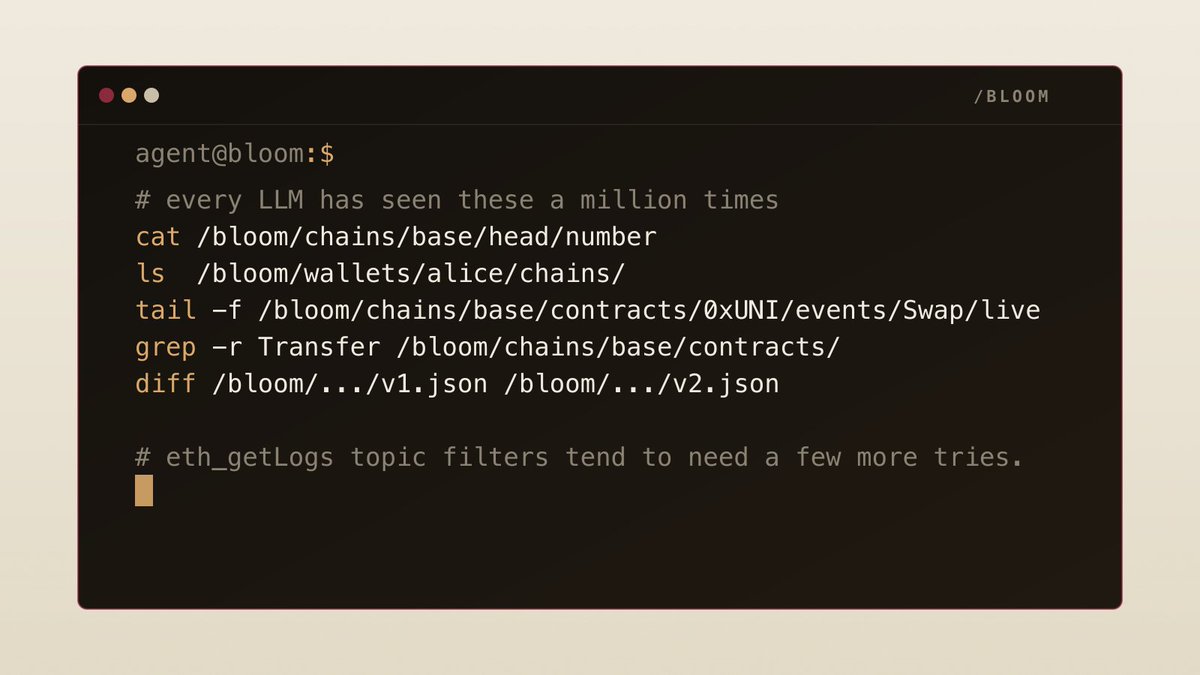
Agents can use ls, cat, jq, pipes, and policy checks instead of hand-rolled Web3 glue.
1
9
1,296
May 28
New pitch for Bloom:
We’re building software nutrition labels that your agent can verify at runtime
May 27

In an ideal world all software and hardware would have "nutrition labels" that provide a full list of trust dependencies - what math and which actors' honest behavior (and on what time scale) the system is relying on to provide its core functionality and implied guarantees.
1
5
201
May 19
Bloom’s vision lines up very closely with the direction @VitalikButerin is describing.
In the agentic-era, the bottleneck shifts from code generation to verification, trust, and coordination.
May 18
Many people have claimed that with AI-assisted bug finding, secure code (and hence trustless anything) will be impossible.
I have a much more optimistic take, and AI-assisted formal verification is a major part of the reason why:
vitalik.eth.limo/general/202…
1
4
9
461
May 19
Vitalik’s post explains why AI-era software needs formal trust and verification layers.
Bloom is an attempt to build the actual decentralized runtime, filesystem, incentive, and governance stack around that idea.
🌼
1
1
65
May 19
Check out our GitHub repo where we are building this in public: github.com/bloom-directory/b…
2
63

Every app you've ever learned to use will become unnecessary.
Not because they die. Because the internet is finally getting what every operating system already has: a filesystem.
The web is having its Unix moment.
May 12

We're Blooming. 🌼
Learn about Bloom in this thread from one of our founders:
3
3
5
638
May 15
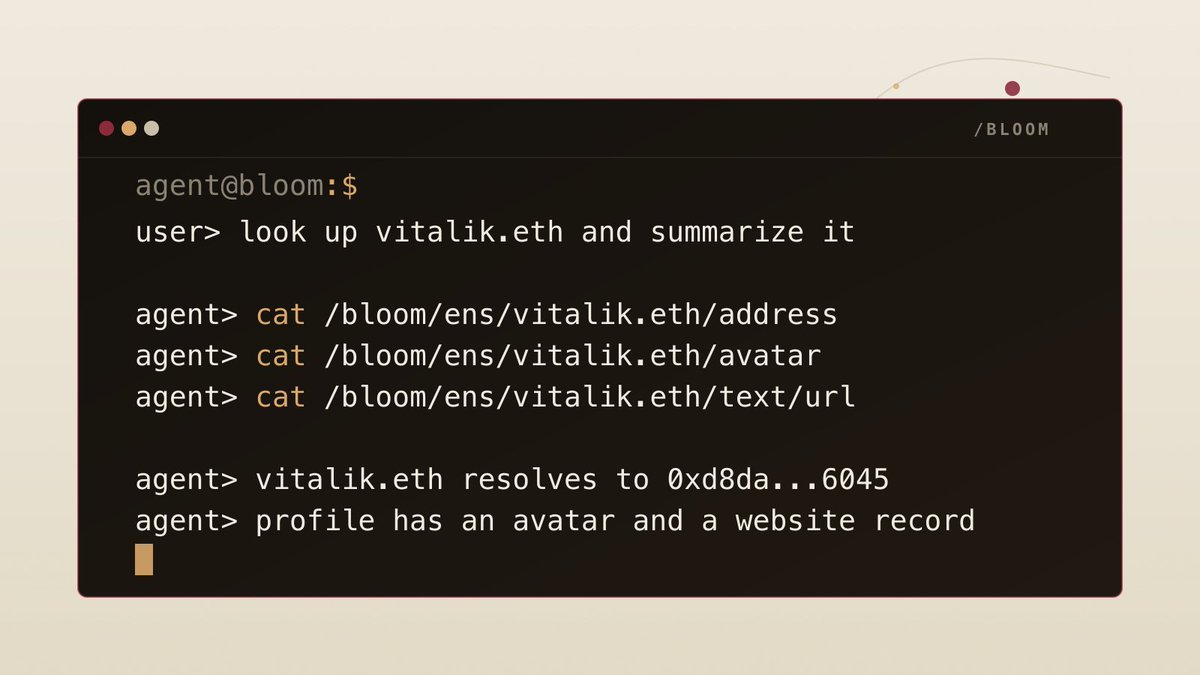
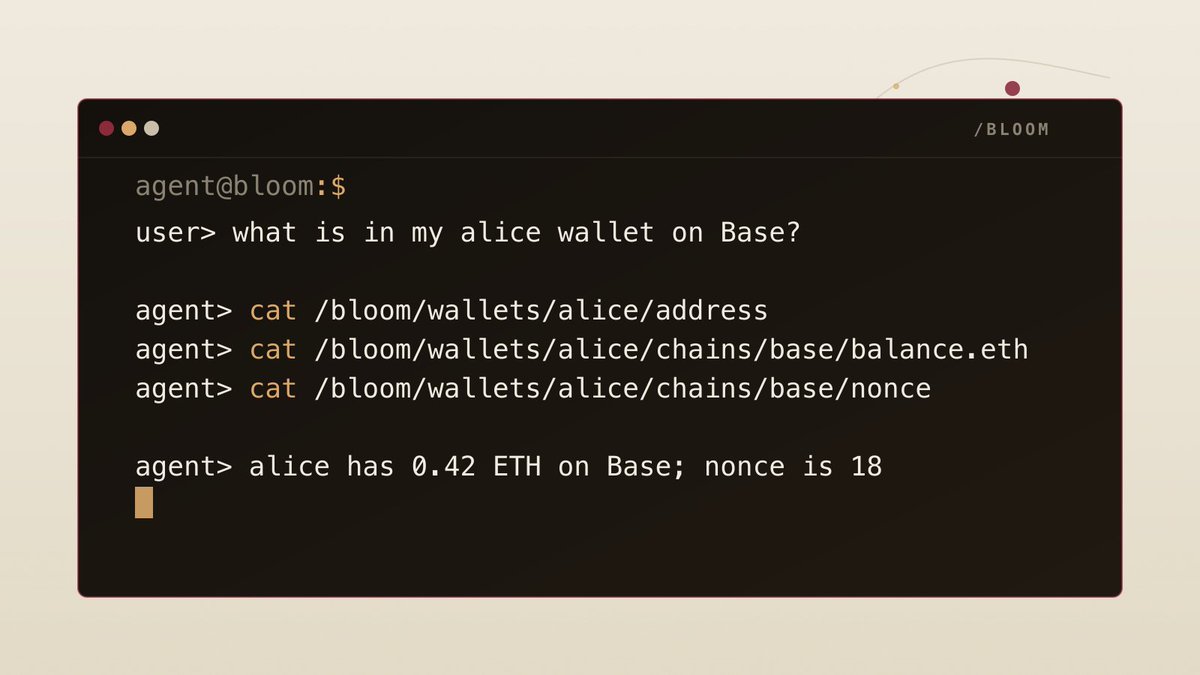
Bloom gives agents a filesystem interface for Ethereum and L2s.
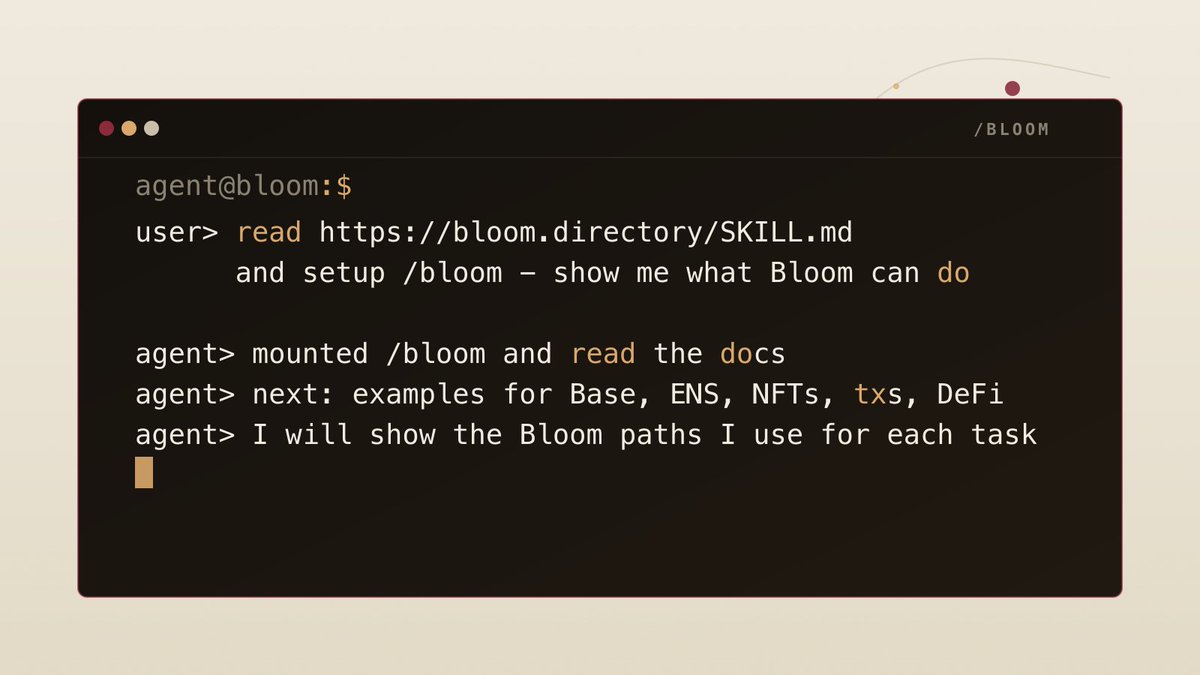
To get setup, tell your agent: "Read bloom.directory/SKILL.md and setup /bloom - show me what Bloom can do"
Here are a few examples of what that looks like in practice.
1
3
8
449
May 15
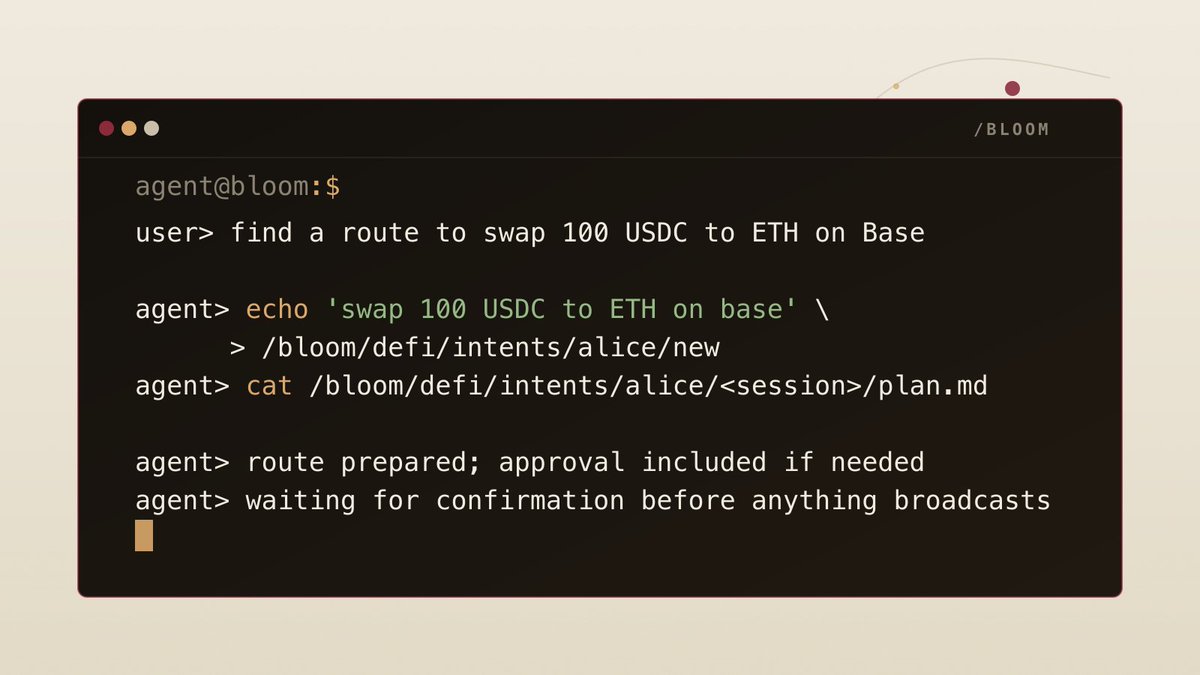
Ask your agent to plan a DeFi action.
Bloom can turn an intent like “swap 100 USDC to ETH on Base” into a routed plan.
Approvals and transaction details are surfaced before anything broadcasts.
1
1
53
May 15
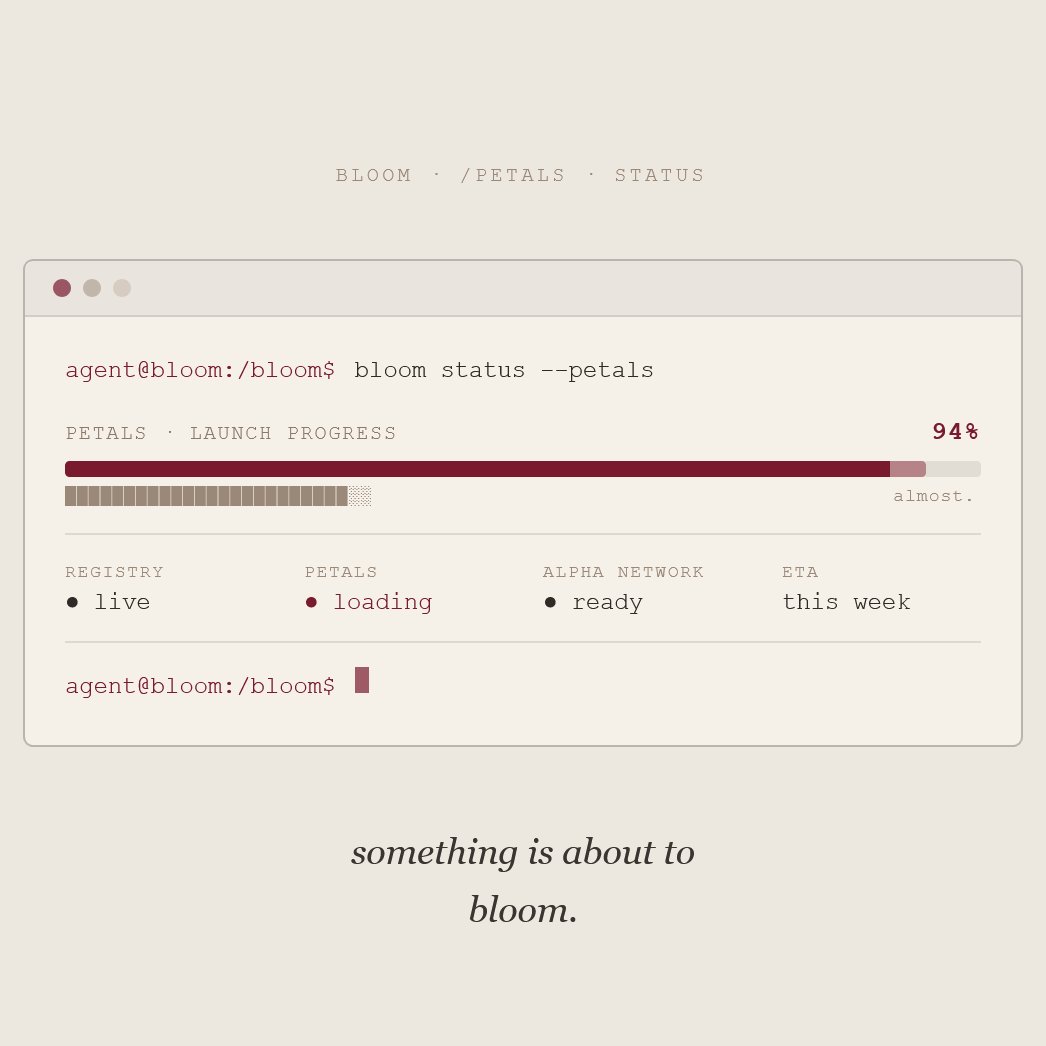
There is so much more to come. This is just the first Petal on the first flower that makes up Bloom. 🌼
→ bloom.directory
1
53
May 14
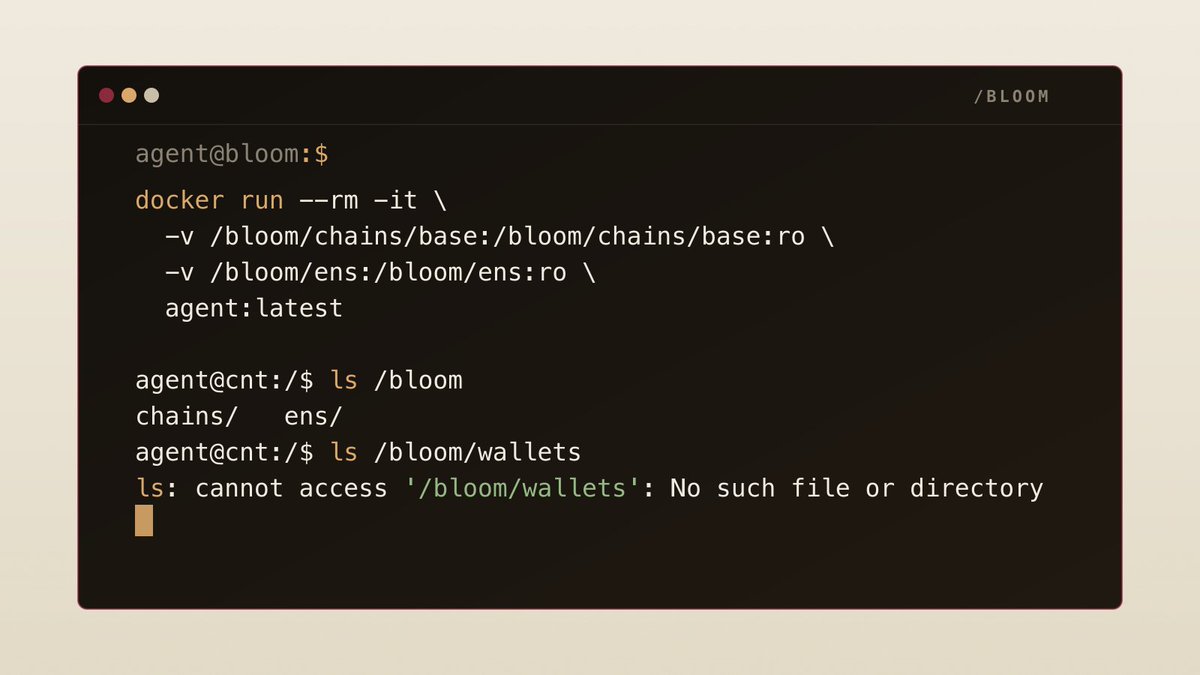
"The filesystem is the sandbox."
We've said that a few times now. Here is what we mean by it, concretely.
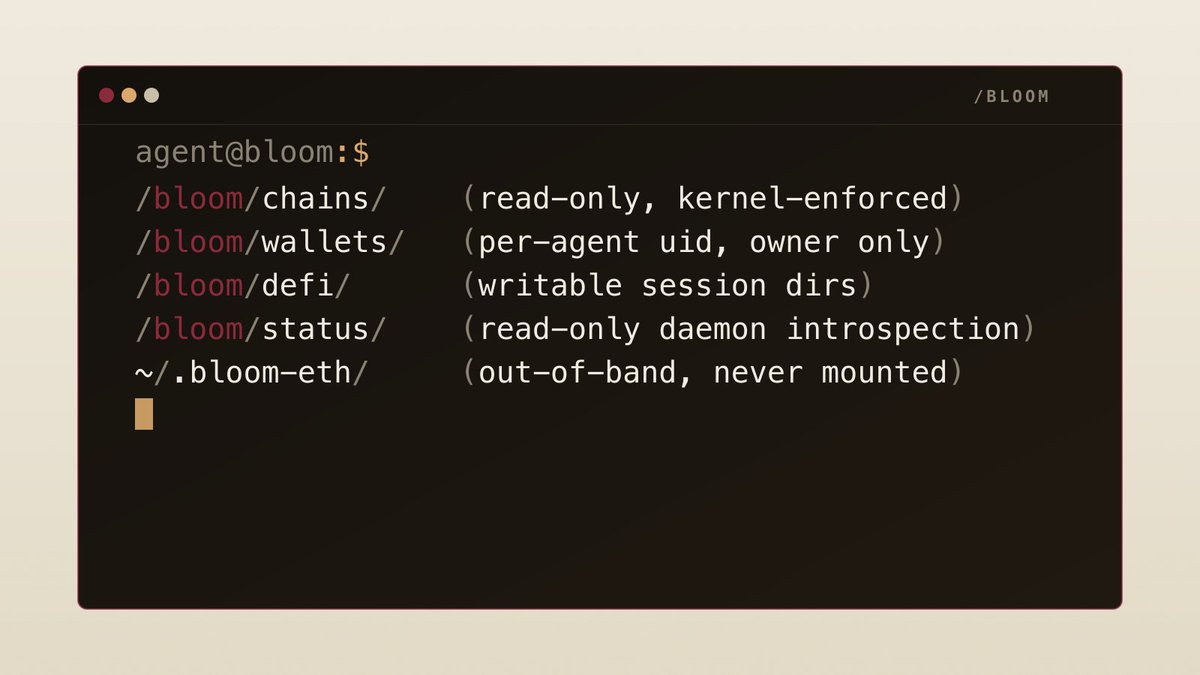
Bloom mounts chains at /bloom over real NFSv4.1. Because it is a kernel mount, every isolation primitive Unix has shipped for fifty years works on it.
1
2
8
580
May 14
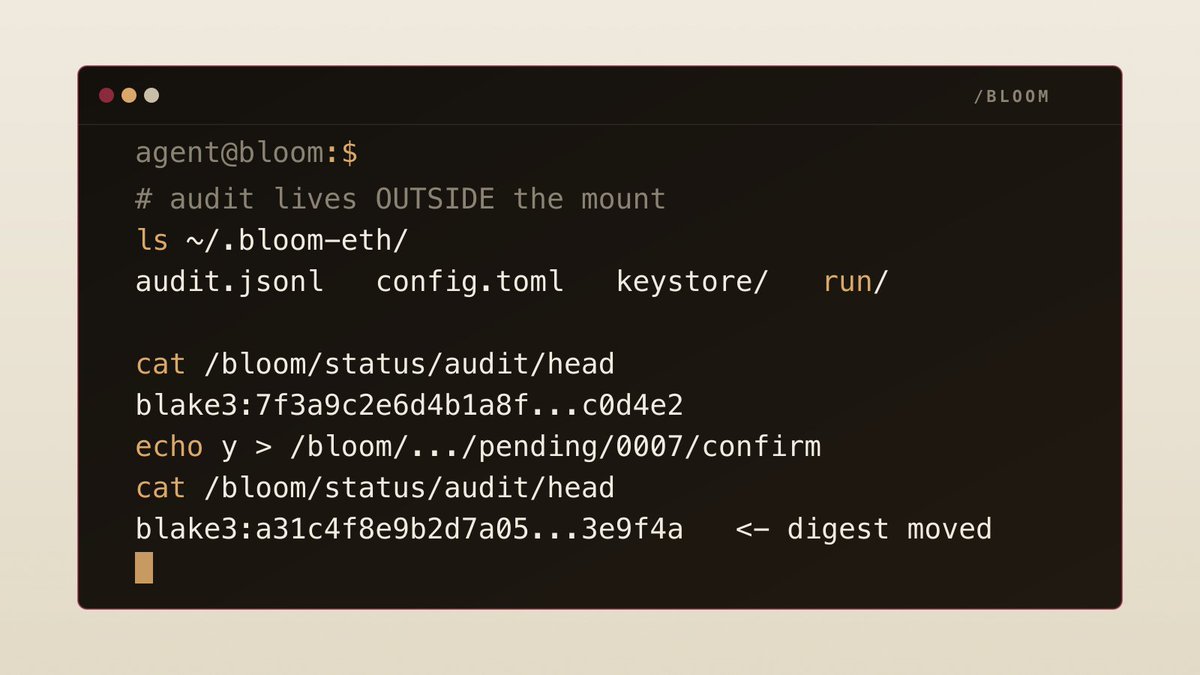
The audit lives outside the mount.
~/.bloom-eth/audit.jsonl is hash-chained. Every read with side effects, every write. The mount never exposes it. Even a compromised agent can't rewrite history because it cannot see the file.
The sandbox cannot rewrite its own surveillance.
1
2
85
May 14
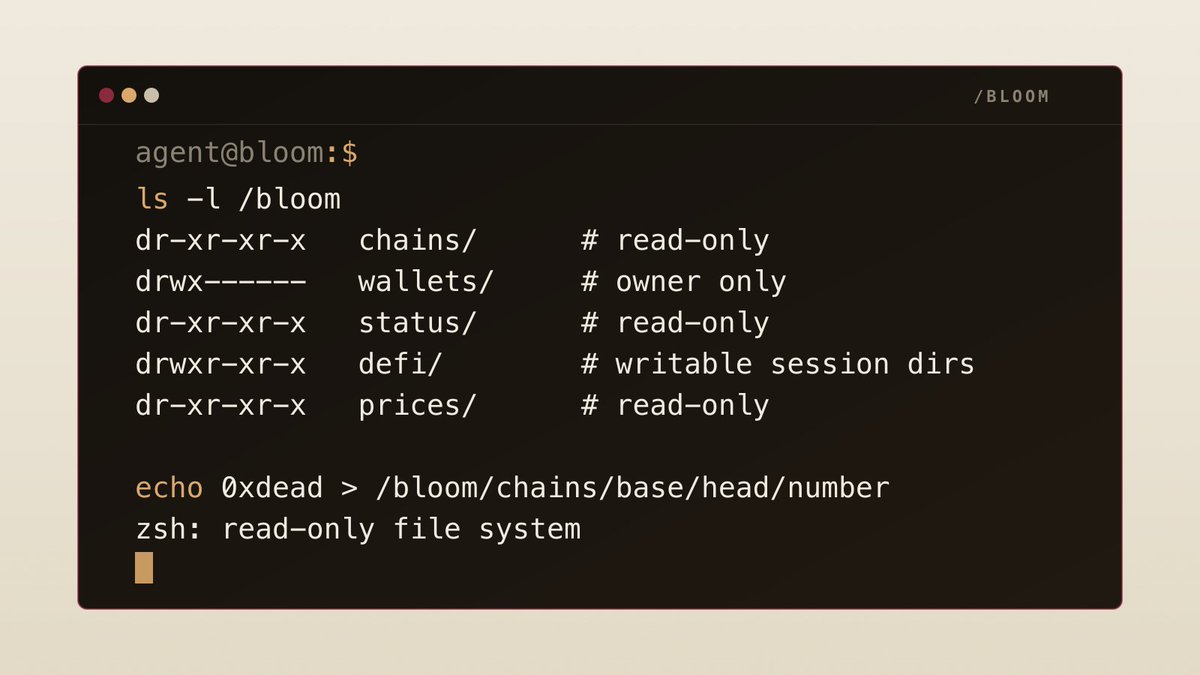
There is no new permission system here.
bloom puts Ethereum behind POSIX modes, bind mounts, NFS exports, and UIDs. The same primitives Unix has shipped since 1973.
The filesystem is the sandbox. The kernel is the enforcement boundary.
→ bloom.directory
2
53