
Joined June 2019
- Tweets 4,437
- Following 848
- Followers 2,295
- Likes 50,145
127 Photos and videos










Pinned Tweet

16 Oct 2025
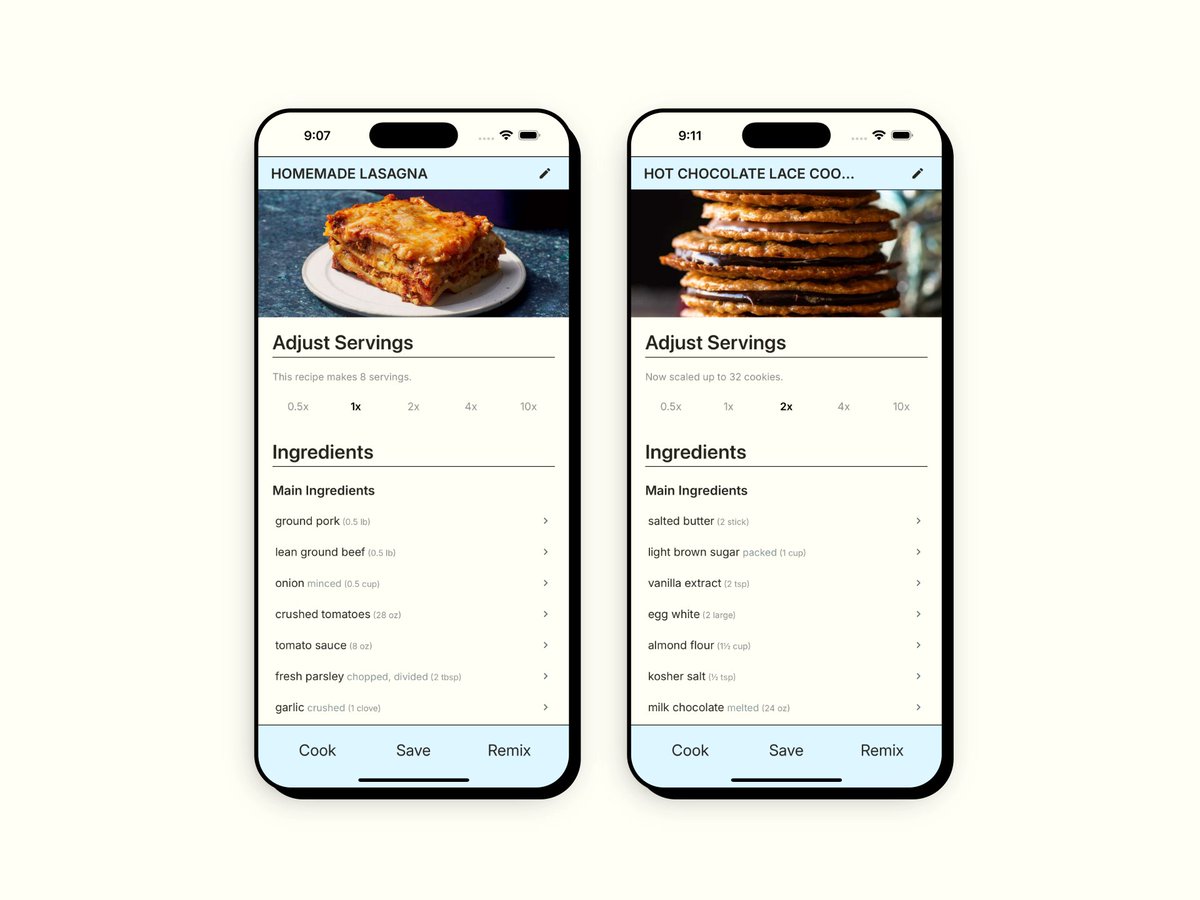
Most software for home cooks sucks and charges you a subscription forever.
Saving recipes, swapping ingredients, handling dietary needs, making grocery lists... It's all a mess.
So I built a tool called Olea to fix it.
It's live today and free to use.
⬇️⬇️
7
14
46
11,930
brunny retweeted

Jun 8
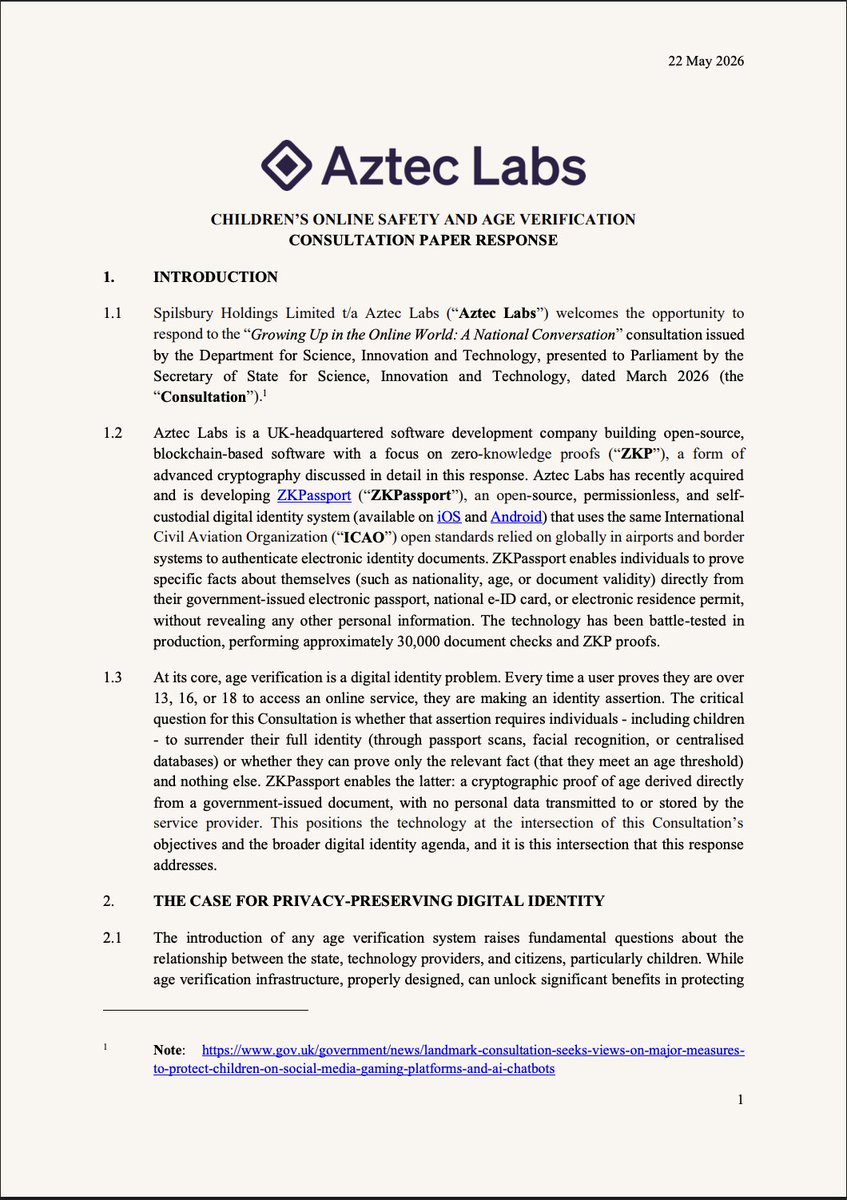
On 22 May 2026, @AztecLabs_ submitted a response to the UK government's consultation on children's online safety.
I'll be direct about where we stand. We are sceptical of mandatory age verification. The evidence that it works is mixed, and the surveillance infrastructure built in the name of child safety rarely stays narrowly scoped. We said so plainly in the submission.
But the consultation is happening, and if the government proceeds, the detail that matters most is how these systems are actually built.
Every method deployed today related to online age verification either gets bypassed easily or forces users to hand a document scan to a third-party server, which creates centralised databases of sensitive personal data. Those databases get breached often and easily, creating personal and national security risks. This is the predictable result of collecting far more than the question requires.
So our submission, among other things, asks the government for three things:
1. make privacy by design a hard requirement rather than an aspiration;
2. recognise device-level proofs within the existing trust framework; and
3. do not restrict VPNs, which serve real privacy and security purposes.
The UK can set the global standard for how this is done, or it can attach a breachable identity database to every platform its citizens use. I think the choice is clear.
Jun 8

Governments are moving to mandate online age verification
We think this is the wrong decision, and we said so in our response to the United Kingdom's consultation
But if these mandates proceed, the way these systems are built will have consequences far beyond child safety
👇
6
22
112
6,724
brunny retweeted

Jun 8
Read our full response to the UK online child safety consultation here here:
aztec-labs.com/blog/age-veri…
1
4
19
613
brunny retweeted
Jun 8
Governments are moving to mandate online age verification
We think this is the wrong decision, and we said so in our response to the United Kingdom's consultation
But if these mandates proceed, the way these systems are built will have consequences far beyond child safety
👇
1
14
101
13,100
brunny retweeted

May 27
2 years ago, my cofounder, @michaelelliot, and I joined forces with one common objective: making true privacy-preserving identity verification a reality. This adventure took us through many challenges and obstacles. But one after the other, we pushed through.
Along the way, we found the @AztecLabs_ team to be constant supporters of ours. First, by laying the foundations for us to build ZKPassport through their development of Noir and Barretenberg, and then, by helping us make mobile proving a reality and pushing us towards production use cases as the Aztec Network decentralized.
Aztec was one of the very first teams in the industry advocating for privacy, and actually building the stack for it. They kept their vision alive for years on end, and made it a reality, as the rest of the industry now finally seems to realise that privacy is actually something we need.
This is a vision and a dedication we share at ZKPassport. And this is why I’m excited for this new chapter together with Aztec Labs. It’s time to make privacy the default again!
May 27
Aztec Labs has acquired Obsidion, the team behind @ZKPassport.
The Obsidion team will continue to develop ZKPassport while also leading new consumer product developments.
The ZKPassport protocol will remain open source.
2
3
37
1,669
brunny retweeted

May 27
Aztec Labs acquires ZKPassport, pledges to keep privacy protocol and iOS mobile app open-source theblock.co/post/402745/azte…
10
9
55
5,183
May 27
excited to welcome the @ZKPassport team to Aztec Labs!
May 27
Aztec Labs has acquired Obsidion, the team behind @ZKPassport.
The Obsidion team will continue to develop ZKPassport while also leading new consumer product developments.
The ZKPassport protocol will remain open source.
3
33
1,188
brunny retweeted
May 27
Read more about the acquisition at our blog: aztec-labs.com/blog/zkpasspo…
Learn how to integrate ZKPassport at tinyurl.com/mr9vmxrf
5
2
44
1,052
brunny retweeted
May 27
Aztec Labs has acquired Obsidion, the team behind @ZKPassport.
The Obsidion team will continue to develop ZKPassport while also leading new consumer product developments.
The ZKPassport protocol will remain open source.
21
43
380
46,822
brunny retweeted

May 25
Crypto is a legit and indeed inevitable technology. Usually such things are net positive.
113
336
2,853
326,898
brunny retweeted

May 22
I don’t care how long they last. You’re out of your damn mind if think I’m storing herbs like this in the fridge.

2
2
11
624
May 22
the hardest part about meal prep is keeping your meals healthy AND interesting
so i've been sharing my weekly meal prep routines with friends and family for a couple of months
subscribe if interested 👨🍳
1
7
92
brunny retweeted
May 20
Aztec Labs CEO @jaosef on the UK Digital Identity bill:
"The UK, with its Online Safety Act, is banning end-to-end encryption and throwing away our opportunity to lead."
Read more on @Finextra: tinyurl.com/muy2ette
2
11
23
1,866
brunny retweeted

May 18
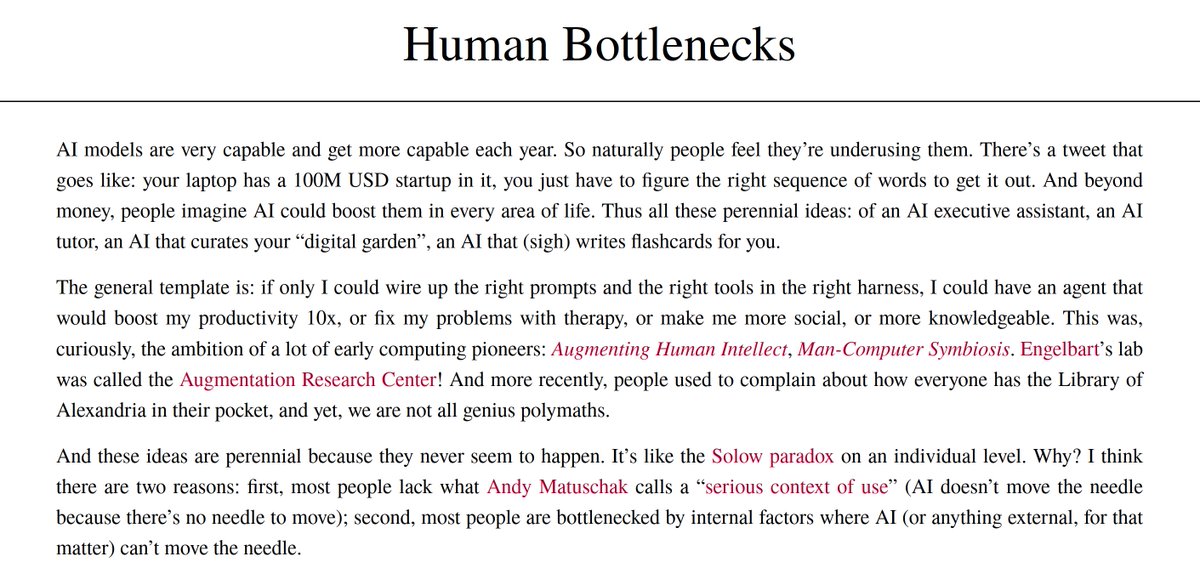
New day, new post. Today is about why having a superhuman AI available at all times might not change your life much.
20
36
286
29,043
brunny retweeted

May 14
agreed
travis kalanick starts black car app after first company goes bankrupt
ev williams founds twitter after prior podcasting startup rendered obsolete by itunes
steward butterfield starts gaming company after his first gaming company had to pivot to photos
and so on

I don't understand how the tech media can afford to do this. What is the point of punching down like this? The whole ecosystem from founders to VCs understand that you try an improbable thing, you work hard for years, you learn, you get better, maybe it fails, you try again.

2
1
46
7,848

brunny retweeted

Apr 29
Look, was LIV Golf successful? No.
Did it bolster the reputations of everybody involved? Also, no.
But was it fun? Once again, no.
266
2,347
32,686
1,206,420
brunny retweeted

Apr 29
I believe self custody of assets with private keys is legitimately one of the most powerful tools for sovereignty we have ever devised but the industry has completely bastardized this term to the point of uselessness. The original notion (in my mind at least) of self custody was having a string of letters and numbers or 12 words that unlock your assets. “Self-custody” when interacting with smart contracts and defi has become virtually meaningless at this point, encumbering coins with layers and layers of risks and dependencies, incredibly misleading
A lot of this narrative was ostensibly for regulatory reasons: “we don’t take custody of your assets, you deposit them in this pool or contract with self-executing code” but that’s so obviously not true at this point it’s an insult to our lived experience. Or, if it is “true” in the literal sense that the code technically always does what it is allowed to do, the “self-custody” component is very far down the list of what is actually important with these systems, a red herring really. Clearly Drift depositors didn’t (don’t) have “self-custody” of their funds. And the common retort is “well Drift doesn’t really either.” ok but North Korea does now.
At this point I liken self-custody in the context of defi to saying that you are the only one with the keys to the front door of a bank vault but there’s another door on the other side of the vault that criminals (or regulators, who knows) can enter with impunity and take your assets. Is it really that relevant that you’re the only one with a key to the front door?
The reason this is jading is because truly securing your wealth with private keys if you choose is a 0 to 1 unlock for some people (maybe the only real 0 to 1 unlock in this space) but that was conflated with all of these systems that have multisigs, upgrade keys, oracle dependencies, layers upon layers, turtles all the way down, often times with very obvious single points of failure. What is the value of self custody when a multisig can reorg your assets out of existence? The whole thing is very disillusioning
64
59
476
39,857
brunny retweeted

Apr 23
I find this conversation foreign - along with the argument that we are "data center constrained" or "energy constrained." Historically, in markets - price is the leveler of supply and demand. If you have a constraint, you price higher - you don't have "surplus demand." But in this market, VC$$$ act as subsidies (as they did in consumer internet). Everyone believes if they have high growth they get unlimited VC$$$. The biggest fear becomes losing market share. So "growth at all costs" becomes the game on the field. With that reality, you are always going to have some constraint, because you are "knowingly" choosing pricing that is out of whack with balancing supply/demand. It will continue until the major players feel they are forced to reconcile unit economics and profitability (as eventually happened in ride sharing when Lyft went public). Until then, you by definition have constraints. We can’t disentangle true demand from subsidized demand yet. Some of the incremental demand is being engineered by the excessive VC$$$ forced into the system, and the competitive dynamic between two companies that are losing massive amounts of money. No one can argue they aren't losing tons of money. Amazon and Uber maxed out around $2B a year. These companies could lose $10B on more in 2026.
26
47
601
61,658