
I'm for individual liberty, limited government, and free markets. Anti-populist. wichitaliberty.org | @bobweeks.bsky.social | “Post-truth is pre-fascism”
Joined May 2008
- Tweets 35,629
- Following 1,540
- Followers 3,462
- Likes 9,409
6,056 Photos and videos
THE U.S. HAD NO CHOICE BUT DIPLOMACY -- YET AGAIN
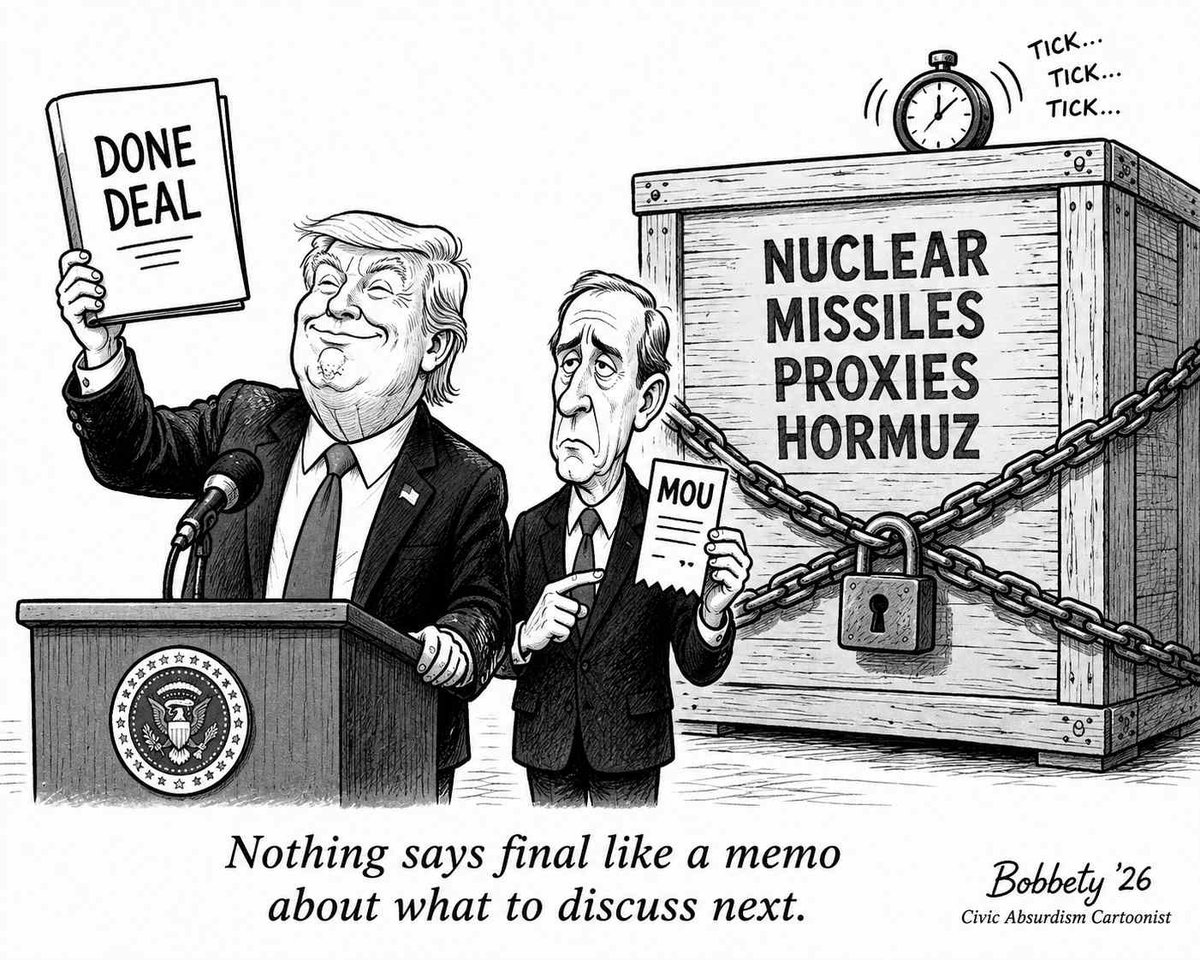
One-Sentence Summary: The Atlantic argues that Trump's claimed Iran "deal" is really a fragile memorandum that underscores the limits of war and sanctions and forces the United States back toward diplomacy.
Article Summary: The Atlantic argues that President Donald Trump's claim that a deal with Iran is already complete overstates what Washington and Tehran have actually produced. The reported memorandum of understanding, expected to be signed in Geneva, would not be a nuclear deal but a framework for continued negotiations. It would extend a fragile cease-fire for 60 days and restore unimpeded commercial traffic through the Strait of Hormuz, buying time for talks on Iran's nuclear program and possibly other issues.
The article presents the emerging agreement as a sign of how limited American military and economic pressure proved to be. The war weakened Iran's military, killed some leaders, and damaged its oil-export economy, but it did not achieve Trump's original goals of resolving the nuclear threat, reducing Iran's missile capabilities, or curbing its proxy militias. Instead, Iran's wartime closure of the Strait of Hormuz, which was open when the conflict began, created leverage that Tehran is now using at the negotiating table.
The prospective memorandum has left hawks dissatisfied in both countries. In Washington, Mark Dubowitz argued that the Iranian regime cannot be negotiated away, while Senator Lindsey Graham welcomed reopening the strait but worried that the two sides appeared to understand the agreement differently. Many Republican backers of the war avoided public praise. Critics on both the right and left demanded that Trump release the memorandum and brief Congress, with Chuck Schumer saying the war should end permanently.
Iranian hard-liners also objected, arguing that Tehran should not surrender leverage without durable economic relief. U.S. officials said no frozen Iranian assets had yet been released and described any early relief as reciprocal trust-building measures, though they acknowledged sanctions relief and frozen funds could eventually be on the table.
The regional picture remains unstable. Israel struck targets in Beirut in response to Hezbollah, and Tehran had linked an agreement to a halt in strikes in Lebanon. U.S. officials said Israel's right to respond would remain intact, raising doubts about whether Washington can restrain Benjamin Netanyahu. Ultimately, the article concludes, the test is whether the memorandum can become a durable peace before domestic politics, hard-liners, or regional escalation undermine it. U.S. troops will stay in the region for now, and any drawdown depends on Iranian compliance with an agreement that still does not exist.
Youssef, Nancy A., Russell Berman, and Vivian Salama. "The U.S. Had No Choice but Diplomacy -- Yet Again." The Atlantic, 15 June 2026, theatlantic.com/national-sec…
1
33
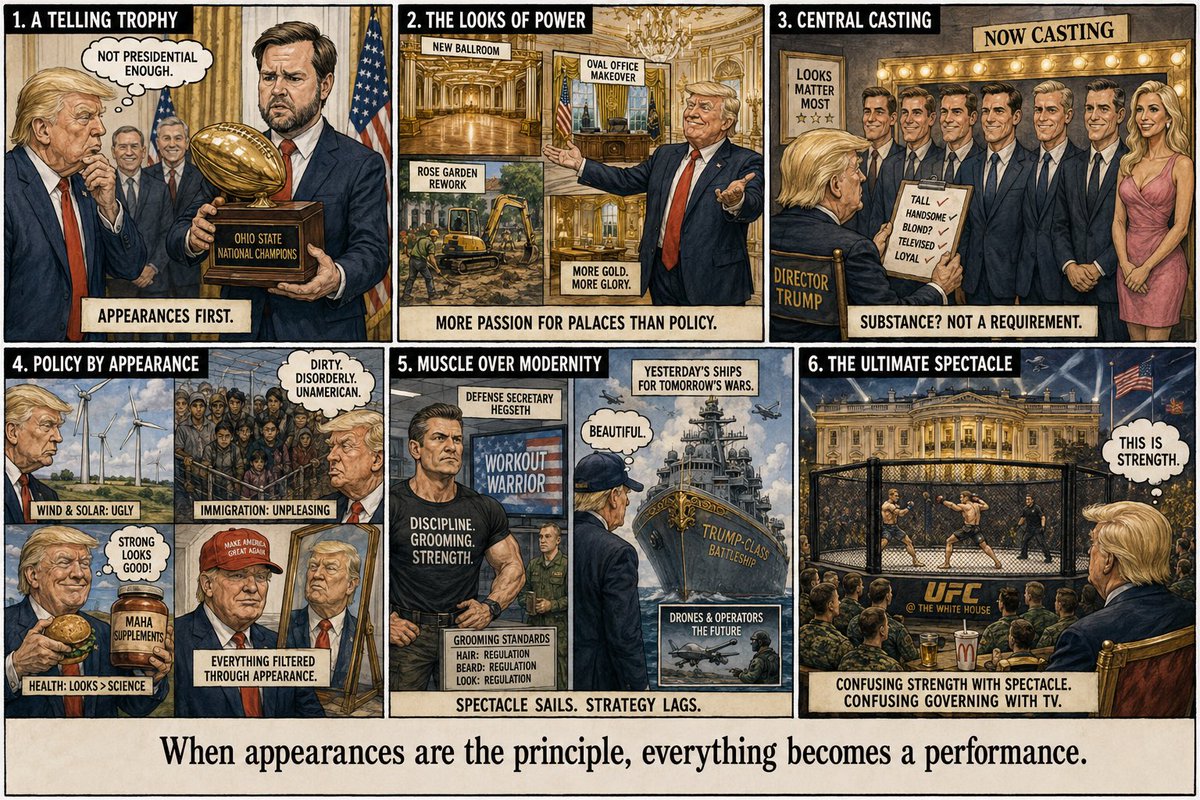
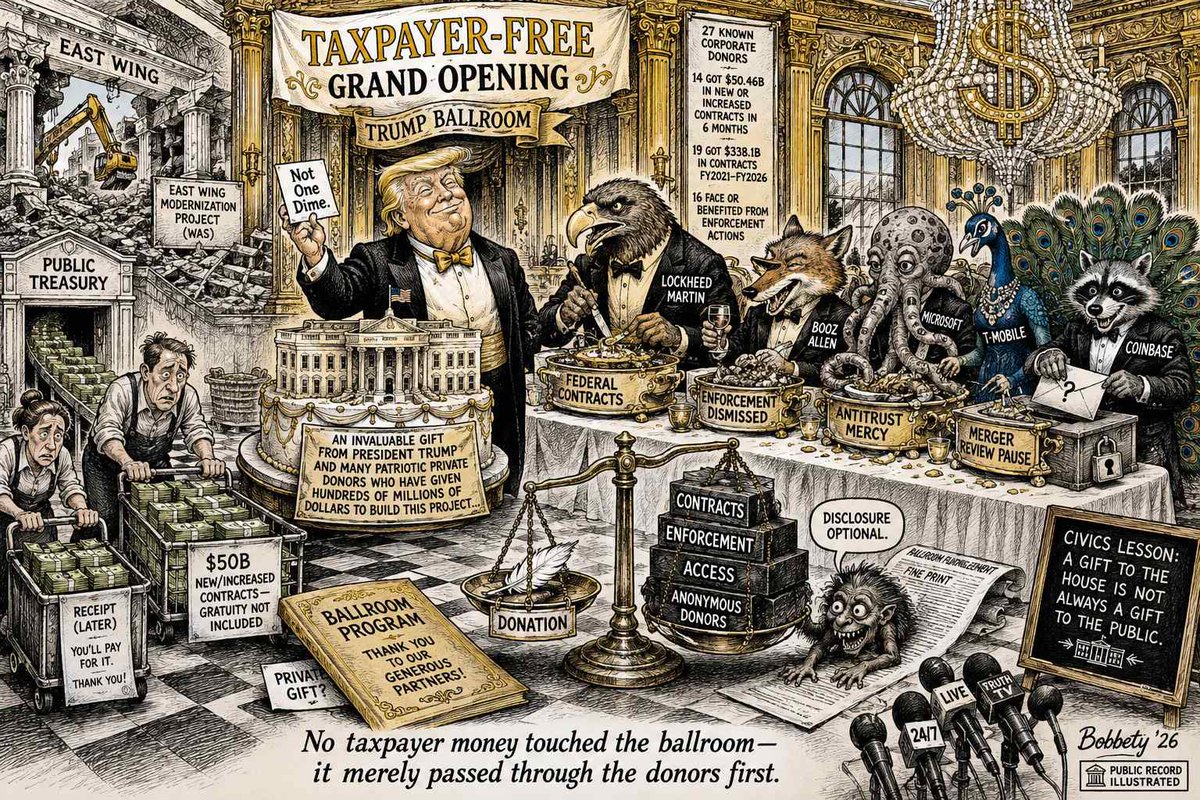
RECORDS REVEAL $600M ESTIMATE FOR TRUMP'S BALLROOM PROJECT, WITH HALF FROM TAXPAYERS
One-Sentence Summary: Internal records obtained by The Washington Post show that Trump's White House ballroom project was estimated at $600 million, with more than half expected to come from taxpayer-funded sources, despite repeated public claims that private donors would pay for it.
Article Summary: The Washington Post reports that internal construction records contradict President Donald Trump's repeated public statements about the cost and funding of his East Wing ballroom project at the White House. Trump said on March 31 that the project, which includes a large ballroom, underground bomb shelters and medical facilities, would cost no more than $400 million and would be entirely privately funded. But a Clark Construction project summary prepared more than three weeks earlier estimated the total cost at $600 million, with more than half expected to come from taxpayer-funded sources.
The article says the federal government had already approved more than a dozen payments to Clark Construction, totaling tens of millions of dollars, before Trump made his March comments. The Post obtained six cost estimates from July 2025 through March 2026, along with invoice logs and correspondence, showing both a rising price tag and a continuing reliance on public money. The White House did not address detailed questions, but spokesman Davis Ingle said Trump and private donors were funding the ballroom at approximately $400 million.
When the White House announced the project on July 31, 2025, it said Trump and "patriot donors" would cover a $200 million cost, while the Secret Service would provide security upgrades. Records showed that a July 11 estimate already projected $270 million in construction costs, including more than $100 million from the Secret Service and the White House Military Office. Emails also showed officials intended to use Secret Service funds for site preparation, and a White House lawyer adjusted contract language to tie the project more closely to security concerns.
The cost estimate rose to $478 million by Oct. 20, when demolition began, even though Trump publicly said the project would cost $300 million and be paid for by him and friends. By March, Clark estimated $600 million: $293 million from private sources, $155 million from the Secret Service, $149 million from the White House Military Office and $3 million from the Executive Residence.
The project faced legal and political obstacles. A court paused above-ground construction in March after a historic-preservation lawsuit, while allowing underground security work to continue. After an alleged would-be assassin tried to access the White House Correspondents' Association dinner in April, the administration argued the project was a national security priority. A Senate proposal to authorize $400 million in spending failed after seven Republicans joined Democrats in opposition. Experts told The Post that while security agencies can fund true security work, the documents make it difficult to separate the ballroom from the broader taxpayer-funded structure.
Blaskey, Sarah, and Jonathan O'Connell. "Records Reveal $600M Estimate for Trump's Ballroom Project, With Half From Taxpayers." The Washington Post, 16 June 2026, washingtonpost.com/investiga…
30

Jun 15
DEAL OR NO DEAL: SUNDAY SHOWS WEIGH AN IRAN MEMORANDUM THAT WASN'T SIGNED
A preliminary agreement to end the U.S.-Iran war consumed all four major Sunday programs on June 14, 2026—even as the memorandum of understanding at the center of the discussion remained unsigned when the cameras rolled. Week 16 of a conflict President Trump had originally predicted would last as few as four weeks produced competing interpretations across the ideological spectrum: administration officials describing a deal built on military strength and rigorous verification, veteran diplomats questioning whether the terms justify sixteen weeks of casualties and economic disruption, and Israeli security officials warning that the most dangerous parts of Iran’s nuclear program may simply be harder to find now than before the war began. Alongside the Iran story, a congressional surveillance authority lapsed in a partisan standoff over the intelligence director’s seat, gas and diesel prices remained 40 percent above prewar levels, and the president turned 80 with a UFC bout on the White House lawn—a day that also saw his name removed from the Kennedy Center by court order.
Summary:
wichitaliberty.org/politics/…
1
56
Jun 15
FRUSTRATED BY COURTS, TRUMP WEIGHED SUSPENDING A CONSTITUTIONAL RIGHT
(Unlocked gift link included)
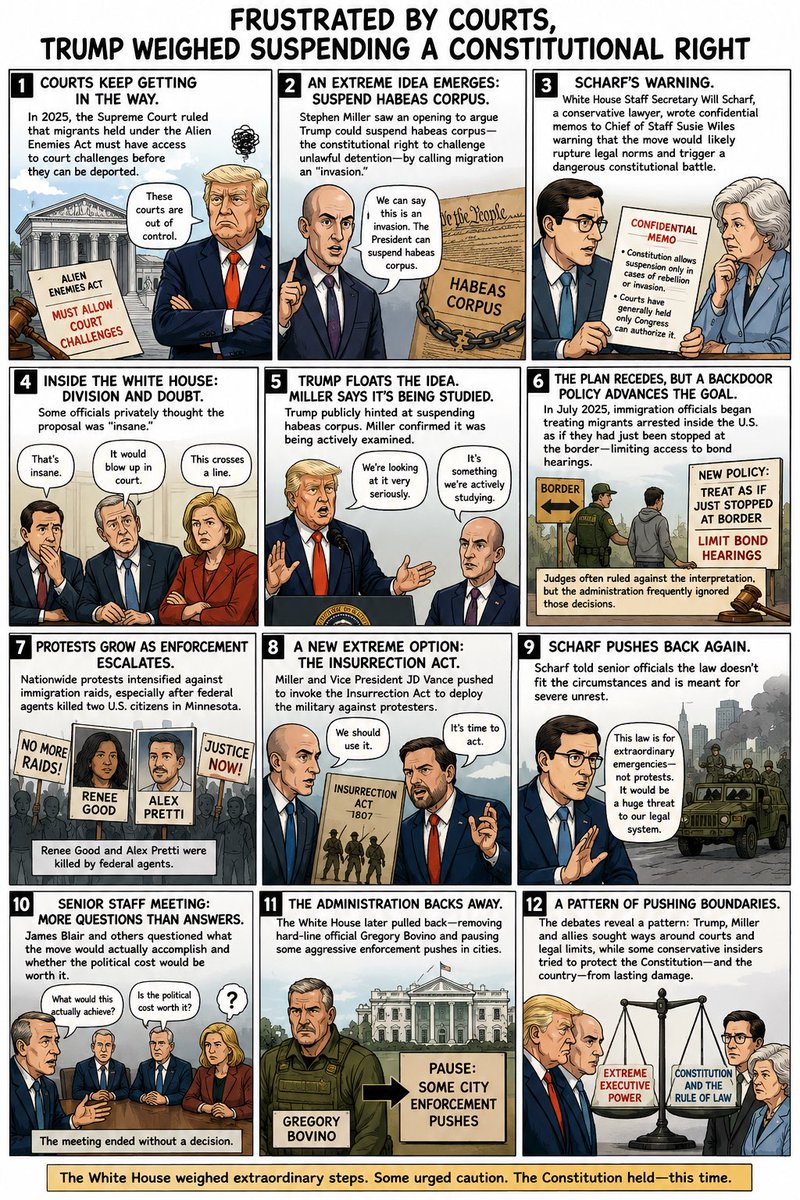
One-Sentence Summary: The article reports that senior Trump administration officials seriously debated suspending habeas corpus for unauthorized immigrants and invoking the Insurrection Act against protesters, exposing internal conflict over how far presidential power could be pushed.
Article Summary: Maggie Haberman and Jonathan Swan report that President Trump's second White House actively considered extraordinary assertions of executive power in 2025, including suspending habeas corpus for unauthorized immigrants and invoking the Insurrection Act to deploy the military domestically. The article centers on Will Scharf, the White House staff secretary and a conservative lawyer, who wrote confidential memos warning Chief of Staff Susie Wiles that both moves would likely rupture legal norms and trigger dangerous constitutional battles.
The habeas corpus debate followed a Supreme Court ruling allowing the administration to keep using the Alien Enemies Act against certain Venezuelan migrants but requiring detainees to have access to court challenges before deportation. Stephen Miller, the influential deputy chief of staff driving the administration's immigration agenda, saw an opening to argue that Trump could suspend habeas rights by describing migration as an "invasion." Scharf's memo countered that the Constitution permits suspension only in cases of rebellion or invasion and that courts have generally held only Congress can authorize it. The article says some officials privately considered the proposal "insane," while Trump publicly hinted at the idea and Miller said it was being actively studied.
The proposal eventually receded, but the article says the administration achieved part of its goal through a July 2025 policy shift: Immigration officials began treating migrants arrested inside the United States as if they had just been stopped at the border, limiting access to bond hearings. Judges often ruled against the interpretation, but the administration frequently ignored those decisions.
The article then turns to the Insurrection Act. Miller and Vice President JD Vance pushed for using it as protests intensified against immigration enforcement, especially after federal agents killed two U.S. citizens in Minnesota, Renee Good and Alex Pretti. Scharf again argued that the law did not fit the circumstances, noting its history as an emergency measure for severe unrest. In a senior staff meeting, James Blair and others questioned what the move would actually accomplish and whether the political cost would be worth it. The meeting ended without a decision, and the administration later backed away by removing hard-line immigration official Gregory Bovino and pausing some city enforcement pushes.
The article portrays the debates as part of a broader pattern: Trump, Miller and allies repeatedly sought ways around courts and legal limits, while some conservative insiders tried to prevent actions they believed could damage the administration and the constitutional system.
Haberman, Maggie, and Jonathan Swan. "Frustrated by Courts, Trump Weighed Suspending a Constitutional Right." The New York Times, 15 June 2026, nytimes.com/2026/06/15/us/po…
Unlocked gift link:
nytimes.com/2026/06/15/us/po…
81
𝗕𝗼𝗯 𝗪𝗲𝗲𝗸𝘀 🇺🇸🗽🇺🇦🙀☕️ 🐾🥬🥡 retweeted

Jun 13
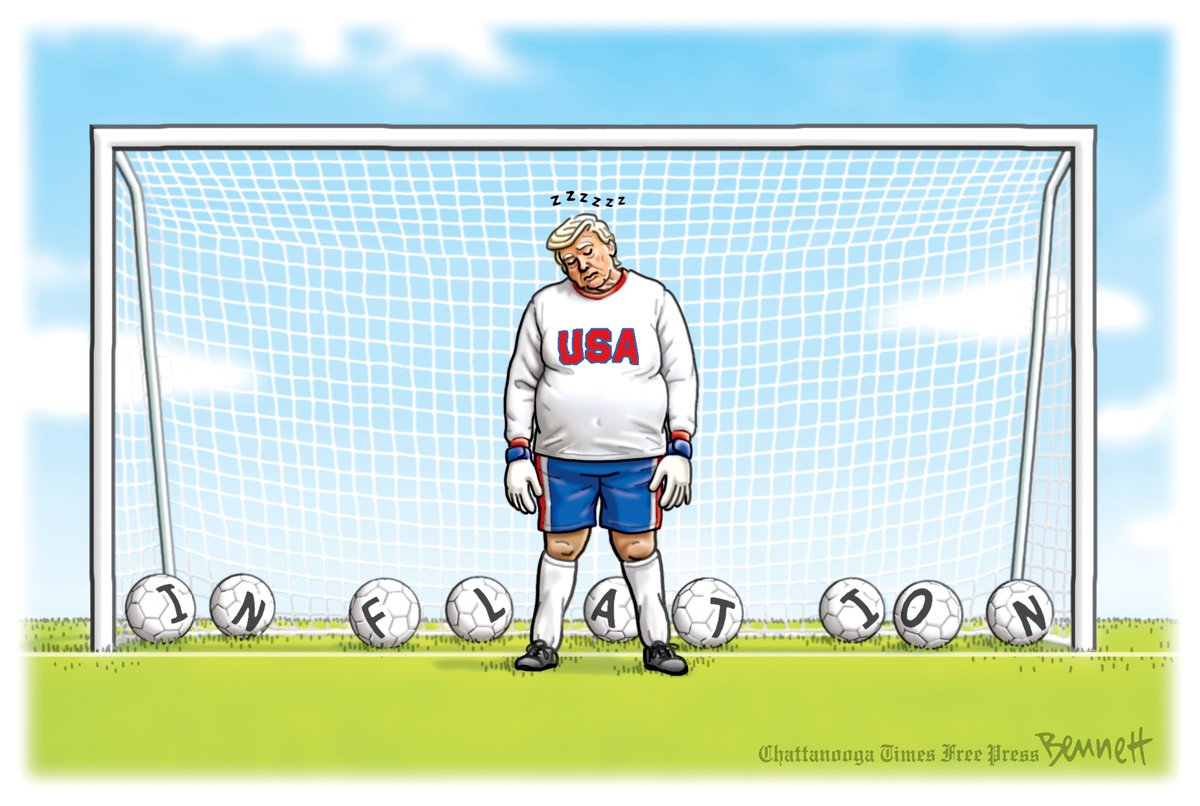
3
89
194
2,748
𝗕𝗼𝗯 𝗪𝗲𝗲𝗸𝘀 🇺🇸🗽🇺🇦🙀☕️ 🐾🥬🥡 retweeted
Jun 13
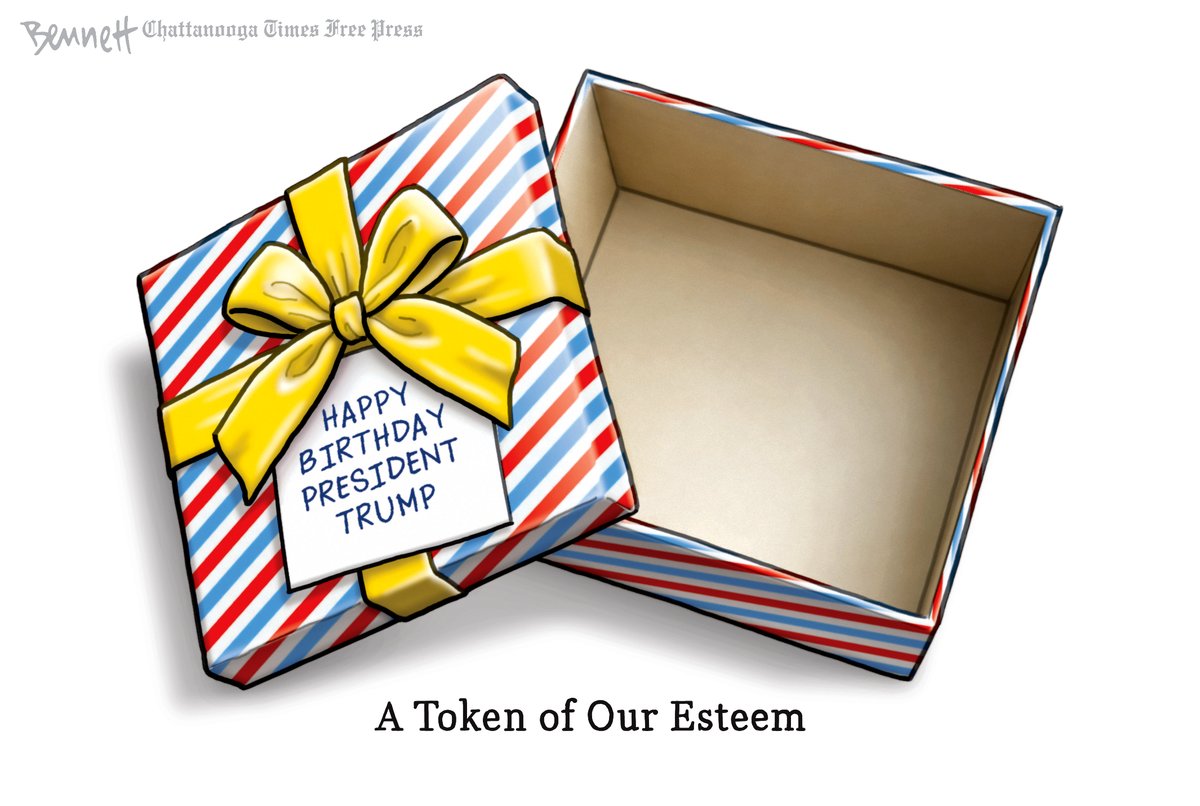
6/13/2026- Happy Birthday #Trump #DonaldTrump #June14th1946 #TrumpBirthday timesfreepress.com/news/2026…
2
46
110
1,793
Jun 13
POWER, RESENTMENT, AND THE TRUMP SHIELD: A POLITICAL PSYCHOLOGY ANALYSIS OF THE 2026 KANSAS REPUBLICAN GOVERNOR'S DEBATE
The first 2026 Kansas Republican gubernatorial debate was, psychologically speaking, less a policy forum than a dominance contest with a borrowed authority at its center. Frontrunner Ty Masterson built his entire rhetorical architecture around President Trump's endorsement - deploying it not merely as a credential but as a weapon, a shield, and a substitute for substantive argument. When challenged, Masterson defaulted to contempt and delegitimization rather than engagement, most vividly by calling rival Phil Sarnicki a "Democrat plant" with no evidence. Sarnicki revealed a backstory of personal grievance - he turned down Masterson's offer to be his running mate - that framed the evening as a rivalry born of rejection. Charlotte O'Hara communicated in policy maximalism and agrarian authenticity, while Scott Schwab projected technocratic pragmatism. The debate's dominant influence strategy was fear-based: each candidate constructed a Kansas in crisis and positioned himself or herself as the only credible remedy.
Analysis:
wichitaliberty.org/kansas-go…
26

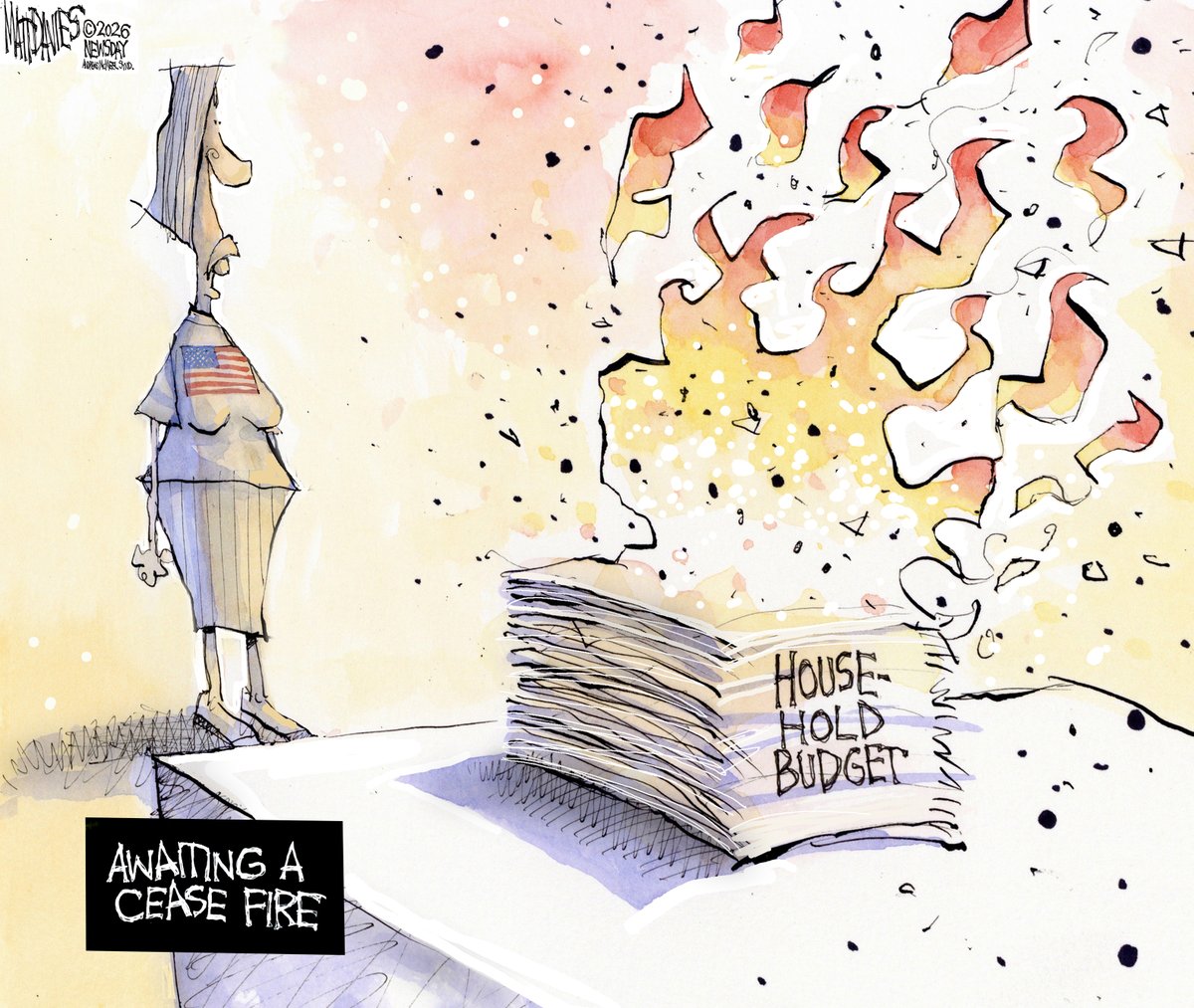
Jun 12
PSYCHOLOGICAL & RHETORICAL ANALYSIS: TRUMP WHITE HOUSE FISHING PROCLAMATION AND IRAN ANNOUNCEMENT
This June 11, 2026 Signing Ceremony and Press Q&A transcript captures Donald Trump at a moment of genuine strategic advantage - a nuclear ceasefire deal within reach, a market rally to point to, an audience of loyalists - and reveals how he uses that advantage not to reassure but to dominate. His psychological signature here is the performance of omniscience: he holds secrets the press didn't know (covert ship operations), he remembers specific numbers no one else could, he has spoken to every relevant leader. The fishing ceremony functions as a stage for this display, not a substantive occasion. Rhetorically, the architecture moves in a recurring cycle: triumph → revelation → dehumanization of an opponent. Every policy point is interrupted by contempt - for Obama, McConnell, Ilhan Omar, electric boats. The audience of fishermen is not persuaded so much as recruited: they voted for him, he fought for them, together they are besieged by the same enemies. That is the deal on offer.
Analysis:
wichitaliberty.org/politics/…
53
Jun 12
POWER, RESENTMENT, AND THE TRUMP SHIELD: A POLITICAL PSYCHOLOGY ANALYSIS OF THE 2026 KANSAS REPUBLICAN GOVERNOR'S DEBATE
The first 2026 Kansas Republican gubernatorial debate was, psychologically speaking, less a policy forum than a dominance contest with a borrowed authority at its center. Frontrunner Ty Masterson built his entire rhetorical architecture around President Trump's endorsement - deploying it not merely as a credential but as a weapon, a shield, and a substitute for substantive argument. When challenged, Masterson defaulted to contempt and delegitimization rather than engagement, most vividly by calling rival Phil Sarnicki a "Democrat plant" with no evidence. Sarnicki revealed a backstory of personal grievance - he turned down Masterson's offer to be his running mate - that framed the evening as a rivalry born of rejection. Charlotte O'Hara communicated in policy maximalism and agrarian authenticity, while Scott Schwab projected technocratic pragmatism. The debate's dominant influence strategy was fear-based: each candidate constructed a Kansas in crisis and positioned himself or herself as the only credible remedy.
Analysis:
wichitaliberty.org/kansas-go…
24
Jun 12
TRUMP SIGNS PACIFIC FISHING PROCLAMATION, ANNOUNCES IMMINENT IRAN NUCLEAR DEAL IN WIDE-RANGING WHITE HOUSE EVENT
On June 11, 2026, President Donald Trump signed a proclamation at the White House reopening nearly half a million square miles of protected Pacific Ocean waters to commercial fishing - but the ceremony was quickly overshadowed by his announcement that the U.S. and Iran had reached a broad ceasefire framework, including an Iranian commitment not to pursue nuclear weapons, with a formal signing expected "maybe over the weekend" in Europe. Trump also disclosed that U.S. forces had been conducting covert nighttime operations to move oil tankers through the Strait of Hormuz over the past month, described ongoing U.S. military strikes on Iran, and fielded a sweeping press Q&A covering offshore wind turbines, election integrity, the acting intelligence director post, farmer aid, Senate races, and the D.C. mayor's race - making a fisheries ceremony the backdrop for one of his most wide-ranging public statements of the year.
Summary and fact-check:
wichitaliberty.org/politics/…
40
Jun 11
TRUMP NEEDS A NEW IRAN STRATEGY
One-Sentence Summary: The Wall Street Journal editorial board argues that President Trump must abandon what it considers an overly cautious Iran policy and use American military power to reopen the Strait of Hormuz, restore deterrence and negotiate from a stronger position.
Article Summary: The Wall Street Journal editorial board argues that President Donald Trump's Iran policy has reached a strategic dead end because repeated efforts to de-escalate have encouraged Tehran to control the pace of conflict. During a nine-week cease-fire, the board says, Iran has initiated attacks on U.S. forces, allies and commercial shipping, while Hezbollah has attacked Israel and then used the resulting fighting in Lebanon to delay negotiations. The editorial criticizes Trump for minimizing Iranian strikes, pressing Israel to limit retaliation and signaling that U.S. responses would remain proportional.
The board points to an Iranian drone strike that damaged an Apache helicopter near the Strait of Hormuz, a major strike on Kuwait's airport and missile attacks on Israel as examples of escalation that Trump publicly played down. Although U.S. Central Command later struck Iranian air-defense targets and Israel also attacked rebuilt defenses, the editorial contends that Trump weakened deterrence by limiting Israeli action, previewing U.S. moves and repeatedly emphasizing his desire to avoid renewed war.
The editorial compares Trump's predicament to President George W. Bush's decision in 2006-07 to change course in Iraq through the troop surge. In its view, Trump has similarly reached a point where he must revise his strategy or risk losing politically despite earlier military gains. It acknowledges progress from a secret U.S. effort that Trump said helped 200 ships and 100 million barrels of oil leave the Gulf, as well as from the blockade of Iranian ports. Yet commercial transit through Hormuz remains far below the prewar level of roughly 130 ships a day, and the board says Trump has hesitated to authorize Admiral Brad Cooper's escort plan.
The board recommends going on offense, defining victory primarily as reopening the Strait to allied shipping while maintaining the U.S. blockade of Iran. It also proposes joining Israel to seize or destroy Iran's enriched uranium, despite the high risk, and using U.S. air power to establish a safe zone inside Iran for regime opponents, modeled on the 1991 protection of Iraqi Kurds. Such steps, it argues, would increase U.S. leverage, threaten the Iranian regime's control and demonstrate that Washington has alternatives to endless negotiation.
The editorial concludes that diplomacy is unlikely to succeed while Tehran believes Trump fears escalation more than Iran does. Its core warning is that the president must change conditions on the ground or end the conflict from a weaker position.
The Editorial Board. "Trump Needs a New Iran Strategy." The Wall Street Journal, 10 June 2026, wsj.com/opinion/donald-trump…
109
Jun 11
KANSAS REPUBLICAN GOVERNOR DEBATE TRANSCRIPTION JUNE 5, 2026
The formal 2026 Republican gubernatorial primary debate portion of Debate Night in Kansas, hosted by John Holt at Johnson County Community College, has been transcribed.
See:
wichitaliberty.org/kansas-go…
18
𝗕𝗼𝗯 𝗪𝗲𝗲𝗸𝘀 🇺🇸🗽🇺🇦🙀☕️ 🐾🥬🥡 retweeted

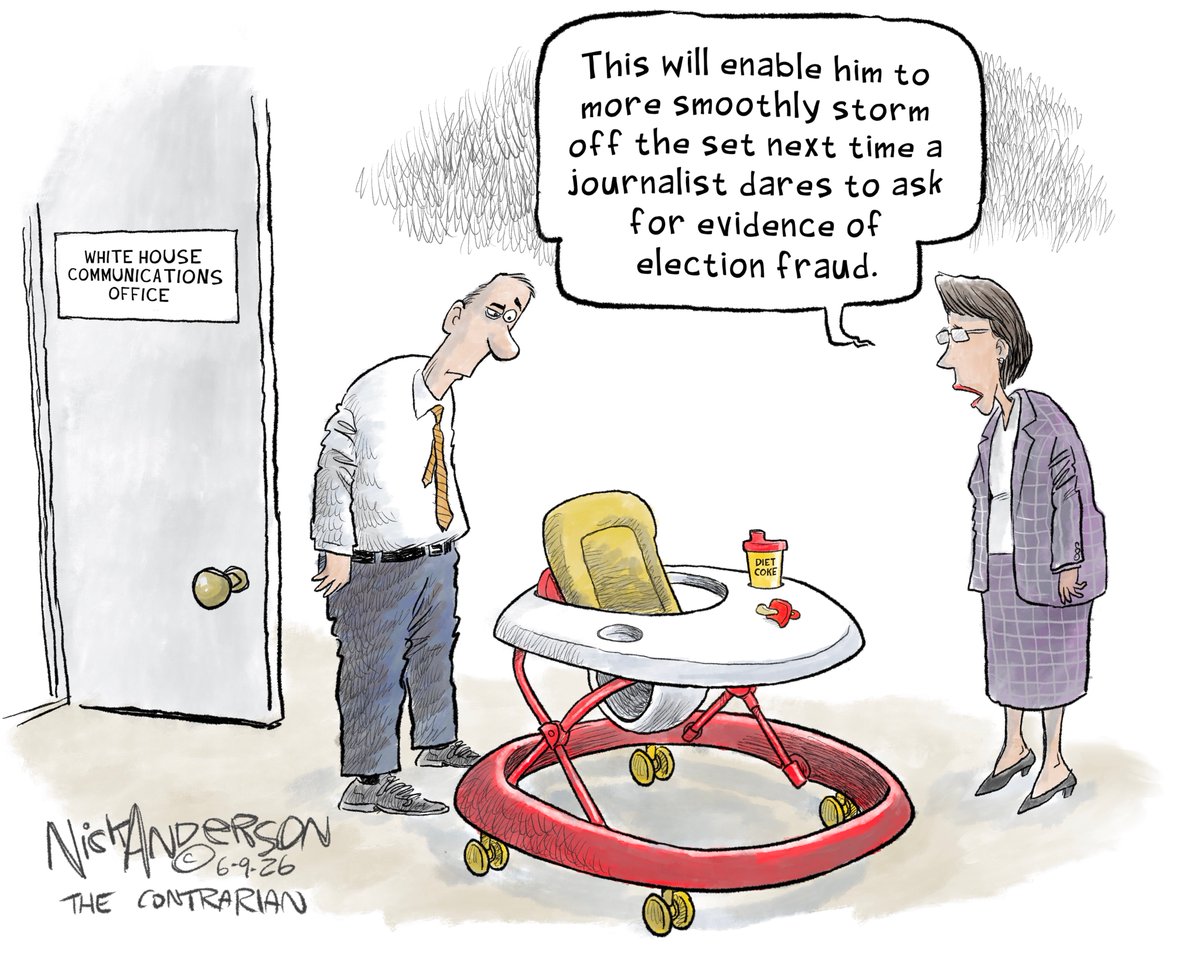
Smooth Exit
Link in comments...
8
187
550
7,615
Jun 10
INSIDE TRUMP'S WHITE HOUSE, THE EPSTEIN FILES CAUSED A FREAKOUT
(Unlocked gift link included)
One-Sentence Summary: The article reports that the Trump White House's handling of the Epstein files became a months-long internal crisis because the administration could not reconcile Trump's desire to suppress the issue with MAGA supporters' demand for transparency.
Key Takeaways:
* The Epstein files crisis became a major internal problem for Trump's second-term White House, despite public efforts to dismiss it.
* The administration's July 2025 memo saying there was no Epstein "client list" enraged parts of the MAGA base that had been promised exposure of powerful figures.
* JD Vance pushed repeatedly for fuller transparency, arguing that Congress would eventually force disclosure anyway.
* Pam Bondi's public statements and influencer-binder rollout helped raise expectations that the administration later could not meet.
* Dan Bongino and Kash Patel, who had previously amplified Epstein-related suspicions, became targets of the same online anger they had helped cultivate.
* Trump personally resisted disclosure, attacked supporters who kept pressing the issue and wanted the matter buried.
* Congressional pressure eventually forced broader release through the Epstein Files Transparency Act.
* The article argues that the crisis showed the limits of Trump's usual methods of denial, deflection and institutional control.
Article Summary: Maggie Haberman and Jonathan Swan report that the Trump White House spent much of 2025 consumed by the political fallout from the Epstein files, a crisis that exposed tensions between Trump's instinct for denial and the MAGA movement's appetite for disclosure. The article opens with a July 17 Situation Room meeting, led by Vice President JD Vance, after a Justice Department and F.B.I. memo said there was no Epstein "client list" and after The Wall Street Journal prepared a damaging story about Trump's past ties to Epstein. Vance urged full release of the files, even material mentioning Trump, arguing that Congress would eventually force disclosure and that voluntary transparency might blunt the backlash.
The meeting revealed competing priorities. Todd Blanche, Trump's former defense lawyer and deputy attorney general, recommended asking courts to unseal grand jury material, a move expected to fail but useful for shifting blame to judges. Officials also discussed questioning Ghislaine Maxwell, but strongly rejected offering her a pardon or sentence reduction. The White House ultimately backed the grand-jury strategy, while Trump posted that he had asked Pam Bondi to seek release of pertinent testimony.
The article traces how the crisis was partly self-created. Trump allies, influencers, Kash Patel, Dan Bongino, Vance, Donald Trump Jr. and others had spent years feeding expectations that a hidden Epstein file or client list would expose elites. Bondi worsened matters by suggesting on Fox News that such a list was on her desk and later giving right-wing influencers "Epstein files" binders that mostly contained previously public information. When the July memo declared there was no client list and no further investigation was warranted, many Trump supporters felt betrayed.
Internal conflict followed. Bongino, then deputy F.B.I. director, blamed Bondi and White House officials for mishandling the issue and warned that advisers underestimated its reach. Trump, meanwhile, wanted the issue buried and attacked supporters who continued raising it. Vance, Trump Jr. and Charlie Kirk worried that young, online, low-propensity voters were turning against the administration.
As congressional pressure mounted, officials considered building a public Epstein database, but fears grew that a searchable site would amplify unverified or embarrassing allegations involving Trump. A House subpoena and later the Epstein Files Transparency Act forced broader disclosure than the White House wanted. The released files eventually ran to millions of documents and mentioned Trump, his family and Mar-a-Lago tens of thousands of times, including flight records showing Trump had taken Epstein's plane multiple times despite having denied doing so.
The article concludes that the episode damaged the administration because it could not satisfy conspiracy-driven demands it had helped create. Trump could dominate institutions and loyalists, but he could not make the Epstein issue vanish.
1
1
2
222
Jun 10
Haberman, Maggie, and Jonathan Swan. "Inside Trump's White House, the Epstein Files Caused a Freakout." The New York Times, 10 June 2026, nytimes.com/2026/06/10/magaz…
Unlocked gift link:
nytimes.com/2026/06/10/magaz…
1
4
6
614