
DTC Email & SMS | $3M driven in 12 months | Replacing discount dependency with systems that convert | Free Klaviyo Audit Roadmap → linkly.link/2BYtK
Joined November 2022
- Tweets 7,476
- Following 657
- Followers 2,648
- Likes 39,294
981 Photos and videos




Pinned Tweet

Feb 24
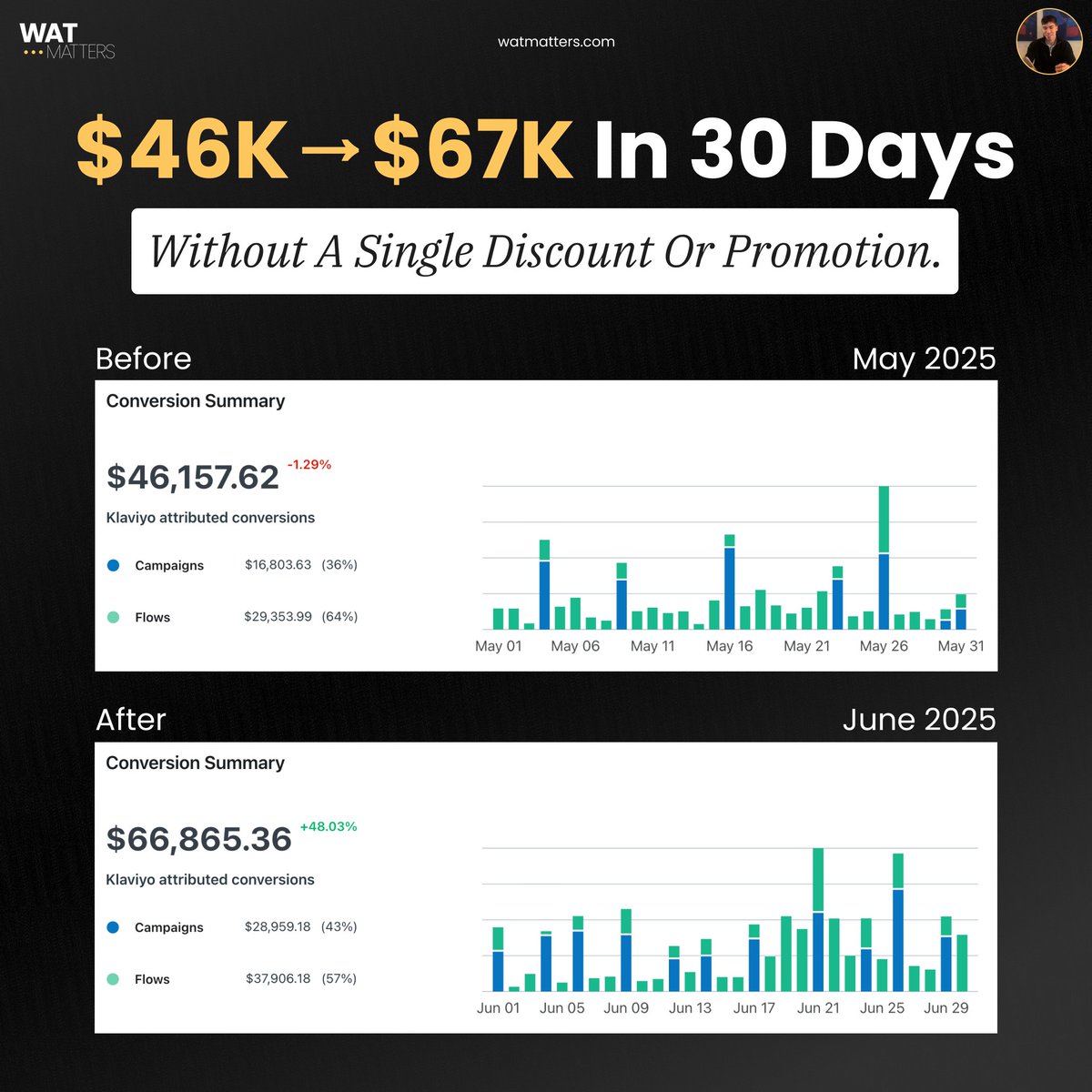
$46K → $67K in email revenue in 30 days.
Without a single discount or promotion.
Here's exactly how we did it (and why most brands are leaving money on the table):
The situation:
A brand selling women's accessories came to us doing ~$103K/mo in total revenue, with $46K of that coming from email (about 45% attribution).
Not bad on the surface. But underneath:
→ Campaigns were sporadic (roughly 1/week, mostly product launches with no strategy)
→ Flows hadn't been touched in over a year
→ No abandoned cart flow (only abandoned checkout)
→ Their popup was converting at 6-7%
→ They had never cleaned their list
The brand wasn't broken.
But it was running at maybe 50% of its potential.
What we did (in order):
1. Cleaned the list.
Before anything else, we removed dead weight. Unengaged profiles hurt deliverability, which hurts everything else. This is the least sexy move, but it's the foundation.
2. Installed a high-converting popup.
Their old popup converted at ~7%. We replaced it with one built around our research into their ICP.
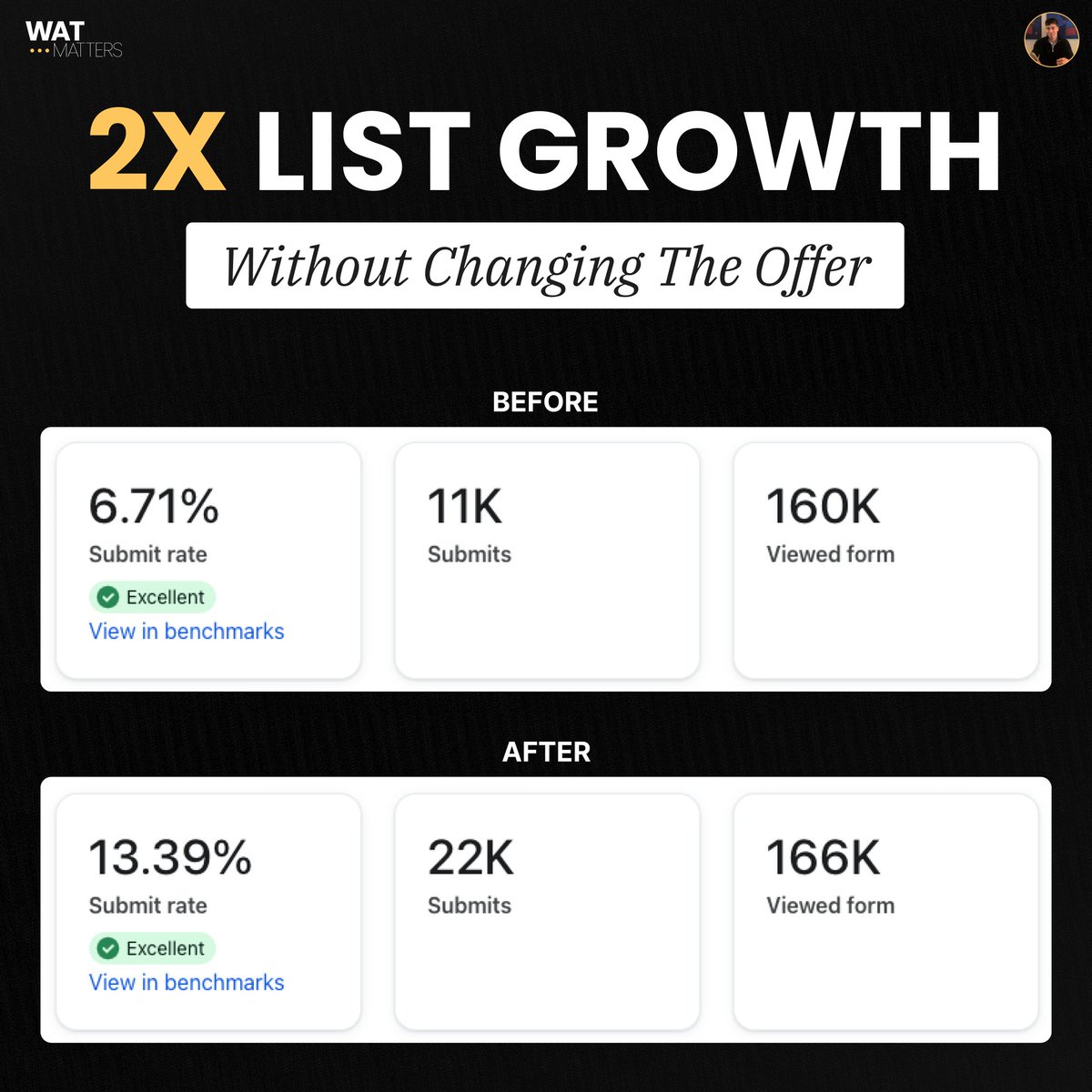
Results: submit rate went from 7.86% → 10.49%.
New profiles added jumped from 1,581 in May to 3,616 in June.
Here's the part most people miss — their site traffic also increased 75% that month.
Normally, when traffic spikes, popup conversion rates drop because you're getting more casual visitors. Ours went UP.
3. Rebuilt their core flows from scratch.
Welcome flow, abandoned cart, abandoned checkout, post-purchase — all rebuilt from the ground up using our ICP research.
Flow revenue: $29.4K → $37.9K ( 33.6%)
This was driven by two things working together:
Better-converting flows AND more new profiles entering those flows from the improved popup.
4. Ramped campaign volume with our value-flywheel framework.
They were sending ~8 campaigns/month. We took it to 11 — but more importantly, we changed WHAT they were sending.
Every campaign was value-driven content built around what their customers actually care about.
Product education, behind-the-scenes, collection storytelling. Not a single coupon code in sight.
Campaign revenue: $16.8K → $29K ( 72.3%)
Revenue per campaign: $2,100 → $2,600
The takeaway:
In 30 days, total store revenue went from $103K to $126.5K — a ~25% increase.
Email attribution jumped from 45% to 53%. Nothing fancy. Just a properly built system doing its job.
Most ecom brands we audit have the same issues: untouched flows, low popup conversion, inconsistent campaigns, and a growing dependence on discounts to hit revenue targets.
None of this is complicated. It just requires doing the work in the right order:
→ Clean your list
→ Capture more of the right subscribers
→ Convert them through flows built on actual customer research
→ Send more campaigns that provide value instead of begging for the sale
We call it the Value-Flywheel. Once it's spinning, revenue compounds month over month.
6
19
1,563
99% of marketers shouldn't use AI.
The best copywriters today wrote copy manually for 20 years straight.
Before any AI shortcuts existed.
And that's exactly why they achieved mastery in their craft.
Dan Kennedy, Stefan Georgi, Chase Dimond.
They didn't become great at marketing because they used some fancy AI machine.
Skill is acquired through the consistent iteration of a singular tasks.
With AI, you lose that completely.
Nobody is ACTUALLY reading through every single word of a 20.000 character sales funnel Claude generated and pinpointing the AI slop that needs to be rewritten.
We have to come back to learning without optimizing.
Writing without screening.
Failing without looking for shortcuts.
Am I the only one having these thoughts?
1
93
Jun 15
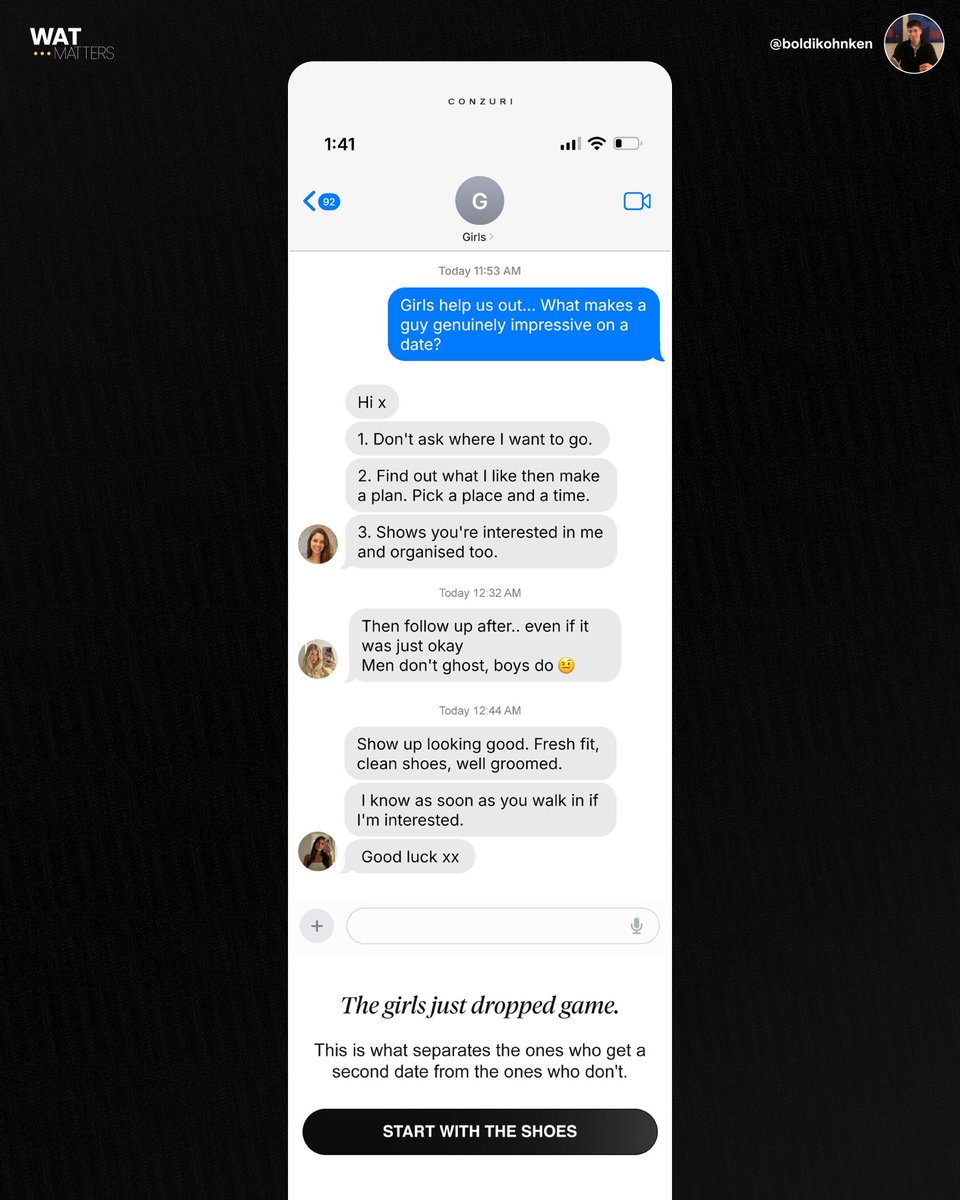
I wanted to gatekeep this email concept so badly.
iMessage-style email. Steal it.
Group chat vibes.
It always works. ALWAYS.
1
9
714
Jun 14
If you try to guess what your customer will buy next, you’re setting yourself up for failure.
Nothing in retention is logical.
I don’t understand why somebody would buy the same thing twice within 30 days.
But many customers do.
If they like the product, they are more likely to buy the SAME EXACT thing than convert through another product type.
This varies between brands, of course.
But the amount of times we got surprised by the data is beyond comprehension.
Don’t try to roulette your way to a solid retention funnel.
Read the data.
2
146
Jun 13
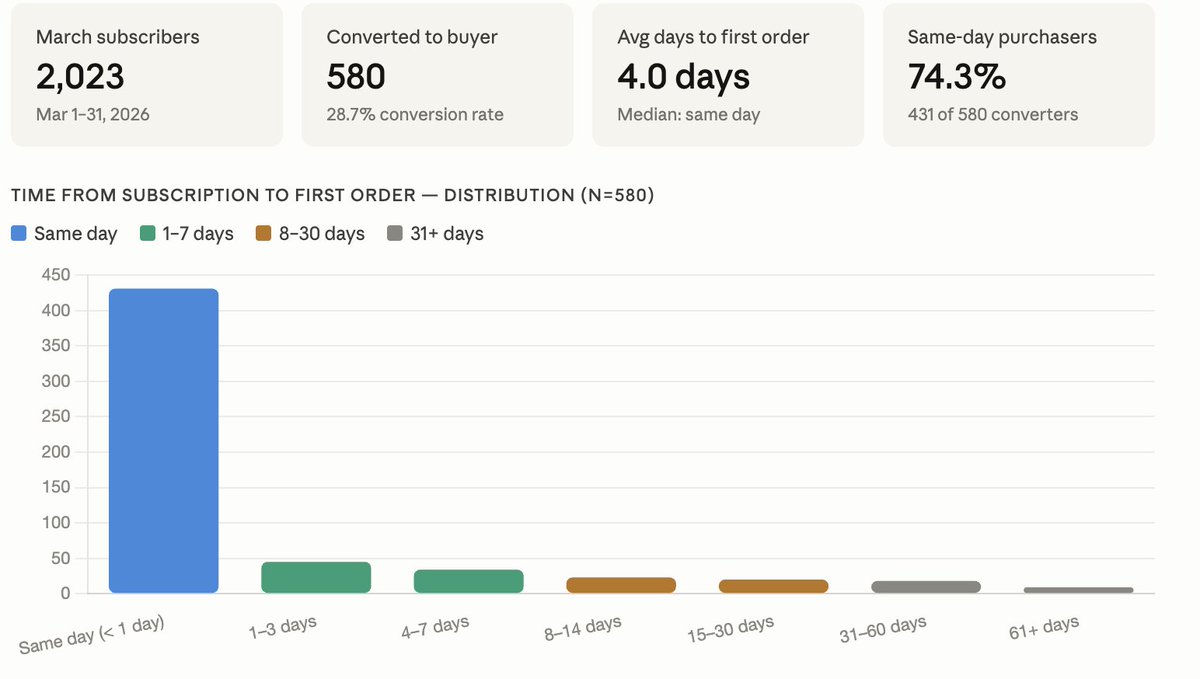
There's a KPI I track on every account that barely gets talked about: subscribed-to-converted time.
How many days it takes a brand new email subscriber to place their first order.
I had Claude pull it for one of our accounts through the Klaviyo MCP.
This is what came back.
On the surface it looks clean.
- 2,023 new subscribers in March
- 580 converted
- 4-day average
- same-day median, 74.3% buying same day
That 74.3% is exactly where I stopped trusting it.
When 3 out of 4 "subscribers" convert the same day they subscribe, that's almost always checkout subscribers.
The popup consent and the order fire in the same session, so the data reads "same day" when, in reality, the purchase created the subscriber.
Strip those out and the real subscribed-to-converted story lives in the other 149 people who took days or weeks.
That's the cohort that actually tells you whether your welcome flow is pulling its weight.
So before this number goes anywhere near a client deck, here's what I'd want nailed down:
1) Is "subscribed" the consent timestamp or the Klaviyo profile-created date. Those are two different dates.
2) Did the pull actually exclude people with a prior order, or is it counting everyone.
3) Is "converted" any first order, or only email-attributed orders.
Genuinely curious how the operators here would clean this cohort.
And whether anyone's gotten the MCP to reliably filter checkout subscribers out yet, because that's the piece I don't fully trust.
1
3
208
Jun 13
you and bro printing on shopify after reading this article

276
Jun 12
POV: your brand's finally profitable
6
283
Jun 12
your emails finally printing after you read this
2
129
Jun 12
If your non-discount emails don't convert.
It's usually because of two reasons.
1) If engagement is solid, but no one converts
You failed to answer the "Why buy now?" question in your customer's mind.
They feel like they have time to decide.
They didn't feel their problem to be urgent.
2) If engagement is sh*t AND no one converts
The content isn't relevant to your audience.
Or, if the topic has already proved to resonate with your ICP:
Execution was sh*t.
Either the copy was confusing, or the design copy wasn't in harmony.
If you're a solid operator, you now can identify the problem and go solve it.
You're welcome.
1
57
Jun 11
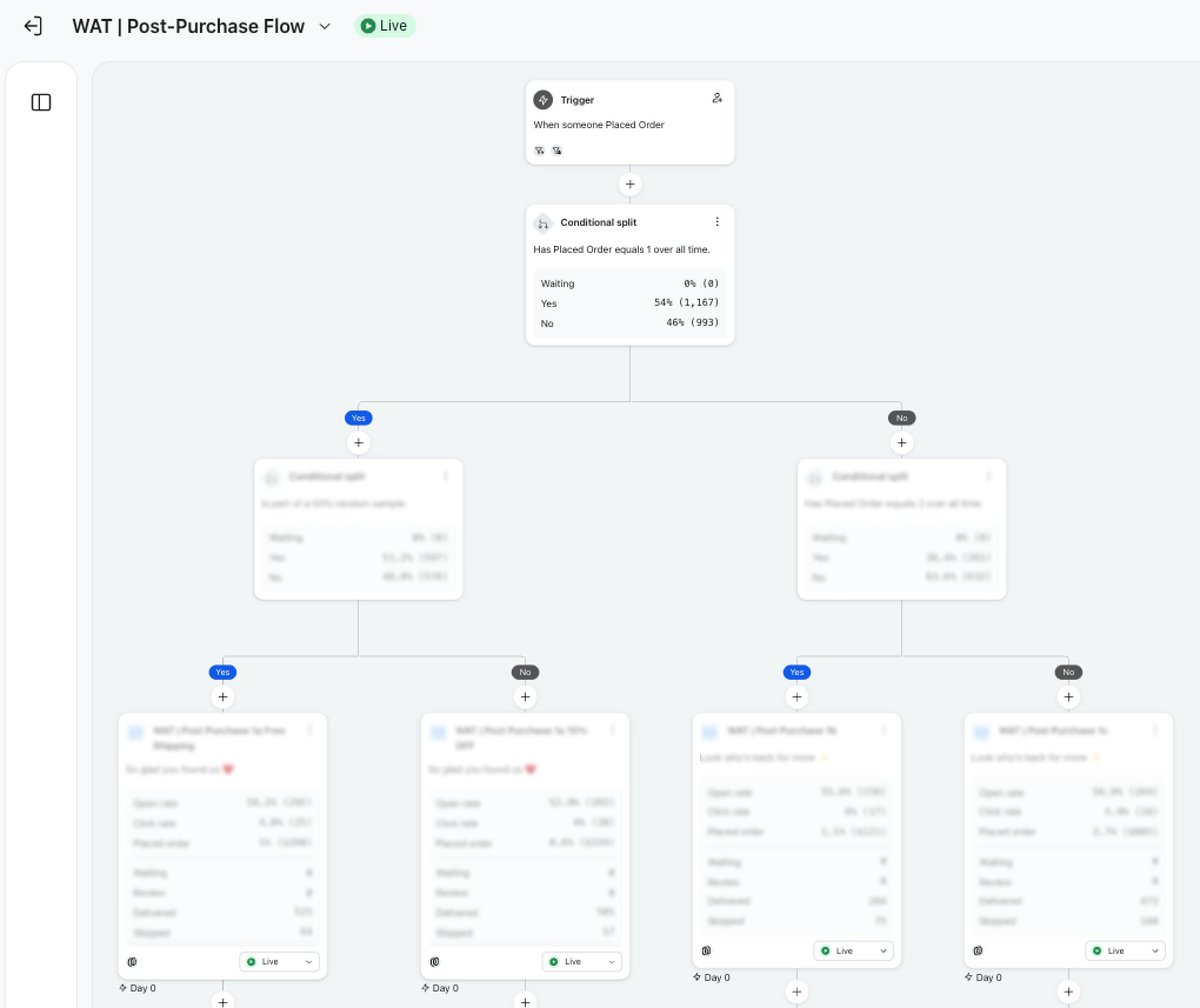
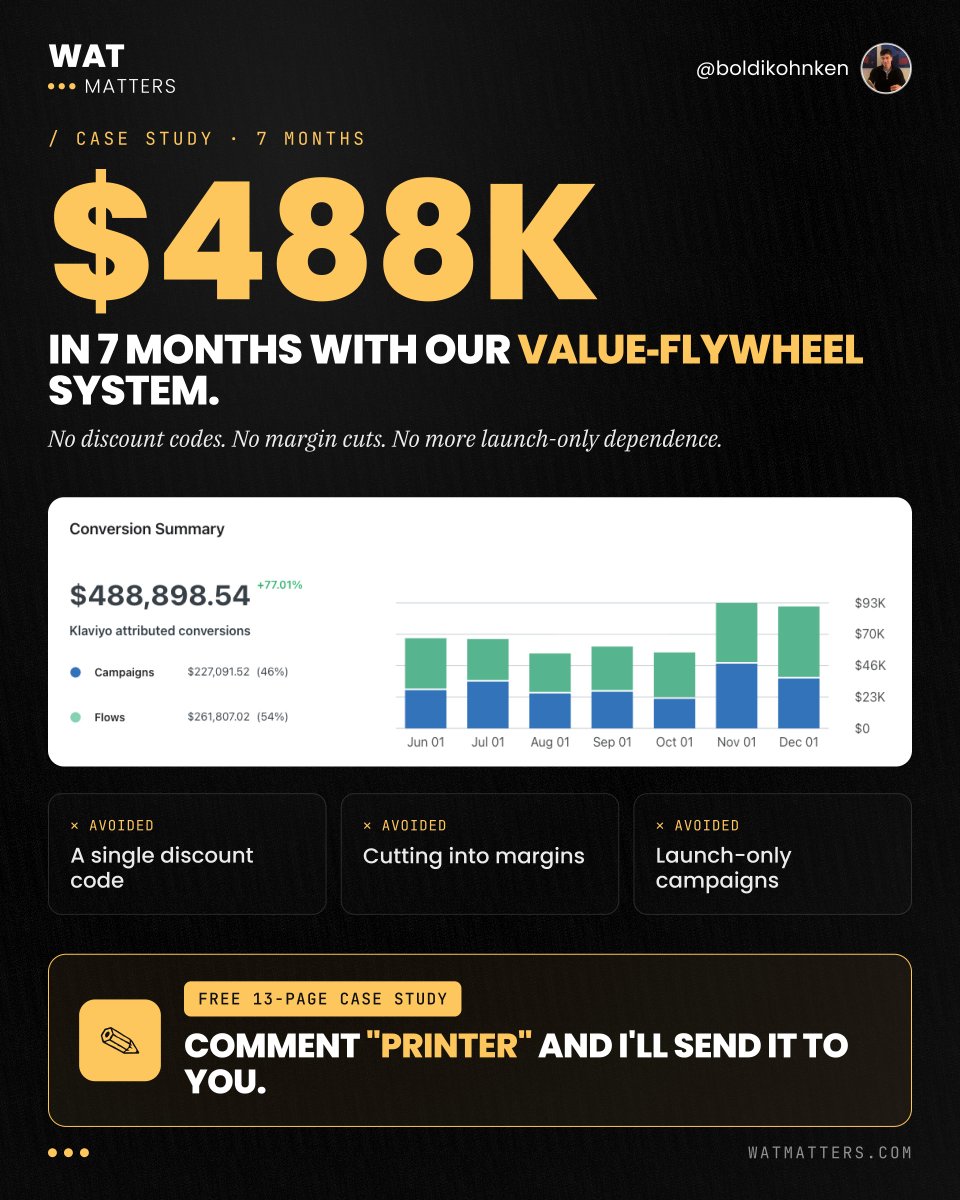
We installed our Value-Flywheel system for this brand.
It ended up generating $488k in 7 months.
That’s how powerful our Value-Flywheel system is.
All while:
- NOT sending a single discount code
- AVOIDING cutting into margins
- TRANSITIONING from launch-only campaigns
We also:
- fixed the leadflow by installing a high-converting popup
- installed acquisition flows to convert new leads as fast as possible
- set up retention systems to decrease time between first & second orders
- optimized the campaign strategy to shift dependence from product launches
I’ve documented the entire process.
And put it in a 13-page case study.
Want it?
Comment “PRINTER” and I’ll send it to you.
2
78
Jun 11
Trust is built through clarity.
If your customer isn't clear on the "why", now amount of discussing "how" will convince them.
Most brands completely ignore this.
And try to force "how" content - emails, ads, organic - down their ICP's throat.
Then, wonder why they won't convert.
It's not that complicated.
You just have to be more intentional with your nurturing process.
1
44
Jun 10
You’re slowly killing your margins.
And you aren’t even aware of it happening.
The moment you send a discount to your list with the sole intention of getting some quick cash.
You’re paving the way to discount-dependency.
2
63
Jun 9
8 out of 10 brands’ cashflow depends on email campaigns.
As soon as they stop sending, revenue crashes.
The good news is that there is a fix.
But it has nothing to do with campaigns.
That dependence is just the symptom.
The root cause is hidden in plain sight:
- leadflow into the funnel is non-existent
- it takes ages to acquire customers
- no retention strategy set up
Operators are caught up fixing ads, finding the next winners, and improving creative output at scale.
Yet, they’re still bleeding revenue.
And they look for the leakage in the ad funnel, despite email being underoptimized.
1
3
122
Jun 9
Every ecom owner I talk to says the same thing:
"We can't find campaign ideas that convert unless we're running some kind of offer."
So you default to another 15% off. Margin shrinks. Your list gets trained to wait for the next sale. And full-price buying quietly dies.
Here's the thing: the email isn't supposed to do the convincing. The angle is.
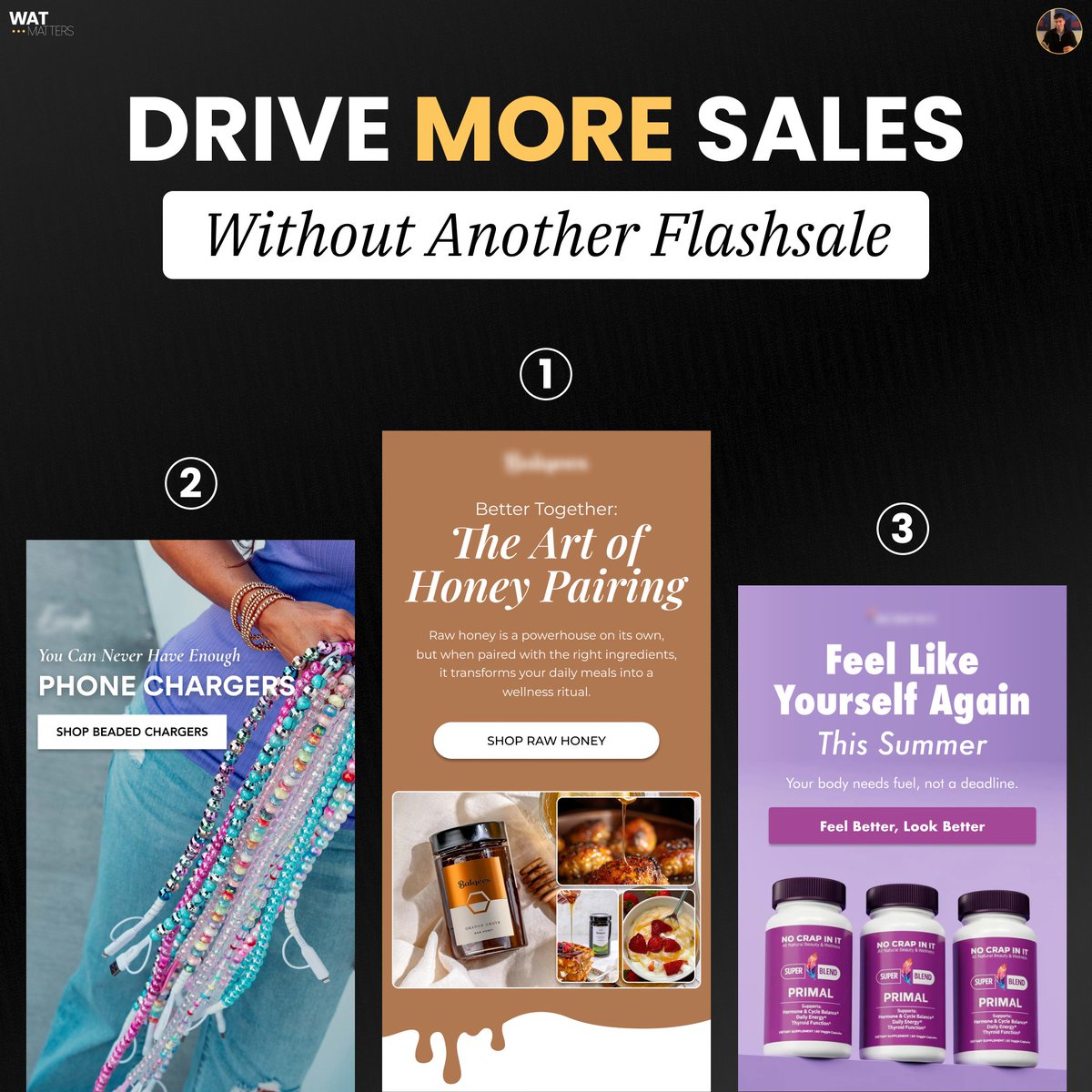
These are 3 we run across our client accounts right now that move real revenue with zero discount attached.
1. The Art of {XYZ} Pairing
Nobody uses your product in isolation. Honey goes with something. The jacket goes over something. So anchor it to what they already love using. You stop selling a product and start selling a ritual.
2. You Can Never Get Enough {of something}
This justifies the repurchase through emotion, not logic. Same energy as "treat yourself." You build an emotional loop in the customer's head that makes coming back feel good, not transactional. Works on anything consumable.
3. Feel Like Yourself Again
You give the customer permission to become the version of themselves they're chasing. Desired state = your product. Season, milestone, fresh start, whatever the moment is. You sell the transformation and the product comes along for the ride.
None of these touch your margin.
All of them get your list buying when there's nothing on sale.
The brands that print with email built a library of angles like these.
The ones still stuck send another discount and call it strategy.
Save this. Steal all three.
2
103
Jun 9
I’ve turned away business despite needing the cash.
Only you will ever understand why you do it.
Nobody else will.
It doesn’t make sense.
Shouldn’t you take EVERY SINGLE OPPORTUNITY you can when you’re in need???
Brosky, I’m in no need.
I’ve lived with a couple bucks in my bank account for months.
We had times where cashflow was tight.
And I never panicked for a second.
I always knew it’s going to work out.
And it ALWAYS did.
2
97
Jun 9
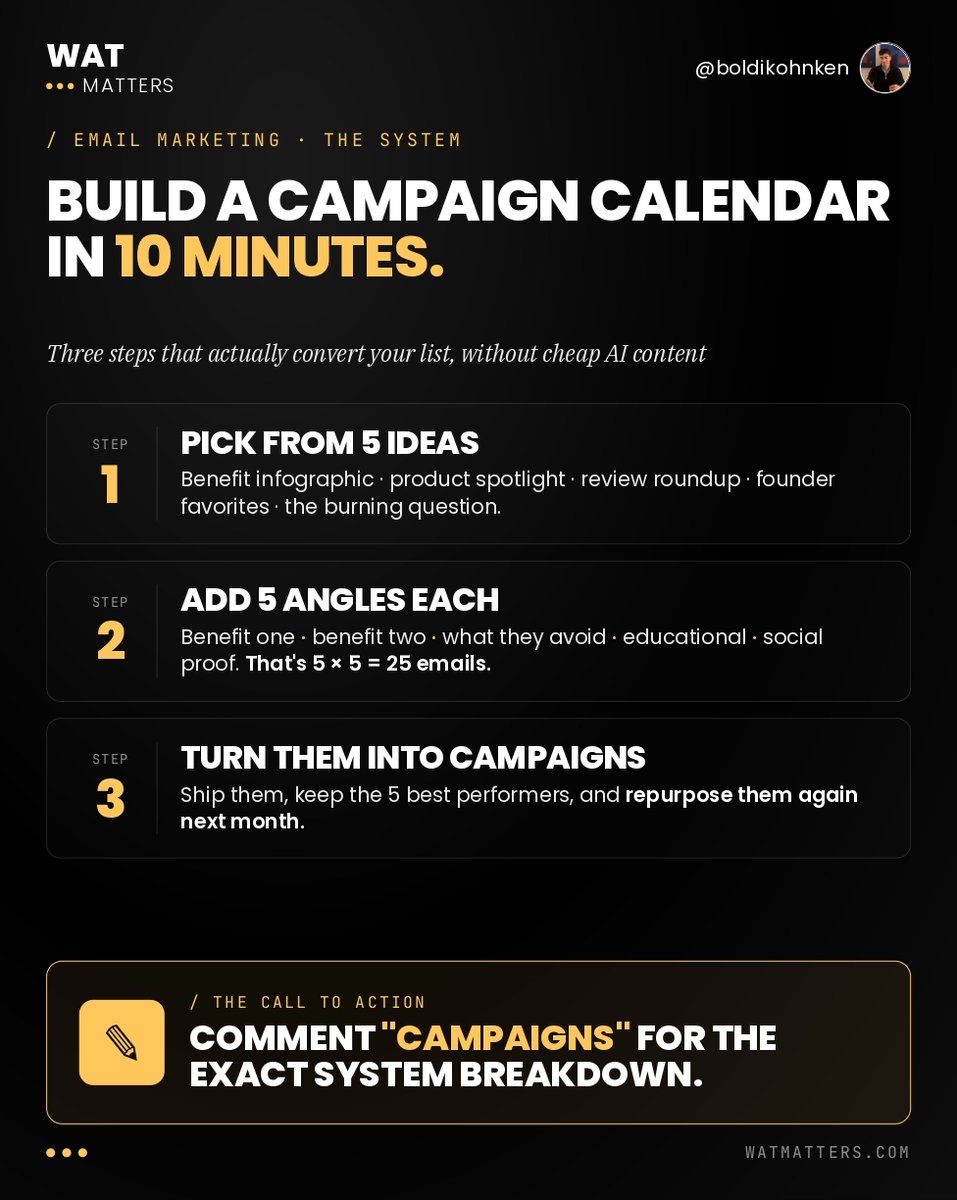
The easiest way to build a campaign calendar in 10 minutes:
(that actually converts your list)
1. Take one of these 5 high-converting email ideas
- 1 benefit explained in a 3-4-step infographic, with 1-2 testimonials
- highlighting a specific product benefit, who it's for, why it's a no-brainer
- collecting the top 4-5 best reviews about a specific product/collection and showcasing them in a single email
- founder favorites (this week, this month), a simple text-only email from the founder reaching out to new customers to help them find their best first pick
- answer the most burning question customers have before buying from you in one, dedicated email
2. Add 5 angles to each idea
Example:
- idea = product benefit
- angles:
→ 1st benefit for them (better sleep)
→ 2nd benefit for them (more energy)
→ what they avoid with our solution (bad ingredients)
→ educational angle (how they get the benefit)
→ social proof angle (evidence that it works)
This will give you 5x5 = 25 angles to work with
3. Turn all 25 angles into individual emails
This is the most important part.
Instead of doing the same mundane thing every single month.
You'll pick the 5 best-performing angles and repurpose them again next month.
We use Claude to do all this in seconds.
Comment "CAMPAIGNS" and I'll send you a Loom breakdown of our exact system.
2
2
126
Jun 8
I see this one copywriting mistake all the time when auditing accounts.
90% of ecom brands are doing it.
And they have ZERO clue that it has an detrimental impact on their email conversions.
The symptom is usually click rates trending down.
And the mistake is:
The subject line & the headline aren't coherent.
If you'd read it as a 2-part sentence, it wouldn't make sense.
This disconnect between the subject line & the headline causes confusion in the customer.
And a confused customer will NEVER convert.
Regardless of the offer.
1
3
197
Jun 8
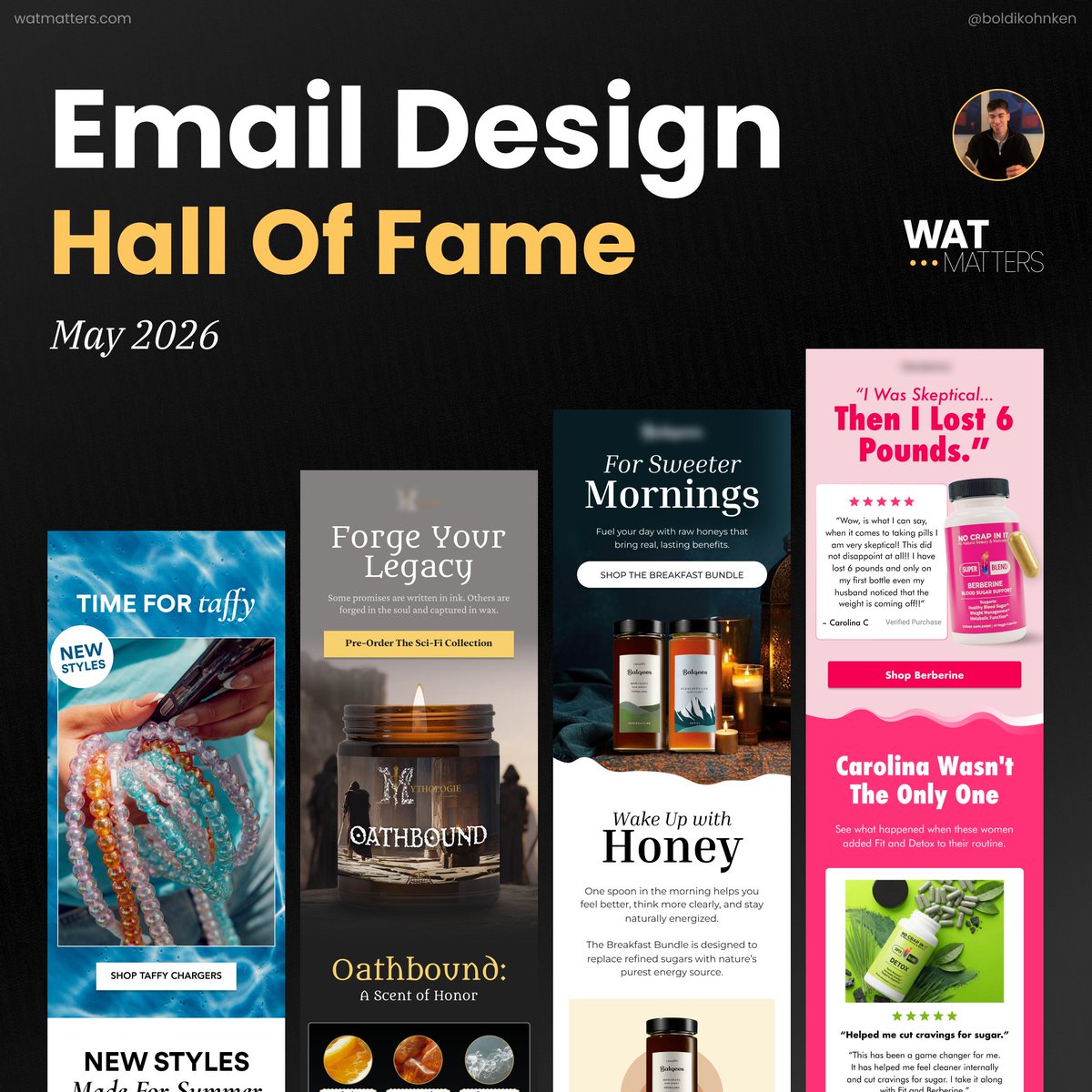
May's Email Design Hall of Fame is here. 🏆
Another month, another batch of designs that made some serious noise in the inbox.
What made each one stand out:
- a simple yet timely approach to introducing a new product line for a jewelry brand
- a pre-order email leveraging the new scent-collection's storyline
- a ritual-building educational email highlighting a bestselling bundle of the brand
- a testimonial email, centered around a customer transformation
May was a strong month.
Our team is just fantastic! 🤩
2
6
265
Jun 7
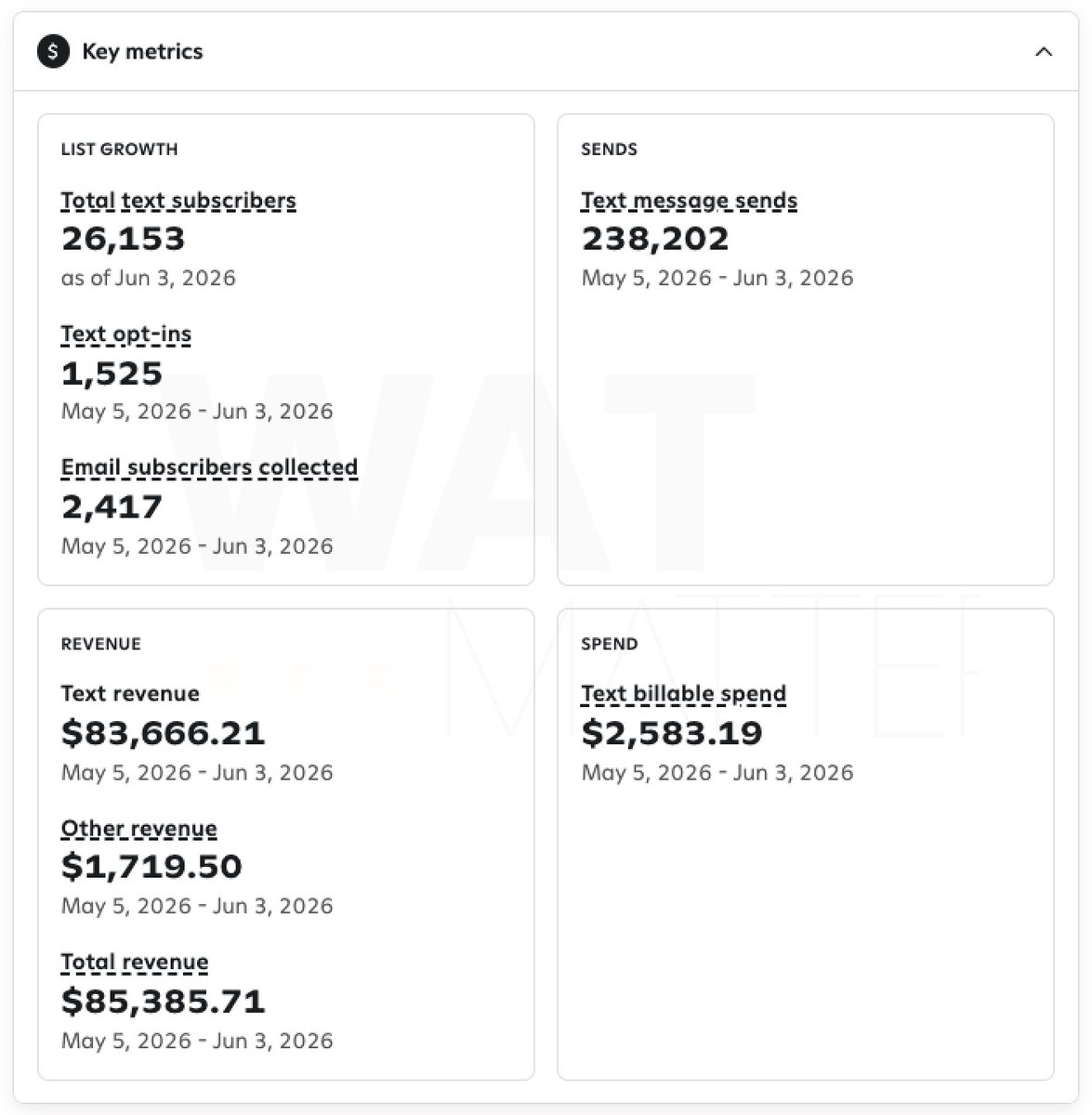
33x ROI on our SMS channel last month.
SMS marketing is misunderstood.
The reflex you have is probably right.
But your execution falls flat.
Here is a list of takes I have after generating $1M from SMS in the last 12 months:
1) Keep it simple, SMS is not for "nurturing" or education
2) Focus on launches, promos, targeted upsells
3) Test if MMS performs better for you, it varies between brands
4) 1-3 campaigns a week is more than enough
5) Separate SMS from email signup to increase text subscribes
6) If the copy is over 160 characters, it probably could be simpler
7) Don't care about click rate unless campaigns don't perform
8) SMS flows are a goldmine - test & iterate!
If you're still hesitant to set up SMS, this is your sign to pull the trigger.
The most effortless cash you'll ever make.
1
4
157
Jun 6
Most ecom email funnels are unsustainable.
Either relying on never-ending promotions OR launching new products to generate consistent cashflow.
Every time I have a discovery call, I see one or the other.
But the most scalable approach to email (& your brand’s backend in general) is to set up a SYSTEM that relies on data.
Instead of having to reinvent the wheel for every campaign you send.
Here’s how we do it:
Phase 1 - Gather Data
- collect high-performing angles from ads & organic
- train Claude on the data
Phase 2 - Campaign Pillars
- identify 2-4 core values of the brand
- send campaigns about them
Phase 3 - Flow System
- map customer journey
- set up the core funnel and start adding high-performing campaigns to flows
It’s a bulletproof system that allows brands to shift focus to pumping out creative volume.
While we repurpose the creatives into their backends.
And multiply the impact by 100x.
1
85